

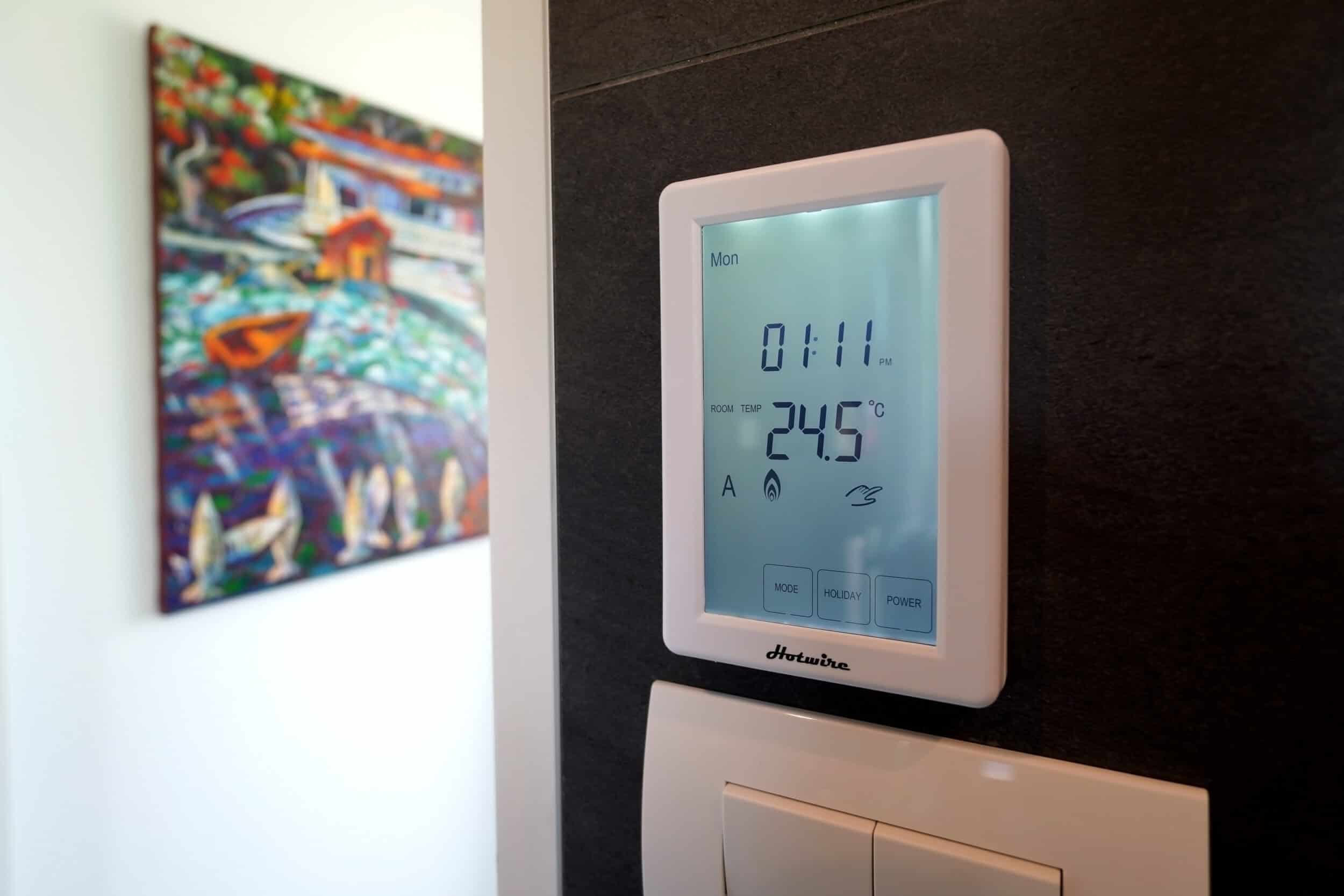
Our Take on Bathroom Heaters for NZ Homes | 2025 Guide
If you’re starting the day in a cold, damp bathroom in Takapuna or scrubbing mould off fresh tiles in Mt Eden, the problem isn’t your cleaning routine — it’s the lack of adequate heating. Auckland winters push humidity to 70–80% and temperatures below 10°C regularly. Without a decent heater, bathrooms turn into mould factories fast. This guide covers the options that actually work for our conditions: wall-mounted ceramics, 3-in-1 ceiling units, towel rails, and underfloor systems — with honest advice on costs, installation, and what suits which bathroom.
Why Bother with a Bathroom Heater in Auckland’s Winters?
Because damp, cold bathrooms cause real problems. Black mould on fresh tiles after a $20k–$35k renovation is not a hypothetical — it happens regularly in Auckland homes without proper heating. A decent heater warms the space quickly, reduces moisture in the air, and makes getting out of the shower something other than an ordeal. For coastal properties in Mission Bay or Henderson, pairing heating with good ventilation is particularly important — the salt air adds another layer of dampness that ventilation alone won’t fix. Modern efficient models can cut energy use by up to 20% compared to older units, which matters when heating is running daily through winter.
What’s the Best Type of Bathroom Heater for Auckland Homes?
It depends on your bathroom. For small ensuites in Ponsonby apartments, wall-mounted units like the Goldair Ceramic WiFi (2000W, app-controlled, IPX4-rated) do the job well — space-efficient and smart-controlled, around $300–$700 installed. Bigger family bathrooms in Albany benefit from 3-in-1 ceiling units: Manrose or IXL Tastic combine heat, light, and extraction in one unit, around $400–$1,050 installed, and handle moisture properly. Towel rails like the Mizu Soothe keep towels dry year-round at low running costs — roughly $12.50 per month — which suits North Shore homes where damp towels are a constant issue. Fan heaters are cheap ($50–$100) and need no installation, but they’re noisy and less suited to daily use. Underfloor heating from Heatwell gives even, silent warmth at $1,500–$4,000 — the right call for a premium Remuera renovation.
How Do You Pick One That Saves on Bills and Avoids Install Headaches?
Look for timers, thermostats, and ceramic elements — using a timer to halve daily runtime can drop your monthly cost from $25 to $12.50 at 35c/kWh. Size it correctly: 500–1000W for compact spaces, more for larger rooms. Hardwired units need a licensed sparkie — budget $150–$600 for installation — and must meet Auckland Council requirements. Portable fan heaters are DIY-fine, but keep them at least 1.8m from water. If you’re already having electrical work done during a renovation, bundle the heater installation — it’s the most cost-effective time to do it. Clean filters annually; Auckland’s air quality means dust builds up faster than you’d expect.
Want to talk through what would work for your bathroom specifically? Get in touch with Superior Renovations for a free consultation — no obligation, just a straight conversation about your setup.
Choosing the Best Bathroom Heaters for Your NZ Renovation
A bathroom renovation in Auckland is a significant investment — typically $20,000–$35,000 depending on scope. The heater is one of the decisions that gets underestimated, then regretted. New Zealand’s winters, particularly in Auckland’s coastal suburbs like Takapuna or Mission Bay, create the conditions for mould, fixture damage, and daily discomfort if the heating isn’t right. This guide covers everything Auckland homeowners need to know about choosing and installing the best bathroom heaters in NZ — types, features, top products, and installation realities. Whether you’re fitting out a compact ensuite or a full master bathroom, the goal is the same: a warm, healthy, and well-functioning space that holds up to our climate.
If you’re looking for specific cost estimates, try our Renovation Cost Calculator Tools
Why a Bathroom Heater Matters for New Zealand Homes
Auckland winters are mild by South Island standards, but that doesn’t mean bathroom heating is optional. Temperatures regularly drop below 10°C, and humidity sits at 70–80% through the colder months. Without proper heating, a bathroom becomes a mould problem — and in a freshly renovated bathroom, that means damage to tiles, grout, vanities, and paintwork that costs real money to fix. A good heater prevents that, keeps the space comfortable, and protects the investment you’ve made in the renovation.
The Real Problem: Damp, Cold Bathrooms
Auckland’s combination of coastal air and winter humidity makes bathrooms particularly susceptible to moisture problems. Auckland Council is direct on this: keeping your home warm and dry is critical for health and comfort, not just aesthetics. Mould in a bathroom isn’t just unsightly — it affects air quality and can aggravate respiratory conditions, particularly for children and older family members who are more sensitive to temperature and air quality fluctuations.
What a bathroom heater actually solves:
- Reduces humidity and prevents mould on tiles and grout.
- Makes the bathroom genuinely usable during cold winter mornings.
- Protects fixtures, finishes, and cabinetry from ongoing moisture damage.
- Reduces energy costs when the right model is chosen and used correctly.
Why Auckland Specifically
Suburbs like Henderson and Redvale experience cooler, damper conditions than central Auckland. Coastal areas add salt air to the humidity load. The result is a bathroom environment that will degrade a renovation faster than most homeowners expect, unless heating and ventilation are both properly addressed. A heater isn’t a luxury item in these conditions. It’s maintenance for the renovation you’ve already paid for.
Tip for Auckland Homeowners: When planning your bathroom renovation, specify IPX4-rated heaters as a minimum — moisture resistance matters more in our climate than it does in drier parts of the country.
Health and Comfort
The Energy Efficiency and Conservation Authority (EECA) notes that cold, damp environments worsen asthma and allergy symptoms — both common in Auckland families. Consistent bathroom warmth reduces that risk. For households with young children or elderly members, it’s not a nice-to-have.
Key health benefits:
| Benefit | Impact |
|---|---|
| Mould Prevention | Reduces humidity, preventing mould growth on tiles and grout. |
| Improved Air Quality | Reduces damp-related allergens, benefiting respiratory health. |
| Comfort | Makes the bathroom functional and bearable through winter. |
Tip: A bathroom heater that runs on a timer — warming the space before you get in, not after — costs less to run and works better than one you switch on when you’re already cold.
Protecting Your Renovation Investment
Auckland bathroom renovations typically run $20,000–$35,000. Custom vanities, quality tile work, and painted joinery are all susceptible to moisture damage. Without proper heating, that investment starts degrading from the first winter. The right heater maintains a stable temperature and humidity level — which is what keeps expensive finishes looking the way they did when the job was finished.
Energy Efficiency
EECA notes that energy-efficient heating can meaningfully reduce your household’s carbon footprint. Modern ceramic and infrared bathroom heaters heat up faster and use less power to maintain temperature than older radiant bar heaters. For a room you use for 20–30 minutes a day, that efficiency gap adds up quickly over a winter.
Energy-Saving Tip: Thermostats and timers are the two features that make the biggest difference to running costs. For the small bathrooms common in Auckland homes — 8–10m² — they’re worth specifying from the start.
Choosing the Right Heater for Your Renovation
How a heater integrates with your bathroom design matters as much as its performance. Wall-mounted units from Goldair are slim and space-efficient — good for compact ensuites where every wall has a purpose. Ceiling-mounted options from Weiss disappear into the design, while underfloor heating is invisible entirely.

https://goldair.co.nz/products/ceramic-wifi-bathroom-heater
Regulatory Considerations in Auckland
Auckland Council requires permits for some heating installations — particularly anything involving electrical or structural changes. Underfloor heating that affects plumbing or flooring may need consent, with fees typically $500–$2,000. Checking before you start is faster and cheaper than remedying a non-compliant installation after the fact. Building Code Clause E2 is the relevant standard for weathertightness and moisture management.
Compliance Tip: Confirm with Auckland Council whether your chosen heater requires a building consent before installation starts — particularly for hardwired units.
Why It Matters for Your Renovation
Choosing a bathroom heater isn’t complicated — but it does require matching the right solution to your specific bathroom, your Auckland suburb, and how you actually use the space. Get it right and the heater becomes invisible: the room is warm, dry, and comfortable. Get it wrong and you’re managing mould, running costs, or a unit that doesn’t heat the space properly. The sections that follow give you what you need to make the right call.
Tip: The right heater for your bathroom should suit its size, match your design, and run efficiently. All three matter — prioritising one at the expense of the others creates problems.
Types of Bathroom Heaters for New Zealand Homes
There are five main types of bathroom heater available in NZ, each suited to different bathroom sizes, layouts, and renovation goals. Auckland’s climate — coastal, humid, variable — adds specific requirements around moisture resistance and ventilation that should inform the choice. Here’s a plain-language breakdown of each option.
Finding the Right Fit
The most common mistake Auckland homeowners make with bathroom heaters is choosing based on price or aesthetics alone, without accounting for room size, moisture load, or how the unit will be used day-to-day. A small wall-mounted heater is fine for a compact ensuite; it’s inadequate for a 12m² family bathroom. A 3-in-1 ceiling unit solves heat, light, and extraction in one installation but requires ceiling depth and ducting that need to be planned for. Getting this match right at the start saves money and frustration later.
Tip: Match your heater type to the actual size and conditions of your bathroom before comparing models or prices. The wrong type, installed perfectly, still won’t do the job.
Wall-Mounted Heaters
Wall-mounted heaters are the most popular choice for Auckland bathrooms — particularly compact ensuites in suburbs like Ponsonby or Mt Eden where ceiling space is limited and design matters. They provide fast heat, sit flush against the wall, and the better models (like the Goldair Ceramic WiFi Bathroom Heater) are app-controlled, which means you can have the bathroom warm before you get in.
Key features:
- Fast heat-up using ceramic or infrared elements.
- IPX4 moisture resistance as standard on quality models.
- Slim profiles that work with most bathroom designs.
Pros and cons:
| Pros | Cons |
|---|---|
| Space-efficient for small bathrooms | Won’t heat larger spaces evenly |
| Relatively straightforward to install | Visible unit — a consideration for minimalist designs |
| Cost-effective starting point (from $150) | Limited reach in open-plan or irregular layouts |
Tip for Auckland Homeowners: A wall-mounted heater with a programmable timer is the single most cost-effective heating choice for smaller bathrooms (8–10m²) — common in Auckland apartments and older villas.

https://goldair.co.nz/products/ceramic-wifi-bathroom-heater
Important Safety Recall: Serene S2069 Wall-Mounted Bathroom Heater
The Serene S2069 wall-mounted bathroom heater has been recalled due to non-compliance with New Zealand safety standards, as announced by WorkSafe. The approval for this model has been withdrawn for units imported, purchased, or installed after June 2018 — making it illegal to sell in NZ. A reported fire linked to this heater is under investigation.
Key Details:
-
Model: Serene S2069, a wall-mounted fan heater with a step-down thermostat.
-
Issue: Non-compliant with NZ safety standards, with a reported fire incident under investigation.
-
Action: WorkSafe considers the ongoing risk low, but if you notice unusual smells or noises from this unit, stop using it immediately and have it inspected by a licensed electrician.
-
Consumer Rights: Under the Consumer Guarantees Act, you may contact the supplier for a refund, repair, or replacement.
Why it matters: Auckland’s humidity makes bathroom heater safety more critical than in drier climates. If you have a Serene S2069, don’t wait — get it checked.
Full details on this recall: https://www.worksafe.govt.nz/about-us/news-and-media/further-action-on-serene-bathroom-heaters/
Ceiling-Mounted Heaters
Ceiling-mounted heaters suit larger Auckland bathrooms or rooms with higher ceilings — heritage homes in Remuera being a good example. Units from Weiss often combine heating, lighting, and ventilation in one ceiling installation, which distributes heat evenly and keeps walls free. For open-plan bathrooms or any layout where even heat distribution matters, ceiling-mounted is usually the better call over wall-mounted.
Key features:
- Infrared panels or heat lamps for fast, even warmth.
- No wall or floor space used.
- Multi-function models available with exhaust fans for humidity control.
Pros and cons:
| Pros | Cons |
|---|---|
| Integrates cleanly into modern bathroom designs | Higher installation cost ($300–$600) |
| Works well in larger bathrooms | Requires professional installation |
| Keeps walls and floors uncluttered | Filter access requires a ladder |
Design Tip: A ceiling-mounted unit with integrated LED lighting handles two renovation line items at once — heating and lighting — which simplifies the design and can reduce overall cost.

https://www.bunnings.co.nz/ixl-white-tastic-luminate-heat-module-bathroom-ceiling-heater_p0829692
Fan Heaters
Fan heaters are portable and cheap — the right call for renters or anyone who needs a quick, no-commitment heating solution. Available at Mitre 10 from around $50, they require no installation and heat a small space quickly. The trade-off is noise and energy consumption — they’re not efficient for daily use over a whole winter.
Key features:
- Fast heat via forced air.
- No installation — plug straight in.
- Low purchase cost.
Pros and cons:
| Pros | Cons |
|---|---|
| No installation cost or process | Higher ongoing energy consumption |
| Good for temporary or occasional use | Audible operation — up to 50dB in a small space |
| Cheapest upfront option | Not suited to large bathrooms |
Budget Tip: A fan heater does the job in a pinch, but for daily Auckland winter use it’s worth pairing with a dehumidifier — otherwise you’re heating a damp room rather than drying it out.
Towel Rail Heaters
Heated towel rails solve two problems at once — keeping towels dry and providing ambient warmth — which makes them a practical choice for Auckland’s humid winters. Available at Elite Bathroomware, they’re particularly useful in coastal suburbs like Takapuna where musty towels are a regular frustration. Running costs are low — around $12.50 per month — and quality models in chrome or matte finishes add a polish to the renovation that functional-only heaters don’t.
Key features:
- Low-energy heating for ambient warmth and towel drying.
- Electric or hydronic options.
- Available in chrome, matte black, brushed finishes.
Pros and cons:
| Pros | Cons |
|---|---|
| Adds a quality finish to the bathroom | Limited heating capacity for larger spaces |
| Keeps towels dry and warm | Higher upfront cost ($200–$800) |
| Low running costs | Needs dedicated wall space |
Style Tip: Matte black towel rails suit the trend toward dark, matte fixtures in modern Auckland bathrooms — and they’re practical enough to justify the cost without needing a separate argument.
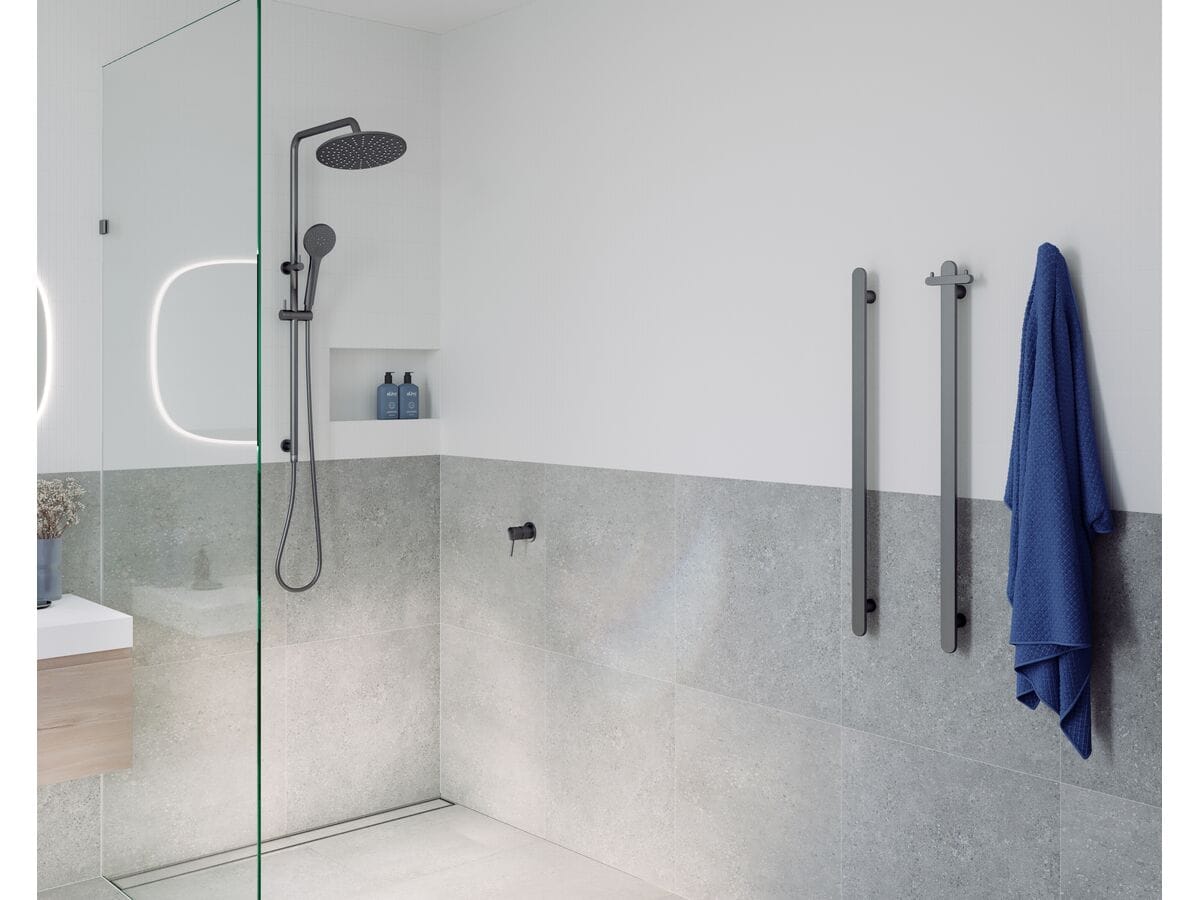
https://www.reece.co.nz/product/tapware-accessories-c2402/bathroom-accessories-c1910/heated-towel-rails-c2118/mizu-soothe-vertical-heated-towel-rail-triple-2007892
地板采暖
Underfloor heating is the premium option — silent, invisible, and genuinely comfortable underfoot on a cold Auckland morning. Installed beneath tiles by suppliers like specialist retailers, it delivers even radiant heat across the entire floor. The cost is real — $1,500–$3,000 for the system alone — and it needs to be planned in during the renovation rather than retrofitted. That said, for a bathroom in Albany or a premium North Shore property where the finish has to be right, it’s hard to argue against.
Key features:
- Even radiant heat across the entire floor surface.
- Programmable thermostats for efficient daily use.
- Completely invisible — no visual impact on the design.
Pros and cons:
| Pros | Cons |
|---|---|
| The most comfortable heating option available | High installation cost ($1,500–$3,000) |
| Even heat distribution — no cold spots | Must be planned during renovation, not added after |
| Efficient for long-term daily use with programmable control | Slower to heat up than radiant or fan options |
Luxury Tip: Pair underfloor heating with anti-slip tiles — a combination that suits families on Auckland’s North Shore particularly well, where cold, wet tile floors are a year-round consideration.
Luxury Bathroom Design – Redvale
3-in-1 Bathroom Heaters for New Zealand Bathrooms
For many Auckland bathrooms — particularly the compact 5–10m² ensuites in Parnell apartments or older Mt Eden homes — a 3-in-1 ceiling unit is the most practical single decision you can make. Heat, ventilation, and lighting in one installation. One hole in the ceiling, one set of switches, one unit to maintain. This section covers how they work, which models are worth considering in NZ, and how to choose between them.
Why 3-in-1 Makes Sense for Auckland
Auckland’s humidity is the key reason 3-in-1 units make sense here. According to Auckland Council, proper ventilation combined with heating is the most effective approach to preventing mould — and a 3-in-1 unit addresses both in the same installation. Combining infrared or halogen heating for fast warmth, an exhaust fan to pull moisture out, and LED lighting for illumination, these units suit small to medium bathrooms well.
Key benefits:
- Space-efficient: One ceiling unit replaces three separate installations.
- Moisture control: The exhaust fan pulls steam out before it settles on surfaces.
- Lower overall cost: One installation vs. three separate ones.
- Clean aesthetic: Modern low-profile fascias sit flush with the ceiling.
Design Tip: A low-profile fascia like the Manrose Designer Series sits flush against the ceiling — a cleaner result than a unit that protrudes visibly into the room.
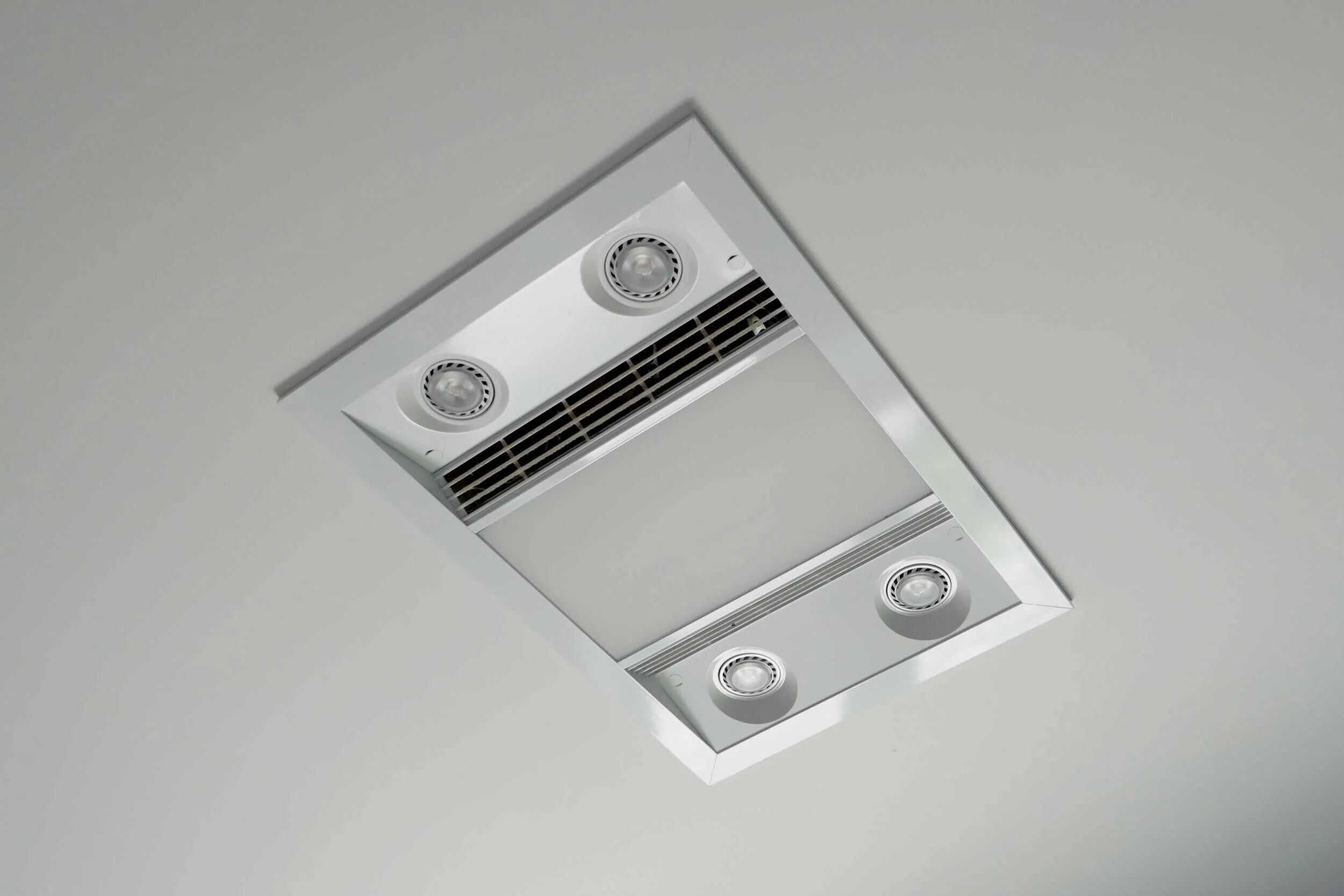
Luxury Bathroom Design – Redvale
Top 3-in-1 Bathroom Heaters in NZ
Manrose 3-in-1 Heat Fan Light
The Manrose 3-in-1 is a reliable, practical choice for small to medium Auckland bathrooms. Available at Bunnings, this ceiling-mounted unit combines a 1000W halogen heater, 69 l/s exhaust fan, and 10W LED light. It suits bathrooms of 6–10m² in suburbs like Henderson or Takapuna well — the extraction rate is strong enough for Auckland’s humidity, and the compact design fits ceiling cavities in older homes where depth is limited.
Key features:
- 1000W halogen heater for quick warmth.
- 69 l/s (248 m³/hr) extraction — meets Healthy Homes standards.
- 10W LED lighting.
- Independent 3-way wall switch for heat, fan, and light control.
Why it works in NZ: The extraction rate handles Auckland’s bathroom humidity properly, the triple thermal protection system is a genuine safety feature, and the 5-year warranty (1 year on heat lamp) gives reasonable coverage. It’s not the flashest unit on the market — but it does what it says.
Price range: $200–$300
Tip: Position above the shower rather than the centre of the room — that’s where the steam actually originates, and extraction is far more effective there.

https://www.bunnings.co.nz/manrose-white-heat-fan-light_p0115725
IXL Tastic Luminate Dual 3-in-1 Bathroom Heater
The IXL Tastic Luminate Dual is the step up for larger or more upmarket Auckland bathrooms. Available through Plumbing Plus, this unit runs two 800W infrared lamps, a 480 m³/hr exhaust fan, and a 25W dimmable LED light with warm and cool colour settings. For bathrooms of 10–12m² in Epsom or Remuera, the extraction rate and heating capacity are a better match than the Manrose.
Key features:
- 2 x 800W infrared lamps with auto cut-off timer.
- 480 m³/hr airflow — strong extraction for larger spaces.
- 25W dimmable LED (warm and cool settings).
- 3-year warranty and a modern design profile.
Why it works in NZ: The infrared lamps heat the space almost instantly — good for Auckland’s chilly winter mornings when you don’t have time to wait. The dimmable LED adds practical value beyond just heating. For a renovation where the finish needs to reflect the budget, this unit holds up.
Price range: $350–$500
Luxury Tip: Dimmable warm-white lighting changes the feel of a bathroom significantly. Paired with matte tiles, the IXL Luminate creates a finish that reads more like a hotel than a standard home bathroom.

https://www.bunnings.co.nz/ixl-white-tastic-luminate-essential-dual-3-in-1-bathroom-heater-exhaust-fan-and-light_p0829693
Weiss 3-in-1 Bathroom Heater
The Weiss 3-in-1 is a NZ-engineered option built for the conditions here. Available at Weiss, it combines 2400W infrared heating, 106 l/s (380 m³/hr) extraction, and integrated LED lighting — suitable for medium to large bathrooms (8–12m²) in Albany or across the North Shore. The quiet operation (under 40dB) makes a genuine difference in a small, tiled space where sound bounces.
Key features:
- 2400W infrared lamps for fast, powerful heating.
- 106 l/s extraction — solid humidity control for Auckland conditions.
- Under 40dB operation — quieter than most comparable units.
- Integrated LED lighting.
Why it works in NZ: The NZ-specific design means it’s built with our humidity levels and building standards in mind. The quiet operation and high extraction rate suit Auckland bathrooms that need serious moisture management without the noise.
Price range: $300–$450
Design Tip: Central ceiling placement gives the best heat and light distribution for open-plan or square bathroom layouts. Don’t position it against a wall if you can avoid it.
3-in-1 Heater Comparison
| Model | Heat Output | Extraction Rate | Price Range | Best For |
|---|---|---|---|---|
| Manrose 3-in-1 | 1000W | 69 l/s (248 m³/hr) | $200–$300 | Small to medium bathrooms |
| IXL Tastic Luminate | 2 x 800W | 133 l/s (480 m³/hr) | $350–$500 | Larger or premium bathrooms |
| Weiss 3-in-1 | 2400W | 106 l/s (380 m³/hr) | $300–$450 | Medium to large bathrooms |
Installation Considerations
3-in-1 units always need professional installation. The electrical connection and the ducting are both regulated work in NZ — not something to DIY. Auckland installation costs run $200–$600 depending on ceiling access and how much ducting is required (typically 3–6m of 150mm duct). A licensed electrician must sign off on compliance with Auckland Council’s Building Code Clause E2, and most manufacturers (including Manrose) require a certificate of electrical safety for warranty to be valid.
Installation Tip: Allow at least 250mm of ceiling depth for units like the Manrose 3-in-1 — this is the minimum for ducting and shouldn’t be assumed. Confirm with your electrician before ordering the unit.
Running Costs
3-in-1 units with LED lighting and timers are the most cost-effective way to heat a bathroom daily. A 1000W heater running 2 hours a day at 35c/kWh costs roughly $25/month. Cut that to 1 hour with a timer and you’re at $12.50 — saving $150 over the winter. Pairing with ceiling insulation, as EECA recommends, improves that further by retaining heat once the room is warm.
Energy-Saving Tip: Run the exhaust fan during and for 10–15 minutes after showering. Running it constantly costs money and dries the air too aggressively. The heater should be on a 15–20 minute timer, not running indefinitely.
Which 3-in-1 to Choose
For small bathrooms, the Manrose is the cost-effective and practical call. For larger spaces or premium renovations where the finish needs to reflect the budget, the IXL Tastic Luminate or Weiss 3-in-1 are the better fits. The key is matching extraction rate and heat output to your actual bathroom size — the table above makes that straightforward.
Tip: Strong extraction and efficient LED lighting are the two features that deliver the most day-to-day value in a 3-in-1 unit. Don’t compromise on either to save on upfront cost.
Which Heater Type Suits Your Auckland Bathroom?
Small ensuite: wall-mounted or a budget fan heater. Medium family bathroom: 3-in-1 ceiling unit. Premium renovation in a larger space: underfloor heating, possibly supplemented with a towel rail for ambient warmth. Towel rails work well alongside any of the above. The decision should come from bathroom size first, then design, then budget — in that order.
Tip: For Auckland renovations, ceiling-mounted or wall-mounted units suit most bathrooms. Underfloor heating earns its cost in larger or premium spaces where the floor experience is part of the brief.
Key Features to Look for in a Bathroom Heater
Once you’ve settled on the type of heater, these are the features that separate the ones worth buying from the ones that cause frustration. In Auckland’s conditions specifically, some of these matter more than they would in a drier climate.
Getting the Balance Right
The most common mistake is optimising for one feature — usually price or wattage — without considering the full picture. A powerful heater without a thermostat runs longer than it needs to. A quiet heater that’s too small for the room never quite gets there. The features below work together. A good heater needs most of them, not just one or two.
Tip: Size, energy efficiency, and safety features are the three that matter most for Auckland conditions. Get those right and most other decisions sort themselves out.
Size and Heating Capacity
A heater sized incorrectly for the room is always a problem — either it doesn’t warm the space or it wastes energy doing so. Auckland bathroom sizes typically run 5m² (small ensuite) to 15m² (master bathroom). Heating capacity is measured in watts, with most bathroom heaters sitting between 500W and 2400W.
How to choose:
- Small bathrooms (5–8m²): 500–1000W. The Goldair Ceramic WiFi Heater sits in this range and is well-matched.
- Medium bathrooms (8–12m²): 1000–1800W. Ceiling-mounted models from Weiss work well here.
- Large bathrooms (12–15m²): 1800–2400W or underfloor heating for consistent coverage.
Capacity guide:
| Bathroom Size | Recommended Wattage | Example Heater Type |
|---|---|---|
| 5–8m² | 500–1000W | Wall-mounted or fan heater |
| 8–12m² | 1000–1800W | Ceiling-mounted or towel rail |
| 12–15m² | 1800–2400W | Underfloor or high-capacity ceiling unit |
Sizing Tip: Measure your bathroom before buying — and add 10% to the wattage for Auckland’s humidity. A damp room takes more energy to heat than a dry one.
Energy Efficiency
With NZ electricity averaging 30–35c/kWh, running costs add up quickly if the heater isn’t well-specified. EECA notes that choosing efficient appliances makes a meaningful dent in household energy consumption. The features that make the biggest difference:
Features to look for:
- Thermostats: Prevent overheating and maintain temperature without continuous running.
- Timers: Heat the bathroom when you need it, not continuously through the night.
- Eco modes: Reduce power during periods when full output isn’t required.
Energy efficiency comparison:
| Heater Type | Typical Energy Use | Best For |
|---|---|---|
| Wall-Mounted (Ceramic) | 0.5–1.5 kWh | Small to medium bathrooms |
| Ceiling-Mounted | 1–2 kWh | Medium to large bathrooms |
| 地板采暖 | 0.1–0.3 kWh/m² | Large or premium bathrooms |
Energy-Saving Tip: Insulation upgrades, as Auckland Council recommends, retain heat once the bathroom is warm — meaning the heater runs for less time to maintain the same temperature.
Noise Levels
Noise matters more than people expect in a small, tiled bathroom. Fan heaters run at 40–50dB — audible and sometimes disruptive. Wall-mounted ceramic heaters and underfloor systems operate below 30dB. In a bathroom designed around a calm, functional experience — which most good Auckland renovations are — the quieter the heater, the better.
Noise level guide:
| Heater Type | Noise Level (dB) | Best For |
|---|---|---|
| Fan Heater | 40–50 dB | Quick heat; noise not a priority |
| Wall-Mounted (Ceramic) | 0–30 dB | Quiet, small bathrooms |
| 地板采暖 | 0 dB | Completely silent operation |
Quiet Tip: For North Shore bathrooms where the renovation budget reflects a premium finish, silent operation from underfloor heating or an infrared wall-mounted unit is worth specifying from the start.
Installation Complexity
Installation complexity affects both renovation cost and timeline. Portable fan heaters need nothing — plug them in. Wall-mounted and ceiling-mounted heaters need a licensed electrician. Underfloor heating needs to be planned as part of the renovation itself, particularly for the concrete slab construction common in Auckland suburbs like Henderson.
Installation overview:
| Heater Type | Installation Type | Estimated Time |
|---|---|---|
| Fan Heater | Plug-and-play | 0 hours |
| Wall-Mounted | Licensed electrician required | 2–4 hours |
| 地板采暖 | Structural integration during renovation | 1–2 days |
Installation Tip: Hardwired heaters need a licensed electrician — not optional, and not worth cutting corners on. Auckland Council building code compliance is the minimum requirement, and the penalty for non-compliance is a rework that costs more than doing it right the first time.
Safety Features
In a high-moisture environment like a bathroom, safety specifications aren’t marketing — they matter. Look for IPX4 or higher water resistance ratings, overheat protection that shuts the unit down automatically, and tip-over switches on any portable units. Products at Mitre 10 generally carry these features on quality models.
Essential safety features:
- IPX4 rating: Minimum standard for any heater in a bathroom environment.
- Overheat protection: Automatic shut-off if the unit runs above safe temperature.
- Child locks: Worth specifying for family bathrooms.
Safety Tip: Wall-mounted heaters must be installed at least 1.8m above floor level under NZ electrical standards. This isn’t a guideline — it’s a requirement.
Making the Right Call
For Auckland homeowners, energy-efficient models with solid safety specifications deliver the best long-term value. A heater that’s cheap to buy but expensive to run, or one that fails early due to inadequate moisture resistance, costs more over the life of the renovation than buying right at the start.
Skim Tip: Correct wattage for the room size, IPX4 minimum safety rating, and a timer or thermostat — those three features cover most of what you need for an Auckland bathroom.
Top 5 Bathroom Heaters for New Zealand Bathrooms in 2025
With the type and key features covered, here’s where those principles translate into specific products. These five heaters represent the best available options in NZ across different bathroom sizes, budgets, and renovation briefs — all suited to Auckland’s climate.
Choosing the Right Product
The right heater for your bathroom should match the space, the design, and how you’ll actually use it day to day. A $1,500 underfloor system in a 6m² ensuite is overkill. A $50 fan heater as the primary heat source in a family bathroom through winter is inadequate. These five products cover the realistic range of Auckland renovation scenarios — from compact apartment ensuites to full master bathroom builds.
Tip: Match the product to your bathroom size and renovation brief first. Price is a secondary consideration once you’ve established what the space actually requires.
Product 1: Wall-Mounted — Goldair Ceramic WiFi Bathroom Heater
The Goldair Ceramic WiFi is the standout wall-mounted option for compact Auckland bathrooms. Available at Goldair, this 2000W heater suits ensuites and small bathrooms (5–8m²) in suburbs like Ponsonby or Grey Lynn well. The WiFi controls let you schedule it via an app — meaning the bathroom is warm before you get in, not while you’re standing on cold tiles.
Key features:
- 2000W ceramic heating — fast and efficient.
- IPX4 moisture resistance for humid environments.
- WiFi connectivity with programmable timer.
- Slim wall profile.
Why it works in NZ: The ceramic element is efficient for the size of room it suits, and the smart controls make it genuinely practical for daily use. The IPX4 rating holds up in coastal suburbs like Takapuna where moisture resistance is more than a specification footnote.
Price range: $150–$200
User Tip: Set the timer to run 15 minutes before your morning shower. You’ll use less energy and get a genuinely warm bathroom rather than one that’s just starting to heat up when you walk in.

https://goldair.co.nz/products/ceramic-wifi-bathroom-heater
Product 2: Ceiling-Mounted — Manrose 3-in-1 Heat Fan Light
The Manrose 3-in-1 is a well-proven choice for medium Auckland bathrooms (6–10m²) that need heat, extraction, and light sorted in one installation. Available at Bunnings, it suits the full range from heritage Remuera homes to modern CBD apartments — anywhere that ceiling space is the natural place for all three functions to live.
Key features:
-
1000W halogen heater for fast warmth.
-
69 l/s (248 m³/hr) exhaust fan — strong enough for Auckland humidity.
-
10W LED lighting.
-
Quiet operation, triple thermal protection, 5-year unit warranty.
Why it works in NZ: The combination of extraction rate and heating output suits Auckland’s conditions directly. The low-profile fascia sits flush with the ceiling — a cleaner result than units that visibly protrude. It’s not the most powerful unit on the market, but for the bathroom sizes it’s designed for, it delivers consistently.
Price range: $200–$300
Design Tip: Position above the shower rather than the centre of the ceiling — extraction is significantly more effective when it’s directly above the steam source.
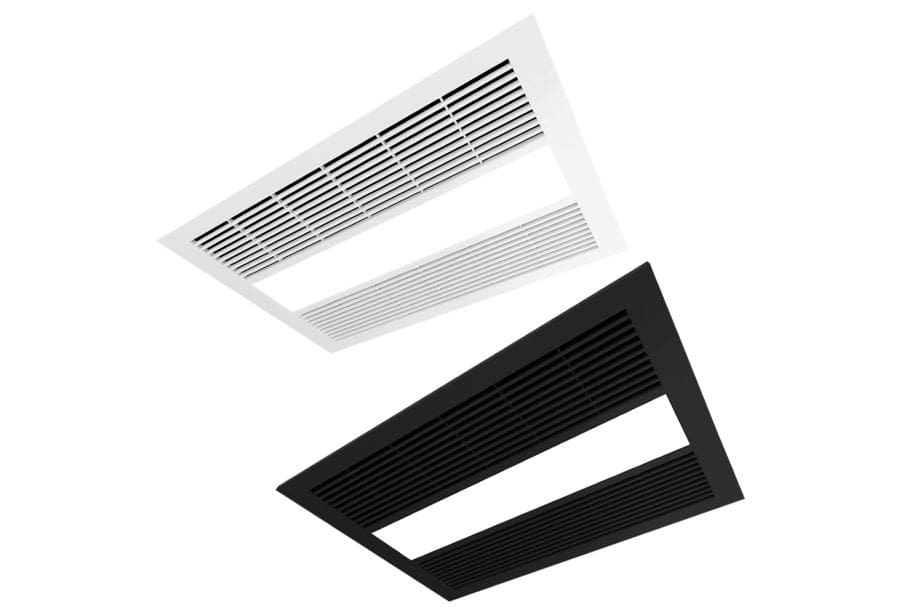
https://www.plumbingplus.co.nz/manrose-designer-milan-heat-fan-light
Product 3: Fan Heater — Goldair 2000W Fan Heater from Mitre 10
The Goldair 2000W Fan Heater is the practical, no-commitment option for Auckland homeowners who need heating without installation. Available at Mitre 10 for $50–$100, it suits renters and tight renovation budgets in suburbs like Henderson or Manurewa. It heats fast — but it’s not efficient for sustained daily use and will make itself heard in a small tiled space.
Key features:
- 2000W forced-air heating — fast warmth.
- Portable — no installation required.
- Tip-over protection and overheat shut-off.
- Adjustable thermostat.
Why it works in NZ: For temporary or supplemental heating, this does the job without commitment. It’s not the right primary heater for an Auckland winter — but as a stopgap while a renovation is underway, or as a backup unit, it’s genuinely useful.
Price range: $50–$100
Budget Tip: Pair with a dehumidifier if this is your main heating option. A fan heater moves warm air around — it doesn’t actually extract moisture, so Auckland’s humidity will still accumulate without something to deal with it.

https://www.mitre10.co.nz/shop/goldair-platinum-bathroom-heater-2000-watt-white/p/415432
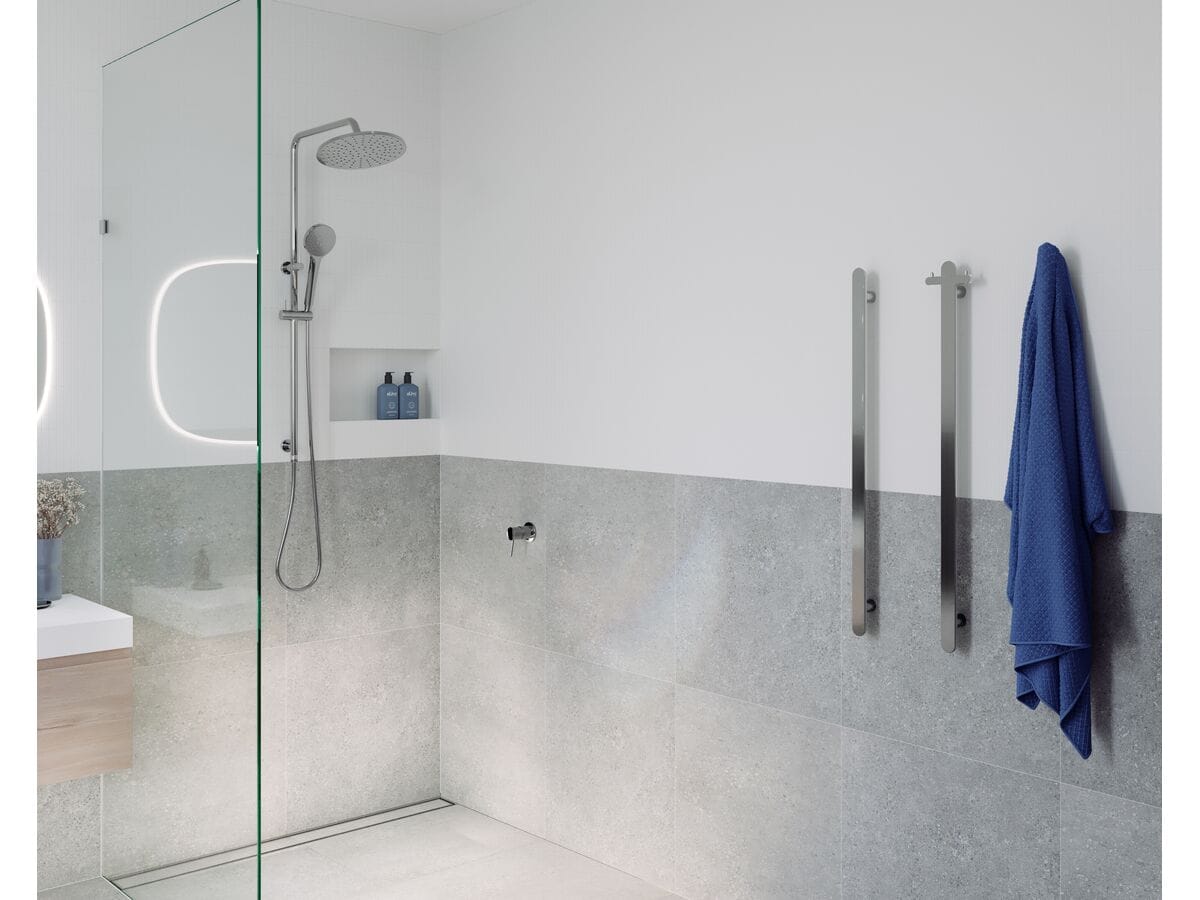
Product 4: Towel Rail — Mizu Soothe Vertical Heated Towel Rail
The Mizu Soothe Vertical solves a specific Auckland problem: damp towels. In coastal suburbs like Mission Bay, where ambient humidity stays high through winter, towels that don’t dry properly between uses become genuinely unpleasant within a few days. Available at Reece, this low-energy electric rail (approximately 100W per unit) keeps towels dry year-round while adding ambient warmth — and it looks the part in a quality renovation.
Key features:
-
Low energy draw — roughly 100W per rail.
-
Available in polished stainless, brushed stainless, matte black, or brushed gold.
-
IPX4 moisture resistance.
-
Concealed wiring for a clean wall finish.
Why it works in NZ: The 304-grade stainless steel construction holds up in coastal conditions — a detail that matters in Auckland suburbs where cheaper finishes show salt damage within a few years. The low running cost and multiple finish options make it a practical and design-conscious choice.
Price range: $300–$700
Style Tip: Match the rail finish to your tapware. Matte black against matte tapware, brushed gold against brass fixtures — consistency in hardware finish is one of the details that makes a renovated Auckland bathroom look intentional rather than assembled.
https://www.reece.co.nz/product/mizu-soothe-vertical-heated-towel-rail-triple-2002797
Product 5: Underfloor Heating — Heatwell Underfloor Heating System
Heatwell’s electric underfloor heating system is the right call for premium Auckland renovations where the brief is comfort without compromise. Suited to larger bathrooms in suburbs like Albany or Epsom, it delivers consistent radiant heat across the entire floor — under tiles, vinyl, or machined timber — with silent operation and a programmable thermostat for efficient daily use.
Key features:
-
Even radiant heat — no cold spots anywhere on the floor.
-
Programmable thermostat for precise control.
-
Completely silent — 0dB operation.
-
Compatible with tiles, vinyl, and machined wooden floors.
Why it works in NZ: Heatwell has over 40 years of NZ installation experience, which matters for a product that has to perform through Auckland’s humid coastal winters. Radiant floor heat reduces the dampness that accumulates in cold bathrooms — particularly useful in the Auckland climate where the combination of moisture and cold is the core problem.
Price range: $1,500–$3,000
Luxury Tip: Install underfloor heating during the tile-laying phase of your renovation — that’s the only practical window. Retrofitting it afterwards means lifting finished floors. If it’s in the brief, it needs to be in the programme from the start.

https://www.heatwell.co.nz/
Top 5 Comparison
|
Heater |
Type |
Price Range |
Best For |
Energy Efficiency |
|---|---|---|---|---|
|
Goldair Ceramic WiFi |
Wall-Mounted |
$150–$200 |
Small bathrooms |
High (ceramic element) |
|
Manrose 3-in-1 |
Ceiling-Mounted |
$200–$300 |
Small to medium bathrooms |
Moderate |
|
Goldair Fan Heater |
Fan Heater |
$50–$100 |
Budget or temporary use |
Low |
|
Mizu Soothe Vertical |
Towel Rail |
$300–$700 |
Style-conscious renovations |
High (low wattage) |
|
Heatwell Underfloor |
Underfloor |
$1,500–$3,000 |
Premium renovations |
High (programmable) |
Choosing the Right Product
These five products cover the realistic range of Auckland renovation scenarios — from a quick ensuite upgrade to a full premium build. Match the product to your bathroom size and renovation brief, and the right choice becomes fairly straightforward. For compact spaces on a sensible budget, the Goldair Ceramic WiFi. For most family bathroom renovations, the Manrose 3-in-1. For a premium brief with a serious floor experience, Heatwell.
Tip: Buy for your bathroom’s actual requirements, not the most impressive specification. The right heater for the space will outperform an over-specified one in a room it’s not suited for.
Installation Tips and Costs for Bathroom Heaters in New Zealand
Choosing the right heater is half the job. The other half is getting it installed properly — correctly sized, code-compliant, and done at the right point in the renovation. This section covers what you need to know about DIY vs. professional installation, typical costs in Auckland, and how to keep running costs down once it’s in.
Planning the Installation
The most common installation mistake Auckland homeowners make is treating the heater as an afterthought — something to sort once the tiles are down and the vanity is in. For underfloor heating, that’s already too late. For ceiling-mounted 3-in-1 units, ducting routes need to be confirmed before linings go up. For wall-mounted heaters, the electrical circuit needs to be part of the rough-in, not a retrofit. Getting this into the renovation programme early saves money and avoids rework.
Tip: Confirm your heater selection and installation requirements before the renovation starts — not after. For anything hardwired, that conversation needs to happen at the rough-in stage.
DIY vs. Professional Installation
The type of heater determines whether DIY is an option — and in most cases it isn’t. Fan heaters are the exception: plug them in and they work. Everything else requires a licensed electrician in NZ.
DIY Installation
Suitable for plug-and-play units like fan heaters from Mitre 10. No electrical work, no permits, no installer needed. The trade-off is that you’re limited to portable units, which have real limitations for daily winter use in an Auckland bathroom.
Pros and cons of DIY:
| Pros | Cons |
|---|---|
| No professional fees | Limited to portable heaters only |
| Done in under an hour | Not an option for any hardwired unit |
| Right for temporary or rental situations | Safety risks if misused or placed incorrectly |
DIY Tip: Keep fan heaters on a stable, dry surface at least 1.8m from any water source. This isn’t a preference — it’s the NZ electrical safety standard.
Professional Installation
Required for wall-mounted, ceiling-mounted, towel rail, and underfloor systems. These all involve hardwiring or structural integration and must comply with Auckland Council’s Building Code Clause E2. The electrician needs to be licensed and registered with the Electrical Workers Registration Board (EWRB).
Pros and cons of professional installation:
| Pros | Cons |
|---|---|
| Code-compliant and signed off correctly | Higher upfront cost |
| Safe, reliable, and warranty-valid | Needs to be scheduled — lead times vary |
| Done once, done properly | Adds to renovation timeline if not planned early |
Compliance Tip: Use an EWRB-registered electrician. Non-compliant electrical work in Auckland can result in fines up to $7,500 — and the rework costs more than hiring correctly the first time.
Installation Costs in New Zealand
Auckland labour rates are higher than most other NZ regions — a reality of the local market that applies to electrical work as much as anything else. Here’s a realistic breakdown of total costs (unit plus installation) based on current market conditions.
Cost breakdown by heater type:
| Heater Type | Unit Cost | Installation Cost | Total Cost |
|---|---|---|---|
| Fan Heater | $50–$100 | $0 (DIY) | $50–$100 |
| Wall-Mounted Heater | $150–$300 | $150–$400 | $300–$700 |
| Ceiling-Mounted Heater | $200–$450 | $200–$600 | $400–$1,050 |
| Heated Towel Rail | $250–$600 | $150–$400 | $400–$1,000 |
| 地板采暖 | $1,000–$2,500 | $500–$1,500 | $1,500–$4,000 |
Cost-Saving Tip: Bundle heater installation with other electrical work during your renovation. A sparkie already on-site costs less per hour than a separate call-out. Check with Auckland Council whether your chosen installation requires a building consent — structural work can add $500–$2,000 to the overall cost.
Keeping Running Costs Down
At 30–35c/kWh, a poorly managed bathroom heater is an expensive appliance. EECA estimates efficient heating choices can reduce household energy consumption by up to 20%. In a bathroom, the gains come from using the heater only when needed — which requires the right controls, not willpower.
Practical energy efficiency tips:
- Use timers and thermostats: Programme units like the Goldair Ceramic WiFi Heater to run 15 minutes before your shower and switch off automatically — not manually.
- Insulate the bathroom: Auckland Council recommends wall and ceiling insulation to retain heat. A well-insulated bathroom holds temperature longer after the heater turns off — meaning the heater runs less.
- Use extraction properly: Run the exhaust fan during and for 10–15 minutes after showering. Not continuously — that just removes warm air and makes the heater work harder.
- Right-size the heater: A 2400W heater in a 6m² bathroom is wasteful. Match wattage to room size — the table above makes this straightforward.
- Clean regularly: Filters on ceiling-mounted units accumulate dust in Auckland’s air. A blocked filter reduces efficiency and shortens the unit’s life.
Energy-Saving Example: A 1000W wall-mounted heater running 2 hours daily at 35c/kWh costs roughly $25 per month. A programmable timer cutting that to 1 hour saves $150 over a winter — more than the timer costs to install.
If you’re looking for specific cost estimates, try our Renovation Cost Calculator Tools
Permits and Compliance in Auckland
Certain installations require Auckland Council consent — particularly anything involving electrical changes to the structure or affecting other building elements. According to Auckland Council, installations affecting electrical systems or structural elements may need building consent, costing $500–$2,000. Non-compliance creates liability and can complicate future property sales.
Compliance Tip: Before your electrician orders or installs a unit like a Weiss ceiling-mounted heater, confirm whether a consent is required for your specific installation. That conversation is free. The rework if you get it wrong is not.
Getting the Installation Right
For Auckland homeowners, professional installation for any hardwired heater is the only sensible path. The cost is real but it’s a small fraction of what a non-compliant or poorly executed installation can cost to remediate — and it’s the only way to ensure the unit performs as specified and the warranty remains valid.
Tip: Professional installation for hardwired heaters, timers for energy control, bundled with other electrical work where possible. That combination delivers the best cost and performance outcome for an Auckland bathroom renovation.
Getting Your Auckland Bathroom Warm and Keeping It That Way
Choosing the right bathroom heater is one of the decisions in a bathroom renovation that’s easy to underestimate and hard to fix afterwards. A quality heater matched to the bathroom’s size and Auckland’s specific conditions — humidity, coastal air, cold winter mornings — protects the renovation, keeps the space functional, and makes daily use genuinely comfortable. Whether that’s the Goldair Ceramic WiFi Heater for a compact ensuite or a Heatwell underfloor system for a premium bathroom build, the right choice starts with understanding what the room actually needs. Talk to Superior Renovations if you want guidance on what suits your specific project.
Auckland's winter humidity sits at 70–80% and temperatures regularly drop below 10°C. Without proper heating, bathrooms accumulate mould, damage fixtures, and become unpleasant to use — even in a freshly renovated space. A good heater prevents all three.
Wall-mounted heaters like the Goldair Ceramic WiFi Heater suit small ensuites (5–8m²) well — compact, efficient, and app-controllable. Portable fan heaters from Mitre 10 work for temporary or budget situations, but aren't the right daily solution for Auckland winters.
Modern heaters with ceramic elements, thermostats, and timers — including units from Weiss and Goldair — can reduce running costs by up to 20% compared to older models, according to EECA. The timer is the feature that makes the biggest practical difference.
Any hardwired heater — wall-mounted, ceiling-mounted, towel rails, or underfloor systems — requires a licensed EWRB-registered electrician in NZ. Portable fan heaters are the only DIY option.
Total costs range from $50–$100 for a DIY fan heater through to $1,500–$4,000 for underfloor heating including installation. Building consent adds $500–$2,000 for more complex installations. Bundling with other electrical work during the renovation reduces labour cost.
IPX4 water resistance rating as a minimum for any bathroom heater. Overheat protection and tip-over switches on portable units. Child locks for family bathrooms. Products from Elite Bathroomware and most reputable NZ suppliers carry these as standard on quality models. Why do I need a bathroom heater in my Auckland home?
What type of bathroom heater is best for a small ensuite?
Are bathroom heaters energy-efficient?
Do I need a professional to install a bathroom heater?
How much does it cost to install a bathroom heater in Auckland?
What safety features should I look for?
需要更多信息?
Take advantage of our FREE Complete Home Renovation Guide (48 pages), whether you’re already renovating or in the process of deciding to renovate, it’s not an easy process — this guide, which includes a free 100+ point checklist, will help you avoid costly mistakes.
- 下载免费翻新指南 (PDF)
- Or try our free House Extension Cost Calculator
Still have questions?
Book a no-obligation consultation with the team at Superior Renovations — we’d love to talk through your project.
Or call us on 0800 199 888
Putting off that renovation?
We’ve partnered with Q Mastercard® to offer an 18-month interest-free payment option. Get the bathroom sorted now and spread the cost.
Learn more about Interest-Free Payment Options*
*贷款标准、费用、条款和条件适用。Mastercard 是 Mastercard International Incorporated 的注册商标,圆圈设计是 Mastercard International Incorporated 的商标。


