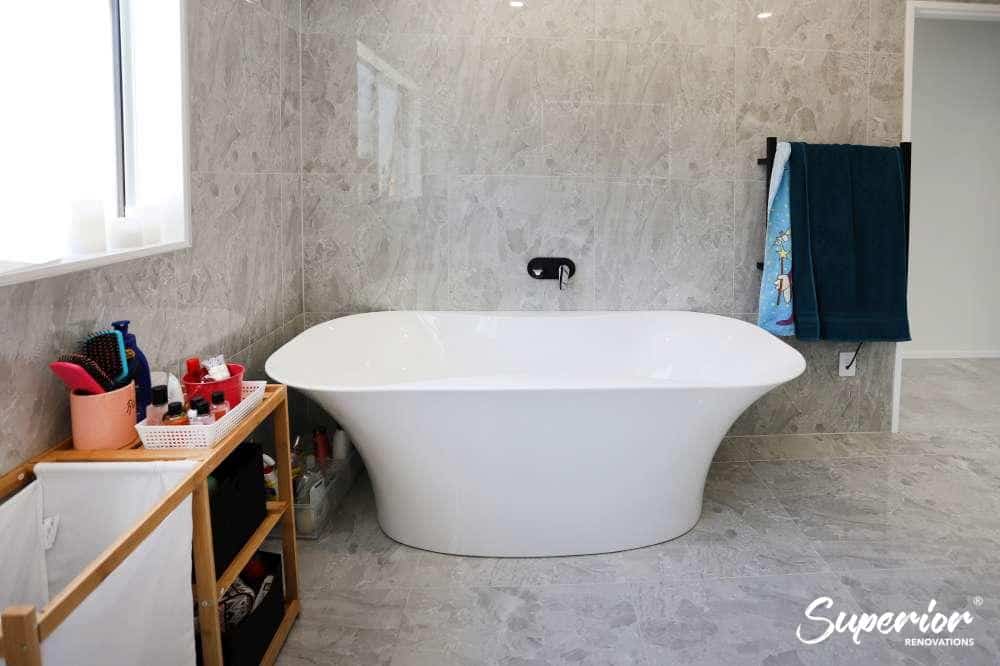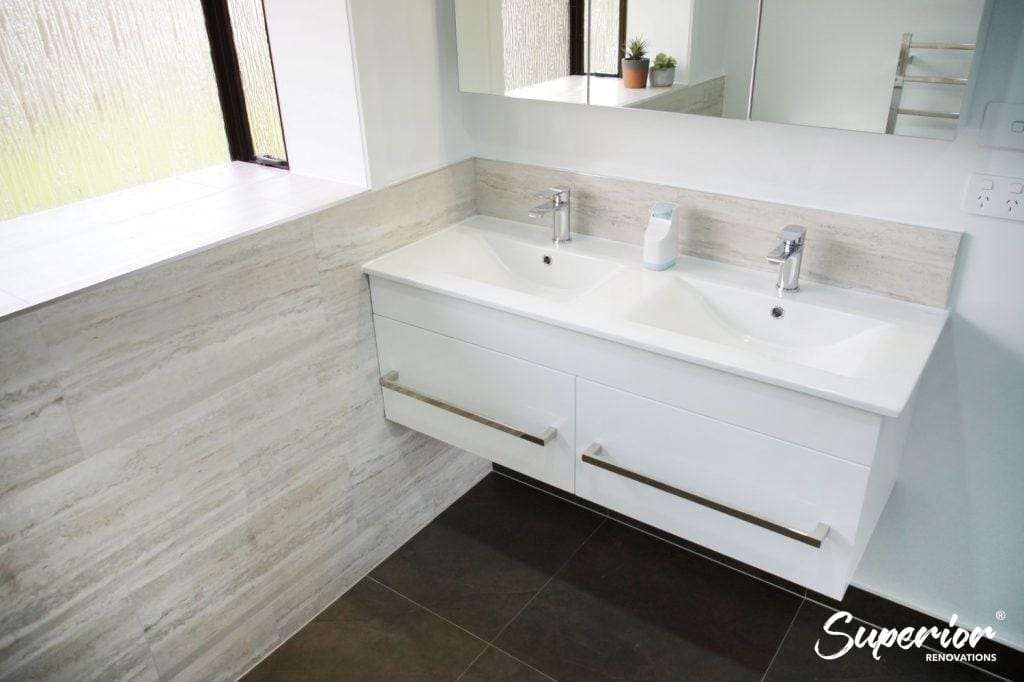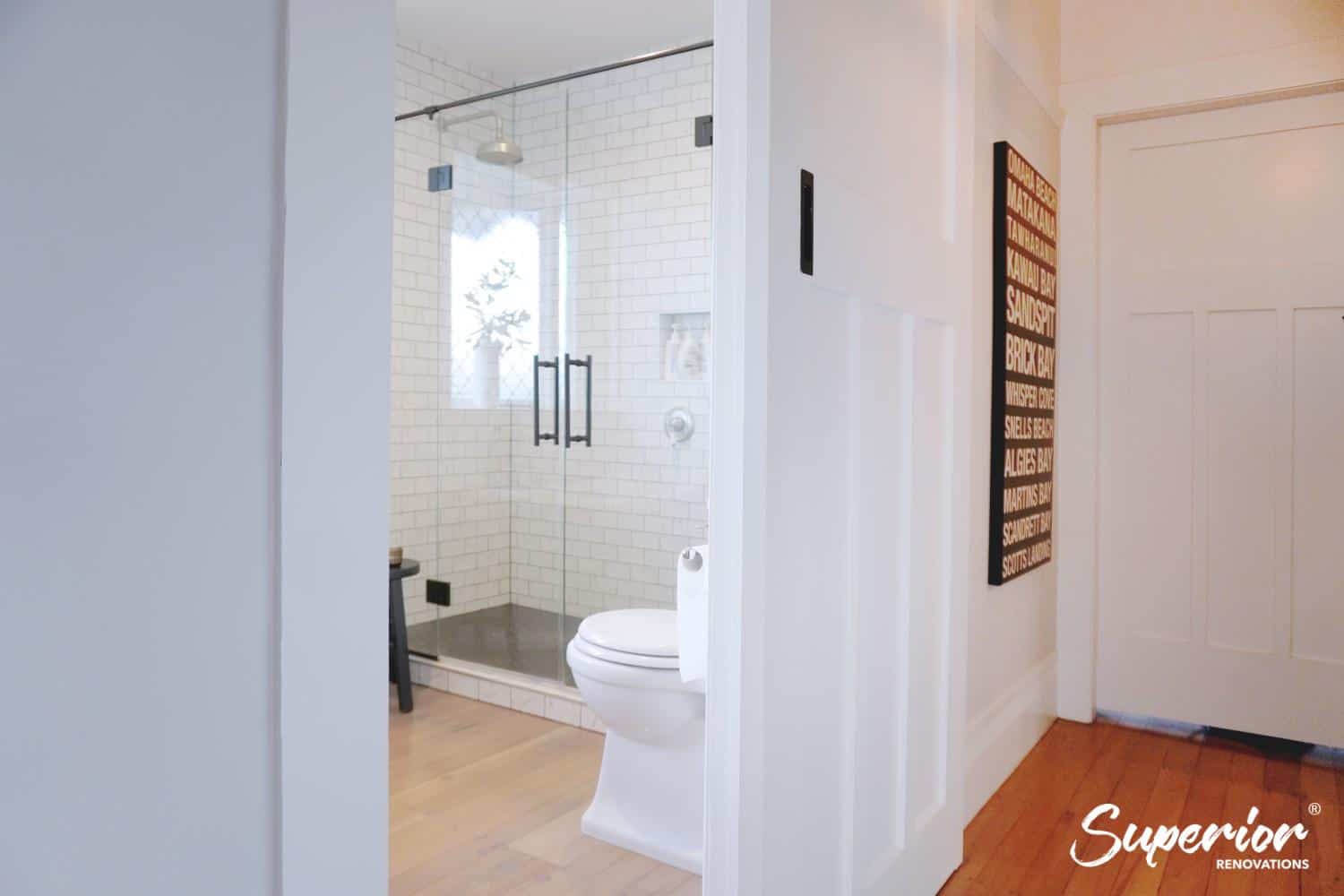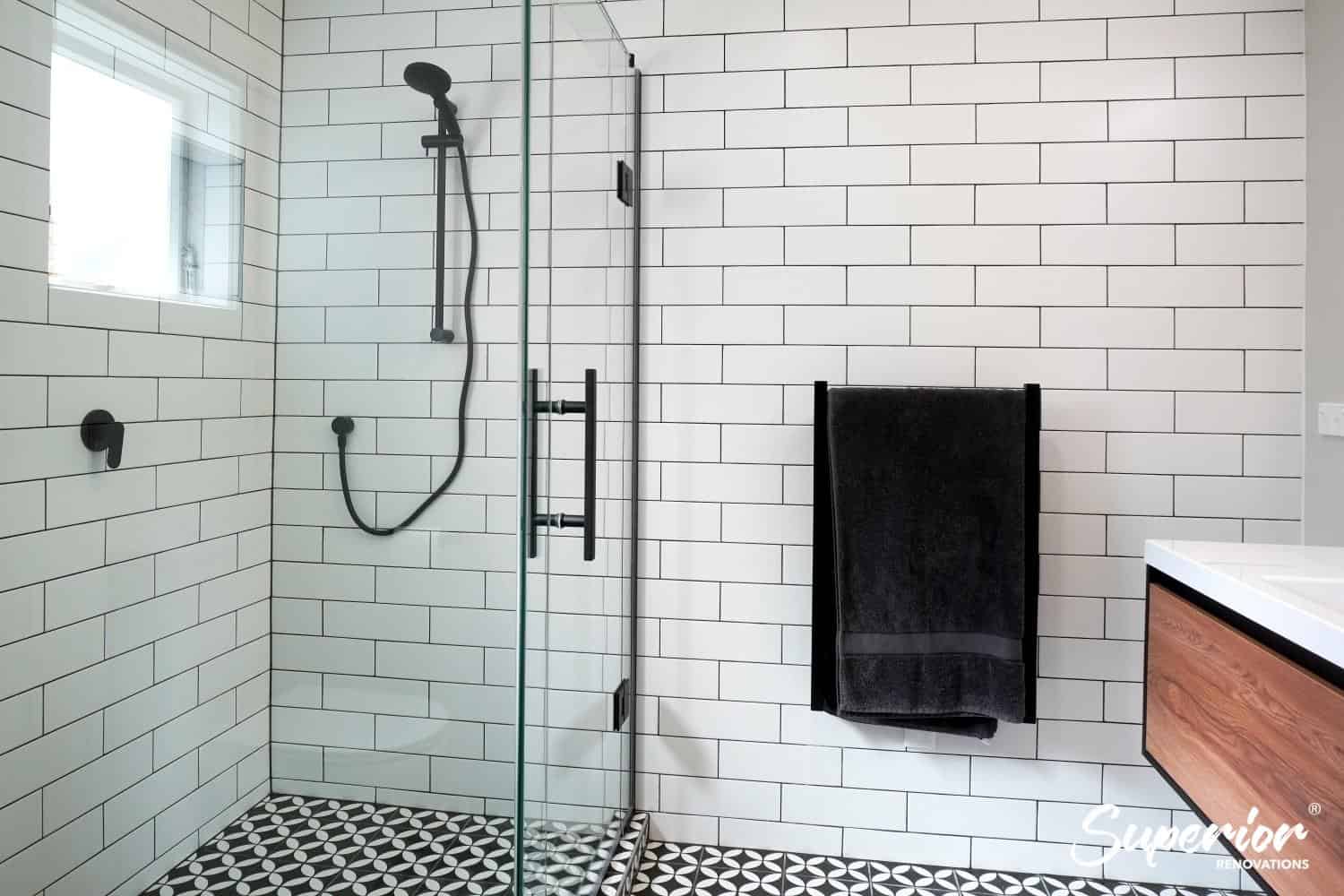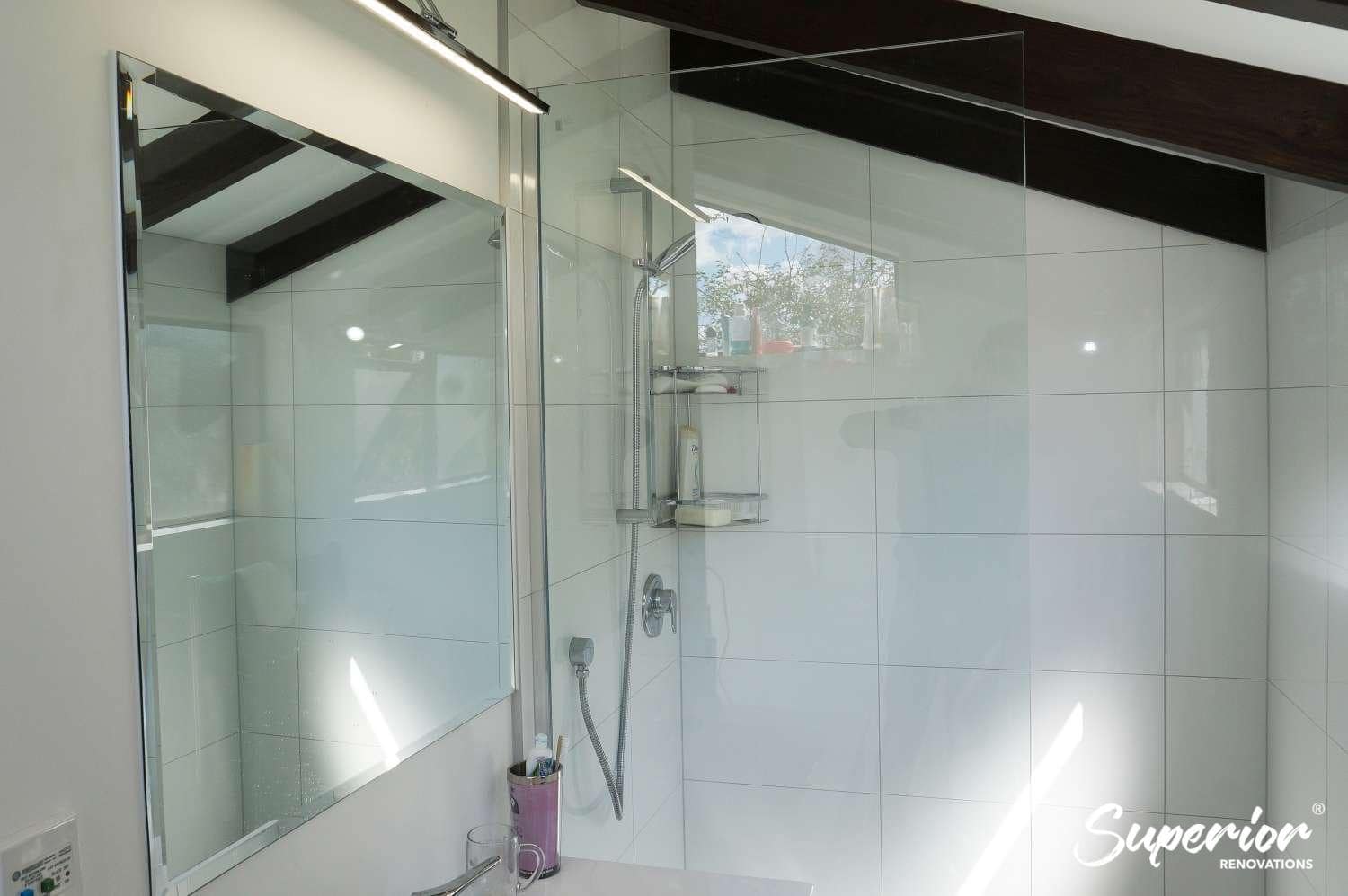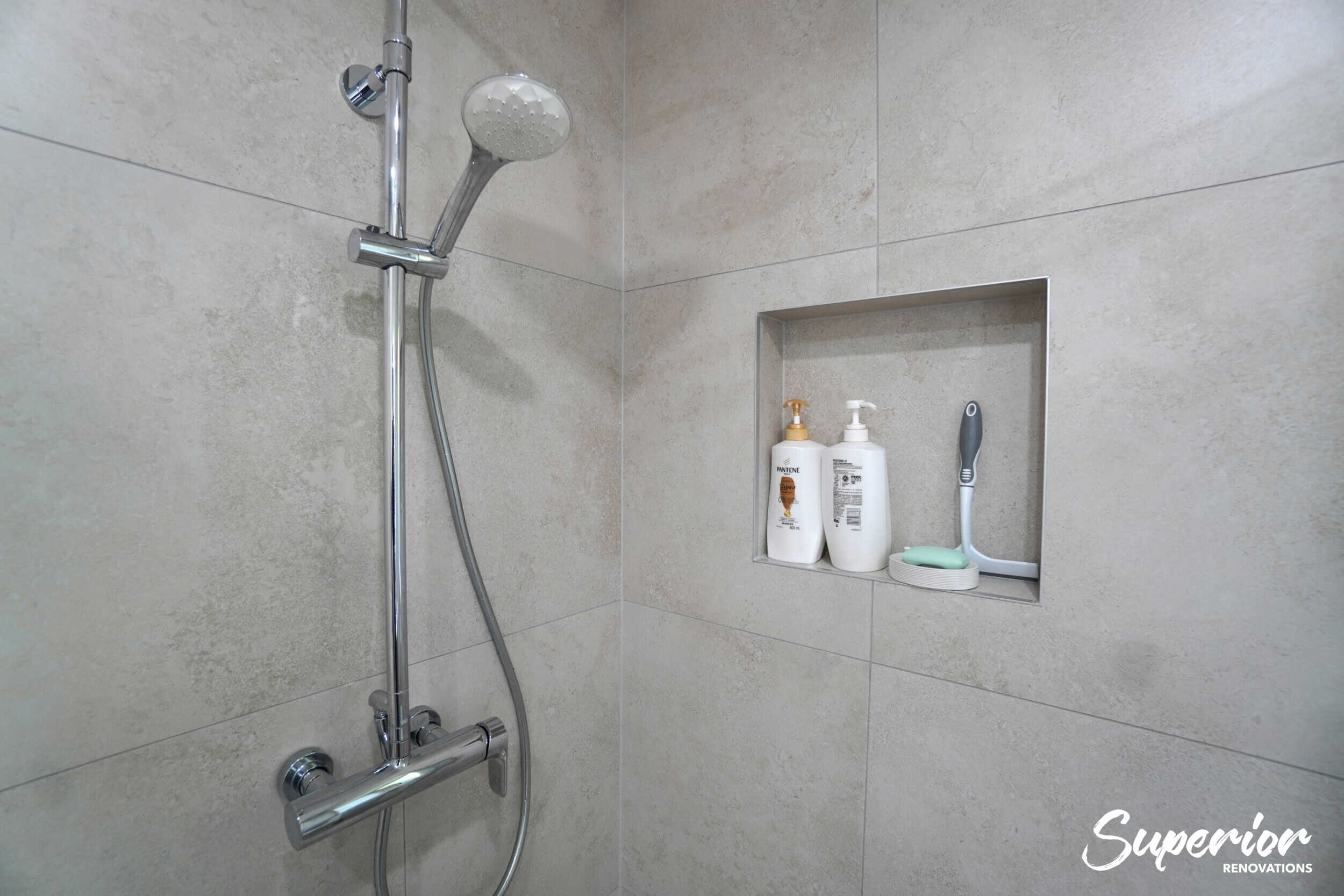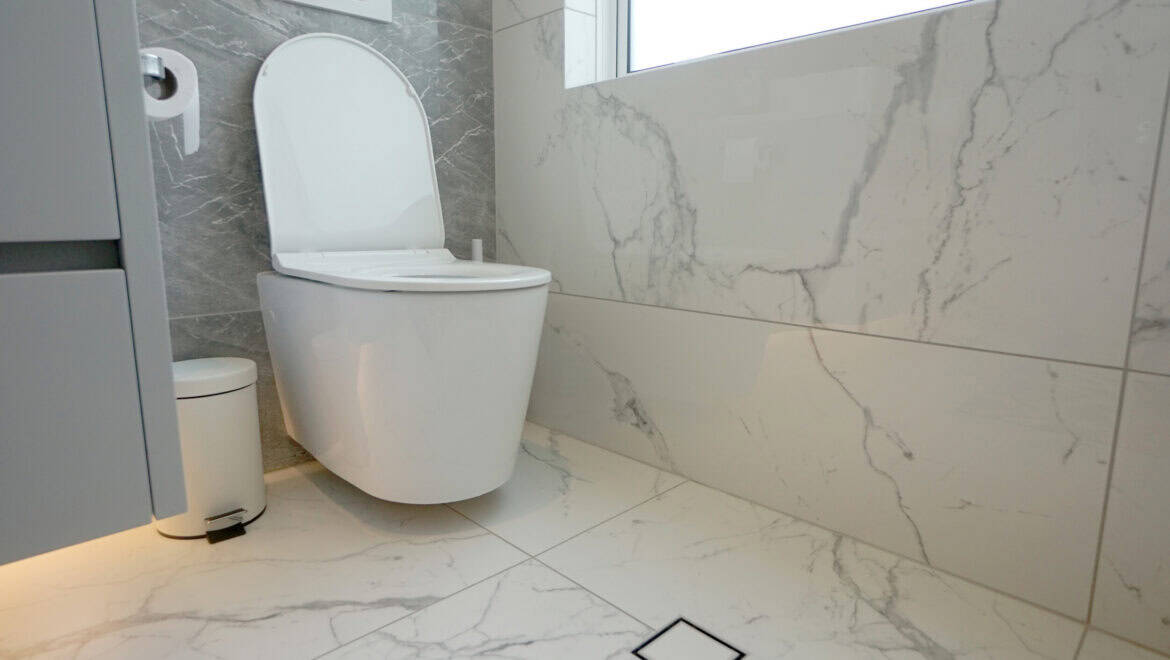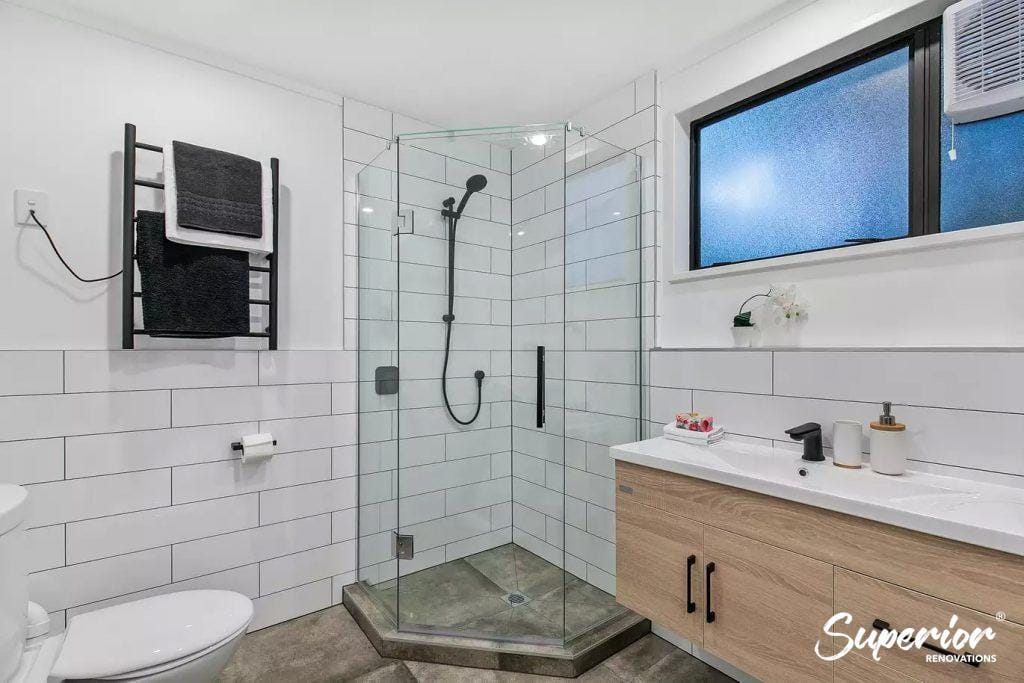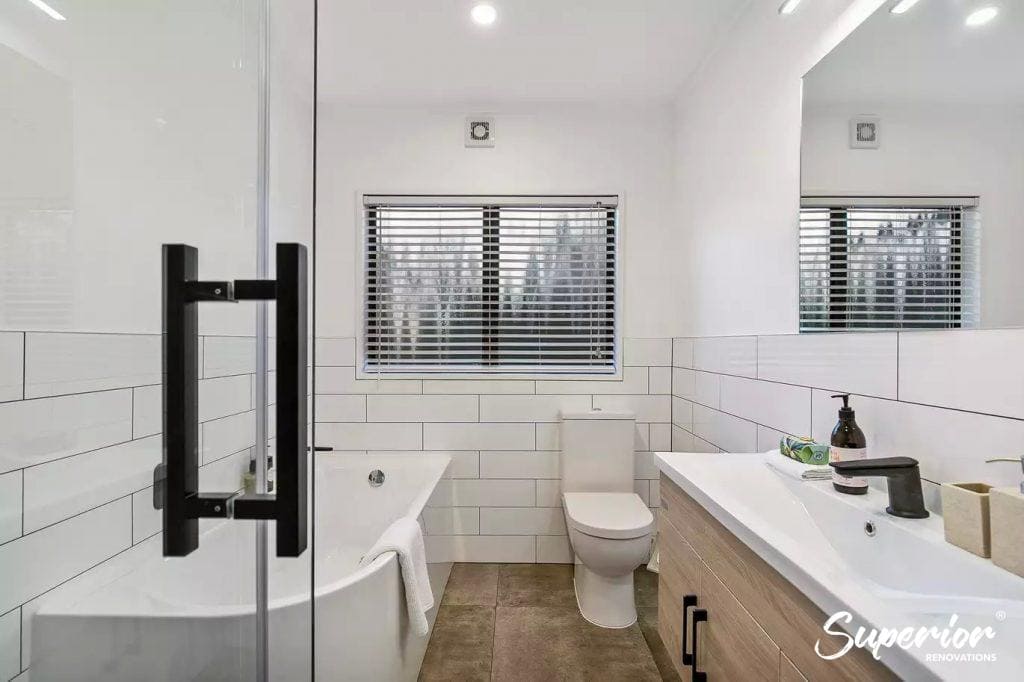

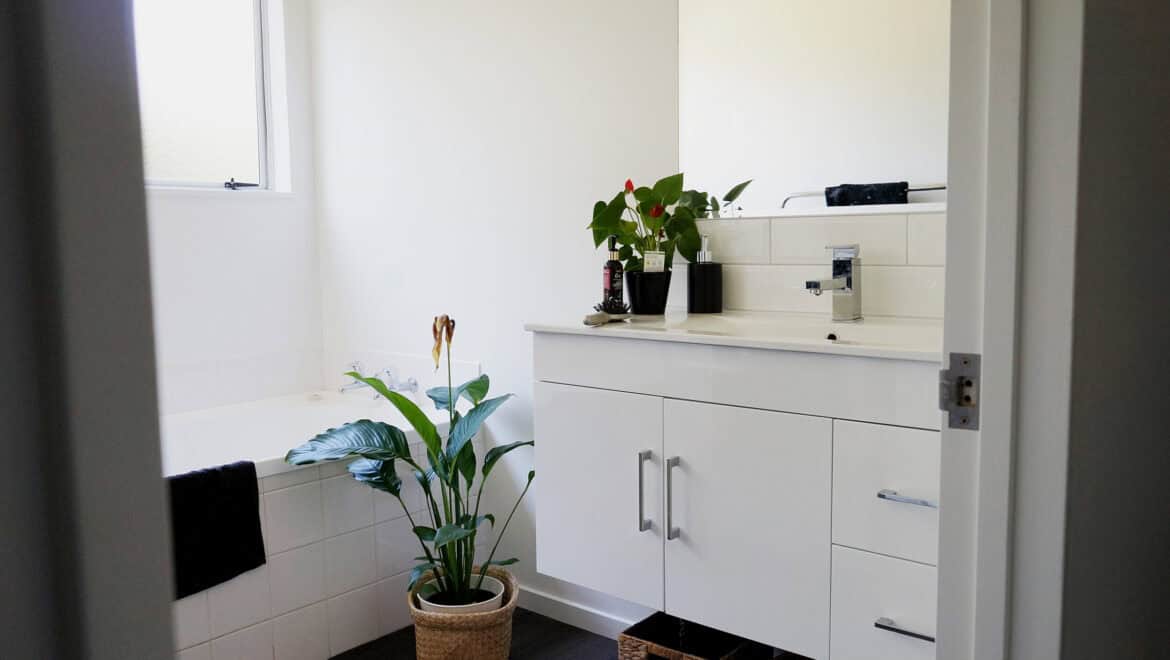
Bathroom Renovation

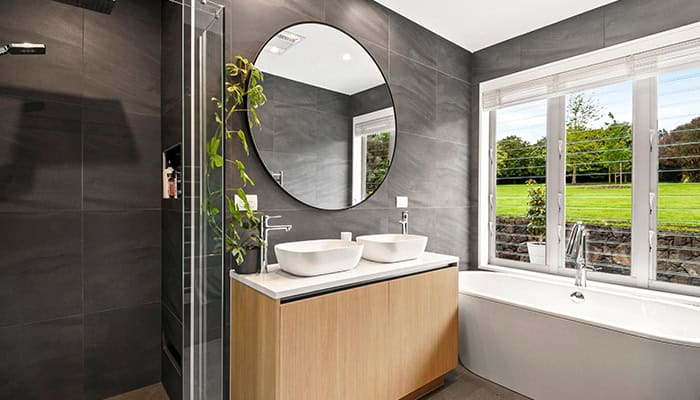
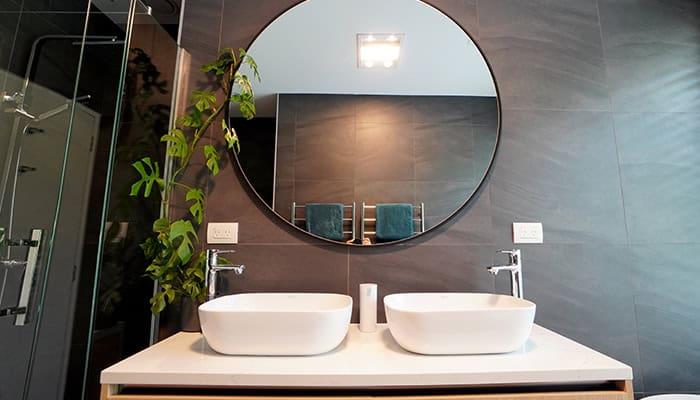
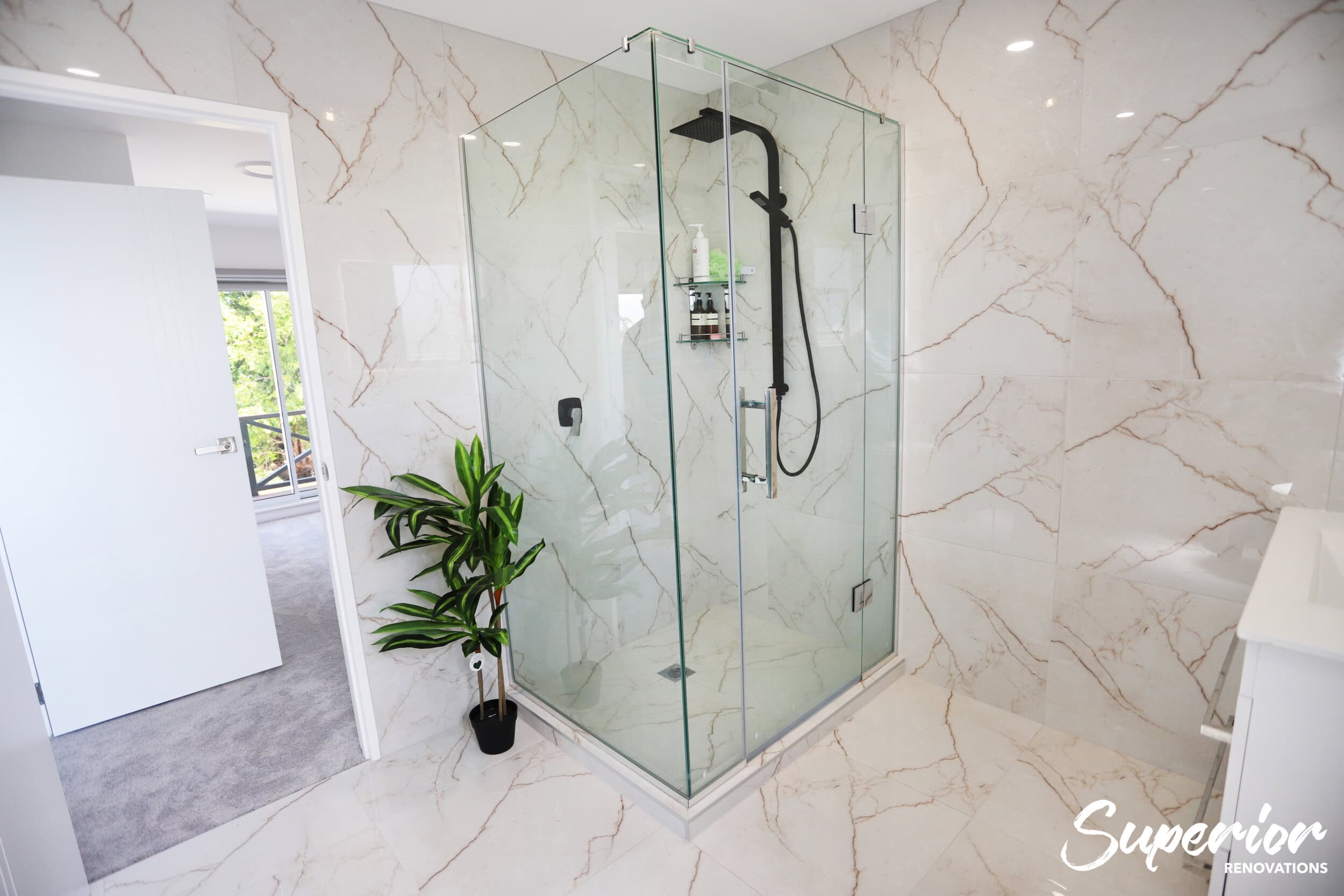
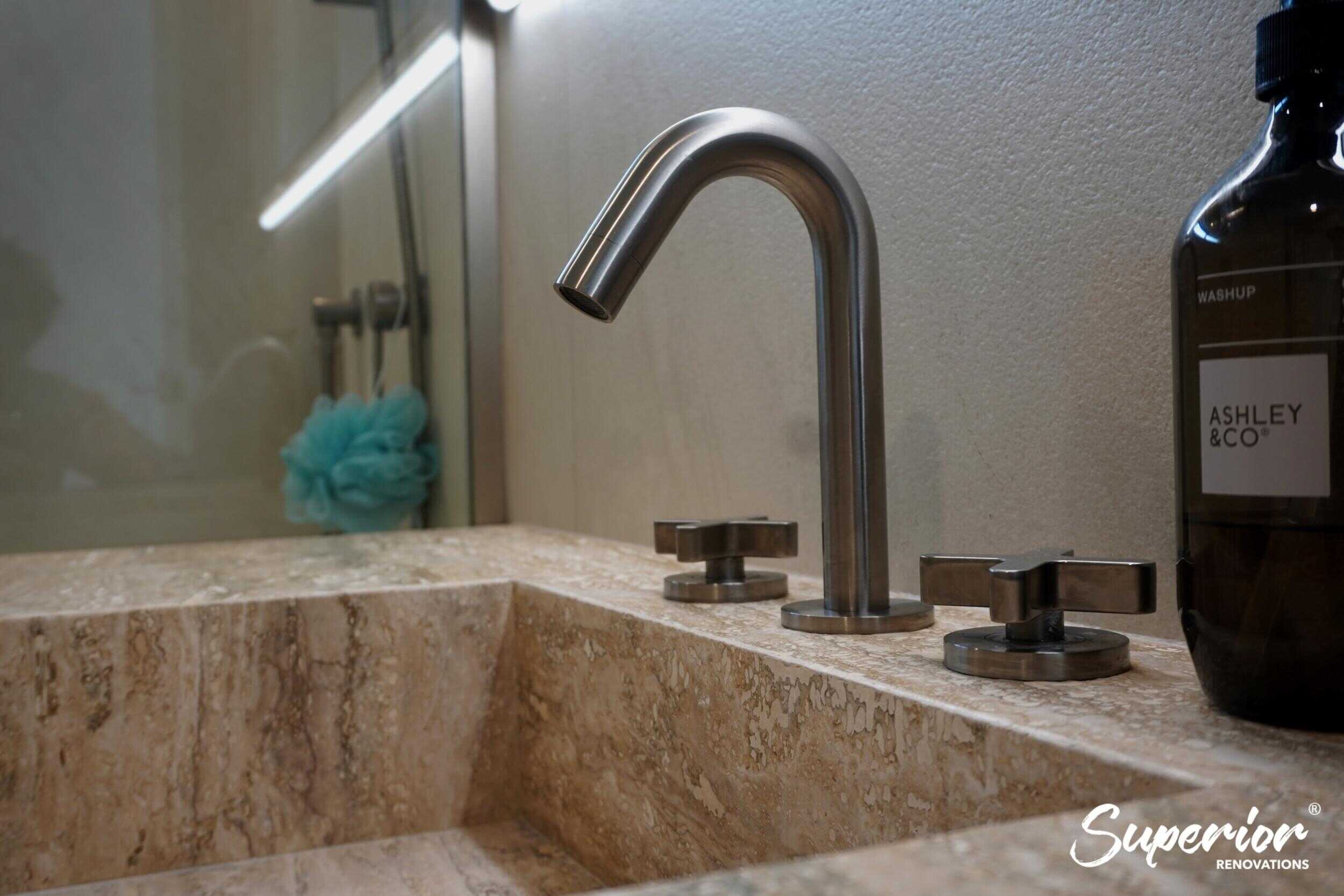
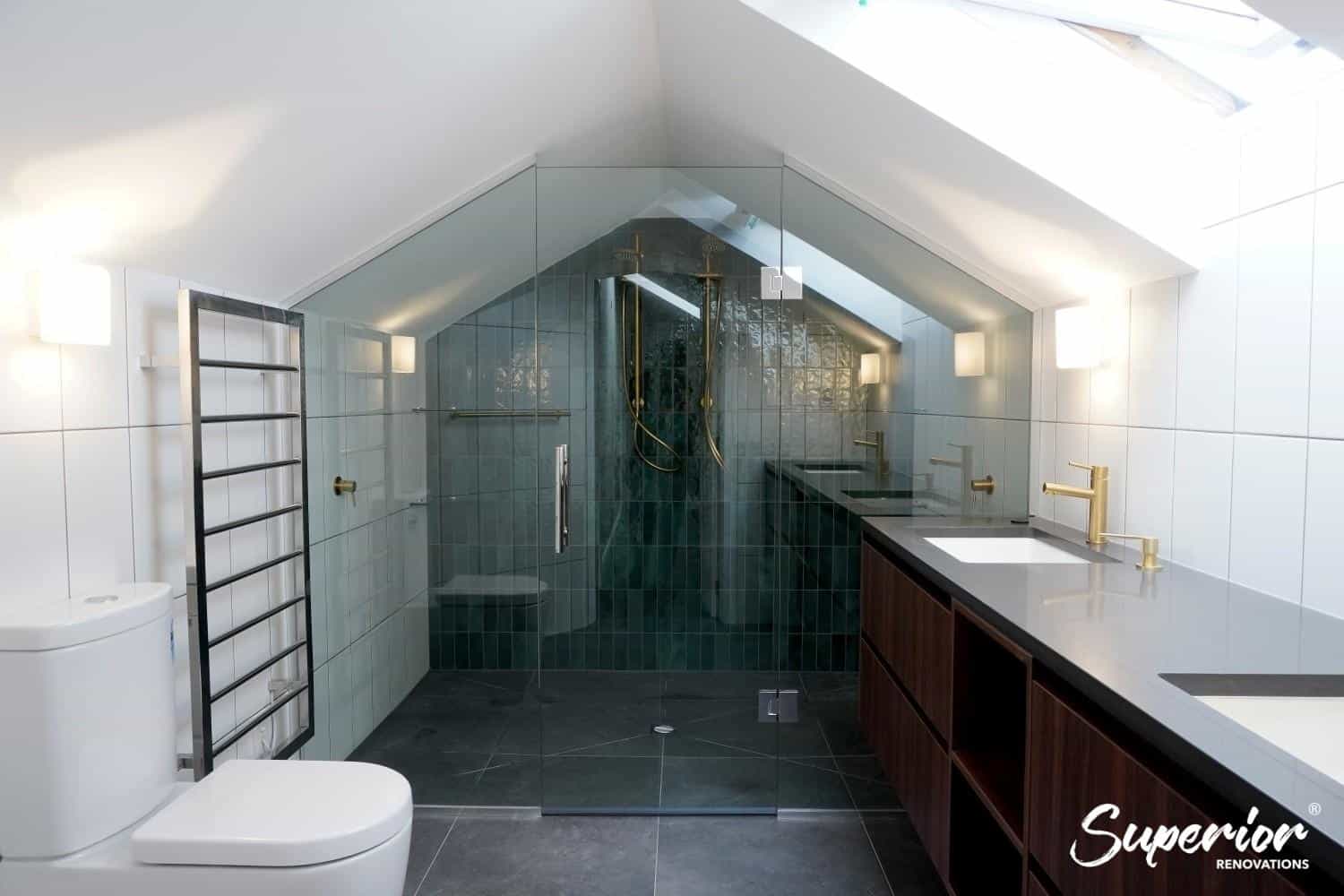
designer bathroom auckland 12 - Superior Renovations
Bathroom Renovation

Bathroom Flooring NZ: Tile vs Vinyl vs Timber (2026)

Bathroom Flooring NZ: Tile vs Vinyl vs Engineered Timber in Auckland’s Humidity

Quick answer: For most Auckland bathrooms, porcelain tile is the long-term answer and luxury vinyl plank (LVP) is the best mid-budget alternative. Engineered timber doesn’t belong in a bathroom — Auckland’s 82% average humidity will eventually cup, gap or delaminate it, regardless of what the brochure says.

We’ve removed engineered timber from Auckland bathrooms three years after install. The “water-resistant” laminate that swelled at every joint? Stripped that out too. And we’ve lifted porcelain tiles laid in the early 2000s that were still flat, sealed and good for another 15 years on the floor.

After more than 1,000 Auckland renovations, the bathroom flooring decision usually comes down to two real options. The third — engineered timber — is much narrower than the flooring retailers will tell you, and we’ll explain why honestly below.

This guide is for Auckland homeowners choosing between tile, vinyl and timber for a full bathroom or ensuite renovation. We’ll walk through what each material actually does in our humidity, what it costs installed, what it looks like 5 and 10 years on, and where each one fits in the NZ Building Code’s E3 internal moisture rules.


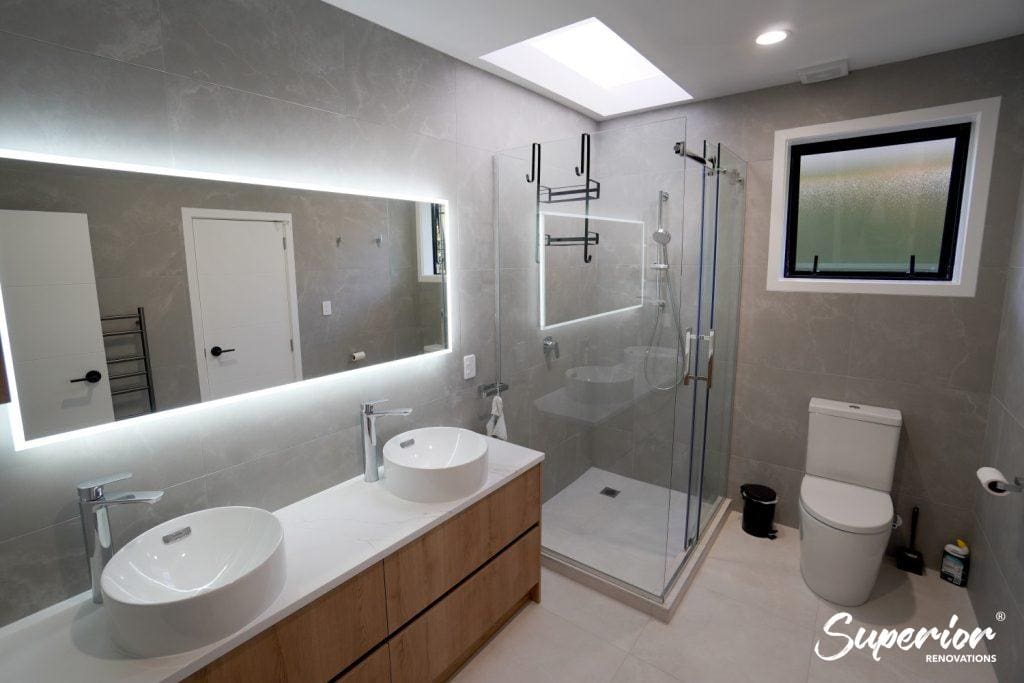
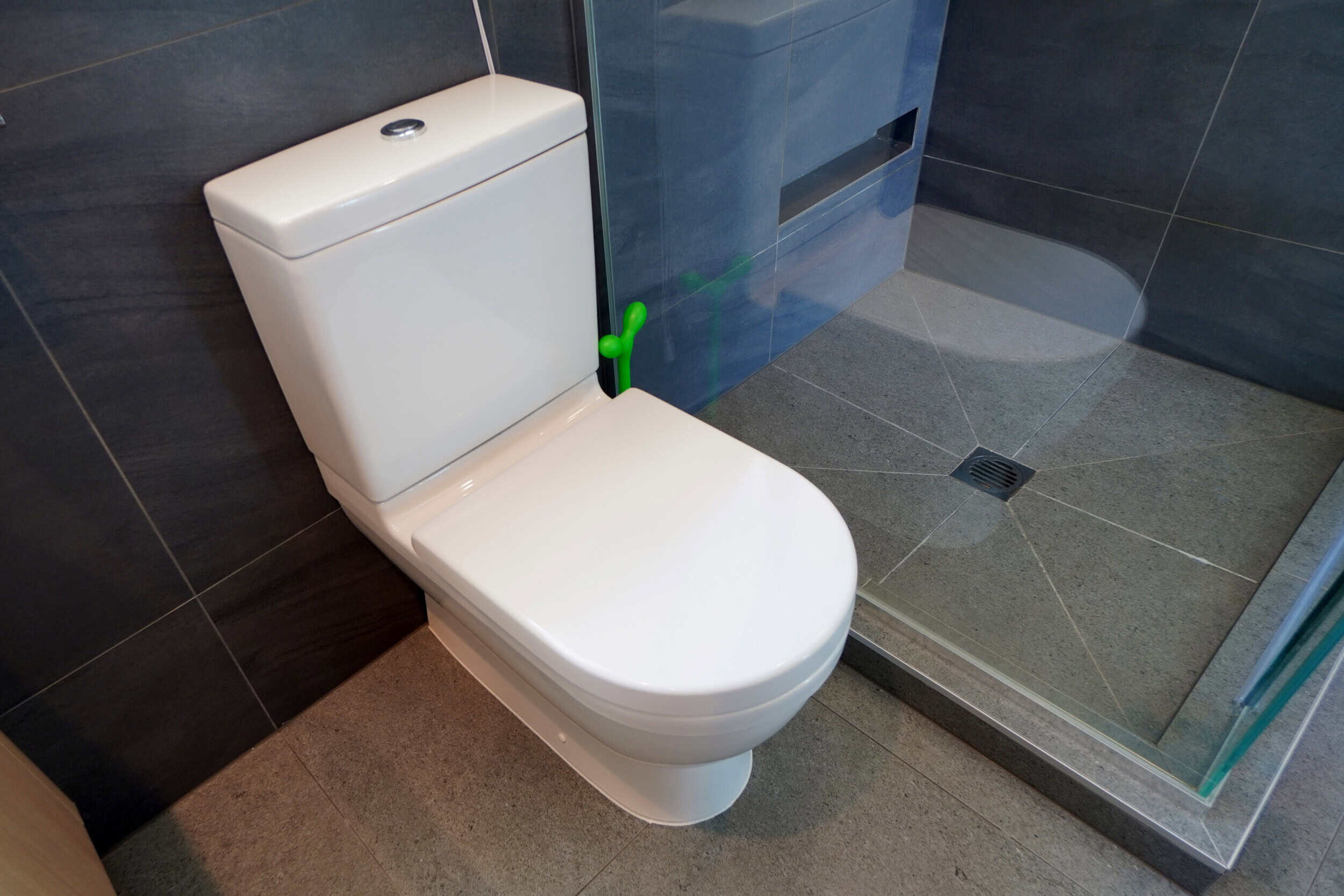
DSC00120 Bathroom Flooring NZ: Tile vs Vinyl vs Timber (2026)


What Auckland’s Humidity Actually Does to Bathroom Floors

Most flooring articles talk about “water resistance”. That’s the wrong frame for Auckland.

The real enemy isn’t a one-off splash from the shower. It’s the daily humidity cycle. According to NIWA’s long-run climate data, Auckland averages 82% relative humidity year-round, climbing to 89% in June and rarely dropping below 77%, even in November. Bathrooms then add their own load on top — relative humidity inside the room can spike past 90% during a hot shower and stay above 70% for hours afterwards if the extract fan is undersized or the door’s left shut.

BRANZ recommends indoor relative humidity stays below 60% in habitable spaces to control moisture damage and mould. In a typical Auckland bathroom, that target is exceeded every single day. Multiply that by 365 days a year and the flooring is being asked to handle an environment well outside the spec sheet of most timber and laminate products.

Three failure modes we see most often

After more than a decade of bathroom renovations across Mt Eden, Henderson, Albany, Titirangi and the rest of Auckland, the failures we strip out fall into three categories:

1. Joint swelling on water-resistant laminate. The wear layer holds up. The MDF or HDF core does not. Once moisture wicks through the joint — typically at the threshold or around the toilet — the core swells, the surface lifts, and there’s no fix short of replacement.

2. Cupping and gapping on engineered timber. The veneer is real wood. Real wood absorbs moisture from humid air, expands across the grain, and pushes against its neighbour. When the air dries out overnight, it contracts. Repeat that cycle for two years and the boards cup at the edges. Three years and gaps open up. We’ve seen it in homes with good ventilation.

3. Mould between large-format tile grout. This isn’t a tile problem — it’s a grout problem. Cement-based grout is porous. In a poorly ventilated villa bathroom in Grey Lynn or Ponsonby, mould colonises the grout lines within 18 months. Epoxy grout solves it, but most installers don’t quote for it unless you ask.

💡 Quick tip: If your bathroom doesn’t have a window AND a vented extract fan rated for the room size, fix the ventilation before you choose the floor. The best flooring in the world will fail in an unventilated Auckland bathroom.


Subfloor matters as much as the surface

The other thing every retail flooring article skips: what’s underneath. Auckland housing stock varies enormously, and the right floor depends on the subfloor as much as the topcoat.

Pre-1940s villas and bungalows (Grey Lynn, Mt Eden, Ponsonby, Devonport) usually have timber joist subfloors. Underfloor ventilation is often poor, especially after years of additions. A heavy tiled bathroom needs a fibre-cement underlay or plywood overlay rated for wet areas — and the joists may need bracing.

Leaky-era homes (mid-1990s to mid-2000s) across Auckland sometimes have framing that’s already compromised. Before any flooring decision, the framing has to be inspected and remediated where needed.

1970s–80s brick-and-tile in Manurewa, Henderson and Glen Eden often has concrete-slab bathrooms. Slabs are great for tiles, but cold underfoot — underfloor heating becomes worth the investment.

New builds in Hobsonville, Flat Bush and Millwater are typically slab-on-grade with current H1 insulation. Most flooring options work, but check what the developer specified — some have already been damaged by trade traffic before you move in.

Our bathroom renovation team assesses the subfloor before quoting any flooring — it’s the difference between a floor that lasts 10 years and one that fails in three.


Option 1: Porcelain and Ceramic Tile — Still the Auckland Default

Tiles have been the default bathroom floor in Auckland for 40 years. There are reasons that haven’t changed.

Porcelain tile has a water absorption rate below 0.5%. Ceramic tile sits between 3% and 6%. The NZ Building Code’s Acceptable Solution E3/AS1 requires a maximum 6% water absorption for tiles in wet areas, plus glazed edges on glazed tiles and a waterproof membrane laid underneath in accordance with AS/NZS 4858:2004. Porcelain meets the spec by a wide margin. That’s why it’s specified on the vast majority of bathroom projects coming out of our Wairau Valley showroom.

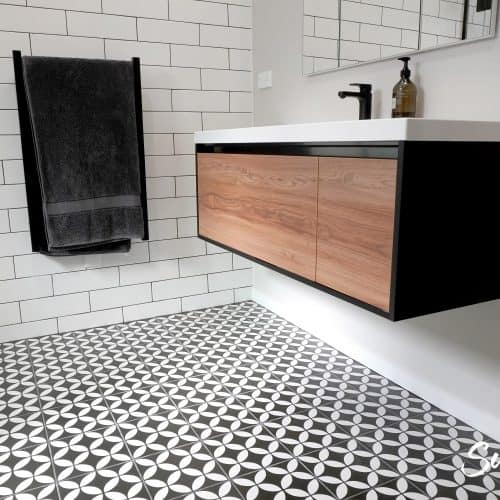
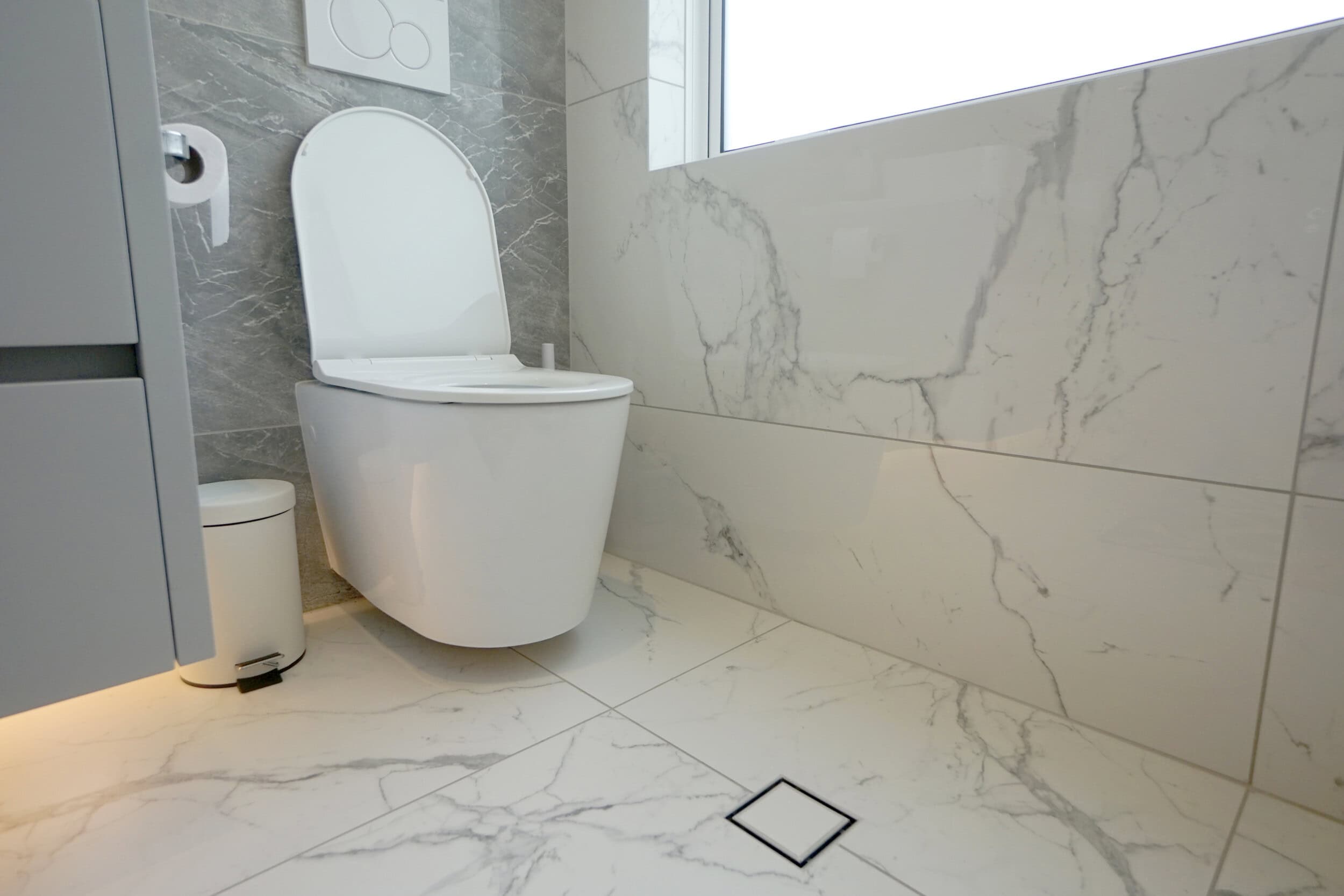
2e80cbcc-8bcd-4fcd-a18a-aa649c2c1220 Bathroom Flooring NZ: Tile vs Vinyl vs Timber (2026)


Porcelain vs ceramic vs natural stone — what we actually specify

Porcelain is what we recommend for almost every Auckland bathroom. Dense, dimensionally stable, near-zero absorption, available in large formats (600×600, 600×1200) that minimise grout lines. Through-body porcelain hides chips because the colour runs through the tile, not just the glaze.

Ceramic is fine for walls and acceptable on bathroom floors when budget is tight. The trade-off is durability — ceramic chips and cracks more easily and absorbs more moisture. We see ceramic floor tiles fail at the threshold (where the bathroom door catches them) and around floor wastes more often than porcelain.

Natural stone — travertine, marble, limestone — is beautiful and high-maintenance. Stone needs sealing every 12–24 months in an Auckland bathroom, and an unsealed acid spill (vinegar, citrus cleaner, even some shampoos) etches the surface permanently. Stone gets specified on premium projects in Remuera, Herne Bay and Parnell where the homeowner is committed to the upkeep. For everyone else, porcelain that looks like stone is a better answer.

We work with The Tile Depot on most of our bathroom tile selections — the range covers everything from $40/m² builder-grade porcelain to $200+/m² Italian feature tiles.


The grout question — and why it matters more than the tile

Most tile failures we strip out aren’t tile failures. They’re grout failures.

Standard cement-based grout is porous. In a humid bathroom, water and shampoo residue soak into the grout, mould colonises it, and within two years the grout lines look grey, patchy and tired. Epoxy grout costs more upfront — typically an extra $40–$80/m² on the labour bill — but it’s stain-resistant, mould-resistant and effectively maintenance-free. On any bathroom we expect to last 15+ years, we specify epoxy in the wet zones.

“The mistake we see most often is people choosing the tile carefully and then leaving the grout decision to whoever’s installing. Grout is half the floor visually, and almost all the maintenance burden. Spec it as carefully as you spec the tile — especially the colour. A dark grout with a light tile looks great for a year, then the contrast just shows every flaw.”
— Cici Zou, Designer (NZ Dip. Interior Design, Certified Designer), Superior Renovations


The cold-underfoot problem (and how to solve it)

The honest weakness of tile is temperature. Tile sits at room temperature, and Auckland room temperatures in winter can drop below 14°C inside a poorly heated bathroom. Stepping out of a hot shower onto a 14°C tile floor is unpleasant.

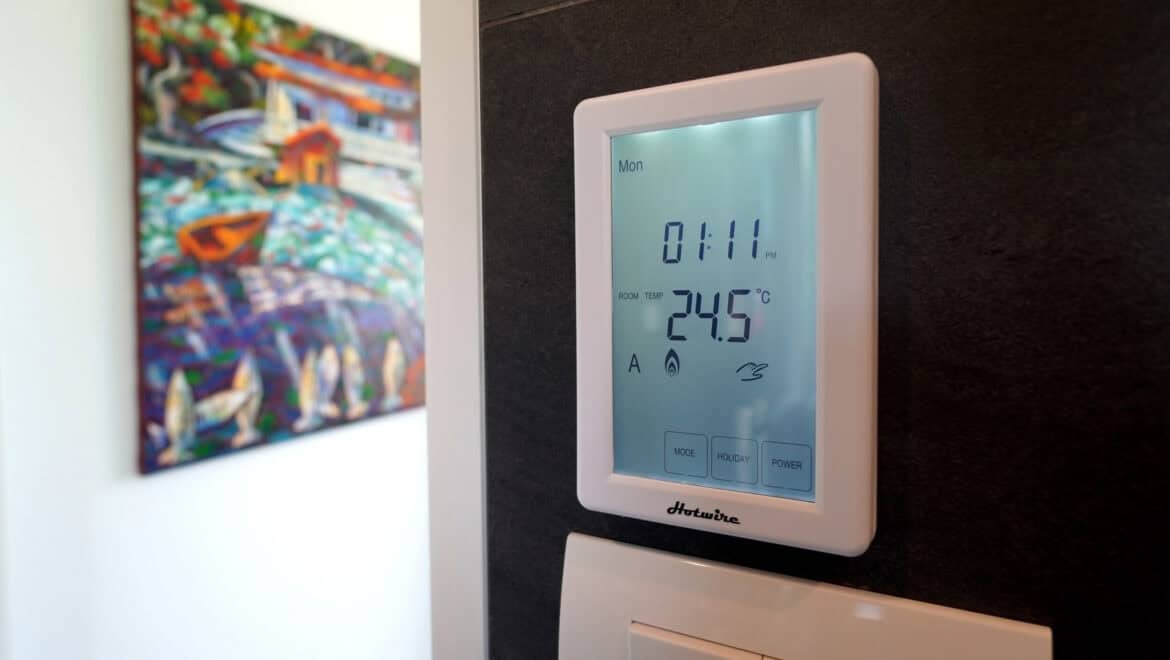
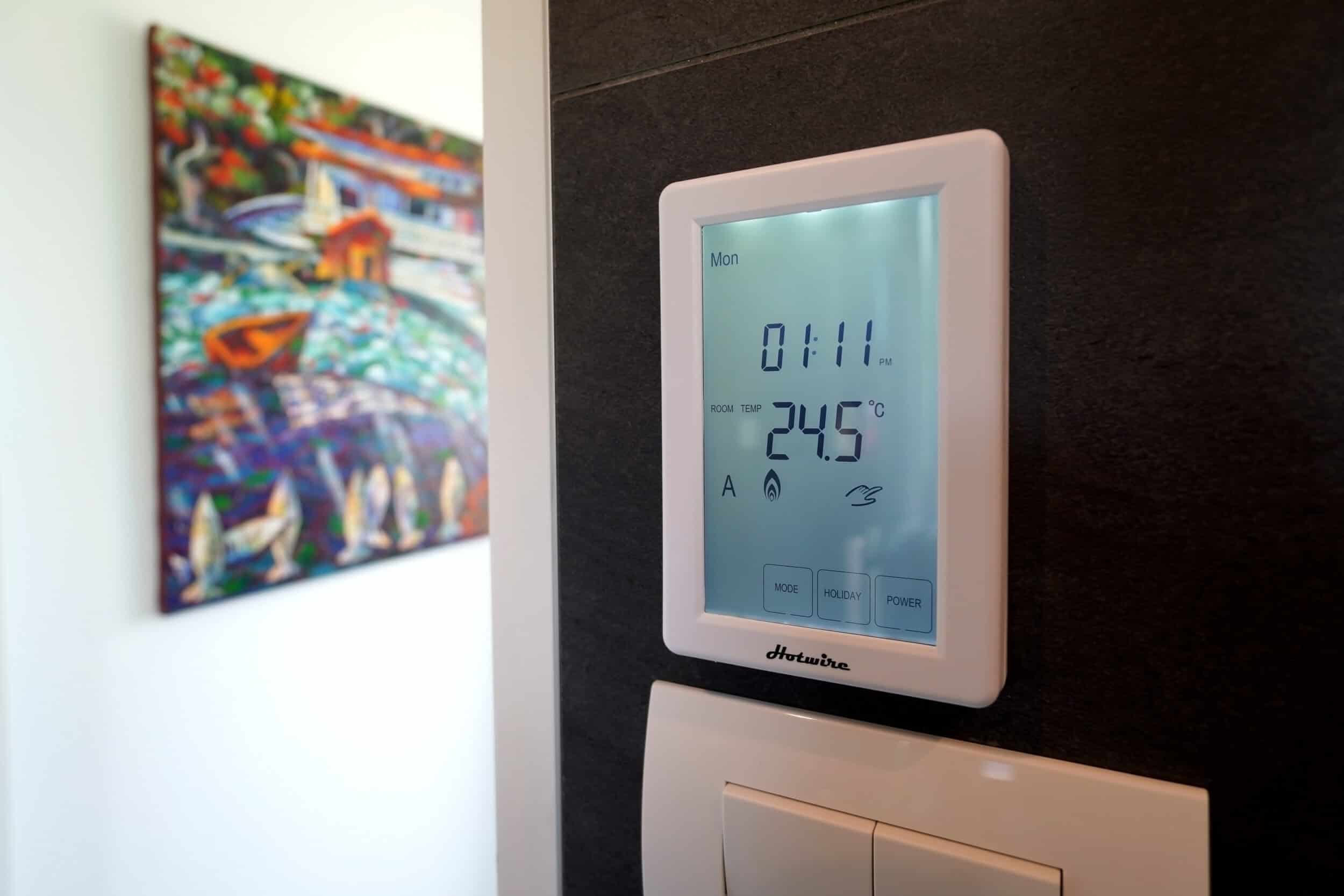
Underfloor heating fixes it permanently. Electric underfloor heating mats run $80–$150/m² supplied and around $2/day to operate on a thermostat-controlled timer. For a 6m² Auckland bathroom, that’s roughly $1,500–$2,500 supplied and installed — a small percentage of the total renovation cost and the single upgrade that clients tell us they’d never skip again.

💡 Quick tip: Slip resistance matters as much as look. Ask for the R-rating of any tile before you sign off — R10 is the minimum for a residential bathroom floor, R11 is better for the shower zone. Polished porcelain looks beautiful and is dangerous wet.


Tile cost — what to budget for an Auckland bathroom

For a typical 6m² Auckland bathroom floor:

Tile type Supply ($/m²) Installed total ($/m²) Realistic 6m² floor cost
Builder-grade porcelain $40–$60 $120–$160 $720–$960
Mid-range porcelain $70–$120 $160–$220 $960–$1,320
Premium porcelain / stone-look $120–$200+ $220–$320+ $1,320–$1,920+
Natural stone $150–$300+ $280–$450+ $1,680–$2,700+
Add: waterproof membrane + substrate prep $80–$150 $480–$900

For a sense of where flooring sits in a full bathroom budget, our bathroom renovation cost calculator gives a tailored estimate for your project.


Option 2: Luxury Vinyl Plank (LVP/SPC) — The Category That Changed

Five years ago, we wouldn’t have written this section. Vinyl in a bathroom meant sheet vinyl glued to particleboard, and it looked like rental kitchen flooring.

The category has changed completely. Modern luxury vinyl plank (LVP) and stone polymer composite (SPC) flooring is genuinely waterproof — not water-resistant, waterproof — with a wear layer that holds up to family-bathroom use, click-lock or glue-down installation, and a finish that mimics timber convincingly. We now specify it on roughly 30% of our bathroom renovations, particularly ensuites, low-traffic family bathrooms and rentals.

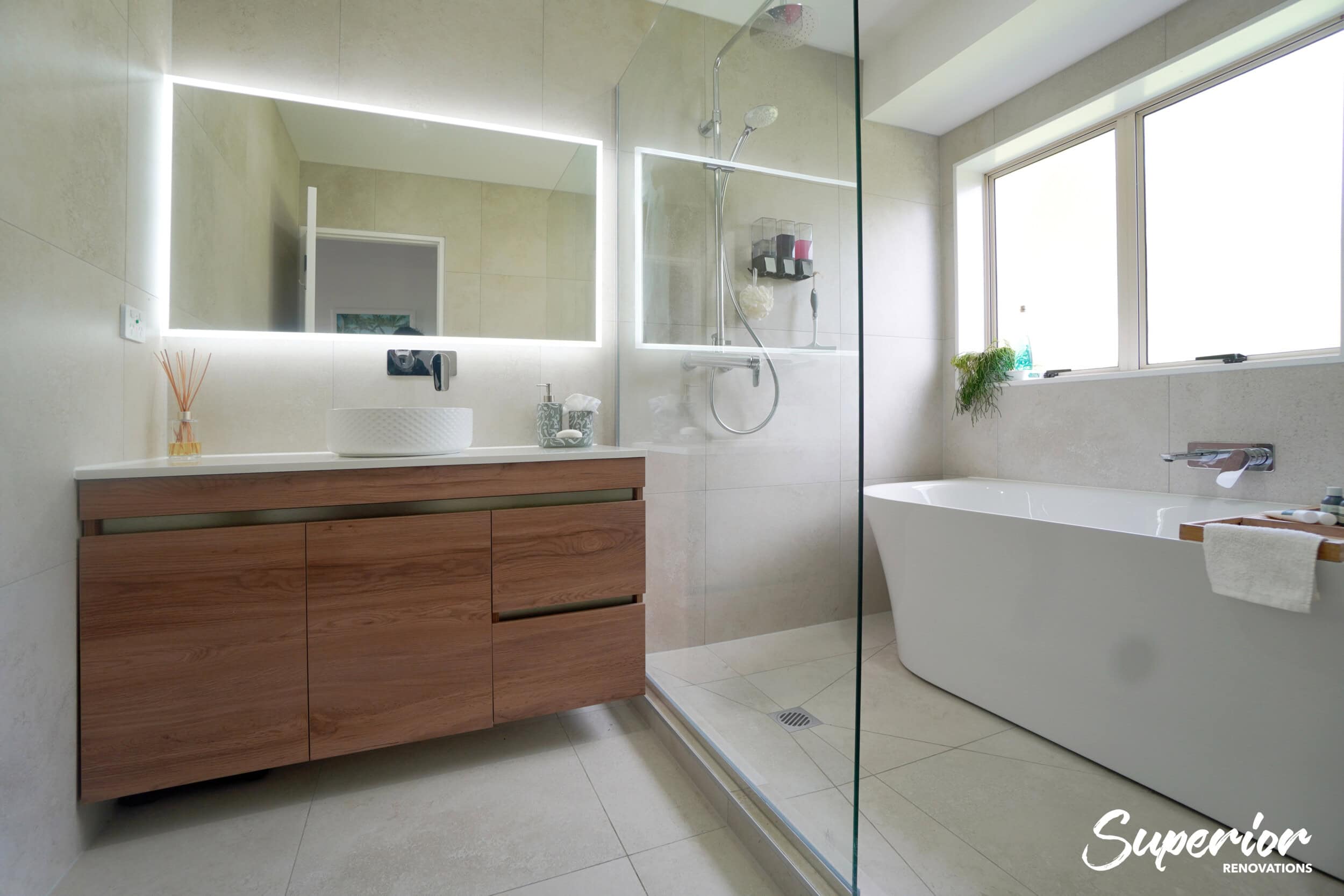
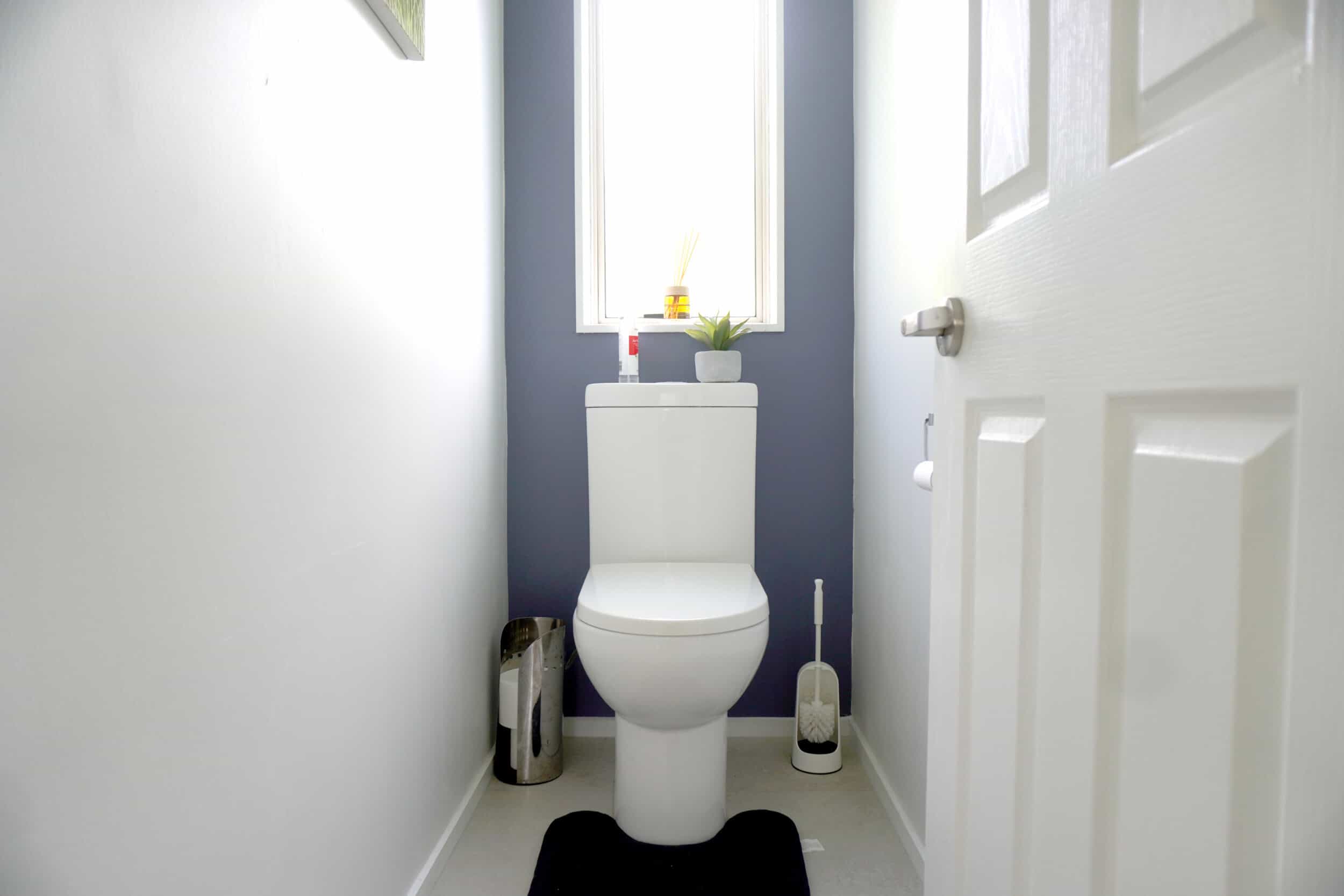
47f079f9-a63b-412f-91fb-ad56c7b989a5 Bathroom Flooring NZ: Tile vs Vinyl vs Timber (2026)

LVP vs SPC vs sheet vinyl — what’s the difference

The category has three main subtypes, and the distinction matters.

LVP (Luxury Vinyl Plank) — typically 4–7mm thick, flexible PVC core, click-lock or glue-down install, timber-look or stone-look surface. Suitable for bathrooms when fully waterproof and installed correctly.

SPC (Stone Polymer Composite) — rigid core made from limestone powder and PVC, typically 4–6mm thick. More dimensionally stable than LVP, denser, harder underfoot. Our preferred subtype for full bathrooms because the rigid core handles temperature and humidity cycling without flexing at joints.

Sheet vinyl — old-school continuous roll, heat-welded at the seams. Cheap, fast to install, genuinely seamless when done right. Looks dated to most modern eyes, but in rental properties and laundry-bathrooms where budget is the priority, it’s still a defensible choice.

What to look for on the spec sheet

Most LVP/SPC failures we see come down to two specifications buyers don’t check: wear layer thickness and joint type.

Wear layer. This is the transparent top layer that protects the printed design from scratches and scuffs. For a bathroom, 0.4mm is the absolute minimum and 0.5mm is what we specify on family bathrooms. Anything below 0.3mm is sold as residential-grade but won’t last in a bathroom under daily use.

Joint type. Click-lock LVP is faster to install and works well in dry rooms. In a bathroom, we install glue-down LVP — the adhesive forms a continuous moisture barrier and the joints can’t lift if standing water sits on the floor for any length of time. The cost difference is small. The reliability difference is significant.

“The trade-off most people don’t understand is install time. A tiled bathroom needs the substrate, then waterproofing, then the membrane to cure, then tiling, then grouting, then sealing. That’s eight to ten working days for the floor alone. Glue-down LVP is two days. On a tight reno timeline — say a Henderson family with one bathroom and two kids — that’s a real difference.”
— Alison Yu, Designer, Superior Renovations


Where LVP/SPC works — and where it doesn’t

We specify LVP on:

  • Ensuites and master bathrooms with low water exposure (separate enclosed shower)
  • Second bathrooms in family homes — kids’ bathrooms, guest bathrooms
  • Combined laundry-bathrooms where the floor needs to handle washing machine overflow risk
  • Rental properties and investment renovations where install speed and 10-year durability beat 25-year longevity

We don’t specify LVP on:

  • Wet rooms with no shower enclosure — large quantities of standing water can still find joints
  • Heritage villa bathrooms where the look needs to be authentic stone, ceramic or tile
  • High-end resale renovations in premium suburbs (Remuera, Herne Bay) where buyers expect tile

💡 Quick tip: Ask for a sample piece and feel the weight. SPC and quality LVP feel substantial in your hand. If a sample feels light or flexes easily, the core is thin or low-density — it won’t perform in a wet area, regardless of the marketing.


LVP cost — what to budget

For a 6m² Auckland bathroom floor in glue-down LVP or SPC:

Product tier Wear layer Installed ($/m²) Realistic 6m² floor cost
Entry LVP 0.3mm $50–$70 $300–$420
Mid-range LVP/SPC 0.4mm $70–$100 $420–$600
Premium SPC (recommended) 0.5mm+ $100–$140 $600–$840
Add: substrate levelling (if needed) $30–$60 $180–$360

LVP comes in roughly half the installed cost of mid-range tile. Over a 10-year horizon, the running maintenance cost is also lower — no grout to scrub, no sealing to redo. The trade-off is replacement: where porcelain tile lasts 20–30 years, quality LVP lasts 10–15. For most Auckland homeowners, that trade-off is worth it.


Option 3: Engineered Timber — Why We Don’t Install It in Auckland Bathrooms

This is where we’ll be more direct than most flooring articles.

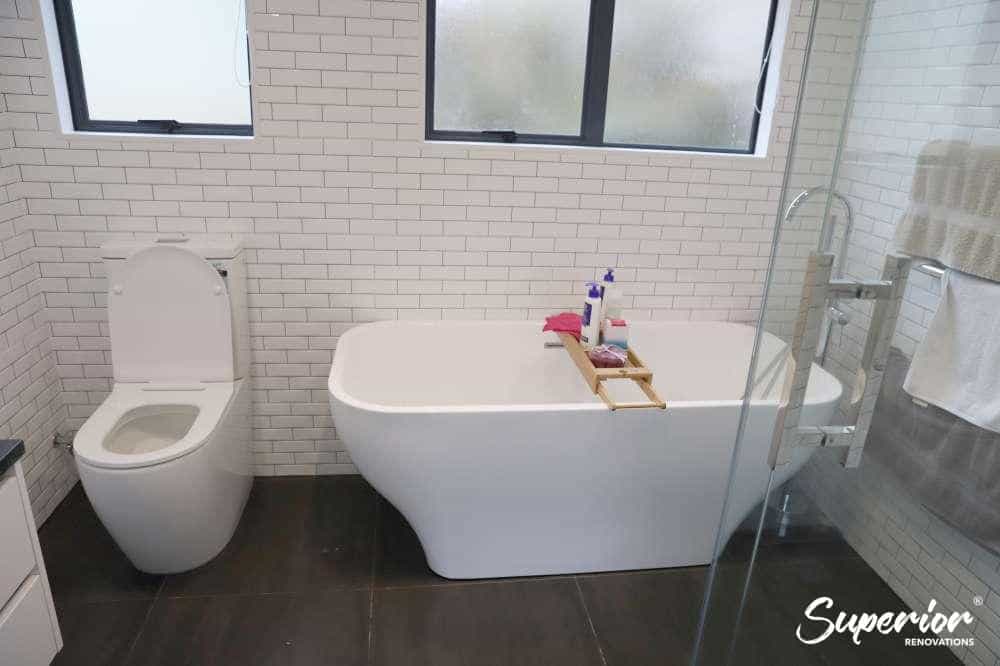
DSC02144-Copy Bathroom Flooring NZ: Tile vs Vinyl vs Timber (2026)


We don’t install engineered timber in bathrooms. Not in ensuites, not in family bathrooms, and we’d push back on it even in a powder room. The reasons are physical, not commercial — engineered timber is a beautiful product, and we install plenty of it in living areas, hallways and bedrooms. It just doesn’t belong on a bathroom floor in Auckland’s climate.

The retail flooring articles you’ll read are mostly written by businesses that sell timber. They have a reason to find a “yes, but only in a powder room with perfect ventilation” angle. We don’t sell flooring — we install it as part of full bathroom renovations and stand behind the work. Different incentive, different answer.

What engineered timber actually is

Engineered timber boards are typically constructed with a real timber veneer (1–6mm thick depending on the product) bonded to a plywood or HDF core. European oak engineered boards are spec’d to perform in 65–75% relative humidity — the comfortable indoor range for most NZ living spaces.

The problem is in the spec itself. Auckland’s outdoor relative humidity averages 82% and bathroom relative humidity routinely exceeds 90% during showering. The product is being asked to hold its shape in conditions outside the manufacturer’s stated tolerance, every single day, for years.

What we see when we strip it out

When we open up an Auckland bathroom that has engineered timber on the floor — usually we’re called in for a “the floor’s lifting” job after 3–5 years — we see one or more of:

Cupping at the board edges. The veneer absorbs moisture from below (where ventilation is worst), expands more than the core, and the edges curl upward. Once cupping starts, it’s permanent.

Gapping along the joints. Seasonal humidity cycling pushes boards apart. By winter the gaps close. By summer they open again. The finish at the edges cracks, water ingress accelerates, the cycle worsens.

Finish degradation around the toilet and shower. Even where the boards themselves haven’t moved, the surface finish breaks down where it’s hit repeatedly with moisture. The wood underneath darkens, mould can establish under the finish, and there’s no cosmetic fix.

Subfloor damage in older homes. If water has been passing through joints for years undetected, the timber subfloor or the building paper underneath may need remediation. We’ve seen this in a couple of Glen Eden and Henderson villas where the engineered floor was hiding a much bigger problem.

“Most clients who ask about engineered timber for a bathroom have seen it on Pinterest or in a European design magazine. The look is beautiful — warm, soft, considered. The honest answer is: that look is achievable in a powder room with no shower if you’re prepared to replace the floor in five to seven years. For anyone who wants a bathroom floor that lasts, it’s not the right product.”
— Cici Zou, Designer (NZ Dip. Interior Design, Certified Designer), Superior Renovations

The “powder room exception” — why we still hesitate

Some flooring retailers will tell you engineered timber is fine in a powder room (a half-bathroom with a toilet and basin, no shower or bath). The reasoning: less direct water exposure, lower humidity load.

There’s some logic to it. But we still hesitate, and here’s why: most engineered timber warranties explicitly exclude wet areas. Read the fine print. If the floor cups or gaps in three years, there is no warranty claim. You’ve spent $80–$140/m² on a floor with no manufacturer backing in the room you put it in.

If a client really wants timber-look in a powder room, we’ll specify a high-end timber-look porcelain tile or a premium SPC plank. They look like timber. They behave like a bathroom floor should.

⚠️ Important note: If you have an existing engineered timber floor that runs from a hallway into a bathroom or ensuite, the right move during a renovation is to terminate the timber at the threshold and transition to tile or LVP inside the bathroom. We do this regularly — with a flush threshold strip, the visual line is clean and the bathroom floor lasts.

Brief takes on three other options we get asked about

Laminate (including “water-resistant” laminate). Even the products certified as waterproof rely on the seal at the joints holding for the life of the floor. Once a joint fails — usually around the toilet or threshold — the MDF core swells and lifts. We don’t recommend laminate in any Auckland bathroom.

Hybrid flooring. “Hybrid” usually means rigid-core LVP/SPC — the same product we covered in Option 2, often marketed under a different name. If the spec sheet shows a stone polymer or rigid core with 0.4mm+ wear layer, it’s a sound choice. The marketing label matters less than the spec.

Polished concrete. Works beautifully in the right Auckland home — usually new-builds with slab-on-grade designed in from day one. As a retrofit in an existing villa or bungalow, the engineering complexity (slab thickness, slope to drain, sealing, transition to other rooms) usually makes tile or LVP a better answer.


Decision Matrix: What to Choose Based on Your Auckland Bathroom

The “best” bathroom flooring isn’t a single answer. It depends on the bathroom type, the housing stock, the budget and how long you plan to live in the home. Here’s how we’d advise across the most common Auckland scenarios.

Match the floor to the bathroom

Bathroom type Best floor Acceptable alternative Avoid
Master ensuite (long-term home) Porcelain tile + underfloor heating Premium SPC (0.5mm wear) Engineered timber, laminate
Family bathroom Porcelain tile + epoxy grout Premium SPC Engineered timber, ceramic
Powder room (no shower) Timber-look porcelain Mid-range LVP Engineered timber, laminate
Combined laundry-bathroom SPC (overflow tolerance) Porcelain with floor waste Any timber product
Rental property bathroom Mid-range LVP (fast install) Builder-grade porcelain Premium tile (over-spec)
Wet room (open shower) Porcelain tile, R11 slip rating — (not LVP) All timber, all laminate, LVP
88538855-22e8-40cd-bd7f-8711e6d288e7 Bathroom Flooring NZ: Tile vs Vinyl vs Timber (2026)

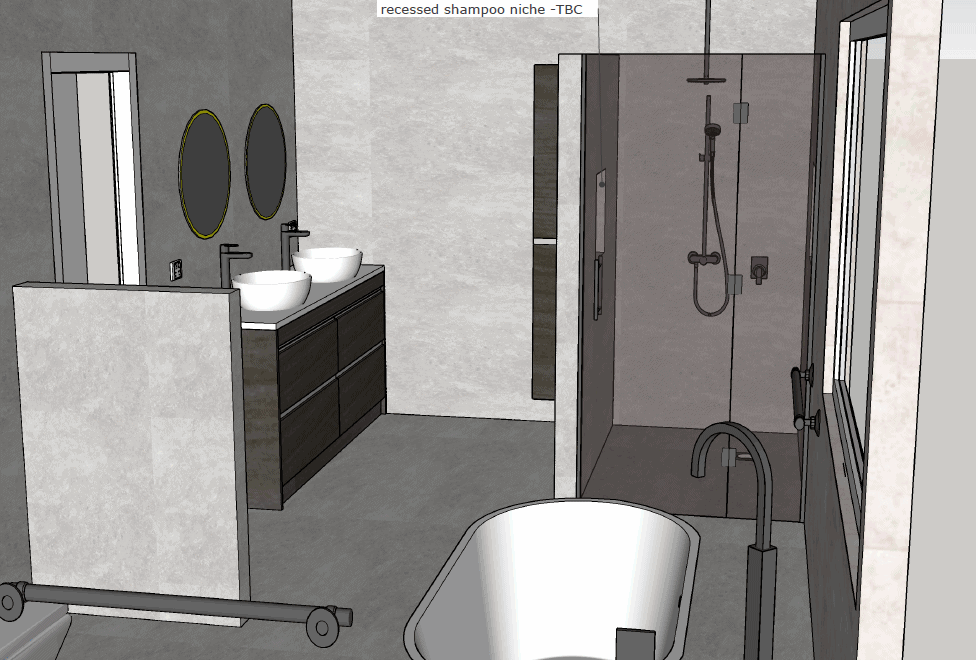
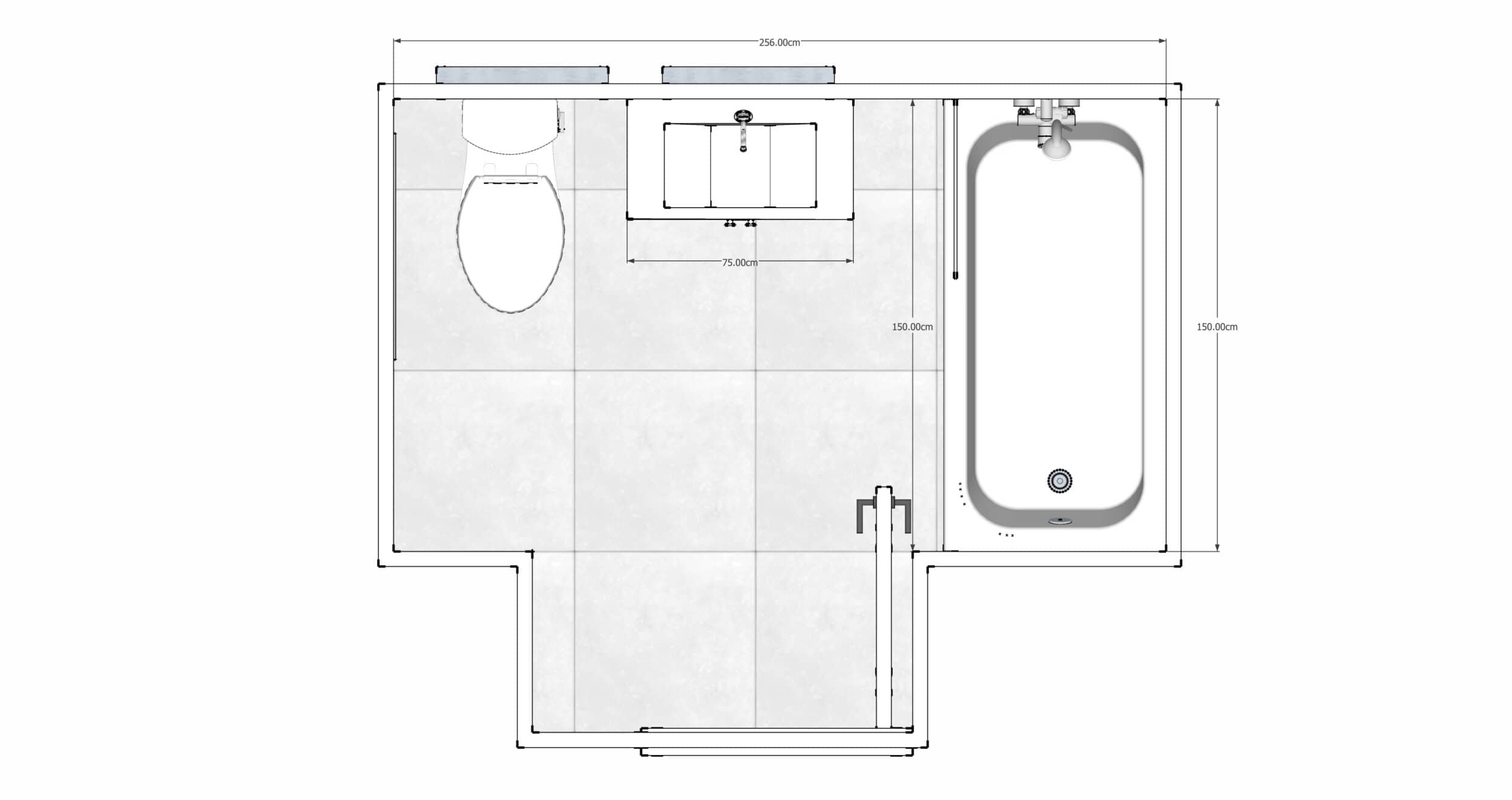
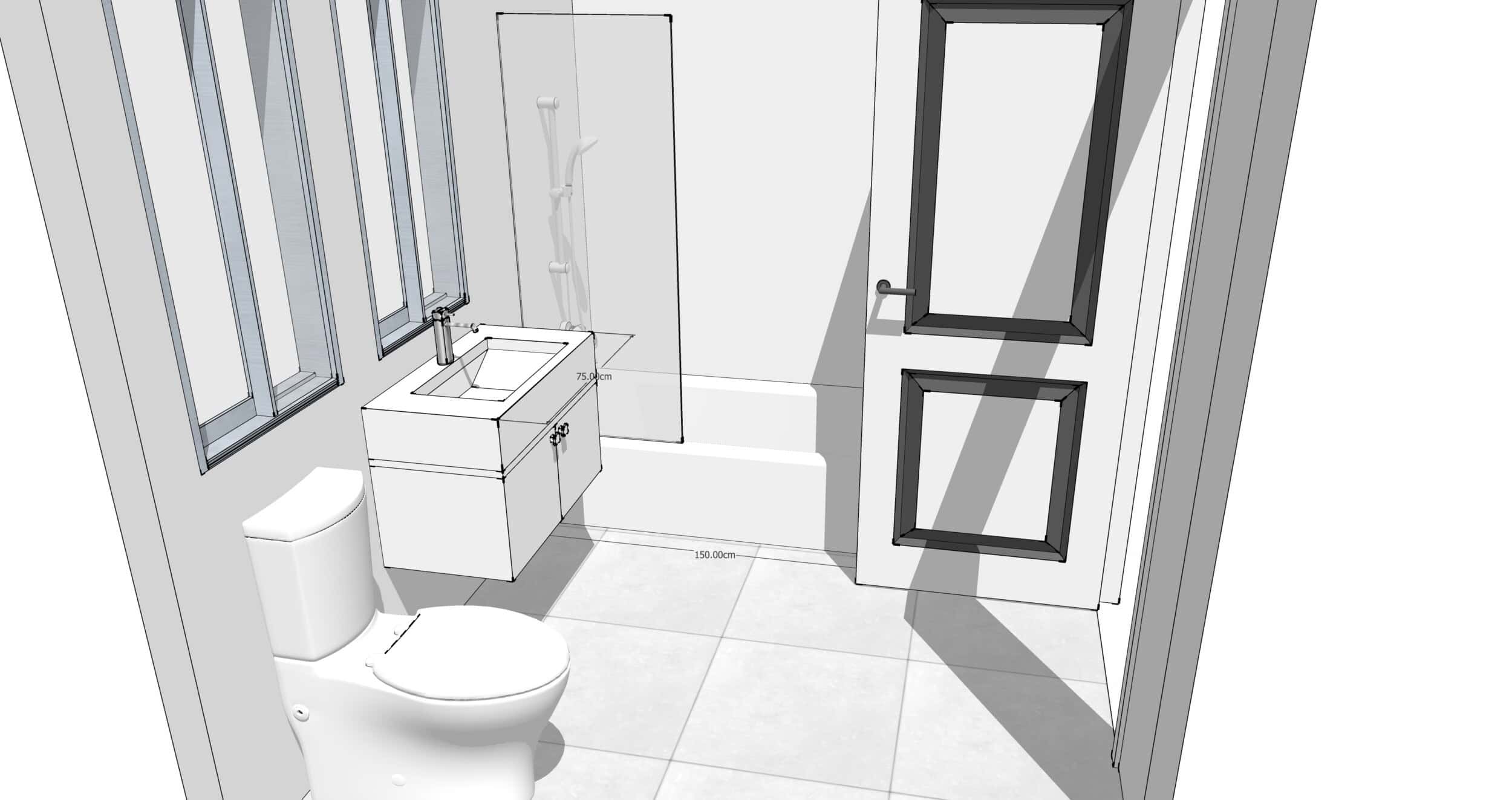
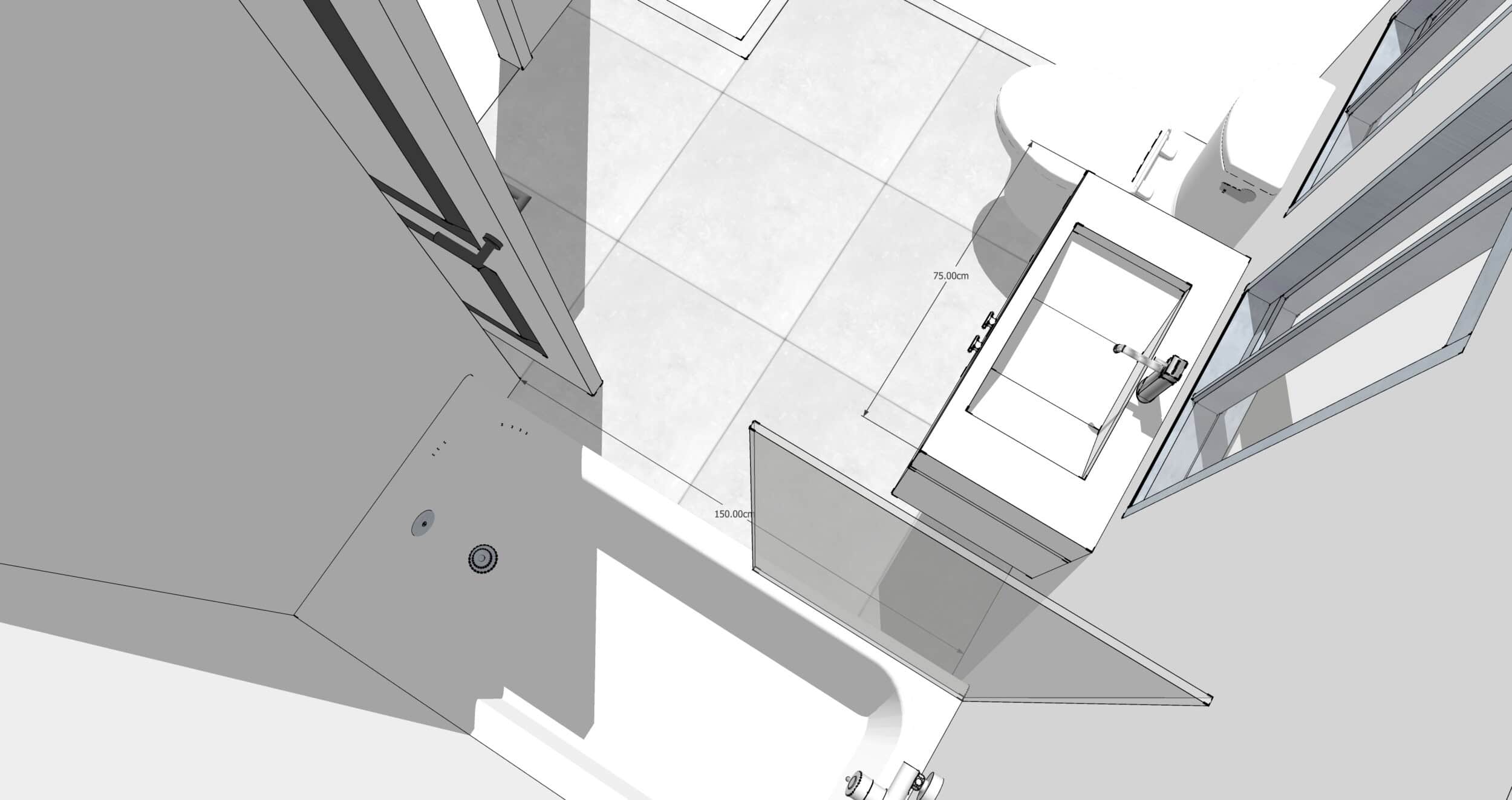
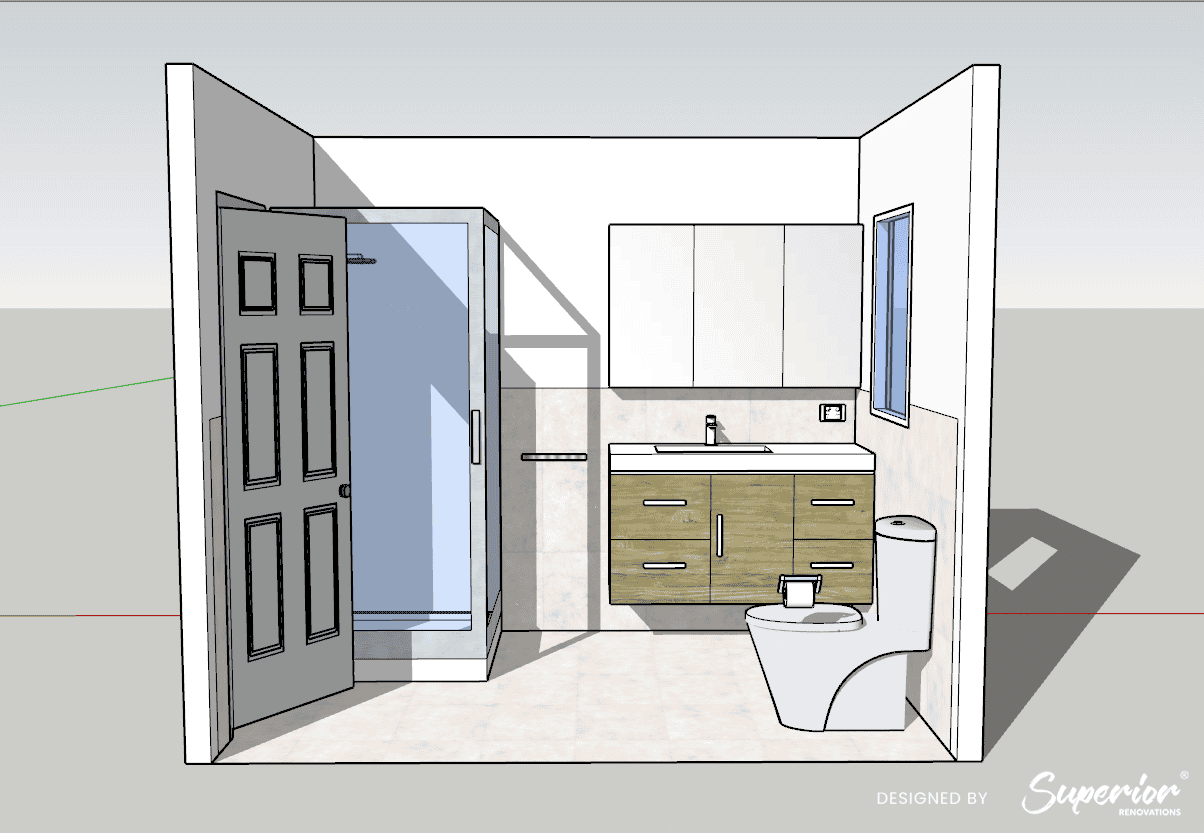
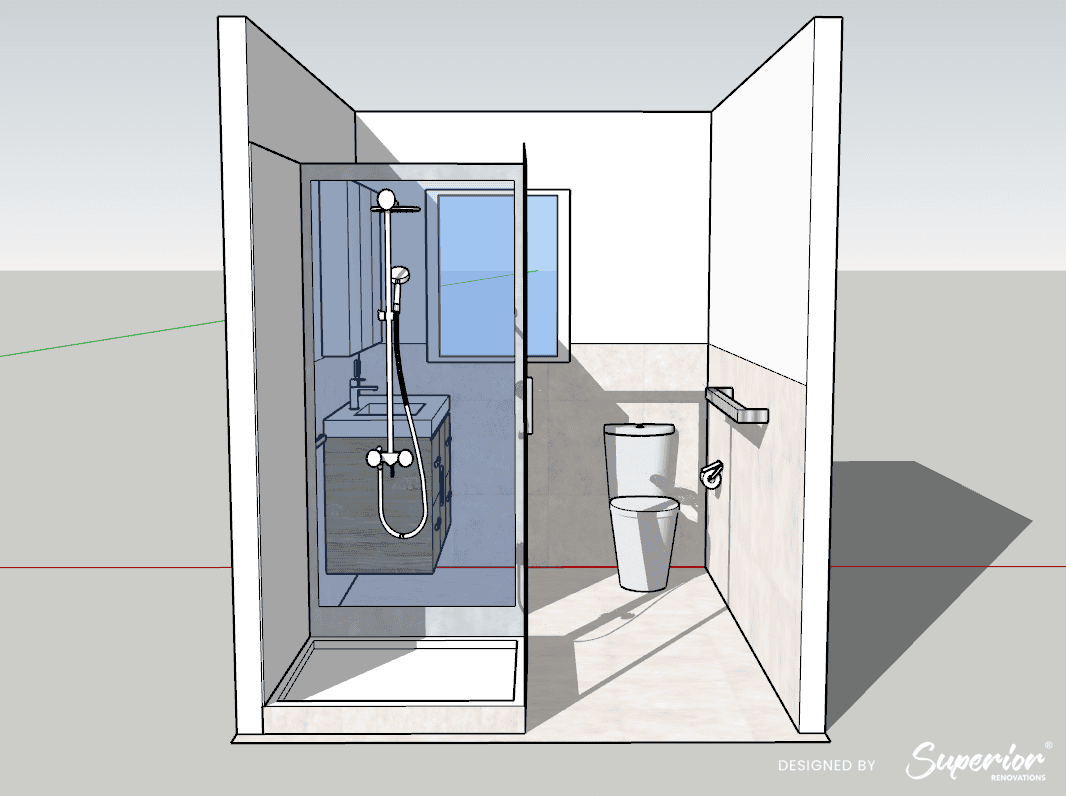
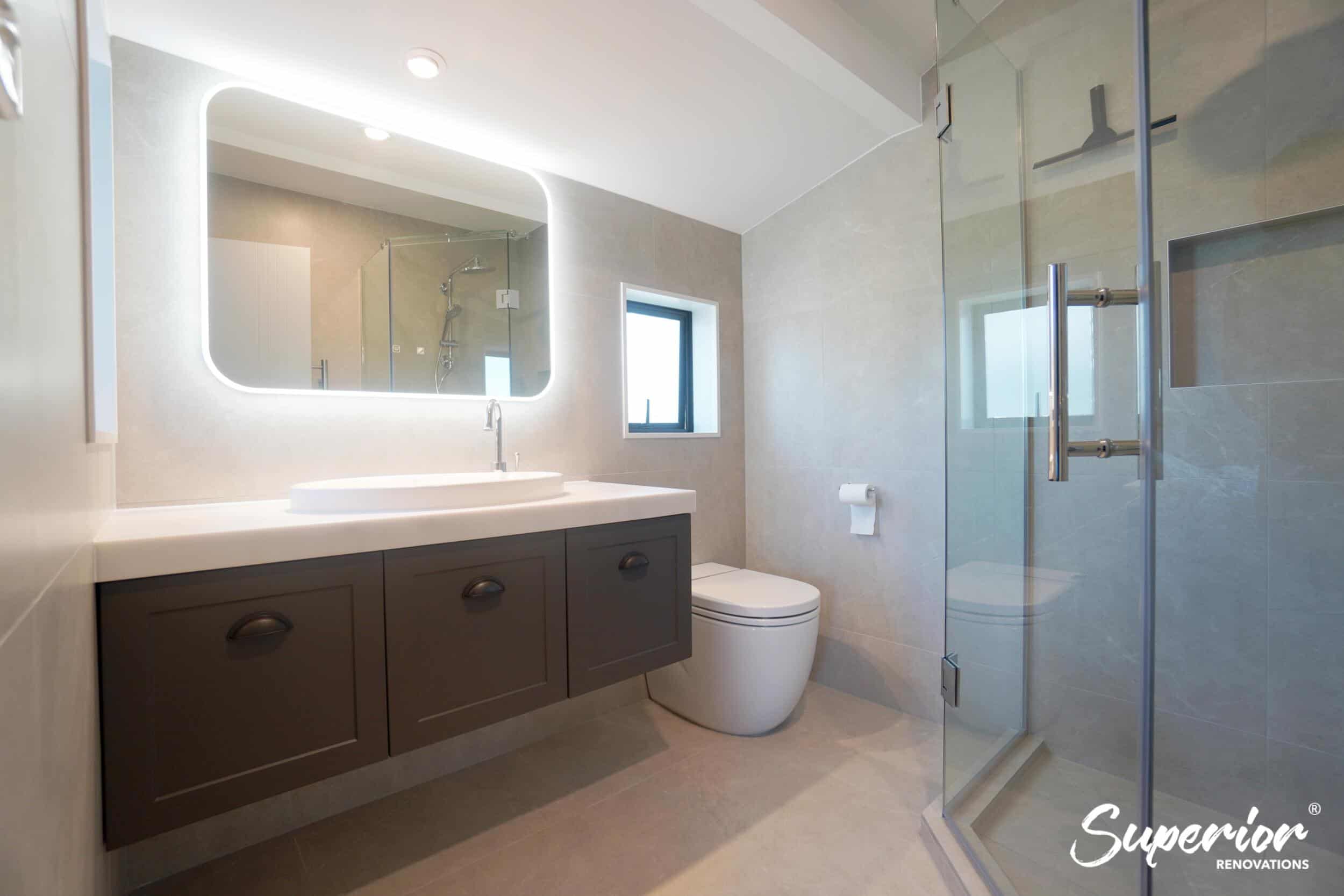
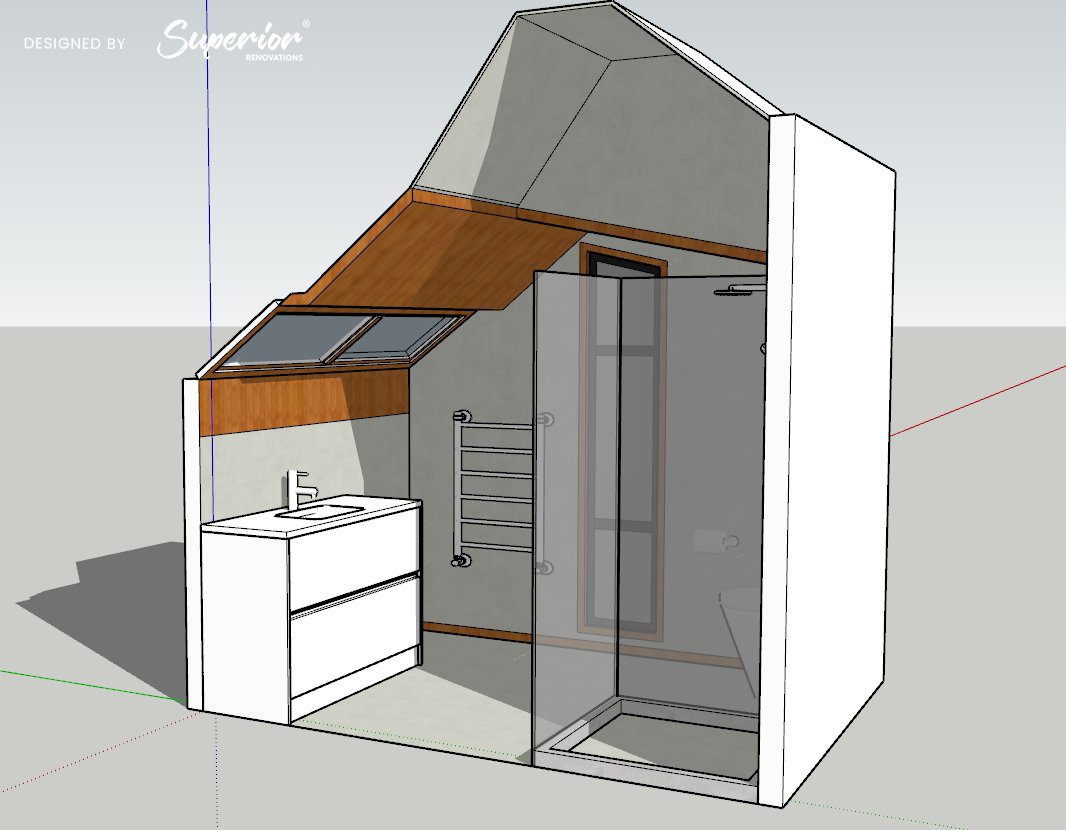
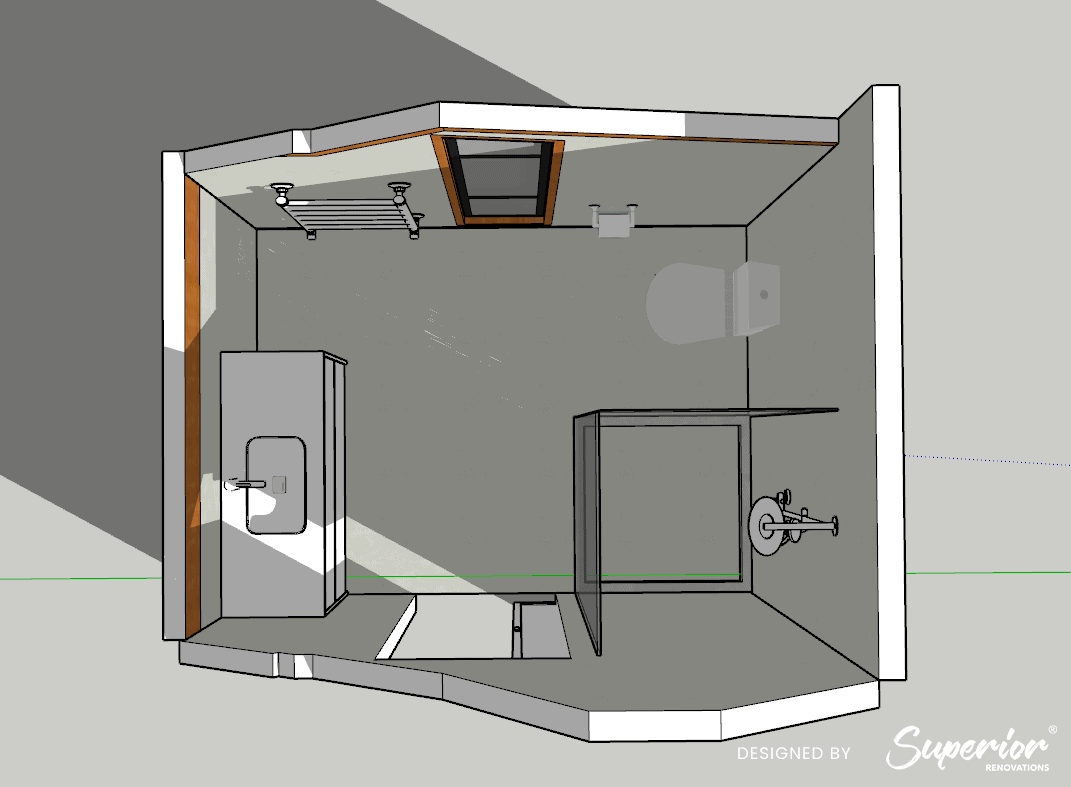
Render generated using Sketch Up to show clients the difference.

Match the floor to the house

The Auckland housing stock layer changes the calculus too. A few examples:

1920s villa in Grey Lynn or Mt Eden: Timber subfloor, often poor underfloor ventilation. Heavy tile is achievable but the joists may need sistering and a fibre-cement underlay is essential. SPC can be a faster, lighter alternative if the heritage look isn’t a priority.

1970s brick-and-tile in Henderson or Glen Eden: Concrete slab, cold underfoot. Tile with electric underfloor heating is the sweet spot. SPC also works well here and warmer than tile without heating.

Leaky-era home (1995–2005, scattered across Auckland): Don’t choose the floor first. Get the framing inspected. Once any weathertightness issues are remediated, the floor decision is the same as any other home — usually porcelain tile.

New build in Hobsonville, Flat Bush or Millwater: Slab-on-grade with current H1 insulation. Both tile and SPC work; choice usually comes down to design preference and budget.

Our in-house design team walks every client through this decision in a free consultation — including a visit to our Wairau Valley showroom where you can see and step on porcelain, SPC, ceramic, stone-look LVP and timber-look tile side by side. The difference between a sample held in your hand and the same material laid out across 6m² is significant.

💡 Quick tip: If you’re comparing tile and LVP samples in a showroom, ask to see them on the actual floor display, not just in your hand. Floor materials look completely different at floor level under bathroom lighting compared to held under fluorescent showroom lights.


NZ Building Code, Waterproofing and What’s Actually Compliant

This is the part most retail flooring articles skip — and the part Auckland Council care about most when consent is involved.

The E3 Internal Moisture clause

The NZ Building Code clause E3 (Internal Moisture) requires that finished floors in wet areas — bathrooms, ensuites, laundries, kitchens with floor wastes — must be impervious. The Acceptable Solution E3/AS1 gives three approved finishes:

  1. Waterproof sheet material (such as PVC sheet vinyl) with sealed joints, sealed or coved at edges
  2. Ceramic or stone tiles with maximum 6% water absorption and waterproof grouted joints, laid over a waterproof membrane
  3. Concrete slab-on-grade with steel-trowelled or polished finish, sealed at splash zones (typically used in laundries and garage bathrooms only)

LVP and SPC sit outside the explicit Acceptable Solution but can be used as an alternative solution provided the product manufacturer’s wet-area certification is documented and the installation method is compliant — typically meaning glue-down with sealed perimeter and full-coverage adhesive. Most quality LVP/SPC manufacturers supply this documentation.

The waterproof membrane requirement

Whatever the finished floor, a waterproof membrane laid in accordance with AS/NZS 4858:2004 is mandatory under tiled bathroom floors and required throughout shower zones regardless of finish. This is non-negotiable under the NZ Building Code. The membrane is what stops water reaching the framing and substrate — the tile is just the visible finish.

For tiled bathrooms, the membrane is laid over a properly prepared substrate (usually 6mm fibre-cement underlay over plywood, or directly onto a primed concrete slab), the joints and corners are coved, and the membrane is taken up the walls of the shower zone to a minimum specified height. A PS3 (Producer Statement — Construction Review) is typically issued by the licensed waterproofer, and Auckland Council inspects waterproofing during the consent process for any bathroom that requires consent.

Who can do this work legally

Bathroom waterproofing is restricted building work. It must be carried out by a Licensed Building Practitioner (LBP) with a relevant licence class, or by someone supervised by one. Most insurance and warranty claims for bathroom failures hinge on whether this paperwork is complete — if waterproofing was done by an unlicensed person, the homeowner is exposed.

Our bathroom renovations include all consent management, LBP-supervised waterproofing and PS3 certification as standard. The paperwork matters as much as the tilework.

⚠️ Important note: If you’ve had a previous bathroom renovation and don’t have the PS3 waterproofing certificate, that’s a problem at resale time. A LIM report flagging missing documentation can affect both the sale price and the buyer’s insurance. If you’re renovating now, file the certificate carefully — your future self will thank you.


Summary: How to Decide

Three questions will get you to the right floor in five minutes:

1. How long do you plan to live in the home? If it’s 10+ years and the bathroom is going to be heavily used, porcelain tile pays for itself. If it’s a 5–8 year horizon or a rental, premium SPC is genuinely competitive.

2. What’s the bathroom doing? Wet room or family bathroom with kids — tile, R11 slip rating, epoxy grout. Ensuite with separate enclosed shower — tile or premium SPC, your call. Powder room with no shower — porcelain that looks like timber, not actual timber.

3. What’s the housing stock? Heritage villa where the look matters — tile. New build or post-1970s with slab — both options work, choose on warmth and budget. Leaky-era home — fix the framing first.

For most Auckland homeowners renovating a single bathroom for the long term, the answer remains the boring one: porcelain tile, epoxy grout in the wet zones, electric underfloor heating, and a properly certified waterproof membrane underneath. It’s been the right answer for 40 years. It’s still the right answer for most of the bathrooms we hand back to clients across the city. Across all of our completed Auckland bathroom projects, porcelain tile has consistently outperformed every alternative on lifespan, low maintenance and resale value.

For ensuites, low-traffic family bathrooms and rentals, premium SPC is the modern alternative — and a fair one. For engineered timber, the honest answer in our climate is no.

If you’d like a designer to walk through your specific bathroom — the housing stock, the layout, the realistic budget, the floor that fits — book a free in-home consultation with us. Our team handles the design, materials, consent, waterproofing and installation under one roof, and we stand behind every floor we install.

Book your free in-home consultation with Superior Renovations
Use our bathroom renovation cost calculator
Request a free feasibility report for your project


What is the best bathroom flooring for NZ humidity?

For most Auckland bathrooms, porcelain tile is the best long-term option — it has under 0.5% water absorption, meets NZ Building Code E3/AS1 requirements, and lasts 20–30 years. Premium SPC (stone polymer composite) flooring is the strongest alternative for ensuites and family bathrooms, with 10–15 year durability and faster installation. Both handle Auckland's 82% average humidity reliably when installed correctly with a waterproof membrane underneath.

How much does bathroom flooring cost in Auckland?

For a typical 6m² Auckland bathroom: builder-grade porcelain tile runs $720–$960 installed, mid-range porcelain $960–$1,320, and premium porcelain or stone-look $1,320–$1,920+. Add $480–$900 for substrate prep and waterproof membrane. Premium SPC flooring sits at $600–$840 installed for the same 6m² area. Within a full bathroom renovation — typically $26,000–$35,000 in Auckland for a mid-range project — the floor is usually 6–12% of total cost.

Can I install engineered timber in a bathroom in NZ?

We don't recommend it. Engineered timber is typically spec'd for 65–75% relative humidity, but Auckland averages 82% and bathrooms regularly exceed 90% during showers. Within 3–5 years we typically see cupping, gapping or finish degradation. Most engineered timber warranties explicitly exclude wet areas, leaving you without manufacturer backing if it fails. For a timber look in a bathroom, specify a high-end timber-look porcelain tile or premium SPC instead.

Is vinyl plank waterproof in bathrooms?

Quality LVP and SPC flooring is genuinely waterproof — not water-resistant — when correctly installed with the glue-down method. Look for a wear layer of at least 0.4mm (0.5mm+ for family bathrooms) and a rigid stone polymer core. Click-lock LVP can let moisture wick through joints over time, so for bathrooms we always specify glue-down installation with a sealed perimeter. With the right product and installation, expect 10–15 years of reliable performance.

Do I need a waterproof membrane under bathroom tiles in NZ?

Yes, it is mandatory under the NZ Building Code. Clause E3 Internal Moisture and Acceptable Solution E3/AS1 require a waterproof membrane laid to AS/NZS 4858:2004 standard under all tiled bathroom floors, with extra coverage in shower zones. A PS3 (Producer Statement — Construction Review) certificate from the licensed waterproofer is typically required and is inspected by Auckland Council during the consent process. Without compliant waterproofing, both your build consent and your insurance can be compromised.

What thickness of LVP flooring should I use in a bathroom?

For an Auckland bathroom, the wear layer matters more than the total thickness. A wear layer of 0.4mm is the absolute minimum and 0.5mm or above is what we specify for family bathrooms. Total thickness is typically 4–6mm for SPC and 4–7mm for LVP, but a 6mm board with a 0.3mm wear layer will fail before a 4mm board with a 0.5mm wear layer. Always check the wear layer specification on the product datasheet before buying.

Is porcelain tile better than ceramic for bathroom floors?

Yes, for almost every Auckland bathroom. Porcelain has under 0.5% water absorption while ceramic sits between 3% and 6% — both meet the NZ Building Code E3/AS1 maximum of 6%, but porcelain has a much wider safety margin. Porcelain is also denser, more chip-resistant, and through-body porcelain hides chips because the colour runs through the tile. Ceramic floor tiles fail more often at thresholds and around floor wastes. The price difference is marginal compared to the durability difference.

How long does bathroom flooring last in Auckland?

With proper waterproofing and ventilation, porcelain tile lasts 20–30 years and is often still serviceable when the bathroom is replaced for design reasons rather than failure. Quality SPC and LVP flooring lasts 10–15 years in a bathroom. Engineered timber typically fails within 3–5 years in an Auckland bathroom regardless of brand. Water-resistant laminate fails when the first joint lets moisture through, often within 2–4 years. Lifespan also depends heavily on bathroom ventilation — a bathroom without an extract fan will reduce every floor type's lifespan.

Should I get underfloor heating with bathroom tiles?

For most Auckland homes, yes. Tile sits at room temperature and Auckland room temperatures in winter can drop below 14°C in poorly heated bathrooms — uncomfortable underfoot after a hot shower. Electric underfloor heating mats run $80–$150 per square metre supplied and add roughly $1,500–$2,500 to a typical 6m² bathroom installed. Run on a thermostat-controlled timer, the operating cost is around $2 per day. Of all the bathroom upgrades clients tell us they would never skip again, underfloor heating is the most common.

What does the NZ Building Code require for bathroom floors?

NZ Building Code clause E3 (Internal Moisture) requires bathroom floors to be impervious. Acceptable Solution E3/AS1 lists three approved finishes: waterproof sheet material with sealed joints, ceramic or stone tiles with maximum 6% water absorption laid over a waterproof membrane, and slab-on-grade concrete with appropriate sealing. A waterproof membrane to AS/NZS 4858:2004 is mandatory under tiled floors. Waterproofing is restricted building work and must be done by or supervised by a Licensed Building Practitioner (LBP), with PS3 certification typically required.

Can I install bathroom flooring myself?

The flooring itself can be DIY in some cases — sheet vinyl, click-lock LVP in dry areas — but bathroom waterproofing is restricted building work under NZ legislation and must be carried out or supervised by a Licensed Building Practitioner with a relevant licence class. Without LBP-certified waterproofing, the work will not pass council inspection if the bathroom requires consent, and your home insurance may not cover failures. For most Auckland bathroom renovations, the saving on DIY flooring is small relative to the risk if waterproofing isn't compliant.

Do dark or light bathroom floor tiles show water marks more?

Dark tiles show water marks, soap scum and limescale more visibly than light tiles, especially in polished or semi-gloss finishes. For Auckland's hard water — particularly common in suburbs supplied from older infrastructure — matte or satin-finish tiles in mid-tone neutral colours are easiest to keep looking clean. Light grey, taupe and warm beige porcelain tiles in matte finish are popular choices because they hide both water marks and minor scuffs. If you want a dark floor, accept that it will need more frequent cleaning to stay looking sharp.


Further Resources for your bathroom renovation

  1. Featured projects and Client stories to see specifications on some of the projects.
  2. Real client stories from Auckland
  3. Browse our bathroom design gallery for inspiration across tile, vinyl and stone-look floors
  4. Visit our Wairau Valley showroom at 16B Link Drive to see all flooring options side by side

Need more information?

Take advantage of our FREE Complete Home Renovation Guide (48 pages), whether you’re already renovating or in the process of deciding to renovate, it’s not an easy process, this guide which includes a free 100+ point check list – will help you avoid costly mistakes.

Download Free Renovation Guide (PDF)

Still have questions unanswered?

Book a no-obligation consultation with the team at Superior Renovations, we’d love to meet you to discuss your renovation ideas!

    Services

    Home RenovationKitchen RenovationBathroom RenovationOutdoor RenovationHouse ExtensionCommercialDesign ServicesOther

    By submitting this form, you agree to receive communications from us via email or text regarding our services, you can unsubscribe at any time.

    This site is protected by reCAPTCHA and the Google

    Privacy Policy and Terms of Service apply.


    WRITTEN BY SUPERIOR RENOVATIONS

    Superior Renovations is quickly becoming one of the most recommended renovation company in Auckland and it all comes down to our friendly approach, straightforward pricing, and transparency. When your Auckland home needs renovation/ remodeling services, Superior Renovation is the team you can count on for high-quality workmanship, efficient progress, and cost-effective solutions.

    Get started now by booking a free in-home consultation.

    Request Your In-home Consultation

    Or call us on 0800 199 888

    www.superiorrenovations.co.nz


    finance-badge1000x1000 Bathroom Flooring NZ: Tile vs Vinyl vs Timber (2026)

    Have you been putting off getting renovations done?

    We have partnered with Q Mastercard ® to provide you an 18 Month Interest-Free Payment Option, you can enjoy your new home now and stress less.

    Learn More about Interest-Free Payment Options*

    *Lending criteria, fees, terms and conditions apply. Mastercard is a registered trademark and the circles design is a trademark of Mastercard International Incorporated.

    DSC04932 - Superior Renovations
    Bathroom Renovation

    Bathroom Tapware NZ: The Auckland Guide (2026)

    Bathroom Tapware NZ: The Auckland Guide to Brands, Finishes and What Actually Lasts

    Quick answer: Good bathroom tapware NZ homeowners should look for is solid brass, lead-free to AS/NZS 3718, WELS-rated for Auckland mains pressure, and finished in PVD-coated chrome, matte black, brushed brass, or brushed nickel. Budget $600–$2,500 for tapware across a bathroom, depending on brand and finish.

    Most bathroom tapware guides online are written by the companies selling the tapware. They’ll tell you all about their own product line and stay politely quiet about what fails after three years in an Auckland bathroom.

    We’re a renovation company, not a tapware brand. We’ve installed tapware in over a thousand Auckland bathroom renovations — in Parnell villas, West Harbour new builds, Hillsborough bungalows, and Titirangi homes that back onto the bush. We’ve seen which brands hold up, which finishes wear, and what happens when someone specs a $90 budget mixer because it looked fine in the showroom.

    This is what we actually tell clients when they ask “so which taps do we go with?” at the design studio in Wairau Valley — grounded in Auckland’s specific water conditions, our preferred brands, and honest cost figures for the 2026 renovation market.

    designer-bathroom-auckland-15 Bathroom Tapware NZ: The Auckland Guide (2026)

    Designer Bathroom By Superior Renovations


    What Makes Auckland Bathroom Tapware Different

    Before you pick a brand, you need to understand what the water coming out of it will actually do to it. Every tapware brand sold in New Zealand is tested to survive water, but Auckland’s water has a specific profile that wrecks some finishes faster than others — and almost nobody writes about it.

    Auckland water is mostly soft — and that’s not the win you’d think

    Auckland’s water is classified as soft to slightly hard, with a calcium carbonate level mostly under 100mg/L. Watercare’s own data confirms the surface water that supplies most of the city — drawn from the Hūnua and Waitākere ranges — is low in calcium and magnesium. Groundwater-supplied areas (some rural and peri-urban pockets) can be moderately hard, but the metro supply is soft.

    Most tapware guides treat soft water as the good news story. It’s more complicated than that.

    Soft water doesn’t leave the chalky calcium scale you’d get in Adelaide or London, but it has a quietly damaging property: low-mineral water is mildly corrosive. Without a protective layer of mineral buildup, soft water slowly strips internal metal surfaces. Cheap zinc-alloy tapware corrodes from the inside faster than the same product would in a hard-water city. Solid brass fittings hold up — but only if the brass is the right alloy.

    Silica is the other issue. Watercare’s water hardness page explicitly mentions silica scale can appear on tapware when water is left to evaporate — the whitish, hazy marks you sometimes see around a tap base. It isn’t easily descaled with vinegar the way calcium is. It just sits there.

    Chlorine, PVD coatings, and the coastal question

    All Auckland metro water is chlorinated as part of the disinfection process. Residual chlorine is low by international standards, but it still matters for tapware finishes. Cheap painted or electroplated finishes — the ones you sometimes see on budget matte black tapware — react with chlorine over time. The finish goes patchy. Sometimes after eighteen months. Sometimes after three years. Never after ten.

    PVD (Physical Vapour Deposition) coatings are the durable answer. They’re molecularly bonded to the brass underneath, which means they resist chlorine, scratches, and the normal wear that kills cheaper finishes. Most premium brands now use PVD as standard on their coloured finishes. Budget brands still use painted or electroplated coatings and hope the customer moves house before the finish fails.

    Then there’s salt air. If you’re renovating a bathroom in St Heliers, Mission Bay, Devonport, Herne Bay, or anywhere else within 500m of the coast, your tapware is dealing with airborne salt every day. Salt accelerates corrosion on any brass fitting, no matter how good. For coastal renovations we specify either 316-grade stainless steel or solid brass with a PVD coating — and we flag it to the client early because the brand choice narrows quickly.

    💡 Quick tip: Coastal Auckland homes (Herne Bay, Mission Bay, St Heliers, Devonport, Takapuna) should factor salt air into tapware specification. The finish you see in a Newmarket showroom won’t look the same after two winters on the harbour edge. Ask your designer for PVD-coated options.

    “We had a St Heliers bathroom last year where the client had picked budget matte black tapware before engaging us. Eighteen months in, the finish on the basin mixer had gone mottled. Salt air does that. We now have the salt-air conversation on day one with any coastal project — and spec PVD coatings from the start. It’s cheaper to pick the right tap once than to replace a full set at year three.”
    — Cici Zou, Designer (NZ Dip. Interior Design), Superior Renovations


    Mixer vs Three-Piece Tapware: The Configuration Decisions That Drive Cost

    The tapware type you pick affects three things: how the bathroom looks, how it’s plumbed, and how much of your renovation budget it consumes. Most clients focus on the first. We focus on all three.

    Basin mixer vs three-piece tapware

    A basin mixer is a single-lever tap that combines hot and cold into one spout. A three-piece set is separate hot and cold handles with a central spout. Mixers dominate contemporary Auckland bathrooms because they’re easier to use one-handed and lend themselves to minimalist design.

    Three-piece taps look right in heritage villas and bungalows — the cross-handled or lever variants read as correct in a 1920s Grey Lynn villa where a sleek basin mixer would feel imported from a different era. If you’re renovating a character home in Ponsonby or Mt Eden, three-piece tapware from a heritage-styled brand often holds more property value than a modern mixer.

    bathroom-renovators-nz-16-1 Bathroom Tapware NZ: The Auckland Guide (2026)DSC02863 Bathroom Tapware NZ: The Auckland Guide (2026)

    Wall-mounted vs bench-mounted

    Bench-mounted tapware sits on the vanity or basin surface and runs into plumbing below. Wall-mounted tapware comes out of the wall, with all plumbing concealed behind the tiles.

    Wall-mounted looks cleaner. It frees up the basin area, eliminates the water pooling around the base that kills a bench-mounted finish, and generally makes a small bathroom feel less cluttered. The catch: the plumbing has to be roughed in behind the waterproofing before tiling starts. If you want to replace a wall-mounted mixer in five years, you’re opening up tiled walls.

    Bench-mounted tapware is the safer choice for renovations on a tight budget or where you might want to swap fixtures later. Wall-mounted is the premium choice when you’re committing to the design for a decade-plus.

    Basin spout reach and height

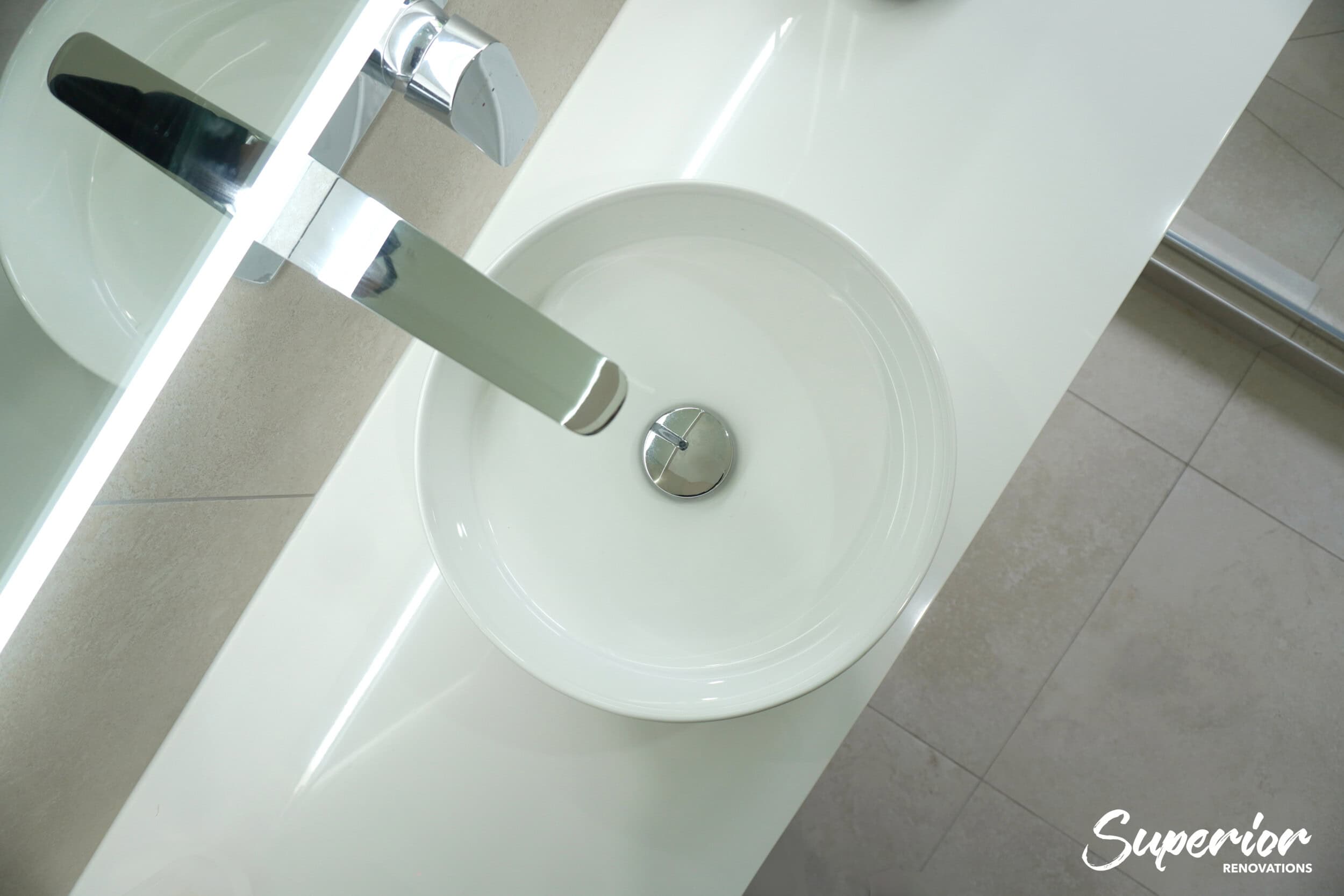
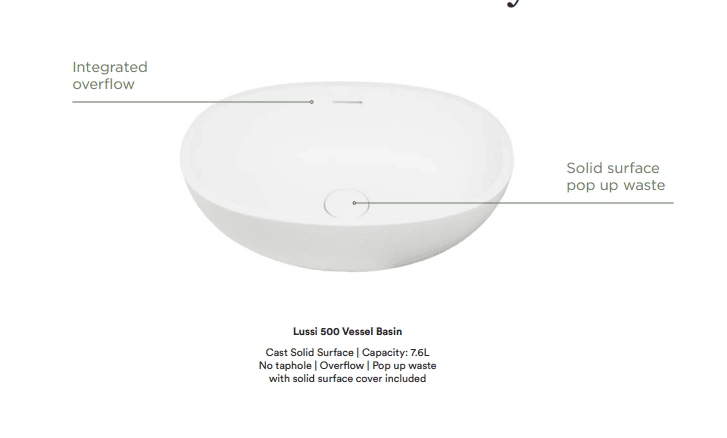
    One decision a lot of guides skip: the geometry of the tap matters for the basin you’re pairing it with. A tall vessel basin (the bowl-shape that sits on top of the vanity) needs a taller spout — typically 150mm+ from base to outlet — or the water hits the rim and splashes. A low undermount basin can take a shorter spout.

    We’ve seen new bathrooms where a beautiful vessel basin was paired with a standard basin mixer and every handwash ends in splashed water across the vanity top. It’s the sort of thing you only notice after install.

    💡 Quick tip: Match spout height to basin type before you lock in the order. A 142mm-tall basin mixer works for most standard undermount basins. For a tall vessel basin, look at 165mm+ or a wall-mounted spout so the water clears the rim.


    The Brands We Install in Auckland Bathrooms

    Every renovation company has a short list of brands they trust. Ours has been shaped by a thousand-plus installations, real warranty experience, and what our plumbers actually want to work with. We’re not paid to recommend any of these brands — they just keep performing.

    Methven

    Methven is New Zealand’s best-known tapware brand, founded in Dunedin in 1886. They make tapware and shower systems with a strong contemporary design language, and their premium ranges (Aurajet, Turoa, Waipori) are standard specifications across a lot of our mid-range and premium bathroom renovations. The Aurajet showerheads have become almost default in Auckland new builds for good reason — the spray pattern is noticeably better than comparable imports. Methven offers a 15-year warranty on most tapware, which is long even by premium standards.

    METHVEN_2_TUROA Bathroom Tapware NZ: The Auckland Guide (2026)

    Felton

    Felton is another New Zealand brand, based in Auckland. They sit at the mid-range price point with solid build quality and a broader style range than most imports — their Reflect and Axiss ranges get specified a lot on family bathrooms and ensuites where the client wants good tapware without the premium price tag. Felton’s national service network makes warranty claims straightforward, which matters more than clients realise.

    DSC04932 Bathroom Tapware NZ: The Auckland Guide (2026)

    Plumbline

    Plumbline is a New Zealand-owned bathroomware company with a design-led product range and strong relationships with European manufacturers. Their Buddy, Progetto, and Lusso ranges show up often in architect-led Auckland renovations. Plumbline’s finishes — particularly their brushed finishes — are among the most durable we’ve seen hold up in Auckland bathrooms over five-plus years.

    eyJlZGl0cyI6W3sidHlwZSI6InpwY2YiLCJvcHRpb25zI Bathroom Tapware NZ: The Auckland Guide (2026)

    Paini

    Paini is an Italian brand, made in Pogno since 1954, distributed in New Zealand through Robertson Bathware and plumbing merchants. Their tapware has the build quality Italian manufacturers are known for — solid brass bodies, long-life ceramic cartridges, and a design language that suits modern Auckland bathrooms. We specify Paini when a client wants European design without paying Astra Walker pricing.

    rubinetteria-paini-venti Bathroom Tapware NZ: The Auckland Guide (2026)

    Astra Walker

    Astra Walker is a premium Australian brand, manufactured in Sydney. Their pricing is higher than most — a basin mixer starts around $750–$1,200 — but the tapware is essentially built forever. Solid brass, lead-free, 20-year finish warranty on their PVD-coated ranges. We specify Astra Walker for high-end bathrooms in Parnell, Remuera, Herne Bay, and the premium ensuites where the client intends to live in the house for 15+ years.

    AstraWalker-Home-Overview Bathroom Tapware NZ: The Auckland Guide (2026)

    Burlington

    Burlington is a UK heritage brand specialising in traditional English bathroom tapware — cross handles, pillar taps, exposed thermostatic valves, period-correct detailing. If the client is renovating a bathroom in a 1910 Mt Eden villa or an Edwardian Ponsonby home and wants the tapware to look period-correct, Burlington is generally where we end up. It’s expensive and the lead time can be 6–8 weeks, so we bring it into the design conversation early.

    burlington-claremont-5-inch-basin-taps_03-lifestyle Bathroom Tapware NZ: The Auckland Guide (2026)

    St Michels

    St Michels is a New Zealand distributor carrying a range of premium European-styled bathroomware, including tapware, vanities, and bathware. They frequent our premium renovations in Parnell and Remuera, typically on the fixtures and fittings side. Their tapware selection skews contemporary with strong matte black and brushed brass options.

    8bb5b5fc056a630143eb4c5fb783b762f42d29d8 Bathroom Tapware NZ: The Auckland Guide (2026)

    💡 Quick tip: When budget tightens, tapware is often the first place clients try to save money. Don’t. Tapware is the fixture you physically touch every day — the difference between a $120 mixer and a $450 one is obvious within a month. Save on the things you don’t touch: tile backing, vanity MDF core, framing timber. Not the taps.

    “When a client asks me where to splurge in the bathroom, I give them two answers — tapware and tiling. Those are the two things your hand and your eye land on every single day. A cheap tap reveals itself immediately; a cheap tile reveals itself over time. Neither one ages well.”
    — Eunice Qin, Designer, Superior Renovations


    Finishes: What Holds Up in an Auckland Bathroom

    Finish is where most tapware decisions go wrong. The showroom look isn’t the real test — the real test is how it looks after three Auckland winters of damp, daily use, and the occasional wipe with whatever cleaning product was on special at Countdown.

    Chrome

    Chrome is the baseline. It’s the most forgiving finish in a bathroom — hides water marks and fingerprints better than matte black, resists chlorine and salt air better than cheap coloured finishes, and still looks crisp at year ten. For family bathrooms where the priority is zero maintenance and long life, chrome is usually the right answer. It’s also the cheapest finish across every brand we use, which frees budget for other parts of the renovation.

    Matte black

    Matte black is the single most popular finish in Auckland new bathrooms right now. Our 2026 project log shows it in around 40% of our premium bathroom renovations — and it’s still trending up. The caveat: matte black shows water marks and fingerprints more than any other finish. In a family bathroom used hard, it wants a daily wipe to look its best.

    The bigger caveat is finish quality. Budget matte black tapware — typically under $200 for a basin mixer — is usually painted or electroplated, not PVD-coated. These finishes start breaking down within 18–36 months in an Auckland bathroom. PVD-coated matte black from a premium brand (Plumbline, Astra Walker, Methven’s premium ranges) holds up for 10+ years without noticeable wear. The price gap between a budget and a premium matte black basin mixer is often $300. The performance gap is an order of magnitude.

    IMG_0752 Bathroom Tapware NZ: The Auckland Guide (2026)

    Superior Renovations

    Brushed brass

    Brushed brass is the second-fastest-growing finish we specify. It’s warmer than chrome, softer than matte black, and hides water marks better than either because the brushed texture breaks up reflection. It pairs well with the timber vanities and neutral tile palettes that dominate contemporary Auckland bathrooms.

    Brushed brass in a premium PVD coating holds up just as well as premium matte black. The aesthetic risk is trend — brass sits in a more specific design moment than chrome, so if you’re renovating to sell in two years, chrome is the safer resale finish.

    DSC00212 Bathroom Tapware NZ: The Auckland Guide (2026)Brushed nickel

    Brushed nickel is quietly one of the most durable and versatile finishes available. Softer and warmer than chrome, cooler than brass, and fingerprint-resistant in a way matte black will never be. For a family bathroom where both durability and design matter, brushed nickel is a strong pick and probably under-specified in Auckland right now.

    MS05-PVDBNRoundCurvedSpoutandM Bathroom Tapware NZ: The Auckland Guide (2026)

    Brushed Nickel Meir

    Gunmetal, polished nickel, rose gold

    These are the specialty finishes. All three can look striking when paired with the right tiling and vanity, but all three are also trend-sensitive. Gunmetal reads contemporary but specific; polished nickel reads traditional; rose gold reads a very particular mid-2010s moment. If you’re renovating for long-term own-use, specify what you love. If you’re renovating for resale, stay closer to chrome, matte black, or brushed brass.

    Mizu-Silk-Basin-Mixer-Brushed-Gunmetal Bathroom Tapware NZ: The Auckland Guide (2026)

    Mizu Silk Basin Mixer Brushed Gunmetal from Reece


    💡 Quick tip: If you love matte black but share a bathroom with kids, consider brushed brass or brushed gunmetal instead. Same design intent, half the fingerprint visibility, much lower maintenance.


    Mains Pressure, WELS Ratings, and AS/NZS 3718 Compliance

    This is the section most buying guides skip. It’s also the section where specifying the wrong tapware creates the most expensive problems.

    Auckland mains pressure — it’s not uniform

    Most Auckland homes are on mains pressure water, meaning the water comes into the house at network pressure (typically 350–750 kPa depending on your zone). Some older homes — particularly character homes with original cylinders — run on low-pressure or unequal-pressure systems.

    Specify mains-pressure tapware on a low-pressure system and you’ll get a weak dribble out of your new $600 mixer. Specify low-pressure tapware on a mains system and you risk flooding and failed seals. This is not the sort of mistake you want to find after the tiles are on.

    Before picking tapware, your plumber should confirm your water pressure. If you’re doing a full bathroom renovation with us, our project manager handles this as part of the pre-quote process. Most premium tapware ranges come in both mains and universal versions — the universal ones work on either pressure but are slightly more expensive.

    WELS — what the stars actually mean

    Every tap sold in New Zealand carries a WELS (Water Efficiency Labelling Scheme) star rating, from 0 to 6. Bathroom basin mixers are typically rated 4–6 stars. More stars = lower flow rate = less water used.

    For bathroom taps, a 5-star WELS rating is a good balance of water efficiency and usable flow. 6-star taps work but can feel underwhelming at the basin — great for environmental impact, mildly frustrating for handwashing. Most Auckland premium homes end up with 4–5 star tapware at the basin and 6-star at the shower where the flow restriction matters less to daily experience.

    AS/NZS 3718 — the lead-free requirement

    Since September 2025, all tapware installed in New Zealand for drinking water use must comply with the low-lead plumbing products standard, which in practice means AS/NZS 3718 certified with maximum 0.25% lead content in wetted surfaces. This matters for bathroom basin taps because people still drink from them — morning glass of water, brushing teeth, rinsing mouths.

    Any tapware installed in a new renovation must carry the low-lead certification. Legitimate brands (Methven, Felton, Plumbline, Paini, Astra Walker, Burlington, St Michels) all comply. Imported tapware from non-certified sources may not — and installing non-compliant tapware can void your plumber’s certification and your renovation’s Code Compliance Certificate.

    Important note: If you’re tempted by imported tapware bought online from an overseas retailer, check AS/NZS 3718 compliance before buying. A plumber cannot legally install non-compliant tapware in a New Zealand home. We’ve had clients arrive with beautiful Italian taps that we couldn’t install — and the return shipping cost more than the taps.


    What Bathroom Tapware Actually Costs in an Auckland Renovation

    This is the number nobody publishes honestly. Here’s what we see across live 2026 Auckland bathroom renovations.

    Tapware as a share of total bathroom renovation cost

    A typical mid-range Auckland bathroom renovation runs $26,000–$35,000 through to $40,000–$60,000 for a full overhaul, with labour rates at $90–$120 per hour (see our full 2026 bathroom renovation cost breakdown for the line-by-line detail). Tapware across the full bathroom typically accounts for 4–8% of the total renovation cost. That’s $1,000–$2,800 for a mid-range bathroom and $2,000–$5,000 for a premium bathroom.

    Skimping on tapware to save $600 on a $35,000 renovation is almost always the wrong call. You’ll live with the tapware for 10+ years and touch it multiple times a day. The saving is 1.7% of project cost — the regret is daily.

    Price ranges we see across brands

    Item Budget range Mid-range Premium
    Basin mixer (chrome) $140–$280 $340–$650 $700–$1,400
    Basin mixer (matte black PVD) $180–$340 (not recommended) $420–$750 $800–$1,600
    Basin mixer (brushed brass PVD) N/A at this tier $520–$850 $900–$1,800
    Shower mixer $180–$320 $420–$780 $850–$1,600
    Rain shower head $120–$260 $320–$620 $700–$1,400
    Bath mixer and spout $280–$480 $560–$1,100 $1,200–$2,400
    Full bathroom tapware set $900–$1,600 $2,000–$3,800 $4,200–$8,500

    These figures are for tapware supply only — installation is separate and runs around $180–$350 per fixture depending on whether it’s a bench-mount retrofit or wall-mount with new in-wall rough-in. For an accurate estimate tied to your specific bathroom, use our bathroom renovation cost calculator — it factors in tapware tier, tile allowance, vanity specification, and Auckland labour rates.

    💡 Quick tip: Budget the full tapware set in one go — basin mixer, shower mixer, rain head, bath mixer and spout, plus accessories. Buying individual fixtures in tranches usually ends with mismatched finishes because brands subtly change their PVD tones between production runs. One order, one finish, one match.

    Where to splurge and where to save

    After a thousand bathrooms, our honest priority list for tapware spending:

    Spend most on the basin mixer and shower mixer. These are the two fixtures you physically interact with every day. A cheap basin mixer feels cheap every single morning. A premium one disappears into routine — which is the goal.

    Spend mid-range on bath mixer and spout. You use these less often. Mid-range premium brands (Felton, mid-tier Methven, mid-tier Paini) deliver 85% of the feel for 60% of the cost.

    Spend less on accessories — towel rails, toilet roll holders, robe hooks. These get used less, touched lightly, and are the easy place to save a few hundred dollars. Pick matching finishes to your mixers and you won’t notice a tier drop.


    Making the Decision — Where to See Tapware in Auckland

    Tapware specification is one of those decisions that gets better once you physically touch the product. Showroom photos flatter every finish. In person, matte black reveals its fingerprint problem, brushed brass shows its warmth, and chrome’s durability becomes visible.

    Our Auckland design studio at 16B Link Drive, Wairau Valley has a working display of bathroom tapware across all the brands we install — clients can run the water, feel the weight, and see the finish under real lighting. For premium ranges (Astra Walker, Burlington, higher-end Plumbline) we take clients to Reece in Albany or Newmarket. Mid-range specifications typically work from our in-house samples and the Bath and Tile Depot showroom.

    The tapware conversation usually happens in the first or second design meeting, alongside the tile, vanity, and lighting decisions. Because tapware has 2–8 week lead times depending on brand and finish, pinning it down early keeps the whole renovation timeline honest.

    “The clients who are happiest with their bathroom tapware 12 months later are the ones who made the decision standing in front of the product with the water running. Not the ones who picked it off Instagram. Same brand, different experience. Showroom beats screen every time.”
    — Cici Zou, Designer (NZ Dip. Interior Design), Superior Renovations


    Next Steps for Your Auckland Bathroom Renovation

    Bathroom tapware decisions sit inside a much bigger conversation about your renovation — design, layout, compliance, budget, and timeline. The tapware chapter is easier when the bigger chapters are in order.

    If you’re planning a bathroom renovation in Auckland and want straight answers on specification, budget, and brand choice, start with a free in-home consultation. We’ll walk through the whole brief, including tapware, in one conversation. No hard sell, no obligation — just the sort of grounded advice you’d get if you had a renovator in the family.

    Book your free in-home consultation with Superior Renovations
    Try our bathroom renovation cost calculator for a personalised estimate
    Request a free feasibility report for your project


    How much should I budget for bathroom tapware in an Auckland renovation?

    Plan for 4–8% of your total bathroom renovation budget to go on tapware. For a mid-range Auckland bathroom renovation at $26,000–$35,000, that's $1,000–$2,800 for the full tapware set (basin mixer, shower mixer, rain head, bath mixer and spout). Premium bathroom renovations at $40,000–$60,000 typically spend $2,000–$5,000 on tapware. Scrimping here is false economy — tapware is the fixture you touch every day for 10+ years.

    Which tapware brand is best for Auckland's water conditions?

    Methven (New Zealand made), Felton (Auckland-based), and Plumbline (NZ-owned) are our most-specified brands for Auckland bathrooms because they're designed for New Zealand plumbing codes and hold up well in Auckland's soft, chlorinated water. For premium bathrooms, Astra Walker (Australian) and Burlington (UK heritage) are strong options. All legitimate brands sold in New Zealand comply with AS/NZS 3718 lead-free certification, which has been mandatory since September 2025.

    Does Auckland's water damage bathroom tapware?

    Auckland's water is mostly soft (under 100mg/L calcium carbonate), so you don't get the heavy calcium scale seen in harder-water cities. But Watercare confirms silica scale can still form on tapware when water evaporates, and Auckland's chlorine-disinfected water slowly attacks cheap electroplated finishes. The biggest risk is budget tapware with painted or non-PVD coloured finishes — these can start breaking down within 18–36 months. Premium PVD-coated solid brass tapware typically lasts 10+ years without noticeable finish wear.

    Is matte black bathroom tapware worth it?

    Matte black is the single most specified finish in our 2026 Auckland bathroom renovations, and it looks outstanding when it's the right quality. The catch: budget matte black tapware under $200 is usually painted or electroplated, and the finish degrades within 2–3 years. PVD-coated matte black from premium brands (Plumbline, Methven premium ranges, Astra Walker) holds up 10+ years. Matte black also shows water marks and fingerprints more than any other finish — for busy family bathrooms, consider brushed brass or brushed nickel as a lower-maintenance alternative.

    Do I need to use AS/NZS 3718 certified tapware in NZ?

    Yes. Since September 2025, all tapware installed on New Zealand potable water systems must comply with the low-lead plumbing products standard — in practice, AS/NZS 3718 certified with maximum 0.25% lead content in wetted surfaces. Legitimate NZ-distributed brands (Methven, Felton, Plumbline, Paini, Astra Walker, Burlington, St Michels) all comply. Non-certified imported tapware cannot legally be installed by a registered plumber and can void your renovation's Code Compliance Certificate.

    What's the difference between a basin mixer and a three-piece tap set?

    A basin mixer is a single-lever tap where one handle controls both water flow and temperature. A three-piece set has separate hot and cold handles with a spout between them. Mixers dominate contemporary Auckland bathrooms because they're easier to use and suit minimalist design. Three-piece sets look right in character homes — villas, bungalows, Edwardian houses — where heritage styling is part of the property's value. For a family bathroom in a 2000s Hobsonville new build, a mixer is usually the right call. For a 1920s villa in Grey Lynn, a three-piece set often serves better.

    How long does quality bathroom tapware last?

    Premium bathroom tapware from brands like Methven, Plumbline, Astra Walker, and Burlington typically lasts 15+ years with no finish degradation and 20+ years with cartridge replacement. Mid-range tapware from Felton or Paini runs 10–15 years. Budget tapware under $200 per mixer often starts showing finish problems within 2–4 years in Auckland bathrooms, and cartridges usually need replacement by year 5–7. Longevity is heavily tied to finish quality (PVD vs electroplated) and brass alloy grade.

    Can bathroom tapware be installed by the homeowner?

    In New Zealand, plumbing work to mains-pressure water systems must be carried out by a licensed plumber — this is a legal requirement under the Plumbers, Gasfitters, and Drainlayers Act. DIY bathroom tapware replacement can void your home's building warrant of fitness, your insurance, and your renovation's Code Compliance Certificate. In a full bathroom renovation, your plumber coordinates with the tiler and waterproofer for wall-mounted tapware — the rough-in has to happen in the right sequence before tiling.

    Why does my bathroom tapware have white marks on it?

    The white marks on Auckland bathroom tapware are usually silica scale, not calcium scale. Watercare's own guidance confirms silica can build up on tapware when water is left to evaporate. Unlike calcium scale, silica doesn't easily respond to vinegar — you need either a dedicated silica scale remover or to prevent it by wiping down tapware after use. Daily microfibre wipe-down on matte black or brushed finishes keeps them looking new significantly longer than leaving water to air-dry.

    How do I know if my Auckland home has mains-pressure or low-pressure water?

    Most Auckland homes built after the 1990s are on mains pressure (typically 350–750 kPa). Older character homes with original hot water cylinders often run on low pressure or unequal pressure. Check your hot water cylinder — a mains-pressure cylinder will be labelled as such and usually has a pressure-reducing valve and temperature control valve nearby. In a renovation, your plumber confirms pressure as part of the pre-quote process. Specifying the wrong tapware (mains on low pressure, or vice versa) causes performance problems and sometimes warranty-voiding failures — so it's worth getting right upfront.


    Further Resources for your bathroom renovation

    1. Featured projects and Client stories to see specifications on some of the projects.
    2. Real client stories from Auckland

    Need more information?

    Take advantage of our FREE Complete Home Renovation Guide (48 pages), whether you’re already renovating or in the process of deciding to renovate, it’s not an easy process, this guide which includes a free 100+ point check list – will help you avoid costly mistakes.

    Download Free Renovation Guide (PDF)


    Still have questions unanswered?

    Book a no-obligation consultation with the team at Superior Renovations, we’d love to meet you to discuss your renovation ideas!

      Services

      Home RenovationKitchen RenovationBathroom RenovationOutdoor RenovationHouse ExtensionCommercialDesign ServicesOther

      By submitting this form, you agree to receive communications from us via email or text regarding our services, you can unsubscribe at any time.

      This site is protected by reCAPTCHA and the Google

      Privacy Policy and Terms of Service apply.


      WRITTEN BY SUPERIOR RENOVATIONS

      Superior Renovations is quickly becoming one of the most recommended renovation company in Auckland and it all comes down to our friendly approach, straightforward pricing, and transparency. When your Auckland home needs renovation/ remodeling services, Superior Renovation is the team you can count on for high-quality workmanship, efficient progress, and cost-effective solutions.

      Get started now by booking a free in-home consultation.

      Request Your In-home Consultation

      Or call us on 0800 199 888

      www.superiorrenovations.co.nz


      finance-badge1000x1000 Bathroom Tapware NZ: The Auckland Guide (2026)

      Have you been putting off getting renovations done?

      We have partnered with Q Mastercard ® to provide you an 18 Month Interest-Free Payment Option, you can enjoy your new home now and stress less.

      Learn More about Interest-Free Payment Options*

      *Lending criteria, fees, terms and conditions apply. Mastercard is a registered trademark and the circles design is a trademark of Mastercard International Incorporated.

      DSC05804 - Superior Renovations
      Bathroom Renovation

      Structural Changes in NZ Renovations: The Real Risks

      Why Structural Changes Are the Riskiest Part of Any Full-House Renovation (And How We Manage Them)

      Quick answer: Structural changes — removing load-bearing walls, specifying beams, altering foundations — are where most Auckland renovation budgets blow up. Get the engineering wrong and the costs compound fast. This is how we manage it at Superior Renovations.

      Pull the GIB off a wall in a Grey Lynn villa and you never quite know what you’ll find.

      That’s not marketing copy. It’s what we tell clients in the first consultation at our Wairau Valley showroom. We’ve been doing full-home renovations across Auckland since 2017, and if you ask any of our project managers where a build is most likely to surprise everyone — the homeowner, the designer, the builder, the engineer — it’s always the same answer.

      Structural.

      Not the kitchen layout. Not the bathroom tiling. Not the paint schedule. It’s the moment someone walks into what they thought was a cosmetic refresh, points at a wall, and says “can we just take this out?”

      Maybe. Probably. But the honest answer is: it depends on what’s above it, what’s beside it, what’s underneath it, and what the engineer’s numbers say once we’ve measured the loads. And the cost of getting that calculation wrong isn’t a few thousand dollars — it’s the whole programme.

      This is a technical piece. Written for Auckland homeowners planning a full-house renovation where walls are coming out, beams are going in, and there’s a real chance the foundation is going to have something to say about it. We’ll walk through load paths, beam specification, foundation implications, and the process we run to keep structural risk bounded before you’ve paid for a single sheet of GIB.

      If you’ve been staring at your villa thinking “surely we can open this up” — read on.


      DSC05804 Structural Changes in NZ Renovations: The Real Risks

      DSC06512 Structural Changes in NZ Renovations: The Real Risks


      Why Structural Work Is Where Most Auckland Renovations Get Expensive

      Ask ten Auckland builders where a renovation is most likely to surprise you. You’ll get roughly the same answer.

      Cabinetry problems get solved with a phone call to the joinery shop. Tiling issues get fixed with a different batch. Paint gets repainted.

      Structural problems rewrite the programme.

      There are three reasons this is true across every full-home renovation we’ve done — from 1920s villas in Mt Eden to leaky-era townhouses in Albany to 1970s brick-and-tile in Manurewa. Understanding all three before you sign a building contract is the difference between a reno that runs and one that spirals.

      The discovery problem — you can’t plan against what you can’t see

      No set of plans drawn from outside a wall tells you what’s inside the wall.

      We’ve opened walls in Titirangi that were supposed to be framed with 90×45 pine and found undersized 75×50 studs on 600mm centres with no dwangs where there should’ve been dwangs. We’ve found rotted bottom plates in mid-2000s Hobsonville homes where the original building paper failed. We’ve found notched studs where someone cut a 40mm slot to run a bathroom waste line through in 1986 — quietly compromising the load path of a whole wall for forty years.

      None of that shows up in a pre-build quote.

      It shows up at day five of demolition. That’s when the engineer’s phone rings at 7:30am.

      💡 Quick tip: Ask any renovation company quoting you how they handle structural discovery after demo. If they can’t give you a clear answer — including a contingency line in the quote — the risk is sitting on your side of the contract, not theirs.

      The compounding cost problem — one structural change pulls twelve others

      Here’s what most homeowners don’t see until they’re mid-build.

      A single structural decision rarely stays single. Remove one load-bearing wall in a 1960s Remuera bungalow and you will likely need: a new beam designed by a chartered engineer, a Producer Statement (PS1) for the design, temporary propping during the swap, an upgrade to the supporting studs or columns at either end of the beam, potentially a new pad footing underneath those supports, an amendment to the Building Consent if the scope shifted from what was lodged, and an inspection from Council before linings go back on.

      Each of those line items is manageable in isolation. The risk is the interaction — a beam that turned out 60mm deeper than planned takes out the ceiling plan, which moves the lighting, which means the electrician re-runs, which delays the GIB stopper, which pushes the tiler out, which means the bathroom supplier’s delivery window doesn’t line up anymore.

      That’s how a $4,000 structural variation becomes a $28,000 programme event.

      The consent exposure problem — what Council cares about is non-negotiable

      Most structural work in Auckland sits squarely inside Restricted Building Work under the Building Act. That means you need a Licensed Building Practitioner (LBP) signing it off, a Building Consent from Auckland Council, engineer-specified structural elements, and inspections at defined hold points — often including a pre-line inspection before GIB goes back up.

      Skip any of those steps and the consequences aren’t theoretical. A Code of Compliance Certificate (CCC) that won’t issue. A LIM report at sale time that flags unconsented work. An insurance claim that gets declined because the work didn’t meet the Building Code.

      We’ve seen homeowners inherit all three after buying a house where the previous owner “just took a wall out.” It takes $30,000–$60,000 of retrospective engineering, strengthening, and consent work to unwind — and that’s if the structure was actually adequate in the first place. MBIE’s Restricted Building Work guidance spells out where the line is. It’s not subtle.

      “The three weeks nobody talks about are the three weeks after demo, when we find out what the house is actually made of. No set of drawings tells you that. Every full-home renovation we’ve done in Auckland has revealed something the original build got wrong — and it’s nearly always structural. The builds that run well aren’t the ones where nothing goes wrong. They’re the ones where the process assumes something will, and the engineer is on speed dial.”
      — Dorothy Li, Design Manager, Superior Renovations

      DSC07538-resize Structural Changes in NZ Renovations: The Real RisksDSC07267 Structural Changes in NZ Renovations: The Real Risks


      Identifying Load-Bearing Walls (And Why Getting This Wrong Costs More Than You Think)

      There’s a reason the question “is this wall load-bearing?” gets asked in every first consultation. It’s the single structural question homeowners are most confident about — and most often wrong about.

      Not their fault. The answer is rarely obvious from inside the room.

      How residential load paths actually work in NZ

      Most Kiwi homes built post-1970 are framed to NZS 3604 — Timber-framed buildings. This is the acceptable solution under B1/AS1 of the Building Code for standard residential construction. It defines stud sizes, beam spans, bracing requirements, and connection details for houses of ordinary size and shape.

      In a NZS 3604 house, loads travel downward in a predictable chain. Roof weight lands on rafters, which transfer to the top plate, which transfers down through studs in specific walls, which deliver load to the bottom plate, which transfers to the foundation. The walls carrying that vertical load are load-bearing. Walls that only divide space are not.

      So far, so textbook.

      But there are three places this gets messy in real Auckland housing stock:

      Villas and bungalows (pre-1940): Built before NZS 3604 existed. Often framed with whatever timber was around — rimu, kauri, matai — in non-standard sizes on non-standard centres. Original rooflines are often more complicated than they look, with hidden valleys and concealed beams that change which walls carry load. We’ve had villa jobs in Ponsonby where what looked like an internal partition was actually carrying the entire hip roof rafter via a timber beam concealed above the ceiling.

      Leaky-building era homes (mid-1990s to mid-2000s): Framed to NZS 3604 correctly in most cases, but with a high rate of framing decay around window and door openings where the weathertightness system failed. Walls that are technically load-bearing may have studs that no longer are. The BRANZ guidance on leaky-home remediation is essential reading before any structural work on a home of this era.

      Split-level and complex layouts: Any home with a mezzanine, a split floor level, or a structural beam running mid-span will have load paths that don’t follow the simple “exterior walls carry most of it” rule. This is where homeowner assumptions break down hardest.

      Load-bearing vs bracing — a distinction that matters

      Here’s a technical point that catches people out. A wall can be non-load-bearing in the vertical sense and still be critical for bracing — the lateral resistance that keeps the house standing up in wind and earthquake.

      NZS 3604 calculates the bracing demand for every house based on wind zone and earthquake zone, then requires a certain number of Bracing Units (BUs) distributed around each floor level. Auckland is mostly a High Wind Zone under the latest NZS 3604 map. A house with perfect vertical load paths can still fail its bracing demand if the wrong internal wall comes out.

      Take out a wall without accounting for bracing and the house is technically non-compliant — even if the roof isn’t about to fall in. Council inspectors check bracing schedules at the pre-line stage. An engineer’s bracing report is often part of the consent package.

      Important note: “The wall is only 2.4 metres long and made of GIB — it can’t be structural” is the assumption that causes the most expensive mistakes we see. Short walls can carry significant point loads. Non-bearing walls can be bracing walls. Always get an engineer’s eye before demo, not after.

      Where homeowner and tradie assessments go wrong

      We’ve been on the tools long enough to know that a quick visual assessment — even from an experienced builder — is not the same as an engineered assessment. There are four checks people commonly rely on that don’t tell you what they think they tell you:

      1. “It’s parallel to the joists, so it’s not structural.” True in simple single-storey homes. Not true in split-level homes, not reliable in villas, and not necessarily true in two-storey homes where the first-floor wall may be carrying a beam that’s perpendicular to the visible joists above.

      2. “There’s no wall above it.” This only confirms the wall isn’t carrying a direct stacked load. It says nothing about bracing. And it doesn’t account for concealed beams transferring load laterally across the ceiling space.

      3. “The plans show it as a partition.” Original plans in Auckland are often either missing, partially revised during construction, or don’t reflect what was actually built. We regularly find walls built during construction that aren’t on any drawing.

      4. “My builder said it was fine.” Builders are skilled. They’re not chartered engineers. For anything in the Restricted Building Work category, the signature you want on the decision is a CPEng structural engineer’s — not a verbal assurance from anyone, however experienced.

      This is where our feasibility report process earns its keep. An engineer walks the house before design work starts. We know what’s possible and what’s expensive before you’re attached to a layout.


      WeChat-Image_20211219132830-e1777015488105 Structural Changes in NZ Renovations: The Real RisksWeChat-Image_20211219132749-e1777015466108 Structural Changes in NZ Renovations: The Real Risks


      DSC03358 Structural Changes in NZ Renovations: The Real Risks


      Beam Sizing and Specification — The Part That’s Easy to Get Wrong on Paper

      Take out a load-bearing wall and something has to replace the path that load used to travel. Ninety percent of the time, that’s a beam.

      Specifying the beam is where renovation projects meet real engineering. It’s also where the paper answer and the build answer can diverge badly if nobody is paying attention.

      LVL vs steel — when each is the right call

      For residential renovations in Auckland, the two common beam options are Laminated Veneer Lumber (LVL) and structural steel — typically a Parallel Flange Channel (PFC), a Universal Beam (UB), or a Universal Column (UC) used on its side.

      LVL beams — manufactured by brands like Nelson Pine and Carter Holt Harvey — are the default for most residential openings. They’re cost-effective, install with standard carpentry trades and tools, and come in standard sections like 2/240×63 LVL11 or 2/360×63 for larger spans. They’re what we use on the majority of single-storey wall removals.

      Steel beams become the right answer when:

      • The span is too long for a cost-effective LVL (typically above about 5–6 metres, though this depends on load)
      • The beam depth has to be minimised to preserve ceiling height
      • There’s a significant point load — for example, a second-storey wall stacking onto the new opening
      • Fire resistance requirements push towards a non-combustible member

      A PFC 250 or a 310 UB can carry loads in depths that LVL simply can’t match. The trade-off is cost, weight, trade coordination (a steel fabricator and an installer with lifting gear, often a HIAB truck for placement), and a more complex connection detail at each end.

      We’ve done Auckland kitchen openings where the choice between a 360-deep LVL soffit dropping below the existing ceiling and a 250-deep PFC sitting flush was the difference between a compromised-looking ceiling plane and a clean open-plan space.

      “The engineering drawing is usually a thousand-dollar line item. That’s the cheap part. The expensive part is redesigning a kitchen because the beam you wanted turned out to need a 100mm soffit hanging below the ceiling line. I’ve had more than one client pick the beam first and the layout second — which sounds backwards, but on a full-home reno it’s often the order that saves the budget.”
      — Alison Yu, Designer, Superior Renovations

      Reading a Producer Statement (PS1) — what you’re actually paying for

      For any structural member of consequence, you’ll get a Producer Statement — Design (PS1) from a chartered structural engineer (CPEng). This is the legal document that states the beam has been designed to carry the calculated loads, meets the Building Code, and references the drawings and calculations that support that design.

      The PS1 for a single residential beam typically costs between $1,500 and $3,000 depending on complexity, site visits, and how much structural analysis is required. For a full-home renovation with multiple openings, a new storey, or a complex roof alteration, an engineer’s total fee across PS1 design, site review, and PS4 construction review can sit between $5,000 and $15,000+.

      That’s not where you want to save money. An engineer’s fee is the insurance policy that sits between you and every structural risk we’ve talked about.

      Why “a standard 240×45 should do it” isn’t an answer

      There’s a type of back-of-a-serviette engineering that still circulates in renovation conversations. “For a 3-metre opening in a single-storey house, a standard 240×45 LVL will be fine.”

      Sometimes it will. Often it won’t. And the difference depends on:

      • The actual tributary area of roof loading onto the wall (which depends on rafter layout, roof pitch, and whether the beam is carrying just roof or also ceiling)
      • Wind zone — Auckland has varying wind zones from Medium to Extra High depending on exposure
      • Whether the wall above carries any stacked load from a second storey or an attic conversion
      • Snow load (generally zero in Auckland, but not zero everywhere in NZ)
      • Deflection limits — the beam might pass strength but fail the serviceability limit for deflection, causing visible sag and cracking in GIB above
      • Connection at each end — the studs, trimmers, and bottom-plate-to-foundation path that receives the beam’s end reactions

      No standard answer handles all of that. Which is why we engage the engineer at the design stage, not after a wall has been opened.

      💡 Quick tip: If you want a rough early-stage cost picture for full-home structural changes including beams, try the house extension cost calculator. It’s not a beam specification tool — but it’ll give you an order-of-magnitude figure to work with before you commit to an engineer’s design brief.


      Foundation Implications Most Homeowners Don’t See Coming

      Here’s the part of the structural conversation that catches even experienced renovators off guard.

      Removing a wall doesn’t just mean adding a beam. It means changing where the loads land at ground level — and the existing foundation may not have been designed to take those new concentrated loads.

      From distributed load to point load — why this matters

      A load-bearing wall distributes its weight along its entire length. If the wall is 4 metres long, the load per linear metre at the foundation is the total wall load divided by 4 metres.

      Replace that wall with a beam sitting on two posts and you’ve changed the game completely. The entire load the wall used to distribute along 4 metres now concentrates onto two small bearing points — often 90×90 or 140×90 timber posts, or a steel column base plate roughly 200x200mm. The force per square metre at those two points is several times higher than it used to be.

      That force has to go somewhere. It travels down the post, through the bottom plate, into the foundation, and — ultimately — into the ground. Every element in that chain has to be checked.

      This is where the foundation story starts.

      Villa piles and the concentrated load problem

      Most Auckland villas are founded on timber piles — originally often kauri, sometimes later replaced with concrete perimeter footings when the house was restumped. The piles are designed to carry the distributed weight of the original walls.

      They were not designed to carry a concentrated 30kN point load from a new beam-and-post arrangement.

      We’ve had Grey Lynn jobs where the engineer’s calculation came back requiring a new pad footing under each end of the new beam — typically a 600x600x400mm mass concrete pad with reinforcing, replacing the original pile in that location. That’s a $2,000–$4,000 cost per pad, plus the sub-floor excavation work, plus the programme time. Times two for a single beam. Times more if multiple walls are coming out.

      Older 1920s–40s Grey Lynn, Ponsonby, Herne Bay, and Mt Eden villas are particularly exposed here because the originals often have undersized, rotted, or sunken piles to begin with. A full home renovation is often the right moment to address sub-floor structure comprehensively — rather than patching one pile at a time over twenty years.

      Second-storey additions and foundation capacity

      If your renovation involves going up — a second storey, an attic conversion, a habitable loft — the foundation conversation escalates.

      Adding a storey roughly doubles the vertical dead load on the existing foundation, and more than doubles the seismic and wind-induced lateral loads. The existing footings were designed for what’s there today, not what you want to build on top. For second-storey work we nearly always involve a geotechnical engineer in addition to the structural engineer, particularly in parts of Auckland where site class can be C or D (softer soil, requires deeper or wider footings).

      Site class assessment isn’t optional for this work. It’s required under B1/VM1 of the Building Code for significant load changes.

      For the Vijeta family’s full-home renovation in West Harbour — a 5-bedroom complete interior and exterior rebuild, including a new staircase and major structural reconfiguration — the foundation and bracing work was sequenced before any of the finishing trades came on site. Seven months on site total. The structural package took roughly the first third of the programme and set the timeline for everything that followed.

      If you’re thinking about going up, our group architecture practice Sonder Architecture handles the structural design, engineering coordination, and Resource Consent work. That’s not a plug — it’s because structural additions this complex need a design team that’s connected to the build team from day one.

      Concrete slab homes — a different set of constraints

      Many post-1970 Auckland homes — brick-and-tile bungalows through South and West Auckland, newer subdivisions in Flat Bush, Hobsonville, Albany, Millwater — are founded on concrete slab-on-grade with integral footings.

      Slab foundations have different strengths and weaknesses for renovation. The good news: point loads spread into the slab reasonably well, and you’re less likely to need separate pad footings under new beam supports. The bad news: underfloor services are cast into the slab, which constrains where plumbing changes are viable, and thickening the slab locally for a major new load often isn’t practical.

      For slab-founded homes, the structural conversation is usually more about confirming the existing slab has adequate capacity — via engineer’s calculation and sometimes a core sample — than about adding new foundations. This is cheaper and faster. It’s one of the reasons renovating a newer slab home is often simpler than renovating a villa on piles.


      How We Manage Structural Risk at Superior Renovations

      Everything above is the problem. Here’s our process for keeping it bounded.

      We’ve renovated hundreds of Auckland homes and the structural package sits under a specific set of controls — not because we’ve added bureaucracy for its own sake, but because each control is there to prevent a failure mode we’ve seen cost somebody, somewhere, real money.

      Before contract: feasibility, not optimism

      The single most important thing we do is separate feasibility from quote.

      Before any fixed-price renovation contract is signed, we run a feasibility process that includes an engineer walking the house with our project manager. They assess load paths, identify likely structural constraints, flag any foundation concerns, and give us the scope of structural work required to deliver the design brief.

      That happens before the quote is priced — not after the contract is signed. It’s the reason our fixed-price quotes hold up. The structural unknowns get investigated at the feasibility stage, not discovered at day five of demo.

      You can request this via our free feasibility report. For any full-home renovation involving wall removals or new openings, we’d consider this step non-optional.

      During design: engineer as part of the team, not a late add-on

      The second control is how we sequence the engineer into the design.

      A common failure mode we see in other renovation projects: the architect or designer produces a beautiful set of plans, the homeowner falls in love with them, the plans go to the engineer for sign-off — and the engineer comes back requiring a beam depth that breaks the ceiling plan, or a post position that breaks the kitchen layout, or a foundation upgrade that the budget didn’t account for.

      By the time this happens, the client is attached to a design that can’t actually be built as shown. Cue the redesign cycle. Cue the delays.

      Our process puts the engineer in the room during design development, not at the end. Every structural element — beam, post, new footing, bracing line — is confirmed before drawings are finalised for consent. The plans you approve are plans that can actually be constructed at the cost we quoted.

      💡 Quick tip: If you’re comparing renovation companies, ask at what stage of the design process the structural engineer gets involved. If the answer is “when we submit for consent,” the structural risk is likely to show up in your variation orders rather than the original quote.

      During build: PS3, PS4, and the paperwork that keeps you safe

      The third control is the sign-off chain during construction.

      For any significant structural work, three Producer Statements come into play:

      • PS1 — Design: issued by the structural engineer, certifies the design meets the Building Code
      • PS3 — Construction: issued by the contractor (us), certifies the work was built in accordance with the consented documents
      • PS4 — Construction Review: issued by the engineer after site inspections, certifies they’ve reviewed the construction and it aligns with the design

      Auckland Council typically requires PS3 and PS4 before issuing a Code of Compliance Certificate on any renovation with meaningful structural scope. Missing either is a compliance problem that surfaces at CCC stage and, later, at sale.

      We schedule engineer site visits at each structural hold point — typically when beams are installed, when bracing is in, and before pre-line inspection. It’s a cost line that clients sometimes ask about. It’s not a line we’ll negotiate down.

      Contingency — the line item nobody wants until they need it

      Last control. Every full-home renovation quote we produce includes a contingency allowance, specifically for structural and weathertightness discovery. Typically 10–15% of the structural package cost, held in trust and only drawn down by variation when discovery requires it.

      If it’s not used, it comes back to the client at the end of the job.

      No renovation company can give you a zero-risk structural quote on a 60-year-old Auckland house. What we can do is price the known scope tightly and ringfence the unknown scope in a contingency that’s visible, managed, and doesn’t blindside you mid-build.

      That’s how we keep the structural package from being the line that rewrites the programme.


      So What Should You Actually Do Before Taking Out a Wall?

      Four things, in this order.

      Get an engineer’s eye on the house before you sign any renovation contract — ideally through a feasibility report that includes a structural walkthrough. Make sure the company you’re working with runs their engineer into design, not after it. Make sure your quote has a transparent contingency for structural discovery, not a zero-risk promise that’s going to evaporate on day five of demo. And make sure the PS1, PS3, PS4 chain is in your build contract as a deliverable.

      If those four things are in place, structural changes stop being the part of the renovation where the budget goes to die. They become what they should be — the part of the renovation that lets you reshape the house you own into the house you actually want to live in.

      Drop by our showroom at 16B Link Drive, Wairau Valley, or get in touch through the form at the bottom of this page. We’ll walk the house, answer the specific structural questions for your build, and give you an honest read on what’s possible and what’s expensive.

      Book your free in-home consultation with Superior Renovations
      Get a rough cost estimate with our house extension cost calculator
      Request a free feasibility report for your project


      Do I need a building consent to remove a load-bearing wall in Auckland?

      Yes — removing a load-bearing wall is Restricted Building Work under the NZ Building Act and requires a Building Consent from Auckland Council, a Licensed Building Practitioner to sign off the structural work, and engineer-specified beam and support design. Consent costs for residential structural work typically sit between $2,500 and $6,000 depending on scope. Doing it without consent creates problems at CCC stage and at resale when the LIM report flags unconsented work.

      How much does a structural engineer cost for a renovation in NZ?

      For a single residential beam design with a Producer Statement (PS1), expect $1,500 to $3,000. For a full-home renovation with multiple structural elements — beam design, bracing calculations, foundation review, PS1, PS3 and PS4 documentation, and site inspections — total engineer fees typically sit between $5,000 and $15,000+ depending on complexity. This is not where to cut budget. The engineer's fee is the insurance policy that sits between you and every structural risk on the job.

      Can I tell if a wall is load-bearing without an engineer?

      You can make an educated guess — walls parallel to ceiling joists with no wall above them are often non-structural — but you can't be certain without engineering assessment. Villas, leaky-era homes, and split-level houses have concealed beams and non-obvious load paths. Bracing walls can fail the Building Code even when they don't carry vertical load. For any full-home renovation, pay for a structural engineer's walkthrough before you commit to a layout. Guessing wrong is expensive.

      What's the difference between LVL and steel beams for renovations?

      LVL (Laminated Veneer Lumber) is the default for most residential openings — cost-effective, installs with standard carpentry trades, works up to about 5-6m spans. Steel (PFC, UB, UC sections) becomes necessary when spans are longer, depth must be minimised to preserve ceiling height, or there are heavy point loads from a second storey above. Steel costs more and needs a fabricator plus lifting gear, but can carry loads in shallower depths. The engineer specifies which is required based on the load and geometry.

      How much does it cost to remove a load-bearing wall in Auckland?

      For a typical single-storey wall removal in Auckland — engineer design, building consent, beam supply and install, propping, framing adjustments, GIB reinstatement — budget $8,000 to $20,000+ depending on span, beam type, and whether foundation upgrades are required. For multi-storey situations or villas needing new pad footings, costs can escalate above $30,000. As part of a full-home renovation, structural work often adds $15,000 to $40,000 to the overall budget, which fits within the mid-range $80,000–$160,000 full-reno bracket for Auckland.

      Do I need to upgrade the foundation when removing a wall?

      Often yes — even when the homeowner doesn't expect it. Removing a wall converts a distributed load into two concentrated point loads at the beam supports, which may exceed what the original foundation was designed for. Villas on timber piles frequently need new concrete pad footings under beam posts, typically $2,000–$4,000 per pad. Slab-on-grade homes usually handle the load change without new footings but require an engineer's confirmation. This assessment is part of the structural design, not an afterthought.

      What is a PS1, PS3, and PS4 in a renovation?

      Producer Statements are documents issued by qualified professionals confirming structural work meets the Building Code. PS1 (Design) is issued by the structural engineer and confirms the design is compliant. PS3 (Construction) is issued by the builder and confirms the work was constructed to the design. PS4 (Construction Review) is issued by the engineer after site inspections and confirms they've reviewed construction. Auckland Council typically requires PS3 and PS4 before issuing a Code of Compliance Certificate for structural work.

      How long does structural work add to a full-house renovation timeline?

      On a typical Auckland full-home renovation running 5–7 months total, the structural package — demolition, framing, beam installation, bracing, foundation work, engineer inspections — usually consumes the first third of the programme. For the Vijeta family's 5-bedroom West Harbour renovation we completed in February 2020, the total build was 7 months with major structural reconfiguration including a new staircase. Structural work can't be compressed meaningfully — skip stages and you create compliance problems at CCC.

      Can I do structural renovation work without telling Auckland Council?

      No — not if you want a Code of Compliance Certificate, a clean LIM, and valid insurance. Structural work is Restricted Building Work. Unconsented structural changes become a problem when selling the house (the LIM flags it), when claiming on insurance (claims can be declined), and when applying for future consents (Council can require retrospective remediation). We've seen owners inherit $30,000–$60,000 of retrospective work on homes where a previous owner skipped consent.

      Does Superior Renovations handle the engineer and consent process?

      Yes — we manage the entire structural process as part of our full-service renovation. Our project manager engages the engineer during the feasibility stage, coordinates structural design alongside the architectural design (via our group practice Sonder Architecture for larger jobs), lodges the Building Consent, schedules site inspections, obtains PS3 and PS4 documentation, and delivers a clean Code of Compliance Certificate at handover. You deal with one point of contact from first consultation to final sign-off.


      Further Resources for your full-house renovation

      1. Featured projects and Client stories to see specifications on some of the projects.
      2. Real client stories from Auckland

      Need more information?

      Take advantage of our FREE Complete Home Renovation Guide (48 pages), whether you’re already renovating or in the process of deciding to renovate, it’s not an easy process, this guide which includes a free 100+ point check list – will help you avoid costly mistakes.

      Download Free Renovation Guide (PDF)


      Still have questions unanswered?

      Book a no-obligation consultation with the team at Superior Renovations, we’d love to meet you to discuss your renovation ideas!

        Services

        Home RenovationKitchen RenovationBathroom RenovationOutdoor RenovationHouse ExtensionCommercialDesign ServicesOther

        By submitting this form, you agree to receive communications from us via email or text regarding our services, you can unsubscribe at any time.

        This site is protected by reCAPTCHA and the Google

        Privacy Policy and Terms of Service apply.


        WRITTEN BY SUPERIOR RENOVATIONS

        Superior Renovations is quickly becoming one of the most recommended renovation company in Auckland and it all comes down to our friendly approach, straightforward pricing, and transparency. When your Auckland home needs renovation/ remodeling services, Superior Renovation is the team you can count on for high-quality workmanship, efficient progress, and cost-effective solutions.

        Get started now by booking a free in-home consultation.

        Request Your In-home Consultation

        Or call us on 0800 199 888

        www.superiorrenovations.co.nz


        finance-badge1000x1000 Structural Changes in NZ Renovations: The Real Risks

        Have you been putting off getting renovations done?

        We have partnered with Q Mastercard ® to provide you an 18 Month Interest-Free Payment Option, you can enjoy your new home now and stress less.

        Learn More about Interest-Free Payment Options*

        *Lending criteria, fees, terms and conditions apply. Mastercard is a registered trademark and the circles design is a trademark of Mastercard International Incorporated.

        Accessible bathroom renovation Auckland — level-entry wet room with matte black grab rails and slip-resistant stone-look tiles — Superior Renovations
        Bathroom Renovation

        Accessible Bathroom Renovation for Elderly Kiwis | Auckland Guide

        Accessible Bathroom Renovation NZ: A Practical Guide to Designing Safe, Beautiful Bathrooms for Older Kiwis

        Quick answer: An accessible bathroom renovation in Auckland typically costs $28,000–$45,000 for a full conversion to a wet room with grab rails, a level-entry shower, and age-in-place fittings — though a targeted safety upgrade (rails, flooring, toilet height) can be done for $8,000–$15,000 if the layout stays intact. All figures GST-inclusive. The right approach depends on the person’s mobility now and the changes expected in the next five to ten years.

        Here’s a conversation we have more often than you might think. A family in Remuera calls us because Dad had a fall getting out of the shower. He’s fine — bruised ego more than anything — but it was enough of a fright to make everyone stop and think. The bathroom was fine for 1987. It’s not fine for 2026. High-lipped shower tray, no support anywhere near the toilet, glossy floor tiles that turn to an ice rink when wet. Classic 1980s brick-and-tile home, classic Auckland bathroom problem.

        We’re not going to pretend this is a niche concern. Stats NZ projects New Zealand will have more than one million people aged 65 and over by 2028 — and a significant portion of Auckland’s housing stock was built well before accessibility was ever part of the conversation. Villas in Grey Lynn, brick-and-tile homes in Pakuranga, concrete block houses in Māngere — very few of them have bathrooms designed for the reality of ageing in place.

        This guide is for two audiences. If you’re an older Kiwi who wants to stay in your own home for as long as possible — and who wants a bathroom that’s safe without looking like a hospital ward — this is for you. And if you’re an adult child helping a parent figure out what needs to change and what it’s going to cost, we’ve written this for you too.

        We’ll cover what to look for when assessing a bathroom, the specific products and fittings we specify for accessible renovations (all NZ-available), what NZS 4121:2001 compliance means for residential projects, and real Auckland cost ranges so you can have an honest conversation with your builder. We’ll also include some of the design layouts we’ve produced for clients — because accessible doesn’t have to mean institutional, and there’s no reason a wet room in Epsom can’t look just as considered as any other bathroom renovation we do.

        3fb50e2e-3831-4031-abc3-fe3f0e901876 Accessible Bathroom Renovation for Elderly Kiwis | Auckland Guide

        Standard 1980s Auckland bathroom — high shower threshold, no grab rails, glossy floor tiles — typical accessible renovation starting point


        What Makes a Bathroom Truly Accessible — And What Most Standard Bathrooms Get Wrong

        Most bathrooms in Auckland homes weren’t designed with mobility in mind. They were designed to fit the most number of fixtures into the smallest space — and that was that. The result is a room that actively creates fall risk for anyone whose balance, strength, or mobility has changed with age.

        Falls are not a minor concern here. ACC data consistently shows bathroom falls as one of the leading causes of serious injury among older New Zealanders. The combination of wet surfaces, awkward entry and exit points, and the absence of anything to hold onto makes standard bathrooms genuinely dangerous for many people. Not eventually dangerous. Now.

        The Six Problem Areas in a Standard Bathroom

        When we assess a bathroom for accessible renovation, we’re looking at six things specifically.

        The shower entry threshold. A standard shower tray with even a 50–75mm lip requires a step over when entering and exiting — and that’s exactly when falls happen. When you’re wet, tired, or unsteady on your feet, a 6cm lip becomes a genuine obstacle. A level-entry (hobless or zero-threshold) shower eliminates this entirely. The floor is continuous. You walk in, you walk out.

        Floor surface slip resistance. Glossy tiles were popular through the 1980s and 1990s. They look clean and bright. When wet, they have the grip of polished glass. The New Zealand standard for slip resistance in wet areas is a minimum R10 rating (R11 for shower floors), and the majority of tiles in older Auckland bathrooms don’t come close. This is one of the easiest and most impactful things to fix — and it’s often possible to tile over the existing floor rather than full demolition, depending on the substrate.

        No structural support for rails. This is the one that surprises people most. You can’t just screw a grab rail into GIB. Under NZS 4121:2001 and the NZ Building Code, grab rails must be able to withstand loads of at least 1,100N — roughly the force of a 112kg person applying full bodyweight. That means fixing to timber framing or blocking behind the wall lining. In a bathroom that was never designed for this, there’s often no framing in the right places. A good accessible bathroom renovation accounts for this from the start — installing backing boards or blocking so rails can go exactly where they’re needed.

        Toilet height. Standard toilet pan heights of 400–420mm are too low for many older users. Sitting down and standing up from a low toilet requires significant quad strength and puts real strain on joints. An overheight or comfort-height toilet (460–480mm to the seat) is meaningfully easier to use and widely available from NZ suppliers — the Caroma Forma Overheight suite from Reece is one we specify regularly.

        Vanity and basin height. Standard vanities sit at around 850mm. For someone using a walking frame or wheelchair, this is often the wrong height — and the lack of knee clearance underneath makes basin access from a seated position impossible. Wall-hung vanities with adjustable height and open knee space underneath are the fix here.

        Lighting and contrast. This one rarely gets mentioned. As eyes age, the ability to judge depth and distinguish between surfaces in low contrast light declines significantly. A white floor with white fixtures and white walls — popular in contemporary design — can make it genuinely hard to see the step into the shower or the edge of the bath. Good accessible bathroom design uses contrast at key points: a different coloured grab rail, a darker floor tile at the threshold, task lighting at the vanity rather than a single ceiling light.

        💡 Quick tip: Before booking a designer, spend 20 minutes in the bathroom at the person’s usual pace — not yours. Watch where they reach for support instinctively, where they pause, where they slow down. That tells you more about what needs to change than any checklist.

        “The biggest mistake I see in accessible bathroom briefs is treating it as a safety project rather than a design project. The best outcomes happen when we think about the whole room — light, contrast, flow, how the person actually moves — not just which products to bolt on.”
        — Cici Zou, NZ Dip. Interior Design, Certified Designer, Superior Renovations

        Does NZS 4121:2001 Apply to Residential Bathrooms?

        This question comes up regularly. The short answer: NZS 4121:2001 is technically a compliance document for public buildings under the NZ Building Code Clause D1. It is not legally mandatory for private residential bathrooms.

        But it is still the best reference document available for designing a genuinely accessible residential bathroom. The dimensions, rail specifications, and layout guidance in Section 10 of NZS 4121 are exactly what occupational therapists, DHBs, and experienced designers use for residential accessible renovation work — and they are freely downloadable from building.govt.nz.

        What does require Auckland Council consent in a residential bathroom renovation? Generally: any structural changes, changes to plumbing layout or drainage, new tiled wet areas where waterproofing is being installed. Like-for-like fixture replacements under Schedule 1 of the Building Act 2004 are typically exempt. When in doubt, check with your renovation company — or with Auckland Council directly before work begins.

        d3712f8f-4774-40ef-a0f8-653ded3885ae Accessible Bathroom Renovation for Elderly Kiwis | Auckland Guide

        Level-entry wet room shower with fold-down seat, matte black slide rail, and linear drain — accessible bathroom design Auckland


        The Products and Fittings We Specify for Accessible Bathroom Renovations in Auckland

        There’s no shortage of accessible bathroom products on the market — the problem is knowing which ones are genuinely good and which ones are afterthoughts dressed up in safety language. Here’s what we actually use and why.

        Level-Entry Showers and Wet Rooms

        The single most impactful change in most accessible bathroom renovations is converting from a shower tray to a level-entry wet room format. A wet room removes the threshold entirely — the floor is fully waterproofed and drains centrally or linearly, with no hob or step.

        This requires proper tanking (full waterproofing of the floor and walls to at least 1,800mm height), correct floor grading to the drain, and a drain positioned to allow adequate slope without creating uneven footing. It’s not a job for anyone who hasn’t done it before — poor wet room waterproofing is one of the most expensive things to fix later, and in Auckland’s high-humidity environment, a waterproofing failure means significant damage.

        For the shower itself, a wall-mounted slide rail with a hand-held shower head gives maximum flexibility. It allows showering seated or standing, and the height adjusts for different users. Reece carries the Caroma Care shower range, which includes specific models designed for accessible use, with longer hose lengths and ergonomic grips.

        d67418a1-451a-462d-ba10-3289efce1c36 Accessible Bathroom Renovation for Elderly Kiwis | Auckland Guide

        Matte black swing-out and vertical grab rails beside overheight wall-hung toilet — accessible bathroom fitting, Auckland renovation by Superior Renovations

        💡 Quick tip: When specifying a wet room, make sure the floor grading is designed before the tiler starts — not after. You need a minimum 1:80 slope to the drain, and it has to be consistent across the whole floor. Getting this wrong means pooling water and a trip hazard that defeats the entire purpose.

        Fold-Down Shower Seats

        A fold-down shower seat is one of the most useful fittings in an accessible bathroom, and one of the least intrusive when not in use. When folded up, it sits flush against the wall. When needed, it gives a safe, stable seated showering position that reduces fatigue and fall risk significantly.

        The seat must be positioned so the user can reach the shower controls from a seated position — which means planning the layout before installation, not retrofitting after. Ideally the controls are at between 750–900mm from the floor, within arm’s reach of the seated position. This is something our design team works through at the brief stage, using the floor plan to confirm everything is within reach before a single tile goes down.

        We typically specify wall-mounted folding seats in brushed stainless steel or powder-coated white — they clean easily and don’t look clinical. Avoid wooden slat versions unless you’re prepared for maintenance; in an Auckland shower environment, untreated timber deteriorates.

        Grab Rails — Placement, Spec, and Finish

        Grab rails are probably the element people have the most outdated image of — chrome hospital bars bolted to a beige tiled wall. That’s not what we install. Contemporary grab rails are available in brushed gunmetal, matte black, brushed nickel, and brushed stainless steel — and when designed well, they read as a considered part of the bathroom, not an afterthought.

        Placement matters more than finish. The key locations:

        • Shower entry: A vertical grab rail at the entry point of the shower, mounted at approximately 900–1,000mm from the floor, gives a secure handhold for stepping in and out.
        • Inside the shower: A horizontal or angled rail along the main shower wall at approximately 850–900mm height. A vertical rail on the adjacent wall adds further security.
        • Adjacent to the toilet: A hinged (swing-out) rail on the open side of the toilet pan, positioned so the user can push off it when standing. A fixed vertical rail on the wall side for additional support.
        • Beside the basin: Often overlooked. A vertical rail beside the vanity gives steadying support for people who may be unsteady on their feet while at the basin.

        All rails must be fixed to structural framing or backing boards — not GIB. We install 18mm plywood backing behind the wall lining in the planned rail locations before tiling, which means rails can be added, repositioned, or upgraded later without opening walls.

        304e445e-20f7-47e1-bf64-1e614b2e551d Accessible Bathroom Renovation for Elderly Kiwis | Auckland Guide

        Compact wet room conversion for accessible bathroom — 5–6m² Auckland renovation, matte black grab rails and level-entry shower by Superior Renovations

        Toilets — Height and Flush Operation

        Standard toilet pan height in NZ is 400–420mm to the seat. A comfort-height or overheight toilet at 460–480mm (as specified in NZS 4121:2001) makes sitting and standing significantly easier and reduces joint strain. The difference sounds modest — 40–60mm — but in daily use, it’s immediately noticeable.

        Flush operation matters too. A dual-flush button on the top of the cistern is fine for most users, but for someone with arthritis or reduced hand strength, a large side-lever flush or a touchless flush button is easier to operate.

        Our preferred spec for accessible bathrooms is the Caroma Forma Overheight suite, available through Reece. It meets the 460–480mm seat height requirement, comes in a rimless format for easier cleaning, and is available with soft-close seat — which also prevents the sharp bang that can startle someone who’s unsteady.

        Vanities and Basins for Accessible Use

        Wall-hung vanities are the right choice for an accessible bathroom. They can be set at any height — we typically install at 750mm for a seated or ambulant user — and the open space underneath allows knee clearance for someone using a wheelchair or seated position.

        The tapware should be lever-action rather than cross-head or round knobs. Lever taps require significantly less grip strength and are operable with a single hand or even a wrist. Avoid pop-up plug mechanisms — they’re notoriously hard to operate with reduced hand mobility. A plug-on-chain or pull-out plug is far more practical.

        💡 Quick tip: Plumbing under a wall-hung vanity needs to be boxed out or chased into the wall — exposed pipes at knee height are a hazard for wheelchair users and anyone who sits at the basin. This is worth planning at the design stage, not discovering during installation.

        Flooring — Slip Resistance Ratings Explained

        The R-rating system for slip resistance is not widely understood by homeowners, and some tile retailers gloss over it. Here’s what you need to know for an accessible bathroom in Auckland.

        R-Rating Slip Resistance Suitable For
        R9 Low — dry areas only Not suitable for wet bathrooms
        R10 Moderate wet traction Bathroom floor minimum standard
        R11 Good wet traction Shower floors — recommended for accessible bathrooms
        R12 High wet traction Commercial wet areas, pool surrounds

        For an accessible bathroom, we specify R11 in the shower zone and R10 minimum for the general bathroom floor. The Tile Depot carries a solid range of slip-rated matte-finish porcelain tiles — the Tile Depot team can pull the R-rating data sheet for any tile before purchase. Don’t accept “suitable for bathrooms” without a confirmed rating — that phrase is meaningless without the number behind it.

        “People think accessible design means white clinical finishes with chrome rails. But a large-format matte stone-look tile in a warm taupe reads beautifully with a matte black rail and brushed nickel tapware. You can have real slip resistance and a bathroom that looks like it came out of a design magazine.”
        — Alison Yu, Designer, Superior Renovations


        Our Accessible Bathroom Design Layouts: What We’ve Built for Auckland Clients

        The most useful thing we can show you isn’t a product spec sheet — it’s what the finished room actually looks like and how the layout works. This section includes design drawings and layout plans from accessible bathroom projects we’ve completed. We’ve adapted these for privacy but kept the key specifications intact so they’re genuinely useful as reference points for your own project.

        Layout 1: The Compact Wet Room Conversion (5–6m²)

        This is our most commonly requested layout. It typically applies to older Auckland homes — 1960s–1980s brick-and-tile — where the bathroom is between 5 and 6m², the existing shower is a cramped corner unit with a high tray, and the toilet is jammed against one wall with no clearance beside it.

        The conversion removes the shower tray, fully waterproofs the floor and walls to a wet room standard, and relocates the drain to the centre of the shower zone. The shower is fully open — no door or screen — with a linear drain along one edge and a fold-down seat at the far wall. A large-format R11 matte tile (typically 600×600mm or larger) covers both the shower zone and the main floor, which visually expands the space.

        Key changes in this layout:

        • Level-entry shower — zero threshold from bathroom floor to shower floor
        • Fold-down teak or powder-coated steel shower seat at 480mm height
        • Vertical grab rail at shower entry, horizontal rail at 900mm inside shower
        • Caroma Forma Overheight toilet repositioned 450mm from the side wall to allow swing-out grab rail clearance
        • Wall-hung vanity at 750mm with lever taps and open knee space
        • Plywood backing boards installed behind GIB in all grab rail locations
        grok-image-9b041728-98d3-4078-9575-87b76dd489ea Accessible Bathroom Renovation for Elderly Kiwis | Auckland Guide

        Spacious accessible ensuite renovation with 1500mm turning space, wet room shower, and double matte black grab rail set — Auckland design by Superior Renovations

        Layout 2: The Larger Ensuite Conversion (8–10m²)

        For bigger ensuites — often found in 1990s and 2000s homes in suburbs like Howick, Botany, and East Auckland — there’s more to work with. A larger floor area means we can introduce a wheelchair-turning circle (1,500mm diameter clear space) and include both a wet room shower and a bath where the client wants the option to retain it.

        In this layout we typically place the wet room shower on the long wall, with the toilet and vanity on the cross wall. The extra width (usually 2,800mm+) means there’s adequate clearance beside the toilet without repositioning it, and the vanity can be an extended wall-hung unit with space for care items, extra towels, and other bathroom essentials.

        Specific additions in this layout:

        • 1,500mm clear floor space maintained beside the toilet for transfer if required
        • Double grab rail set beside toilet (swing-out rail on open side, wall-fixed vertical rail on cistern side)
        • Thermostatic shower mixer with large-format single-button operation — easier for someone with arthritic hands
        • Contrasting floor tile at wet room entry for visual edge definition
        • Sensor-activated night lighting at floor level — useful for night-time bathroom visits without needing to locate a light switch

        Layout 3: The Heritage Villa Adaptation (Grey Lynn / Ponsonby / Mt Eden)

        This one’s more complex. Pre-1940s villas and bungalows typically have original floor framing with no concrete slab — which means a standard wet room conversion isn’t straightforward. The floor structure needs to be assessed, and depending on the state of the framing, additional work may be required before waterproofing can be installed.

        In older villa bathrooms, we often work with a transitional layout rather than a full wet room conversion — a very low-profile shower base (25–40mm maximum lip height) instead of zero threshold, with a wide opening and a single frameless glass panel rather than a door. This keeps the structural risk lower, preserves the heritage character of the space, and still delivers meaningful accessibility improvement.

        For these projects, we work closely with our trade partners to assess the subfloor before committing to a scope. A pre-renovation structural check adds cost — typically $400–$800 for the inspection — but prevents expensive surprises mid-project.

        💡 Quick tip: If the house was built before 1980 and you’re planning to open up walls or floors, get an asbestos check done before work starts. Stipple ceilings, textured wall coatings, and vinyl floor backings from this era frequently contain asbestos. Identification and removal is inexpensive upfront — remediation mid-project is not.

        grok-image-997cdf42-c997-416c-9d55-1f279e7997a2 Accessible Bathroom Renovation for Elderly Kiwis | Auckland Guide

        Older Auckland couple in accessible bathroom — age-in-place renovation for independent living at home


        What Does an Accessible Bathroom Renovation Cost in Auckland?

        There’s no honest way to give a single number here — the cost depends heavily on what exists, what’s changing, and which products are specified. But there are real ranges, and we’ll be straight with you about what drives the budget up or down.

        Cost Ranges for Accessible Bathroom Renovations in Auckland (2026)

        The figures below reflect our completed Auckland projects in 2024–2026 and are GST-inclusive indicative ranges — not a fixed quote. The actual cost of any accessible bathroom renovation depends on the existing layout, subfloor condition, and the specific products and fittings selected for your project.

        Scope What’s Included Estimated Cost (Auckland)
        Safety essentials only Grab rails, non-slip flooring over existing tiles, overheight toilet seat, lever taps $5,000–$10,000
        Targeted safety renovation New slip-resistant floor tile, overheight toilet suite, accessible vanity, grab rails (with backing boards), shower seat $10,000–$18,000
        Mid-range accessible renovation Full wet room conversion (5–6m²), all new tiles, accessible fittings throughout, grab rails, fold-down seat, project management $28,000–$38,000
        Full accessible renovation with layout changes Larger ensuite, plumbing relocation, structural changes, premium fittings, turning circle, all accessible fixtures $38,000–$55,000+
        Heritage villa adaptation Subfloor assessment + framing, low-threshold shower, full accessible fit-out $30,000–$50,000 (scope-dependent)

        For reference, our bathroom renovation cost calculator can give you a base estimate in under 60 seconds — it won’t capture every accessible-specific variable, but it gives a solid starting point. Then we can refine from there.

        What Drives the Cost Up in an Accessible Renovation?

        Plumbing relocation is the single biggest cost variable. If the toilet or shower drain needs to move to achieve the right layout clearances — particularly to allow the 450mm side clearance beside the toilet required for proper grab rail use — you’re looking at significant additional plumbing work. In an older home, that sometimes means cutting concrete or lifting suspended floor boards. Both are manageable, but both cost money.

        The second factor is subfloor condition. Water damage in older bathrooms — from a shower tray that’s been leaking slowly for years, or from a grouting failure nobody noticed — often requires remediation before a wet room can be installed. We always do a moisture check before finalising scope, because discovering rot under the tiles after work has started is the kind of surprise nobody wants.

        Heritage buildings add complexity. Older villas in Mt Eden, Grey Lynn, Ponsonby, and Herne Bay have suspended timber floors that are both valuable and vulnerable. A wet room on a suspended timber floor requires specific waterproofing methods and structural assessment. It can be done — we’ve done it — but it needs the right trades and the right approach from the start.

        Is There Government Funding Available in NZ for Accessible Bathroom Modifications?

        Whaikaha — Ministry of Disabled People can provide funding for home modifications through Disability Support Services, including level-access shower conversions, for eligible New Zealanders with a disability. This is worth checking if the renovation is needed due to a disability or significant mobility impairment rather than general age-in-place planning. More information is available at disabilitysupport.govt.nz.

        For older homeowners who don’t qualify for disability support funding, our interest-free finance options through Q Mastercard are worth looking at — spreading the cost of an accessible renovation over 18 months interest-free takes the pressure off the decision considerably.

        💡 Quick tip: An accessible bathroom renovation adds real market value. Properties with wet rooms, overheight toilets, and well-specified grab rails appeal to an increasingly large pool of buyers — not just older buyers, but any family with a disabled or elderly family member. Auckland’s ageing demographic makes this investment more relevant every year.


        How to Plan Your Accessible Bathroom Renovation: A Step-by-Step Approach

        The biggest mistake in accessible bathroom renovations is treating it as a product-selection exercise rather than a design process. You don’t start by choosing grab rails. You start by understanding how the person currently uses the bathroom and what’s likely to change in the next five to ten years. Everything else flows from that.

        Step 1: Needs Assessment — Now and Future

        Sit down and be honest about where the person is now and where they might be in five years. Renovating for current needs only, when mobility is likely to decline, often means a second renovation in three years — and two renovation projects always cost more than one well-planned one.

        Questions worth asking: Is there any risk of wheelchair or walker use in future? Are there grip or upper body strength concerns that affect how rails should be positioned? Is night-time bathroom use an issue? Is assistance from a carer likely at any point — and if so, does the bathroom need to accommodate two people?

        For complex needs, an occupational therapist (OT) assessment before designing is money well spent. Many OTs in Auckland will assess a home and produce a written brief for the renovation — which makes the conversation with your designer much more specific and the outcome much better. Your GP can refer you, or you can engage an OT privately.

        Step 2: Get a Structural and Moisture Assessment

        Before any scope is finalised, the existing floor and subfloor should be checked for moisture damage. A wet room installation on a compromised subfloor is a problem — and it’s far better to know before the quote is finalised than to discover it during demolition.

        In older Auckland homes, this also means checking for Dux Quest plumbing (black polybutylene pipe common in 1970s–80s NZ homes, prone to failure and often uninsurable), asbestos in floor vinyls or ceiling coatings, and the state of existing waterproofing. None of these are deal-breakers — but all of them affect scope and cost.

        Step 3: Design With a Designer, Not a Supplier

        There’s a meaningful difference between a bathroom products supplier who can recommend accessible fittings and a designer who can look at the floor plan, understand how the person moves, and produce a layout that genuinely works. For any accessible bathroom costing $20,000 or more, professional design input is not optional — it’s the thing that makes the difference between a bathroom that’s technically accessible and one that actually works in daily life.

        Our design studio team includes designers with specific experience in accessible and adaptive design — if you’d like to see what’s possible for your specific bathroom, book a free consultation and we’ll come to you.

        Step 4: Plan the Sequencing of Trades

        An accessible bathroom renovation involves more trades in sequence than a standard reno — plumber, electrician, structural builder, waterproofer, tiler, installer, painter. Getting this sequence wrong adds weeks to the timeline. In our experience, a mid-range accessible bathroom renovation in Auckland takes four to six weeks from start of demolition to final handover — roughly the same as a standard bathroom renovation of comparable scope, provided the programme is well-managed from the start.

        If asbestos removal is required, add one to two weeks. If subfloor remediation is needed, add another one to two weeks depending on extent. These aren’t worst-case scenarios — they’re normal variables in older Auckland homes, and a good renovation company prices and schedules for them upfront rather than presenting them as surprises mid-project.

        Step 5: Use Licensed Trades — and Know Why It Matters

        This is the part of the conversation many homeowners skip — and it’s the part that protects you most when something goes wrong. An accessible bathroom renovation involves several types of legally regulated work, and using anyone who isn’t licensed for the relevant scope is both a Building Act issue and an insurance issue.

        Restricted Building Work (RBW) and Licensed Building Practitioners (LBP). Under the Building Act 2004, any work that affects the structure or weathertightness of a residential building is classified as Restricted Building Work and must be carried out or supervised by a Licensed Building Practitioner. For an accessible bathroom renovation, this includes structural alterations (opening walls for plumbing runs, repositioning fixtures) and wet area waterproofing — because a failed waterproofing job directly threatens the weathertightness of the home. Ask any builder you’re considering for their LBP number and check it on the public register at lbp.govt.nz.

        Registered plumbers and gasfitters. All plumbing work — relocating drains, installing new fixtures, anything connected to potable water or wastewater — must be carried out by a tradesperson registered under the Plumbers, Gasfitters, and Drainlayers Act 2006. For an accessible bathroom that involves any drain relocation or new fixture connections, this isn’t optional. Your plumber should provide a Producer Statement or equivalent compliance documentation on completion.

        Registered electricians. New circuits, sensor lighting, heated towel rails, underfloor heating, extractor fan upgrades — anything beyond a like-for-like fitting swap — needs a registered electrician. They must issue a Certificate of Compliance (CoC) for the electrical work.

        What you should ask for in writing. Before any work starts, your renovation contract should name the LBP supervising the build, confirm registered trades for plumbing and electrical, and commit to providing the LBP Record of Building Work and trade certificates on completion. If a quote is significantly cheaper than others and the company won’t put licensing details in writing, that’s usually the answer to why it’s cheaper. Hiring unlicensed trades for Restricted Building Work can void insurance, complicate future sale of the home, and leave you legally exposed if anything fails.

        “The accessible bathroom projects we’re proudest of are the ones where the family rings back six months later and says Mum is still in her own home. That’s the real measure of a good renovation — not the photos, not the product spec. Whether the person is actually safer and more independent in their own bathroom.”
        — Dorothy Li, Design Manager, Superior Renovations

        A Note on Future-Proofing for Homeowners Who Aren’t There Yet

        Not everyone reading this is in immediate need of an accessible bathroom. Some of you are 55, physically active, and renovating a bathroom that will also need to work for you at 75. That’s exactly the right time to think about this.

        Installing backing boards behind GIB during a standard bathroom renovation costs almost nothing extra — maybe $200–$400 — and means grab rails can be added later without opening walls. Specifying an R11 floor tile rather than R9 adds nothing to the cost. Choosing a wall-hung vanity at 750mm costs the same as a floor-mounted one. These are decisions that add zero visible difference to the finished bathroom today and significant practical value later.

        The NZ Building Code’s G1.3.4 clause — which requires that facilities for people with disabilities be accessible — is a good framework even for residential future-proofing. Building.govt.nz has plain-language guidance on what accessible bathrooms require, and it’s worth a read before your next renovation.

        If you’d like an honest assessment of what’s worth doing now versus what can wait, our free feasibility report is a good starting point.


        Book your free in-home consultation with Superior Renovations
        Use our bathroom renovation cost calculator to estimate your project
        Request a free feasibility report for your accessible bathroom project


        How much does an accessible bathroom renovation cost in Auckland?

        In Auckland, expect to pay $5,000–$10,000 for safety essentials (grab rails, non-slip flooring, overheight toilet), $28,000–$38,000 for a full wet room conversion in a 5–6m² bathroom, and $38,000–$55,000+ if plumbing relocation or structural work is involved. Heritage villas in suburbs like Grey Lynn or Mt Eden typically sit at the higher end of this range due to suspended timber floor complexity. These are 2026 Auckland figures and are GST-inclusive unless stated otherwise.

        What is the difference between an accessible bathroom and a wet room?

        A wet room is a fully waterproofed bathroom where the shower area has no hob or threshold — the floor is continuous and graded to a drain. It is one of the most effective accessible bathroom formats because it eliminates the step-over entry point that causes falls. Not all accessible bathrooms need to be full wet rooms — a low-threshold shower with a 25–40mm lip is sometimes sufficient and works better in heritage homes with timber floors.

        Do I need Auckland Council consent for an accessible bathroom renovation?

        Like-for-like fixture replacements (toilet, vanity, tapware) are typically exempt under Schedule 1 of the Building Act 2004. However, changes to plumbing layout, drainage, or the installation of a new tiled wet area (which requires waterproofing inspection) generally require a building consent. Check with Auckland Council or your renovation company before work starts. Consent fees vary by scope — minor plumbing work typically starts at around $343 (Auckland Council fee schedule, subject to change).

        What grab rail positions are required in an accessible bathroom?

        The key positions are: a vertical grab rail at the shower entry (900–1,000mm from floor), horizontal and vertical rails inside the shower, a swing-out rail beside the toilet on the open side, and a wall-fixed vertical rail on the cistern side of the toilet. All grab rails must be fixed to structural framing or backing boards — not GIB alone — and must withstand loads of at least 1,100N (approximately 112kg) per NZS 4121:2001.

        What is NZS 4121:2001 and does it apply to home bathrooms?

        NZS 4121:2001 is New Zealand's standard for accessible design in buildings. It is a mandatory compliance document for public buildings but is not legally required for private residential bathrooms. However, it remains the best reference guide for residential accessible bathroom design — covering dimensions, rail specifications, toilet heights, and shower layouts. It is freely downloadable from building.govt.nz.

        What floor tile rating should I specify for an accessible bathroom?

        Specify a minimum R10 slip resistance rating for general bathroom floor areas, and R11 for the shower floor or wet room floor. Many standard bathroom tiles are R9 or unrated — suitable for dry areas only. Ask your tile supplier for the R-rating data sheet before purchasing. The Tile Depot carries a wide range of NZ-available slip-rated tiles in contemporary matte finishes. Avoid high-gloss tiles in any bathroom used by older occupants.

        What is the correct height for a toilet in an accessible bathroom?

        NZS 4121:2001 and the NZ Building Code G1/AS1 specify a toilet pan height of 460–480mm from the floor to the top of the seat. This is significantly higher than a standard toilet (400–420mm) and makes sitting and standing meaningfully easier. The Caroma Forma Overheight suite, available through Reece NZ, meets this specification and is widely used in accessible residential renovations across Auckland.

        Do I need a Licensed Building Practitioner (LBP) for an accessible bathroom renovation?

        Yes — for any work that affects structure or weathertightness, including wet area waterproofing, the work must be carried out or supervised by a Licensed Building Practitioner under the Building Act 2004. This is classified as Restricted Building Work. Plumbing must be carried out by a tradesperson registered under the Plumbers, Gasfitters, and Drainlayers Act 2006, and any new electrical work needs a registered electrician who issues a Certificate of Compliance. Always ask for LBP and trade registration details in writing before signing a contract — check LBP numbers on the public register at lbp.govt.nz.

        Is government funding available in NZ for accessible bathroom renovations?

        Whaikaha — Ministry of Disabled People offers home modification funding through Disability Support Services for eligible New Zealanders with a disability. This can cover level-access shower conversions and other accessibility modifications. Visit disabilitysupport.govt.nz to check eligibility. For homeowners not eligible for disability support, interest-free finance options (such as 18-month Q Mastercard financing) are available through Superior Renovations.

        How long does an accessible bathroom renovation take in Auckland?

        A mid-range accessible bathroom renovation in Auckland typically takes four to six weeks from start of demolition to final handover. If asbestos removal is required (common in pre-1980 homes), add one to two weeks. Subfloor remediation, if needed, can add a further one to two weeks. Good project management keeps these variables visible in the programme from the start — not surprises mid-build.

        Can an accessible bathroom look modern and stylish?

        Yes — and this is one of the most important things to get across. Contemporary grab rails come in matte black, brushed gunmetal, brushed nickel, and brushed stainless steel. Large-format matte stone-look tiles have excellent slip resistance ratings and look nothing like institutional flooring. Fold-down shower seats in powder-coated steel or teak read as design features, not medical equipment. A well-designed accessible bathroom is indistinguishable from any other quality renovation — until you need it to be more than that.

        Should I renovate now or wait until the bathroom is needed urgently?

        Renovating before a fall or health event — rather than after — is significantly better for three reasons. First, the renovation can be planned properly rather than rushed. Second, future-proofing decisions like backing boards for rails and slip-resistant flooring add minimal cost when done as part of a standard renovation. Third, recovering from a serious fall while waiting for renovation work to complete is genuinely dangerous. If you're unsure what's worth doing now versus later, a feasibility report or occupational therapist assessment gives you a clear priority list.

        What is the best shower type for elderly bathroom users?

        A level-entry (zero-threshold) wet room shower with a fold-down seat, hand-held shower head on a slide rail, and grab rails on both adjacent walls is the most effective option for elderly users. It eliminates the step-over entry risk, allows showering seated, and can accommodate a carer if needed. For heritage homes where a full wet room isn't practical, a very low-threshold shower (25–40mm maximum lip) with a wide opening is a good alternative.


        Further Resources for your accessible bathroom renovation

        1. Featured projects and client stories to see specifications on some of the projects we’ve completed.
        2. Real client stories from Auckland homeowners we’ve worked with.
        3. Browse our bathroom design gallery — including accessible and wet room projects.
        4. Read our FAQ page for answers to common renovation questions.

        Need more information?

        Take advantage of our FREE Complete Home Renovation Guide (48 pages), whether you’re already renovating or in the process of deciding to renovate, it’s not an easy process, this guide which includes a free 100+ point check list – will help you avoid costly mistakes.

        Download Free Renovation Guide (PDF)


        Still have questions unanswered?

        Book a no-obligation consultation with the team at Superior Renovations,
        we’d love to meet you to discuss your renovation ideas!

          Services

          Home RenovationKitchen RenovationBathroom RenovationOutdoor RenovationHouse ExtensionCommercialDesign ServicesOther

          By submitting this form, you agree to receive communications from us via email or text regarding our services, you can unsubscribe at any time.

          This site is protected by reCAPTCHA and the Google

          Privacy Policy and Terms of Service apply.


          WRITTEN BY SUPERIOR RENOVATIONS

          Superior Renovations is quickly becoming one of the most recommended renovation company in Auckland and it all comes down to our friendly approach, straightforward pricing, and transparency. When your Auckland home needs renovation/ remodeling services, Superior Renovation is the team you can count on for high-quality workmanship, efficient progress, and cost-effective solutions.

          Get started now by booking a free in-home consultation.

          Request Your In-home Consultation

          Or call us on 0800 199 888

          www.superiorrenovations.co.nz


          finance-badge1000x1000 Accessible Bathroom Renovation for Elderly Kiwis | Auckland Guide

          Have you been putting off getting renovations done?

          We have partnered with Q Mastercard ® to provide you an 18 Month Interest-Free Payment Option, you can enjoy your new home now and stress less.

          Learn More about Interest-Free Payment Options*

          *Lending criteria, fees, terms and conditions apply. Mastercard is a registered trademark and the circles design is a trademark of Mastercard International Incorporated.

          8297f321 c263 4522 99f3 6b2e754676cc - Superior Renovations
          Bathroom Renovation

          Acrylic Shower vs Tiled Shower NZ — Honest Comparison

          Quick answer: A standard acrylic shower in Auckland costs $900–$2,000 installed and takes half a day. A tiled shower runs $2,500–$4,000, takes considerably longer, and usually requires a building consent — but it lasts two to three times as long and adds genuine value to your bathroom.

          We hear this question at nearly every bathroom consultation. The client has done some browsing, they’ve seen the supplier websites, and they want a straight answer: acrylic or tiled?

          Here’s the thing most of those supplier articles won’t tell you — they’re written by companies that sell one or the other. Newline makes acrylic showers. Englefield makes acrylic showers. Crest Showers sells glass and tile packages. Each one is going to nudge you toward their product. That’s not a criticism — it’s just how it works.

          We’re a renovation company. We install acrylic showers and tiled showers across Auckland every week. We don’t manufacture either. We don’t get a better margin on one versus the other. So when a client in Remuera asks us what they should put in their ensuite, or a landlord in Henderson asks what makes sense for a rental refresh, we give them the honest answer based on their specific situation.

          This post is that honest answer, written for Auckland homeowners. We’ll cover exactly what each option costs, what’s involved in the installation, whether you need a building consent (this one trips people up constantly), how long each lasts, and — at the end — what we actually recommend based on eight years of doing this.

          tiled-shower Acrylic Shower vs Tiled Shower NZ — Honest Comparison


          What Does an Acrylic Shower Actually Cost vs a Tiled Shower in Auckland?

          Let’s get the numbers on the table first, because this is usually what decides it.

          An acrylic shower package — base, wall liner, glass, and waste — costs between $900 and $2,000 fully installed in Auckland. That’s the complete job. The lower end gets you a standard 900×900mm two-sided Newline or Englefield unit with framed glass. The upper end gets you a larger 1200×900mm unit with semi-frameless or frameless glass and a low-profile tray.

          A tiled shower is a different proposition entirely. Expect to pay $2,500–$4,000 for a tiled shower as part of a bathroom renovation in Auckland — and that’s when you’re already renovating the room. The tiling labour, waterproof membrane, GIB Aqualine lining, tile supply, grout, and shower glass all add up. If you’re tiling the entire bathroom floor-to-ceiling (which most of our clients do when they go the tiled route), the shower becomes part of a larger tiling package rather than a standalone cost.

          d4e09af7-0f6b-4758-9979-4d3de7fff622 Acrylic Shower vs Tiled Shower NZ — Honest ComparisonFull Cost Breakdown — Acrylic vs Tiled Shower NZ

          Cost Component Acrylic Shower Tiled Shower
          Shower base/tray $200–$500 (included in package) $300–$800 (tile-over tray or built on site)
          Walls $250–$600 (acrylic liner) $500–$1,500 (tiles + waterproof membrane + GIB Aqualine)
          Shower glass $300–$800 (framed to semi-frameless) $800–$2,500 (frameless custom-cut)
          Installation labour $300–$600 (4–6 hours) $1,000–$2,000 (multiple trades, multiple days)
          Building consent Not typically required (like-for-like) $500–$2,500 (usually required)
          Total installed cost $900–$2,000 $2,500–$4,000+

          A few things to note. Those tiled shower figures assume you’re already doing a full bathroom renovation and the tiler is on site anyway. If you wanted to rip out a standalone acrylic unit and replace it with a tiled shower on its own — without renovating the rest of the bathroom — you’d be looking at $7,000–$10,000 or more once you add consent, waterproofing, tiling, plumbing, and glass. That’s a figure Refresh Renovations and Newline both reference, and it matches what we see.

          💡 Quick tip: If you’re renovating the whole bathroom anyway, the cost gap between acrylic and tiled shrinks considerably — because the tiler, waterproofer, and plasterer are already booked. The real cost difference is when you’re replacing a shower in isolation.

          One more number worth knowing. Auckland labour rates for bathroom work run $90–$120 per hour across trades. Tiling labour is on the higher end of that range, and a skilled tiler working on shower walls and a shower floor will spend 2–3 days minimum. That labour cost is baked into the tiled shower figures above.

          d064-H2105474-hires.20233-WEB12 Acrylic Shower vs Tiled Shower NZ — Honest Comparison

          Superior Renovations


          Building Consent — The Part Most People Get Wrong

          This is where the acrylic vs tiled shower conversation gets genuinely complicated in New Zealand. And it’s the section most supplier websites either skip entirely or oversimplify.

          If you’re replacing an acrylic shower with another acrylic shower in the same position, you generally don’t need a building consent. It’s a like-for-like replacement. The plumbing stays where it is, no structural changes, no waterproof membrane work. A plumber swaps the waste, the installer fits the new unit, and you’re done in a day.

          Tiled showers? Different story.

          Why Tiled Showers Usually Need Consent in NZ

          MBIE’s published guidance states that installing a tiled wet area shower will require a building consent. The reasoning: tiled showers involve waterproof membrane installation, which MBIE considers critical building work beyond standard sanitary plumbing. That work sits outside the exemptions listed in Schedule 1 of the Building Act 2004 — at least according to the Ministry’s official position.

          Auckland Council follows this guidance. Their website is clear: if it’s a tiled wet area shower, expect to apply for consent.

          But — and this is the part that’s been confusing tradies and homeowners across the country — a 2024 MBIE determination (2024/054) muddied the water. That determination found that removing existing linings and installing new ones, including wet area membranes, fell within the scope of Clause 12 of Schedule 1. In plain English: in some circumstances, the membrane work that MBIE’s own website says requires consent was found to be exempt under the Act itself.

          “We always advise clients to get consent for a tiled shower. The cost is $500–$2,500 and it protects you when you sell. The determination created some grey area, but grey area in building compliance isn’t something you want to gamble on — especially in Auckland where LIM reports flag everything.”
          — Dorothy Li, Design Manager, Superior Renovations

          Our position is straightforward. Get the consent. It’s a few hundred dollars and a few weeks of processing time. When you sell your home, a consented tiled shower is an asset. An unconsented one is a negotiation point — and not in your favour. We’ve seen Auckland property transactions where the buyer’s solicitor knocked $5,000–$10,000 off the purchase price because bathroom work wasn’t consented. That makes the $500–$2,500 consent fee look like very cheap insurance.

          💡 Quick tip: If a tradie tells you a tiled shower doesn’t need consent, ask them to put that in writing. Most won’t — because they know the liability sits with the homeowner, not the installer. Use MBIE’s online exempt work tool or call Auckland Council’s building desk directly.

          What This Means in Practice

          For most Auckland homeowners doing a full bathroom renovation with a tiled shower, the consent is part of the process anyway. Superior Renovations handles all consent applications on behalf of our clients — it’s built into how we manage projects. You won’t be chasing council inspectors or trying to interpret Schedule 1 yourself. We work with Sonder Architecture for any projects that require architectural drawings or resource consent documentation.

          For landlords doing a quick rental refresh with an acrylic swap? The consent question rarely comes up. That’s one of acrylic’s genuine advantages.

          bathroom-ideas-by-superior-renovations-24 Acrylic Shower vs Tiled Shower NZ — Honest Comparison


          How Long Does Each Shower Type Actually Last?

          This is where the value equation shifts — and where acrylic’s upfront cost advantage starts to shrink.

          A quality acrylic shower lasts 10–20 years. That’s the range from NZ suppliers like Newline and Englefield. The walls hold up well — acrylic is non-porous, doesn’t absorb moisture, and resists mould naturally. The tray is usually the first thing to show wear. Newline rates their standard acrylic trays for 10 years under normal use. Higher-end units with thicker acrylic and reinforced bases push toward 15–20 years.

          A tiled shower? Properly installed with quality porcelain or ceramic tiles, expect 40–50 years. The tiles themselves are almost indestructible. What needs attention is the grout and the waterproof membrane underneath. Grout should be resealed every 8–10 years, and silicone around glass and junctions needs replacing every 2–3 years (or sooner in Auckland’s humidity). That maintenance isn’t free — a professional silicone replacement and grout reseal runs $300–$600 — but it’s a fraction of a full shower replacement.

          Maintenance Comparison

          Maintenance Task Acrylic Shower Tiled Shower
          Weekly cleaning Wipe with soft cloth + mild soap — 5 mins Clean tiles + scrub grout lines — 10–15 mins
          Silicone replacement Every 3–5 years Every 2–3 years
          Grout resealing N/A — no grout Every 8–10 years ($300–$600)
          Damage repair Difficult — cracks often mean full replacement Individual tiles can be replaced without redoing the whole shower
          Expected lifespan 10–20 years 40–50 years (with grout maintenance)

          Here’s the maths that matters. Over a 40-year period in your Auckland home, you’d likely replace an acrylic shower two to three times — spending $2,700–$6,000 total. A single tiled shower installation at $3,500 with two grout reseals ($600–$1,200) totals around $4,200–$4,700 over the same period. Similar lifetime cost, but the tiled shower adds more to your home’s market value throughout.

          💡 Quick tip: Auckland’s humidity (averaging 70–80% annually) is harder on both options than you’d expect. For acrylic, make sure your extractor fan is rated for the room size — inadequate ventilation accelerates yellowing. For tiled showers, use porcelain tiles over ceramic where budget allows — porcelain’s water absorption rate is under 0.5%, making it far more suitable for Auckland’s damp conditions.

          “I always tell clients — the grout is not the enemy. Poor ventilation is the enemy. We see tiled showers in Ponsonby villas that look brand new after 12 years because the extractor fan is doing its job. And we see acrylic showers in new builds that have yellowed in five years because the bathroom has no window and a cheap fan.”
          — Cici Zou, Designer (NZ Dip. Interior Design, Certified Designer), Superior Renovations


          Design and Aesthetics — When Each Option Makes Sense

          Let’s be direct about this. A tiled shower looks better. That’s not a controversial statement — it’s why the majority of our Auckland bathroom renovation clients choose tiled. When you tile a shower floor-to-ceiling using the same tiles as the rest of the bathroom, you create visual continuity that makes the whole room feel larger and more cohesive. An acrylic box sitting inside a tiled bathroom does the opposite — it breaks the visual flow and immediately reads as a separate, lower-spec element.

          That said, acrylic has come a long way. It’s not just the white plastic boxes people remember from the ’90s.

          What Acrylic Can and Can’t Do

          Modern acrylic showers from NZ brands like Englefield and Newline now offer low-profile trays, near-frameless glass, and cleaner wall profiles. Some manufacturers produce tile-look acrylic liners — Atlantis sells their Ellure range specifically to mimic a tiled wall without the waterproofing and consent requirements.

          But there are hard limits. Acrylic is only available in white (coloured options exist but are made to order and significantly more expensive). You’re locked into the sizes the manufacturer offers — usually 900×900mm, 1000×1000mm, or 1200×900mm. If your bathroom has an awkward alcove or a non-standard dimension (common in older Auckland villas and bungalows), acrylic may not fit without compromising the layout.

          What Tiled Showers Offer That Acrylic Can’t

          Full design freedom. Any tile, any colour, any pattern, any size. You can run the same large-format 600×600mm porcelain across the bathroom floor and straight into the shower. You can create feature walls with textured or patterned tiles. You can build the shower to any dimension — wall-to-wall, oversized, or shaped to fill dead space in an unusual floor plan.

          We recently completed a bathroom in Grey Lynn where the homeowner wanted a double-width walk-in shower spanning the full back wall of the room — 2.4 metres wide with a single glass panel. That’s not something an acrylic unit can do. The tiled shower with large-format charcoal porcelain and a linear channel drain made the bathroom look twice its actual size.

          DSC00120 Acrylic Shower vs Tiled Shower NZ — Honest Comparison

          For clients working with our design studio, the tiled shower becomes a design element — not just a functional box. Our designers source tiles from The Tile Depot and work with fixtures from Reece to create bathrooms where the shower is the centrepiece, not an afterthought.

          8f3bd768-accc-4047-9933-d912ebf55390 Acrylic Shower vs Tiled Shower NZ — Honest Comparison

          💡 Quick tip: If you’re renovating a bathroom in a character home — an early 1900s villa in Mt Eden, a 1930s bungalow in Epsom — a tiled shower with artisan or handmade-look tiles will complement the home’s character far better than a white acrylic unit. Continuity between the shower and the rest of the bathroom is what separates a good renovation from a great one.


          So Which Should You Choose? Our Honest Recommendation

          After installing hundreds of both across Auckland, here’s where we land.

          Choose Acrylic If:

          You’re renovating a rental property. The maths are simple. An acrylic shower at $1,200 installed, lasting 10–15 years with almost zero maintenance, is the right call for a rental. Your tenants won’t appreciate (or maintain) expensive tilework, and you don’t need the design premium. We’ve done plenty of rental bathroom refreshes across Henderson, Papakura, and South Auckland where an acrylic unit with a basic vanity and new flooring brings the bathroom up to a good standard for under $6,000 total.

          You’re on a very tight budget. If you’re spending under $15,000 on a full bathroom renovation and every dollar matters, acrylic saves you $1,500–$3,000 on the shower alone — money you can redirect to a better vanity, decent tapware, or underfloor heating.

          You need it done fast. Moving in next week? Selling in a month? Acrylic goes in within a day. No consent, no waiting for a tiler, no curing time.

          Choose a Tiled Shower If:

          You’re renovating your own home. If this is the bathroom you’ll use for the next 10–20 years, spend the extra. The tiled shower will outlast the acrylic option by decades, and you’ll appreciate the design every morning. It’s not about luxury — it’s about doing it once and doing it properly.

          You’re spending $25,000+ on the bathroom renovation. At this budget level, putting an acrylic shower in a fully tiled bathroom looks and feels wrong. It’s the equivalent of fitting laminate benchtops in a kitchen with custom cabinetry. The shower should match the standard of the rest of the room. A mid-range bathroom renovation in Auckland runs $25,000–$35,000 — and at that price point, the tiled shower is already factored in.

          You’re trying to add value before selling. A tiled, consented bathroom reads as a quality renovation on a property listing. An acrylic shower in an otherwise upgraded bathroom sends mixed signals. Buyers notice.

          “When clients come to our showroom at 16B Link Drive in Wairau Valley, we always show them both options side by side. Nine times out of ten, once they see the difference in person, they choose tiled. It’s not about cost at that point — it’s about how their bathroom will feel every day.”
          — Alison Yu, Designer, Superior Renovations

          The Hybrid Option

          There’s a middle ground worth mentioning. Some homeowners choose an acrylic tray with tiled walls. The acrylic base handles the waterproofing at floor level (where leaks cause the most damage), while the tiled walls give you the design flexibility and premium look. It can work — but talk to your renovation company about how the junction between tray and tile is detailed, because that’s where problems occur if it’s not done properly. It’s not a shortcut we recommend for most clients, but it has its place.

          0484e236-e02e-46cb-82fd-504fd8452423 Acrylic Shower vs Tiled Shower NZ — Honest Comparison


          What Happens During Installation — Acrylic vs Tiled

          Understanding what’s actually involved helps explain the cost and time difference.

          Acrylic Shower Installation

          Total time: 4–6 hours, one tradie. The process is straightforward. The plumber connects the waste fitting to the shower tray, the tray is set onto the floor (levelled with packing if needed), the acrylic wall liners are glued to the walls, silicone is applied at all junctions, and the glass is fitted. Done.

          The simplicity is acrylic’s biggest practical advantage. One person, one day, minimal disruption. If you’re replacing an existing acrylic unit with a new one and the plumbing is in the same position, there’s very little that can go wrong.

          Tiled Shower Installation

          Total time: 5–10 working days (as part of a full bathroom renovation), involving multiple trades. Here’s the typical sequence:

          Day 1–2: Demolition of existing shower, wall preparation, any structural modifications to floor joists or framing. Day 3: GIB Aqualine (or equivalent wet-area lining) installed on walls. Shower tray positioned and waste connected by plumber. Day 4: Waterproof membrane applied to all wet-area surfaces — walls and floor. This is the critical step. The membrane needs to cure for 24–48 hours minimum before tiling. Day 5–7: Tiling — walls first, then floor. Larger tiles reduce labour time, which is why 600×600mm formats have become standard in Auckland bathrooms. Day 8: Grouting and initial clean. Day 9–10: Silicone applied at all junctions, glass measured and fitted (custom glass may require a separate visit).

          The waterproof membrane is what makes or breaks a tiled shower. Get it wrong and you’re dealing with leaks that damage framing, flooring, and potentially rooms below. This is why MBIE cares about consent for tiled showers — and why you want a renovation company that uses licensed building practitioners, not a mate with a trowel. We use certified waterproofing systems and provide PS3 waterproofing certificates as standard on every tiled shower we install.

          💡 Quick tip: Ask your renovation company for a PS3 producer statement for the waterproofing. This is a document signed by the waterproofing applicator confirming the membrane was installed to the manufacturer’s specifications. It’s required for consent sign-off and it’s your proof that the job was done correctly. If a company can’t or won’t provide one, that’s a red flag.


          Book your free in-home consultation with Superior Renovations
          Use our bathroom renovation cost calculator to estimate your project
          Request a free feasibility report for your project


          How much does an acrylic shower cost in NZ?

          A standard acrylic shower package — base, wall liner, glass, and waste — costs between $900 and $2,000 fully installed in Auckland. The price depends on the size (900×900mm to 1200×900mm), glass type (framed vs frameless), and brand. Popular NZ brands include Englefield, Newline, Atlantis, and Clearlite. Labour is typically 4–6 hours with one tradesperson.

          How much does a tiled shower cost in Auckland?

          A tiled shower costs $2,500–$4,000 when installed as part of a full bathroom renovation in Auckland. This includes the tile-over tray, waterproof membrane, GIB Aqualine lining, tiles, grouting, and glass. If you're replacing a standalone acrylic shower with a tiled shower without renovating the rest of the bathroom, expect $7,000–$10,000+ including building consent.

          Do I need a building consent for a tiled shower in NZ?

          In most cases, yes. MBIE's guidance states that installing a tiled wet area shower requires a building consent because it involves waterproof membrane installation — classified as critical building work. Auckland Council follows this guidance. A 2024 MBIE determination (2024/054) created some grey area around Clause 12 exemptions, but our strong advice is to get consent regardless. It costs $500–$2,500 and protects you when selling your home.

          Do I need consent to replace an acrylic shower with another acrylic shower?

          Generally no, provided it's a like-for-like replacement in the same position with no changes to plumbing layout or structure. An authorised plumber should handle the waste connection. This is one of acrylic's key advantages — a straightforward swap with no council involvement.

          How long does an acrylic shower last in NZ?

          A quality acrylic shower lasts 10–20 years depending on the brand and maintenance. NZ supplier Newline rates their standard trays for 10 years under normal use. Higher-end units with thicker acrylic push toward 15–20 years. Auckland's high humidity can accelerate wear if ventilation is poor — a decent extractor fan is essential.

          How long does a tiled shower last?

          A properly installed tiled shower with porcelain or ceramic tiles can last 40–50 years. The tiles themselves are extremely durable — it's the grout and waterproof membrane that determine overall lifespan. Grout should be resealed every 8–10 years, and silicone at junctions needs replacing every 2–3 years. With regular maintenance, a tiled shower will outlast multiple acrylic replacements.

          Is an acrylic shower or tiled shower easier to clean?

          Acrylic is easier for day-to-day cleaning. The smooth, non-porous surface wipes clean with a soft cloth and mild soap in about 5 minutes. Tiled showers require more effort — you need to clean between grout lines where soap scum and mould can build up, especially in Auckland's humid climate. Using larger tiles (fewer grout lines) and porcelain over ceramic reduces the cleaning burden significantly.

          Can I replace an acrylic shower with a tiled shower myself?

          We strongly advise against it. A tiled shower involves waterproof membrane application, wet-area lining (GIB Aqualine), correct fall for drainage, and tiling to building code standards. Errors in waterproofing can cause thousands of dollars in hidden water damage. The work typically requires a building consent with council inspections. Use a licensed renovation company that provides PS3 waterproofing certificates.

          Which adds more value to my home — acrylic or tiled shower?

          A tiled shower adds more value. When buyers inspect an Auckland property, a fully tiled, consented bathroom reads as a quality renovation. An acrylic shower in an otherwise well-renovated bathroom can signal cost-cutting. For owner-occupied homes and properties being prepared for sale, tiled is the better investment. For rentals where tenant-proof durability matters more than aesthetics, acrylic is the practical choice.

          What is a PS3 waterproofing certificate and why does it matter?

          A PS3 producer statement is a document signed by the waterproofing applicator confirming the membrane was installed according to the manufacturer's specifications. It's required for building consent sign-off on tiled showers in NZ and serves as your proof that the waterproofing was done correctly. Always ask your renovation company for this document — if they can't provide one, consider it a warning sign.

          What tiles are best for a shower in Auckland?

          Porcelain tiles are the best choice for Auckland showers. Their water absorption rate is under 0.5%, making them highly resistant to moisture damage — important given Auckland's 70–80% average humidity. Large-format tiles (600×600mm or larger) reduce grout lines and cleaning time. For the shower floor, use smaller mosaic tiles or textured porcelain for grip. Source options from suppliers like The Tile Depot (thetiledepot.co.nz) who carry a wide NZ range.

          How long does it take to install a tiled shower vs acrylic?

          An acrylic shower installs in 4–6 hours with one tradesperson. A tiled shower takes 5–10 working days as part of a full bathroom renovation — involving demolition, wall preparation, waterproofing membrane application (plus 24–48 hours curing time), tiling, grouting, and glass fitting. Multiple trades are needed: plumber, waterproofer, tiler, and glass installer.


          Further Resources for your bathroom renovation

          1. Featured projects and Client stories to see specifications on some of the projects.
          2. Real client stories from Auckland

          Need more information?

          Take advantage of our FREE Complete Home Renovation Guide (48 pages), whether you’re already renovating or in the process of deciding to renovate, it’s not an easy process, this guide which includes a free 100+ point check list – will help you avoid costly mistakes.

          Download Free Renovation Guide (PDF)


          Still have questions unanswered?

          Book a no-obligation consultation with the team at Superior Renovations,
          we’d love to meet you to discuss your renovation ideas!

            Services

            Home RenovationKitchen RenovationBathroom RenovationOutdoor RenovationHouse ExtensionCommercialDesign ServicesOther

            By submitting this form, you agree to receive communications from us via email or text regarding our services, you can unsubscribe at any time.

            This site is protected by reCAPTCHA and the Google

            Privacy Policy and Terms of Service apply.


            WRITTEN BY SUPERIOR RENOVATIONS

            Superior Renovations is quickly becoming one of the most recommended renovation company in Auckland and it all comes down to our friendly approach, straightforward pricing, and transparency. When your Auckland home needs renovation/ remodeling services, Superior Renovation is the team you can count on for high-quality workmanship, efficient progress, and cost-effective solutions.

            Get started now by booking a free in-home consultation.

            Request Your In-home Consultation

            Or call us on 0800 199 888

            www.superiorrenovations.co.nz


            finance-badge1000x1000 Acrylic Shower vs Tiled Shower NZ — Honest Comparison

            Have you been putting off getting renovations done?

            We have partnered with Q Mastercard ® to provide you an 18 Month Interest-Free Payment Option, you can enjoy your new home now and stress less.

            Learn More about Interest-Free Payment Options*

            *Lending criteria, fees, terms and conditions apply. Mastercard is a registered trademark and the circles design is a trademark of Mastercard International Incorporated.

            freestanding bath
            Bathroom Renovation

            Freestanding Bath vs Built-In Bath: NZ Cost & Design Guide

            Quick answer: A freestanding bath works best in bathrooms over 6m² where you want a visual centrepiece — expect to pay $1,500–$3,000 for a mid-range tub in Auckland. A built-in bath saves space and money, starting from around $600–$1,500, and suits smaller bathrooms or families who just need something functional. The right choice depends on your bathroom size, budget, and whether the bath is the hero of the room or a supporting player.

            This question comes up in nearly every bathroom design consultation we run. Homeowner walks in, shows us a Pinterest board full of freestanding baths positioned under skylights in rooms the size of a small apartment, then mentions their actual bathroom is 4.5m² in a 1970s brick-and-tile in Pakuranga.

            That’s not a criticism. It’s just the reality of how most Auckland bathrooms are built — and it’s exactly why the freestanding vs built-in decision matters more here than in the big international design magazines. Your bath choice affects everything: the layout, the plumbing, the tiling scope, the total renovation cost, and how the room actually functions day to day.

            We’ve installed both types across hundreds of Auckland bathroom renovations since 2017. Freestanding baths in our completed projects across West Harbour, Henderson Valley, and Epsom. Built-in baths in compact North Shore ensuites and Hillsborough family bathrooms. And a growing number of back-to-wall baths — which sit somewhere in between and are worth knowing about.

            This article breaks down the practical differences between each bath type, with real NZ costs, Auckland project examples, and honest advice on which one fits your home. No fluff. Just the stuff you actually need to know before committing to a $30,000+ bathroom renovation.

            freestanding-bath-in-bathroom Freestanding Bath vs Built-In Bath: NZ Cost & Design Guide


            Design and Aesthetics: When a Freestanding Bath Earns Its Place

            There’s a reason freestanding baths dominate bathroom design magazines. A standalone tub positioned in the centre of a room — or against a window with a view — creates a focal point that no built-in bath can match. The tub itself becomes a piece of furniture, almost sculptural, and the space around it reads as open and intentional.

            That effect is real. We’ve seen it work beautifully in larger Auckland bathrooms — particularly in renovated villas across Grey Lynn and Ponsonby where the original bathroom footprint has been opened up, or in newer builds around Hobsonville and Millwater where bathrooms are designed with more generous proportions from the start.

            What a Freestanding Bath Actually Needs to Look Right

            Here’s what the magazine shots don’t always show you: a freestanding bath needs breathing room. You need at least 100–150mm of clear space around all sides of the tub for cleaning access, and ideally 300mm or more for it to look properly placed rather than jammed in. That means your bathroom realistically needs to be 7m² or larger for a freestanding bath to feel right — not just fit.

            We had a client in Remuera who initially wanted a 1700mm freestanding bath in a 5.5m² ensuite. Once we mapped it out with the shower, vanity, and toilet, the bath would have sat with about 80mm clearance on one side. It would have fit, technically. But it would have looked cramped and been a nightmare to clean behind.

            “A freestanding bath should feel like it was placed deliberately — like it chose that spot. If you’re squeezing it in just to say you have one, a well-designed built-in or back-to-wall option will actually look more expensive.”
            — Dorothy Li, Design Manager, Superior Renovations

            Freestanding baths come in a range of styles, from classic clawfoot designs that suit character homes to sleek, modern oval or rectangular tubs that work in contemporary spaces. Materials range from standard acrylic ($1,000–$2,500) through to solid surface composite and stone resin ($3,000–$8,000+), with premium options from NZ suppliers like Plumbline and Reece sitting at the upper end.

            built-in-bath Freestanding Bath vs Built-In Bath: NZ Cost & Design Guide


            When a Built-In Bath Makes More Sense Design-Wise

            Built-in baths — also called alcove, inset, or drop-in baths — sit against one, two, or three walls, with the tub recessed into a tiled surround or hob. They’re the most common bath type in New Zealand homes and for good reason: they integrate into the room rather than dominating it, which gives you more flexibility with the rest of your layout.

            A built-in bath works particularly well when your bathroom is under 6m², when you want a shower-over-bath configuration (still a practical choice for families), or when the bath isn’t intended to be the star of the room. In a well-designed built-in setup, the tiling around the bath becomes the feature — and you can create a genuinely beautiful result with good tile selection.

            We’ve tiled built-in bath surrounds with everything from large-format porcelain to handmade Artisan tiles from The Tile Depot, and the results compete with any freestanding installation. The tiled hob also gives you ledge space for candles, products, or a glass of wine — something freestanding baths famously lack unless you add a bath caddy or shelf.

            💡 Quick tip: If you love the look of a freestanding bath but your bathroom is too small, consider a back-to-wall bath. It sits flush against one wall — so you get the sculptural front profile of a freestanding tub with the space efficiency of a built-in. It’s a genuine middle ground that works in bathrooms from about 5m².

            Auckland Homes and Bath Types: What Suits What

            The age and style of your Auckland home often narrows this decision faster than your personal taste does.

            Pre-1940s villas in Mt Eden, Grey Lynn, and Ponsonby often have generous bathroom footprints (or the potential to create one by reconfiguring adjacent rooms). These homes suit freestanding baths well, particularly clawfoot or roll-top styles that match the character of the house. A modern freestanding tub in a villa bathroom can also create a striking contrast between old and new — we’ve seen that work well in Epsom and Parnell renovations.

            1970s–80s brick-and-tile homes across South and West Auckland typically have smaller, more compartmentalised bathrooms. Built-in baths are usually the practical choice here, often as a shower-over-bath combo that maximises a tight footprint. These bathrooms were designed around built-in fixtures, and the plumbing is set up accordingly.

            Newer homes in subdivisions like Hobsonville, Flat Bush, and Millwater tend to have more flexibility. Master ensuites in these homes are often large enough for a freestanding bath, while secondary family bathrooms work better with a built-in configuration or a compact back-to-wall.

            DSC02148 Freestanding Bath vs Built-In Bath: NZ Cost & Design GuideDSC02159 Freestanding Bath vs Built-In Bath: NZ Cost & Design Guide


            Space, Cleaning, and Plumbing: The Practical Stuff Nobody Mentions

            Design gets all the attention. The practical realities of living with your bath — cleaning behind it, plumbing it in, getting enough clearance for the toilet door to swing open — those conversations happen later. Usually too late. So let’s have them now.

            Space Requirements: How Much Room Do You Actually Need?

            Standard bathtubs in NZ start from about 1520mm long by 760mm wide, though most freestanding models sit in the 1500mm–1800mm range. The difference in space isn’t really about the tub itself — it’s about what goes around it.

            A built-in bath against three walls needs no clearance on those sides. You tile up to the tub lip, and the only open side is where you step in. That means a built-in bath might use just 1.2m² of your floor plan, while a freestanding bath of the same size could require 2.5m² or more once you factor in the clearance space around it.

            Factor Freestanding Bath Built-In Bath Back-to-Wall Bath
            Minimum bathroom size 7m²+ recommended 4m²+ workable 5m²+ recommended
            Clearance needed 100–300mm all sides None (enclosed sides) None at wall; 100mm+ on sides
            Floor space used ~2.5m² (with clearance) ~1.2m² ~1.6m²
            Shower-over-bath option Possible but uncommon Yes — very common Possible with wall-mount fittings
            Ledge/storage space None (add caddy or shelf) Tiled hob or ledge Wall-side ledge only

            For context, the average Auckland bathroom we renovate sits between 4.5m² and 7m². That puts a lot of bathrooms in the “too small for a comfortable freestanding bath, but fine for a built-in or back-to-wall” category. Larger master ensuites and primary bathrooms in renovated or newer homes are where freestanding baths tend to land.

            💡 Quick tip: Before falling in love with a freestanding bath, measure your bathroom and mark out the tub footprint with masking tape on the floor — including 150mm clearance on all exposed sides. Then stand back and check whether the room still feels open. If you’re already bumping into things, it’s too tight.

            Cleaning: The Honest Truth

            This is where the romance fades slightly. Freestanding baths collect dust, hair, and grime in the gap between the tub and the floor — and behind the tub where it’s hardest to reach. If your freestanding bath has legs (clawfoot style), the floor underneath needs regular mopping. If it sits flat on the floor, the narrow gap between the tub base and the tiles becomes a magnet for debris.

            Built-in baths avoid most of this. The enclosed sides mean you’re only cleaning the inside of the tub and the tiled surround. No crawling behind anything with a mop.

            Back-to-wall baths split the difference — the wall side stays sealed and clean, but the exposed front and sides still need occasional attention.

            This isn’t a reason to avoid a freestanding bath. It’s just something to plan for. If you go freestanding, make sure there’s enough room to physically walk around the tub for cleaning. A bath you can’t get behind without moving is a bath that will develop a sticky strip of grime you’ll try very hard to ignore.

            Plumbing and Installation in NZ Homes

            The biggest practical difference between the two bath types is what happens underneath the floor.

            A built-in bath connects to standard waste plumbing through the wall or floor — it’s straightforward because the bath sits in a fixed position against the wall where the pipes already are. In most Auckland renovations where you’re replacing an existing built-in bath with a new one, the plumbing changes are minimal.

            A freestanding bath needs its drainage to run through the floor. If your Auckland home has a timber floor (common in villas and many pre-2000s homes), this is manageable — the plumber drops the waste pipe through the timber framing to connect below. If your bathroom has a concrete slab floor — common in 1970s–80s brick-and-tile homes and some newer builds — running waste through the slab is significantly more expensive. It often means cutting into the concrete, which adds $1,500–$3,000+ to the plumbing scope depending on the distance to the nearest drain connection.

            “We always check the floor structure before confirming a freestanding bath. On a timber subfloor, it’s straightforward. On concrete, we need to factor in core drilling and sometimes a small pump if the fall isn’t sufficient — and that cost surprises people if they haven’t planned for it.”
            — Cici Zou, Designer (NZ Dip. Interior Design, Certified Designer), Superior Renovations

            Tapware is another consideration. Built-in baths typically use wall-mounted taps, which are common and cost-effective. Freestanding baths usually pair with floor-mounted or freestanding bath fillers — and these are noticeably more expensive. A quality floor-mounted bath filler in NZ runs $800–$2,500+, compared to $250–$800 for a standard wall-mounted bath mixer.

            Water supply lines for floor-mounted fillers also need to come up through the floor, which circles back to the same concrete-slab issue mentioned above. If you’re renovating a bathroom where the plumbing is already in the walls, switching to a freestanding bath with a floor filler means running new supply lines — more time, more labour, more cost.

            💡 Quick tip: If you want a freestanding bath but your bathroom has a concrete slab, talk to your builder and plumber before committing. A wall-mounted filler paired with a freestanding bath positioned near the existing wet wall can reduce plumbing costs significantly — the bath doesn’t have to sit in the centre of the room.

            Weight and Floor Load

            Worth mentioning: a filled bathtub plus an adult weighs roughly 300–400kg, depending on the tub size. Most NZ timber-framed floors can handle this without issue if the framing is in good condition, but older villas with original subfloors may need the bearers and joists checked — particularly if you’re moving the bath to a new position.

            For concrete slab floors, weight isn’t a concern. For upper-storey bathrooms in two-storey homes, your builder should verify the floor structure can carry the load in the proposed position — this applies to both bath types but matters more with larger freestanding tubs.

            bathroom-renovation-cost-10 Freestanding Bath vs Built-In Bath: NZ Cost & Design Guide


            Cost Comparison: Freestanding vs Built-In Bath in Auckland

            Money. Let’s get into it. The bath itself is only part of the equation — the real cost difference sits in the tapware, plumbing modifications, and tiling scope that each option requires.

            Bath Unit Costs in NZ (2026)

            Bath Type Budget Range (NZ) Mid-Range (NZ) Premium (NZ)
            Freestanding (acrylic) $1,000–$1,800 $1,500–$3,000 $3,000–$8,000+
            Freestanding (solid surface/stone) $2,500–$4,000 $4,000–$6,000 $6,000–$12,000+
            Built-in / alcove (acrylic) $400–$800 $800–$1,500 $1,500–$2,500
            Back-to-wall $800–$1,500 $1,500–$3,000 $3,000–$5,000+

            Those are just the tub prices. The installed cost difference is more meaningful.

            Total Installed Cost Difference

            Choosing a freestanding bath over a built-in typically adds $2,000–$5,000 to your bathroom renovation total, once you account for the following:

            Cost Component Freestanding Built-In
            Bath unit (mid-range) $1,500–$3,000 $800–$1,500
            Tapware / bath filler $800–$2,500 (floor-mount) $250–$800 (wall-mount)
            Plumbing modifications $500–$3,000+ (depends on floor type) $200–$500 (standard connection)
            Tiling around bath Less tiling (no surround) Hob/surround tiling adds $800–$2,000
            Typical total (installed) $3,500–$8,000+ $1,800–$4,500

            The freestanding option saves on tiling (no hob to tile around), but that saving is usually eaten up by the higher tub cost and the floor-mounted filler. On a concrete slab, the plumbing modification cost alone can close or exceed the tiling saving.

            Real Auckland Project Examples

            One of our recent projects in Henderson Valley featured a contemporary bathroom with a freestanding bath, brushed brass tapware, custom tiled shower, and large-format tiles. Total cost: $32,000–$35,000. The freestanding bath was a mid-range acrylic model and the bathroom had a timber subfloor, so plumbing was straightforward. You can see the full specifications on our case studies page.

            A family bathroom renovation we completed in West Harbour included a freestanding bathtub — chosen specifically because the family had young children and wanted a tub that was easy to clean around. That project came in at $35,000–$38,000, with full wall and floor tiling, vanity, toilet, and custom tiled shower. The freestanding format worked because the bathroom was large enough to accommodate it comfortably.

            By comparison, a Hillsborough rental property renovation with a built-in bath, tiled shower, basic vanity, and standard fixtures came in at $27,000–$30,000. The built-in bath kept costs lower and made the most of a tighter floor plan.

            For an indication of where your project might land, you can run your own numbers through our bathroom renovation cost calculator. It won’t capture every variable, but it gives you a realistic ballpark for Auckland pricing.

            💡 Quick tip: If your budget is between $25,000 and $35,000 for a full bathroom renovation in Auckland, a freestanding bath is achievable but it may require trade-offs elsewhere — simpler tile selection, standard vanity rather than custom, or fewer wall niches. Your design team can help you work out where to allocate the spend.

            Resale Value: Does the Bath Type Matter?

            Real estate agents and renovation industry professionals generally agree on one point: having at least one bath in your home — of either type — matters more for resale than which type you choose. Removing the only bathtub to install a shower-only bathroom can narrow your buyer pool, particularly for family homes in Auckland’s suburban markets.

            That said, freestanding baths do carry a perception of luxury. They photograph well for listings, create a “wow factor” that agents love, and signal to buyers that the bathroom has been designed rather than just renovated. If you’re renovating with an eye on selling within a few years, a freestanding bath in the main bathroom can help your listing stand out — provided the room is large enough for it to look good.

            For a secondary family bathroom, a well-installed built-in bath is perfectly fine for resale. Families with young kids often prefer a built-in with a shower-over configuration because it’s practical for bathing children. Function beats aesthetics in these spaces.

            bathroom-renovation-cost-18 Freestanding Bath vs Built-In Bath: NZ Cost & Design Guide


            Which Bath Should You Choose? A Straight Decision Framework

            Strip away the design magazines and Pinterest boards, and the decision usually comes down to three things: your bathroom size, your budget, and who’s using the bath.

            Choose a freestanding bath if:

            Your bathroom is 7m² or larger. You have budget for a mid-range tub ($1,500–$3,000) plus floor-mounted tapware ($800–$2,500). The bath is the focal point of the room — not an afterthought squeezed into a corner. Your floor is timber (cheaper plumbing) or you’ve budgeted for concrete slab modifications. You’re renovating a main bathroom or ensuite where visual impact matters.

            Choose a built-in bath if:

            Your bathroom is under 6m². You want a shower-over-bath configuration to save space. Budget is a priority and you’d rather spend the $2,000–$5,000 difference on better tiles, a custom vanity, or underfloor heating. The bath is a secondary fixture — functional, not the hero. You’re renovating a kids’ bathroom, family bathroom, or rental property.

            Consider a back-to-wall bath if:

            Your bathroom is 5–7m² — too small for a true freestanding bath but you want the standalone look. You want the front profile of a freestanding tub without the cleaning hassle behind it. Wall-mounted tapware suits your style (saves on floor-filler costs). You want a middle-ground option on both aesthetics and price.

            “We’re installing more back-to-wall baths than ever. Clients love that they get the freestanding look from the front, but the wall side seals flush — no dust trap, no cleaning nightmare. For mid-sized Auckland bathrooms, it’s often the smartest call.”
            — Alison Yu, Designer, Superior Renovations

            Still not sure? That’s exactly what our design consultations are for. Bring your bathroom measurements, your Pinterest board, and your budget — and we’ll map it out for you. We have six bathroom displays at our showroom in Wairau Valley (16B Link Drive) where you can see and touch different bath types in realistic settings before committing to anything.

            The best bath for your home is the one that fits the room, fits the budget, and still makes you happy to walk in every morning. Sometimes that’s a freestanding statement piece. Sometimes it’s a beautifully tiled built-in that just works. Either way, get it right and you’ll be glad you took the time to choose deliberately.

            Book your free in-home consultation with Superior Renovations
            Try our bathroom renovation cost calculator for an instant estimate
            Request a free feasibility report for your project


            How much does a freestanding bath cost in NZ?

            A mid-range freestanding acrylic bath costs $1,500–$3,000 in Auckland. Solid surface or stone resin models range from $3,000–$8,000+. Premium designer baths from NZ suppliers like Plumbline can exceed $10,000. Add $800–$2,500 for a floor-mounted bath filler. Total installed cost (including plumbing) typically runs $3,500–$8,000+ depending on your floor type and bathroom layout.

            Is a freestanding bath worth it in a small bathroom?

            Generally, no. Freestanding baths need at least 100–150mm clearance on all exposed sides for cleaning access, and the room needs to be roughly 7m² or larger for the bath to look properly placed. In bathrooms under 6m², a built-in or back-to-wall bath will look better, function better, and cost less. Forcing a freestanding bath into a tight space makes the room feel cramped and creates cleaning problems behind the tub.

            What is a back-to-wall bath and is it a good middle ground?

            A back-to-wall bath sits flush against one wall with the front and sides exposed — giving you the sculptural look of a freestanding bath without the gap behind it. It works in bathrooms from about 5m², uses standard wall-mounted tapware (saving $500–$1,500 over floor-mounted fillers), and eliminates the dust and grime that collects behind a fully freestanding tub. Mid-range models cost $1,500–$3,000 in NZ.

            Do I need to change my plumbing for a freestanding bath?

            Usually, yes. Freestanding baths need floor drainage and often a floor-mounted water supply for the bath filler. If your Auckland home has a timber subfloor, this is manageable — the plumber drops waste pipes through the framing. On a concrete slab (common in 1970s–80s homes), cutting into the slab adds $1,500–$3,000+ to the plumbing cost. You can reduce this by positioning the bath near an existing wet wall and using a wall-mounted filler instead.

            Which bath type is easier to clean?

            Built-in baths are easier to clean because the enclosed sides prevent dust and grime from accumulating. You only clean the inside of the tub and the tiled surround. Freestanding baths collect debris underneath and behind the tub, and clawfoot models require regular floor mopping beneath the legs. Back-to-wall baths are a compromise — the wall side stays sealed, but the exposed front still needs occasional attention.

            Does removing a bathtub hurt my home's resale value in NZ?

            Removing the only bathtub in your home can narrow your buyer pool, especially in family-oriented Auckland suburbs. Most real estate professionals recommend keeping at least one bath — either type — for broad market appeal. Families with young children particularly value having a functional bath. If you have multiple bathrooms, converting one to shower-only is less of an issue.

            How much does a full bathroom renovation with a freestanding bath cost in Auckland?

            Based on our recent Auckland projects, a mid-range bathroom renovation with a freestanding bath typically costs $32,000–$38,000. This includes full tiling, custom shower, vanity, toilet, freestanding tub, and tapware. A comparable renovation with a built-in bath runs $27,000–$32,000. The exact figure depends on tile selection, fixture brands, bathroom size, and whether plumbing needs to be moved. Use our bathroom renovation cost calculator for a personalised estimate.

            Can I put a freestanding bath upstairs in a two-storey house?

            Yes, but your builder should verify the floor structure can support the weight. A filled bath plus an adult weighs roughly 300–400kg. Modern NZ timber-framed upper floors are generally designed to handle this, but older homes or positions away from load-bearing walls may need additional support. This should be checked during the design phase — not after the bath is delivered.

            What size bathroom do I need for a freestanding bath?

            We recommend at least 7m² for a freestanding bath to look and function well. This allows adequate clearance around the tub for cleaning, visual breathing room, and space for your other fixtures (shower, vanity, toilet). In bathrooms between 5–7m², a back-to-wall bath gives a similar aesthetic with a smaller footprint. Under 5m², a built-in bath is the practical choice.

            Should I choose a freestanding bath for a rental property?

            Typically not. Built-in baths are more cost-effective, easier to maintain, and more practical for tenant use. A freestanding bath adds $2,000–$5,000 to installation costs without proportionate rental return. For rental properties, we recommend a mid-range built-in bath with a shower-over configuration — it covers the most use cases and keeps maintenance straightforward.

            What tapware works with a freestanding bath?

            Freestanding baths commonly pair with floor-mounted bath fillers ($800–$2,500 NZ), which create a dramatic standalone look. Wall-mounted fillers ($250–$800) are a more affordable option if the bath is positioned near a wall. Some freestanding baths have deck-mounted tap holes for rim-mounted mixers. Your plumber and designer can advise on which option suits your layout and budget — floor fillers look best but cost more and require additional plumbing through the floor.


            Further Resources for your bathroom renovation

            1. Featured projects and Client stories to see specifications on some of the projects.
            2. Real client stories from Auckland

            Need more information?

            Take advantage of our FREE Complete Home Renovation Guide (48 pages), whether you’re already renovating or in the process of deciding to renovate, it’s not an easy process, this guide which includes a free 100+ point check list – will help you avoid costly mistakes.

            Download Free Renovation Guide (PDF)


            Still have questions unanswered?

            Book a no-obligation consultation with the team at Superior Renovations,
            we’d love to meet you to discuss your renovation ideas!

              Services

              Home RenovationKitchen RenovationBathroom RenovationOutdoor RenovationHouse ExtensionCommercialDesign ServicesOther

              By submitting this form, you agree to receive communications from us via email or text regarding our services, you can unsubscribe at any time.

              This site is protected by reCAPTCHA and the Google

              Privacy Policy and Terms of Service apply.


              WRITTEN BY SUPERIOR RENOVATIONS

              Superior Renovations is quickly becoming one of the most recommended renovation company in Auckland and it all comes down to our friendly approach, straightforward pricing, and transparency. When your Auckland home needs renovation/ remodeling services, Superior Renovation is the team you can count on for high-quality workmanship, efficient progress, and cost-effective solutions.

              Get started now by booking a free in-home consultation.

              Request Your In-home Consultation

              Or call us on 0800 199 888

              www.superiorrenovations.co.nz


              finance-badge1000x1000 Freestanding Bath vs Built-In Bath: NZ Cost & Design Guide

              Have you been putting off getting renovations done?

              We have partnered with Q Mastercard ® to provide you an 18 Month Interest-Free Payment Option, you can enjoy your new home now and stress less.

              Learn More about Interest-Free Payment Options*

              *Lending criteria, fees, terms and conditions apply. Mastercard is a registered trademark and the circles design is a trademark of Mastercard International Incorporated.

              Glennross 4 - Superior Renovations
              Bathroom Renovation

              Golden Rule for Bathroom Layouts in NZ (2026)

              Quick answer: The golden rule for bathroom layouts is zoning — separating your bathroom into distinct wet and dry areas so every fixture has purpose, space, and proper clearance around it. Get zoning right and everything else — the flow, the safety, the daily comfort — falls into place.

              Most Auckland homeowners start their bathroom reno by picking tiles. Or a vanity they spotted on Instagram. Or a freestanding bath that’ll look gorgeous against the wall in the ensuite.

              None of that matters if the layout doesn’t work.

              We’ve seen it enough times to know: a bathroom that looks right but flows wrong is a bathroom you’ll quietly resent for years. The toilet faces the door. The shower sprays water across the vanity. You can’t open a drawer without bumping into the towel rail. These aren’t bad product choices — they’re layout problems. And they all trace back to one thing.

              The golden rule. Zoning.

              It’s the principle every designer on our team applies before anything else gets decided — before materials, before colours, before fixtures. Divide the bathroom into wet and dry zones, maintain proper clearances between fixtures, and design the flow so you move naturally from dry to wet as you step further into the room. That’s it. Simple to say. Surprisingly easy to get wrong, especially in Auckland’s older homes where bathrooms were often squeezed into whatever space was left over.

              In this piece, we’ll break down exactly what the golden rule means, how to apply it in bathrooms from 3m² powder rooms to 12m² master ensuites, the specific clearance dimensions that matter for NZ homes, and the layout mistakes we see most often across Auckland renovations. Whether you’re renovating a 1970s brick-and-tile in Henderson or a character villa in Grey Lynn, this is the foundation that makes everything else work.

              4-Sep-2018-10-Waimakau-station-Rd-Huapai-1 Golden Rule for Bathroom Layouts in NZ (2026)


              What the Golden Rule Actually Means — Zoning Your Bathroom Into Wet and Dry Areas

              The term “golden rule” gets thrown around loosely online, but among bathroom designers it refers to one core principle: organise every bathroom around clearly defined wet and dry zones.

              The wet zone is where water flows — your shower, your bath, and the immediate splash area around them. The dry zone is everything else: the vanity, the toilet, storage, and the space you use for getting dressed, applying makeup, or brushing your teeth.

              Why does this matter? Three reasons.

              Safety and Moisture Control

              Water on bathroom floors is the number one cause of slip injuries in New Zealand homes. When wet and dry zones aren’t properly separated, water migrates across the floor every time someone showers. In Auckland’s humid climate — where bathrooms already battle condensation through the wetter months — that’s a recipe for slippery tiles, swollen cabinetry, and mould behind the vanity that you won’t notice until it’s a real problem.

              The NZ Building Code Clause E3 (Internal Moisture) requires that floor surfaces in any space containing sanitary fixtures must be impervious and easily cleaned. Proper zoning is how you meet that requirement in practice — not just on paper.

              💡 Quick tip: Position the wet zone (shower, bath) at the back of the room, furthest from the door. This keeps water and steam contained rather than spreading across the entire bathroom every time you shower.

              Flow and Daily Usability

              Think about your morning routine. You walk in, use the toilet, wash your hands, check the mirror, maybe brush your teeth. The shower comes later — or sometimes not at all. For most of the time you spend in your bathroom, you’re in the dry zone. It makes sense to put that zone closest to the door, where it’s easiest to access.

              When you enter a well-zoned bathroom, you should see the vanity or basin first. Not the toilet. Definitely not the back of the shower. This isn’t just about aesthetics — it’s about making the space feel intuitive. You don’t think about it when it works. You absolutely notice when it doesn’t.

              “The first thing you should see when you open the bathroom door is either the vanity or the bath — never the toilet. That single decision sets the tone for the entire layout and affects how the room feels every single day.”
              — Cici Zou, Designer (NZ Dip. Interior Design, Certified Designer), Superior Renovations

              Fixture Clearances — The Numbers That Make It Work

              Zoning isn’t only about which fixtures go where. It’s about how much space sits between them. Every fixture in a bathroom needs a minimum clearance zone around it — space to stand, move, and use it comfortably.

              Here are the practical clearances that NZ bathroom designers work to:

              Fixture Minimum Front Clearance Recommended Front Clearance Side Clearance
              Toilet 550 mm 750 mm 380 mm from centreline to wall/fixture
              Vanity / Basin 550 mm 750 mm 500 mm from centreline to wall
              Shower entry 600 mm 750 mm Minimum 900 × 900 mm internal
              Freestanding bath 600 mm entry side 750 mm 100–150 mm perimeter for cleaning
              Door swing Full arc must not hit any fixture Outward swing or sliding preferred

              These clearances can overlap — the space in front of the toilet can also be the circulation path to the shower, for instance. But no fixture should feel boxed in. If you can’t comfortably stand, turn, and reach a towel after stepping out of the shower, the clearances are too tight.

              For Auckland bathroom renovations where consent isn’t required (most like-for-like replacements), these clearances aren’t legally mandated by the NZ Building Code for existing residential bathrooms. But they’re best-practice design standards drawn from NZS 4121 and international guidelines — and they’re what separates a bathroom that works from one that merely fits.

              4-Sep-2018-10-Waimakau-station-Rd-Huapai-2 Golden Rule for Bathroom Layouts in NZ (2026)


              How to Apply the Golden Rule in Auckland Bathrooms — From Tiny Ensuites to Master Bathrooms

              Theory is one thing. Applying it inside a 2.4 × 1.8 metre ensuite in a 1990s townhouse in Albany? That’s where it gets real.

              Auckland bathrooms come in wildly different shapes and sizes, and the golden rule has to flex to fit all of them. The principle stays the same — zone wet from dry, maintain clearances, control the flow. The execution changes depending on what you’re working with.

              Small Bathrooms (3–5 m²) — Most Auckland Ensuites and Second Bathrooms

              This is the size range we see most often. It’s where the golden rule matters most, because there’s no room for mistakes.

              In a small bathroom, put all your plumbing on one wall wherever possible. A linear layout — toilet, vanity, and shower along the same wall — keeps the plumbing runs short (which saves money) and leaves one clear circulation path through the centre of the room. The shower goes at the far end, the vanity closest to the door.

              We renovated an ensuite in a Hobsonville townhouse last year that was barely 3.5 m². The original layout had the shower by the door and the vanity at the back — you had to walk past a wet shower screen every morning just to brush your teeth. By flipping those two and installing a frameless glass shower panel at the far end, the entire experience changed. Same footprint. Same fixtures. Completely different room.

              💡 Quick tip: In bathrooms under 4 m², a sliding or pocket door frees up about 0.7 m² of usable floor space that a standard swing door would eat. That’s enough to make the difference between cramped and comfortable.

              Other small-bathroom moves that reinforce the golden rule:

              Wall-hung toilets and floating vanities free up visible floor area, making the room feel larger and easier to clean. A wall-hung toilet also lets you adjust the distance from the back wall — useful in older Auckland homes where the existing plumbing position doesn’t give you ideal clearances.

              Frameless glass shower panels separate the wet zone without visually dividing the room. A floor-to-ceiling glass panel is the single most effective way to zone a small bathroom — water stays in the wet zone, but your eye reads the space as one continuous room.

              Consistent floor tile throughout — the same tile inside and outside the shower — reinforces the sense of a single space. Use a quality non-slip tile from The Tile Depot rated R10 or higher for the shower area.

              4-Sep-2018-10-Waimakau-station-Rd-Huapai-4 Golden Rule for Bathroom Layouts in NZ (2026)


              Medium Bathrooms (5–8 m²) — The Auckland Family Bathroom

              This is the classic three-piece family bathroom you’ll find in most post-war Auckland homes — the brick-and-tile places in Manurewa, the 1960s weatherboards in Mt Roskill, the older bungalows across the North Shore.

              With 5–8 m², you have enough space to physically separate the wet and dry zones — not just visually, but with a partial wall, a glass partition, or even a change in floor level. This is where the golden rule really starts to pay off.

              A common layout we use: vanity and toilet on the left as you enter (dry zone), shower and/or bath on the right behind a glass screen or half wall (wet zone). The towel rail sits between the two zones — close enough to reach from the shower, but in the dry area so towels actually dry properly. Sounds obvious. You’d be surprised how often towel rails end up inside the splash zone.

              “In a family bathroom, I always recommend a semi-wet transition zone between the shower and the dry area — even if it’s just 300 mm of floor space with a slight fall toward the drain. It acts as a buffer and keeps the rest of the bathroom dry even when the kids forget to close the shower screen.”
              — Dorothy Li, Design Manager, Superior Renovations

              If you’re including a bath and a separate shower — common in family bathrooms — the bath can serve as a natural divider between zones. A freestanding bath positioned between the shower and the vanity creates an elegant visual separation while keeping the wet fixtures grouped together and the dry fixtures grouped on the entry side.

              For a mid-range family bathroom renovation in Auckland, expect to budget $25,000–$35,000 for a full scope including design, supply, all trades, and project management. Use our bathroom renovation cost calculator for a more specific estimate based on your selections.

              Large Bathrooms and Master Ensuites (8–12+ m²)

              Bigger bathrooms bring more options — and more ways to get zoning wrong. The temptation in a large space is to spread fixtures across every wall, which breaks the zone structure and creates a room that feels disconnected rather than luxurious.

              In a large ensuite, think of the space in three zones rather than two:

              The dry zone (vanity, mirror, storage) anchors the entry. The semi-wet zone (toilet, possibly a freestanding bath) sits in the middle, creating a visual transition. The wet zone (walk-in shower, wet room area) occupies the furthest point from the door.

              This three-zone approach is what you see in high-end hotel bathrooms — and it’s increasingly what Auckland homeowners in suburbs like Remuera, Herne Bay, and Epsom are asking for. Enclosed toilet rooms (a separate alcove or niche with its own door or partition) add privacy without losing the open-plan feel of the main space.

              💡 Quick tip: If your ensuite is over 10 m², consider a dedicated drying zone between the shower and vanity — a 600–800 mm strip of floor with a heated towel rail. It’s a small luxury that stops wet footprints reaching the vanity area and makes the daily routine noticeably more comfortable.

              For inspiration on how these layouts come together in real Auckland homes, browse our bathroom design gallery or visit our showroom at 16B Link Drive, Wairau Valley.

              Small-Bathroom-Design-Superior-Renovations-14 Golden Rule for Bathroom Layouts in NZ (2026)Small-Bathroom-Design-Superior-Renovations-15 Golden Rule for Bathroom Layouts in NZ (2026)


              Five Bathroom Layout Mistakes Auckland Homeowners Make (and How the Golden Rule Prevents Them)

              We’ve renovated hundreds of Auckland bathrooms. The layout mistakes we see most often aren’t dramatic — they’re the kind of thing that seems fine on a floor plan but drives you mad in daily use.

              1. Toilet Facing the Door

              This is the single most common layout mistake in NZ bathrooms. You open the door and the first thing you see — or the first thing your dinner guests see — is the toilet. It happens because the toilet is often placed nearest to the existing waste pipe, and nobody thought to question it.

              The fix: position the toilet to the side, behind a partial wall, or at least perpendicular to the entry sightline. In the NZ Building Code’s guidance on toilet privacy (G1/AS1), the principle is clear — building users shouldn’t be able to see the toilet pan in the normal use of the building. The same principle should guide your home layout, even though residential bathrooms have more flexibility.

              2. Cramming in Too Many Fixtures

              A bath, a separate shower, double basins, and a toilet in 6 m². We’ve seen it attempted. It doesn’t work.

              Every fixture you add shrinks the clearance zones around every other fixture. When you can’t comfortably dry off after a shower because the towel rail is 400 mm away and the toilet is right there — that’s a layout that prioritised fixtures over function. Sometimes less really is more. A single generous shower with a rainfall head and proper clearance will feel more luxurious than a cramped shower-plus-bath combination where you can barely turn around.

              3. Ignoring the Door Swing

              A standard hinged door swinging inward eats approximately 0.7 m² of floor space and can collide with the vanity, towel rail, or even the toilet. In Auckland’s older villas and bungalows — where bathrooms are often tight — this is a real problem.

              Outward-swinging doors, sliding doors, or pocket doors solve it. A pocket door is the gold standard for small bathrooms. Yes, it costs more to install (typically $800–$1,500 above a standard door), but the floor space you gain is permanent.

              💡 Quick tip: Before finalising your layout, open every drawer, every cabinet door, and simulate the door swing in your floor plan. If anything overlaps or blocks access, the clearances need adjusting. This five-minute check prevents expensive regrets.

              4. Putting the Shower Next to the Door

              When the shower is beside the entry, steam and water have a direct path out of the bathroom. The hallway gets humid. The bathroom floor is wet where you step in. And the vanity mirror fogs up faster because it’s further from the extraction fan and closer to the steam source.

              Shower at the back, vanity at the front. Always. It’s the golden rule in practice.

              5. Forgetting About Ventilation Zones

              Auckland’s climate means bathrooms need proper ventilation — not just an extractor fan stuck somewhere on the ceiling. The fan should be positioned directly above or adjacent to the wet zone, pulling moisture at its source before it migrates into the dry zone. Under the NZ Building Code Clause G4 (Ventilation), all habitable spaces require adequate ventilation — and for bathrooms without openable windows, a mechanical extraction system is mandatory.

              A well-zoned layout makes ventilation more effective because the moisture is concentrated in one area rather than spread across the whole room.

              Small-Bathroom-Design-Superior-Renovations-11 Golden Rule for Bathroom Layouts in NZ (2026)Small-Bathroom-Design-Superior-Renovations-9 Golden Rule for Bathroom Layouts in NZ (2026)


              NZ-Specific Layout Considerations Auckland Homeowners Should Know

              International bathroom design advice is everywhere. But Auckland homes have quirks that generic advice doesn’t cover.

              Existing Plumbing Positions in Older Auckland Homes

              In pre-1960s villas and bungalows across Grey Lynn, Ponsonby, and Mt Eden, the waste pipe for the toilet is often in a fixed position that’s expensive to move. The golden rule doesn’t mean you have to relocate plumbing — it means you design the best possible zone layout around what’s already there. Our advice to clients is always to keep the plumbing where it is and only change it if absolutely necessary. Relocating a toilet waste pipe can cost $1,000–$5,000 depending on access, and that’s money better spent on finishes or fixtures in most cases.

              Waterproofing and the Wet Zone

              Under NZ Building Code Clause E3, any glazing within 2 metres of the floor in bathrooms must be safety glass, and wet area membranes must comply with AS/NZS 4858:2004. When you zone your bathroom properly, the waterproofing scope is clearly defined — you know exactly which walls and floors need full membrane treatment and which need splash-zone protection only. This clarity can save $500–$1,500 in waterproofing costs compared to waterproofing the entire room floor-to-ceiling.

              Auckland Council Consent and Layout Changes

              Most like-for-like bathroom renovations — replacing fixtures in the same positions — don’t require Auckland Council building consent. But if you’re moving plumbing to new locations, removing walls, or making structural changes, consent is required. The consent process typically takes 4–8 weeks and costs $3,000–$8,000 for residential projects. Superior Renovations assesses this during your free in-home consultation and manages all consent applications on your behalf.

              Future-Proofing With Accessible Design

              The NZ Building Code Clause G1 requires that personal hygiene facilities for people with disabilities are accessible. Even in a standard residential renovation, it’s worth designing with the future in mind. A level-access shower (minimum 900 × 900 mm clear space), wider doorways (minimum 810 mm clear opening), and strategically placed blocking in the walls for future grab rails cost very little extra during a renovation but can save tens of thousands later if accessibility becomes necessary.

              “We now design every family ensuite with future-proof access in mind. A wider doorway, a level-entry shower, and blocking for grab rails — these changes cost almost nothing during the build but make the space work for grandparents, kids, or anyone with mobility changes down the track.”
              — Dorothy Li, Design Manager, Superior Renovations

              For a full breakdown of what different bathroom renovations cost in Auckland, see our 2026 bathroom renovation cost guide.


              Get Your Bathroom Layout Right From the Start

              The golden rule isn’t complicated. Zone wet from dry. Maintain clearances. Design the flow from dry to wet as you move further into the room. Do that, and you’ve got a layout that works — one that’ll feel right on day one and still feel right a decade from now.

              The hard part isn’t understanding the rule. It’s applying it to the specific bathroom you’ve got — with its fixed waste pipes, its odd dimensions, its window in the wrong spot, and its door that opens the wrong way. That’s where experience matters, and it’s exactly what our design team does for every project.

              Book your free in-home consultation with Superior Renovations
              Try our free bathroom renovation cost calculator
              Request a free feasibility report for your project


              What is the golden rule for bathroom layouts?

              The golden rule is zoning — separating your bathroom into distinct wet and dry areas. The wet zone (shower, bath) goes at the back of the room, furthest from the door. The dry zone (vanity, toilet, storage) sits closest to the entry. This keeps water contained, improves daily flow, and makes the space safer and more comfortable. Every fixture should have adequate clearance — at least 550 mm in front and 380 mm to the side for toilets.

              How much clearance do you need around a toilet in NZ?

              Best practice is a minimum of 380 mm from the toilet centreline to any wall or fixture on either side, and at least 550 mm of clear space in front. For comfort, aim for 750 mm in front if your layout allows it. The NZ Building Code (G1/AS1) sets accessibility requirements for public buildings, and while residential bathrooms have more flexibility, following these clearances makes a real difference to daily comfort.

              What size should a shower be in a New Zealand bathroom?

              The minimum recommended internal shower size in NZ is 900 × 900 mm. For a more comfortable experience — especially in a family bathroom — we recommend at least 1,000 × 1,000 mm. Walk-in showers in larger ensuites typically start from 1,200 × 900 mm. Ensure at least 600 mm of clear space at the shower entry for safe access.

              Do I need building consent to change my bathroom layout in Auckland?

              If you're replacing fixtures in the same positions, consent is generally not required. However, moving plumbing to new locations, removing or adding walls, or making structural changes typically requires Auckland Council building consent. Processing takes 4–8 weeks and costs $3,000–$8,000 for residential projects. Superior Renovations assesses consent requirements during your free consultation.

              How much does a bathroom renovation cost in Auckland in 2026?

              A mid-range full bathroom renovation in Auckland costs $25,000–$35,000 including design, supply, all trades, and project management. Budget refreshes start from $9,000–$16,000. Luxury or custom bathrooms — wet rooms, premium fixtures, high-end brands — start from $45,000 upwards. Use the Superior Renovations bathroom cost calculator for a personalised estimate.

              Should the toilet face the bathroom door?

              No. The toilet should never be the first thing you see when opening the bathroom door. Position it to the side, behind a partial wall, or perpendicular to the entry sightline. The NZ Building Code guidance on privacy (G1/AS1) states that toilet pans should not be visible in the normal use of a building. The same principle should guide residential layouts.

              What is wet and dry zoning in a bathroom?

              Wet and dry zoning divides your bathroom into areas based on water exposure. The wet zone contains the shower and bath — areas that need full waterproofing and slip-resistant surfaces. The dry zone contains the vanity, toilet, and storage. Separating these zones prevents water from migrating across the floor, reduces mould risk, protects cabinetry, and makes the bathroom safer and easier to clean.

              Can you have a bath and separate shower in a small Auckland bathroom?

              It depends on the size. In bathrooms under 5 m², fitting both a bath and a separate shower usually means sacrificing clearance space around one or both — which breaks the golden rule. A shower-over-bath combination is often the better option in compact spaces. In bathrooms 6 m² and above, a separate bath and shower can work well when positioned together in the wet zone.

              How do I make a small bathroom feel bigger with layout?

              Use a linear layout with plumbing on one wall. Install a frameless glass shower panel instead of a shower curtain or framed enclosure. Choose a floating vanity and wall-hung toilet to expose more floor area. Use the same floor tile inside and outside the shower for visual continuity. A pocket or sliding door saves about 0.7 m² of floor space compared to a standard swing door.

              Is it worth hiring a designer for a bathroom layout?

              For bathrooms over $20,000 in scope, a designer typically saves you more than their fee by avoiding layout mistakes, optimising clearances, and selecting materials that work together. Superior Renovations includes design as part of every bathroom renovation package. Our in-house design team — including specialists Cici Zou and Alison Yu — works with you to plan the layout before any construction begins.

              What is the best bathroom layout for an Auckland villa?

              Auckland villas typically have small, narrow bathrooms with fixed waste pipe positions. The best layout keeps plumbing on the existing wall, places the vanity nearest the door, positions the toilet perpendicular to the entry sightline, and puts the shower at the far end with a frameless glass panel. A pocket door and floating vanity maximise the limited floor space without requiring structural changes.


              Further Resources for your bathroom renovation

              1. Featured projects and Client stories to see specifications on some of the projects.
              2. Real client stories from Auckland

              Need more information?

              Take advantage of our FREE Complete Home Renovation Guide (48 pages), whether you’re already renovating or in the process of deciding to renovate, it’s not an easy process, this guide which includes a free 100+ point check list – will help you avoid costly mistakes.

              Download Free Renovation Guide (PDF)


              Still have questions unanswered?

              Book a no-obligation consultation with the team at Superior Renovations,
              we’d love to meet you to discuss your renovation ideas!

                Services

                Home RenovationKitchen RenovationBathroom RenovationOutdoor RenovationHouse ExtensionCommercialDesign ServicesOther

                By submitting this form, you agree to receive communications from us via email or text regarding our services, you can unsubscribe at any time.

                This site is protected by reCAPTCHA and the Google

                Privacy Policy and Terms of Service apply.


                WRITTEN BY SUPERIOR RENOVATIONS

                Superior Renovations is quickly becoming one of the most recommended renovation company in Auckland and it all comes down to our friendly approach, straightforward pricing, and transparency. When your Auckland home needs renovation/ remodeling services, Superior Renovation is the team you can count on for high-quality workmanship, efficient progress, and cost-effective solutions.

                Get started now by booking a free in-home consultation.

                Request Your In-home Consultation

                Or call us on 0800 199 888

                www.superiorrenovations.co.nz


                finance-badge1000x1000 Golden Rule for Bathroom Layouts in NZ (2026)

                Have you been putting off getting renovations done?

                We have partnered with Q Mastercard ® to provide you an 18 Month Interest-Free Payment Option, you can enjoy your new home now and stress less.

                Learn More about Interest-Free Payment Options*

                *Lending criteria, fees, terms and conditions apply. Mastercard is a registered trademark and the circles design is a trademark of Mastercard International Incorporated.

                bathroom renovation west auckland 2 - Superior Renovations
                Bathroom Renovation

                Common Bathroom Renovation Mistakes NZ | 2026 Guide

                Quick answer: The most common bathroom renovation mistakes in NZ include underestimating costs (Auckland mid-range sits at $25,000–$35,000, not the $10,000 many expect), skipping building consent, cutting corners on waterproofing, poor ventilation planning, and choosing materials based on looks rather than performance in our humid climate.

                A bathroom renovation should be one of the best investments you make in your Auckland home. When it goes right, you get a space that works better, feels better, and adds genuine value to your property.

                When it goes wrong? You get mould behind new tiles, a $15,000 budget that blows out to $25,000, or a call from Auckland Council asking why nobody applied for consent before the plumber moved that waste pipe.

                We’ve been renovating bathrooms across Auckland since 2017 — from tired ensuites in Grey Lynn villas to family bathrooms in Flat Bush new builds. We’ve seen every version of “I wish I’d known that before we started.” The patterns are remarkably consistent. The same mistakes keep showing up, project after project, suburb after suburb. And nearly all of them are avoidable with straightforward planning.

                This isn’t a list of vague warnings. Every mistake below comes with the real cost of getting it wrong, the NZ-specific rule or standard that applies, and the specific fix. Whether you’re planning a quick $9,000 refresh or a $45,000+ custom wet room, these are the things worth knowing before demo day.

                DSC03018 Common Bathroom Renovation Mistakes NZ | 2026 Guide


                Mistake #1: Getting the Budget Wrong From Day One

                This is the single most common bathroom renovation mistake we see in Auckland. Not by a small margin — by a huge one.

                Homeowners walk in expecting to spend $10,000–$15,000 on a full bathroom renovation. The reality? A mid-range full bathroom renovation in Auckland costs $25,000–$35,000 in 2026, covering design, all materials, trades, and project management. That’s not luxury — that’s a properly done standard job with new tiles, vanity, shower, lighting, and fixtures.

                Where the Numbers Actually Land

                Here’s what bathroom renovation actually costs in Auckland right now, based on completed projects across our portfolio:

                Renovation Tier Typical Cost (Auckland, 2026) What’s Included
                Budget refresh $9,000–$16,000 New paint, fittings, minor tiling — no layout changes
                Mid-range full renovation $25,000–$35,000 New tiles, vanity, shower, fixtures, lighting, labour, project management
                Luxury / custom wet room $45,000–$65,000+ Premium brands, wet room, underfloor heating, custom design

                Those figures reflect a 5–8% increase from 2025, driven by material and labour inflation across Auckland’s construction sector (Stats NZ confirmed residential construction prices rose 1.9% in the 12 months to March 2025, with further pressure through 2026).

                The Real Damage of Underbudgeting

                When people start a renovation with unrealistic numbers, one of two things happens. Either they run out of money mid-project — which means compromised finishes, half-done work, and a bathroom that’s worse than what they started with — or they start making reactive cuts that undermine the whole job. Cheap waterproofing. No consent. Tiles from the clearance bin that crack in six months.

                We had a client in Henderson who budgeted $15,000 for a 10m² bathroom renovation but skipped a $1,500 consent for plumbing changes. Auckland Council halted the job. Three weeks of delays, $3,000 in corrections — total cost hit $22,000. With proper planning and the consent sorted upfront, it would have been $18,000.

                💡 Quick tip: Use the Superior Renovations bathroom cost calculator to get an initial estimate based on your specific bathroom size and finish level before you start talking to anyone.

                “The number one thing I tell clients in the first design meeting — be honest about your budget and add 10–15% on top for contingency. Auckland bathrooms always have surprises behind the walls, especially in pre-2000s homes. The contingency isn’t a luxury, it’s the thing that stops your project falling apart halfway through.”
                — Cici Zou, Designer (NZ Dip. Interior Design, Certified Designer), Superior Renovations


                Mistake #2: Skipping Waterproofing and Ventilation — the Invisible Killers

                If budget mistakes are the most common, waterproofing and ventilation failures are the most expensive to fix after the fact.

                Think about it. You can’t see waterproofing once the tiles are on. You can’t see ventilation once the ceiling is closed up. These are the parts of a bathroom renovation that nobody photographs for Instagram — and they’re the parts that determine whether your bathroom lasts 20 years or starts growing mould behind the wall in 18 months.

                designer-bathroom-auckland-11 Common Bathroom Renovation Mistakes NZ | 2026 Guide

                designer-bathroom-auckland-12 Common Bathroom Renovation Mistakes NZ | 2026 Guide

                Waterproofing: What the NZ Building Code Actually Requires

                NZ Building Code Clause E3 (Internal Moisture) mandates that all bathroom wet areas must be waterproofed to prevent moisture penetrating the building structure. That means the shower floor and walls, around the bath, and any area that regularly gets wet. The membrane must be applied by a qualified waterproofer, tested, and signed off before tiles go on.

                Older Auckland homes — villas in Mt Eden, bungalows in Sandringham, even the 1990s–2000s builds in Albany — are already prone to moisture issues. Many have single-skin walls, poor subfloor ventilation, and decades of deferred maintenance. Layering a new bathroom on top of compromised waterproofing is like painting over rust.

                Failed DIY waterproofing is one of the most common reasons bathrooms need to be re-renovated within five years. The cost? Ripping out tiles, reapplying membrane, and re-tiling a shower alone can run $5,000–$10,000 — on top of whatever the original job cost.

                Ventilation: Auckland’s Humidity Problem

                Auckland’s average humidity sits between 75–85% through winter. That’s high. Without proper mechanical ventilation — a decent extractor fan ducted to the outside, not just into the ceiling cavity — you’re creating a mould breeding ground.

                For rental properties, an extractor fan is mandatory under the Healthy Homes standards. For owner-occupied homes, it’s not legally required in the same way, but it’s the single cheapest piece of insurance you can add to a bathroom renovation. We’re talking $300–$800 installed for a quality fan — against thousands to remediate mould damage later.

                💡 Quick tip: Always have your waterproofing inspected and photographed before tiles go on. If your renovation company can’t show you documented sign-off on the membrane, ask why. At Superior Renovations, we photograph every stage and share it with the client.

                A Titirangi homeowner we spoke to last year had their bathroom renovated by a previous company without documented waterproofing inspection. Eighteen months later, tiles started lifting in the shower. The repair bill came to $8,500 — more than they’d saved by going with the cheaper original quote.


                Mistake #3: Ignoring Building Consent Requirements

                This one catches more Auckland homeowners than you’d expect. The logic usually goes: “It’s just a bathroom. Why would I need consent for my own bathroom?”

                Fair question. And for many bathroom renovations, you don’t need consent. Replacing tiles, vanity, toilet, and shower in the same positions is generally exempt under Schedule 1 of the Building Act 2004.

                But the moment you start moving things — relocating the shower, shifting the toilet waste pipe, removing a wall, changing the electrical layout beyond basic replacements — consent is almost certainly required. And the consequences of getting this wrong are not theoretical.

                designer-bathroom-auckland-18 Common Bathroom Renovation Mistakes NZ | 2026 Guide

                Designer Bathroom By Superior Renovations


                What Happens When You Skip Consent

                Auckland Council can issue a notice to fix. That means stopping work, applying retrospectively (which costs more than applying upfront), and potentially ripping out and redoing work that doesn’t meet code. Fines for unconsented work can reach $200,000 under the Building Act 2004, with a further $20,000 per day the offence continues. An instant infringement fine of $1,000 can be issued on the spot.
                The practical cost is usually less dramatic — but still painful. A consent application for a standard bathroom renovation runs $500–$2,500 through Auckland Council. Compare that to $5,000–$10,000 in forced rework and delays when council discovers unconsented work. The maths is obvious.

                The Selling Problem

                Even if council never finds out during the renovation, unconsented work shows up later. When you sell, your solicitor or the buyer’s building inspector will ask about Code Compliance Certificates. Work done without consent can’t get a CCC. That flags on the LIM report. Unconsented bathroom work can reduce your property value or kill a sale entirely — we’ve seen this happen in Remuera and Ponsonby, where buyers walked away from otherwise excellent homes because the bathroom renovation had no paper trail.
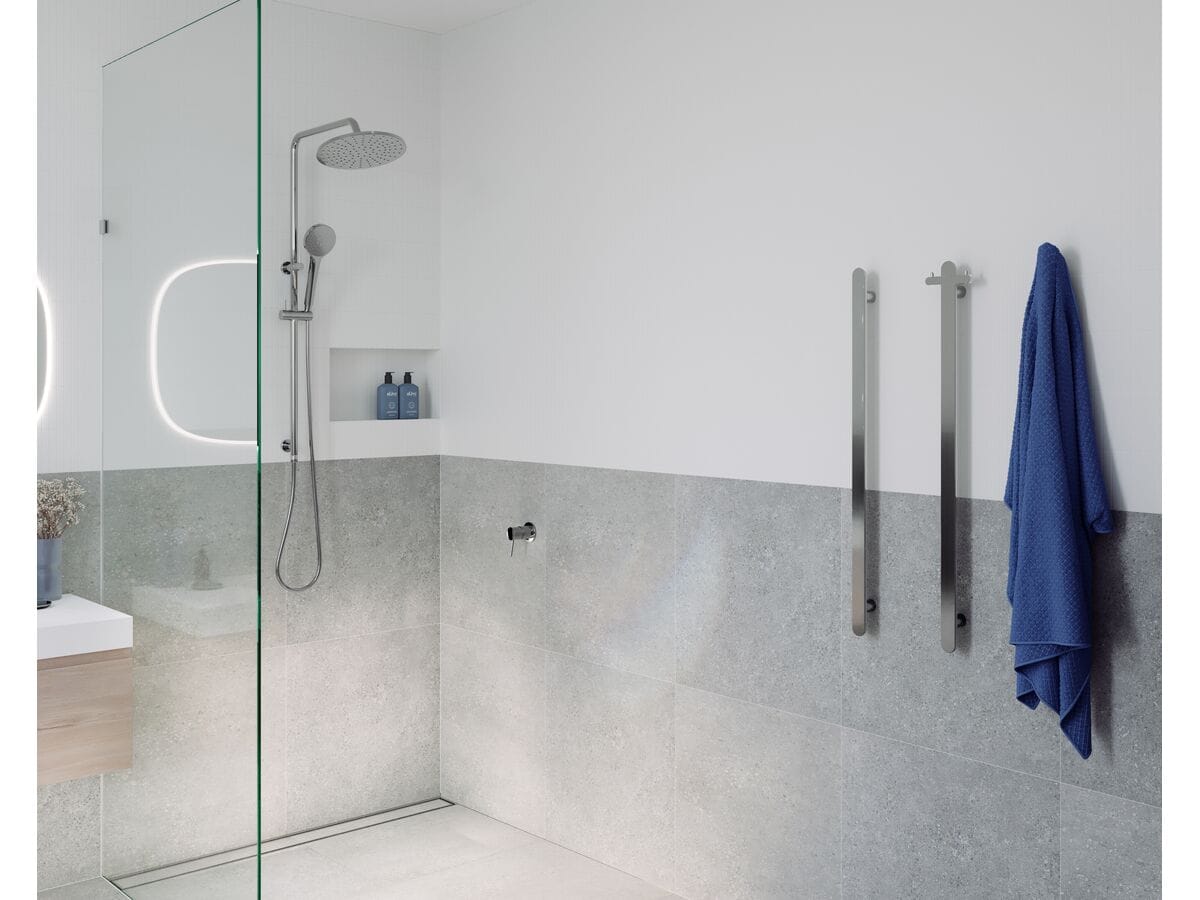
                💡 Quick tip: Not sure if your bathroom renovation needs consent? The government’s exempt building work guide on building.govt.nz lists exactly what’s covered. Or just ask during your free consultation — we assess consent requirements for every project.

                designer-bathroom-auckland-21 Common Bathroom Renovation Mistakes NZ | 2026 Guide

                designer-bathroom-auckland-16 Common Bathroom Renovation Mistakes NZ | 2026 Guide


                Mistake #4: Choosing Materials That Look Good but Don’t Perform

                Pinterest boards are full of beautiful bathrooms. And about half of them would fall apart within three years in an Auckland bathroom.

                The problem is simple: materials that perform well in a dry Californian climate don’t necessarily survive in a high-humidity Auckland environment. Natural timber vanities that haven’t been properly sealed. Unsealed natural stone tiles on a shower floor. Cheap imported tapware with no NZ warranty. These are the material decisions that look great on day one and become problems by year two.

                Tiles: Where Cheap Gets Expensive

                The difference between budget tiles ($30–$50/m²) and quality porcelain or ceramic ($60–$120/m²) is often less than $1,000 for an entire bathroom floor and wall area. But cheap tiles can crack, absorb moisture (especially if they’re not fully vitrified), and stain within a couple of years. The cost of retiling? $3,000–$6,000 including removal and disposal.

                We generally source tiles through The Tile Depot, where the range covers everything from budget-friendly options to premium large-format tiles. The key isn’t spending the most — it’s matching the tile specification to the application.

                designer-bathroom-auckland-15 Common Bathroom Renovation Mistakes NZ | 2026 Guide

                Designer Bathroom By Superior Renovations

                Tapware and Fixtures: The False Economy

                Matte black tapware has been the dominant trend across Auckland bathrooms for the past three years. A full set of quality matte black fixtures runs $500–$1,500. The budget versions? $200–$400. The difference shows within 12 months — cheap coatings wear, handles loosen, and cartridges fail.

                We work with Reece for our bathroom plumbing and fixtures because the product range is backed by NZ warranties and the supply chain is reliable. When a mixer cartridge needs replacing in five years, you want it to be available — not discontinued by a no-name import brand.

                designer-bathroom-auckland-10 Common Bathroom Renovation Mistakes NZ | 2026 Guide

                Designer Bathroom By Superior Renovations

                designer-bathroom-auckland-13 Common Bathroom Renovation Mistakes NZ | 2026 Guide

                Designer Bathroom By Superior Renovations

                “I always tell clients — spend your money where water touches things. Waterproofing, tiles in the shower, quality tapware. The vanity mirror and accessories? That’s where you can save. But the wet zone is not the place to cut corners in Auckland’s climate.”
                — Alison Yu, Designer, Superior Renovations

                💡 Quick tip: Ask your renovation company whether tapware comes with a minimum 5-year NZ warranty. If the answer is vague, the product is probably an unbranded import with no local support.


                Mistake #5: Poor Layout Planning and the Space You Can’t Get Back

                A bathroom is the smallest room most people renovate — and paradoxically, that makes layout planning more important, not less. Every centimetre counts.

                The most common layout mistake we see? Homeowners keeping the same layout because it’s cheaper, even when the existing layout is the reason the bathroom doesn’t work. Sometimes keeping the layout makes perfect sense — same-position replacements save $2,000–$5,000 in plumbing relocation costs and usually avoid consent. But sometimes the existing layout is the problem, and preserving it means spending $25,000+ on a bathroom that still feels cramped, awkward, or poorly lit.

                The Circulation Problem

                NZ Building Code requires minimum clearances around fixtures. You need at least 450mm clear space in front of a toilet, and doors need to open without hitting anything. In Auckland’s older homes — the 3m × 2m bathrooms in 1970s brick-and-tile houses, the narrow bathrooms in pre-war bungalows — these clearances are tight even with careful planning.

                We’ve worked on bathrooms in Hillsborough and Mt Roskill where the original toilet was so close to the vanity you couldn’t sit down without your knee touching the cabinet. The homeowners had lived with it for years. The fix was moving the toilet 300mm — a $2,000–$3,000 plumbing change that transformed the room.

                Lighting: The Forgotten Layout Element

                Most homeowners plan the floor layout carefully and forget about lighting entirely. A single ceiling downlight is not enough. You need task lighting at the vanity (for shaving, makeup, grooming), ambient lighting for the overall space, and ideally a night light option so you’re not blinded at 2am.

                Layered lighting adds $500–$1,500 to a bathroom renovation — and it’s one of the highest-impact, lowest-cost upgrades you can make. Backlit mirrors, LED strip lighting under the vanity, and dimmable downlights turn a basic bathroom into a space that actually feels good to use. PDL by Schneider Electric supply a range of bathroom-rated switches and dimmers designed for NZ wet areas.

                designer-bathroom-auckland-9 Common Bathroom Renovation Mistakes NZ | 2026 Guide

                Designer Bathroom By Superior Renovations

                💡 Quick tip: Before committing to a layout, visit the Superior Renovations showroom at 16B Link Drive, Wairau Valley to see real bathroom layouts in person. It’s easier to judge spatial proportions when you’re standing in an actual bathroom rather than staring at a floor plan.


                Mistake #6: Hiring Wrong, Managing Trades Poorly, and DIY Overreach

                A bathroom renovation involves a minimum of five or six trades: builder, plumber, electrician, waterproofer, tiler, and painter. Potentially a plasterer and gasfitter too. Coordinating these people is project management — and it’s where DIY-managed renovations consistently come unstuck.

                The Cost of Poor Trade Coordination

                When trades aren’t coordinated properly — tiles arrive late, the plumber and electrician are booked for the same day, or the waterproofer can’t come for three weeks — idle time alone adds $500–$1,000 to the job. Auckland tradies charge $90–$120/hour. A plumber standing around for half a day waiting for the tiler to finish is $400–$600 of your money doing nothing.

                We’ve seen projects where homeowners managed their own trades and it took 8–10 weeks for a job that should have taken 3–4. The extended disruption — no functioning bathroom, living with dust, makeshift washing arrangements — costs something too, even if it doesn’t show up on a receipt.

                The DIY Trap

                Some bathroom tasks are genuinely DIY-friendly. Painting. Installing towel rails. Maybe even fitting a vanity if it’s a straight swap. But plumbing, electrical, waterproofing, and tiling are not weekend warrior territory.

                Under NZ law, plumbing and gasfitting work must be carried out by or under the supervision of a registered person under the Plumbers, Gasfitters, and Drainlayers Act 2006. Electrical work beyond basic like-for-like replacements requires a registered electrician. These aren’t suggestions. Doing your own plumbing or electrical work in a bathroom renovation is illegal in New Zealand — and uninsurable if something goes wrong.

                Checking Credentials Matters

                Licensed Building Practitioners (LBPs) can be verified on the LBP register. Plumbers and drainlayers can be checked on the Plumbers, Gasfitters, and Drainlayers Board register. If your builder or renovation company can’t provide LBP numbers, that’s a red flag. Sound familiar?

                A full-service renovation company like ours handles all trade coordination, scheduling, consents, and quality checks under one contract and one project manager. It’s not the only way to do a bathroom renovation — but it eliminates most of the coordination headaches that cause delays and cost blowouts.

                Have a look at our real client stories from Auckland homeowners to see how the process works from their perspective.


                Mistake #7: Forgetting About Storage, Access, and Long-Term Liveability

                A new bathroom can look incredible on completion day and become frustrating within weeks if basic liveability details were overlooked. Storage is the biggest culprit.

                Most Auckland bathrooms are between 3m² and 8m² — and nearly all of them lack sufficient storage. Shampoo bottles on the floor of the shower. Towels piled on the toilet cistern. Cleaning products under the vanity next to the hair dryer. These are signs of a bathroom that was designed for the photo, not for daily life.

                Storage Solutions That Actually Work

                Recessed shower niches (built into the wall during the tiling phase) cost almost nothing extra during construction but add genuine daily functionality. A wall-mounted vanity with drawers rather than a pedestal basin gives you usable storage without taking floor space. Mirrored cabinets above the vanity double as storage and lighting.

                These aren’t luxury additions. They’re standard specifications that should be part of every bathroom renovation brief — and they’re easy to include during the design phase but expensive or impossible to add later.

                Future-Proofing and Accessibility

                If you’re planning to stay in your home long-term, or you’re renovating for ageing parents, think about grab rails (or at least blocking in the wall so they can be added later), barrier-free shower entries, and slip-resistant flooring. These features cost very little to include during a renovation but thousands to retrofit.

                💡 Quick tip: Ask your designer to include timber blocking behind the tiles in the shower and toilet areas during construction. It costs under $100 and means you can install grab rails at any point in the future without retiling.


                How to Avoid These Bathroom Renovation Mistakes — the Summary

                Every mistake on this list has the same root cause: not enough planning upfront. The bathroom renovation itself — demo, build, tile, fit — takes 3 to 4 weeks for a standard Auckland project. The planning should take at least that long again.

                Get your budget realistic before you start talking to anyone. Understand what consent applies to your specific project. Choose a renovation company that manages all trades under one contract, provides a fixed-price quote, and documents every stage. Visit a showroom. Talk to a designer. And build in that 10–15% contingency — because Auckland’s older homes always have something behind the walls.

                The best bathroom renovations we’ve delivered — the ones where clients are still happy years later — all had one thing in common. They were planned properly before anyone picked up a hammer.

                Book your free in-home consultation with Superior Renovations
                Try our free bathroom renovation cost calculator
                Request a free feasibility report for your project


                What are the most common bathroom renovation mistakes in NZ?

                The most common bathroom renovation mistakes in New Zealand include underestimating costs (Auckland mid-range is $25,000–$35,000, not the $10,000–$15,000 many expect), skipping building consent when moving plumbing or making structural changes, cutting corners on waterproofing under tiles, poor ventilation planning in Auckland's high-humidity climate, choosing cheap materials that don't perform in wet areas, and not coordinating trades properly — which adds weeks of delays and idle labour costs.

                How much does a bathroom renovation cost in Auckland in 2026?

                In Auckland in 2026, a budget bathroom refresh costs $9,000–$16,000, a mid-range full renovation runs $25,000–$35,000, and a luxury or custom wet room starts from $45,000 upwards. These figures reflect a 5–8% increase from 2025 due to material and labour inflation. Auckland costs run higher than the national average because of elevated labour rates ($90–$120/hour) and higher compliance costs. Use our free bathroom renovation cost calculator for an estimate tailored to your specific project.

                Do I need building consent for a bathroom renovation in Auckland?

                Most standard bathroom renovations — replacing tiles, vanity, toilet, and shower in the same positions — do not require Auckland Council consent. Consent is required if you are moving plumbing to a new location, removing or adding walls, or making electrical changes beyond standard like-for-like replacements. Consent applications typically cost $500–$2,500. Skipping consent when required can result in fines up to $200,000 under the Building Act 2004, plus forced rework costing $5,000–$10,000.

                How long does a bathroom renovation take in Auckland?

                A standard full bathroom renovation takes 3 to 4 weeks from demolition, assuming design is finalised and all materials are pre-ordered. If consent is required (for moving plumbing or structural changes), add 4 to 8 weeks for Auckland Council processing before work can begin. More complex projects with custom elements or heritage considerations may take 6 to 8 weeks on site. Your project manager should provide a clear timeline before work starts.

                What is the biggest waste of money in a bathroom renovation?

                The biggest waste of money is doing a renovation twice — which happens when waterproofing fails (repair cost $5,000–$10,000), when unconsented work needs to be ripped out and redone ($5,000–$10,000+), or when cheap materials fail within two to three years. Spending properly on waterproofing, quality tiles in wet areas, and reputable tapware with NZ warranties prevents the expensive second renovation that catches many Auckland homeowners.

                Should I move my bathroom layout or keep it the same?

                Keeping the same layout saves $2,000–$5,000 in plumbing relocation costs and usually avoids the need for building consent. Keep the layout if the existing positions work well and your budget is under $20,000. Consider changing the layout if the current arrangement creates circulation problems, if you have dead space that could be better used, or if fixtures are so close together that daily use is uncomfortable. A designer can advise whether the relocation cost is justified for your specific bathroom.

                Can I DIY my bathroom renovation in New Zealand?

                Some tasks are DIY-friendly — painting, installing towel rails, and minor cosmetic work. But plumbing, gasfitting, and drainage work must legally be done by a registered professional under the Plumbers, Gasfitters, and Drainlayers Act 2006. Electrical work beyond basic like-for-like replacements requires a registered electrician. Waterproofing and tiling in wet areas should be done by qualified tradespeople. DIY plumbing or electrical work is illegal in NZ and uninsurable if something goes wrong.

                How do I choose the right bathroom renovation company in Auckland?

                Check that the company uses Licensed Building Practitioners (verifiable on the LBP register). Ask for a fixed-price quote rather than an estimate. Confirm they manage all trades — plumber, electrician, tiler, waterproofer — under one contract with a dedicated project manager. Read genuine Google and Facebook reviews. Visit their showroom if they have one. Ask whether consent is managed on your behalf and whether all work is photographed and documented at each stage.

                What waterproofing is required for a bathroom renovation in NZ?

                NZ Building Code Clause E3 (Internal Moisture) requires all wet areas to be waterproofed with a membrane system that prevents moisture penetrating the building structure. This applies to shower floors and walls, around baths, and any area that gets regularly wet. The waterproofing must be applied by a qualified professional, inspected, and documented before tiles are installed. Failed waterproofing is one of the most common causes of bathroom rework — repair costs typically run $5,000–$10,000.

                Is a bathroom renovation worth it for resale value in Auckland?

                Yes — a well-executed bathroom renovation is one of the highest-ROI improvements for Auckland homes. REINZ data consistently shows updated bathrooms as a top factor in buyer decision-making. A mid-range renovation ($25,000–$35,000) can add $15,000–$30,000 in perceived value depending on the property and suburb. The key is neutral, quality finishes that appeal to broad buyer taste — avoid overly personal design choices if you plan to sell within five years.

                What should I do before starting a bathroom renovation?

                Start by getting a realistic budget using an online cost calculator or a free consultation. Check whether your project needs building consent (moving plumbing or walls usually triggers consent). Visit a renovation showroom to see real materials and finishes. Get a fixed-price quote from a reputable renovation company. Pre-order tiles and fixtures 4–6 weeks before your start date to avoid delays. Plan for 10–15% contingency in your budget, especially if your Auckland home was built before 2000.


                Further Resources for your bathroom renovation

                1. Featured projects and Client stories to see specifications on some of the projects.
                2. Real client stories from Auckland

                Need more information?

                Take advantage of our FREE Complete Home Renovation Guide (48 pages), whether you’re already renovating or in the process of deciding to renovate, it’s not an easy process, this guide which includes a free 100+ point check list – will help you avoid costly mistakes.

                Download Free Renovation Guide (PDF)


                Still have questions unanswered?

                Book a no-obligation consultation with the team at Superior Renovations,
                we’d love to meet you to discuss your renovation ideas!

                  Services

                  Home RenovationKitchen RenovationBathroom RenovationOutdoor RenovationHouse ExtensionCommercialDesign ServicesOther

                  By submitting this form, you agree to receive communications from us via email or text regarding our services, you can unsubscribe at any time.

                  This site is protected by reCAPTCHA and the Google

                  Privacy Policy and Terms of Service apply.


                  WRITTEN BY SUPERIOR RENOVATIONS

                  Superior Renovations is quickly becoming one of the most recommended renovation company in Auckland and it all comes down to our friendly approach, straightforward pricing, and transparency. When your Auckland home needs renovation/ remodeling services, Superior Renovation is the team you can count on for high-quality workmanship, efficient progress, and cost-effective solutions.

                  Get started now by booking a free in-home consultation.

                  Request Your In-home Consultation

                  Or call us on 0800 199 888

                  www.superiorrenovations.co.nz


                  finance-badge1000x1000 Common Bathroom Renovation Mistakes NZ | 2026 Guide

                  Have you been putting off getting renovations done?

                  We have partnered with Q Mastercard ® to provide you an 18 Month Interest-Free Payment Option, you can enjoy your new home now and stress less.

                  Learn More about Interest-Free Payment Options*

                  *Lending criteria, fees, terms and conditions apply. Mastercard is a registered trademark and the circles design is a trademark of Mastercard International Incorporated.

                  DSC03018 - Superior Renovations
                  Bathroom Renovation

                  How Long Does a Bathroom Renovation Take in NZ?

                  How Long Does a Bathroom Renovation Take in NZ?

                  Quick answer: A standard full bathroom renovation in New Zealand takes 3 to 4 weeks on site once demolition starts — assuming design is finalised, materials are on hand, and no consent is needed. Add 4 to 8 weeks if Auckland Council building consent is required.

                  That 3-to-4-week figure is real. We hit it on the majority of our Auckland bathroom projects. But it only tells part of the story.

                  The time your bathroom is actually out of action — tiles ripped up, no working shower, a portaloo in the driveway — is one thing. The total time from “we’ve decided to renovate” to “first hot shower in the new bathroom” is something else entirely. For most Auckland homeowners, the full journey takes 8 to 16 weeks when you include design, product selection, and consent.

                  That gap catches people off guard. You hear “3 to 4 weeks” and think you’ll be done before school holidays. Then material lead times, Auckland Council processing, and the sheer number of decisions you need to make — tiles, tapware, vanity, layout, colours — stretch the real timeline well beyond what you expected.

                  We’ve renovated hundreds of bathrooms across Auckland, from compact ensuites in Remuera villas to family bathrooms in new-build Hobsonville homes. The on-site build time is rarely the bottleneck. It’s everything that happens before the first sledgehammer hits the wall.

                  This guide breaks the whole process into the stages you’ll actually go through — with honest timeframes for each. Whether you’re planning a quick refresh or a full strip-out and rebuild, you’ll know what to expect and where delays actually come from.

                  bathroom-ideas-by-superior-renovations-26 How Long Does a Bathroom Renovation Take in NZ?

                  bathroom ideas auckland


                  The Real Timeline: Every Stage of a Bathroom Renovation in Auckland

                  A bathroom renovation isn’t one job. It’s a sequence of trades — plumber, electrician, builder, waterproofer, tiler, painter, installer — all working in a space the size of a large wardrobe. Get the sequence wrong and the whole thing stalls. Get it right and it runs like clockwork.

                  Here’s what a typical full bathroom renovation looks like, stage by stage, with the timeframes we see on our Auckland projects.

                  Stage 1 — Design and Planning (2–6 Weeks Before Build Starts)


                  initial-consultation How Long Does a Bathroom Renovation Take in NZ?

                  This is where most of the “hidden” time sits. Before anyone picks up a tool, you need a finalised design, confirmed product selections, and — if your renovation involves plumbing relocation or structural changes — a building consent from Auckland Council.

                  At Superior Renovations, the design phase works like this: you meet with one of our designers at our Wairau Valley showroom (16B Link Drive) or in your home. They’ll measure the space, discuss your brief, and produce a 3D design with product specifications. For a straightforward bathroom, this takes about 2 weeks. If you’re indecisive on tiles — and honestly, most people are — allow 3 to 4.

                  💡 Quick tip: Lock in your tile and tapware selections before the build date is set. Changing products mid-build is the single biggest cause of delays we see — and it can push a 3-week job to 5 or 6.

                  Product lead times are the other factor. Standard tiles from The Tile Depot or Mitre 10 are typically in stock and available within a week. But imported tiles, custom vanities, or specific tapware ranges from Reece can take 3 to 6 weeks to arrive. We don’t start demolition until every product is on hand or confirmed for delivery. Sound annoying? It prevents the worse alternative — your bathroom ripped apart and everyone waiting on a backordered shower mixer.

                  Dori-glenross How Long Does a Bathroom Renovation Take in NZ?

                  “The design phase is where you save time on the build. Every decision you make now — layout, tile format, niche placement, tapware finish — is one less decision that holds up the trades later. I always tell clients: be thorough now, be fast later.”
                  — Cici Zou, Designer (NZ Dip. Interior Design), Superior Renovations

                  Stage 2 — Demolition and Strip-Out (1–3 Days)

                  Once demolition starts, you lose access to the bathroom. The team removes everything — tiles, GIB, vanity, toilet, shower, sometimes the floor substrate. A standard bathroom takes 1 to 2 days. Older Auckland homes — particularly pre-1980s villas in Grey Lynn or weatherboard bungalows in Mt Eden — sometimes take a day longer because of layered materials, asbestos-containing products, or outdated plumbing that needs extra care.

                  This is also where surprises live. Rotten framing behind the shower wall. Subfloor damage from a slow leak nobody knew about. Roughly 1 in 5 of our Auckland bathroom demolitions uncovers something unexpected, and it’s more common in homes built before the 2004 Building Act tightened standards. We factor contingency time into every project plan for exactly this reason.

                  💡 Quick tip: If your home was built between the mid-1990s and mid-2000s — the leaky building era — budget extra time and money for potential weathertightness issues behind bathroom walls. It’s better to find and fix these during the renovation than to tile over a problem.

                  Stage 3 — Plumbing and Electrical Rough-In (2–4 Days)

                  With the old bathroom stripped, the plumber and electrician come in to install (or relocate) pipes, drains, and wiring. If you’re keeping everything in the same position — shower where the shower was, toilet where the toilet was — this is straightforward. Two days, sometimes less.

                  If you’re moving the shower to the opposite wall, adding underfloor heating, or converting a bath to a walk-in wet room, allow 3 to 4 days. Relocating plumbing is the single biggest factor that stretches a bathroom renovation timeline — it adds cost, labour, and often triggers the need for building consent from your local council.

                  Any structural work — removing a wall to enlarge the bathroom, reinforcing framing, adjusting the floor level — happens here too. A builder will frame up new walls, install moisture-resistant GIB Aqualine, and prepare the room for waterproofing.


                  Stage 4 — Waterproofing (2–3 Days)

                  This is non-negotiable. Under the NZ Building Code (Clause E3 — Internal Moisture), all wet areas in a bathroom must be waterproofed by a certified applicator. The membrane is applied in multiple coats, and each coat needs to cure before the next one goes on.

                  You cannot rush waterproofing. Auckland’s humidity — particularly in winter — can slow drying times by a day. A tiler who works over uncured membrane will void the waterproofing warranty and create a moisture problem that won’t show up for years. This stage takes 2 to 3 days, sometimes 4 in a cold, poorly ventilated bathroom during a July renovation.

                  💡 Quick tip: Ask your renovation company who is doing the waterproofing and whether they hold a current product-specific certification. This is one area where cutting corners costs serious money later — failed waterproofing is one of the most common (and expensive) bathroom defects in NZ.

                  Stage 5 — Tiling (3–7 Days)

                  Tiling is usually the longest single trade on a bathroom renovation. The timeframe depends on how much tile coverage you’ve chosen, the tile format, and the complexity of the layout.

                  A floor-only tile job with a standard shower base takes 2 to 3 days. Full-height wall tiles, floor tiles, a tiled shower niche, and feature strips can take 5 to 7 days. Large-format tiles (600x600mm or bigger) go up faster per square metre but need more precision on cuts — especially around plumbing penetrations. Mosaic and herringbone patterns look brilliant but they’re labour-intensive. Factor that into your timeline if you’re after a complex design.

                  Grouting follows tiling and needs at least 24 hours to cure before anyone walks on the floor or uses the shower.

                  IMG_0784 How Long Does a Bathroom Renovation Take in NZ?

                  Superior Renovations

                  Stage 6 — Painting, Fit-Off, and Final Touches (2–4 Days)

                  Once tiling is complete, the painter handles ceilings and any untiled wall areas. Then the plumber returns for the final fit-off: vanity, toilet, tapware, shower head, heated towel rail. The electrician connects light fittings, the extractor fan, and any heated mirror or underfloor heating controls.

                  The fit-off stage transforms the space from a construction site to an actual bathroom — and it typically takes 2 to 3 days. A final silicone seal, a thorough clean, and a quality inspection round it out. Then you get your bathroom back.

                  Total On-Site Build Time: The Summary

                  Stage Typical Duration Notes
                  Demolition & strip-out 1–3 days Older homes take longer
                  Plumbing & electrical rough-in 2–4 days Longer if relocating services
                  Waterproofing 2–3 days Cannot be rushed — cure time is fixed
                  Tiling 3–7 days Full-height walls add time
                  Painting, fit-off & finishing 2–4 days Includes vanity, toilet, tapware install
                  Total on-site build 3–4 weeks (standard) / 5–8 weeks (complex) With project management

                  Those numbers assume a project manager is coordinating the trades. Without one — booking each tradie yourself, chasing them up when they don’t show, hoping the tiler and plumber don’t clash — the same job can easily blow out to 6 to 8 weeks. We’ve seen it happen more times than we’d like to count.


                  bathroom-renovation-west-auckland-2 How Long Does a Bathroom Renovation Take in NZ?


                  What Actually Causes Bathroom Renovation Delays in Auckland?

                  Every renovation company will tell you “3 to 4 weeks.” Not all of them will tell you what derails that. Here are the real reasons Auckland bathroom renovations run over — and what you can do about each one.

                  Auckland Council Building Consent

                  If your renovation requires consent, add 4 to 8 weeks to your total timeline before any on-site work begins.

                  Under the Building Act 2004, Auckland Council has 20 working days to process a building consent application. That’s the statutory clock. In practice, if council requests further information (an RFI), the clock stops — and the 20 days doesn’t start again until you provide what they’ve asked for. Auckland building consents for standard residential bathroom work typically process in 20 to 35 working days, according to processing data reported in 2025–2026.

                  Not every bathroom renovation needs consent. Replacing tiles, vanity, toilet, and shower in the same positions? No consent. But if you’re relocating plumbing to a new position, removing or adding walls, or making changes to the electrical layout beyond like-for-like replacements — you’ll likely need one.

                  At Superior Renovations, we assess consent requirements during your free in-home consultation and handle the entire application process on your behalf. Skipping consent when it’s required isn’t an option — Auckland Council can issue fines and require you to rip out and redo non-consented work.

                  Material Lead Times and Supply Chain Delays

                  Standard products — your Methven tapware, locally stocked tiles, off-the-shelf vanities — are typically available within 1 to 2 weeks. But Auckland homeowners increasingly want imported tiles, custom vanities, or specific designer ranges. These can take 4 to 8 weeks to arrive, sometimes longer if they’re coming from Europe or the US.

                  We don’t start demolition until every product is in hand or has a confirmed delivery date before the tiling stage. This is a deliberate policy. A half-demolished bathroom with no tiles on-site is a nightmare for everyone — you’re living without a bathroom, trades are sitting idle, and costs creep up.

                  💡 Quick tip: If you’ve got your heart set on a specific imported tile, order it early — even before design is 100% finalised. You can always return unused boxes. You can’t speed up a container ship from Italy.

                  Changing Your Mind Mid-Build

                  It happens. You see the space stripped back and suddenly the layout that looked great on paper feels wrong. Or a friend shows you a tile they used and now you want that one instead.

                  Every mid-build change triggers a chain reaction. New tiles might have a different thickness, which affects waterproofing detail. A different vanity size means the plumber needs to move waste pipes. What seems like a small swap can add days to the programme.

                  The single best thing you can do for your renovation timeline is make all your decisions during the design phase — and stick to them.

                  Hidden Problems Behind the Walls

                  Older Auckland homes are full of them. Rotten timber framing from decades of shower splashback soaking through failed waterproofing. Galvanised steel pipes that are corroded and need replacing. Asbestos-containing materials in pre-1990s homes that require specialist removal.

                  A 1970s brick-and-tile in Hillsborough or a character villa in Epsom is more likely to throw up surprises than a 2015 build in Flat Bush. We build contingency into every project timeline — typically 2 to 3 extra days — specifically for unforeseen work. Not every bathroom needs it, but the ones that do would blow out badly without it.

                  “The bathrooms that run smoothest are the ones where the homeowner commits to the design early and trusts the process. The ones that drag are almost always because decisions keep changing after demolition. We can manage trades, timelines, and surprises — but we can’t manage indecision.”
                  — Dorothy Li, Design Manager, Superior Renovations

                  Tradie Availability and Seasonal Demand

                  Auckland’s construction sector runs hot. Plumbers and tilers are booked out, particularly from September through to March. If you’re planning a summer renovation, book your renovation company 3 to 6 months in advance. Smaller jobs can sometimes slot into quieter autumn and winter periods — with the trade-off that exterior-related work and drying times take a bit longer in the cold.

                  DSC00156 How Long Does a Bathroom Renovation Take in NZ?


                  Bathroom Renovation Timelines by Scope — Quick Reference

                  Not every bathroom renovation is a full strip-out. The timeline varies massively depending on what you’re actually doing. Here’s a realistic breakdown by renovation type — based on what we see across our Auckland projects.

                  Cosmetic Refresh (3–7 Days On Site)

                  New paint, updated tapware, a replacement vanity, new mirror and lighting. No tiles removed, no plumbing relocated. This is the fastest bathroom renovation — 3 to 7 days on site, with minimal disruption. Budget: $9,000–$16,000 in Auckland.

                  You won’t need consent for this type of work. It’s a good option if the bathroom layout works but the look is tired — common in rental properties or homes getting ready for sale.

                  Standard Full Renovation (3–4 Weeks On Site)

                  This is the most common scope we do. Strip everything out, new waterproofing, new tiles (floor and walls), new shower, vanity, toilet, tapware, lighting, heated towel rail, extractor fan. Layout stays the same or has minor adjustments.

                  With a project manager running the programme, 3 to 4 weeks is the standard. Cost: $25,000–$35,000 for a mid-range finish in Auckland, which includes design, all products, all trades, project management, and a fixed-price quote. For a full breakdown, see our 2026 Auckland bathroom renovation cost guide.

                  You can estimate your own project cost using our free bathroom renovation cost calculator.

                  High-End or Complex Renovation (5–8+ Weeks On Site)

                  Wet rooms, underfloor heating, heated mirrors, custom joinery, stone benchtops, frameless glass, luxury brands, layout changes involving plumbing relocation, and structural modifications. This is the top end.

                  Expect 5 to 8 weeks on site — sometimes more if consent is involved. Cost: from $45,000 upwards. These projects often involve our design studio working closely with the homeowner over several weeks before the build even begins.

                  One of our clients in Mellons Bay recently had a master ensuite converted into a full wet room with large-format porcelain tiles, a linear drain, and smart lighting. The design phase took 4 weeks. The build took 6. The result was worth the wait — but it’s a very different timeline from a straightforward mid-range renovation.

                  Full Timeline Summary — Design to Completion

                  Renovation Scope On-Site Build Time Total Time (Design to Completion)
                  Cosmetic refresh 3–7 days 2–4 weeks
                  Standard full renovation 3–4 weeks 8–12 weeks
                  Complex / high-end with consent 5–8+ weeks 14–20+ weeks

                  💡 Quick tip: If you need to be done by a specific date — say, before Christmas or before a baby arrives — work backward from that date and add 4 weeks of buffer. Then book your consultation now. The renovation companies that deliver on time are the ones booked months in advance.


                  How to Keep Your Bathroom Renovation on Schedule

                  Every delay we’ve described above is preventable — or at least manageable — with the right approach. Here’s what works.

                  Use a Renovation Company With Project Management

                  A bathroom renovation involves 8 to 10 different trades all working in sequence in a tiny space. A designer, demolition crew, plumber, electrician, builder, waterproofer, tiler, painter, and installer. If one trade runs late, everyone behind them shifts. A dedicated project manager coordinates all of it — scheduling, quality checks, communication with you.

                  At Superior Renovations, your project manager gives you a detailed construction schedule before work starts, sends you weekly updates, and is your single point of contact throughout. It’s not an add-on — it’s included in every project. And it’s the main reason our standard bathroom renovations finish in 3 to 4 weeks rather than the 6 to 8 weeks we regularly see quoted by homeowners managing trades themselves.

                  Finalise Every Decision Before Demolition Day

                  Tiles. Grout colour. Tapware finish. Vanity style. Mirror size. Towel rail position. Shower screen type. Toilet model. Paint colour. Lighting. Every single one of these needs to be locked in before day one.

                  Our design team works through these decisions with you during the design phase — that’s what it’s for. Browse product options at our Wairau Valley showroom. Touch the tiles, see the colours in proper light, compare finishes side by side. It’s much harder to make these calls from a screen. And changing your mind after demolition costs real time and real money.

                  Order Materials Early

                  If you know which tiles you want, order them. Even before the design is finalised. Especially if they’re imported or from a specific range that might have limited NZ stock. The same goes for custom vanities — some joinery workshops in Auckland are quoting 4 to 6 week lead times for bespoke pieces.

                  Plan for the Disruption

                  If the bathroom being renovated is your only bathroom, you need a plan. We provide a portaloo on every project where the main bathroom is out of action. Some clients use a neighbour’s shower. Some book a short break. Some time it around a school holiday trip.

                  The point is: plan for it. A 3-week renovation is manageable when you’re prepared. It’s miserable when you’re not.

                  Book Early — Especially for Summer

                  Auckland renovation demand peaks from September to March. The best tradies are booked out. If you want a specific completion window, contact your renovation company 3 to 6 months ahead. Autumn and winter renovations can sometimes be booked on shorter notice, and interior bathroom work isn’t weather-dependent — so there’s no real downside to a mid-year build beyond slightly slower drying times for paint and waterproofing.
                  Luxury-Bathroom-Design-Redvale-26 How Long Does a Bathroom Renovation Take in NZ?

                  Luxury Bathroom Design – Redvale


                  Your Bathroom Renovation Timeline Starts With a Conversation

                  A standard full bathroom renovation in Auckland takes 3 to 4 weeks on site with a project manager — that’s the number we deliver on, project after project. The total time from first conversation to first shower depends on your scope, your product choices, and whether consent is needed.

                  The homeowners who finish on time are the ones who start planning early, commit to their design decisions, and work with a company that manages the whole process from design through to handover.
                  That’s what we do. Every day. Across Auckland.

                  Book your free in-home consultation with Superior Renovations
                  Get an instant estimate with our free bathroom renovation cost calculator
                  Request a free feasibility report for your project


                  How long does a bathroom renovation take in NZ?

                  A standard full bathroom renovation in New Zealand takes 3 to 4 weeks on site from demolition to completion, assuming design is finalised and all materials are on hand. Cosmetic refreshes take 3 to 7 days. Complex renovations with structural changes, consent, and luxury finishes take 5 to 8 weeks or more. The total timeline including design and consent can stretch to 8–20 weeks.

                  How long does it take to rip out and install a new bathroom?

                  The on-site build — from the day demolition starts to the day you use the new bathroom — is typically 3 to 4 weeks for a standard full renovation in Auckland. This includes demolition (1–3 days), plumbing and electrical rough-in (2–4 days), waterproofing (2–3 days), tiling (3–7 days), and painting and fit-off (2–4 days). A project manager coordinating the trades keeps it to this timeframe.

                  Do I need building consent for a bathroom renovation in Auckland?

                  Not for like-for-like replacements — new tiles, vanity, toilet, and shower in the same positions don't need consent. But if you're relocating plumbing, removing or adding walls, or making structural changes, Auckland Council building consent is required. Consent processing takes 20 working days minimum (often 4–8 weeks in practice). Superior Renovations assesses this during your free consultation and manages the application.

                  How much does a bathroom renovation cost in Auckland in 2026?

                  A cosmetic refresh costs $9,000–$16,000. A mid-range full renovation runs $25,000–$35,000 including design, all products, trades, and project management. Luxury or custom bathrooms start from $45,000. Auckland's labour rates ($90–$120/hour) push costs above the NZ average. Use our free bathroom renovation cost calculator at superiorrenovations.co.nz for an estimate tailored to your project.

                  What is the longest part of a bathroom renovation?

                  Tiling is typically the longest single trade on a bathroom renovation — taking 3 to 7 days depending on tile coverage and complexity. Full-height wall tiles, floor tiles, shower niches, and feature patterns push tiling towards the upper end. Waterproofing cannot be rushed either, as membrane coats need 24+ hours to cure between applications.

                  Can I use my bathroom during a renovation?

                  No — once demolition starts, the bathroom is completely out of action until the build is finished (3–4 weeks for a standard renovation). If it's your only bathroom, plan alternatives. Superior Renovations provides a portaloo on every project where the main bathroom is being renovated. Some clients use a neighbour's facilities or time the renovation around a holiday.

                  How far in advance should I book a bathroom renovation in Auckland?

                  Book 3 to 6 months in advance, especially if you're targeting a summer completion (September to March). Auckland's trade sector is busy year-round, and the best renovation companies are booked well ahead. Autumn and winter renovations can sometimes be booked on shorter notice, and bathroom work is mostly interior — so weather isn't a major factor.

                  What causes bathroom renovation delays?

                  The five most common causes are: changing product selections mid-build, waiting for imported materials to arrive, Auckland Council consent processing times, discovering hidden damage during demolition (rotten framing, old plumbing), and poor trade coordination when there's no project manager. Finalising all decisions before demolition and using a company with dedicated project management prevents most delays.

                  Is it faster to renovate a bathroom in winter in Auckland?

                  It can be. Auckland renovation demand peaks in summer, so booking in autumn or winter may get you a faster start date. Bathroom work is mostly interior, so weather has minimal impact. The main trade-off is slightly slower drying times for waterproofing and paint in cooler, humid conditions — which might add 1–2 days to the build.

                  How long does waterproofing take in a bathroom renovation?

                  Waterproofing typically takes 2 to 3 days. A certified waterproofer applies membrane in multiple coats to all wet areas, and each coat must cure before the next. Under the NZ Building Code (Clause E3), waterproofing is mandatory in all bathrooms. Auckland's winter humidity can extend drying times slightly. This is one stage you cannot and should not try to speed up.

                  Should I renovate my bathroom myself to save time?

                  DIY bathroom renovations almost always take longer, not shorter. Without coordinated trade scheduling, jobs that take a professional team 3–4 weeks regularly stretch to 8–12 weeks for owner-managed projects. Plumbing and electrical work must legally be done by licensed professionals in NZ. Waterproofing requires certified applicators. DIY also voids most product warranties and can create consent and insurance issues.

                  How long does it take to get a bathroom renovation quote in Auckland?

                  At Superior Renovations, the process starts with a free in-home consultation where we measure the space, discuss your brief, and understand your budget. You'll receive a detailed fixed-price quote within 1 to 2 weeks of that meeting, depending on design complexity. The quote includes design, all products, all trades, project management, and a clear construction timeline.


                  Further Resources for your bathroom renovation

                  1. Featured projects and Client stories to see specifications on some of the projects.
                  2. Real client stories from Auckland
                  3. Bathroom design gallery — browse completed Auckland projects for inspiration
                  4. Bathroom renovation cost guide 2026 — full cost breakdown by tier

                  Need more information?

                  Take advantage of our FREE Complete Home Renovation Guide (48 pages), whether you’re already renovating or in the process of deciding to renovate, it’s not an easy process, this guide which includes a free 100+ point check list – will help you avoid costly mistakes.

                  Download Free Renovation Guide (PDF)


                  Still have questions unanswered?

                  Book a no-obligation consultation with the team at Superior Renovations,
                  we’d love to meet you to discuss your renovation ideas!

                    Services

                    Home RenovationKitchen RenovationBathroom RenovationOutdoor RenovationHouse ExtensionCommercialDesign ServicesOther

                    By submitting this form, you agree to receive communications from us via email or text regarding our services, you can unsubscribe at any time.

                    This site is protected by reCAPTCHA and the Google

                    Privacy Policy and Terms of Service apply.


                    WRITTEN BY SUPERIOR RENOVATIONS

                    Superior Renovations is quickly becoming one of the most recommended renovation company in Auckland and it all comes down to our friendly approach, straightforward pricing, and transparency. When your Auckland home needs renovation/ remodeling services, Superior Renovation is the team you can count on for high-quality workmanship, efficient progress, and cost-effective solutions.

                    Get started now by booking a free in-home consultation.

                    Request Your In-home Consultation

                    Or call us on 0800 199 888

                    www.superiorrenovations.co.nz


                    finance-badge1000x1000 How Long Does a Bathroom Renovation Take in NZ?

                    Have you been putting off getting renovations done?

                    We have partnered with Q Mastercard ® to provide you an 18 Month Interest-Free Payment Option, you can enjoy your new home now and stress less.

                    Learn More about Interest-Free Payment Options*

                    *Lending criteria, fees, terms and conditions apply. Mastercard is a registered trademark and the circles design is a trademark of Mastercard International Incorporated.

                    bathroom renovation west auckland - Superior Renovations
                    Bathroom Renovation

                    What Are the Stages of a Bathroom Renovation? Auckland Guide

                    Quick answer: A full bathroom renovation in Auckland moves through 8 key stages — from initial design and consent through to demolition, waterproofing, tiling, fit-out, and final handover — typically taking 3–4 weeks on site once all materials are ordered and the design is locked in.

                    Here’s something we hear a lot at Superior Renovations: “We just didn’t know what to expect.” People book a bathroom renovation, get excited about tiles and tapware, and then suddenly there’s a waterproofer on the phone asking about membrane systems and a plumber who needs to talk about rough-in positions. The whole thing starts to feel less like a renovation and more like a project management degree.

                    Get an instant estimate with our Bathroom Renovation Cost Calculator

                    It doesn’t have to be that way. Understanding the stages of a bathroom renovation — what happens, in what order, and why — takes a massive amount of anxiety out of the process. A well-run bathroom reno isn’t chaotic; it’s a precise sequence of trades that, when coordinated properly, flows surprisingly smoothly. When it doesn’t flow smoothly, it’s almost always because that sequence was ignored, rushed, or handled by people who didn’t communicate with each other.

                    We’ve been renovating bathrooms across Auckland — from compact ensuites in Parnell apartments to full family bathroom overhauls in Henderson, Albany, and Remuera — since 2016. We’ve seen what happens when stages are skipped (spoiler: it usually involves water damage and re-doing expensive work), and we’ve seen what happens when it’s done right. This guide walks you through every single stage, including the behind-the-scenes prep work that most renovation articles don’t mention.

                    Whether you’re working with us or planning your own reno, this is the roadmap you need. We’ll cover what happens, what questions to ask your renovation company at each stage, what consent looks like in Auckland, and what the real timeline looks like in 2026. We’ll also flag where things commonly go sideways — so you can make sure they don’t.

                    One thing to note before we dive in: a bathroom renovation is widely considered the most complex renovation per square metre of any room in the house. It involves more trades, more compliance requirements, and more coordination touchpoints than almost any other project. The good news is that complexity is manageable — when the person running it knows what they’re doing.

                    bathroom-renovation-west-auckland-2 What Are the Stages of a Bathroom Renovation? Auckland Guide


                    Stage 1 — Design: Getting Your Vision on Paper Before Anyone Touches a Wall

                    The design stage is where your bathroom renovation either sets itself up for success or quietly plants the seeds of its own frustration. It’s not glamorous. It doesn’t involve hammers or tiles or that gorgeous matte black tapware you’ve been eyeing. But every hour spent getting the design right saves three hours — and a significant amount of money — during the build phase.

                    What Happens During the Design Consultation

                    Your first design consultation is about listening, not presenting. A good designer will want to understand how you use your bathroom, who uses it, what you can’t stand about it right now, and what you love about bathrooms you’ve seen elsewhere. They’ll ask about your budget range, whether you want to keep or move the toilet (moving it has significant plumbing cost implications, which we’ll get to), and whether there are any accessibility or future-proofing considerations.

                    They’ll take measurements. Detailed ones. The exact position of windows, doors, existing plumbing rough-ins, and load-bearing walls all matter. In many Auckland homes — particularly older villas in Grey Lynn, Mt Eden, or Ponsonby — the existing layout throws up surprises that only become visible once you start measuring properly. Finding these constraints during design, rather than during demolition, changes the outcome enormously.

                    💡 Quick tip: Bring reference images to your design consultation — not necessarily bathrooms, but any images that capture a mood, material, or feeling you want. Pinterest boards, magazine clippings, even a photo of a hotel bathroom you loved. It gives the designer a visual language to work with.

                    Concept Plans and 3D Visualisations

                    Once the designer has gathered all the information they need, they’ll produce concept plans showing the proposed layout — where each fixture sits, where tiles start and stop, where the vanity goes, shower dimensions, niche positions. For more complex projects, or for clients who find it hard to visualise a space in 2D, 3D renders give you a photorealistic preview of the finished bathroom before a single tile is ordered.

                    “The layout phase is where we make the big decisions that are expensive to undo later — shower size, niche placement, vanity height. Getting these locked in early, with proper plans, means the trades have a clear brief and there’s no confusion on site about what goes where.”
                    — Cici Zou, Designer, NZ Dip. Interior Design, Certified Designer, Superior Renovations

                    Materials and Fixture Selection

                    With the layout confirmed, you move into material selection. Tiles, vanity, tapware, shower system, toilet suite, mirrors, lighting, hardware. This is the fun part — but it can also be the slow part if it’s not managed. The order in which you select materials matters: tiles drive most other decisions (grout colour, tapware finish, vanity palette), so they’re usually chosen first.

                    At Superior Renovations, we take clients through supplier showrooms including Reece for tapware and bathroom fixtures and The Tile Depot for tiles, so you’re choosing from real samples under real lighting — not guessing from a screen. Nothing kills a reno timeline like indecision on materials two weeks into the build. Getting selections locked before demolition starts keeps everything on track.

                    bathroom-renovation-redvale-auckland-3 What Are the Stages of a Bathroom Renovation? Auckland Guide

                    bathroom-renovation-redvale-auckland What Are the Stages of a Bathroom Renovation? Auckland Guide

                    Fixed-Price Quote and Contract Signing

                    Once design is finalised and materials are selected, you receive a detailed fixed-price quote. This isn’t a rough estimate — it’s a line-by-line breakdown covering every trade, every supply item, and project management. A fixed-price contract protects you from budget blow-outs and gives you a clear payment schedule tied to construction milestones. Review it carefully. If anything is vague, ask for clarification before signing.

                    This stage also locks in the construction start date and gives your project manager the information they need to pre-order materials and schedule trades. The design stage doesn’t end until the contract is signed and materials are on order — at that point, the handover from design to construction is complete, and the clock starts ticking toward your beautiful new bathroom.

                    Once design and contract are wrapped up, the next consideration — before a single tool arrives — is whether your renovation needs a building consent from Auckland Council. It’s a step many people don’t think about until someone mentions it at the wrong moment.


                    Stage 2 — Consents and Compliance: What Auckland Council Actually Requires

                    Building consent is one of the most misunderstood parts of a bathroom renovation. Some homeowners think every bathroom reno needs one. Others assume none of them do. The reality — as is so often the case in construction — sits somewhere in the middle, and getting it wrong in either direction creates real problems.

                    When Does a Bathroom Renovation Require Building Consent?

                    Under the New Zealand Building Act 2004, most like-for-like bathroom renovations — replacing fixtures in the same position, retiling, updating vanities and tapware — are classified as “exempt building work” under Schedule 1 of the Act and do not require a building consent.

                    However, you will need consent if your renovation involves any of the following:

                    Moving plumbing to a new location (relocating the toilet, shower, or basin to a different wall or position). Any structural alterations — removing or modifying walls, particularly load-bearing ones. Changing the size of windows or adding new openings. Converting a non-wet area into a wet area (for example, enclosing an existing laundry space into the bathroom footprint). Adding underfloor heating that is hardwired (low-voltage plug-in systems are generally exempt).

                    Important note: Carrying out work that requires consent without getting it is a serious issue. It creates problems when you sell — an LIM report will flag unconsented work, it can void your home insurance for claims related to that work, and Auckland Council can require you to remove and redo the work at your cost. Always clarify consent requirements with your renovation company before work begins.

                    How Long Does Consent Take in Auckland?

                    Auckland Council is required by law to process building consent applications within 20 working days — but the clock stops every time they request additional information, which is common for first-time applicants or complex projects. In practice, budget 4–8 weeks from lodgement to approval for bathroom projects that require consent in Auckland. This is why we always recommend confirming consent requirements at the design stage, not as an afterthought.

                    This timeline is reflected in Superior Renovations’ FAQ on the live site: if your bathroom reno requires consent, you need to account for that 4–8 week processing window before demolition can legally begin. Your project manager handles the consent lodgement and manages the back-and-forth with Auckland Council — that’s a core part of what you’re paying for in a project-managed renovation.

                    LBP Requirements and Restricted Work

                    Under the Building Act, certain types of work must be carried out by a Licensed Building Practitioner (LBP). According to building.govt.nz, restricted building work — which includes structural work and all weathertight elements — must be performed or supervised by an LBP and recorded on the project. In a bathroom renovation, this is most relevant for any structural work and for the waterproofing system, which must also produce a PS3 certificate (more on that in the waterproofing stage).

                    All tradespeople working on consented building work must also have relevant certificates of compliance — your electrician produces an Electrical Certificate of Compliance, your gasfitter produces a Gas Fitting Certificate. These aren’t optional extras; they’re legal requirements and are included in your handover documentation from Superior Renovations.

                    What If You’re in a Heritage Overlay Area?

                    Some suburbs in Auckland — including parts of Ponsonby, Remuera, and Grey Lynn — include properties on the Auckland Unitary Plan’s heritage register. Heritage overlays generally apply to exterior work rather than interior bathroom renovations, but it’s worth checking your specific property. Your renovation company or a resource consent specialist like Sonder Architecture can confirm whether any special conditions apply to your project.

                    With design locked and consent sorted (or confirmed as not required), the project is ready to move onto site. First up: everything that’s currently in your bathroom needs to come out.


                    Stage 3 — Demolition: Stripping Back to the Bones (and What You Might Find)

                    Demolition is the stage that makes everything feel real. One day you have a tired, outdated bathroom. Two days later, you have bare framing and subfloor. It’s dramatic, it’s a little bit chaotic, and — for most people — it’s genuinely exciting. It’s also where surprises live.

                    What Happens During Bathroom Demolition

                    A typical bathroom demolition takes one to two days for a standard 6–9m² bathroom. The demolition team removes all existing fixtures — toilet, vanity, shower or bath, mirrors, lighting, exhaust fans. They strip tiles from walls and floors (this is noisy, dusty work, so expect some disruption). Gib board is removed to expose framing. The old waterproofing membrane is stripped back to the substrate. Existing plumbing and electrical rough-ins are exposed, assessed, and either retained or repositioned per the design plans.

                    The demolition team should be surgical about what they remove and what they leave. Indiscriminate demo — ripping out anything that looks old — creates extra work and cost during the reinstatement phase. A well-briefed demolition team works from the same plans as every other trade, so they know exactly what’s being replaced and what’s being retained.

                    bathroom-ideas-by-superior-renovations-26 What Are the Stages of a Bathroom Renovation? Auckland Guide

                    bathroom ideas auckland


                    bathroom-ideas-by-superior-renovations-24 What Are the Stages of a Bathroom Renovation? Auckland Guide

                    bathroom ideas auckland

                    What You Might Find Behind the Walls

                    This is the bit that renovation TV shows have made famous — and for good reason. In older Auckland homes, particularly pre-1980s builds, it’s common to find things behind bathroom walls that weren’t visible during the design phase. Some of the most frequent discoveries include:

                    Deteriorated or absent waterproofing — many older bathrooms were built without proper membranes, relying instead on painted surfaces or basic sealing that has long since failed. Rotted framing caused by years of water ingress from inadequate waterproofing or cracked grout. Outdated wiring that needs to be brought up to current standards before new electrical can be installed. Asbestos in the substrate, texture coat, or adhesive in homes built before the mid-1980s (this triggers a separate asbestos management process). Substandard previous renovations — particularly common in rental properties where work was done cheaply or without consent.

                    💡 Quick tip: A good fixed-price contract will include a provisional sum for unknown conditions found during demolition. Ask your renovation company specifically how they handle unexpected discoveries — are they billed as variations, or is there an agreed process and price range? Knowing this upfront prevents nasty surprises.

                    Asbestos in Auckland Bathrooms

                    Homes built before 1990 — which covers a significant portion of Auckland’s housing stock, particularly in suburbs like Mt Roskill, Avondale, Henderson, and Papatoetoe — may contain asbestos-containing materials. Under WorkSafe NZ regulations, any material suspected of containing asbestos must be tested before disturbance. If asbestos is found, a licensed asbestos removal contractor must handle the removal before renovation work can continue. This adds cost (typically $1,500–$5,000+ depending on the extent) and time to the project. It’s not something any renovation company can predict in advance — but a good one will test early and manage the process professionally.

                    Subfloor and Structural Assessment

                    Once tiles and gib are removed, your project manager and lead builder should conduct a thorough inspection of the subfloor and framing. Any rotted or damaged timber needs to be replaced before new waterproofing goes on — covering compromised framing is one of the most common causes of problems down the track. If you’re in a house with a suspended timber subfloor (common in pre-1970s Auckland bungalows), the condition of the joists under the bathroom can be a genuine wildcard.

                    Demolition is done. The site is clear, the structure has been assessed, and any hidden issues have been addressed. Now the real build sequence begins — and it starts underground, with plumbing.


                    Stage 4 — Plumbing, Electrical and Framing: The Work No One Sees That Makes Everything Work

                    Here’s a counterintuitive truth about bathroom renovations: the most important work happens before a single tile is placed. The rough-in stage — plumbing, electrical, and framing — is entirely invisible in the finished bathroom, but it determines whether everything else performs as it should. Get this stage right and the rest of the renovation flows. Get it wrong and you’re chasing problems for years.

                    Plumbing Rough-In

                    The plumber arrives once demolition is complete and any structural framing work has been done. Their job at this stage is the rough-in: positioning all the supply pipes (hot and cold water) and waste pipes to the correct locations for each fixture as per the design plans. If the shower is moving from one wall to another, or the vanity is going to a different position, this is where that work happens — before anything gets closed in.

                    This is also the time to replace any old pipework that’s in poor condition. In many Auckland homes built in the 1950s–1970s, you’ll encounter galvanised steel pipes that have corroded internally over decades of Auckland’s slightly acidic water. Replacing these during a bathroom renovation — when the walls are already open — is far more cost-effective than doing it as a separate job later.

                    Plumbing work on drainage and supply must be carried out by a registered plumber under the Plumbers, Gasfitters and Drainlayers Board (PGDB). Any plumbing in a bathroom is restricted work under NZ legislation — not something that can legally be DIY’d or handed to an unlicensed operator.

                    Electrical Rough-In

                    Bathroom electrical is simultaneously more regulated and more critical than most homeowners realise. All electrical work in a bathroom must be carried out by a registered electrician, and bathrooms have specific zoning requirements under the Electrical Workers Registration Board (EWRB) standards. Zone 0 (inside the shower/bath), Zone 1 (directly above), and Zone 2 (the surrounding area) all have specific IP (ingress protection) ratings for any electrical fittings placed within them.

                    During rough-in, the electrician runs cables for all the lighting circuits, exhaust fan, heated towel rail, underfloor heating (if included), and any shaver socket or mirror LED supply. Bathroom lighting is often underestimated — proper task lighting at the vanity, ambient general lighting, and a dimmer circuit for a relaxed evening atmosphere are three completely different requirements that all need to be wired before the walls close up.

                    “We always spec three lighting layers in a bathroom — task at the vanity mirror, ambient overhead, and a low-level mood circuit. Getting all three roughed in properly means the homeowner has real flexibility in how the space feels. It adds very little cost at the rough-in stage, but it’s almost impossible to retrofit.”
                    — Eunice Qin, Designer, Superior Renovations

                    Framing and Stopping

                    With plumbing and electrical roughed in, any new framing goes up — walls for recessed niches, framing for new shower enclosures, backing for the vanity wall (which needs solid timber blocking to hold fixings for a wall-hung vanity). New gib board goes on, specifically moisture-resistant gib in all wet areas. Standard gib is not appropriate in bathroom environments; it will degrade over time regardless of how well the waterproofing above it is applied.

                    Stopping — the process of taping, coating, and sanding gib joints to a smooth finish — is done at this stage too. The stopping needs to be properly cured and primed before waterproofing can begin. Rushing this step causes problems with membrane adhesion. Your project manager should be sequencing these stages with enough lead time between them.

                    💡 Quick tip: This is a good time to confirm the final tile layout with your project manager and tiler. The stopping coat on gib needs to be finished to the correct flatness tolerance for large-format tiles (the larger the tile, the flatter the substrate needs to be). Checking this before waterproofing goes on prevents problems.

                    Underfloor Heating Installation

                    If you’ve chosen electric underfloor heating — popular in Auckland bathrooms as a practical luxury, particularly in the cooler winter months — the heating mat is laid at this stage, before waterproofing and tiling. PDL by Schneider Electric produce quality in-floor heating systems widely used in NZ bathrooms. The thermostat and control unit are also roughed in at this point, with final fitting happening after tiling is complete.

                    DSC03021 What Are the Stages of a Bathroom Renovation? Auckland GuideDSC05750 What Are the Stages of a Bathroom Renovation? Auckland Guide

                    Plumbing and electrical rough-ins done. Framing completed. Substrate prepped. Now we get to the stage that arguably matters more than any other in a bathroom renovation — the one that determines whether your renovation lasts 20 years or creates expensive problems in five.


                    Stage 5 — Waterproofing: The Make-or-Break Stage Most Homeowners Don’t Think About

                    Ask any experienced renovation company in Auckland what the most common cause of failed bathroom renovations is, and you’ll get one answer: waterproofing. Not bad tiles. Not cheap tapware. Not dodgy grout. Poor or absent waterproofing is responsible for the vast majority of bathroom-related structural damage in NZ homes — and much of it goes undetected for years because it’s hidden behind tiles and vanity units.

                    What Is Bathroom Waterproofing?

                    Waterproofing is the application of a continuous, flexible membrane to all wet surfaces and the substrate surrounding them — the shower walls and floor, the area around the bath, and the bathroom floor as a whole. The membrane creates an impermeable barrier that prevents water from penetrating through tiles and grout into the substrate, framing, and subfloor below.

                    In New Zealand, bathroom waterproofing is governed by NZ Building Code Clause E3 Internal Moisture, which sets minimum requirements for wet area construction in residential buildings. The standard distinguishes between “wet areas” (the shower enclosure) and “potentially wet areas” (the rest of the bathroom floor), each with different minimum requirements for membrane application area and height.

                    The PS3 Certificate — Why It Matters

                    One of the most important documents you should receive at the end of a bathroom renovation is the PS3 waterproofing certificate. This is a Producer Statement (PS3) issued by a council-approved waterproofing specialist who is registered with the Plumbers, Gasfitters and Drainlayers Board. The PS3 certifies that the waterproofing design and installation complies with the Building Code.

                    At Superior Renovations, our PS3 is included as a standard part of every bathroom renovation handover pack. If a renovation company can’t produce a PS3 for your new bathroom, that’s a significant red flag — it means either the waterproofing wasn’t done correctly or it wasn’t done by a certified specialist.

                    DSC03730-1024x683-1 What Are the Stages of a Bathroom Renovation? Auckland Guide

                    Types of Waterproofing Systems Used in NZ

                    The most common systems used in Auckland residential bathrooms are liquid-applied polyurethane or acrylic membranes, which are painted on in multiple coats and bond directly to the substrate. Sheet membrane systems (torch-on or bonded) are used in higher-risk applications. Both systems have specific curing time requirements — the membrane must be fully cured before tiling begins, typically 24–48 hours depending on the product and ambient temperature. Auckland’s humidity can slow this down; rushing it is one of the most common waterproofing failures.

                    All membrane applications must extend to the correct heights — a minimum of 1,500mm on shower walls from the floor, covering the full shower enclosure. On floors, the membrane must extend at least 150mm up adjacent walls. Falls (drainage gradients) in the wet area floor must also comply with the NZ Building Code, directing water toward the drain rather than toward walls or the room threshold.

                    Inspections Before Tiling

                    If your renovation requires a building consent, Auckland Council will conduct a pre-tile inspection to sign off the waterproofing before tiling can begin. The inspector checks membrane application coverage, curing, falls, and junction detailing (particularly at wall-floor junctions, which are the most common failure point). Tiling before a required pre-tile inspection is passed is not legal — and it forces you to rip out perfectly good tiles if the waterproofing underneath fails inspection.

                    💡 Quick tip: Even on exempt (non-consented) bathroom renovations, ask for photographic documentation of the waterproofing installation at all key stages — pre-tile and post-application. This creates a record that can be invaluable if any warranty claim arises later.

                    Waterproofing passed. Now the bathroom starts to look like something. The tilers are next — and this is the stage most clients get genuinely excited about, because suddenly their material choices come to life in three dimensions.


                    Stage 6 — Tiling: Where Your Bathroom Finds Its Character

                    Tiling is where the design concept you spent so much time on during Stage 1 either comes to life brilliantly or falls flat. A great tile installation — set out correctly, consistent joint width, perfectly flat and plumb — elevates the entire renovation. A poor one — lippage on large-format tiles, inconsistent grout joints, poor corner detailing — makes everything feel cheap regardless of how expensive the tiles actually were.

                    Tile Set-Out and Planning

                    Before a single tile is adhered, an experienced tiler will plan the set-out — working out where the tile grid starts in relation to the room’s focal points (usually the shower wall behind the shower head or the main entrance wall) to ensure cuts are balanced and prominent features like niches are centred within a tile grid. Poor set-out planning results in awkward half-tile cuts in the most visible positions. It’s a planning step that takes an hour and makes an enormous difference to the finished result.

                    For large-format tiles (600x600mm, 600x1200mm, or larger — all popular choices in contemporary Auckland bathrooms in 2026), the substrate flatness requirements are stringent. BRANZ guidelines and the NZ ceramic tile standard AS/NZS 3958 require that large-format tiles are laid over surfaces with no more than 3mm variation under a 3-metre straight edge. This is why the framing and stopping stage matters so much — by the time the tiler arrives, the substrate needs to be flat.

                    Floor and Wall Tile Installation

                    Floor tiling typically happens before wall tiling in a full bathroom renovation. The floor tile bed creates the final falls toward the drain, so it needs to be set first. Wall tiles follow, starting from the lowest full tile course above the floor and working up. In the shower, tiles are applied over the waterproofing membrane using appropriate flexible adhesive — the type of adhesive matters, as standard cement-based adhesive can crack over time in a wet-area environment subject to thermal movement.

                    Tile selection from quality NZ suppliers makes a real difference. The team at The Tile Depot stock an extensive range of porcelain, ceramic, and natural stone tiles suited to Auckland’s climate — porcelain is generally the most practical choice for New Zealand bathrooms given its density, low water absorption, and durability in high-humidity environments.

                    bathrooms-design-1-500x500-1 What Are the Stages of a Bathroom Renovation? Auckland Guide

                    “Tile selection is one of my favourite parts of the design process because it’s where the whole vision crystallises. The key thing I always remind clients is to think about scale — a small tile in a large shower can feel busy and dated, while a large-format tile in the same space feels contemporary and spacious. Scale matters as much as colour or texture.”
                    — Alison Yu, Designer, Superior Renovations

                    Grouting and Sealing

                    Once adhesive has cured (typically 24 hours minimum, or longer for large-format tiles), grouting begins. Grout joint width, colour selection, and the type of grout (cement-based or epoxy) are all specified in the design package. Grout colour has an outsized effect on the finished look — a dark grout against pale tiles creates graphic definition, while a tone-on-tone match creates a seamless, contemporary feel. Epoxy grout offers superior stain resistance and is increasingly specified in high-end Auckland bathrooms, particularly for floor joints in the shower zone.

                    After grouting, silicone sealant is applied at all movement joints — wall-to-floor junctions, internal corners in the shower, and around the bath surround. These joints accommodate thermal movement and prevent cracking that would otherwise allow water to penetrate. Silicone colour should be matched to grout colour for a consistent finish.

                    💡 Quick tip: Natural stone tiles (marble, travertine, limestone) need to be sealed after installation and periodically thereafter. Unsealed natural stone in a wet area absorbs water and staining products rapidly. Ask your tiler what sealer they’ve used and what the resealing schedule looks like for your specific stone.

                    Tiling is done. The bathroom suddenly looks like a bathroom. But there’s still a lot to do — all the plumbing and electrical that was roughed in now needs to be connected, and all the fixtures and fittings need to go in.


                    Stage 7 — Fit-Out: Bringing the Bathroom to Life with Fixtures, Fittings and Finishes

                    The fit-out stage is the most visually dramatic phase of the bathroom renovation — the one where it goes from a tiled shell to a room you can actually use. It involves multiple trades returning to site in a specific sequence: plumber first for fixture connections, electrician for final fitting, then the bathroom installer for vanity and accessories, and finally the glazier for shower screens. The sequence matters because each trade’s work provides the attachment point or service connection for the next.

                    Plumbing Connections and Fixture Installation

                    The plumber returns to connect all the fixtures that were positioned during rough-in: toilet suite, basin/vanity, shower mixer and rail, bath (if applicable), heated towel rail if it’s a hot-water type, and the waste connections for each. At this stage, the plumber also installs the shower waste (matching the drain cover to the floor tile or selecting a linear drain if that’s what was specified).

                    This is also when the tapware from suppliers like Reece goes in — shower heads, hand showers, basin mixers, bath fillers. The quality of your tapware choice becomes very tangible at this point. There’s a perceptible difference between a well-weighted, ceramic disc mixer and a budget unit, both in how it feels to operate and how long it lasts. The plumber will test all connections for water tightness before finishing.

                    Electrical Fit-Out

                    The electrician returns to fit off all the pre-roughed electrical: installing light fittings, exhaust fan, heated towel rail (if electric), shaver socket, mirror LED connections, and the thermostat and controller for underfloor heating. Bathroom lighting is one of the most underinvested aspects of a typical renovation — and one of the highest-impact ones. A well-lit bathroom with properly specified task lighting at the vanity, ambient overhead, and dimmer control makes the space feel significantly more luxurious than a single overhead downlight.

                    The electrician produces an Electrical Certificate of Compliance (CoC) upon completion — this is a legal requirement and forms part of your handover documentation. If you don’t receive one, the work is not legally signed off.

                    bathroom-renovators-nz-11 What Are the Stages of a Bathroom Renovation? Auckland Guide

                    Vanity, Mirror and Accessory Installation

                    Wall-hung vanities go on after tiling — the timber blocking installed during the framing stage is now put to use, providing solid fixing points within the tiled wall. A wall-hung vanity incorrectly fixed to gib alone will eventually fail — the blocking is not optional. Freestanding vanities simply sit on the tiled floor but still need accurate positioning against wall tiles.

                    Mirrors, towel bars, toilet roll holders, and robe hooks are installed at this stage using appropriate fixings for the tile type (ceramic vs. porcelain requires different drill bits and fixing systems). LED-backlit mirrors — popular in contemporary Auckland bathrooms — need to be connected to the pre-roughed mirror supply circuit.

                    Shower Screen and Bath Screen Installation

                    Shower screens and shower doors are typically installed by a specialist glazier, not the bathroom installer. The glazier measures the finished, tiled shower enclosure on site, then manufactures the glass panel(s) to the exact dimensions. This means shower screen installation usually happens 5–10 working days after tiling is complete — the lead time for custom glass fabrication is the variable. Semi-frameless and frameless shower screens are the current preference in Auckland renovations; aluminium framed screens are largely considered dated.

                    With the fit-out stage complete, your bathroom is functionally operational. But it’s not quite finished — there are a few final trades and touches before the project manager calls for the final walk-through.


                    Stage 8 — Painting, Final Checks and Handover: The Last 10% That Makes 100% of the Impression

                    The final stage of a bathroom renovation is where the accumulated quality of every previous stage shows itself — or doesn’t. A beautifully tiled bathroom with a rushed paint job and incomplete grouting looks unfinished. A modest bathroom with immaculate paint lines, perfect sealant joints, and clean fittings looks like a quality renovation. The last 10% of the job deserves the same attention as the first 90%.

                    Painting

                    Bathroom painting is a specialist task — not because applying paint is hard, but because bathrooms require specific product selection and preparation to perform in a high-humidity environment. All bathroom paint must be appropriate for wet areas — semi-gloss or gloss formulations with mould-resistant additives are standard. Flat paint in a bathroom is a recipe for mould and peeling within a few years, regardless of how well ventilated the bathroom is.

                    Surface preparation matters enormously: primer on new gib, careful masking around tiles and fittings, and sanding between coats for a smooth, durable finish. The ceiling — often painted the same colour as the walls in a bathroom — should be a specific bathroom ceiling paint with anti-mould properties.

                    Final Plumbing and Electrical Checks

                    Before the final walk-through, the plumber and electrician conduct a final inspection of their own work — checking for any drips, confirming fixture operation, testing the underfloor heating thermostat, and verifying the exhaust fan is working at the correct extraction rate. NZ Building Code Clause G4 Ventilation requires that bathrooms have sufficient ventilation — either natural (window opening area) or mechanical (exhaust fan). A mechanical fan must achieve a minimum of 25 litres per second extraction capacity per building.govt.nz standards for residential bathrooms. This is a frequently overlooked detail that has a significant impact on mould and moisture management in Auckland’s humid climate.

                    bathroom-renovators-nz-52 What Are the Stages of a Bathroom Renovation? Auckland Guide

                    The Final Walk-Through

                    The final walk-through is the most important meeting of the entire project. Your project manager walks you through every element of the finished bathroom — checking tile alignment, grout consistency, silicone joints, fixture operation, paint finish, door and screen operation, and anything else on the punch-list. This is your opportunity to flag anything that doesn’t meet the standard — and a quality renovation company wants to hear it.

                    Punch-list items (minor defects or incomplete items identified at the walk-through) are completed before the project is formally signed off. You don’t sign off until you’re satisfied. Full stop.

                    Handover Documentation

                    At handover, you receive your complete documentation pack. For a Superior Renovations project, this includes: workmanship warranty (1 year on labour), PS3 waterproofing certificate, Electrical Certificate of Compliance, Gas Fitting Certificate (where applicable), product warranties for all supplied fixtures and fittings, and an aftercare and maintenance guide. If your project required building consent, the project manager also coordinates the Code Compliance Certificate (CCC) application with Auckland Council.

                    💡 Quick tip: Keep your handover documentation in a safe place — both physical and digital copies. When you sell your home, these documents are assets. Buyers and their solicitors increasingly request renovation documentation, and a PS3, CoC, and CCC add tangible value and confidence to your transaction.

                    How Much Does a Full Bathroom Renovation Cost in Auckland in 2026?

                    With all eight stages in mind, here’s what a complete bathroom renovation in Auckland looks like in terms of cost in 2026:

                    Renovation Tier Typical Scope Auckland Cost Range (2026)
                    Budget Refresh New paint, fittings, minor tiling updates. No layout changes. $9,000–$16,000
                    Mid-Range Full Renovation Full reno incl. all trades, waterproofing, new tiles, vanity, fixtures, lighting. Same layout. $26,000–$35,000
                    Full Overhaul / Luxury Layout changes, premium fixtures, custom vanity, wet room, high-end tiles, full consent. $40,000–$60,000+
                    Labour Rate (tradies) Plumbers, electricians, tilers — Auckland market rate $90–$120/hour

                    For a personalised estimate based on your specific bathroom and scope, use our free Bathroom Renovation Cost Calculator or read our full Auckland bathroom renovation cost guide for 2026.

                    How Long Does a Bathroom Renovation Take?

                    A standard full bathroom renovation takes 3–4 weeks from demolition day, assuming design is finalised and all materials are on site before work begins. Add 4–8 weeks prior to that if Auckland Council building consent is required. The total project duration from first consultation to handover — including design, consent (if needed), material lead times, and construction — is typically 8–16 weeks for a standard mid-range renovation.

                    One final thing: we do an aftercare follow-up one month after every renovation. Not because something will necessarily have gone wrong, but because we want to make sure everything is performing exactly as it should — and because we genuinely care about what happens after we hand the keys back.

                    Ready to get your bathroom renovation started? Here’s how to take the next step.

                    Book your free in-home consultation with Superior Renovations
                    Get an instant estimate with our Bathroom Renovation Cost Calculator
                    Request a free feasibility report for your project


                    What are the stages of a bathroom renovation in Auckland?

                    A full Auckland bathroom renovation has 8 key stages: (1) Design and material selection, (2) Consents and compliance, (3) Demolition, (4) Plumbing, electrical, and framing rough-in, (5) Waterproofing, (6) Tiling, (7) Fit-out of fixtures and fittings, and (8) Painting, final checks, and handover. Total on-site time is typically 3–4 weeks from demolition, assuming design is locked and materials are pre-ordered.

                    How long does a bathroom renovation take in New Zealand?

                    A standard full bathroom renovation takes 3–4 weeks from the day demolition begins, assuming design is finalised and all materials have been delivered to site beforehand. If Auckland Council building consent is required (for example, if plumbing is being relocated), add 4–8 weeks for consent processing. Total project time from first consultation to handover is typically 8–16 weeks including design, consent, and construction.

                    Do I need building consent for a bathroom renovation in Auckland?

                    Most like-for-like bathroom renovations in Auckland — replacing fixtures in the same position, retiling, and updating vanities — are exempt from building consent under Schedule 1 of the NZ Building Act. You will need consent if you are moving plumbing to a new location, removing or modifying structural walls, changing window sizes, or converting a non-wet area into a wet room. Always confirm consent requirements with your renovation company before work begins.

                    What is a PS3 waterproofing certificate and do I need one?

                    A PS3 is a Producer Statement issued by a certified waterproofing specialist registered with the Plumbers, Gasfitters and Drainlayers Board. It certifies that the bathroom's waterproofing system complies with NZ Building Code Clause E3 Internal Moisture. You should always receive a PS3 at the end of a bathroom renovation — if your renovation company can't provide one, that is a significant red flag about the quality of the waterproofing installation.

                    How much does a full bathroom renovation cost in Auckland in 2026?

                    In Auckland in 2026, a mid-range full bathroom renovation costs $26,000–$35,000, covering design, waterproofing, all trades, tiles, fixtures, and project management. A budget refresh (paint, fittings, minor tiling) starts from $9,000–$16,000. A luxury renovation with layout changes, premium fixtures, and custom finishes starts from $40,000 and can reach $60,000+. Tradie labour rates in Auckland are $90–$120 per hour.

                    What trade sequence is used in a bathroom renovation?

                    The correct trade sequence in a bathroom renovation is: (1) Demolition, (2) Builder/plumber rough-in and framing, (3) Electrical rough-in, (4) Stopping and substrate preparation, (5) Waterproofing, (6) Tiling, (7) Plumbing fit-off and fixture installation, (8) Electrical fit-off and lighting, (9) Vanity, accessories and glazing installation, (10) Painting, and (11) Final checks and handover. Each trade's work depends on the previous stage being complete and properly inspected.

                    What does waterproofing in a bathroom involve?

                    Bathroom waterproofing involves applying a continuous, flexible membrane to all wet and potentially wet surfaces — shower walls and floor, bath surrounds, and the bathroom floor. In New Zealand, it must comply with Building Code Clause E3 Internal Moisture. The membrane must cure fully before tiling begins. A PS3 certificate must be issued by a registered waterproofing specialist. If consent is required, Auckland Council conducts a pre-tile inspection to verify the waterproofing before tiling proceeds.

                    What happens during bathroom demolition?

                    Bathroom demolition typically takes 1–2 days for a standard bathroom. The team removes all existing fixtures, strips tiles from walls and floor, removes gib board to expose framing, and strips the existing waterproofing membrane. The project manager then inspects framing, subfloor, and pipework for any hidden damage. In Auckland homes built before 1990, asbestos testing may be required before demolition can proceed. Any discovered issues (rotted framing, absent waterproofing) are quoted as variations before work continues.

                    Should I stay in my house during a bathroom renovation?

                    Most Auckland homeowners stay in their homes during a bathroom renovation, particularly if there is a second bathroom or ensuite available. Demolition is the noisiest and dustiest phase (typically 1–2 days). After that, work is messy but manageable. Your project manager will give you notice of the days with the most disruption. For single-bathroom homes, it's worth planning short-term alternative arrangements for the 3–4 week construction period, or discussing a phased schedule with your project manager.

                    Can I make changes to the design during the bathroom renovation?

                    Yes, but be aware that changes after work has commenced are treated as variations to the contract and incur additional cost for both labour and materials. Changes to waterproofed areas are the most disruptive and expensive because they require stripping tiles and membrane and starting the affected area again. The best time to make decisions is during the design stage — after contract signing, changes become progressively more expensive the further into the build you are.

                    What documents should I receive at bathroom renovation handover?

                    At handover, you should receive: a workmanship warranty covering all labour, a PS3 waterproofing certificate, an Electrical Certificate of Compliance, a Gas Fitting Certificate (if gas work was done), product warranties for all supplied fixtures, and an aftercare and maintenance guide. If your project required building consent, the renovation company should also coordinate the Code Compliance Certificate (CCC) application with Auckland Council on your behalf.


                    Further Resources for your bathroom renovation

                    1. Featured projects and Client stories to see specifications on some of the projects.
                    2. Real client stories from Auckland

                    Need more information?

                    Take advantage of our FREE Complete Home Renovation Guide (48 pages), whether you’re already renovating or in the process of deciding to renovate, it’s not an easy process, this guide which includes a free 100+ point check list – will help you avoid costly mistakes.

                    Download Free Renovation Guide (PDF)


                    Still have questions unanswered?

                    Book a no-obligation consultation with the team at Superior Renovations,
                    we’d love to meet you to discuss your renovation ideas!

                      Services

                      Home RenovationKitchen RenovationBathroom RenovationOutdoor RenovationHouse ExtensionCommercialDesign ServicesOther

                      By submitting this form, you agree to receive communications from us via email or text regarding our services, you can unsubscribe at any time.

                      This site is protected by reCAPTCHA and the Google

                      Privacy Policy and Terms of Service apply.


                      WRITTEN BY SUPERIOR RENOVATIONS

                      Superior Renovations is quickly becoming one of the most recommended renovation company in Auckland and it all comes down to our friendly approach, straightforward pricing, and transparency. When your Auckland home needs renovation/ remodeling services, Superior Renovation is the team you can count on for high-quality workmanship, efficient progress, and cost-effective solutions.

                      Get started now by booking a free in-home consultation.

                      Request Your In-home Consultation

                      Or call us on 0800 199 888

                      www.superiorrenovations.co.nz


                      finance-badge1000x1000 What Are the Stages of a Bathroom Renovation? Auckland Guide

                      Have you been putting off getting renovations done?

                      We have partnered with Q Mastercard ® to provide you an 18 Month Interest-Free Payment Option, you can enjoy your new home now and stress less.

                      Learn More about Interest-Free Payment Options*

                      *Lending criteria, fees, terms and conditions apply. Mastercard is a registered trademark and the circles design is a trademark of Mastercard International Incorporated.

                      Veronica Gardonis
                      1 day ago
                      ​From the very first consultation, our experience with this team has been nothing short of stellar.

                      ​Working with Eunice, our sales consultant, set a high bar for the rest of the project.
                      Eunice is truly exceptional at what she does. When we first began our kitchen project, we went through several versions of our floor plan, and she was with us every step of the way—from the initial planning stages right through to the final concept. Her patience and dedication during the design process were remarkable.
                      Throughout the project, Eunice provided:
                      * **Invaluable Suggestions:** She has a keen eye for both aesthetics and functionality, pointing out details we never would have considered on our own.
                      * **Seamless Adjustments:** No matter how many tweaks we requested, she handled every change with professionalism and a "can-do" attitude.
                      * **Expert Guidance:** She transformed our vague ideas into a cohesive, stunning reality.

                      ​Once the planning was complete, Neil, our project manager, took the reins and truly blew us away. Neil is a consummate professional who balances technical expertise with fantastic communication.
                      ​ He kept us informed at every stage, ensuring we knew exactly what to expect and when.
                      Whenever a minor pivot was needed, Neil handled it with grace and efficiency, keeping the timeline on track.
                      His standards for the renovation work were incredibly high, ensuring the final result was polished and beautiful.

                      ​The transition from Eunice’s initial planning to Neil’s execution was flawless. If you are looking for a team that combines design expertise with top-tier project management, look no further. We are absolutely thrilled with our new kitchen and new flooring !
                      Rob Ducker
                      2 weeks ago
                      Superior Renovations has just finished a complete remodel of my bathroom. I can see, why the company has such a high reputation. At every stage, from sales, design, project management, and execution, the company excelled at every point. I am just so happy with the work that they have done and they have exceeded my expectations at every point.
                      Mark Whelan
                      2 weeks ago
                      Used Superior for a kitchen and bathroom renovation last year. They did an excellent job updating both rooms, communication was excellent ongoing tjrough the project, they coordinated all the tradies, synchronized so there was little downtime, and it all worked exactly as planned and on budget. Was really glad we chose Superior Renovations and plan to use again for our entrance way at some stage.
                      Libby Campion
                      2 weeks ago
                      As I said to my work colleagues ‘I have just had the most pleasant experience’. When they realised it was with renovations at home they were shocked - ‘unheard of’ I was told.
                      Everything went to plan - timing, project management, costs, etc, etc. Neil communicated with me daily and made my whole bathroom renovation a pleasure.
                      The best decision I made was choosing Superior Renovations.
                      Thank you Kevin for our initial connection and for passing me on to Neil to manage the whole process.
                      Jason Cho
                      2 weeks ago
                      We just finished a bathroom renovation and couldn’t be happier with the results. The craftsmanship is top-notch, and the attention to detail in the tiling and finishing is impressive. The team was professional, kept the workspace clean, and delivered exactly what we envisioned. Highly recommend them for anyone looking for a high-quality transformation.
                      Sue B
                      3 weeks ago
                      Superior did an excellent job of renovating our ensuite. Project manager Jacob was easy to work with and communications were good.
                      davidee wang
                      4 weeks ago
                      This is our second review for Superior Renovations. They have done two projects earlier this year and we were so impressed by the work they have finished. After discussing and very careful consideration, we decided to go with more projects with them. So far, they have now completed stage 1 renovation of our house. We still amazed for their knowledge and services; they really listen to us and discuss anything with us if they feel/think could be better…
                      From the first day we work with them, we have no issue with them at all, from communication, discussing, designing to the teams working on the site.
                      Especially we are highly recommended to those who are considering doing the house renovation, please contact them and you will know why we are so pleased to have them to do our house renovation.
                      We are thanking Cici, Neil and the teams so much….
                      We are looking forward to seeing what the outcome will be.

                      David and Emily
                      Spencer Aung
                      2 months ago
                      We recently had our bathroom renovated by Superior Renovations and couldn’t be happier with the experience. Dorothy and Neil were an absolute pleasure to work with. They guided us through every step of the process, making what can be a stressful experience feel smooth and straightforward.
                      The quoting process was transparent and detailed, with no hidden fees or surprises. Neil was incredibly responsive and always available whenever we had questions or requests, which gave us real peace of mind throughout the project. We really love the end result and enjoy our new bathroom!
                      We’ll definitely be returning to the Superior Reno team for our next project. Highly recommended!
                      LCB
                      3 months ago
                      Our bathroom reno has just been completed & I am so happy. The whole process was easy & hassle free. Alison designed our bathroom & was very patient with our changes/then changes back again. Jacob our project manager was a delight to deal with. He always kept us informed of the scheduling & any other information we may have needed. All the tradies worked hard & the job was completed & signed off within 3 weeks. That's demo, full tiling, installation of new everything & delivery & pick up of the skip down a very tricky driveway. We absolutely love the new bathroom & would recommend Superior Renovations everyday. Future jobs I will definitely be contacting them again. Thank so much for your excellent work
                      Wendy McLaughlin
                      4 months ago
                      Having explored our reno options, it was an easy decision to select Superior Renovations for our work. As first timers at anything like this we had to trust the system with grand old 100year old bungalow. We were so pleased to have Cici, Sonny and Kai working with us the whole way through. Be shout out to all the team, builders, plumbers, electricians, tilers and painters. A superb job delivered on budget and ahead of time. The communication from Cici and Sonny was first class. Would highly recommend working with Superior Renovations in fact, we already have more worked booked in. Thanks Superior you made Millie and Monty's parents very happy. 🐾
                      Irene Yap
                      5 months ago
                      I am very happy with the recent renovation for my new kitchen.
                      The team worked really hard to get it done within the time frame.
                      The manager, Jacob, was very helpful and communicated well and always sorts out any issue immediately.
                      Thank you Irene
                      Jesse_G
                      6 months ago
                      We couldn’t be happier with our new pergola! From start to finish, the team was professional, punctual, and easy to work with. They took the time to listen to what we wanted and offered great suggestions to make the design even better. The quality of the materials and workmanship is outstanding — everything feels solid, well-built, and beautifully finished. Kudos to Sinan Sun as she has been an amazing contact with the company.
                      Alex Scott
                      7 months ago
                      We are very pleased with our bathroom reno by Superior Renovations! Jacob, Cici and the team always kept us up to date, were always friendly to deal with and finished ahead of schedule. Most importantly we are very happy with the quality of the work.
                      Simon Redpath
                      7 months ago
                      We have been working with Superior Renovations as a supplier now for over three years. In that time we have found the team to be very professional and well organised. Which is a welcome relief in this industry! Just recently we have become their sole supplier for portaloos, which recognises the collaboration we have forged over these three years.

                      In particular, Leanne and Elaine set a very high standard of communication and flexibility. This is of vital importance when scheduling deliveries and pickups with us, however, they understand not everything can be done at once and are willing to work with us for the best (supplier/contractor/client) outcome.

                      I would imagine this ethos would flow directly through to all their contracted renovation work. A pleasure to work with!
                      Hammer “AAAAA”
                      7 months ago
                      A very reliable supplier – we’ve been working with them for three years now, and they have never let us down. Well done to the team.
                      Sam McCool
                      8 months ago
                      We have been working with these guys for the past 4 years and find them an awesome company to work with, very efficient and organised. I highly recommend!
                      Word True
                      8 months ago
                      Finding someone reliable for renovations has always been the most stressful thing for us. In the past, we had several painful renovation experiences—money was spent but the problems were never truly solved, and things often ended up worse than before. We really didn’t know where to find a trustworthy renovation company.

                      For more than ten years, our wish had been to renovate our bathroom, laundry, and toilet, so that we could finally enjoy a comfortable and functional living environment. Just when we were about to give up, we came across Superior Renovations online. We quickly made an appointment with Cici, who designed and provided us with a quote.

                      Throughout the whole process, I was deeply impressed by the professionalism of Superior Renovations. What stood out most was that they always delivered on their promises—everything agreed upon was completed on time. This built a relationship of trust and reliability. Up until completion, I was completely satisfied with their dedication and the quality of their workmanship.

                      During the renovation, we encountered some of the challenges that often come with older houses, but Cici and her team helped us resolve the discomforts we had been living with for years. We are truly grateful to the construction team.

                      Some say renovations are easy if you just have money, but I believe the most important thing is finding a trustworthy team that keeps their word, values quality, and cares about the customer’s experience.

                      Because of this renovation experience, we can now confidently plan our next project—the kitchen—and Superior Renovations will definitely be our first choice. We strongly recommend them.

                      Finally, I want to thank Cici and the team for helping us fulfill our dream.

                      Mark & Kate
                      Jane Wright
                      8 months ago
                      Sinan is a very good consultant. She helps a lot during renovation. Very satisfied with their job.
                      Clara Ng
                      9 months ago
                      It was great to have Alison's recommendations and input on how & what would look best for our kitchen and bathroom reno. Jacob, our project manager, has been a star too; ensuring that the project was delivered as planned, AND giving us great ideas & suggestions along the way.

                      We will definitely be calling on you guys again for our next home reno. Thanks team!
                      Frank
                      12 months ago
                      Very impressed with Superior Renovations.Building our pergola with blinds for a fair price .First thank you Sinan for quoting the job and your flexabilty and knowledge..Secondly the job was done well within the time frame, thanks to Jeff for supervising the job ( eventhough he wasn't too well) and keeping us up to date throughout the process. Payment was fair and easy as well .
                      Thoroughly recommend Superior Renovations for your reno job 👍
                      Raj Dhana
                      1 year ago
                      Very efficient team of workers and high quality finish.
                      Very happy with our renovated bathroom.
                      We will use this company again.
                      neko rider
                      1 year ago
                      We’re very happy with the renovation work done by the team. It’s rare for renovation projects to finish on time, but they committed to completing ours before the Easter holiday—and they delivered! Our project manager, Jacob, worked incredibly hard (even physically! 😄) to make it happen.

                      I admit I might not have been the easiest client—I was particular about details like colours, tile placement, and exactly where the hand basin bowl should sit on the bench. But they listened, took it all on board, and got it done. Thank you, Jacob!
                      I’ll definitely bring you another challenge in the future. 😉
                      Vilma Arcos
                      1 year ago
                      Thanks Superior Renovations for doing our house, it definitely looks a lot better now! Special thanks goes to Alison and Jacob for their excellent effort and good manners in handling the construction process, it wasn't easy but with them around it definitely became easier to handle. Cheers🥂
                      F J Bandukwala
                      1 year ago
                      Absolutely thrilled with the outcome of our renovation of two bathrooms and kitchen in a double level home. Kevin and his entire team were an absolute pleasure to work with from the get-go. Every minor detail was attended to, and all our requests were accommodated. Cyrus deserves a special mention as under his watchful eye and expertise, nothing could go wrong.
                      Jacquie
                      1 year ago
                      I have recently finished a renovation in our 1930’s bungalow, updating the original (and I do mean original) kitchen and bathroom. Plus creating a new laundry and removing three fireplaces which created two new spaces including an office. From the initial appointment with Alison who came over and then provided drawings and a quotation, to the work with Frank, our project manager and the team, this has been a wonderful renovation experience. I would have described myself as a nervous-renovator prior to doing this, as I had never done a renovation before, but Frank, Alison, Sunny and all the team have worked so tirelessly and generously to create spaces that we love. Superior’s care in managing the project has meant that we have come away with much more than we originally sought to achieve and without the stress I hear others lament about when they renovate. I would recommend Frank, Alison, Sunny and the team at Superior Renovations wholeheartedly.
                      Ike Harris
                      2 years ago
                      We engaged with three companies to completely renovate our downstairs and ensuite bathrooms. We elected to go with Superior Renovations as they provided us with a fixed price and specific timeline to complete the project (which two other companies could not do), and we were absolutely delighted with the end result. We love everything from the floor and wall tiles to the heated towel rails and from the LCD mirrors to the underfloor heating and soft close lids. We especially loved replacing the old tub in our ensuite with a walk-in shower.

                      The entire process went incredibly smoothly, with the project being completed on budget and ahead of schedule. From the initial design phase to the final touches, nothing was too much trouble for the team. Superior Renovations conducted themselves with the utmost professionalism, ensuring every detail was perfect.

                      Frank (Project Manager) and the team did such an amazing job. Totally professional outfit, top notch communication, all tradies were courteous, polite and respectful. Alex (Builder) was especially knowledgeable and offered great solutions as minor issues unfolded. Each stage of the renovation was completed on the day it was scheduled. The crew were always on time and mindful of our work from home arrangements. And I was also impressed with the floor protection that was laid out on the first day.

                      Through no fault of Superior, we did encounter a major, unforeseen setback that delayed our renovation on the downstairs bathroom. Superior were patient with us while we sourced specialists to remedy the issue. But once that was all sorted, Frank and the team picked up the baton and charged ahead to the finish line, delivering two beautifully ‘superior’ bathrooms. We also experienced a minor electrical issue post-build. And even though it was unrelated to their renovation work, Frank promptly dispatched an electrician who quickly fixed the problem. Talk about above and beyond!

                      In summary, we highly recommend Superior Renovations for anyone looking to undertake bathroom renovations in their home. We’re already talking about renovating the kitchen next and we’re so confident in Superior Renovations that we will most certainly be engaging with them to complete the task.

                      A huge thank you to Frank, Alex and all the wonderful team at Superior Renovations:)
                      Greg Paget
                      2 years ago
                      recommends
                      Just had my ensuite fully gutted and renovated. Very happy indeed. Great quality work, great communication throughout the process, and mostly great people to work with. Highly recommended.
                      Kalina Hristova
                      2 years ago
                      Superior Renovations did an amazing job we would definitely recommend them for anyone looking for a high quality outcome. Our Project Manager Jacob was amazing, taking care of any minor adjustments we wanted, nothing was too much trouble.
                      Melanie Whittaker
                      2 years ago
                      Absolutely love my new ensuite bathroom. Superior Renovations made the process so enjoyable, I'm truly delighted with the transformation from an old tired room to modern functionality.
                      Jacob led a wonderful team of professionals who were considerate and efficient. He answered any query with reassurance and patience.
                      I'm now looking at engaging them again for my main bathroom because I'm not fearful of renovating anymore and confident I'll get a superior outcome. They definitely lived up to their name!
                      Carolina Guerra
                      2 years ago
                      Superior Renovations transformed our bathroom, and we couldn’t be happier. Cici, Jacob, Alex, and Ray were a fantastic team (Ray, our dog, is going to miss you). They tackled our old house’s quirks with creativity and attention to detail. We were especially impressed that they stayed within budget, even with a few surprises along the way. We’d definitely choose Superior Renovations again and highly recommend them.
                      Regina Cho
                      2 years ago
                      Thanks Sunny, Jacob and the team for a great renovation. We had 2 bathrooms, the laundry room and front door re-done and very pleased with the results.
                      Kalpana Iyer
                      2 years ago
                      Superior Renovations did a good job for our deck, they are professional and took on board any changes suggested by us and gave good ideas and advice.

                      They took care of cleaning up all the mess after every job.

                      Good value for money.

                      Special mention to Cici, Frank & all the workers.😊 Thank you so much

                      Highly recommended 👍😊
                      Narelle Silwood
                      2 years ago
                      It was a pleasure to work with Jacob and his team. They installed a lovely new kitchen which met all my requirements, it arrived on schedule and I was kept informed all the way through the project. Thanks Jacob ... you did a great job. Narelle
                      Gavin Botica
                      2 years ago
                      I recently engaged the services of Superior Renovations for a complete renovation of my kitchen and bathroom, and I couldn't be happier with the results. The entire process went incredibly smoothly, with the project being completed on budget and ahead of schedule. From the initial design phase to the final touches, nothing was too much trouble for the team. They conducted themselves with the utmost professionalism, ensuring every detail was perfect. I highly recommend Superior Renovations for anyone looking to renovate their home.
                      Chinchien Lin
                      2 years ago
                      We have our bathroom renovation scheduled later this week. Everything so far is awesome. They are very patient and nice to work with!

                      My wife's dream of a bathtub is finally happening. Can't wait to see the final result!
                      Rajesh Kumar
                      2 years ago
                      Great work done by Superior Renovation.Great service and efficient job.Big thanks to Jacob and
                      they team.Highly recommend.Got my 2 bathrooms renovated.
                      Narene Orchard
                      2 years ago
                      We had the best experience using Superior Renovations. They had a good range of products available making it easy to pick the fixtures and fittings. The team were experienced and had great pride in their work, from the office to onsite we were treated like valued customers. The product we ended up with exceeded our expectations.
                      Jason Orchard
                      2 years ago
                      recommends
                      We have just recently completed a renovation project with Superior Renovations, complete demo and redo of x2 bathrooms, laundry, extension to existing deck, custom cabinets built & new wardrobe system installed.
                      We have been completely OVERWHELMED and IMPRESSED by the professionalism of the whole team from start to finish. From the initial consultation, visiting the showroom, design team, admin correspondence, project manager and sub-contractors.
                      We couldn’t be any happier with the final product.
                      The whole process was extremely well streamlined, we were given timeframes well in advance and informed of any changes.
                      The whole process was surprisingly stress free and we felt like a valued customer throughout.
                      THANK YOU 🙏🏽
                      Dhruv Mehta
                      2 years ago
                      Great experience with Superior renovations. I would highly recommend it for anyone looking to renovate their house.
                      Sledge
                      2 years ago
                      We engaged Superior Renovations to transform our 30-year old, tired looking and problematic bathroom into something world class - and wow! The end result is simply stunning. The team led by Frank did an absolutely fantastic job. This was our first major renovation project and the entire process was easy and hassle free. The team delivered on schedule, within budget and the quality of their work is outstanding. If you are considering renovating - do not go past these guys.
                      Linda Meyer
                      2 years ago
                      Wish I had given more of my renovation project to Superior earlier in the process. Superior team was knowledgeable, skilled and exception to work with. Will certainly be a repeat customer if ever a need comes up.
                      Emma Mildon
                      2 years ago
                      From design to completion the team were professional and always keen to get the project right. We will definitely be using their services again. Even finished the job with a spotless clean.
                      Henry Popplewell
                      2 years ago
                      My wife and I are absolutely delighted with the team at Superior Renovations - and the "superior" job and experience they delivered for us in renovating our ensuite and main bathroom. We are so pleased we chose them for our renovation.

                      Everyone from Cici the designer, and Frank our wonderful and attentive project manager, down to the team of guys doing the heavy lifting were a real pleasure to deal with. We were kept informed every step of the way and everything was done to a very high standard. Nothing seems too much trouble for your crew (in fact Frank even became quite good at running after and catching our dog when the naughty little boy escaped), and they even helped me out with a couple of small extras around the house at no additional cost.

                      Their pricing was very fair - no hidden extras, and they are such hard workers! But I think what impressed me most was that everything they promised was done exactly on the day they said it would be done, and at the time they said it would be done. They were a very respectful, friendly team who obviously take immense pride in their work.

                      Thank you Superior team! Recommend 100%
                      Libby Sumnz
                      2 years ago
                      This place is excellent. The service is fantastic. Eunice was amazing. She is efficient, knowledgeable and professional. Their prices are excellent. We have chosen to go with them for an ensuite renovation.

                      We have now had the pleasure of Superior completing our ensuite. It's a big WOW from us.

                      Communication, professionalism, making sure they checked in with us about preferences, quality of workmanship, quality of materials are all 5 stars.

                      They completed the job early. Payment structure was excellent. The staff were polite and respectful. If there was an issue it got sorted immediately. Follow-up was prompt. There was no lingering to tidy up loose ends. Rubbish taken away immediately. Full respect of our neighbours using a shared driveway with us. Finally Jacob our project manager was the best. He held the job together from beginning to end.

                      To be honest...we were 'blown away' by how smoothly it all ran.
                      Mark Kroon
                      3 years ago
                      Friendly, efficient and professional.
                      Captain Fruitbat
                      3 years ago
                      Three bathrooms, a garage and a laundry renovated so far. Everything was done on time and to a high standard. Communications with the Project Manager were good, and the workers were all very professional, polite, and helpful.
                      Cody Zhao
                      3 years ago
                      Well communicated, responsive and porofessional.
                      ming wang
                      3 years ago
                      Superior Renovations renovated my living room, kitchen, bathroom and Garage, which turned out to be impressively good work. Especially the Kichen, which is really Morden style designed, functioning well and looks really elegant.

                      The Superior Renovations team is really professional, and willing to achieve a good finishing which fit for my expectations. The whole project took over a month, and the result is just satisfying.

                      The good work from Cici, Jacob and the team is much appreciated.
                      Eric Buisman
                      3 years ago
                      Choosing the right renovation company is as important as the project itself. We chose Superior Renovations, recommended to us, and they didn't disappoint. 2 full bathrooms and laundry renovations, from consultation, starting time, and workmanship, the project was a breeze. Best extra bits, project finished on time and within budget. Yes, we would recommend it. A+ Eric
                      Amar Anthony
                      3 years ago
                      We live in Glendene West Auckland. We decided to renovate our old bathroom with Superior renovations. This was our first renovation and the team at Superior renovations made it a smooth & satisfying journey for us. We were really pleased with our new bathroom renovation. Special thanks to Jin , Jacob and their team.
                      This company is Professional, knowledgeable, friendly , punctual & honest. We would highly recommend them for any renovations. Well done 👏
                      Steve Hsieh
                      3 years ago
                      We currently decide to do our kitchen renovation and we meet Superior Renovations team.
                      As we go through the full process with them, we believe their team is professional and reliable work. If you are looking for a professional project team who will do the whole work for home renovate and save your time. We are highly recommended for you to choose Superior Renovations services.
                      Hwan Goh
                      3 years ago
                      Pros:
                      We engaged with Superior Renovations to renovate our apartment bathroom and overall we were extremely happy with the process and result! Our main point of contact was Cici Zuo who was very friendly and professional. Additionally, our whole apartment building was currently undergoing external renovations and so it was a logistical nightmare having to coordinate our interior work here with what was going on outside. Cici was impressively flexible to all situations and met each challenge with exemplary calmness and poise. I can only give high praise for her efficiency as a project manager. I would also like to extend my admiration to the accounting staff and the renovators. The accounting staff was very efficient and precise. The renovators were very friendly and I was appreciative with how conscientious they were about our apartment. It was clear how much care was taken to ensure our apartment remained undamaged and as clean as possible. At no time did I feel any concern leaving them to work in our apartment.

                      - Efficient, conscientious and high-quality construction
                      - Clear and precise communication both in documentation as well as interaction with staff
                      - Bathroom is gorgeous!

                      Cons:
                      We also engaged with Superior Renovations to construct 2 wardrobes and 2 cupboards in our apartment. The design process was efficient with very clear documentation. However, we found the wardrobes to be quite overpriced compared to other companies we obtained quotes from. My biggest issue was with the somewhat bizarre inability to break down the price. To meet our budget, we requested pricing for each of the 4 structures separately so that we could decide which we would go ahead with and which we would opt out of. For some reason, Cici informed us that they were unable to break down the cost; cost for all 4 wardrobes has to be considered all together. I'm not entirely why this was the case; the explanation didn't make too much sense to me. In the end, we elected to not proceed with any of the wardrobes. On a related note, unlike other renovation companies we engaged with, Superior Renovations did not seem to offer much support in helping us meet our budget. We felt that not much attention was expended to provide us with multiple options to consider so that we can meet our financial requirements. The overall engagement had a "take it or leave it" feel about it and we found that we had to pry to expose alternatives.

                      - Pricing was not granular enough
                      - Little consideration of budget or assistance towards meeting our budget.
                      - No display of pricing including GST

                      Conclusion:
                      If you want your work done fast and done well, Superior Renovations is definitely the way to go. However, if you're a bit constrained with your budget, be prepared to put in some effort yourself to meet it or entirely forgo some options. Overall we were very happy with the entire renovation process and will definitely consider Superior Renovations again in the future for any of our renovation needs! If this does happen, we hope that we have a chance to work with Cici again.

                      Update 15/5/2023:
                      Two months after the completion of the work, unfortunately a leak was discovered coming from the pipe of our renovated ensuite that damaged the walls and ceiling of the apartment directly below us. After investigation, this turned out to NOT be the fault of Superior Renovations' work. Despite this, to facilitate the investigation, Cici was extremely responsive and proactive. Her action was instrumental in determining the cause of the leak. Additionally, post-work, Cici has been very helpful in dealing with some very minor issues. With all this in mind, I felt it was necessary to update my review to once again give my compliments to Cic and the Superior Renovations team. I should also mention that an external plumber who also came to investigate the leak was blown away at the workmanship of the renovation!
                      Raza Mohsin
                      3 years ago
                      How fortunate were we to come across Superior Renovations when we were looking for our home renovations. Out biggest challenge was time management as we wanted to be back in our home as early as possible and due to recent weather events all builders were unable to commit to a timeline. From sales rep Cici to Project Manager Jacob, it was one smooth one window operation. Sticking to original plan, selection of materials at showroom to weekly plan communication and daily updates, it was as best managed as one could hope for. I am extremely pleased with the results and would be recommending it to my mates for any big or small renovation or build job. Well done team !!
                      Melissa McIntyre
                      3 years ago
                      We had a wonderful experience using Superior Renovations to remodel two bathrooms in our investment property!

                      From the moment I met with Kevin, he was incredibly friendly and attentive to our ideas and needs. He really went above and beyond to personalise the project for us.

                      Throughout the process, Kevin and his project management team were very professional and always took the time to discuss our options and provide helpful guidance. Alison the designer was amazing and really put our minds at ease and visualised what we wanted to create. And the project management team was fantastic too - they were on site every day to oversee everything personally.

                      The end result is truly outstanding and exceeded our expectations. We are so grateful that we trusted Superior Renovations with our home and can't wait to hire them again for our next remodel project - the kitchen!

                      We highly recommend them to anyone looking for a great renovation experience.
                      Mark Norris
                      3 years ago
                      It was an absolute pleasure working with Superior Renovations on our kitchen/dining renovation. The project was impeccably managed from start to finish. The whole team were always professional, reliable and on time even with a cyclone and flooding in the middle of the project. Sunny the Project manager was onsite everyday to check progress and keep us updated at every step. Cici who did the original design understood exactly what we wanted and the finished product reflected this. Very very happy with the end result.
                      Would highly recommend Superior Renovations to anyone wanting any work done on their property. First class, we will consulting them about our upcoming bathroom renovation.
                      Many thanks again.
                      Mark and Vinita
                      Kerry Nam
                      3 years ago
                      I would recommend Superior Renovations to anyone considering a house renovation. We had our 3.5 bathrooms renovated and re-tiled the balcony and very happy with the outcome.

                      Nick and Dorothy are absolutely delightful to work with.
                      Dorothy spent extra effort to get the design right. Nick always kept us up to date with the progress and provided guidance on decisions we had to make throughout the project.
                      They delivered everything on time and their quality of workmanship is superior.

                      Thank you team!
                      Gary Brophy
                      3 years ago
                      Right from the beginning the communication with the team was awesome. Nothing was too hard, and they happily completed any extras we requested. The tradesmen always left the house tidy after a day's work. We are thrilled with our new bathrooms, updated kitchen and interior painting.
                      Thanks so much to Jin, Nick, Sunny and the team for making our home feel they a whole new place! We love it.
                      We would definitely use Superior Renovations again.
                      Regards Leanne and Gary
                      Yuanqi Zhang
                      4 years ago
                      Having compared the price and the leading time, we chose Superior to renovate the kitchen,
                      the floor and some walls. It turned out to be a wise choice. They are efficient, easy to communicate with, there have been two little problems however they’ve been dealt with real fast.
                      So we highly recommend Superior, and already have to some friends,if you are going to renovate your house ! 😁
                      Vĩnh Hằng
                      4 years ago
                      Most wonderful experience we had with Superior Renovation. The process was smooth and straightforward. They were very honest and helpful when advising us with the right products for our small bathroom. The project manager was always responsive and prompt throughout the whole process. All the tradies were friendly and respectful. We were kept well informed with everything. The accountant was very understanding when we had problems with transferring the fund. We have absolutely no complaints at all and came back a second time for the family bathroom and toilet. Will definitely come back again for later projects.
                      Chris Joe
                      4 years ago
                      An awesome team to work with, the planning Dorothy and Nick provided were very helpful and amazing with communications. The contractors were also very respectful and friendly.
                      We're very happy with the services provided, the ensuite is finished at a better quality than we thought and we are actually in touch for a second project to be done in the best future.
                      Grace Carroll
                      4 years ago
                      Highly recommend using Superior Renovations. We decided to upgrade our kitchen and repaint and redo the flooring in the lounge and hallway.

                      Dorothy made it super easy to get the job designed, quoted and booked in.

                      Nick our PM was amazing. Nothing was ever an issue and he kept us up to date every step of the way. Like any renovation sometimes there are issues that require additional work - we were updated straight away and well informed of any additional costs before any further work proceeded.

                      The various tradies we had did an amazing job and the workmanship and attention to detail was excellent.
                      Lu Ping Lee
                      4 years ago
                      The team at Superior Renovation made getting our bathroom and laundry renovated so easy.
                      The whole renovation was looked after by them from start to finish, was completed in a timely manner and they were happy to add in any additional work that we asked to be done.
                      Each member of the team would clean up after completing their work - whether it was the demolition team, plasterer, plumber or tiler. Which was great as we didn’t have a big mess to clean up once they were done.
                      Thank you to Xingyi, Cici and the rest of the superior renovation team.
                      Hannah Lorien-King
                      4 years ago
                      We choose to use Superior Renovations for our bathroom renovations - the job involved taking the walls and ceiling back to the stud, moving a door and removing in-built cupboards. As this is the main family bathroom the thought of a long process where we were responsible for finding a plumber, builder, electrician and tiler was really daunting. We had one meeting with Cici at Superior Renovations and were impressed by her efficiency and suggestions and how she helped realise any ideas we had. The team completed the job within the expected timeframe, we had a main point of contact (Nick - amazing!) who managed all the teams and kept us up-to-date. The Superior Renovations team all worked really hard and we have an end result of a bathroom that has exceed our expectations. Cannot recommend the team enough - they made the stress of living without a main bathroom both quick and painless!
                      Nitin Asar
                      4 years ago
                      After speaking with a couple of people and actually encountering various hurdles- I finally decided to go ahead with Superior Renovations. Initially was a bit apprehensive and concerned as there is limited supply of Gib board in the market. Was so glad that I decided to go with them. Nick the project manager is simply great- he would often revert back to myself with questions regarding the placement of the fittings etc-rather than make assumptions.This was really appreciated. They even gave the place a professional clean when the project was complete!
                      Paula
                      4 years ago
                      I had a full bathroom remodel completed and the result exceeded my expectations. Nick's team delivered a professional and top quality service, I was always kept well informed and appreciated the regular onsite visits with Nick to ensure I was kept up to date. I would definitely use Superior Renovations again and am happy to recomend them to family and friends as well.
                      Kirsty Newton
                      4 years ago
                      recommends
                      The team at Superior Renovations have just completed our ensuite renovation. We now have a beautiful modern bathroom the has surpassed all expectations. Dorothy and Nick have been wonderful guides through the process and are a well oiled machine. We had challenges with our Reno as our ensure is in a little extension off our bedroom. The team were quick to problem solve around lack of cavity space in the roof and a block wall where we assumed would be a normal cavity wall. nothing was ever a problem and we genuinely feel like they went above and beyond for us. Thank you Nick and team we will be back for our future Renovation needs.
                      Amelia Wong
                      4 years ago
                      Entire bathroom makeover done by Superior Renovation. All works are completed in professional manner. Very pleased with the result. Well done Superior team!
                      dileep n.s
                      4 years ago
                      I am very happy with the service provided by superior renovations. They are very organized and the most important thing is the fixed price. There are no hidden charges. Also they managed to start the work soon after signing the contract and completed the full house renovation within two months as mentioned in the contract. Very happy with that especially when there is high demand for building materials. Thanks a lot to Cici and Nick for coordinating the project and all the workers involved. I love the way you transformed the 1972 house into 2022 house. I am fully satisfied with the work you have done and very happy that I was involved in each stages of the project. I had made so many changes in the plan during the work and you agreed to do that without any hesitation. Friendly and professional team did their part well. We are really enjoying our new house. Highly recommended. Thanks Superior Renovations.
                      Janeen Farquharson
                      4 years ago
                      I had my Kitchen, laundry & bathroom remodel and am so pleased with the results!!
                      Dorothy was so lovely to deal with and was fast and efficient. Xingyi (project manager) was great, answered any questions and always followed up.

                      Highly recommend
                      Scott Williams
                      4 years ago
                      We decided to use Superior Renovations for our bathroom renovation based solely on their google reviews and now it is our turn to add another 5 star review. From the initial consultation with Dorothy to the project management of Nick and the amazing work of the tradies team the whole process exceeded our expectations. If you are looking for a professional company to work with then don't look anywhere else!
                      Thanks Guys.
                      Scott and Janet
                      Torbay
                      Deborah Samson
                      4 years ago
                      recommends
                      Superior Renovations project managed by Nick has just finished our new bathroom, separate toilet, and ensuite. Cici made choosing fittings so easy. The team kept me informed of every stage and the project was completed to our satisfaction despite COVID issues. Our bathrooms are now hotel quality and it is a treat to use them everyday!
                      Cheyenne Welham
                      4 years ago
                      Superior Renovations recently remodelled my bathroom in Mount Eden and I couldn't be more impressed with their service! I had such an excellent experience right from the start with the quotation process, right through to designing the bathroom and then finally construction. The final result was exactly what I had wanted, and I couldn't speak more highly of the team. Thank you Superior for doing such a great job! I will be using the company again for more renovation work in the future for sure.
                      Anil
                      4 years ago
                      I must compliment the Team for an excellent Service and work in completely changing our kitchen (we admire it every day) as it is of the highest quality and made exactly to our requirements.Their team and focus on minutest details is unbelievable.

                      Over and above - Most importantly Customer Service provided by Cici, Nick, Kyle and their team was awesome. We have not observed such high quality and standards for a very long time. A special mention to their Tiler who did the perfect job with the greatest of details and care.He is a great asset to work for anyone. This team is so pro-active, motivated and sensitive to meet customer aspirations that I would hire them every time needed.

                      Wonderful quality, workmanship and Awesome Customer Service. I could rate them 10 stars if I could 😊🌹👍
                      W卡罗
                      4 years ago
                      Superior Renovations is a trustworthy renovation company and doing awesome jobs! Although the work is delayed and not easy to go through during covid , the team still
                      tried their best to meet the needs of ours and completed as fast as they can . I think Superior Renovations shows its professional performance and well customer care service to their customers. Especially a big thank you for Kevin, Sunny, Dorothy and Jimmy for all the help, time and effort you have spent on our project. We really appreciated it and will highly recommend to others.
                      Roger Rowe
                      4 years ago
                      The team at Superior were awesome! We engaged with Superior Renovations to do a full bathroom renovation which included a full bathroom, en-suite and 2 separate toilets. They were professional, thorough, easy to work with, very responsive and we loved the experience.
                      The tradies that were used were very good and the work was of an excellent standard. There were a couple of tradies that did not have good english, but that was never an issue as our Project Manager Nick Chen and our Site Manager, Kai Zhang were excellent communicators, very responsive to any questions or concerns and always laid out the plan for each day.
                      We are absolutely rapt with our bathrooms. We also had our entranceway retiled as part of the job and it looks amazing too. The tiling team that Superior used were brilliant!
                      I absolutely recommend Superior for anyone wanting to do a bathroom renovation project... you won't be disappointed.
                      Photo Bug
                      4 years ago
                      We did our kitchen renovation and it was a great experience. Good communication and quick response. Showroom was a good example of what you can achieve. Highly recommend.
                      Rennie Atfield-Douglas
                      4 years ago
                      Highly recommend Superior Renovations. They have been so easy to deal with and nothing was ever a problem. Sunny was our project manager and his team did such a good job on both renovation projects. We also had Dorothy do the design plans and the initial consultation. Sunny and Dorothy were so helpful and made this process easy for us.
                      Deepanjali Raj
                      4 years ago
                      recommends
                      We are so please with our new kitchen, dining and living room. Superior Renovations has done a superb jobs with our Renovations. Kevin the managing director took a personal interest in our project and we are so grateful to him and his advice. Loving our Renovations.
                      Steve Sutherland
                      4 years ago
                      Superior Renovations were amazing. We used them after seeing the amazing job they did with a friend's bathroom. They had a large team of skilled workers who worked long hours to completely renovate our kids bathroom in a little over 4 weeks. Cici was hugely helpful at design stage, by offering really practical and modern design ideas. The project management team were constantly checking on progress and quality and the completed bathroom was delivered on time AND on budget. Nothing was too much trouble and we even received a gift basket and thank you card at handover. We have 2 more bathrooms and a kitchen still to do when funds allow but we wont hesitate to have Superior do these for us.
                      Leigh Jelicich
                      4 years ago
                      We just had our kitchen, ensuite, main bathroom and toilet renovated by Superior Renovations and I couldn't reccommend them enough. Jin and Nick were awesome to deal with as were all the tradies coming and going. They project managed the whole thing so I didn't have any of the stress. Thanks team, you are all amazing :)
                      Ashleigh Habgood
                      4 years ago
                      Superior renovations was AMAZING to deal with. We have completed 3 renovation projects with them in the last 6 months and it's been a dream! Despite challenges with their suppliers, they solved problems to deliver EARLIER than expected in some projects and on time in others. All of their workers are happy, professional, dedicated to excellence and hard working. Kevin has been such a joy to deal with. I never wait more than 5 minutes for him to get back to me. He is always in a great mood, even when he has the weight of the world on his shoulders. We will be using this company for years to come. My only concern is that Kevin works too hard and I hope he looks after himself, but judging by his endless energy, he must be sleeping very well or taking some crazy supplements! HUGE FAN OVER HERE!!!
                      Elyse Purdie
                      4 years ago
                      Bathroom renovation was a very smooth process, great quality and communication 😀
                      Ross Prestidge
                      4 years ago
                      We had an ensuite bathroom which had chronic water leakage issues. We hired Superior Renovations to demolish the existing bathroom and replace with a new one. We are very happy with the work they did. They explained what needed to be done clearly, and they communicated with us very well about when each team would arrive to do the various tasks. The job took slightly less time than we expected. The workmanship was first class, and the final bathroom is just what we wanted.
                      Priya
                      4 years ago
                      Superior Renovations did a great timely job in renovating our ensuite bathroom. Cici, Nick and Kevin were very professional. Whenever any issue was identified they immediately responded and endeavoured to resolve. It was a pleasure dealing with the whole team. A special mention to the Tiler who did a splendid job. The renovation was completed in a seamless manner and happy with the new bathroom.
                      Steve McGinness
                      4 years ago
                      Very professional company and staff. I Would not hesitate to recommend this company for any Renovation project. Great communication and high standards.
                      Paul Beattie
                      4 years ago
                      Superior Renovations are a great company to work with.
                      They did a great job on our kitchen reno late last year & have also completed interior decorating throughout the rest of the house.
                      Dorothy, Alex & all the team are great to work with & we will certainly be getting them back to complete our upstairs bathroom & on-suite.
                      Thanks Superior Renovations................
                      Susan Atherton
                      4 years ago
                      Superior Renovations managed my kitchen renovation. They were professional, prompt, on time and worked to a high standard. The finished result exceeded my expectations. Cici managed the project, and was so helpful throughout. Very smooth process and happy to recommend. So much so that I have now asked them to carry out further work for me.
                      Tatiana Derevianko
                      4 years ago
                      Completing my home renovation with Superior Renovations was the most positive and rewarding experience I could wish for with home renovation.

                      Straight from the design, all the way through the project management and all the works on site both inside the house and the outdoor area were completed with high quality, care and always on schedule.

                      Communication and two way feedback was delivered very well throughout the project. I felt listened to and well informed of the next stage in the process.

                      Superior Renovations delivered as promised on the design, timeframe and the agreed budget.

                      The final result exceeded my expectations. My newly renovated house is looking more spacious, more functional and beautiful all the way throughout indoor and outdoor.

                      I would without a doubt recommend Superior Renovations for your home renovation experience.

                      Tatiana
                      Epsom, Auckland
                      Graham Tatiana
                      4 years ago
                      recommends
                      Completing my home renovation with Superior Renovations was the most positive and rewarding experience I could wish for with home renovation.

                      Straight from the design, all the way through the project management and all the works on site both inside the house and the outdoor area were completed with high quality, care and always on schedule.

                      Communication and two way feedback was delivered very well throughout the project. I felt listened to and well informed of every stage in the process.

                      Superior Renovations delivered as promised on the design, timeframe and the agreed budget.

                      The final result exceeded my expectations. My newly renovated house is looking more spacious, more functional and beautiful all the way throughout indoor and outdoor.

                      I would without a doubt recommend Superior Renovations for your home renovation experience.

                      Tatiana
                      Epsom, Auckland
                      Liz Tay
                      5 years ago
                      Fantastic experience with these guys - right from the first consultation where Cici drew us up a design to visualize, right through to completion, Superior Renovations were professional and prompt, with amazing communication all throughout our project. Doing a bathroom renovation is always daunting, but these guys made it so easy and gave us step by step breakdowns of what to expect and what was coming next. The work ethic of their contractors was amazing (working weekends and even into the evening to get the job done!), and if I had any questions (of which I had a LOT!), they answered them quickly and thoroughly. We LOVE the finished product... our bathroom is unrecognizable now! Thank you Nick, Kevin, Cici, Kai and the team :) Looking forward to having you back to do our kitchen next!!
                      Chako Takagi
                      5 years ago
                      Excellent team. Good job.
                      Jacques Ellis
                      5 years ago
                      5 stars! Great team to work with. Project was managed superbly, and the workmanship was great quality. Highly recommended.
                      Karishma Patel
                      5 years ago
                      Superior Renovation had done my entire home, bathroom and kitchen Renovation. They helped my family in various ways like being on time to start the day and took time for us. Kevin and his team worked really hard from start to end and he promised us that we would get our house done before Christmas and he fulfilled his promise. 😊
                      Michael Littlewood
                      5 years ago
                      Superior Renovations were great. We got them to do a complete makeover of a house we own in Auckland: new kitchen, new bathroom, rearranging internal layout, new flooring throughout, etc. Coordinating tradies can be a real nightmare but Jimmy got it done very, very smoothly. We'd definitely use them again.
                      Sue Stodart
                      5 years ago
                      Superior Renovations has just completed renovations for us of two bathrooms, separate toilet, and HWC installation. We are thrilled with our new bathrooms. Superior Renovations were a pleasure to deal with at all times, during the planning stage and throughout the renovations. We were kept fully informed. They did great work. There were no surprises. Very highly recommended. Many thanks to Kevin and team.
                      Peter Tagle
                      5 years ago
                      The team really did a good job on our bath, toilet, and laundry renovation. We got the value for our money. They delivered what we expected and even more even if there were challenges in getting materials during lockdown.
                      Rohan Pitalia
                      5 years ago
                      One of the best builder in Auckland
                      Kevin
                      5 years ago
                      Excellent service, quality work, exactly to timetable.
                      tracey
                      6 years ago
                      I am really impressed with, and grateful for, the professional, high quality and responsive service we received from Superior Renovations. Every person I had contact with, the CEO through to the tradies and all in between, were easy and professional to deal with. I was comfortable being away from home while they worked. The final result - my new bathroom - is gorgeous! Well executed and with a great clean up as well. I would have no hesitation recommending Superior Renovations.
                      Mariia Lepa
                      6 years ago
                      Very responsible team. They are experts in their field. Superior renovations was very good in listening for my requirements and they always answer all my questions.

                      I would definitely recommend Superior Renovations!
                      Martin Ma
                      6 years ago
                      The best client to work with, highly recommended

                      Martin from EnviroWaste
                      Jake Newman
                      6 years ago
                      We are really pleased with our new bathrooms. We were quite particular with what we wanted and Jin and the team at Superior Renovations worked with us to help us achieve our vision. The workmanship is outstanding and alongside the quality fittings has resulted in a stunning finished product.
                      Divya Anna De La Puente
                      6 years ago
                      Great people to work with. I highly recommend Superior Renovations!
                      Ross Jolly
                      6 years ago
                      recommends
                      I recently had my kitchen renovated by Superior Kitchens. They took care of everything from start to finish and organised all the tradies. I only had to deal with one person and that was Jimmy the project manager, who kept me well informed as to what was happening. He was very friendly and approachable and took care of any queries or concerns promptly. They were very professional and thorough all the way The job was completed on time without any glitches, and they have done a fantastic job. Highly recommended
                      Alvin Chisnall
                      6 years ago
                      recommends
                      The team at Superior Renovations are passionate people that go above and beyond to make sure that the needs and expectations of their clients are not only met but exceeded. We enjoy working with them & always appreciate their dedication to quality, service & overall levels of commitment. Highly recommend!
                      Thomas Park
                      6 years ago
                      Excellent people who take the job seriously and provide excellent value for money service. The outcome is excellent.
                      Amy Elliott
                      6 years ago
                      great communication and service
                      Louie Ccg
                      6 years ago
                      We have been working with superior renovation a while now. They are expert in their field, prompt and produce a quality building works.

                      We have been recommending them for our projects relating residential renovation.

                      It was a pleasure to work with them so far.
                      Martin
                      6 years ago
                      Professional and easy to deal with. I recommend them.
                      Toni Stevens
                      6 years ago
                      recommends
                      my husband and I had our kitchen, dining and bathroom renovated just before Christmas and expected given date to finish was just in time, yes it was chaos but we love our new rooms.. jin was our project manager, he had great advice and opinions on each space which was awesome. we got personal touches on certain things and lots of options given when choosing tiles, flooring, paints, bathroom and kitchen ware etc which made it even easier.. communication was great and the contractors coming in and out were respectful. if there was any problems we were informed and vice versa. we are so happy we went through with renovating and highly recommend superior renovation, you won't regret it.. thank you Jin and team and merry Christmas 😁
                      wu bob
                      6 years ago
                      Very happy with the service provided
                      Rachael Blair
                      6 years ago
                      We really enjoyed working with Kevin and his team right throughout the process of re-designing and installing our new en-suite, and also painting our master bedroom at the same time.
                      Superior Renovations were able to work to a tight schedule and complete the job to our satisfaction within 3 weeks. Really happy with the job all round - thanks team!
                      Lynette R
                      6 years ago
                      After looking around, we chose Superior Home Renovation to do our kitchen renovations, primarily because they have all the tradies under one umbrella. Hubby and I are both working, we don’t have much time to sort plans from trades people and fit into our schedule, plus we are uncertain which trades people to get to create a quality result. The process we experienced was less stressful, we are communicating with just one person - our Project Manager Jin, who organised everything! From demolition, floor tiling, cabinets & drawers, benchtop, electricians, painters to cleaners. Jin is a very good communicator, he keeps us on the loop about the project, and never missed to answer calls. Every enquiry that we asked during the renovation stages were all answered satisfactorily. He definitely has a ‘Customer Satisfaction’ attribute. Our kitchen was finished within the period given, and have excellently met our expectations. Our family is very happy with the design, quality and functionality of our new kitchen. Jin and his team have gained our trust, and we will contact them again on our next home renovation project. Highly recommended! :)
                      Bei Xiao
                      6 years ago
                      What an amazing work the team delivered! I did my bathroom renovation and is exactly what I want, whatever what issue happened always can find my project manager to solve it, feel very confident during whole project. thanks my project manager Bonnie again.
                      Dean John Ikinepe
                      6 years ago
                      recommends
                      Our bathroom looks awesome. We are so glad to have made the decision to go with Superior Renovations and would highly recommend them.
                      Our first experience in getting our home renovated and it wasn’t as stressful as we had thought it would be. We were lucky to have a project manager that made this experience less stressful and leave us with peace of mind. To Mr Jimmy Zhou and your team Thank you.
                      dean ikinepe
                      6 years ago
                      Our bathroom looks awesome. We are so glad to have made the decision to go with Superior Renovations and would highly recommend them.
                      Our first experience in getting our home renovated and it wasn’t as stressful as we had thought it would be. We were lucky to have a project manager that made this experience less stressful and leave us with peace of mind. To Mr Jimmy Zhou and your team Thank you.
                      Steven Holden
                      7 years ago
                      After obtaining quotes from several contractors in September - we chose Superior Renovations to fully refurbish our 2 x bathrooms, 2 x separate toilets and paint and carpet our garage. Not only were they able to start immediately, their standard of work and impressive work ethic was second to none. On time (actually 1-2 weeks ahead of schedule) and on budget, their professionalism, approachability and constant (and very effective) communication made Kevin and his team an absolute pleasure to work with. We are extremely happy with the result (and the building experience) and would 100% recommend Superior Renovations to all - we will be using them for our next project.
                      ......and we did! Almost exactly one year later to completely remodel our kitchen and half of our downstairs flooring. If anything Kevin and his team have got even better. Less than 5 weeks from signing contracts to full completion. Less than 3 weeks of actual demolition and construction. Amazing work ethic and an excellent quality result. Thank you!
                      Cat Aitken
                      7 years ago
                      We were extremely happy with our recent kitchen and laundry renovation. The team from Superior were knowledgeable, efficient and lovely to deal with right from our first contact through to the completion of the project. We couldn't be happier with the result - it looks fantastic, is extremely practical and has transformed the whole feel of our home - all for a very competitive cost. I would definitely recommend this team and would use them again in the future.
                      Chao Cheng
                      7 years ago
                      I am very satisfied renovation project completed by Superior Renovations.
                      Kevin and his team is very approachable and did extra jobs for me without additional charges, The project was complete on time even with extra building work . I will definitely recommend his team to my friends.
                      karen hou
                      7 years ago
                      Bonnie -the project manager is awesome!!
                      Janet McIver
                      7 years ago
                      recommends
                      The job was professional from start to finish. Jin was extremely helpful and I am very satisfied with the result
                      Joanne Hilson
                      7 years ago
                      recommends
                      Having never done a renovation before Superior Renovations was outstanding. The professional advice and support of the team made our experience extremely easy and what started out as just an extra toilet turned into a fabulous new bathroom, modern living area , new laundry and then we added a rumpus room for the kids. This was never the intention but our experience was so good we felt comfortable and confident leaving it in the hands of Superior Renovations. They took us on the entire journey , educating and assisting with decisions and having a single point for all the different tradies was a dream and no stress. The final product was better than we expected and right on budget and they cleaned the entire place after all the work was done as a bonus . I highly recommend Superior Renovations.
                      Mary Stuart
                      7 years ago
                      recommends
                      I can't say enough good things about this company. About six months ago, we purchased an older home in Orewa that needed EVERYTHING replaced,.
                      After interviewing 6 local companies specialising in renovations, we hired Superior Renovations to re-do our kitchen, laundry and bathroom. And we're so glad we did. From the start, their people gave me the impression that my satisfaction was their number one priority - that any request of mine was reasonable and do-able. During the process, they listened to my ideas, made excellent suggestions where I was lacking in knowledge, and delivered comprehensive plans that incorporated my style and requirements. Michael, our Project Manager, was always patient, kind and professional. Ultimately, the renovations of our rooms were completed on time and within our budget.
                      We are very happy with the results obtained and everyone that sees our kitchen, laundry and bath just stops, stares, and says "Wow!". In short, this company has outstanding customer service and I would recommend them to anyone looking for renovations to be done. Mary Stuart
                      Mary Stuart
                      7 years ago
                      I can't say enough good things about this company. About six months ago, we purchased an older home in Orewa that needed EVERYTHING replaced,.
                      After interviewing 6 local companies specialising in renovations, we hired Superior Renovations to re-do our kitchen, laundry and bathroom. And we're so glad we did. From the start, their people gave me the impression that my satisfaction was their number one priority - that any request of mine was reasonable and do-able. During the process, they listened to my ideas, made excellent suggestions where I was lacking in knowledge, and delivered comprehensive plans that incorporated my style and requirements. Michael, our Project Manager, was always patient, kind and professional. Ultimately, the renovations of our rooms were completed on time and within our budget.
                      We are very happy with the results obtained and everyone that sees our kitchen, laundry and bath just stops, stares, and says "Wow!". In short, this company has outstanding customer service and I would recommend them to anyone looking for renovations to be done.
                      Ilati Hafoka
                      7 years ago
                      We had our bathroom/ toilet completely renovated by Jin and his team and love the final results. They were easy to work with as well as very professional. Would 100% recommend Superior Renovations to anyone looking to upgrade.
                      Moira Manning
                      7 years ago
                      recommends
                      My bathroom renovation was magic from beginning to end. I had previously had a bad experience renovating another bathroom so it was absolutely wonderful to turn that experience around. Moira
                      Miriama Taringa
                      7 years ago
                      Thank you Superior Renovations manager and staff for a great job completed on our bathroom. All I did was bought the materials and Superior Renovations completed and installed. I was so amazed within the timeframe as agreed. My son and his little family are very happy with the new bathroom. I would recommend Superior Renovations to anyone.
                      Olivia Duncan
                      7 years ago
                      recommends
                      My project manager was brilliant and the whole process was really easy and fast. I'm thrilled with the finished result.
                      Olivia Duncan
                      7 years ago
                      I was really happy with the process, communication, price and quality of work.
                      Will Horne
                      7 years ago
                      We had two of our bathrooms renovated with Superior Renovations and we are very satisfied with the great job they completed. Twelve months on and every thing is still "A Okay".
                      Well done, would recommend.
                      Madeleine Newman
                      7 years ago
                      Wonderful service and great team to work with. Nothing was ever a trouble and the end result is fabulous. I will use them again for my next project.
                      Kenneth Parry
                      7 years ago
                      We have had 3 bathrooms ,at different times ,renovated by Kevin and his team.Everything has worked out great , and we have a long history in property management of residential property.
                      I have no problem in recommending
                      Superior Renovations to anyone.
                      My Goodness Customer Service
                      7 years ago
                      Steven and the team are great to deal with and we have enjoyed working with them over the last 2 years.
                      Ryan Tongapuna
                      7 years ago
                      recommends
                      The team were amazing, great support, communication was on point, they never left us in the dark once and made sure we were as informed as possible. they were simply amazing, i would highly recommend! A++
                      Ryan Tongapuna
                      7 years ago
                      The team were amazing, great support, communication was on point, they never left us in the dark once and made sure we were as informed as possible. they were simply amazing, i would highly recommend! A++
                      Vivian Liu
                      7 years ago
                      recommends
                      I had my kitchen and master bathroom totally renovated and also painting/electrical work done for my house which was purchased a few months ago.

                      I am so happy to have Jimmy, my project manager, who is very professional, courteous and put customer needs on his top priority at all times. His team did a great job. Jimmy was extremely patient and answered all my questions with details.

                      I give him a 10/10 and will definitely recommend Superior Renovations to my friends if they require renovations work for their homes.
                      Tony Ah Colt
                      7 years ago
                      recommends
                      I am stoked with my new kitchen! Superior Renovations was great in listening to my requirements and going the extra mile to help me source and identify solutions to meet my needs and design desires. We bounced ideas back and forth until the ideal design and solutions was found.
                      They organized the plumbing, painting, electrical and builders work that needed to be completed as well as the kitchen cabinetry and included the costs in their quotes which left me stress free! They even helped me find a kitchen sink, fridge, stove, range hood and taps I liked. I was kept informed through out the project of the time frames and activities to be completed. These guys worked long and hard and met all of their deadlines. Where challenges were met, they came to the table and helped find suitable solutions.
                      Their keen eye for detail and previous experience were most appreciated in identifying what would and won't work. Samples were brought to me throughout the design process allowing me to select my desired choices, colours, designs, patterns. Great team to work with.
                      Will not hesitate to contact them again when completing further renovations in a year or so.
                      Penelope K
                      7 years ago
                      Kevin and the team did an outstanding job in renovating our 40 year old Villa home. We have worked with many contractors over the last 20 years and Superior Renovations by far is the best. The quality of the workmanship was outstanding and they were always very attentive to my queries. There were people working every day and the project was completed on time as promised. We used Superior Renovations 2 years ago for a smaller bathroom renovation project and they were excellent then as well. Since then we have used other companies for various projects and I can honestly say Superior Renovations quality is second to none - and we still prefer to deal with Superior Renovations and mainly because I trust that they will go the extra mile and will deliver the result above what is expected. In addition, the owner, Kevin and all the sub contractors were very knowledgeable, respectful and friendly to both myself and my family (including my dogs!). I highly recommend Kevin and the team and will use them again for future home renovation projects!
                      nn d
                      7 years ago
                      Superior Renovations was recommended to me by my friends, and I'm glad I went with them. I've delayed getting my bathroom renovated because I was worried about all the hassle and headache I may need to deal with, but Kevin made it seem like a breeze - everything felt looked after every step of the way and there was a lot transparency regarding cost and timing. Will be recommending them to friends and family, thanks Kevin and the team!
                      Craig Eagleton
                      7 years ago
                      recommends
                      We were extremely impressed with Superior Renovations. We used them to gut and fully replace our en-suite; plus the installation of a new bath in our teenager’s bathroom. The team’s work ethic was amazing; working long hours to meet the build timeframe and Jimmy was always communicating extremely well. Very happy with the result and we’re looking forward to them tackling our laundry.
                      Lizzie Clifford
                      7 years ago
                      The experience at Superior renovations overall was fabulous! Kevin was there every step of the way, he had all the right information and knew what he had to do from the start to the finish. A hard worker and very concise. I highly recommend this business to anyone and everyone looking to get a renovation done!
                      Colin White
                      7 years ago
                      Just had a full bathroom renovation and found the whole process stress free and excelent, the staff and project manager were proffesional and excelent to deal with, would reccomend them to anybody who wants a quality renovation.
                      Sarah Dryden
                      7 years ago
                      recommends
                      Kevin and his team did an amazing job - we are so happy with the results! Nothing was a problem, and the team were approachable and professional. The team are amongst the best craftsmen I've encountered in Auckland, and it shows in the finish of the job. All of the guys showed up on time without fail, worked really hard and communicated every stage of the job. Superior renovations did 5 rooms for us (bathroom, ensuite, 2 toilets and garage) to a very high standard and with no delays. Thank you Kevin, Kai and your team! Hope to work with you again soon
                      lily qiu
                      7 years ago
                      非常满意Superior Renovations 给我们装修的两个 浴室。他们的工作团队很专业,能尽量满足客人的要求,比如Jimmy花了一个周末早晨陪我们选瓷砖。尽管在操作过程中出现小问题,但他们解决得挺好。最后的结果很令人满意,朋友都说新浴室像是宾馆的。他们意外送的礼物s也很暖心。如果朋友想装修,我会毫不犹豫地推荐他们。 赞👍
                      Danielle Strand
                      8 years ago
                      Jimmy Alex and Kevin you are a remarkable team and have done a beautiful job on painting our house. We are very thrilled with your professionalism and workmanship throughout the process. Has been a pleasure working with you all. Top marks for going the extra mile in helping us with extra little jobs. definitely recommend you to family and friends and look forward to working with you again in the near future 😀😀👍
                      Bathand Tile
                      8 years ago
                      recommends
                      Superior Renovation has great professional team. We normally interact with Jimmy, Kevin , Stu and Jin. They all are very helpful with clients advising them what products suits well to the project. This makes their customer's experience easy and fast moving. Good luck great team 👍👍
                      Andrew W
                      8 years ago
                      Fantastic workmanship. People you can trust to keep everything under budget without compromising quality.
                      박진석
                      8 years ago
                      recommends
                      Best Renovation Company in New Zealand
                      sharon phillips
                      8 years ago
                      Kevin and his crew did a great job - they did a complete home renovation for us, i.e. new kitchen, bathroom/s, tiling, carpet, plaster and paint, blinds, lighting, everything. We have a new house and we love it. Any questions or concerns I had were quickly by Kevin and any problems fixed. Nothing was a problem. Would recommend to anyone.
                      Zou Yawen
                      8 years ago
                      It was lucky for us to find Kevin and his team to do the renovation work. The job done on time and really look nice.
                      alma uka
                      8 years ago
                      Superior Renovation team made it so easy. Everything they promised they actually completed and even better then I could have imagined. I am impressed with the high standards of their work and professionalism. The work started on time, kept on the budget and even finished before the due date. Jimmy kept me informed of every single step of the renovation process, he made it so easy for me. The final result is fantastic, I have a new bathroom, kitchen, lounge and two bedrooms. Superior Renovation, you are the best. Thank you Jimmy and Kevin
                      Da-young Kim
                      8 years ago
                      I was looking for a renovation job and this company was the one for my needs. Their services were customised to suit my all requirements. We had communicated a lot and they fully focused on every detail. Completely recommend Superior Renovations!
                      EJY GROUP
                      8 years ago
                      We will highly recommend to all to use this company for all the renovation jobs. The team really experience , honest and friendly all the time. The project manager is really knowledge for the help to give lots of ideals from the projects and we really happy with all the results from you guys.
                      Thanks for all the hard job.
                      daniel chou
                      8 years ago
                      What a load off my shoulders. After buying my new home which badly needed some renovations was something that was very stressful for me as a single mum finances were an obvious issue and being taken advantage of for just being a woman were a major concern but then I found Kevin and the Superior Renovations Team. Kevin, thank you so much for taking the stress and worry off my shoulders, you stuck to my budget and you did an amazing job.
                      Menglan Wu
                      9 years ago
                      Kevin and his team is always good in every aspect from planning to renovating, thank you for their great contribution!
                      Ling Su
                      9 years ago
                      great communication skills, and can resolve any problem we face.
                      Brenda Griffiths
                      9 years ago
                      Was an absolute pleasure dealing with Kevin and the team, have already recommended you guys to my friends and family - will be in touch for my next renovation! thanks again for the quick turn around and excellent result.