


Auckland Basement Conversion: Dig-Out, Close-In, House-Lift
Last updated:
Basement Conversion in Auckland: The 3 Real Options Explained (Dig-Out, Under-House Close-In, House-Lift)
Free cost calculator
How much will your renovation cost?
Get an instant Auckland price range for your project — no details required to see it.
Quick answer: Most Auckland homes don’t have a true basement — they have under-house space. A basement conversion here usually means one of three things: closing in existing sub-floor space, excavating below the house, or lifting the house to add a basement entirely. Costs in 2026 range from around $40,000 to well over $500,000 depending on which one applies to your home.
If you’ve come from the UK or Australia and assumed a basement conversion in Auckland would work the same way it does back home — it doesn’t. The Auckland housing stock barely uses basements, and most of the online advice you’ll find is either UK-based (irrelevant to our Building Code) or vague NZ content that skips the bits that actually matter — consent, waterproofing, and what your section will physically allow.
We’ve handled basement and under-house conversions across Auckland for over a decade — from straightforward close-ins on a Titirangi hillside to full excavated additions on Mt Eden slopes. Below is the guide we wish existed when clients first walk into our Wairau Valley showroom asking the question: “Can we do a basement conversion?”
Why Most Auckland “Basements” Aren’t Really Basements
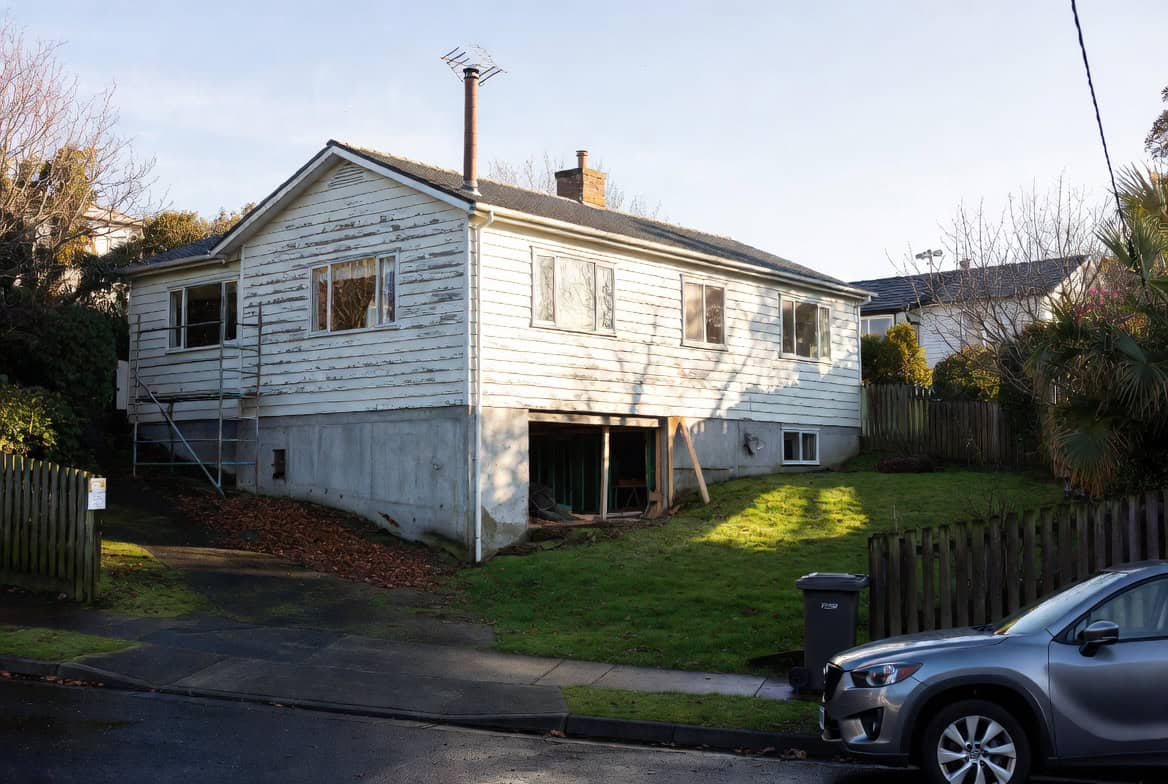
Walk through any street in Mt Eden, Grey Lynn, Titirangi or Birkenhead and you’ll see a lot of homes with what looks like a basement underneath. Most of them aren’t basements in any structural or regulatory sense — they’re sub-floor crawl spaces, partial under-house storage areas, or hillside enclosures. The distinction matters because it changes everything about what you’re allowed to do with the space.
The structural reality of Auckland housing stock
Auckland’s housing stock falls into a few broad camps. Pre-1940s villas and bungalows in suburbs like Ponsonby, Mt Eden and Grey Lynn typically sit on timber piles with a ventilated sub-floor underneath — anywhere from 600mm to 1.5m of clearance. That’s not a basement. It’s an air gap.
1970s and 80s homes on the slopes of Titirangi, Birkenhead, Devonport and Remuera are different. Hillside sections almost always have some form of under-house space — sometimes a concrete-walled half-basement, sometimes a stepped concrete pad, sometimes just a partial enclosure where the section drops away. These are the closest thing Auckland has to a true basement, and they’re the most common candidates for conversion.
New subdivisions in Hobsonville, Flat Bush and Millwater? Almost all slab-on-grade. No usable under-house space at all. If you want a basement on one of these homes, you’re looking at the most expensive option — lifting the house or excavating downward, which is rarely worth doing on a flat section when you could extend sideways for less.
Why we don’t build basements here in the first place
The reasons are practical, not regulatory. Auckland’s clay soil holds water, our rainfall is high, and our water table sits close to the surface in low-lying suburbs like Onehunga, Hillsborough and parts of the Eastern Bays. According to NIWA, central Auckland’s long-term annual rainfall average is around 1,190mm. Building below ground means engineering a structure that can resist water pressure for the life of the building — and historically, that’s been more expensive than just building outward or upward.
The Building Act 2004 and the post-leaky-homes era reset on weathertightness made councils, designers and builders much more conservative about anything below ground. Add the cost of excavation in clay (it’s slow, wet work), retaining requirements, and the engineering needed to satisfy NZ Building Code Clause E2 (External Moisture), and you start to see why most Auckland renovations go sideways or up instead.
💡 Quick tip: Before you book a designer, get your property file from Auckland Council. It’ll tell you the foundation type, original consents, and whether there’s anything noted about the under-house space. It’s an inexpensive request through the council’s order a property file service and saves a lot of guesswork.
Which brings us to the framework that actually matters: not “can I have a basement?” but “which of the three basement conversion paths applies to my house?”
The 3 Real Basement Conversion Scenarios for Auckland Homes
Every basement conversion we’ve looked at in Auckland falls into one of three categories. The category your home fits into is set by the slope of your section, the type of foundation already in place, and the head height you’ve got to work with. It’s the single most important question to answer before anyone starts talking budget.
Scenario 1 — The Under-House Close-In (most common)
This is what most Auckland “basement conversion” enquiries actually turn out to be. You’ve got an existing under-house space — usually on a hillside section in Titirangi, Mt Eden, Birkenhead, Northcote, Devonport, Hillsborough or Glendowie — with enough head height and some kind of existing perimeter wall. The job is to enclose it properly, weatherproof it, insulate it, run services, and turn it into habitable space.
You’re not excavating anything. You’re closing in what’s already there. The structural work is usually limited to confirming the existing foundations and slab can support the new loads, adding any retaining where the section is exposed, and tying the new walls into the existing structure.
The most common end uses we see for this scenario:
- Teen retreat or rumpus room (kids leaving the nest but not quite gone)
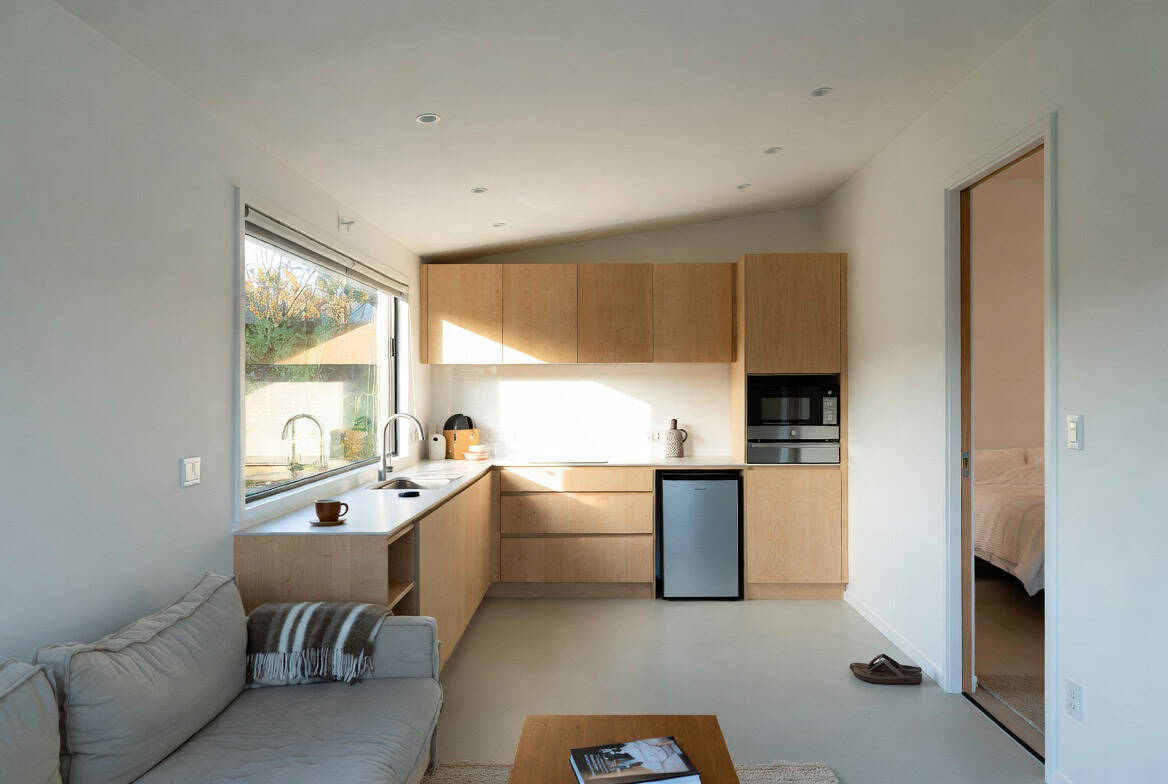
- Self-contained flat or granny flat for ageing parents or rental income
- Home office or studio with separate access
- Wine cellar, gym or workshop (non-habitable conversions, lower compliance threshold)
Scenario 2 — The Dig-Out (excavate below existing structure)
This is where most of the UK-style “basement conversion” content goes wrong for Auckland. Excavating below your existing house — digging downward to create new space — is technically possible in Auckland but rarely makes financial sense. It’s specialist work involving structural underpinning, drainage redesign, and significant engineering.
You’d typically only consider this if:
- You’re on a flat section in an inner-city suburb (Ponsonby, Herne Bay, Grey Lynn) where you can’t extend outward and council restrictions limit how high you can build
- You own a heritage-listed villa where exterior changes are heavily restricted but interior floor area can be added below
- The cost-per-square-metre still works out favourably against an extension — which is rare
Dig-outs are the most expensive of the three scenarios and the most likely to throw up surprises during construction — rotten piles, unrecorded services, perched water tables, or soil conditions that change halfway through excavation.
Scenario 3 — The House Lift (raise the house, build a basement under it)
Specialist contractors physically lift your house off its foundations, hold it on cribbing, pour a new foundation and basement walls underneath, then lower the house back down. This is rare in Auckland — but it’s done — usually on hillside sections where the slope already gives you partial basement potential and you want to formalise it as a full habitable floor.
We’ve seen it work well on weatherboard houses (lighter, easier to lift) on properties where the section drops away enough that the new basement walls are partially above ground on the downhill side. That gives you natural light, ventilation, and an exterior access door — three things a pure dig-out can’t easily deliver.
“The first thing I do on a basement enquiry is walk the perimeter of the house and look at the section. If the ground drops away by more than a metre on one side, we’ve usually got something to work with. If it’s flat, the conversation is almost always about extending out instead — the maths just doesn’t favour going down on a flat Auckland section.”
— Dorothy Li, Design Manager, Superior Renovations
💡 Quick tip: If you can stand up in your current under-house space without ducking, you’re probably in Scenario 1 (close-in). If you have to crouch but the floor space is significant and the section slopes, you might be in Scenario 3 (house lift). If neither applies, you’re almost certainly looking at Scenario 2 or a different renovation path entirely.
Basement Conversion


Consent, the Building Code, and What Auckland Council Actually Requires
Here’s where most generic basement conversion content fails Auckland homeowners. Converting a non-habitable under-house space into a habitable room is one of the most consent-heavy renovations you can do. You can’t shortcut this, and you shouldn’t try — the Code Compliance Certificate at the end is what makes the new space legal, insurable, and saleable.
When you absolutely need building consent
You will need building consent from Auckland Council for a basement conversion any time you’re:
- Reclassifying a non-habitable space (storage, garage, sub-floor) as habitable (bedroom, living room, kitchen, bathroom)
- Adding plumbing or drainage
- Changing the structural load on existing foundations or piles
- Excavating below an existing structure
- Adding a second self-contained dwelling (a “minor dwelling” under the Auckland Unitary Plan)
That’s almost every meaningful basement conversion. Per the Ministry of Business, Innovation & Employment, the Schedule 1 exemptions in the Building Act 2004 are narrow — replacing existing fixtures is exempt, but converting a non-habitable space to habitable use is not.
The Building Code clauses that decide whether it works
A few NZ Building Code clauses do most of the heavy lifting on basement conversions:
- Clause E2 — External Moisture. The big one. Any below-ground space has to be designed to prevent water ingress for the life of the building. In Auckland clay, that’s a specific engineering problem. See building.govt.nz on Clause E2.
- Clauses G4 and G5 — Ventilation and Interior Environment. Habitable rooms need adequate airflow and either natural or mechanical ventilation. Basements often need mechanical ventilation systems retrofitted. See building.govt.nz on Clause G4.
- Clause H1 — Energy Efficiency. H1 sets minimum insulation performance for building work and was lifted substantially through 2022–2023, with a further change to the compliance pathways from late 2025. The exact R-values your converted space needs depend on the building element, the compliance method your designer uses and the current edition of H1/AS1 — they’re confirmed at design stage, not assumed from an old table. See building.govt.nz on Clause H1, and our sister brand’s plain-English explainer of the current NZ insulation rules.
How resource consent and minor dwelling unit rules come in
If your basement conversion creates a second self-contained dwelling (kitchen + bathroom + separate entrance), the minor dwelling rules apply. Under the Auckland Unitary Plan, a minor dwelling must not exceed 65m² (excluding decks and garaging) and must meet outdoor-living, setback and site-coverage standards. A separate national change is worth knowing about: from 15 January 2026, a building consent exemption lets you build a detached, standalone granny flat up to 70m² without building consent if it meets strict conditions, under the national standard for minor residential units. That exemption is for new standalone units, though — an attached basement conversion within your existing house doesn’t qualify and will still need building consent. Which planning pathway applies to a second dwelling on your site depends on its zone and any overlays, so it’s worth confirming early with Auckland Council’s granny flat exemption guidance.
This is where partnering with an architect saves time and money. For consent-heavy work, our process involves Sonder Architecture doing a feasibility study before any quoting happens — they pull the property file, check the LIM, walk the site, and confirm whether council will actually consent what you’re proposing. There’s no point pricing a job council won’t approve.
Important note: Don’t rely on what your neighbour did 15 years ago. The Building Code has tightened materially since the leaky homes era, and the H1 energy-efficiency rules changed again through 2022–2025. What was once a quick “close in the under-house space and call it a bedroom” is now a full consented build with engineering.
Basement Conversion
Real Auckland Basement Conversion Costs in 2026
Cost ranges vary dramatically by scenario. Anyone giving you a flat “$30,000–$50,000 for a basement conversion” figure is either talking about a cosmetic close-in of an already-dry space or hasn’t priced a proper Auckland job recently. Real costs depend almost entirely on which of the three scenarios applies, plus the waterproofing and structural conditions on your specific site.
Scenario 1 — Under-house close-in: $40,000–$90,000
For a 20–40m² conversion of existing under-house space with good head height, sound existing foundations, and no excavation required, you’re looking at $40,000–$90,000 in 2026. That’s a per-m² rate of roughly $2,000–$2,500, broadly in line with our published house extension rates in Auckland for the lower-complexity end.
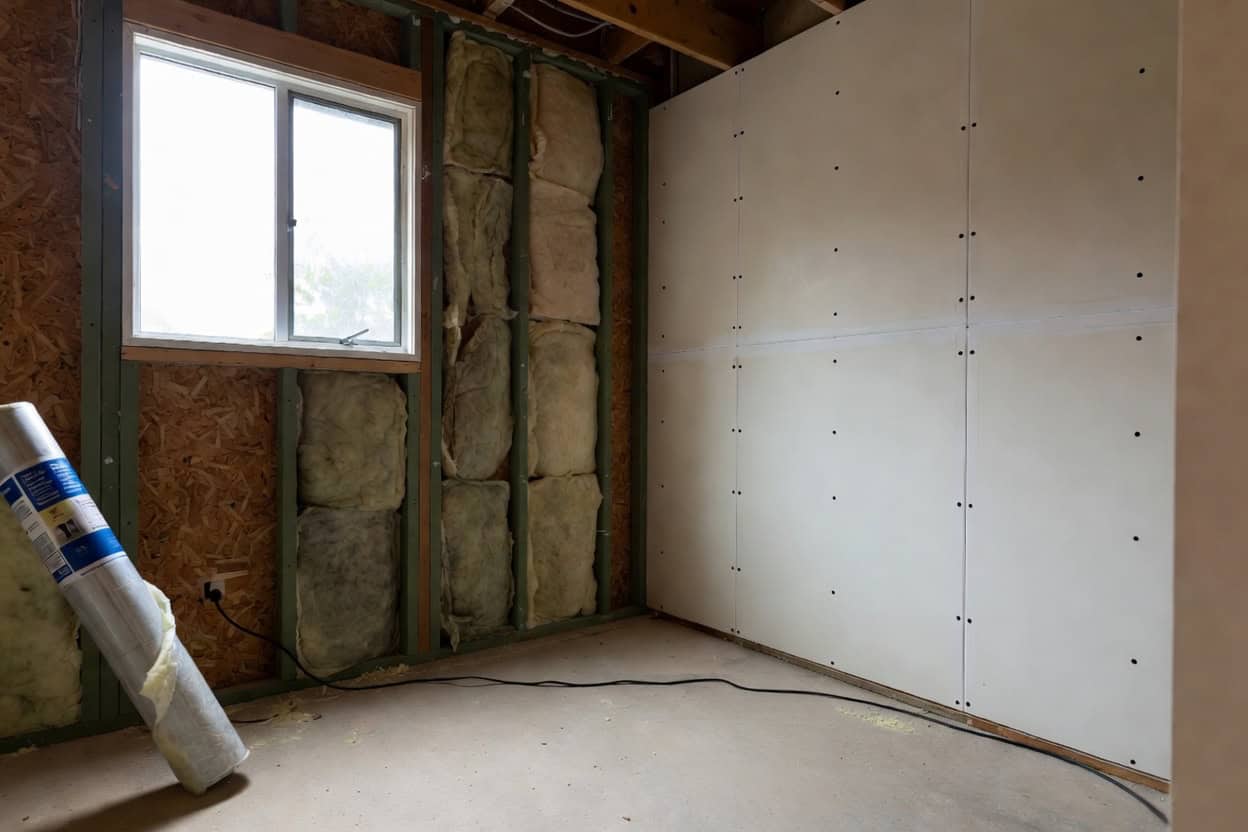
What’s included: new framing and gib lining, wall and floor insulation to the current H1 standard, electrical, lighting, basic flooring, a single door and window where possible, ventilation, painting, and the consent work. What’s not included: any bathroom, kitchenette, or significant excavation — those push you into a different price bracket.
Scenario 2 — Dig-out / excavation: $150,000–$350,000+
Excavating below an existing house is the most expensive option per square metre. For 30–60m² of new dug-out space, expect $150,000–$350,000+ in 2026, which works out to roughly $4,500–$6,500 per m². The cost drivers are:
- Excavation in clay (slow, wet work, often requiring hand-digging close to foundations)
- Structural underpinning of existing foundations to allow the dig
- Drainage redesign — you’re now below the existing drainage line in most cases
- Waterproofing membrane systems engineered for permanent below-ground exposure
- Mechanical ventilation (basements rarely get adequate passive ventilation)
- Engineering and consent costs (a significant line item on a project this size)
This scenario almost never makes sense on a flat section — sideways extension is cheaper per square metre. Where it works is heritage homes, tight inner-city sections, or properties where the building footprint is already maxed out.
Scenario 3 — House lift: $250,000–$500,000+
House-lifting is specialist work. Companies physically jack the house up, hold it on cribbing for weeks while the basement is built underneath, then lower the house back down. Costs for a typical 80–120m² Auckland weatherboard home start around $250,000 for the lift and basement structure alone, before you fit out the new space.
Add the basement fit-out (interior framing, services, finishes, bathroom/kitchenette if needed) and you’re easily into $400,000–$500,000+ for a complete habitable basement. The benefit is you get a full storey of new space — typically 60–100m² — and the existing house gets a fresh foundation in the process.
Where these figures come from and how to refine them
Our cost ranges above are drawn from completed Auckland projects across our team’s 1,000+ project portfolio, cross-checked against current 2026 supplier pricing and Auckland labour rates. As noted in our renovation FAQ, Auckland labour runs around $120–$150 per hour for qualified trades, which is part of why local prices sit above the national average. For independent context on construction cost movement, BRANZ publishes ongoing research on NZ building costs.
Because basement conversions are so site-specific, the only way to get a real number is a feasibility assessment. Our house extension cost calculator is the closest tool we have — it gives you a ballpark for the Scenario 1 (close-in) range, though basement conversions usually need a site visit before any meaningful quote.
💡 Quick tip: Add 15–20% contingency to whatever your initial quote is. Basement and under-house conversions surface more surprises during the build than any other renovation type — rotten timber, undocumented services, perched water tables. Build the contingency in from day one so you’re not chasing money halfway through.
Basement Conversion
Why Waterproofing Is the Deciding Factor in Auckland
If there’s one thing that separates a successful Auckland basement conversion from an expensive mistake, it’s waterproofing. Get it right and your converted space will stay dry, healthy and insurable for the life of the building. Get it wrong and you’ve created an indoor mould problem the council won’t sign off on and a future buyer’s pre-purchase inspection will flag.
The Auckland clay and rainfall problem
Auckland’s soil is dominated by clay — particularly the heavy East Coast Bays clay and the silty volcanic clays around the central isthmus. Clay holds water. It doesn’t drain like sand or gravel does. With NIWA’s long-term average of around 1,190mm of rain a year falling on it, the moisture has to go somewhere — and if your basement is sitting in that clay, it’ll find your walls and floor unless they’re engineered to push it away.
Compounding this: many older Auckland homes were built without the waterproofing detailing that’s standard today. A house from the 1970s in Hillsborough might have a partial concrete-walled basement with no membrane, no drainage cavity, and no perimeter drain. Converting that to a habitable space without addressing the moisture pathway is asking for trouble.
What proper basement waterproofing looks like
For a habitable basement conversion in Auckland, you’re typically combining three layers of defence:
- External tanking or membrane. A waterproof barrier on the outside face of the basement wall, designed to stop water reaching the structure. Best installed during construction (Scenario 3) or excavation (Scenario 2). Hardest to retrofit on Scenario 1 close-ins.
- Cavity drainage system. A drained cavity behind an internal lining that captures any moisture that does penetrate and channels it to a sump and pump. This is the workhorse for Scenario 1 conversions where you can’t easily access the external face.
- Perimeter drainage at floor level. A subsoil drain around the footing that takes ground water away before it reaches the structure. Critical on hillside sections where water moves downhill toward the building.
The principle behind this layered approach is consistent with the way the NZ Building Code treats below-ground moisture under Clause E2 (External Moisture) — a single barrier is rarely treated as sufficient for permanent below-ground exposure. If your basement specification has only one line of defence against moisture, the design is too thin for Auckland conditions.
“I tell every basement client the same thing — your finishes are the easy part. The expensive part you can’t see is the waterproofing system, and that’s where you don’t cut corners. A beautifully designed basement that smells damp two winters in is a basement nobody uses.”
— Cici Zuo, Head of Sales (NZ Dip. Interior Design), Superior Renovations
Designing a Basement Conversion That Actually Works
Once feasibility, consent and waterproofing are sorted, the design conversation begins. Basement spaces have a few quirks no other room in the house has, and getting the design right is the difference between a space the family actually uses and one that becomes the dumping ground.
Light, ventilation and head height
Three constraints define every basement design we work on. Natural light is the hardest to come by, ventilation has to be engineered rather than assumed, and head height is fixed by the original floor structure above.
For natural light, the options depend on the scenario. Hillside conversions (Scenarios 1 and 3) often have one or two exposed elevations where windows and doors can be added — that’s a huge advantage. Pure dig-outs (Scenario 2) usually need light wells, glass blocks, or skylights set into the floor above. None of these are cheap. None of them deliver the light a normal above-ground window would.
For ventilation, mechanical systems are usually mandatory. A balanced heat recovery ventilation (HRV or MVHR) system pulls fresh air in and exhausts stale air — important in any below-ground room because passive cross-ventilation is rarely achievable.
Head height is the constraint you can’t fix easily. Here’s the nuance most online guides get wrong: under the Housing Improvement Regulations 1947, a habitable room must have a floor-to-ceiling height of at least 2.1m in an existing house and at least 2.4m in a new house, with allowances for sloping ceilings. Because a close-in works with an existing dwelling, the 2.1m figure is often the relevant one — but your designer and council will confirm what applies to your specific reclassification. If your under-house space falls short even of that, you’re looking at dropping the floor (which moves you from Scenario 1 into Scenario 2 territory cost-wise) or keeping the space non-habitable.
What works as an end use
After 1,000+ Auckland renovations, the end uses we see succeed in basement conversions are reasonably narrow:
- Self-contained flat or granny flat — works well when there’s separate exterior access, with solid rental-yield potential in most Auckland suburbs. The end result is similar to a garage-to-granny-flat conversion, with the upside of more separation from the main house.
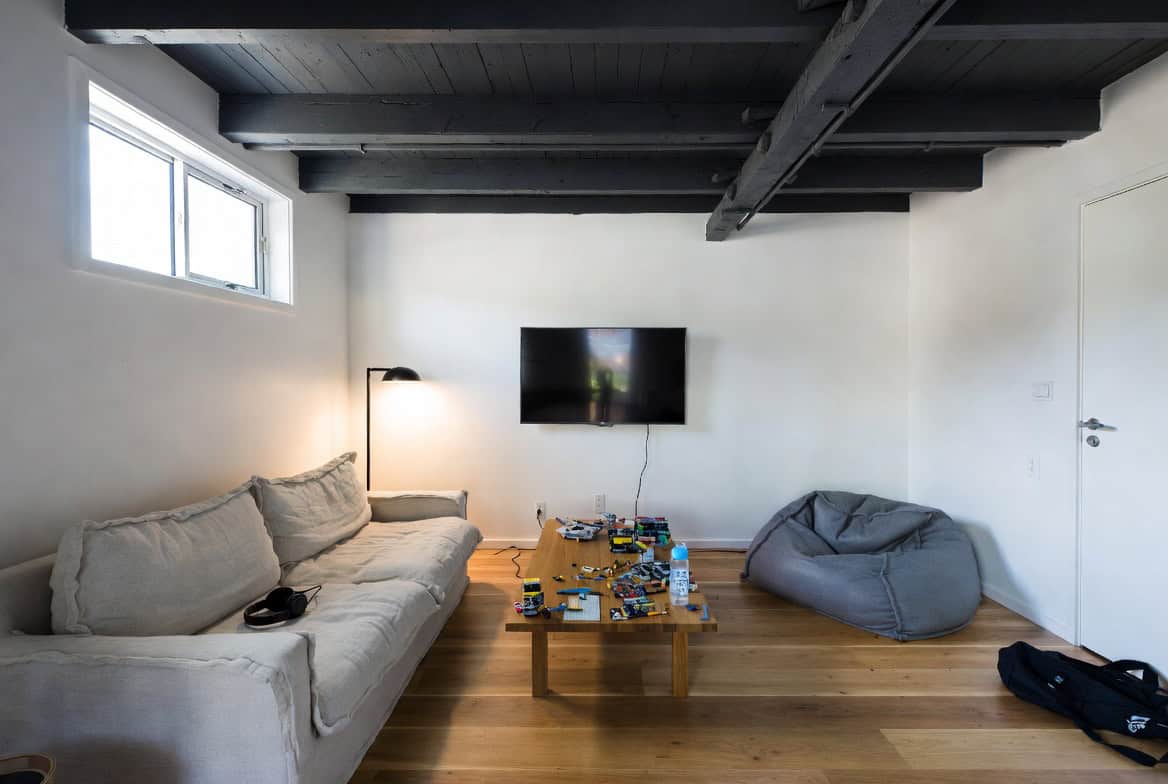
- Teen retreat / second living room — kids love them, particularly when they have their own entrance and don’t have to walk through the main house.
- Home office or studio — quiet, separated from family noise, climate-stable.
- Gym, wine cellar, workshop — non-habitable conversions are easier to consent and don’t need to meet the full habitable-room compliance suite.
What rarely works: main-house bedrooms or primary living rooms. The light limitation makes them feel cave-like, and the moisture risk in winter is higher than in above-ground spaces. If your basement is the new primary living area, the design has to work overtime to compensate.
💡 Quick tip: Spec the heating before you spec the flooring. Underfloor heating works beautifully in basements (the slab holds the heat), but it has to go in before the floor finish. Adding it later means tearing up what you’ve just installed.
The Basement Conversion Process — From Feasibility to Handover
For a consent-heavy job like a basement conversion, our process follows a specific sequence designed to surface problems early and avoid the classic mid-project budget blowout. The free in-home consultation is where it starts — but real numbers come after the feasibility work, not before.
Step 1: Free in-home consultation (week 1)
You book a consultation, we visit your home in Auckland, walk through the under-house space, and tell you which of the three scenarios you’re realistically looking at. This conversation is honest — we’ll tell you if the project doesn’t stack up financially compared to extending or staying put. No charge, no obligation.
Step 2: Property file and feasibility study (weeks 2–4)
You request your property file from Auckland Council (we can guide you through this). Sonder Architecture reviews the file, requests the LIM if needed, and arranges an on-site visit, then gives you a feasibility verdict — what’s achievable, what consent will look like, and an early-stage budget bracket.
Step 3: Concept design and architectural quote (weeks 4–6)
If feasibility comes back positive, you get concept drawings and a quote for the full architectural drawings needed for the consent submission. This is where the design conversation begins — layout, light, end use, finishes.
Step 4: Architectural drawings and consent submission (weeks 6–14)
Once you accept the architectural quote, Sonder produces the full set of drawings — structural, services, weathertightness details, the lot. These get submitted to Auckland Council for building consent. Per the Building Act, councils have a statutory 20 working days to process a building consent, though basement and below-ground work often takes longer because of the engineering review.
Step 5: Renovation consultant review and fixed-price proposal (weeks 14–16)
While consent is being processed, our renovation consultant walks the site again, measures, finalises the design choices, and puts together a fixed-price proposal. This is the number you’ll actually pay — not an estimate, not a range. Everything’s specified.
Step 6: Construction and handover (weeks 16–30+)
Once consent is issued and you’ve signed off on the proposal, the build starts. Timeline varies by scenario — a Scenario 1 close-in might take 8–12 weeks on site, while a Scenario 2 dig-out or Scenario 3 house lift can run 16–24 weeks. We project-manage everything through to the Code Compliance Certificate (CCC) issued by Auckland Council, which is what makes the work officially legal and insurable.
Basement Conversion
So Is a Basement Conversion the Right Move for Your Auckland Home?
For most Auckland homeowners on hillside sections with existing under-house space, a Scenario 1 close-in is one of the best square-metre investments you can make — somewhere between $40,000 and $90,000 buys you a functional extra room that genuinely adds to the way your home lives. For homes where a dig-out or house lift is on the table, the maths gets harder and the case has to be made on a site-by-site basis.
The single biggest mistake we see is people pricing a basement conversion before they’ve established which scenario they’re in. A flat $30,000–$50,000 number floating around online has almost no relationship to a real Auckland job. Get the feasibility right first. Then the budget conversation becomes possible.
If you’re weighing up a basement conversion against a single-storey extension, a second-storey addition, or a broader whole-home renovation in Auckland — that’s exactly the conversation we have with clients every week. The right answer depends on your house, your section, and what you actually want the space to do.
➡ Book your free in-home consultation with Superior Renovations
➡ Use our house extension cost calculator for an indicative budget range
➡ Request a free feasibility report for your project
How much does a basement conversion cost in Auckland?
Costs in 2026 vary by scenario. An under-house close-in (existing space, no excavation) typically runs $40,000–$90,000. A dig-out below an existing house runs $150,000–$350,000+. A full house lift with new basement runs $250,000–$500,000+. The single biggest cost driver is which scenario your site actually supports — flat sections rarely make Scenarios 2 or 3 financially worthwhile against a simple extension.
Do I need building consent for a basement conversion in Auckland?
Yes, almost always. Reclassifying a non-habitable space (storage, sub-floor, garage) as habitable triggers full building consent under the Building Act 2004. So does any plumbing, drainage, structural change, or excavation. Schedule 1 exemptions are narrow and rarely apply to basement conversions. Auckland Council reviews the design against NZ Building Code clauses including E2 (moisture), G4–G5 (ventilation) and H1 (energy efficiency), plus structural compliance. Budget several weeks for consent processing on a typical job.
Are basements legal in New Zealand?
Yes, basements are legal — they're just rare. There's no rule against building or converting one. The reasons most Auckland homes don't have them are practical: clay soil, high rainfall, water table depth, and the cost-per-square-metre usually favours extending sideways or upward. Where basements do exist (mostly on hillside sections) converting them to habitable space is allowed provided the work meets the NZ Building Code and gets consented through Auckland Council.
What's the difference between a basement conversion and an under-house conversion?
In Auckland, they often mean the same thing. True basements (fully below ground on all sides) are uncommon. Most 'basement' conversions are actually under-house conversions — closing in an existing sub-floor or hillside space that's partially below ground on the uphill side. The conversion process and consent pathway is similar either way, but the cost is dramatically lower for under-house work than true below-ground excavation.
How much head height do I need for a habitable basement room?
Under the Housing Improvement Regulations 1947, a habitable room needs a floor-to-ceiling height of at least 2.1m in an existing house and at least 2.4m in a new house, with allowances for sloping ceilings. Because a close-in works with an existing dwelling, the 2.1m figure is often the relevant one, but your designer and Auckland Council confirm what applies to your reclassification. If the space falls short, you can drop the floor (which moves you into excavation territory) or keep the use non-habitable, where the height rule is more flexible.
Will my house be insured if the basement isn't consented?
Unconsented work creates real insurance and resale problems. If your basement conversion was done without consent and a Code Compliance Certificate (CCC), your insurer may decline a claim related to the work, and a future buyer's pre-purchase inspection will flag the unconsented work as a major issue. Lawyers routinely require evidence of consent before settling. The cost of doing it properly with consent is dwarfed by the cost of trying to retrospectively legalise unconsented work — or worse, having to undo it.
Can I add a kitchen and bathroom to a basement conversion in Auckland?
Yes — but adding both creates a self-contained dwelling, which brings in minor dwelling rules. Under the Auckland Unitary Plan a minor dwelling must not exceed 65m² (excluding decks and garaging) and must meet outdoor-living, setback and site-coverage standards. A national exemption from 15 January 2026 allows detached, standalone granny flats up to 70m² without building consent, but that does not cover an attached basement conversion — yours will still need building consent. Adding a self-contained flat is one of the most common reasons clients convert a basement, for rental income or family members.
How long does a basement conversion take from start to finish?
From first consultation to handover, plan for around 6–9 months on a Scenario 1 (under-house close-in) job. That's roughly 14–16 weeks of design and consent, then 8–12 weeks on site. A Scenario 2 dig-out or Scenario 3 house lift typically takes 9–14 months total — longer design phase, longer consent review, and 16–24 weeks of construction. Adding contingency for council processing delays and weather is sensible.
Why don't more Aucklanders build basements?
Three reasons. First, soil and water — Auckland clay holds water and NIWA puts the annual rainfall average around 1,190mm, so below-ground construction is engineering-intensive. Second, cost — extending sideways or building up is almost always cheaper per square metre on a flat section. Third, history — the leaky homes era made the industry conservative about anything that could let moisture into a building, and below-ground work is harder to weathertight than above-ground. Where basements do appear, it's usually on hillside sections where the natural slope makes them feasible.
Can I convert my basement myself as a DIY project?
Some aspects yes, most aspects no. Painting, basic carpentry, and non-structural fit-out can be DIY. But any structural work, plumbing, drainage, electrical (beyond simple repairs), or weathertightness detailing is Restricted Building Work and requires a Licensed Building Practitioner (LBP) under the Building Act 2004. Doing restricted work without an LBP risks a Notice to Fix from Auckland Council, insurance issues, and resale problems.
What does a feasibility study cost and is it worth doing?
Our initial in-home consultation is free. The full feasibility study — including property file review, on-site assessment, and concept design from Sonder Architecture — is quoted after the consultation based on scope, since complexity varies widely between a simple close-in and a dig-out or house lift. It's worth doing because the feasibility study is what turns a vague 'can we do this?' into a costed, consentable proposal. Skipping it usually means surprises and budget blowouts later.
Further Resources for your basement conversion
- Featured projects and Client stories to see specifications on some of the projects.
- Real client stories from Auckland
Need more information?
Take advantage of our FREE Complete Home Renovation Guide (48 pages), whether you’re already renovating or in the process of deciding to renovate, it’s not an easy process, this guide which includes a free 100+ point check list – will help you avoid costly mistakes.
Download Free Renovation Guide (PDF)

Have you been putting off getting renovations done?
We have partnered with Q Mastercard ® to provide you an 18 Month Interest-Free Payment Option, you can enjoy your new home now and stress less.
Learn More about Interest-Free Payment Options*
*Lending criteria, fees, terms and conditions apply. Mastercard is a registered trademark and the circles design is a trademark of Mastercard International Incorporated.
Still have questions unanswered?
Book a no-obligation consultation with the team at Superior Renovations,
we’d love to meet you to discuss your renovation ideas!
References
- MBIE Building Performance — Building Code Clause E2 External Moisture
- MBIE Building Performance — Building Code Clause G4 Ventilation
- MBIE Building Performance — Building Code Clause H1 Energy Efficiency
- MBIE Building Performance — Building work that doesn’t need a building consent (Schedule 1)
- Auckland Council — Building and consents
- Auckland Council — Granny flats building consent exemption
- Auckland Council — Order a property file
- NIWA — Auckland rainfall (annual average 1,190mm)
- Housing Improvement Regulations 1947 — habitable room height (New Zealand Legislation)
- BRANZ — Building research (NZ construction cost and weathertightness research)