

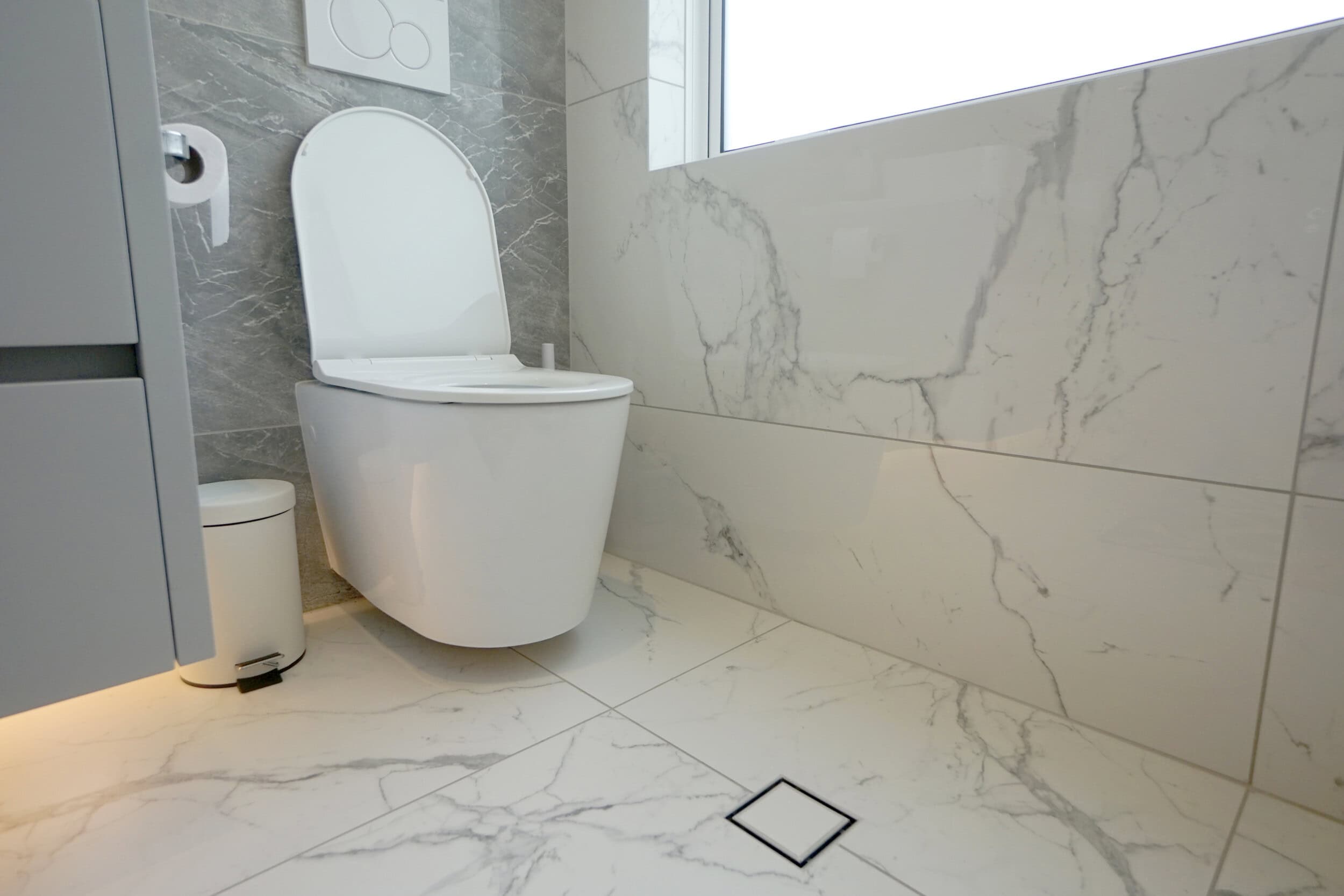
Cost to Install a New Toilet in Auckland: 2026 Guide
Last updated:
Quick answer: in Auckland in 2026, replacing a toilet in the same position costs $400 to $1,500 all-in, while adding a brand-new toilet where there wasn’t one before runs $10,000 to $15,000 or more once design, council consent and multiple trades are counted. Repairing a leaking or running toilet is usually a call-out plus parts.
In Auckland in 2026, the cost to install a toilet sits in two very different brackets. A straight replacement, same spot, existing plumbing, runs $400–$1,500 all-in: $250–$1,000 for the toilet suite, $500–$1,000 for a licensed plumber, plus small fittings and disposal. Adding a brand-new toilet (new pipework, new connection to the wastewater line, sometimes a new room) jumps to $10,000–$15,000+ once you factor in design, council consent, multiple trades, and project management. The one question that decides which bracket you sit in: are you keeping the toilet exactly where it is, or putting one where there wasn’t one before?
Free cost calculator
How much will your bathroom renovation cost?
Get an instant Auckland price range for your project — no details required to see it.
Across more than 1,000 completed Auckland renovation projects, we’ve seen this distinction trip up most homeowners getting quotes. A plumber’s quote for a swap-out and a renovation company’s quote for adding a toilet should look completely different — if they don’t, something’s off. This guide breaks down where the money actually goes in each scenario, what triggers council consent in 2026, and the moment a “small toilet job” stops being a plumber’s job and starts being a renovation.
Table of Contents
- At-a-glance cost breakdown (2026)
- Replacement vs adding a new toilet — why the gap is so wide
- When a toilet job is really a full bathroom renovation
- Toilet types and price ranges in NZ
- Plumbing labour costs in Auckland (2026 rates)
- Additional fixtures and components
- Removing the old toilet
- Location and accessibility
- Building consent — Auckland Council rules in 2026
- How Superior Renovations handles your consent
- Plumber vs full project management
- Repair or replace a leaking or running toilet
- How many toilets does a house need?
- Smart toilets and bidet seats
- Just need a swap? Talk to Superior Property Services
- FAQ
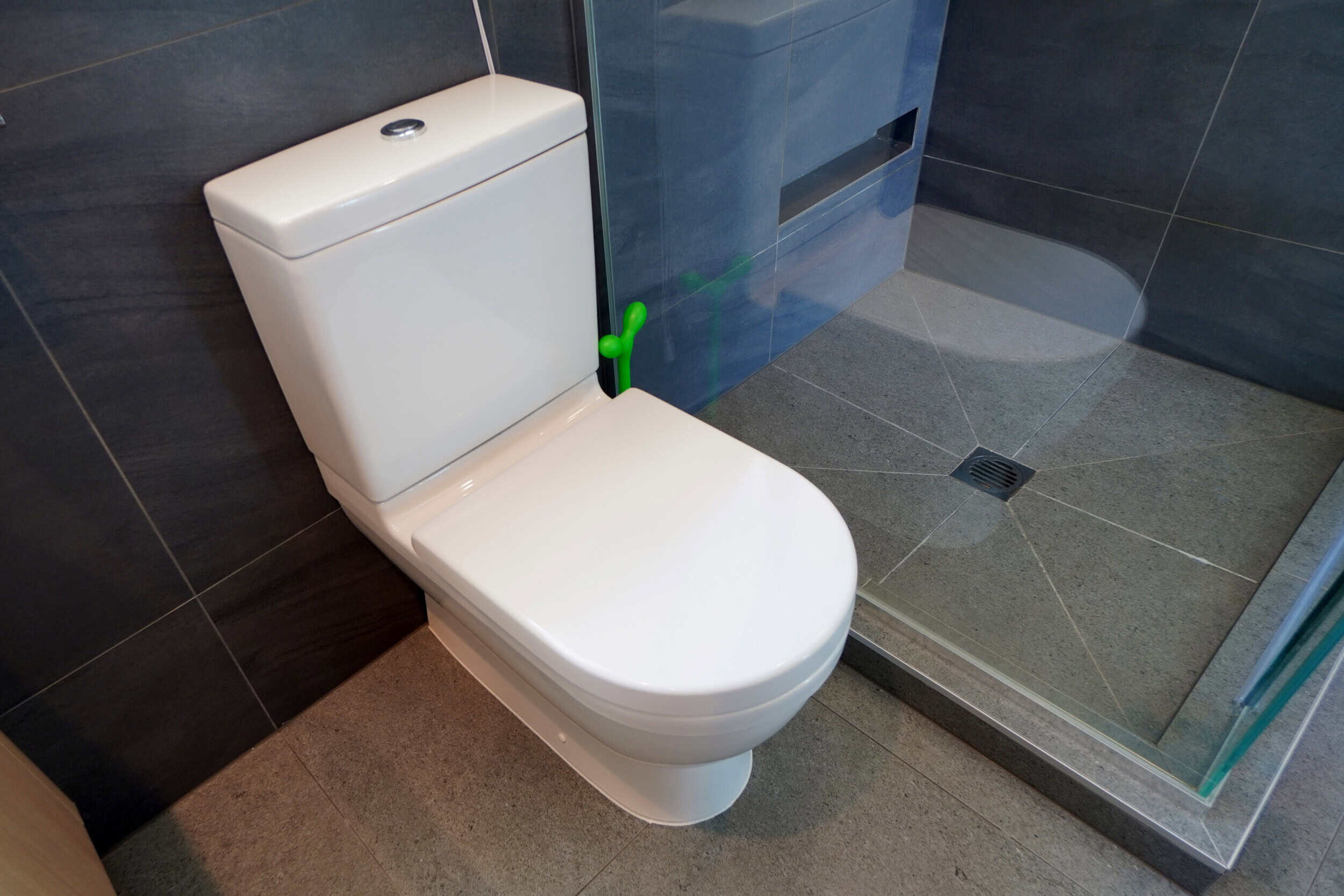
Luxury Bathroom Design – Redvale
If you’re looking for “specific” cost estimates, try our Renovation Cost Calculator Tools
- Bathroom Renovation Cost Calculator
- Kitchen Renovation Cost Calculator
- Reroofing Cost Calculator
- Double Glazing Cost Calculator
- House Extension Cost Calculator
- New Kitchen Cabinetry Cost Calculator
- New Laundry Cost Calculator
Need ideas? Check out our Kitchen Design Gallery or browse our Bathroom Design Gallery for inspiration.
At-a-glance cost breakdown (2026)
These ranges are drawn from Superior Renovations’ own Auckland quoting and project data as of 2026 — the figures we see across plumber call-outs, licensed trade hourly rates, Auckland Council consent fees, and architectural designer fixed-fee packages. All of these have moved upward since 2023, so older cost guides can mislead you by 20–30%. Where a figure comes from an external source, it’s named and linked in the text.
| Cost component | Replacement toilet | Additional toilet (new install) |
| Toilet suite | $250 – $1,000+ | $250 – $7,000 |
| Labour | $500 – $1,000 | $6,000 – $12,000 (depending on complexity) |
| Additional fixtures | $50 – $200 | $100 – $400 |
| Removal of old toilet | $200 – $350 | N/A |
| Architectural designer fees | N/A | $2,500 – $5,000 |
| Council consent fees | N/A | $1,500 – $3,000 |
| Total estimated cost | $400 – $1,500 | $10,000 – $15,000+ |
Those are bands, not your number. If you want a figure closer to your own room, including the fixtures, tiling, and waterproofing that usually ride along with a toilet job, get a tailored cost estimate for the whole space before you start ringing around for quotes.
💡 Quick tip: Ask any quote to itemise the toilet suite, the labour, and the fittings as separate lines. A swap-out priced as one lump sum makes it impossible to see whether you’re being charged $400 or $1,400 for the same two hours of work.
Replacement vs adding a new toilet — why the price gap is so wide
The cost difference between the two scenarios isn’t a margin grab. It’s three legitimate cost layers stacking on top of each other.
Replacement (same location, existing plumbing). The water inlet, soil pipe, and floor flange are already in place. A licensed plumber removes the old suite, fits the new one, replaces the wax ring and connections, and walks out. No consent. No designer. No structural work. Most Auckland replacements finish inside half a day, and the quote should be flat or close to it.
Adding a new toilet. You’re now creating sanitary infrastructure that didn’t exist. Four things trigger at once: an architectural designer producing consented drawings, a building consent application (because you’re adding a sanitary fixture where one didn’t exist), multiple trades on site (plumber, builder, sometimes electrician for vent fans and lighting, sometimes a tiler), and a project manager to keep the sequence aligned with council inspections. Add a stud wall, door, or new flooring and the scope tips into full small-room construction.
Between those two extremes sits a third scenario — keeping the toilet roughly where it is but redoing the room around it. That’s where the question of who you call gets interesting.
“The thing that moves the price isn’t the toilet, it’s the position. Keep it where it is and you’re paying a plumber for an afternoon. Move it a metre, or put one where there’s never been one, and you’ve just bought yourself drawings, a consent, and three more trades. I tell clients to decide on the layout before they fall in love with it, not after the quote lands.”
— Dorothy Li, Design Manager, Superior Renovations
When a toilet job is really a full bathroom renovation
A surprising number of “I just want a new toilet” enquiries we field at our Wairau Valley showroom are actually bathroom renovations the homeowner hasn’t named yet. Some signals it’s bigger than a swap-out:
- The bathroom hasn’t been updated since the 1980s or 1990s, and the pan, cistern, basin, and vanity are all on the same upgrade timeline
- The flooring around the toilet is showing water damage — lifted vinyl, soft underfoot, or rotting timber substrate
- Tile grout is failing and water is tracking into the wall cavity
- You’re considering moving the toilet even a metre to improve the layout
- The cistern is dual-flush but original (pre-2010) and underperforming on water efficiency
- You’re planning to sell within 2–3 years and want the bathroom to lift the appraisal
We see this pattern repeatedly across Auckland — bathrooms in 1980s and 1990s homes around Mt Eden, Howick, Glen Innes, and Devonport that haven’t had a serious refresh in 20–30 years. The “just replace the toilet” enquiry comes in, the design consultation walks through the room, and the homeowner realises a piecemeal toilet swap doesn’t fix the failed waterproofing, the dated tiles, or the layout. Catching that at the design stage saves the second-call regret 12 months later.
“Half the toilet enquiries I take are really tired bathrooms wearing a smaller problem. Someone rings about the pan, I get into the room, and the grout’s gone, the vinyl’s lifting at the skirting, and the waterproofing under the old shower has been failing for years. Swapping the toilet on top of that is lipstick. You spend the money twice, once now, once when the floor finally goes.”
— Cici Zuo, Head of Sales, NZ Dip. Interior Design, Superior Renovations
💡 Quick tip: Press a fingertip into the floor right beside the toilet base and around the shower. If it feels soft or spongy, the substrate is already wet — that’s a waterproofing job, not a toilet job, and a swap-out won’t touch it.
If three or more of the signals above apply, a full bathroom refresh pays back better than a piecemeal toilet replacement — and it’s worth reading how a full refresh stacks up against a partial one before you commit either way. Taking the room back to the studs and rebuilding it properly rolls all of it into one Design-to-Build Action Plan: one fixed quote, one designer, one project manager, one set of consents where needed.
Toilet types and their price ranges in NZ
The toilet suite is the most variable line item on any quote. Same brand, same retailer, the cheapest option and the most expensive in-stock unit can differ by $5,000 or more. Common categories on the Auckland market in 2026:
- Two-piece close-coupled toilet: $250–$1,000+. The NZ workhorse. Separate tank bolted directly to the bowl, parts widely available at every plumbing merchant, easy to service.
- One-piece toilet: $400–$1,000. Tank and bowl moulded as a single unit. Easier to clean (no join line), slightly slimmer profile.
- Back-to-wall toilet: $250–$2,000. Bowl sits flush against the wall with a concealed cistern. Cleaner look, easier floor cleaning underneath.
- Wall-faced toilet: $500–$4,500. Cistern integrated into a wall cavity or behind a vanity unit. Premium finish, more complex to install.
- Wall-hung toilet: $300–$5,000. Mounted to a structural frame inside the wall — the bowl floats off the floor. Needs a thicker wall build-out and is usually planned at renovation stage rather than added later.
- Smart toilet (Japanese-style): $800–$7,000. Heated seat, bidet wash, deodoriser, auto-flush, sometimes remote-controlled. Needs a power point within reach of the cistern, which often adds an electrician’s visit.
For investment properties and bathrooms used by older family members, water-efficient dual-flush close-coupled units are the safe choice — durable, easy to service, and parts available locally.
💡 Quick tip: Check the WELS star rating on the box before you buy. A 4-star dual-flush pan uses roughly half the water of an old single-flush unit over a year — on an Auckland water-and-wastewater bill, that adds up faster than most people expect.
Plumbing labour costs in Auckland (2026 rates)
From the subcontractor quotes we see across Auckland jobs, licensed plumbers in 2026 typically charge:
- Call-out fee: $120–$180 (some waive this if you proceed with the job)
- Hourly rate: $120–$160 for standard work, $160–$220+ for gasfitting-certified or specialist work
- Apprentice or assistant hour: $70–$95 (working alongside a licensed plumber)
A straight toilet replacement usually books in for 1.5–3 hours including removal, fitting, and minor adjustments. Always ask for a written quote rather than an hourly estimate — most reputable Auckland plumbers will quote a fixed price for a replacement once they’ve seen photos of the existing fitting and floor connection.
💡 Quick tip: Send the plumber a photo of the inlet position and the gap between the pan and the wall before they quote. Awkward inlet positions and non-standard set-outs are the most common reason a “fixed” quote turns into an hourly one on the day.
Additional fixtures and components you may need
Most replacements need a handful of small parts that aren’t included in the toilet suite box. Budget for:
- Shut-off valve (if the existing one is corroded or seized)
- Wax ring or rubber seal (always replaced)
- Floor bolts and decorative caps
- Inlet fill valve and flush valve (occasionally need replacing on top of the new suite)
- Overflow tube
- Push-button trip lever or flush plate
- Flexible inlet hose (longer ones for awkward inlet positions)
If you’re swapping to a different style, say close-coupled to back-to-wall, there can be small additional costs for adjusting inlet positions or making good around the old footprint.
Removing the old toilet
Removal is usually 30–60 minutes and folded into the plumber’s quote. Disposal at a transfer station adds $20–$60. If the toilet is being kept for re-use or donated to a charity reuse store (Habitat for Humanity ReStore, for example), tell the plumber in advance so they’re careful with the porcelain.
Location and accessibility
Two things drive accessibility cost more than anything else.
Existing plumbing or not. If the inlet and soil pipe are already in the right spot, you stay in the replacement bracket. If pipes need to be relocated, even by a metre, you’re into floor opening or wall opening, and the cost varies significantly depending on whether the floor is a concrete slab or timber. Concrete slab pipe relocation can easily add $1,500–$4,000.
Basement and below-ground installs. Toilets installed below the main sewer line need a macerator or pump-assisted waste system, because gravity won’t take the waste up to the connection. That adds equipment cost ($800–$2,500) and complicates future servicing. These installs almost always need consent.
💡 Quick tip: On a timber-floor villa or bungalow, relocating the soil pipe is far cheaper than on a concrete slab — the plumber works from underneath rather than cutting and re-screeding a slab. If you’re set on moving the toilet, the floor type underneath largely decides the bill.
Do you need building consent? Auckland Council rules in 2026
Replacing an existing toilet — no consent required. Per MBIE’s Building Performance guidance, the repair and replacement of an existing sanitary fixture such as a toilet pan is exempt building work under Schedule 1 of the Building Act 2004. Auckland Council confirms the exemption only holds where an authorised person, a registered or supervised plumber or drainlayer, carries out the work, so you still need a licensed plumber, but you don’t lodge anything with Council.
Adding a new toilet, building consent required. Auckland Council is explicit: any new sanitary fixture where one didn’t exist before triggers a building consent application. From the Council’s own guidance: “You are required to obtain a building consent if the work involves adding an additional sanitary fixture to your house, for example, a new bath, where there was not one previously.” Source: Auckland Council — kitchen, bathroom, and home renovations.
A point worth clearing up, because it gets stated wrong constantly: adding a new toilet usually isn’t Restricted Building Work on its own. MBIE lists fitting new sanitary fixtures where there weren’t any before, a new ensuite, for example, as an example of work that falls outside RBW. The plumbing and drainage still has to be carried out by a registered plumber and drainlayer (that’s a Plumbers, Gasfitters and Drainlayers Board requirement, separate from the consent). But the moment the job touches your home’s primary structure or weathertightness, cutting into floor joists or wall framing, or forming a tiled wet-area membrane — that portion does become Restricted Building Work and has to be designed or carried out by a Licensed Building Practitioner (LBP). For most “add a toilet” projects in older Auckland homes, at least some structural or waterproofing work is in play, which is why we run the drawings through an LBP-licensed designer rather than relying on a homeowner sketch Council won’t accept.
The consent stages for a single new toilet typically run:
- Architectural designer fees: $2,500–$5,000 for the drawings, specifications, and consent documentation, prepared by an LBP Design Class licensed designer.
- Auckland Council consent fees: $1,500–$3,000 covering lodgement, processing time, and inspections during the build.
- Inspections during construction: Council inspectors visit at pre-line, post-line, and (where tiling is involved) pre-tile stages. Most inspection fees are bundled into the consent fee unless multiple re-visits are needed.
- Code Compliance Certificate (CCC): Issued once the work passes final inspection, confirming the build complies with the consented drawings and the Building Code.
Important note: Request your property file from Auckland Council early — it’s free to lodge through the Council website and the existing drawings often reveal where the soil pipe and drainage already run, which can change the design before you’ve spent a dollar on consent.
How Superior Renovations handles your consent
All consent-related renovations at Superior Renovations are handled in-house through our partnership with Sonder Architecture. Their office sits inside the same Wairau Valley premises as our renovation showroom at 16B Link Drive, so design consultations and revisions happen face-to-face without the usual project management ping-pong.

If you have a consent-related enquiry, adding a toilet, a garage conversion, extension, or second-storey addition — here’s how it runs:
- Your enquiry comes through to our renovation consultants.
- We brief Sonder Architecture’s senior architectural designer (LBP Design Class licensed) and copy them into your initial email.
- Sonder runs a feasibility study and requests your property file from Auckland Council (you’ll need to lodge the file request — it’s free through the Council website).
- Once the property file is in, Sonder books an on-site visit to walk through options.
- If the project is feasible, Sonder produces concept drawings and a fixed-fee quote for the consent-stage architectural drawings.
- If you proceed, Sonder produces the full architectural drawing set and lodges the consent application with Auckland Council.
- Our renovation consultant runs an on-site visit to scope the build, measure, finalise materials, and produce the Action Plan — a single fixed-quote document covering specifications, design, variations process, and timeline.
- Once the Action Plan is approved and consent is granted, construction begins.
The advantage of this structure: one point of contact across design, consent, and build, instead of you briefing an independent designer, lodging your own consent, then trying to find a builder who’ll pick up someone else’s drawings without question.
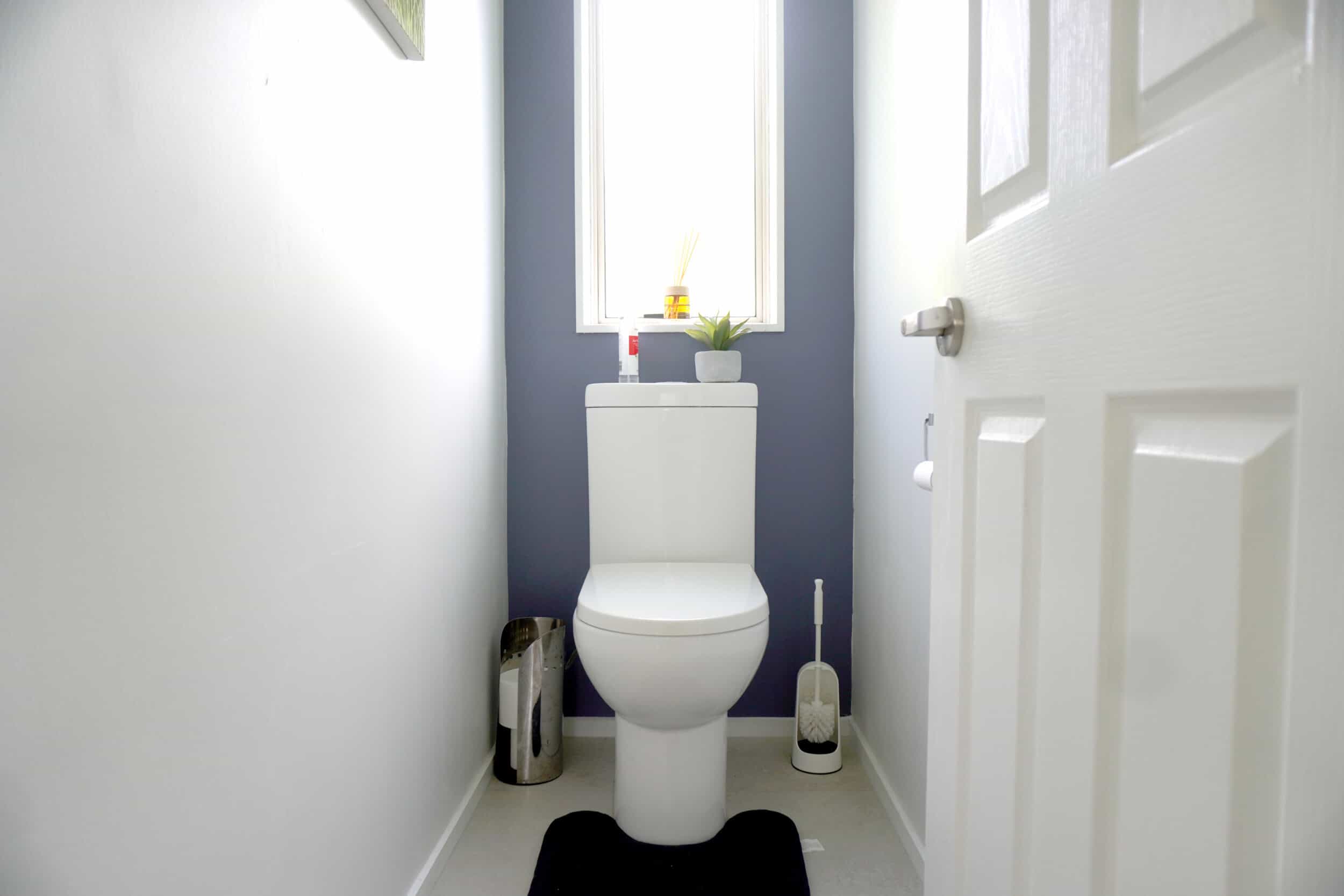
Plumber vs full project management — who do you actually need?
Replacement → a plumber is enough. A licensed Auckland plumber handles the removal, fitting, and any minor adjustments. No design input, no consent, no project manager required for a same-spot swap.
Adding a new toilet → full project management. The job touches plumbing, framing, waterproofing, sometimes electrical (for fans or lighting), sometimes tiling, and the consent process from lodgement through to Code Compliance Certificate. With no project manager, that means you’re coordinating four to six trades, the architectural designer, and Council inspections yourself — and you’re personally liable for any sequence error that fails an inspection. A renovation company carries that risk on your behalf.
💡 Quick tip: The expensive mistakes on a new-toilet build are almost always sequencing errors — tiling before the pre-line inspection, or closing a wall before the plumbing’s been signed off. That’s the part a project manager is actually paid to prevent. If you would rather not be in the house while it happens, the guide to living in your home during a renovation covers both options.
Just need a toilet swapped? Talk to Superior Property Services
If you’ve read this far and the picture is clearly “I just want my existing toilet replaced, no renovation, no consent, just a tradie who’ll actually show up”, you’re not really a Superior Renovations enquiry. Our sister brand in the Superior Construction Group, Superior Property Services, runs the small-job and replacement work across Auckland — toilet replacements, tap and fixture replacements, hot water cylinder swaps, and the small bathroom fixes that don’t justify a full renovation team.
SPS commits to a one-working-day response, draws on the same SCG-licensed trade network we use, and is purpose-built for the kind of job where you can’t get a tradie to call you back. If that’s closer to your situation, they’re the right first call. Once the work is done, the renovation aftercare guide covers what to check in the first twelve months.
If you’re adding a brand-new toilet, an ensuite, a second bathroom, or you’ve worked out that the room around the toilet is overdue for renovation — that’s our territory. We’ll walk through feasibility, design, consent, and build under one Action Plan.
➡ Book your free in-home consultation with Superior Renovations
➡ Estimate your project with our bathroom renovation cost calculator
➡ Request a free feasibility report for your project
Repair or Replace? What a Leaking or Running Toilet Actually Needs
Plenty of the toilet enquiries we take are not replacement jobs at all. Something is leaking, running or moving, and the honest answer is a repair rather than a new suite. Working out which one you have takes about two minutes.
A cistern that keeps running
Water trickling into the bowl long after the flush usually means the outlet valve seal has perished, or the inlet valve is not shutting off at the right level. Both are serviceable parts on almost every suite sold in New Zealand, and both are cheap next to a new toilet. A running cistern is also quietly expensive: it is metered water going straight down the drain, every hour, until someone fixes it.
Water on the floor at the base
A wet patch at the pan base is the one to take seriously. It can be a failed pan connector, a cracked pan, or a slow seep that has been running long enough to soak the substrate. Older Auckland homes with particleboard or timber floors under vinyl are the ones where this ends badly, because by the time the vinyl lifts the floor underneath has already gone soft.
A pan that rocks
Movement means the fixings or the floor beneath them have let go. Retightening a rocking pan without checking what it is fixed into is how a hairline crack becomes a replacement.
When repair stops being worth it
Our rule of thumb is straightforward. Repair while the pan is sound, the parts are still available and the floor around it is dry. Replace once you are buying a second set of parts for the same suite, the pan is cracked or crazed, the cistern is an obsolete size nobody stocks, or the floor has been wet. Repair work on its own is a plumbing call, not a renovation, and it is the kind of job our sister brand Superior Property Services handles across Auckland.
💡 Quick tip: Put a few drops of food colouring in the cistern and leave it 20 minutes without flushing. Colour in the bowl means the outlet valve is leaking. Colour on the floor means you have a bigger problem than a valve.
How Many Toilets Does a House Need, and Is There a Toilet Cost Calculator?
Two questions turn up constantly in searches, and both deserve a straight answer.
There is no official government toilet cost calculator. MBIE publishes guidance on plumbing work and on what needs consent, but it does not price your job, and neither does Auckland Council. What people are usually after is a price, and the closest honest tool is our bathroom renovation cost calculator, which gives an Auckland range for the room the toilet sits in rather than the fixture on its own. For a same-spot swap, the two numbers you need are the price of the suite and the plumber’s hourly rate, both of which are set out above.
On how many toilets a home needs, every dwelling has to have sanitary facilities, and the number required scales with the size of the household the home is designed for. The exact requirement for your specific plans is a Building Code question, and it is the kind of thing to confirm with Auckland Council or a Licensed Building Practitioner rather than a website. What we can tell you from the demand side: the most common reason an Auckland family adds a second toilet is not compliance at all. It is the 7am queue. That is precisely why the Greenlane renovation we filmed started with a toilet and finished as a whole-house job.
If a second toilet is going into an existing footprint, it usually lands inside the cost of the bathroom or laundry it borrows space from. If it needs its own room, treat it as a small build rather than a fixture purchase.
Smart Toilets and Bidet Seats: The Power Point Nobody Budgets For
Smart toilets and bidet seats are the fastest-growing part of the NZ market and the one most often mispriced, because the fixture is only half the job. A heated seat, a warm-water wash or a dryer needs mains power, and there is rarely a suitable outlet next to an existing toilet.
That means an electrician, not just a plumber. Electrical work in a bathroom is governed by the wiring rules in AS/NZS 3000, which set out where an outlet may and may not sit in a wet area, and the work has to be done by a registered electrician who can issue the paperwork for it. Adding a new outlet also means opening and making good a lining, which pulls in a plasterer and a painter on a job you thought was one fixture.
Plumbing side, a bidet function needs a water connection at the pan as well, and some units want a specific supply pressure. Check the manufacturer’s installation sheet before you buy, because the requirement varies by model and it is the detail that turns a tidy install into a wall repair.
The practical version: if a smart toilet is on your list, decide it before the walls close. Retrofitting one into a finished bathroom costs several times what it costs to run a cable while the linings are already off, which is the same argument for settling every selection early that runs through our guide to what to get in writing before you sign.
FAQ
In Auckland in 2026, a straight toilet replacement runs $400–$1,500 all-in. Adding a brand-new toilet where one didn't previously exist runs $10,000–$15,000+ once architectural, consent, and project management costs are included. The deciding factor is whether you're keeping the toilet in its existing position or creating a new connection to the water supply and wastewater line. No. Like-for-like replacement of a sanitary fixture in the same location is exempt from building consent under Schedule 1 of the Building Act 2004. The work still has to be carried out by a registered or licensed plumber, it isn't a job you can legally do yourself, even though no consent is needed. Yes. Auckland Council requires a building consent for any new sanitary fixture installed where one didn't previously exist. The plumbing and drainage must be done by a registered plumber and drainlayer. Adding the fixture isn't Restricted Building Work on its own, but if the job affects your home's structure or weathertightness, new framing or a tiled wet-area membrane, that part is RBW and needs a Licensed Building Practitioner. In Auckland in 2026, Council consent fees typically run $1,500–$3,000 for a single new toilet project. Architectural designer fees on top of that run $2,500–$5,000 for the consented drawings and documentation. Those figures sit on top of the build itself, which is why adding a toilet lands in the $10,000–$15,000+ bracket overall. A licensed plumber is enough for a same-spot replacement. Adding a new toilet involves plumbing, framing, waterproofing, sometimes electrical work, council consent, and inspections, that's a multi-trade project that needs a project manager to keep the sequence aligned with Council inspections and to carry the liability for any sequencing error. A replacement is usually 1.5–3 hours on the day. Adding a new toilet from scratch, including design, consent, and construction, typically takes 8–14 weeks from initial enquiry to Code Compliance Certificate, with the consent processing time being the least predictable part of that timeline. Not usually. Auckland Council treats moving a toilet to a new position as new sanitary plumbing in a new location, which needs a building consent, the same as adding one. Repositioning a pan within the same existing bathroom can be exempt, but once the soil pipe and water supply have to be relocated you're into consent territory and likely floor or wall opening. On a concrete slab, relocating the pipework alone can add $1,500–$4,000. Toilet installation in New Zealand has to be done by a registered or licensed plumber, with a registered drainlayer for the drainage connection where required. Both are authorised under the Plumbers, Gasfitters and Drainlayers Board (PGDB). A like-for-like replacement is exempt from consent but still has to be carried out by one of these authorised people — it is not a DIY job, even when no consent is required. Generally no. MBIE lists fitting new sanitary fixtures where there weren't any before as an example of work that sits outside Restricted Building Work. Adding a toilet still needs a building consent, and the plumbing still needs a registered plumber and drainlayer. It only becomes Restricted Building Work, needing a Licensed Building Practitioner, if the job affects your home's primary structure or weathertightness, such as new framing or a tiled wet-area membrane. Repair while the pan is sound, the spare parts are still available and the floor around the base is dry. A running cistern is usually a perished outlet valve seal or an inlet valve that is not shutting off, and both are serviceable parts. Replace once you are buying a second set of parts for the same suite, the pan is cracked, the cistern is an obsolete size, or the floor has been wet. Water at the pan base is the one to act on quickly. No. MBIE publishes guidance on plumbing work and on what needs building consent, but neither MBIE nor Auckland Council prices your job. For a same-spot replacement the two numbers you need are the price of the suite and the plumber's hourly rate. For anything larger, our bathroom renovation cost calculator gives an Auckland range for the room the toilet sits in rather than the fixture on its own. The suite itself runs from about $800 to $7,000 in the Auckland market, but the fixture is only half the job. Heated seats, warm-water wash and dryer functions need mains power, and there is rarely a suitable outlet beside an existing toilet. That means a registered electrician working to the AS/NZS 3000 wiring rules for wet areas, plus opening and making good the lining. Decide on a smart toilet before the walls close rather than after. What is the average cost to install a new toilet in Auckland?
Do I need building consent to replace an existing toilet?
Do I need building consent to add a new toilet?
How much does building consent cost for adding a toilet?
Is a plumber enough or do I need a renovation company?
How long does it take to install a new toilet in Auckland?
Can I move my toilet to a different spot without consent?
Who is allowed to install a toilet in NZ, a plumber or a drainlayer?
Is adding a new toilet restricted building work?
Should I repair or replace a leaking toilet?
Is there an official toilet cost calculator in New Zealand?
What does it cost to install a bidet or smart toilet in NZ?
Whether you’re adding a new toilet to your home, planning a full bathroom renovation, or weighing up replacement vs. full refresh, the right team gets the scope right the first time. Get multiple quotes, ask whether consent is needed, and make sure whoever you hire is licensed for the work involved.
Further Resources for your bathroom renovation
- Featured projects and Client stories to see specifications on some of the projects.
- Real client stories from Auckland
Need more information?
Take advantage of our FREE Complete Home Renovation Guide (48 pages), whether you’re already renovating or in the process of deciding to renovate, it’s not an easy process, this guide which includes a free 100+ point check list – will help you avoid costly mistakes.
Download Free Renovation Guide (PDF)

Have you been putting off getting renovations done?
We have partnered with Q Mastercard ® to provide you an 18 Month Interest-Free Payment Option, you can enjoy your new home now and stress less.
Learn More about Interest-Free Payment Options*
*Lending criteria, fees, terms and conditions apply. Mastercard is a registered trademark and the circles design is a trademark of Mastercard International Incorporated.
Still have questions unanswered?
Book a no-obligation consultation with the team at Superior Renovations, we’d love to meet you to discuss your renovation ideas!


