

How We Run Renovations: Our Project Management Team
Last updated:
In 2019 we made a structural change to how we run renovations. We split project management out of sales and gave it its own department.
The problem we set out to solve
Here’s the problem we were solving. In a lot of renovation companies, the person who sells you the job stays loosely attached to it through the build. The people closest to winning the work aren’t the ones accountable for delivering it. That gap is where timelines slip and communication goes quiet.
We’d been renovating Auckland homes since 2017, and by 2019 we were running more projects at once than one person juggling sales and delivery could realistically hold together. The busier we got, the clearer it became that selling a renovation and running one are two different jobs. So we stopped treating them as one.
What our project managers actually do
We built a standalone Project Management department, separate from sales. Each project manager owns the parts of a renovation that decide whether it runs to plan.
Schedule and sequencing
Trades have to land in the right order. You can’t tile before the plumber’s roughed in, and you can’t paint before the plasterer’s finished. Your project manager builds that sequence and holds it as the job moves.
Bookings and materials
They book the trades and order materials so everything arrives when the site’s ready for it, not a month early or a fortnight late. Getting that timing right is quietly one of the biggest things that keeps a renovation on track.
Communication and consent
They handle the day-to-day communication between you, the council, and the designers or architectural designers on your project, including coordinating the building consent process where your renovation needs one. They also manage our site managers, who run the physical work on the ground.
What this means for you
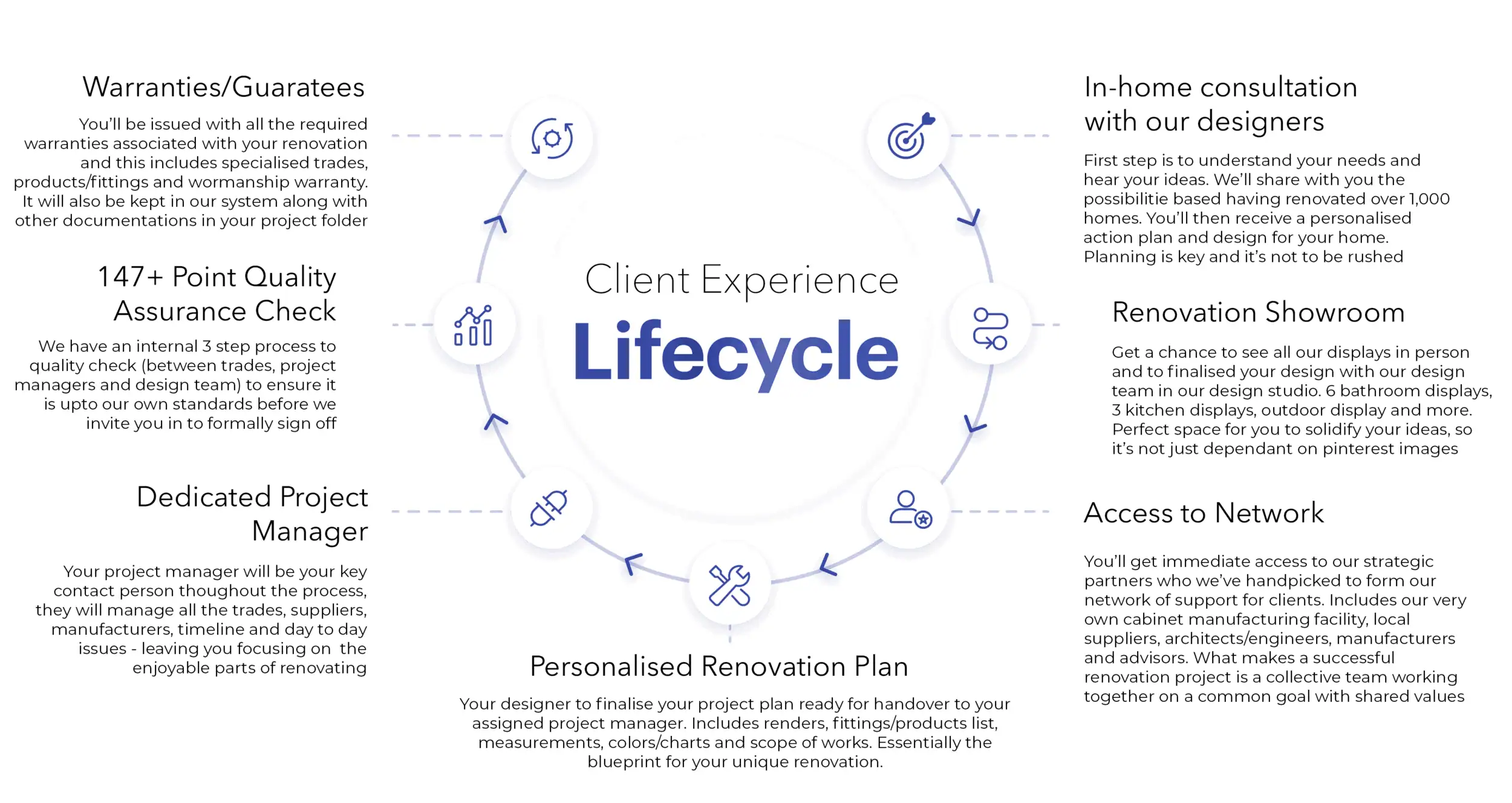
The reason for all of it comes down to one thing: a single point of accountability. Once your renovation moves out of sales and into the build, one person is responsible for it from start to finish. You’re not chasing updates or wondering who to ring. You know exactly who owns your project, and so do we.
It also changes how the tricky bits get handled. Booking trades in the right order, keeping materials landing when they’re needed, staying on top of council requirements. That’s a full job on its own. Handing it to someone whose only focus is delivery, not the next sale, keeps your project moving.
Project management is the thread that ties the rest of how we work together on site: the in-house team that designs your renovation before it’s built, and, where a project needs consent drawings or structural design, our architectural studio Sonder Architecture. Your project manager keeps all of it moving in the right order.
It’s a less glamorous part of the business than a finished kitchen. It’s also the part that decides whether the finished kitchen arrives on time.
Common questions about how we manage renovations
Who is my main point of contact during the build?
Once your renovation moves from sales into the build, your project manager is your single point of contact. They own the schedule, the bookings and the communication, so you always know who to ring rather than chasing several people for an update.
What does a project manager handle that a salesperson doesn't?
A salesperson's focus is winning the work. A project manager's only focus is delivering it: sequencing the trades, timing the materials, managing the site managers on the ground, and keeping you, the council and your designers on the same page throughout the build.
Do your project managers deal with the council?
Yes. They coordinate the building consent process on your behalf and stay on top of council requirements as the renovation progresses. Consent decisions themselves sit with the council; our job is to manage the process so it doesn't hold your project up.
Is the person who sells me the renovation the same one who runs it?
No, and that's the point of the change we made in 2019. Selling a renovation and running one are different jobs, so we separated them. The person accountable for delivery is dedicated to delivery, not the next sale.


