

12 Kid-Friendly Renovation Ideas for Auckland Families
12 Kid-Friendly Renovation Ideas Auckland Families Are Actually Adding to Their Homes
Quick answer: The best kid-friendly renovation ideas for Auckland homes solve the daily chaos without making the place look like a daycare — drop zones for school bags, durable kitchen surfaces that survive crayons, a separate rumpus so the lounge stays adult-zone, bunk-room layouts that grow with the kids, and warm bedrooms that meet the new H1 insulation standard. Most fit inside a kitchen, bathroom, or full-home reno without blowing the budget.
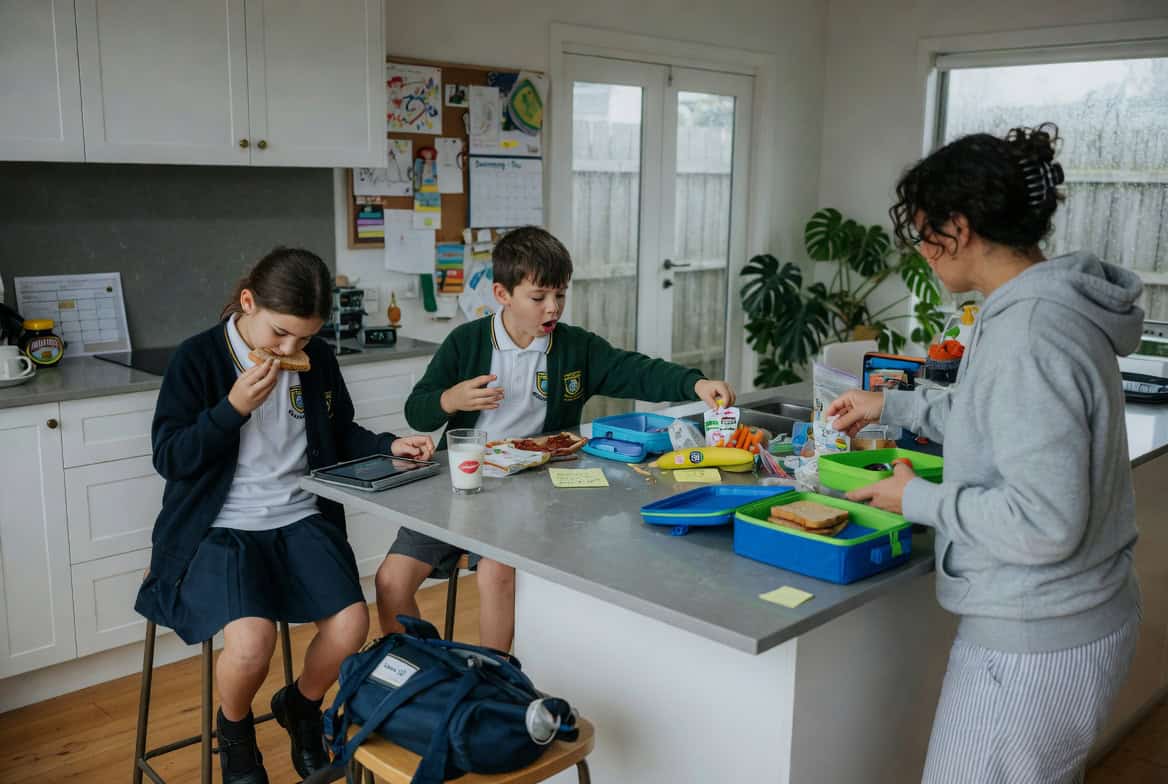
It’s 7:42am on a Tuesday in May. School starts in 18 minutes. One kid can’t find a shoe, the other has glued something to the dining table, the dog is mid-bark at the courier, and you’re standing at the kitchen island trying to make a school lunch on the only 30cm of bench that isn’t covered in lego, art folders, and someone’s spelling list.
Sound familiar?
This is the lived experience of a growing family in a 1990s 4-bed in Hobsonville, a 1970s brick-and-tile in Howick, or a renovated villa in Mt Eden that worked beautifully when there was one toddler — and now feels two rooms too small. According to Stats NZ’s 2023 Census household highlights, couples with children were the most common household type in New Zealand, and Auckland is forecast to hold around 35% of the country’s households by 2038. The renovation question for most of these families isn’t “should we move?” — it’s “how do we make this house work harder?”
We’ve worked on more than 1,000 Auckland renovation projects across the past decade. The brief from families with school-age kids has shifted noticeably in the last five years. It’s less “we need a bigger lounge” and more “we need somewhere for the school bags, somewhere for the homework, somewhere the kids can be loud while we’re trying to have a conversation, and please — for the love of god — somewhere to put the lego.” If you’ve ever shared this list, this article is for you.
Twelve renovation-scale ideas Auckland parents are actually requesting, with real 2026 cost figures, designer notes, and product specs that survive a six-year-old. None of them will turn your house into a daycare. All of them will give you back forty minutes of your weekend.
(If you’ve also got a dog in the mix — and most families do — pair this with our 12 pet-friendly renovation ideas for Auckland dog owners. There’s heavy overlap on the mudroom, the durable flooring, and the indoor-outdoor flow.)
1. The Drop Zone — A Mudroom That Absorbs the School-Run Chaos
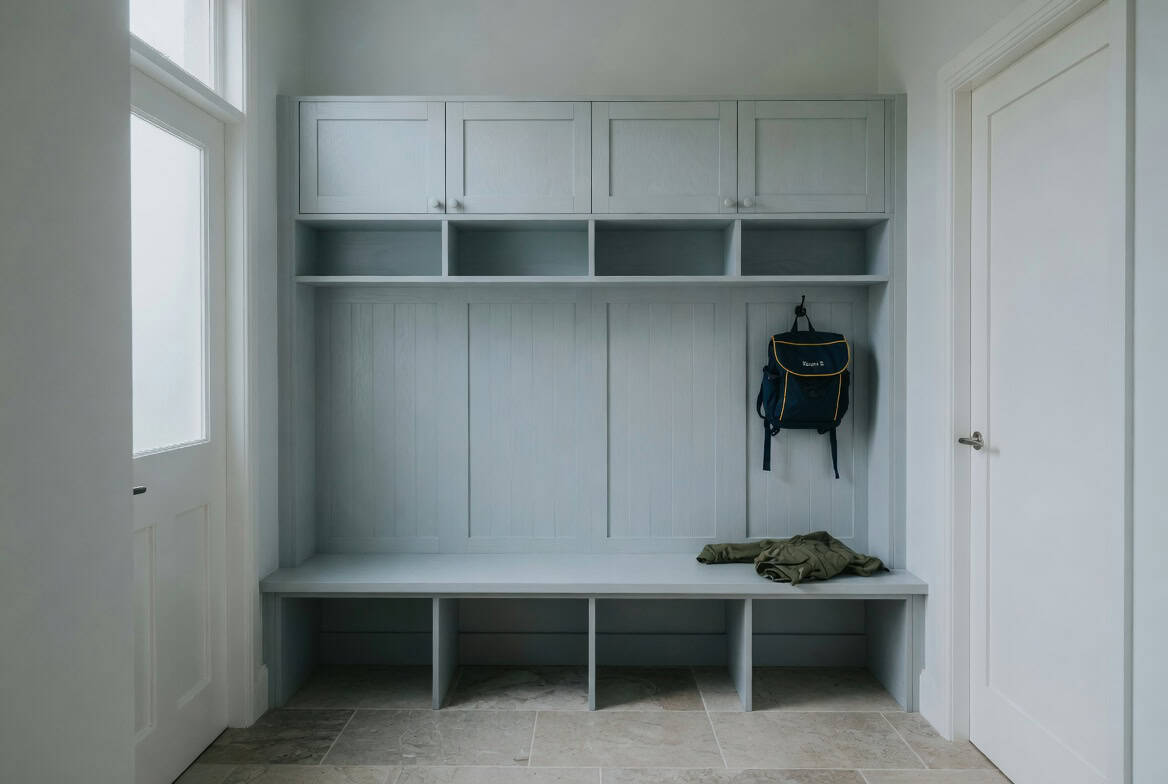
If your back door or garage entry opens straight into the kitchen — which it does in plenty of 1990s subdivisions and 1970s brick-and-tiles — the school run is happening in your kitchen. Bags on the bench. Shoes under the table. Lunchboxes wedged between cookbooks.
A proper drop zone is the single highest-impact kid-friendly addition for an Auckland home. Even a small one — 2.5m by 1.5m carved out of an existing laundry, hallway, or internal garage wall — gives every family member a peg, a cubby, and a basket. The standard joinery brief is straightforward: a bench seat at kid-shoulder height with hooks above, a low cubby per child for shoes and wet leads, a clip-in laundry basket per kid for the gym kit nobody remembers to bring in, and a tile or vinyl floor that won’t sulk about a wet sock.
“The single biggest predictor of whether a kid-friendly renovation works in practice — not on paper, in practice — is whether the family has somewhere to put stuff the moment they walk through the door. Without a drop zone, the kitchen island becomes the drop zone by default, and the kitchen never feels finished.”
— Dorothy Li, Design Manager, Superior Renovations
💡 Quick tip: If your laundry currently runs off the kitchen, you can usually convert it into a combined laundry-mudroom without moving plumbing — the cheapest path to a working drop zone. Budget $5,000–$15,000 in joinery and finishes as part of a wider home renovation in Auckland.
2. Storage Walls That Swallow the Toys (Without the Daycare Aesthetic)
Open shelving with woven baskets photographs beautifully on Instagram. It also means every Lego brick, plush toy, and half-broken Bluey figurine is visible from the lounge couch.
The fix is built-in joinery — floor-to-ceiling, push-touch, no handles — that runs along one wall of the family living area. Behind those doors: drawers and tubs sized to swallow the actual toy inventory. In front of those doors: a clean, calm wall in a neutral that doesn’t compete with the rest of the room. Built-in storage is the difference between a family home and a showroom that happens to have kids in it.
For a typical 4m run of full-height built-in joinery in melamine or Laminex finishes, expect $8,000–$15,000 supplied and installed as part of a wider renovation. Push for matte finishes rather than gloss — they hide fingerprints, scuff marks, and the inevitable felt-tip pen incident.
💡 Quick tip: Spec at least 30% of the internal storage as deep drawers rather than shelves. Drawers force visible categories (the puzzle drawer, the art drawer, the random-craft-supplies drawer). Shelves just become the place where toys go to die at the back.
3. A Kitchen Island That Doubles as a Kid Bench
The kitchen island is the centre of family life from age 3 to about age 16. Snack prep, breakfast, baking, homework, lunchbox assembly, Sunday-night meal planning, and the place where every conversation about how school went actually happens.
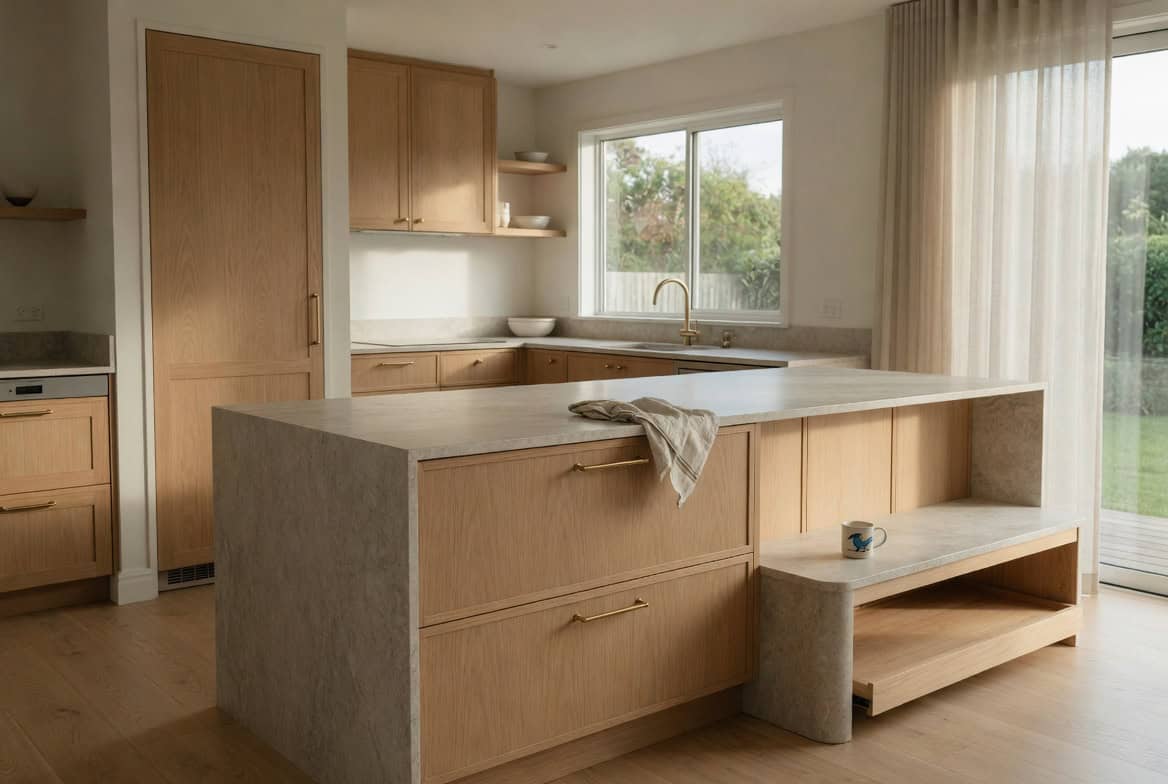
The renovation upgrade we’re seeing more of: a section of the island that drops to a lower bench height — 850mm rather than the standard 900–910mm — so a 6-year-old can stand and make their own toast without a step stool. Or a pull-out drawer-style step built into the toe-kick. Or both. A kitchen that lets a kid participate is a kitchen that buys you back ten minutes every morning.
Other family-specific kitchen moves worth costing in: a deep pot drawer (not a cupboard) for the heavy stuff so a kid can grab their own bowl, a dedicated lunchbox drawer at child height, and a charging cabinet for the school iPads that gets the cables off the bench entirely. Add roughly $3,000–$6,000 to your kitchen build for these features — well inside the mid-range Auckland kitchen renovation band of $28,000–$50,000.
“Most family kitchens fail not because of the layout but because the bench-to-storage ratio is wrong. You need more bench than a couple’s kitchen and less precious display than a Pinterest kitchen. Two-thirds of your storage should be drawers, not cupboards. Kids can’t open cupboards safely without slamming them.”
— Alison Yu, Designer, Superior Renovations
4. Surfaces That Actually Survive a Six-Year-Old
This is the unglamorous part of family renovation design and it’s also the part that matters most. The wrong surface choice means you’re repainting at year three, re-sanding the engineered oak at year five, and replacing the kitchen splashback after the felt-tip pen lives forever.
For floors: porcelain tiles in living and wet areas, engineered timber or quality vinyl plank in bedrooms, and avoid pale natural-finish oak in any high-traffic family zone. For benchtops: engineered stone in mid-grey or warm white — it’s almost impossible to stain and resists heat, scratches, and the inevitable nail polish spill. For paint: Resene Wash&Wear 100 across all family living spaces, hallway walls, and kid bedrooms — it’s the toughest washable finish on the NZ market and survives both magic eraser and toddler artwork. For cabinetry: matte Laminex finishes in textured profiles that disguise fingerprints. For splashbacks: tiles over glass — tile grout can be replaced, glass can’t be un-scratched.
The rule we give every family: spec for the worst day, not the best day. Choose the finish that survives the wet pram wheels in the hallway, the spilled blueberries on the rug, the texta on the wall. The aesthetic version of that finish almost always exists — you just have to ask for it.
“There’s a particular kind of regret that hits a family eighteen months after a renovation. It’s the moment they realise they chose the surface that looks beautiful in a magazine instead of the one that survives a Tuesday. We have the conversation with every family at design stage — pick the materials assuming things will get worse, not better.”
— Eunice Qin, Designer, Superior Renovations
5. Kitchen-to-Backyard Sightlines — Watch the Kids Without Standing Up
This is the single most-requested feature from Auckland families with kids aged 2 to 8. The ability to make dinner and see the trampoline at the same time. The ability to load the dishwasher and confirm nobody is climbing the fence. The ability to be in two places at once without actually being in two places at once.
For older Auckland homes — the 1970s brick-and-tile in particular — this often means a structural change. A wall comes out, a steel beam goes in, and the kitchen, the dining, and a wider sliding door to the deck become a single visual axis. A clear sightline from the kitchen bench to the backyard is worth more in family quality-of-life terms than almost any other renovation move.
Where this becomes a full renovation rather than a cosmetic one is when the wall in question is load-bearing or the slider in question needs a wider opening than the existing lintel allows. That’s a structural engineer’s job, a building consent, and typically $15,000–$40,000 of structural and joinery work depending on the span. Within a wider full-home renovation in the $140,000–$180,000+ Auckland band, it’s often the move that delivers the most daily impact.
💡 Quick tip: If you can’t take the wall out, put a window in it. A wide internal window between the kitchen and the next room costs a fraction of an opened-up plan and still lets you see what’s happening. We’ve done this for older West Auckland homes where the structural cost wasn’t worth it.
6. A Rumpus or Second Living Zone — Keep the Lounge Adult
The single best renovation gift you can give yourself once the kids are old enough to colonise a room is a second living zone. A rumpus. A TV den. A converted garage. A reclaimed dining room that nobody was using as a dining room. Anywhere that isn’t the main lounge.
The unspoken rule of every functional family home: the lounge stays adult-zone, and the kids get their own space. Without a second living zone, every Saturday morning is a quiet domestic standoff between Bluey on the big TV and the parent who would quite like to read the paper.
The cheapest version of this is reconfiguring an existing room — a fourth bedroom nobody’s using, a dining room you eat in three times a year, a study that’s already half a junk room. Add a built-in storage wall, decent acoustic treatment in the ceiling, a wall-mounted TV, and you’ve got a rumpus for $8,000–$20,000 inside a wider renovation. The more ambitious version is a garage conversion ($40,000+ for a basic conversion, more if you’re adding insulation and a separate entrance) or a single-storey extension via our Auckland house extensions service starting from $80,000.
7. Bunk-Room Layouts That Don’t Feel Like a Backpacker Hostel
Two kids sharing a bedroom doesn’t have to mean two single beds wedged against opposite walls with a metre of carpet in between. Done right, a shared kids’ bedroom is one of the most functional spaces in an Auckland family home — it frees up a fourth room for the rumpus, it builds in sibling bonding, and it often becomes the favourite room in the house.
The renovation move is built-in bunk joinery rather than freestanding bunks. Built-in bunks running along one wall, each with its own reading light, its own USB charging point, its own small shelf for the book and the bottle of water, and ideally its own curtain for the bottom bunk. Underneath: deep drawers for clothes and toys. Above the top bunk: shelving for the soft-toy graveyard. The whole assembly typically runs $4,500–$9,000 in custom joinery — comparable to two decent freestanding bunk beds but with five times the storage and zero floor-space penalty.
Spec note: ceiling height matters. If your existing ceilings are 2.4m, a top bunk leaves about 800mm of headroom — workable but tight. For older villas with 2.7m ceilings (Mt Eden, Grey Lynn, Ponsonby), built-in bunks become genuinely spacious. The 1970s and 1990s housing stock with standard 2.4m ceilings still works, but talk to your designer about exact mattress thickness and rail heights early.
8. Homework Nooks — Not a Full Home Office
Most Auckland families don’t have room for a dedicated study for the kids, and most kids don’t need one. What they need is a built-in desk surface, a chair that fits properly, a power point at desk height, and good light. That’s it.
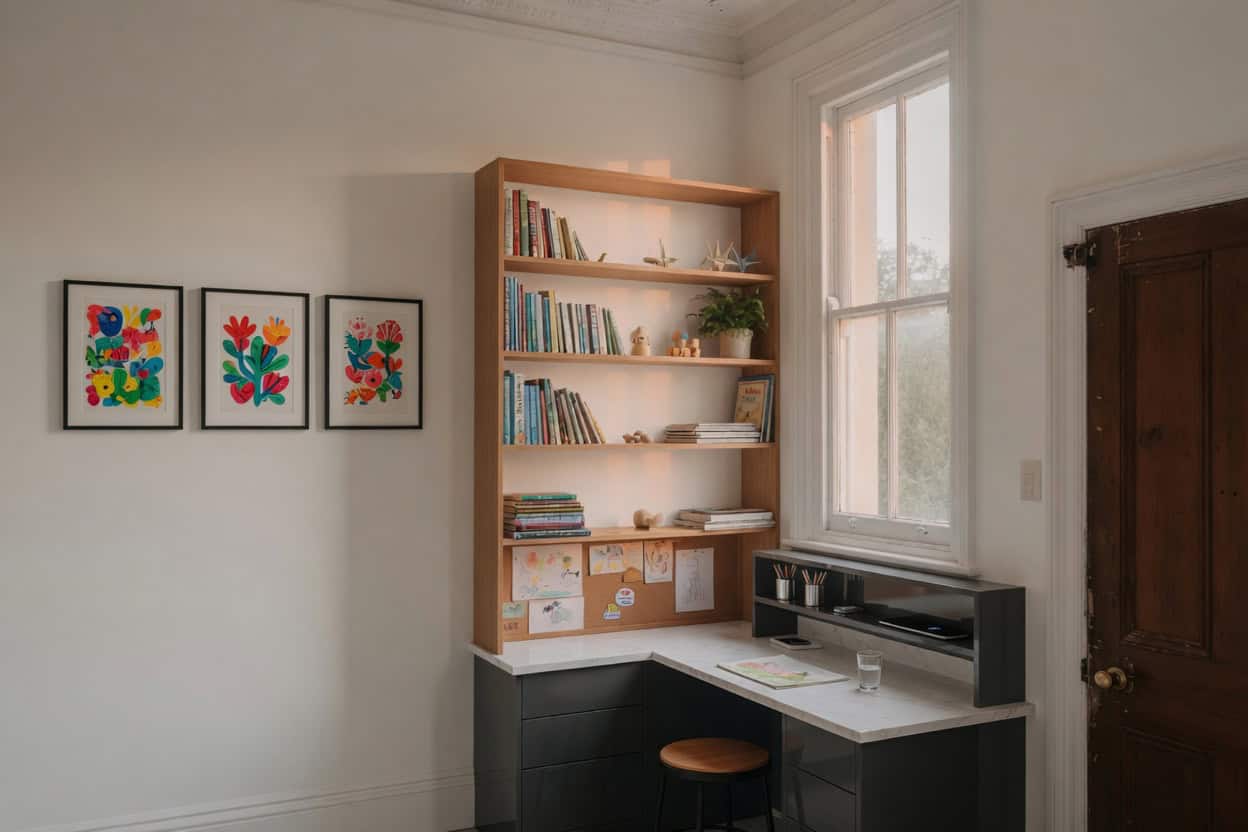
The trick is finding 90cm of wall somewhere it doesn’t intrude — under the stairs, at the end of a hallway, in a wide landing on the second storey, or in a corner of the rumpus. A built-in desk in melamine or Laminex with two shallow drawers below and an open shelf above runs about $1,800–$3,500 for the joinery, plus a dedicated double power-point with USB outlets. Add a wall-mounted shelf for a printer if needed.
A homework nook done at the renovation stage is a tenth the cost of converting a bedroom into a home office later — and it doesn’t take a bedroom out of circulation. For a family with kids who’ll be doing NCEA in five years, this is the move that pays off the longest.
💡 Quick tip: Don’t put the homework nook in the kid’s bedroom unless you really, really have to. Homework in the bedroom is one of the hardest habits to break later. Putting it in a semi-public family space — landing, end of hallway, rumpus corner — keeps the focus higher and the screens accountable.
9. A Family Bathroom That Survives the School-Morning Rush
The standard 1990s and 2000s Auckland family bathroom was designed for a couple. One vanity. One toilet inside the same room as the bath and shower. One mirror. It works fine until you’ve got two kids brushing teeth at 7:45am while a third needs the toilet and a parent needs to shower.
The two renovation moves that solve this:
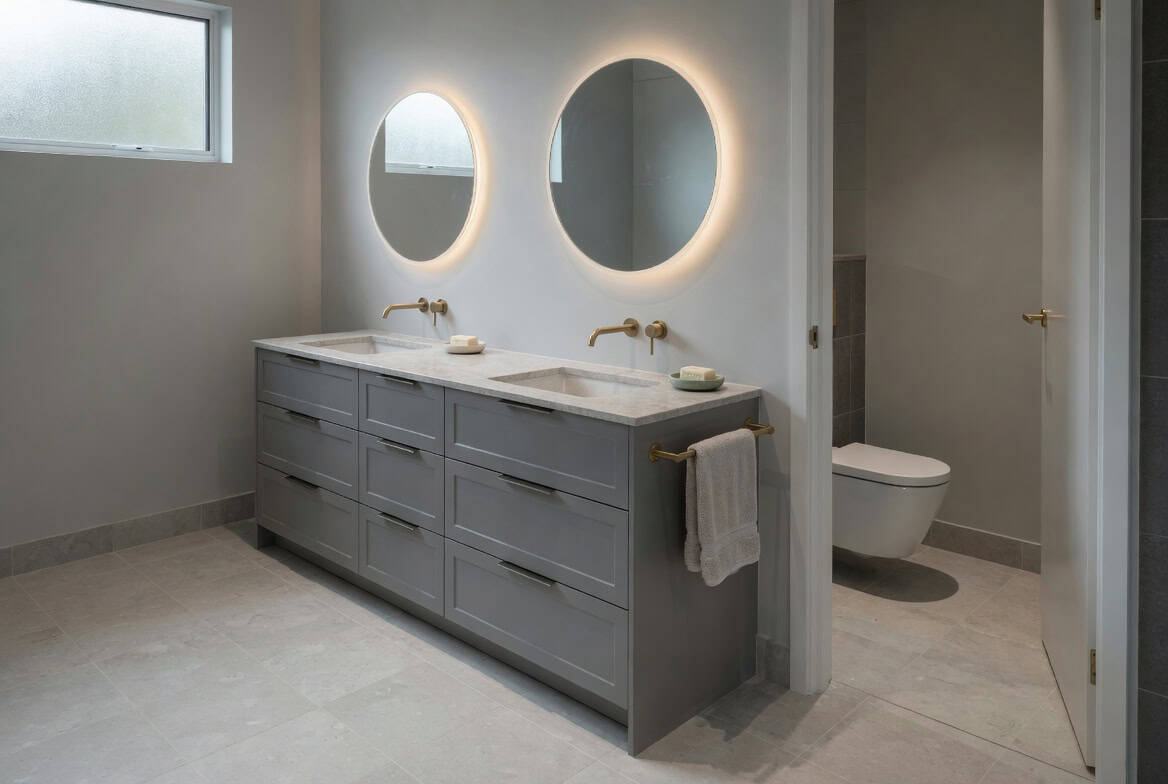
First, a double vanity. Two basins, two mirrors, two drawers each — kids can brush teeth simultaneously and the mornings get measurably shorter. A double vanity adds about $2,000–$4,000 to a standard Auckland bathroom renovation in the $25,000–$35,000 mid-range band.
Second, a separate WC. If you can isolate the toilet behind its own door — either as a small adjacent room or via internal wall changes — the bathroom becomes usable by two people at once. A separate WC is the single biggest functional upgrade an Auckland family bathroom can have, and it adds maybe $3,000–$8,000 to a renovation when the plumbing allows it.
Other family-specific bathroom moves: a hand-held shower head from Reece for washing hair without flooding the bathroom, slip-rated floor tiles from The Tile Depot (look for an R10 minimum rating), and a wider freestanding bath if you’ve got a toddler — it’s easier to lean over and easier to clean around.
“The school-morning bathroom is one of the most under-designed rooms in a typical Auckland family home. Families think they need a bigger bathroom. Almost always, what they actually need is the same bathroom with a separate WC and two basins instead of one. The footprint stays roughly the same. The functional capacity doubles.”
— Cici Zou, Designer, Superior Renovations (NZ Dip. Interior Design, Certified Designer)
10. A Quiet Parent Wing — Acoustic Separation You’ll Be Grateful For
The most underrated family renovation move is sound insulation between the parent’s bedroom and everything else. Built well, the master bedroom becomes the one room in the house where nobody can hear Paw Patrol at 6:30am on a Sunday.
The build spec: insulation batts in the internal walls (most NZ homes have zero internal wall insulation), solid-core doors instead of hollow-core doors, draught seals around the door frames, and a layout where the master sits at the opposite end of the house to the kid bedrooms or the rumpus. Adding internal acoustic insulation during a renovation costs roughly $1,500–$3,500 for a typical master suite — a rounding error inside a full-home renovation and the move that probably saves your marriage.
In Auckland’s 1990s housing stock the master is often already at the opposite end of the house — the brief is usually about upgrading the insulation and the doors. In an older bungalow or villa with all four bedrooms in a row off a central hallway, the acoustic case for a future extension at the rear of the property becomes much stronger. That’s where a Sonder Architecture-led house extension often pays for itself in family quality of life within the first year.
11. Convertible Spaces — Design It for the 12-Year-Old, Not the Toddler
The most expensive renovation mistake we see Auckland families make is designing the new house for the kids they have right now. Toddler-themed playrooms with built-in train tables. Bunk rooms with princess-pink walls. A nursery painted Resene Quarter Spanish White because the design magazine said so.
The kids you’ve got now will be teenagers in eight to ten years. The renovation will still be standing. Spec every kid-zone in the house twice — once for the age the child is now, and once for the age they’ll be at the end of the build’s design life. The playroom needs to be reconvertible into a teenager’s bedroom by removing a built-in train table. The nursery needs to make sense as a teenager’s room with the changing table out. The homework nook needs to be sized for an adult-height chair, not a toddler stool.
The way to do this practically: pick neutral wall and floor finishes (Resene Half Spanish White, Resene Half Truffle, mid-grey vinyl) that work across decades, then layer the kid-specific colour and personality into the rugs, curtains, bed linen, and wall art. That stuff can be replaced for a couple of hundred dollars at the start of each life stage. The cabinetry and the flooring cannot.
💡 Quick tip: If you’re working with our in-house design studio, ask the designer to sketch the family-home layout for two life stages — kids aged 4 to 10, and kids aged 11 to 18. The conversation about what should be built-in vs. what should stay flexible becomes much easier when you can see both versions on paper.
12. Warm Kid Bedrooms — Meet the New H1 Insulation Standard
Auckland’s older housing stock has a real problem keeping kid bedrooms warm in winter. A 1970s brick-and-tile in Howick, a 1990s 4-bed in Flat Bush, a character bungalow in Mt Eden — most of these homes were built to insulation standards that fell well short of where the NZ Building Code sits today. Winter mornings in a kid’s room can dip into single digits, and damp, cold rooms drive the respiratory issues NZ kids see far more of than they should.
When you’re renovating, the moment to fix this is during the build — not as a retrofit five years later. The November 2022 update to Schedule H1 of the NZ Building Code raised the minimum insulation R-values significantly for new and renovated residential walls, ceilings, and floors. For Auckland (Climate Zone 1), the current minimums are R2.0 for walls, R6.6 for ceilings, and R3.0 for underfloors — a meaningful jump from where most older Auckland homes currently sit.
If you’re already opening up walls during a renovation, the marginal cost to bring the kid bedrooms up to current H1 standard is small — typically $1,500–$3,500 per room for ceiling, wall, and floor insulation depending on access. If you wait until the renovation is finished and then try to retrofit, the same outcome costs five to ten times as much because the linings have to come off. The EECA Warmer Kiwi Homes programme also offers grants for ceiling and underfloor insulation in eligible homes — worth checking before signing off the scope.
💡 Quick tip: Spec a heat pump head in the rumpus, the master, and the main living zone — but not in every kid bedroom. Properly insulated bedrooms in Auckland’s mild climate don’t need active heating overnight. Save the heat pump budget for the rooms where everyone gathers.
Pulling It Together — What This Looks Like as a Whole Renovation
Most Auckland families don’t tackle all twelve of these ideas in one renovation. Three or four of them, picked deliberately, will change how the house feels day to day. A drop zone, a separate WC, a rumpus, and a kitchen island with proper storage will hand most growing families back forty minutes a morning and a whole lot of weekend.
The full-home version — taking a tired 1990s 4-bed in Hobsonville or a 1970s brick-and-tile in Howick and reconfiguring it around how a family actually lives — typically sits in the $140,000–$200,000+ range, with two-storey homes and full extensions running higher. For a family weighing up “renovate vs. move”, the maths usually favours staying put once you account for stamp-equivalent costs, agent fees, the moving cost, and the school zone you’d rather not lose. A renovation that adds a rumpus, fixes the bathroom, and brings the bedrooms up to H1 standard is almost always cheaper than the equivalent four-bed in the same postcode.
If you’re already past the daydreaming stage and want to know what’s actually possible inside your house, our in-house design team at Wairau Valley runs the design-to-build process — scope, drawings, fixed-price quote, and consent application all under one roof. The first conversation is free, on-site, and takes about an hour.
➡ Book your free in-home consultation with Superior Renovations
➡ Use our renovation cost calculator hub for kitchen, bathroom, and extension estimates
➡ Request a free feasibility report for your project
How much does a kid-friendly renovation cost in Auckland?
There's no single figure — kid-friendly renovation costs depend on whether you're adding individual upgrades to an existing house or doing a full reconfigure. A drop zone or homework nook added inside a wider renovation typically costs $2,000–$15,000 each in joinery. A double-vanity family bathroom in the mid-range band sits at $25,000–$35,000. A full reconfigure of a 1990s 4-bed or 1970s brick-and-tile to add a rumpus, a family bathroom, and a proper kitchen typically runs $140,000–$200,000+ in 2026 Auckland pricing. Use our renovation cost calculator hub for itemised estimates.
Is it cheaper to renovate or move for a growing Auckland family?
For most Auckland families with school-age kids, renovating beats moving — once you add up agent fees (typically 3–4% of the sale price), legal costs, the upgrade premium on a larger house in the same school zone, and the moving cost itself, a $140,000–$200,000 renovation often comes out cheaper than the equivalent next-size-up home in the same area. The exception is when the existing section can't physically take an extension or the structural condition of the house is poor. We assess this honestly during the free consultation.
What is the most important kid-friendly renovation idea?
The drop zone — a small mudroom or built-in storage wall at the family entry point. It absorbs the school-bag, shoe, jacket, and lunchbox chaos that otherwise lands on the kitchen island every morning. It's the single highest-impact change for families with kids aged 5 to 15, costs $5,000–$15,000 within a wider renovation, and is the one upgrade families almost never regret. Every other idea on the list works better once the drop zone is in place.
Do I need consent for a family-friendly renovation in Auckland?
It depends on what you're changing. Cosmetic upgrades — built-in joinery, surface replacements, painting, new tiles — do not require consent. Structural changes like opening up a kitchen-to-backyard sightline, removing a wall to create a rumpus, or building an extension all require Auckland Council building consent. So does relocating plumbing for a family bathroom with a separate WC. As a rule, if you're changing the structure of the house or the location of services, consent is required. We manage every consent application in-house.
How long does a family renovation take in Auckland?
A standalone bathroom renovation takes 3–4 weeks of build time. A kitchen takes 5–6 weeks. A full-home reconfigure with kitchen, bathrooms, and structural changes typically runs 3–6 months on site, plus 6–12 weeks of design and consent before that. If you're combining a renovation with a single-storey extension, expect 4–8 months total from site start. Your project manager gives you a week-by-week construction schedule before work begins so you know exactly what to expect.
Do I need to move out during a family renovation?
It depends on scope. For a single-bathroom or single-kitchen renovation, most families stay put — we set up temporary kitchen facilities or work around bathroom access. For a full-home renovation involving multiple wet areas, structural changes, and the kitchen at the same time, most families either move out for 6–12 weeks or stage the work in two phases. We discuss this honestly at the design stage — it's much better to plan the move-out than to discover halfway through that the bathroom is unusable on a Tuesday night.
What surfaces survive a young family the longest?
For floors: porcelain tiles in living and wet zones, engineered timber or quality vinyl plank in bedrooms — avoid pale natural-finish oak in family living rooms. For walls: Resene Wash&Wear 100 throughout, which survives both magic erasers and toddler artwork. For benchtops: engineered stone in mid-grey or warm white, which resists stains, scratches, and heat. For cabinetry: matte Laminex finishes in textured profiles that hide fingerprints. The rule we give every family is to spec for the worst day, not the best day — choose the finish that handles the spilled blueberries, not the one that looks best in a magazine.
Do kid bedrooms need to meet the new H1 insulation standard?
If you're renovating, yes — the November 2022 update to Schedule H1 of the NZ Building Code raised the minimum insulation R-values for residential walls, ceilings, and floors. For Auckland (Climate Zone 1), current minimums are R2.0 for walls, R6.6 for ceilings, and R3.0 for underfloors. Bringing kid bedrooms up to standard during a renovation typically costs $1,500–$3,500 per room when the wall and ceiling linings are already off. Retrofitting later costs five to ten times as much. EECA's Warmer Kiwi Homes programme also offers grants for ceiling and underfloor insulation in eligible homes.
Should kids share a bedroom or have separate rooms?
From a renovation cost-per-functionality perspective, two kids sharing a well-designed bunk room often beats two separate small bedrooms — it frees up a fourth room for a rumpus, which usually delivers more daily benefit than a slightly bigger kid bedroom. Built-in bunk joinery with reading lights, USB charging, and integrated storage typically runs $4,500–$9,000 and works particularly well in older Auckland villas and bungalows with 2.7m ceilings. The exception is when there's a significant age gap or different bedtimes — in that case separate rooms make more sense.
What's the best layout for a family bathroom in Auckland?
The two highest-impact features for a family bathroom are a double vanity and a separate WC. A double vanity halves the time it takes to get two kids ready for school. A separate toilet means the bathroom can be used by two people at once on a school morning. Beyond that, family bathrooms benefit from a hand-held shower for washing hair, slip-rated floor tiles (R10 minimum), durable wall tile rather than glass, and a freestanding bath if you've got a toddler. Mid-range Auckland family bathroom renovations sit in the $25,000–$35,000 band in 2026.
Can I add a rumpus without extending the house?
Often yes. The cheapest version is reconfiguring an existing room — a fourth bedroom that's been used as a storage room, a dining room nobody eats in, or a study that's now a junk room. Add a built-in storage wall, decent ceiling acoustic treatment, and a wall-mounted TV and you've got a rumpus for $8,000–$20,000 inside a wider renovation. The next step up is a garage conversion, which typically starts from $40,000. A new single-storey extension to create a dedicated family living zone starts from $80,000 and goes up from there.
How do I make my renovation work for kids of different ages?
Design for the older kid, not the younger one. The children you've got now will be teenagers within eight to ten years, and the renovation will still be standing. Pick neutral wall and floor finishes that work across decades — Resene Half Spanish White, Resene Half Truffle, mid-grey vinyl — then layer the personality and colour through rugs, curtains, bed linen, and wall art. Those items can be replaced for $200–$500 at the start of each life stage. The cabinetry, the flooring, the built-in joinery cannot. The most expensive mistake we see is families building toddler-themed playrooms that become useless three years later.
Further Resources for your family home renovation
- Featured projects and Client stories to see specifications on some of the projects.
- Real client stories from Auckland
Need more information?
Take advantage of our FREE Complete Home Renovation Guide (48 pages), whether you’re already renovating or in the process of deciding to renovate, it’s not an easy process, this guide which includes a free 100+ point check list – will help you avoid costly mistakes.
Download Free Renovation Guide (PDF)
Still have questions unanswered?
Book a no-obligation consultation with the team at Superior Renovations, we’d love to meet you to discuss your renovation ideas!
Or call us on 0800 199 888

Have you been putting off getting renovations done?
We have partnered with Q Mastercard ® to provide you an 18 Month Interest-Free Payment Option, you can enjoy your new home now and stress less.
Learn More about Interest-Free Payment Options*
*Lending criteria, fees, terms and conditions apply. Mastercard is a registered trademark and the circles design is a trademark of Mastercard International Incorporated.


0 comments
Write a comment