

Monolithic Cladding NZ: Leaky-Home Risk & Your Options
Last updated:
Free cost calculator
How much will recladding your house cost?
Get an instant Auckland price range for your project — no details required to see it.
Quick answer: Monolithic cladding is a smooth, jointless plaster-look exterior system used heavily on New Zealand homes built between 1994 and 2004, and it’s the cladding most closely tied to the leaky-home crisis. It isn’t automatically a leaky home, but on homes from that era it carries real risk, so it needs a proper inspection before you buy and, where damage is found, a full reclad to put it right.
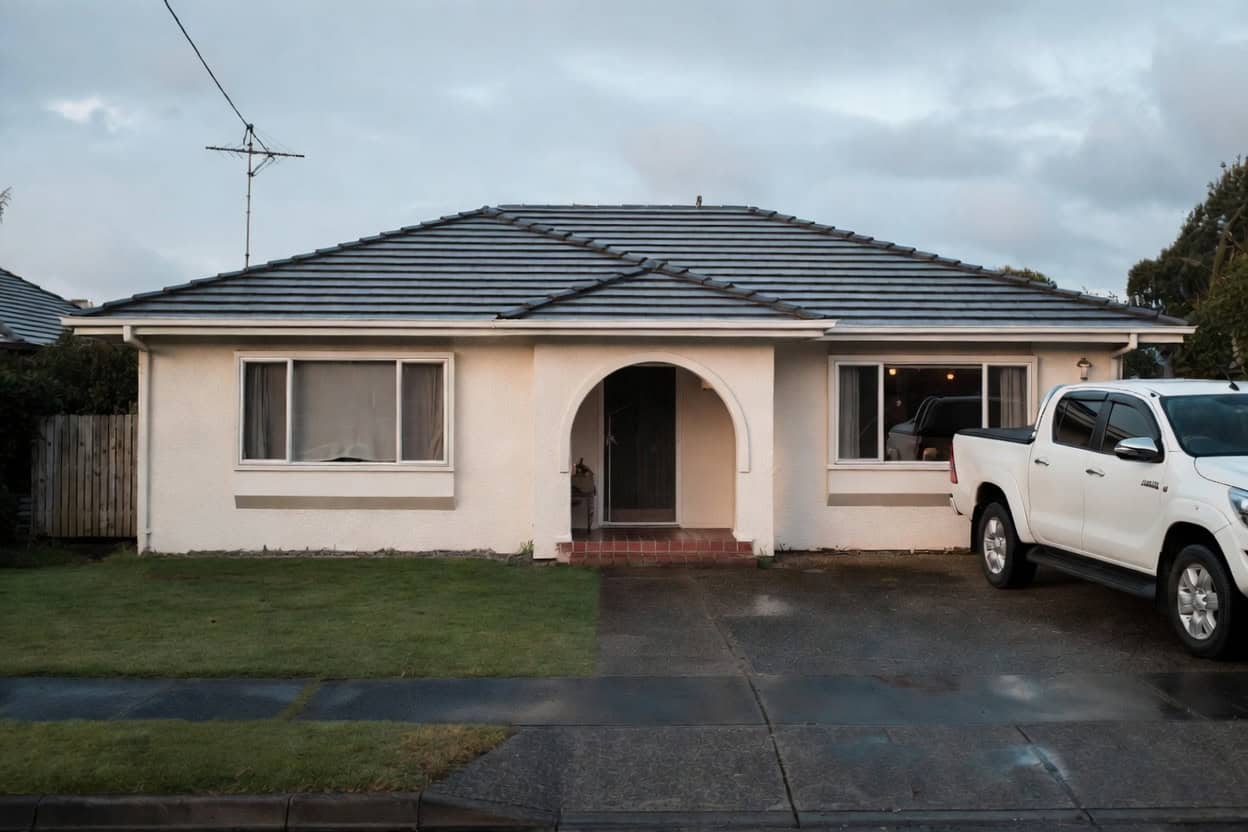
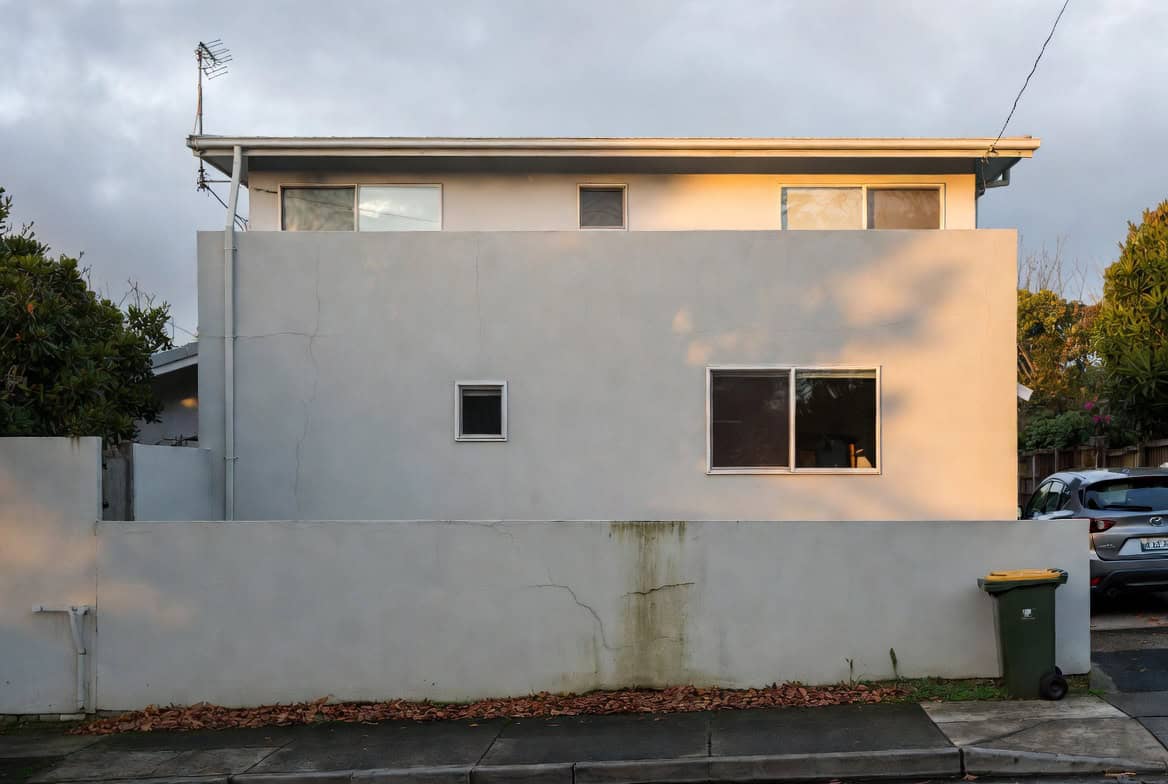
Drive through Albany, Greenhithe, West Harbour or the older parts of Botany and you’ll see them everywhere, smooth, render-finished homes with clean corners, flat or low roofs, and barely an eave in sight. They looked modern when they went up. Twenty-odd years on, a lot of them are the homes Auckland buyers are most nervous about.
We reclad these houses for a living. We’ve stripped the plaster off enough 1990s and early-2000s homes to know what’s usually waiting behind it, and we’ve sat across the table from plenty of owners and buyers trying to work out whether they’ve got a problem or a bargain. This guide is the builder’s version of that conversation, what monolithic cladding actually is, why it became such a headache, what to check before you buy one, and what the path out looks like if you already own one.
Monolithic Cladding in New Zealand
What Monolithic Cladding Actually Is
Monolithic cladding is any exterior wall system finished to look like one continuous, jointless surface, usually a textured plaster or render skin with no visible joins. “Monolithic” just means “single stone”: the wall reads as one solid mass rather than a pattern of boards or bricks. That smooth, unbroken look is the whole point, and it’s also the giveaway.
Underneath the render, though, it’s not one thing. Three main systems sit under the monolithic umbrella, and the differences matter once you start asking whether a particular house is a risk.
The three systems you’ll come across
The first is EIFS, a synthetic plaster over polystyrene sheets, sometimes called texture-coat. Light, cheap, easy to shape into those rounded corners and parapets architects loved in the late 90s. The second is fibre-cement sheet with a plaster finish, brands like Harditex were common. The third is solid plaster (stucco) over a backing, the older and generally more forgiving of the three. All three give you the same jointless face, which is why they get lumped together as “plaster homes” or, less kindly, “chilly-bin houses”.
How to tell if a house has it
You don’t need a builder to spot it from the kerb. Look for a smooth or lightly textured wall with no weatherboard lines and no brick. Pair that finish with a flat or low-pitched roof, minimal or no eaves, recessed windows, and decorative parapets, and you’re almost certainly looking at monolithic cladding from the high-risk era. Tap it, polystyrene-based systems sound hollow and dull; solid plaster sounds, well, solid. Hairline cracking around windows and at floor-level junctions is worth noting, though plenty of sound homes get cosmetic cracks too.
💡 Quick tip: The cladding type alone doesn’t tell you whether a home leaks. A solid-plaster home with good eaves and a simple roofline is a very different risk to a polystyrene-clad, flat-roofed, eaveless house from 2001. Build year, design and detailing matter as much as the material.
According to Settled.govt.nz, the official guidance for buyers, the highest-risk homes are exactly this profile: built from the late 1980s to the mid-2000s, finished in plaster-style monolithic cladding, with an unbroken exterior that often hides problems with no obvious warning signs.
Why Monolithic Plaster Homes Became a Leaky-Home Risk
Here’s the part most people get half-right. The cladding itself didn’t fail because plaster is bad. It failed because of how it was built behind the plaster, on a particular kind of house, during a particular window of time.
Three things lined up at once between roughly 1994 and 2004, and together they created the leaky-building crisis.
No cavity behind the cladding
On most homes from this era, the plaster was fixed directly to the timber framing, no gap, no drainage path. When water got in behind the render (and on a sealed, jointless wall it eventually does), it had nowhere to drain and no airflow to dry it out. It just sat against the framing. The Building Performance team at MBIE now requires a drained cavity behind monolithic claddings under E2/AS1, the External Moisture acceptable solution, a 20mm vented gap that lets water escape. That requirement came in with the Building Act 2004 reforms. Homes built before it usually don’t have one.
Untreated timber framing
For a stretch from the late 1990s to 2004, it was legal to build with kiln-dried but otherwise untreated framing timber. Dry untreated pine is fine until it gets wet and stays wet, then it rots fast. Put that timber behind a direct-fixed plaster wall with no way to dry, and you’ve built the problem in. Wet trapped framing with no treatment and no cavity is the core of why these homes rot rather than just stain.
Mediterranean-style design
The look of the era worked against it. Flat roofs, no eaves to throw rain clear of the walls, internal gutters, parapets, recessed windows and complex junctions, every one of those is a place water can get in, and without eaves the walls cop the full weather. Auckland Council notes that weathertightness problems are generally tied to homes built from the early 1990s, most often with monolithic cladding and these design features.
💡 Quick tip: Post-2004 monolithic homes built over a proper cavity are a different animal. A cavity-system plaster home is as weathertight as any other modern cladding. The risk band most buyers should treat with real caution is roughly 1994 to 2004, and the worst of it is the eaveless, flat-roofed, complex-roofline houses from that window.
So what do we actually find once the cladding comes off? This is where the inspector and the agent and the council guidance all stop, because none of them open these walls up. We do.
“On the 1994 to 2004 monolithic homes we strip back, around nine in ten have structural framing that needs replacing, not a damp patch you can dry out, actual rotten timber that has to come out and be rebuilt. People hope it’s surface-level. By the time we’re called in, it almost never is. That’s not me being dramatic; it’s just what’s behind the plaster on homes of that age once the render’s been holding water against the frame for twenty years.”
— Jeff Zhang, LBP, Site Manager, Superior Renovations
Worth being clear about what that figure means. These are homes already being recladded, owners called us because something was wrong. It’s not a claim that nine in ten plaster homes everywhere are rotten. But it tells you how often “a bit of cracking” turns into structural framing replacement once you actually look. That gap between what you can see and what’s really there is the whole reason this cladding makes people nervous.
Should You Buy a Monolithic Cladding House in Auckland?
Short version: you can, and sometimes it’s a genuinely good buy, but only if you go in with your eyes open and the right reports in hand. The mistake isn’t buying a plaster home. The mistake is buying one blind.
Here’s the due-diligence order we’d tell our own family to follow.
Get an independent moisture and weathertightness inspection
Not the vendor’s report. Your own, from an inspector who specialises in weathertightness and isn’t connected to the agent. A standard building inspection often won’t go far enough on a monolithic home, you want invasive moisture testing where it’s allowed, not just a visual once-over. Settled.govt.nz makes the same point: on this cladding type there may be no obvious signs, so you need an expert to look properly before you commit.
Pull the property file and the LIM
Order the property file from Auckland Council and read it alongside a LIM. You’re looking for the original consent and Code Compliance Certificate, any record of remedial or recladding work, and, critically, any sign of a weathertightness claim. If there’s history, you want to know before you offer, not after.
Check what the agent has to tell you
Real estate agents have disclosure obligations here. The Real Estate Authority requires licensees to disclose known or suspected weathertightness issues, including where a home is monolithic-clad and from the high-risk era. Ask directly whether there have been leaks, repairs, or any claim lodged, and get the answer in writing.

Monolithic Cladding in New Zealand
Will the bank lend on it?
This is where a lot of deals quietly die, and it’s the bit the inspection reports never mention. Banks are wary of pre-2005 monolithic homes, and they show it in different ways: requiring a clear building or weathertightness report before they’ll approve, asking for a larger deposit, or declining outright on the higher-risk properties. Mortgage firm Squirrel notes that some of these homes are simply a no-go for the main banks until remediation is done, and that buyers sometimes use a non-bank or asset lender to bridge the gap, then refinance back to a mainstream bank once the reclad is complete and signed off. Talk to a mortgage adviser before you waste money on due diligence the bank was always going to knock back.
Can you insure it?
Standard house insurance is built around sudden, accidental damage, a burst pipe, a storm, a fire. Gradual damage, which is exactly what a slow leak behind plaster cladding is, is usually excluded. As finance commentary from Tella spells out, home insurance generally won’t cover leaky-home damage because it builds up over time rather than happening in one event, and insurers are more cautious about homes with a known weathertightness history. A sound, remediated home with a Code Compliance Certificate is a normal insurance proposition. A known-leaky one in mid-repair is not.
💡 Quick tip: Run lending and insurance in parallel with your inspection, not after it. Plenty of buyers spend $1,000+ on reports for a home the bank was never going to fund. One call to a mortgage adviser and a quick insurance enquiry can save you that.
Replacing Monolithic Cladding: The Path Out
If you own one of these homes, or you’ve found the home you want and the reports have come back with problems, the question stops being “is it risky” and becomes “what do we do about it”. Good news: this is a solved problem. We do it constantly. It’s just a real project, not a weekend job.
Targeted repair vs full reclad
Now and then a monolithic home has a contained problem, one leaking junction, damage limited to a single elevation, and a targeted repair makes sense. Far more often, on a 1994–2004 home, the smart money is a full reclad, because once you’ve opened up one wall and found rot, you’ve usually found the same conditions everywhere. Patching one face of a house whose whole envelope was built the same wrong way tends to just move the problem along.
What a typical reclad involves
The shape of the job is consistent. Scaffold goes up. The old cladding comes off and the framing is exposed and assessed. Rotten timber is cut out and replaced, the home is brought up to current weathertightness standards with a proper drained cavity and rigid underlay, and new cladding goes on. Building consent is required, and because cladding work is restricted building work, it’s carried out under a Licensed Building Practitioner. At the end you get a Code Compliance Certificate, the document that turns “former leaky home” into “weathertight home with a new envelope”.

Monolithic Cladding in New Zealand
💡 Quick tip: The real scope only shows once the cladding’s off, so ask how a builder handles framing replacement in the contract. A clear framing allowance and an honest variation process beats a low headline price that quietly balloons mid-build.
Here’s what a representative reclad looks like for us, a composite of the jobs we run most weeks, rather than one specific house. A two-storey, EIFS-clad home from around 2000 in the North-West, bought by a young family who’d had a clear-ish inspection but cracking at the parapets. Once we stripped it, the framing on the weather-facing elevations was gone and needed full replacement; the sheltered south side was largely sound. Reclad in fibre-cement weatherboard over a cavity, new flashings throughout, consent and CCC handled in-house. The family stayed put through most of the build.
“The bit people skip is the cavity. You can put beautiful new cladding on a house, but if you’ve direct-fixed it again the way it was built in 2001, you’ve spent six figures rebuilding the original mistake. A reclad done properly means a drained cavity, treated framing, and flashings that actually shed water, so the next twenty years look nothing like the last twenty.”
— Jeff Zhang, LBP, Site Manager, Superior Renovations
What it costs, and where to read the detail
Cost depends almost entirely on how much framing damage is hiding behind the plaster, which is why no one can give you a firm number until the cladding’s off. As a ballpark, a full reclad of a standard two-storey Auckland home, including consent, design and framing repairs, sits around $330,000–$380,000 (excl. GST). Rather than price it out here, we’ve put the full breakdown, what drives the number up, framing allowances, consent and design fees, in a dedicated guide. Read what recladding a monolithic home costs for the detail, or get a quick estimate with our recladding cost calculator.
What does it do to the home’s value?
This is the question owners agonise over, and there’s actual Auckland research on it. The University of Auckland Business School analysed real Auckland sales data and found that leaky homes remediated and reclad in a non-monolithic system, weatherboard, for instance, sold for the same prices as homes that had never leaked. The stigma effectively disappeared. By contrast, homes reclad in new monolithic cladding still carried around a 6% discount, and unrepaired monolithic homes about 9%. The takeaway: a proper reclad doesn’t just stop the rot, done right, with the right replacement cladding, it can wipe out the resale stigma entirely.
Choice of new cladding is part of that decision, and it’s worth getting design input on what suits your home and your street. If you’re weighing up what to switch to, see our rundown of modern cladding options, and if the reclad is a chance to rework the look of the place, new proportions, better window lines, sorting out those parapets, that’s where architectural redesign earns its keep.
“A reclad is the one time you’ve got the whole exterior off the house, so it’s the moment to make design decisions you can’t easily make later. The cladding you choose changes how the home reads and, going on the Auckland research, what it’s worth when you sell. We treat it as a design opportunity, not just a repair.”
— Dorothy Li, Design Manager, Superior Renovations
Worth saying plainly: not every monolithic home needs a reclad tomorrow. But if the reports show framing damage, it’s not a problem that improves with time, repair costs only climb. If that’s where you’ve landed, have a look at how our recladding service handles the whole job, consent and all, under one roof. Design, consent and build all run from our Auckland design studio at 16B Link Drive, Wairau Valley, so you’re not stuck coordinating a designer, a builder and the council yourself.
Monolithic Cladding vs Weatherboard, Brick and Modern Plaster Systems
Most people arrive at this topic because they are weighing a plaster home against the weatherboard or brick house down the road. Here is the comparison judged on how each system behaves over twenty years, rather than how it looks on listing day.
| Cladding | Weathertightness risk | Maintenance | Where it fits |
|---|---|---|---|
| Monolithic, 1994 to 2004, direct-fixed | Highest. No drainage path, often untreated framing | Unforgiving. Cracks and failed seals let water in with no way out | The reclad candidate |
| Modern plaster over a drained cavity | Low. Water that gets in drains and dries | Recoat and reseal on schedule, watch the junctions | Contemporary flat-faced designs |
| Fibre-cement or timber weatherboard | Low. Cavity is standard, and visible joins mean faults show early | Repaint cycles, easy spot repairs | The most common reclad choice, and the one the Auckland resale research favours |
| Brick veneer | Low. The cavity is inherent to the system | Minimal, mostly pointing and flashings | Simple rooflines, single storey, weight allowing |
Is monolithic cladding still used in New Zealand?
Yes, and there is nothing wrong with it when it is built the way it is now required to be. The difference is the wall behind the render. Under E2/AS1, monolithic claddings go on over a drained and vented cavity, on treated framing, with flashings designed to shed water at every junction. The plaster look never caused the leaky-building crisis; direct-fixing it to untreated timber on an eaveless house did. If you like a flat, jointless facade, you can still have one.
What is the difference between monolithic cladding, plaster and stucco?
They overlap, which is why the terms get used loosely. “Monolithic” describes the finished look, a single unbroken surface. “Plaster” or “stucco” describes the material doing the finishing. Traditional solid plaster, or stucco, is a cement-based coat over a backing and is the oldest of the three systems. Synthetic plaster over polystyrene is the lightest, and the one most often found on high-risk homes. When an agent says “plaster home” and a builder says “monolithic”, they usually mean the same house.
How long does monolithic cladding last?
Under the Building Code, exterior cladding is expected to last at least 15 years, and a well-maintained plaster system on a cavity will comfortably outrun that. The coating is the consumable part, so recoat and reseal before the surface starts letting water through rather than after. What shortens the life of a monolithic wall is almost never the plaster itself, it is a junction, a parapet or a deck-to-wall detail that was never going to shed water properly.
💡 Quick tip: If the roof is also near the end of its life, price the reclad and the reroof together. The same scaffold and access serve both jobs, and our roof replacement cost guide will tell you whether the roof half is worth doing at the same time.
Looking After a Monolithic Home You’re Keeping
Maybe your home checks out, or it’s a post-2004 cavity build, and a reclad isn’t on the cards. The cladding still needs looking after, plaster systems are less forgiving of neglect than weatherboard or brick.
The maintenance that actually matters
Keep an eye on the render and deal with cracks early, even hairline cracks let water in, and on a sealed wall that water doesn’t get a second chance to dry. Reseal joints and flashings before they fail, keep paint coatings intact, and clear gutters and internal drains religiously, because blocked drainage on a flat or low roof is a classic leak starter. Watch the high-risk spots: window and door junctions, deck-to-wall connections, parapets and any penetration through the cladding.
💡 Quick tip: Book a weathertightness check every few years on an older monolithic home, even one with no symptoms. Catching a failing junction early is a few hundred dollars of sealing. Missing it until the framing’s gone is a six-figure reclad. The maths is not subtle.
Renovating the inside of a monolithic home? It’s a smart moment to have the cladding assessed while you’ve got trades on site, and if you’re touching the exterior at all, you may need to bring that work up to current standards, so it’s worth checking whether the work needs building consent before you start.
Where to From Here
Monolithic cladding isn’t a sentence, it’s a thing to understand before you buy and a thing to fix properly if you own one. Get the inspection. Read the property file. Check the bank and the insurer early. And if the news isn’t great, know that a well-built reclad puts the whole problem behind you, often without a lasting hit to the home’s value.
If you’re staring at a plaster home and wondering whether you’ve got a problem, the fastest way to find out is to have someone who recladds them look at it.
➡ Book your free in-home consultation with Superior Renovations
➡ See what a full reclad actually costs
➡ Request a free feasibility report for your project
What is monolithic cladding?
Monolithic cladding is an exterior wall system finished to look like one continuous, unbroken surface, usually a textured plaster or render skin with no visible joins or boards. Common systems include synthetic plaster over polystyrene (EIFS), plaster over fibre-cement sheet, and solid plaster (stucco). It became popular in New Zealand through the 1990s and early 2000s for its smooth, modern look, and is the cladding most associated with the leaky-building era.
How can I tell if a house has monolithic cladding?
Look for a smooth or lightly textured wall with no weatherboard lines and no brick. Pair that finish with a flat or low-pitched roof, minimal or no eaves, recessed windows and decorative parapets, and it's almost certainly monolithic cladding from the high-risk era. Polystyrene-based systems sound hollow when tapped; solid plaster sounds dense. A pre-purchase inspection confirms the system and its condition.
Is monolithic cladding bad?
The cladding itself isn't inherently bad, modern monolithic systems built over a drained cavity are weathertight. The problem is homes built roughly 1994–2004, where plaster was often fixed directly to untreated timber framing with no cavity, on eaveless Mediterranean-style designs. That combination caused the leaky-building crisis. So it's the era and the build method, not the plaster look, that carry the risk.
Should I buy a monolithic cladding house in Auckland?
You can, and some are good value, but never buy one blind. Get your own independent weathertightness inspection (not the vendor's), order the Auckland Council property file and a LIM, ask the agent in writing about any leaks or claims, and confirm early that a bank will lend and an insurer will cover it. If the reports are clean or any issues are priced in, a monolithic home can be a sound buy.
Will banks lend on a monolithic or plaster home?
Banks are cautious about pre-2005 monolithic homes. They may require a clear building or weathertightness report before approving, ask for a larger deposit, or decline higher-risk properties outright. Some buyers use a non-bank or asset lender to bridge until remediation is done, then refinance to a mainstream bank once the reclad is complete and a Code Compliance Certificate is issued. Talk to a mortgage adviser before spending on due diligence.
Can you insure a monolithic home?
A sound or fully remediated monolithic home with a Code Compliance Certificate is a normal insurance proposition. The catch is that standard house insurance covers sudden, accidental damage, not gradual damage, which is exactly what a slow leak behind plaster is. Insurers are also more cautious about homes with a known weathertightness history, so confirm cover before you commit to a purchase.
What does it cost to replace monolithic cladding?
It depends almost entirely on how much framing damage is hidden behind the plaster, which isn't known until the cladding is removed. As a ballpark, a full reclad of a standard two-storey Auckland home, including consent, design and framing repairs, sits around $330,000–$380,000 (excl. GST). For a full cost breakdown, see our dedicated recladding cost guide, or use our recladding cost calculator for a quick estimate.
Does recladding remove the leaky-home stigma?
Largely, yes, if it's done right. University of Auckland Business School research using Auckland sales data found that leaky homes remediated and reclad in a non-monolithic system, such as weatherboard, sold for the same prices as homes that never leaked. Homes reclad in new monolithic cladding still carried about a 6% discount, and unrepaired monolithic homes about 9%. The choice of replacement cladding matters for resale value.
Do post-2004 monolithic homes still leak?
They're much lower risk. From 2004, the Building Code began requiring monolithic claddings to be installed over a drained cavity under E2/AS1, a vented gap that lets any water escape and the wall dry out. A cavity-system plaster home is as weathertight as any other modern cladding. The high-risk band is roughly 1994–2004, before the cavity requirement, especially eaveless homes with complex rooflines.
How do I maintain a monolithic clad home?
Deal with cracks in the render early, reseal joints and flashings before they fail, keep paint coatings intact, and clear gutters and internal drains regularly, blocked drainage on a flat roof is a common leak starter. Watch window and door junctions, deck-to-wall connections and parapets. On an older monolithic home, book a weathertightness check every few years even with no visible symptoms; catching a failing junction early is far cheaper than a reclad.
Is monolithic cladding still used in New Zealand?
Yes. Modern monolithic and plaster systems are installed over a drained and vented cavity on treated framing, as required by E2/AS1, with flashings detailed to shed water at every junction. Built that way, a plaster facade is as weathertight as weatherboard or brick. The leaky-building problem came from direct-fixing plaster to untreated timber on eaveless, complex-roofline homes between roughly 1994 and 2004, not from the plaster look itself.
What is the difference between monolithic cladding, plaster and stucco?
Monolithic describes the finished look, one continuous surface with no visible joins. Plaster and stucco describe the material creating it. Solid plaster, or stucco, is a cement-based coat over a backing and is the oldest system. Synthetic plaster over polystyrene sheets, often called EIFS or texture-coat, is the lightest and the one most common on high-risk homes. When an agent says plaster home and a builder says monolithic, they usually mean the same house.
Who handles restricted building work and consent-related work on my renovation?
Restricted building work – the structural and weathertightness work that by law must be carried out or supervised by a Licensed Building Practitioner – is handled in line with those requirements, and we engage the appropriately licensed trades for their part of the work. Our in-house LBP (LBP #BP156911) provides oversight on consent-related renovations, workmanship and compliance. We'll confirm the exact consent and building requirements for your project with you and Auckland Council before work begins.
Further Resources for your recladding project
- Featured projects and Client stories to see specifications on some of the projects.
- Real client stories from Auckland
Need more information?
Take advantage of our FREE Complete Home Renovation Guide (48 pages), whether you’re already renovating or in the process of deciding to renovate, it’s not an easy process, this guide which includes a free 100+ point check list – will help you avoid costly mistakes.
Download Free Renovation Guide (PDF)

Have you been putting off getting renovations done?
We have partnered with Q Mastercard ® to provide you an 18 Month Interest-Free Payment Option, you can enjoy your new home now and stress less.
Learn More about Interest-Free Payment Options*
*Lending criteria, fees, terms and conditions apply. Mastercard is a registered trademark and the circles design is a trademark of Mastercard International Incorporated.
Still have questions unanswered?
Book a no-obligation consultation with the team at Superior Renovations, we’d love to meet you to discuss your renovation ideas!
References
- Settled.govt.nz – Learning about leaky buildings
- Building Performance (MBIE) – About Acceptable Solution E2/AS1 (External Moisture)
- Auckland Council – Leaky buildings
- Real Estate Authority – Weathertightness issues and disclosure
- University of Auckland Business School – No price stigma for tactically remediated leaky homes (Rehm et al.)
- Squirrel – Buying or selling a leaky home in New Zealand (lending)
- Tella – Leaky home finance and insurance