

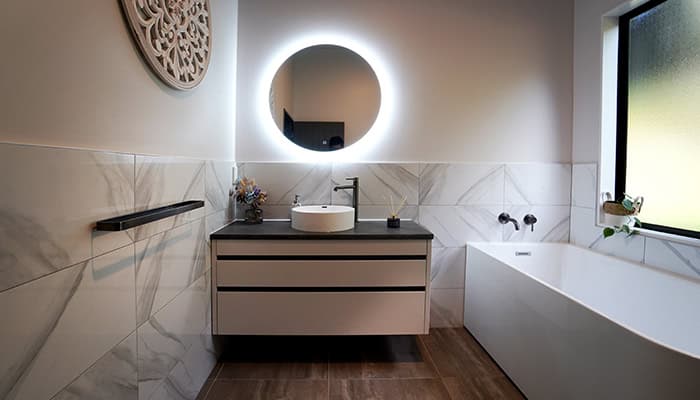
What Is the Most Expensive Part of a Renovation? | NZ 2026 Guide
What Is the Most Expensive Part of a Renovation? A Complete Auckland & NZ Cost Guide (2026)

Picture this: you’ve finally decided to do something about that kitchen. The cupboards are held together with optimism and a couple of old hinges. The bench wipes clean, technically, but it hasn’t looked clean since 2009. You hop online, get a rough number in your head — let’s say $25,000 — and book a consultation feeling pretty sorted.
Then the quote arrives. And suddenly $25,000 seems like a very charming opening bid.
You’re not alone. Every year, thousands of Auckland homeowners face the same reckoning — the gap between what they imagined a renovation would cost and what it actually costs once all the trades, materials, consents, and inevitable surprises are factored in. It’s not because renovators are overcharging. It’s because renovations are genuinely, legitimately complex projects. And understanding where the money goes is the first step to spending it well.
This series is for anyone planning a home renovation in Auckland or wider New Zealand in 2026 — whether you’re tackling a single bathroom, a full kitchen overhaul, or starting to seriously think about a whole-home transformation. We’ve drawn on first-hand project experience, real Auckland cost data, NZ authority sources, and honest input from our design team to give you the clearest, most useful guide to renovation costs available in this market right now.
Quick answer: The most expensive parts of a home renovation in NZ are typically the kitchen (cabinetry, benchtops, appliances), the bathroom (multi-trade complexity, waterproofing, fixtures), labour (40–50% of most budgets), and structural or consent-related work — especially in older Auckland homes where hidden conditions frequently add cost. A 15–20% contingency is strongly recommended for all Auckland renovation projects.
Here’s the breakdown of what we cover in this five-part series:
- Section 1: Why the Kitchen Is Often the Most Expensive Room to Renovate
- Section 2: The Hidden Reason Bathrooms Cost More Than They Look
- Section 3: Labour — The Budget Line That Surprises Everyone
- Section 4: Structural Work & Building Consents: The Costs Hiding Behind Your Walls
- Section 5: Where to Save and Where to Splurge in Your Auckland Renovation
Use the links above to jump to the section most relevant to your project right now — or read the whole thing over a coffee. Either way, you’ll finish knowing exactly where your renovation money goes, and how to make the most of every dollar.
1: Why the Kitchen Is Usually the Most Expensive Room to Renovate in Auckland

Ask any experienced renovation company in Auckland what the single most expensive room to renovate is, and the answer is almost always the same: the kitchen. And yet, clients are consistently surprised when the quotes arrive. It’s not because the numbers are inflated — it’s because kitchens involve more decisions, more trades, more materials, and more potential surprises than virtually any other room in the house.
There’s a reason we often say that a kitchen renovation is really ten renovations happening in the same 12 square metres at the same time. Once you understand why kitchens are expensive, you can make much smarter decisions about where to invest and where to pull back.
What Does a Kitchen Renovation Cost in Auckland in 2026?
Let’s start with the real numbers — drawn from our completed projects across Auckland and aligned with current market rates as of 2026. Auckland consistently runs 10–20% higher than the national average, driven by higher labour demand, higher hourly rates ($120–$150/hour for most trades), and greater compliance costs through Auckland Council.
| Renovation Level | Auckland Cost Range (incl. GST) | Typical Scope |
|---|---|---|
| Budget Refresh | $15,000 – $25,000 | Pre-made cabinets, laminate benchtops, basic appliances, no layout changes |
| Mid-Range Renovation | $30,000 – $50,000 | Custom cabinetry, engineered stone benchtops, mid-range appliances, minor layout tweaks for 10–12m² kitchen |
| Premium / Luxury | $90,000 – $138,000+ | Custom joinery, natural stone, scullery/butler’s pantry, premium European appliances, full layout redesign |
Source: Kitchen Renovation Cost NZ 2026 — Superior Renovations. Per m² estimate: $2,500–$4,000 depending on scope. Always include a 10–15% contingency for surprises.
For context: a small, smart kitchen in Greenlane with neutral tones and clever storage came in at $22,000 for us recently. A modern, open-plan renovation in Avondale with premium stone benchtops and integrated appliances hit $95,000. The range is real — and it’s driven by the choices below.
The Five Biggest Cost Drivers in Any Kitchen Renovation
1. Cabinetry — Often 30–40% of Your Total Budget
This is, more consistently than anything else, the biggest single line item in a kitchen renovation. Custom cabinetry for a typical Auckland kitchen (10–12m²) runs $10,000–$20,000+. Why? Because it’s built specifically to your space, your configuration, and your finish specification — every panel, every hinge, every soft-close drawer. Pre-made flat-pack options can trim this to $3,000–$7,000, but they require compromises in fit and finish that tend to show over time.
Our partners at Little Giant Interiors specialise in precision kitchen cabinetry that genuinely bridges the gap between custom quality and mid-range pricing — worth a look if you’re weighing that decision.

💡 Skimmer’s Tip: Cabinetry is where you get what you pay for. Pre-made saves money upfront but often costs more in replacements or frustration within 5–7 years. If you’re planning to stay in the home long-term, lean toward custom.
2. Benchtops — The Statement Piece That Eats Budget Fast
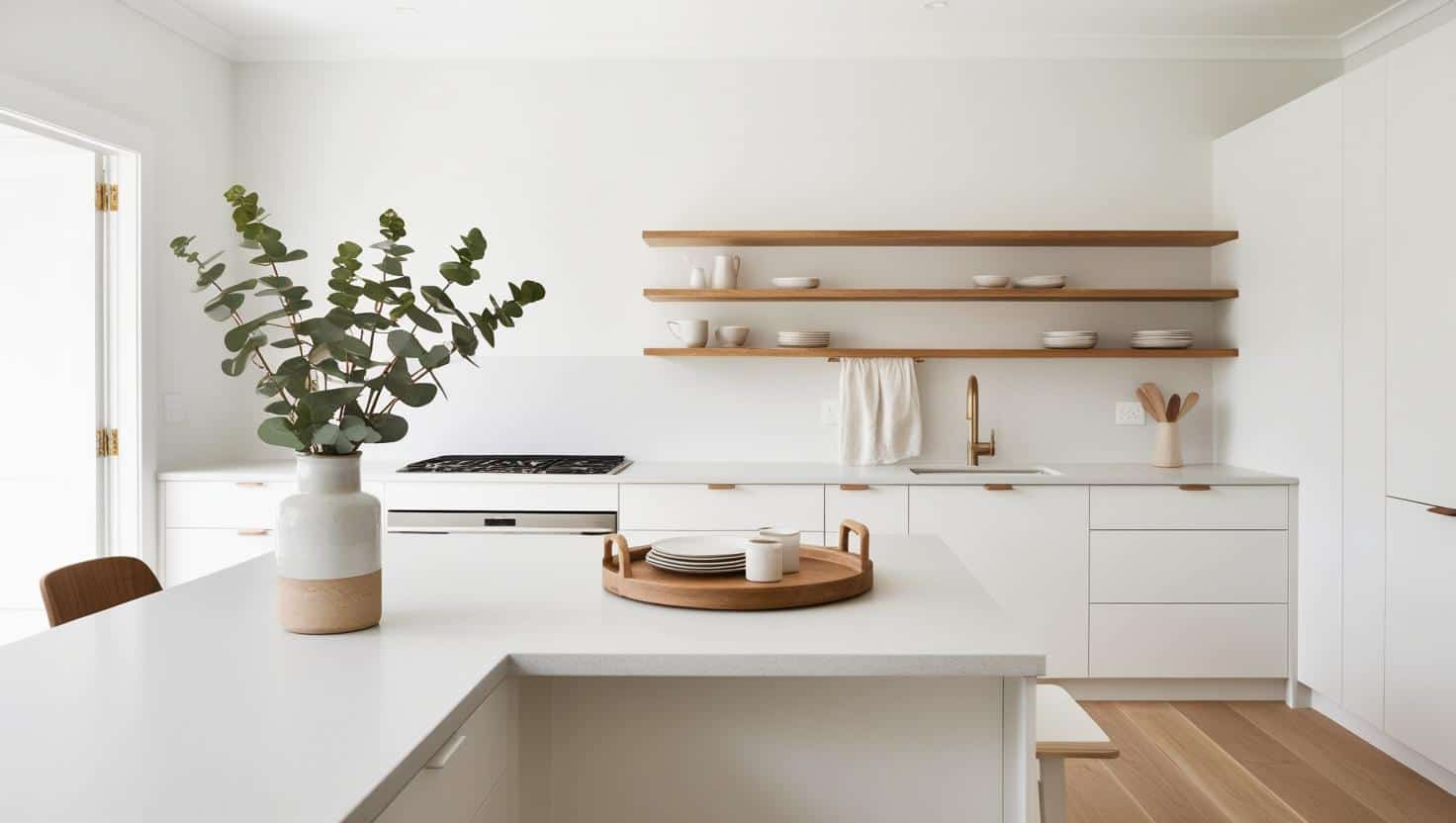
Stone benchtops are having a significant moment in Auckland right now — and for excellent reasons. Engineered stone from suppliers like our partner Caesarstone NZ runs $500–$1,200 per linear metre installed. Natural stone (granite, marble) can reach $1,500/m² and beyond. Laminates from Laminex NZ — which have improved dramatically in quality and realism — sit at $200–$500/m² and offer surprising value at the mid-range.
3. Appliances — Where Budgets Stretch Fastest
Appliances can swing from $2,000 for a basic functional set to $30,000+ if you’re eyeing top-tier European brands. Our partner Harvey Normans – is the place to go if quality appliances matter to you. For energy-conscious Aucklanders, choosing ENERGY STAR–rated appliances also makes long-term financial sense as power costs continue to climb.
4. Layout Changes — The Hidden Cost Multiplier
Keeping your existing plumbing and electrical layout is the single most effective way to control kitchen renovation costs. The moment you start relocating the sink, moving a gas point, or shifting electrical circuits, you trigger a cascade: licensed plumber fees, registered electrician charges, potential building consent requirements through Auckland Council, and additional builder hours to make good the walls and floors behind everything. In Auckland’s stock of older villas and bungalows — think Grey Lynn, Mt Eden, Ponsonby — this cascade can add $2,000–$10,000 to a project’s cost.
According to MBIE’s Building Performance guidance, moving plumbing fixtures requires a building consent. It’s not bureaucracy for its own sake — it’s a compliance requirement that exists to protect you. But it does cost money and time, so plan accordingly.
5. Flooring, Splashbacks & Lighting — The “Finishing” Costs That Aren’t Small
People reliably budget for cabinets, benchtops, and appliances — and then look slightly pale when flooring ($50–$180/m²), splashbacks ($200–$1,500+), and lighting ($500–$3,000+) appear on the invoice. These aren’t optional extras — they’re part of what makes a kitchen feel finished and function well. Our partner Lighting Plus offers an excellent range of architectural kitchen lighting, from under-cabinet strips to statement pendants, that can transform how a kitchen feels without blowing the entire budget.

Why Kitchens Deliver the Strongest Renovation ROI in Auckland
Here’s the important counterweight to all of those costs: kitchens consistently deliver the best return on investment of any renovation project in the Auckland property market. Real estate professionals consistently cite kitchens as one of the top two value-adding renovations (alongside bathrooms), with a well-executed mid-range job capable of returning 60–80% of its cost in added property value — and in some inner-city suburbs, considerably more. A $40,000 kitchen renovation that adds $55,000 to your home’s value isn’t a cost — it’s a strategy.
“The kitchen is where people initially hold back — and then regret it. I always say: if you’re going to live in this home for the next five to ten years, this is the one room where investing in quality materials pays you back every single day — in enjoyment, in function, and in resale value. I’ve seen thoughtful mid-range kitchen investments add $40,000–$80,000 to a home’s value in the right Auckland suburb. The math is almost always better than people expect.”
— Dorothy Li, Interior Designer, Superior Renovations
Want to see what different kitchen budgets actually produce? Browse our Kitchen Design Gallery or use our free Kitchen Renovation Cost Calculator to model your specific project. For a deeper dive into all kitchen cost variables, our Kitchen Renovation Cost NZ 2026 Guide covers everything.
2: The Hidden Reason Bathroom Renovations Cost More Than They Look

Superior Renovations
“It’s just a small room, though.” If there’s one phrase that reliably precedes a budget shock, it’s that one. The bathroom might be the smallest room in your Auckland home — typically 5–12m² — but it’s almost certainly the most complex renovation you’ll ever undertake. More trades, more materials per square metre, more compliance requirements, and more potential for hidden conditions than any other room in the house.
As our Information Pack puts it plainly: “Did you know renovating a bathroom is the most complex renovation of them all? It may sound like a small project considering the space involved, but the reason it’s the most complex is because it involves the most people to get it done.”
That’s not hyperbole. It’s logistics.
What Does a Bathroom Renovation Cost in Auckland in 2026?
Bathroom renovation costs in Auckland have risen approximately 5–8% from 2025 levels, driven by material inflation and continued tradie demand. The national mid-range sits at $18,000–$26,000 — but Auckland’s premium is real and consistent across the board.
| Renovation Level | Auckland Cost (incl. GST) | Typical Scope |
|---|---|---|
| Budget / Cosmetic Refresh | $9,000 – $16,000 | Paint, new fittings, minor tiling — no structural changes or full waterproofing |
| Mid-Range Full Renovation | $26,000 – $35,000 | Full tile replacement, new fixtures, waterproofing, lighting, project management |
| Luxury / Wet Room | $45,000+ | Wet room format, high-end brands, underfloor heating, custom joinery, premium finishes |
Source: Bathroom Renovation Cost NZ 2026 Guide — Superior Renovations. Full overhauls in Auckland can reach $40,000–$60,000. Moody Parnell finishes at the premium end; Henderson Valley matte-black contemporary under $30,000 at the smart mid-range.
Why Does a Tiny Room Cost So Much? Let’s Count the Trades.
A standard full bathroom renovation in Auckland involves coordinating — in the right sequence, in a tight space, on a strict timeline — the following trades: demolition crew, waterproofing specialist, tiler, grouter, plumber, registered electrician, builder, plasterer, painter, and installer. That’s ten separate skill sets. Now imagine fitting them all into 6m² without any one of them causing a day’s delay for the next. That’s the coordination challenge that drives bathroom renovation costs, and it’s why project management isn’t just a convenience — it’s a necessity.
Consumer NZ’s renovation guide notes that even something as seemingly simple as replacing a hand basin and vanity could involve “a plumber, builder, plasterer, painter, tiler, electrician, and floor layer.” For a full bathroom renovation, double that complexity and you’re getting close to reality.
The Cost Items That Catch Auckland Homeowners Off Guard
Waterproofing — Non-Negotiable, Legally Required, and Not Cheap
Waterproofing is mandatory under the New Zealand Building Code for all wet areas. It must be completed by a licensed professional. According to MBIE Building Performance, even replacing or making a new tiled shower area requires a building consent. Skip waterproofing or cut corners, and you risk water damage that can cost tens of thousands to remediate — damage that may not be covered by insurance if it results from non-compliant work.
Budget $1,500–$3,500 for proper waterproofing. Never treat it as optional. Never let a renovator talk you out of it to reduce their quote.
💡 Skimmer’s Tip: If a bathroom renovation quote seems suspiciously cheap, the first thing to check is whether proper waterproofing is included. It often isn’t in low-ball quotes. Ask explicitly.
Tiling — Where Budget and Beauty Collide Most Dramatically
Tiling in a bathroom renovation typically costs $4,000–$9,000, depending on tile size, pattern complexity, and installer skill. Large-format tiles — a dominant 2026 trend in Auckland bathrooms — look stunning but are labour-intensive, requiring precise preparation and experienced hands. Our partners at Tile Depot and Tile Space offer ranges that cover everything from budget-smart ceramic to premium large-format porcelain — the ability to modulate your tile spend is real, and a good designer will help you identify where the visual impact comes from versus where you can save.

Fixtures, Vanity & Tapware — Where Small Decisions Hit Hard
The fixture choices stack up quickly: floating vanity ($1,000–$6,000), freestanding bath ($2,500–$10,000+), frameless glass shower screen ($1,200–$3,500), toilet ($500–$3,500), heated towel rail ($400–$1,500). Our partners at Reece New Zealand carry an exceptional premium range of bathroom fixtures and tapware — their Auckland showrooms are genuinely worth visiting before you finalise your fixture specification, because seeing and touching the products makes a real difference to the decisions you make. For quality at competitive prices, our partner Mico Plumbing is our preferred go-to for plumbing fixtures across a range of budgets.


The Old Auckland Home Problem — What Lives Inside Your Walls
Auckland has a wealth of beautiful character homes — the timber-framed villas of Ponsonby, the bungalows of Mt Eden, the interwar homes of Epsom. Renovating them is rewarding. It can also be humbling. Pre-1990 homes in particular are known to contain asbestos (in floor vinyl, wall texture, ceiling tiles, and sometimes roof cladding), outdated plumbing that needs upgrading before new fixtures can be installed, and electrical wiring that isn’t up to current code. Opening a bathroom in a 1965 Remuera bungalow has surprised us more times than we can count — and every surprise adds to the cost.
The Consumer NZ renovation guide advises thorough pre-renovation assessment precisely for this reason. Budget a 15–20% contingency for any bathroom renovation in a pre-1980 Auckland home. It’s not pessimism — it’s the single most reliable form of renovation budget protection available to you.
“Clients often arrive with a beautiful bathroom photo and a number they’ve found online. My job isn’t to crush their vision — it’s to help them understand what that vision actually requires, and where the smart trade-offs are. A bathroom renovation in Auckland at $15,000 is absolutely achievable. But it means making targeted, deliberate choices: keep the layout, choose quality mid-range tiles, and prioritise the fixtures you touch every single day. The rest is details — beautiful details, but details.”
— Alison Yu, Interior Designer, Superior Renovations
Does Renovating a Bathroom Add Value in Auckland?
Consistently and reliably — yes. Bathrooms and kitchens are the two rooms property buyers examine most closely, and a dated bathroom can hold back an otherwise good home. A thoughtful mid-range bathroom renovation adds meaningful resale appeal, particularly when it improves usability through features like a double vanity, a larger shower, or better storage. As one NZ industry source notes, mid-range bathroom renovations can significantly boost resale appeal in our market.
For more inspiration, explore our Bathroom Design Gallery. And if budget is a real constraint, our honest guide on renovating a bathroom for $10,000 in NZ walks through what’s genuinely achievable at that price point. We also have an extensive guide on small bathroom renovation layouts, costs and designs for those working with compact spaces.
3: Labour Costs in NZ Renovations — The Budget Line Everyone Underestimates

Here’s something that surprises almost every first-time renovator: the most expensive single category in most renovation budgets isn’t the kitchen cabinets, the stone benchtop, or even the bathroom tiles. It’s the people. The plumbers, electricians, tilers, builders, waterproofers, painters, plasterers, and project managers who make the whole thing actually happen — legally, safely, and to a standard that will last.
In Auckland in 2026, labour typically accounts for 40–50% of most residential renovation budgets. For bathroom renovations specifically — where more specialist trades work in less space — that proportion can push 50–60%. Understanding why helps you budget more accurately, get better quotes, and appreciate what “value” actually means in a renovation context.
What Do Tradespeople Actually Charge in Auckland in 2026?
| Trade | Typical Auckland Rate (2026) | Key Notes |
|---|---|---|
| Licensed Plumber | $100 – $140/hour | Legally required for all plumbing work under the Plumbers, Gasfitters and Drainlayers Act |
| Registered Electrician | $100 – $130/hour | All electrical work must be completed by a registered electrician — non-negotiable in NZ |
| Tiler | $60 – $120/hour | Experience-dependent; complex patterns and large-format tiles at the higher end |
| Builder / Carpenter | $80 – $120/hour | LBP required for Restricted Building Work (structural/weathertightness) |
| Painter / Plasterer | $60 – $90/hour | Premium finishes at the higher end |
| Waterproofing Specialist | $70 – $100/hour + materials | Must be licensed; often minimum call-out charges apply |
| Project Manager | Included in renovation company fee or 10–15% of project cost | Coordinates sequencing, quality, communication — not optional for complex renovations |
These are real Auckland rates in 2026 — not estimates. They reflect the current labour market, where skilled tradespeople remain in strong demand following the post-COVID construction boom. Industry data confirms that labour costs make up 40–50% of total renovation budgets, with urban areas consistently at the higher end.
Why These Aren’t Optional Costs — The Legal Reality
In New Zealand, plumbing, electrical, and gasfitting work must legally be carried out by licensed or registered professionals. This isn’t red tape — it’s protection for you, your family, and anyone who buys your home later. The MBIE Building Performance guidelines are clear on this: using an unlicensed operator for restricted building work means your consent is invalid, your insurance may be void, and you’ll face serious complications if you try to sell. Consumer NZ advises always verifying licences through public registers (lbp.govt.nz for builders, pgdb.co.nz for plumbers). It’s a two-minute check that matters.
And beyond legality — licensed tradespeople bring warranties, accountability, and faster execution. They’ve done this before, specifically and repeatedly. That experience is genuinely worth paying for.
The Coordination Problem: Why Labour Costs Are Higher Than the Hours Suggest
Labour costs in renovations aren’t purely about hourly rates. They’re also about the cost of getting all those trades in the right place, in the right order, at the right time. A bathroom renovation can involve 10 different trades. A kitchen renovation, 6–8. A full home renovation, 20 or more. Get the sequencing wrong — tilers can’t start until waterproofing is done, painters can’t finish until plumbers are done, cabinetry can’t go in until the floor is right — and one delayed trade cascades into a week of downtime for everyone else.
This is precisely why Consumer NZ notes that managing trades yourself “can still be a huge time commitment” and that the lack of control over subcontractors when there’s no main contractor means “they can’t guarantee subbies will turn up when required.” The coordination overhead is real — and it’s a large part of what you’re paying for when you engage a renovation company with a dedicated project manager.
“Labour is the last place you want to be cutting corners, and honestly, it’s often the first place people look when a quote comes in higher than expected. I’ve seen homeowners save $3,000 by hiring an uncertified tiler, then spend $8,000 fixing waterproofing failure eight months later. The trades we use are vetted, licensed where required, and they know how to work as a coordinated team within a tight space and schedule. That coordination is where the real value comes from — not just in quality, but in time.”
— Cici Zou, Designer & Project Coordinator, Superior Renovations
Renovation Company vs. Managing Trades Yourself: An Honest Comparison
| Factor | Renovation Company (Fixed Price) | DIY Trade Management |
|---|---|---|
| Budget certainty | ✅ Fixed quote before work starts | ❌ Highly variable — charge-up risk |
| Trade coordination | ✅ Project manager handles all sequencing | ❌ Your time, your stress, your risk |
| Compliance assurance | ✅ LBPs, licensed plumbers/electricians managed | ⚠️ Your responsibility to verify |
| Material pricing | ✅ Trade relationships = better prices | ❌ Retail prices |
| Time commitment from you | ✅ Minimal — single point of contact | ❌ Effectively a part-time job |
| Post-completion support | ✅ Guarantees, warranties, ongoing PM access | ❌ You’re on your own with each trade |
💡 Skimmer’s Tip: Always insist on a fixed-price contract rather than a charge-up (hourly) arrangement. Fixed prices protect you from budget blowouts. Every Superior Renovations project starts with a detailed fixed proposal — no surprises, no “we’ll figure it out as we go.”
Learn more about how Superior Renovations’ project management approach works at our Auckland house renovation page, or see how previous clients experienced the process in our video testimonials.
4: Structural Work & Building Consents — What’s Hiding Inside Auckland’s Walls
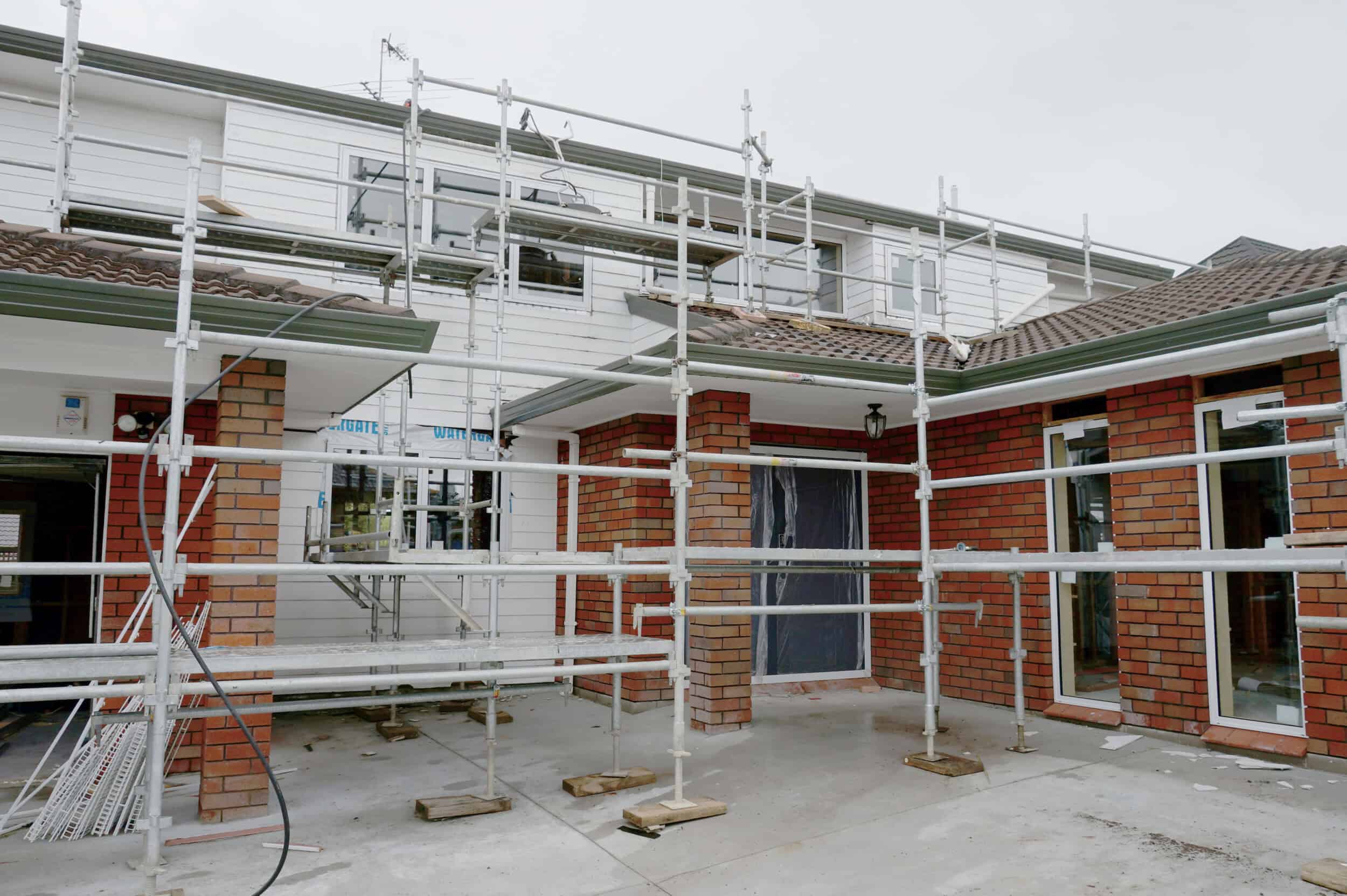
You’ve budgeted for materials. You’ve factored in labour. You’ve added a contingency. And then, somewhere mid-project, someone says the sentence no renovator wants to hear: “We’re going to need a building consent for that.”
Or worse: “There’s asbestos behind the wall.”
Structural work and building consents are among the most misunderstood — and most consistently underbudgeted — aspects of home renovation in Auckland. They can add thousands to a project, or tens of thousands. Understanding when they apply and what they cost is genuinely important for anyone planning a renovation in this market.
When Does a Renovation Require a Building Consent in Auckland?
Not all renovation work requires a building consent. But more of it does than most homeowners realise — particularly in Auckland, where Auckland Council compliance requirements are among the more stringent in the country.
According to MBIE’s Building Performance guidance, you generally need a building consent if your renovation involves:
- Structural building work — including additions, alterations, some demolition, and re-piling
- Adding new plumbing fixtures (toilet, basin, shower, sink) — not just replacing like-for-like
- Replacing or creating a new tiled shower area
- Removing or altering load-bearing walls
- Electrical consumer board changes or major electrical alterations
- External wall insulation installation
- Changes to the external footprint of the building
You can check whether your specific project needs consent using Auckland Council’s building and renovation consents guidance, or the MBIE’s own tool at canibuildit.govt.nz. For Kitchen and bathroom-specific consent requirements, Auckland Council has dedicated guidance at their building and renovation projects page.
Important to know: if you carry out building work that requires consent without getting one, you may be fined up to $200,000 — and a further $10,000 for every day the work continues. Beyond the legal risk, unconsented work makes insurance complicated and creates serious issues when you try to sell. Don’t risk it.
For a good summary of the 2025 reforms that eased some consent requirements (including granny flat exemptions up to 70m²), read our blog on eased building consents in NZ 2025.
How Much Do Building Consents Actually Cost in Auckland?
| Cost Category | Estimated Auckland Cost (2026) |
|---|---|
| Building consent application deposit (lodging) | $2,000 – $4,000 |
| Processing & inspection fees (Auckland Council) | $150 – $250 per hour |
| Total consent budget for a standard residential renovation | $5,000 – $12,000 |
| Engineering / architectural drawings (if required) | $2,500 – $8,000+ |
| Kitchen or bathroom consent specifically | $2,500 – $6,500 |
Note that Auckland Council’s processing times and fees are set independently, and MBIE guidelines note councils have up to 20 working days to process applications — though poor or incomplete applications extend this timeline. A well-prepared, complete application submitted through an experienced renovation company moves significantly faster than one put together piecemeal.
Structural Work — Where Renovation Budgets Can Really Stretch
Structural changes are where renovation budgets face their biggest tests. Opening a wall, adding a structural beam, reconfiguring a floor plan — these are not cosmetic tasks. In an older Auckland character home, what starts as a “quick structural fix” can rapidly become a $15,000–$40,000 engineering exercise, particularly if the structure reveals unexpected conditions once opened.
The specific risks for Auckland homeowners include:
- Load-bearing wall removal requires a structural engineer’s assessment ($1,500–$4,000), consent drawings, the physical structural work, and Council sign-off. Doing this without the right people is legally a Restricted Building Work matter — requiring a Licensed Building Practitioner (LBP).
- Asbestos is present in a significant proportion of Auckland homes built before 1990 — in floor vinyl, ceiling tiles, wall texture (Gibraltar board), and some roof products. Professional testing costs relatively little ($200–$500 per sample); professional removal costs $1,500–$10,000+ depending on extent and location.
- Subfloor and framing rot is endemic in Auckland’s timber-framed housing stock, particularly in character homes that have experienced moisture issues over decades. Uncovering this mid-renovation adds builder hours, materials, and sometimes further structural assessment.
- Outdated electrical switchboards — pre-1980 homes often have consumer boards that need upgrading to handle modern loads, particularly when adding heat pumps, underfloor heating, or high-draw kitchen appliances. Budget $1,000–$2,500 for a switchboard upgrade if your home is pre-1980.
“Structural surprises in older Auckland homes are a ‘when,’ not an ‘if.’ I always tell clients before we start: plan to find something unexpected, and budget for it. The clients who go into their renovation with a realistic contingency feel in control when we hit a surprise — because we handle it quickly and move on. The clients who’ve budgeted every last dollar with no buffer are the ones who feel the stress most acutely. The contingency isn’t pessimism. It’s the single most valuable line item in your renovation budget.”
— Eunice Qin, Design Consultant, Superior Renovations
Insulation — A Renovation-Adjacent Cost Worth Knowing About
New Zealand has increasingly strong insulation standards for residential properties, particularly for rentals. Many Auckland homeowners who are already doing a significant renovation choose to upgrade insulation at the same time — it’s cost-effective to do while walls are open, and EECA (Energy Efficiency and Conservation Authority) notes that good insulation reduces heating costs significantly over a home’s life. Our comprehensive guide to insulating your home in NZ covers costs, rules, and eco-friendly options in detail. Visit eeca.govt.nz for information on current energy efficiency guidance and potential government support.
💡 Skimmer’s Tip: If your project involves any structural changes, consent work, or pre-1980 homes, get a pre-renovation assessment before you commit to a final budget. Superior Renovations offers a free feasibility report that identifies these issues and costs before you’re contractually committed — saving the unpleasant mid-project surprise.
5: Where to Save and Where to Splurge — A Real Auckland Homeowner’s Guide

Luxury Bathroom Design – Redvale

Luxury Bathroom Design – Redvale
By now you have a clear picture of where renovation money goes. But knowing the cost drivers doesn’t automatically tell you how to make the best decisions with a finite budget. That’s what this section is for.
The goal here isn’t to cut every corner you can find — it’s to spend strategically. Putting money into the things that last, perform well over time, add genuine resale value, and improve your daily experience. And saving intelligently on the things that don’t need to cost what you might assume they do.
The Golden Rule of Renovation Budgeting in Auckland
Don’t overcapitalise. This is the most consistent piece of advice from experienced renovation professionals and real estate agents alike: don’t spend significantly more on renovations than the resulting improvement in property value justifies for your specific home in your specific suburb.
A useful rule of thumb: keep your total renovation investment for any single project within 10–15% of your home’s current market value. Spend $100,000 renovating a kitchen in a $600,000 home and the maths rarely works in your favour. Spend $45,000 on the same kitchen in a $1.4M Herne Bay home? A very different conversation. As our guide to Auckland renovation ideas that add value explains, the suburb and the home’s current standing in that market matter enormously to ROI calculations.
Where to Splurge: The Investments Worth Making
1. Waterproofing — Every Single Time, Without Exception
We’ve said it twice already in this series, and here it is a third time because it matters that much: never cut costs on waterproofing. Water ingress is the most destructive long-term threat to an Auckland home, and the damage is almost always invisible until it’s very expensive. Proper waterproofing in a bathroom costs $1,500–$3,500 and protects a $25,000+ renovation investment for decades. Inadequate waterproofing can fail in months and cost far more to remediate than you saved. MBIE’s Building Code requires it for a reason. Honour that requirement fully, not minimally.
2. Benchtop Quality in the Kitchen
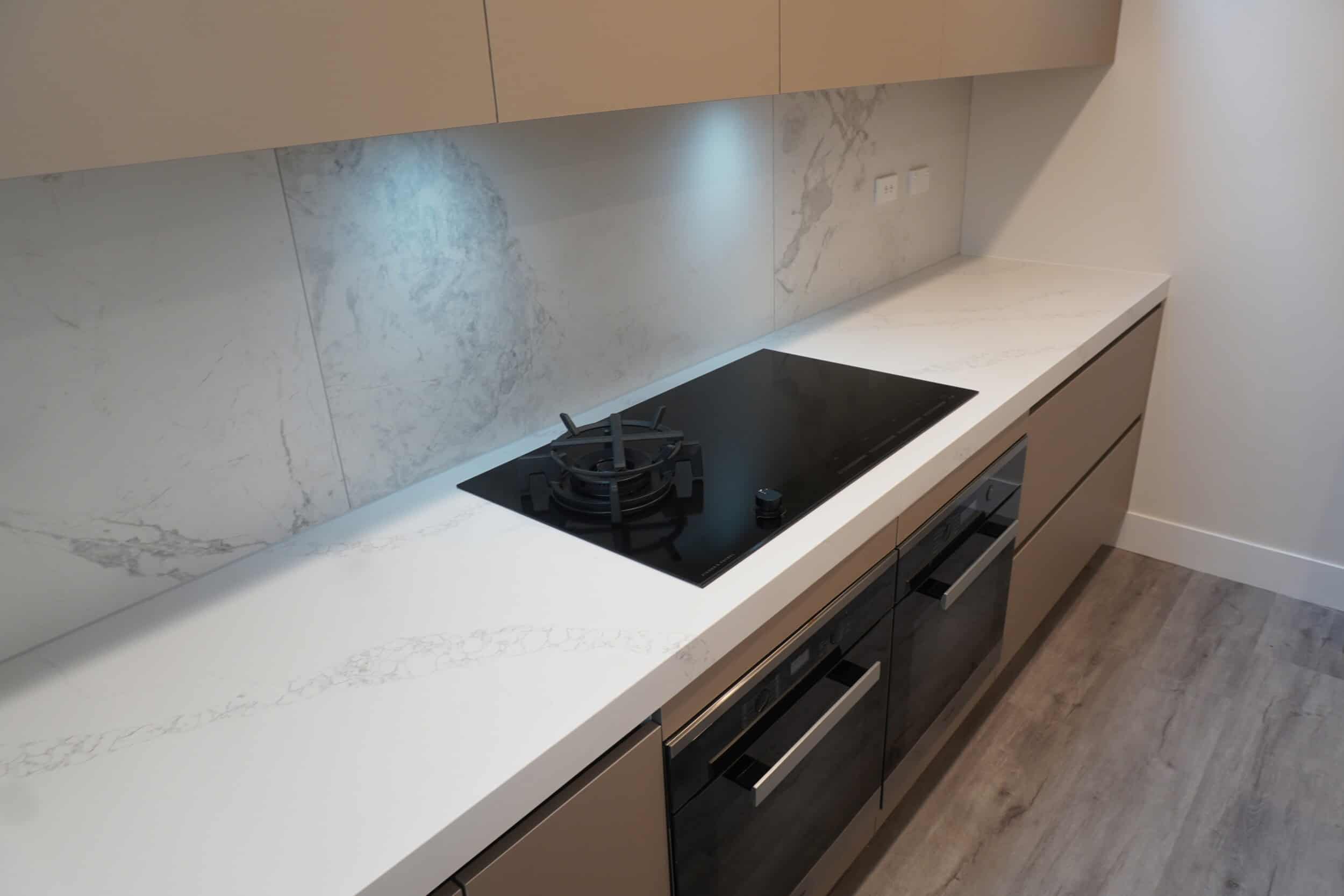
Your kitchen benchtop takes more daily punishment than almost anything else in your home — heat, weight, water, cutting, spills. This is not the place to save $200/m² and regret it within two years. Stone products from Caesarstone NZ are built to last decades and look genuinely better with age in the right environment. If stone isn’t in budget, premium laminates from Laminex NZ have improved so substantially that the quality gap between stone and a well-chosen Laminex finish is far smaller than it used to be — at significantly lower cost.
3. The Fixtures You Interact With Every Day
The taps, the shower mixer, the toilet flush, the drawer handles — these are the things you touch every single day of your life in the renovated space. Quality here pays dividends in pleasure, reliability, and durability. Tapware from our partners Reece NZ and Mico Plumbing is designed for NZ conditions — water pressure, water chemistry, and the humidity patterns Auckland’s climate creates. Cheaper imported tapware may save money on day one and cost far more in replacement and repair by year three.
4. Professional Project Management
Coordinating 8–10 trades yourself in a tight Auckland renovation timeline is, by most accounts, a recipe for stress, unexpected costs, and a timeline that slips well beyond what you planned. The cost of professional project management — built into a renovation company’s fixed price — is one of the most reliably worthwhile investments you can make. It pays for itself in time, in avoided mistakes, and in the certainty of a fixed budget. Read our client testimonials to see how Auckland homeowners consistently describe the value of having one clear point of contact throughout their renovation.
Where to Save: Smart Decisions That Don’t Compromise Quality
1. Keep the Existing Layout
This is the most powerful single budget decision available to any Auckland homeowner planning a kitchen or bathroom renovation. Moving your kitchen sink to the other side of the bench — visually appealing on Instagram, ruinously expensive in practice. Moving a toilet 500mm to improve flow — easily $2,000–$5,000 in plumbing work alone. Every time you move a plumbing point or electrical circuit, you’re paying licensed professionals for time, potentially triggering a consent requirement, and opening up walls that will then need to be made good. Unless you have a compelling functional reason to move something, don’t. A good designer can make any existing layout feel significantly better without moving a single pipe.
2. Mid-Range Appliances Over High-End (for Most Kitchens)
Unless you are a serious home cook who will genuinely use every capability of a premium induction hob or steam oven — and there are people who will — the performance gap between a $15,000 Miele range and a quality $3,500 mid-range equivalent is not $11,500 worth of daily difference. Our partners at Harvey Norman Commercial Division offer an excellent range of mid-tier appliances that deliver solid performance, look premium, and don’t consume your entire appliance budget on a single item.

3. Strategic Tile Selection — Spend on Focal Points, Save on Secondaries
Tiles don’t all need to be the same price. In a bathroom, the feature wall behind the bath or the shower floor is where the eye goes — invest here. The walls on the secondary sides of the space? This is where a quality mid-range tile from Tile Depot or Tile Space does the same visual job at a meaningfully lower cost. A skilled designer will tell you exactly where the tile spend matters and where it doesn’t.
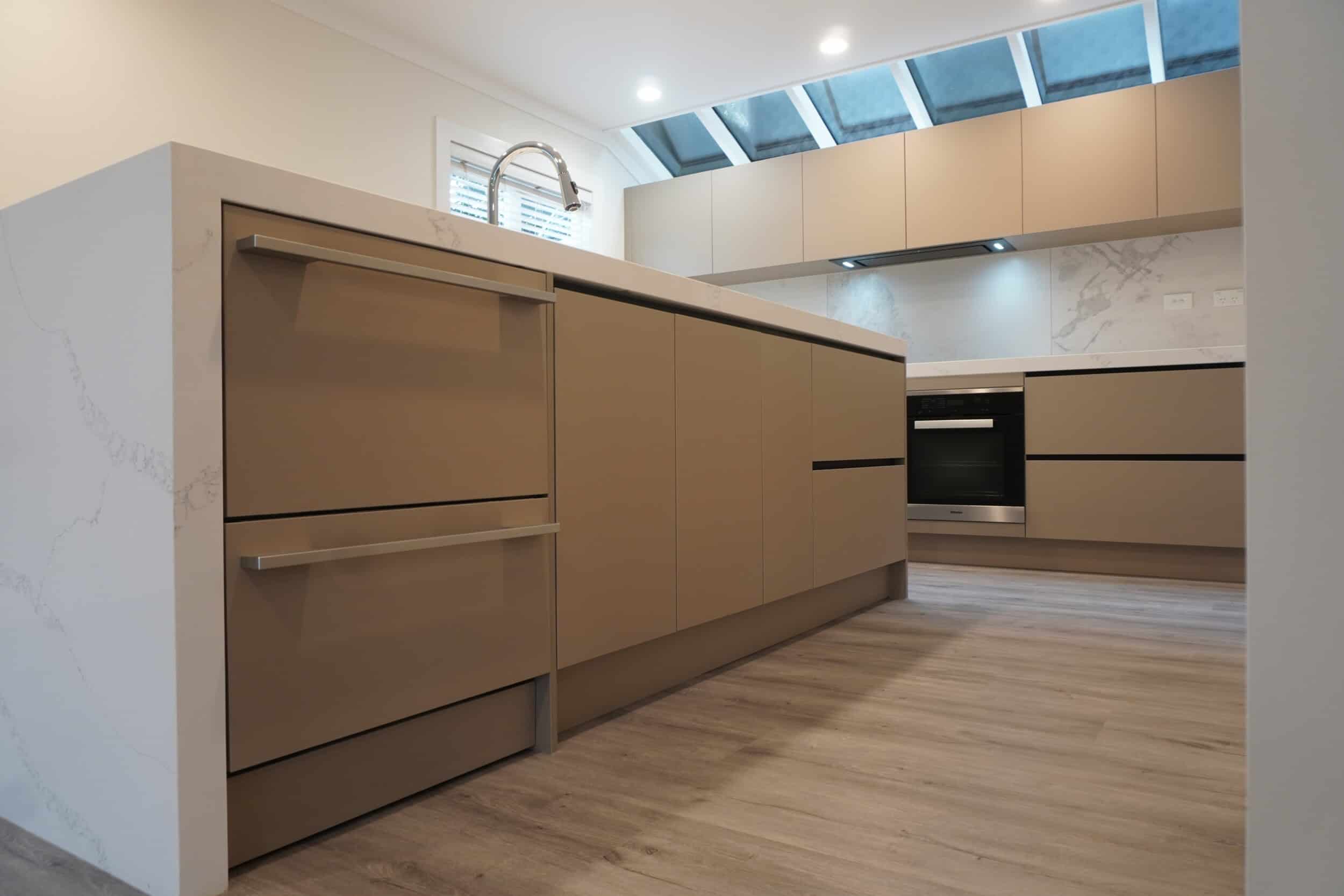
4. Respraying Cabinets Instead of Replacing (When Structurally Sound)
If your existing kitchen cabinets are structurally solid — just dated in colour or finish — a professional cabinet respray with quality paint from our partner Dulux NZ can transform a kitchen for $500–$2,000, rather than $10,000+ for full replacement. Same potential applies to bathroom vanities in some cases. An experienced designer will give you an honest assessment of which cabinets are worth painting and which genuinely need replacing. Don’t assume replacement is the only option.
 5. Smart Renovation Financing
Sometimes the smartest renovation decision is financial rather than material. Many Auckland homeowners are now accessing their home equity through renovation financing to fund projects without depleting savings or artificially constraining scope. Our partner Loan Market specialises in helping homeowners find the most cost-effective financing structure for renovation projects. Explore our Finance Options page for interest-free and low-rate options available through Superior Renovations.
The Renovation Decision Framework — Is It Worth It?
| Decision Point | Verdict | Why |
|---|---|---|
| Stone benchtop vs. premium laminate | ⚖️ Both are valid — budget decides | Stone lasts longer, looks more premium; Laminex saves $500–$1,000/m² |
| Premium tiles on all surfaces | 💰 Save — tile strategically | Invest in feature/focal areas; save on secondary surfaces |
| Moving plumbing layout | 💰 Save — keep the layout if possible | $2,000–$10,000 in avoidable cost for minimal visual impact |
| Professional project management | ✅ Splurge — always worth it | Saves time, stress, mistakes, and often money through better coordination |
| High-end vs. mid-range appliances | 💰 Save on most items | Performance gap rarely justifies 4x price difference for typical household |
| Waterproofing quality | ✅ Never, ever cut corners | Failure costs 5–10x the savings, may void insurance |
| Custom vs. pre-made cabinetry | ⚖️ Depends on longevity plan | Custom for long-term homes; pre-made saves $5,000–$10,000+ for shorter horizons |
| Cabinet replacement vs. respray | 💰 Respray if structurally sound | $500–$2,000 vs. $10,000+ — huge saving, similar visual result |
💡 Skimmer’s Tip: Use Superior Renovations’ free Renovation Cost Estimate Tools to model different scenarios before committing. And for a complete understanding of what you can achieve at your specific budget, our free Feasibility Report gives you a realistic picture before you’re committed to anything.
Conclusion: The Most Expensive Part of a Renovation Is the One You Didn’t Plan For
So — what is the most expensive part of a renovation?
The honest, complete answer is that it depends on what you’re doing, where you live, and what you find when the walls come open. But if we’re talking about the consistent, reliable budget-drivers for Auckland homeowners in 2026, the list looks like this:
- The kitchen — particularly custom cabinetry, quality benchtops, layout changes, and appliances
- The bathroom — driven by multi-trade complexity, mandatory waterproofing, fixtures, and tiling
- Labour — 40–50% of almost every renovation budget, legally non-negotiable for licensed trades
- Structural and consent work — often the largest single surprise, especially in pre-1980 Auckland character homes
- Hidden conditions — asbestos, rot, old wiring, subfloor issues — the unavoidable unknown in older homes
The encouraging truth is that every one of these costs is manageable with the right planning, the right partner, and a realistic contingency. The Auckland homeowners who come through their renovations feeling genuinely in control — and genuinely happy with the result — are, almost without exception, the ones who went in with clear eyes, engaged a trusted renovation company, fixed their price before work started, and built a realistic buffer for the unexpected.
At Superior Renovations, we’ve been navigating these costs across Auckland for years. We know where the surprises live, how to plan around them, and how to deliver a renovation that genuinely meets the brief — without the stress, the budget blowouts, or the coordination chaos that characterises so many Kiwi renovation stories.
Ready to find out what your renovation actually looks like — and what it actually costs? Book a free consultation with our team, or start with our free Feasibility Report. You can also reach us on 0800 199 888.
Have questions about your specific situation? Drop them in the comments below — we genuinely read them and love helping Auckland homeowners figure this stuff out before they’re committed to a path.
Frequently Asked Questions: Renovation Costs in Auckland & New Zealand (2026)
What is the most expensive part of a home renovation in NZ?
The most expensive parts of a home renovation in New Zealand are typically the kitchen and bathroom, due to the number of specialist trades required (plumbers, electricians, tilers, waterproofers), the cost of cabinetry and fixtures, and — in Auckland — significantly higher-than-average labour rates. Labour alone accounts for 40–50% of most renovation budgets. Structural work and building consent costs are also major contributors, especially in Auckland's older character homes.
Why is bathroom renovation so expensive in Auckland?
Bathroom renovations are expensive because they involve the highest density of specialist trades in the smallest space — typically 10 different trades in a single project. Waterproofing (legally required under the NZ Building Code), tiling, licensed plumbing, and registered electrical work are all mandatory, not optional. Labour alone is 40–60% of the total cost. Auckland's higher hourly rates ($90–$140/hour for most trades) add a further premium over national averages.
Why is kitchen renovation so expensive?
Kitchen renovations are expensive because they combine high-cost components — custom cabinetry ($10,000–$20,000+), stone benchtops ($500–$1,200/m²), appliances ($2,000–$30,000+), and finishing elements — with licensed trade labour. Layout changes trigger further costs through plumbing and electrical work, and potentially building consents. In Auckland, labour runs $120–$150/hour and makes up 40–50% of the budget.
How much does a kitchen renovation cost in Auckland in 2026?
A mid-range kitchen renovation in Auckland costs approximately $30,000–$50,000 in 2026. Budget refreshes start at $15,000–$25,000. Premium or luxury renovations reach $90,000–$138,000+. Auckland runs 10–20% higher than the national average due to demand, labour costs, and compliance requirements. Always include a 10–15% contingency.
How much does a bathroom renovation cost in Auckland in 2026?
A mid-range full bathroom renovation in Auckland costs approximately $26,000–$35,000 in 2026, up 5–8% from 2025 due to material and labour inflation. Budget cosmetic refreshes start at $9,000–$16,000. Luxury wet room renovations start from $45,000. The national mid-range is $18,000–$26,000.
When do I need a building consent for a renovation in Auckland?
You need a building consent in Auckland for structural alterations, adding new plumbing fixtures, creating or replacing a tiled shower area, removing load-bearing walls, major electrical alterations, or changing your home's external footprint. Like-for-like replacements generally don't require consent.
What are the hidden costs of renovation in Auckland?
Common hidden renovation costs in Auckland include: asbestos removal in pre-1990 homes ($1,500–$10,000+), subfloor and framing rot repairs, electrical switchboard upgrades ($1,000–$2,500), building consent fees ($5,000–$12,000), structural engineering reports ($1,500–$4,000), and post-consent inspection fees. Budget a 15–20% contingency for all Auckland renovations, rising to 25% for character homes built before 1980.
What percentage of a renovation budget goes to labour in NZ?
Labour typically accounts for 40–50% of a standard renovation budget in NZ, and up to 60% for bathrooms specifically. Auckland trades charge $90–$150/hour depending on the trade. Licensed plumbers and electricians are legally required for plumbing and electrical work — these are non-negotiable costs under NZ law.
How can I reduce renovation costs in Auckland without compromising quality?
The most effective strategies: keep your existing plumbing layout (saves $2,000–$10,000), bundle multiple rooms into one project (shared trade mobilisation), choose mid-range appliances, use quality laminates where premium stone isn't necessary, consider cabinet respraying over replacement, and engage a renovation company with established supplier relationships for trade pricing on materials. Never cut costs on waterproofing, licensed trades, or structural compliance.
Does a kitchen or bathroom renovation add value in Auckland?
Yes — consistently. Kitchens and bathrooms are the two rooms Auckland property buyers examine most closely. A well-executed mid-range kitchen renovation can add $40,000–$80,000 to property value in the right suburb. Keep total renovation spend within 10–15% of your home's current market value to avoid overcapitalising.
How long does a kitchen or bathroom renovation take in Auckland?
A standard bathroom renovation takes 3–4 weeks with professional project management (no structural changes or consents required). A kitchen renovation typically takes 4–6 weeks. Full home renovations can run 3–6+ months. Consent-dependent work adds 4–8+ weeks to any timeline. Delays from hidden conditions (asbestos, old plumbing) should be expected in pre-1980 homes.
What renovation finance options are available in NZ?
Auckland homeowners can access renovation finance through mortgage top-ups, home equity loans, and specialist renovation lending. Superior Renovations works with Loan Market to offer interest-free and low-rate options. Explore at superiorrenovations.co.nz/finance-options/.
This guide is written by the design and project management team at Superior Renovations — Auckland’s specialist residential renovation company. With hundreds of completed projects across Auckland, from Remuera to West Harbour and Grey Lynn to Albany, every cost figure and recommendation in this series reflects genuine, first-hand project experience.
Further Resources for your house renovation
- Featured projects and Client stories to see specifications on some of the projects.
- Real client stories from Auckland
Need more information?
Take advantage of our FREE Complete Home Renovation Guide (48 pages), whether you’re already renovating or in the process of deciding to renovate, it’s not an easy process, this guide which includes a free 100+ point check list – will help you avoid costly mistakes.
Download Free Renovation Guide (PDF)
Still have questions unanswered?
Book a no-obligation consultation with the team at Superior Renovations,
we’d love to meet you to discuss your renovation ideas!
Or call us on 0800 199 888
Have you been putting off getting renovations done?
We have partnered with Q Mastercard ® to provide you an 18 Month Interest-Free Payment Option, you can enjoy your new home now and stress less.
Learn More about Interest-Free Payment Options*
*Lending criteria, fees, terms and conditions apply. Mastercard is a registered trademark and the circles design is a trademark of Mastercard International Incorporated.


0 comments
Write a comment