

Bathroom Ventilation NZ: Stop Mould For Good
Last updated:
Bathroom Ventilation NZ: How to Stop Mould Before It Starts
Quick answer: Good bathroom ventilation in NZ means an externally-ducted extractor fan rated for your room size (at least 25 litres per second), used every time you shower and left running for 15–20 minutes after. That alone stops most bathroom mould. When mould keeps returning despite a working fan, it usually points to a waterproofing or grout failure — a renovation problem, not a ventilation one.
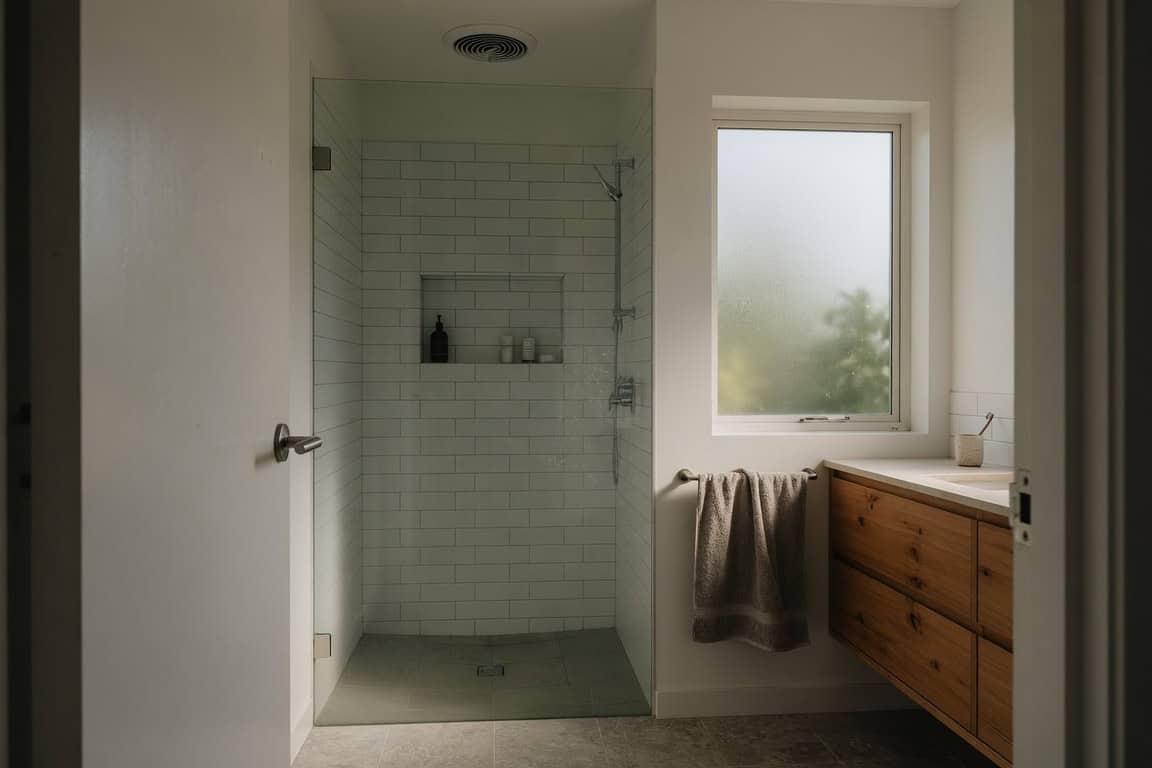
If you wipe condensation off the mirror most mornings, or you’ve scrubbed the same black patch out of the ceiling corner three times this winter, your bathroom has a ventilation problem. And in a lot of older Auckland homes, it’s not your fault — the bathroom was built before anyone took moisture seriously.
This guide walks through why NZ bathrooms mould up so readily, how to actually fix it (fan sizing included, properly), and how to tell the difference between a problem you can sort with a $200 fan and one that needs the wall opened up.
Why NZ Bathrooms Get Mould (And Why It’s Worse Here)
Free cost calculator
How much will your bathroom renovation cost?
Answer a few questions and we’ll email you an Auckland price range.
Mould needs three things: moisture, a surface to grow on, and time. A bathroom hands it all three on a plate. A single 10-minute shower can put the equivalent of a full spray bottle of water into the air of a small bathroom — and in a sealed-up room with no extraction, that moisture has nowhere to go but onto your walls, ceiling, and grout lines.
New Zealand makes this harder than most countries. Our average outdoor humidity sits high, our winters are damp, and we heat our homes less consistently than colder countries that build for it. So the air outside is already moist, and the air inside cools down enough overnight for that moisture to condense out onto cold surfaces. That’s the film you find on the window and the mirror.
Older Auckland housing stock is the usual culprit
The bathrooms that mould the worst tend to share a few traits, and we see them constantly across the city.
The pre-1940s villas and bungalows in Grey Lynn, Mt Eden and Ponsonby often have single-skin construction and a small bathroom that was carved out of an existing room decades ago — frequently with no extractor fan at all, or a window that’s painted shut. The 1970s and 80s brick-and-tile homes common through West and South Auckland tend to have internal bathrooms with no external wall and a fan that vents into the roof cavity rather than outside — which is worse than useless, because it just dumps the moisture onto your roof timbers.
Then there’s the no-window ensuite, which shows up in every era. If there’s no window and no working fan, that room cannot dry out. Simple as that.
💡 Quick tip: Check where your existing fan actually vents. Pop into the roof space and look — if the ducting is disconnected, kinked, or just blowing into the cavity, your fan is doing nothing for your mould problem. This is the single most common fault we find.
“People assume a mouldy bathroom means they’re not cleaning enough. Nine times out of ten it’s a ventilation issue, not a hygiene one. If the room can’t dry itself out between showers, no amount of scrubbing will keep mould away — it’ll be back within a fortnight.”
— Cici Zuo, Head of Sales, NZ Dip. Interior Design, Superior Renovations
Getting the Extractor Fan Right: Sizing, Type, and Controls
The extractor fan is the workhorse of bathroom ventilation, and most of the ones we pull out were the wrong size or wrongly installed. Getting this right is the bit that actually fixes the problem.
How to size a bathroom extractor fan
Fans are rated by how much air they move, in litres per second (L/s) or cubic metres per hour (m³/h). The goal is to swap the air in the room often enough to clear the moisture — bathrooms need a high air-change rate because the moisture load is so concentrated.
The practical method: measure your bathroom’s volume (length × width × height in metres = cubic metres), then choose a fan that can turn that air over roughly 10–15 times an hour. For a typical 6m³ Auckland bathroom that works out to a fan moving at least 25 litres per second — and for anything larger, or an ensuite with a separate shower, you want to step up to 60 L/s or more. Undersizing is the classic mistake. A whisper-quiet little fan that can’t shift the air is just decoration.
| Bathroom size | Approx. volume | Minimum fan rating |
|---|---|---|
| Small / powder room | Up to 6m³ | 25 L/s |
| Standard family bathroom | 6–12m³ | 40–50 L/s |
| Large bathroom / ensuite with separate shower | 12m³+ | 60–80 L/s |
Ducted (ceiling) vs wall-mounted vs window fans
Where the fan sits depends on your bathroom’s construction. Ceiling-mounted ducted fans are the most common and the most effective for NZ homes — they sit above the moisture, draw it up, and push it out through ducting to an external vent. The non-negotiable rule: that ducting must terminate outside the building, never in the roof cavity. Venting into the roof is what rots the timbers and grows mould where you can’t see it.
Wall-mounted fans punch straight through an exterior wall and are the practical choice when there’s no ceiling access or the bathroom sits on an outside wall — handy in those single-skin villas where running ducting through the ceiling is a nightmare. Window fans are the last resort, used when there’s neither ceiling nor external-wall access, though they’re less tidy and less powerful.
You can browse fan options at Mitre 10’s bathroom ventilation range to get a sense of the types and price points before you commit.
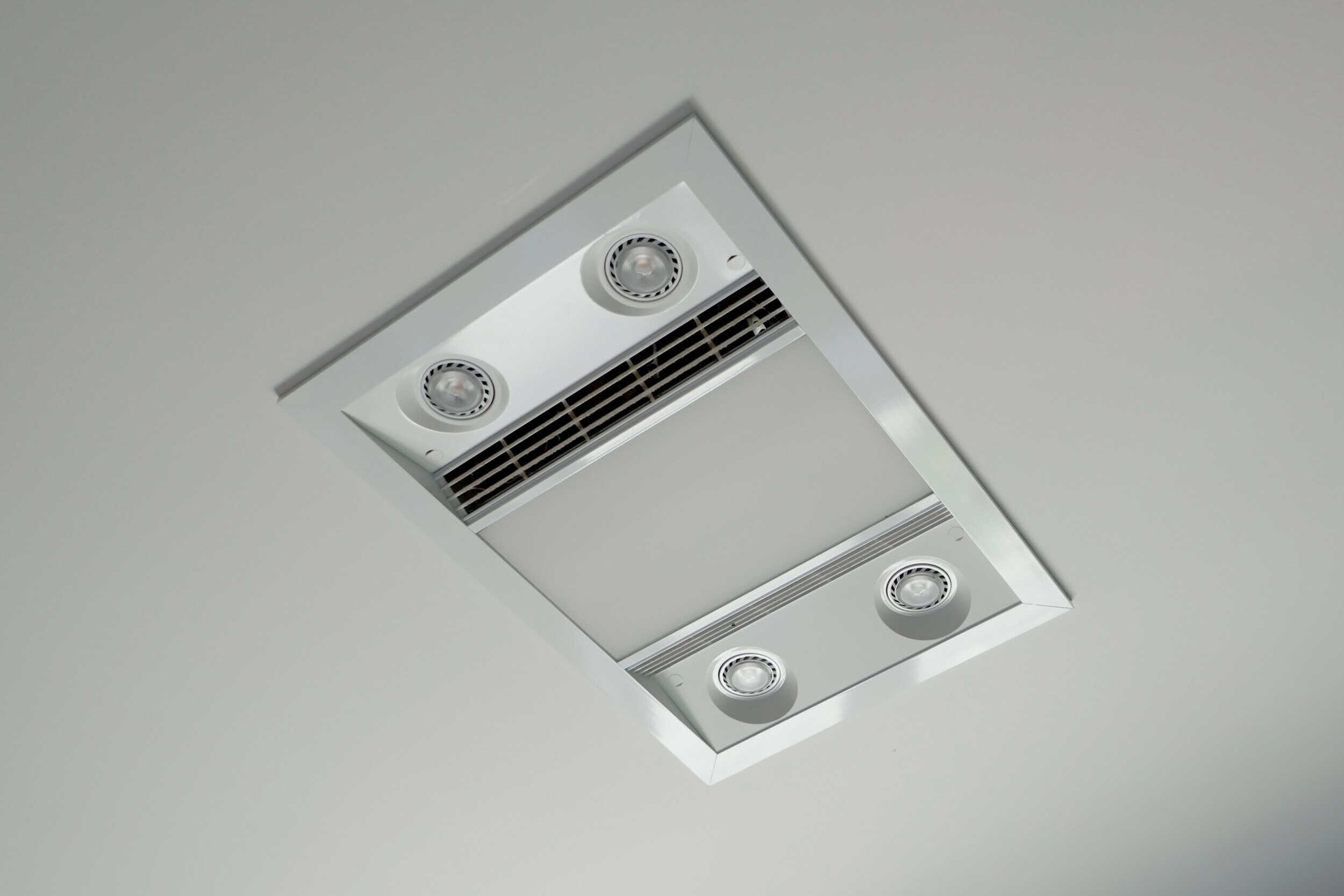
Bathroom Ventilation Fan
The controls that make a fan actually work
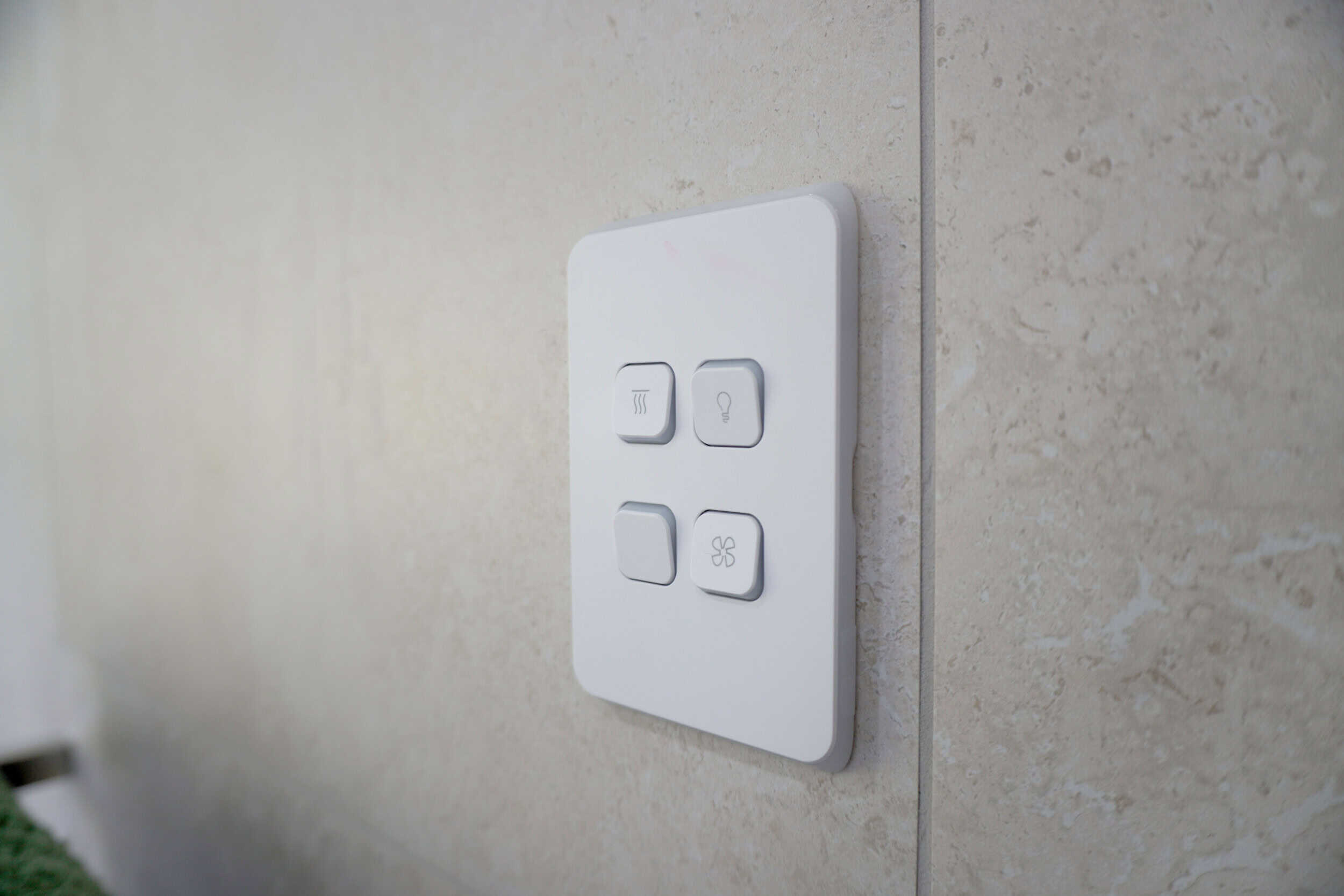
The best fan in the world is useless if nobody runs it long enough. Two upgrades solve that. A humidity-sensor fan switches itself on when the air gets damp and runs until the room dries out — no human decision required, which is exactly why we recommend them for households with teenagers or anyone who forgets. A timer-delay fan keeps running for a set period (15–20 minutes is the sweet spot) after you flick the light off, clearing the lingering moisture a quick shower-length blast would miss.
💡 Quick tip: Run the fan during your shower and for at least 15 minutes after. The post-shower run is where most of the moisture actually gets cleared — switching it off the moment you step out is why a lot of “working” fans still leave a mouldy room.
All fan wiring is electrical work that needs a registered electrician, so factor that into any DIY plan. If you’re already planning a bathroom renovation, the fan, ducting and lighting all get sorted properly as part of the build.
Ventilation Beyond the Fan: Windows, Passive Options, and Whole-Home Systems
A fan is the main event, but it isn’t the only lever. The more ways moist air can leave the room, the better.
Windows and passive ventilation
An opening window is the simplest ventilation there is, and it’s genuinely effective — but only if it actually opens and you actually use it. A window that’s painted shut, which we find in villas constantly, counts for nothing. The catch in winter is obvious: nobody wants to crank a window open in a Titirangi bathroom in July. So a window is a great backup, but it can’t be your only plan in the NZ climate. You need mechanical extraction you’ll use regardless of the weather.
Whole-home ventilation systems
Positive-pressure and balanced systems (the HRV-style units you’ll have seen advertised) push drier, filtered air through the whole house and lift the overall humidity baseline. They help — a drier house generally means a drier bathroom. But here’s the honest caveat: a whole-home system runs at a low, continuous flow that isn’t designed to clear the sudden moisture spike of a shower. It’s a complement to a proper bathroom extractor fan, not a replacement for one. Don’t let anyone sell you a whole-home unit as the fix for a single mouldy bathroom.
“The bathrooms that never have a mould problem are the ones with layered ventilation — a properly sized fan that does the heavy lifting, plus a window for the in-between times. You don’t need anything exotic. You need the basics done right and used consistently.”
— Alison Yu, Designer, Superior Renovations
When Mould Means a Bigger Problem (And It’s Renovation Territory)
Here’s the bit the fan retailers won’t tell you, because they’re selling fans. Sometimes ventilation isn’t the problem at all — the mould is a symptom of water getting in where it shouldn’t. If you’ve fitted a correctly sized, externally-vented fan and you’re using it properly, but the mould keeps coming back, the moisture is coming from somewhere other than the air.
The red flags that point past ventilation
A few signs tell us the issue has moved from “ventilation fix” to “renovation”.
Mould that grows along the bottom of the wall or in the floor corners, rather than up high near the ceiling, suggests water is tracking in at floor level — often a sign the waterproofing membrane under the tiles has failed. Grout that’s gone soft, dark or crumbly, or silicone seals that peel away and regrow mould within weeks of being redone, point the same way. A spongy or discoloured patch on the floor, or a musty smell that lingers even when the room looks dry, can mean water has got behind the tiles and into the substrate — and once that’s happening, no fan will fix it.
This is common in bathrooms renovated cheaply or DIY’d a decade or two ago, and in the leaky-building-era homes (mid-1990s to mid-2000s) scattered right across Auckland, where waterproofing was often the weak point. Imagine you’ve finally pulled off the mouldy silicone in your Henderson ensuite, gone to reseal it, and found the GIB behind it is soft to the touch — that’s the moment a ventilation question becomes a renovation question.
If any of that sounds familiar, the cost question comes next. A mid-range full bathroom renovation in Auckland runs $25,000–$35,000, while a budget refresh — new fittings, fan, and tidy-up without re-doing the waterproofing — sits around $9,000–$16,000. The right number depends entirely on whether the waterproofing needs redoing. You can get an early sense of where you’d land with our bathroom renovation cost calculator.
💡 Quick tip: Before you spend money re-tiling or resealing, get the waterproofing assessed. Re-doing the surface over a failed membrane just buries the problem for another two years — and costs you twice.
Healthy Homes, the Building Code, and What the Rules Actually Say
There’s a lot of confused information out there about what’s legally required, so let’s be clear about who the rules apply to.
If you own and live in your home, there’s no law forcing you to install a bathroom fan — though the NZ Building Code (Clause G4) does set ventilation standards for any new bathroom or renovation that goes through consent. The legal requirement most people are thinking of is the Healthy Homes ventilation standard, and that applies to rental properties only.
If your bathroom is in a rental, the standard is specific. A fan installed after 1 July 2019 must vent to the outside and have either a ducting diameter of at least 120mm or an extraction capacity of at least 25 litres per second. All private rentals were required to meet the full Healthy Homes Standards by 1 July 2025. Worth knowing even as an owner-occupier: that 25 L/s is a legal minimum, not a performance target — for a larger bathroom it often isn’t enough to actually clear the moisture, which is why we size on room volume rather than the bare legal floor.
Important note: The Healthy Homes ventilation standard is a rental obligation, not a rule for owner-occupiers. If you’re renovating a bathroom in a home you rent out, build to the standard from the start — retrofitting compliant ducting later is more expensive than doing it once.
If you’re moving plumbing or making structural changes, your renovation will need Auckland Council consent regardless — and ventilation gets designed in properly at that stage. Our renovation FAQ covers when consent applies in more detail.
Prevention vs Remediation: Stopping It Coming Back
Cleaning mould off is remediation. Stopping it returning is prevention — and prevention is the only one that actually saves you the weekend scrubbing.
To clean existing mould, a diluted bleach or a dedicated mould product clears surface growth on tiles and grout. But if you clean it and it’s back within a fortnight, you haven’t solved anything — you’ve just reset the clock. That return is the diagnostic signal: either the ventilation isn’t doing its job, or water is getting in behind the surface.
Prevention is the boring stuff done consistently: run a correctly sized fan every shower and for 15–20 minutes after, wipe the screen and walls down, keep the door open between showers so the room can breathe, and deal with any failed grout or silicone before it lets water in. Get those right and mould struggles to get a foothold. Get the ventilation wrong and you’ll be remediating forever.
“When we design a bathroom now, ventilation is decided before the tiles. It used to be an afterthought — fan goes wherever’s easy. Do it the other way round and you build a room that dries itself out, and the homeowner never thinks about mould again.”
— Dorothy Li, Head of Design, Superior Renovations
We’ve sorted bathroom ventilation as part of renovations across Auckland — from compact villa bathrooms in Ponsonby to full ensuite rebuilds in Albany — and the pattern never changes: get the extraction right and the mould problem disappears. You can see the standard of finish in our bathroom design gallery, or drop into the showroom at 16B Link Drive, Wairau Valley to talk it through.
The Bottom Line on Bathroom Ventilation
Most bathroom mould in NZ comes down to one fixable thing: air that can’t escape fast enough. Fit a fan sized to your room, vent it outside, run it long enough, and you’ve solved the problem for the price of a fan and an electrician. The moment mould ignores all that and keeps coming back, stop fighting the symptom — there’s water getting in somewhere, and that’s worth a proper look before you spend another dollar on sealant.
➡ Book your free in-home consultation with Superior Renovations
➡ Estimate your bathroom renovation cost with our calculator
➡ Request a free feasibility report for your project
What size extractor fan do I need for my bathroom in NZ?
Size the fan to your bathroom's volume — length × width × height in metres — and aim to turn the air over 10–15 times an hour. As a guide, a small bathroom up to 6m³ needs at least 25 litres per second, a standard family bathroom of 6–12m³ wants 40–50 L/s, and a large bathroom or ensuite with a separate shower needs 60–80 L/s. Undersizing is the most common mistake. When in doubt, size up — a fan that's slightly too powerful clears moisture faster, while an underpowered one never quite gets there.
How do I stop my bathroom getting mouldy?
Run an externally-vented extractor fan every time you shower and leave it going for 15–20 minutes after. That single habit stops most bathroom mould. Back it up with a window when weather allows, wipe down wet surfaces, and keep the door open between showers so the room can dry. If mould still returns within a couple of weeks despite a working fan, the moisture is likely coming from a waterproofing or grout failure rather than the air — and that needs investigating, not more scrubbing.
Do I legally need an extractor fan in a bathroom in NZ?
It depends on whether you own or rent the property. If you own and live in your home, there's no law requiring a bathroom fan, though the Building Code sets ventilation standards for any consented renovation. If it's a rental, the Healthy Homes ventilation standard applies — a fan installed after 1 July 2019 must vent outside and have at least a 120mm ducting diameter or 25 L/s extraction capacity. All private rentals had to meet this by 1 July 2025.
Why does my bathroom get so much condensation?
Condensation forms when moist air hits a cold surface — your mirror, window or walls. A single shower releases a surprising amount of water vapour into a small room, and NZ's damp climate and cooler indoor surfaces make it worse, especially in winter. Older Auckland homes with single-skin walls and no insulation get the worst of it. The fix is removing the moist air before it can settle: a properly sized extractor fan, used during and after every shower, plus a window where practical.
Should an extractor fan vent into the roof or outside?
Always outside. Venting an extractor fan into the roof cavity is one of the most common faults we find, and it's actively harmful — it dumps warm, moist air onto your roof timbers, where it condenses and causes rot and hidden mould. The Building Code and Healthy Homes standard both require external venting for this reason. If you're not sure where your fan goes, check the ducting in the roof space: it should run to a vent through the roof or an external wall, with no disconnections or kinks.
What's the difference between a ducted and a wall-mounted extractor fan?
A ducted fan sits in the ceiling and pushes moist air out through ducting to an external vent — it's the most common and effective option for NZ homes, since it draws from above where moisture collects. A wall-mounted fan punches straight through an exterior wall, which suits bathrooms with no ceiling access or those sitting on an outside wall, like many single-skin villas. Both work well when sized and installed correctly. Window fans are a last resort for bathrooms with neither ceiling nor external-wall access.
Will a whole-home ventilation system fix my bathroom mould?
Not on its own. Whole-home systems like HRV-style units lift the overall humidity baseline of your house and help keep things drier generally, but they run at a low continuous flow that isn't designed to clear the sudden moisture spike of a shower. They're a useful complement to a dedicated bathroom extractor fan, not a replacement for one. If a single bathroom is your problem, a properly sized extractor fan is the more effective and far cheaper fix.
How long should I run my bathroom fan after a shower?
At least 15–20 minutes after you finish. The shower itself produces the moisture, but it lingers in the air and on surfaces well after you step out, so switching the fan off straight away leaves most of it in the room. A timer-delay fan handles this automatically — it keeps running for a set period after the light goes off. A humidity-sensor fan is even better, switching itself on when the air gets damp and running until the room has properly dried out.
My bathroom mould keeps coming back even with a fan — why?
If you've got a correctly sized, externally-vented fan that you use properly and the mould still returns, the moisture isn't coming from the air — it's getting in behind the surfaces. Common causes are a failed waterproofing membrane under the tiles, degraded grout, or silicone seals that have let go. Tell-tale signs are mould low on the walls or in floor corners, a spongy floor patch, or a musty smell when the room looks dry. At that point it's a renovation issue, and re-sealing over the top only delays it.
How much does it cost to fix a mouldy bathroom in Auckland?
It depends on the cause. If it's purely ventilation, a new extractor fan supplied and installed by an electrician is a few hundred dollars. If the mould signals failed waterproofing, you're into renovation territory — a budget bathroom refresh in Auckland sits around $9,000–$16,000, while a mid-range full renovation that re-does the waterproofing properly runs $25,000–$35,000 in 2026. The honest answer comes from assessing whether the membrane has failed, which is why we recommend getting it looked at before spending money on the surface.
Further Resources for your bathroom renovation
- Featured projects and Client stories to see specifications on some of the projects.
- Real client stories from Auckland
Need more information?
Take advantage of our FREE Complete Home Renovation Guide (48 pages), whether you’re already renovating or in the process of deciding to renovate, it’s not an easy process, this guide which includes a free 100+ point check list – will help you avoid costly mistakes.
Download Free Renovation Guide (PDF)
Still have questions unanswered?
Book a no-obligation consultation with the team at Superior Renovations, we’d love to meet you to discuss your renovation ideas!
Or call us on 0800 199 888

Have you been putting off getting renovations done?
We have partnered with Q Mastercard ® to provide you an 18 Month Interest-Free Payment Option, you can enjoy your new home now and stress less.
Learn More about Interest-Free Payment Options*
*Lending criteria, fees, terms and conditions apply. Mastercard is a registered trademark and the circles design is a trademark of Mastercard International Incorporated.


