

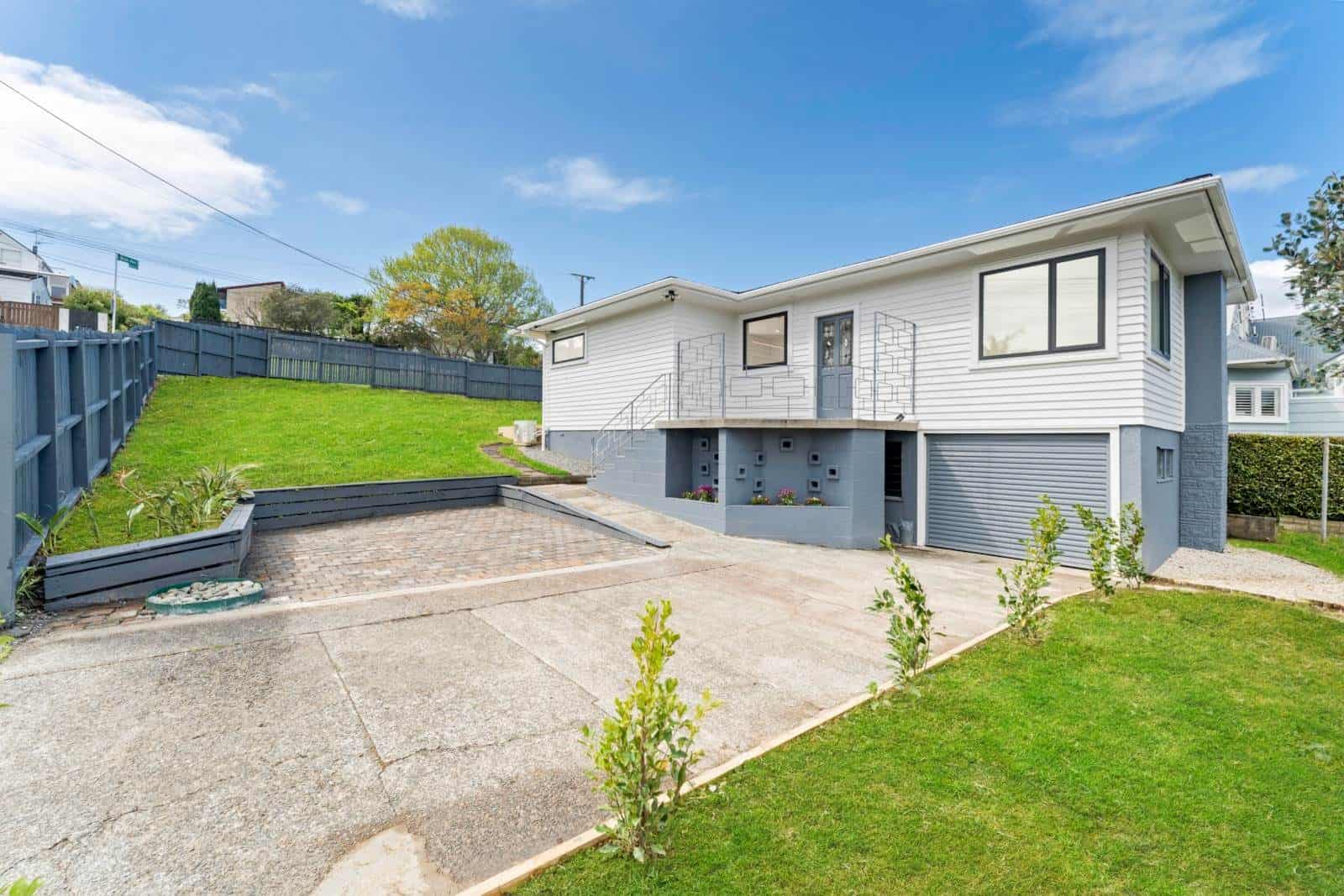
Fibre Cement Cladding in NZ: Asbestos, Leaks and When to Reclad
Quick answer: Fibre cement cladding can last for decades on an Auckland house, but how you treat it depends on its age: sheets from before 2000 may contain asbestos, plaster-finished sheet fixed without a cavity is a leaky-home risk, and modern boards need regular painting to keep their rating.
Three houses on the same Auckland street can all have fibre cement cladding and need three completely different conversations. One has flat sheets from the 1960s that might contain asbestos, and the wrong cleaning job could turn a weekend chore into a contamination problem. One has smooth, plastered sheet from the late 1990s fixed straight to the framing, which is a weathertightness question before it is anything else. The third has modern weatherboards that will outlast the mortgage, provided someone keeps the paint up. Work out which of the three you have, and most of the other decisions follow.
Free cost calculator
How much will recladding your house cost?
Answer a few questions and we’ll email you an Auckland price range.
What Fibre Cement Cladding Is, and Which Kind Is on Your House
Fibre cement is cement reinforced with fibres, pressed into boards or sheets. That’s the whole idea. What has changed over the decades is the fibre inside it and the way it was fixed to the house, and those two things decide almost everything about how you should treat it now.
Modern weatherboards and panels
Today’s fibre cement comes as bevel-back and rusticated weatherboards, grooved boards and large-format panels. James Hardie’s current New Zealand range, for example, lists Linea, Oblique and Hardie Plank weatherboards alongside Stria and Axon panels, and the company describes its fibre cement as fire resistant, rot resistant and resistant to moisture damage. On a house built or reclad in the last couple of decades, this is usually what you’re looking at: crisp, regular boards that look like painted timber until you knock on them.
These products are installed as systems. The board is only one layer. Behind it sit battens, a building underlay, flashings and fixings, and the system is assessed as a whole, which matters later when we get to how long it lasts.
Plaster-finished fibre cement sheet
In the leaky-building era, from the late 1980s to the mid-2000s, some houses were clad in flat fibre cement sheet with a textured coating sprayed over the top, giving the smooth, jointless look of plaster. Harditex is the brand name that turns up in the official records. Determination 2007/92, issued by the Department of Building and Housing (now part of MBIE), describes one example: 7.5 mm “Harditex” fibre-cement sheets fixed through the building wrap to the framing, finished with sprayed texture and paint. From the street it reads as plaster. It is fibre cement underneath, and it belongs to the monolithic cladding family that defined the leaky-building era.
Older asbestos cement sheet
Go back further, to houses built before 2000, and you can meet the older generation: flat sheets, baseboards, soffits and garage walls made of asbestos cement, often called by the brand name Fibrolite. WorkSafe uses that name in its guidance on asbestos in the home, and lists cladding, including baseboards, among the places it is found.
Why you can’t tell them apart by eye
Here’s the uncomfortable part. WorkSafe says plainly that cement containing asbestos can look identical to cement that doesn’t, and that the only way to confirm it is to test a sample. A painted sheet on a 1970s garage might be asbestos cement or a later replacement. A tidy-looking weatherboard might be original or a 2010 repair. The build date of the house is a starting point, the paperwork is a better one, and a lab test is the only answer.
💡 Quick tip: Before anyone touches the walls, pull the property file from Auckland Council. Consent drawings and specifications often name the cladding system, which tells you which generation you have and whether a cavity was ever part of the design.
So the first question isn’t whether fibre cement is any good. It’s which fibre cement this is, and when it went on.


Does Fibre Cement Cladding Contain Asbestos?
Modern fibre cement doesn’t. The older material might. WorkSafe’s line is that a home built before 1 January 2000 may contain asbestos materials, and that for homes built after that date the risk is lower. Asbestos cement sits in the category WorkSafe calls non-friable, or Class B: the fibres are bonded into the cement, so it is less likely to release them unless it is disturbed or starts to break down.
That last clause is the one that matters for cladding. A sound, painted sheet on a wall is not the problem. The problem is what happens when someone cleans it hard, sands it, drills it, breaks it or pulls it off.
Where it hides on the outside of a house
WorkSafe’s homeowner guidance names the external places asbestos turns up: cladding including baseboards, garage cladding, soffits and the lining under the eaves, gutters, downpipes and gables, exterior window flashing and fence panels. On a typical 1960s or 1970s Auckland house, that can mean the wall sheets, the eaves and the garage all need checking, not just the obvious flat panels.
Why water-blasting old cladding is the wrong move
Plenty of people water-blast the house before a repaint. On old asbestos cement, WorkSafe’s safe work sheet for cleaning weathered asbestos-containing roofing and cladding is blunt: “Never use high-pressure spraying or blasting when working with asbestos.” Its method uses a biocide applied with a low-pressure sprayer, keeps the surface wet, and leaves dead plant roots in place because pulling them can dislodge asbestos.
Painting has its own rules. WorkSafe’s sheet on painting asbestos cement products covers material in good condition only, warns that painting it incorrectly can cause the product to fail, and rules out sanding, wire brushes and harsh scraping during preparation. It prefers an airless sprayer set at low pressure, or a gentle brush or roller.
💡 Quick tip: If a painter or handyman quotes to water-blast a pre-2000 house, ask whether anyone has tested the cladding and soffits first. High-pressure water on asbestos cement is exactly what WorkSafe’s method rules out.
Repairs, and the 10 square metre line
Cracked or broken sheets are where the risk climbs. WorkSafe’s sheet on repairing damaged asbestos cement notes that cracked, peeling, flaking or crumbling material is more likely to release fibres, calls for an H-class vacuum rather than a domestic one, and tells workers not to use screws or nails to reattach a panel.
Removal is a different category again. Regulation 56 of the Health and Safety at Work (Asbestos) Regulations 2016 says nobody may remove more than 10 m² of non-friable asbestos at a workplace, counted cumulatively over the whole project, unless they or the business they work for hold a Class B or Class A asbestos removal licence. A whole-house reclad of asbestos cement sheet runs far past 10 m², and a renovation site is a builder’s workplace, so stripping that cladding is a job for a licensed removalist before the new system goes on. We cover who arranges the testing and what it does to a programme in our guide to how asbestos changes an Auckland renovation.
Important note: If your house was built before 2000, treat any fibre cement cladding, soffit or garage sheet as possible asbestos until a sample has been tested. Follow WorkSafe’s guidance and use a licensed asbestos assessor or removalist; this article is general information, not a safety assessment.
None of this means old fibre cement has to come off. In good condition, left alone and painted the right way, it can stay. It means the cleaning, painting and repair methods change completely once the material is, or might be, asbestos cement.
Is Fibre Cement Cladding a Leaky-Home Risk?
This is the question behind half the forum threads on the subject, and the honest answer is that the board isn’t the risk. The system is. Fibre cement as a material copes with getting wet. What fails is a wall that lets water in behind the cladding and gives it no way out.
What made the leaky era leaky
The government’s home-buying site, settled.govt.nz, puts the high-risk period at houses built between the late 1980s and the mid-2000s using plaster-style monolithic cladding. It describes the failure simply: moisture gets between the cladding and the inside walls, and without drainage and ventilation between the cladding and the framing, the water is trapped, the framing can rot and fungus can grow.
Plaster-finished fibre cement sheet fixed directly to the framing sits squarely in that description. In Determination 2005/158, the Department of Building and Housing noted that the Acceptable Solution E2/AS1 current in December 2005 allowed solid plaster systems with fibre cement backing sheets only if they were fixed on battens to create a 20 mm cavity between the sheet and the framing. The previous version had allowed plaster on fibre cement backing sheets face-fixed straight to the framing. That cavity, or the lack of one, is the line between a wall that dries out and a wall that holds water.
Direct-fixed versus cavity systems
So what about modern fibre cement weatherboards? The Building Code’s external moisture clause, E2.3.2, requires roofs and exterior walls to prevent water penetrating in a way that causes undue dampness or damage, and E2.3.5 requires concealed spaces and cavities to be built so external moisture doesn’t accumulate. Modern systems meet that with a drained and vented cavity. BRANZ Appraisal 447, for example, covers Linea Weatherboard Cavity Cladding: weatherboards fixed over timber battens that form the cavity, with a cavity vent strip at the base.
Sonder Architecture, our group’s architectural design practice, has a fuller explainer on how clause E2 shapes a wall design if you want the design-side detail.
Warning signs worth checking
Settled’s list of risk features reads like a walk around the outside of a 1990s house: hairline cracks in the cladding close to windows and doors, cracked joinery seals, pipes, vents and meter boxes sealed rather than flashed, pergolas fixed through the cladding, round or corner windows, enclosed balconies with handrails fixed through the cladding, and too little clearance between the cladding and the ground or deck. It also warns that a leaky building can show few obvious signs at all.
💡 Quick tip: Fresh paint over a plaster-finished sheet can hide the hairline cracks an inspector needs to see. If the house is from the leaky era, get the moisture readings done before the repaint, not after.
Imagine a plaster-look house in Albany or Botany, built around 1999, with a deck tight against the bottom of the wall and a meter box sealed with a bead of silicone. Nothing looks wrong from the lawn. That’s exactly the kind of house settled.govt.nz recommends an independent building inspection for, ideally by an inspector who specialises in weathertightness and uses a moisture meter, before anyone talks about repainting.
Important note: Whether a particular wall is failing, and what repair it needs, is a question for a building surveyor experienced in weathertightness, a Licensed Building Practitioner or Auckland Council. This article explains the general risk; it is not an assessment of your house.
Owners of cavity-fixed weatherboards can mostly set the leaky-home label aside. Their risk is slower and duller: paint left too long, a garden bed creeping up the wall.
How Long Fibre Cement Cladding Lasts, and the Maintenance That Decides It
Search “fibre cement lifespan” and you’ll get a spread of big round numbers. The more useful answer comes from two documents: the durability clause of the Building Code, and the BRANZ Appraisal for the product on your wall. Read together, they show that the lifespan is conditional, and the condition is maintenance.
What the Building Code actually asks for
Clause B2.3.1 of the Building Code sets three durability periods, and every one of them starts with the words “with only normal maintenance”. Elements that give the building structural stability, or are difficult to access or replace, must last at least 50 years. Elements that are moderately difficult to access or replace, which the clause says includes the building envelope, must last 15 years. Elements that are easy to access and replace, which includes renewable protective coatings, must last 5 years.
| Layer of a fibre cement wall | Building Code B2.3.1 minimum | What BRANZ Appraisal 447 adds (Linea cavity system) |
|---|---|---|
| Cladding boards (the building envelope) | 15 years | Serviceable life of at least 50 years if the paint system is maintained |
| Paint (a renewable protective coating) | 5 years | Painted within 3 months of fixing; recoated at about 7-15 year intervals |
| Board fixings near the coast | Part of the cladding system | Stainless steel in NZS 3604 Zone D (within 500 m of the sea) to reach the 50-year life |
| The condition on all of it | “With only normal maintenance” | Annual inspection and cleaning; ground clearances kept for the life of the cladding |
What a BRANZ Appraisal says about real life
BRANZ Appraisals are the closest thing to an independent manual for a cladding product. The 2020 Appraisal 447 for Linea Weatherboard Cavity Cladding says the installation is expected to have a serviceable life of at least 50 years provided the paint coating system is maintained, so the boards and fixings stay dry. The boards must be painted within three months of fixing. Annual inspections must check the paint, flashings and sealed joints, and any damage that would let water in must be repaired immediately. It recommends cleaning the paint surface at least once a year, and says paint systems must be recoated at approximately 7-15 yearly intervals, following the paint maker’s instructions.
Read that against the Building Code table and the picture is clear. The board can comfortably beat its 15-year minimum. The paint is the part designed to wear out, and the 50-year figure belongs to an owner who keeps renewing it.
Ground clearance and the coast
Two Appraisal conditions trip up Auckland homes in particular. The first is ground clearance: the bottom edge of the boards must stay at least 100 mm clear of paved surfaces and 175 mm clear of unpaved ground, and the Appraisal says those clearances must be maintained for the life of the cladding. A new patio laid hard against the wall, or garden beds built up over the years, can quietly put a house outside them.
The second is salt. The Appraisal treats locations within 500 m of the sea, including harbours, or 100 m of tidal estuaries and sheltered inlets, as NZS 3604 Zone D, and requires stainless steel fasteners there to reach the 50-year life. A house a street or two back from the water in Devonport, Bucklands Beach or Herne Bay may sit inside that band. If yours does, it’s worth knowing what the boards were fixed with.
💡 Quick tip: Keep the receipts and colour specs every time the house is painted. A dated record of recoating is the evidence that the “normal maintenance” condition was met if a product warranty question ever comes up.
That maintenance is not complicated, but it is easy to let slide once the scaffolding comes down. Our guide to the yearly upkeep a renovated house needs covers the checks that keep finishes and warranties in good order.
Repair, Repaint or Reclad Your Fibre Cement Cladding?
Once you know which generation of fibre cement you have and what condition it’s in, the choice usually narrows quickly. Most houses land in one of three places.
When repainting or a spot repair is enough
A modern cavity system with sound boards, intact flashings and tired paint needs a repaint, not a reclad. A cracked board or two can often be replaced like for like. Older asbestos cement in good condition can also stay put and be repainted, as long as the job follows WorkSafe’s methods above. Painting is a specialist trade in its own right, so we’ll leave paint systems to the painters; the point here is that the paint is a maintenance item the cladding depends on.
When the cladding needs to come off
Recladding is the answer when the system itself has failed: moisture readings showing water behind plaster-finished sheet, framing damage, cladding that has broken down, or asbestos cement too damaged to manage safely in place. On a leaky-era house, the condition of the framing is the real unknown, and nobody can see it until the cladding is off.
Does replacing fibre cement cladding need consent?
Sometimes not, often yes. Clause 1 of Schedule 1 of the Building Act 2004 exempts repair and maintenance, and replacing a building product with a comparable one in the same position, from building consent. But clause 1(3)(c) takes out repair or replacement of anything that has failed the Building Code’s durability provisions, and names failure to meet the external moisture requirements as the example. Replacing a cracked board on a sound cavity wall and stripping a leaking monolithic house are on opposite sides of that line.
Important note: Whether your cladding work needs building consent is decided by Auckland Council as the building consent authority. Confirm your scope with the council or a Licensed Building Practitioner before any cladding is removed.
What a reclad costs in Auckland
The recladding answer in our published price and process answers puts Auckland recladding in 2026 at “from $135,000 for a single-storey home up to $500,000+ for a leaky or complex property, with a standard two-storey reclad landing at $330,000–$380,000 excluding GST.” Where a house sits in that range depends on its size and storeys, the cladding system chosen and the state of the framing once the old cladding is off, which is why budgeting a contingency for what the walls reveal makes sense. If your house was clad in asbestos cement, licensed removal is part of that scope too.
For a starting range on your own house, our recladding calculator asks about the home and emails you an Auckland price range. A fixed quote comes after we’ve seen the house.
How we approach a fibre cement reclad
When we take on a reclad from first assessment through to the new cavity system, one project manager runs the job, and our in-house Licensed Building Practitioner (LBP #BP156911) provides oversight on consent-related work, workmanship and compliance. As our page on how a job runs from first visit to handover puts it, you’ll know the price, the timeline and exactly what’s included before any work starts. We’ve completed more than 1,000 Auckland renovations since 2017, and on a leaky-era house we want the moisture and framing picture before we price, because that is the only way to give an honest fixed price.
💡 Quick tip: If the roof is due too, ask for both to be priced together. A reclad and a reroof can share one set of scaffolding and one round of disruption.
Whichever way it lands, the order is the same: identify the material, test it if it’s pre-2000, check the moisture if it’s from the leaky era, then decide.
What to Do About the Fibre Cement on Your House
Fibre cement cladding is neither the hero product the brochures describe nor the leaky-home villain of the forum threads. It’s three different materials sharing one name. Find out which one is on your walls, and the right next step usually becomes obvious, whether that’s a test, a moisture inspection, a careful repaint or a full reclad. Call us on 0800 199 888 if you’d like someone to look at it with you.
➡ Book your free in-home consultation with Superior Renovations using the form at the foot of this page, or call 0800 199 888.
➡ See what recladding your fibre cement house could cost
➡ Request a free feasibility report for your project
Does fibre cement cladding contain asbestos?
Modern fibre cement does not. Older asbestos cement sheet, often called Fibrolite, might. WorkSafe says a home built before 1 January 2000 may contain asbestos materials and lists cladding, baseboards, soffits and garage cladding among the places it is found. Asbestos cement can look identical to cement without it, so the only way to know is to have a sample tested by a reputable contractor.
Is fibre cement cladding a leaky-home risk?
The board itself copes with water; the risk is the system. Plaster-finished fibre cement sheet fixed straight to the framing, as on some houses built from the late 1980s to the mid-2000s, can trap water behind the cladding. Modern fibre cement weatherboards installed over a drained and vented cavity are a different system. A weathertightness inspection with a moisture meter tells you which situation you are in.
How long does fibre cement cladding last in New Zealand?
The Building Code requires the building envelope to last at least 15 years with only normal maintenance. BRANZ Appraisal 447 for Linea Weatherboard Cavity Cladding expects a serviceable life of at least 50 years, provided the paint system is maintained so the boards and fixings stay dry. The paint is the part that wears out: the Appraisal says it must be recoated at about 7-15 yearly intervals.
Can I water-blast fibre cement cladding?
Not if it might be asbestos cement. The WorkSafe safe work sheet for cleaning weathered asbestos-containing roofing and cladding says never to use high-pressure spraying or blasting when working with asbestos, and sets out a low-pressure biocide method instead. If your house was built before 2000, have the cladding tested before anyone cleans it for a repaint.
Can old asbestos cement cladding be painted?
It can, if it is in good condition and the work follows the WorkSafe method. Its sheet on painting asbestos cement rules out sanding, wire brushing and harsh scraping during preparation, prefers an airless sprayer at low pressure or a gentle brush or roller, and warns that painting the material incorrectly can cause it to fail. Damaged sheet needs repair first, using a separate WorkSafe method.
Who can remove asbestos fibre cement cladding?
Under regulation 56 of the Health and Safety at Work (Asbestos) Regulations 2016, removing more than 10 square metres of non-friable asbestos at a workplace, counted over the whole project, needs a Class B or Class A asbestos removal licence. A full reclad of asbestos cement sheet goes well past that, so a licensed removalist takes the old cladding off before the new system is installed.
What maintenance does fibre cement cladding need?
BRANZ Appraisal 447 for Linea cavity cladding requires annual inspections of the paint, flashings and sealed joints and immediate repair of any damage that would let water in, and recommends cleaning the paint surface at least once a year. It also requires the boards to stay at least 100 mm above paved surfaces and 175 mm above unpaved ground for the life of the cladding.
Do I need building consent to replace fibre cement cladding?
Sometimes. Schedule 1 clause 1 of the Building Act exempts repair, maintenance and like-for-like replacement in the same position. Clause 1(3)(c) removes that exemption where the cladding has failed the durability provisions, for example by failing the external moisture requirements, which is usually the case on a leaking house. Confirm your scope with Auckland Council or a Licensed Building Practitioner before work starts.
How much does it cost to reclad a fibre cement house in Auckland?
The Superior Renovations FAQ puts Auckland recladding in 2026 from $135,000 for a single-storey home up to $500,000+ for a leaky or complex property, with a standard two-storey reclad at $330,000-$380,000 excluding GST. The size of the house, the new cladding system and the condition of the framing once the old cladding is off move the figure. Our recladding calculator emails you an Auckland price range.
Does fibre cement cladding near the sea need special fixings?
For the Linea cavity system, yes. BRANZ Appraisal 447 treats sites within 500 metres of the sea, including harbours, or 100 metres of tidal estuaries and sheltered inlets, as NZS 3604 Zone D and requires stainless steel fasteners there to achieve a 50-year serviceable life. Outside Zone D, hot-dip galvanised fasteners are allowed. Other products set out their own requirements in their own Appraisal.
Related guides
- Who tests and who pays when asbestos turns up mid-renovation
- The handover documents and yearly checks that protect a finished renovation
- Weatherproofing an older Auckland home before the next big storm
Further Resources
- Featured projects and Client stories to see specifications on some of the projects.
- Real client stories from Auckland
Need more information?
Take advantage of our FREE Complete Home Renovation Guide (48 pages), whether you’re already renovating or in the process of deciding to renovate, it’s not an easy process, this guide will help you avoid costly mistakes.
Download Free Renovation Guide (PDF)

Have you been putting off getting renovations done?
We have partnered with Q Mastercard ® to offer up to 18 months interest-free, so you can enjoy your new home now and stress less.
Learn More about Interest-Free Payment Options*
*Lending criteria, fees, terms and conditions apply. Mastercard is a registered trademark and the circles design is a trademark of Mastercard International Incorporated.
Still have questions unanswered?
Book a no-obligation consultation with the team at Superior Renovations, we’d love to meet you to discuss your renovation ideas!
References
- WorkSafe New Zealand, Asbestos in the home
- WorkSafe New Zealand, Cleaning weathered asbestos containing roofing and cladding (ARW 5)
- WorkSafe New Zealand, Painting asbestos cement products (ARW 7)
- WorkSafe New Zealand, Repairing damaged asbestos cement (ARW 6)
- Health and Safety at Work (Asbestos) Regulations 2016, regulation 56 (New Zealand Legislation)
- settled.govt.nz, Learning about leaky buildings
- Department of Building and Housing, Determination 2005/158 (building.govt.nz)
- Department of Building and Housing, Determination 2007/92 (building.govt.nz)
- Building Regulations 1992, Schedule 1 Building Code: clauses B2 and E2 (New Zealand Legislation)
- BRANZ, Linea Weatherboard Cavity Cladding (certified products listing)
- BRANZ Appraisal No. 447 (2020), Linea Weatherboard Cavity Cladding
- Building Act 2004, Schedule 1 clause 1 (New Zealand Legislation)
- James Hardie New Zealand, Cladding


