


Laminate vs Engineered vs Solid Timber Flooring NZ
Last updated:
Laminate vs Engineered vs Solid Timber Flooring NZ: An Auckland Renovator’s Guide
Free cost calculator
How much will your renovation cost?
Answer a few questions and we’ll email you an Auckland price range.
Quick answer: For most Auckland homes, engineered timber is the safest all-round choice because its plywood core handles our humidity without cupping, laminate is the value pick for bedrooms and rentals, and solid timber suits dry, well-ventilated character homes — but the real deciding factor is your subfloor, not the plank.
Walk into any flooring showroom in Wairau Valley or off Great South Road and you’ll get hit with the same three options, usually in that order of price: laminate, engineered timber, solid timber. The samples all look great under showroom lights. None of them tell you which one will still look great in your 1920s Grey Lynn villa after three damp Auckland winters.
That’s the gap we want to close. We install all three of these floors across Auckland every week — in villas, in 1970s brick-and-tile in Manurewa, in new Hobsonville builds on concrete slabs. So this isn’t a product brochure. It’s the advice we give our own clients when flooring shows up as a line item in a whole-home renovation where every dollar has to earn its place. Choosing between laminate, engineered and solid timber flooring in NZ comes down to four things in order: your subfloor, the room, your budget, and how long you’re staying. Get those in the right order and the decision almost makes itself.
Here’s the short version before we get into it:
| If you want… | The usual pick | Why |
|---|---|---|
| Real wood that copes with Auckland damp | Engineered timber | Plywood core stays put when humidity swings |
| Lowest cost, low fuss | Laminate | Hard-wearing, half the price, ideal for bedrooms |
| A floor that outlives the renovation | Solid timber | Refinishable for decades — but only over a dry subfloor |
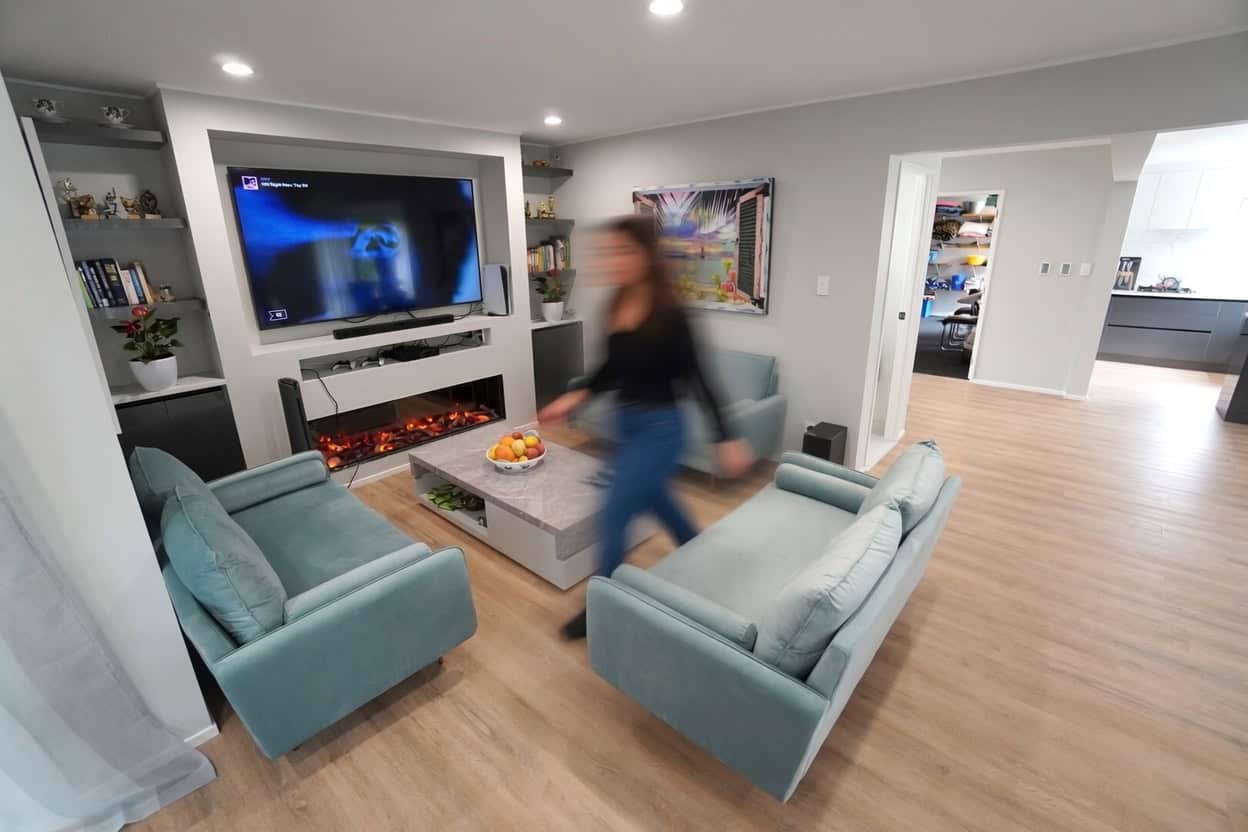
Underfloor heated floor — Epsom, Auckland
The Three Flooring Types, Explained Properly
Before the cost tables and the room-by-room calls, it helps to know what you’re actually buying. The three look similar on a showroom plinth. Underneath, they’re built completely differently — and that build is what decides how each one behaves in an Auckland home.
Laminate: a photo of wood over a tough core
Laminate isn’t timber at all. It’s a high-resolution printed image of wood, sealed under a clear wear layer, bonded to a high-density fibreboard (HDF) core. The good ones look convincing enough that visitors won’t clock it underfoot. The wear layer is rated by an AC number — AC3 is fine for bedrooms, AC4 to AC5 is what you want for a busy hallway or a family kitchen.
What laminate gives you is hard-wearing, scratch-resistant, low-fuss flooring at the lowest price of the three. What it can’t give you is the feel of real wood underfoot, or a second life — once the wear layer’s gone, that’s it, you replace it. You don’t sand and refinish laminate.
💡 Quick tip: If a laminate is going anywhere near water — a kitchen, an entry off the deck — check it’s rated as water-resistant and that the planks have a sealed, tight-locking joint. Standard laminate and standing water don’t mix.
Engineered timber: real wood, built to stay still
Engineered timber is the one most people misunderstand. It’s a genuine layer of real timber — usually 2mm to 6mm of oak — bonded on top of a cross-laminated plywood base. The top is the same oak you’d get in a solid board. The plywood underneath is what stops it moving when the humidity swings.
That cross-layered construction is the whole point. Solid timber expands and shrinks across the grain as it takes on and gives off moisture. Plywood, with its layers running in alternating directions, holds its shape. So you get the look and the warmth of real oak with far less of the cupping and gapping that plagues solid wood in a humid climate. The thicker wear layers — 4mm to 6mm — can even be sanded back and refinished once or twice down the track, so a good engineered floor isn’t a throwaway.
Solid timber: one piece of wood, all the way through
Solid timber is exactly what it sounds like — a single plank of hardwood, oak, or a native like rimu or matai, the same material top to bottom. It’s the most beautiful of the three, the most repairable, and the most temperamental. Because it’s all wood, it moves with the seasons. Lay it badly, or in the wrong room, and you’ll see gaps open up in winter and boards lift in summer.
Done right, in the right house, a solid timber floor outlasts everything around it. On a historic bungalow renovation we did in Epsom, the home still had its original native timber floors — we restored them rather than replace them, and they had decades of life left in them. That longevity is real. But it depends almost entirely on what’s under the boards — which is exactly where most flooring advice goes quiet.

Villa timber flooring — Superior Renovations
Start With Your Subfloor — The Question Showrooms Skip
Here’s the part no retailer leads with, because they’re selling you a plank, not assessing your house. The single biggest factor in which floor you should choose isn’t the floor at all — it’s what sits underneath it. Get the subfloor wrong and even the best engineered oak will fail. Get it right and you’ve got options.
Auckland homes split roughly into two camps, and they point you in different directions.
Concrete slab vs suspended timber — and why it matters
If you’re in a newer build — think Hobsonville, Flat Bush, Millwater — you’re almost certainly on a concrete slab. BRANZ reports that around 92% of new NZ houses are now built on a concrete slab rather than a suspended timber floor. A slab is stable and flat, which is good news, but it can also pass ground moisture up into your flooring if it isn’t properly sealed. That rules solid timber straight onto a slab in or out depending on the moisture reading, and it makes engineered timber or laminate — both happy to float or glue over concrete — the natural fit.
Older Auckland stock is a different story. Villas, bungalows, most pre-1990s houses sit on a suspended timber floor — joists and bearers over a ventilated crawl space. Of New Zealand’s roughly 1.5 million dwellings, BRANZ estimates about 1.1 million have suspended timber-framed ground floors. That construction can take any of the three floors beautifully — as long as the crawl space is dry.
The damp number that should worry you
And plenty of them aren’t dry. The 2005 BRANZ House Condition Survey found that 38% of homes with suspended timber floors had less than half the subfloor ventilation the Building Code requires. That’s not a rounding error. That’s nearly four in ten older homes sitting over a crawl space holding more moisture than it should, slowly pushing damp up into the framing and the floor above.
The Building Code Acceptable Solution E2/AS1 sets the bar at a minimum of 3,500mm² of clear ventilation opening for every square metre of floor area. We can’t see that number from a showroom. We can see it once we’re under your house with a torch. That’s why, on every flooring job in an older home, the first thing our team does is get into the subfloor — checking ground clearance, vent openings, any sign of standing water or musty timber — before we so much as talk about plank colour.
“People come in set on solid oak, and the first thing I ask is what’s under their floor. I’ve seen gorgeous timber go down over a damp Titirangi crawl space and start cupping inside a year. The plank was never the problem. The subfloor was. Fix the moisture first, then we choose the floor — not the other way round.”
— Alison Yu, Designer, Superior Renovations
💡 Quick tip: Before you fall in love with a floor, lift a subfloor vent grille or pop the access hatch and have a sniff. A musty smell, blocked vents, or visible damp means your money goes into the crawl space first. BRANZ recommends checking the subfloor once a year as normal house maintenance — most owners never do.
One more installer detail that gets skipped: acclimatisation. Real timber — solid or engineered — needs to sit in the room it’s going into for several days before it’s laid, so it settles to the home’s own humidity. Auckland’s a humid, subtropical city, and the standard trade practice is to let timber acclimatise in the actual room for several days before installation. Skip it and you’ve built movement into the floor before anyone’s walked on it. It costs nothing but time, and it’s one of the cheapest ways to stop a timber floor failing early.
This is the genuine fork in the road. A dry, well-ventilated subfloor opens up all three options. A damp one narrows your choices and adds a remediation cost before any flooring goes down. Knowing which camp you’re in is worth more than any showroom comparison chart. It’s also why we treat flooring as one line inside a properly scoped Superior Renovations home renovation rather than a standalone supply-and-lay job — the subfloor work has to be sorted first.
What Each Floor Actually Costs Installed in Auckland
Now the money. And here’s where most online “flooring cost NZ” figures mislead you: they quote the supply-only price — the sticker on the plank — and leave out labour, underlay, subfloor prep and finishing. The number that matters is the installed cost: supply and lay, all in. Those are the figures we work with, and they’re the ones below.
Installed cost per square metre — the honest ranges
Drawing on current NZ supplier and installer pricing, here’s what the three floors typically cost laid in an Auckland home. These are indicative supply-and-lay ranges including GST — your own quote will move with plank grade, room size, and subfloor condition:
| Flooring type | Installed cost (supply + lay, incl GST) | Can it be refinished? |
|---|---|---|
| Laminate | ~$80–$160 per m² | No — replace when worn |
| Engineered timber | ~$220–$500 per m² (most quality jobs $250–$415) | Usually once or twice (4–6mm wear layer) |
| Solid timber | From ~$300 per m², up to $500+ for premium species | Yes — multiple times over decades |
Read that table the right way and the picture’s clear. Laminate is roughly half the installed price of engineered timber, and solid timber sits at the top — but solid timber is also the only floor you can sand back and bring up like new again, several times, over forty or fifty years. Cheap upfront isn’t always cheap over the life of the floor. A laminate you replace twice can cost more than an engineered floor you refinish once.
For character homes, restoring what’s already there can beat laying anything new. On our villa renovation projects around Auckland, sanding and recoating an existing kauri tongue-and-groove floor runs roughly $50–$90 per square metre depending on the floor’s condition — often the best-value flooring decision a villa owner can make.
The cost most quotes hide: subfloor prep
Remember the subfloor section? It shows up here as a line item — or it should. Routine subfloor preparation, such as levelling and grinding a concrete slab, typically adds a modest per-square-metre cost, and fuller prep on an uneven slab or a timber subfloor costs more again. Genuine moisture remediation — sealing, waterproofing, structural repair — sits well above that and gets quoted separately once we’ve inspected.
💡 Quick tip: If a flooring quote has no line for subfloor prep, ask why. A quote that pretends your slab is perfectly level or your crawl space is bone dry is a quote that’s about to surprise you. We’d rather show you the prep cost up front than discover it on day two.
Flooring rarely lands as a standalone job, either. It usually turns up inside a bigger scope — new kitchen, opened-up living, a full refresh — and the per-m² figure is only one piece. If you want to sanity-check where flooring fits against the rest of your budget, our renovation cost calculators give you a quick ballpark before you commit to anything. For context, a full home renovation in Auckland — kitchen, bathrooms, flooring, painting and the rest — typically runs between $80,000 and $160,000 depending on scope, with flooring a meaningful but rarely dominant slice of that.
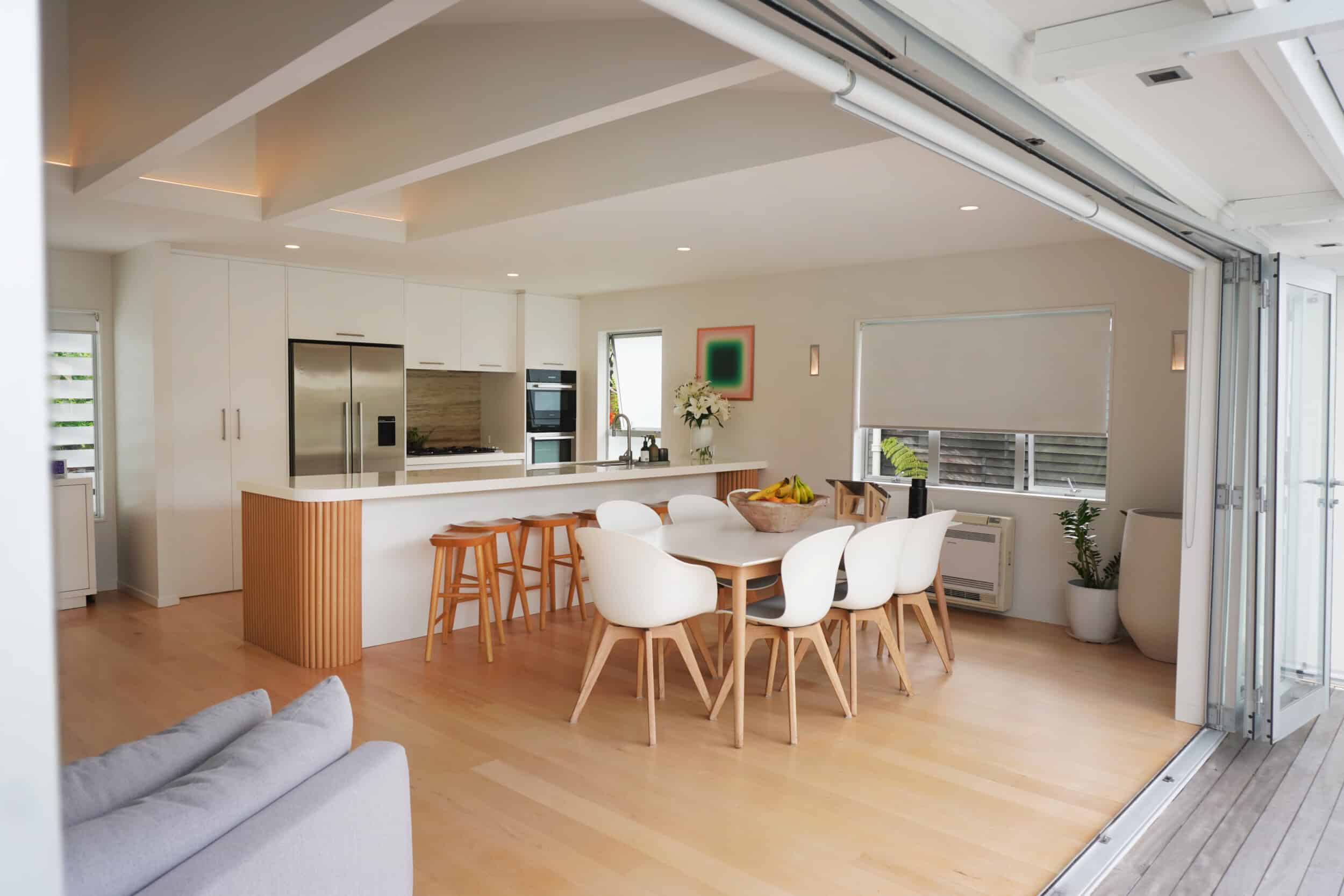
Room by Room: Which Floor Goes Where
The mistake we see most often is treating a house like one big floor. It isn’t. A kitchen, a bedroom and a bathroom ask completely different things of a floor, and the smart move is to match the material to the room rather than run one product through the whole place.
Kitchens: spills, traffic and a Building Code catch
The kitchen is the hardest-working floor in the house and, in Building Code terms, it’s a wet area. That last bit trips people up. Under NZ Building Code clause E3, kitchens count as wet areas alongside bathrooms, laundries and toilets — and the rules for flooring in those spaces changed in a way most homeowners have never heard about.
Timber and timber-based flooring was removed from the Acceptable Solution E3/AS1 in Amendment 7, and from 4 November 2021 it’s no longer an Acceptable Solution for floors in wet areas. Here’s the part that gets misread: that doesn’t mean timber is banned in your kitchen. It means timber can still be used, but it now has to be specified as an Alternative Solution — a designed, sealed, impervious system signed off through your building consent — rather than ticked off against the standard pathway. BRANZ confirms an Alternative Solution designed and specified to best practice is straightforward to do, but it’s a conversation to have at design stage, not after the floor’s down.
For most Auckland kitchens, a quality water-resistant laminate or engineered floor handles daily life well, provided the joints are sealed and water doesn’t sit. If you want a true belt-and-braces wet-area floor, tile is the classic answer — suppliers like Tile Depot carry porcelain and tile ranges built for exactly this. Whatever you land on, getting the kitchen floor right is core to how we plan a kitchen renovation from the subfloor up.

“I always tell clients the kitchen floor and the bathroom floor are decisions you make at the design table, not in the showroom. The E3 wet-area rules mean if you want timber underfoot in there, we plan the sealed system in from the start. Leave it too late and you’re either changing materials or chasing a consent variation — neither is fun.”
— Cici Zuo, Head of Sales, NZ Dip. Interior Design, Superior Renovations
Bedrooms and living areas: where you can relax the rules
Bedrooms are the easy rooms. Low moisture, lower traffic, no Building Code wet-area worries. This is where laminate genuinely shines — you get a warm, wood-look floor for the lowest cost, and nobody’s spilling pots of water in a bedroom. Spending engineered-timber money on a guest bedroom that gets walked on twice a week is, frankly, money you could put into the kitchen instead.
Living areas, hallways and the rest of the dry part of the house are where the wet-area rules don’t apply at all — timber’s perfectly fine here as a standard finish. These are the spaces where engineered timber earns its premium: open-plan living that flows out to a deck in Remuera or St Heliers, a hallway that runs the length of a bungalow. Real oak underfoot in the rooms you actually live in, with the stability to cope with Auckland’s damp, is where the money makes sense.
Bathrooms and laundries: timber’s not the hero here
Bathrooms and laundries are the wettest rooms in the house, and they’re the clearest case where timber — solid or engineered — usually isn’t the right call. Tile, sheet vinyl and sealed surfaces are the workhorses for these spaces, and they sit comfortably within the E3 Acceptable Solution. If you’re weighing up the whole house, it’s worth reading our breakdown of bathroom flooring options for NZ homes alongside this guide, because the answer for the bathroom is almost always different from the answer for the living room.
💡 Quick tip: Want timber to flow unbroken from your living area into the kitchen for that connected open-plan look? You can — just specify a sealed, water-resistant engineered system and plan it as part of your consent if it’s a wet area. The look is achievable; it just needs designing in early.
The Mixed Approach: How Most Smart Auckland Renovations Actually Do It
Here’s the strategy almost nobody puts in a flooring guide, because retailers want to sell you one product for the whole house. The best-value flooring decision for most Auckland homes isn’t one floor everywhere — it’s two, chosen deliberately by room.
Engineered where it shows, laminate where it doesn’t
The pattern we lay over and over: engineered timber through the living areas, hallway and open-plan kitchen where the floor is seen and felt, and a quality laminate in the bedrooms where it isn’t. You get real oak in the rooms that carry the home’s whole feel, and you save the difference in the rooms where nobody can tell — and wouldn’t care if they could.
The maths is plain. Say you’ve got 120m² of floor, 70m² of it living and circulation, 50m² of it bedrooms. Putting engineered through the lot at a mid-point of around $330/m² is a very different number from running engineered through the 70m² and laminate at around $120/m² through the bedrooms. That single decision can free up several thousand dollars — money that goes a lot further in your kitchen or bathroom than under your bed.
“On a whole-home renovation I’m never just picking a floor — I’m allocating a budget across the whole house. Mixing engineered in the living zones with laminate in the bedrooms is one of the cleanest ways to do that. The home reads as high-end where it counts, and the savings go where they’re felt. Done well, you can’t see the join.”
— Dorothy Li, Head of Design, Superior Renovations
Matching the floor to how long you’re staying
One last filter, and it’s a useful one. How long you’re planning to stay should shape what you spend. If you’re in your forever home in Epsom and you’ll be there in twenty years, solid or engineered timber you can refinish is an investment that pays you back in longevity and feel. If you’re doing up a place to sell, or you’ll move on in a few years, laminate and engineered give you a fresh, modern look that photographs well for buyers without over-capitalising.
This is exactly the kind of trade-off we work through with homeowners — what suits the house, the budget and the timeframe, not just what’s trending. Sorting it out is part of what our in-house designers do at material-selection stage, alongside cabinetry, benchtops and the rest of the palette, so the floor sits right with everything else rather than being chosen in isolation.
A simple way to decide
If you want the whole thing boiled down, it runs like this. Check your subfloor first — dry and ventilated opens every door, damp narrows them and adds a cost. Then go room by room: tile or vinyl in true wet areas, engineered timber where the floor shows, laminate where budget matters more than feel. Then sense-check it against how long you’re staying. Four questions, in that order. That’s the framework we use, and it works as well on a $20,000 flooring job as it does inside a six-figure renovation.
💡 Quick tip: Order physical samples and live with them for a week before you commit. Lay them in the actual room, in Auckland’s actual light — north-facing in Mission Bay reads completely differently from a south-facing Henderson lounge. Showroom lighting flatters everything.
Choosing the Right Floor for Your Auckland Home
There’s no single best flooring for NZ homes, and anyone who tells you otherwise is selling one product. Engineered timber is the safe all-rounder for our climate, laminate is the honest value pick, and solid timber rewards the right house with the right subfloor. The decision that matters most isn’t which sample you like — it’s getting under your house, reading your subfloor, and matching the material to the room and the timeframe.
That’s the part we do every week, and it’s the part that’s hard to get right from a showroom. If you’d like a straight answer on what suits your home — and how flooring fits into the wider renovation you’re planning — we’re happy to come and have a look.
➡ Book your free in-home consultation with Superior Renovations
➡ See how we approach full home renovations across Auckland
➡ Request a free feasibility report for your project
Is engineered timber better than solid timber for NZ homes?
For most Auckland homes, yes. Engineered timber's cross-laminated plywood core resists the cupping and gapping that solid timber can suffer in our humid climate, while still giving you a genuine oak surface you can refinish once or twice. Solid timber is more beautiful and lasts longer, but it needs a dry, well-ventilated subfloor and stable conditions to behave. If your home has any subfloor moisture, engineered is the safer choice.
How much does timber flooring cost installed in NZ?
As an indicative guide, installed costs run roughly $80–$160 per m² for laminate, around $220–$500 per m² for engineered timber (most quality jobs land $250–$415), and from about $300 per m² for solid timber, rising past $500 for premium species. These are supply-and-lay ranges including GST. Subfloor preparation is an added cost on top, depending on your floor's condition — always ask for it as a separate line in your quote.
Can I use timber flooring in my kitchen in New Zealand?
Yes, but with a catch. Kitchens are classed as wet areas under Building Code clause E3, and since 4 November 2021 timber is no longer an Acceptable Solution for wet-area floors. Timber isn't banned — it just has to be specified as a designed, sealed Alternative Solution through your building consent. Many Auckland homeowners instead choose water-resistant laminate, engineered systems, or tile for kitchens, which sit within the standard compliance pathway.
What is the best flooring for Auckland's humid climate?
Engineered timber generally copes best with Auckland's humidity. Its plywood base holds its shape when moisture levels swing, where solid timber expands and contracts and can cup or gap. Laminate is also stable and unaffected by humidity in the same way, making it a reliable budget option. Solid timber can work well, but only over a genuinely dry, well-ventilated subfloor with proper acclimatisation before installation.
Does my subfloor affect which flooring I can choose?
More than anything else. A concrete slab is stable but can pass ground moisture upward if unsealed, suiting floating or glued engineered timber and laminate. A suspended timber subfloor can take all three types, but only if the crawl space is dry and ventilated. The 2005 BRANZ House Condition Survey found 38% of homes with suspended timber floors had less than half the required subfloor ventilation, so checking your subfloor before choosing is essential — a damp one adds remediation cost first.
Will solid timber flooring warp in my house?
It can, if the conditions are wrong. Solid timber moves with seasonal moisture changes, so over a damp Auckland subfloor or in a poorly ventilated home it can cup, gap or lift. Over a dry, well-ventilated subfloor with the boards properly acclimatised before laying, solid timber stays stable and lasts generations — we regularly restore original native floors in Auckland villas and bungalows. The risk isn't the timber; it's an unmanaged moisture problem underneath it.
How long does timber flooring last compared to laminate?
Solid timber can last 50 years or more and be sanded and refinished many times. Quality engineered timber typically lasts 20–40 years and can usually be refinished once or twice thanks to its 4–6mm wear layer. Laminate generally lasts 10–20 years depending on grade and traffic, and is replaced rather than refinished once the wear layer goes. Over the full life of a floor, a refinishable timber floor can work out better value than replacing laminate twice.
Can engineered timber be sanded and refinished?
Usually once or twice, depending on the thickness of its real-timber wear layer. Engineered boards with a 4–6mm oak top can take a light sand and re-oil or re-coat, which refreshes scratches and wear. Thinner 2mm wear layers can't really be sanded, so if refinishing matters to you, specify a thicker wear layer up front. Solid timber, by contrast, can be refinished many more times over its life.
What flooring adds the most value to a home in Auckland?
Real timber — solid or engineered — tends to read as premium to buyers and photographs well, which helps at sale. That said, fresh, modern laminate in good condition also lifts a home's presentation for far less outlay, which can be the smarter spend if you're renovating to sell. The best value usually comes from matching quality timber to the living areas buyers focus on, and using cost-effective options where it won't be noticed.
Should I use the same flooring throughout the whole house?
Not necessarily, and often you shouldn't. Mixing materials by room is one of the smartest budget moves — engineered timber through living areas and hallways where the floor is seen, laminate in bedrooms where it isn't, and tile or vinyl in wet areas. Done well, the transitions are barely noticeable and you put your money where it has the most impact. A consistent colour tone across materials keeps it feeling cohesive.
Further Resources for your home renovation
- Featured projects and Client stories to see specifications on some of the projects.
- Real client stories from Auckland
Need more information?
Take advantage of our FREE Complete Home Renovation Guide (48 pages), whether you’re already renovating or in the process of deciding to renovate, it’s not an easy process, this guide which includes a free 100+ point check list – will help you avoid costly mistakes.
Download Free Renovation Guide (PDF)
Have you been putting off getting renovations done?
We have partnered with Q Mastercard ® to provide you an 18 Month Interest-Free Payment Option, you can enjoy your new home now and stress less.
Learn More about Interest-Free Payment Options*
*Lending criteria, fees, terms and conditions apply. Mastercard is a registered trademark and the circles design is a trademark of Mastercard International Incorporated.
Still have questions unanswered?
Book a no-obligation consultation with the team at Superior Renovations, we’d love to meet you to discuss your renovation ideas!