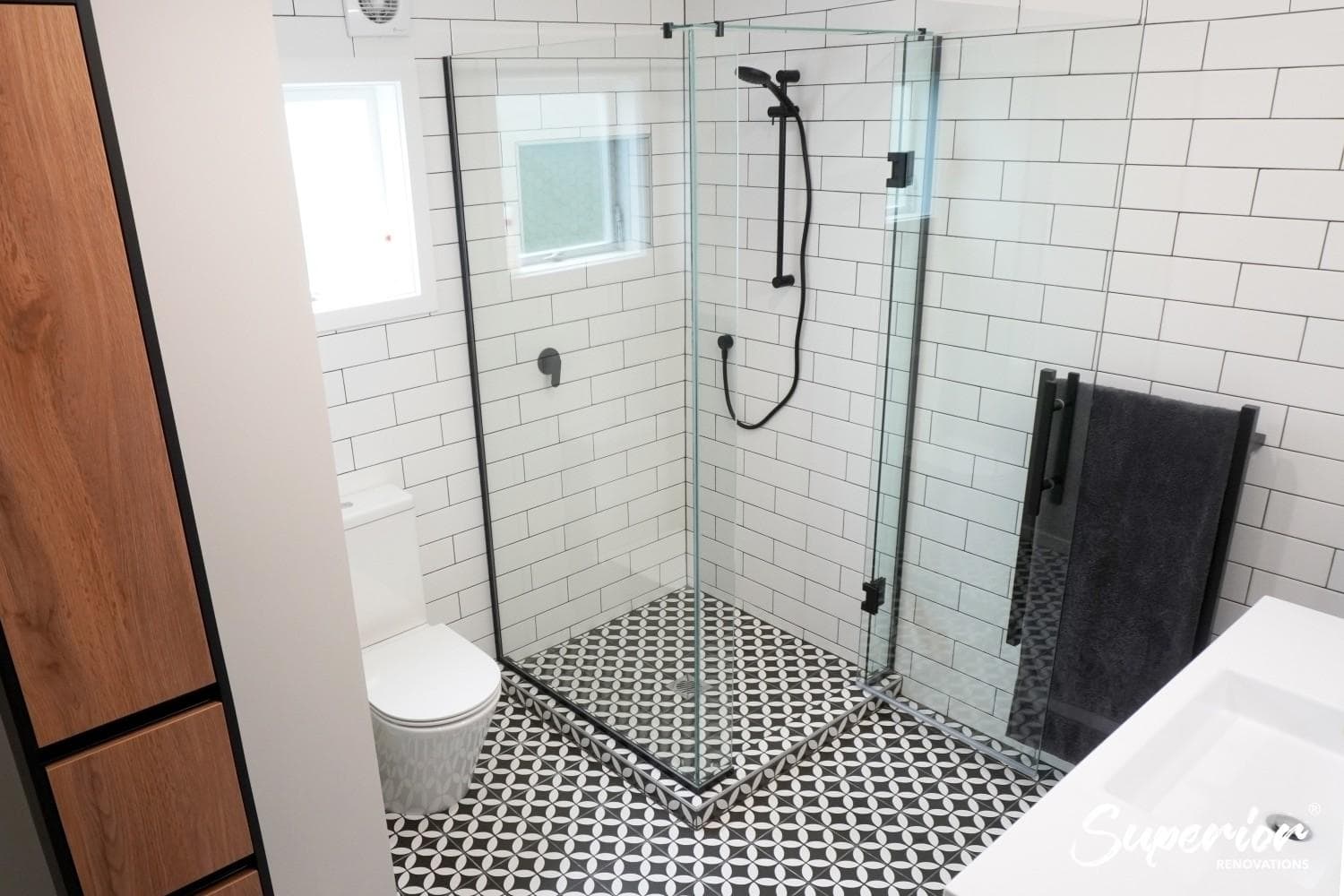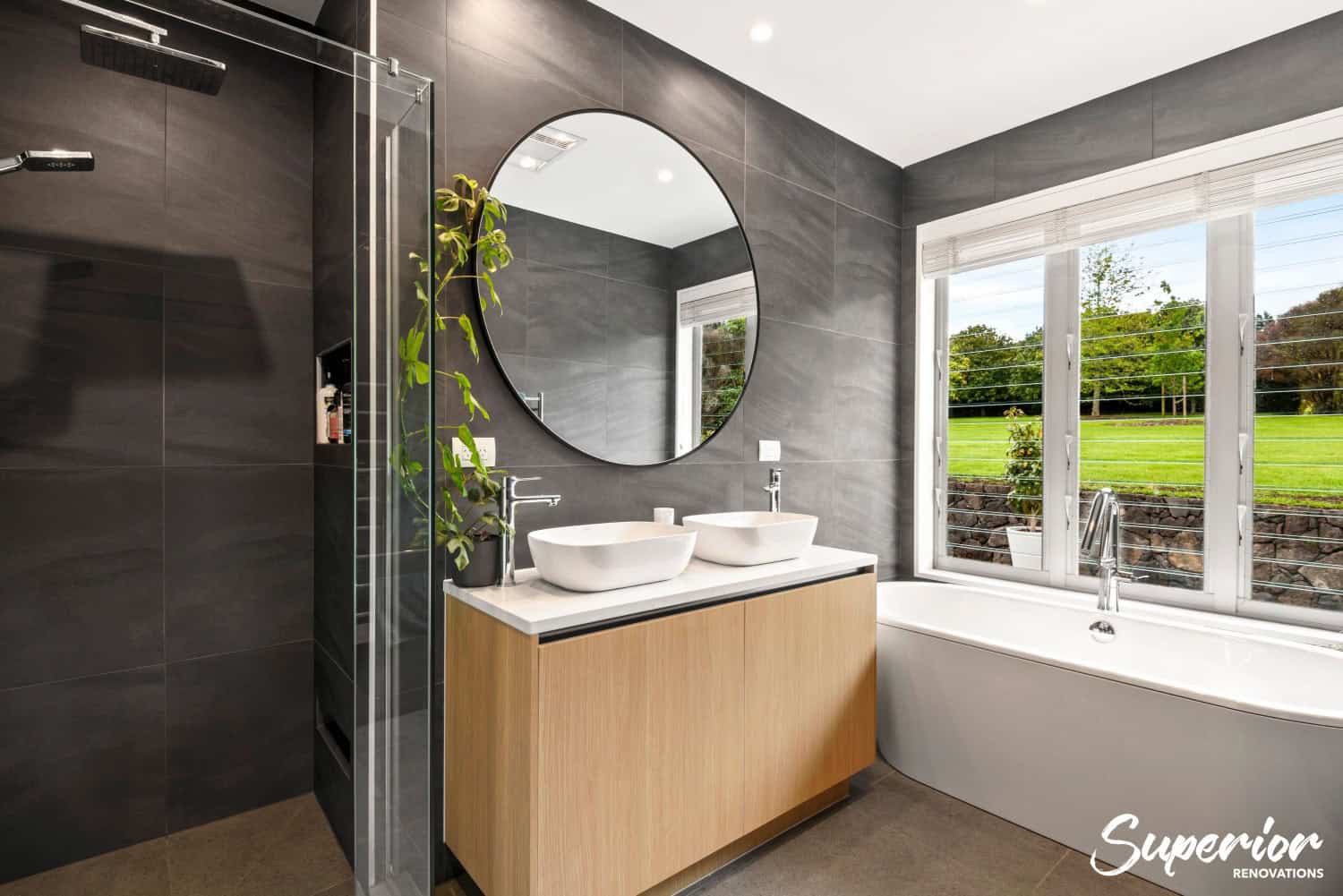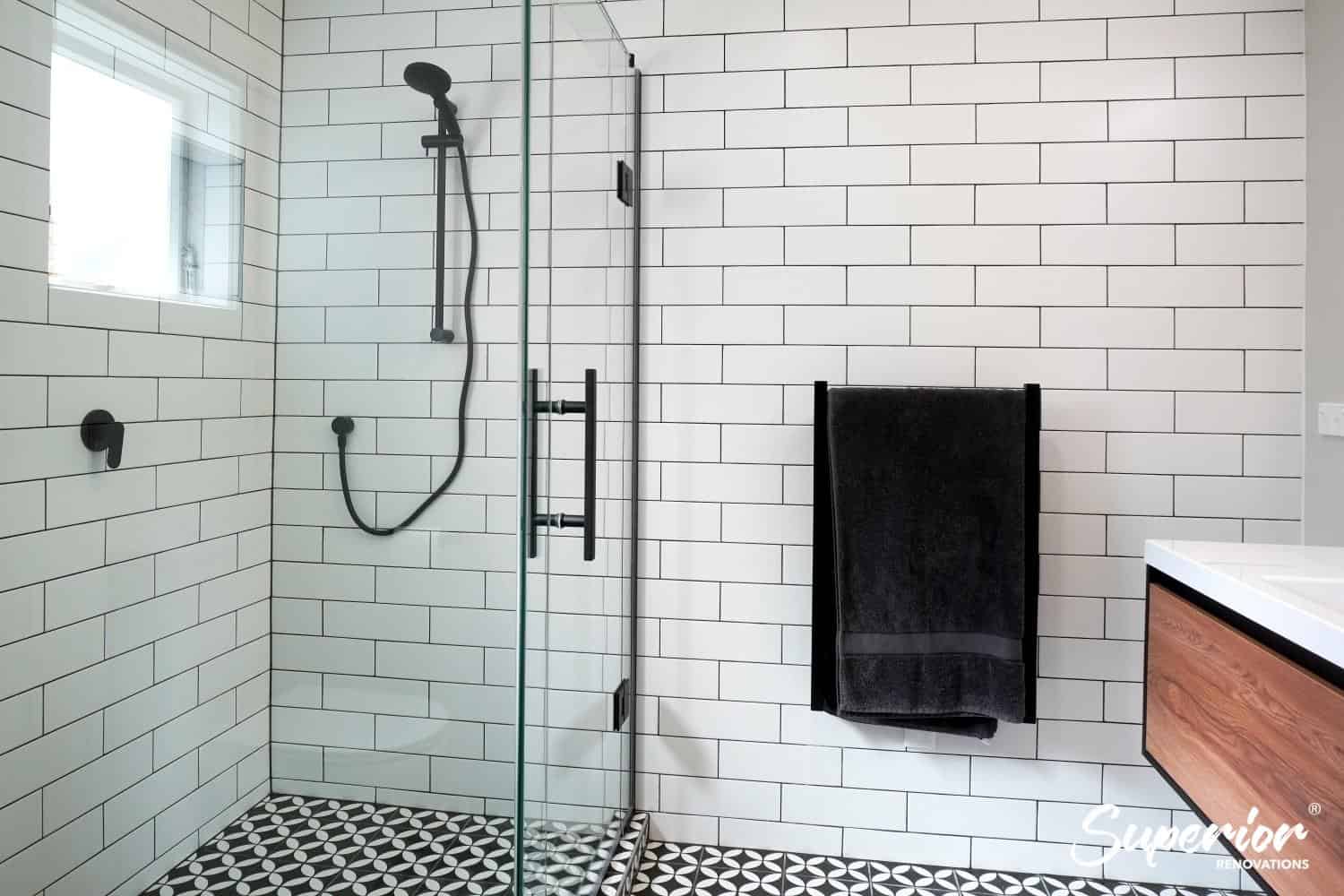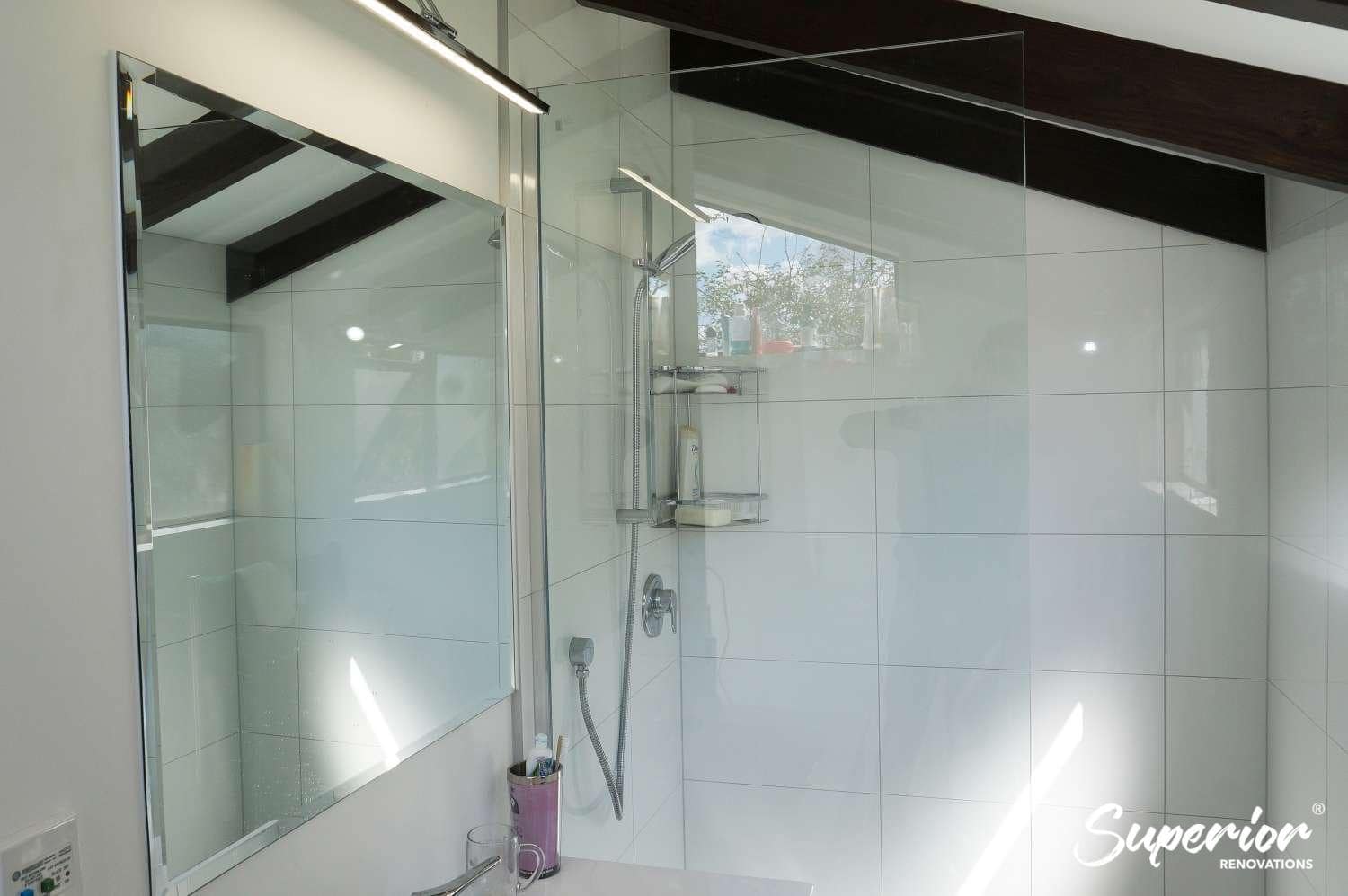

Author: Dorothy Li

KIT 06 02 - Superior Renovations
Kitchen Renovation

Kitchen Layout Guide NZ: 6 Layouts & the Work Triangle

Quick answer: The best kitchen layout is the one that keeps your sink, stove and fridge close enough to move between easily — the “work triangle” — while leaving clear walkways and enough bench space for how your household actually cooks. For most Auckland homes that’s an L-shaped or galley layout in tighter spaces, and a U-shaped or island layout where there’s room to spread out.

Planning a kitchen layout is the part of a renovation that quietly decides everything else. Get it right and the room works for fifteen years without you thinking about it. Get it wrong and you spend every dinner walking around an island that’s 200mm too close to the oven. Whether you’re reworking a tight galley in a Ponsonby villa or opening up a family kitchen in Albany, the layout is the foundation — so this guide covers the six main kitchen layouts, the work triangle, the measurements that matter, and the design moves our team uses to make Auckland kitchens flow.


What Is the Best Kitchen Layout? The Six Main Types

There’s no single best kitchen layout — there’s the right one for your space and how you cook. The six layouts below cover almost every Auckland kitchen, from a single-wall apartment to a double-island entertainer.

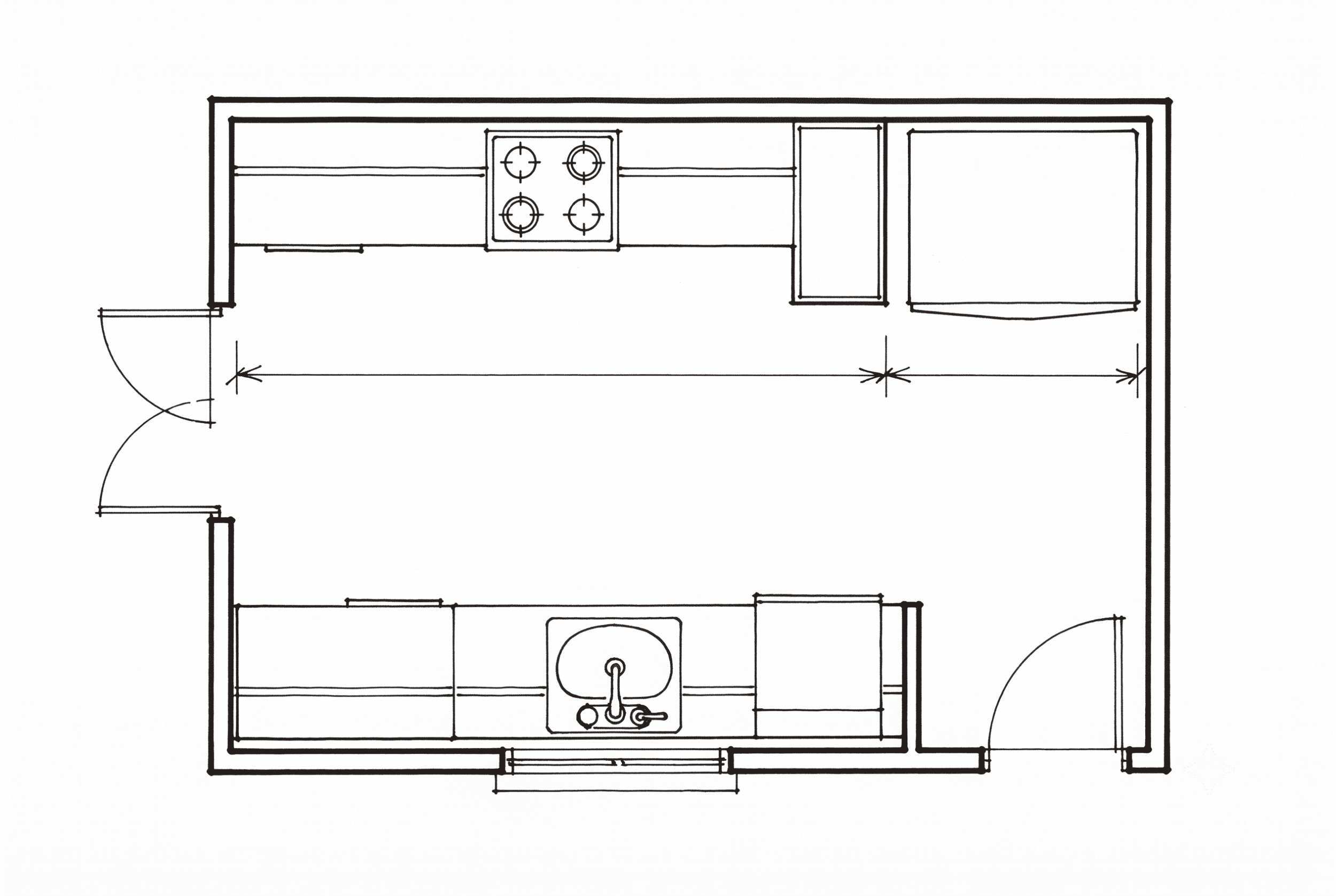
  • Galley — two parallel runs of cabinetry with a walkway between. Best for narrow rooms and one main cook.
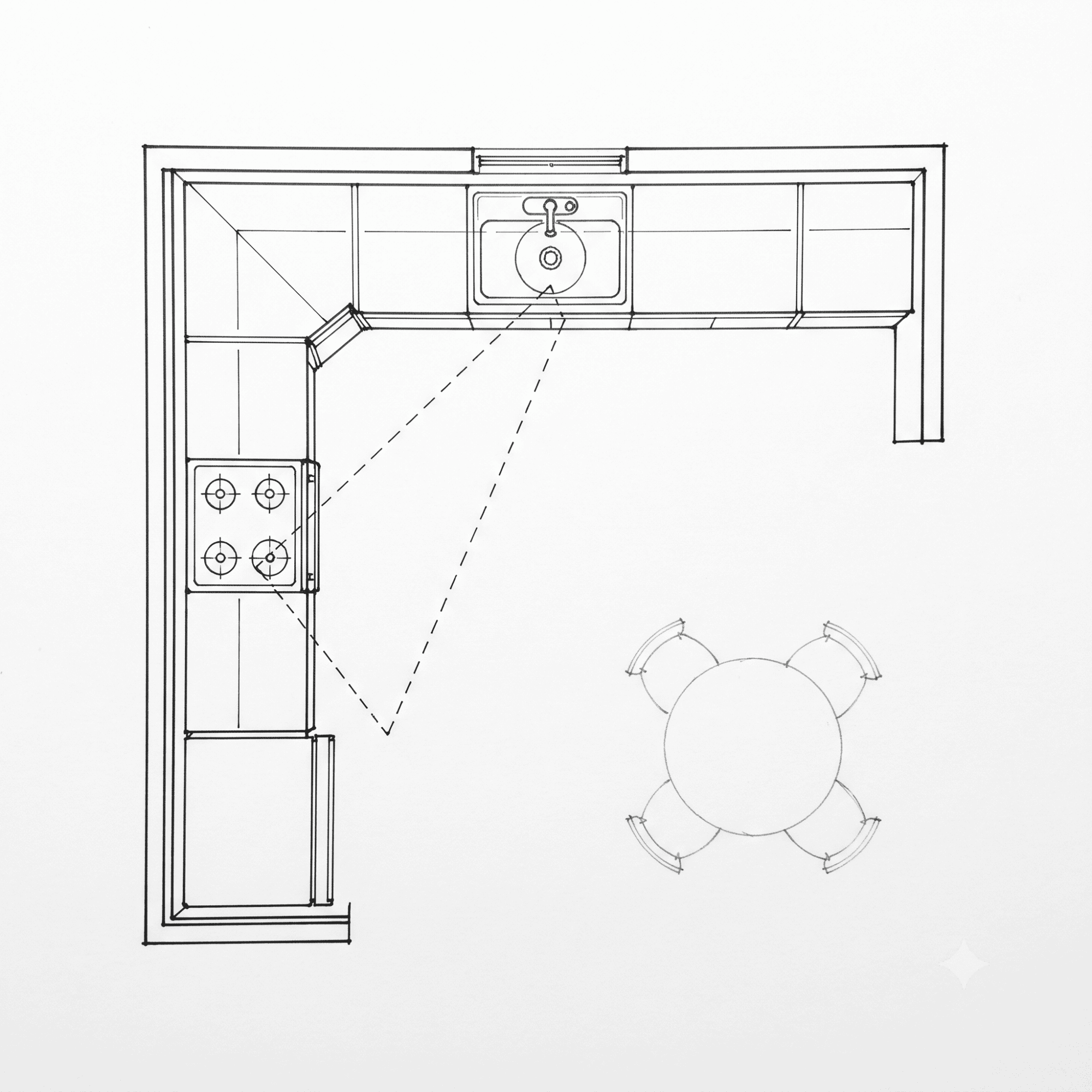
  • L-shaped — cabinetry along two adjoining walls. The most versatile layout; suits small-to-medium kitchens and open-plan corners.
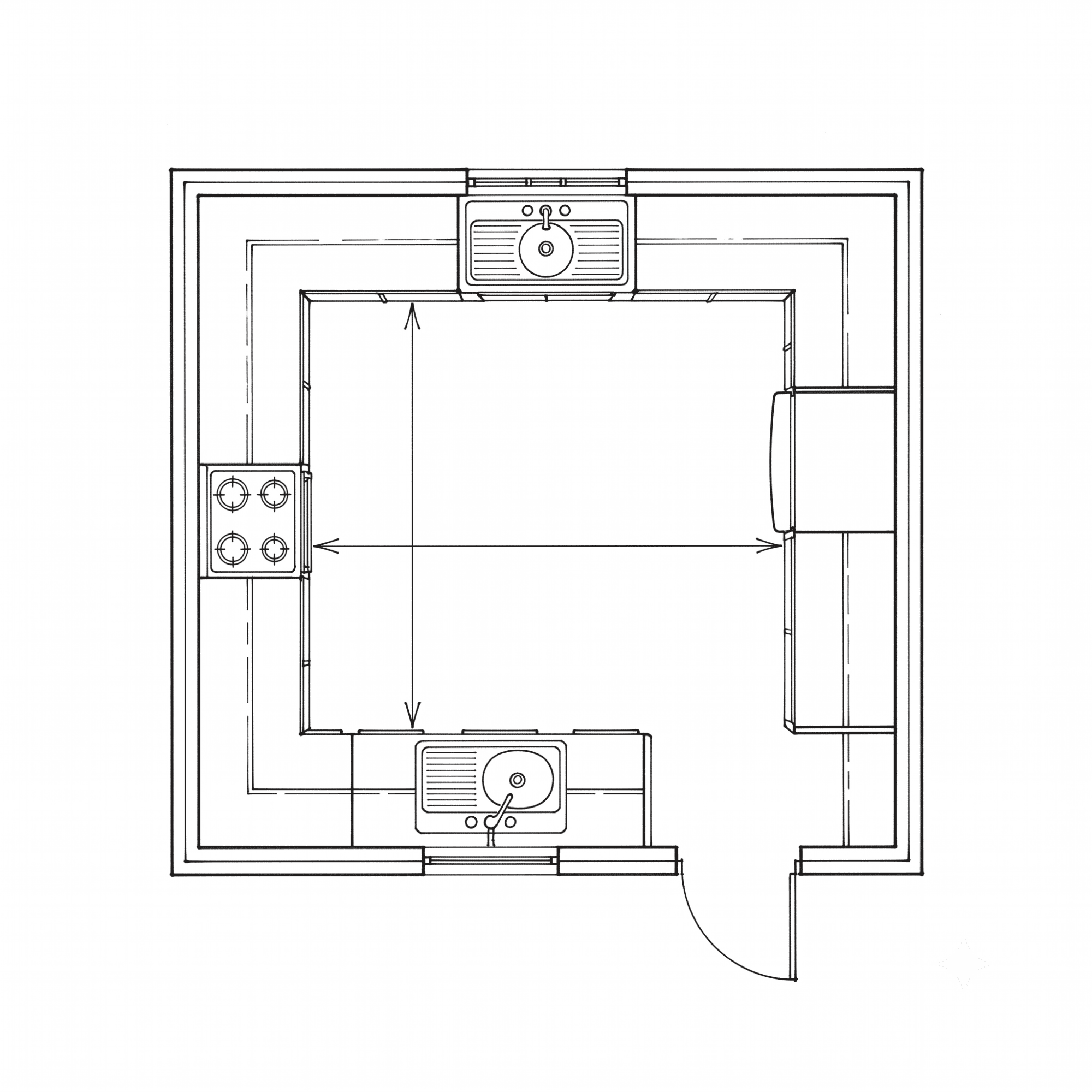
  • U-shaped — cabinetry on three walls. Maximum bench and storage; needs a larger room.
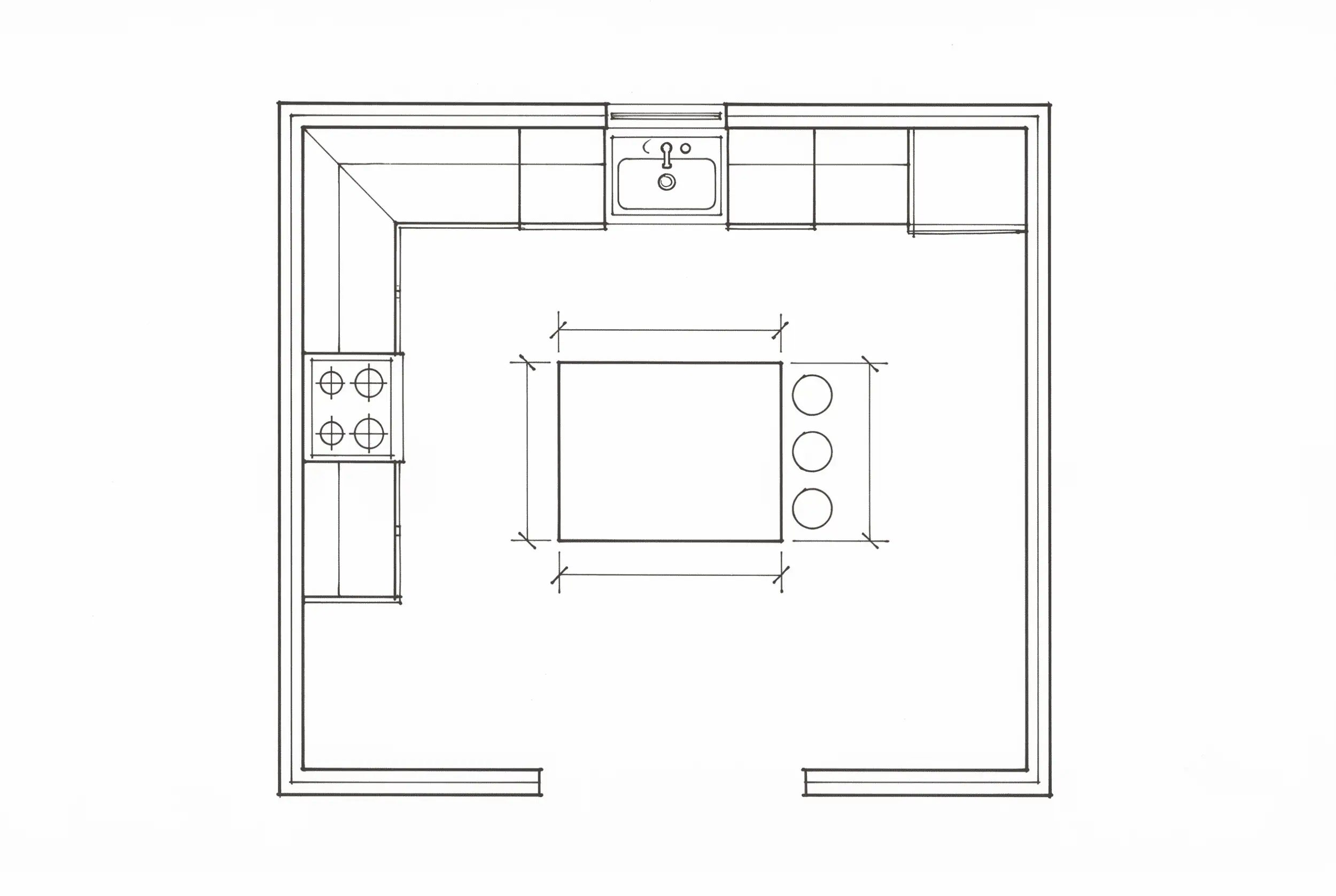
  • Island — a freestanding bench in the centre, added to an L, U or open-plan layout for prep, storage and seating.
  • Peninsula — an island connected at one end, giving the same benefit where there isn’t room for a standalone island.
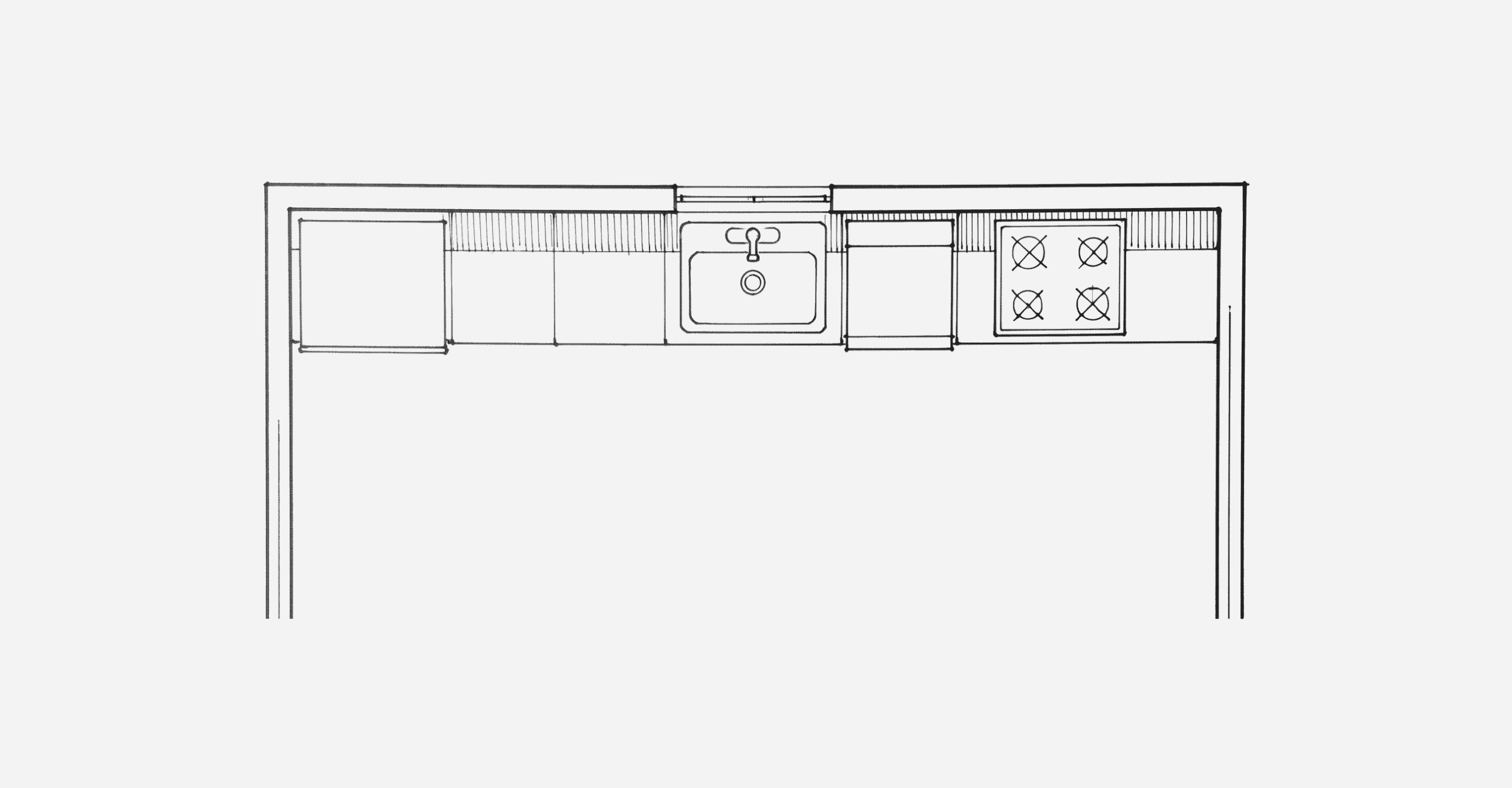
  • Single-wall — everything on one wall. The footprint-saver for apartments and very small spaces.

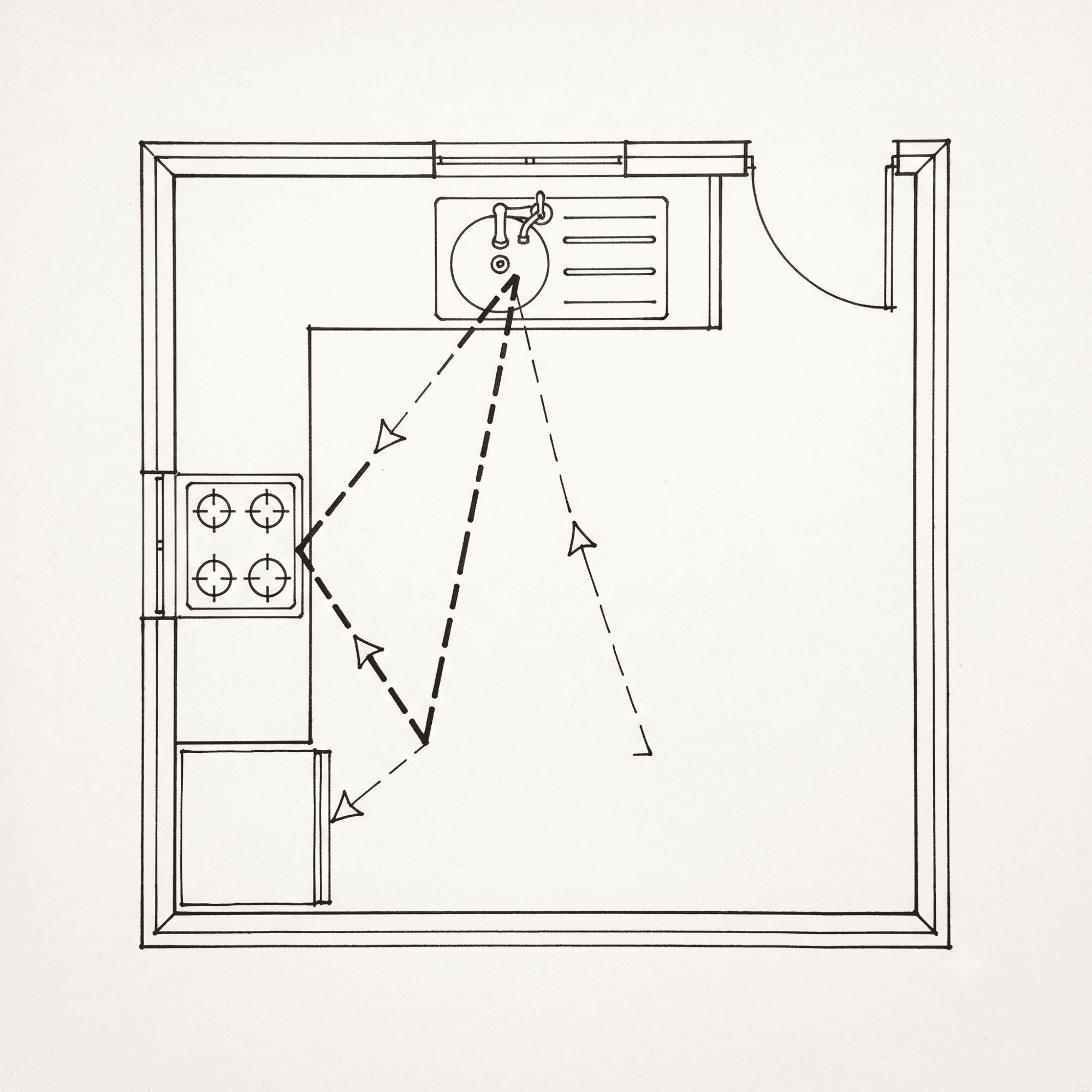
At the centre of all six is the work triangle: the path between your sink, stove and fridge. Keep the three legs adding up to roughly 4–8 metres with no through-traffic crossing the middle, and the kitchen will feel efficient no matter which layout you choose. Everything else — storage, lighting, finishes — is built on top of getting that triangle right.


Kitchen Ergonomics and the Work Triangle

Ergonomics is the study of designing a space around the people using it, rather than making people adapt to the space. In a kitchen, that mostly comes down to the work triangle — and it’s the single most useful planning idea we give clients.

The work triangle connects the three spots where the actual work happens: the stove (cooking), the sink (cleaning and prep), and the fridge (storage). The rule is simple. Those three points should sit close enough to move between in a few steps, and nothing — no island, no dining table, no walkway — should cut through the middle of the triangle.

“The work triangle is old, but it still holds. What’s changed is that modern open-plan kitchens run on zones as much as the triangle — a prep zone, a cooking zone, a cleaning zone, a storage zone. In a busy Auckland family kitchen with two people cooking, zoning is what stops everyone colliding at the same bench.”
— Dorothy Li, Design Manager, Superior Renovations

💡 Quick tip: if two people cook in your house regularly, plan for it. Allow 90–120cm of walkway so two people can pass, and give the second cook their own bit of bench away from the main triangle.


7 Essentials to Plan Before You Choose a Kitchen Layout

Whatever shape your kitchen ends up, it has to be livable first. You need to move around it without bumping into things, and open every cabinet and appliance door without it hitting something else. That’s why space planning comes before shape. Here are the seven things our designers work through before locking in any layout.

1. Foot Traffic and Designated Storage Zones

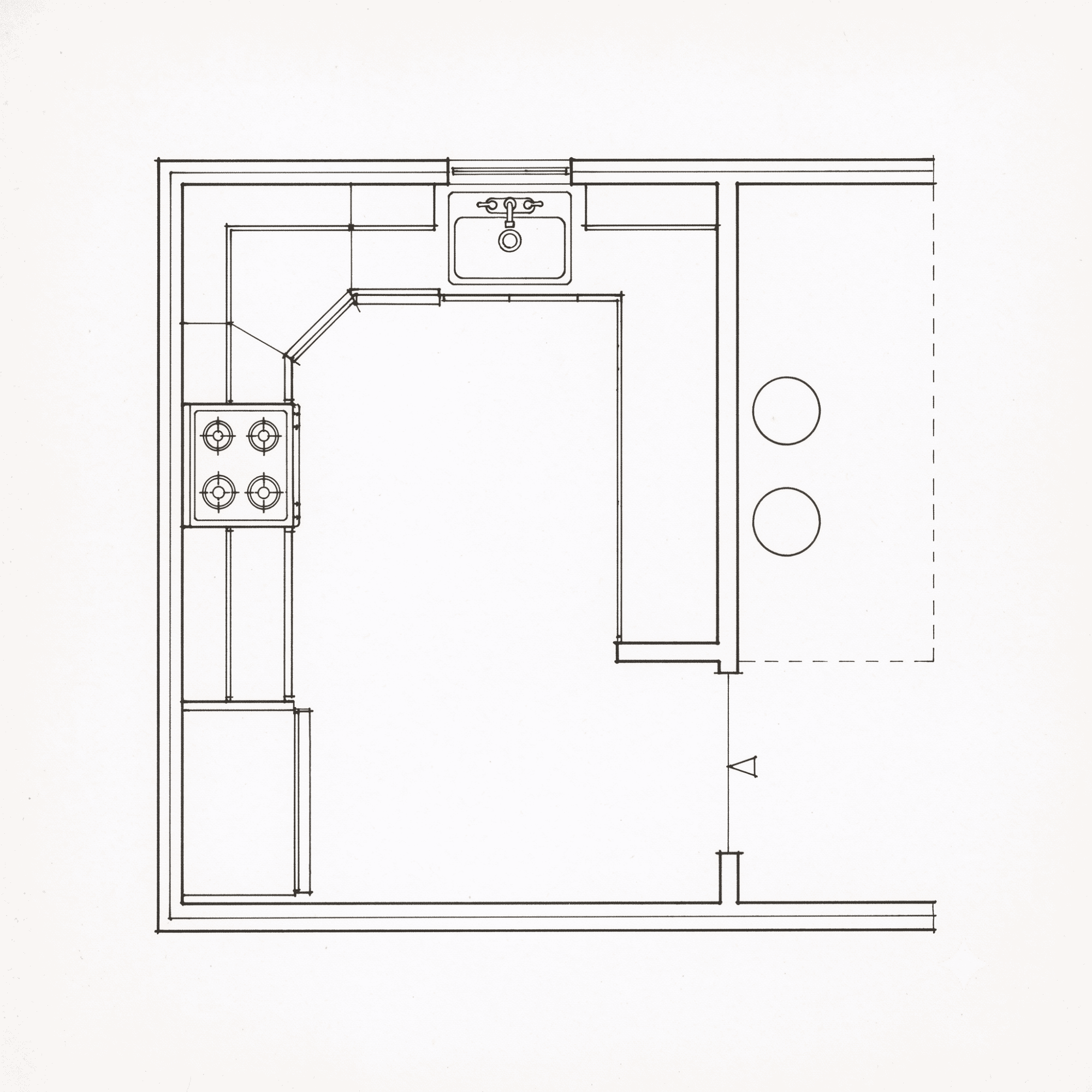
Your first job is a clear primary pathway through the kitchen that doesn’t get blocked when the oven or dishwasher door is open. Kitchens are high-traffic — usually the busiest room in the house. Map where everything lives before you design: big appliances, cutlery, everyday utensils, the washing zone, the cooking zone. Give each a designated home. The drawing below shows how the zones should fall.

Kitchen layout zones for circulation, preparation and cooking

Clear zones for circulation, meal prep and cooking (Image courtesy RoomSketcher)

2. Distance Between Your Fixtures

A cramped kitchen looks fine on a plan and fails in real life. Think about the gap between your cooking zone and your sink, and don’t let the fridge sit so far from the stove that you’re walking laps mid-cook. Your dishwasher wants to be right by the sink so you can rinse and load in one move. The plan can hide these problems; the daily cooking won’t.

3. Distance Between Your Island and the Cooking Area

If you’ve got an island, the gap between it and the cooktop matters more than almost anything else. Too far and your prep-to-cook flow falls apart. Too close and only one person can work in the space, and the island’s own cabinet doors start colliding with the run behind them. Aim for 100–120cm of clearance around an island.

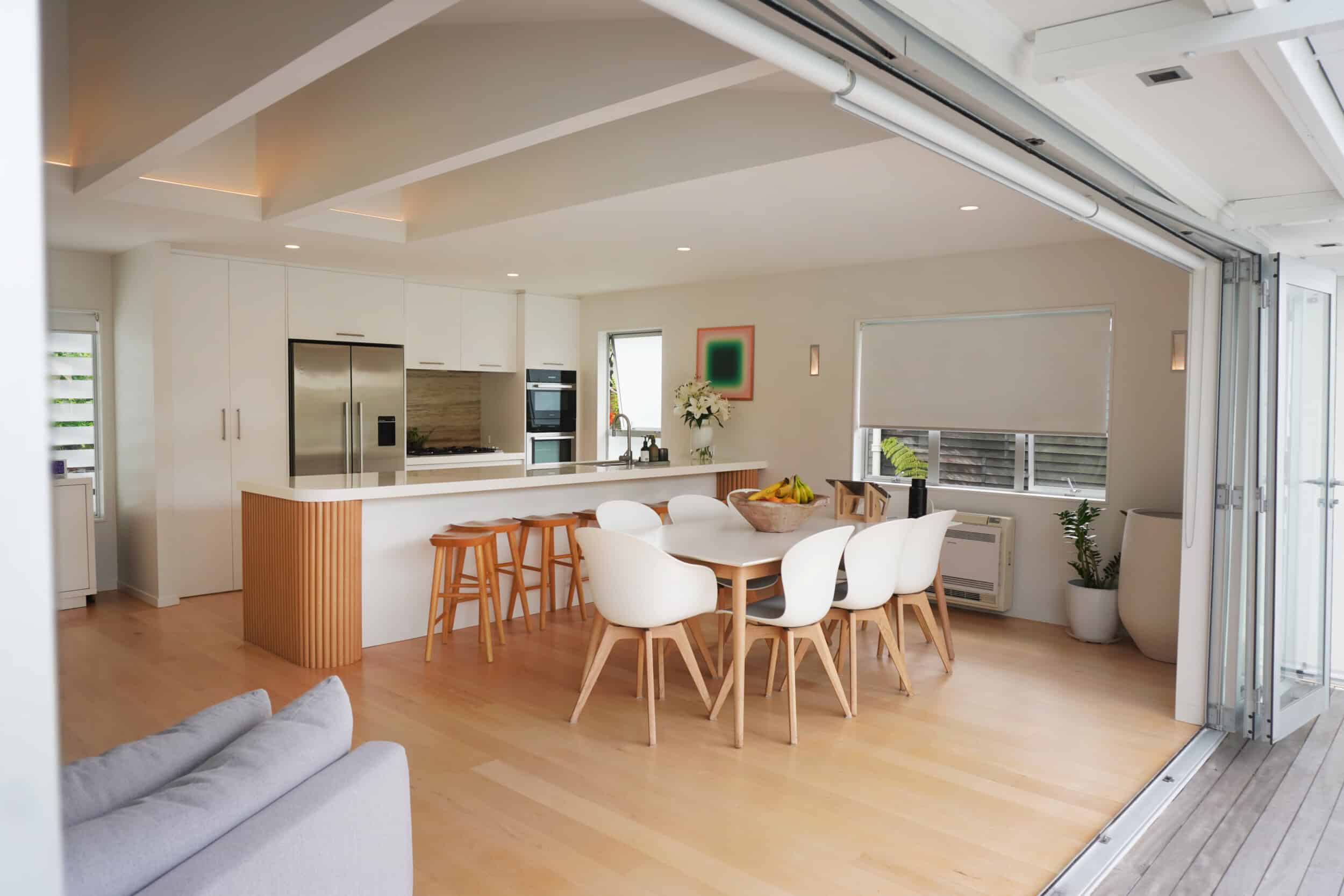
L-shaped kitchen island, Blockhouse Bay renovation

This island from our Blockhouse Bay renovation sits a clear distance from the counters

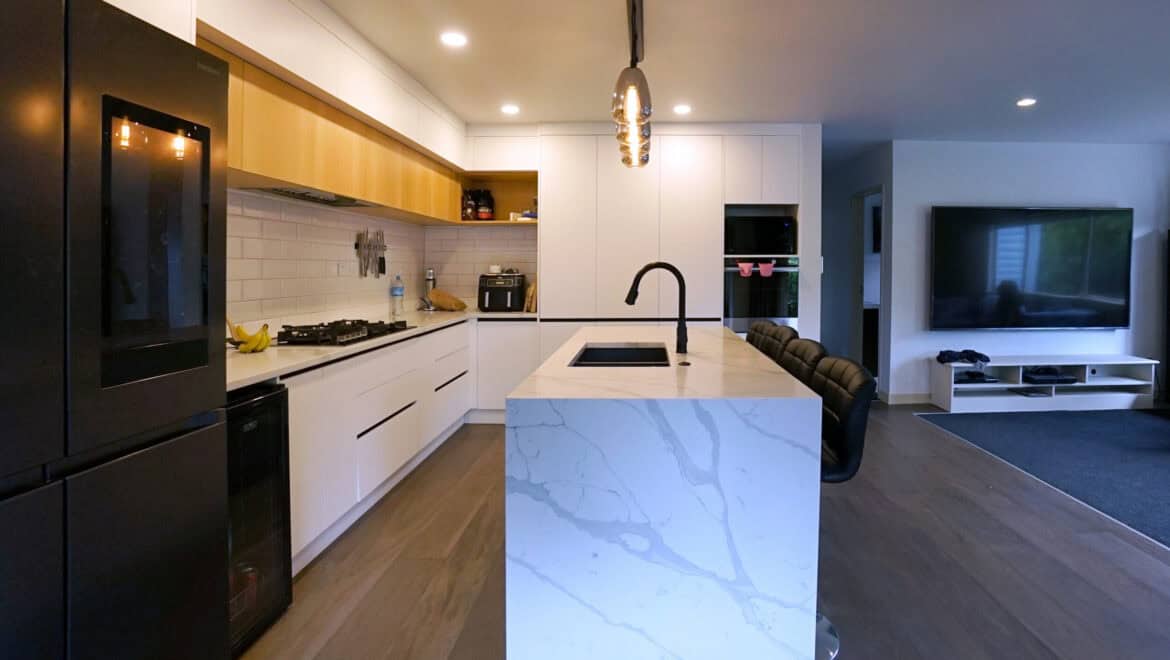
L-shaped kitchen with large island and bar stools, Stanmore Bay

L-shaped kitchen from our Stanmore Bay renovation — large island with bar stools and a hob

4. Place the Sink and Cooktop First

A good rule: figure out where the sink, cooktop and dishwasher go before anything else. That’s where most of the action happens, so designers lock those in before designating prep and storage zones. Leave plenty of room around both the sink and cooktop. If you’ve got a large island with surface area to spare, putting the sink on it can give you a generous work zone.

5. Be Smart About the Cooktop

Ventilation matters more in Auckland than people think — our humid summers and the steam off a good fry-up will leave moisture sitting in the room, and over time that means mould on the walls and ruined cabinetry, especially in an open-plan setting. You can put a cooktop on an island, but a proper island extraction system is expensive and you lose the splashback that catches the splatters. We usually steer clients toward a cooktop on an exterior wall, where ventilation is simpler to run and you get a splashback for free.

6. Keep Vertical Storage in Mind

Storage makes or breaks a kitchen. A beautiful kitchen with nowhere to put things is a bad kitchen. Not everyone has a big footprint to work with — but a small kitchen doesn’t have to mean no storage. Go up. Wall-mounted vertical storage reached by a kitchen ladder, tall cabinetry, hooks and open shelves all claw back space the floor plan can’t give you. For more on squeezing storage out of a tight footprint, our small kitchen design ideas guide goes deeper.

7. Create a Floor Plan and Visualise It in 3D

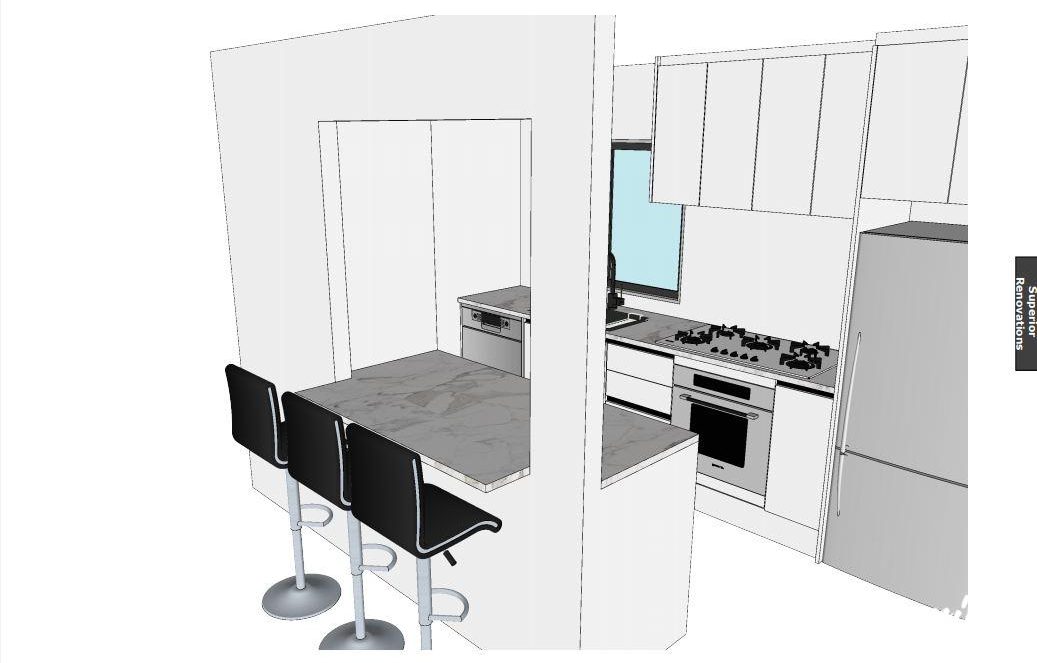
Once materials, dimensions and the look are settled, get the kitchen drawn in 3D before anything is built. Most renovation companies — us included — give clients 3D drawings so they can see the kitchen before manufacturing and installation start. Even on a DIY project, a 3D drawing from an app or a designer is worth the effort. It’s far cheaper to move a cabinet on screen than after it’s installed.


Key Kitchen Measurements That Make a Layout Work

The difference between a kitchen that feels right and one that fights you is usually a few centimetres. These are the numbers our designers plan to.

  • Bench height: 900mm standard, 600mm deep.
  • Clearance in front of appliances: at least 120cm for easy loading and unloading.
  • Island clearance: 100–120cm all the way around for traffic flow.
  • Seating overhang: 30–45cm of bench overhang for comfortable bar-stool seating.
  • Two-cook walkway: 90–120cm so two people can pass without a shuffle.

Then layer your lighting — pendants over an island, LED strips under the cabinets for the bench — and choose a benchtop that shrugs off spills and Auckland humidity. Quartz and quality laminate both hold up well.

💡 Quick tip: if anyone in the house is left-handed, plan their landing space on the right of the stove, not the left. Small thing, noticed every single day.

If you’re working out what your project will cost alongside the layout, our kitchen renovation cost calculator gives you a ballpark by scope before you commit.


7 Kitchen Layout Ideas to Keep It Functional

Once the layout’s locked, these are the moves that keep it working day to day — small kitchen layout ideas and full-size ones alike.

1. Vertical Wall Storage

Storage is the backbone of a functional kitchen. Build organisation into the walls — magnetic strips, hooks, rails. Vertical wall storage works in any size kitchen and comes in endless configurations, so it’s the first place to look when bench and cabinet space runs short.

2. Make Room for an Island

Where there’s space, plan for an island. It’s where everyone gathers, it adds storage, and it makes the whole kitchen more usable. Even a compact island earns its footprint as prep space and casual seating.

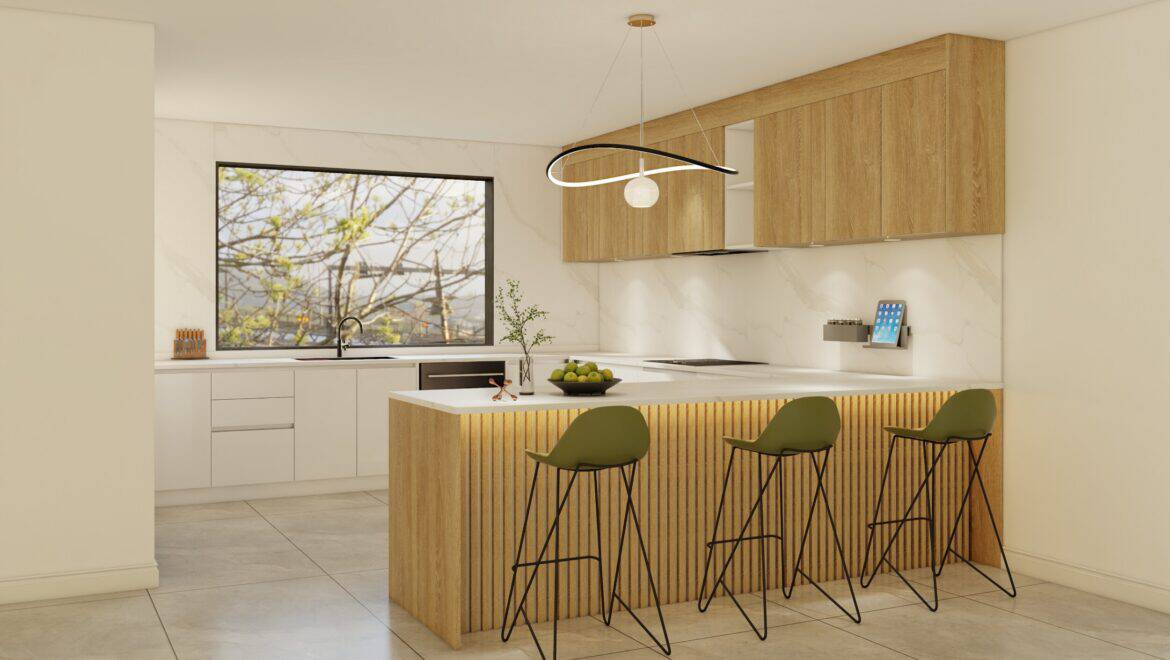
Kitchen island in an Auckland renovation

3. Hide It in the Corner

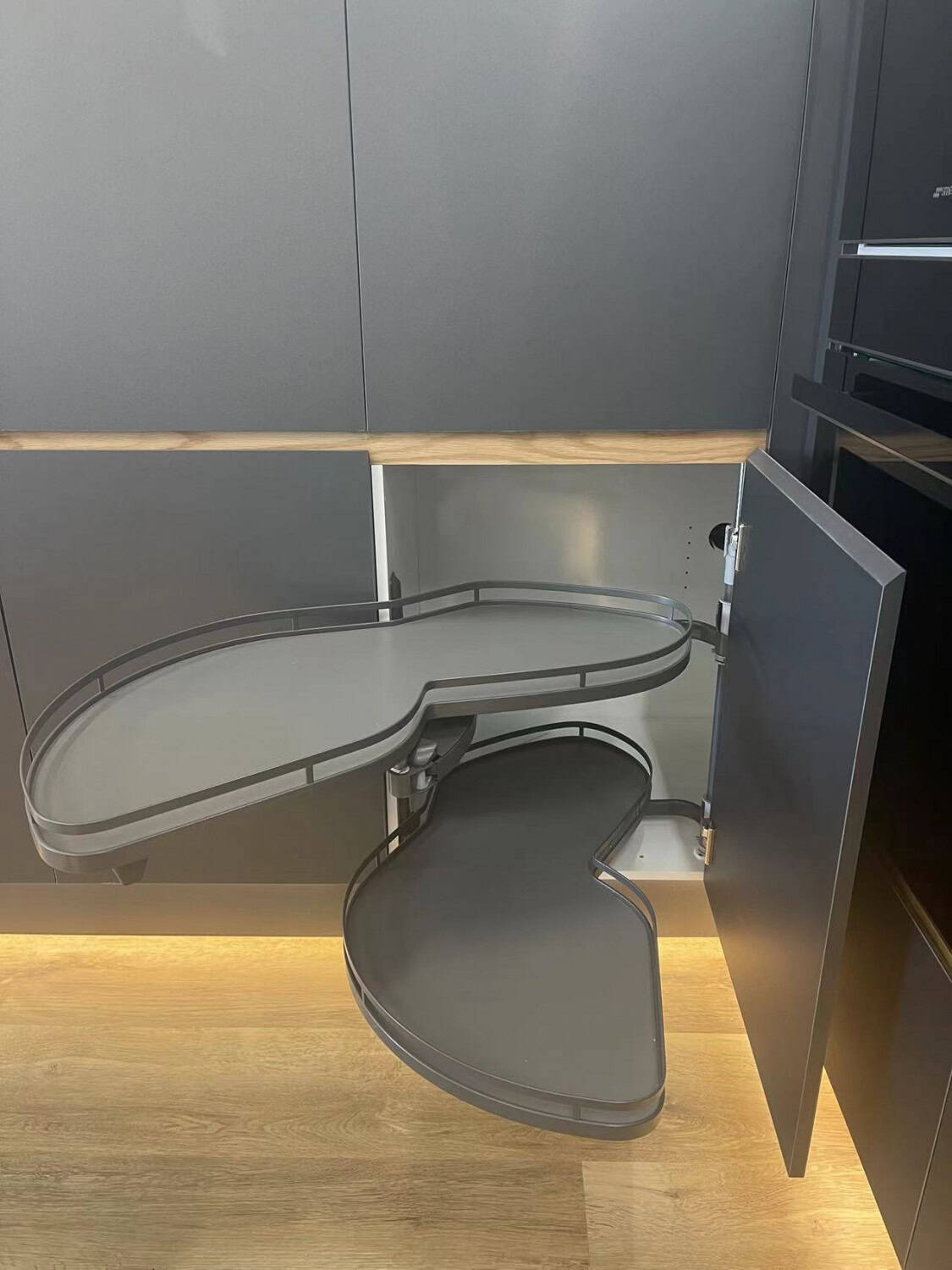
Dead corner cabinets are wasted space. A two-tiered carousel or a magic-corner pull-out turns that black hole into proper storage you can actually reach — somewhere to stash both the everyday gear and the things you use twice a year.

Two-tiered carousel corner storage in a kitchen layout

Magic-corner pull-out

4. Clean-Lined Cooktop

If counter space is tight, a flat glass ceramic cooktop keeps the bench reading as one continuous surface. It suits any kitchen style and doesn’t break up the line of the bench the way a raised cooktop can.

5. Sort the Spices

A functional kitchen is won in the details. A dedicated spice drawer with small containers — rather than a cupboard where everything migrates to the back — is the kind of small organisational win you notice every time you cook.

Organised pull-out kitchen drawers

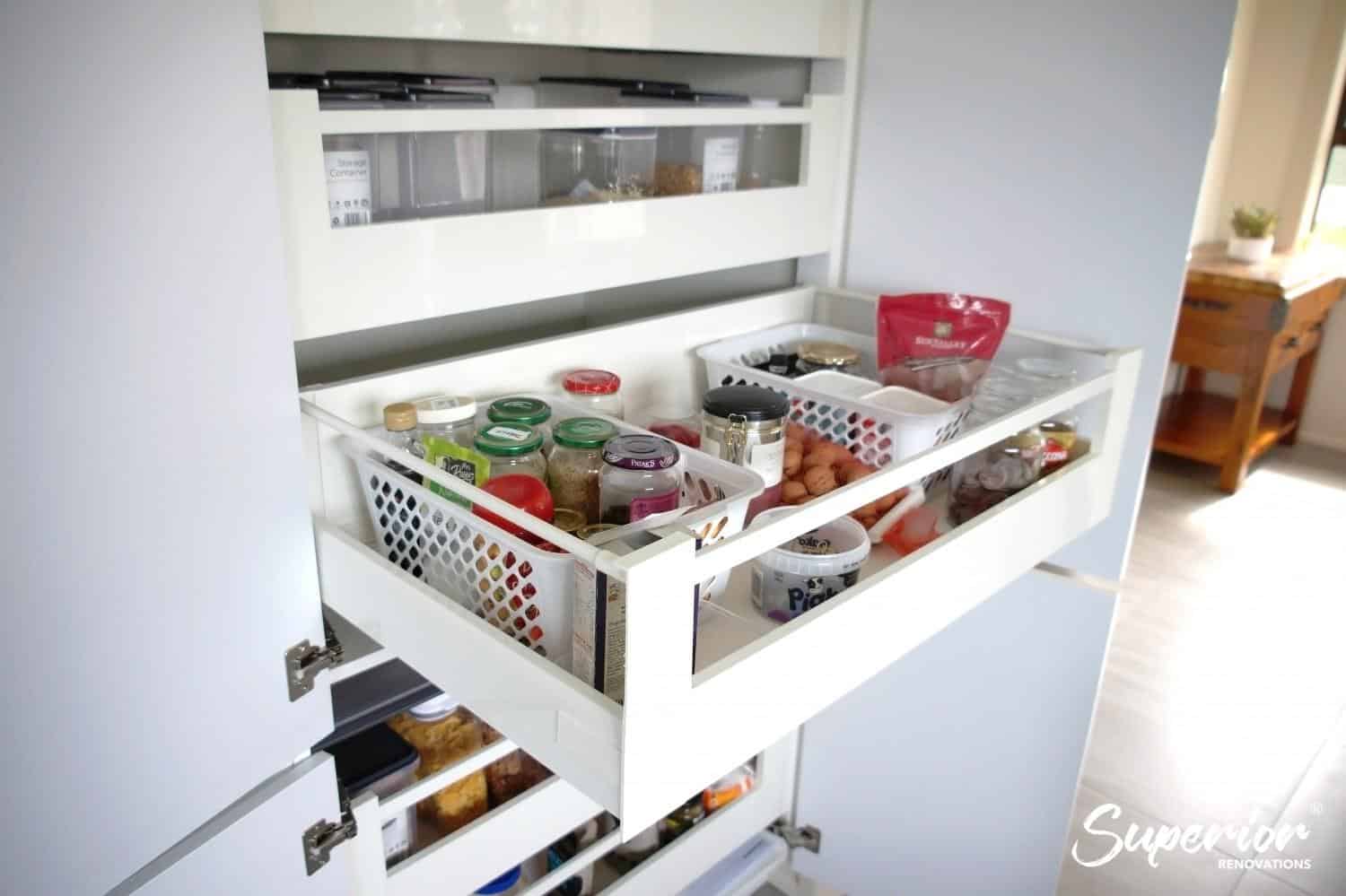
Pantry with pull-out drawers

6. Keep Continuity

You don’t need a big budget for a resolved look. Integrated appliance doors that match your cabinetry give a unified, finished kitchen without the cost of a full custom fit-out — the eye reads one clean run instead of a row of different appliance fronts.

7. Light the Dark Spots

Nobody enjoys hunting through a dark drawer. Plug-in LED strips with motion sensors inside drawers and cabinets are cheap and genuinely useful, and good task lighting over the bench is non-negotiable in a working kitchen.

Kitchen splashback lighting in a functional kitchen layout

Lighting on the splashback


The 6 Most Popular Kitchen Layouts — Which Suits Your Space?

Now the dimensions are sorted, here are the six layouts in detail. The right one comes down to your room’s shape and how your household actually uses the kitchen.

1. U-Shaped Kitchen

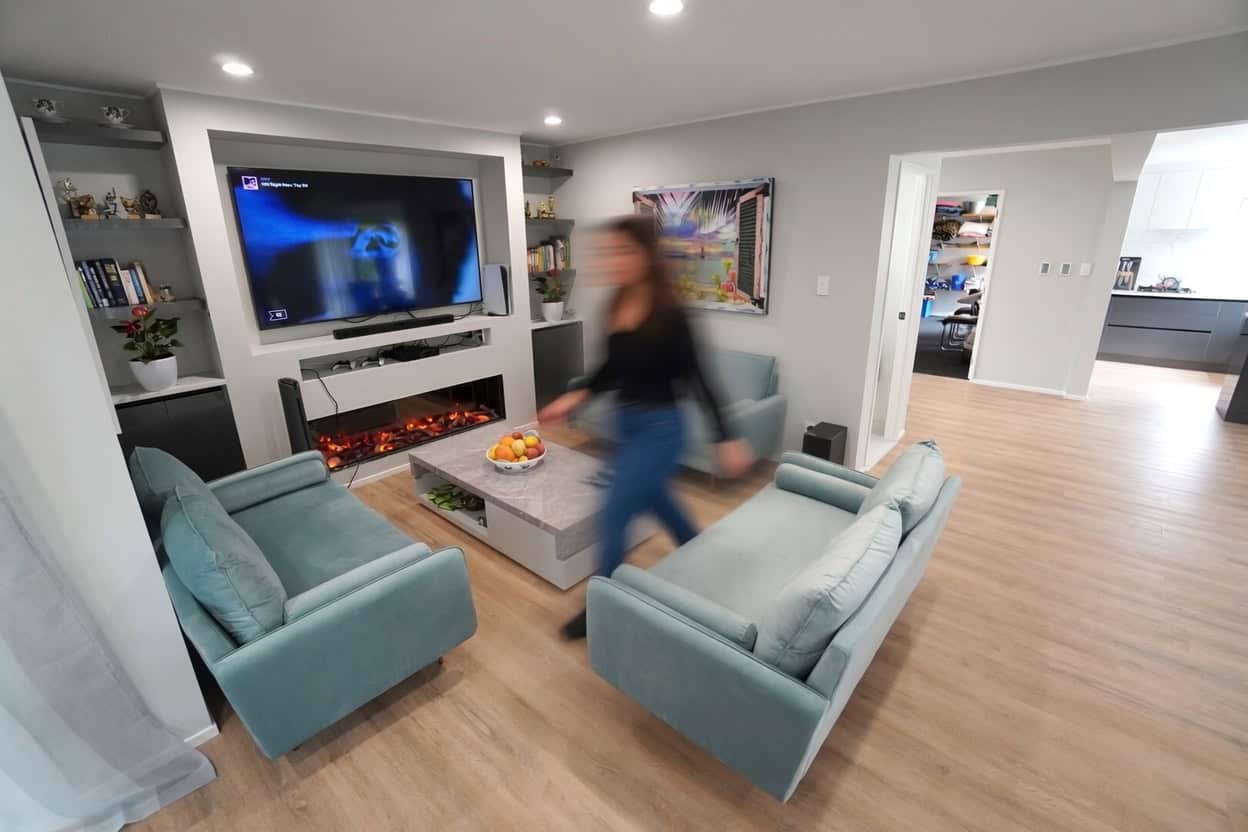
U-shaped kitchens run cabinetry along three walls, forming a U. They give you ample room to cook, store and entertain, and a larger U can take an island in the middle for extra bench space. You’ll usually find them in a standalone room or the corner of a large open space. The modern version has evolved — an L-shaped run plus a disconnected island that completes the U — which fits the open-plan living most Auckland homeowners want now.

Project specs + photosGuru and Neeta’s modern U-shaped kitchen

Got a small kitchen but love the U? Go for the modern take — an L-shaped run with a narrow island that doubles as a breakfast bar.

Project specs + photosAmber and Craig’s U-shaped kitchen in Hillsborough

5 Ideas for a U-Shaped Kitchen

Central dining table: if there’s room, an island adds storage and a gathering point — but in a genuinely large kitchen, a dining table can be more comfortable than crowding around an island.
Add depth with paint: a U-shape can read boxy. A single dark feature wall, or dark paint on the base of an island, creates a focal point and adds depth.
Pendant lighting: a large kitchen needs to be well lit. Pendants over the middle of the room or a dining area define the space and make it more welcoming.
Open shelving: swapping some upper cabinets for floating shelves opens the room up. Style them simply and keep them tidy.
An entertaining space: if you host, leave room to talk with guests while you cook — the kitchen has always been where everyone ends up anyway.

2. L-Shaped Kitchen

An L-shaped kitchen suits smaller spaces — apartments, units, kitchens for couples or singles. It has one less wall of cabinetry than a U, so less storage and bench, but it’s a cleaner fit for a compact room. Build storage vertically to make up the difference. It’s also the layout of choice for an unused corner, and in an open-plan living/dining space you can add a small island that doubles as a dining spot, freeing you from a separate table you never use.

Project specs + photosL-shaped kitchen with large island, Blockhouse Bay

5 Ideas to Maximise an L-Shaped Kitchen

Link with materials: matching the surface, cabinetry colour and hardware across both runs gives a cohesive look and makes the room feel larger.
Balance your storage: paint upper cabinets the same colour as the walls so they recede, and go a touch lighter on the lowers. You keep the storage without the bulk.
Create a practical workspace: keep the work triangle tight so everything flows.
Balance the L with a window: position one run under a window where you can — it balances the layout and floods the room with light.
Store vertically: floor-to-ceiling cabinetry on one wall uses the full height, and a magnetic rail keeps knives off the bench.

3. Galley Kitchen

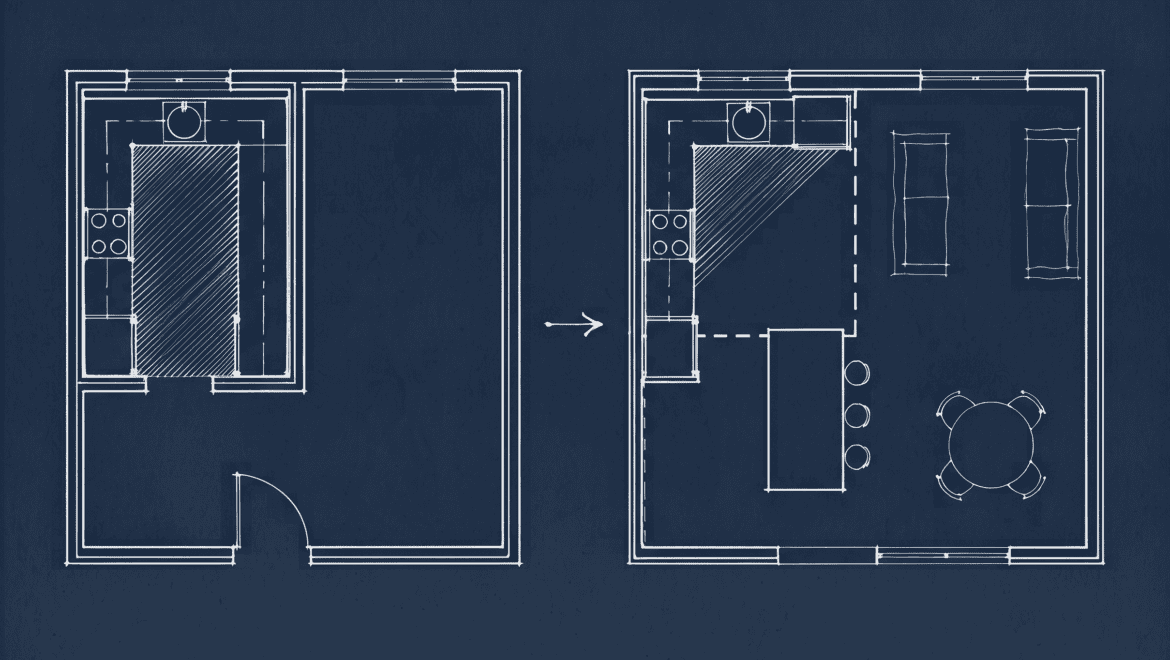
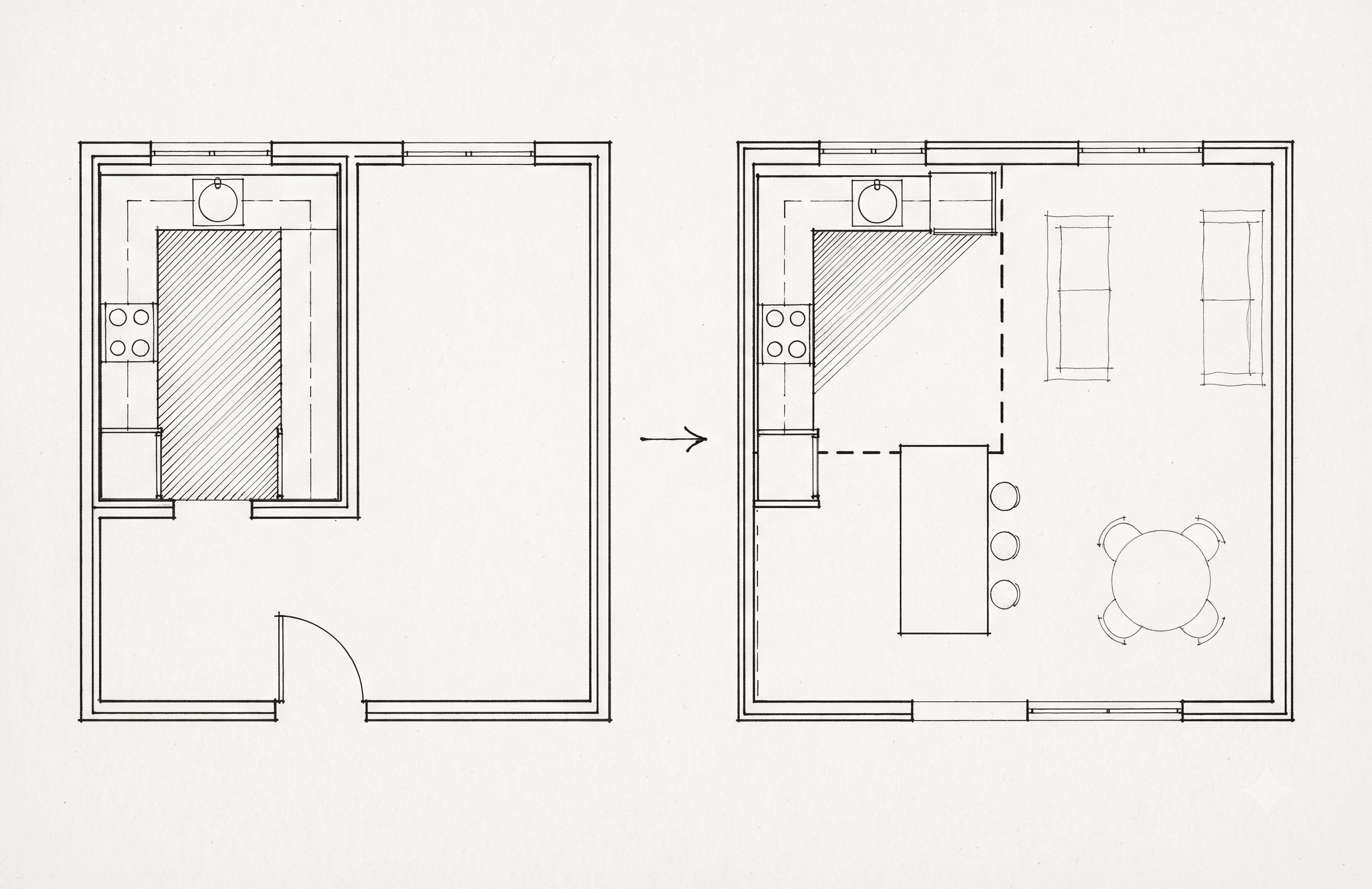
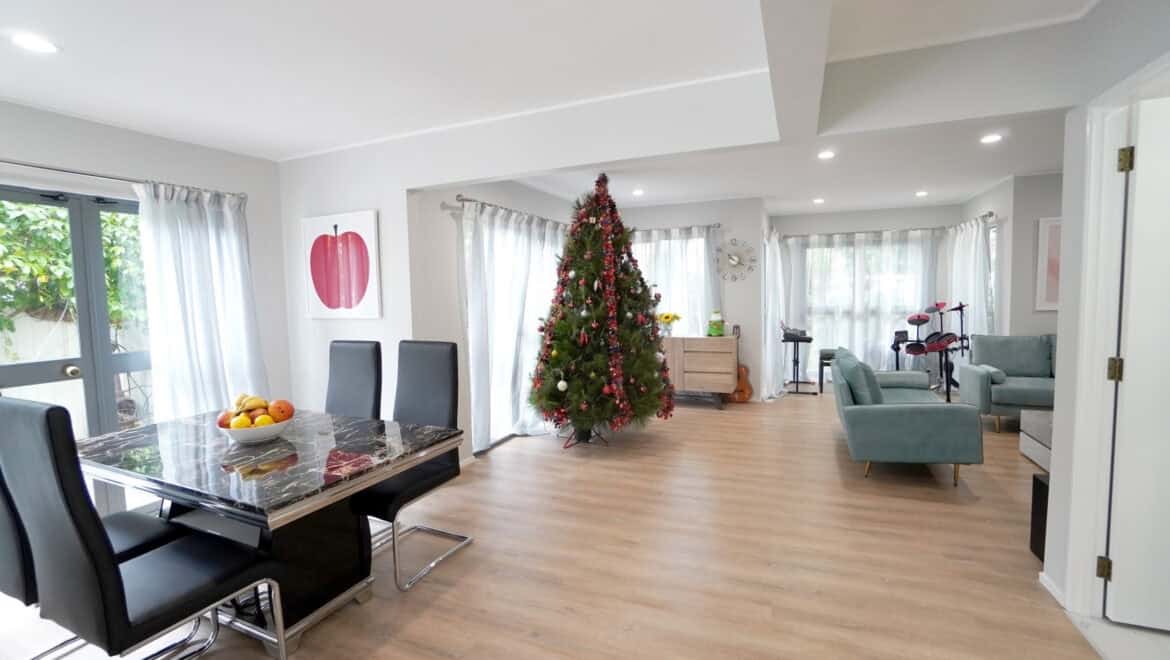
Galley kitchens run two parallel walls with a walkway between, often in a room of their own. They’re common in older Auckland homes, and increasingly people knock out one wall to fold the galley into an open-plan living space. If you’re removing a wall with cabinetry against it, turn that run into a long island so you keep the storage and bench. Another option is a large open servery window in the wall instead of demolishing it entirely. If you’re weighing up opening the room right up, our open plan kitchen guide covers what’s involved.

Open-style galley kitchen with island, Auckland renovation

This client wanted her galley kitchen folded into the living space but kept the storage — so we added a servery window and extended the counter into an island for casual dining.

Photos and project specsOpen-style galley kitchen in Epsom

5 Galley Kitchen Ideas

Add lighting: natural light is ideal, but where you can’t get it, worktop spots and well-placed pendants do the job. Shiny tile, metal and glass bounce light and make the room feel bigger.
Keep it simple: handle-free doors, a monochromatic light-neutral palette, and one statement piece — a rug or a high-end tap — keep a galley feeling airy.
Open it up: the easiest way to add function is an island for prep, storage and casual seating.
Hanging storage: rails for pots and pans, or floating shelves, free up cabinet and counter space.
Clear the bench: a microwave drawer and tall storage keep the countertops clear, which makes a narrow galley feel calmer.

4. Island Kitchen

Islands have come and gone over the decades. Today’s island isn’t just a prep bench — it’s storage on every side, extra surface, and a casual breakfast spot. It won’t fit every room, but there are sleeker, smaller versions now, and you can add one to an L, U or galley as long as there’s clearance to move around it. For more design direction on islands and finishes, see our kitchen ideas guide.

5 Island Kitchen Ideas

Squeeze in a moveable island: tight on space? A portable island gives you extra surface and seating you can roll out of the way.
A splash of colour: in a neutral kitchen, painting the island a contrast colour is a quick lift without a full renovation.
Extra storage at one end: shelves on the end of the island beat blank panels — a 10cm-deep gap makes a handy spot for oils and condiments.
Position appliances away from the entertaining side: face the cooking onto the social area but keep the working appliances on the inside of the island.
Light it well: the island becomes the focal point and a prep zone, so it needs proper lighting overhead.

5. Peninsula Kitchen

A peninsula is an island connected at one end. It gives you the extra bench or dining area an island would, in a room that can’t take a standalone one. It works especially well with an L-shaped kitchen. Lynette’s family wanted a breakfast nook but didn’t have room for a central island — so we built a peninsula that gave them the nook without crowding the space.

Peninsula kitchen with breakfast nook, Bucklands Beach renovation

A custom peninsula in this Bucklands Beach renovation added bench space and a breakfast nook.

Project specs for the kitchen above

3 Peninsula Kitchen Ideas

Banquette seating on the back: if there’s room, built-in banquette seating fits more people around the table and turns the peninsula into a social spot.
Open shelving: open shelves keep everyday gear within reach and let more light into the room.
Light fixtures: pendants over the peninsula brighten the workspace and add visual appeal.

6. Two-Island Kitchen

Only an option in a genuinely large kitchen — two islands in the middle with a walkway between. Use one for prep and put a cooktop in the other to make it your cooking zone. Two smaller islands beat one enormous one: more accessible, easier to walk around, better flow overall.


Featured Kitchen Renovation Projects

Urban Luxury Kitchen, Parnell — Open-Plan U-Shaped

This Parnell townhouse had a tiny kitchen with no counter space. We changed the whole layout, moving the kitchen from the left of the room to the right, then added cabinetry in the dining area as extended storage — shelves with internal lights that open when needed. See the before and afters.

Open-plan U-shaped kitchen renovation, Parnell Parnell kitchen renovation Parnell kitchen renovation

Entertainer’s Dream, Massey — Modern U-Shaped Open-Plan

Guru and Neeta had a closed-off kitchen that shut them out of open-plan living. They wanted luxury and an entertaining space. We opened it up and extended the counter toward the lounge to work as a bar. See more.

Modern U-shaped open-plan kitchen, Massey Massey kitchen renovation Massey kitchen renovation

Cottage Kitchen, Mangere Bridge — Peninsula

This one was about natural elements that reflected the client’s country surroundings. A dated kitchen became a chic country-style space — treated real-wood benchtops, a butler’s sink, floating shelves, and cabinetry wrapped in Dezignatek Thermoform with a ‘Ronda’ pattern for a vintage look. See more.

Cottage-style peninsula kitchen, Mangere Bridge Mangere Bridge kitchen renovation Mangere Bridge kitchen renovation

Open-Plan Galley, Epsom

We renovated this historic Epsom bungalow for a young family — durable, easy-clean materials and an open-style galley that lets everyone share one space. See the full project.

Open-plan galley kitchen, Epsom bungalow Epsom kitchen renovation Epsom kitchen renovation

Ready to Plan Your Kitchen Layout?

The layout is the foundation of the whole renovation — worth getting right before a single cabinet is ordered. If you’d like our designers to work through your space, your work triangle and the right layout for how your household cooks, we’d love to help.

Book your free in-home consultation with Superior Renovations
Use our kitchen renovation cost calculator to estimate your project
Request a free feasibility report for your project


Kitchen Layout FAQ

What is the best kitchen layout?

There's no single best kitchen layout — it depends on your room and how you cook. The key is the work triangle: keep your sink, stove and fridge close enough to move between in a few steps, with no through-traffic crossing the middle. For tighter Auckland spaces an L-shaped or galley layout works best; where there's more room, a U-shaped or island layout gives more bench and storage. Plan the layout around your work triangle first, then choose the shape that fits your space.

What is the kitchen work triangle?

The work triangle is the path between the three busiest points in a kitchen — the sink, the stove and the fridge. The three legs should total roughly 4 to 8 metres, and nothing (no island, table or main walkway) should cut through the middle. It's the oldest kitchen-planning rule and still the most useful. In modern open-plan kitchens it's often paired with zoning — separate prep, cooking, cleaning and storage areas — to handle more than one cook at once.

Which kitchen layout is best for a small kitchen?

For a small Auckland kitchen — an apartment, a unit, or a tight villa space — a galley or L-shaped layout usually works best. A galley uses two parallel walls efficiently for one main cook; an L-shape frees up a corner and pairs well with a small island or peninsula that doubles as dining. Single-wall layouts suit the very smallest footprints. In all of them, build storage vertically with tall cabinetry and wall storage to make up for the smaller footprint.

What are the standard kitchen measurements?

Standard bench height is 900mm with a 600mm depth. Allow at least 120cm of clearance in front of appliances for loading, and 100 to 120cm around an island for traffic. Bar-stool seating needs a 30 to 45cm bench overhang, and a kitchen used by two cooks wants 90 to 120cm walkways so people can pass. Getting these few numbers right is usually the difference between a kitchen that flows and one that feels cramped.

How many kitchen layouts are there?

There are six main kitchen layouts: galley (two parallel runs), L-shaped (two adjoining walls), U-shaped (three walls), island (a freestanding central bench), peninsula (an island connected at one end), and single-wall (everything on one wall). Most Auckland kitchens are a version of one of these, often combined — for example an L-shaped run with an island, which is the modern take on the U-shaped kitchen.

Should I put my cooktop on the island?

You can, but we usually advise against it. A cooktop on an island needs an expensive extraction system to handle steam and smoke, and you lose the splashback that catches splatters — which matters in humid Auckland kitchens where poor ventilation leads to mould. Putting the cooktop on an exterior wall makes ventilation simpler to run and gives you a splashback for free. If you do want it on the island, budget properly for the extraction.

How much space do you need around a kitchen island?

Allow 100 to 120cm of clearance on all sides of a kitchen island. Less than that and only one person can work comfortably, and the island's own cabinet doors start colliding with the run behind them. More than 120cm and you're walking too far between zones. If your room can't give you at least a metre around a standalone island, a peninsula — connected at one end — is usually the better call.

Do you provide a kitchen designer and 3D plans?

Yes. We have in-house kitchen designers who develop your layout and provide 3D drawings as part of the proposal, so you can see the kitchen before anything is manufactured or installed. We provide a full renovation service — design, demolition, sourcing materials from local supplier showrooms, custom cabinetry, installation, project management, and all trades including electricians, plumbers, tilers, builders and grouters. You don't need to arrange your own tradespeople.

What's the most popular kitchen layout in NZ?

The L-shaped kitchen is the most versatile and widely used in New Zealand homes, because it suits small-to-medium spaces and adapts easily to open-plan living when paired with an island. In larger Auckland homes the U-shape and island layouts are popular for the bench space and storage they offer. The strongest current trend is an L-shaped run plus a disconnected island — a modern version of the U-shape that fits the open-plan living most homeowners now want.


Further Resources for your kitchen renovation

  1. Featured projects and Client stories to see specifications on some of the projects.
  2. Real client stories from Auckland.

Need more information?

Take advantage of our FREE Complete Home Renovation Guide (48 pages), whether you’re already renovating or in the process of deciding to renovate, it’s not an easy process, this guide which includes a free 100+ point check list – will help you avoid costly mistakes.

Download Free Renovation Guide (PDF)


finance - Superior Renovations

Have you been putting off getting renovations done?

We have partnered with Q Mastercard ® to provide you an 18 Month Interest-Free Payment Option, you can enjoy your new home now and stress less.

Learn More about Interest-Free Payment Options*

*Lending criteria, fees, terms and conditions apply. Mastercard is a registered trademark and the circles design is a trademark of Mastercard International Incorporated.


Still have questions unanswered?

Book a no-obligation consultation with the team at Superior Renovations, we’d love to meet you to discuss your renovation ideas!

    Services

    Home RenovationKitchen RenovationBathroom RenovationOutdoor RenovationHouse ExtensionCommercialDesign ServicesOther

    By submitting this form, you agree to receive communications from us via email or text regarding our services, you can unsubscribe at any time.

    This site is protected by reCAPTCHA and the Google

    Privacy Policy and Terms of Service apply.

    Villa Home Auckland
    House Renovation

    11 Auckland Villa Renovation Ideas That Keep the Character

    11 Villa Renovation Ideas That Update an Auckland Villa Without Wrecking the Character

    Quick answer: The best villa renovation ideas modernise the back of the house, leave the front alone, and treat original features — sash windows, kauri floors, scotia, ceiling roses — as design assets rather than problems. In Auckland’s Special Character Areas, what you do to the streetscape will likely need resource consent, so plan the modern bits at the rear and the heritage work to the front.

    You buy the villa for the bay window. The kauri floors hiding under the carpet. The 3-metre stud heights and the scotia detail. And then you live in it for a winter, and you realise the sash window in the front bedroom hasn’t opened since the Lange government, the fireplace was bricked over by the previous owner, and the kitchen still feels like it’s in a separate building.

    This is the renovation tension every villa owner in Grey Lynn, Ponsonby, Mt Eden, Devonport, Westmere, Herne Bay, Kingsland and Freemans Bay knows. Modernise it for the way people actually live now — without losing what made you buy it in the first place. We’ve worked on a lot of Auckland villas over the years, and we’ve watched plenty of well-intended renovations strip out exactly the thing the buyers next door are paying a premium for.

    So here are eleven ideas we’d actually do — paired with what we’d never do — drawn from real projects across the inner-Auckland villa belt. Costs are 2026 figures. Consent context is grounded in the Auckland Unitary Plan, specifically the Special Character Areas Overlay that covers most of the suburbs your villa probably sits in.

    DSC02143 - Superior Renovations


    Before You Start: The Auckland Council Bit You Need to Know

    Most Auckland villas sit inside the Special Character Areas Overlay (SCA) under the Auckland Unitary Plan. That’s the planning rule that controls what you can do to the parts of the house people see from the street.

    It’s worth understanding the difference between two things people often blur:

    • Special Character Areas Overlay (Chapter D18 of the Unitary Plan) — covers groups of streets and suburbs where the collective look matters. Most of Grey Lynn, Ponsonby, Freemans Bay and large parts of Mt Eden, Herne Bay, Devonport, Parnell and Epsom are in it. Triggers resource consent for external changes that affect the streetscape.
    • Historic Heritage Overlay (HHO) — applies to individually scheduled buildings, not whole streets. Stricter rules, harder process, fewer houses affected.

    The practical version: if you can see it from the street, assume the SCA cares about it. Roof pitch, weatherboard profile, window joinery style, verandah, front fence height — all in scope. Internal renovations, rear extensions hidden behind the main roofline, anything inside the back half of the section — generally fine.

    Important note: Check your specific property on the Auckland Council GIS Viewer before planning anything external. The SCA boundaries don’t follow obvious streetscape logic — your villa may be in, your neighbour might be out.


    1. Restore the Sash Windows Before You Replace Them

    The original kauri sash windows are the single most distinctive feature on most Auckland villas. They’re also, in most cases, completely fixable.

    A sash window that won’t open isn’t ruined — it’s usually one of three things. Painted shut after a careless interior repaint. Sash cord broken inside the box frame. Counterweights out of balance after a previous glass replacement. All three are repairable in a single tradesperson’s visit.

    Sash cord replacement in Auckland sits at around $400–$550 per window. Easing a stuck top sash is generally cheaper. Compare that to $1,200–$2,500 to remove and replace one timber sash window with modern aluminium double-glazing, and the maths gets clearer fast — especially when you factor in the streetscape question.

    For thermal performance, the modern move is retrofit double glazing into the existing sash: same frame, same proportions, same streetscape, modern glass. Slimline double-glazed units (12mm overall) fit most original sash frames without altering the joinery. EECA’s Warmer Kiwi Homes programme doesn’t cover windows directly, but pairing this with insulation gives you the thermal package without the heritage compromise.

    “The original timber on these windows is denser than anything you can buy new. We’ve serviced sashes on a Ponsonby villa where the kauri was still straight after 110 years. Tearing it out for an aluminium frame is a downgrade, not an upgrade.”
    — Dorothy Li, Design Manager, Superior Renovations

    💡 Quick tip: If your sashes rattle in the wind, that’s not character — that’s worn parting beads and missing draught stops. Both are an easy fix that’ll cut your winter heat loss noticeably.

    What we’d never do: Replace the front-facing sashes with modern aluminium joinery. Even ignoring the consent issue, the proportions don’t read right — sash windows are taller than they are wide, modern aluminium tends to the opposite, and the difference shows from the street.


    2. Pull the Carpet Back and See What’s Underneath

    Most Auckland villas have kauri or rimu tongue-and-groove floors hiding under the carpet. Some of them have been hidden since the 1970s. The strip-back is usually the cheapest dramatic transformation in the whole project.

    The process is usually: lift the carpet and underlay, pull the staples and tacks, fill the gaps with matching timber slivers where needed, then sand back and recoat. Costs in Auckland sit between $50 and $90 per square metre to sand, fill and re-coat, depending on the floor’s condition and how many coats of polyurethane you want. For a 90m² villa, that’s a $4,500–$8,000 job that adds more visible value than a $30,000 kitchen.

    villa renovation ideas 1 - Superior Renovations

    villa renovation ideas

    Sometimes the news isn’t good — borer damage, water staining around old bathrooms, or sections where a previous owner laid a slab over the joists. Borer-eaten boards can usually be patch-replaced with reclaimed kauri sourced from demolition yards. Slab repair is more involved but rarely a deal-breaker.

    Finish choice matters more than people realise. A high-gloss polyurethane will look like a bowling alley and yellow over time. A matte or satin water-based finish in a hard-wax oil or modified-resin product reads as period-appropriate and lets the grain show.

    💡 Quick tip: Before you commit, lift a corner of carpet in two or three rooms. If the boards underneath are full-width tongue-and-groove with no obvious water damage, you’re in good shape. If you find chipboard or particleboard, the original floor is either gone or buried deeper.

    What we’d never do: Sand the boards down to bare timber and stain them dark. The grain on aged kauri is the whole point. Staining covers it up.


    3. Open Up the Kitchen — But Only the Back Half of the House

    Villa floor plans were built around a central hallway with rooms either side. That makes sense for a house with five servants and a wood-burning stove. It doesn’t work for anyone cooking dinner while watching kids in 2026.

    The standard villa renovation move is to open up the rear — usually the back two or three rooms — into a single kitchen-dining-living space. Done well, this is the renovation that genuinely transforms how the house functions. Done badly, it strips out the proportions and ceiling heights that gave the villa its quality.

    The principle we apply: leave the front of the house alone. The front bedroom, the formal sitting room with the bay window, the entry hall with the scotia and ceiling rose — keep them. The character of a villa is concentrated in the front 40% of the floor plan. Open up the back 60%.

    Cost-wise, a kitchen renovation in this scenario typically falls into our standard Auckland kitchen range: mid-range $28,000–$35,000, custom-cabinetry full kitchen $30,000–$50,000, with structural work to remove a load-bearing wall adding $8,000–$18,000 depending on the span and whether you need a steel beam.

    For cabinetry that suits a villa context, we usually steer clients toward shaker-front or recessed-panel doors in Laminex‘s painted-finish range rather than handleless slab fronts. Slab fronts read as too contemporary against a villa’s detail. Shaker fronts pick up the proportions of the original joinery without trying to mimic it.

    “The mistake we see most often is people open-planning the entire ground floor and then realising they’ve lost every room that felt like the original house. Two open zones — front formal, back informal — works better than one big space.”
    — Dorothy Li, Design Manager, Superior Renovations

    What we’d never do: Drop the ceiling height in the new kitchen to install a flat plasterboard ceiling with downlights. Villa stud heights are 3 metres and up. Dropping to 2.4 metres kills the feel of the space in one decision.


    4. Add a Rear Extension That Knows Its Place

    Most villas eventually need more square metres. The kids, the home office, the second bathroom — the original 100m² footprint runs out. Extensions are how villas keep adapting, and a well-judged rear extension is one of the most value-adding moves you can make.

    The rule we’d back: extend at the rear, hide it behind the main roofline, and don’t pretend the new bit is original. A clear architectural transition — a glass link, a step down in floor level, a deliberate change in cladding — does more for the house than a fake-villa extension that tries to copy the original detail and gets it 80% right.

    Ground floor rear extensions in Auckland typically start at $80,000 for a basic addition. Per square metre, expect $2,000–$5,500/m² depending on specification — the low end is single-skin weatherboard with simple roof, the high end is butt-jointed glazing, polished concrete floors and timber-lined ceilings. Our house extensions Auckland service page covers the full process from feasibility through to handover.

    The consent question is where Special Character Areas Overlay matters most. A rear extension that stays under the existing roofline, doesn’t change the front elevation, and sits within the standard height-in-relation-to-boundary rules can often go through as building consent only — no resource consent required. The moment you raise the ridge, change the front, or break the 3-metre + 45-degree rule on a boundary, you’re into resource consent territory.

    For more complex villa extensions — especially second-storey additions that affect the streetscape — we’d usually bring in Sonder Architecture early. SCA resource consent applications need an architectural designer who’s done them before; doing it cold with a builder is a costly way to learn.

    What we’d never do: Tack a single-storey extension onto the front of the villa. Even if the rules allowed it (they generally don’t), it destroys the proportional relationship between the house and the street.

    villa renovation ideas 2 - Superior Renovations

    5. Bring the Fireplace Back to Life — Don’t Just Cover It

    Almost every Auckland villa we work on has at least one fireplace that’s been bricked over, plastered over, or had a heat pump screwed into the wall above it. The original tile surround, the timber mantel, the cast-iron insert — usually still there, just hidden.

    Restoring a working fireplace is usually less involved than people expect. The original brickwork is intact in most cases. The chimney needs to be checked and re-lined if you’re going to use it for a wood burner — figure on $3,000–$6,000 for a flue inspection and stainless steel liner. The original tiled surround and timber mantel can almost always be restored or matched.

    If using it as a working fireplace isn’t realistic — and in many Auckland zones it isn’t, because of the Air Quality bylaw restrictions on new wood burners in urban Auckland — the next best move is to restore the surround as a feature and leave the firebox empty or set up for a gas effect insert. Either reads dramatically better than a bricked-over wall with a TV bracket.

    “A fireplace is the focal point the original architect designed the room around. The seating, the proportions, the symmetry — they all answer to it. Cover it up and the room doesn’t make visual sense anymore.”
    — Eunice Qin, Designer, Superior Renovations

    What we’d never do: Plaster directly over the original tiles and mantel “to clean it up.” That decision is almost always regretted within two years, and reversing it means destroying the originals.


    6. Use a Heritage-Appropriate Palette, Not White Everything

    The default villa renovation paint job in Auckland is the same three colours: white on the walls, white on the trim, white on the ceiling. It photographs well. It also flattens every detail the original builder spent weeks getting right.

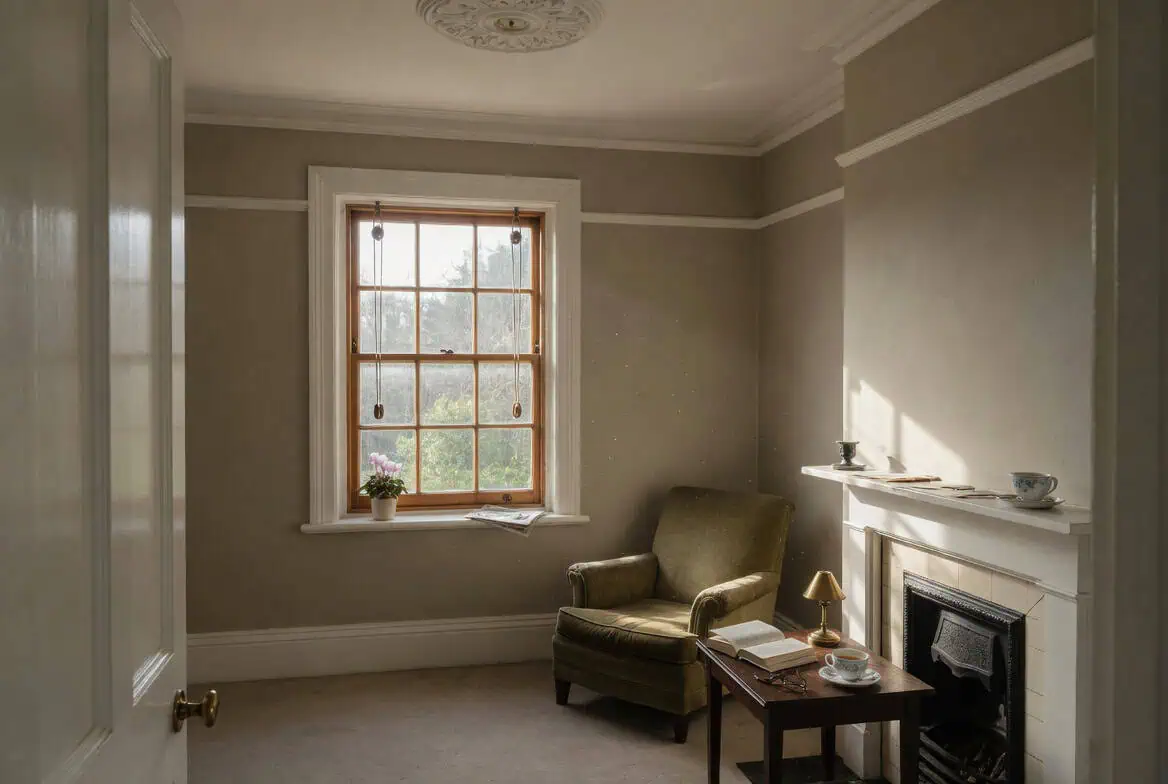
    Villas were designed for tonal contrast. Wall in one tone, scotia and architraves in a complementary tone, ceiling slightly lighter than the wall — that’s the system that makes the scotia and ceiling roses read properly. Paint it all white and the detail disappears at three metres.

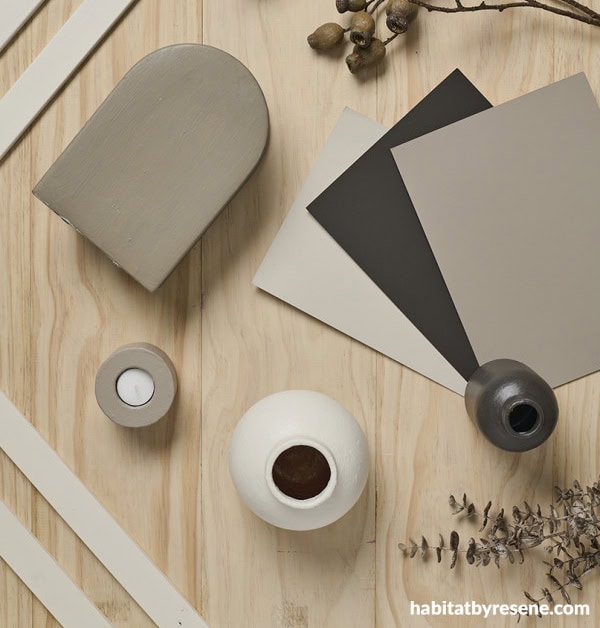
    Resene’s Heritage range is the obvious starting point — Resene Half Spanish White, Resene Half Sea Fog, Resene Quarter Tea, Resene Half Truffle, and the muted greens like Resene Tuna and Resene Half Lemon Grass. Half-strength tones (the “Half” prefix) tend to suit Auckland villas better than full-strength historical colours, which can read as gloomy in our light.

    VanessaNouwens CreamyBattens - Superior Renovations


    For exteriors, weatherboards in a soft cream or warm white, sashes and joinery in a contrasting heritage green, blue or burgundy, and a front door in a deeper accent reads as period-appropriate without being a costume. A Mt Eden villa we recently completed used Resene Quarter Tea on the weatherboards, Resene Eighth Stack on the sashes and Resene Indian Ink on the front door — restrained, but the detail came back to life.

    💡 Quick tip: Paint the scotia and ceiling rose in a half-strength of the ceiling colour, not pure white. The detail pops three times more.

    What we’d never do: Paint the original kauri front door white. It’s almost always solid timber underneath, and the grain pattern is worth more than a uniform paint colour.


    7. Restore the Scotia, Ceiling Roses and Plaster Detail — Don’t Strip It

    Lath-and-plaster ceilings with original scotia, ceiling roses and decorative cornices are the most under-appreciated villa features. They’re also the easiest to wreck during a careless renovation.

    The default move from a builder who hasn’t done villa work before is to strip out the lath-and-plaster ceiling and replace it with flat GIB and a new cornice profile from Bunnings. It’s faster, it’s straighter, and it kills the room’s character in an afternoon.

    The better path: repair the existing plaster, re-cast missing sections of scotia and ceiling rose to match the original, and live with a ceiling that isn’t dead flat. Specialist plasterers in Auckland charge $80–$120 per linear metre for scotia repair, and $400–$900 to cast and install a replacement ceiling rose. That’s more than a fresh sheet of GIB. It’s also irreplaceable once it’s gone.

    If the plaster is genuinely beyond repair — water damage, structural settlement, or previous owners have already pulled half of it out — the next-best move is to install a new GIB ceiling but reinstate the original profiles in plaster cornice, not foam mouldings. The difference between cast plaster and stuck-on foam is obvious at any distance.

    💡 Quick tip: Photograph every original profile in the house before any work starts. If a tradesperson breaks it accidentally, the photo is what gets it cast back.

    What we’d never do: Use polystyrene foam ceiling roses bought off the shelf. They look like polystyrene foam ceiling roses bought off the shelf.


    8. Add a Second Bathroom Where It Won’t Wreck the Architecture

    Most Auckland villas were designed with one bathroom, usually added on at the back in the 1920s or 1930s when indoor plumbing reached residential New Zealand. Adding a second bathroom is one of the most common villa renovation requests we get. Where you put it matters more than what’s in it.

    The wrong locations: any front bedroom (you’ll lose the bay window and break the streetscape), the front hall (no), under the stairs in a way that compromises ceiling heights, or anywhere that requires you to chop into the lath-and-plaster on a finished room.

    The right locations, in priority order:

    1. The original sleep-out or service wing at the back — usually a single-skin lean-to that can be re-purposed with the addition of insulation, lining and proper plumbing
    2. A rear extension — designed in from day one, properly insulated, properly waterproofed
    3. An under-utilised rear bedroom — particularly the smaller fourth or fifth bedroom that’s currently functioning as a study

    Cost for a second bathroom renovation in a villa context: $25,000–$35,000 for a standard mid-range fit-out, climbing to $45,000+ for a luxury ensuite with feature tiling, freestanding bath and underfloor heating. The plumbing run from the existing stack is usually the biggest variable — if you’re more than 4–5 metres from the main soil stack, you’ll need a macerator pump or a new stack, which adds $3,000–$6,000.

    For fixtures, we usually pair traditional-styled tapware from Reece (the Perrin & Rowe and Brodware ranges work particularly well in villas) with simple white wall and floor tiling and a feature element — encaustic-style floor tiles from The Tile Depot, or vertical tongue-and-groove panelling to dado height.

    “The bathrooms that work in villas have a clear period reference but aren’t pretending to be 1910. Black tapware, frameless glass and modern tiling all sit fine in a villa — as long as one element nods to the original era. Encaustic floor tiles do that job particularly well.”
    — Cici Zou, Designer, Superior Renovations

    What we’d never do: Cut a bathroom into the front bedroom to make a master suite. The bay window is doing more for the value of the house than the ensuite will.


    9. Insulate Without Stripping the Lath-and-Plaster You Don’t Have To

    Auckland villas were built before insulation was a concept. Single-skin walls, no insulation in the ceiling, raw timber floors over a ventilated subfloor. They breathe well. They also leak heat constantly.

    The standard renovation insulation upgrade in Auckland — and the one we’d back for most clients — has three layers:

    • Ceiling insulation — R3.6 minimum, R6.0 is the better play in 2026. Costs around $35–$60 per square metre installed. Eligible homeowners can get a subsidised install through EECA’s Warmer Kiwi Homes programme.
    • Underfloor insulation — R1.8 polyester or foilboard installed under the joists. Around $25–$45 per square metre.
    • Wall insulation — this is where it gets interesting in a villa.

    Villa external walls are typically single-skin: weatherboards on the outside, timber framing, lath-and-plaster on the inside. There’s no cavity to blow insulation into. The options are: pull off all the internal plaster and insulate then re-line in GIB (kills the lath-and-plaster), or pull off the external weatherboards and insulate from the outside (preserves the lath-and-plaster, but more involved and may need a building consent).

    For most clients in the SCA Overlay, the second path is the one we’d back — insulate from the outside when you reclad or repair weatherboards anyway, leaving the lath-and-plaster intact internally. It’s the path that keeps the character without freezing in July.

    BRANZ research consistently shows that ceiling and underfloor insulation deliver around 70% of the available heat-loss savings on a villa. Don’t let perfect get in the way of good — start with ceiling and underfloor, do the walls later when the cladding work comes due anyway.


    10. Replace the Kitchen, but Keep the Ceiling Height

    Most villa kitchens were added later — a 1950s or 1970s upgrade on what was originally a back porch or scullery. The space is usually fine. The kitchen inside it usually isn’t.

    Kitchen replacement in a villa is straightforward in principle. The danger is the temptation to “tidy up” the space by boxing in the ceiling with a dropped bulkhead to hide ducting and lighting. Don’t. The 3-metre ceiling is doing the work — the kitchen needs to live with it, not under it.

    Specific moves we’d back for a villa kitchen:

    • Tall cabinetry to within 200mm of the ceiling — uses the volume, doesn’t visually drop the height
    • A 1.5m+ deep island where the room allows — gives prep space without crowding the perimeter
    • Pendant lighting hung at standard heights (1.6–1.8m above the floor) — not raised to “fit” the ceiling
    • A scullery if the floor plan allows — keeps the visible kitchen uncluttered without bulkheading the appliance run

    Cost-wise, a mid-range villa kitchen replacement falls in the standard Auckland range: $28,000–$35,000 for mid-range, $30,000–$50,000 for a full mid-range fit-out with custom cabinetry and stone benchtops, $90,000+ for a luxury kitchen with premium appliance package and detailed joinery.

    💡 Quick tip: Take the cabinetry to the underside of the scotia, not to the ceiling. The 50mm gap above the cabinet reads as intentional and stops the cabinetry from looking like it’s trying to swallow the room.

    What we’d never do: Drop a 200mm soffit around the entire kitchen perimeter to “frame” the cabinetry. You’ve just lost 200mm of stud height on the most generous proportions in the house.


    11. Restore the Verandah — Don’t Replace It With a Deck

    The original front or wrap-around verandah is one of the strongest character signals a villa has. It also tends to be one of the first things damaged or removed by previous renovations — closed in for an extra bedroom in the 1960s, lost to weather damage and replaced with something cheaper, or simply allowed to rot until it had to go.

    Restoring or rebuilding the verandah to the original profile is almost always worth doing. The cost varies enormously with size, scope, and how much original detail survives — a basic re-deck and post-replacement might be $8,000–$15,000, a full rebuild including fretwork, balustrade and roof restoration sits closer to $25,000–$60,000.

    Verandah work on a front elevation is firmly inside the SCA Overlay’s interest. Resource consent will usually be needed if you’re materially changing the form or adding to it. A like-for-like restoration based on documented evidence of the original — old photos, the neighbouring villa, council records — is usually the cleanest path through the consent process.

    For the rear of the house, the equation flips. The back of the villa is where you build the modern deck — properly sized for the way the house lives now, indoor-outdoor flow off the new kitchen-dining space, the wider footprint that makes the rear extension feel like a single project rather than two.

    “The verandah is the photo people take when they list the house for sale. It’s also the first thing buyers see when they drive past. Letting it sag, or replacing it with something that doesn’t fit the proportions, costs more in resale value than the restoration does.”
    — Eunice Qin, Designer, Superior Renovations

    What we’d never do: Replace the original tongue-and-groove ceiling on the verandah with flat plywood. The original is part of what makes the verandah read as a villa verandah and not a deck with a roof.


    The Through-Line: Modernise the Back, Respect the Front

    Every idea on this list is a version of the same principle. The character of an Auckland villa lives in the front 40% of the floor plan and the street-facing elevation. The modern functionality you need lives best in the back 60% and the rear elevation. The renovations that work pull these two halves into agreement; the ones that fail try to make the whole house one thing or the other.

    Our full villa and bungalow renovation guide covers the planning side in more depth — budgeting, consents, structural assessment, and the project sequencing that gets a villa renovation completed without ugly surprises. This list is the design-led companion to that planning guide.

    Costs sit in line with what we’d quote on any Auckland renovation. A full villa restoration project typically lands between $180,000 and $500,000 depending on scope — kitchen, bathrooms, insulation, painting, structural work and rear extension being the usual mix. Use our renovation cost calculator hub for an initial estimate by room, or come in to the showroom at 16B Link Drive in Wairau Valley to talk it through with the design team in person.

    For the design-led side of any villa project — material selection, heritage palette, layout decisions, the moves that hold the character together — our in-house Design Studio is where those decisions get worked through. Dorothy, Eunice and Cici have worked on enough Auckland villas between them to know where the trade-offs sit on the specific 1905 or 1915 or 1925 house you’re looking at.

    Book your free in-home consultation with Superior Renovations
    Talk to our Design Studio about your villa project
    Request a free feasibility report for your project


    Frequently Asked Questions About Auckland Villa Renovations

    How much does it cost to renovate a villa in Auckland?

    A full villa renovation in Auckland typically costs between $180,000 and $500,000 in 2026 depending on scope. A standard single-level villa with kitchen, bathrooms, painting, flooring and insulation work usually lands in the $180,000–$300,000 range. Add a rear extension and structural work and you're looking at $300,000–$500,000. Heritage-specific work — sash window restoration, scotia repair, verandah rebuild — adds $15,000–$60,000 depending on how much survives and how much needs reinstating.

    Do I need resource consent to renovate my villa?

    Most Auckland villas in Grey Lynn, Ponsonby, Mt Eden, Devonport, Herne Bay and similar suburbs sit inside the Special Character Areas Overlay under the Auckland Unitary Plan. External changes that affect the streetscape — front-facing windows, verandah alterations, additions visible from the road — generally require resource consent. Internal renovations and rear extensions hidden behind the existing roofline usually need only building consent. Check your specific property on the Auckland Council GIS Viewer before assuming.

    Can I replace the original sash windows with modern double glazing?

    On front-facing elevations in a Special Character Area, this is generally a no — and even where it's allowed, it's usually a downgrade. The character of a villa is partly carried by the proportions of the original sash joinery. The better move is retrofit double glazing into the existing sash frames, which keeps the streetscape intact and gives you modern thermal performance. Slimline 12mm double-glazed units fit most original villa sashes. Rear-facing windows have more flexibility.

    What's the difference between the Special Character Areas Overlay and the Historic Heritage Overlay?

    The Special Character Areas Overlay (Chapter D18 of the Auckland Unitary Plan) covers whole streets and neighbourhoods where the collective heritage character matters — Isthmus A covers Grey Lynn, Ponsonby and Freemans Bay; Isthmus B covers Mt Eden, Remuera, Herne Bay and parts of Epsom. The Historic Heritage Overlay applies to individually scheduled buildings of recognised heritage value. The HHO is stricter and affects fewer houses, but most villas in inner Auckland sit inside the SCA rather than the HHO.

    How much does it cost to restore a kauri floor in an Auckland villa?

    Sanding, filling and recoating an existing kauri tongue-and-groove floor in Auckland sits at $50–$90 per square metre depending on the floor's condition and the finish you choose. For a 90m² villa floor area that's around $4,500–$8,000. Patch-repairing borer-damaged boards with reclaimed kauri adds $80–$150 per board. Replacing entire sections with reclaimed timber sits higher again. The whole job usually takes 5–10 working days and the floor needs to be empty during the process.

    Can I add a second storey to my Auckland villa?

    Yes, but the consent process is more involved than a single-storey rear extension. Second-storey additions on villas in the Special Character Areas Overlay almost always require resource consent because they materially change the streetscape. Costs typically start from $150,000 and climb significantly from there depending on the size and how the new level integrates with the existing roof. Bringing in an architectural designer with villa experience — we use Sonder Architecture — early in the process is the difference between a smooth consent and a long, expensive one.

    How long does an Auckland villa renovation take?

    A full villa renovation typically takes 3–6 months on site for the build phase, plus 2–4 months of design and consent processing beforehand. A kitchen-only renovation runs 5–6 weeks. A bathroom takes 3–4 weeks. A rear extension with structural work usually adds 3–4 months to a base renovation timeline. Heritage-specific items — sash window restoration, scotia repair, verandah work — usually run in parallel with the main build rather than extending the schedule, but specialist trades have lead times that need to be booked early.

    What's the most cost-effective villa renovation idea?

    Pulling the carpet back and restoring the kauri floor underneath is usually the highest-impact, lowest-cost move on a villa renovation. A $4,500–$8,000 floor restoration changes how the whole house feels and adds visible value at resale. The next best ROI moves are heritage-appropriate paint (around $8,000–$15,000 for a full villa interior repaint) and sash window restoration (typically $400–$550 per window for sash cord and operational work).

    Should I use the original kauri floor in the extension too?

    Matching the new extension floor to the original kauri is usually the wrong call. The contrast between old kauri at the front and a different, deliberately contemporary floor at the rear actually reads better than trying to match. Polished concrete, wide-plank oak, or a darker timber stained to complement the kauri without copying it are common moves. The transition between old and new should feel intentional, not apologetic.

    Do I need an architect to renovate a villa in Auckland?

    For straightforward internal renovations — kitchen, bathroom, painting, flooring — a renovation company with in-house design capability is usually enough. For anything involving structural changes, rear extensions, second storeys, or resource consent applications inside the Special Character Areas Overlay, you'll want a registered architect or architectural designer involved. We work closely with Sonder Architecture on the more complex villa projects and run the design-to-build process through our Design Studio for the rest.

    Where is Superior Renovations based and do you cover all of Auckland?

    Our showroom and design studio is at 16B Link Drive in Wairau Valley, North Shore. We cover all of Auckland for villa renovation work — most of our heritage and character home projects are in Grey Lynn, Ponsonby, Mt Eden, Devonport, Herne Bay, Westmere, Freemans Bay, Eden Terrace, Epsom and Remuera, with regular projects further afield in St Heliers, Glendowie, Titirangi and across the North Shore.


    Further Resources for your Auckland villa renovation

    1. Featured projects and Client stories to see specifications on some of the projects.
    2. Real client stories from Auckland
    3. The ultimate guide to renovating villas and bungalows in New Zealand

    Need more information?

    Take advantage of our FREE Complete Home Renovation Guide (48 pages), whether you’re already renovating or in the process of deciding to renovate, it’s not an easy process, this guide which includes a free 100+ point check list – will help you avoid costly mistakes.

    Download Free Renovation Guide (PDF)


    finance - Superior Renovations

    Have you been putting off getting renovations done?

    We have partnered with Q Mastercard ® to provide you an 18 Month Interest-Free Payment Option, you can enjoy your new home now and stress less.

    Learn More about Interest-Free Payment Options*

    *Lending criteria, fees, terms and conditions apply. Mastercard is a registered trademark and the circles design is a trademark of Mastercard International Incorporated.


    Still have questions unanswered?

    Book a no-obligation consultation with the team at Superior Renovations,
    we’d love to meet you to discuss your renovation ideas!

      Services

      Home RenovationKitchen RenovationBathroom RenovationOutdoor RenovationHouse ExtensionCommercialDesign ServicesOther

      By submitting this form, you agree to receive communications from us via email or text regarding our services, you can unsubscribe at any time.

      This site is protected by reCAPTCHA and the Google

      Privacy Policy and Terms of Service apply.

      Close up of tiled shower
      Bathroom Renovation

      Shower Glass for Auckland Bathrooms: Types, Frameless & Care

      Shower Glass for Your Auckland Bathroom: Choosing the Right Glass Panel, Spec and Care

      Quick answer: For most Auckland bathrooms, a clear or low-iron toughened shower glass panel gives the open, light-filled look people want, while frosted or fluted glass handles privacy in shared and family bathrooms. Whatever you choose, it has to be AS/NZS 2208 safety-rated. On a Superior Renovations bathroom, the glass panel is specified, supplied and installed as part of the job, with waterproofing and council compliance handled in-house.

      The shower glass is one of the last things specified in a bathroom and one of the first things anyone notices walking in. Get the type and finish right and a tight ensuite reads twice its size; get it wrong and you’re chasing water spots every morning or staring at a green tinge on a panel that should look crisp.

      This guide covers what we actually specify across Auckland bathrooms: the glass types, the privacy-versus-light trade-off, frameless versus framed, the suppliers behind the product, the safety standards that have to be met, and how to keep it clear. We’ve completed more than 1,000 Auckland renovations, so the advice here is what holds up in our humidity and salt air, not a generic product brochure.


      Choosing a Shower Glass Panel: The Main Types

      The glass type sets both the look and the upkeep, and the right call depends on the room and who uses it. Here’s what we work with most across Auckland homes, from a Ponsonby villa to a modern Mt Eden apartment.

      • Clear glass. The open, gallery-style look. It makes a small bathroom feel larger and shows off good tiling. The catch is upkeep — clear glass needs a regular wipe to stay free of water spots and soap scum.
      • Frosted glass. Diffuses light, blurs the view, keeps the room bright. The sensible pick for shared family bathrooms in suburbs like Remuera or Epsom.
      • Tinted glass. Grey or bronze tones for a modern edge, common in Grey Lynn renovations. It buys some privacy but darkens the room, so the lighting plan has to allow for it.
      • Textured glass (fluted, reeded, rain). Decorative and practical at once — privacy plus better at hiding water marks than clear. Popular in higher-end Herne Bay work.
      • Low-iron glass. Ultra-clear, without the faint green cast of standard glass. The premium choice when the tiling deserves to be seen properly — you’ll see it in a lot of St Heliers builds.
      💡 Quick tip: In a coastal suburb like Mission Bay, low-iron or frosted glass copes better with the salt air that wears at standard clear glass. And whatever the type, it should be toughened safety glass — that’s not optional under NZ standards.
      Reeded glass shower screen in an Auckland bathroom

      External example: royalglass.co.nz/services/reeded-glass


      Getting the Privacy and Light Balance Right

      Texture and transparency decide how private the shower feels, how much daylight reaches the room, and how much cleaning you’ll be doing. In Auckland, where homes run from cosy Grey Lynn bungalows to open family pads in Howick, that balance is what separates a bathroom that works from one that doesn’t.

      If privacy is the priority, go higher opacity — frosted or textured. If an open, light-filled feel matters more, stay with clear or low-iron. Maximising natural light also trims your reliance on artificial lighting, which lines up with EECA’s guidance on energy-efficient homes.

      Transparency, from clear to opaque

      • Fully transparent (clear). Maximum light, the illusion of more space, zero privacy. Fine for a solo ensuite or a compact CBD apartment.
      • Semi-transparent (tinted or low-iron). Tinted adds a hue for moderate privacy; low-iron keeps the clarity without the green cast. Works well in modern Parnell homes.
      • Obscured (frosted or etched). Soft light, blurred view, high privacy. The right call for a shared family bathroom in a suburb like Pakuranga.
      • Opaque (heavily textured or patterned). Almost no see-through, still passes light. Suits guest bathrooms and ensuites in older villas.

      Under NZ building standards, all shower glass has to be safety-rated and is usually toughened so it breaks safely, as set out in Building Code clause B1 (Structure). Even fully clear glass has to clear that bar.

      Custom luxury bathroom renovation by Superior Renovations with frameless shower glass panel

      A closer look at textures

      Smooth is the baseline — easy to clean, but it shows fingerprints and water spots. Fluted or reeded glass has vertical ridges that catch the light and give privacy without fully blocking it; it also hides water marks better than smooth. Frosted or etched glass is acid-etched or sandblasted for a matte finish that scatters light and shows grime less. Patterned glass — rain or hammered effects — adds a custom, decorative feel and hides imperfections, though the pattern takes a bit more effort to keep clean.

      Texture Transparency Pros Cons Best for
      Smooth High (clear/tinted) Easy to clean, maximises light Shows spots, low privacy Compact city apartments
      Fluted/Reeded Medium Hides marks, good privacy-light balance Can trap soap, pricier Family bathrooms
      Frosted/Etched Low High privacy, low maintenance Can feel enclosed Shared bathrooms
      Patterned Low to medium Decorative, conceals grime Harder to clean, custom cost Designer renovations

      One thing we tell every client: look at a sample under your own bathroom lighting before you commit. Glass that reads soft and elegant in a showroom can look completely different in a north-facing Auckland bathroom at 7am.

      “Fluted glass is one of the easiest ways to get privacy and a bit of character without closing the room in,” says Cici Zou, Designer at Superior Renovations. “I just tell people to test a sample under their own lights first — the effect shifts with the room.”


      Frameless vs Framed: Which Suits Your Bathroom

      Frameless glass is the single biggest decision most people make on their shower, and it’s where the budget moves most. It’s surged in popularity across Auckland, and for good reason — but it isn’t automatically the right answer for every bathroom.

      What frameless actually is

      A frameless shower uses thick toughened glass, usually 10–12mm, held by discreet brackets, hinges or channels instead of a full metal frame. The result is minimalist and open, with the glass doing the visual work. It still has to meet AS/NZS 2208 under Building Code clause B1, and because the glass carries more load and there’s no frame to hide behind, the install has to be precise to stay leak-free.

      Frameless shower glass enclosure in a luxury Auckland bathroom renovation

      The case for frameless

      Frameless makes a room feel larger by removing the visual barrier of a frame. It’s easier to clean — no frame crevices for mould to sit in — and it lets light bounce around, which helps on grey Auckland days. The thicker glass is durable, and you can run it clear, frosted or textured to suit anything from a beachy Takapuna look to urban Britomart. For a small bathroom, frameless is often the thing that tips it from cramped to genuinely luxurious.

      The trade-offs

      It costs more — typically 20–50% above framed, given the thicker glass and specialised fittings. It demands a precise install, because a small misalignment causes leaks or instability, and that’s a real risk in older homes with floors that aren’t level. Water containment takes more care without a frame, so the sealing has to be right. In an exposed coastal spot like Piha, the hardware needs to be properly corrosion-resistant or it won’t last.

      Aspect Framed Frameless
      Cost (glass + install) Lower ($500–$1,500) Higher ($1,200–$3,000+)
      Look Traditional, structured Modern, seamless
      Install More forgiving Precise, pro-only
      Maintenance Frames trap dirt Easier clean, seals need attention
      Durability Good, frames can corrode Excellent with thick glass
      💡 Quick tip: A basic frameless single-panel setup runs roughly $1,200–$2,000 supplied and installed; a full enclosure with a door can reach $3,000+. These are GST-inclusive ballpark figures — on a managed renovation the glass sits inside the overall bathroom budget rather than as a separate job you coordinate.

      “Frameless brings an effortless, airy feel — it’s often what makes a small bathroom feel properly luxurious,” says Dorothy Li, Senior Designer at Superior Renovations. “The honest caveat is it only works if the install is exact. It’s not a DIY job.”

      Thinking about frameless for your bathroom? Book a free in-home consultation and we’ll talk through whether it suits your space and budget — or try the bathroom renovation cost calculator for a ballpark first.


      The Suppliers Behind Auckland Shower Glass

      When we spec a bathroom, the shower glass panel comes from established NZ suppliers who can prove their product meets the Building Code and back it with a warranty. You don’t need to source or coordinate any of this — as your renovation company we handle supply and install — but it helps to understand who makes what, and why it matters for a home dealing with Auckland humidity and, near the coast, salt air.

      Superior Renovations bathroom renovation featuring a custom shower glass panel, Auckland

      Metro Glass

      Metro Glass is one of the larger players in the NZ glass market, with a strong Auckland presence. They make toughened shower glass for everything from frameless panels to sliding doors, in clear, low-iron and frosted finishes, all meeting NZ safety standards. Their shower glass range includes 10mm panels suited to larger bathrooms in areas like Remuera, plus custom tinting if you’re matching a bronze tone to a villa. Basic panels start around $600 and scale up for custom work.

      “Low-iron panels are what we reach for when someone wants that seamless, high-end finish and the tiling deserves to be seen properly,” says Kevin Yang, Lead Designer at Superior Renovations.

      Mico

      Mico is a long-standing Auckland bathroom supplier with a broad range of shower glass doors and panels — pivot doors, fixed screens, semi-framed and frameless. Their shower doors and panels range runs from clear glass around $400 up to premium frosted near $1,200, with rust-resistant hardware that matters in coastal suburbs like Takapuna.

      Bathroom renovation with a clear shower glass panel by Superior Renovations Auckland

      Reece

      For higher-end work, Reece carries quality imports and local fabrications, including ultra-clear low-iron and tinted glass suited to contemporary apartments. Their shower systems range covers thicknesses from 8mm to 12mm and textures like etched or fluted, often with easy-clean coatings that cut maintenance in humid conditions.

      Supplier Specialties Price range (NZD) Best for Certification
      Metro Glass Clear, frosted, low-iron, custom tinting $600–$2,000 Luxury and custom renos AS/NZS 2208
      Mico Pivot doors, fixed screens, textured $400–$1,500 Budget to mid-range Safety glass standards
      Reece Low-iron, tinted, frameless screens $800–$2,500 Premium custom designs AS/NZS 2208

      Plumbing World is also worth knowing for practical selections often bundled with a full bathroom fit-out, and Plumbline for quality hardware and fittings. The value of using a renovation company here is that we already know which supplier suits which job — the glass gets matched to the home and the rest of the bathroom, not picked off a shelf in isolation.

      “Half the job is knowing which supplier suits which bathroom,” says Alison Yu, Designer at Superior Renovations. “We’re matching the glass to the home and the finish, not just ordering a panel.”


      The Safety Standards That Apply in NZ

      Shower glass in a wet area has to be safe and compliant, or it won’t pass inspection — and an uncertified panel can cause grief with insurance and resale later. Here’s what has to be met.

      AS/NZS 2208 — the one that’s non-negotiable

      AS/NZS 2208 is the joint Australian/New Zealand standard for safety glazing. It means the glass is toughened or laminated to break safely — into small, blunt pieces rather than sharp shards. For shower glass it’s mandatory, and it matters most in homes with kids or older residents, where the injury risk from a break is highest. Under Building Code clause B1, all glazing in high-risk areas like showers must comply. The AS/NZS 2208 mark is etched permanently into the glass — that’s where to check for it.

      Safety-certified shower glass in a completed Auckland bathroom by Superior Renovations

      The Building Code clauses that come up

      Three clauses are relevant to a shower. B1 (Structure) means the glass can take impact and load — someone leaning on a door. G12 (Water Supplies) covers the waterproofing around the shower that stops leaks. F2 (Hazardous Building Materials) requires safety glass to reduce injury from breakage. These are set out on building.govt.nz, and evidence of compliance is needed at consent stage. Auckland Council inspects bathrooms closely, so certified glass keeps approvals moving.

      💡 Quick tip: Auckland Council consents reference NZS 4223 (glazing in buildings). On a managed renovation, confirming the glass meets it sits with us — but it’s the first thing to check on any bathroom job.

      “Across the mix of old and new homes we work on, the safety standard is the line that doesn’t move,” says Dorothy Li, Senior Designer at Superior Renovations. “The design can flex. AS/NZS 2208 can’t.”

      Standard What it covers Why it matters
      AS/NZS 2208 Safety glazing Glass breaks safely; mandatory in wet areas
      Building Code B1 / G12 / F2 Structure, water, hazardous materials Required for consent sign-off
      NZS 4223 Glazing in buildings Referenced in Auckland Council consents

      How the Glass Actually Gets Installed

      Installation is where a good-looking panel either stays leak-free for years or turns into a problem — and frameless glass in particular is not a weekend job. It’s precise work: accurate measurements off walls that are rarely perfectly plumb in older Auckland homes, secure fixings into studs, and watertight sealing that meets the Building Code (G12 for watertightness, B1 for structure).

      When Superior Renovations manages your bathroom, the glass is measured, supplied and installed by our team as part of the build — waterproofing, sealing and council sign-off included — so there’s no coordinating a separate glazier or chasing a certificate of compliance yourself.

      Completed bathroom renovation in West Auckland by Superior Renovations

      Superior Renovations

      What happens, step by step

      1. Prep. Walls are checked for plumb, and the tiled surface and waterproofing are confirmed sound before anything is fixed.
      2. Measure. Width is taken at top and bottom, because walls in character homes aren’t straight. For an over-bath screen, the bath lip is factored in.
      3. Fit and fix. Framed screens sit in channels fixed to studs; frameless panels are secured with brackets or U-channels into reinforced walls, using corrosion-resistant stainless hardware.
      4. Seal. Silicone is applied and left to cure before use, then the join is water-tested.
      5. Sign-off. Stability, operation and watertightness are checked, and a certificate of compliance is obtained where the job requires it.

      A standard frameless setup takes a day or two; an older home with uneven floors and odd angles — many Ponsonby terraces, for instance — takes longer. Where structural changes are involved, Auckland Council consent may be required, so it’s worth checking Auckland Council’s building and consents pages early. On a managed renovation we handle that in-house.

      “A leak-free finish starts with prep,” says Cici Zou, Designer at Superior Renovations. “Across the range of homes we work on, the trick is adapting to each one’s quirks rather than forcing a standard install.”


      Warranties and Your Rights

      A new shower glass panel shouldn’t fog, crack or fail early — and if it does, knowing what’s covered saves real money. Most warranties cover manufacturing defects like bubbles or faulty tempering, but not misuse or poor installation.

      Manufacturer’s warranties on the glass typically run 5–10 years. Installation warranties from a professional usually cover labour for 1–2 years against leaks or misalignment. Hardware often carries its own 5-year cover against rust — important in a coastal spot like Mission Bay. Underneath all of that, the Consumer Guarantees Act requires products to be fit for purpose and durable for a reasonable time, whether or not there’s a written warranty.

      Close-up of stainless shower glass hinges in a Superior Renovations bathroom

      Supplier Glass warranty Coverage Common exclusions
      Metro Glass ~10 years Defects, shattering, hardware (5 yrs) Install errors, abuse
      Mico ~5–7 years Manufacturing flaws, seals Chemical damage
      Reece ~10–15 years Extended on premium lines, corrosion Normal wear, harsh cleaning

      Warranty terms change, so confirm the current cover with the supplier at the time of purchase. The common exclusions to watch are abrasive cleaners, impact damage, and — in Auckland’s hard-water areas — mineral buildup, which keeping the glass clean prevents.

      “A warranty isn’t just paperwork — it’s the assurance the bathroom holds up in our climate,” says Kevin Yang, Lead Designer at Superior Renovations. “We document supply and install so that if anything ever does go wrong, the claim is straightforward.”


      Keeping Shower Glass Clear

      In Auckland’s humidity, the difference between glass that looks new for years and glass that hazes over is a short routine, not hours of scrubbing. Hard-water minerals, soap residue and mould all thrive in a damp bathroom and, left long enough, can etch the glass permanently.

      The routine is simple. Squeegee the glass after each shower — thirty seconds, and it’s the single biggest thing you can do. Once a week, spray a 50/50 white vinegar and water mix, leave it five to ten minutes, scrub gently, rinse and squeegee dry. For stubborn limescale, a baking soda paste left fifteen minutes then scrubbed off works, though you should skip it on coated glass and check the manufacturer’s guidance first. Run the extractor fan to cut the moisture that feeds mould. Consumer NZ’s cleaning product reviews are a good reference for what works without being harsh.

      Well-maintained frameless shower glass in a Superior Renovations bathroom

      Different glass needs slightly different care. Clear glass shows spots most, so daily squeegeeing matters; frosted and textured glass hides marks but traps residue in the grooves, where a soft brush helps. For coated glass, skip harsh chemicals so the coating lasts, and near the coast, rinse salt residue off weekly.

      “Consistency beats intensity,” says Alison Yu, Designer at Superior Renovations. “A quick daily squeegee keeps the glass looking premium and saves the heavy cleans.”


      Hardware and Fittings: The Part That Holds It Together

      The hinges, clips, channels, handles and seals are what decide whether a shower stays secure and splash-proof or turns into a wobbly, leaky annoyance. In Auckland’s humid, sometimes coastal conditions, the material choice matters as much as the glass.

      Fittings need to be rust-resistant, strong and compliant. Stainless steel — grade 304 or 316 — or brass resists the corrosion that salt air accelerates in suburbs like Devonport. The Building Code requires fittings to contribute to overall stability and watertightness under clause G12. Frameless setups need heavy-duty, minimal hardware — glass-to-glass hinges or point-fixed clamps — to keep the clean look, while framed setups use simpler, more forgiving tracks and rollers.

      Quality shower glass hardware in a luxury Auckland bathroom design

      What to prioritise: marine-grade corrosion resistance, load capacity rated for 10mm+ panels, adjustability for the uneven walls common in older homes, and a finish — matte black, chrome or brushed nickel — that matches the rest of the bathroom. Plumbline carries a solid range of hinges and handles; see their shower components. As with the glass, on a managed renovation we specify and supply the fittings to suit your enclosure.

      Glass-to-glass shower hinge example

      External example: plumbline.co.nz

      “The right hardware is what takes a shower from functional to genuinely good,” says Alison Yu, Designer at Superior Renovations. “It’s a small part of the budget that quietly carries the whole enclosure.”


      Getting Your Shower Glass Right

      The glass is one of the details that decides whether a finished bathroom feels considered or compromised. The simplest way to get it right is to have it specified and installed as part of the whole renovation, so the glass, the tiling, the waterproofing and the consents all line up.

      That’s what we do. If you’re planning a bathroom renovation, our designers will talk you through the right glass for your home, your finish and your budget as part of a free in-home consultation.

      Book your free in-home consultation — or try the bathroom renovation cost calculator to ballpark your project first. For more inspiration, browse our Bathroom Design Gallery.

      What's the best type of shower glass for a small Auckland bathroom?

      Clear or low-iron glass works best in a small bathroom because it maximises light and makes the space feel larger. If the bathroom is shared, frosted glass adds privacy without closing the room in.

      How much does a frameless shower glass panel cost in Auckland?

      A basic frameless single-panel setup runs roughly $1,200 to $2,000 supplied and installed, and a full enclosure with a door can reach $3,000 or more. Glass type, size and hardware all move the figure.

      Is frameless shower glass worth it over framed?

      Frameless gives a more open, seamless look and is easier to clean, but it costs 20 to 50 percent more and needs a precise professional install. Framed is more budget-friendly and more forgiving, which suits busy family bathrooms.

      What safety certification does shower glass need in New Zealand?

      Shower glass must meet AS/NZS 2208 for safety glazing, plus the relevant Building Code clauses (B1, G12 and F2) and NZS 4223 for glazing. The AS/NZS 2208 mark is etched permanently into the glass.

      Which Auckland suppliers make shower glass panels?

      Metro Glass, Mico and Reece are the main NZ suppliers, ranging from budget through to premium low-iron and custom work. On a managed renovation, your renovation company specifies and supplies the glass to suit your home.

      How do I stop my shower glass going cloudy?

      Squeegee the glass after every shower and do a weekly clean with a 50/50 white vinegar and water mix. In Auckland's hard-water areas this prevents the mineral buildup that eventually hazes and etches the glass.

      Can I install frameless shower glass myself?

      It's not recommended. Frameless panels are heavy and need exact alignment and wall reinforcement to stay leak-free and safe, so professional installation is the sensible choice.

      Is the shower glass included when Superior Renovations does my bathroom?

      Yes. We specify, supply and install the glass as part of the bathroom renovation, with waterproofing and council compliance handled in-house, so you're not coordinating a separate glazier.


      Need more information?

      Take advantage of our FREE Complete Home Renovation Guide (48 pages). Whether you’re already renovating or still deciding, this guide — which includes a free 100+ point checklist — will help you avoid costly mistakes.


      finance - Superior Renovations

      Have you been putting off getting renovations done?

      We have partnered with Q Mastercard ® to provide you an 18 Month Interest-Free Payment Option, you can enjoy your new home now and stress less.

      Learn More about Interest-Free Payment Options*

      *Lending criteria, fees, terms and conditions apply. Mastercard is a registered trademark and the circles design is a trademark of Mastercard International Incorporated.


      Still have questions unanswered?

      Book a no-obligation consultation with the team at Superior Renovations,
      we’d love to meet you to discuss your renovation ideas!

        Services

        Home RenovationKitchen RenovationBathroom RenovationOutdoor RenovationHouse ExtensionCommercialDesign ServicesOther

        By submitting this form, you agree to receive communications from us via email or text regarding our services, you can unsubscribe at any time.

        This site is protected by reCAPTCHA and the Google

        Privacy Policy and Terms of Service apply.

        warm looking bathroom
        Bathroom Renovation

        Complete Guide to Bathroom Design & Bathroom Trends (2026)

        Complete Guide to Bathroom Design & Bathroom Trends NZ (2026)

        Quick answer: Good bathroom design in 2026 starts with the layout, not the tapware — get the plumbing and traffic flow right, then layer in terrazzo, large-format porcelain, backlit mirrors, and a wet-room shower zone. In Auckland, a mid-range bathroom renovation runs $25,000–$35,000, takes 3–4 weeks on site, and adds genuine resale value when done well.

        This guide was republished in May 2026 with updated trends, current Auckland costs, NZ Building Code references, and fresh designer commentary from the Superior Renovations team.

        2026 Bathroom Design Trends for NZ Homes — At a Glance

        Earthy tones and terrazzo are still leading the way, but 2026 has added more universal-access features, layered smart lighting, and a clear move toward wet-room layouts. The winners we’re installing across Auckland right now:

        • Terrazzo and large-format porcelain for durable, low-grout wet areas
        • Backlit mirrors paired with under-cabinet LEDs for shadow-free grooming
        • Wet rooms with anti-slip matte finishes and a single glass panel
        • Sliding cavity doors and wall-hung vanities to open up small footprints
        • Statement freestanding baths paired with a separate walk-in shower
        • Brushed nickel tapware (the new neutral — softer than matte black)
        • Bathroom niches in the shower and above the basin for grout-free storage
        • Level-access showers and wider doorways for future-proof use

        “Layered lighting is what separates a nice bathroom from one that feels like a hotel. Task LEDs down each side of the mirror, recessed warm-white spots overhead, and a single dimmable pendant for the bath — that’s three scenes from one room, controlled by one keypad.”
        — Cici Zou, Designer (NZ Dip. Interior Design, Certified Designer), Superior Renovations

        Small bathroom design Auckland — Superior Renovations


        Where to Start: How We Approach Bathroom Design

        Most renovation guides skip the part that matters most. They jump straight to tile boards and tapware without admitting that the bathroom you end up with is decided in the first design conversation, not the final material selection.

        After more than 1,000 Auckland bathroom renovation projects, we’ve learned the order matters: layout first, then function for who lives there, then materials, then trends. Try to start with trends and you’ll end up with a Pinterest board that doesn’t fit your section, your plumbing, or how your family actually uses the space at 7am.

        The four questions we ask in every first consultation

        1. Who uses this bathroom, and at the same time? A family bathroom for two teenagers needs double basins and a separate toilet. An ensuite for two adults needs a generous shower and storage. A guest bathroom needs none of that.
        2. Where are the existing soil pipes? Moving the toilet is the single most expensive change you can make. We map this before drawing a layout.
        3. What’s the home worth, and what’s the renovation for? A $40,000 bathroom in a $900,000 Henderson home is sensible. The same bathroom in a $2.6m Remuera home is undercooking the asset. We tier the spec to the property, not the catalogue.
        4. What’s the wider plan? If a second bathroom is on the cards in three years, we plan the plumbing now and save you doing it twice.

        “The fastest way to overspend on a bathroom is to design it twice. We use a Design-to-Build Action Plan that locks the scope, layout, and product selections before a single tile is ordered — that’s what keeps the quote a quote, not a guess.”
        — Dorothy Li, Design Manager, Superior Renovations

        💡 Quick tip: Before any design meeting, take a photo of your current bathroom from each corner and one straight down. Plumbers can identify pipe runs from those four photos faster than from any verbal description.

        Why we recommend starting with a designer, not a builder

        Plenty of builders can install a bathroom. Far fewer can design one that suits the way you live. We run a full in-house design team out of our Wairau Valley showroom for exactly that reason — every bathroom we build is drawn, specified, and 3D-rendered before a tradie sets foot on site.

        If you want to see what that process looks like in practice, browse the Bathroom Design Gallery or the Design Studio pages. Both give you a clearer picture of how we work than any list of bullet points can.


        Bathroom Layouts That Actually Work in Auckland Homes

        Every bathroom in New Zealand is some version of four layouts. Knowing which one you’re working with — and which one you should be working with — is the foundation of every good bathroom design.

        1. The Statement Bath Layout

        Statement bath layout — freestanding bath in St Heliers villa bathroom

        A freestanding bath set against a window, a feature wall, or in the centre of the room. This works in larger bathrooms — usually masters in villas, character bungalows, or larger St Heliers and Remuera homes where the bathroom footprint is over 7m². The bath is the hero, the rest of the layout supports it.

        Where it works: Villas with deep bathrooms, master ensuites over 8m², any bathroom with a window worth looking out of.

        Where it doesn’t: Compact apartments, family bathrooms with high traffic, small ensuites under 5m².

        See the St Heliers villa renovation where we used this layout →

        2. The Over-Bath Shower Layout

        The classic Kiwi family bathroom. A bath with a shower over it, glass screen or rail-mounted curtain, hand-held mixer for bathing kids. It’s the most space-efficient layout and still the right answer for many three-bedroom homes in West and South Auckland.

        Where it works: Family bathrooms in homes under 130m², the main bathroom when an ensuite already has a separate shower, any layout under 5m².

        The mistake to avoid: Don’t install an off-the-shelf acrylic shower box over the bath. It looks dated immediately and traps grime in the joins. A frameless glass panel costs marginally more and lifts the entire room.

        💡 Quick tip: For an over-bath shower, spec a thermostatic mixer rather than a basic tap-style mixer. Kids can scald themselves on the latter — the thermostatic version caps the temperature at a safe maximum.

        3. The Bath and Separate Shower Layout

        Bath and shower layout — Auckland bathroom renovation with double basins

        The full-house layout. A bath, a separate walk-in shower, and ideally double basins. This is what most Auckland homeowners aim for when they renovate a main bathroom or build a master ensuite. It needs at least 8–10m² to work without feeling cramped.

        Where it works: Family bathrooms in homes over 150m², master ensuites in renovated villas, full-home renovations where you’re combining a bathroom and laundry into one larger room.

        The detail most people get wrong: The shower and bath share a wet wall. Plan the plumbing chase carefully — if you don’t, the shower mixer ends up in a position where you have to step under cold water to turn it on. We always run a one-metre line ahead of the showerhead position.

        See a bath + shower renovation in Albany → · Milford North Shore version →

        4. The Wet Room (Shower Room) Layout

        Wet room shower layout Auckland — anti-slip matte tile single glass panel

        The fastest-growing layout in 2026, and the one we’d argue makes the most of a small space. A fully waterproofed room with anti-slip matte tile floor, a linear drain, a single glass panel, and no shower tray. The shower zone, toilet, and vanity all share the same waterproof envelope.

        Where it works: Compact ensuites in apartments and townhouses, second bathrooms in renovated villas where the footprint is tight, accessible bathrooms for older homeowners (a level-access shower removes the trip hazard of a shower tray lip).

        The thing to get right: Fall and drainage. A wet room needs at least a 1:80 fall toward the linear drain, and the waterproof membrane has to extend up the walls 1.8m in the shower zone (NZ Building Code Clause E3 Internal Moisture). This is not a job for a handyman.

        For a deeper breakdown of small-bathroom layouts specifically, see our companion guide on small bathroom design ideas, or read our take on the bathtub vs walk-in shower question.

        What about pipework — can I change the layout completely?

        Yes, but you need to know what you’re signing up for. Moving the basin, bath, or shower a metre or two is straightforward — most floor cavities can accept new branches off the existing waste pipe. Moving the toilet is the expensive change, because the soil pipe has a much larger diameter and needs proper fall.

        If you’re considering moving the toilet to a new position, expect to involve an architect or a designer to produce drainage drawings, and budget for Auckland Council consent. Council processing can take anywhere from 4 to 8 weeks per the Auckland Council standard timeframe, before any physical work starts.

        Important note: Replacing fixtures in the same positions is a Schedule 1 exemption under the Building Act — no consent required. Moving plumbing, removing walls, or adding electrical circuits beyond standard replacements typically requires consent. We assess this at the first consultation and handle all council applications in-house.


        Bathroom Design Trends 2026 — What Auckland Homeowners Are Actually Installing

        Most trend lists are wishful thinking written by someone selling tile. This is what’s actually being specified and installed across our active 2026 projects, ranked by how often we’re seeing them.

        1. Terrazzo (the real comeback, finally)


        bathroom design layouts 3 - Superior Renovations

        Bathroom Designs

        Terrazzo had a false start in 2023 — a lot of homeowners liked the look but balked at the cost. In 2026 it’s back properly, driven by recycled-content composite terrazzo tiles that cost a fraction of the poured version. We’re using it on floors, in shower zones, and on vanity tops in roughly one in three projects.

        Why it works in Auckland: Terrazzo handles damp winters without the grout-line mould issues you get with small-format tile. Large-format terrazzo (600x600mm or bigger) has fewer joints, less cleaning, and a 25-year-plus life on a bathroom floor.

        “Our clients in St Heliers and Milford are choosing terrazzo because it solves three problems at once — it looks current, it lasts, and the recycled content ticks the sustainability box that more buyers now ask about. We’re sourcing most of ours through The Tile Depot and a couple of specialty importers.”
        — Eunice Qin, Designer, Superior Renovations

        2. Large-format porcelain (still the workhorse)

        Large-format porcelain tile bathroom — Auckland North Shore renovation

        If terrazzo isn’t to your taste, the next-best option is large-format porcelain. 600x1200mm tiles are now standard, and 1200x2400mm slabs are being used in shower zones to give a near-seamless wall — almost no grout, easier to clean, and visually it stretches the room.

        We spec porcelain over ceramic for any wet area because it absorbs less than 0.5% water by weight and won’t craze under the temperature swings you get in an unheated Auckland bathroom in winter.

        3. Backlit and integrated mirrors


        bathroom renovation west auckland - Superior Renovations


        Backlit mirrors have moved from a luxury feature to a near-standard inclusion. They throw light forward onto your face (no shadows from an overhead downlight) and most have anti-fog heating that clears the mirror after a hot shower. Energy use is negligible compared with overhead lighting.

        The variation we’re seeing more of in 2026 is the vanity-mounted mirror — set forward of the wall on slim brass or chrome stems. It works particularly well over a stone vanity in larger ensuites.


        See backlit mirrors in our Parnell luxury renovation → · Redvale luxury renovation →

        4. Earthy and warm-neutral colour palettes

        The hard greys and stark whites of 2020 have aged badly. 2026 palettes are warmer — bone, oat, clay, soft terracotta, sage — paired with timber-look vanities and brushed brass or nickel tapware. It reads calmer, photographs better, and ages slower.

        The exception is the bold dark bathroom: matte black or deep charcoal walls, paired with one or two warm metal accents. This works in a windowless guest powder room but rarely in a main bathroom — natural light matters more than drama.


        bathroom design layouts 2 - Superior Renovations

        Bathroom Designs


        5. Geometric and patterned feature walls

        Geometric tile creates a focal wall without overcomplicating the rest of the room. We’re using it most often behind a freestanding bath, on a single shower wall, or as a splashback strip behind a vanity. The trick is to commit to one geometric feature per room — two competing patterns flatten each other.

        bathroom design layouts 1 - Superior Renovations

        Bathroom Designs

        6. Wall-hung vanities and floating storage

        Floating wall-hung vanity with under-cabinet lighting Titirangi bathroom

        Wall-hung (floating) vanities are now the default for any bathroom under 7m². They show more floor, which makes small rooms read larger, and they make cleaning the floor underneath possible. Pair with an under-cabinet LED strip for a soft ambient wash that doubles as a night light.

        For larger ensuites and family bathrooms, we still spec floor-mounted joinery — usually NZ-made cabinetry with melamine or laminate fronts from Laminex, finished with stone or composite tops.

        See the Titirangi floating vanity project →

        7. Brushed nickel tapware (the new neutral)

        Matte black was the dominant tapware finish from 2019 to 2024. In 2026 it’s tipped over — brushed nickel and warm brushed brass are now the more common spec, particularly in warm-neutral colour schemes. Both are softer, both age more gracefully, and both don’t show water spots the way matte black does in Auckland’s hard-ish water.

        Source most of our tapware through Reece, with a few specialty brands when a client wants something specific. PVD-coated finishes are now standard at the mid-range and up — they hold their colour for years longer than the older powder-coated versions.

        8. Bathroom niches over add-on shelving

        The recessed niche — built into the shower wall or above the basin — has replaced the add-on shower caddy and the floating glass shelf. It’s grout-free, it doesn’t trap soap scum, and it disappears visually when not in use. Plan one shoulder-height niche per shower minimum, ideally tiled in a contrast strip to anchor it as a deliberate feature.

        9. Sliding cavity doors

        Sliding cavity door bathroom — Auckland modern renovation

        A standard hinged door swings 800mm into the room. A sliding cavity door takes zero. In small bathrooms under 5m², swapping a hinged door for a cavity slider frees up enough space for a slightly larger vanity or a wider shower. We use cavity sliders on roughly half our small-bathroom and ensuite projects now.

        10. Smart and layered lighting controls

        Wall-keypad scene controls — a single keypad with pre-programmed “morning”, “evening”, and “night” scenes — are filtering down from luxury projects into mid-range bathrooms. We spec these through PDL by Schneider Electric on most projects over $35,000.

        The full lighting principle is covered properly further down — this is just a flag that the hardware is now affordable.

        11. Universal-access and future-proof features

        This is the trend most renovation guides ignore, and it’s the one that matters most for Auckland’s ageing housing stock. NZ Building Code Clause G1 Personal Hygiene specifies that sanitary facilities must be accessible (per building.govt.nz). The practical 2026 inclusions:

        • A level-access shower (no tray, no step) with minimum 900x900mm clear zone
        • Vertical grab rails near the toilet and in the shower (specced now, installed later if you’d rather)
        • A wider doorway (at least 810mm clear) — Auckland villas often have 760mm doors that won’t fit a walking frame
        • A vanity height of 850–870mm — slightly higher than the old standard, easier on knees and backs

        “We design every family ensuite with future use in mind now. A wider doorway and a level-access shower don’t add cost at the planning stage, but adding them later is a $15,000 retrofit. It’s the most overlooked decision in bathroom design and the one clients thank us for ten years later.”
        — Dorothy Li, Design Manager, Superior Renovations


        Designing for Who Actually Lives There

        A bathroom built for a young family is a different room from a bathroom built for empty nesters or a guest ensuite. We tier every project to who uses it, when, and at what age. Below is how each type breaks down.

        Family Bathroom Design — Built for Volume

        Family bathroom design Auckland — double basin layout with porcelain tiles

        The family bathroom is usually the busiest, hardest-worked room in the house. Two adults, two kids, a six-day-a-week routine. The design priorities are different to a guest bathroom or an ensuite — durability, simultaneous use, and storage come before aesthetics.

        What we always spec for a family bathroom:

        • Double basins. Two people brushing teeth at the same time is not a luxury — it’s a normal 7am.
        • Porcelain floor and walls. Soap, shampoo, sunscreen, kids dropping things. Porcelain shrugs it all off and cleans with a wet cloth.
        • A separate toilet zone where space allows. A toilet behind its own door (a “three-way bathroom” layout) means one kid can be on the toilet while another is in the shower without crisis.
        • Closed storage. Toiletries, spare toilet rolls, towels. Open shelving looks great in a magazine and a mess in a real family bathroom.
        • An over-bath shower or a separate bath and shower — bathing small kids in a walk-in shower is exhausting.

        💡 Quick tip: If you have teenagers or are planning to, install a heated towel rail on its own timer. Wet towels on the floor are a renovation killer for the bathroom you just spent $35,000 on.

        Master Ensuite Design — A Room for Two Adults

        Master ensuite bathroom design Auckland — freestanding bath separate shower

        The master ensuite is where the budget gets stretched, and rightly so. It’s a daily-use room for the people who paid for the renovation. We use ensuites to spec the products we wouldn’t put in a family bathroom — stone tops, large-format slabs, a freestanding bath, a generous walk-in shower with a fixed rain head and a separate handset.

        What sets a good ensuite apart:

        • A walk-in shower over an over-bath shower. Adults take showers, not baths. Build the shower zone properly.
        • A separation between the bath zone and the rest of the room. If the bath is in the same room as the toilet, it’s not a retreat — it’s a bathroom with a bath in it.
        • Privacy from the bedroom. A direct sightline from the bed to the toilet ruins both rooms. We always add a short passage, a half-wall, or a pocket door.
        • Considered lighting. Two scenes minimum — bright for grooming, low for unwinding.

        “A well-positioned ensuite adds genuine luxury without needing extra floor area. The first thing we check on every plan is the sightline — what do you see when you walk through the bedroom door, and what do you see from the bed. If either of those is the toilet, the plan changes.”
        — Cici Zou, Designer (NZ Dip. Interior Design, Certified Designer), Superior Renovations

        Guest Bathroom and Powder Room Design

        The guest bathroom is the underrated room. It gets used less, so it’s the place to take a small design risk — a dark feature wall, an unusual basin, a statement light fitting. Most guest powder rooms are small (under 3m²), which means tile budgets go further and you can spec a higher-end finish for less money.

        The two non-negotiables:

        • Adequate ventilation — guest bathrooms often sit in the middle of the home with no external window. Either a window or a mechanical extract vented to the outside is mandatory under NZ Building Code Clause G4 (per building.govt.nz).
        • A solid soft-close toilet seat. Guests will not be gentle.

        Wet Room and Shower Room Design

        Wet room shower design Auckland — anti-slip matte tile glass panel

        We covered the wet room layout earlier. The design details specific to wet rooms:

        • Anti-slip matte tile floor. Gloss tile in a wet room is a slip-and-fall waiting to happen. Matte porcelain with a minimum R10 slip rating is the baseline.
        • A linear drain over a point drain. Linear drains are cleaner-looking, easier to clean, and the fall is simpler to set out.
        • Heated floor where budget allows. A wet room floor stays wet for longer between uses. Underfloor heating dries it faster and the room feels warmer in winter.
        • A single fixed glass panel — not a full enclosure. The whole point of a wet room is that it doesn’t read as a shower box.


        Important note: Wet rooms require a full Type A waterproof membrane to NZS 4404 standard, with the membrane extended 1.8m up shower walls and 150mm above the floor elsewhere. Always ask your renovator to supply a Producer Statement (PS3 or PS4) from the waterproofing contractor — this protects you at resale.


        Bathroom Lighting That Does Three Jobs at Once

        Bathroom lighting design Auckland — layered LED scheme small bathroom

        Lighting is the single most underspent line item in most bathroom renovations. People will pay $4,000 for a vanity and $180 for the lights above it. Then they wonder why the room feels flat.

        Good bathroom lighting has three jobs: task lighting at the mirror (for grooming), ambient lighting overhead (to fill the room evenly), and accent lighting (to add warmth and depth). A well-lit bathroom has all three, on separate switches, ideally with dimming.

        The four-circuit rule

        For any bathroom over 4m², we plan a minimum of four lighting circuits:

        1. Vanity task lighting — backlit mirror or vertical LED strips either side of the mirror
        2. Overhead ambient — warm-white recessed downlights, ideally on a dimmer
        3. Shower zone — a single IP65-rated downlight directly over the shower, often on the same circuit as the extract fan
        4. Accent / mood — under-vanity LED strip, niche lighting, or a single feature pendant over the bath

        Place the mirror light beside the mirror, not above it

        This is the single most common bathroom lighting mistake. An overhead downlight casts your face into shadow — the very effect a bathroom mirror needs to avoid. Vertical lights on either side of the mirror, or a backlit mirror, throw light onto your face instead. The difference is dramatic and the cost is the same.

        IP ratings — what they mean and which one goes where

        Light fittings in bathrooms have to be rated for moisture exposure. The two ratings that matter:

        • IP44 — minimum rating for Zone 2 (general bathroom area, away from direct water spray)
        • IP65 — required for Zone 1 (directly over a bath or in a shower zone)

        “The IP rating is the first thing we check on any light fitting a client picks themselves. A beautiful pendant from an overseas catalogue is useless if it isn’t rated for a humid Auckland bathroom — and the warranty is voided the moment you install it in a wet zone without the right rating.”
        — Alison Yu, Designer, Superior Renovations

        Layer warm light over cool

        Cool-white light (5000K and up) makes a bathroom feel like a hospital. Warm-white (2700–3000K) makes it feel like a hotel. For a daily-use bathroom we spec warm-white at the vanity, slightly cooler overhead for grooming clarity, and warm dim-to-warm strips for the mood circuit. The contrast is what makes the room feel layered.

        Hide the source, show the light

        Hidden LED bathroom lighting Redvale — luxe layered scheme

        The most expensive-looking bathroom lighting is the lighting you can’t see. LED strips under floating vanities, behind niche shelves, above pelmet returns. The eye sees the glow but not the source — and the room feels deeper as a result. Plan these strips at the design stage; retrofitting them is awkward and the joinery rarely accommodates.

        The bathroom skylight question

        If you have a single-storey home or a top-floor bathroom, a skylight is the cheapest dramatic upgrade you can make. Diffused daylight does what no electric light can — it makes the room feel airy, the tile look its true colour, and it cuts the lights-on hours during the day. We add skylights to roughly one in five bathroom renovations, particularly in Auckland villas and bungalows where the bathroom is in the centre of the floor plan with no external wall.

        What to do in a small bathroom

        Small bathroom lighting design Auckland — vertical mirror strips

        Small bathrooms benefit most from layered lighting because the room has nowhere to hide. The compressed plan:

        • Vertical LED strips or a backlit mirror at the vanity
        • A single warm-white downlight overhead, on a dimmer
        • A small under-vanity LED strip
        • One IP65 downlight in the shower zone

        That’s four sources from a single 5m² room. The cost difference compared with a single ceiling light is maybe $400–$600 — well below 2% of a $30,000 bathroom budget.


        Flooring, Fixtures and Storage — The Choices That Matter

        Bathroom flooring options for Auckland conditions

        Bathroom flooring Auckland — porcelain large-format tile

        For Auckland bathrooms in 2026 we spec one of three floor types, in order of how often:

        Floor type Cost range (supplied + laid) Best for
        Large-format porcelain (600x1200mm or bigger) $140–$220 per m² Most bathrooms — durable, low maintenance, fewer grout lines
        Composite terrazzo tile $180–$280 per m² Statement floors, recycled-content spec, mid-range and up
        Natural stone (marble, travertine, slate) $220–$450 per m² High-end master ensuites, character renovations

        Three materials we don’t recommend for bathroom floors: timber (warps and stains), low-grade ceramic (chips and crazes under temperature change), and vinyl plank (cheap-looking after 18 months in a wet area, even the “waterproof” versions).

        Vanities and stone tops

        The vanity is the joinery centrepiece of any bathroom and the place a designer’s eye matters most. We design and build most of our vanities in-house using NZ-made cabinetry with melamine, laminate, or veneer fronts. The tops are usually engineered stone, composite, or solid surface — natural stone is reserved for ensuites where the client asks for it.

        The right basin for the layout

        • Undermount basin — clean lines, easy to wipe down. Pair with stone or solid-surface tops only.
        • Vessel (above-counter) basin — statement piece, raises the height of the vanity, suits a powder room.
        • Inset basin — practical, budget-friendly, suits a family bathroom.
        • Wall-hung basin — frees up floor space in compact ensuites and powder rooms.

        Tapware and brassware

        Brushed brass bathroom tapware — Stanmore Bay renovation

        Brassware is the wear-and-tear part of a bathroom. It’s used every day, it has water flowing through it, and replacing wall-mounted tapware is expensive once the wall is tiled. Spend more here than you think you should — the difference between a $200 mixer and a $600 mixer is felt every time you use it.

        The current spec we’re using most across mid-range projects:

        • Thermostatic shower mixer (capped temperature, anti-scald)
        • Tall basin mixer for above-counter basins, low-flow standard mixer for inset basins
        • Concealed wall mixer for the bath (the bath spout sits on its own)
        • Soft-close toilet, ideally wall-faced (easier to clean behind)

        Most of our tapware is specified from Reece, with finishes in brushed nickel, brushed brass, chrome, or matte black depending on the colour scheme.

        Storage that disappears when not in use

        Bathroom storage design Auckland — closed cabinet with mirror

        Bathroom storage is predictable. Small things near the basin (toothbrush, contacts, daily skincare). Medium things behind doors (shampoo back-ups, medicines). Bulky things in a taller cabinet or linen cupboard (toilet rolls, towels).

        Our default storage spec for a mid-range Auckland bathroom:

        • Vanity with two drawers — top drawer for daily items, bottom drawer for back-stock
        • Mirror cabinet above the vanity for daily-access toiletries (face-height, behind a mirrored door)
        • A recessed shower niche at shoulder height
        • One floor-to-ceiling cupboard near the bathroom for towels and bulk storage (in family bathrooms; ensuites usually borrow from a walk-in robe)

        💡 Quick tip: If your vanity is wall-hung, use the cavity above the floor for a shallow toe-kick drawer — 60mm tall, full width. It’s the perfect place to store cleaning supplies and a hair dryer, and it doesn’t read as a drawer at all.

        Mixing materials and finishes

        Mixed material bathroom design Auckland — timber tile stone

        The cleanest bathrooms use three materials maximum. One floor finish, one wall finish, one accent. Add a fourth and it starts to feel busy. We usually run porcelain on the floor, a paint or large-format porcelain on the walls, and a single timber-look or stone accent on the vanity or feature wall.

        Glass shower screens

        Frameless glass shower door bathroom Auckland — Superior Renovations

        Frameless 10mm toughened glass is the standard now. Framed screens look dated and the frames trap soap scum. A single fixed glass panel is the cleanest visual, and it’s compatible with both walk-in showers and wet rooms. Treat the glass with a one-off hydrophobic coating at install and you’ll cut the cleaning time roughly in half over the life of the screen.


        Bathroom Renovation Costs in Auckland — 2026 Reality

        The single most common question we’re asked: how much does a bathroom renovation cost? The honest answer depends on size, spec, and whether you’re moving plumbing — but here are the current Auckland 2026 figures we’re quoting against.

        Tier Cost range What’s included
        Budget refresh $9,000–$16,000 New paint, fittings, minor tiling, replace vanity in same spot
        Mid-range full renovation $25,000–$35,000 Design, supply, all trades, full tile, new fixtures, project management
        Luxury / custom $45,000+ Wet room, premium fixtures, stone tops, underfloor heating, custom joinery
        Most Auckland projects land here $25,000–$35,000 Mid-range — a full proper renovation, not a refresh

        2026 pricing is 5–8% higher than 2025 across the board, driven by material and labour inflation. The figures above are reflective of what we’re quoting right now and are consistent with the published cost ranges on our FAQ.

        Want a project-specific estimate in two minutes? Use our bathroom renovation cost calculator — it asks the right questions and gives you a realistic indicative range before you ever talk to us.

        What drives the variation between $25,000 and $45,000+

        1. Whether plumbing moves. Same-position fixtures: cheaper. Moving the toilet or relocating the shower: adds $5,000–$10,000 in plumbing alone.
        2. Tile choice and area. Floor-to-ceiling porcelain in a 6m² bathroom is ~30m² of tile. Doubling the tile price-per-m² adds $1,500+ to that line alone.
        3. Joinery (the vanity). An off-the-shelf vanity is $800–$2,000. A custom NZ-made vanity with a stone top is $4,500–$8,000+.
        4. Tapware grade. Entry-level vs. mid-range vs. premium adds up across mixer, shower, basin, and bath — easily a $2,000–$4,000 swing.
        5. Consent. Standard like-for-like: no consent, no delay. Structural or plumbing changes: $3,000–$8,000 in consent and engineering fees plus 4–8 weeks added to the start date.

        How long a bathroom renovation actually takes

        A standard full bathroom renovation takes 3 to 4 weeks on site from the day demolition starts. That assumes design is locked, all materials are on hand, and no consent is required. If consent is needed, add 4–8 weeks at the front for Auckland Council processing before any work begins.

        The week-by-week breakdown for a typical mid-range project:

        • Week 1: Strip-out, demolition, plumbing rough-in, electrical rough-in, waterproofing inspection
        • Week 2: Waterproof membrane application, GIB Aqualine to walls, tile preparation
        • Week 3: Tiling (floor and walls), shower screen template, vanity install
        • Week 4: Tapware fit-off, mirrors, accessories, final clean, handover

        Important note: Watch out for renovators who quote 2 weeks for a full bathroom — they’re either skipping waterproofing dry time (which voids your insurance) or they’re using small-format tile that takes less time to lay. Both are red flags.


        Bathroom Ventilation and Heating — The Two Things Most Renovations Get Wrong

        Ventilation and heating are the two systems that quietly decide whether your bathroom stays looking new or starts mouldering at the corners within three years. They’re also the two systems most easily underspent during a renovation.

        Ventilation done properly

        NZ Building Code Clause G4 Ventilation requires mechanical extraction in any bathroom without an openable window, and even where a window exists, an extract fan is almost always required for code compliance and resale defensibility (per building.govt.nz).

        What we spec on every renovation:

        • A purpose-built bathroom extract fan — minimum 60L/s capacity for a standard bathroom, 90L/s for a larger room, mounted in the ceiling and ducted to the outside through the soffit or roof. Not into the ceiling cavity (that’s the most common shortcut and the cause of most ceiling mould problems).
        • A humidity-sensing run-on timer — the fan keeps running for 10–15 minutes after you leave the bathroom, clearing the residual moisture rather than trapping it.
        • Insulated ducting through any unheated cavity to prevent condensation inside the duct itself.
        • An external grille — fitted with a backdraught flap so cold air doesn’t blow back through the system in winter.

        The cost difference between a $90 builder-grade extract fan and a $350 properly specified one is recovered in the first winter you don’t have to repaint the ceiling.

        Important note: A bathroom extract fan that vents into the ceiling cavity rather than to the outside is a fail point on a LIM check, a fail point on weathertightness reviews, and the single biggest cause of secondary moisture damage we see in older Auckland homes. If your current fan vents into the cavity, fix it during the renovation — not before, not after.

        Heated towel rails — get the size right

        A heated towel rail is the most cost-effective heating upgrade in any bathroom renovation. It dries towels, warms the room as a secondary effect, and runs on a few cents of power per day if specced and timed correctly.

        The mistake most people make is going too small. A towel rail rated for a single bath sheet won’t dry two towels from a family bathroom — the rail can only put out so many watts, and damp towels block air flow to the bars they cover. Spec one bar wider than you think you need, and put it on its own timer so it runs in the hour before peak use rather than 24 hours a day.

        Underfloor heating — when it’s worth it

        Electric underfloor heating is a luxury upgrade with a real practical benefit: a warm tile floor in winter, and a much shorter time-to-dry for a wet floor after a shower. We install it most often in master ensuites and wet rooms, particularly in homes without ducted central heating.

        The economics:

        • Install cost — typically $1,500–$3,500 for a standard bathroom, layered under the tile bed
        • Running cost — around $0.50–$1.50 per day if used on a 2-hour morning/evening timer through winter only
        • Best paired with — porcelain or stone floor finishes (not vinyl or timber, which insulate the heat away from the surface)

        If you’ve got a slab-on-grade bathroom on a south-facing wall, the case for underfloor heating is much stronger than on a suspended timber floor with a heated room above and below.

        Panel heaters and infrared

        For larger bathrooms with vaulted ceilings or compromised insulation, a small wall-mounted panel heater on a timer is a sensible backup. We rarely fit them as primary heating, but in older Auckland villas with high ceilings and minimal wall insulation, they can take the edge off a winter morning.

        Infrared panel heaters are gaining traction in 2026 for compact ensuites — they heat people and surfaces rather than the air, which is more efficient in a room that empties out a few minutes after use. The technology is improving each year, and the running costs are competitive with electric underfloor heating.


        Combining the Bathroom and Laundry — A Smarter Auckland Renovation

        Most older Auckland homes were built with a separate laundry — a small room with a washing machine, a tub, and somewhere to hang clothes. In 2026, that layout is increasingly being rethought. Combining the bathroom and laundry into a single larger wet zone solves three problems at once: it frees up the old laundry footprint for storage or living, it concentrates plumbing into one wall, and it usually reduces total renovation cost compared with renovating two rooms separately.

        Why combining works

        • Shared wet wall — laundry, basin, and (often) shower all draw from the same hot/cold supply and waste runs, reducing pipework
        • One waterproof envelope — instead of waterproofing two rooms, you waterproof one
        • Cabinetry economies — a single run of joinery covering the washing machine, dryer, basin, and storage costs less than two separate joinery runs
        • Recovered floor space — the old laundry footprint becomes a walk-in linen cupboard, a pantry extension, or an entry mudroom

        What we plan for in a combined room

        1. Sound separation. A washing machine on a spin cycle is loud. We mount machines on rubber anti-vibration pads and isolate the wall behind them with acoustic GIB.
        2. A dedicated drying solution. Either a heat-pump dryer stacked above the washer, or a retractable drying line over the bath, or both. Hanging wet clothes on the towel rail is what wrecks the towel rail.
        3. Storage that’s actually accessible. Laundry detergent, fabric softener, stain removers — at adult eye level, not buried under the sink. A pull-out laundry hamper is a quiet upgrade that gets used every day.
        4. A laundry sink (optional). Most modern households don’t need a separate laundry tub — a larger basin in the bathroom serves both functions. But if you do a lot of hand-washing or have specific stain-treating needs, a small dedicated tub still earns its place.

        “The combined bathroom-laundry is one of the most underrated renovations we do. A West Auckland family last year saved $14,000 by combining instead of renovating both rooms separately — and they got a bigger, better-laid-out wet zone and a new walk-in linen cupboard out of the old laundry footprint.”
        — Dorothy Li, Design Manager, Superior Renovations

        Where it doesn’t work

        If your bathroom is already tight (under 4m²) and the laundry is on the other side of the house, combining isn’t worth the plumbing cost. Combining works best when the existing rooms share a wall, are both small-to-medium in size, and a meaningful floor-plan improvement is possible by merging them.

        If you’re considering a larger reshuffle — moving a kitchen, opening up living space, or adding a bathroom — see our guide to renovatinng your whole home for how the wet-zone planning fits into a bigger scope.


        Consent, Code, and the Small Stuff Most People Miss

        This is the section every other bathroom guide skips. It’s also the section that most often costs people money when they renovate without it.

        What needs consent in Auckland

        Standard bathroom renovations — replacing tiles, vanity, toilet, and shower in the same positions — are typically a Schedule 1 exemption under the Building Act and don’t need consent. Per building.govt.nz:

        • No consent typically required: Like-for-like replacement of fixtures, retiling, painting, replacing a vanity in the same footprint, replacing a shower screen.
        • Consent typically required: Relocating the toilet, removing or adding walls, adding new electrical circuits (beyond standard replacements), changing the position of a window, any work that affects weathertightness.

        Our team assesses this at the first free in-home consultation and manages any consent applications with Auckland Council on your behalf.

        NZ Building Code clauses that affect your bathroom

        • Clause E3 Internal Moisture — waterproofing requirements behind tiles, around baths, and in shower zones. Producer Statements (PS3 or PS4) from the waterproofing contractor should be retained for resale.
        • Clause G1 Personal Hygiene — accessibility provisions, fixture requirements.
        • Clause G4 Ventilation — extract ventilation requirements (mechanical extract to outside, not into the ceiling cavity).
        • Clause H1 Energy Efficiency — insulation requirements where walls or ceilings are opened up.
        • Clause B2 Durability — minimum durability requirements for plumbing, waterproofing, and structural elements.

        Why your renovator should be a Licensed Building Practitioner (LBP)

        Bathroom renovations that involve structural work, weathertightness, or moisture management classify as Restricted Building Work under the Building Act. That work has to be carried out or supervised by a Licensed Building Practitioner. You can check any builder’s LBP status at lbp.govt.nz.

        Hiring a non-LBP for restricted work is a fast way to void your insurance and create a future resale problem when a LIM check reveals undocumented work.

        Bathroom and laundry combined — group your wet zones

        Grouping the bathroom, laundry, and kitchen together is one of the most cost-effective decisions you can make. Shared wet walls reduce plumbing runs, cut consent risk, and contain noise. When relocating fixtures, many simple swaps (replacing a bath with a shower in the same footprint) are Schedule 1 exempt — provided no structural changes occur.

        If you’re considering a full house renovation rather than a standalone bathroom, take a look at our home renovation Auckland page — combining works almost always reduces total cost.


        Will a Bathroom Renovation Add Value to Your Auckland Home?

        Bathroom renovation Auckland value — renovated bathroom Superior Renovations

        Short answer: yes, more reliably than almost any other room in the house. Bathrooms and kitchens are the two rooms buyers scrutinise hardest, and a dated bathroom is the single most common reason a property gets discounted on offer.

        The longer answer is: it depends on what kind of bathroom you currently have, what kind of home you live in, and how the local market values the renovation.

        When bathroom renovations return strong ROI

        • An outdated 1980s or 1990s family bathroom in a sought-after Auckland suburb — Mt Eden, Grey Lynn, Ponsonby, Remuera, Takapuna. Renovating a tired bathroom in this kind of home almost always pays back at sale, particularly if the rest of the home is presentable.
        • Adding a second bathroom or ensuite to a single-bathroom home. Most three-plus-bedroom Auckland buyers expect at least two bathrooms. A home with one is structurally undersold.
        • Removing a clearly cosmetic problem — yellowed grout, cracked tile, a 1990s burgundy palette. Visual fixes punch above their weight at sale.

        When bathroom renovations don’t return their cost

        • Over-specifying for the property. A $60,000 ensuite in an $850,000 home in Manurewa is unlikely to recoup. Match the spec to the property.
        • Renovating one bathroom while leaving the rest of the house dated. Buyers compare like with like — a new bathroom and a 1995 kitchen sends a mixed message.
        • Bathrooms with structural compromises. Removing a load-bearing wall to fit a bath where one shouldn’t go can lose value rather than add it.

        Adding a second bathroom — what we’d consider

        Some practical ways to add a second bathroom to an Auckland home without a major extension:

        • Convert a small adjacent room (box room, old laundry, study) into an ensuite
        • Use an upstairs landing or wide hallway space for a guest bathroom (single-storey to two-storey conversions especially)
        • Add a powder room to an underutilised corner near the entry or living area
        • Combine the laundry into the existing bathroom and convert the freed-up laundry space

        The cheapest option is always the one closest to existing plumbing — adding a bathroom directly above or beside an existing wet zone (kitchen, laundry, bathroom) means short pipe runs and no need to chase walls or floors extensively.

        If you’re considering an extension to add a bathroom (or a master suite), our partner firm Sonder Architecture handles the architectural and consent side, and we handle the build — see our house extensions Auckland page for the combined process.

        💡 Quick tip: If resale within five years is a real possibility, get a property valuation done before finalising your bathroom spec. A registered valuer will give you a realistic ceiling for what the suburb supports — which informs how far to push the budget.


        What Makes a Good Bathroom — The Honest Answer

        Spa-like bathroom design Auckland — atmospheric lighting freestanding bath

        After more than 1,000 bathrooms, the answer is simpler than most design publications make it. A good bathroom does three things at once:

        1. It works at 7am. Two people can use it without bumping into each other, the light is right for grooming, the storage absorbs the daily clutter, the shower runs hot fast.
        2. It works at 9pm. The same room dims down, feels like a retreat rather than a service space, and gives you a moment of separation from the rest of the house.
        3. It stays looking good for ten years. Materials chosen for durability over fashion, fixtures specced one tier above where you think you need to, and a layout that suits your stage of life now and in 2036.

        Get those three right and the tile colour barely matters.

        The biggest single mistake we see

        Underspending on the parts you’ll touch every day. The mixer you use 3,000 times a year. The shower head that hits your back every morning. The drawer runners that slam or glide. People will pay an extra $5,000 for nicer tiles and save $300 by buying budget tapware — that’s the wrong way round. Tile is a one-time visual decision; tapware is a daily-use experience.

        If you take one thing from this guide

        Spend the planning time. A bathroom that’s been properly designed before construction starts will cost less, get built faster, and look better than a bathroom designed on the fly. We’ve never had a client regret spending too long at the design stage — we’ve had plenty regret the opposite.

        If you want to see what a proper design process looks like, the Design Studio page walks through ours — from the first sketch to the final 3D render to the locked specification. The Bathroom Design Gallery shows the outcome. The case studies show the journey.

        A note on interior styling

        Bathroom design ends when the build finishes. Bathroom styling starts the day after. If you want help with the soft layer — towels, plants, art, accessories, the soft furnishings that pull the room together — our sister brand Little Giant Interiors handles the interior styling and furniture side independently of the build.


        Ready to Plan Your 2026 Bathroom Renovation?

        If you’ve got this far, you’re past the inspiration stage and somewhere on the planning side. The next sensible step is a conversation — at your home, in your bathroom, with someone who’s drawn and built hundreds of them.

        Our free in-home consultation runs about 60–90 minutes. Our designer will look at your existing bathroom, measure the space, ask what you’re trying to achieve, and tell you honestly what’s realistic for your budget and your home. There’s no obligation and no upsell — about half our consultations lead to a second meeting, the other half lead to homeowners going away with a clearer head and a better brief for whoever they eventually hire.

        From there, if we’re a good fit, we’ll move through our Design-to-Build Action Plan: scope, layout, 3D render, fixed specification, fixed-price quote. By the time we start work, every decision has been made on paper.

        Book your free in-home consultation with Superior Renovations
        Get an Auckland bathroom renovation cost estimate in 2 minutes
        Request a free feasibility report for your project


        Frequently Asked Questions — Bathroom Design NZ 2026

        How much does a bathroom renovation cost in Auckland in 2026?

        In Auckland in 2026, a mid-range full bathroom renovation costs $25,000–$35,000, covering design, supply, all trades, and project management. Budget refreshes (paint, fittings, minor tile work) start from $9,000–$16,000, and luxury or custom bathrooms with wet rooms, stone tops, and premium fixtures start from $45,000 and up. Most Auckland projects land in the $25,000–$35,000 range. 2026 pricing is roughly 5–8% higher than 2025 due to material and labour inflation.

        How long does a bathroom renovation take in Auckland?

        A standard full bathroom renovation takes 3 to 4 weeks on site from the day demolition starts, assuming design is locked and materials are on hand. If Auckland Council consent is required (moving plumbing or structural changes), add 4 to 8 weeks for council processing before work begins. We give every client a week-by-week schedule before construction starts so you know exactly what's happening when.

        Do I need a building consent for my bathroom renovation?

        Most bathroom renovations don't require Auckland Council consent — replacing tiles, vanity, toilet, and shower in the same positions is generally a Schedule 1 exemption under the Building Act. Consent is typically required when you're moving plumbing to a new location, removing or adding walls, adding new electrical circuits, or working on a heritage-overlay property. Our team assesses this during the free consultation and manages all consent applications with Auckland Council on your behalf.

        What is the best bathroom layout for a small space?

        For bathrooms under 5m², the wet room layout — a fully waterproofed room with a single glass panel, anti-slip matte tile, and a linear drain — gives the most usable space. A wall-hung vanity, sliding cavity door, and large-format porcelain tile (600x1200mm or larger) all make a small bathroom read larger. Avoid acrylic shower boxes and over-bath shower curtains; both make small bathrooms feel smaller and date quickly.

        What are the bathroom design trends for 2026 in NZ?

        The 2026 trends Auckland homeowners are actually installing: terrazzo and large-format porcelain flooring, backlit and vanity-mounted mirrors, warm-neutral and earthy colour palettes, wet-room layouts with linear drains, wall-hung floating vanities, brushed nickel tapware (replacing matte black), recessed shower niches, sliding cavity doors, layered smart lighting controls, and future-proof universal-access features. Terrazzo is the strongest single trend we're seeing in mid-range and above projects.

        Should I have a bath or a walk-in shower?

        If you have children under 10, a bath is still worth keeping — bathing kids in a walk-in shower is awkward and exhausting. For households without small children, a generous walk-in shower will get more use than a bath ever will. The best of both worlds is the bath-plus-separate-shower layout if your bathroom is over 8m². For master ensuites, we usually recommend a freestanding bath only if there's a separate family bathroom in the home.

        How long should bathroom tile and tapware last?

        Quality porcelain or terrazzo flooring should last 25+ years with minimal maintenance. Mid-range tapware with a PVD finish (brushed nickel, brushed brass) holds its appearance for 10–15 years before showing wear. Budget tapware with powder-coated finishes can start chipping and flaking within 12–18 months in a humid Auckland bathroom — this is the most common reason we get called back to do early replacements. Spend more on tapware than you think you should.

        What is the best lighting for a bathroom?

        The four-circuit rule: vanity task lighting (backlit mirror or vertical LED strips beside the mirror, not above), overhead ambient downlights on a dimmer, a single IP65-rated downlight in the shower zone, and a mood/accent circuit (under-vanity LED strip or feature pendant over the bath). Warm-white (2700–3000K) for evening atmosphere, slightly cooler at the vanity for grooming. Avoid placing the main light source above the mirror — it casts your face into shadow.

        What's the difference between a wet room and a regular bathroom?

        A wet room is a fully waterproofed bathroom where the shower zone has no tray, no step, and no full enclosure — just a tiled floor with a linear drain and usually a single fixed glass panel. The whole room is treated as a waterproof envelope. Wet rooms suit small bathrooms (the open floor makes them feel larger), accessible bathrooms (no trip hazards), and contemporary designs. They cost slightly more to build because the waterproofing scope is larger, but they're easier to clean and last longer than a traditional shower box setup.

        Can I keep my existing bathroom layout to save money?

        Yes — keeping the toilet, basin, bath, and shower in their existing positions is the single biggest cost saver in a bathroom renovation. Moving the toilet is the most expensive change (it requires new soil pipe drainage), so if the existing layout works, leave it. We can usually rework storage, lighting, finishes, and fixture quality dramatically while keeping the wet plumbing in place — and that combination of major visual change with minimal plumbing work is the sweet spot for value.

        Does an extra bathroom add value to my Auckland home?

        In most Auckland suburbs, yes — particularly for three-plus-bedroom homes that currently only have one bathroom. Buyers expect a minimum of two bathrooms in a family home, and a single-bathroom property is structurally undersold in the market. Adding an ensuite to a master bedroom, converting a small adjacent room into a guest bathroom, or adding a powder room near the entry are all reliable value-add renovations. Match the spec to the property — over-specifying in a budget suburb won't return the cost.

        Should I use a designer or just a builder for my bathroom?

        For a budget refresh under $15,000, a builder alone is usually enough. For anything above that, a designer (or a design-and-build company with an in-house design team) saves you money in the long run. Designers spot layout improvements builders won't, specify materials that age well, coordinate trades efficiently, and produce 3D renders so you can see the result before you commit. The cost of design is typically 5–10% of the project budget and almost always recovered through avoided change orders and better product specification.


        Further Resources for your bathroom renovation

        1. Featured projects and client stories to see specifications on some of the projects.
        2. Real client stories from Auckland

        Need more information?

        Take advantage of our FREE Complete Home Renovation Guide (48 pages), whether you’re already renovating or in the process of deciding to renovate, it’s not an easy process, this guide which includes a free 100+ point check list – will help you avoid costly mistakes.

        Download Free Renovation Guide (PDF)


        finance - Superior Renovations

        Have you been putting off getting renovations done?

        We have partnered with Q Mastercard ® to provide you an 18 Month Interest-Free Payment Option, you can enjoy your new home now and stress less.

        Learn More about Interest-Free Payment Options*

        *Lending criteria, fees, terms and conditions apply. Mastercard is a registered trademark and the circles design is a trademark of Mastercard International Incorporated.


        Still have questions unanswered?

        Book a no-obligation consultation with the team at Superior Renovations,
        we’d love to meet you to discuss your renovation ideas!

          Services

          Home RenovationKitchen RenovationBathroom RenovationOutdoor RenovationHouse ExtensionCommercialDesign ServicesOther

          By submitting this form, you agree to receive communications from us via email or text regarding our services, you can unsubscribe at any time.

          This site is protected by reCAPTCHA and the Google

          Privacy Policy and Terms of Service apply.

          felton tapware
          Bathroom Renovation

          Bathroom Tapware NZ: The Auckland Guide (2026)

          Bathroom Tapware NZ: The Auckland Guide to Brands, Finishes and What Actually Lasts

          Quick answer: Good bathroom tapware NZ homeowners should look for is solid brass, lead-free to AS/NZS 3718, WELS-rated for Auckland mains pressure, and finished in PVD-coated chrome, matte black, brushed brass, or brushed nickel. Budget $600–$2,500 for tapware across a bathroom, depending on brand and finish.

          Most bathroom tapware guides online are written by the companies selling the tapware. They’ll tell you all about their own product line and stay politely quiet about what fails after three years in an Auckland bathroom.

          We’re a renovation company, not a tapware brand. We’ve installed tapware in over a thousand Auckland bathroom renovations — in Parnell villas, West Harbour new builds, Hillsborough bungalows, and Titirangi homes that back onto the bush. We’ve seen which brands hold up, which finishes wear, and what happens when someone specs a $90 budget mixer because it looked fine in the showroom.

          This is what we actually tell clients when they ask “so which taps do we go with?” at the design studio in Wairau Valley — grounded in Auckland’s specific water conditions, our preferred brands, and honest cost figures for the 2026 renovation market.

          designer bathroom auckland 15 - Superior Renovations

          Designer Bathroom By Superior Renovations


          What Makes Auckland Bathroom Tapware Different

          Before you pick a brand, you need to understand what the water coming out of it will actually do to it. Every tapware brand sold in New Zealand is tested to survive water, but Auckland’s water has a specific profile that wrecks some finishes faster than others — and almost nobody writes about it.

          Auckland water is mostly soft — and that’s not the win you’d think

          Auckland’s water is classified as soft to slightly hard, with a calcium carbonate level mostly under 100mg/L. Watercare’s own data confirms the surface water that supplies most of the city — drawn from the Hūnua and Waitākere ranges — is low in calcium and magnesium. Groundwater-supplied areas (some rural and peri-urban pockets) can be moderately hard, but the metro supply is soft.

          Most tapware guides treat soft water as the good news story. It’s more complicated than that.

          Soft water doesn’t leave the chalky calcium scale you’d get in Adelaide or London, but it has a quietly damaging property: low-mineral water is mildly corrosive. Without a protective layer of mineral buildup, soft water slowly strips internal metal surfaces. Cheap zinc-alloy tapware corrodes from the inside faster than the same product would in a hard-water city. Solid brass fittings hold up — but only if the brass is the right alloy.

          Silica is the other issue. Watercare’s water hardness page explicitly mentions silica scale can appear on tapware when water is left to evaporate — the whitish, hazy marks you sometimes see around a tap base. It isn’t easily descaled with vinegar the way calcium is. It just sits there.

          Chlorine, PVD coatings, and the coastal question

          All Auckland metro water is chlorinated as part of the disinfection process. Residual chlorine is low by international standards, but it still matters for tapware finishes. Cheap painted or electroplated finishes — the ones you sometimes see on budget matte black tapware — react with chlorine over time. The finish goes patchy. Sometimes after eighteen months. Sometimes after three years. Never after ten.

          PVD (Physical Vapour Deposition) coatings are the durable answer. They’re molecularly bonded to the brass underneath, which means they resist chlorine, scratches, and the normal wear that kills cheaper finishes. Most premium brands now use PVD as standard on their coloured finishes. Budget brands still use painted or electroplated coatings and hope the customer moves house before the finish fails.

          Then there’s salt air. If you’re renovating a bathroom in St Heliers, Mission Bay, Devonport, Herne Bay, or anywhere else within 500m of the coast, your tapware is dealing with airborne salt every day. Salt accelerates corrosion on any brass fitting, no matter how good. For coastal renovations we specify either 316-grade stainless steel or solid brass with a PVD coating — and we flag it to the client early because the brand choice narrows quickly.

          💡 Quick tip: Coastal Auckland homes (Herne Bay, Mission Bay, St Heliers, Devonport, Takapuna) should factor salt air into tapware specification. The finish you see in a Newmarket showroom won’t look the same after two winters on the harbour edge. Ask your designer for PVD-coated options.

          “We had a St Heliers bathroom last year where the client had picked budget matte black tapware before engaging us. Eighteen months in, the finish on the basin mixer had gone mottled. Salt air does that. We now have the salt-air conversation on day one with any coastal project — and spec PVD coatings from the start. It’s cheaper to pick the right tap once than to replace a full set at year three.”
          — Cici Zou, Designer (NZ Dip. Interior Design), Superior Renovations


          Mixer vs Three-Piece Tapware: The Configuration Decisions That Drive Cost

          The tapware type you pick affects three things: how the bathroom looks, how it’s plumbed, and how much of your renovation budget it consumes. Most clients focus on the first. We focus on all three.

          Basin mixer vs three-piece tapware

          A basin mixer is a single-lever tap that combines hot and cold into one spout. A three-piece set is separate hot and cold handles with a central spout. Mixers dominate contemporary Auckland bathrooms because they’re easier to use one-handed and lend themselves to minimalist design.

          Three-piece taps look right in heritage villas and bungalows — the cross-handled or lever variants read as correct in a 1920s Grey Lynn villa where a sleek basin mixer would feel imported from a different era. If you’re renovating a character home in Ponsonby or Mt Eden, three-piece tapware from a heritage-styled brand often holds more property value than a modern mixer.

          bathroom renovators nz 16 1 - Superior RenovationsDSC02863 - Superior Renovations

          Wall-mounted vs bench-mounted

          Bench-mounted tapware sits on the vanity or basin surface and runs into plumbing below. Wall-mounted tapware comes out of the wall, with all plumbing concealed behind the tiles.

          Wall-mounted looks cleaner. It frees up the basin area, eliminates the water pooling around the base that kills a bench-mounted finish, and generally makes a small bathroom feel less cluttered. The catch: the plumbing has to be roughed in behind the waterproofing before tiling starts. If you want to replace a wall-mounted mixer in five years, you’re opening up tiled walls.

          Bench-mounted tapware is the safer choice for renovations on a tight budget or where you might want to swap fixtures later. Wall-mounted is the premium choice when you’re committing to the design for a decade-plus.

          Basin spout reach and height

          One decision a lot of guides skip: the geometry of the tap matters for the basin you’re pairing it with. A tall vessel basin (the bowl-shape that sits on top of the vanity) needs a taller spout — typically 150mm+ from base to outlet — or the water hits the rim and splashes. A low undermount basin can take a shorter spout.

          We’ve seen new bathrooms where a beautiful vessel basin was paired with a standard basin mixer and every handwash ends in splashed water across the vanity top. It’s the sort of thing you only notice after install.

          💡 Quick tip: Match spout height to basin type before you lock in the order. A 142mm-tall basin mixer works for most standard undermount basins. For a tall vessel basin, look at 165mm+ or a wall-mounted spout so the water clears the rim.


          The Brands We Install in Auckland Bathrooms

          Every renovation company has a short list of brands they trust. Ours has been shaped by a thousand-plus installations, real warranty experience, and what our plumbers actually want to work with. We’re not paid to recommend any of these brands — they just keep performing.

          Methven

          Methven is New Zealand’s best-known tapware brand, founded in Dunedin in 1886. They make tapware and shower systems with a strong contemporary design language, and their premium ranges (Aurajet, Turoa, Waipori) are standard specifications across a lot of our mid-range and premium bathroom renovations. The Aurajet showerheads have become almost default in Auckland new builds for good reason — the spray pattern is noticeably better than comparable imports. Methven offers a 15-year warranty on most tapware, which is long even by premium standards.

          METHVEN 2 TUROA - Superior Renovations

          Felton

          Felton is another New Zealand brand, based in Auckland. They sit at the mid-range price point with solid build quality and a broader style range than most imports — their Reflect and Axiss ranges get specified a lot on family bathrooms and ensuites where the client wants good tapware without the premium price tag. Felton’s national service network makes warranty claims straightforward, which matters more than clients realise.

          DSC04932 - Superior Renovations

          Plumbline

          Plumbline is a New Zealand-owned bathroomware company with a design-led product range and strong relationships with European manufacturers. Their Buddy, Progetto, and Lusso ranges show up often in architect-led Auckland renovations. Plumbline’s finishes — particularly their brushed finishes — are among the most durable we’ve seen hold up in Auckland bathrooms over five-plus years.

          eyJlZGl0cyI6W3sidHlwZSI6InpwY2YiLCJvcHRpb25zI - Superior Renovations

          Paini

          Paini is an Italian brand, made in Pogno since 1954, distributed in New Zealand through Robertson Bathware and plumbing merchants. Their tapware has the build quality Italian manufacturers are known for — solid brass bodies, long-life ceramic cartridges, and a design language that suits modern Auckland bathrooms. We specify Paini when a client wants European design without paying Astra Walker pricing.

          rubinetteria paini venti - Superior Renovations

          Astra Walker

          Astra Walker is a premium Australian brand, manufactured in Sydney. Their pricing is higher than most — a basin mixer starts around $750–$1,200 — but the tapware is essentially built forever. Solid brass, lead-free, 20-year finish warranty on their PVD-coated ranges. We specify Astra Walker for high-end bathrooms in Parnell, Remuera, Herne Bay, and the premium ensuites where the client intends to live in the house for 15+ years.

          AstraWalker Home Overview - Superior Renovations

          Burlington

          Burlington is a UK heritage brand specialising in traditional English bathroom tapware — cross handles, pillar taps, exposed thermostatic valves, period-correct detailing. If the client is renovating a bathroom in a 1910 Mt Eden villa or an Edwardian Ponsonby home and wants the tapware to look period-correct, Burlington is generally where we end up. It’s expensive and the lead time can be 6–8 weeks, so we bring it into the design conversation early.

          burlington claremont 5 inch basin taps 03 lifestyle - Superior Renovations

          St Michels

          St Michels is a New Zealand distributor carrying a range of premium European-styled bathroomware, including tapware, vanities, and bathware. They frequent our premium renovations in Parnell and Remuera, typically on the fixtures and fittings side. Their tapware selection skews contemporary with strong matte black and brushed brass options.

          8bb5b5fc056a630143eb4c5fb783b762f42d29d8 - Superior Renovations

          💡 Quick tip: When budget tightens, tapware is often the first place clients try to save money. Don’t. Tapware is the fixture you physically touch every day — the difference between a $120 mixer and a $450 one is obvious within a month. Save on the things you don’t touch: tile backing, vanity MDF core, framing timber. Not the taps.

          “When a client asks me where to splurge in the bathroom, I give them two answers — tapware and tiling. Those are the two things your hand and your eye land on every single day. A cheap tap reveals itself immediately; a cheap tile reveals itself over time. Neither one ages well.”
          — Eunice Qin, Designer, Superior Renovations


          Finishes: What Holds Up in an Auckland Bathroom

          Finish is where most tapware decisions go wrong. The showroom look isn’t the real test — the real test is how it looks after three Auckland winters of damp, daily use, and the occasional wipe with whatever cleaning product was on special at Countdown.

          Chrome

          Chrome is the baseline. It’s the most forgiving finish in a bathroom — hides water marks and fingerprints better than matte black, resists chlorine and salt air better than cheap coloured finishes, and still looks crisp at year ten. For family bathrooms where the priority is zero maintenance and long life, chrome is usually the right answer. It’s also the cheapest finish across every brand we use, which frees budget for other parts of the renovation.

          Matte black

          Matte black is the single most popular finish in Auckland new bathrooms right now. Our 2026 project log shows it in around 40% of our premium bathroom renovations — and it’s still trending up. The caveat: matte black shows water marks and fingerprints more than any other finish. In a family bathroom used hard, it wants a daily wipe to look its best.

          The bigger caveat is finish quality. Budget matte black tapware — typically under $200 for a basin mixer — is usually painted or electroplated, not PVD-coated. These finishes start breaking down within 18–36 months in an Auckland bathroom. PVD-coated matte black from a premium brand (Plumbline, Astra Walker, Methven’s premium ranges) holds up for 10+ years without noticeable wear. The price gap between a budget and a premium matte black basin mixer is often $300. The performance gap is an order of magnitude.

          IMG 0752 - Superior Renovations

          Superior Renovations

          Brushed brass

          Brushed brass is the second-fastest-growing finish we specify. It’s warmer than chrome, softer than matte black, and hides water marks better than either because the brushed texture breaks up reflection. It pairs well with the timber vanities and neutral tile palettes that dominate contemporary Auckland bathrooms.

          Brushed brass in a premium PVD coating holds up just as well as premium matte black. The aesthetic risk is trend — brass sits in a more specific design moment than chrome, so if you’re renovating to sell in two years, chrome is the safer resale finish.

          DSC00212 - Superior RenovationsBrushed nickel

          Brushed nickel is quietly one of the most durable and versatile finishes available. Softer and warmer than chrome, cooler than brass, and fingerprint-resistant in a way matte black will never be. For a family bathroom where both durability and design matter, brushed nickel is a strong pick and probably under-specified in Auckland right now.

          MS05 PVDBNRoundCurvedSpoutandM - Superior Renovations

          Brushed Nickel Meir

          Gunmetal, polished nickel, rose gold

          These are the specialty finishes. All three can look striking when paired with the right tiling and vanity, but all three are also trend-sensitive. Gunmetal reads contemporary but specific; polished nickel reads traditional; rose gold reads a very particular mid-2010s moment. If you’re renovating for long-term own-use, specify what you love. If you’re renovating for resale, stay closer to chrome, matte black, or brushed brass.

          Mizu Silk Basin Mixer Brushed Gunmetal - Superior Renovations

          Mizu Silk Basin Mixer Brushed Gunmetal from Reece


          💡 Quick tip: If you love matte black but share a bathroom with kids, consider brushed brass or brushed gunmetal instead. Same design intent, half the fingerprint visibility, much lower maintenance.


          Mains Pressure, WELS Ratings, and AS/NZS 3718 Compliance

          This is the section most buying guides skip. It’s also the section where specifying the wrong tapware creates the most expensive problems.

          Auckland mains pressure — it’s not uniform

          Most Auckland homes are on mains pressure water, meaning the water comes into the house at network pressure (typically 350–750 kPa depending on your zone). Some older homes — particularly character homes with original cylinders — run on low-pressure or unequal-pressure systems.

          Specify mains-pressure tapware on a low-pressure system and you’ll get a weak dribble out of your new $600 mixer. Specify low-pressure tapware on a mains system and you risk flooding and failed seals. This is not the sort of mistake you want to find after the tiles are on.

          Before picking tapware, your plumber should confirm your water pressure. If you’re doing a full bathroom renovation with us, our project manager handles this as part of the pre-quote process. Most premium tapware ranges come in both mains and universal versions — the universal ones work on either pressure but are slightly more expensive.

          WELS — what the stars actually mean

          Every tap sold in New Zealand carries a WELS (Water Efficiency Labelling Scheme) star rating, from 0 to 6. Bathroom basin mixers are typically rated 4–6 stars. More stars = lower flow rate = less water used.

          For bathroom taps, a 5-star WELS rating is a good balance of water efficiency and usable flow. 6-star taps work but can feel underwhelming at the basin — great for environmental impact, mildly frustrating for handwashing. Most Auckland premium homes end up with 4–5 star tapware at the basin and 6-star at the shower where the flow restriction matters less to daily experience.

          AS/NZS 3718 — the lead-free requirement

          Since September 2025, all tapware installed in New Zealand for drinking water use must comply with the low-lead plumbing products standard, which in practice means AS/NZS 3718 certified with maximum 0.25% lead content in wetted surfaces. This matters for bathroom basin taps because people still drink from them — morning glass of water, brushing teeth, rinsing mouths.

          Any tapware installed in a new renovation must carry the low-lead certification. Legitimate brands (Methven, Felton, Plumbline, Paini, Astra Walker, Burlington, St Michels) all comply. Imported tapware from non-certified sources may not — and installing non-compliant tapware can void your plumber’s certification and your renovation’s Code Compliance Certificate.

          Important note: If you’re tempted by imported tapware bought online from an overseas retailer, check AS/NZS 3718 compliance before buying. A plumber cannot legally install non-compliant tapware in a New Zealand home. We’ve had clients arrive with beautiful Italian taps that we couldn’t install — and the return shipping cost more than the taps.


          What Bathroom Tapware Actually Costs in an Auckland Renovation

          This is the number nobody publishes honestly. Here’s what we see across live 2026 Auckland bathroom renovations.

          Tapware as a share of total bathroom renovation cost

          A typical mid-range Auckland bathroom renovation runs $26,000–$35,000 through to $40,000–$60,000 for a full overhaul, with labour rates at $90–$120 per hour (see our full 2026 bathroom renovation cost breakdown for the line-by-line detail). Tapware across the full bathroom typically accounts for 4–8% of the total renovation cost. That’s $1,000–$2,800 for a mid-range bathroom and $2,000–$5,000 for a premium bathroom.

          Skimping on tapware to save $600 on a $35,000 renovation is almost always the wrong call. You’ll live with the tapware for 10+ years and touch it multiple times a day. The saving is 1.7% of project cost — the regret is daily.

          Price ranges we see across brands

          Item Budget range Mid-range Premium
          Basin mixer (chrome) $140–$280 $340–$650 $700–$1,400
          Basin mixer (matte black PVD) $180–$340 (not recommended) $420–$750 $800–$1,600
          Basin mixer (brushed brass PVD) N/A at this tier $520–$850 $900–$1,800
          Shower mixer $180–$320 $420–$780 $850–$1,600
          Rain shower head $120–$260 $320–$620 $700–$1,400
          Bath mixer and spout $280–$480 $560–$1,100 $1,200–$2,400
          Full bathroom tapware set $900–$1,600 $2,000–$3,800 $4,200–$8,500

          These figures are for tapware supply only — installation is separate and runs around $180–$350 per fixture depending on whether it’s a bench-mount retrofit or wall-mount with new in-wall rough-in. For an accurate estimate tied to your specific bathroom, use our bathroom renovation cost calculator — it factors in tapware tier, tile allowance, vanity specification, and Auckland labour rates.

          💡 Quick tip: Budget the full tapware set in one go — basin mixer, shower mixer, rain head, bath mixer and spout, plus accessories. Buying individual fixtures in tranches usually ends with mismatched finishes because brands subtly change their PVD tones between production runs. One order, one finish, one match.

          Where to splurge and where to save

          After a thousand bathrooms, our honest priority list for tapware spending:

          Spend most on the basin mixer and shower mixer. These are the two fixtures you physically interact with every day. A cheap basin mixer feels cheap every single morning. A premium one disappears into routine — which is the goal.

          Spend mid-range on bath mixer and spout. You use these less often. Mid-range premium brands (Felton, mid-tier Methven, mid-tier Paini) deliver 85% of the feel for 60% of the cost.

          Spend less on accessories — towel rails, toilet roll holders, robe hooks. These get used less, touched lightly, and are the easy place to save a few hundred dollars. Pick matching finishes to your mixers and you won’t notice a tier drop.


          Making the Decision — Where to See Tapware in Auckland

          Tapware specification is one of those decisions that gets better once you physically touch the product. Showroom photos flatter every finish. In person, matte black reveals its fingerprint problem, brushed brass shows its warmth, and chrome’s durability becomes visible.

          Our Auckland design studio at 16B Link Drive, Wairau Valley has a working display of bathroom tapware across all the brands we install — clients can run the water, feel the weight, and see the finish under real lighting. For premium ranges (Astra Walker, Burlington, higher-end Plumbline) we take clients to Reece in Albany or Newmarket. Mid-range specifications typically work from our in-house samples and the Bath and Tile Depot showroom.

          The tapware conversation usually happens in the first or second design meeting, alongside the tile, vanity, and lighting decisions. Because tapware has 2–8 week lead times depending on brand and finish, pinning it down early keeps the whole renovation timeline honest.

          “The clients who are happiest with their bathroom tapware 12 months later are the ones who made the decision standing in front of the product with the water running. Not the ones who picked it off Instagram. Same brand, different experience. Showroom beats screen every time.”
          — Cici Zou, Designer (NZ Dip. Interior Design), Superior Renovations


          Next Steps for Your Auckland Bathroom Renovation

          Bathroom tapware decisions sit inside a much bigger conversation about your renovation — design, layout, compliance, budget, and timeline. The tapware chapter is easier when the bigger chapters are in order.

          If you’re planning a bathroom renovation in Auckland and want straight answers on specification, budget, and brand choice, start with a free in-home consultation. We’ll walk through the whole brief, including tapware, in one conversation. No hard sell, no obligation — just the sort of grounded advice you’d get if you had a renovator in the family.

          Book your free in-home consultation with Superior Renovations
          Try our bathroom renovation cost calculator for a personalised estimate
          Request a free feasibility report for your project


          How much should I budget for bathroom tapware in an Auckland renovation?

          Plan for 4–8% of your total bathroom renovation budget to go on tapware. For a mid-range Auckland bathroom renovation at $26,000–$35,000, that's $1,000–$2,800 for the full tapware set (basin mixer, shower mixer, rain head, bath mixer and spout). Premium bathroom renovations at $40,000–$60,000 typically spend $2,000–$5,000 on tapware. Scrimping here is false economy — tapware is the fixture you touch every day for 10+ years.

          Which tapware brand is best for Auckland's water conditions?

          Methven (New Zealand made), Felton (Auckland-based), and Plumbline (NZ-owned) are our most-specified brands for Auckland bathrooms because they're designed for New Zealand plumbing codes and hold up well in Auckland's soft, chlorinated water. For premium bathrooms, Astra Walker (Australian) and Burlington (UK heritage) are strong options. All legitimate brands sold in New Zealand comply with AS/NZS 3718 lead-free certification, which has been mandatory since September 2025.

          Does Auckland's water damage bathroom tapware?

          Auckland's water is mostly soft (under 100mg/L calcium carbonate), so you don't get the heavy calcium scale seen in harder-water cities. But Watercare confirms silica scale can still form on tapware when water evaporates, and Auckland's chlorine-disinfected water slowly attacks cheap electroplated finishes. The biggest risk is budget tapware with painted or non-PVD coloured finishes — these can start breaking down within 18–36 months. Premium PVD-coated solid brass tapware typically lasts 10+ years without noticeable finish wear.

          Is matte black bathroom tapware worth it?

          Matte black is the single most specified finish in our 2026 Auckland bathroom renovations, and it looks outstanding when it's the right quality. The catch: budget matte black tapware under $200 is usually painted or electroplated, and the finish degrades within 2–3 years. PVD-coated matte black from premium brands (Plumbline, Methven premium ranges, Astra Walker) holds up 10+ years. Matte black also shows water marks and fingerprints more than any other finish — for busy family bathrooms, consider brushed brass or brushed nickel as a lower-maintenance alternative.

          Do I need to use AS/NZS 3718 certified tapware in NZ?

          Yes. Since September 2025, all tapware installed on New Zealand potable water systems must comply with the low-lead plumbing products standard — in practice, AS/NZS 3718 certified with maximum 0.25% lead content in wetted surfaces. Legitimate NZ-distributed brands (Methven, Felton, Plumbline, Paini, Astra Walker, Burlington, St Michels) all comply. Non-certified imported tapware cannot legally be installed by a registered plumber and can void your renovation's Code Compliance Certificate.

          What's the difference between a basin mixer and a three-piece tap set?

          A basin mixer is a single-lever tap where one handle controls both water flow and temperature. A three-piece set has separate hot and cold handles with a spout between them. Mixers dominate contemporary Auckland bathrooms because they're easier to use and suit minimalist design. Three-piece sets look right in character homes — villas, bungalows, Edwardian houses — where heritage styling is part of the property's value. For a family bathroom in a 2000s Hobsonville new build, a mixer is usually the right call. For a 1920s villa in Grey Lynn, a three-piece set often serves better.

          How long does quality bathroom tapware last?

          Premium bathroom tapware from brands like Methven, Plumbline, Astra Walker, and Burlington typically lasts 15+ years with no finish degradation and 20+ years with cartridge replacement. Mid-range tapware from Felton or Paini runs 10–15 years. Budget tapware under $200 per mixer often starts showing finish problems within 2–4 years in Auckland bathrooms, and cartridges usually need replacement by year 5–7. Longevity is heavily tied to finish quality (PVD vs electroplated) and brass alloy grade.

          Can bathroom tapware be installed by the homeowner?

          In New Zealand, plumbing work to mains-pressure water systems must be carried out by a licensed plumber — this is a legal requirement under the Plumbers, Gasfitters, and Drainlayers Act. DIY bathroom tapware replacement can void your home's building warrant of fitness, your insurance, and your renovation's Code Compliance Certificate. In a full bathroom renovation, your plumber coordinates with the tiler and waterproofer for wall-mounted tapware — the rough-in has to happen in the right sequence before tiling.

          Why does my bathroom tapware have white marks on it?

          The white marks on Auckland bathroom tapware are usually silica scale, not calcium scale. Watercare's own guidance confirms silica can build up on tapware when water is left to evaporate. Unlike calcium scale, silica doesn't easily respond to vinegar — you need either a dedicated silica scale remover or to prevent it by wiping down tapware after use. Daily microfibre wipe-down on matte black or brushed finishes keeps them looking new significantly longer than leaving water to air-dry.

          How do I know if my Auckland home has mains-pressure or low-pressure water?

          Most Auckland homes built after the 1990s are on mains pressure (typically 350–750 kPa). Older character homes with original hot water cylinders often run on low pressure or unequal pressure. Check your hot water cylinder — a mains-pressure cylinder will be labelled as such and usually has a pressure-reducing valve and temperature control valve nearby. In a renovation, your plumber confirms pressure as part of the pre-quote process. Specifying the wrong tapware (mains on low pressure, or vice versa) causes performance problems and sometimes warranty-voiding failures — so it's worth getting right upfront.


          Further Resources for your bathroom renovation

          1. Featured projects and Client stories to see specifications on some of the projects.
          2. Real client stories from Auckland

          Need more information?

          Take advantage of our FREE Complete Home Renovation Guide (48 pages), whether you’re already renovating or in the process of deciding to renovate, it’s not an easy process, this guide which includes a free 100+ point check list – will help you avoid costly mistakes.

          Download Free Renovation Guide (PDF)


          finance - Superior Renovations

          Have you been putting off getting renovations done?

          We have partnered with Q Mastercard ® to provide you an 18 Month Interest-Free Payment Option, you can enjoy your new home now and stress less.

          Learn More about Interest-Free Payment Options*

          *Lending criteria, fees, terms and conditions apply. Mastercard is a registered trademark and the circles design is a trademark of Mastercard International Incorporated.


          Still have questions unanswered?

          Book a no-obligation consultation with the team at Superior Renovations,
          we’d love to meet you to discuss your renovation ideas!

            Services

            Home RenovationKitchen RenovationBathroom RenovationOutdoor RenovationHouse ExtensionCommercialDesign ServicesOther

            By submitting this form, you agree to receive communications from us via email or text regarding our services, you can unsubscribe at any time.

            This site is protected by reCAPTCHA and the Google

            Privacy Policy and Terms of Service apply.

            Glennross 4 - Superior Renovations
            Bathroom Renovation

            Golden Rule for Bathroom Layouts in NZ (2026)

            Quick answer: The golden rule for bathroom layouts is zoning — separating your bathroom into distinct wet and dry areas so every fixture has purpose, space, and proper clearance around it. Get zoning right and everything else — the flow, the safety, the daily comfort — falls into place.

            Most Auckland homeowners start their bathroom reno by picking tiles. Or a vanity they spotted on Instagram. Or a freestanding bath that’ll look gorgeous against the wall in the ensuite.

            None of that matters if the layout doesn’t work.

            We’ve seen it enough times to know: a bathroom that looks right but flows wrong is a bathroom you’ll quietly resent for years. The toilet faces the door. The shower sprays water across the vanity. You can’t open a drawer without bumping into the towel rail. These aren’t bad product choices — they’re layout problems. And they all trace back to one thing.

            The golden rule. Zoning.

            It’s the principle every designer on our team applies before anything else gets decided — before materials, before colours, before fixtures. Divide the bathroom into wet and dry zones, maintain proper clearances between fixtures, and design the flow so you move naturally from dry to wet as you step further into the room. That’s it. Simple to say. Surprisingly easy to get wrong, especially in Auckland’s older homes where bathrooms were often squeezed into whatever space was left over.

            In this piece, we’ll break down exactly what the golden rule means, how to apply it in bathrooms from 3m² powder rooms to 12m² master ensuites, the specific clearance dimensions that matter for NZ homes, and the layout mistakes we see most often across Auckland renovations. Whether you’re renovating a 1970s brick-and-tile in Henderson or a character villa in Grey Lynn, this is the foundation that makes everything else work.
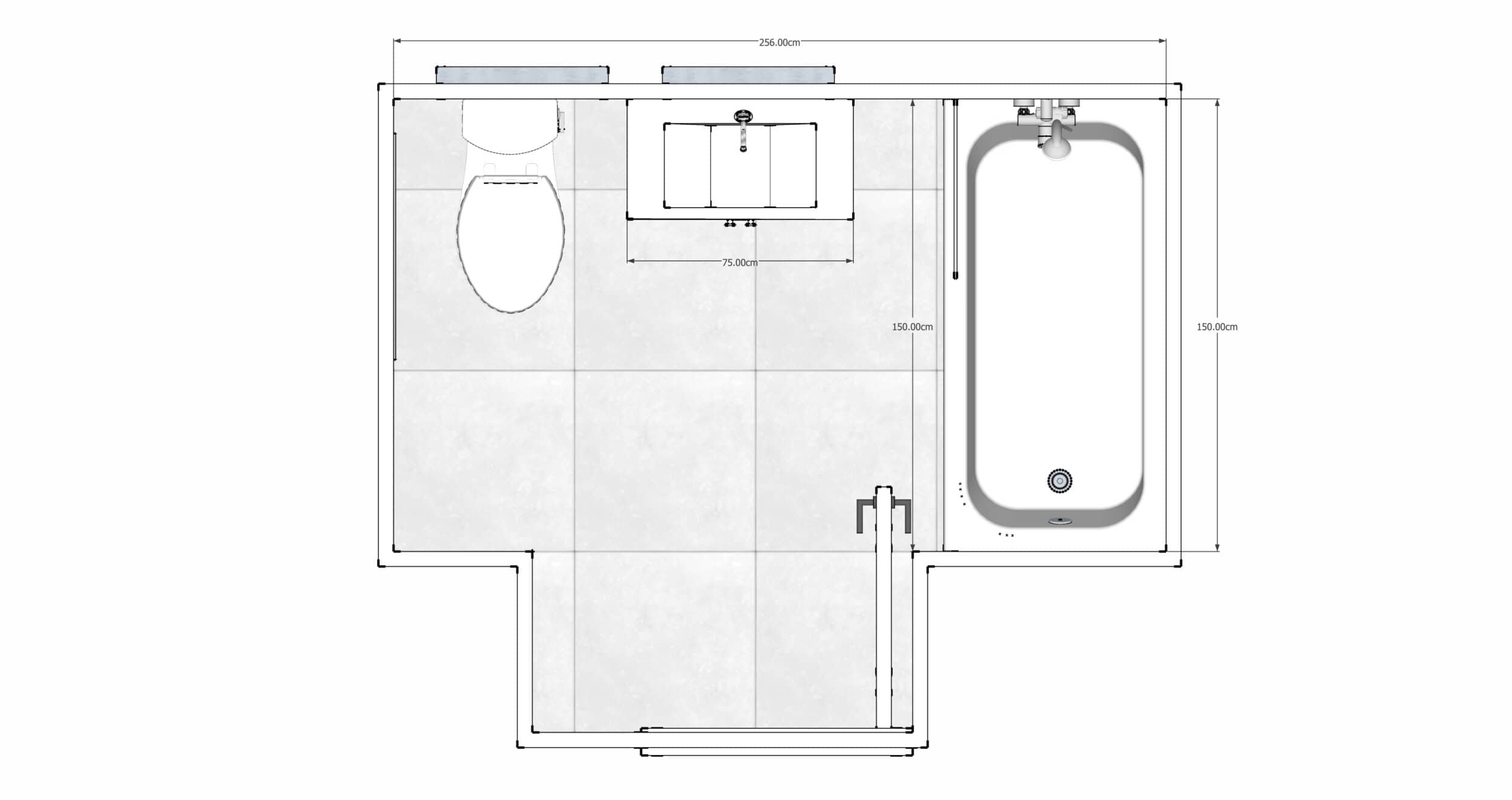
            4 Sep 2018 10 Waimakau station Rd Huapai 1 - Superior Renovations


            What the Golden Rule Actually Means — Zoning Your Bathroom Into Wet and Dry Areas

            The term “golden rule” gets thrown around loosely online, but among bathroom designers it refers to one core principle: organise every bathroom around clearly defined wet and dry zones.

            The wet zone is where water flows — your shower, your bath, and the immediate splash area around them. The dry zone is everything else: the vanity, the toilet, storage, and the space you use for getting dressed, applying makeup, or brushing your teeth.

            Why does this matter? Three reasons.

            Safety and Moisture Control

            Water on bathroom floors is the number one cause of slip injuries in New Zealand homes. When wet and dry zones aren’t properly separated, water migrates across the floor every time someone showers. In Auckland’s humid climate — where bathrooms already battle condensation through the wetter months — that’s a recipe for slippery tiles, swollen cabinetry, and mould behind the vanity that you won’t notice until it’s a real problem.

            The NZ Building Code Clause E3 (Internal Moisture) requires that floor surfaces in any space containing sanitary fixtures must be impervious and easily cleaned. Proper zoning is how you meet that requirement in practice — not just on paper.

            💡 Quick tip: Position the wet zone (shower, bath) at the back of the room, furthest from the door. This keeps water and steam contained rather than spreading across the entire bathroom every time you shower.

            Flow and Daily Usability

            Think about your morning routine. You walk in, use the toilet, wash your hands, check the mirror, maybe brush your teeth. The shower comes later — or sometimes not at all. For most of the time you spend in your bathroom, you’re in the dry zone. It makes sense to put that zone closest to the door, where it’s easiest to access.

            When you enter a well-zoned bathroom, you should see the vanity or basin first. Not the toilet. Definitely not the back of the shower. This isn’t just about aesthetics — it’s about making the space feel intuitive. You don’t think about it when it works. You absolutely notice when it doesn’t.

            “The first thing you should see when you open the bathroom door is either the vanity or the bath — never the toilet. That single decision sets the tone for the entire layout and affects how the room feels every single day.”
            — Cici Zou, Designer (NZ Dip. Interior Design, Certified Designer), Superior Renovations

            Fixture Clearances — The Numbers That Make It Work

            Zoning isn’t only about which fixtures go where. It’s about how much space sits between them. Every fixture in a bathroom needs a minimum clearance zone around it — space to stand, move, and use it comfortably.

            Here are the practical clearances that NZ bathroom designers work to:

            Fixture Minimum Front Clearance Recommended Front Clearance Side Clearance
            Toilet 550 mm 750 mm 380 mm from centreline to wall/fixture
            Vanity / Basin 550 mm 750 mm 500 mm from centreline to wall
            Shower entry 600 mm 750 mm Minimum 900 × 900 mm internal
            Freestanding bath 600 mm entry side 750 mm 100–150 mm perimeter for cleaning
            Door swing Full arc must not hit any fixture Outward swing or sliding preferred

            These clearances can overlap — the space in front of the toilet can also be the circulation path to the shower, for instance. But no fixture should feel boxed in. If you can’t comfortably stand, turn, and reach a towel after stepping out of the shower, the clearances are too tight.

            For Auckland bathroom renovations where consent isn’t required (most like-for-like replacements), these clearances aren’t legally mandated by the NZ Building Code for existing residential bathrooms. But they’re best-practice design standards drawn from NZS 4121 and international guidelines — and they’re what separates a bathroom that works from one that merely fits.
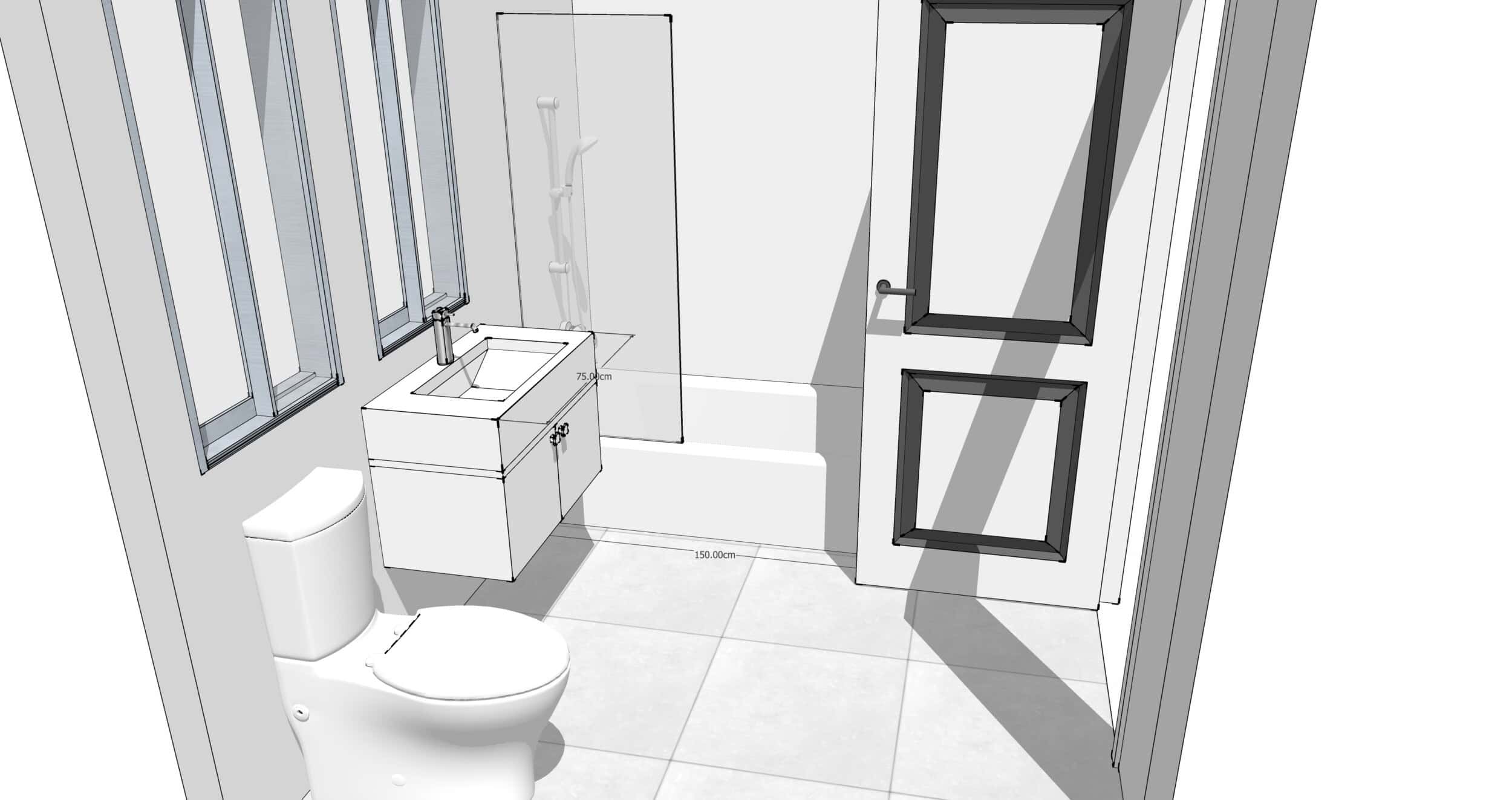
            4 Sep 2018 10 Waimakau station Rd Huapai 2 - Superior Renovations


            How to Apply the Golden Rule in Auckland Bathrooms — From Tiny Ensuites to Master Bathrooms

            Theory is one thing. Applying it inside a 2.4 × 1.8 metre ensuite in a 1990s townhouse in Albany? That’s where it gets real.

            Auckland bathrooms come in wildly different shapes and sizes, and the golden rule has to flex to fit all of them. The principle stays the same — zone wet from dry, maintain clearances, control the flow. The execution changes depending on what you’re working with.

            Small Bathrooms (3–5 m²) — Most Auckland Ensuites and Second Bathrooms

            This is the size range we see most often. It’s where the golden rule matters most, because there’s no room for mistakes.

            In a small bathroom, put all your plumbing on one wall wherever possible. A linear layout — toilet, vanity, and shower along the same wall — keeps the plumbing runs short (which saves money) and leaves one clear circulation path through the centre of the room. The shower goes at the far end, the vanity closest to the door.

            We renovated an ensuite in a Hobsonville townhouse last year that was barely 3.5 m². The original layout had the shower by the door and the vanity at the back — you had to walk past a wet shower screen every morning just to brush your teeth. By flipping those two and installing a frameless glass shower panel at the far end, the entire experience changed. Same footprint. Same fixtures. Completely different room.

            💡 Quick tip: In bathrooms under 4 m², a sliding or pocket door frees up about 0.7 m² of usable floor space that a standard swing door would eat. That’s enough to make the difference between cramped and comfortable.

            Other small-bathroom moves that reinforce the golden rule:

            Wall-hung toilets and floating vanities free up visible floor area, making the room feel larger and easier to clean. A wall-hung toilet also lets you adjust the distance from the back wall — useful in older Auckland homes where the existing plumbing position doesn’t give you ideal clearances.

            Frameless glass shower panels separate the wet zone without visually dividing the room. A floor-to-ceiling glass panel is the single most effective way to zone a small bathroom — water stays in the wet zone, but your eye reads the space as one continuous room.

            Consistent floor tile throughout — the same tile inside and outside the shower — reinforces the sense of a single space. Use a quality non-slip tile from The Tile Depot rated R10 or higher for the shower area.
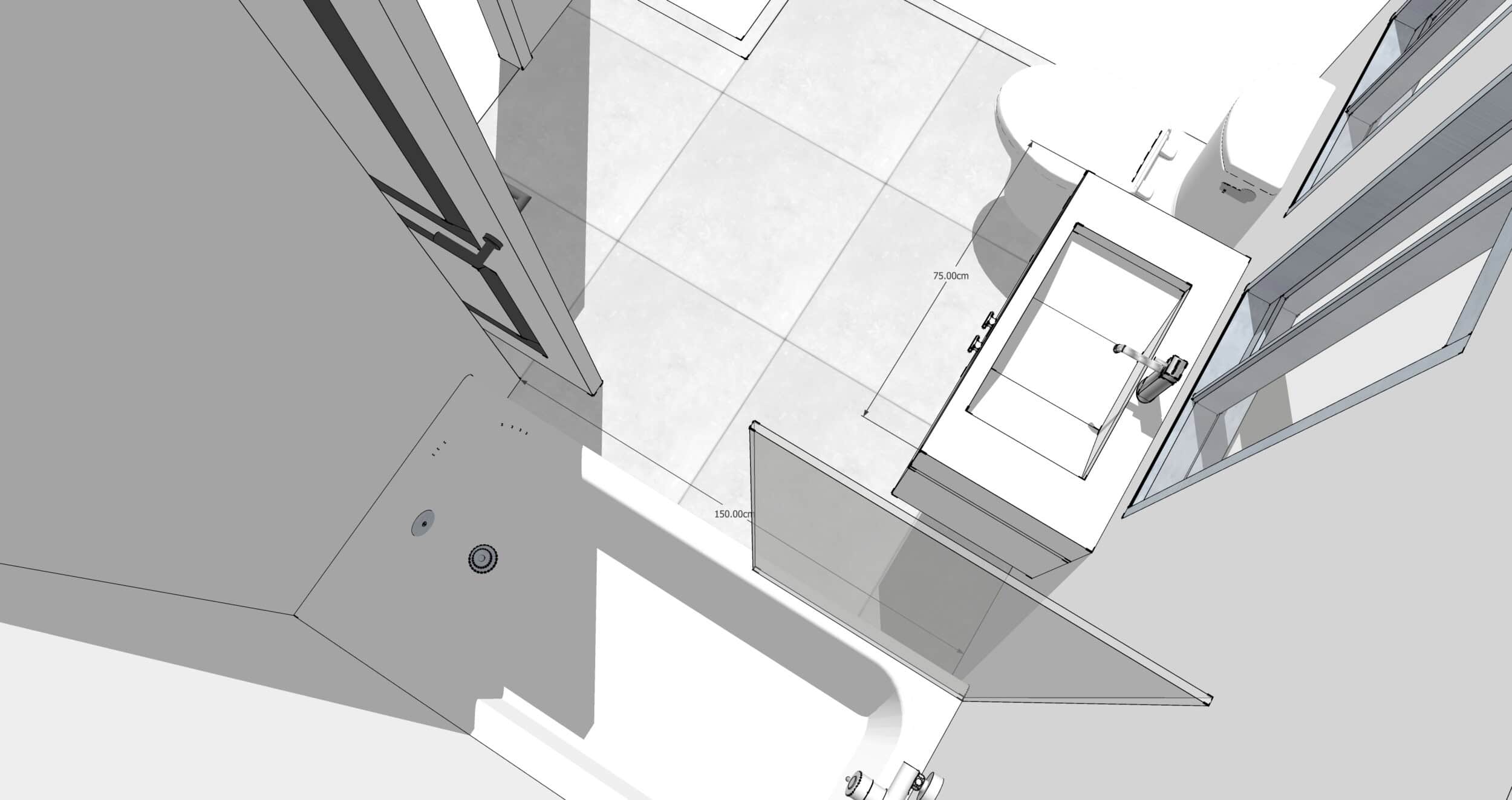
            4 Sep 2018 10 Waimakau station Rd Huapai 4 - Superior Renovations


            Medium Bathrooms (5–8 m²) — The Auckland Family Bathroom

            This is the classic three-piece family bathroom you’ll find in most post-war Auckland homes — the brick-and-tile places in Manurewa, the 1960s weatherboards in Mt Roskill, the older bungalows across the North Shore.

            With 5–8 m², you have enough space to physically separate the wet and dry zones — not just visually, but with a partial wall, a glass partition, or even a change in floor level. This is where the golden rule really starts to pay off.

            A common layout we use: vanity and toilet on the left as you enter (dry zone), shower and/or bath on the right behind a glass screen or half wall (wet zone). The towel rail sits between the two zones — close enough to reach from the shower, but in the dry area so towels actually dry properly. Sounds obvious. You’d be surprised how often towel rails end up inside the splash zone.

            “In a family bathroom, I always recommend a semi-wet transition zone between the shower and the dry area — even if it’s just 300 mm of floor space with a slight fall toward the drain. It acts as a buffer and keeps the rest of the bathroom dry even when the kids forget to close the shower screen.”
            — Dorothy Li, Design Manager, Superior Renovations

            If you’re including a bath and a separate shower — common in family bathrooms — the bath can serve as a natural divider between zones. A freestanding bath positioned between the shower and the vanity creates an elegant visual separation while keeping the wet fixtures grouped together and the dry fixtures grouped on the entry side.

            For a mid-range family bathroom renovation in Auckland, expect to budget $25,000–$35,000 for a full scope including design, supply, all trades, and project management. Use our bathroom renovation cost calculator for a more specific estimate based on your selections.

            Large Bathrooms and Master Ensuites (8–12+ m²)

            Bigger bathrooms bring more options — and more ways to get zoning wrong. The temptation in a large space is to spread fixtures across every wall, which breaks the zone structure and creates a room that feels disconnected rather than luxurious.

            In a large ensuite, think of the space in three zones rather than two:

            The dry zone (vanity, mirror, storage) anchors the entry. The semi-wet zone (toilet, possibly a freestanding bath) sits in the middle, creating a visual transition. The wet zone (walk-in shower, wet room area) occupies the furthest point from the door.

            This three-zone approach is what you see in high-end hotel bathrooms — and it’s increasingly what Auckland homeowners in suburbs like Remuera, Herne Bay, and Epsom are asking for. Enclosed toilet rooms (a separate alcove or niche with its own door or partition) add privacy without losing the open-plan feel of the main space.

            💡 Quick tip: If your ensuite is over 10 m², consider a dedicated drying zone between the shower and vanity — a 600–800 mm strip of floor with a heated towel rail. It’s a small luxury that stops wet footprints reaching the vanity area and makes the daily routine noticeably more comfortable.

            For inspiration on how these layouts come together in real Auckland homes, browse our bathroom design gallery or visit our showroom at 16B Link Drive, Wairau Valley.
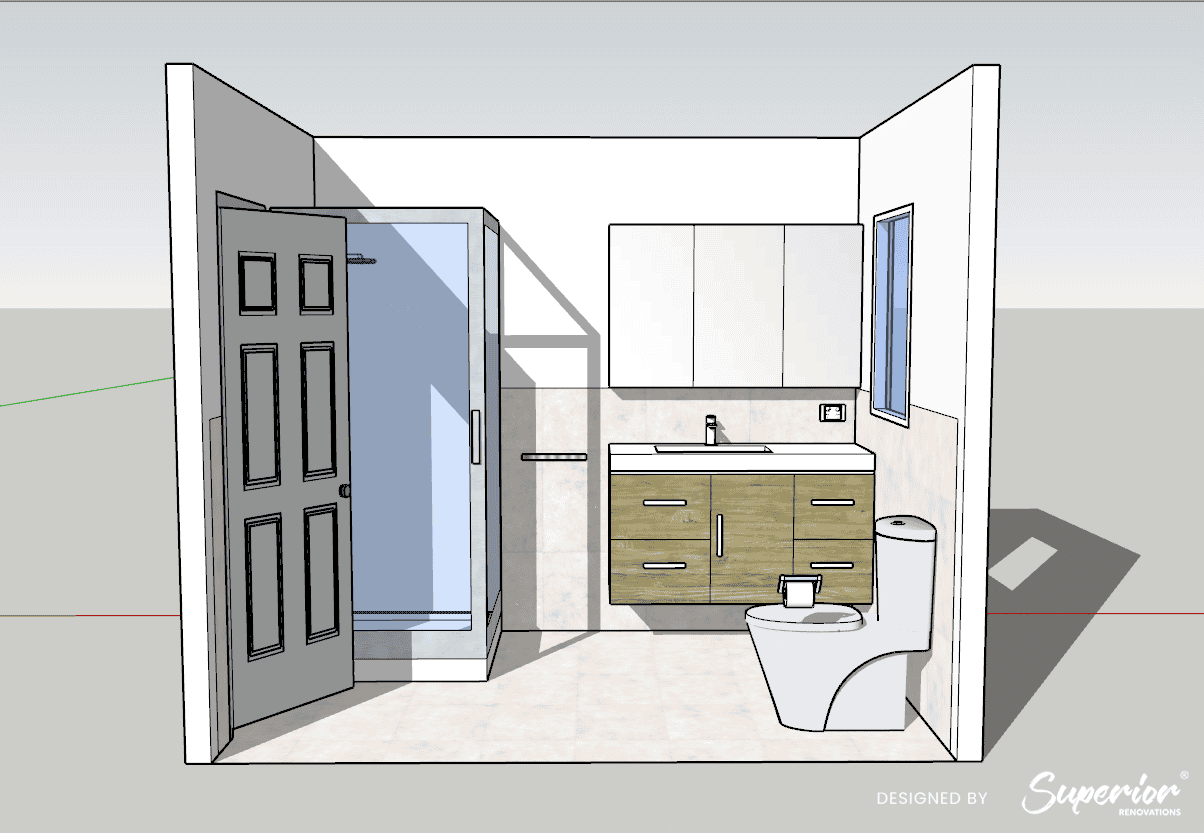
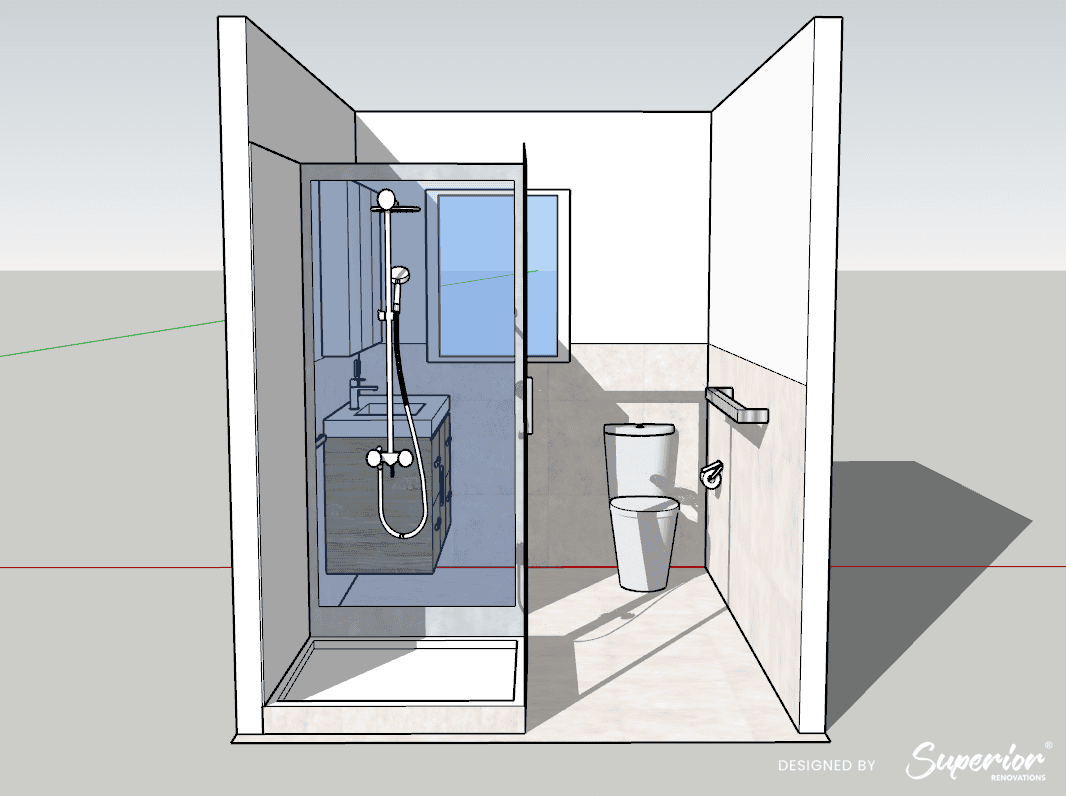
            Small Bathroom Design Superior Renovations 14 - Superior RenovationsSmall Bathroom Design Superior Renovations 15 - Superior Renovations


            Five Bathroom Layout Mistakes Auckland Homeowners Make (and How the Golden Rule Prevents Them)

            We’ve renovated hundreds of Auckland bathrooms. The layout mistakes we see most often aren’t dramatic — they’re the kind of thing that seems fine on a floor plan but drives you mad in daily use.

            1. Toilet Facing the Door

            This is the single most common layout mistake in NZ bathrooms. You open the door and the first thing you see — or the first thing your dinner guests see — is the toilet. It happens because the toilet is often placed nearest to the existing waste pipe, and nobody thought to question it.
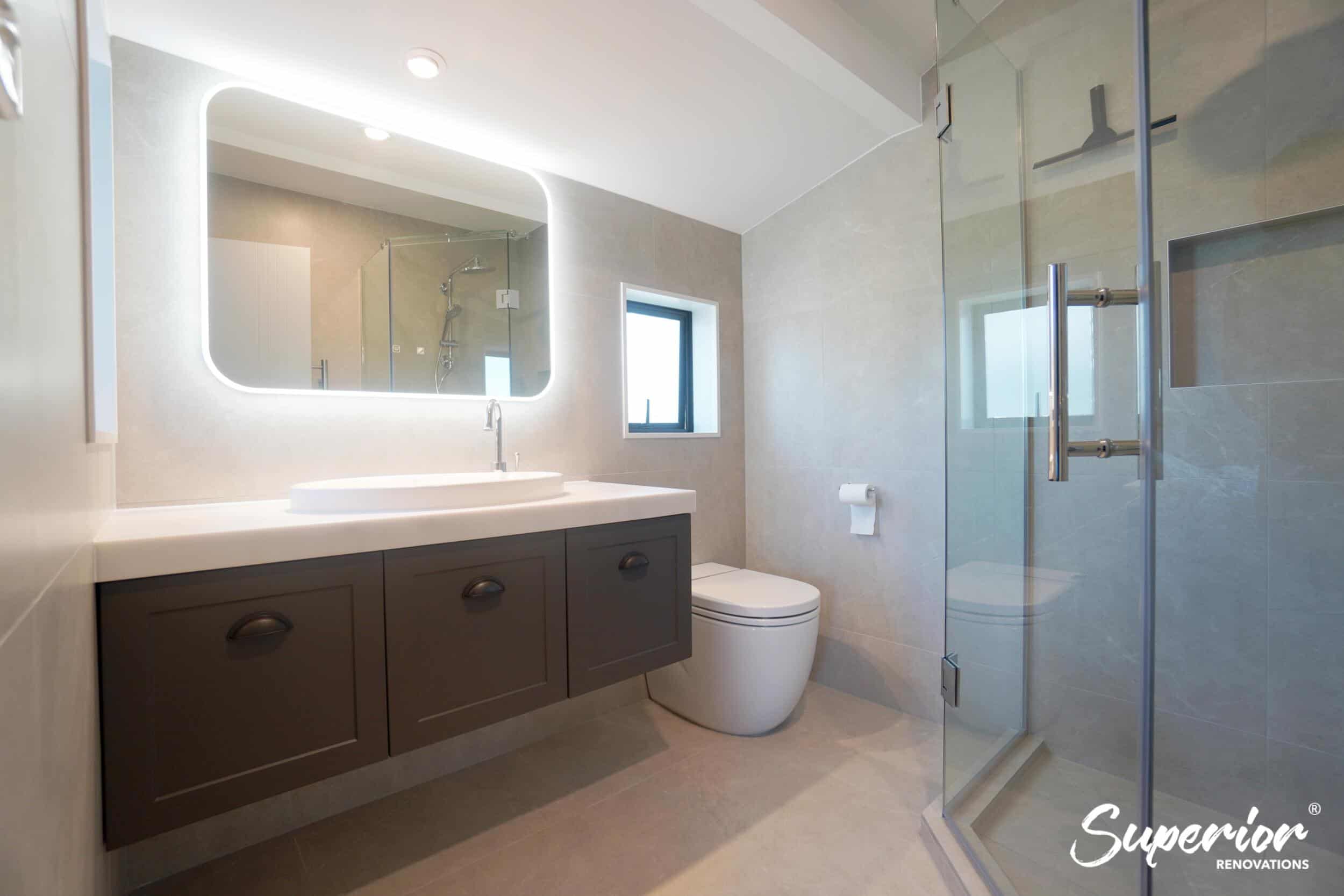
            The fix: position the toilet to the side, behind a partial wall, or at least perpendicular to the entry sightline. In the NZ Building Code’s guidance on toilet privacy (G1/AS1), the principle is clear — building users shouldn’t be able to see the toilet pan in the normal use of the building. The same principle should guide your home layout, even though residential bathrooms have more flexibility.

            2. Cramming in Too Many Fixtures

            A bath, a separate shower, double basins, and a toilet in 6 m². We’ve seen it attempted. It doesn’t work.

            Every fixture you add shrinks the clearance zones around every other fixture. When you can’t comfortably dry off after a shower because the towel rail is 400 mm away and the toilet is right there — that’s a layout that prioritised fixtures over function. Sometimes less really is more. A single generous shower with a rainfall head and proper clearance will feel more luxurious than a cramped shower-plus-bath combination where you can barely turn around.

            3. Ignoring the Door Swing

            A standard hinged door swinging inward eats approximately 0.7 m² of floor space and can collide with the vanity, towel rail, or even the toilet. In Auckland’s older villas and bungalows — where bathrooms are often tight — this is a real problem.

            Outward-swinging doors, sliding doors, or pocket doors solve it. A pocket door is the gold standard for small bathrooms. Yes, it costs more to install (typically $800–$1,500 above a standard door), but the floor space you gain is permanent.

            💡 Quick tip: Before finalising your layout, open every drawer, every cabinet door, and simulate the door swing in your floor plan. If anything overlaps or blocks access, the clearances need adjusting. This five-minute check prevents expensive regrets.

            4. Putting the Shower Next to the Door

            When the shower is beside the entry, steam and water have a direct path out of the bathroom. The hallway gets humid. The bathroom floor is wet where you step in. And the vanity mirror fogs up faster because it’s further from the extraction fan and closer to the steam source.

            Shower at the back, vanity at the front. Always. It’s the golden rule in practice.

            5. Forgetting About Ventilation Zones

            Auckland’s climate means bathrooms need proper ventilation — not just an extractor fan stuck somewhere on the ceiling. The fan should be positioned directly above or adjacent to the wet zone, pulling moisture at its source before it migrates into the dry zone. Under the NZ Building Code Clause G4 (Ventilation), all habitable spaces require adequate ventilation — and for bathrooms without openable windows, a mechanical extraction system is mandatory.

            A well-zoned layout makes ventilation more effective because the moisture is concentrated in one area rather than spread across the whole room.
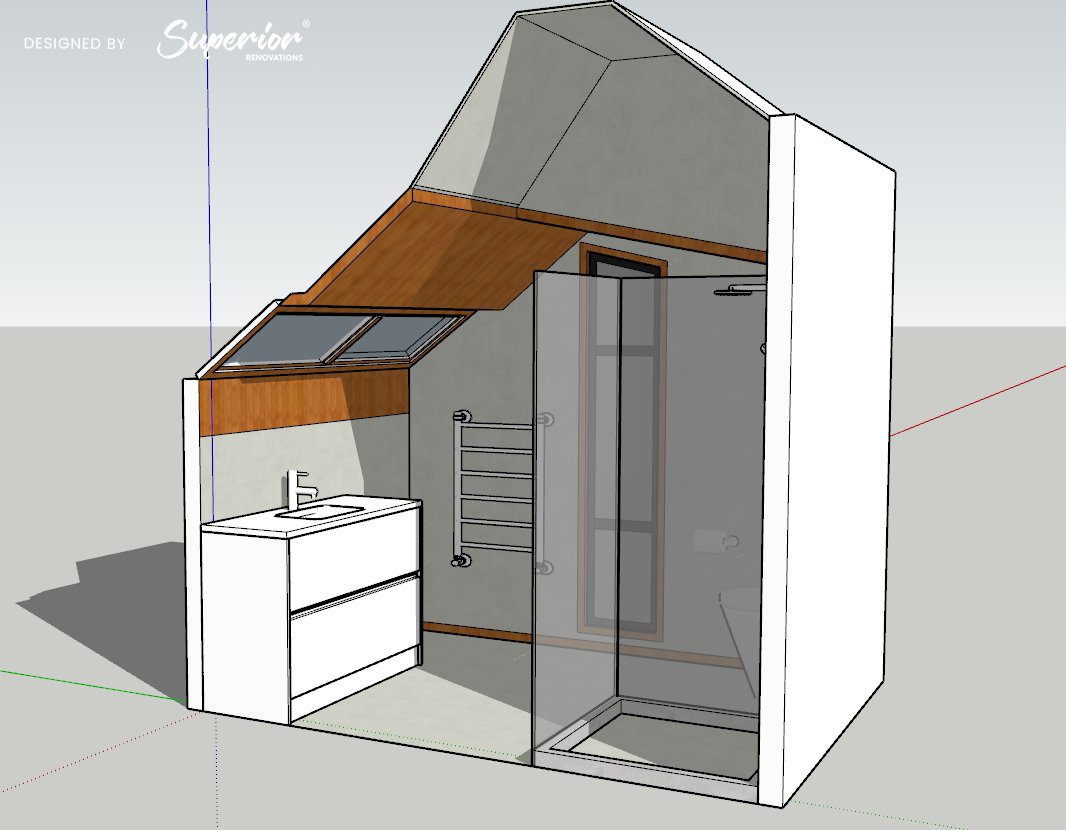
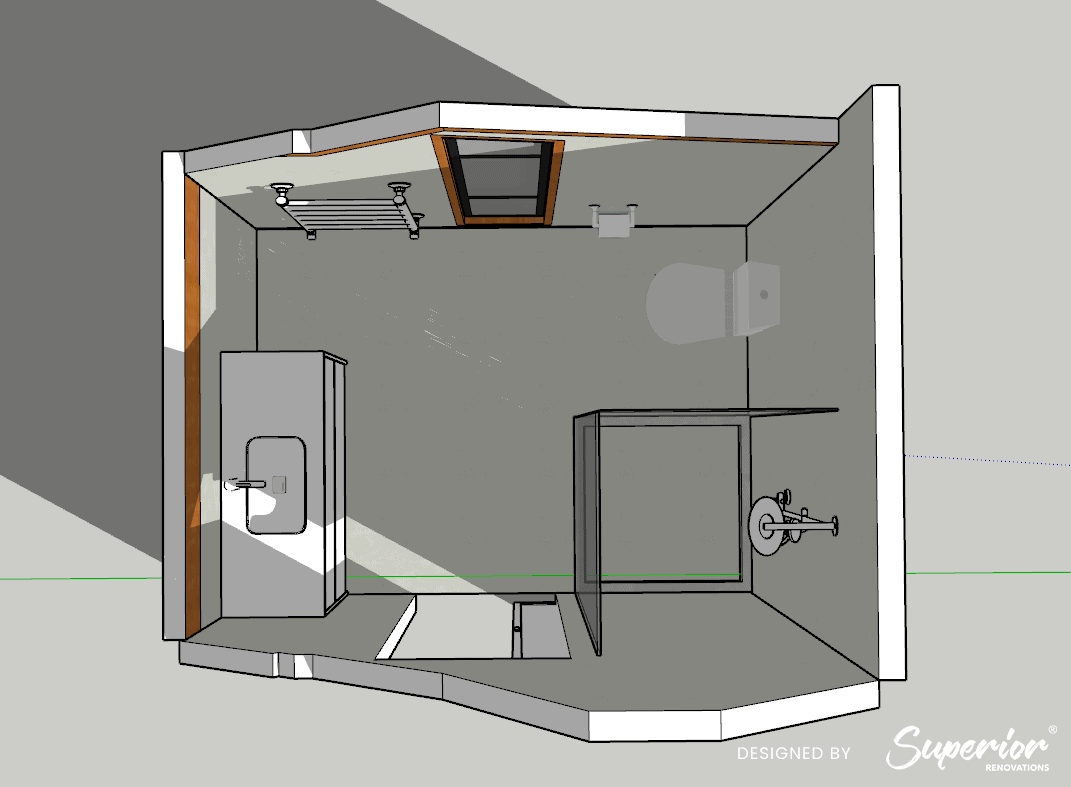
            Small Bathroom Design Superior Renovations 11 - Superior RenovationsSmall Bathroom Design Superior Renovations 9 - Superior Renovations


            NZ-Specific Layout Considerations Auckland Homeowners Should Know

            International bathroom design advice is everywhere. But Auckland homes have quirks that generic advice doesn’t cover.

            Existing Plumbing Positions in Older Auckland Homes

            In pre-1960s villas and bungalows across Grey Lynn, Ponsonby, and Mt Eden, the waste pipe for the toilet is often in a fixed position that’s expensive to move. The golden rule doesn’t mean you have to relocate plumbing — it means you design the best possible zone layout around what’s already there. Our advice to clients is always to keep the plumbing where it is and only change it if absolutely necessary. Relocating a toilet waste pipe can cost $1,000–$5,000 depending on access, and that’s money better spent on finishes or fixtures in most cases.

            Waterproofing and the Wet Zone

            Under NZ Building Code Clause E3, any glazing within 2 metres of the floor in bathrooms must be safety glass, and wet area membranes must comply with AS/NZS 4858:2004. When you zone your bathroom properly, the waterproofing scope is clearly defined — you know exactly which walls and floors need full membrane treatment and which need splash-zone protection only. This clarity can save $500–$1,500 in waterproofing costs compared to waterproofing the entire room floor-to-ceiling.

            Auckland Council Consent and Layout Changes

            Most like-for-like bathroom renovations — replacing fixtures in the same positions — don’t require Auckland Council building consent. But if you’re moving plumbing to new locations, removing walls, or making structural changes, consent is required. The consent process typically takes 4–8 weeks and costs $3,000–$8,000 for residential projects. Superior Renovations assesses this during your free in-home consultation and manages all consent applications on your behalf.

            Future-Proofing With Accessible Design

            The NZ Building Code Clause G1 requires that personal hygiene facilities for people with disabilities are accessible. Even in a standard residential renovation, it’s worth designing with the future in mind. A level-access shower (minimum 900 × 900 mm clear space), wider doorways (minimum 810 mm clear opening), and strategically placed blocking in the walls for future grab rails cost very little extra during a renovation but can save tens of thousands later if accessibility becomes necessary.

            “We now design every family ensuite with future-proof access in mind. A wider doorway, a level-entry shower, and blocking for grab rails — these changes cost almost nothing during the build but make the space work for grandparents, kids, or anyone with mobility changes down the track.”
            — Dorothy Li, Design Manager, Superior Renovations

            For a full breakdown of what different bathroom renovations cost in Auckland, see our 2026 bathroom renovation cost guide.


            Get Your Bathroom Layout Right From the Start

            The golden rule isn’t complicated. Zone wet from dry. Maintain clearances. Design the flow from dry to wet as you move further into the room. Do that, and you’ve got a layout that works — one that’ll feel right on day one and still feel right a decade from now.

            The hard part isn’t understanding the rule. It’s applying it to the specific bathroom you’ve got — with its fixed waste pipes, its odd dimensions, its window in the wrong spot, and its door that opens the wrong way. That’s where experience matters, and it’s exactly what our design team does for every project.

            Book your free in-home consultation with Superior Renovations
            Try our free bathroom renovation cost calculator
            Request a free feasibility report for your project


            What is the golden rule for bathroom layouts?

            The golden rule is zoning — separating your bathroom into distinct wet and dry areas. The wet zone (shower, bath) goes at the back of the room, furthest from the door. The dry zone (vanity, toilet, storage) sits closest to the entry. This keeps water contained, improves daily flow, and makes the space safer and more comfortable. Every fixture should have adequate clearance — at least 550 mm in front and 380 mm to the side for toilets.

            How much clearance do you need around a toilet in NZ?

            Best practice is a minimum of 380 mm from the toilet centreline to any wall or fixture on either side, and at least 550 mm of clear space in front. For comfort, aim for 750 mm in front if your layout allows it. The NZ Building Code (G1/AS1) sets accessibility requirements for public buildings, and while residential bathrooms have more flexibility, following these clearances makes a real difference to daily comfort.

            What size should a shower be in a New Zealand bathroom?

            The minimum recommended internal shower size in NZ is 900 × 900 mm. For a more comfortable experience — especially in a family bathroom — we recommend at least 1,000 × 1,000 mm. Walk-in showers in larger ensuites typically start from 1,200 × 900 mm. Ensure at least 600 mm of clear space at the shower entry for safe access.

            Do I need building consent to change my bathroom layout in Auckland?

            If you're replacing fixtures in the same positions, consent is generally not required. However, moving plumbing to new locations, removing or adding walls, or making structural changes typically requires Auckland Council building consent. Processing takes 4–8 weeks and costs $3,000–$8,000 for residential projects. Superior Renovations assesses consent requirements during your free consultation.

            How much does a bathroom renovation cost in Auckland in 2026?

            A mid-range full bathroom renovation in Auckland costs $25,000–$35,000 including design, supply, all trades, and project management. Budget refreshes start from $9,000–$16,000. Luxury or custom bathrooms — wet rooms, premium fixtures, high-end brands — start from $45,000 upwards. Use the Superior Renovations bathroom cost calculator for a personalised estimate.

            Should the toilet face the bathroom door?

            No. The toilet should never be the first thing you see when opening the bathroom door. Position it to the side, behind a partial wall, or perpendicular to the entry sightline. The NZ Building Code guidance on privacy (G1/AS1) states that toilet pans should not be visible in the normal use of a building. The same principle should guide residential layouts.

            What is wet and dry zoning in a bathroom?

            Wet and dry zoning divides your bathroom into areas based on water exposure. The wet zone contains the shower and bath — areas that need full waterproofing and slip-resistant surfaces. The dry zone contains the vanity, toilet, and storage. Separating these zones prevents water from migrating across the floor, reduces mould risk, protects cabinetry, and makes the bathroom safer and easier to clean.

            Can you have a bath and separate shower in a small Auckland bathroom?

            It depends on the size. In bathrooms under 5 m², fitting both a bath and a separate shower usually means sacrificing clearance space around one or both — which breaks the golden rule. A shower-over-bath combination is often the better option in compact spaces. In bathrooms 6 m² and above, a separate bath and shower can work well when positioned together in the wet zone.

            How do I make a small bathroom feel bigger with layout?

            Use a linear layout with plumbing on one wall. Install a frameless glass shower panel instead of a shower curtain or framed enclosure. Choose a floating vanity and wall-hung toilet to expose more floor area. Use the same floor tile inside and outside the shower for visual continuity. A pocket or sliding door saves about 0.7 m² of floor space compared to a standard swing door.

            Is it worth hiring a designer for a bathroom layout?

            For bathrooms over $20,000 in scope, a designer typically saves you more than their fee by avoiding layout mistakes, optimising clearances, and selecting materials that work together. Superior Renovations includes design as part of every bathroom renovation package. Our in-house design team — including specialists Cici Zou and Alison Yu — works with you to plan the layout before any construction begins.

            What is the best bathroom layout for an Auckland villa?

            Auckland villas typically have small, narrow bathrooms with fixed waste pipe positions. The best layout keeps plumbing on the existing wall, places the vanity nearest the door, positions the toilet perpendicular to the entry sightline, and puts the shower at the far end with a frameless glass panel. A pocket door and floating vanity maximise the limited floor space without requiring structural changes.


            Further Resources for your bathroom renovation

            1. Featured projects and Client stories to see specifications on some of the projects.
            2. Real client stories from Auckland

            Need more information?

            Take advantage of our FREE Complete Home Renovation Guide (48 pages), whether you’re already renovating or in the process of deciding to renovate, it’s not an easy process, this guide which includes a free 100+ point check list – will help you avoid costly mistakes.

            Download Free Renovation Guide (PDF)



            finance - Superior Renovations

            Have you been putting off getting renovations done?

            We have partnered with Q Mastercard ® to provide you an 18 Month Interest-Free Payment Option, you can enjoy your new home now and stress less.

            Learn More about Interest-Free Payment Options*

            *Lending criteria, fees, terms and conditions apply. Mastercard is a registered trademark and the circles design is a trademark of Mastercard International Incorporated.


            Still have questions unanswered?

            Book a no-obligation consultation with the team at Superior Renovations,
            we’d love to meet you to discuss your renovation ideas!

              Services

              Home RenovationKitchen RenovationBathroom RenovationOutdoor RenovationHouse ExtensionCommercialDesign ServicesOther

              By submitting this form, you agree to receive communications from us via email or text regarding our services, you can unsubscribe at any time.

              This site is protected by reCAPTCHA and the Google

              Privacy Policy and Terms of Service apply.

              bathroom renovations auckland - Superior Renovations
              Bathroom Renovation

              How to Choose the Right Bathroom Tiles for Your Auckland Renovation

              The tiles you pick will set the mood, the maintenance schedule, and the budget for your entire bathroom renovation. For an average Auckland bathroom (around 5–8 m²), you’re looking at anywhere from $2,500 to $8,000+ on tiles and installation — so getting the material, size, colour, and layout right the first time matters more than most homeowners realise. Here’s what we’ve learnt after completing hundreds of bathroom renovations across Auckland.

              1a6bea02 6b27 42a9 93b3 f72feecbc156 - Superior Renovations


              Tile Materials — What Actually Works in a NZ Bathroom

              Not all tiles handle moisture the same way. In a humid Auckland bathroom, the single most important property of any tile is its water absorption rate — and porcelain wins that fight.

              Here’s how the main options stack up for the NZ market:

              Porcelain tiles ($60–$150 per m²) are the workhorse of Auckland bathrooms. They’re fired at higher temperatures than ceramic, which makes them denser and far less porous — typically under 0.5% water absorption. That matters in a city where humidity sits high for most of the year. Porcelain works on both floors and walls, handles underfloor heating well, and comes in everything from stone-look finishes to polished concrete effects. Most of the bathrooms we complete across the North Shore and central Auckland use porcelain as the base.

              Ceramic tiles ($35–$80 per m²) are the budget-friendly option. They’re lighter, easier to cut, and perfectly fine for walls. But ceramic absorbs more water than porcelain, so we generally don’t recommend ceramic for bathroom floors in wet zones — particularly in shower areas. If you’re watching costs, a common approach is ceramic on the walls with porcelain on the floor.

              Natural stone tiles ($120–$250+ per m²) — marble, travertine, limestone — bring a premium feel that’s hard to replicate with porcelain look-alikes. The trade-off? Stone is porous and needs regular sealing, typically every 12–18 months. A marble shower wall in a Remuera ensuite looks stunning, but it demands more upkeep than most families want to deal with in a main bathroom.

              Mosaic tiles ($40–$150 per m²) are small-format tiles (usually 20–50 mm) that come pre-mounted on mesh sheets. They’re ideal for shower niches, feature strips, and curved surfaces. The catch is labour cost — mosaics take significantly longer to install, and the grout lines add up fast. Budget an extra 20–40% on installation for any mosaic work.

              💡 Quick tip: Ask your tiler or renovation company for the tile’s water absorption rating before buying. Anything above 3% absorption shouldn’t go on a bathroom floor. The NZ Building Code doesn’t specify an absorption limit directly, but compliance with Clause E3 (Internal Moisture) effectively demands low-porosity materials in wet areas.

              Size and Layout — How Tile Format Changes Your Bathroom

              Tile size does more heavy lifting than most people expect. Large-format tiles (600×600 mm or bigger) are dominating Auckland bathroom renovations right now — and for good reason. Fewer grout lines mean less visual clutter, easier cleaning, and a sense of space that smaller tiles can’t match in a compact room.
              That said, large tiles aren’t always straightforward. They need a perfectly level substrate, which can mean additional floor preparation — especially in older Auckland homes where timber subfloors have settled over decades. A 1960s bungalow in Mt Eden with an uneven bathroom floor will need screeding before any 600×1200 tile goes down. That’s an extra cost, but skipping it leads to lippage (uneven tile edges) that looks amateur and creates trip hazards.

              Smaller tiles (300×300 or smaller) still make sense in certain situations. They’re easier to grade toward a floor waste in a walk-in shower, they handle curved walls better, and they give you more design flexibility. A herringbone pattern in a small-format subway tile can add real character to a compact powder room without making the space feel smaller.

              Common layout patterns we see across our Auckland projects:

              Stacked (grid): Clean, modern, minimal grout visibility. Works well with large format.
              Brick bond (offset): The classic subway tile layout. Softens the grid and hides slight size variations between tiles.
              Herringbone: High visual impact, premium feel — but expect 20–30% more labour time and 10–15% more tile waste from all the angled cuts.
              Vertical stack: Increasingly popular in 2026. Stacking rectangular tiles vertically draws the eye up and makes low ceilings feel taller.

              f9b9e26e c919 4aca bb2a 7cba4e4a1215 e1776077597462 - Superior Renovations


              Colour and Tone — What’s Working in NZ Bathrooms Right Now

              Warm neutrals have taken over from the cool grey palette that dominated Auckland bathrooms for the past five years. We’re seeing soft whites, sand tones, warm beige, and greige (grey-beige) across the majority of our 2025 and 2026 projects. These tones work well with the timber vanities, brushed brass tapware, and natural light that Kiwi homeowners are gravitating toward.

              Dark tiles aren’t dead — a charcoal or deep green feature wall still makes a strong statement in a well-lit space. But going full dark in a small bathroom without good natural light is a risky move. It can make the room feel smaller and every water spot, soap residue mark, and dust particle becomes visible. If you want drama without the maintenance headache, keep dark tiles to a single feature wall or the shower niche and let lighter tones carry the rest of the room.

              One trend that’s sticking around: tonal variation within a single colour family. Rather than uniform flat colour, tiles with subtle veining, texture shifts, or matte-to-satin variation add depth without competing with your fixtures. It’s the difference between a bathroom that photographs well and one that actually feels good to stand in.


              Waterproofing Comes Before Tiles — And It’s Non-Negotiable

              This is the section most tiling guides skip. Under NZ Building Code Clause E3, every bathroom wet area must be waterproofed with an approved membrane system before any tile goes on. That’s not optional — it’s a legal requirement, and getting it wrong is one of the most expensive mistakes you can make in a renovation.

              The waterproofing membrane goes over the substrate (the surface behind your tiles — typically gib or cement board) and must extend:

              — At least 1,800 mm above the finished floor level in shower areas (or to the ceiling if the shower rose is mounted high)
              — A minimum of 150 mm above the finished floor level around the rest of the bathroom
              — Across the entire floor area with sealed junctions at every wall-floor corner

              The membrane must meet AS/NZS 4858 (Wet Area Membranes) standards, and the WMAI Code of Practice for Internal Wet-Area Membrane Systems sets out exactly how it should be applied. Corners need reinforcement tape. Pipe penetrations need specific detailing. None of this is DIY territory.

              Why does this matter for your tile choice? Because the tile and adhesive system has to be compatible with the membrane underneath. Some natural stone tiles require specific adhesives that may not bond well with certain membrane products. Your renovation company or tiler should be specifying the full system — membrane, adhesive, tile, and grout — as a compatible package, not mixing and matching from different suppliers.

              💡 Quick tip: Waterproofing failures are one of the most common building claims in New Zealand. If your renovation company can’t explain their waterproofing process and supply a Producer Statement (PS3) on completion, that’s a red flag. At Superior Renovations, waterproofing sign-off happens before a single tile is laid.

              Floor Tiles vs Wall Tiles — They’re Not Interchangeable

              You can use floor tiles on walls, but you should never use wall-only tiles on a bathroom floor. The difference comes down to three things: slip resistance, thickness, and load tolerance.

              Floor tiles need a slip-resistant surface. In NZ, this is measured by the P-rating (pendulum test) system. For a residential bathroom floor, you want a minimum P3 rating — ideally P4 if anyone in the household has mobility concerns. Matte and textured finishes naturally offer better grip than polished or gloss tiles. That’s one reason textured stone-look porcelain is so popular right now — it looks premium and performs well underfoot when wet.

              Falls in the bathroom are a serious issue in New Zealand. ACC data shows 236,923 new claims for fall-related injuries from people aged 60 and over in 2023 alone, and bathrooms are one of the highest-risk areas in the home. Tile choice plays a direct role in reducing that risk.

              Wall tiles can be thinner, lighter, and glossier because they don’t bear weight or get walked on wet. This is actually an advantage — lighter tiles are easier to adhere to vertical surfaces and less likely to slump during installation. If you find a gorgeous polished marble-look tile, it’s probably better suited to your walls than your floor.


              What Bathroom Tiling Actually Costs in Auckland

              For a standard Auckland bathroom (around 5–8 m² of floor and 15–25 m² of wall tiling), total tiling costs typically land between $4,000 and $12,000+ including tiles, waterproofing, adhesive, grout, and labour. That’s a wide range, so here’s what drives it up or down:

              Tile cost: The biggest variable. Budget ceramic at $35/m² vs premium natural stone at $250+/m² creates a massive gap before labour even enters the picture.

              Layout complexity: A straight stacked grid is the fastest to install. Herringbone, diagonal, or mixed-format layouts add 20–40% to labour time.

              Substrate condition: Older Auckland homes — your character villas, 1970s brick and tile places, anything from the leaky building era — often need significant floor levelling or wall preparation before tiling can start. Budget $500–$1,500 for prep work in an older home.

              Waterproofing: A certified membrane system typically adds $1,000–$2,500 depending on bathroom size and the number of wet zones. This isn’t optional — it’s a Building Code requirement.

              Walk-in showers: Tiled walk-in showers (replacing a shower box or over-bath setup) are one of the most popular upgrades we do. They also require the most waterproofing, precise floor grading to the drain, and careful tile selection for slip resistance. Expect the shower area alone to account for 30–40% of your total tiling budget.

              All figures above are GST-inclusive estimates based on Auckland market rates. Your actual costs will depend on the specific tiles you choose and the condition of your existing bathroom.

              Want a clearer picture of what your specific bathroom would cost? Book a free in-home consultation and we’ll walk through the numbers with you — including tile, waterproofing, and installation for your exact space.

              💡 Quick tip: Don’t buy tiles based on the per-m² sticker price alone. A $40/m² tile with a complex herringbone layout might cost more to install than a $90/m² tile in a simple grid. Always factor in installation cost when comparing options.

              Grout — The Detail Most People Forget Until It’s Too Late

              Grout colour can make or break your tile design, and it’s one of the last decisions homeowners make — usually in a rush. That’s a mistake.

              A contrasting grout (white tiles with dark grout, or vice versa) emphasises the tile pattern and each individual tile shape. It’s bold, it makes a statement, and it’s trending in 2026 — but it also shows every imperfection in tile alignment. Your tiler needs to be precise.

              A matching grout (same tone as the tile) creates a seamless, monolithic look. It’s more forgiving of minor installation variances and makes the room feel larger. For most Auckland bathroom renovations, we recommend a tone-matched grout as the safer long-term choice — especially in family bathrooms that take daily punishment.

              Whatever colour you choose, make sure you’re using an epoxy-based grout in wet areas. Standard cement grout is porous, absorbs moisture, and will stain or grow mould over time — no matter how well you seal it. Epoxy grout costs more upfront but saves years of scrubbing and regrouting. In a shower recess, it’s the only sensible option.


              2026 Tile Trends We’re Actually Seeing in Auckland

              Trends come and go, but some of what we’re seeing in our current Auckland projects has real staying power:

              Stone-look porcelain: Travertine and limestone effects remain the most requested tile finish across our bathroom projects. The technology has improved dramatically — you’d struggle to tell the difference from real stone at arm’s length, and maintenance is a fraction of the effort.

              Textured matte finishes: Gloss tiles are fading. Matte and textured surfaces feel more natural, hide water spots better, and offer improved slip resistance. They also photograph better — which matters if you’re ever selling.

              Warm whites over cool whites: The blue-toned bright white bathroom is giving way to warmer off-whites, creams, and bone tones. These warmer palettes work particularly well in Auckland homes with timber floors and natural light — they feel connected to the rest of the house rather than clinical.

              Feature walls with texture, not colour: Instead of a loud coloured accent wall, the move is toward textured tile in the same colour family as the rest of the bathroom. Think a fluted or ribbed tile behind the vanity in the same warm white as the surrounding walls. Subtle, but it gives the room depth.

              Larger formats, fewer grout lines: 600×1200 mm wall tiles and 600×600 mm floor tiles are now standard in mid-range Auckland renovations. The visual impact of fewer grout joints is significant, especially in smaller bathrooms.


              How to Get Your Tile Selection Right — The Short Version

              After working across hundreds of Auckland bathrooms — from compact Ponsonby villas to large Howick family homes — here’s the process that consistently produces results homeowners are happy with years later:

              Start with the floor. Your floor tile choice drives everything else. Pick a floor tile with the right slip rating, the right format for your room size, and a colour you can live with long term. Then select wall tiles that complement it.

              Choose materials before colours. Decide porcelain vs ceramic vs stone first. Each material has its own maintenance profile, price band, and installation requirements. Colour comes second.

              Get physical samples. Online images lie. Screens distort colour. Always view tile samples in your actual bathroom under the actual lighting conditions — natural daylight and whatever artificial lighting you use at night. A tile that looks warm beige under showroom LEDs might read pink under your bathroom’s fluorescent light.
              Think about resale. If you’re planning to sell within five years, stick to neutral tones and timeless formats. Bold trends date quickly. A well-executed neutral bathroom adds value; a dated trend statement subtracts it.

              Brief your renovation company on the full picture. Your tile selection isn’t isolated — it connects to waterproofing, adhesive systems, grout, underfloor heating, and fixture placement. A good renovation team manages all of this as one system. That’s the approach we take at Superior Renovations — our design team works with you on tile selection as part of the full bathroom design, not as an afterthought.


              finance - Superior Renovations

              Have you been putting off getting renovations done?

              We have partnered with Q Mastercard ® to provide you an 18 Month Interest-Free Payment Option, you can enjoy your new home now and stress less.

              Learn More about Interest-Free Payment Options*

              *Lending criteria, fees, terms and conditions apply. Mastercard is a registered trademark and the circles design is a trademark of Mastercard International Incorporated.


              Still have questions unanswered?

              Book a no-obligation consultation with the team at Superior Renovations,
              we’d love to meet you to discuss your renovation ideas!

                Services

                Home RenovationKitchen RenovationBathroom RenovationOutdoor RenovationHouse ExtensionCommercialDesign ServicesOther

                By submitting this form, you agree to receive communications from us via email or text regarding our services, you can unsubscribe at any time.

                This site is protected by reCAPTCHA and the Google

                Privacy Policy and Terms of Service apply.

                villa renovation
                House Renovation

                The Ultimate Guide to Renovating Villas & Bungalows in New Zealand (incl. Cost & Permits!)

                Auckland’s villas and bungalows are among the most loved — and most challenging — homes to renovate. Whether you’ve picked up a draughty Epsom villa with original fretwork still intact, or a Grey Lynn bungalow that hasn’t been touched since the 1970s, the bones are usually worth saving. The question is how to bring them up to scratch without losing what made them worth buying in the first place.

                What’s So Special About Renovating Villas and Bungalows in Auckland?

                These homes — built from the late 1800s through to the early 1900s — turn up across Grey Lynn, Grafton, Ponsonby, Remuera, and Greenhithe. Victorian villas with bay windows and wrap-around verandahs. Californian bungalows with low-pitched roofs and hardwood floors. They’ve got character that modern builds simply don’t replicate. But they also come with draughts, outdated wiring, moisture problems, and layouts that made sense before anyone had heard of open-plan living.

                The work is about holding both things at once — restoring the fretwork and sash windows while opening up the layout and sorting the cold spots. Around 85,000 Victorian villas in New Zealand remain unrenovated. Done well, a reno adds real value and keeps the character that Auckland buyers will pay a premium for.

                How Do You Tackle Permits, Heritage Rules, and Structural Fixes?

                Start with Auckland Council’s Unitary Plan. If your property sits within a heritage overlay — common in Remuera and Ponsonby — you’ll need specialist input before touching the exterior. Fines for non-compliance aren’t small. Building Consents are required for most structural work; check exemptions at Building.govt.nz. If you’re changing boundaries or altering drainage, a Resource Consent may also be needed.

                Structurally, get a proper inspection before anything else. Foundation movement, rot in the timber framing, asbestos in older cladding, leaky roofs — these are common, especially in coastal North Shore homes. Galvanised pipes and rubber wiring are red flags that need sorting early. An Epsom Victorian villa we worked on needed a full roof replacement and foundation crack repairs — the project came in at $500k–$700k, but the result was a completely transformed home.

                What’s a Realistic Budget — and What Should You Watch For?

                Bungalows typically run $100k–$150k for a solid renovation. Full villa restorations sit at $200k and up, with complex projects reaching $500k–$700k. Structural repairs alone can hit $10k–$50k. Budget a 15–20% contingency — older homes almost always produce surprises. Asbestos removal, for instance, isn’t cheap and can’t be skipped.

                For finishes, Resene and Dulux heritage ranges work well — Half Spanish White on weatherboards is a classic for good reason. Bamboo flooring, double glazing, and a heat pump will pay back over time in lower power bills and a warmer home. A 1920s Ponsonby bungalow we opened up — new insulation, walls removed, deck added — came in at $300k–$400k and now works properly for a family of five.

                Want to talk through your villa or bungalow project? The Superior Renovations team offers a free consult — no obligation, just a honest conversation about what’s possible.

                Renovating a villa or bungalow in New Zealand is one of the more complex things you can do to a property — and one of the most rewarding. These homes have a history worth preserving. But they also need to work for how people actually live today. This guide walks through the whole process: planning, budgeting, consents, structural work, design, and the mistakes that cost people money. Read it before you start.

                Table of Contents

                1. Introduction
                2. Understanding Villa and Bungalow Architecture
                3. Planning Your Renovation
                4. Budgeting for Your Renovation
                5. Working with Professionals
                6. Obtaining Necessary Permits
                7. Structural Considerations
                8. Interior Design and Décor
                9. Exterior Renovations
                10. Colour Schemes for Villas and Bungalows
                11. Energy Efficiency and Sustainability
                12. Common Mistakes to Avoid
                13. Case Studies and Examples
                14. Conclusion
                1. Introduction

                Thinking about renovating your villa or bungalow? These homes — built in the late 19th and early 20th centuries — aren’t just houses. They’re part of New Zealand’s architectural history. This guide covers what you need to know to renovate one properly: keeping the character intact while making the place genuinely livable.

                1. Understanding Villa and Bungalow Architecture

                Before starting work, it pays to understand what you’re actually dealing with.

                Villas (Traditional Villas)

                Victorian villas in New Zealand follow a recognisable layout: a main corridor running through the centre, rooms branching off each side. The parlour sat directly off the corridor — the primary entertaining room, usually with a bay window. Families kept their best furniture here. It was where you impressed guests.

                Across from the parlour, the main bedroom faced the street. Additional bedrooms looked out over the side or back of the property.

                At the rear, under a lean-to roof, sat the kitchen, pantry, and scullery — set slightly lower, floors at ground level. Meals were cooked on a coal range that also heated water through wetbacks. Functional, but not what anyone would call convenient by today’s standards.

                Larger villas sometimes included a dedicated dining room, a lock-up safe, and proper pantry storage. Bathrooms weren’t standard — long-drop toilets lived in a separate outbuilding at the back. The laundry was also separate, typically housing a kauri timber or copper tub for boiling water.

                Types of Villas Found in New Zealand

                Victorian villas in New Zealand come in five distinct styles, from the modest Workers Cottage through to the transitional Trans Villa.

                Workers Cottages were simple 2–4 bedroom homes built in the mid-to-late 19th century to house workers. Close neighbours, minimal fretwork, straightforward design. Many have since had verandahs, second storeys, and extensions added over the decades.

                The Victorian Villa became the defining home style from the mid-19th century. Built with durable native timber, these homes feature high ceilings, small windows, wide central hallways, and verandahs with ornate fretwork and finials. Curb appeal was the point — the exterior details were meant to be noticed.

                The early 20th century brought the Californian Bungalow: larger windows, simpler verandah detailing, lower-pitched roofs, and an open-plan layout that welcomed in more light. Exposed rafters, timber wall panelling, and a distinctive rounded bay window are the giveaways.

                Bay Villas are a variation on the classic Victorian Villa — the defining feature being a faceted bay window on one side, with a verandah wrapping around to match.

                The Trans Villa blended Victorian Villa and Californian Bungalow elements. It stayed popular until the 1940s, when the Bungalow’s influence saw both the Victorian and Trans Villa fall out of fashion.

                Since the 1980s, Victorian villas have made a strong comeback — villa renovations now make up a significant portion of Auckland’s renovation work. At Superior Renovations, a large share of our projects involve character homes. The approach is consistent: modernise the interior for comfort and liveability, restore the exterior to reflect its original character.

                Across New Zealand, around 85,000 Victorian villas remain unrenovated. Most lack insulation, have single-glazed sash windows letting cold air straight through, and layouts that don’t connect spaces or maximise light. Bathrooms are often far from bedrooms and well overdue for an update.

                Once properly renovated, though, they’re something else. Modern comfort inside, heritage character outside — and a property that stands apart from anything built in the last thirty years.

                Bungalows of New Zealand

                By the early 1920s, bungalows had become the leading residential style across New Zealand. They remain popular in Auckland — and like villas, they often need dedicated restoration work to function properly and look right. Solid construction, timeless appeal. They’re not going out of fashion.

                • Foundations: Foundation issues are common in older bungalows. We inspect for cracks, movement, surface water, and borer — anything that affects the home’s stability.
                • Cladding and Windows: Timber cladding and windows need to be well-sealed and properly painted to keep the home weather-tight. Auckland’s wet winters are not forgiving of deferred maintenance.
                • Plumbing and Wiring: Outdated pipes corrode and leak. Older wiring is a fire risk, particularly in insulated roofs. Both need to meet current insurance standards.
                • Interior Scrim: Scrim in the walls is a fire hazard — insurance companies typically require it removed. We assess and advise on what needs to go.
                • Roof Condition: We check for nail pops and seals approaching end of life. A failing roof is the one thing you don’t want to discover mid-renovation.
                Bungalow renovation in Greenhithe, Auckland

                Vintage bathroom renovation for a Greenhithe bungalow

                Classic Bathroom renovation in this bungalow in north shore

                Interior updated to suit the 1920s bungalow architecture

                See full project details and photos of this bathroom renovation.

                The Art Deco Home (1930s and 1940s)

                Art Deco homes arrived in the early 1930s, moving away from the ornate detailing of the Victorian era and the relaxed lines of the 1920s bungalow. They’re distinctive, sought-after renovation projects — and they come with their own specific challenges.

                • Flat Roofs and Parapets: No eaves means window heads are exposed to the weather. Moisture issues here are common and worth checking carefully.
                • Stucco Cladding: This cement-based plaster — sometimes installed over asbestos — cracks when it can’t move. It needs the right products to repair and seal properly.

                The State House (1940s–1960s)

                The Labour government’s late-1930s state house programme was a response to a genuine housing shortage. The design had a big influence on New Zealand’s private housing style — and left a clear legacy across suburban Auckland.

                • Rubber Wiring, Asbestos, and Galvanised Plumbing: All three turn up regularly in homes from this period. All three need assessing and, where necessary, replacing.
                • Scrim: Same issue as bungalows — needs to come out for safety and insurability.

                The Seventies House

                The 1970s produced a mixed bag of housing styles — colonial, ranch, Mediterranean, contemporary. Mandatory insulation requirements came in for new builds and additions in 1978, which makes homes from this era more attractive as a starting point than many people realise.

                • Insulation: The 1978 requirements mean ceiling, wall, and floor insulation may already be present — though often undersized by current standards. Various insulation types can now be subsidised, making upgrades more affordable.

                Restoring these character homes properly preserves something genuinely worth keeping — and adds to the liveability and long-term value of the property.

                Villas Versus Bungalows — Key Features

                Villas

                Villas were statements of their era — craftsmanship on display. The features that defined them:

                • Impressive facades: Symmetrical layouts, ornate detailing, imposing entrances.
                • High ceilings: A sense of space that modern builds rarely match.
                • Detailed woodwork: Cornices, mouldings, and architraves — often still intact under layers of paint.
                • Large sash windows: Natural light and decorative detail, though single-glazed and draughty.
                • Wrap-around verandahs: Outdoor living built into the design from day one.
                • Ornate fireplaces: The focal point of most rooms — tile or marble surrounds, often worth restoring.

                See more: Video testimonial of villa renovation in Grafton, Auckland

                Bungalows

                Bungalows were a deliberate move toward more relaxed, informal living. Their characteristics:

                • Low-pitched roofs: Often tiled or shingled, with wide eaves for shade and weather protection.
                • Built-in cabinetry: Storage built into the architecture — a feature worth keeping.
                • Open floor plans: Better flow between living areas than the corridor-and-rooms layout of the villa.
                • Hardwood floors: Still the most-restored feature in any bungalow reno.
                • Characterful details: Leadlight windows, tiled fireplaces, decorative ceiling roses.

                See more: Historic bungalow renovation — full details and photos (Epsom)

                Classic renovation of a historic bungalow in Epsom

                Modern renovation of a historic Epsom bungalow with contemporary accents

                Classic renovation of a historic bungalow in Epsom

                French doors against restored timber floors

                Bay windows in a bungalow in Epsom

                Bay windows — one of the defining features of a bungalow

                Historic bungalow in Auckland renovated

                Full home renovation of a historic bungalow in Epsom

                Understanding these architectural features helps you make better decisions throughout the renovation — and avoid inadvertently removing things that add value.

                Did you know? Many New Zealand homes blend elements of both villa and bungalow styles, creating properties that don’t fit neatly into either category.

                Read more: Your Guide to Building Consent for Home Renovations in Auckland 2024

                1. Planning Your Renovation

                Initial Assessment

                Walk the property properly before you commit to anything. Identify structural issues, outdated systems, and anything that needs attention before cosmetic work begins. Understand the home’s architectural style, period features, and whether any heritage protections apply. Get a qualified professional to assess structural integrity. Be prepared for what they find — lead paint and asbestos turn up in older Auckland homes more often than people expect. While you’re at it, look at energy efficiency. Insulation, glazing, heating — these are easier and cheaper to address as part of a reno than as standalone projects later.

                Setting Your Goals

                Decide early what you’re actually after. A faithful restoration of the original character, or a modern interior with heritage bones? These aren’t mutually exclusive — but they require different approaches. Prioritise rooms based on how your household actually lives, not just what looks good in photos. If you’re likely to sell in the next five to ten years, think carefully about resale value alongside personal preference.

                Creating a Timeline

                Break the project into phases and put realistic timeframes on each. Factor in Auckland’s wet winters if exterior work is involved — scheduling exterior painting or cladding work through June and July is asking for delays. Get consent applications in early. Processing times through Auckland Council can stretch out, and waiting on paperwork mid-project is frustrating and expensive.

                1. Budgeting for Your Renovation

                Budget is where most villa and bungalow renovations go sideways. Here’s how to approach it properly.

                Estimating Costs

                • Account for heritage work: Restoring character features — fretwork, sash windows, ornate ceilings — costs more than replacing them. Factor in specialists and appropriate materials.
                • Plan for what’s hidden: Older homes regularly turn up surprises. Asbestos, outdated wiring, water damage behind cladding. These aren’t exceptional — they’re typical. Budget accordingly.
                • Get specific quotes: Averages are a starting point only. Get quotes from builders who have actually worked on villas and bungalows — not just general residential renovators.
                • Break it down by phase: Demolition, structural work, electrical, plumbing, interior finishes, exterior, landscaping. Knowing where the money goes helps you make trade-off decisions when you need to.
                • Use specialist resources: ArchiPro (archipro.co.nz) and heritage renovation companies provide more useful cost benchmarks than general renovation guides.

                Contingency Fund

                • Build in a buffer: 15–20% for villas and bungalows. Not 10%. These homes produce surprises at a higher rate than modern builds, and the surprises tend to be expensive.

                Financing Options

                • Heritage property loans: Some lenders offer renovation finance specifically for older homes, with terms that account for the unique nature of character property work.
                • Tax considerations: If energy efficiency upgrades are part of the scope, check what deductions may apply. Worth a conversation with your accountant before you finalise the budget.

                Additional Costs to Factor In

                • Council permits: Heritage overlays and specific zoning rules can require additional consents. These take time and cost money — both need to be in the plan from the start.
                • Professional fees: Architects, draughtspeople, and surveyors who specialise in heritage work charge accordingly. Don’t cut corners here — they’ll save you more than they cost.

                Important note: The average costs of $100,000–$150,000 for bungalows and $200,000+ for villas are starting points based on 2020 figures. Project scope, location, materials, and what the walls reveal once opened will all shift the number. Get specific quotes early.

                Bungalow renovation in North shore with modern accents

                Modern touches while keeping classic bungalow features

                Restoration of classic bungalow features

                Restored timber doors

                Modern touches for a bungalow renovation in North shore

                White against original timber — clean contrast that works

                Restored floating shelves in a bungalow renovation in Auckland

                Restored floating shelves and period accents

                See full case study and photos — bungalow renovation, North Shore

                1. Working with Professionals

                The team you put together will make or break this project. Here’s who you need and what to look for.

                Choosing the Right Builder

                • Experience with character homes: A builder who renovates modern houses is not the same as one who works on villas and bungalows. The materials, the heritage considerations, and the hidden surprises are all different. Find someone who’s done this before.
                • Credentials and references: Valid building licence, relevant insurance, and references you actually follow up on. Ask to speak with previous clients directly — not just read a testimonial on a website.
                • See completed work: Photos are fine. Visiting a finished project is better. Building.govt.nz has tools for finding and verifying licensed professionals.

                Working with Architects and Designers

                • Structural changes need an architect: If you’re altering load-bearing walls, adding floor area, or changing the building’s footprint, an architect’s input isn’t optional — it’s how you avoid costly mistakes.
                • Bridging old and new: A good architect will help you work out how to bring a villa or bungalow into 2025 without stripping what makes it worth owning. That balance is harder than it looks.
                • Communication matters: The best design in the world is useless if the architect isn’t listening to how you actually want to live in the house.

                Specialists Worth Considering

                • Heritage specialists: If your home sits in a heritage overlay, bring one in early. They know how to navigate the approvals process and what Auckland Council will — and won’t — accept.
                • Specialist tradespeople: Structural engineers, asbestos removal contractors, restoration carpenters. These aren’t interchangeable with general tradies. Find people who know character homes.
                1. Obtaining Necessary Permits

                Consents aren’t a formality. Skip them and you’ll face real problems when you go to sell.

                Building Consents

                Most villa and bungalow renovations require a Building Consent from Auckland Council. This ensures your project meets the Building Code — safety, weather resistance, accessibility. The Building Consent Exemption Guide on Building.govt.nz spells out what’s covered and what isn’t.

                Check out our Free Feasibility Report: superiorrenovations.co.nz/request-feasibility-report

                Superior Renovations works with Sonder Architects for all consent-related work. Their office is in our Wairau Valley showroom at 16B Link Drive — easy for clients and consultants to access directly.

                For consent-related enquiries — garage conversions, extensions, that kind of thing — here’s how the process works:

                • Your enquiry comes in to us.
                • We contact you, understand your requirements, and connect you with Sonder’s head architect — copied into the same email so everyone’s aligned from the start.
                • John carries out a feasibility study and requests your property file from Auckland Council.
                • Once the property file is in, John visits the site to walk through your options in person.
                • If it’s a go, concept drawings are produced along with a quote for the architectural drawings required for council submission.
                • If you accept the quote, our architect produces the full drawings.
                • Once drawings are complete, our renovation consultant reviews the plans, visits the site to discuss design, and puts together a fixed-price proposal with full specifications. When the plans are approved, the renovation begins.

                Heritage Considerations

                Heritage Overlays: Check Auckland Council’s Unitary Plan before doing anything to the exterior. Many older villas and bungalows fall within heritage overlays, which impose specific requirements around what can and can’t be changed.

                Heritage Specialist Involvement: If your property is heritage-listed or sits within an overlay, a heritage specialist isn’t optional — they’re how you get through the process without running into compliance issues. Expect requirements around preserving original features, using appropriate materials, and getting additional sign-off from Council’s heritage unit.

                Read more: Comprehensive Guide to the Renovation Consent Process in New Zealand

                Resource Consents

                Some projects need a Resource Consent on top of the Building Consent — if you’re making significant landscaping changes, altering building height, or modifying drainage. Talk to Auckland Council or a resource management consultant early if any of this applies to your project.

                Read more: Renovation Auckland: Ultimate Guide to Costs, Consents and Trends

                Useful Resources

                • Building.govt.nz: Building consents, Building Code, and licensed professional searches.
                • Your local council website: Zoning rules, heritage overlays, permit requirements specific to your area.
                • Auckland Council — Building and Consents (aucklandcouncil.govt.nz)
                • Auckland Council — Heritage Protection (ourauckland.aucklandcouncil.govt.nz)

                Check your property’s heritage status before you plan anything. Surprises at the consent stage are expensive and avoidable.

                Did you know? Unpermitted work doesn’t just risk fines — it can make a property difficult to sell and hard to insure. Buyers’ lawyers check this. So do banks.

                1. Structural Considerations

                Sort the structure first. Cosmetic work on top of unresolved structural issues is money wasted.

                Foundation and Roof

                • Get a proper inspection: A qualified builder or structural engineer, not a general handyman. Look for cracks, leaks, settlement, and anything that’s been patched rather than fixed.
                • Deal with problems early: Foundation and roof issues don’t improve with time. The longer they’re left, the more they cost.
                • Reinforce or replace: Depending on severity, you may be reinforcing existing structure or replacing sections entirely. An engineer’s assessment tells you which.

                Timber Framing

                • Expect hidden damage: Rot and borer in older timber frames are common. You often don’t know the full extent until walls come open.
                • Get it assessed: A building inspector can identify issues before demolition. Factor potential repairs into your contingency budget.

                Load-Bearing Walls

                • Know what you’re removing: Load-bearing walls cannot simply be taken out. Doing so without engineering advice can have serious structural consequences.
                • Get engineering sign-off: Before any wall comes down, confirm with a structural engineer what’s load-bearing and what isn’t.
                • Add support where needed: Steel beams and columns can carry the load once a wall is removed — but this needs to be designed and built properly.

                Electrical and Plumbing

                • Old systems are a liability: Outdated wiring is a fire risk. Corroded pipes leak. Neither is compatible with modern insurance requirements.
                • Budget for a full upgrade: If you’re renovating a villa or bungalow, assume the electrical and plumbing will need a complete overhaul. It almost always does.
                • Code compliance is non-negotiable: All upgrades must meet current Building Code requirements.

                Additional Hazards

                • Asbestos: Common in homes built before the mid-1980s. Do not disturb suspected asbestos without a qualified professional — removal requires licensed contractors.
                • Lead paint: Also common in older Auckland homes. Requires careful handling and appropriate disposal.
                • Insulation: If it’s not there or it’s inadequate, this is the time to sort it. Retrofitting insulation into an already-finished home costs significantly more.
                1. Interior Design and Décor

                The interior needs to feel right for how you live — but it should also respect what the house is. These aren’t competing goals. They just require a bit of thought.

                Preserving Original Features

                • Restore before you replace: Original fireplaces, ornate ceilings, and timber floors are what make these homes worth owning. Strip them out and you lose what you paid for.
                • Make them the feature: Use lighting and paint colour to draw attention to ceiling roses, bay windows, and original architraves rather than burying them.
                • Period-appropriate details: Hardware, light fittings, and decorative elements from the right era hold the look together. The details matter more than people expect.

                Incorporating Modern Living

                • Open-plan where it works: Not every villa needs its walls knocked through — but where the layout genuinely needs to breathe, opening it up makes a real difference to how the home feels and functions.
                • Kitchen and bathroom updates: These two rooms carry the most weight for both liveability and resale value. Marble, subway tiles, and quality fittings work well in a heritage context without looking wrong.
                • Smart home technology: Heat pumps, lighting controls, and modern appliances can go in discreetly. Done well, you’d never know they weren’t always there.

                Colour and Materials

                • Colours that suit the era: Soft neutrals, muted tones, earthy shades. Resene and Dulux both offer heritage ranges specifically developed for older NZ homes.
                • Natural materials: Timber, wool, linen, stone — these all sit comfortably alongside original villa and bungalow details in a way that synthetic materials often don’t.

                Furniture and Styling

                • Mix old and new thoughtfully: Antique or vintage pieces alongside contemporary furniture works well in heritage homes. The contrast tends to feel considered rather than jarring.
                • Texture and layering: Rugs, throws, and cushions add depth. It’s the difference between a room that looks finished and one that feels lived in.
                • Local art and craft: New Zealand artists and makers produce work that suits these interiors well — and it’s worth considering rather than defaulting to imported pieces.

                Sustainable Interior Choices

                • Material choices: Recycled timber, low-VOC paints, natural fibre furnishings. Better for the building and better for the people living in it.
                • Indoor air quality: Natural ventilation, low-emission materials, and indoor plants all make a difference — particularly in older homes that weren’t designed with airtightness in mind.

                Useful References

                • New Zealand Historic Places Trust: Guidance on preserving and working with heritage homes.
                • Resene and Dulux: Colour advice, heritage paint ranges, and design guidance.
                • Local interior designers: Find someone who has actually worked on villas and bungalows — not just modern apartments.

                Did you know? Resene and Dulux both offer low-VOC paint options — better for indoor air quality and for the people doing the painting.

                1. Exterior Renovations

                The exterior is what the street sees. Get it right and it sets the tone for everything else.

                Painting and Cladding

                • Respect the style: Colour choices and cladding materials need to suit the home’s era. A Victorian villa in Ponsonby painted the wrong colour doesn’t just look out of place — it can create compliance issues if it sits in a heritage overlay.
                • Choose for durability: Auckland’s weather is hard on exteriors. High-quality paint and well-maintained cladding reduce ongoing maintenance costs significantly.
                • Get colour advice: A colour consultant who knows character homes is worth the fee. Getting it wrong and repainting six months later costs more.

                Roofing and Gutters

                • Inspect regularly: Damaged tiles, failing seals, blocked gutters — these cause water damage that’s expensive to fix once it gets into the structure.
                • Consider modern upgrades: Colorsteel roofing performs well on Auckland homes and suits both villa and bungalow profiles. Leaf-guard gutters reduce maintenance if you have large trees nearby.

                Landscaping

                • Match the home’s character: Symmetrical gardens suit villas. More relaxed, informal plantings work well with bungalows.
                • Native plants: Low maintenance, support local biodiversity, and look genuinely at home in an Auckland garden. Talk to a local nursery before you plant anything.
                • Outdoor living: Decks, patios, and pergolas extend the usable area of the property — particularly useful in Auckland, where the climate supports outdoor living for most of the year.

                Exterior Lighting

                • Safety first: Adequate lighting on paths, entrances, and dark corners.
                • Atmosphere second: Well-placed lighting can highlight architectural features and make a big difference to how the home looks after dark.
                • LED throughout: Lower running costs, longer life, and no meaningful trade-off on quality.

                Additional Points

                • Windows and doors: Replacing with double-glazed alternatives improves insulation and security. Choose profiles that suit the home’s era — there are good options on the market that don’t look out of place on a villa or bungalow.
                • Porch and verandah: These are defining features. Restore them rather than remove them — the curb appeal and character value are worth preserving.
                • Permits: Check with Auckland Council before making any structural changes to the exterior.

                Did you know? New Zealand has over 2,000 native plant species well-suited to residential gardens. Many are drought-tolerant and require minimal upkeep once established.

                1. Colour Schemes for Villas and Bungalows

                Colour is one of the most visible decisions you’ll make in a villa or bungalow renovation. Get it right and the house looks like it was always meant to be that way. Get it wrong and no amount of quality work elsewhere will compensate.

                Why Heritage Colours Work

                Heritage colours — typically muted, earthy, and understated — were developed to suit the proportions and materials of older homes. They hold up well over time and tend to increase rather than limit buyer appeal. There’s a reason the same tones keep appearing on well-renovated villas across Grey Lynn, Ponsonby, and Remuera.

                Choosing the Right Colours

                1. Match Your Home’s Style

                • Edwardian villas sit well with lighter, softer shades. Victorian homes can handle deeper, richer tones.
                • Look at the proportions of the facade before settling on anything. Colour reads differently across a wide bay villa than it does on a narrow bungalow frontage.

                2. Consider the Surroundings

                • Look at what’s next door and across the street. Your home doesn’t need to match — but it shouldn’t clash either. The landscape and streetscape both factor in.

                3. Stay Historically Grounded

                • Resene’s heritage colour collection is a good starting point. The shades are calibrated to the periods when these homes were built — which takes a lot of the guesswork out.

                4. Back Your Own Taste

                • Historical accuracy matters, but you’re living in the house. The palette should feel right to you. A slightly bolder choice done well still beats a safe choice done poorly.

                Recommended Heritage Colour Palettes

                1. Muted Neutrals

                • Resene Pearl Lusta: Creamy, off-white — works well on trims and accent details.
                • Resene Half Spanish White: Warm neutral, reliable on weatherboards.
                • Resene Tea: Soft beige for larger wall surfaces.

                2. Rich Earth Tones

                • Resene Bison Hide: Mid-brown with depth and character.
                • Resene Craigieburn: Muted olive green — sits well against garden plantings.
                • Resene Sandstone: Earthy and versatile for both exterior and interior use.

                3. Timeless Greys

                • Resene Silver Chalice: Light grey that pairs cleanly with white trims.
                • Resene Surrender: Soft neutral grey for weatherboards and fences.
                • Resene Half Stonehenge: Darker grey — adds a contemporary edge without looking out of place on a heritage home.

                Practical Colour Tips

                1. Test first, commit second

                • Paint sample patches on the actual house. Check them at different times of day and in different light conditions before ordering the full amount.

                2. Use contrast deliberately

                • A soft body colour with crisp white trims and a darker door is a classic combination for good reason. The contrast draws attention to the home’s best features.

                3. Keep it to two or three shades

                • More than three colours on an exterior almost always reads as too busy. Restraint is the right call here.

                4. Don’t forget the roof and garden

                • Colorsteel roof colours affect how the whole scheme reads. And the landscaping — paths, plants, fences — needs to work with the paint, not fight it.
                1. Energy Efficiency and Sustainability

                Older homes are almost always energy inefficient. A reno is the right time to fix that — it’s far cheaper to do it during construction than to retrofit later.

                Insulation and Windows

                Start here. Villas and bungalows built before the 1970s typically have little or no insulation and single-glazed sash windows. Upgrading both makes a dramatic difference to comfort — particularly through Auckland’s cold, damp winters. Double glazing reduces heat loss, cuts condensation, and makes the home significantly quieter.

                Solar Power

                Villas and bungalows often have generous roof area, which makes them good candidates for solar panels. New Zealand offers various incentives for renewable energy, and with power prices where they are, the payback period is worth calculating. Talk to a solar installer who can model your actual roof orientation and usage.

                Sustainable Materials

                Bamboo flooring, recycled timber, and low-VOC paints are all worth considering. Resene and Dulux both produce environmentally certified paint options that perform well and don’t carry a significant premium. Choosing sustainably sourced materials where possible adds up across a full renovation.

                Heating and Cooling

                Heat pumps are the most cost-effective heating solution for most Auckland homes — they provide both heating and cooling, and run at a fraction of the cost of resistive heating. Make sure the system is sized correctly for the space. An oversized unit wastes power; an undersized one can’t keep up.

                Water Conservation

                Low-flow showers, dual-flush toilets, and efficient tapware all reduce water use meaningfully over time. If your site allows it, a rainwater harvesting system is worth considering — particularly useful for garden irrigation during Auckland’s drier summers.

                Landscaping

                Native plants need less water and less maintenance than exotic species. They support local birds and insects, and they look right in an Auckland garden. Once established, most require very little intervention.

                Smart Home Technology

                Smart thermostats, programmable lighting, and energy monitoring can meaningfully reduce usage without requiring any lifestyle changes. Worth factoring into the electrical design at the start — retrofitting is possible but more disruptive.

                Did you know? Nelson and Marlborough receive the highest average sunshine hours in New Zealand — but Auckland still gets enough to make solar viable. Get a proper assessment based on your roof orientation before deciding.

                1. Common Mistakes to Avoid

                Most renovation regrets come from the same set of avoidable errors. Here’s what to watch for.

                Overcapitalising

                Know the ceiling value of homes in your street before you finalise the scope. Spending $700k on a bungalow in a suburb where the top end of the market sits at $900k is a decision, not a mistake — as long as you’ve made it consciously. Check comparable sales on Homes.co.nz before you commit to the full spec.

                Ignoring Structural Issues

                Foundation problems, roof leaks, and framing rot don’t resolve themselves. Every month they’re left, they get worse and more expensive. Sort the structure first. Everything else is detail.

                Skipping Permits

                Unpermitted work shows up on LIM reports. Buyers’ lawyers and banks both look for it. If the work can’t be signed off, it can reduce the property’s value, complicate the sale, or kill it entirely. The permit process exists for good reasons. Follow it.

                Underestimating Costs

                The number one renovation mistake in New Zealand. Budget what you think it will cost, add 15–20% on top, and then check whether you can genuinely afford that figure before you start. Hidden water damage and electrical issues are not exceptional in older homes — they’re par for the course.

                Poor Planning

                Decisions made on the fly during a renovation cost more than decisions made at the design stage. Lock in the scope, materials, and layout before work begins. Changes mid-build are expensive, disruptive, and slow everything down.

                Choosing the Wrong Builder

                Check their licence on Building.govt.nz. Ask for references and actually call them. Visit a completed project if you can. A cheap quote from the wrong builder ends up costing more than a fair quote from the right one.

                Ignoring Energy Efficiency

                A renovation that doesn’t address insulation and glazing is a missed opportunity. Retrofitting these later costs more and is more disruptive. Do it now, while the walls are open.

                Overlooking Design

                Layout decisions affect how a home feels to live in every single day. A good designer pays for themselves in avoided mistakes and in the liveability of the finished result. Don’t treat it as an optional extra.

                Not Thinking About Resale

                Personal taste matters, but very specific choices narrow buyer appeal. Neutral colours, quality materials, and classic finishes hold their value better than highly personalised ones.

                Underestimating the Timeline

                Older homes take longer. Consents take longer. Materials run late. Build float into your timeline and make sure you have somewhere liveable to stay if the project runs over.

                Cutting Corners on Safety

                Renovation sites are hazardous. Asbestos, lead paint, unstable structures — these aren’t minor considerations. Make sure your builder is managing the site safely and that anyone on it has the appropriate training and gear.

                1. Case Studies and Examples

                Case Study 1: Victorian Villa Restoration, Epsom

                Project Overview

                A substantial Victorian villa in Epsom — original character intact but in need of significant structural and interior work. The owners wanted to preserve what made it special while making it properly functional for a modern family.

                Challenges and Solutions

                • Heritage restrictions: The villa sat in a heritage overlay with strict guidelines on exterior changes.
                  • Solution: Early engagement with heritage specialists and careful planning to work within the council’s requirements from day one.
                • Structural issues: Foundation cracks and roof leaks — neither minor.
                  • Solution: Structural engineer brought in early. Foundation underpinned, roof replaced.
                • Outdated interior: Dark, compartmentalised rooms that didn’t suit how the family wanted to live.
                  • Solution: Floor plan opened up to create a connected living area, while original high ceilings and fireplaces were retained.

                Budget and Timeline

                $500,000–$700,000, depending on scope of structural work. Project timeline: 12–18 months including design, consents, and construction.

                Key Renovation Areas

                • Exterior: Repainted in traditional colours, ornate detailing repaired, front porch restored.
                • Interior: Open-plan living and dining created. Kitchen and bathrooms updated in a period-appropriate style.
                • Heritage features: Stained glass windows, fireplaces, and timber floors all restored rather than replaced.
                • Energy upgrades: Modern insulation, energy-efficient appliances, heating system updated.

                Outcome

                A family home that functions well for contemporary living while looking every bit like the character property it is. The heritage features that were worth keeping are still there. The parts that weren’t working have been fixed.

                Potential Variations

                • Boutique accommodation: The floor plan and character features make this type of villa a strong candidate for conversion to a guesthouse, subject to council consent.
                • Luxury finish: High-end joinery, custom cabinetry, and premium fixtures can take a restoration like this to a different level — for the right budget and the right street.

                Case Study 2: 1920s Bungalow Renovation, Ponsonby

                Project Overview

                A 1920s bungalow in Auckland’s inner city, compact layout, outdated systems, and a small underused backyard. The owners wanted open-plan living, better energy performance, and a functional outdoor space.

                Challenges and Solutions

                • Tight layout: Small, disconnected rooms that didn’t work for a young family.
                  • Solution: Non-load-bearing walls removed to open up living, dining, and kitchen into one connected space.
                • Energy performance: Poor insulation, single glazing, old heating.
                  • Solution: Insulation retrofitted, double glazing installed, modern heat pump put in.
                • Outdoor space: Small, poorly used section.
                  • Solution: Deck and integrated seating added — compact but genuinely usable.

                Budget and Timeline

                $300,000–$400,000. Project duration: 6–9 months.

                Key Renovation Areas

                • Open-plan living created by removing walls.
                • Modern kitchen with proper storage. Bathroom with underfloor heating.
                • Insulation, double glazing, new heating system.
                • Deck and outdoor living area added at the rear.

                Outcome

                A warm, connected family home. The bungalow’s character features — timber floors, ceiling details, leadlight windows — were retained. The parts that made it cold and awkward to live in were fixed.

                Potential Variations

                • Attic conversion: An extra bedroom or home office is possible in bungalows with suitable roof height — subject to consent.
                • Extension: If the section allows it, extending to add bedrooms or a larger living area is a common next step for growing families.

                These two projects illustrate the range of what’s involved in villa and bungalow renovations in Auckland. Every home is different — but the principles are consistent: sort the structure, respect the character, plan the budget properly, and get the right people on the job.

                Budget Breakdown

                Category Estimated Cost (NZD)
                Structural Repairs $10,000–$50,000
                Electrical Upgrades $5,000–$15,000
                Plumbing Upgrades $5,000–$15,000
                Interior Finishes $20,000–$100,000
                Exterior Renovations $10,000–$40,000
                Contingency Fund 15–20% of total budget

                Renovation Timeline

                Phase Description Duration (weeks)
                Initial Assessment Structural, electrical, plumbing, and cosmetic inspection. Budget feasibility and project scope confirmed. 1–2
                Planning and Design Design development, material selection, budget refinement. Initial council discussions where relevant. 4–6
                Obtaining Permits Building and resource consent applications prepared and submitted. Processing time varies with council workload. 2–4
                Structural Work Demolition, foundation work, framing, roof repair or replacement as required. 8–12
                Interior Renovations Plumbing, electrical, insulation, GIB, cabinetry, joinery, tiling, flooring, painting, and finishing. 8–16
                Exterior Renovations Cladding, painting, landscaping, decks, patios, fencing. 4–8
                Final Touches Full clean, defect rectification, handover with keys and project documentation. 2–4

                These timelines are indicative. Project complexity and unforeseen issues will affect actual duration.

                Renovating a villa or bungalow in New Zealand takes planning, the right team, and a realistic budget. Done well, the result is a home that will outlast most modern builds — and hold its character and value for decades. The work is worth doing properly.

                For further reference: Homes.co.nz, Building.govt.nz, and aucklandcouncil.govt.nz.

                Summary

                Why should I consider renovating my villa or bungalow in New Zealand?

                Renovating these homes lets you preserve their architectural character while making them genuinely comfortable and functional for modern living. Done well, it improves both liveability and long-term value.

                What are the key architectural features of villas and bungalows?

                Villas typically have high ceilings, ornate mouldings, large sash windows, wrap-around verandahs, and statement fireplaces. Bungalows feature low-pitched roofs, wide eaves, built-in cabinetry, open floor plans, and hardwood floors. Understanding these helps you make better decisions about what to restore and what to update.

                How should I plan and budget for my renovation?

                Start with a thorough property assessment and clear goals. Build a detailed budget with a 15–20% contingency — older homes regularly produce surprises. Get a realistic timeline in place before work starts, and allow extra time for consent processing through Auckland Council.

                What professionals do I need for a villa or bungalow renovation?

                At minimum: a licensed builder experienced in character homes, and an architect for any structural changes. For heritage-listed properties or those within heritage overlays, add a heritage specialist. Check credentials on Building.govt.nz and ask for references you'll actually follow up.

                What permits and structural issues should I know about?

                Most renovations require a Building Consent from Auckland Council. Heritage overlays add further requirements — check the Unitary Plan for your property early. Structurally, older villas and bungalows commonly need foundation work, rewiring, replumbing, and asbestos assessment. Sort these before cosmetic work begins.

                How can I improve energy efficiency as part of the renovation?

                Insulation and double glazing make the biggest difference in older NZ homes. Adding a heat pump, solar panels, and water-efficient fittings all contribute meaningfully to running costs and comfort. Do it during the renovation — retrofitting later costs significantly more.


                Want specific cost estimates? Use our Renovation Cost Calculators

                Need ideas? Browse our Kitchen Design Gallery or check out our Bathroom Design Gallery for inspiration.


                Need more information?

                Download our FREE Complete Home Renovation Guide (48 pages) — whether you’re mid-planning or just starting out, the included 100+ point checklist will help you avoid the mistakes that cost people money.

                Download Free Renovation Guide (PDF)


                finance - Superior Renovations

                Have you been putting off getting renovations done?

                We have partnered with Q Mastercard ® to provide you an 18 Month Interest-Free Payment Option, you can enjoy your new home now and stress less.

                Learn More about Interest-Free Payment Options*

                *Lending criteria, fees, terms and conditions apply. Mastercard is a registered trademark and the circles design is a trademark of Mastercard International Incorporated.


                Still have questions unanswered?

                Book a no-obligation consultation with the team at Superior Renovations,
                we’d love to meet you to discuss your renovation ideas!

                  Services

                  Home RenovationKitchen RenovationBathroom RenovationOutdoor RenovationHouse ExtensionCommercialDesign ServicesOther

                  By submitting this form, you agree to receive communications from us via email or text regarding our services, you can unsubscribe at any time.

                  This site is protected by reCAPTCHA and the Google

                  Privacy Policy and Terms of Service apply.

                  house extensions auckland
                  House Renovation

                  Top 10 Emerging Trends in Home Renovation for 2024 in NZ

                  Hey Kiwis, if you’re eyeing up a home reno in Auckland or beyond and want to tap into what’s hot heading into the end of 2025 (even if this guide’s from 2024 vibes), these top 10 emerging trends are still banging on—focusing on nature, sustainability, and that proper Kiwi indoor-outdoor flow we crave. It’s all about creating spaces that feel calming, eco-smart, and ready for real life, from biophilic greens to clever extensions that suit our damp winters and sunny summers.

                  What’s Driving Home Reno Trends in NZ Right Now?

                  We’re leaning hard into well-being and the environment, eh? Trends like bringing the outdoors in with plants and skylights cut stress and boost vibes (backed by studies), while eco upgrades like solar panels or recycled materials tap into grants like Warmer Kiwi Homes for bill savings. Multifunctional spaces are gold for tight Auckland sections, and smart tech makes everything effortless. We’ve seen heaps of folks in spots like Remuera or Takapuna blending these for homes that feel personal and future-proof—think upcycled treasures adding soul without the waste.

                  Which Top Trends Are Standing Out for Kiwi Homes in 2025?

                  A few biggies from the pack: Biophilic designs with native ferns and natural light are everywhere for that calming connection to our landscapes. Outdoor living’s massive—decks with firepits or pizza ovens turning backyards into entertaining hubs in coastal North Shore pads. Sustainability’s non-negotiable, with local timber cladding or energy-efficient appliances supporting NZ businesses and slashing footprints. Smart home symphony (voice lights, thermostats) and wellness spots like home gyms or yoga nooks nail daily comfort, while extensions or granny flats add space harmoniously without moving.

                  How Can You Make These Trends Work Without Overdoing It in Auckland?

                  Keep it local and practical—source reclaimed stuff for uniqueness, go multifunctional in urban Grey Lynn spots to maximise room, and prioritise community vibes with shared gardens if you’re in denser areas. Upcycling vintage bits saves cash and tells a story, perfect for heritage villas in Ponsonby. Bundle eco tweaks for grants, and you’re not just renovating—you’re investing in a sanctuary that fits our lifestyles spot-on.

                  Fancy weaving some of these trends into your own reno for a home that feels fresh and truly Kiwi? Give us a yell at Superior Renovations for a free consult—what trend’s catching your eye most?

                  As the sun dips below the Southern Alps and paints the New Zealand sky in fiery hues, a spirit of transformation whispers through the air. It’s 2024, and the kiwi’s inherent love for innovation, sustainability, and well-being is manifesting in a vibrant tapestry of home renovation trends. From blurring the lines between indoors and nature’s embrace to carving out personal sanctuaries that reflect unique souls, these trends offer a tantalizing glimpse into the future of NZ homes.

                  renovation 1 - Superior Renovations

                  1. Biophilic Bliss

                  Forget sterile walls and stark minimalism. Biophilic design is a tidal wave crashing onto the NZ renovation scene, urging us to embrace nature’s restorative power. Imagine sprawling indoor jungles of cascading ferns and vibrant philodendrons, where sunlight streams through skylights, painting dappled patterns on the rich hues of reclaimed wood floors. Pocket courtyards burst with fragrant herbs and colorful blooms, transforming your home into a verdant oasis. Studies have shown that incorporating natural elements into our living spaces reduces stress, promotes creativity, and boosts overall well-being (1). So, step outside, breathe in the crisp air, and let nature inspire you to weave its calming magic into your home.

                  outdoor renovation auckland - Superior Renovations

                  2. Eco Warriors of Renovation

                  Kiwis are fiercely proud of their pristine landscapes, and this love for the land transcends into the realm of home renovations. Sustainability is no longer a buzzword, but a battle cry, leading the charge towards eco-conscious transformations. Imagine kitchens adorned with sleek, energy-efficient appliances that hum quietly, powered by rooftop solar panels basking in the sun’s bounty. Walls breathe with the help of recycled insulation, while reclaimed timber finds new life as countertops and shelves, whispering tales of past forests. The EECA Warmer Kiwi Homes programme becomes your trusted ally, empowering you to unlock grants for these eco-friendly upgrades (3). Remember, sustainable renovations aren’t just a fad; they’re an investment in the future of your home and the planet.

                  house renovation auckland - Superior Renovations

                  3. Outdoor Living Symphony

                  New Zealand’s breathtaking landscapes beg to be savored, and outdoor living spaces are evolving into integral extensions of our homes. Picture expansive decks seamlessly blending with living areas, their warm timber floors echoing the embrace of the surrounding forests. Imagine plush outdoor furniture inviting you to sink into comfort, while a rustic pizza oven beckons with the promise of wood-fired feasts under the starlit sky. Cozy firepits crackle, casting warm glows on laughter-filled evenings with loved ones. Don’t just exist within your walls; extend your living space, embrace the symphony of nature, and let your home become a canvas for alfresco memories (4).

                  house extensions auckland

                  4. Multifunction Maestro

                  Space in NZ homes is precious, and multifunctional rooms are the maestros conducting a harmonious orchestra of utility. Living areas morph into dining spaces with the flick of a dining table, while cleverly concealed workstations tucked away in cabinetry transform kitchens into home offices. Bedrooms become havens for both slumber and productivity, with built-in desks and storage solutions maximizing every square foot. This isn’t about cramming furniture; it’s about orchestrating a seamless flow of function, where each space effortlessly adapts to your evolving needs (5).

                  renovation 3 - Superior Renovations

                  5. Smart Home Symphony

                  Technology is no longer a distant echo; it’s an intricate melody woven into the fabric of our homes. Imagine smart lighting systems that adjust to your mood, casting warm hues for cozy evenings or cool blues for focused mornings. Thermostats whisper to your comfort, maintaining the perfect temperature without a moment’s thought. Security systems become invisible guardians, while appliances dance to your voice commands, freeing you to focus on the truly meaningful moments. Embrace the smart home symphony; let technology be your silent conductor, harmonizing your routines and elevating your comfort to new heights (6).

                  DSC02144 - Superior Renovations

                  6. Upcycling and Repurposing Renaissance

                  Sustainability meets creativity in the upcycling and repurposing renaissance. Vintage furniture, once relegated to dusty attics, is reborn as statement pieces, its weathered patina whispering tales of bygone eras. Old doors transform into rustic coffee tables, while discarded pallets find new life as garden planters bursting with vibrant blooms. This trend isn’t just about saving resources; it’s about injecting your home with a unique soul, where every object breathes a story of your individuality and resourcefulness (7).

                  home extension auckland 1 - Superior Renovations

                  7. Wellness Whispers

                  Homes are our sanctuaries, and prioritizing well-being through design is no longer a whisper, but a booming chorus. Natural light floods spaces, banishing shadows and infusing them with life-giving energy. Calming color palettes, inspired by the soft hues of New Zealand’s native flora, soothe the senses and evoke tranquility. Dedicated relaxation areas, bathed in the gentle murmur of water features, beckon you to unwind. Yoga studios nestle in hidden corners, and home gyms equipped with state-of-the-art equipment empower you to sculpt your body and mind. Remember, wellness isn’t just about physical health; it’s a holistic symphony of physical, mental, and emotional well-being. Let your home be the conductor, orchestrating a space that nurtures your soul and guides you towards a flourishing life.

                  Outdoor decking for this outdoor renovation in Auckland

                  8. Community Crescendo

                  With the rhythm of remote work and flexible living arrangements becoming ever stronger, fostering a sense of community within the home becomes a vital melody. Imagine shared spaces buzzing with activity, co-working areas where professionals collaborate and ideas spark, and communal gardens where neighbors gather, tending to the earth and cultivating connections. Rooftop terraces transform into social hubs, offering panoramic views and a stage for laughter-filled evenings under the stars. This trend isn’t just about bricks and mortar; it’s about weaving threads of connection, creating a home that resonates with the spirit of collaboration and shared joy (9).

                  WeChat Image 20211026122324 - Superior RenovationsWeChat Image 20211026122306 - Superior Renovations

                  9. Local Love’s Embrace

                  Supporting local businesses and minimizing carbon footprints are the driving forces behind the trend of using locally sourced materials in renovations. Imagine walls adorned with handcrafted timber cladding from sustainably managed NZ forests, their grains whispering tales of ancient trees. Floors gleam with recycled stone sourced from nearby quarries, while bespoke furniture fashioned by local artisans reflects the unique aesthetic of your community. This isn’t just about choosing materials; it’s about investing in the fabric of your community, supporting the skilled hands that shape your environment, and minimizing the environmental footprint of your renovation (10).

                  10. House Extension Harmony

                  Sometimes, your heart beats for more than your existing walls can hold. House extensions become a melodic solution, adding extra space to amplify your life’s symphony. Imagine second-floor additions bathed in light, offering panoramic views or becoming dedicated havens for creativity and work. Granny flats bloom alongside the main house, providing space for aging parents or welcoming the rhythm of intergenerational living. Sunrooms burst with sunlight, inviting nature’s embrace and extending your living space beyond the traditional walls. Remember, an extension isn’t just about square footage; it’s about expanding the possibilities of your home, creating a space that adapts to your evolving needs and dreams (11).

                  DSC06535 - Superior Renovations

                  11. Outdoor Renovation Rhapsody

                  Don’t let your backyard remain an unsung verse in the symphony of your home. Landscape transformations paint a vibrant melody, where pathways winding through lush greenery guide you to hidden corners of tranquility. Water features add their gentle murmur, while pergolas draped in bougainvillea create pockets of shade and romance. Decks become stages for alfresco dining and stargazing, their timber echoing the warmth of crackling firepits that cast a glow on laughter-filled evenings. Outdoor renovations aren’t just about aesthetics; they’re about extending your living space, weaving nature’s beauty into your daily life, and creating a canvas for unforgettable memories (12).

                  outdoor pergola auckland 22 - Superior Renovations

                  12. Pergola & Deck Duets

                  Pergolas and decks are the instrumentalists in the outdoor living orchestra, offering shade, shelter, and an additional stage for life’s performance. Imagine timber pergolas adorned with climbing vines, their leafy canopies filtering sunlight into dappled patterns. Choose from sleek minimalist designs or rustic timber structures, each echoing the melody of your home’s architectural style. Decks become extensions of your living space, their warm timber floors blending seamlessly with indoor areas. Consider decking materials like sustainably sourced composite or locally-grown hardwoods, ensuring beauty and longevity. Pergolas and decks aren’t just structures; they’re invitations to slow down, soak up the sun, and create memories that resonate with laughter and the sweet melody of birdsong (13).

                  DSC03785 - Superior Renovations

                  13. Double Glazing Symphony

                  Forget the cacophony of traffic or the biting wind that chills your bones. Double glazing windows become the soundproof maestros in your home’s symphony, insulating you from the outside world and weaving a cocoon of comfort. Imagine windows that not only reduce energy bills by keeping you warm in winter and cool in summer but also create a haven of tranquility, where the only music is the whisper of the wind through the trees and the gentle strum of raindrops on glass. Double glazing isn’t just about practicality; it’s about investing in your peace of mind, creating a sanctuary where you can truly unwind and savor the quiet moments (14).

                  kitchen renovations

                  14. Bespoke Kitchens – Culinary Crescendo

                  The kitchen is the heart of the home, where culinary symphonies are composed and shared. Bespoke designs become the personalized melody, reflecting your unique culinary passions and seamlessly blending with your overall style. Imagine handcrafted cabinetry in rich timber tones, their smooth surfaces whispering tales of skilled craftsmanship. High-quality appliances, chosen for both function and form, become your trusted instruments in the kitchen, their sleek lines and intuitive interfaces echoing the rhythm of your cooking style. Consider smart technologies that seamlessly integrate, transforming mundane tasks into effortless experiences. A bespoke kitchen isn’t just about aesthetics; it’s about creating a space that ignites your culinary passion, fosters connection with loved ones, and becomes the heart of your home’s joyful symphony (15).

                  15. Personalized Sanctuary – Final Chorus

                  Cookie-cutter homes are a distant melody in today’s symphony of individuality. Embrace your unique spirit and let your home be the final, triumphant chorus of your personality. Bold design choices become the vibrant flourishes, adding splashes of color and unexpected textures that reflect your inner spark. Statement pieces, curated with love and care, become the focal points, singing tales of your travels, passions, and cherished memories. DIY projects, infused with your creativity and dedication, add a personal touch, weaving a thread of your soul into the very fabric of your home. Remember, a personalized sanctuary isn’t about following trends; it’s about creating a space that speaks your truth, resonates with your spirit, and allows you to live your life’s unique and beautiful melody to the fullest.

                  The trends we’ve explored are just the opening notes in the ever-evolving symphony of home renovation in New Zealand. Stay informed, listen to the whispers of inspiration in your surroundings, and embrace the rhythm of change. Remember, your home is your instrument, your canvas, your sanctuary. Play your own unique melody, let your creativity dance with innovation, and above all, create a space that reflects the beautiful symphony of your life.

                  To Summarise

                  What are the key themes shaping home renovations in NZ in 2024?

                  The main themes are sustainability, well-being, connection, and personalization. Kiwis are embracing natural elements, eco-friendly practices, spaces that promote relaxation and community, and unique designs that reflect their individual styles.

                  Why should I consider incorporating these trends into my renovation?

                  These trends not only improve your home's aesthetics and comfort but also contribute to sustainability, enhance your well-being, foster connections with loved ones and neighbors, and ultimately create a space that truly reflects your personality.

                  How can I make my renovation more sustainable?

                  Use recycled or reclaimed materials, opt for energy-efficient appliances and fixtures, incorporate renewable energy sources like solar panels, and prioritize locally sourced materials.

                  Is double glazing worth the investment?

                  Yes, double glazing can significantly improve thermal insulation, reducing energy bills and creating a more comfortable living environment. It also reduces noise pollution and creates a quieter haven.

                  How can I make my home reflect my unique personality?

                  Embrace bold design choices, incorporate statement pieces you love, showcase your hobbies and passions through curated objects, and don't be afraid to DIY and add your own creative touch.

                  Where can I find more information about these trends and renovation inspiration?

                  Check out local design blogs, architecture magazines, and social media platforms. You can also talk to reputable contractors, architects, and interior designers for expert advice. Additionally, organizations like EECA and local environmental groups offer resources and grants for sustainable renovation projects.

                  Remember, your home renovation is a journey, not a destination. Enjoy the process, embrace the possibilities, and most importantly, create a space you love and feel comfortable calling your own.


                  finance - Superior Renovations

                  Have you been putting off getting renovations done?

                  We have partnered with Q Mastercard ® to provide you an 18 Month Interest-Free Payment Option, you can enjoy your new home now and stress less.

                  Learn More about Interest-Free Payment Options*

                  *Lending criteria, fees, terms and conditions apply. Mastercard is a registered trademark and the circles design is a trademark of Mastercard International Incorporated.


                  Still have questions unanswered?

                  Book a no-obligation consultation with the team at Superior Renovations,
                  we’d love to meet you to discuss your renovation ideas!

                    Services

                    Home RenovationKitchen RenovationBathroom RenovationOutdoor RenovationHouse ExtensionCommercialDesign ServicesOther

                    By submitting this form, you agree to receive communications from us via email or text regarding our services, you can unsubscribe at any time.

                    This site is protected by reCAPTCHA and the Google

                    Privacy Policy and Terms of Service apply.

                    Bathroom renovation done by Superior renovation in Titirangi
                    Bathroom Renovation

                    Top 15 Bathroom Design Trends (2023) by Our In-house Designers

                    This article has been updated to include our Top 10 tips for small bathroom designs + Creating designer bathrooms in NZ (contemporary, Classic, Vintage and Modern)

                    Hey Aucklanders, if you’re plotting a bathroom reno in your Titirangi bungalow or Parnell apartment and want ideas that blend bold style with practical Kiwi living—handling our humid winters and making small spaces feel luxe—these top trends (building on classics from a few years back) are still going strong into 2025. From matte black statements and wooden warmth to textured tiles and smart tech, it’s about creating relaxing sanctuaries with natural vibes, sustainability, and that seamless flow we love.

                    What’s Making Waves in Bathroom Trends for NZ Homes Right Now?

                    Trends are shifting towards earthy, wellness-focused designs that beat our damp climate, eh? Matte finishes, natural materials like timber and stone, and bold textures are huge—think adding warmth without overwhelming small Auckland spots. Cici, our in-house designer, nails it: gorgeous fixtures paired with handmade-look tiles create elegant, cohesive spaces that feel luxurious yet easy to maintain. Sustainability’s key too, with eco materials and water-saving tech cutting bills. We’ve seen heaps evolve from 2023 favourites like black accents or large tiles into richer palettes and spa-like retreats in suburbs like Remuera or Westmere.

                    Which Standout Trends Are Perfect for Auckland Bathrooms in 2025?

                    Here’s a few ripping ones blending timeless picks with fresh updates:

                    • Matte Black and Bold Fixtures: Still a statement-maker—matte black tapware, showers, and vanities add drama in neutral setups, perfect for coastal Takapuna to fight salty air. Pair with brass or gold accents for warmth.
                    • Natural Textures and Earthy Tones: Wooden vanities, stone-look tiles, and terrazzo are booming for that biophilic calm—timber adds cosiness in chilly mornings, while large-format or vertical tiles make tight ensuites feel bigger.
                    • Frameless Showers and Wet Rooms: Open, spacious vibes with floor-to-ceiling glass and level-entry designs—ace for accessibility and easy clean in family homes like Albany.
                    • Smart Tech and Wellness Features: LED backlit mirrors, underfloor heating, and voice controls are everyday luxuries now, plus freestanding tubs for spa escapes.

                    How Do You Pick Trends That Suit Your Space and Last in Our Climate?

                    Keep it personal—neutral bases with pops of colour or texture work in humid spots, and go durable like porcelain tiles or matte finishes that hide water spots. For small bathrooms, floating vanities and large tiles are winners for illusion of space.

                    Keen to refresh your bathroom with trends that feel fresh and functional for your whānau? Drop us a line at Superior Renovations for a free consult—what’s your must-have feature?

                    Bathroom is usually the smallest room in a house, but it can also be a haven if modelled well. This article will focus on bathroom design which works well for NZ homes based on the upcoming bathroom trends.

                    If you are looking at renovating your bathroom next year then get some inspiration from the latest trends in the bathroom renovation industry across the globe. We will be sharing bathroom design trends from bathtubs and showers to vanities and flooring. Bathroom designs is no longer just functional with plain tiled floors, white walls, a plain shower and vanity. Today you have various options in terms of textures, patterns, prints, finishes and styles.

                    Most people often aim at including atleast one bold element in their bathroom to give it some character. If you are looking at remodeling your bathroom then this list is sure to spark some inspiration for your project. The list will include a bathroom design style for every taste starting from modern to Vintage.

                    In this article:

                    1. Top 15 bathroom design trends for 2023
                    2. Top 10 bathroom design ideas for small bathrooms
                    3. Designer bathrooms in NZ
                    4. Bathroom Design Trends not to follow

                    Top 15 bathroom design trends for 2023


                    Trend #1 Black making a statement

                    In the recent years we have seen that Grey has been a more popular choice instead of Black. Often people choose grey as a dominant colour for accents and flooring. Black however has seen a rise in popularity with more people wanting to make a bolder statement within their bathroom design. Grey will however still remain popular but expect to see more darker tones of grey or black for future bathroom designs.

                    Black can be integrated in many forms within a bathroom. If you have a smaller bathroom then you can use black for your light fixtures, mirror and tapware with matte finishes. If you have a neutral toned bathroom then adding black tapware and light fixtures will create a dramatic effect in your bathroom. If you have a larger bathroom then you can also look at adding black fixtures like a bathtub or vanity. Black is however not a popular choice for tiles. Large grey tiled floors will continue to see an upward trend in the coming years.

                    Need ideas? Check out our Kitchen Design Gallery or dive into our Bathroom Design Gallery for inspiration!

                    DSC00168 - Superior Renovations

                    Wooden vanity with a black rim in Titirangi

                    Bathroom renovation in Parnell where we integrated technology within the bathroom design

                    Floating Black vanity and fixtures in Parnell

                    DSC06281 1000 - Superior Renovations

                    All black fixtures in Cockle Bay

                    IMG 0753 - Superior Renovations

                    Black shower head and fixtures in West harbour

                    See project specifications for Tracey’s bathroom renovation in Titirangi with a wooden floating vanity with a black rim and artisan floor tiles


                    Trend #2 Brass and Gold

                    Brass and gold have always been associated with vintage bathroom designs. Gold accents work great with vintage designs, but they can also be incorporated into contemporary and modern designs. Gold and brass are no longer a design of the past. The gold and brass hues of today will add a lovely warmth to any bathroom. They add a sense of character and luxury to your bathroom space.

                    The past years have seen sleek, polished, and modern shiny fixtures. Homeowners are moving away from this trend as it does not add any warmth to the bathroom. Shiny sleek metal fixtures lack character and make your bathroom look cold.

                    Instead the growing trend has been to incorporate brass and cold hues in matte finishing for taps, sinks and lighting.

                    DSC06405 1000 - Superior Renovations

                    Brass sink used in Stanmore Bay

                    DSC00246 - Superior Renovations

                    Gold fixtures used throughout the bathroom in Westmere

                    Read more…

                    Stanmore Bay renovation with Brass fitting in the bathroom

                    Westmere Rustic style kitchen with green accent wall and matte gold taps


                    Trend #3 Technology within your bathroom design

                    Technology is integrated everywhere within our lives. So why should bathrooms remain behind? The whole point of technology is to make our standard of living better. We have seen smart toilets and automatic taps in the past owing to the growing trend in Japan. Smart toilets, automatic taps and deodorisers have become a norm in hotels and airports. More and more homeowners are integrating smart toilets and automatic taps into their bathroom design.

                    2021 will see technology integrated throughout the bathroom and not just toilets or automatic taps. We will be seeing a rise is automatic showers and Bluetooth systems. With automatic showers, you will be able to make sure that the water is already hot by the time you get home. With a blue tooth system you can now listen to music when having a shower. You can also now install a voice activated system where you can alter light and water settings with just speaking out loud.

                    Modern bathrooms are becoming more of a place of relaxation and technology is becoming an integral part of it.


                    Trend #4 Tile Patterns and shapes in a bathroom design

                    White square tiles are a thing of the past. If you are renovating your bathroom then you will hardly choose a white tile owing to the far superior options available in tiles today. Tiles now come in various hues, designs, patterns and textures. They can mimic any material or style owing to the advancement in technology.

                    You can now cut tiles in various shapes and sizes which adds to the number of things to choose from. 2021 bathrooms will feature bright tiles in various shapes which will be used as accent and as features.

                    Shower walls and backsplashes are the two most common areas where you will see bright and textured tiles. They will not be limited to floors.

                    Bathroom renovation in Titirangi with floating vanity and artistic floors

                    We installed Artisan tiles from Tile depot for the floors which were combined with a floating vanity to give this bathroom a classic contemporary look. The wooden looking vanity with a black rim adds some warmth to the bathroom (Project in Titirangi)

                    See full project specifications for Tracey’s bathroom renovation in Titirangi (pictured above)

                    DSC06158 1000 - Superior Renovations

                    This bathroom in Hillsborough was fully renovated with Mosaic tiles used for the floors.

                    Read more…

                    Amber and Craig’s bathroom renovation with mosaic tiles on the floors

                    Emerging Tile trends for 2021 by Ruth and Kitty from Tile depot


                    Trend #5 Industrial styled sinks, lighting and vanities

                    Industrial style homes were first inspired by the apartments of New York. Industrial style is also sometimes interchangeably used as ‘New York’ style apartments. It is however not to everyone’s taste. Most people do not use an industrial style throughout their home. Instead certain elements of the industrial style is integrated into their renovation design.

                    Expect to see a growing trend of industrial elements incorporated into bathroom designs in NZ. One of the most popular industrial elements have been sinks, light fixtures and taps. If you love the style then you can even think of integrating an industrial vanity. These elements can easily be integrated into any bathroom style by choosing wooden and matte black industrial fixtures. This trend especially works well in apartments and Urban areas such as Auckland.

                    Read more…

                    Before and After Bathroom renovation photos for our top 15 renovations in Auckland


                    Trend #6 Wooden accents are back

                    People have always loved wooden elements in their home. Wooden accents exude warmth into any room. As mentioned earlier, people are straying away from white and shiny bathrooms. Wooden accents have been on the rise in the last 2 years with most people featuring them as vanities. Wooden accents are popular as they can be incorporated into any time of style. Wooden looking tiles have also become popular recently.

                    DSC00198 1 - Superior Renovations

                    MDF Melteca wooden looking cabinets in Westmere

                    Superior Renovations Renovations Auckland 2 - Superior Renovations

                    MDF melteca wooden looking vanity in St Heliers

                    DSC00271 - Superior Renovations

                    Wooden cabinets in Albany bathroom renovation

                    DSC00169 1 - Superior Renovations

                    Floating wooden vanity in Titirangi

                    Read more…

                    Todd Chandler’s bathroom renovation in St Heliers with MDF melteca wooden vanity

                    MDF Melteca wooden cabinets in Mary Stuart’s Spanish bathroom

                    MDF Melteca dark wooden double vanity built for a project in Westmere

                    Wooden floating vanity in Titirangi from St Michels


                    Trend #7 Adding a pop of colour to your bathroom design

                    Like we discussed above, white bathrooms have a very clinical look to them. They do not exude any warmth or add any design element to your bathroom. A growing trend in bathrooms has been to add a pop of colour to otherwise neutral bathrooms. This is easily done by installing bright coloured light fixtures or tapware.

                    2021 however will see a rise in colourful backsplashes and accent walls to draw attention to a bathroom. This can either be done by painting one of your walls in a bright shade or simply installing textured and bright tiles as accent walls or feature strips.

                    In our interview with Ruth from Tile depot, she talks about how many Aucklanders are using their Casablanca collection to add a pop of colour to their bathrooms. The Casablanca collection comes in warm red, orange, green and many other colours. If you are not quite ready for a bold accent wall then you can still add some colour in your bathroom by installing a strip of bright or textured tiles on an otherwise neutral wall.

                    DSC00218 - Superior Renovations

                    Green Casablanca tiles installed in one of the walls of the shower to add some drama in the bathroom (Bathroom renovation in Westmere)

                    DSC06403 - Superior Renovations

                    Mary Stuart’s Spanish style bathroom in Stanmore Bay features blue painted walls and colourful mosaic tiles to add a ‘pop’ of colour to her bathroom


                    Trend #8 Compact storage spaces

                    Since bathroom is a small space, it often starts looking messy and cluttered. Even if you are not a minimalistic person, you should think about keeping your bathroom clutter free to encourage a relaxed environment. Compact and hidden storage solutions are readily available and will make your bathroom appear more open and organised if integrated within your bathroom design.

                    It is often easy to forget about storage when renovating a bathroom. People often get carried away with the beautiful fixtures that they can choose from. When renovating a bathroom think about the functionality and your lifestyle. Storage solutions should be one of the major factors that should be taken into consideration during a renovation.

                    DSC00119 1 - Superior Renovations

                    A vertical storage cabinet from St Michels installed in this bathroom renovation from Titirangi, Auckland


                    Trend #9 Pale tones of pink

                    Blush has been a popular choice in bathrooms for quite some time. Blush walls matched with matte metallic fixtures can really transform your bathroom into a chic space. In 2021 you can expect to see modern bathrooms in shades of blush paired with rose gold fixtures and tapware. If you are not ready to commit to rose gold or blush for the whole bathroom, it is still a great colour to add as feature walls or accents.

                    Pink toned bathroom designs

                    Pink toned bathrooms can transform a bathroom into a clean and modern space


                    Trend #10 Advanced Mirrors and sleek lines

                    There has been a growing trend for sleeker bathrooms especially in apartments of Urban areas. People want their homes to reflect a kind of urban, modern and sleek look. This theme is carried forward in their bathrooms which are sleeker than before. Such bathrooms usually have technology integrated within the design and mirrors are not far behind.

                    Mirrors now have anti fog technology which is especially convenient to do your toilette after your hot shower. They also have smart touch buttons which enable you to switch a light on at the rim of the mirrors. These mirrors have a back light running all around the mirror which can be adjusted in intensity with a touch of your finger. USB charging stations are also increasingly been seen in bathrooms.

                    DSC07546 - Superior Renovations

                    Anti-fog mirror installed with LED backlighting and a touch button in our Epsom home renovation

                    LED lit bathroom mirror in a bathroom renovation in Parnell

                    This bathroom renovation in Parnell was renovated to make it look luxurious and modern which was in line with our client’s urban lifestyle. The mirror installed had an LED anti-fog mirror with a touch button on it. The black floating shelves with sleek lines added to the modern bathroom design.

                    Read more…

                    Urban Parnell home renovation with floating black vanity and interactive bathroom mirror

                    Epsom bathroom renovation with a wet area + interactive LED mirror


                    Trend #11 Bigger and comfier

                    Our changing lifestyles also means that we have changed how we live within our house. Separate toilets and bathrooms were always preferred even a few decades ago. People now prefer to have ensuites in their homes which means that there is more space to work with. Quite a few of our clients now prefer to demolish the wall between their toilet and bathroom in order to convert them into an ensuite.

                    This means that you can now install bigger bathtubs and showers within your bathroom design. Bigger bathtubs means that you relax more comfortably and indeed make your bathroom a place of serenity after a long days work. Open showers have also become increasingly popular compared to older boxed in plastic shower boxes. The growing trend has been to make your bathroom look open and uncluttered. Having open showers or wet areas makes your bathroom look spacious. If you are not yet ready for a wet area in your bathroom then think about installing showers with glass doors that go from the ground till the ceiling.

                    IMG 0749 1000 - Superior Renovations

                    Free standing bathtub was incorporated in this ensuite in this bathroom renovation in West Harbour

                    DSC00238 - Superior Renovations

                    Spacious shower integrated in this bathroom design for a renovation in Westmere

                    IMG 9598 1200 - Superior Renovations

                    A smaller freestanding bathtub installed in this Ellerslie bathroom renovation

                    DSC07546 1 - Superior Renovations

                    A waterproofed wet area created behind the toilet to make the bathroom look less congested (Bathroom renovation in Epsom)

                    DSC06410 - Superior Renovations

                    A glass tiled shower makes this bathroom look more spacious as opposed to a acrylic shower box

                    Spacious Bathtubs and Wet areas

                    Spacious wet area created for a bathroom renovation in Westmere, Auckland

                    A medium sized wet area created for a bathroom in Epsom, Auckland


                    Trend #12 Floating bathroom vanities

                    As we discussed above, contemporary and bathrooms have seen a growing trend in the past few years. These designs often feature floating vanities and shelves. Floating shelves however are now being integrated in all types of bathroom designs. As technology improves bathroom suppliers are making floating vanities with traditional, transitional and industrial styles as well.

                    Floating vanities make the area look less cumbersome and increases storage underneath them.

                    DSC06614 - Superior Renovations

                    Floating vanity in Papatoetoe bathroom renovation

                    DSC00274 - Superior Renovations

                    Floating wooden vanity in Albany bathroom renovation


                    Trend #13 Underfloor heating systems and lights

                    Adding underfloor heating is not seen as a luxury anymore. The growing trend for bathroom designs has been to make them as comfortable as possible. Hence most recently renovated bathrooms in Auckland now feature underfloor heating which cost about $2500. This might feel like its an expense but the comfort that they offer in winter months is immeasurable.

                    Moreover, you can install underfloor heating under any time of flooring that you choose. You can install it under concrete, tile, Vinyl, wood or tile. You no longer must tip toe or wear warm slippers when walking on tiled bathroom floors. You can also install heating lights on the ceiling for cold winters to add more warmth in your bathroom. This will cost you around $600.

                    Read more…

                    18 Top Bathroom tiling trends in Auckland


                    Trend #14 Textures and patterns on walls

                    Textured and patterned wall tiles do not have to be synonyms to wallpaper. Wallpapers are a thing of the past as they are hard to maintain. Wallpapers however do have an advantage because they come in various patters and designs which can add considerable character to a bathroom.

                    Instead of wallpapers the trend will be to use textured and patterned tiles on the walls to add some drama into a bathroom. Tile depot has a range of Artisan tiles/ patterned tiles that can be used as feature walls for bathrooms.

                    DSC06415 1000 - Superior Renovations

                    Mosaic Tiles installed around the mirror in Stanmore Bay

                    DSC06418 1000 - Superior Renovations

                    Spanish style Mosaic tiles in Stanmore Bay

                    DSC00219 - Superior Renovations

                    A combination of subway tiles and Casablanca green tiles in a glass shower (Project in Westmere)

                    Read more…

                    Mary Stuart’s Spanish style bathroom renovation

                    Green textured tiles used as an Accent wall for a Westmere bathroom renovation


                    Trend #15 Larger tiles

                    Contrary to popular belief, large tiles make a small bathroom look larger. This is because with larger tiles you will have lesser grout lines which means lesser ‘breaks’ on the bathroom floors. Ruth from Tile depot explains that 600 by 600 or 600 by 900 tiles are becoming increasingly popular with Auckanders and this trend is seeing an upward demands.

                    DSC00262 - Superior Renovations

                    Large 600 by 600 tiles used on the floors

                    IMG 0861 - Superior Renovations

                    Large 600 by 900 tiles used on the floors

                    Read more…

                    Ellerslie bathroom renovation with large 600 by 600 tiles used on the floors

                    Papatoetoe bathroom renovation with large 600 by 600 tiles used on the floors

                    Greenlane bathroom renovation with large 600 by 600 tiles used on the floors


                    10 tips for small bathroom ideas for your bathroom design

                    Medium to large bathrooms are easier to design because there is a lot of space to include the fixtures you like as well as to create design elements. But not everyone has the luxury of having big bathrooms and often the smaller bathrooms in our homes are neglected.

                    This, however, does not have to be the case. Small bathrooms can be as functional and visually appealing. The key to a great small bathroom design is planning and a designer who can help you with integrating design elements for your small bathroom design.

                    1. Choose Soft colours or a neutral palette

                    A neutral palette for your walls and fixtures will give an illusion of space to your small bathroom. Soft colours like beige, off white, soft pinks and other neutral colours will open your space and will create a calming feel within your small bathroom. Having a soft coloured or neutral palette does not mean that your overall bathroom design will be boring. You can create interest and design elements such as colourful towel tails, matte black tapware, brass finish mixers. and accent tiles for your small bathroom.

                    2. Recessed Lighting

                    Good lighting will always make any small space appear larger. Natural lighting from the windows works great for small bathrooms but if you do not have good natural lighting then you should make sure that you install plenty of lighting.

                    We recommend clients to install recessed lighting if they have a small bathroom. You will already be working with a limited space which means you should avoid installing pendent lighting, chandeliers, or wall mounted lighting fixtures as they will make your small bathroom look closed in.

                    Recessed lighting can be completely hidden in your ceiling and give a sleek look to your bathroom. Recessed lighting also emits a soft glow which will soften the lines of your fixtures and walls.

                    3. Add Wall Mirrors or Large mirrors above your basin

                    Use large flat mirrors, if possible, above your vanity or along the wall if possible. Adding large mirrors will visually make your bathroom appear larger and it will also reflect light to add to this illusion of space. Avoid bulky cabinets and if a medicine cabinet is an absolute must for you then choose sleeker styles. St Michel’s has several style options for sleek medicine and side cabinets which are a great choice for small bathroom designs.

                    4. Wet areas

                    Wet areas are perfect for small bathroom designs as they provide a sleek look and open up the space. If you are planning on creating a wet area for your small bathroom, then you need to get the area waterproofed. Once waterproofing is completed, then the walls and floors are tiled which becomes your ‘wet area’. Wet areas that are completely open do have a disadvantage because you must ensure that all your other fixtures like vanity etc are water resistance as well.

                    Cleaning can also become an issue because you will have to wipe water splashes from the rest of the bathroom. To combat this issue, many of our clients prefer installing a glass divider between the wet area and the rest of the bathroom. You can either install half a glass divider or a glass door according to your preference.

                    5. L-shaped Tiled showers

                    The corner space of bathrooms is often under utilised in most bathrooms. Small bathroom designs need all the creativity they can get with their layouts. This corner L-shaped space can be used to create a custom tiled glass shower.

                    small bathroom design - created a L-shaped shower

                    Bathroom renovation in St Heliers – While this bathroom was not particularly small, we utilised the corner L-shaped space to create a glass shower to maximise the space available.

                    See full project specifications for the above bathroom in St Heliers

                    Use the same tiles in the shower as the rest of your bathroom floor to get a continuous look as this will make your small bathroom appear larger. Use a frameless glass door to add to the illusion of space for your small bathroom.

                    6. Pocket door/ Barn Door

                    When you have a small bathroom, you need all the space you can get to comfortably accommodate all bathroom fixtures. To maximise space in your bathroom, you can install a pocket door so that the door is not opening into your bathroom.

                    small bathroom design ideas - installed a barn door to maximise space available.

                    We custom built a barn door for this full bathroom renovation as the we did not want the door to swing into the bathroom or the corridor outside. We had limited space in the bathroom and had to accommodate a toilet, shower, bathtub and vanity so we needed all the space available – Vintage bathroom renovation in North Shore

                    See full bathroom specifications for the above vintage bathroom in North Shore

                    7. Use large Tiles for your floors

                    Using large floor tiles will make your small bathroom look larger as it will have fewer grout lines. Ruth from Tile depot recommends using 600 by 600 or 900 by 600 tiles on the floors for small bathroom designs. You can further minimise the appearance of grout lines by matching the colour of your grouting with the tiles.

                    8. Try a Minimalistic small bathroom design

                    If you have a very small bathroom then opt for a minimalistic look for your bathroom design. Stay away from too many patterns or textures and choose fixtures with clean lines. Opt for white for your flooring, and all bathroom fixtures. Do not use a shower curtain if you have a bath and instead install a clear glass. To elevate the overall design for your small bathroom, add plants near your window or plant creepers along your mirrors.

                    9. Floating vanities and toilets

                    Installing floating vanities and toilets in your bathroom will allow you to achieve an uncluttered look as the space around these fixtures is freed up. In the past floating vanities available were only in the modern style. Now, however you can find gloating vanities in contemporary as well as other styles.

                    10. Custom built vanities to suit the size of your small bathroom

                    Small bathrooms can sometimes have odd angles or might be too narrow. Building custom vanity is not as difficult as it might sound. In fact, vanities are built the same way as your kitchen cabinets and benchtop are built.

                    Luxury Bathroom Design Redvale 5 - Superior Renovations

                    Custom built vanity and countertop for this bathroom in Redvale as the space was narrow.

                    See full bathroom specifications for the above bathroom renovation in Redvale

                    How to create a designer bathroom – Designer bathrooms in NZ

                    At Superior Renovations, we have seen a growing demand from our clients to create bathrooms that have a designer element to them. Bathrooms no longer are just a functional space but a space to enjoy and relax. Having a designer bathroom does not necessarily have to equate to expensive.

                    “There are so many innovative and beautiful bathroom fixtures available today which are easy to maintain, moderately priced but also exude a sense of luxury. Combine beautiful fixtures with gorgeous handmade looking tiles and you can really make your bathroom look elegant. It is all about choosing fixtures, colours, textures and designs that truly complement each other for a cohesive bathroom design” says Cici our in-house bathroom designer.

                    Some of the key questions Cici asks our clients before designing a designer bathroom is as follows:

                    • Is there a specific theme that you have in mind for your designer bathroom? Themes could range from eclectic, classic, traditional, vintage cottage, industrial, retro, contemporary or modern.
                    • Do you want to create a bathroom which is a mix of elements from different styles?
                    • is there a specific colour that you want to incorporate within the bathroom design?
                    • Is this going to be your main bathroom or a guest bathroom?
                    • Who will be using this bathroom the most? Are the children going to use the bathroom too?
                    • How do you feel about textures on materials?
                    • Do you like a matte, glossy finishes for your fixtures? Or do you want a combination of both?
                    • Is there a particular fixture (like a bathtub or wet area) that is a must in the bathroom design?
                    • Does one of the fixtures need to be the star of your bathroom design?
                    • Do you want a layered lighting effect or a bathroom with more natural and bright light?
                    • Any specific brands that you want to specifically include in your designer bathroom?
                    • Do you need a lot of storage in the bathroom?
                    • How do you feel about a feature wall?
                    • What is your ideal choice for flooring?
                    • Any specific tiles that are a must (non-slip etc)?
                    • Do you want a fully tiled wall or would you prefer painting them?

                    “Most of my clients do not know the answer to the all the above questions which is completely fine. The choices out there are plenty and it can quickly get overwhelming. I use these questions as just a starting point, to see what the client roughly wants from the designer bathroom. Most of my clients’ vision for their bathroom design often evolves as we talk more about materials and prospective design.” explains Cici. “It is okay not to know what exactly you want from your bathroom design”.

                    In the next section of the blog we will discuss how to create different styles of designer bathrooms in NZ.

                    Create a contemporary designer bathroom with Fixtures and Large Matte tiles.

                    Fixtures play a key role when creating a designer bathroom in NZ. We mostly work with Reece when renovating bathrooms because of their extensive range in design as well as the quality of their fixtures. Contemporary bathrooms are most popular in Auckland as they are a mix of materials that are popular. Contemporary bathroom designs mostly feature large matte tiles with large free standing bathtubs, wet areas and vanity with a design feature.

                    Kado for bathtubs

                    Cici often uses the KADO range from Reece when styling contemporary bathrooms. The Kado Range from Reece, is inspired by hotel luxury with an emphasis on indulgence and comfort. This bathtub is called Lussi 500 Vessel basin and has the capacity of 7.6L.

                    designer bathroom nz

                    The solid case surface of this bathtub exudes a contemporary look as it lets the rawness of the material of the bathtub be the star of the show. Photo credit (https://www.reece.co.nz/bathrooms/brands/kado)

                    contemporary bathroom design

                    Lussi bathtub from Reece. Photo credit – https://digitalassets.reecegroup.com.au/m/5320f7647b57185a/original/Kado-NZ.pdf

                    If you are looking for something slightly more asymmetrical then Cici would recommend the Neue free standing bathtub from Kado. “The curved edge on one side of the bathtub creates interest and is also more comfortable as you can stretch out your legs on the elongated side of the bathtub.

                    designer bathtub nz

                    Neue free standing bathtub from the Kado range. Photo credit – https://digitalassets.reecegroup.com.au/m/5320f7647b57185a/original/Kado-NZ.pdfIf you are lookin

                    As seen above, contemporary bathrooms of today have an overall matte finish for all their fixtures and tiles. If you want to add a touch of glossy or shiny finish to your bathroom then we recommend you do them through taps or a feature wall.

                    LAUFEN for basins and tapware

                    There are many options available today when it comes choosing a contemporary style of basin. There isn’t a particular basin that fits the description of a contemporary style. Some of the more popular contemporary designer bathrooms of today have smart features like integrating eco technology that help to save water and electricity.

                    We asked Cici why she recommends Laufen to clients and she says “Laufen has created a unique material called SaphirKeramik which they use to make their basins. It is a revolutionary ceramic material which has exceptional hardness that is blended with corundum (a colourless mineral that has some components of Sapphire). This gives the material the strength that is equal to steel but is flexible enough to be made very thin. This gives you endless design possibilities which is why Laufen has some spectacular designs for their basins.

                    There is also an emphasis on design which does not have any added frills.

                    Laufen mixer tech - Superior Renovations

                    The left side of the picture shows how Laufen integrates eco technology within its tapware system that helps you save water and electricity. The right side of the picture shows how their modern mixers lets you hide most of the mixer behind the wall which gives you a sleeker look and also frees up space around the sink. Photo credit – https://digitalassets.reecegroup.com.au/m/cd0758ca790cad89/original/Kartell-by-Laufen.pdf

                    ” There are many options available for tapware as well as basins when it comes to a contemporary bathroom design. Some of my clients prefer a more modern and clean look for their basins while some like a more rugged look which showcases the rawness and earthiness of the material. The beauty of contemporary designs is that you can mix and match various styles as there is no specific design for contemporary designs (like for traditional)” explains Cici when asked about the choice for contemporary bathrooms.

                    laufen sink - Superior Renovations

                    This basin and mixer from Laufen is suited for a more modern contemporary bathroom. This is from Laufen’s Kartell range. Photo credit – https://digitalassets.reecegroup.com.au/m/cd0758ca790cad89/original/Kartell-by-Laufen.pdf

                    The basin seen above is a great example of a contemporary bathroom design with modern and sleek lines. It is a minimalistic look which is also great for bathrooms which have a smaller space to work with.

                    Laufen basin 2 - Superior Renovations

                    This contemporary designer bathroom features basins and mixers from Laufen’s Kartell range. Photo credit -https://digitalassets.reecegroup.com.au/m/cd0758ca790cad89/original/Kartell-by-Laufen.pdf

                    laufen 3 - Superior Renovations

                    A unique on the counter basin from Laufen from their ‘Val’ series. Photo credit – https://digitalassets.reecegroup.com.au/m/53ef3d9bff149820/original/LAUFEN-NZ-Brochure.pdf

                    Laufen 4 - Superior Renovations

                    A beautiful contemporary basin with curved edges (Laufen from Sonar series) gives softens a contemporary bathroom design. Photo credit – https://digitalassets.reecegroup.com.au/m/53ef3d9bff149820/original/LAUFEN-NZ-Brochure.pdf

                    “The bathroom that we renovated in Piha (pictured below0 is a great example of using a sink that shows off its material in its raw form. People often mistake contemporary style with ultra modern. A contemporary bathroom design is all about using materials that are most popular in the current time. This could include elements borrowed from other styles. It is all about highlighting materials” explains Cici about contemporary designs.


                    Our contemporary bathroom - Superior Renovations

                    Contemporary designer bathroom in Piha

                    Alape for contemporary and modern designer bathrooms

                    Alape is another great brand from Reece that can be used in contemporary, industrial and modern bathroom designs. It is made of a thin sheet of steel which is the fired with a rich enamel coating to give you an even finish. It exudes a sense of luxury that is hard to match and truly elevates the overall bathroom design to make it look like a designer bathroom.

                    Alape 1 - Superior Renovations

                    This vessel sink has a metallic dark iron enamel coating from Alape. This sink can be used in contemporary, industrial and modern designer bathrooms. Photo credit – https://www.reece.co.nz/resources/themes/bathrooms/assets/nz/brands/alape/Reece-Alape-Brochure-V1.pdf

                    The vessel sink below has two colours within the sink that provides a beautiful contrast and adds interest to the vanity. The interior white is in a glossy finish against the matte black of the exterior. Our designers do no recommend installing vessel sinks with households where there are very young children. This is because vessel sinks need cleaning around the basin which is not required for insert sinks.

                    alape 2 - Superior Renovations

                    Bi-colour range from Alape. photo credit – https://www.reece.co.nz/resources/themes/bathrooms/assets/nz/brands/alape/Reece-Alape-Brochure-V1.pdf

                    The insert sink pictured below, would be a better choice for households with children. This sink also gives a more uncluttered look for the surface of your vanity.

                    Alape 3 - Superior Renovations

                    Steel insert sink from Alape. photo credit – https://www.reece.co.nz/resources/themes/bathrooms/assets/nz/brands/alape/Reece-Alape-Brochure-V1.pdf

                    Showers in Contemporary bathrooms

                    Showers in contemporary bathrooms often feature wet areas or a tiled shower with a glass door. Most older homes have boxed in showers with an acrylic base which often look too bulky and do not add any aesthetic element to the overall bathroom design.

                    Most of our clients opt for a tiled shower with a frameless glass for a clean look for their contemporary bathroom designs. We often install the same floor tiles and wall tiles in the shower as the rest of the bathroom to provide continuity to the bathroom design which in turn makes the bathroom look larger.

                    IMG 0750 - Superior Renovations

                    This bathroom renovation in West Harbour features a tiled shower with a frameless glass. The frameless glass makes sure that the shower area does not look bulky.

                    “Some of my bathroom renovation clients prefer a tiled shower that has a raised platform around the perimeter so water does not splash out of the shower when in use. Other clients want a more cleaner and seamless in which case we do not build the raised perimeter”. explains Cici about the types of tiled showers that are popular with our clients.

                    WeChat Image 20211026122316 - Superior Renovations

                    This is another example of a raised frameless tiled shower for our bathroom renovation in Piha.

                    DSC07546 - Superior Renovations

                    The wet area in the above bathroom renovation is a great example of a wet area. The partial glass frame separates the shower from the rest of the bathroom. There is no raised platform that separates the rest of the bathroom from the shower area.

                    The picture below shows a bathroom that we renovated in Westmere (Auckland) where we created a wet area without a raised platform around the perimeter. The same tiles were used throughout the bathroom as well as the wet area to create a seamless bathroom design. While this bathroom has a more rustic style, a similar wet area can be created in a contemporary designer bathroom.

                    DSC00237 - Superior Renovations

                    A wet area was created in a rustic bathroom renovation that we carried out in Westmere, Auckland.

                    Flooring and Wall tiles for a Contemporary designer bathroom

                    The great thing about contemporary designs is that there are not many style restrictions or limitations. It is all about combining different styles, textures and materials. We work very closely with Ruth and Kalun from Tile depot who routinely help us with selecting the right types of tiles for our client bathrooms. They have extensive knowledge about the evolution of tiles, new innovative products in styles as well as durability so our designers often seek their advice when designing our client bathrooms.

                    Ruth recommends using large 600 by 600 or 600 by 900 sized tiles on the floors because it makes the bathroom look larger as there are less breaks in terms of grout lines. Contemporary bathrooms of today usually feature matte tiles for the floor and walls. Cici recommends using dark coloured tiles on the floors for a contemporary bathroom. “Using dark coloured matte tiles on the floors instantly makes the bathroom look more luxurious. You can use a slightly lighter shade for the walls if you are tiling them or use a more lighter colour for your tile”.

                    “If you look at the bathroom we renovated below, then you can see how a light veined tile on the walls complements the darker tile on the floor to create a open and spacious bathroom” says Cici about using dark tiles on the floor. “It is a common misconception that dark tiles will close up the space and make the bathroom look small” she adds.

                    DSC00260 - Superior Renovations

                    Contemporary designer bathroom in Albany, Auckland. This contemporary bathroom features 600 by 600 large tiles on the floors with an off white veined tiles on the walls.

                    See all pictures + project specifications (for the bathroom pictured above)

                    If you like patterned tiles then install them as a feature element on your walls as a lining or as a full feature wall. A great example of a contemporary bathroom design with small patterned tiles on the floor with white subway tiles for the walls.

                    DSC00119 - Superior Renovations

                    Contemporary designer bathroom renovation in Titirangi.

                    See Before and After pictures + project specifications for the bathroom pictured above

                    “When you look at the bathrooms above you can see that a contemporary bathroom design really has no limitations and that is what makes it fun to design. You can see how different the bathrooms look from Titirangi and Albany but they still fit into the mould of contemporary bathrooms. Traditional elements with ornate designs are the only types of fixtures that do not fit into the idea of contemporary” explains Cici when we asked her why these two bathrooms are considered contemporary

                    Our featured Contemporary bathroom design – Redvale, Auckland

                    Our contemporary designer bathroom below is a great example of the different textures, finishes and colours that are used to create today’s contemporary bathroom design. The exterior of the bathtub has a matte finish but the interior has a more polished finish. the real star of the show however, is the combination of dark grey wall tiles against the lighter grey floor tiles.

                    Our client Sarah did not want a generic looking off white bathroom but opted for a dark colour palette.


                    8 - Superior Renovations

                    “People often have the misconception that choosing dark fixtures or tiles will make your space smaller. This does not have to be the case if the darker colour palette is complemented by more lighter colours. If you choose all your tiles, fixtures and other accessories in a dark palette then your bathroom will definitely look smaller and closed in. If you however, choose contrasting colours of light and dark then the result will be a beautiful contemporary space” says Cici about choosing dark colour palettes for bathrooms.

                    luxury bathroom designs 2 - Superior Renovations

                    As discussed above, matte textured tiles have become a preferred choice for designers and clients alike for contemporary designer bathrooms in NZ. Large 600 by 600 Pirano grey matt glazed porcelain R10 antislip tiles used on the floors from tile depot. Large 600 by 600 MI Incarico tiles used on the walls from Tile depot.

                    “Large 600 by 600 or 600, 600 by 900 or 900 by 1200 are very popular for small as well as big bathrooms. They give a more seamless look and provide continuity to the bathroom design as there are fewer grout lines. They are also easier to install and will be less prone to leakage” says Ruth from Tile Depot when we asked her about the size of tiles best suited for bathrooms.


                    Read more: EMERGING TILE TRENDS (2022) BY TILE DEPOT (+COMMON MISTAKES TO AVOID)

                    luxury bathroom designs 3 - Superior Renovations

                    We created a tiled shower wet area for the bathroom which had the same tiles for its floors and walls to provide continuity to the overall bathroom design. A shower niche was also created to store shampoos and body wash to avoid cluttered floors. A custom glass was cut to fit in the shower’s wet area.

                    luxury bathroom designs 4 - Superior Renovations

                    The bathroom had an awkward corner space behind the bathroom door where we installed a toilet. This was it was partially hidden and we could utilise the space well which gave us the freedom to install larger fixtures (the free standing bathtub, double heated towel rail and double vanity) in the rest of the bathroom.

                    luxury bathroom designs 9 - Superior Renovations

                    As the bathroom was quite narrow, we custom built the vanity as well as the stone engineered countertop. To add to the spa-like contemporary design of the bathroom we installed top standing basins and chrome tapware.

                    Read full project specifications + Before and After bathroom pictures for the above bathroom


                    Vintage bathroom designs NZ

                    Vintage bathroom designs exude an old world charm with its patterned tiles, intricate accessories, warm colours and classic timeless fixtures. Vintage does not mean the dated bathrooms that you see in older homes of Auckland. Vintage bathroom designs of today are all about incorporating classic pieces of fixtures into a modern bathroom.

                    For example, vintage bathroom designs include antique looking claw foot bathtubs, free standing vanity in a classic style, tiles with patterns and brushed finish tapware.

                    Vanity for Vintage bathroom designs

                    During earlier times, basins never really had an cabinetry built underneath or above it. This is the reason that our designer Dorothy recommends using free standing basins without any in-built cabinetry for a vintage bathroom design.

                    You can add shelves in form of floating shelves or open cabinetry on the side which are the hallmarks of vintage bathroom designs. The material

                    vintage bathroom design

                    Tapware from the Classic collection from the Astra Walker range. Photo credit: https://www.astrawalker.com.au/cgi-bin/user.pl?a_download_file=1&file=2825&r=%2Fproducts%2Fbrochures

                    The 3 part tapware shown above is a classic example of vintage style fixtures. The separate hot and cold knobs are reminiscent of older times and hence are the perfect choice for a vintage bathroom design.

                    Vintage bathroom designs often include white ceramic vanities with chrome or brushed nickel tapware. Some of our clients also like to include brass fittings to give their bathrooms a more rustic vintage look reminiscent of Spanish Villas.

                    Below is a great example of a modern vintage vanity which uses a ceramic basin with brushed nickel trimmings.

                    Vintage 2 - Superior Renovations

                    Another example of a free standing vintage vanity from Kitchen Hub. Photo credit: https://www.astrawalker.com.au/cgi-bin/user.pl?a_download_file=1&file=2825&r=%2Fproducts%2Fbrochures

                    Our client Mary Stuart from Orewa, Auckland (see picture below) wanted her bathroom design to include a flair of Spanish Villas. So she decided to go for a more eclectic vintage look by installing colourful mosaic tiles, brass fittings and wooden vanity.

                    vintage bathroom design

                    Rustic bathroom renovation in Orewa using aged brass fittings to give it the flair of a Spanish Villa.

                    See Mary Stuart’s full bathroom transformation + Before and After pictures

                    Bathtubs in a Vintage Bathroom design

                    Bathtubs are an iconic fixture of a vintage bathroom and it should be a free standing one. Think a huge bath with chrome, brushed nickel or brass clawed foot with ornate detailing.

                    What are the best tiling options for a vintage bathroom design?

                    Tiles are definitely a hallmark of any bathroom design when you are designing a bathroom for any particular style of bathroom. Our in house designer Dorothy often helps our clients with choosing the right type of tiles or fixtures to create a designer bathroom in any style.

                    “Vintage can mean so many different things to different people. Some go for a more Moorish look and others for more classic Victorian look. The tiles for for each of these different styles of vintage bathrooms will differ. If you are going for a more Moorish or Rustic look then I would suggest tiles which have lots of colour and patterns. Tile Depot has a great collection of glazed handmade looking tiles that would suit a rustic vintage bathroom well. If it is a more Victorian Vintage design then I would go for more classic Neutrals and combine them with a bit of colour. You won’t see a lot of colour in a vintage bathroom in the Victorian style” explains Dorothy about how different Vintage bathroom designs need very different kinds of tiles in their bathroom design.

                    4. Bathroom Design Trends not to follow

                    1. All-white bathrooms: While all-white bathrooms can look clean and modern, they can also feel sterile and cold. They can also be difficult to maintain, as any stains or dirt are immediately visible on white surfaces. Consider adding some color or texture to your bathroom design to make it more inviting and comfortable. Costs will vary depending on the extent of the changes made, such as new paint, tiles, or fixtures.
                    2. Overly trendy tile designs: While trendy tiles may be appealing now, they may look outdated in just a few years. It’s better to stick with classic tile designs and add interest through accessories like rugs, towels, and artwork. The cost will depend on the type of tile and the size of the bathroom.
                    3. Open shelving: While open shelving can look great in photos, it can be difficult to keep organized and can quickly become cluttered. Consider closed storage options for a cleaner and more organized look. Costs will depend on the type of storage units selected.
                    4. Large bathtubs: While large bathtubs may be luxurious, they can also take up a lot of space and use a lot of water. Consider a smaller bathtub or even a walk-in shower for a more practical and space-saving option. Costs will depend on the type of bathtub or shower selected, as well as any additional plumbing or electrical work required.
                    5. Wall-to-wall carpeting: Carpeting in a bathroom is generally not a good idea, as it can trap moisture and bacteria and be difficult to clean. Consider tile, vinyl, or hardwood flooring for a more practical and hygienic option. Costs will depend on the type of flooring selected and the size of the bathroom.

                    By avoiding these design trends, you can create a bathroom that is both stylish and practical. The cost of making these changes will depend on the extent of the renovations, but in general, it’s better to invest in timeless design elements that will stand the test of time.


                    Further Resources

                    1. Featured projects and Client stories to see specifications on some of the projects.
                    2. Real client stories from Auckland

                    Need ideas? Check out our Kitchen Design Gallery or dive into our Bathroom Design Gallery for inspiration!


                    What type of tiles should i be using for my bathroom?

                    Depending on the lifestyle you have or if you have children or adults then the type of tiles used for your bathroom will defer. Read our article about various tiles from the ladies at Tile Depot to understand more about what is suitable for your family https://superiorrenovations.co.nz/emerging-tile-trends-by-tile-depot-common-mistakes-to-avoid/

                    Do i have to get my own products?

                    We provide a full renovation service which means that you get to choose all your fixtures, flooring and renovation materials from our various supplier showrooms in Auckland

                    How much does it cost to renovate a bathroom in NZ?

                    This will depend on whether you are renovating on your own and managing your project or if you are renovating with a company. If you are renovating with a renovation company like ours then we include all labour costs, products, renovation materials and all different trades and project management in our proposals. On an average a bathroom renovation starts from $19,000 is Auckland.

                    Do i have to get my own designer?

                    No you will not if you are renovating with us. We have an inhouse designer who will help you with your bathroom design process.


                    finance - Superior Renovations

                    Have you been putting off getting renovations done?

                    We have partnered with Q Mastercard ® to provide you an 18 Month Interest-Free Payment Option, you can enjoy your new home now and stress less.

                    Learn More about Interest-Free Payment Options*

                    *Lending criteria, fees, terms and conditions apply. Mastercard is a registered trademark and the circles design is a trademark of Mastercard International Incorporated.


                    Still have questions unanswered?

                    Book a no-obligation consultation with the team at Superior Renovations,
                    we’d love to meet you to discuss your renovation ideas!

                      Services

                      Home RenovationKitchen RenovationBathroom RenovationOutdoor RenovationHouse ExtensionCommercialDesign ServicesOther

                      By submitting this form, you agree to receive communications from us via email or text regarding our services, you can unsubscribe at any time.

                      This site is protected by reCAPTCHA and the Google

                      Privacy Policy and Terms of Service apply.

                      ​From the very first consultation, our experience with this team has been nothing short of stellar.

                      ​Working with Eunice, our sales consultant, set a high bar for the rest of the project.
                      Eunice is truly exceptional at what she does. When we first began our kitchen project, we went through several versions of our floor plan, and she was with us every step of the way—from the initial planning stages right through to the final concept. Her patience and dedication during the design process were remarkable.
                      Throughout the project, Eunice provided:
                      * **Invaluable Suggestions:** She has a keen eye for both aesthetics and functionality, pointing out details we never would have considered on our own.
                      * **Seamless Adjustments:** No matter how many tweaks we requested, she handled every change with professionalism and a "can-do" attitude.
                      * **Expert Guidance:** She transformed our vague ideas into a cohesive, stunning reality.

                      ​Once the planning was complete, Neil, our project manager, took the reins and truly blew us away. Neil is a consummate professional who balances technical expertise with fantastic communication.
                      ​ He kept us informed at every stage, ensuring we knew exactly what to expect and when.
                      Whenever a minor pivot was needed, Neil handled it with grace and efficiency, keeping the timeline on track.
                      His standards for the renovation work were incredibly high, ensuring the final result was polished and beautiful.

                      ​The transition from Eunice’s initial planning to Neil’s execution was flawless. If you are looking for a team that combines design expertise with top-tier project management, look no further. We are absolutely thrilled with our new kitchen and new flooring !
                      Superior Renovations has just finished a complete remodel of my bathroom. I can see, why the company has such a high reputation. At every stage, from sales, design, project management, and execution, the company excelled at every point. I am just so happy with the work that they have done and they have exceeded my expectations at every point.
                      Used Superior for a kitchen and bathroom renovation last year. They did an excellent job updating both rooms, communication was excellent ongoing tjrough the project, they coordinated all the tradies, synchronized so there was little downtime, and it all worked exactly as planned and on budget. Was really glad we chose Superior Renovations and plan to use again for our entrance way at some stage.
                      As I said to my work colleagues ‘I have just had the most pleasant experience’. When they realised it was with renovations at home they were shocked - ‘unheard of’ I was told.
                      Everything went to plan - timing, project management, costs, etc, etc. Neil communicated with me daily and made my whole bathroom renovation a pleasure.
                      The best decision I made was choosing Superior Renovations.
                      Thank you Kevin for our initial connection and for passing me on to Neil to manage the whole process.
                      We just finished a bathroom renovation and couldn’t be happier with the results. The craftsmanship is top-notch, and the attention to detail in the tiling and finishing is impressive. The team was professional, kept the workspace clean, and delivered exactly what we envisioned. Highly recommend them for anyone looking for a high-quality transformation.
                      Superior did an excellent job of renovating our ensuite. Project manager Jacob was easy to work with and communications were good.
                      This is our second review for Superior Renovations. They have done two projects earlier this year and we were so impressed by the work they have finished. After discussing and very careful consideration, we decided to go with more projects with them. So far, they have now completed stage 1 renovation of our house. We still amazed for their knowledge and services; they really listen to us and discuss anything with us if they feel/think could be better…
                      From the first day we work with them, we have no issue with them at all, from communication, discussing, designing to the teams working on the site.
                      Especially we are highly recommended to those who are considering doing the house renovation, please contact them and you will know why we are so pleased to have them to do our house renovation.
                      We are thanking Cici, Neil and the teams so much….
                      We are looking forward to seeing what the outcome will be.

                      David and Emily
                      We recently had our bathroom renovated by Superior Renovations and couldn’t be happier with the experience. Dorothy and Neil were an absolute pleasure to work with. They guided us through every step of the process, making what can be a stressful experience feel smooth and straightforward.
                      The quoting process was transparent and detailed, with no hidden fees or surprises. Neil was incredibly responsive and always available whenever we had questions or requests, which gave us real peace of mind throughout the project. We really love the end result and enjoy our new bathroom!
                      We’ll definitely be returning to the Superior Reno team for our next project. Highly recommended!
                      Our bathroom reno has just been completed & I am so happy. The whole process was easy & hassle free. Alison designed our bathroom & was very patient with our changes/then changes back again. Jacob our project manager was a delight to deal with. He always kept us informed of the scheduling & any other information we may have needed. All the tradies worked hard & the job was completed & signed off within 3 weeks. That's demo, full tiling, installation of new everything & delivery & pick up of the skip down a very tricky driveway. We absolutely love the new bathroom & would recommend Superior Renovations everyday. Future jobs I will definitely be contacting them again. Thank so much for your excellent work
                      Having explored our reno options, it was an easy decision to select Superior Renovations for our work. As first timers at anything like this we had to trust the system with grand old 100year old bungalow. We were so pleased to have Cici, Sonny and Kai working with us the whole way through. Be shout out to all the team, builders, plumbers, electricians, tilers and painters. A superb job delivered on budget and ahead of time. The communication from Cici and Sonny was first class. Would highly recommend working with Superior Renovations in fact, we already have more worked booked in. Thanks Superior you made Millie and Monty's parents very happy. 🐾
                      I am very happy with the recent renovation for my new kitchen.
                      The team worked really hard to get it done within the time frame.
                      The manager, Jacob, was very helpful and communicated well and always sorts out any issue immediately.
                      Thank you Irene
                      We couldn’t be happier with our new pergola! From start to finish, the team was professional, punctual, and easy to work with. They took the time to listen to what we wanted and offered great suggestions to make the design even better. The quality of the materials and workmanship is outstanding — everything feels solid, well-built, and beautifully finished. Kudos to Sinan Sun as she has been an amazing contact with the company.
                      We are very pleased with our bathroom reno by Superior Renovations! Jacob, Cici and the team always kept us up to date, were always friendly to deal with and finished ahead of schedule. Most importantly we are very happy with the quality of the work.
                      We have been working with Superior Renovations as a supplier now for over three years. In that time we have found the team to be very professional and well organised. Which is a welcome relief in this industry! Just recently we have become their sole supplier for portaloos, which recognises the collaboration we have forged over these three years.

                      In particular, Leanne and Elaine set a very high standard of communication and flexibility. This is of vital importance when scheduling deliveries and pickups with us, however, they understand not everything can be done at once and are willing to work with us for the best (supplier/contractor/client) outcome.

                      I would imagine this ethos would flow directly through to all their contracted renovation work. A pleasure to work with!
                      A very reliable supplier – we’ve been working with them for three years now, and they have never let us down. Well done to the team.
                      We have been working with these guys for the past 4 years and find them an awesome company to work with, very efficient and organised. I highly recommend!
                      Finding someone reliable for renovations has always been the most stressful thing for us. In the past, we had several painful renovation experiences—money was spent but the problems were never truly solved, and things often ended up worse than before. We really didn’t know where to find a trustworthy renovation company.

                      For more than ten years, our wish had been to renovate our bathroom, laundry, and toilet, so that we could finally enjoy a comfortable and functional living environment. Just when we were about to give up, we came across Superior Renovations online. We quickly made an appointment with Cici, who designed and provided us with a quote.

                      Throughout the whole process, I was deeply impressed by the professionalism of Superior Renovations. What stood out most was that they always delivered on their promises—everything agreed upon was completed on time. This built a relationship of trust and reliability. Up until completion, I was completely satisfied with their dedication and the quality of their workmanship.

                      During the renovation, we encountered some of the challenges that often come with older houses, but Cici and her team helped us resolve the discomforts we had been living with for years. We are truly grateful to the construction team.

                      Some say renovations are easy if you just have money, but I believe the most important thing is finding a trustworthy team that keeps their word, values quality, and cares about the customer’s experience.

                      Because of this renovation experience, we can now confidently plan our next project—the kitchen—and Superior Renovations will definitely be our first choice. We strongly recommend them.

                      Finally, I want to thank Cici and the team for helping us fulfill our dream.

                      Mark & Kate
                      Sinan is a very good consultant. She helps a lot during renovation. Very satisfied with their job.
                      It was great to have Alison's recommendations and input on how & what would look best for our kitchen and bathroom reno. Jacob, our project manager, has been a star too; ensuring that the project was delivered as planned, AND giving us great ideas & suggestions along the way.

                      We will definitely be calling on you guys again for our next home reno. Thanks team!
                      Very impressed with Superior Renovations.Building our pergola with blinds for a fair price .First thank you Sinan for quoting the job and your flexabilty and knowledge..Secondly the job was done well within the time frame, thanks to Jeff for supervising the job ( eventhough he wasn't too well) and keeping us up to date throughout the process. Payment was fair and easy as well .
                      Thoroughly recommend Superior Renovations for your reno job 👍
                      Very efficient team of workers and high quality finish.
                      Very happy with our renovated bathroom.
                      We will use this company again.
                      We’re very happy with the renovation work done by the team. It’s rare for renovation projects to finish on time, but they committed to completing ours before the Easter holiday—and they delivered! Our project manager, Jacob, worked incredibly hard (even physically! 😄) to make it happen.

                      I admit I might not have been the easiest client—I was particular about details like colours, tile placement, and exactly where the hand basin bowl should sit on the bench. But they listened, took it all on board, and got it done. Thank you, Jacob!
                      I’ll definitely bring you another challenge in the future. 😉
                      Thanks Superior Renovations for doing our house, it definitely looks a lot better now! Special thanks goes to Alison and Jacob for their excellent effort and good manners in handling the construction process, it wasn't easy but with them around it definitely became easier to handle. Cheers🥂
                      Absolutely thrilled with the outcome of our renovation of two bathrooms and kitchen in a double level home. Kevin and his entire team were an absolute pleasure to work with from the get-go. Every minor detail was attended to, and all our requests were accommodated. Cyrus deserves a special mention as under his watchful eye and expertise, nothing could go wrong.
                      I have recently finished a renovation in our 1930’s bungalow, updating the original (and I do mean original) kitchen and bathroom. Plus creating a new laundry and removing three fireplaces which created two new spaces including an office. From the initial appointment with Alison who came over and then provided drawings and a quotation, to the work with Frank, our project manager and the team, this has been a wonderful renovation experience. I would have described myself as a nervous-renovator prior to doing this, as I had never done a renovation before, but Frank, Alison, Sunny and all the team have worked so tirelessly and generously to create spaces that we love. Superior’s care in managing the project has meant that we have come away with much more than we originally sought to achieve and without the stress I hear others lament about when they renovate. I would recommend Frank, Alison, Sunny and the team at Superior Renovations wholeheartedly.