

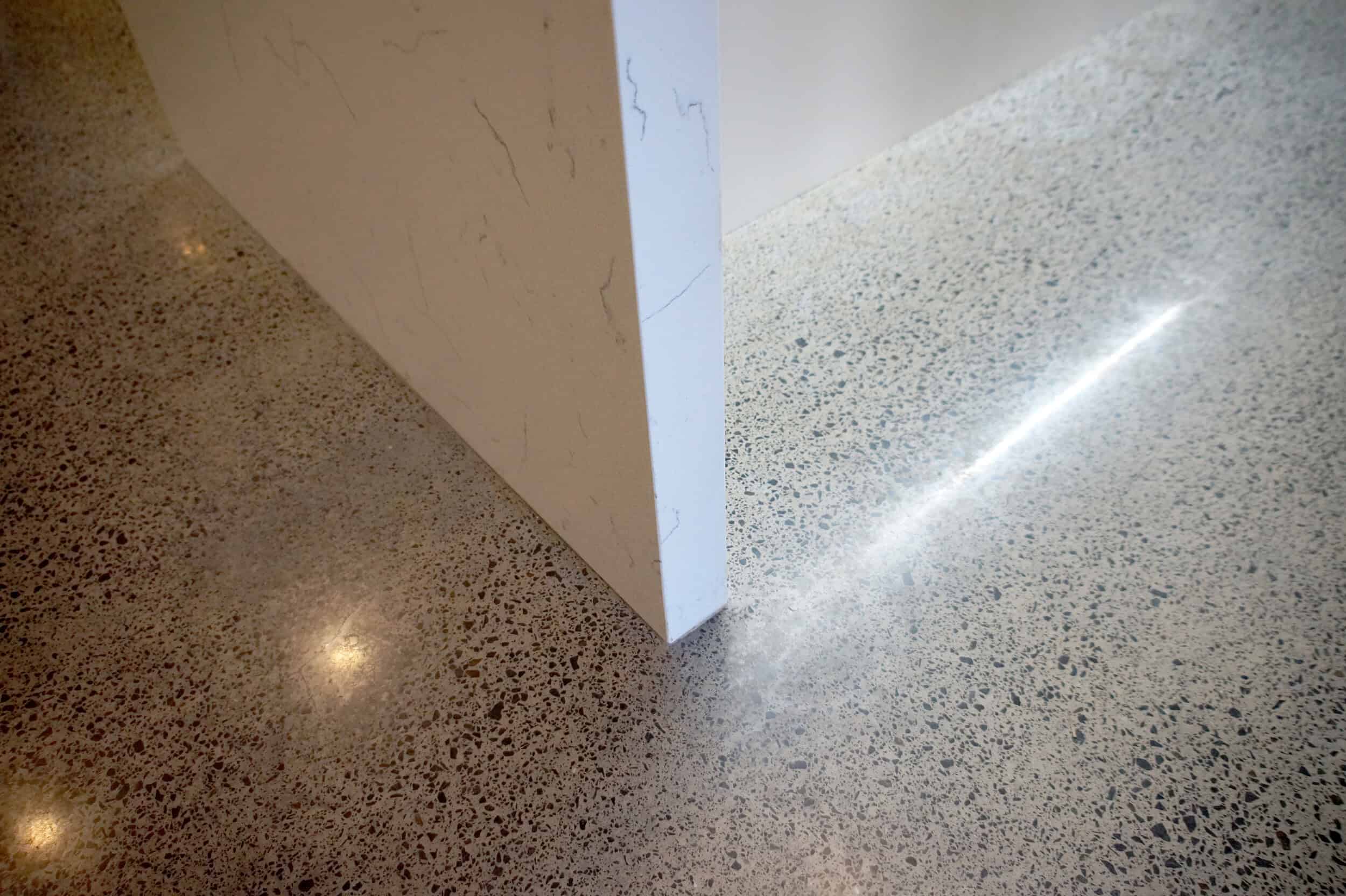
Polished Concrete Floors Auckland: Costs, Pros & Cons
Last updated:
Polished Concrete Floors in Auckland Homes: Costs, Pros, Cons and Where They Actually Work
Free cost calculator
How much will your renovation cost?
Get an instant Auckland price range for your project — no details required to see it.
Quick answer: A polished concrete floor in Auckland costs roughly $80–$130 per m² + GST for a residential job, and it works brilliantly over a new slab — but as a retrofit into an older villa or bungalow it’s usually the wrong call.
You’ve seen the look. A wide open-plan living space, soft grey floor running unbroken from the kitchen island out to the dining table, light bouncing off a low sheen. It’s all over Auckland reno feeds and the new builds going up around Hobsonville and Millwater. So the question lands in a lot of our consultations: “Can we just polish the concrete?”
Sometimes the answer is yes, and it’s one of the best floors you can put in a home. Sometimes it’s a no, and we’ll tell you that before you’ve spent a dollar chasing it. The difference comes down to what’s under your house right now — and that’s the part the glossy photos never show you.
Here’s the honest version, from a team that specs and installs these floors as part of full renovations across Auckland.
What “Polished Concrete Floor” Actually Means (and the Three Finishes People Mix Up)
Most people use “polished concrete” to mean one thing. There are really three, and the price gap between them is large enough that getting the terms straight is the first thing worth doing.
Grind and seal — the budget end
Grind and seal is a light grind of the surface followed by a topical coat sitting on top of the concrete, a bit like a clear nail varnish over the slab. It’s the cheapest route and the fastest. The trade-off is that the finish is the coating, not the concrete itself, so it can scuff, scratch and eventually need re-coating. Good for a garage, a laundry, an outdoor patio. Less ideal for a high-traffic kitchen you want to look sharp in fifteen years.
Honed concrete — the matte middle ground
Honed sits between the two. The slab is ground to a finer grit for a smooth, low-sheen matte look, then sealed. It’s a common pick for indoor-outdoor flow because the matte finish reads as less slippery than a high gloss. You see it a lot on covered patios and around pool surrounds in the eastern bays.
Mechanically polished concrete — the real thing
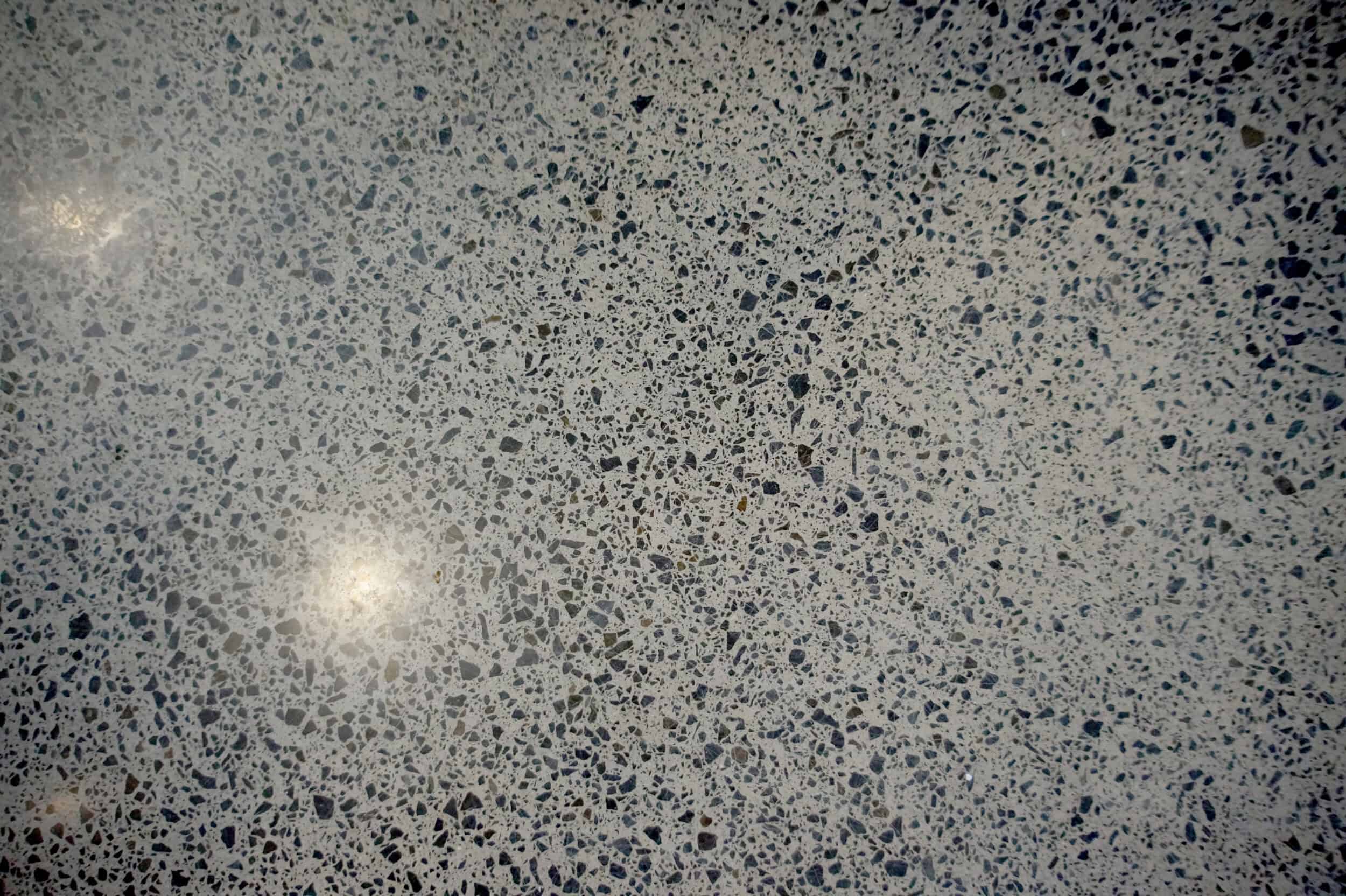
This is what people picture when they say polished concrete. The slab is ground and polished through progressively finer diamond grits — often up to 3000 grit — with a chemical densifier worked in to harden the surface. There’s no coating to peel; the shine is the concrete itself, refined to a stone-like finish. It costs the most upfront and lasts the longest. When it dulls after years of use, you rebuff it rather than replace it.
Which one suits you depends on the room, the budget, and how long you’re planning to stay. We work through that material call with every client during the design stage, the same way we’d weigh up benchtops or tapware in an Auckland home renovation done properly.
💡 Quick tip: When you get quotes, ask exactly which finish is priced — grind and seal, honed, or full mechanical polish. Two quotes that both say “polished concrete” can be 50% apart simply because they’re pricing different processes.
Where Polished Concrete Works in Auckland Homes — and Where It Fights You
This is the section the floor specialists selling the service tend to skip. Polished concrete is fantastic over a slab that was poured with polishing in mind — and a headache when it’s retrofitted into a house that was never built for it.
The sweet spot: new slabs, extensions and open-plan ground floors
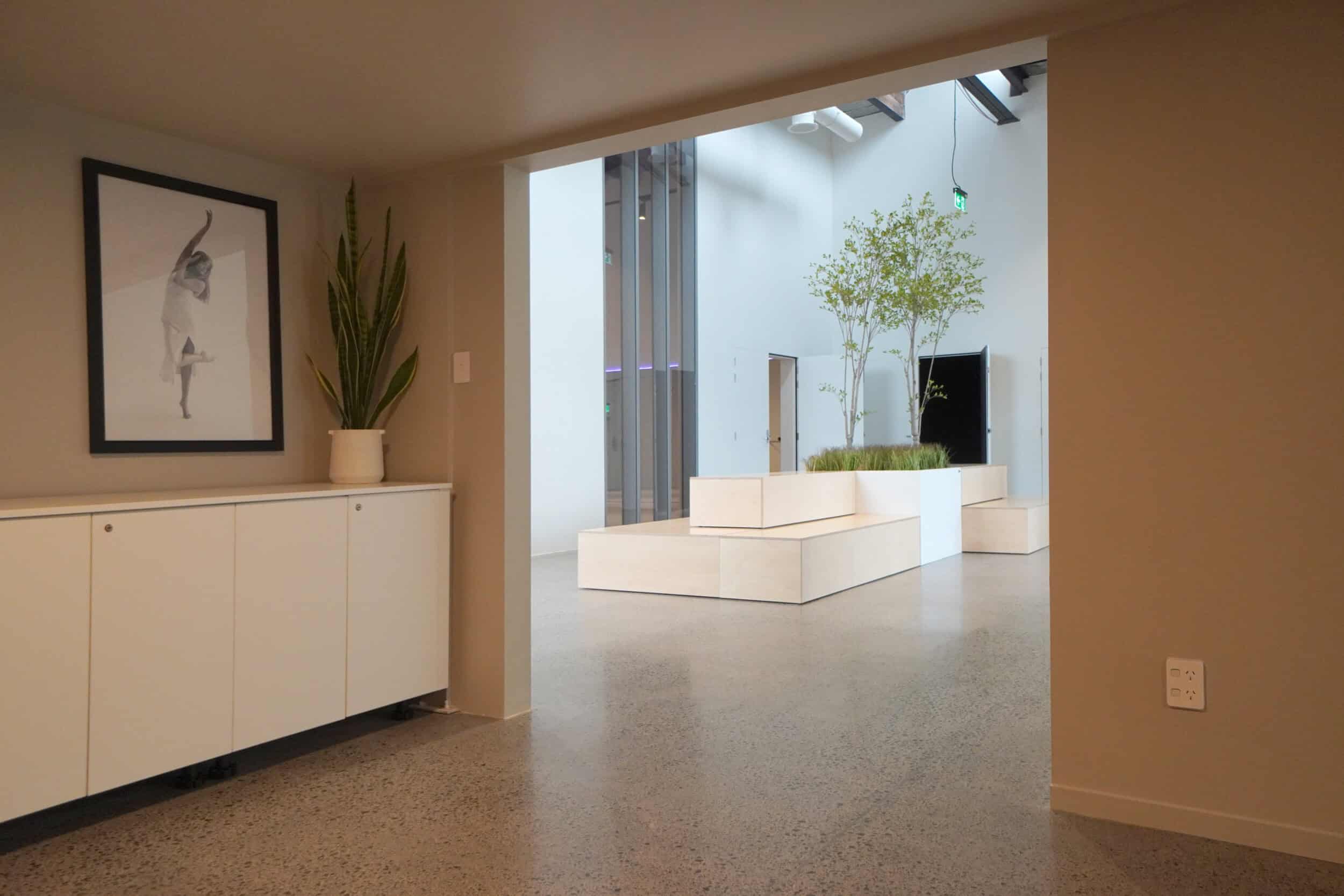
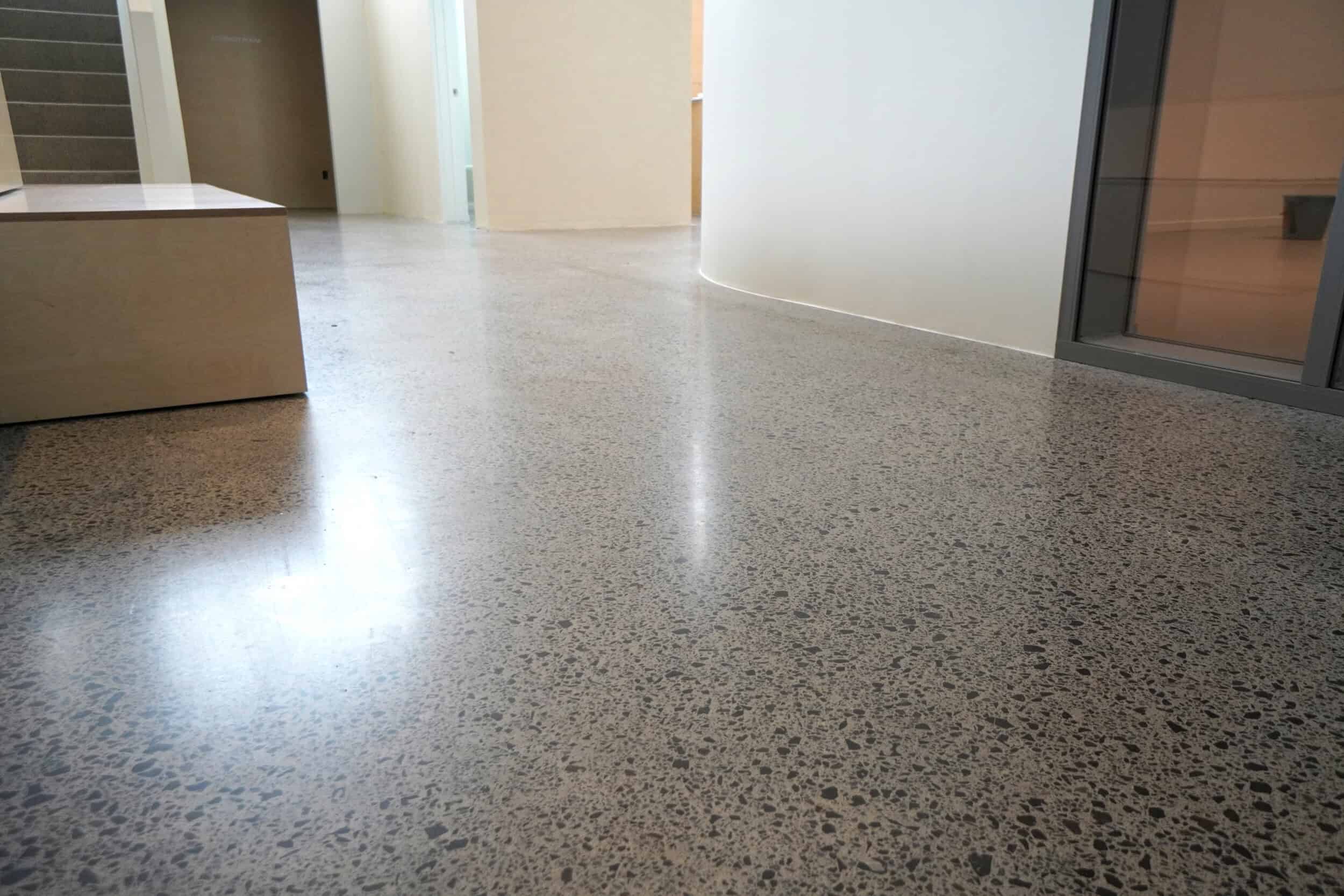
If you’re pouring a new slab — a ground-floor extension, a knock-through that opens the kitchen to the living area, or a new build — polished concrete is close to ideal. The concrete is already there doing a structural job, so polishing it means you skip a whole separate floor finish. It’s also serious thermal mass. According to BRANZ, an exposed concrete slab is one of the simplest and best forms of thermal mass, absorbing heat through the day and releasing it slowly as the house cools at night. Building Performance (MBIE) puts the ideal slab thickness for that effect at 100–200mm, with the floor left exposed rather than carpeted so the sun can actually reach it.
That’s why it pairs so well with a north-facing open-plan living space — the kind of layout we build into a lot of renovations and a new slab-on-grade extension across the city.
The hard one: retrofitting into a villa or bungalow
Now the reality check. Most of Auckland’s character stock — the villas and bungalows through Grey Lynn, Mt Eden, Ponsonby — sits on a suspended timber subfloor. There’s no slab to polish. To get polished concrete into a home like that, you’re effectively pouring a new floor, which means structural work, height and threshold changes at every doorway, and a cost that climbs well past what tile or engineered timber would’ve cost you.
We’ve had this conversation with plenty of villa owners who fell for the look online. Nine times out of ten, once we walk through the engineering, they land on a beautiful tile or timber floor that gives 90% of the feel for half the grief. Sound familiar? If it’s a bathroom you’re thinking about, the wet-area rules add another layer — we cover that in detail in our guide to bathroom flooring options for Auckland wet areas.
“The clients who love their polished concrete are almost always the ones who designed it in from the slab up. Trying to bolt it onto a 1920s bungalow afterwards is where the regret comes from — by the time you’ve poured a new floor and reset every doorway, you’ve spent kitchen-renovation money on a floor. I’d rather put that budget where it actually changes how the home lives.”
— Dorothy Li, Design Manager, Superior Renovations
💡 Quick tip: Before you set your heart on polished concrete, find out what your floor is sitting on. Slab-on-grade? You’ve got options. Suspended timber? Get a builder to price the structural reality before you fall in love with a Pinterest board.
What Polished Concrete Floors Cost in Auckland
Most residential polished concrete jobs in Auckland land between $80 and $130 per m² + GST, with the average sitting around $100 per m² + GST. That’s the figure Auckland polished concrete specialists quote for a standard residential floor, and it tracks with what we see priced into our own projects.
A few things move that number:
| Finish / scenario | Indicative Auckland cost | Best suited to |
|---|---|---|
| Outdoor grind and seal | ~$40–$60 / m² + GST | Patios, pool surrounds, garages |
| Indoor grind and seal / honed | ~$60–$90 / m² + GST | Laundries, lower-traffic indoor areas |
| Mechanically polished (residential) | ~$80–$130 / m² + GST | Living areas, kitchens, full ground floors |
| Small floor minimum charge | ~$2,250 + GST (under ~20m²) | Any small room — the machinery setup is fixed |
💡 Quick tip: These rates are quoted + GST, the way most trades price. Add 15% when you’re comparing against a tiled or timber quote that’s shown GST-inclusive, so you’re comparing like with like.
The catch with small floors is that minimum charge. A polishing crew brings the same grinders and dust-extraction rig whether the floor is 8m² or 80m², so a tiny room can work out dear per square metre. Larger, simpler floors are where the per-m² rate drops.
Worth being clear about what these figures cover: the polishing of an existing, sound slab. They don’t include pouring a new slab, structural work, removing old flooring, or fixing a cracked or contaminated base — all of which are common in a renovation and all of which add up. If you’re weighing the floor against the rest of the project, our renovation cost calculators are a sensible place to sanity-check the wider budget before you commit.
One genuine plus: over a 10–15 year horizon, polished concrete often costs less than the alternatives. There’s no grout to regrout, no tiles to replace, no carpet to pull up. A mechanically polished floor can run 20-plus years with nothing more than a periodic rebuff. It’s pricey on day one and cheap over a decade.
“People fixate on the per-metre price and miss the question that actually matters — what’s the slab like underneath? I’ve seen a $100 a metre quote double once we ground back and found the slab was patchy, oil-stained from a previous garage conversion, or cracked. Get the slab assessed before you budget. The finish is the easy part; the concrete is the gamble.”
— Alison Yu, Designer, Superior Renovations
The Honest Pros and Cons (the Cold, the Cracking and the Hard Underfoot)
Every floor is a set of trade-offs. Here’s the unvarnished list on polished concrete, the good and the annoying.
What’s genuinely great about it
It’s tough — it shrugs off the traffic that wears carpet and chips tiles. It’s low-maintenance, with no grout lines harbouring grime. It looks clean and modern, and it works with almost any palette because the concrete itself is the neutral. And as that thermal mass, in a well-oriented Auckland home it genuinely helps even out the temperature swing between a warm afternoon and a cool evening.
The cons nobody mentions until you’re living on it
Cold is the big one. Concrete holds whatever temperature the room is, so on a July morning in Titirangi a bare slab is cold underfoot until the sun or the heating gets to it. It’s also hard — unforgiving on legs and backs if you’re standing and cooking for hours, and brutal on dropped glassware and crockery. If you spend a lot of time at the kitchen bench, that’s a real consideration, not a footnote.
Then there’s cracking. Concrete shrinks as it cures, and BRANZ is upfront that this can lead to unsightly cracking unless control cuts are designed in and filled with a non-shrink grout or sealant. Some homeowners love the character of a hairline crack; others can’t unsee it. You should know which camp you’re in before you commit, because a polished slab will show its cracks honestly.
The cold problem has a fix, and it’s a good one: concrete is the ideal host for underfloor heating because the slab stores the heat and releases it slowly. If you’re already lifting or pouring a floor, running heating into it is the moment to do it. We’ve broken down what that costs and whether it’s worth it in our guide to underfloor heating under a concrete slab.
💡 Quick tip: If you’re set on concrete in a living space you use year-round, budget for underfloor heating in the same breath. Retrofitting heating into a slab later means lifting the floor you just paid to polish — far cheaper to do it once.
A Real Auckland Project: Polished Concrete in a Parnell Renovation
Theory’s one thing. Here’s how it played out on a job.
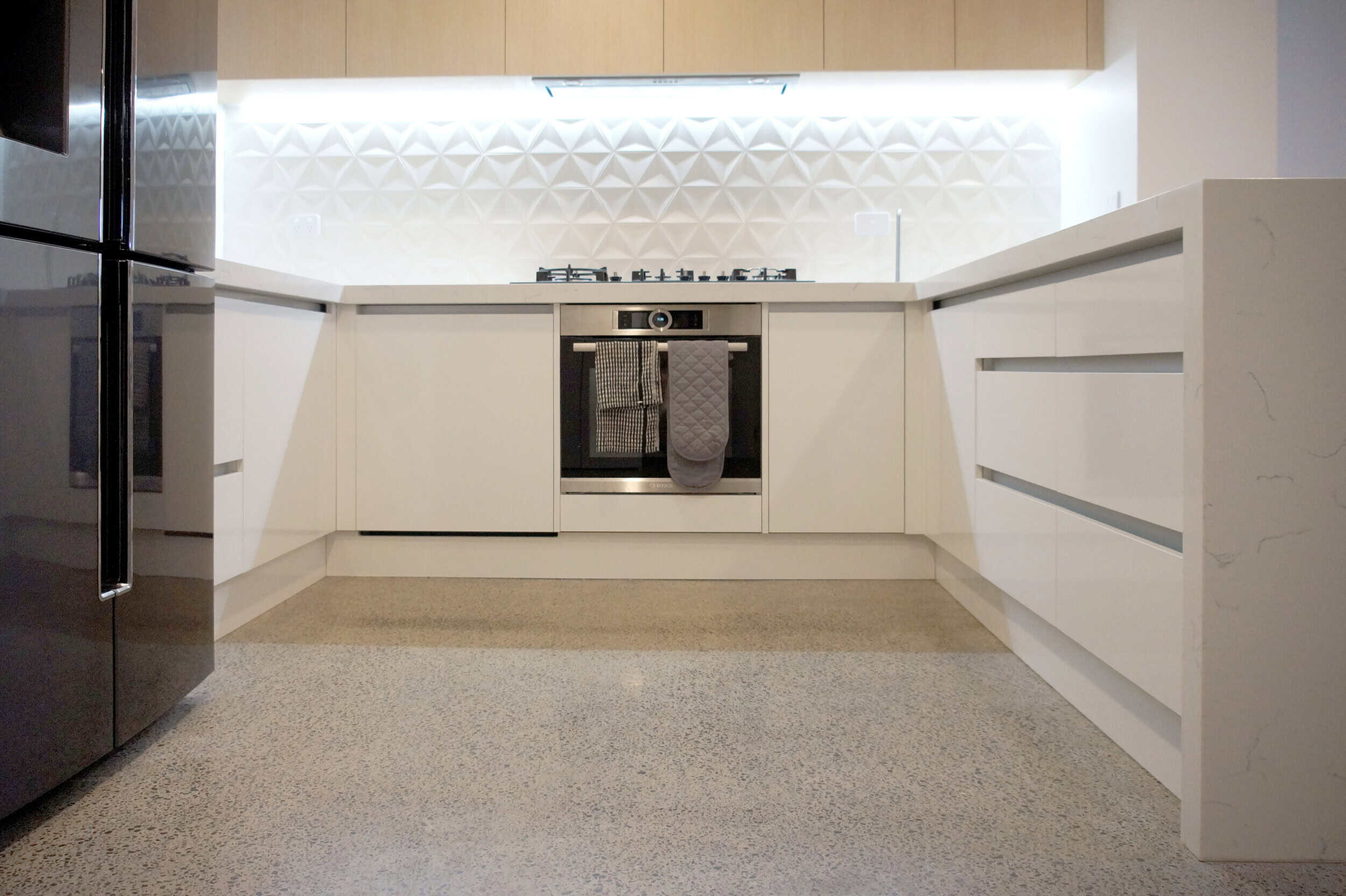
On a modern luxury renovation we completed in Parnell, the brief was a sharp, hotel-like ground floor across the kitchen, dining and living zone. Because we were laying a new concrete pad as part of the work, polished concrete made sense from the ground up rather than as an afterthought. The crew laid the pad, applied a light-to-medium stone-exposure diamond polish system, worked in an epoxy tie coat, polished the surface and finished it with a stain guard for everyday spills.
The result reads as one continuous, low-sheen plane through the whole living level — exactly the look that doesn’t work when you’re trying to fake it over a patched-up old floor. You can see the full job, including the kitchen and bathroom work, in our Parnell modern luxury renovation case study.
The pattern holds across the jobs where concrete has worked: a new or sound slab, designed in early, with the heating and the thresholds sorted before anyone reaches for a grinder. Get those right and it’s one of the most satisfying floors in the home. Skip them and you’re spending a lot to be disappointed.
That’s the whole point of the design stage — making the floor call with the slab, the heating, the doorways and the budget all on the table at once, not one at a time. It’s how we approach material decisions on every renovation across Auckland, from the showroom at 16B Link Drive in Wairau Valley out to your place.
So, Should You Put a Polished Concrete Floor In?
If you’re pouring a slab anyway — an extension, a knock-through, a new build — and you like the look, do it, and run heating into it while you’re there. You’ll get a tough, low-maintenance floor that earns its keep for decades. If you’re sitting on a suspended timber floor in a villa or bungalow, price the structural reality first, then look hard at tile or engineered timber before you chase the concrete. And whatever the floor, get the slab assessed before you trust a per-metre quote.
Not sure which camp your home’s in? That’s the kind of thing we work out on a no-pressure walk-through, before anyone talks budgets.
➡ Book your free in-home consultation with Superior Renovations
➡ See how polished concrete fits into a full home renovation
➡ Request a free feasibility report for your project
How much do polished concrete floors cost in Auckland?
Most residential polished concrete floors in Auckland cost roughly $80 to $130 per m2 + GST, with the average around $100 per m2 + GST for a mechanically polished finish. A cheaper grind-and-seal outdoor finish runs about $40 to $60 per m2 + GST. Expect a minimum charge of around $2,250 + GST on small floors under about 20m2, because the machinery setup is the same regardless of size. These figures cover polishing a sound existing slab, not pouring a new one or structural work.
What is the difference between grind and seal and polished concrete?
Grind and seal is a light surface grind followed by a topical coating that sits on top of the slab, a bit like a clear coat over the concrete. It is cheaper and faster but the coating can scuff and eventually needs re-coating. Mechanically polished concrete grinds and polishes the actual concrete through progressively finer diamond grits with a hardening densifier, so the finish is the concrete itself. It costs more upfront, lasts longer, and is rebuffed rather than replaced when it dulls.
Can you put a polished concrete floor in an existing villa or bungalow?
Usually not easily. Most Auckland villas and bungalows sit on a suspended timber subfloor, so there is no slab to polish. Getting polished concrete into one means effectively pouring a new floor, which brings structural work, height and threshold changes at every doorway, and a cost that climbs past tile or engineered timber. For most character homes we recommend a quality tile or timber floor that gives a similar feel without the engineering grief.
Are polished concrete floors cold underfoot in winter?
Yes, on their own they can be. Concrete holds whatever temperature the room is, so on a cold Auckland winter morning a bare slab feels cold until the sun or heating reaches it. The upside is that concrete is the ideal host for underfloor heating because the slab stores heat and releases it slowly. If you want concrete in a living space you use year-round, plan underfloor heating into the same job rather than retrofitting it later.
Do polished concrete floors crack?
They can. Concrete shrinks as it cures, and BRANZ notes this can cause unsightly cracking unless control cuts are designed in and filled with a non-shrink grout or sealant. A polished slab shows its cracks honestly, so some homeowners love the character while others find it bothers them. Good slab preparation, correct curing and well-placed control joints reduce the risk, but no concrete floor is guaranteed crack-free. Decide how you feel about a possible hairline crack before you commit.
Is polished concrete a good choice for a kitchen floor?
It can be, with eyes open. Polished concrete is tough, low-maintenance and has no grout lines to clean, which suits a busy kitchen. The downsides are that it is hard and cold underfoot, so standing and cooking for long periods is less comfortable than on timber or cork, and dropped glassware tends to shatter. In an open-plan kitchen and living area over a new slab it works well, especially with underfloor heating added.
How do you clean and maintain a polished concrete floor?
Day to day it is easy: sweep or vacuum, then damp mop with a pH-neutral cleaner. Avoid acidic or harsh products that can dull the finish or strip the sealer. A mechanically polished floor has no coating to peel, so when the shine fades after years of use a specialist rebuffs it to restore it. Grind-and-seal floors need their topical coating refreshed periodically. Either way, maintenance is lower than carpet, timber or grouted tile over the life of the floor.
Does polished concrete work with underfloor heating?
Very well. A concrete slab is the ideal host for underfloor heating because its thermal mass stores the heat and releases it slowly and evenly, which is efficient. The key is to install the heating when the floor is being poured or lifted, since retrofitting it later means breaking up the floor you just polished. For an Auckland living space used year-round, pairing polished concrete with underfloor heating solves the cold-underfoot problem and makes the floor genuinely comfortable.
Is polished concrete cheaper than tiles?
It depends on the timeframe. Upfront, mechanically polished concrete is comparable to mid-range tiles and dearer than carpet, especially once a small-floor minimum charge applies. Over 10 to 15 years it often works out cheaper because there is no grout to maintain, no tiles to replace and no deep cleaning, and a polished floor can last 20-plus years with only a periodic rebuff. If you are retrofitting concrete into a home without a slab, though, tiles will almost always be cheaper overall.
Further Resources for your home renovation
- Featured projects and Client stories to see specifications on some of the projects.
- Real client stories from Auckland
Need more information?
Take advantage of our FREE Complete Home Renovation Guide (48 pages), whether you’re already renovating or in the process of deciding to renovate, it’s not an easy process, this guide which includes a free 100+ point check list – will help you avoid costly mistakes.
Download Free Renovation Guide (PDF)

Have you been putting off getting renovations done?
We have partnered with Q Mastercard ® to provide you an 18 Month Interest-Free Payment Option, you can enjoy your new home now and stress less.
Learn More about Interest-Free Payment Options*
*Lending criteria, fees, terms and conditions apply. Mastercard is a registered trademark and the circles design is a trademark of Mastercard International Incorporated.
Still have questions unanswered?
Book a no-obligation consultation with the team at Superior Renovations, we’d love to meet you to discuss your renovation ideas!