


Standard Measurements to Consider When Planning Your Next Kitchen Renovation
-
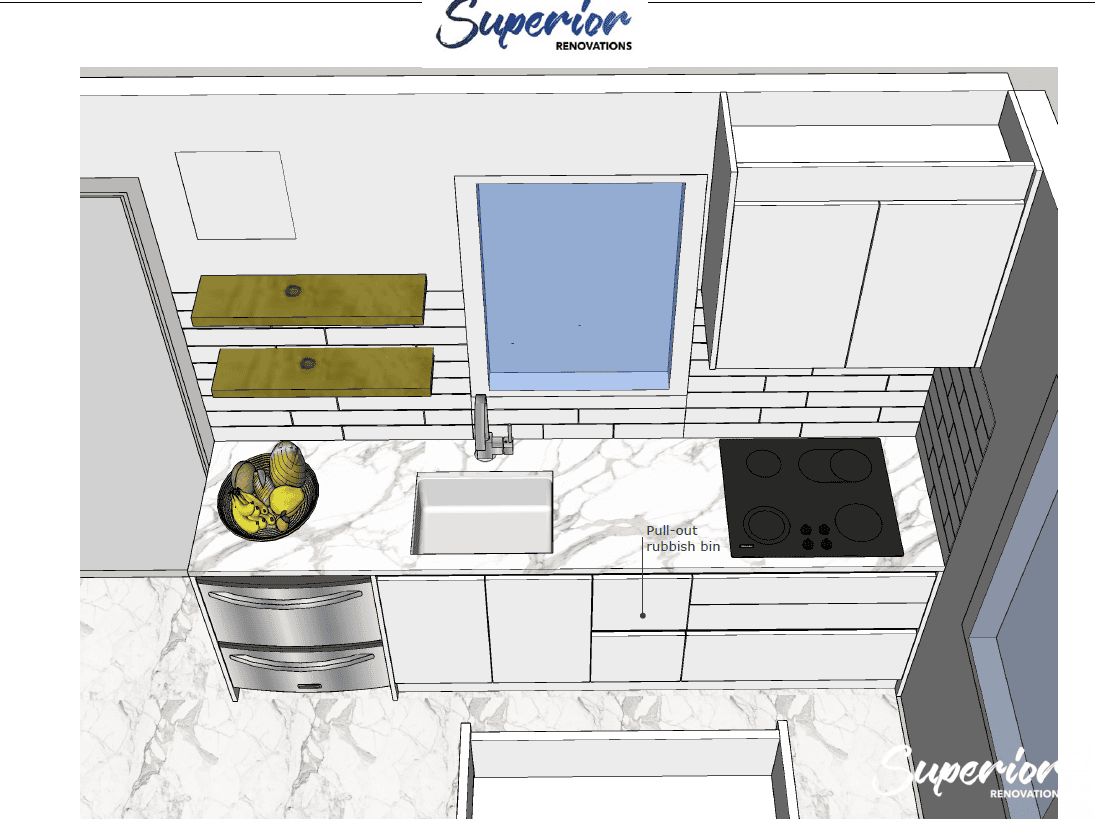
Counter Height and Depth
Get this wrong and nothing else compensates. Counter height and depth set the ergonomic baseline for the entire kitchen.
| Standard Countertop Height: Countertops sit at 36 inches (91cm) from the floor. This suits most adults and lines up with base cabinets to create a clean, comfortable work surface. |
Standard Countertop Depth: Standard depth is 24 inches (61cm). If you need more room for appliances or extra storage, your designer can adjust this slightly — just factor it into your walkway clearances.
|
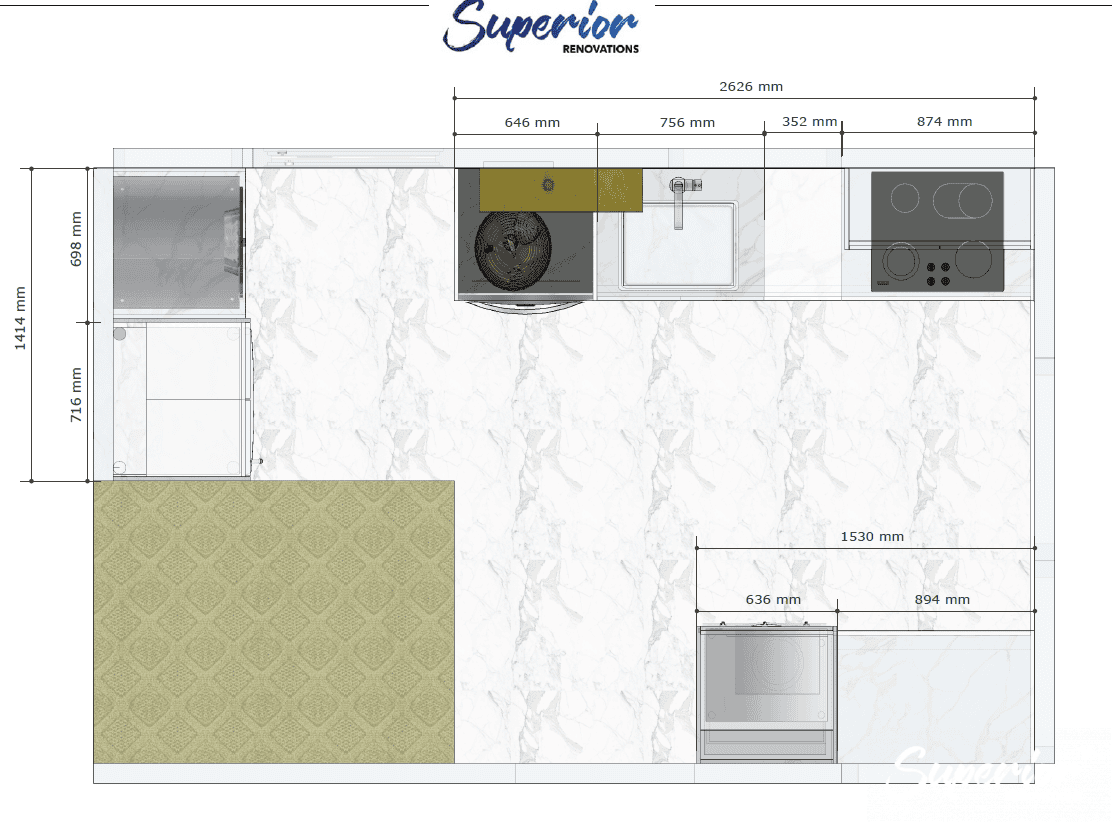
This shows the actual measurements behind a functional kitchen design.
2. Base Cabinets
Base cabinets carry everything — pots, pans, the good stuff you only pull out for guests. Their dimensions need to work with the countertop above and the space around them.
- Height: Base cabinets stand 34.5 inches (88cm) without the countertop, and 36 inches (91cm) once it’s installed.
- Depth: Standard depth is 24 inches (61cm) — lines up flush with the countertop and gives decent storage without eating into the walkway.
- Width: Common widths are 12, 18, 24, 30, and 36 inches. A 3D kitchen planner helps you and your designer figure out which combination suits your specific layout.
As Houzz notes, careful attention to these dimensions keeps cabinets from interfering with workspace and traffic flow. It sounds obvious. It’s surprising how often it gets overlooked.
-
Upper Cabinets and Shelving
Upper cabinets add storage without touching the floor — useful in smaller Auckland kitchens where every square metre counts.
| Height Above Countertop: The bottom of upper cabinets should sit 18 inches (46cm) above the bench. Close enough to reach easily, far enough to give you proper working space below. |
Depth: Upper cabinets are typically 12–15 inches (30–38cm) deep. Enough room for dishware and dry goods without taking over the bench space below.
|
A good kitchen designer will handle these adjustments in their software. What matters is choosing someone who understands these fundamentals — not just someone who makes it look pretty on screen.
4. Walkway and Clearance Space
This is where a lot of Auckland kitchens fall short. The layout looks fine on a flat plan. Then the appliances go in and suddenly you can’t open the oven without stepping into someone.
• Aisle Width: Single-cook kitchen needs at least 42 inches (107cm). Two-cook kitchen — or any busy household — needs 48 inches (122cm). These aren’t suggestions.
• Distance Between Countertops and Islands: Same rule — 42–48 inches (107–122cm). Appliance doors need to open fully without hitting anything. People need to pass each other without turning sideways.
Get the clearances right and the kitchen flows. Get them wrong and the space will frustrate you every single day.
Read more…
26 Top Kitchen Design Ideas and 10 Mistakes to Avoid
5. Kitchen Island Dimensions
An island can be the best thing in a kitchen or a space-wasting obstacle. The difference is almost always in the dimensions.
• Standard Height: 36 inches (91cm), same as the bench. If you’re adding a breakfast bar side, raise it to 42 inches (107cm) for comfortable stool seating.
• Depth and Width: Minimum 2 feet (61cm) wide. For real storage and seating, aim for 36–48 inches (91–122cm) depth — depending on what the room can give you.
• Overhang for Seating: 12–18 inches (30–46cm). Enough for knees. Enough for kids to sit comfortably while you cook.
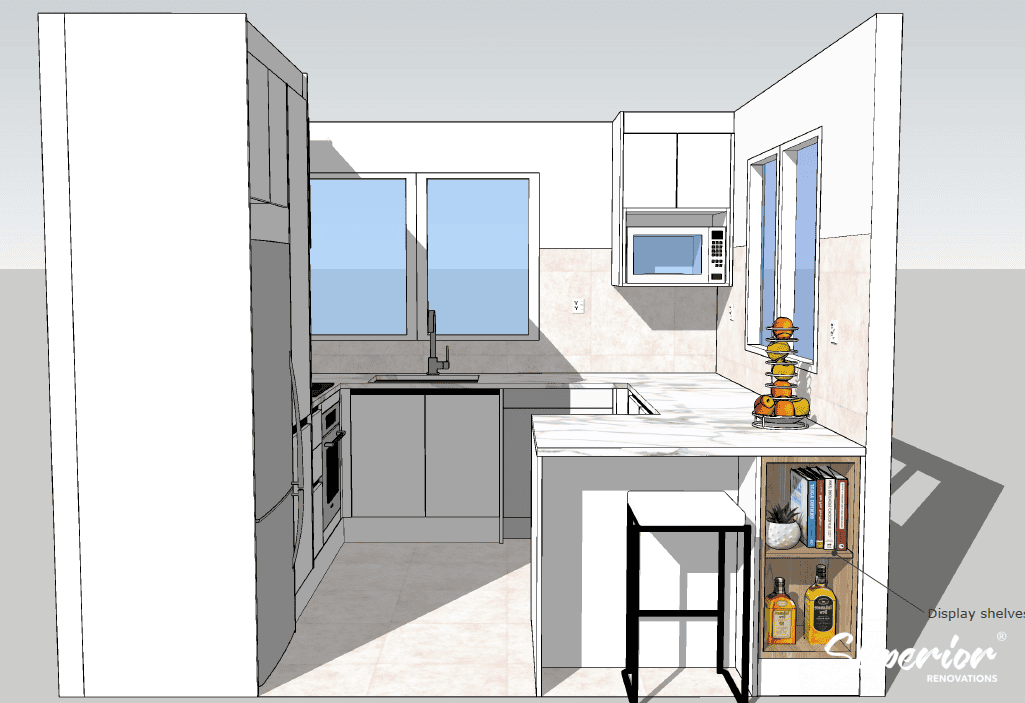
3D design showing kitchen island proportions and layout.
6. Appliance Placement and Space Requirements
Every appliance has its own space requirements. Ignore them and you’ll either block workflow or end up with ventilation problems.
• Refrigerator: Leave a 1-inch (2.5cm) gap around it for airflow. Allow at least 36 inches (91cm) in front so the door opens without drama.
• Stovetop and Oven: Standard ovens are 30 inches (76cm) wide. Plan 12 inches (30cm) of bench space either side — for safety and for landing hot things.
• Dishwasher: Keep it within 36 inches (91cm) of the sink. Leave at least 21 inches (53cm) in front so the door opens properly and loading doesn’t become a workout.
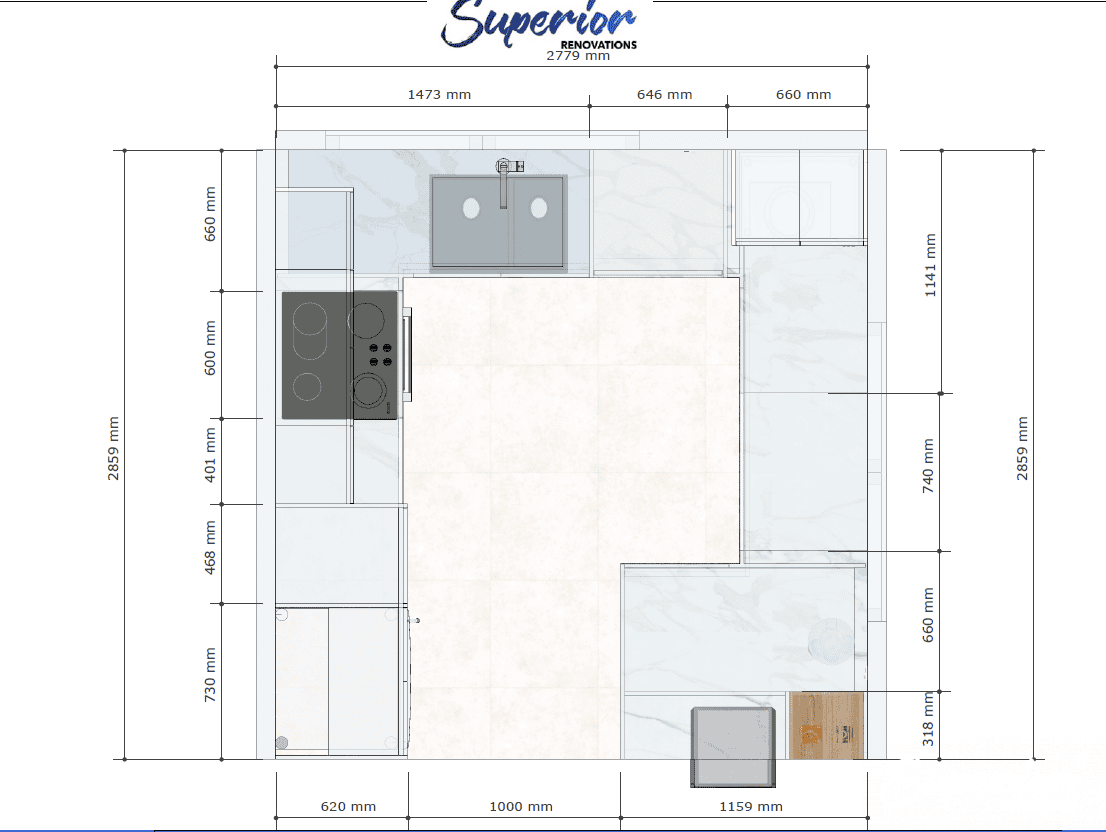
Appliance clearances mapped to the kitchen example above.
A 3D kitchen planner will show appliance templates to scale, so you can check these clearances before anything is ordered or built.
7. Sink and Faucet
The sink gets used more than almost anything else in the kitchen. Position and sizing matter.
• Sink Width: Standard widths run 22–33 inches (56–84cm). Pick based on how much bench you have to work with either side.
• Depth from Counter Edge: 3–4 inches (8–10cm) from the edge. Any closer and water ends up on the floor.
• Clearance Space: At least 24 inches (61cm) of open bench on the prep side. Another 18 inches (46cm) on the other side if the layout allows. This is where your workflow actually lives.
A 3D kitchen planner helps map the sink into the right position relative to the stove and fridge — the classic work triangle that keeps cooking from feeling like a shuttle run.
8. Lighting Height and Placement
Bad kitchen lighting is one of those things you don’t notice until you’re trying to chop something at 6pm and squinting at the bench.
• Pendant Lights Above Island: Hang them 30–36 inches (76–91cm) above the island surface. Good light, no glare, and they don’t get in the way when people are sitting.
• Under-Cabinet Lighting: Positioned at 18 inches (46cm) above the bench, aimed directly at the work surface. Layer this with ceiling lighting and the kitchen works properly at any time of day.
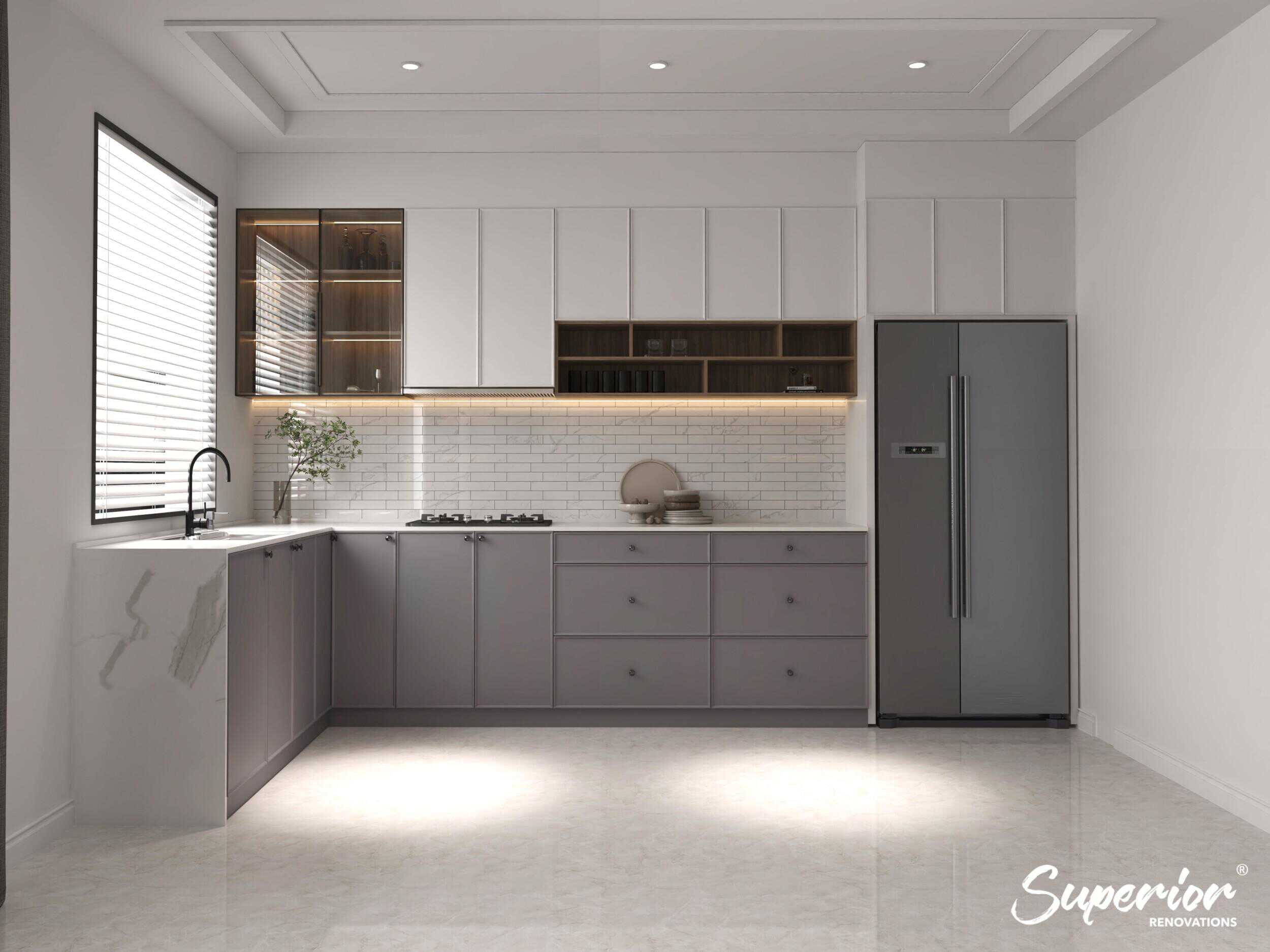
This rendering shows lighting at different levels — recessed ceiling lighting complemented by under-cabinet lighting.
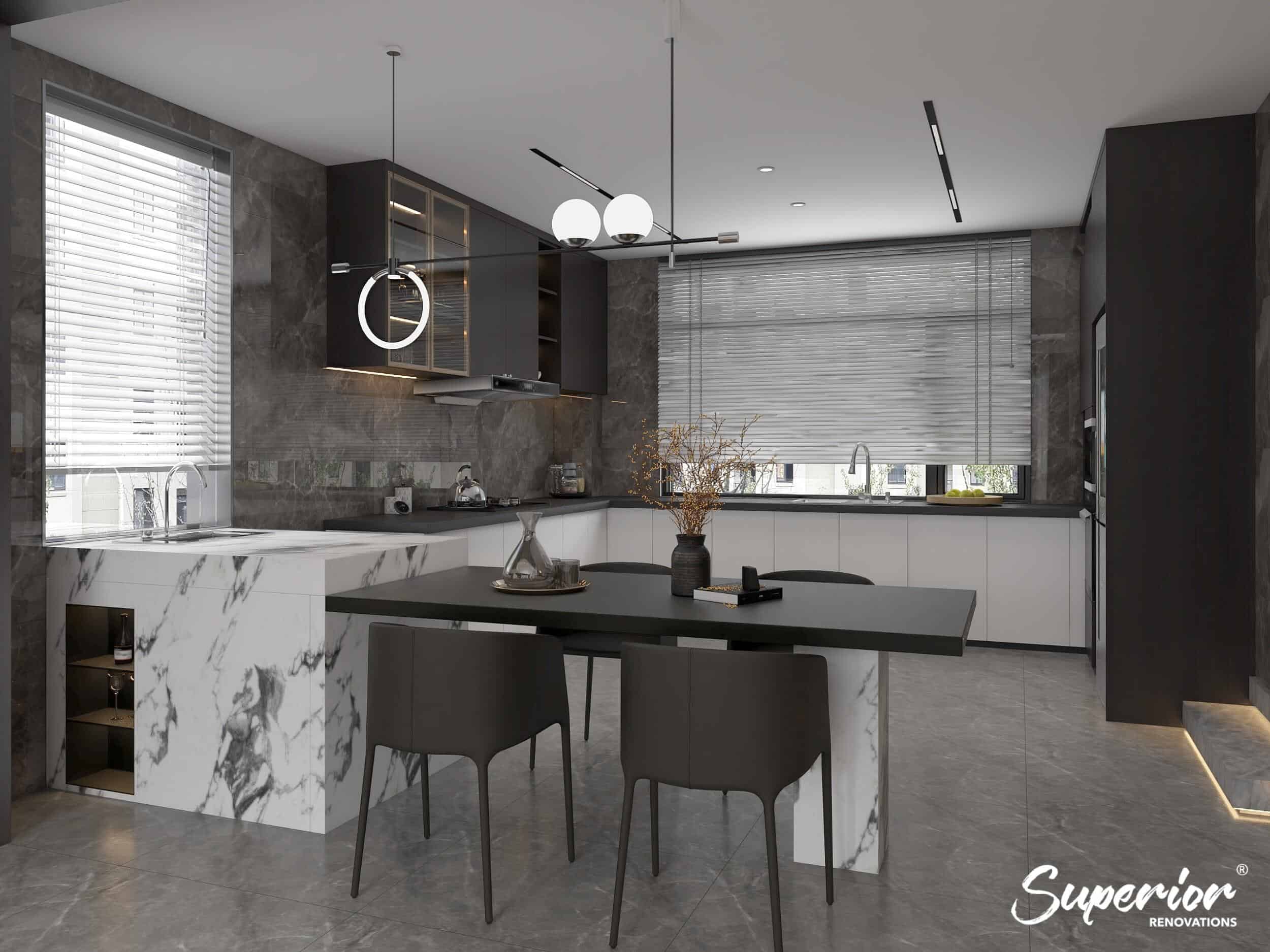
Pendant lighting positioned low over the island — functional and a design feature in its own right.
Read more:
The Importance of Lighting in Achieving a Beautiful Kitchen Design
Top 16 Kitchen Design Ideas for a Small Kitchen Renovation
9. Backsplash Height
The backsplash sits between bench and upper cabinets — protective and, done well, one of the better design moments in the kitchen.
• Standard Backsplash Height: Typically 18 inches (46cm) from the benchtop to the base of the upper cabinets. Full-wall backsplashes are increasingly popular in Auckland renos — they read as cleaner and are easier to maintain.
These measurements are guidelines, not a fixed prescription. Every home is different — a 1920s Grey Lynn villa has different constraints to a new Hobsonville townhouse. But understanding the standards means you and your designer are starting from the same baseline. Deviations become deliberate choices, not surprises mid-build.
As Sarah Richardson says: “The kitchen is the heart of the home — its functionality depends on measurements, and every inch counts.”
The standard height for kitchen countertops is approximately 36 inches (91 cm) from the floor. This height is comfortable for most adults and aligns with base cabinets, creating a seamless and ergonomic workspace. It's best to leave 42–48 inches (107–122 cm) between the kitchen island and surrounding countertops. This spacing ensures enough room for appliance doors to open and for people to move around comfortably, especially in a busy kitchen. For a single-cook kitchen, the ideal walkway width is 42 inches (107 cm), while a two-cook kitchen should have a width of 48 inches (122 cm). This clearance space ensures smooth movement and reduces crowding in high-traffic areas. Upper cabinets should generally be installed about 18 inches (46 cm) above the countertop. This height allows easy access to cabinet contents while leaving plenty of workspace below. For comfortable seating at a kitchen island, the overhang should be 12–18 inches (30–46 cm). This extra space allows guests to sit comfortably without their knees hitting the cabinet below, making it ideal for casual dining or social gatherings. What is the standard height for kitchen countertops?
How much space should I leave between my kitchen island and surrounding counters?
3. What is the ideal clearance space for walkways in a kitchen?
4. How high should upper cabinets be installed above the countertop?
How much overhang should a kitchen island have for seating?
Further Resources for Your House Renovation
- Featured projects and client stories — see specifications from real projects.
- Real client stories from Auckland homeowners.
Need ideas? Browse our Kitchen Design Gallery or check out our Bathroom Design Gallery for inspiration.
Need more information?
Download our FREE Complete Home Renovation Guide (48 pages) — whether you’re mid-reno or still weighing it up, it includes a 100+ point checklist to help you avoid costly mistakes.
Download Free Renovation Guide (PDF)
Still have questions?
Book a no-obligation consultation with the team at Superior Renovations — we’d love to hear about your project.
Or call us on 0800 199 888

Been putting off that reno?
We’ve partnered with Q Mastercard® to offer an 18-month interest-free payment option — so you can get the kitchen sorted now without the financial stress.
Learn more about Interest-Free Payment Options*
*Lending criteria, fees, terms and conditions apply. Mastercard is a registered trademark and the circles design is a trademark of Mastercard International Incorporated.


