


Kitchen Design Trends NZ: 25 to Consider and 11 to Avoid
Last updated:
Quick answer: The kitchen design trends worth building into an Auckland renovation are the ones that change how the room works: layout, storage, lighting and hard-wearing surfaces. Colour, hardware and open shelving are easy to change later.
A kitchen gets renovated once every couple of decades, and trends move a lot faster than that. The expensive mistake is building a passing look into the parts of the room that are hard to change: the layout, the plumbing positions, the benchtop and the cabinets themselves. Get those right and you can repaint an island, swap the handles or retile a splashback whenever the mood shifts.
Free cost calculator
How much will your kitchen renovation cost?
Answer a few questions and we’ll email you an Auckland price range.
Which kitchen design trends are worth building in?
Ask one question of any trend: how hard would it be to undo? A paint colour or a set of handles is a weekend job. A new layout, a moved sink or an island with its own plumbing and power is a renovation. The table sorts the 25 trends on this page that way, so you can see where to spend and where to have fun.
| Trend | What it changes | Easy to change later? |
|---|---|---|
| 1. Smart kitchen design | Wiring, outlets and lighting circuits | Hard once the walls are lined |
| 2. Eco-friendly choices | Cooktop, tapware, recycling drawers | Medium: a different cooktop type can need new wiring |
| 3. Dark and two-tone cabinetry | Cabinet doors and the island | Medium: doors can be replaced without new cabinets |
| 4. Streamlined designs and textures | Wall cabinets, tiles, finishes | Mixed: dropping wall cabinets is a design decision, texture is surface |
| 5. Open-plan and broken-plan kitchens | Walls and structure | Hardest: decide this first |
| 6. Engineered stone benchtops | Benchtop and sink | Hard: rarely replaced without the cabinets |
| 7. Storage built into the cabinetry | Drawers, corner units, inserts | Medium: some inserts retrofit, many need cabinets built for them |
| 8. Open shelves for small kitchens | Wall space and styling | Easy |
| 9. Timber and timber-look floors | The floor across the room | Hard: replacing it means working around the cabinets |
| 10. Multipurpose islands | Layout, plumbing and power | Hard |
| 11. Double islands | Layout and floor space | Hard |
| 12. Ceiling-high larders | Cabinetry and wall space | Medium |
| 13. Splashback trends | The wall behind the bench | Easy to medium: a contained job |
| 14. Connecting to the outdoors | Doors, openings, the deck | Hardest: new openings change the structure |
| 15. A pop of colour | Paint, island, splashback | Easy |
| 16. Mixed metals | Tapware, handles, lights | Easy |
| 17. Statement rangehoods | Rangehood and its ducting | Medium: the ducting route is set at the build |
| 18. Natural wood tones | Benchtops, shelves, the island | Medium |
| 19. Brass and bronze accents | Tapware and lights | Easy |
| 20. Plate racks and colourful appliances | Decor and freestanding appliances | Easy |
| 21. Sociable kitchens with curved edges | Island shape and circulation | Hard |
| 22. Timber cabinetry | Cabinet doors | Medium |
| 23. Layered lighting | Ceiling, pendant and under-cabinet circuits | Hard once the walls are lined |
| 24. Handleless design | Door edges and hardware | Medium |
| 25. A dedicated pantry | Floor plan and cabinetry | Hard if it takes floor space |
Underneath every trend, three things make a kitchen work, and they rarely change:
- a functional layout that suits the space you have
- the materials and fittings you choose, because their quality shows every day
- storage, designed and placed so nothing is wasted.
For finished examples, browse the real Auckland kitchens in our design gallery.
💡 Quick tip: Bring photos of two or three kitchens you like to the first design meeting and say what you like about each. A designer can usually tell which parts are layout and which are finish, and price them separately.
Trend 1: Smart kitchen design
Technology has moved into the kitchen well beyond gadgets and appliances. A kitchen can now have it built into almost every function, from the tapware to the fridge to the lighting. That is what we mean by a smart kitchen.
Smart kitchens are an evolving aspect of design. In fact, a lot of kitchens today are built smart from the ground up. For older kitchens, sensors, smart gadgets and other devices can be added to add convenience.
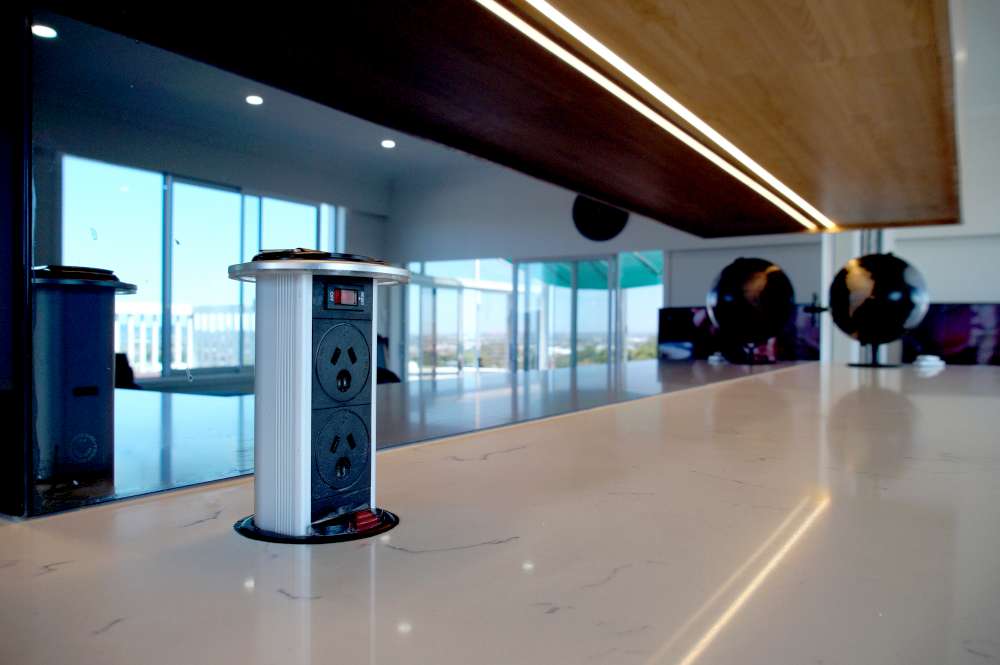
Massey kitchen and bar: these pop-up power outlets sit flush in the benchtop and lift out only when you need them.
See the projects pictured:
Guru and Neeta’s kitchen and lounge bar in Massey (pictured above)
Townhouse Luxury Urban renovation in Parnell
Easy add-ons are motion-sensing tapware that turns on when your hands are underneath, fridges that flag when groceries are running low, and coffee machines set to have a cup ready when you wake up.
Lighting is the upgrade most people notice day to day: scenes you control from a phone or a wall panel, and under-cabinet strips that come on with the room. In a renovation the useful question is less which gadget to buy than what to wire in while the walls are open, which our guide to planning smart switches and sensors into a renovation covers.
Most of these features need power where an older kitchen never had it: outlets in the benchtop, LED strips under the wall cabinets, a hub behind the fridge. That is work for a registered electrician, and WorkSafe’s guidance on low-voltage installations says new installation work must be tested and certified during construction and at its completion.
💡 Quick tip: Mark every outlet, switch and light on the kitchen plan before the electrician’s pre-wire, including the ones inside cabinets and under the island. Moving one after the benchtop goes on means cutting stone.
Trend 2: Eco-friendly kitchen design
Eco-friendly choices have moved from a nice extra to a normal part of the brief. In practice that means built-in recycling and compost drawers, an induction cooktop in place of gas, water-efficient tapware and appliances sized to the household rather than the showroom.

Kitchen renovation in Parnell – the boiling-water tap sits to the left of the main mixer.
The appeal of a boiling-water tap is that you draw off only the water you need instead of filling a kettle, and it frees up bench space. Ask for the running cost of the under-bench unit before you choose one, because it keeps its water hot around the clock.
Trend 3: Dark and two-tone cabinetry
White cabinets still suit almost any style, but all-white kitchens have given ground to two-tone schemes: a coloured or timber island against lighter perimeter cabinets, or dark base cabinets under light uppers. Mixing finishes gives the room a focal point without committing every door to one colour.
When people do add colour, deep greens, blues and earthy tones are the usual choices, because they sit comfortably beside timber and stone.


Black cabinetry in Massey: Our client in Massey wanted black cabinets against white to give a luxurious feel to his kitchen. LED lights were also installed under the cabinet handles to add to the glamour of the kitchen.
Dark cabinetry gives a kitchen depth and a sense of luxury, but it can make a room feel dim. It works best where the kitchen gets good daylight, or where a lighter benchtop, floor and walls balance it. In a south-facing Auckland kitchen, keep the dark tones to the island or the base cabinets and let the upper cabinets and walls reflect the light.
Trend 4: Streamlined designs, materials and textures
Cabinets
Farmhouse and mid-century styles still have a following, but most kitchens we design now lean toward simple, clean lines and fewer visible details, with alternative materials doing the decorative work.
Removing upper wall cabinets has become a common choice because it opens up the visual space, making the kitchen look larger and brighter. It also frees the wall above the bench, and most people can’t reach the top shelves anyway.
Textures and materials
A streamlined design doesn’t have to be boring. It simply means less clutter and more restraint. Use materials with different textures: with open shelving, for example, rough-cut timber gives a natural look and metal tubing an industrial one.

Kitchen renovation trends in Mangere Bridge: an American ash benchtop adds texture and a natural element to the kitchen.
Tiles as a focal point
Natural stone floor tiles, or splashback tiles that are sculpted, bevelled or stacked, make a strong focal point. These textures stand out against the polished and gloss finishes you see everywhere, and a ceiling treatment can add another layer.

Kitchen renovation in Stanmore Bay: patterned Mexican tiles bring colour to a rustic, Spanish-style kitchen.
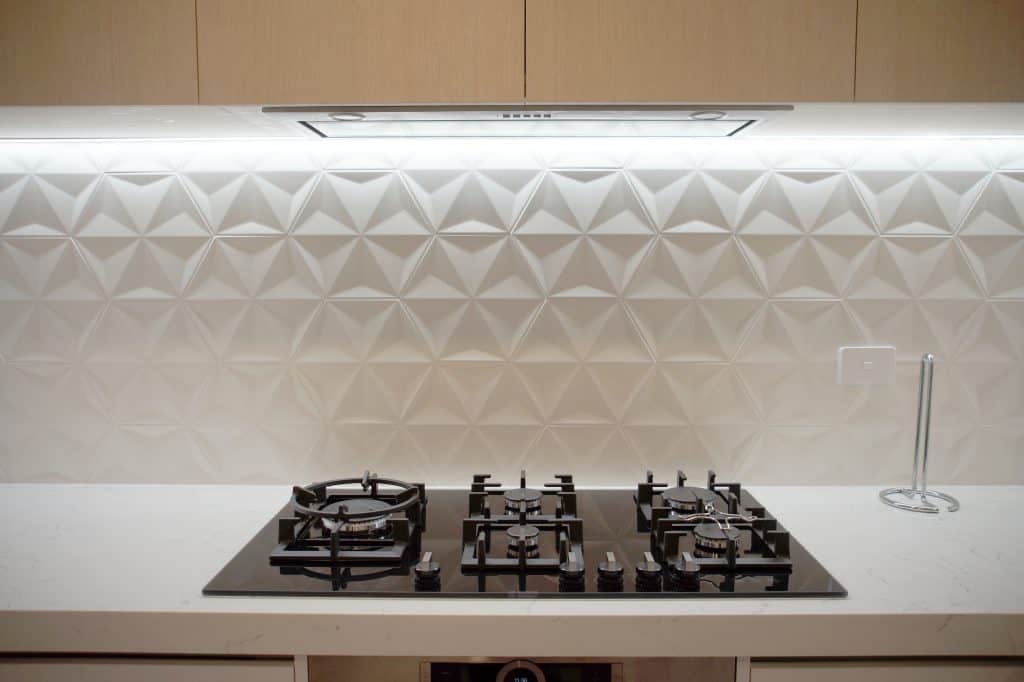
Kitchen renovation in Parnell: textured 3D tiles give the splashback wall character without adding colour
More tile ideas from our projects:
Urban Luxury Kitchen in Parnell with 3d textured tiles
Spanish mosaic tiles as a feature in the kitchen in Stanmore Bay
Henry and Lynette’s kitchen in Bucklands Beach with dark hexagonal textured tiles
Trend 5: Open-plan and broken-plan kitchens
Open-plan kitchens have been the default in Auckland renovations for years, for a simple reason: evenings are often the only time a household is together, and an open kitchen keeps the cook part of it. In an older home, getting there usually means taking out the wall between the kitchen and the living or dining room.
Important note: Find out whether a wall is load-bearing or bracing the house before you plan around removing it. Taking out or altering a structural wall can need an engineer’s design and a building consent, so check with a Licensed Building Practitioner or Auckland Council before demolition. Sonder Architecture’s consent checker for internal alterations is a quick first read.

A kitchen we renovated in Bucklands Beach: the black stone island doubles as a breakfast bar, so the kitchen works as part of the living space rather than a separate room.
Broken-plan layouts keep the openness but give each zone some definition: a half-height wall, open shelving, a step down or a change of flooring between the kitchen, dining and living areas. You keep the light and the connection without the whole house hearing the dishwasher.

Broken-plan zoning: one large room, with the kitchen, dining and living areas set out as separate zones.
Trend 6: Engineered stone benchtops and the silica question
Engineered stone, much of it sold as quartz, has been the go-to benchtop in Auckland kitchens for years. It resists stains, cleans easily and comes in everything from plain white to marble and granite looks. Granite, the natural alternative at the top end, needs a little more care.
When quartz countertops first came into the market, the main worry was lack of variety in terms of colours and finishes. But through technological advances, manufacturers can now provide a range of colours and patterns. You can even get quartz finished with elaborate swirls and large veining to imitate other materials like natural stone. These unique styles have become immensely popular.


Kitchen renovation in Bucklands Beach: black engineered stone with a fine sparkle fleck gives this benchtop its depth.
But there is a notable trend toward softer and more neutral colours. More and more homeowners are opting for colours like grey, taupe, creamy or white finishes. This follows the trend towards cleaner styles seen in most home spaces.

Kitchen renovation in Stanmore Bay: Engineered stone used to look like patterned granite. The pattern chosen by our client was Autumn Leaf.
The bigger question now is silica. WorkSafe says engineered stone can contain in excess of 90% crystalline silica, against less than 45% in natural stone such as granite, and that fabricating it can produce dust that leads to accelerated silicosis. WorkSafe’s guidance is aimed at the people who cut and install it. If you’d rather sidestep the question, ask about lower-silica engineered stone, natural stone or porcelain before you choose; Little Giant Interiors’ take on the engineered stone question sets out those options.
While we’re on benchtops, composite sinks are worth a look. They’re made from a stone composite that can match or complement the benchtop, which gives a cleaner, uniform look and makes cleaning easier. They are up against the still very popular stainless steel, ceramic and Silgranit sinks.
Trend 7: Storage built into the cabinetry
One of the biggest drawbacks of basic kitchen cabinetry is wasted space. Standard shelves and drawers leave gaps that are too small for your larger things, or so wide that there is no way to organise them properly.
One of the foundations to a functional kitchen is kitchen storage. If it is inadequate or ineffective, you will be faced with endless frustrations and challenges.
To counter these storage challenges, homeowners are starting to look for better storage solutions within the cabinetry. These can include:
- drawer dividers for cutlery & utensils
- pull-outs for spices
- tray dividers
- roll-out trays
- magic corners for pots & pans
- wastebasket cabinets for garbage and recyclables
- deep drawers.

Pull-out rubbish and recycling bins

Custom-built pantry drawers add convenience and make the most of the storage

Magic corners put the dead space in corner cabinets to use
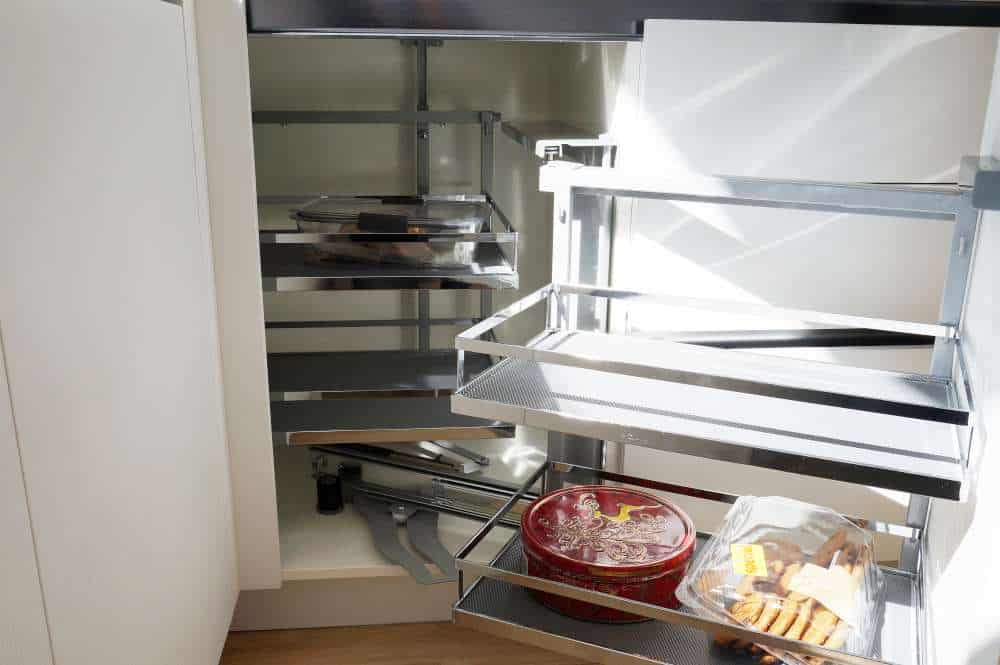
Another type of magic corner, with baskets that pull out of the corner cabinet

A narrow custom pull-out for condiments
The storage our clients ask for most is the ‘magic corner’, because it puts the wasted space in kitchen corners to work. Custom cabinets with pull-out drawers come a close second.
More storage ideas from our projects:
- Lynette and Henry’s kitchen in Bucklands Beach
- Home and Kitchen renovation in Avondale
- Kitchen renovation for a young family in Papatoetoe
- Amber and Craig’s kitchen transformation in Hillsborough
Trend 8: Open shelves for small kitchens
Hidden storage will always be popular, but it isn’t always practical in a small kitchen. There often isn’t room for bulky cabinetry full of drawers, so the storage has to work differently.
Open shelves can store a lot in a small space and add a design element at the same time. Ways to get more out of them:
- Use magnetic holders for knives. These can be screwed on to the wall so you do not have a bulky knife holder on your counter top
- Ladle hangers and wall spice racks. Small hooks can hold the spoons and ladles you cook with, and wall racks can hold your spice bottles.
- You can also create a wine glass hanger which would reduce the need for shelves.

Floating open shelves were added to increase storage and add a design element to the kitchen
A great tip is also to buy colourful pots, pans, bowls etc which can be placed in the open shelves. This would create interest and also add a pop of colour to your kitchen.
Trend 9: Timber floors, and tiles that look like timber
Timber flooring is still a popular choice in kitchens, with ceramic tile close behind. Ceramic tiles now come in a wide range of designs, styles and sizes.
For example, you can get ceramic tiles that look like timber flooring, so you keep the timber look with a floor that is easier to maintain. Ceramic tiles can also be made to resemble natural stone and other materials, right down to the surface texture. If you’re still weighing up real timber, our laminate, engineered and solid timber flooring comparison for Auckland homes covers the trade-offs.

Kitchen renovation in Bucklands Beach: Ceramic tiles which mimic hardwood were installed for easy maintenance and as a cost effective option
Tile sizes have moved on too. You can get single plank tiles that look like wide timber boards once they’re laid, or custom-cut tiles for a patterned floor. Larger tiles make an area look bigger because there are fewer grout lines, so the floor looks less busy.
Trend 10: Multipurpose kitchen islands
Kitchen islands are no longer an afterthought squeezed into the space. They have become the hub of the kitchen, and the change we see most is larger, single-level islands that do several jobs, with ample storage below.

Kitchen renovation in Blockhouse Bay: Custom built large island which doubles as a storage solution with cabinets and as a breakfast and prep bar

Kitchen renovation in Stanmore Bay: An island bar which doubles as a dining table and cooking bench
A large island can take storage, under-bench appliances, a prep zone and seating for casual meals or a drink. In open-plan homes we’re seeing islands extend toward the living area, so the island can do more without crowding the cooking zone.

Kitchen renovation in Massey: Kitchen island extending into the living room space to double as a bar that can be used for entertaining
Trend 11: Double islands
If you have the room, two smaller islands can work better than one large one. They improve the flow around the kitchen, and each can do its own job: one as a breakfast bar, the other as a prep bench with the cooktop.
Double islands suit large kitchens and open-plan rooms, where a single island would leave too much floor between the bench and everything else.
Trend 12: Ceiling-high larders
A kitchen isn’t just a working room any more. With open-plan living, it has to look good as well as function well. Many people now prefer open shelves to bulky cabinetry because they make a kitchen feel more spacious, and a few colourful pots and pans make a focal point full of colour and texture.
The same logic applies to larders. Open larders built right up to the ceiling give you more storage and a strong design feature. To reach the top shelves, a movable library ladder that rests against the larder does the job and looks the part.
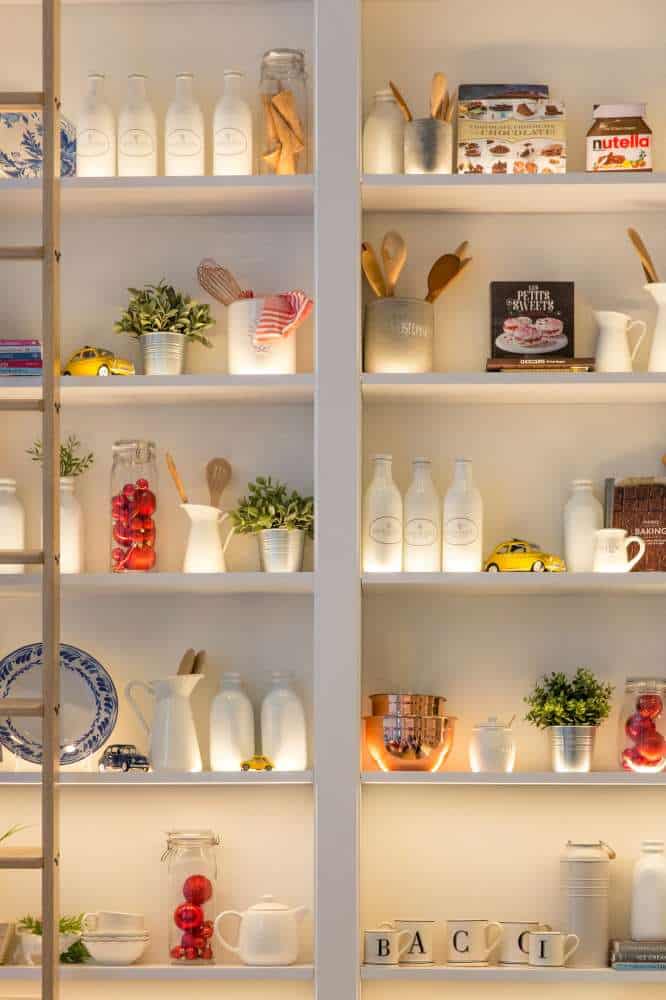
An open larder with matching storage containers and a ladder to reach the higher shelves. Add some lighting inside the larder and it becomes a focal point for the kitchen.
Trend 13: Splashback trends
First things first: white subway tiles in the classic brick size have had their moment. People are moving to larger tiles and slabs with texture and pattern. A bright, textured splashback adds character to a neutral kitchen, and neutral patterns with a natural texture suit anyone after a classic look.

Kitchen renovation in Bucklands Beach: Hexagon shaped black and grey textured tiles were added as a splashback to add interest, drama and texture to the kitchen
Another big change we’re seeing in tile backsplashes are their size and the portion of wall they cover. More people now opt for larger tiles to make the area look less ‘busy’. These slabs can be made to look like marble, quartz, wood, copper, stainless steel, glass…. the list goes on forever!
Trend 14: Connecting the kitchen to the outdoors
Open-plan living has a natural next step in New Zealand: opening the kitchen and dining area to the deck. A lot of entertaining here happens outside, and some of our clients now treat the deck as an extension of the kitchen.
That usually means wider doors, often bi-fold or stacking, between the dining area and a covered deck, sometimes with a barbecue or a full outdoor kitchen beyond them. A new or wider opening in an external wall changes the structure of the house, so check it with a Licensed Building Practitioner or Auckland Council early. An outdoor kitchen also brings its own rules, which our guide to an outdoor kitchen built in for good works through.
Trend 15: Adding a pop of colour
White will always be popular for kitchens because it is easy to work with. In the past, kitchens tended to be either white surfaces and cabinets or dark timber. The shift now is toward adding colour to an otherwise white kitchen.

A sky blue splashback was added to bring some colour into a neutral themed kitchen in Papatoetoe
We spend a lot of time in the kitchen, cooking and entertaining friends and family, so why not use a colour you love? You’ll see it on cabinets, islands, hutches and feature walls.
The colours that work best tend to come from nature: blues, earthy greens and warm reds.
Trend 16: Mix and match metals
We get asked a lot whether it’s okay to mix metals in a kitchen. It is. Mixing metals adds character, as long as it’s done with some thought, and perfectly matched, coordinated rooms are fading. If you love gold fixtures but don’t want them everywhere, pair a soft gold mixer with black or nickel hardware.
Light fittings can be a different metal altogether, with hints of the metal you’ve used elsewhere. They’re the finishing touch, so let them stand out. Furniture is another way to bring in metal: kitchen chairs or island stools can be swapped easily when you want a change.
Kitchen renovation in Stanmore Bay: a textured brass sink and tapware bring metal into this Stanmore Bay kitchen
Textured metals that are the same colour as other pieces in the kitchen are a nice way of adding a different element, while not getting too crazy.
Trend 17: Statement rangehoods
Rangehoods have become a design feature rather than something to hide. The cooktop wall is often the one you see from the living area, so the hood above it can set the look of the whole kitchen. Why not make it a statement?
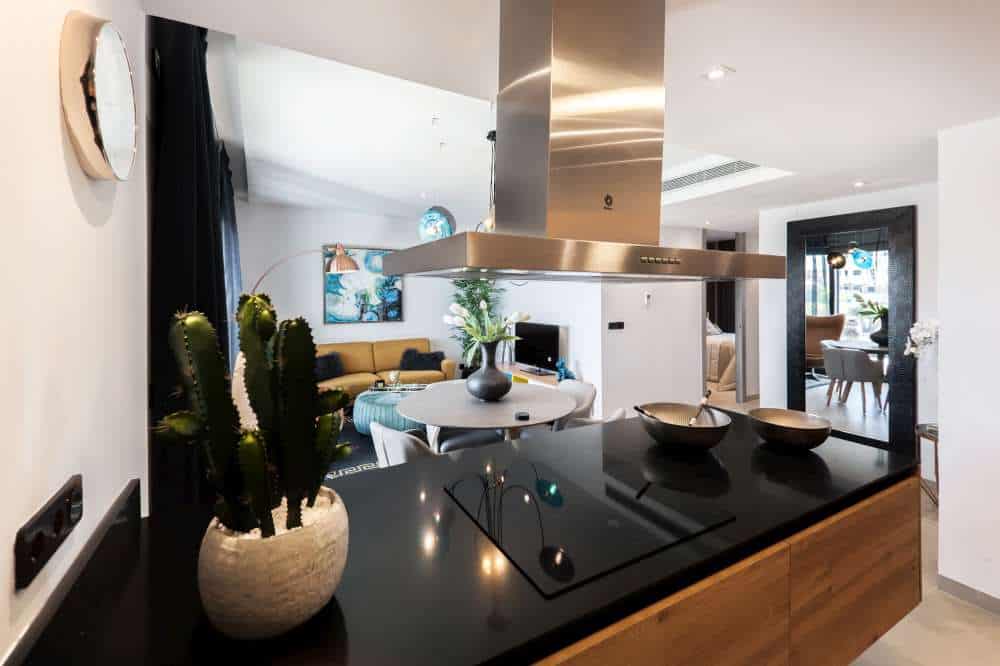
A steel hood adds drama to the kitchen
A custom steel hood can break up a long run of timber cabinetry and bring metal into the scheme. It is a made-to-measure item, so price it early in the design rather than adding it at the end, and settle the ducting route at the same time, because where the extraction can run decides where the hood can go.
Trend 18: Natural wood tones
Stained and imitation timber have been in kitchens for decades. Natural timber is back because it brings a warmth and texture that a flat finish can’t.

Kitchen renovation in Mangere Bridge: natural timber benchtops protected with an epoxy urethane vinyl coating.
In a white kitchen, a timber island, drawer fronts or benchtop adds warmth straight away. Timber needs protecting near water: on the Mangere Bridge kitchen we coated the benchtop and floating shelves with an epoxy urethane vinyl finish. A slab of timber also makes a good-looking, rugged breakfast bar.
Trend 19: Brass and bronze accents
Statement tapware and fittings are an easy way to give a kitchen character. Brass taps and fixtures suit a rustic or industrial look.

A brass sink and tapware give this Stanmore Bay kitchen its rustic look
If your kitchen is mostly neutral and white, black tapware, fittings and cabinet handles turn it into a classic black and white kitchen without any drastic changes.

Hammered metal pendant lights add to the rustic feel of this Stanmore Bay kitchen
Trend 20: Plate racks, hanging cups and colourful appliances
As mentioned above, a great way to lift your kitchen is to bring some colour in. If you’re not after a big change, putting colourful crockery on display does it.
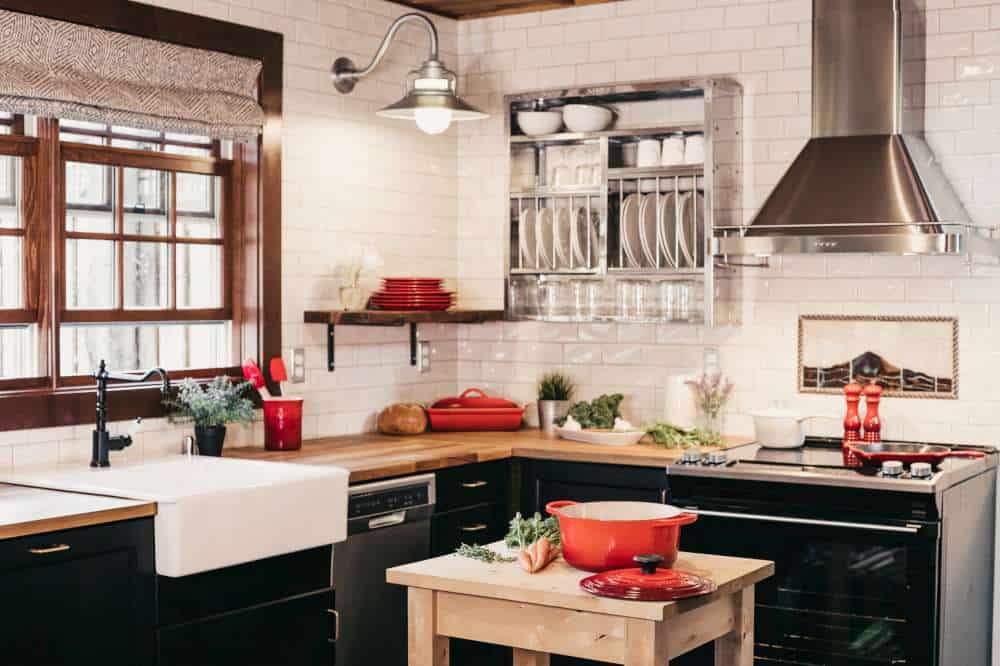
The above kitchen looks dramatic and bold due to simple red utensils and black cabinets. The red utensils create a lot of interest to an otherwise monochromatic kitchen.
All you need is a few hooks for colourful cups, or a wall-mounted plate rack with patterned plates, to bring interest to a plain kitchen.
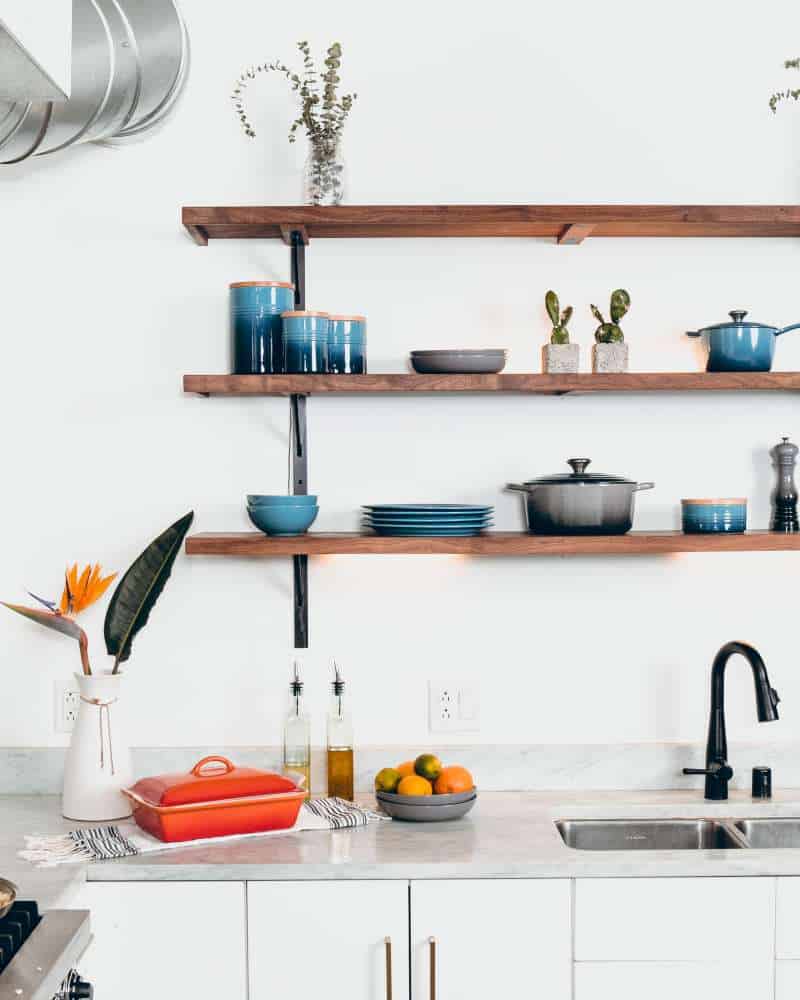
Another example of adding colour to a white toned kitchen.
If you’re not afraid of colour, a coloured fridge or bright small appliances add some fun without a renovation.
Trend 21: Sociable kitchens with curved edges
Curved elements are one of the newer kitchen design trends: rounded island ends and softened corners that make movement easier in an open-plan kitchen with several ways in and out. They suit entertaining, because guests can gather around an island without catching a sharp corner.
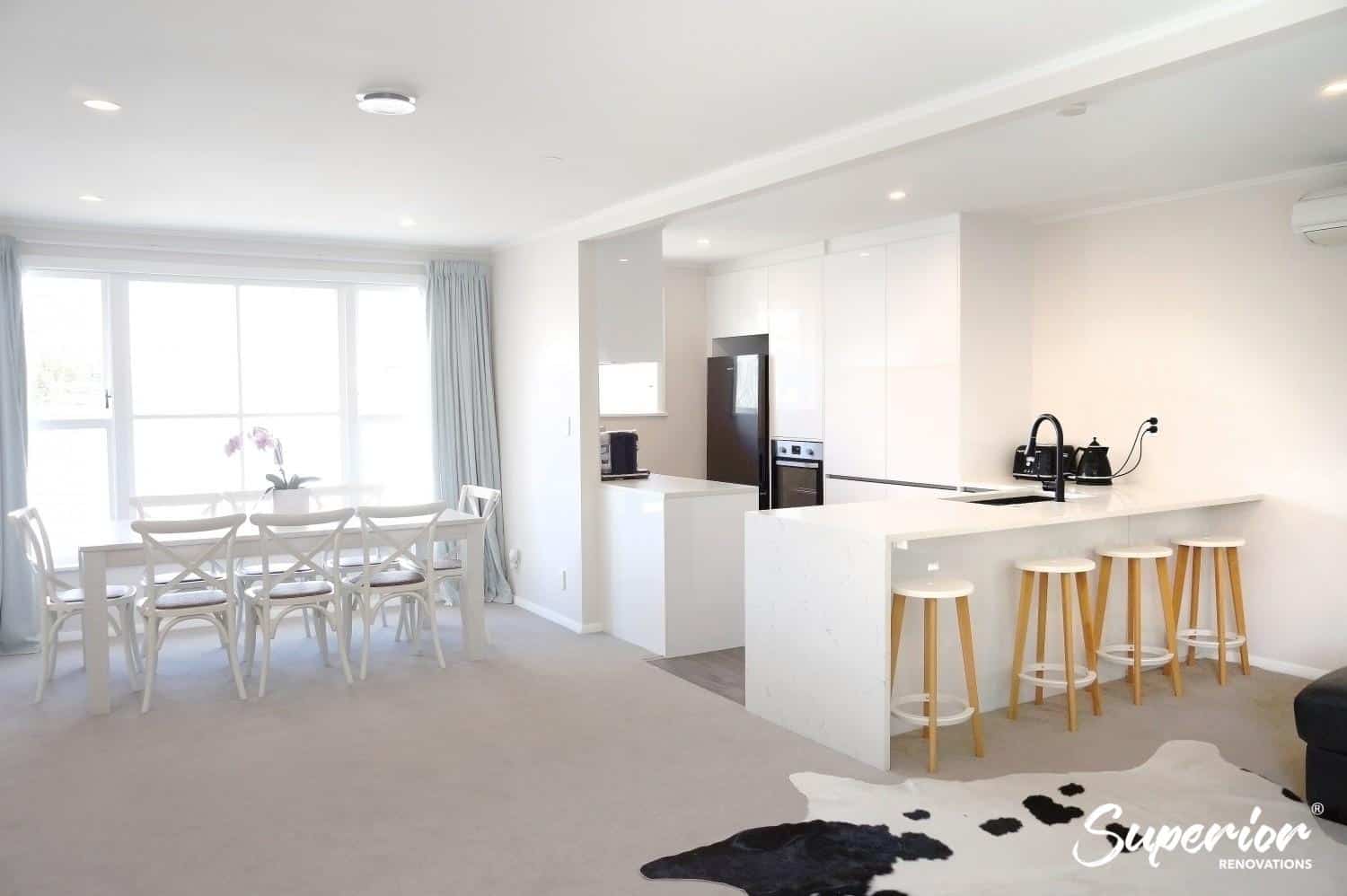
Open Plan Kitchen, Easier to Socialise
Modern full home renovation in Greenlane
Trend 22: Timber cabinetry
Timber cabinet doors in walnut or oak give a kitchen a classic look that dates more slowly than a fashionable colour. They pair well with the natural wood tones in trend 18.
Trend 23: Layered lighting
Layered lighting is the trend we’d build into every kitchen. Instead of relying on one ceiling light, or task lighting at the bench alone, it combines ambient, task and accent light so the room works for cooking and still feels good in the evening. Our guide to how task, ambient and accent lighting work together in a kitchen covers the layers in more detail.
💡 Quick tip: Plan the lighting with the cabinetry, not after it. Under-cabinet strips and pendants over the island need their wiring in place before the wall linings and the benchtop go in.

Pendant lighting over the bench
Trend 24: Handleless design
Handleless cabinetry gives a kitchen a clean, uninterrupted look. Push-to-open hardware is one way to get it; a finger-pull rail or a bevelled door edge are others, and Little Giant Interiors explains the 45-degree door edge that lets you open a cabinet without a handle.

Handleless cabinets and drawers
Read – Contemporary Kitchen Renovation with Rustic Features
Trend 25: A dedicated pantry
A pantry keeps food in one place instead of scattered across wall cupboards, so it’s easier to see what you have and the rest of the kitchen stays clear. Where there’s room, a walk-in or butler’s pantry can also hide the small appliances and the mess from the open-plan side.
11 kitchen trends to avoid
We don’t recommend building a whole kitchen around one trend, because some trends become an eyesore after a while. We usually suggest a classic design, with elements of newer trends to complement it, rather than reshaping the whole kitchen around a current fad.
These are the trends we’d steer you away from.
Avoid 1: Themed kitchens
A kitchen renovated to copy a particular era or style can go out of fashion quickly, leaving you with a kitchen you no longer like. A retro-themed kitchen is the classic example. If you like retro, use a few elements from that era in an otherwise classic or modern kitchen.
Avoid 2: Desks and workstations in the kitchen
Kitchen desks were popular a few decades ago, before recipes moved online, when people used them to plan menus and store recipe books. A kitchen gets messy, though, and your desk would bear the brunt of it. Move the desk to another part of the house and use the space for extra pantry storage.
Avoid 3: Dark timber cabinets in a small kitchen
Unless the kitchen is large, dark timber cabinets make it feel bulky and closed in, and they date quickly. A lighter timber opens the space up and keeps the look clean. If you love dark tones, keep them to the island, as in trend 3.
Avoid 4: A microwave above the cooktop
Older kitchens often put the microwave above the bench or the cooktop. It’s awkward to reach, and food gets spilt or dropped. Put the microwave below eye level instead, such as a drawer microwave under the bench or a shelf in the pantry.
Avoid 5: Tiled benchtops
Tiled benchtops can be cheaper than other materials, but they are hard to maintain: tiles chip and grout lines stain, and both start to look tired quickly. A stone or laminate benchtop with no grout lines is far easier to keep clean, and engineered stone can be made to look like marble.
Avoid 6: White subway tiles everywhere
Subway tiles have been used over and over in the last decade or so, to the point of overkill in a kitchen renovation. Try glass, acrylic, stone or a larger-format tile instead. If you do like the subway look, try coloured subway tiles so they add a pop of colour.
Avoid 7: Closed kitchens
As covered above, closed-off kitchens don’t suit how most households live now. An open kitchen does put more pressure on keeping the bench tidy, but few people want to cook the evening away behind a wall while everyone else is in the living room.
Avoid 8: DIY splashbacks and cabinets
A DIY paint job on cabinets or a self-installed splashback rarely gets the finish a professional achieves, and a poor job is expensive to redo. Before you take on any part of a kitchen yourself, check which parts of a kitchen job the law lets you do yourself.
Avoid 9: Ornate styles
If you prefer a rustic, classic or traditional kitchen, that’s completely fine: sleek modern lines aren’t everyone’s style. Even in a traditional kitchen, skip ornate carving on cabinets and doors and oddly shaped islands, which make a kitchen look dated. Use colour, timber and accessories to bring out the traditional style instead.
Avoid 10: Mismatched styles
Before you renovate a kitchen, look at the overall feel of your home. In a classic, traditional house, a sleek modern kitchen can look out of place. A traditional kitchen with modern elements keeps the character of the rest of the house.
Avoid 11: An all-white kitchen
Minimalist kitchens are still popular, but to avoid a barren look, bring in neutral colours alongside the white. Tan, grey and black add depth and interest while keeping the clean lines, so a minimalist kitchen doesn’t have to be an all-white one.
For more, read the 10 mistakes our kitchen designers tell clients to avoid.
Six features every good kitchen design needs
Trends come and go, but these six features decide whether a kitchen works day to day. They come from our kitchen designers, and they apply to a small apartment kitchen as much as a large family one.
Feature 1: A layout that suits how you cook
The right layout depends on the space you have and how much your household uses the kitchen. If several people cook together, the design needs plenty of bench space. These are the most common layouts:
One-wall kitchens
These suit smaller units and apartments in Auckland where space is limited and living is mostly open-plan. A one-wall kitchen keeps a small area from feeling cramped and leaves room for a small dining area and a comfortable living space.
Galley kitchens
A galley is another lean layout for small spaces, ideal for one- or two-person households. It has two benches running parallel with a walkway between them. If a one-wall kitchen doesn’t give you enough space, a galley is usually the next step. One bench can double as an island with bar stools, which gives you extra bench space and somewhere to eat without a dining table.
L-shaped kitchens
L-shaped kitchens make the most of a corner. They suit small to medium homes because they keep the room feeling open. The benches run along two walls at right angles, and wall cabinets above the bench add storage. If you have the space, an island can double as a dining spot.
U-shaped kitchens
U-shaped kitchens have benches or cabinets on three walls. They suit larger spaces and traditionally worked best in closed kitchens. With more people choosing open-plan living, the modern version is an L-shape plus an island, which keeps the working area of a U-shape and lets people move through the kitchen easily.
Islands in a kitchen
An island can work in most layouts, but it should be in proportion to the room. In a one-wall kitchen you’re probably working with a small space, so keep the island slim enough not to crowd it.
Peninsula islands
A peninsula is an extension of an L-shaped kitchen: it attaches to one end of the L to form a U-shape. Below is a peninsula we designed as part of a full kitchen renovation in Bucklands Beach.

Peninsula island in Bucklands Beach which provides our client with extra counter space as well as a breakfast nook.
Read – Our complete 2021 guide on Planning the right Kitchen Layout for your kitchen
Feature 2: Storage planned around what you own
Storage is one of the most important parts of a functional kitchen. The first thing we ask every client to do is list their large utensils and appliances. Anything you don’t use regularly is worth getting rid of now.
Next, think about your pantry and how many groceries you keep on hand. Do you need a bigger pantry, or does the current one work? Answering that before the renovation means the kitchen can be built around how your household actually uses it.
When working within tight spaces we incorporate space saving designs such as ‘magic corners’ for corner cabinets, pull out cabinets, pull out rubbish bins and pull out pantries. Such designs help save space, and maximise storage when not a lot of it is available.
Feature 3: A durable benchtop
A benchtop has to stand up to daily use, and it is rarely replaced without replacing the cabinets underneath, so choose one you’ll be happy with for as long as the cabinetry lasts. Many older Auckland kitchens have laminate benchtops: they don’t crack or break easily, but they stain and start to look tired.
Stainless steel is a very durable benchtop as it will not stain and has a long life. Stainless steel is not for everyone though as it can make a kitchen look cold and more like a commercial kitchen. Stainless steel is not the best option if you are going for a traditional or classic kitchen. Stainless steel can work well with industrial, modern and contemporary styles.
Engineered stone, much of it sold as quartz, has been one of the most popular choices with our clients. It doesn’t stain like laminate, it cleans easily and it can be made to look like marble or granite, so it suits most kitchen styles. Natural stone and porcelain are the other options at this level; read the silica note under trend 6 before you decide.
Feature 4: Hard-wearing flooring
Kitchen floors get dirty fast, and few people have time to baby them. Tiles are the easiest to keep clean, they aren’t damaged by spills, and they now come in textures and patterns that look like timber or stone, so you don’t have to trade style for practicality.
Carpets and Real hardwood floors are easily the hardest to maintain. Carpets are easily stained and can be a nightmare to maintain in a kitchen even with a kitchen mat. Real hardwood floors can begin to rot over time if there is constant water spillage which is often not avoidable in a kitchen. If you have real hardwood floors then a good idea will be to protect them in order to avoid them getting damaged.
We have renovated old bungalows in Auckland where our clients chose to keep their timber floors and we preserved them by taking the following steps:
- All the floors were cleaned thoroughly and then sanded
- All the rows of nail holes were fixed
- 3 coats of commercial-grade water-borne polyurethane were applied to the floors
- After 5 days we then applied a satin finish of moisture cured and water based polyurethane.
Feature 5: Good-quality fittings
If you’re considering which items to spend more on in your kitchen, it’s worth paying attention to the fittings. A standard cabinet can be lifted by a beautiful handle, while a basic sink can look high-end with the addition of a well-chosen tap.
The fittings in your kitchen are going to be used a lot, so it makes sense to invest in quality to ensure they’re strong, durable and nice to touch.
Use good-quality fittings whether you renovate yourself or with a renovation company. You won’t be redoing the kitchen every few years, so the fittings need to last as long as the rest of it. If the budget is tight, it’s better to wait and save than to cut corners on the parts you touch every day.
Your fittings will be used a lot and quite regularly so there is a high chance of wear and tear. The materials you choose for your cabinets, benchtop, sink and door handles should be durable and sturdy.
Feature 6: An easy-to-clean splashback
A well chosen splashback can transform your kitchen in terms of design as well as reduce the time it takes you to clean while cooking. One of the key functions of a splashback is to protect the wall from the splatters made while cooking. Hence decide on a sleek tiled splashback without many grout lines or a glass splashback.
If there are too many grout lines or if the tile used is rough or textured then cleaning the splashback will be harder. If it is a smoother tile without too many grout lines then it would be a whole lot easier to clean your splashback.
Kitchens we’ve renovated in Auckland
Urban luxury kitchen in Parnell
This townhouse was centrally located in Parnell but the kitchen was tiny and lacked counter space. We completely changed the layout of this kitchen by first moving it from the left side of the area to the right. We then added cabinets in the dining area as an extended storage space. This cabinet featured shelves with internal lights which could be opened when required. The project page has before and after photos and the full specification for the Parnell kitchen.
 |  |  |
 |  |
Entertainer’s kitchen and bar in Massey
Guru and Neeta from Massey had a closed-off kitchen that didn’t suit the way they like to host. We removed the walls between the kitchen, lounge and dining room to make one open space, then built a matching bar in the lounge. Matte black cabinetry sits against white engineered stone made to look like marble. Read the full Massey kitchen and bar case study.
 |  |  |
 |  |  |
Kitchen, Lounge and Dining room renovation in Massey
Cottage-style kitchen in Mangere Bridge
This kitchen was about bringing natural elements in to reflect our clients’ country surroundings. A dated kitchen became a chic country-style one with real timber benchtops, a butler’s sink, floating shelves and cabinet fronts wrapped in Dezignatek Thermoform with a ‘Ronda’ pattern for a vintage look. Read how we built the Mangere Bridge country kitchen.
 |  |  |
Full kitchen renovation in Mangere Bridge, Auckland
Managing your own trades? Start with the cabinetry
We don’t recommend managing your own kitchen renovation unless you’ve done one before and have tradespeople you trust. Every renovation brings surprises because no two homes are the same, and that is where project management keeps costs, delays and quality under control, backed by the guarantees and warranties that come with a managed job.
If you do intend to manage it yourself, it usually works out cheaper to go to a kitchen cabinetry manufacturer directly for the design, manufacture and installation of the cabinets. That leaves you to coordinate the other trades: demolition, flooring, plastering, painting, tiling and the splashback, the electrician, the plumber and sometimes a builder.
Try Little Giant Interiors’ cost calculators below to see what you can expect to pay for cabinetry.
Build in the trends that change how the kitchen works
The kitchen design trends that age well are the ones you’d choose even without a trend: a layout that fits how many people cook, storage built for what you own, layered lighting, and a benchtop and floor that stand up to daily use. Spend there, and keep the fashionable parts, the colour, the hardware and the open shelves, where you can change them later. If you want to see finishes in person before you choose, start with the three complete kitchens on display in our Wairau Valley showroom.
➡ Book your free in-home consultation with Superior Renovations using the form at the bottom of this page, or call 0800 199 888.
➡ Price the trends you’ve shortlisted in our kitchen cost calculator
➡ Request a free feasibility report for your project
How much does a kitchen renovation cost in Auckland?
Our FAQ puts a mid-range Auckland kitchen renovation at $26,000 to $35,000 + GST, covering design, cabinetry, benchtop, splashback, appliances and installation. Basic refreshes start from $15,000, and luxury and custom kitchens reach $138,000+. Where you land depends on the size of the room, whether the layout or plumbing moves and the finishes you choose, so a trend that changes the layout costs more than one you add later.
How do I budget for my kitchen renovation?
Start with why you are renovating. If the layout works and the kitchen just looks tired, a refresh that keeps the existing cabinet boxes costs far less than a full rebuild. If you want an open-plan layout or a better working kitchen, budget for the layout, plumbing, benchtop and cabinetry first, because those are expensive to change later, and save on finishes you can swap. Our kitchen cost calculator gives you a starting range.
Do you have finance options for my kitchen renovation?
Yes. Through Q Mastercard we offer up to 18 months interest-free on full-price renovation projects of $20,000 or more, 12 months on purchases of $10,000 or more and 6 months on purchases of $985 or more. The offer is for Auckland clients only, and lending criteria, fees, terms and conditions apply. Our Guide to Financing Your Home Renovation covers the other ways to fund a renovation.
Does a kitchen renovation increase the value of my home?
A well-planned kitchen is one of the first rooms buyers look at, because it is where a household spends its time together. Whether it adds more than it costs depends on the house, the suburb and how far the spend goes beyond what the street supports. Keep the finish level in line with the rest of the home rather than chasing a trend, and spend on the layout and storage a buyer will notice.
Where can I find help to design my kitchen?
Renovation companies like ours, which offer a full ‘design-to-build’ service, include kitchen design in their process, so you don’t need to hire a separate designer. Having the designer within the same team as the renovation company simplifies communication and coordination.
Do I need to get my own plumbers and electricians for my kitchen renovation?
This depends on the renovation company. Companies offering a complete ‘design-to-build’ service handle everything, including kitchen design, demolition, rubbish disposal, product supply (e.g., flooring, bathroom fixtures, showers, vanities), installation, all trades (electricians, plumbers, tilers), and project management. The cost of the renovation includes all these services. However, some kitchen manufacturers focus solely on manufacturing and installing the kitchen and do not provide electricians, plumbers, or tilers. Research your options to find what best suits your needs.
What are some kitchen backsplash trends?
A splashback changes the look of a kitchen more than its size suggests. A coloured or patterned tile can lift an otherwise white kitchen, while glass or a large-format splashback with few grout lines is the easiest to keep clean. Full-height splashbacks in the benchtop material are another option. Our guide to Kitchen Backsplash Trends covers the materials and what they cost.
Which kitchen design trends last the longest?
The ones that make the kitchen work better: a layout that suits how many people cook, deep drawers and pantry storage planned around what you own, layered lighting and hard-wearing surfaces. They outlast colour and hardware trends because they are built into the structure, plumbing and wiring. Treat paint colours, handles, open shelving and decor as the parts you can update later without touching the build.
Do I need building consent to open up my kitchen?
It depends on the wall. Replacing cabinetry, benchtops and appliances in the same layout usually does not need consent, but removing or altering a load-bearing wall to create an open-plan kitchen can need structural design and a building consent. Check with a Licensed Building Practitioner or Auckland Council before demolition starts. Our team assesses consent requirements during your free consultation and manages the applications if they are needed.
What is the concern with engineered stone benchtops?
Silica dust. WorkSafe says engineered stone can contain in excess of 90% crystalline silica, against less than 45% in natural stone such as granite, and that fabricating it can produce dust that leads to accelerated silicosis. Its guidance is aimed at the people who cut and install the stone. If you would rather avoid the question, ask about lower-silica engineered stone, natural stone or porcelain when you choose your benchtop.
Related guides
- How long an Auckland kitchen renovation takes from demolition to handover
- Making a small kitchen feel larger with layout and colour
- Designing a kitchen for entertaining versus everyday family life
Further Resources
- Featured projects and Client stories to see specifications on some of the projects.
- Real client stories from Auckland
Need more information?
Take advantage of our FREE Complete Home Renovation Guide (48 pages), whether you’re already renovating or in the process of deciding to renovate, it’s not an easy process, this guide will help you avoid costly mistakes.
Download Free Renovation Guide (PDF)

Have you been putting off getting renovations done?
We have partnered with Q Mastercard ® to offer up to 18 months interest-free, so you can enjoy your new home now and stress less.
Learn More about Interest-Free Payment Options*
*Lending criteria, fees, terms and conditions apply. Mastercard is a registered trademark and the circles design is a trademark of Mastercard International Incorporated.
Still have questions unanswered?
Book a no-obligation consultation with the team at Superior Renovations, we’d love to meet you to discuss your renovation ideas!