


Epoxy Grout VS Cement Grout for Tiling: Advantages & Disadvantages
Free cost calculator
How much will your renovation cost?
Get an instant Auckland price range for your project — no details required to see it.
Quick answer: Epoxy grout is waterproof, stain-resistant and lasts decades without sealing — but costs 3–5 times more than cement grout per kilogram. For Auckland bathrooms and showers, epoxy is the stronger long-term choice. Cement grout suits low-moisture areas where budget matters most.
Grout gets about two seconds of thought during most Auckland renovations. Homeowners spend weeks choosing tiles, agonise over benchtop colours, then nod when the tiler says “standard grout, yeah?” Three years later, the shower grout has gone grey, the corners are cracking, and the whole bathroom looks ten years older than it is.
The grout you choose affects how your tiled surfaces look, perform and hold up over time — and the difference between getting it right and getting it cheap is often less than $100 on a typical bathroom. That’s a small price for a finish that stays clean for years instead of months.
We’ve grouted hundreds of bathrooms and kitchens across Auckland — from character villas in Grey Lynn to new builds in Hobsonville — and the question comes up on almost every job: should we go epoxy or cement? The answer depends on where the tiles are going, how much moisture they’ll face, and whether you want to seal your grout every year or forget about it entirely.
This guide breaks down the real differences between epoxy and cement grout, what each one costs in New Zealand, where each type performs best, and how to make the right call for your specific renovation. We’ll reference NZ-available products from suppliers like Ardex, Technokolla, and Bunnings — not generic overseas brands you can’t actually buy here.
What’s the Actual Difference Between Epoxy Grout and Cement Grout?
The short version: they’re made from completely different materials, and those materials behave in completely different ways once they’re in your tile joints.
Cement Grout — The Traditional Option
Cement grout is a mixture of Portland cement, sand (in sanded varieties), water-retention additives, and pigment. You mix it with water, trowel it into the joints, and it cures through a hydration process — basically, the cement absorbs the water and hardens over several days. It’s the grout that’s been used on Kiwi homes for decades.
The catch? Cement grout is porous. Even after it’s fully cured, it has tiny openings throughout its structure that absorb water, soap residue, body oils, and cleaning products. That’s why white grout in a shower turns grey within a year or two. It’s not dirt sitting on the surface — it’s embedded into the material itself.
💡 Quick tip: Cement grout must be sealed after installation and re-sealed every 12–24 months to maintain any real moisture resistance. Most Auckland homeowners forget this step — which is exactly when the grout starts to discolour and deteriorate.
Cement grout comes in two main forms. Sanded grout contains fine aggregate particles and is designed for joints wider than 1.5mm — it resists shrinkage and cracking better than unsanded. Unsanded grout has a smoother texture and works for narrow joints under 1.5mm, but it’s weaker and more prone to cracking in wider gaps.
There’s also latex-modified cement grout, which adds a polymer to improve flexibility and water resistance. It’s a step up from basic cement, but it’s still porous and still needs sealing.
Epoxy Grout — The Performance Option
Epoxy grout is made from two-part epoxy resins mixed with a filler powder — no cement, no water in the mix. Instead of curing through hydration, it hardens through a chemical reaction between the resin and hardener. The result is a dense, non-porous joint that doesn’t absorb water, doesn’t stain, and doesn’t need sealing. Ever.
This is the grout system that BRANZ references when it talks about “waterproof grouted joints” in wet area tiling — a requirement under NZ Building Code clause E3 for shower areas. While cement grout technically needs sealing to meet this standard, epoxy grout does it straight out of the bucket.
“We recommend epoxy grout for every shower and wet-area floor we tile. Cement grout sealed well will do a reasonable job, but epoxy removes the maintenance variable entirely — and that’s what most of our clients actually want.”
— Cici Zuo, Head of Sales (NZ Dip. Interior Design), Superior Renovations
Epoxy does have trade-offs. It sets faster than cement grout, which means your tiler needs to work in small batches. It can look slightly glossy — some homeowners describe it as “plastic-looking” — though modern formulations from brands like Ardex EG 15 and Technokolla Techno Evolution have reduced this significantly. And it costs more. Quite a bit more per kilogram.
But here’s the thing most people miss: the material cost difference on a standard Auckland bathroom is surprisingly small when you look at the full picture.

Where to Use Epoxy Grout vs Cement Grout in Your Auckland Home
Not every tiled surface needs epoxy. And not every surface can get away with cement. Knowing where each type belongs is where most homeowners — and some tilers — get it wrong.
Showers and Wet Rooms — Epoxy Is the Clear Winner
Showers are the single most demanding environment for grout in any home. Hot water, steam, soap, shampoo, body oils — all hitting the grout joints daily. BRANZ Bulletin 591 on waterproofing tiled showers makes the point clearly: cement-based grout is not inherently waterproof, so any wet-area tiling must rely on proper waterproofing membranes beneath the tiles.
Epoxy grout adds a second layer of moisture protection above the membrane. It doesn’t replace the waterproofing underneath — that’s still required under NZ Building Code clause E3 — but it means the grout joints themselves aren’t absorbing water every time someone has a shower. For Auckland homes, especially older villas in Mt Eden or Ponsonby where moisture management is already a concern, that extra layer matters.
💡 Quick tip: If your tiler suggests cement grout for a fully tiled shower, ask them how they plan to achieve the “waterproof grouted joints” required by E3/AS1. Sealing annually is one option — epoxy is the set-and-forget alternative.
Kitchen Splashbacks — Epoxy Recommended
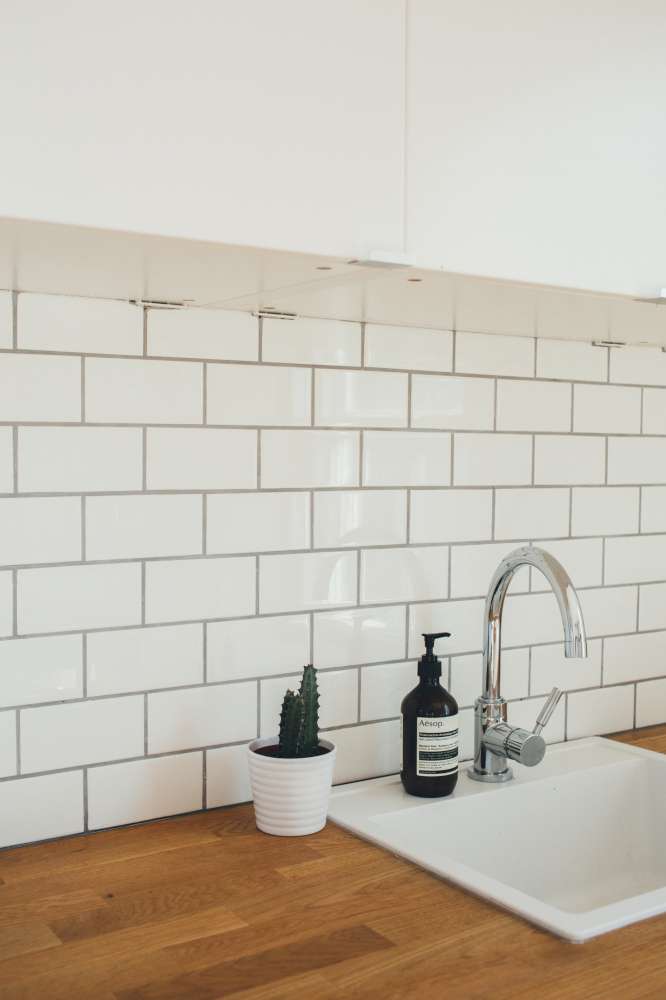
Kitchen splashbacks cop grease, cooking oil, tomato sauce, and cleaning sprays — all of which stain cement grout permanently. Epoxy grout resists oils and acids that would discolour cement within months. If your kitchen renovation includes a tiled splashback, epoxy is worth the small premium.
We had a client in Henderson last year who’d tiled their splashback with cement grout five years earlier. The grout between the subway tiles had gone from white to yellowish-brown, and no amount of scrubbing could shift it. The cost to regrout in epoxy was close to what they’d have paid for epoxy in the first place — except they’d already lived with the problem for five years.
Bathroom Floors — Epoxy Preferred
Even outside the shower zone, bathroom floors are wet-area surfaces under the Building Code. Water splashes, drips, and sits on bathroom floor grout regularly. Epoxy grout on bathroom floors means no sealing schedule to maintain and no discolouration around the base of the vanity or toilet.
Living Areas, Hallways and Bedrooms — Cement Is Usually Fine
For tiled floors in dry areas — living rooms, hallways, laundries that don’t get wet — standard cement grout performs well. These surfaces don’t face constant moisture, so cement grout’s porosity isn’t a real problem if it’s sealed properly at installation. The cost saving makes sense here, and the slightly matte, traditional finish of cement grout often looks better in these spaces than epoxy’s sheen.
Outdoor Tiling — Check Before You Commit
Auckland’s weather throws UV, rain, and temperature swings at outdoor tiles year-round. Cement grout copes reasonably well outdoors if sealed, though it degrades faster than indoor applications. Epoxy grout handles UV and moisture well but can yellow in direct sunlight with some formulations — check the product’s UV rating before specifying it for an outdoor area. Ardex EG 15, available from NZ suppliers, is rated for external use including swimming pools.
Epoxy Grout in a Shower: What to Specify, and What Actually Goes Wrong
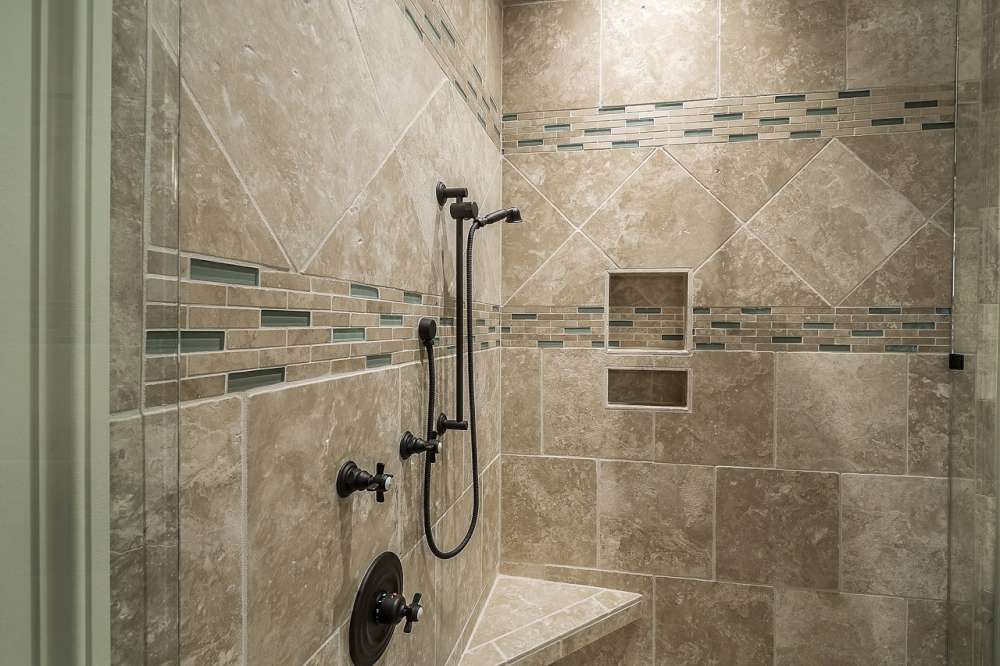
The shower is the one place in the house where a grout decision shows up in daylight. Everywhere else a mediocre joint just sits there. In a shower it gets soaked twice a day, scrubbed with something alkaline once a week, and stared at by whoever is standing in it.
Epoxy grout in a shower solves the staining and the mould, but it does not make the shower waterproof. That job belongs to the membrane underneath the tiles, installed to New Zealand Building Code clause E3 with a system such as those from ARDEX or Surtec. Grout is the wearing surface. If the membrane is wrong, epoxy grout will simply hold the water in the wall for longer before you find out. It is one reason we specify the membrane, the adhesive and the grout together on every wet area we take back to the framing and rebuild.
The three joints that fail first
Almost every shower we open up fails in the same three places, and none of them are the middle of a tiled wall.
The wall-to-floor junction. This is a movement joint, not a grout joint. It moves as the building moves and as the tray flexes underfoot, so grout of any kind cracks there eventually. It should be filled with a matched sanitary silicone, which is exactly why grout ranges are sold alongside colour-matched silicones. If your tiler grouted that corner, expect a hairline crack within a couple of years.
The internal corners. Same problem, same answer. Two planes meeting at ninety degrees will always move relative to each other.
The joints around the waste and the mixer. Penetrations are where water gets a second chance. Epoxy earns its money here because it will not draw water in the way a porous cement joint does.
Joint width matters more than most people are told
Shower walls are increasingly tiled in large-format porcelain with tight joints, and tight joints are where cement grout struggles most. There is simply less material holding the tiles apart. ARDEX EG 15 is rated for joints from 1.5mm to 15mm wide and is approved for swimming and hydrotherapy pools, which tells you what it is built to survive. A standard flexible cement grout such as ARDEX FG 8 stops at 8mm.
Regrouting an existing shower
If the tiles are sound and only the grout has gone, a regrout is a genuine option and a fraction of the cost of a rebuild. The old grout has to be raked out to a proper depth first, not skimmed over. Skimming new grout over old is the most common shortcut in shower repairs and it never lasts, because the new layer is too thin to bond or to survive a scrub.
💡 Quick tip: If your shower glass is being replaced at the same time, do the grout first and the glass second. Silicone beads at the glass junction should land on finished, cured joints, not on grout that still has to be raked out. Our guide to shower glass types and replacement costs covers the sequencing.
How Much Does Epoxy Grout vs Cement Grout Cost in NZ?
Cost is the first objection most homeowners raise. And honestly, the per-kilogram price difference is real — epoxy grout can cost 3 to 5 times more than cement grout for the raw material. But context matters.
Material Cost Per Kilogram
| Grout Type | NZ Price Per Kg (approx.) | Example NZ Product |
|---|---|---|
| Standard cement grout (sanded) | $4–$8/kg | Ardex FG8, Technokolla Techno Colours |
| Latex-modified cement grout | $8–$14/kg | Mapei Keracolor U |
| Epoxy grout | $18–$35/kg | Ardex EG 15, Technokolla Techno Evolution |
Those numbers look dramatic. But let’s run the maths on a real Auckland bathroom.
What’s the Actual Difference on a Typical Bathroom?
A standard 5m² Auckland bathroom uses roughly 3–5kg of grout, depending on tile size and joint width. For 300mm × 300mm tiles with 3mm joints, you’re looking at the lower end. For smaller mosaics or subway tiles, closer to the upper end.
| Grout Type | Material Cost (5kg) | Annual Sealing Cost | 10-Year Total |
|---|---|---|---|
| Cement grout | $20–$40 | $30–$50/year (sealer + time) | $320–$540 |
| Epoxy grout | $90–$175 | $0 | $90–$175 |
Over a decade, epoxy grout is actually cheaper — even before you factor in the cost of regrouting when cement grout eventually fails. And that’s just materials. Labour to regrout a bathroom in Auckland runs $500–$1,500 depending on tile type and access.
When you consider that a mid-range bathroom renovation in Auckland costs $25,000–$35,000, the $50–$135 premium for epoxy grout is a rounding error on the total project cost. Less than one percent.
💡 Quick tip: Ask your tiler to quote the grout upgrade separately. Most Auckland tilers charge $50–$150 more for epoxy (materials plus the slightly longer application time). Compare that to the cost of regrouting in five years.
“When clients ask whether epoxy is worth the extra cost, I tell them to think about it per shower — not per kilogram. On a $30,000 bathroom, you’re debating $100. That buys you a decade of clean grout with zero maintenance.”
— Alison Yu, Designer, Superior Renovations
Labour Cost Differences
Some tilers charge more to work with epoxy because it sets faster and demands more precision. Expect to pay 10–20% more on grouting labour for epoxy — but on a bathroom, that labour component is typically $300–$600, so the premium is $30–$120. Some experienced Auckland tilers include the epoxy upgrade at no extra labour charge if you ask during quoting.

Choosing the Right Grout for Your Renovation — A Room-by-Room Guide
So how do you actually decide? Forget the generic advice. Here’s what we recommend based on what we see on Auckland renovation projects every week.
Decision Factors That Actually Matter
Moisture exposure is the single biggest factor. If the grout will get wet regularly — showers, bath surrounds, splashbacks, laundry floors — epoxy should be your default. If it’s a dry area with occasional mopping, cement works fine.
Tile type matters too. If you’re using porous natural stone tiles like limestone or travertine, epoxy resin can soak into the tile surface and create permanent staining. Your tiler needs to seal the tile face before grouting with epoxy, or use cement grout instead. For standard ceramic and porcelain tiles — which account for about 80% of what we install across Auckland — both grout types work well.
Joint width plays a role. Cement sanded grout handles wider joints (over 3mm) better, while unsanded cement and epoxy both suit narrow joints. If your design calls for large-format tiles with minimal 1.5mm joints, epoxy or unsanded cement are the practical options.
Room-by-Room Recommendation Table
| Room / Surface | Recommended Grout | Why |
|---|---|---|
| Shower walls and floor | Epoxy | Constant moisture, needs waterproof joints per E3/AS1 |
| Bathroom floor (outside shower) | Epoxy preferred | Regular water splash, hard to maintain sealer schedule |
| Kitchen splashback | Epoxy | Grease, oil and acid exposure from cooking |
| Kitchen floor | Either — epoxy for high-traffic families | Spills vary; epoxy resists food stains better |
| Living areas and hallways | Cement (sanded) | Dry area, cost saving makes sense, seal at install |
| Laundry floor | Epoxy preferred | Water and detergent splash from machines |
| Outdoor patio or pool surround | Epoxy (UV-rated product) | Weather, chlorine, moisture — confirm UV stability first |
| Feature wall (dry) | Cement | Zero moisture risk, matte finish often preferred |
What About Colour Consistency?
Epoxy grout holds its colour indefinitely because the pigment is part of the resin — it doesn’t wash out. Cement grout’s colour comes from surface pigment that fades and shifts as the grout absorbs moisture and cleaning products. If you’re specifying a dark or vivid grout colour to contrast with your tiles, epoxy is the safer bet. Medium grey cement grout is the most forgiving choice for traditional installations, because most cement grout trends toward grey over time anyway.
Sound familiar? If you’ve chosen white grout for a shower and watched it turn dingy within a couple of years, that’s cement grout doing exactly what it does. Epoxy white stays white.
Can You Put Epoxy Over Existing Cement Grout?
Yes — but only if the old cement grout is removed to at least half the tile depth first. You can’t just skim epoxy over the top of cement. Use a grout saw or oscillating tool to rake out the old material, then apply the epoxy into the cleaned joints. The epoxy bonds to both the tile edges and the remaining cement base. It’s a solid regrout option for Auckland homeowners who want to upgrade their shower grout without replacing the tiles.
💡 Quick tip: Regrouting with epoxy is a practical upgrade if your existing tiles are in good condition but the grout has failed. Get a quote from your tiler specifically for epoxy regrout — it’s significantly cheaper than retiling the entire surface.

Grout Colour: Why White Is the Most Requested and the Least Forgiving
White grout is what most Auckland homeowners picture when they picture a new bathroom, and it is the colour that generates the most complaints eighteen months later. The reason is porosity, not the pigment.
Cement grout is porous, so a white cement joint absorbs soap residue, minerals from the water and whatever the shampoo bottle leaks, and it goes grey from the inside out. White epoxy grout does not, because there is nothing for the staining to soak into. If you want white joints that are still white in five years, epoxy is not a luxury upgrade. It is the only version that delivers what the colour promises.
What colours you can actually get in New Zealand
Cement and epoxy grouts are coloured differently, which catches people out at the counter.
Cement grout comes pre-coloured in the bag. ARDEX FG 8, the flexible cement grout most NZ residential tilers reach for, is published in nine colours: Magellan Grey, Slate Grey, Midnight, Misty Grey, Charred Ash, White, Travertine, Alabaster and Sandalwood. It comes in 5kg and 20kg packs.
Epoxy grout is mixed on site from separate parts. ARDEX EG 15 ships as a three-part pack: a 1L Part A compound, a 500mL Part B hardener and a 5kg Part C colour pack. The colour lives in Part C, which is why the epoxy colour range is quoted separately from the resin and why you cannot simply grab a bag off the shelf.
ARDEX publishes a grout colour selector that lets you preview a tile colour against each grout colour before you commit. It covers both EG 15 and FG 8, so the epoxy and cement options can be compared in the same view.
The rule our designers use
Match the grout to the tile and the surface reads as one plane. Contrast the grout against the tile and you are choosing to show the grid. Both are valid. What is not valid is choosing a high-contrast dark grout on a pale tile without looking at the setting-out first, because every millimetre of variation in the tile lines becomes a design feature.
Mid-tone greys are the safe middle ground, and the reason Misty Grey and Slate Grey sell as well as they do. They hide traffic on a floor, they do not fight a white tile, and they age at roughly the same rate across the whole room. If you are still choosing tiles, our bathroom tile guide for Auckland homes covers format and finish, and the bathroom flooring comparison covers what sits underfoot.
💡 Quick tip: Order the grout at the same time as the tiles, from the same supplier, and keep the leftover. Dye lots vary between batches on cement grout, and a patch repair mixed from a different bag two years later will not match.
NZ Products and Suppliers — What’s Actually Available Here
Generic grout articles reference US and Australian brands that you can’t buy at your local Bunnings or tile store. Here’s what’s actually on the shelf in New Zealand.
Epoxy Grout Products Available in NZ
Ardex EG 15 — A high-performance two-component epoxy grout widely used by NZ tilers. Suitable for joints up to 15mm wide, rated for internal and external use including swimming pools. Available through tile suppliers and some Bunnings stores. The clean-up is notably easier than older epoxy formulations — a common complaint that modern products have largely resolved.
Technokolla Techno Evolution — Distributed by Surtec NZ (based in Auckland). BRANZ-appraised waterproofing and tiling system. Low porosity, strong chemical resistance. A good option if your tiler works within the Technokolla system for adhesive and waterproofing as well — consistency across the system matters for warranty coverage.
Mapei Kerapoxy — Available from specialist tile retailers in NZ. Two-component acid-resistant epoxy. Popular in commercial fit-outs but also used in high-end residential bathrooms. Distributed by MBP (NZ) Ltd from their Auckland base on Carbine Road, Mt Wellington.
Cement Grout Products Available in NZ
Ardex FG8 — The most commonly used flexible cement grout in NZ residential tiling. Available in a wide colour range, suitable for 1–8mm joints. Stocked at most tile retailers and Bunnings. Requires sealing for wet areas.
Technokolla Techno Colours — Cement-based, water-repellent formula with mould and bacteria inhibitors. Around $29.80 for a 5kg bag (incl. GST) from Surtec. Suitable for underfloor heating and pools when properly sealed. A solid mid-range cement option for NZ homeowners.
Mitre 10 and Bunnings house-brand grouts — Budget cement grouts that work fine for DIY in dry areas. Not recommended for wet areas without professional sealing.
Sanded, Unsanded, Polymer and Resin: What the Other Names Mean
The grout aisle throws four or five names at you and only two of them describe genuinely different products.
Sanded and unsanded is a cement grout distinction, not an epoxy one. Sanded cement grout carries a graded aggregate that stops the joint shrinking and cracking as it cures, and it is used in wider joints. Unsanded cement grout is smoother, and it is used in narrow joints and on soft or polished surfaces that sand would scratch. If you are searching for sanded or unsanded epoxy grout, the answer is that epoxy does not split that way. The filler is engineered into the resin system, so an epoxy is chosen by joint width and by the surface it has to survive, not by sand grade.
Resin grout is another name for epoxy grout. Same product family, different label on the shelf.
Polymer-modified cement grout sits between the two. It is a cement grout with polymers added to improve flexibility, water repellence and colour retention, and most modern flexible grouts fall into this category. ARDEX FG 8 contains ARDEX Grout Shield to combat mould growth and is described by the manufacturer as mould resistant and water repellent. That is worth knowing, because it undercuts the idea that cement grout is defenceless. It is better than it used to be. It is still porous.
Joint width, side by side
| Product | Type | Joint width | Pack |
| ARDEX EG 15 | Epoxy (resin) | 1.5mm to 15mm | Three parts: 1L compound, 500mL hardener, 5kg colour pack |
| ARDEX FG 8 | Flexible cement | 1mm to 8mm | 5kg or 20kg bag |
Joint widths, colours and pack sizes as published on the ARDEX New Zealand product pages, checked 31 Aug 2026.
Where to Buy Epoxy Grout in New Zealand
There are three realistic channels, and they are not interchangeable.
Big-box retail. Bunnings and Mitre 10 carry grout, and cement grout is the bulk of what sits on those shelves. Epoxy is stocked less consistently and the colour range is narrower, because the colour pack is a separate line item. Fine for a small DIY job in a dry area. Less useful if you want a specific colour in a hurry.
Tile and stone specialists. The wider colour ranges, the matched sanitary silicones and the staff who can tell you whether a grout suits your particular tile all live here. If your grout colour matters, this is where to buy it.
Trade and system suppliers. ARDEX runs an installer and stockist locator on its own site, and Surtec distributes the Technokolla range from Auckland. Buying the adhesive, the waterproofing and the grout as one manufacturer’s system is what most warranties are written around, so if your tiler has a preferred system, follow it.
One practical warning on quantity: an epoxy colour pack is sized for a job, not a repair. A 5kg Part C pack is more than a single domestic bathroom needs, and epoxy has a working life measured in tens of minutes once the parts are combined. It is not a product you open, use a handful of and reseal.
💡 Quick tip: Ask your tiler which grout system they use and whether the adhesive, waterproofing and grout are all from the same manufacturer. Using a consistent system (e.g. all Ardex or all Technokolla) often means better warranty coverage and fewer compatibility issues.
Common Grout Problems in Auckland Homes — and How to Avoid Them
We’ve seen every grout failure going. Cracked joints, mouldy corners, discoloured shower floors. Most of these come down to three things: wrong grout for the application, poor installation, or no maintenance.
Why Does Grout Crack?
Grout cracking is almost always caused by movement between the tiles and substrate — not by the grout being “weak.” Auckland houses move constantly. Timber-framed villas in Ponsonby flex with humidity changes. Concrete slabs in newer builds like Flat Bush expand and contract with temperature. If the grout can’t accommodate that movement, it cracks.
Cement grout cracks more often than epoxy because it’s rigid and brittle once cured. Epoxy grout has some flex — not much, but enough to handle the minor movement typical in residential construction. Where significant movement is expected (e.g. at junctions between walls and floors), neither grout type should be used. That’s where flexible silicone sealant goes — and many tilers get this wrong by running grout right into the corner.
Why Does Grout Go Mouldy?
Mould grows on cement grout because moisture gets trapped inside the porous material. Auckland’s humid climate — especially through winter — makes this worse. Bathrooms with poor ventilation (no extractor fan, or a fan that vents into the ceiling cavity instead of outside) create the ideal conditions for mould in cement grout. Epoxy grout’s non-porous surface gives mould nothing to grip onto. It can still form on the surface of epoxy if cleaning is neglected, but a quick wipe removes it — unlike cement, where the mould is embedded within the material.
Why Does White Grout Turn Grey?
Soap scum, body oils, shampoo residue, and cleaning products seep into cement grout’s pores and darken it from within. Sealed grout resists this for 12–24 months, then the sealer breaks down and absorption begins again. If you want white grout that stays white in a shower, epoxy is the only option that delivers without constant maintenance.
“Clients often come to us saying ‘the grout in our old bathroom was terrible.’ When we look at it, the grout was fine — it just wasn’t the right type for a shower. Cement grout in a wet area without regular sealing is always going to fail. It’s not a defect, it’s the material doing what it does.”
— Dorothy Li, Design Manager, Superior Renovations
Installation Quality Matters More Than Most People Realise
Even epoxy grout can fail if it’s installed badly. Common installation problems we’ve seen across Auckland include: grout mixed with too much water (cement) or components mixed in the wrong ratio (epoxy), insufficient adhesive coverage leaving tiles hollow and unsupported, and grout applied before the adhesive has fully cured.
Using a Licensed Building Practitioner (LBP) or experienced tiler who works with your chosen grout system regularly is the best insurance against grout failure. The NZ Building Code requires LBP involvement for restricted building work — and while tiling alone isn’t restricted work, bathroom waterproofing is. Make sure your renovation team has the right credentials for the full scope. At Superior Renovations, our tiling and waterproofing work is completed by qualified tradespeople who understand MBIE compliance requirements.
The Bottom Line — Epoxy or Cement for Your Auckland Renovation?
If you’re renovating a bathroom, kitchen or any wet area in Auckland, epoxy grout is the better long-term choice for moisture-exposed surfaces. The material cost premium is small relative to a full renovation budget, the maintenance saving is real, and the finished result stays cleaner for years longer.
For dry areas — living rooms, hallways, bedrooms — cement grout does the job well. Save the budget here and spend it where it counts: in the shower, on the splashback, and on the bathroom floor.
The worst decision is no decision — going with whatever grout your tiler has on the van without asking the question. Now you know what to ask. And when you’re planning your next renovation, the Superior Renovations design team will specify the right grout for every surface as part of our detailed scope of works — so you don’t have to figure it out alone.
Visit our showroom at 16B Link Drive, Wairau Valley, Auckland to see tiled surfaces with both grout types in person. Sometimes seeing the difference is all it takes.
➡ Book your free in-home consultation with Superior Renovations
➡ Get an instant estimate with our bathroom renovation cost calculator
➡ Request a free feasibility report for your project
Is epoxy grout waterproof?
Yes. Epoxy grout is non-porous and fully waterproof without any sealing. It's made from two-part epoxy resins rather than cement and water, so it doesn't absorb moisture. This makes it the preferred grout for showers, wet rooms and bathroom floors in Auckland homes. Cement grout, by contrast, is porous and requires sealing every 12–24 months to maintain water resistance.
How much does epoxy grout cost in NZ?
Epoxy grout in New Zealand costs approximately $18–$35 per kilogram, compared to $4–$8/kg for standard cement grout. However, on a typical 5m² Auckland bathroom, the total grout difference is only $50–$135 — less than 1% of a mid-range bathroom renovation budget of $25,000–$35,000. Over 10 years, epoxy is often cheaper due to zero sealing costs.
What is the best grout for bathroom tiles in NZ?
For shower walls, shower floors and bathroom floors, epoxy grout is the best choice in NZ. It meets BRANZ and NZ Building Code E3 requirements for waterproof grouted joints without needing sealer. For bathroom feature walls or dry areas, standard cement grout works well. NZ-available epoxy products include Ardex EG 15 and Technokolla Techno Evolution.
Why does bathroom grout crack?
Grout cracking is caused by movement between the tiles and substrate — not weak grout. Auckland homes constantly shift due to humidity, temperature changes and settling. Cement grout is more prone to cracking because it's rigid once cured. Epoxy grout has slight flexibility that handles minor residential movement better. At wall-floor junctions, flexible silicone sealant should be used instead of grout.
Can you put epoxy grout over old cement grout?
Yes, but you must first remove the existing cement grout to at least half the tile depth using a grout saw or oscillating tool. You cannot apply epoxy over the top of cement grout — it won't bond properly. Once the joints are raked out, the epoxy grout bonds to both the tile edges and remaining cement. This is a practical upgrade for Auckland homeowners who want better shower grout without retiling.
How long does epoxy grout last compared to cement grout?
Epoxy grout lasts 20+ years without needing replacement or sealing when properly installed. Cement grout typically lasts 8–15 years in wet areas before needing regrouting, and requires sealing every 12–24 months throughout its life. In dry areas with proper sealing, cement grout can also last 15–20 years.
Does epoxy grout look plastic?
Older epoxy grout formulations had a noticeable shiny, plastic-like finish that many homeowners disliked. Modern NZ-available products like Ardex EG 15 and Technokolla Techno Evolution have significantly reduced this effect, producing a more natural matte-satin finish. Ask your tiler for a sample board before committing — most will prepare one on request.
What grout should I use for a kitchen splashback?
Epoxy grout is recommended for kitchen splashbacks because cooking produces grease, oil and acidic food splashes that permanently stain cement grout. Epoxy resists these substances and cleans with a simple wipe. The cost premium for a splashback area (typically 1–2m²) is minimal — often under $30 in extra materials.
Do I need to seal epoxy grout?
No. Epoxy grout never needs sealing — its non-porous resin composition makes it inherently waterproof and stain-resistant. Cement grout must be sealed at installation and re-sealed every 12–24 months, especially in wet areas like showers and bathrooms. Skipping the sealing schedule is the most common reason cement grout fails in Auckland bathrooms.
Is epoxy grout safe to use with natural stone tiles?
Epoxy grout can stain porous natural stone tiles like limestone, travertine and quarry tiles if the tile surface isn't sealed before grouting. The epoxy resin can soak into the stone's pores and become impossible to remove. Always seal the tile face before applying epoxy grout to natural stone, or use cement grout as the safer alternative for these materials.
Which brands of epoxy grout are available in New Zealand?
The main epoxy grout brands available in NZ are Ardex EG 15 (from Ardex NZ, available through tile retailers and some Bunnings stores), Technokolla Techno Evolution (distributed by Surtec NZ in Auckland, BRANZ-appraised), and Mapei Kerapoxy (available from specialist tile retailers, distributed by MBP NZ Ltd in Mt Wellington, Auckland).
How much does it cost to regrout a bathroom in Auckland?
Regrouting a standard Auckland bathroom with cement grout costs approximately $500–$1,000 for labour plus materials. Upgrading to epoxy grout during a regrout adds $50–$150 in materials. A full bathroom renovation in Auckland costs $25,000–$35,000 for a mid-range finish — making the epoxy grout upgrade a fraction of the total investment.
What are the disadvantages of epoxy grout?
Three things. It costs three to five times more per kilogram than cement grout. It has a short working time once the compound, hardener and colour pack are mixed, so it has to be applied and cleaned off the tile face quickly, which is why most Auckland tilers charge more to install it. And on an external surface it is prone to chalking, though ARDEX notes that performance is not affected. For a bathroom or a kitchen splashback, none of those are reasons to avoid it.
Is epoxy grout sanded or unsanded?
Neither. Sanded and unsanded is a way of describing cement grout, where graded sand is added to control shrinkage in wider joints and left out for narrow joints and soft surfaces. Epoxy grout is a resin system with the filler engineered in, so you choose it by joint width instead. ARDEX EG 15 covers joints from 1.5mm to 15mm, which spans both ends of what sanded and unsanded cement grouts are normally used for.
Does white epoxy grout stay white?
Far better than white cement grout does, because epoxy is non-porous and staining has nowhere to soak in. White cement grout goes grey from the inside as it absorbs soap residue and minerals from the water, and that is the most common grout complaint we hear in Auckland bathrooms. White epoxy stays close to the colour it went in at, provided it is cleaned off the tile face properly during installation. Any epoxy haze left on the tiles will discolour and is very hard to remove later.
Further Resources for your bathroom or kitchen renovation
- Featured projects and Client stories to see specifications on some of the projects.
- Real client stories from Auckland
- Wet room bathrooms in NZ – where the grout choice matters most
- Acrylic shower versus a tiled shower – the decision that comes before the grout
- What kitchen splashbacks cost in NZ, including tiled splashbacks
Need more information?
Take advantage of our FREE Complete Home Renovation Guide (48 pages), whether you’re already renovating or in the process of deciding to renovate, it’s not an easy process, this guide which includes a free 100+ point check list – will help you avoid costly mistakes.
Download Free Renovation Guide (PDF)

Have you been putting off getting renovations done?
We have partnered with Q Mastercard ® to provide you an 18 Month Interest-Free Payment Option, you can enjoy your new home now and stress less.
Learn More about Interest-Free Payment Options*
*Lending criteria, fees, terms and conditions apply. Mastercard is a registered trademark and the circles design is a trademark of Mastercard International Incorporated.
Still have questions unanswered?
Book a no-obligation consultation with the team at Superior Renovations,
we’d love to meet you to discuss your renovation ideas!


