

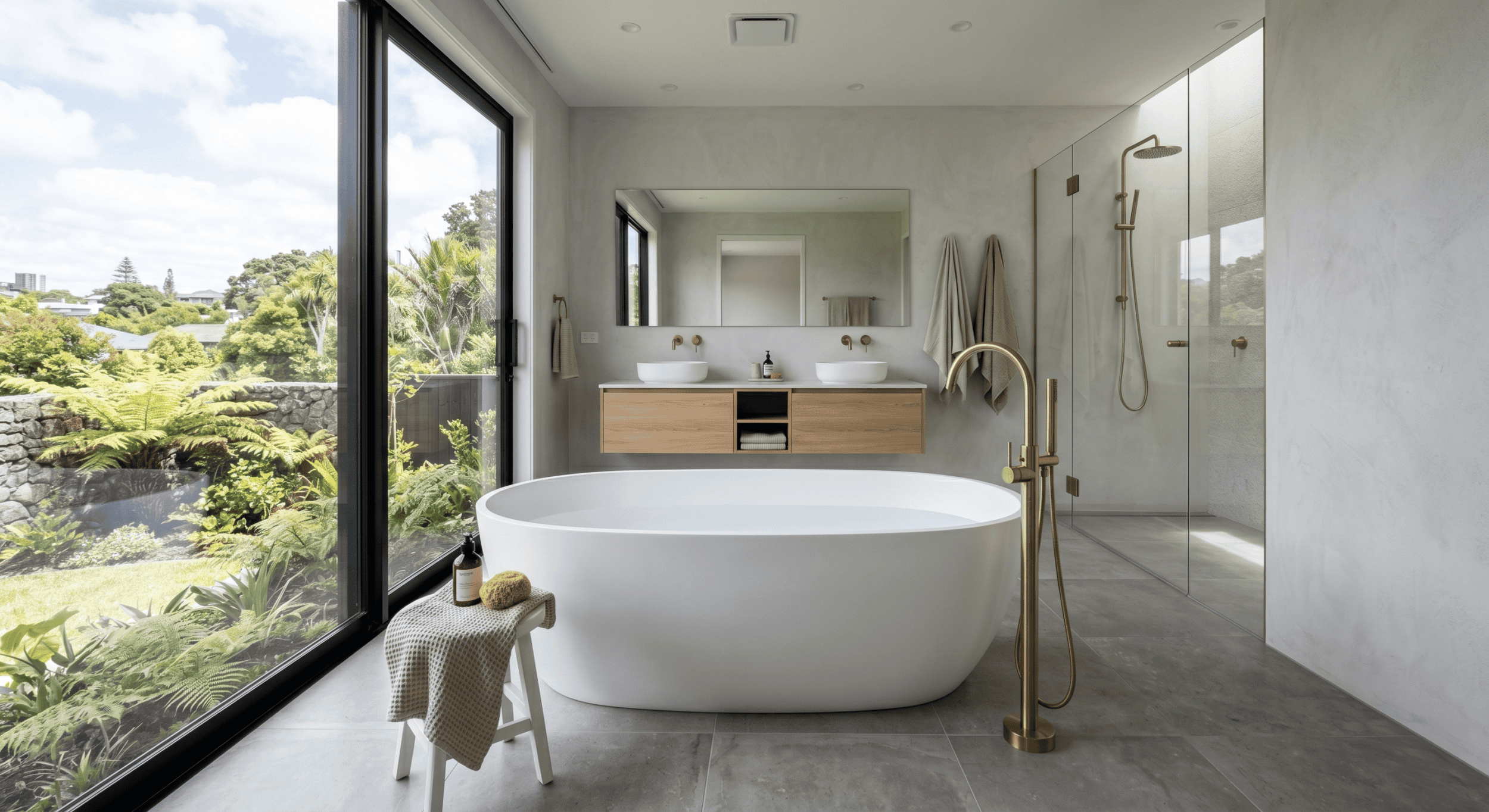
Renovate or Rebuild? Auckland Cost & Consent Guide
Last updated:
Renovate or Rebuild? The Real Cost and Consent Trade-Off for Auckland Homes
Free cost calculator
How much will your renovation cost?
Get an instant Auckland price range for your project — no details required to see it.
Quick answer: Whether to renovate or rebuild in Auckland comes down to totals, not rates — renovation runs $2,000–$4,500 per m² on only the areas needing work, while a rebuild pays for every square metre plus demolition, consents and a year of rent.
Right now, Auckland Council’s public register shows additions and alterations being consented every week across Grey Lynn, Herne Bay, Mt Eden, Ponsonby and Devonport — the exact suburbs where owners most often assume their only options are a rebuild or a sale. They’re not. Renovation remains the most common path for character homes in Auckland’s heritage suburbs, and in many cases it’s the only path the Unitary Plan will actually let you take.
We’ve completed more than 1,000 renovation projects across Auckland since 2018 — around $45.5 million of finished work. That dataset tells us something the generic pros-and-cons articles can’t: the per-square-metre rates for renovating and rebuilding have converged, but the total project costs haven’t. This guide walks through the real numbers, the consent rules that quietly decide the question for you, and an honest framework for when each option wins.
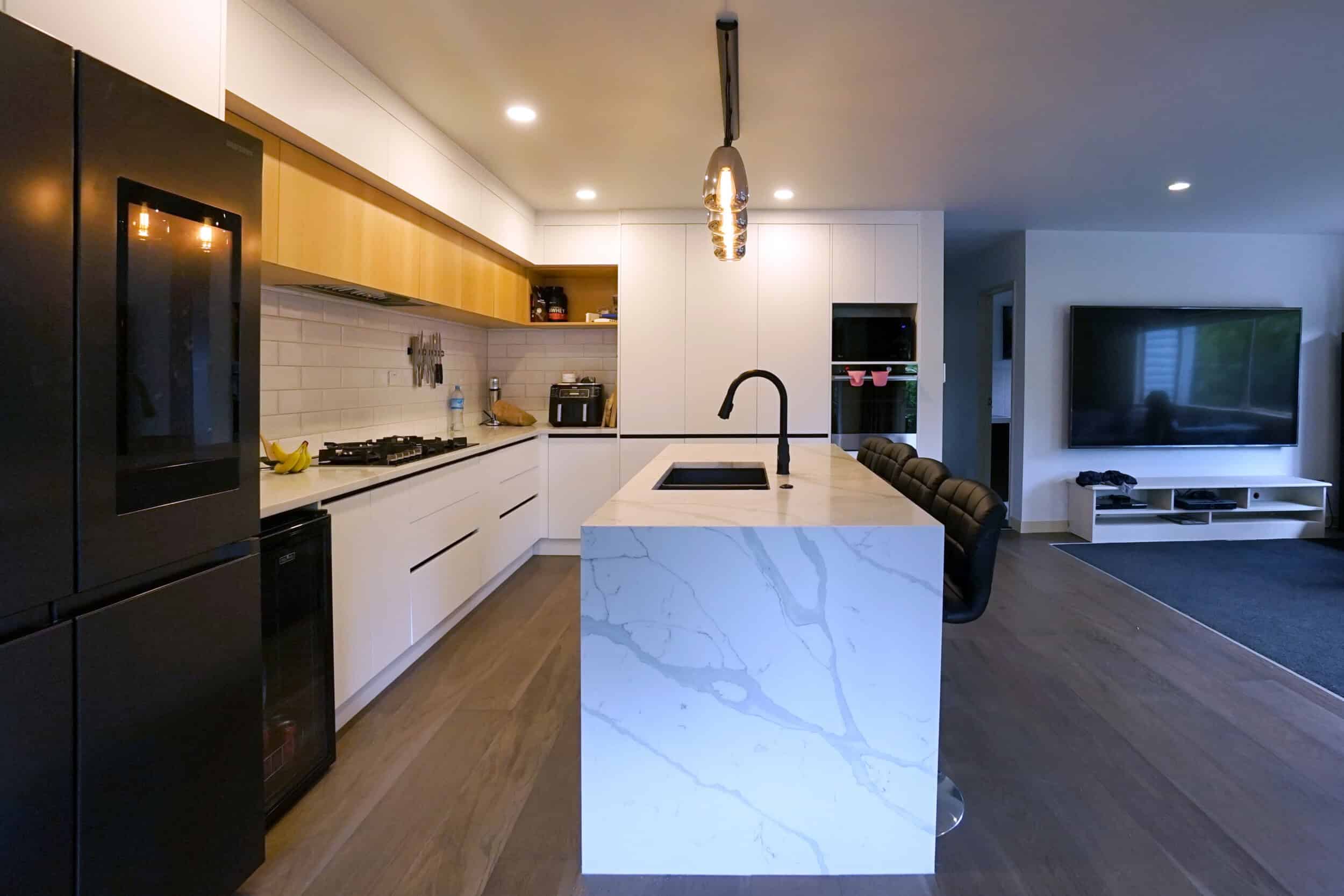
What Renovating Actually Costs vs What Rebuilding Actually Costs
Here’s the number that surprises most homeowners: per square metre, the gap between renovating and building new is smaller than you’d think. The problem is that per-metre rates hide the three costs that only apply to a rebuild.
Renovation costs from our completed Auckland projects
Across our completed projects, full home renovations in Auckland run $2,000–$4,500 per square metre, with mid-range whole-house renovations landing between $80,000 and $160,000. Larger character-home renovations — the villa or bungalow taken back to the framing, re-plumbed, rewired, insulated and reconfigured — commonly land between $200,000 and $500,000 depending on scope and finish level. These are ranges from completed jobs, not quotes; every home prices differently once we’ve seen what’s behind the GIB.
The renovation advantage isn’t the rate. It’s that you don’t have to renovate all of it. A 220m² Remuera home might only need $180,000 of work concentrated in the kitchen, bathrooms and living areas — the other 120m² of sound bedrooms stays untouched. A rebuild charges you for every square metre whether it needed replacing or not.
New build costs in 2026
According to Trade Me Property’s April 2026 building cost guide, a basic new build starts around $2,500 per square metre, the average sits at $3,000–$4,500, and premium homes exceed $5,000. MoneyHub’s analysis of Stats NZ consent data puts the national average at $3,245 per square metre — and notes that external items like driveways, landscaping, earthworks and retaining can add 30–50% on top. Auckland sits at the expensive end of every one of those ranges.
The three costs only a rebuild carries
Demolition, full-footprint pricing, and somewhere to live. There’s no honest single figure for demolition. The contractor prices your site on size, access and materials, and fixed charges sit on top. Two of those are published: Vector charges $795 incl GST to permanently disconnect a standard pillar or pit electricity supply ($3,680 where a breach joint is needed), and Watercare charges $682.97 incl GST to disconnect a 15–25mm water meter. If your house went up before 2000, budget for an asbestos survey and removal on top, priced on what’s found. Then there’s accommodation: a knockdown-rebuild typically means 12+ months in a rental while you keep paying your existing mortgage. At Auckland rents, that’s comfortably tens of thousands of dollars that never touch the house itself.
| Cost item | Major renovation (200m² home, ~120m² touched) | Knockdown rebuild (200m²) |
|---|---|---|
| Construction | $240,000–$540,000 (only the areas that need work) | $600,000–$900,000 (every square metre) |
| Demolition, disconnections + asbestos | Not required | Contractor’s quote + Vector $795 + Watercare $682.97 + asbestos (pre-2000 homes) |
| Site works, consents, externals | Included in scope for most interior renovations | +20–30% of build cost |
| Accommodation during works | Often nil — many clients live in through staged work | ~12 months’ rent |
| Realistic total | $240,000–$540,000 | $780,000–$1,200,000+ |
💡 Quick tip: Before comparing quotes, work out how many square metres actually need work. Owners who count “the whole house” often find only 50–60% of the floor area genuinely needs touching — which changes the renovate-vs-rebuild maths completely.
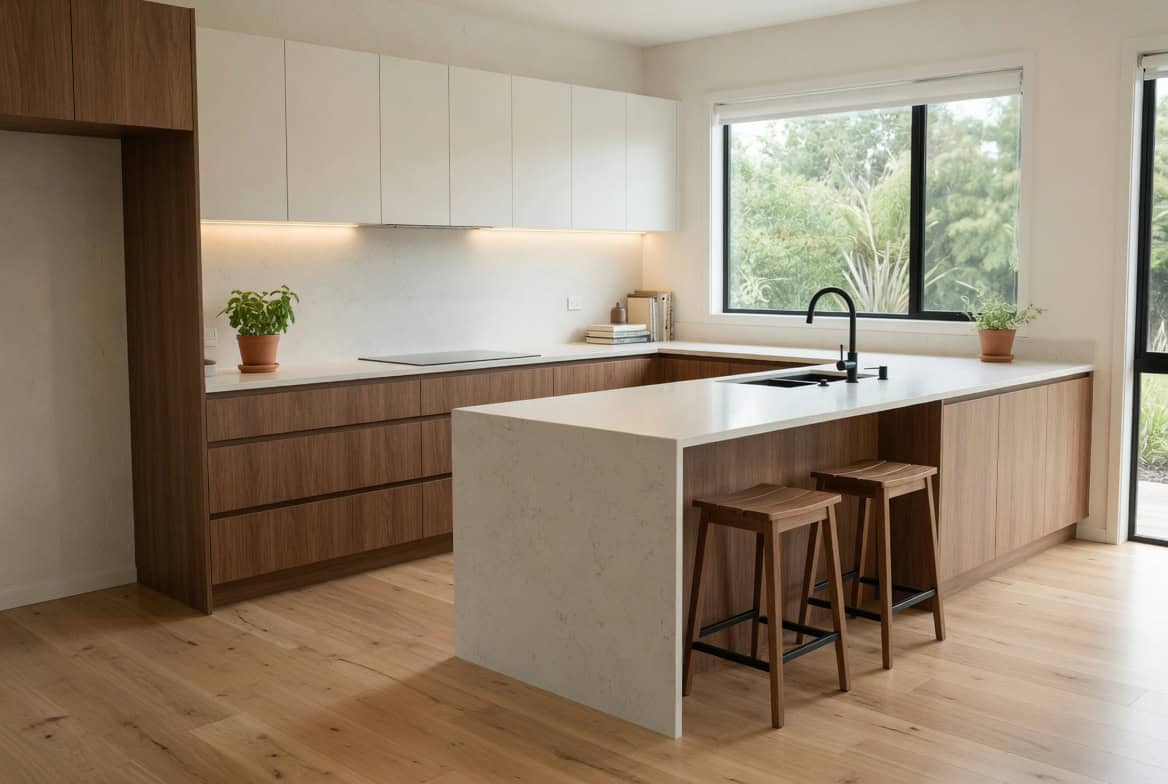
Want to test your own numbers first? You can run your figures through our renovation cost calculators before you talk to anyone.
The Consent Trade-Off: Where the Council Quietly Makes the Decision for You
Cost is only half the question. In large parts of Auckland, the consent pathway decides whether rebuilding is even realistic.
Renovating: usually building consent only
Most interior renovations — kitchens, bathrooms, reconfigured layouts within the existing envelope — need a building consent from Auckland Council, and some like-for-like work doesn’t even need that. Council must process a complete building consent application within 20 working days under the Building Act, per MBIE’s Building Performance guidance. It’s paperwork, but it’s predictable paperwork.
Rebuilding: the demolition exemption, and the character-suburb gate
A knockdown-rebuild needs a building consent to build. Taking the old house down usually doesn’t: Schedule 1 clause 30 of the Building Act exempts the complete demolition of a detached building of no more than three storeys from building consent, provided the work doesn’t breach any other enactment (section 42A). That exemption covers the Building Act only.
Here’s the part that catches people: if your home sits in a Special Character Area, the Unitary Plan can still require resource consent to demolish. Under the Auckland Unitary Plan’s D18 Special Character Areas Overlay, total demolition, or substantial demolition exceeding 30% of wall elevations and roof area, is a restricted discretionary activity requiring resource consent on sites subject to the demolition control. That control covers the entire Isthmus A area and mapped sites across the other special character areas, and where it applies, council assesses your villa’s contribution to the streetscape before deciding whether it can come down at all.
If your villa or bungalow sits inside a Special Character Area — and much of the pre-1940 housing stock in Grey Lynn, Ponsonby, Mt Eden, Herne Bay and Devonport does — the honest starting assumption is that demolition consent will be slow, expensive and uncertain, while a sympathetic renovation is the path the plan is designed to approve. Our group’s architectural studio has written a detailed guide to Auckland’s heritage and special character overlays if you want the full rulebook.
And renovation activity in these suburbs isn’t theoretical. Auckland Council’s register of recent resource consent applications — updated weekly, covering the past 26 weeks — consistently shows additions and alterations to existing homes being lodged across the character suburbs. One note of honesty: lodgements aren’t approvals, and a resource consent isn’t a building consent. But the pattern is clear enough — owners in Auckland’s most protected suburbs are choosing to renovate, and the consenting system is set up to let them.
“The first thing I check isn’t the kitchen or the bathrooms — it’s whether the fundamentals are right. If the entrance works, the living areas get sun, and the framing is sound, that home has earned the right to stay. You can fix a dated interior. You can’t buy back a demolished villa.”
— Dorothy Li, Design Manager, Superior Renovations
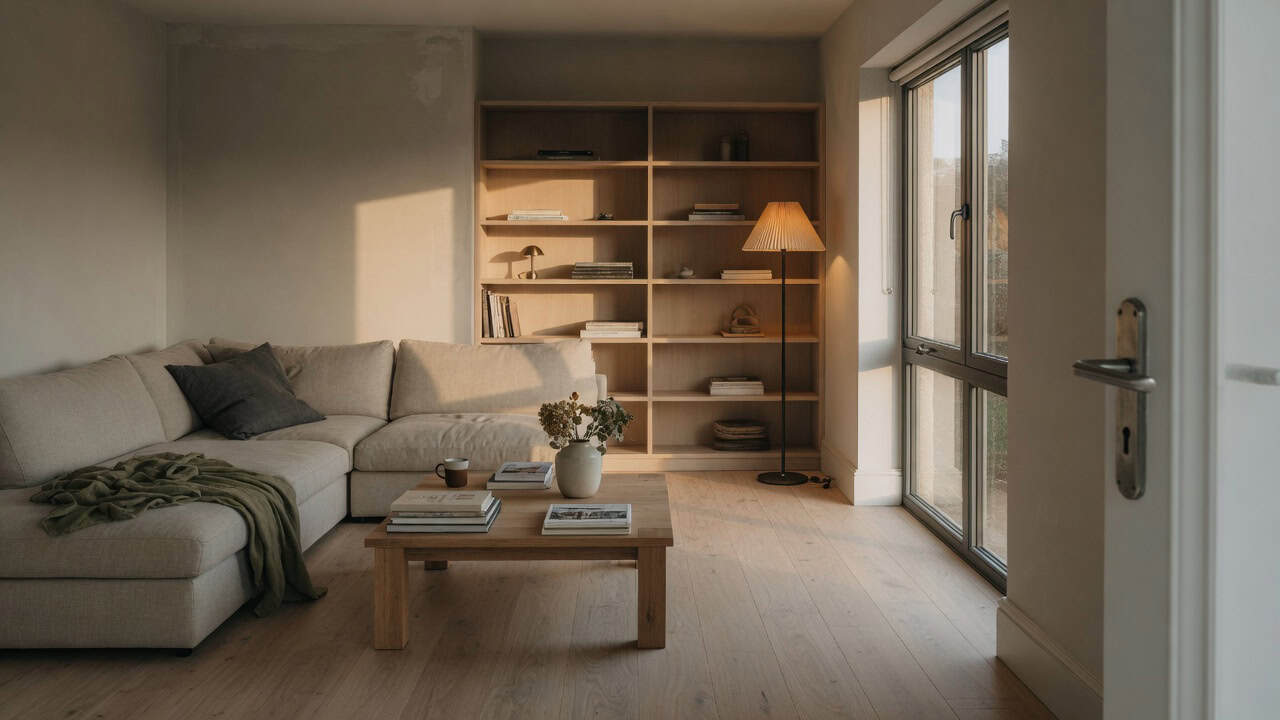
Garage Conversion Auckland
💡 Quick tip: Check whether your property sits in a Special Character Area before you spend a dollar on concept designs — Auckland Council’s GeoMaps shows the overlay for free, and it changes which options are actually on the table.
When to Renovate or Rebuild: An Honest Framework From 1,000+ Projects
We renovate homes for a living, so you’d expect us to tell you to renovate. We won’t — not every time. After a thousand-plus projects, the pattern is clear enough to state as a framework.
Renovation wins when
The structure is sound, you’re keeping most of the footprint, and character or location is part of the value. That covers the classic Auckland cases: the Grey Lynn villa with good bones and a terrible 1980s kitchen; the Mt Eden bungalow that needs insulation, rewiring and an opened-up living area; the 1970s brick-and-tile in Henderson where the layout is wrong but the shell is honest. Renovation also wins when you need to stay in the home — plenty of our clients live in through staged work, the way a family in St Heliers did during their four-level renovation. And it wins financially when less than about two-thirds of the floor area needs touching.
Rebuilding wins when
The structure itself is the problem. Failed foundations, widespread untreated framing rot, a monolithic-clad leaky home from the 1994–2004 era where the damage has gone past what recladding and targeted repair can economically fix, or a site where the existing house blocks the only good use of the land. It can also win when you’d be replacing more than 80–90% of the home anyway — at that point you’re paying renovation complexity for new-build scope, which is the worst of both. If that’s your situation, you’ll need an architect and a new-build contract, and the right move is a feasibility assessment before anything else — not a renovation quote from us, and not a rebuild sales pitch from anyone.
The trap in the middle
The expensive mistake isn’t picking the wrong side — it’s drifting between them. A renovation scoped optimistically, hit by surprises behind the cladding, stretched by mid-project changes of mind, can quietly climb to new-build money without delivering a new-build result. The defence is boring and effective: invasive pre-purchase-style inspection before you commit, a fixed scope, and a contingency you don’t touch for upgrades.
“I tell clients to decide their walk-away number before we open a single wall. If the invasive inspection pushes the renovation past that number, rebuilding or selling deserves a genuine look — deciding that at the start costs nothing, deciding it halfway through costs tens of thousands.”
— Cici Zuo, Head of Sales (NZ Dip. Interior Design), Superior Renovations
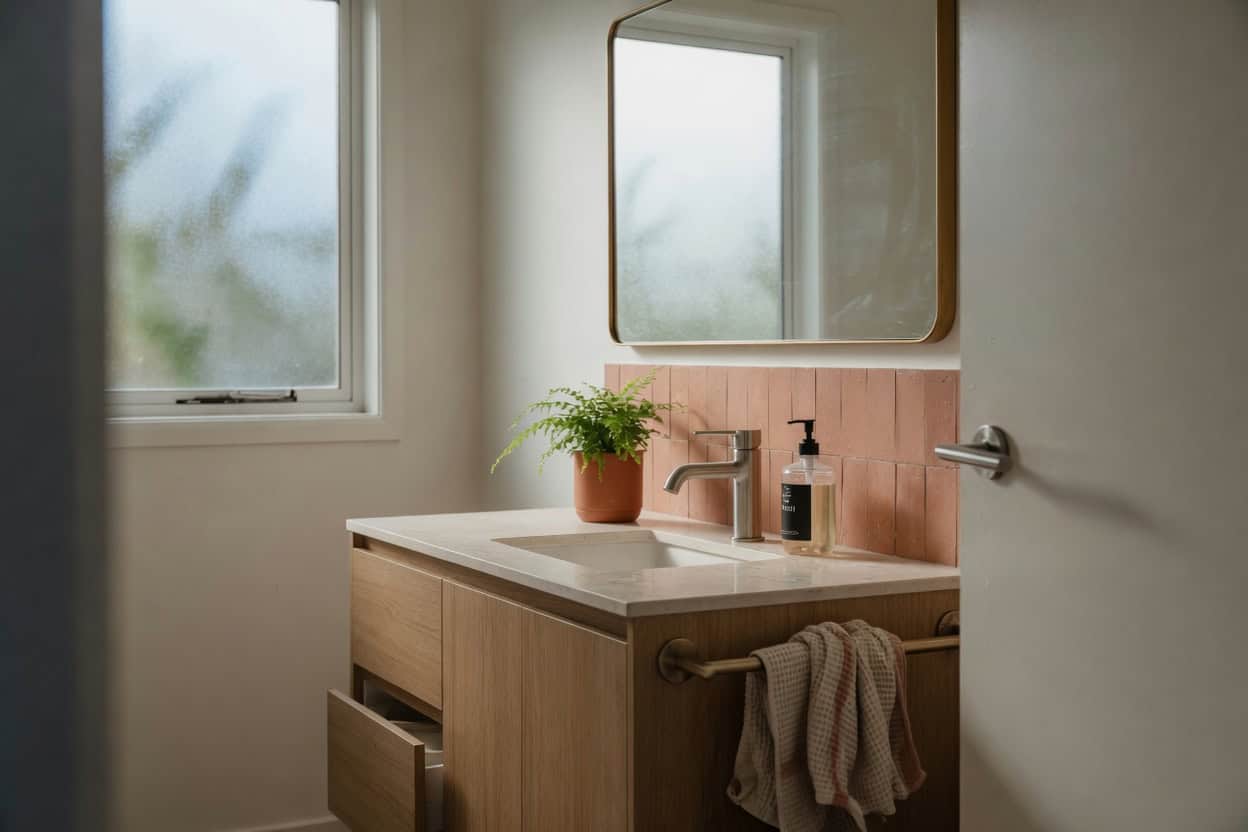
Bathroom Designs
Important note: Cost ranges in this article come from our completed projects and published NZ sources. They’re a planning guide, not a quote — site conditions, scope and finish level move every number, in both directions.
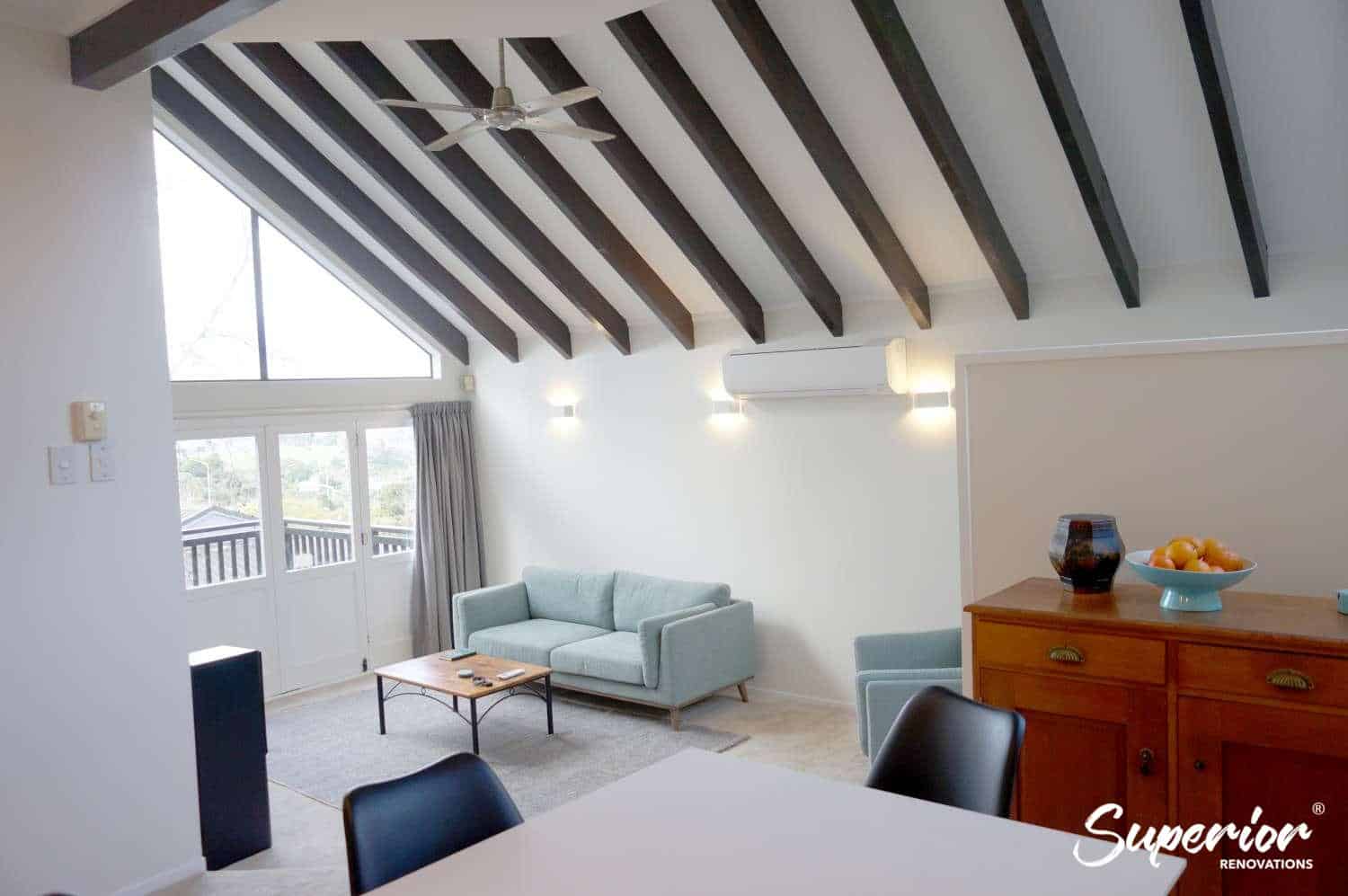
The Character Home Question: What a Rebuild Can Never Give Back
Sound familiar? You love the street, the neighbours, the school zone — it’s the house that doesn’t work. That’s the situation where the renovate-or-rebuild question gets emotional, and where the maths needs one more input: the things you can’t rebuild.
Character has a market value, not just a sentimental one
Native timber floors, high studs, original joinery, a villa frontage on a tree-lined Ponsonby street — replicating those features in a new build is either impossible or eye-wateringly expensive. When we renovated a historic Epsom bungalow, the brief was exactly this balance: modern kitchen and bathrooms inside a character shell the owners had no intention of losing. You can see how that lands in practice in our historic Epsom bungalow renovation.
We’ve also had clients run the full renovate-or-go question with us. A Hillsborough family weighing whether to renovate or sell put the numbers side by side and chose a full home renovation in Hillsborough — kitchen, bathroom, the lot — rather than paying agent’s fees, moving costs and a premium for someone else’s finished house. The same logic applies against a rebuild: every dollar that doesn’t go into demolition, rent and full-footprint construction is a dollar that goes into the parts of the home you actually live in.

💡 Quick tip: Before pricing anything, pull recent sale prices for renovated homes on your own street from homes.co.nz — that’s your realistic value ceiling, and it should shape your renovation budget before any design work starts.
The overcapitalisation guardrail
The honest limit runs the other way too. If your renovation budget pushes the total invested well past what comparable homes on your street sell for, you’re gifting money to the next owner. A useful rule: keep the renovation spend inside 10–20% of the home’s current value unless you’re planning to stay 10+ years — at which point you’re buying lifestyle, and that’s a legitimate purchase. This is where our design-and-build approach to major home renovations starts every project with a feasibility conversation rather than a quote — at our Wairau Valley showroom (16B Link Drive) or in your home: scope, value ceiling and consent pathway first, drawings second.
Have you been putting the decision off because both paths feel enormous? That’s normal. The fix isn’t more browsing — it’s real numbers for your specific house.
Renovate or Rebuild? Making the Call on Your Own Home
So, should you renovate or rebuild? For most structurally sound Auckland homes — and especially anything pre-1940 in a character suburb — renovation delivers the result at a genuinely lower total cost, through a faster and more predictable consent path, without a year in a rental. Rebuilding earns its place when the structure has failed or you’d be replacing nearly everything anyway. The one unforgivable move is deciding on gut feel: get the invasive inspection, check the overlay, set the walk-away number, then commit properly to whichever side wins.
We’ve put 1,000+ Auckland projects’ worth of that thinking into a free feasibility process — bring us the house, we’ll bring the numbers.
➡ Book your free in-home consultation with Superior Renovations
➡ See how we manage major renovations from design through to build
➡ Request a free feasibility report for your project
Is it cheaper to renovate or rebuild a house in NZ?
Usually renovating — but not because of the per-metre rate. Renovation in Auckland runs $2,000–$4,500 per square metre against $3,000–$4,500+ for a new build, and the rates overlap. The real saving is that a renovation only pays for the areas needing work, while a rebuild pays for every square metre plus demolition and service disconnections, 20–30% in site and consent extras, and around a year of rental accommodation.
How much does it cost to renovate a whole house in Auckland?
Based on Superior Renovations' completed projects, mid-range full home renovations in Auckland land between $80,000 and $160,000, or $2,000–$4,500 per square metre. Larger character-home renovations — full reconfiguration, rewiring, replumbing and insulation — commonly run $200,000–$500,000 depending on scope and finish. These are ranges from finished jobs, not quotes; an on-site assessment prices your specific home.
How much does it cost to rebuild a house in Auckland?
Trade Me Property's 2026 guide puts average new-build rates at $3,000–$4,500 per square metre, with premium builds over $5,000. A 200m² rebuild is realistically $600,000–$900,000 in construction, plus demolition (the contractor's quote, plus Vector's $795 and Watercare's $682.97 disconnection charges), plus 20–30% for site works, consents and externals, plus accommodation during the 12+ month build — commonly $780,000 to well over $1 million all-up.
Do I need resource consent to demolish my house in Auckland?
If your home sits in a Special Character Area under the Auckland Unitary Plan's D18 overlay, yes in most cases — total demolition, or substantial demolition exceeding 30% of wall elevations and roof area, is a restricted discretionary activity requiring resource consent on sites subject to the demolition control. That control covers all of Isthmus A and mapped sites in the other special character areas. Outside these overlays, the complete demolition of a detached house of up to three storeys doesn't need a building consent: Schedule 1 clause 30 of the Building Act exempts it, provided the work breaches no other enactment. Check Auckland Council GeoMaps to confirm what applies to your property.
Can I renovate a house in a special character area in Auckland?
Yes — sympathetic renovation is the pathway the Special Character Areas Overlay is designed to enable. Interior renovations generally need only building consent, while external additions and alterations may need resource consent depending on the zone. Auckland Council's public register shows additions and alterations being lodged consistently across Grey Lynn, Ponsonby, Mt Eden, Herne Bay and Devonport.
How long does a building consent take in Auckland?
Auckland Council must process a complete building consent application within 20 working days under the Building Act, per MBIE's Building Performance guidance. The clock stops if council requests further information, so well-prepared documentation matters. A knockdown-rebuild adds service disconnections, an asbestos survey on pre-2000 homes and, in character areas, a resource consent to demolish, which can extend the pre-construction phase by months.
What does it cost to demolish a house in NZ?
There's no honest single figure: the contractor prices each site on size, access and materials. The fixed charges are published. In Auckland, Vector charges $795 incl GST to permanently disconnect a pillar or pit electricity supply ($3,680 for a breach joint), and Watercare charges $682.97 incl GST to disconnect a 15–25mm water meter at 2026/27 prices. Homes built before 2000 need an asbestos survey, with removal priced on what's found. A detached house of up to three storeys needs no building consent to demolish, but a Special Character Area can trigger resource consent.
Should I renovate or sell my Auckland home?
Run both sets of numbers honestly. Selling costs include agent commission, marketing, moving, and buying someone else's finished home at a premium. Renovating keeps you in your location and school zone and directs the spend into your own asset — one of our Hillsborough clients ran exactly this comparison and chose a full home renovation. The renovation case weakens if the spend would push you well past your street's value ceiling.
Is it worth renovating a villa or character home in Auckland?
Often, yes — character features like native timber, high studs and original joinery are expensive or impossible to replicate in a new build, and demolition consent in character suburbs is uncertain at best. If the framing and foundations are sound, renovation typically delivers better value than fighting the overlay for a rebuild. An invasive inspection settles the structural question before you commit either way.
How do I avoid a renovation costing as much as a rebuild?
Three defences: commission an invasive inspection before committing so surprises surface on paper rather than mid-build; lock a fixed scope and resist mid-project upgrades; and set a walk-away number in advance — if the inspected cost passes it, rebuilding or selling deserves a genuine comparison. Renovations drift to new-build money through optimistic scoping and accumulated changes, not bad luck.
Further Resources for your home renovation
- Featured projects and Client stories to see specifications on some of the projects.
- Real client stories from Auckland
Need more information?
Take advantage of our FREE Complete Home Renovation Guide (48 pages), whether you’re already renovating or in the process of deciding to renovate, it’s not an easy process, this guide which includes a free 100+ point check list – will help you avoid costly mistakes.
Download Free Renovation Guide (PDF)

Have you been putting off getting renovations done?
We have partnered with Q Mastercard ® to provide you an 18 Month Interest-Free Payment Option, you can enjoy your new home now and stress less.
Learn More about Interest-Free Payment Options*
*Lending criteria, fees, terms and conditions apply. Mastercard is a registered trademark and the circles design is a trademark of Mastercard International Incorporated.
Still have questions unanswered?
Book a no-obligation consultation with the team at Superior Renovations, we’d love to meet you to discuss your renovation ideas!
References
- Trade Me Property — Building cost per square metre in NZ (2026)
- MoneyHub NZ — What’s the Average Building Cost Per Square Metre?
- Building Act 2004 — Schedule 1, clause 30: Demolition of detached building
- Building Act 2004 — Section 42A: Building work for which building consent is not required
- Vector — Permanent electricity disconnection fees (from 22 April 2026)
- Watercare — 2026/2027 infrastructure growth and other charges
- Auckland Unitary Plan — D18 Special Character Areas Overlay (Residential and Business)
- Auckland Council — Recent resource consent applications
- MBIE Building Performance — Building consent process


