


Does a Bathroom Renovation Add Value, or Is It Overcapitalising?
Last updated:
Quick answer: Renovating a bathroom adds value when it fixes what a buyer or inspector would mark down and suits the rest of the house, and it becomes overcapitalising once the spend outruns what homes on your street sell for.
Two Auckland homeowners can spend the same $30,000 on a bathroom and get opposite results. One fixes a leaking shower, tired pipework and a fan that never cleared the steam, in a house that was otherwise in good shape. The other fits a stone bath and brass tapware into a 1970s brick-and-tile home with its original kitchen and a roof that needs work. The first has protected the price of the house. The second has bought a lovely room that the next buyer will discount against everything around it.
Free cost calculator
How much will your bathroom renovation cost?
Answer a few questions and we’ll email you an Auckland price range.
Bathrooms and kitchens are the two rooms buyers look at hardest, so it’s no surprise they top most renovation lists. The useful question isn’t whether a new bathroom adds value in general. It’s whether this spend, in this house, on this street, buys something a buyer or valuer would recognise, or something only you will enjoy. Both are good reasons to renovate the home you live in. You just want to know which one you’re paying for.
Does Renovating a Bathroom Add Value? What Actually Moves the Price
Usually, yes, though not in the way most people expect. A buyer isn’t looking for the most extravagant bathroom with the boldest design. They’re looking for a room with sound plumbing, up-to-date fixtures and a look that suits the rest of the house. A buyer pays for a bathroom that won’t cost them money, not for the most expensive one on the street. What they mark down hard is anything that reads as a future bill: soft flooring, mould on the ceiling, grout washing out of the shower, an extractor fan that hums and moves nothing.
What a buyer’s inspector looks for in a bathroom
The Real Estate Authority’s consumer site, settled.govt.nz, tells buyers how to check a renovated property: have a professional assess the quality of the work and materials, check that any renovation got the council consent it needed, and compare the work with the consents listed in the LIM. It names mould, soft flooring and poor-quality workmanship as signs of a renovation that may cause trouble later. That’s the checklist your bathroom will be read against, whether you sell next year or in fifteen.
A LIM (land information memorandum) is the council’s report on a property. Under section 44A of the Local Government Official Information and Meetings Act 1987, it must include information on any consent, certificate, notice, order or requisition the council has issued for the land or any building on it. A bathroom that was moved or added under a consent, with its paperwork closed off, shows up as finished work. One that needed a consent and never got one shows up as a question the buyer’s lawyer will ask.
The faults that cost more than the renovation
The expensive bathroom problems sit behind the tiles. BRANZ’s Level guidance on waterproofing tiled showers says tiled showers need good membrane detailing and careful plumbing to stay waterproof, that poor work can lead to leaks and expensive repairs, and that under Building Code clause B2 the waterproofing under wet-area tiling must have a durability of at least 15 years. A leak that has run into the floor framing for years turns a cosmetic job into a structural one.
So if your shower has been leaking, the value is in fixing the cause properly. New tiles laid over a failed membrane look fine at the open home and fail again for the next owner.
💡 Quick tip: Before you price finishes, press on the floor beside the shower and the toilet for any give, and look at the ceiling above the shower for mould. Either one moves your budget from fittings to the structure of the room.
Why your rating valuation won’t show the new bathroom
settled.govt.nz also points out that the rating value (RV) council uses to set your rates is not necessarily market value, and that it may not reflect recent improvements, especially ones that didn’t need consent. A like-for-like bathroom renovation, the most common kind, often needs no consent at all. So don’t judge whether your bathroom added value by your next RV notice. The real test is what a buyer, an agent or a registered valuer makes of it.
Where Overcapitalising Starts: How to Find Your Street’s Ceiling
Overcapitalising means putting more money into a house than the value it adds, usually because the house can’t sell for much more than the homes around it, however good its bathroom is. Every street has a rough ceiling. A villa in Grey Lynn and a 1980s townhouse in Henderson sit under very different ones, and the same bathroom spend means something different in each.
We’ll be upfront: nobody can give you an honest percentage for what a bathroom returns. We don’t know of any New Zealand dataset that measures it, and a figure quoted without one is a guess. Your street’s recent sales are the evidence that counts. The good news is that this evidence is cheap or free to get.
Read the recent sales near you
settled.govt.nz’s guide to working out what your home is worth suggests looking at nearby sale prices online, with two cautions: some sites aren’t up to date with the latest sales, and you have to allow for each property’s condition and features. In practice, look for homes of a similar age, size and section that sold recently, and look closely at the bathrooms in the listing photos. If the top sales on your street all have tidy mid-range bathrooms, that’s what buyers there are paying for.
Ask an agent for an appraisal before you set the budget
The same guide describes a current market appraisal: an agent visits, assesses the condition of the house and compares it with similar local properties that sold recently, and you’re under no obligation to list with them afterwards. Ask two agents who sell in your suburb the direct question. What would this house fetch with the bathroom as it is, and what would it fetch with a mid-range renovation? Their answers won’t match exactly, and the spread tells you something too.
💡 Quick tip: Take the agent’s two figures, as it is and renovated, and compare the gap with the band you’re looking at. If the gap is smaller than the spend, you’re renovating for your own use. That’s a perfectly good reason, as long as you know it going in.
When a registered valuer is worth paying for
A registered valuer charges for a valuation, which takes into account local sales, the type of property, its features and what it’s built from, and settled.govt.nz points homeowners to the Property Institute (PINZ) to find one. It also suggests asking your valuer or agent what they’d recommend before you take on major work. That’s money well spent when the bathroom is part of a bigger plan, such as adding an ensuite, renovating before a sale or borrowing against the finished house.
Does the style of your bathroom match the rest of the house?
Your bathroom doesn’t have to match the rest of your house exactly. Most bathrooms that sell well are versatile in style and carry more or less the same feel as the house around them. The problem comes when a bathroom is the polar opposite of everything else: an ultra-modern, sleek bathroom in a 1920s villa, or a country-style bathroom in a crisp 2000s townhouse. Our gallery of bathroom designs we’ve built shows styles that sit comfortably within an Auckland home.
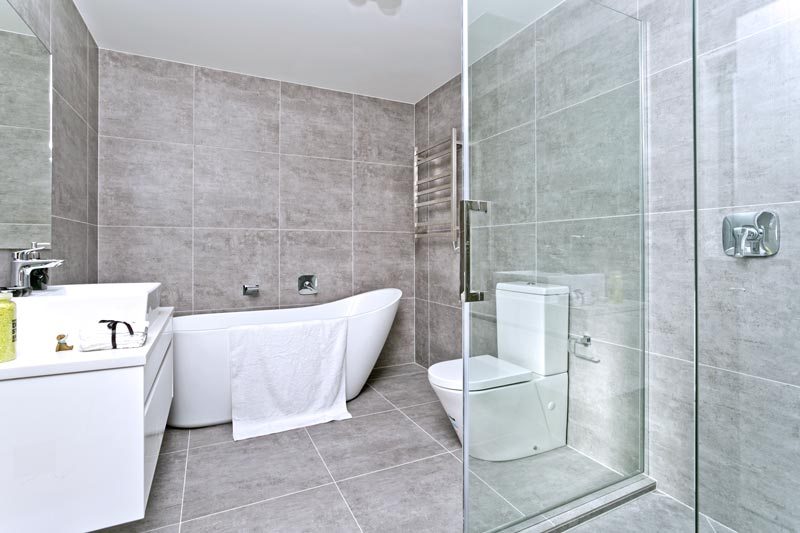
Large-format grey tiles, a freestanding bath and a frameless shower: a neutral finish that suits most houses rather than one particular year
Here’s how our published Auckland price bands line up against the value question. These are the figures on our FAQ page, as at 19 Oct 2026.
| Tier | Our published Auckland range | What it covers | The value question to ask first |
|---|---|---|---|
| Budget refresh | $8,000–$15,000 | New paint, fittings and minor tiling | Are the waterproofing and plumbing sound enough to leave alone? |
| Mid-range full renovation | $25,000–$35,000 | Design, supply, all trades and project management | Does the finish sit at the same level as the kitchen and the rest of the house? |
| Custom luxury | $35,000–$65,000+ | Premium materials, structural changes or a wet room | Do the best recent sales on your street carry this level of finish? |
Source: the bathroom price bands on our FAQ page. The final figure depends on the size of the room, your product choices, whether consent is needed and how complex the job is.
When Are You Planning to Sell? Timing Changes the Answer
This is the question that decides what you should renovate in your bathroom, and how far you should go. The same room can be a sensible spend for someone staying ten years and a poor one for someone listing in spring.
Selling within a year or two
settled.govt.nz’s advice on preparing a property for sale is blunt: think carefully about major renovations, because you may not get your money back on big jobs like modernising a kitchen or bathroom before selling. It puts low-cost work first, such as decluttering, cleaning, touch-ups and repairs, along with fixing leaks and making sure you have consent and compliance documents for any changes you’ve made. If you’re selling within a year or two, repairs and paperwork usually beat a full renovation.
If you are planning to sell soon, make sure any bathroom work is in step with the rest of the house when the sale happens. If the house is old and needs refurbishment throughout, there’s little point renovating just the bathroom. A new bathroom on its own won’t lift a tired house. The better move is to spread the budget and fix the important things around the house rather than spending it all in one room.
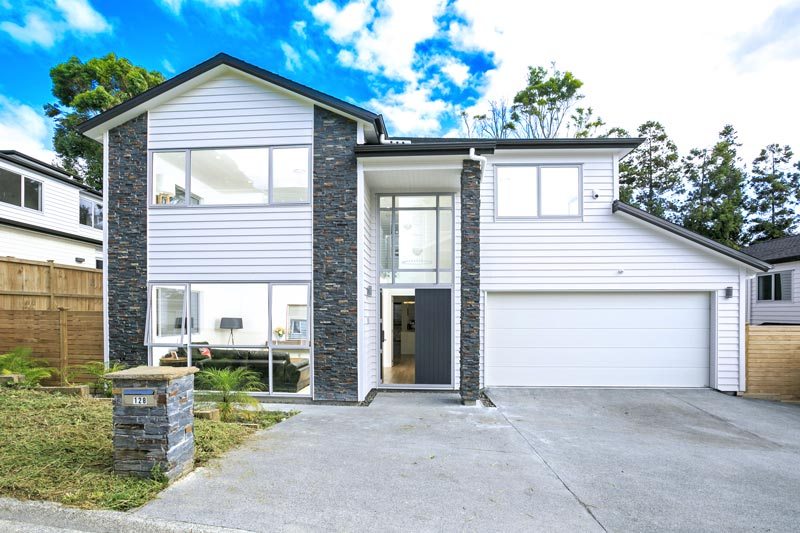
Buyers judge the bathroom against the house it sits in, so the two need to be at the same level
Staying five years or more
If you’re staying, value means two things: what the room is worth to you every morning, and what it’s still worth to a buyer in ten years. Renovating around a current trend fails the second test. A trend can go out of fashion and make the bathroom feel dated long before the fittings wear out. Keep it simple: good-quality products, a sound plumbing system, a layout that works and fixtures that don’t shout a particular year. Our own FAQ makes the same point about design trends: good proportions, quality waterproofing and classic tile formats outlast any of them.
Renovating one room in a house that needs several
Imagine a 1950s weatherboard bungalow in Hillsborough with original wiring, a kitchen from the 1990s and one tired bathroom. Spending the top of the luxury band on that bathroom leaves the next buyer pricing the wiring and the kitchen anyway. A mid-range bathroom plus a start on the wiring does more for the house, and for you living in it. The order matters as much as the spend.
💡 Quick tip: Selling soon? Fix the dripping tap, regrout the shower, replace a fan that doesn’t clear steam and find the plumbing and electrical certificates for any past work. Those cost little and answer the questions a buyer’s inspector will ask.
Does a New Bathroom or Ensuite Add Value?
Adding a bathroom is a different decision from upgrading one. A second bathroom or an ensuite changes how the house works. A four-bedroom family home with one bathroom is a queue every morning, and buyers with children notice it on the first walk-through. Adding a bathroom fixes a shortfall in how the house works; upgrading one improves a room you already have. That’s why the street-ceiling test still applies, but the answer often lands differently.
An ensuite inside the existing floor area
Carving an ensuite out of a large bedroom, a walk-in wardrobe or a hall cupboard avoids building new floor area, but it adds sanitary fixtures. Schedule 1 of the Building Act 2004 exempts replacing sanitary plumbing in the same position with comparable products (clause 32), and altering existing sanitary plumbing only where the total number of sanitary fixtures in the building doesn’t increase (clause 35), both when an authorised plumber does the work. A new ensuite adds fixtures, so it falls outside those exemptions, and it also needs a drainage route to reach it.
💡 Quick tip: Before you design an ensuite, find out where the nearest drain runs. An ensuite that backs onto the existing bathroom or kitchen wall is far simpler to plumb than one on the other side of the house.
A second bathroom in an extension
Where there’s no room inside, the bathroom comes with new floor area. Our FAQ prices a single-storey Auckland extension at $2,000–$5,500 per square metre, and adding a kitchen or bathroom pushes it into $3,500–$5,000 per square metre. That makes it a house-extension decision as much as a bathroom one, and it’s where reading your street’s ceiling matters most, because the numbers get large quickly.
Does having a bath add value?
Walk-in showers replacing baths in family bathrooms is one of the styles our FAQ lists as in demand across Auckland, and it works well in an ensuite or a second bathroom. In a house with only one bathroom, our advice is different: if the buyers in your suburb are mostly families with young children, keep a bath, because taking out the only one narrows who the house suits. There’s no NZ data on this we’d stand behind. It’s a judgement about who buys on your street, and a local agent can tell you.
What about the laundry?
Laundries follow the same logic on a smaller scale. A tidy laundry with proper storage and an extractor removes an easy buyer objection for a modest spend. Moving the laundry into the bathroom or a cupboard adds plumbing work, and the same consent questions apply whenever fixtures move or increase.
Important note: Whether your bathroom work needs a building consent depends on exactly what changes. Moving plumbing, adding fixtures, changing walls or working under a heritage overlay can each trigger one. This is general information, not consent advice: confirm your plans with Auckland Council or a Licensed Building Practitioner, and have sanitary plumbing, drainlaying and electrical work done by authorised tradespeople. Our in-house Licensed Building Practitioner (LBP #BP156911) oversees compliance on consent-related work we take on.
What Adds Value and What Overcapitalises: Where the Money Goes
Most of the value in a bathroom sits in the parts a buyer can’t see, so spend there first and on the showpieces second. Here is how that splits in practice.
Worth the money in almost any house
- Waterproofing done to standard. The membrane is the part of the room that decides whether it lasts, and the part nobody can check once the tiles are down.
- Ventilation that actually clears steam to the outside, so the ceiling and paint stay clean.
- Plumbing replaced in its existing position where the layout already works.
- Safe surfaces. BRANZ’s Level guidance on wet area design recommends a textured or slip-resistant floor finish and a shower or bath with a slip-resistant surface, which matters to every buyer with young children or older parents.
- Neutral tile formats, good lighting at the mirror and enough storage to keep the vanity clear.
Where the spend stops coming back
Our FAQ’s list for keeping bathroom costs down reads like a list of where money disappears: floor-to-ceiling tiling where half-height would do, moving plumbing that didn’t need to move, top-tier brands where mid-range fixtures would perform the same, and changing selections once the build has started. Add to that any luxury feature the best homes on your street don’t have. None of those is wrong if you want it for yourself. They’re just the parts a buyer is least likely to pay you back for.
Paperwork that protects the value
The certificates are part of what you’re buying. Our FAQ lists what a renovation should hand over: plumbing and electrical certificates of compliance, a waterproofing warranty, supplier warranties and the documentation to go with them. Keep them with the house records, because they answer the first questions a buyer’s lawyer asks.
Two traps catch older bathrooms. The Schedule 1 exemptions for repair and replacement don’t cover repairing or replacing a building product that has failed the Building Code’s durability provisions, so a shower rebuilt because it leaked is a question for council, not an assumption. And where earlier work went in without a consent it needed, section 96 of the Building Act 2004 lets the council issue a certificate of acceptance, but only if it’s satisfied, as far as it could ascertain, that the work complies with the Building Code. Talk to Auckland Council before you build over the top of old unconsented work.
Have you budgeted the renovation properly?
Once you have an idea of your renovation needs, set a budget that’s realistic and covers the important items in your renovation plan. Work out whether you want structural changes, new floors throughout or a smaller, minor renovation. Once you have done that, make sure you consult and get quotes from different companies so you can compare them. Do not settle for the first company you see. Be clear about your budget and stay within it.
A rough figure helps before anyone visits. You can check your budget against our bathroom renovation calculator, where you answer a few questions and we email you an Auckland price range. If you’d rather one team designed, priced and ran the whole job, here’s how we plan and build a bathroom so the spend matches the house, quoted at a fixed price before work starts.
💡 Quick tip: Finalise every product selection before demolition. Our FAQ puts a standard full bathroom at 3 to 4 weeks from the day demolition begins, assuming the design is finished and materials are ordered, and a change mid-build costs time as well as money.
Spend for the House You Have
A bathroom earns its keep twice: every morning you use it, and on the day someone else walks through it at an open home. Fix what’s failing, match the house, check what your street sells for, and the second one mostly looks after itself. Spend beyond that line for the first reason alone if you like. Just do it knowing that’s what the money is for.
➡ Book your free in-home consultation with Superior Renovations using the form below, or call 0800 199 888
➡ See what your bathroom would cost before you set a ceiling
➡ Request a free feasibility report for your project
Does renovating a bathroom add value to a house in NZ?
Usually, when the renovation fixes faults a buyer or inspector would mark down and matches the standard of the rest of the house. Leaks, failed waterproofing, mould and dated fixtures all reduce what buyers will pay. A bathroom finished well above the level of the house, or above what homes on your street sell for, is where the spend stops coming back. There is no reliable NZ percentage for the return, so use local sales and an agent's appraisal.
Does a new bathroom add value if the old one still works?
It depends on what working means. If the plumbing, waterproofing and ventilation are sound and the room is simply dated, a budget refresh of new paint, fittings and minor tiling may be all a buyer needs to see. If the shower has leaked or the floor is soft, the value is in fixing the cause properly, because new tiles over a failed membrane fail again.
What is overcapitalising on a bathroom renovation?
Overcapitalising means spending more on a renovation than the value it adds to the house. It happens when the bathroom is finished to a level the rest of the house and the street cannot support, so buyers will not pay for it. It is not wrong if you want the room for yourself, but you should know that is what the money is buying.
How do I know if I am overcapitalising?
Get evidence from your street before you set the budget. Look at recent sales of similar homes nearby, ask two local agents for a current market appraisal with the bathroom as it is and renovated, and for bigger plans pay a registered valuer. settled.govt.nz suggests asking your valuer or agent what they would recommend before major work. If the value gap is smaller than the spend, you are renovating for your own use.
How much does a bathroom renovation cost in Auckland?
Our published Auckland bands are $8,000 to $15,000 for a budget refresh (new paint, fittings and minor tiling), $25,000 to $35,000 for a mid-range full renovation covering design, supply, all trades and project management, and $35,000 to $65,000+ for a custom luxury bathroom with premium materials, structural changes or a wet room. Size, product choices, consent and complexity move the final figure, and we give a fixed-price quote after a free in-home consultation.
Does adding an ensuite add value to a house?
Adding an ensuite or second bathroom often matters more to buyers than upgrading the one you have, because it fixes a shortfall in how the house works, especially in a family home with three or more bedrooms and one bathroom. It still has to suit the street. An ensuite in an extension sits in our FAQ range of $3,500 to $5,000 per square metre once a bathroom is added, so check local sales first.
Do I need building consent to add an ensuite?
Check before you assume it is exempt. Schedule 1 of the Building Act 2004 exempts like-for-like replacement of sanitary plumbing in the same position, and alterations only where the number of sanitary fixtures does not increase, when an authorised plumber does the work. A new ensuite adds fixtures, so it falls outside those exemptions. Confirm your plans with Auckland Council or a Licensed Building Practitioner before you start.
Does having a bath add value to your house?
In a house with one bathroom, keeping a bath usually helps if most buyers in your suburb are families with young children, because removing the only bath narrows who the house suits. In an ensuite or second bathroom, a walk-in shower instead of a bath is one of the styles our FAQ lists as in demand in Auckland. A local agent can tell you who buys on your street.
Should I renovate my bathroom before selling?
Think carefully first. settled.govt.nz warns you may not get your money back on big jobs like modernising a bathroom before selling, and puts cleaning, repairs, fixing leaks and having consent and compliance documents in order ahead of them. If you sell within a year or two, repairs and paperwork usually beat a full renovation. If the whole house is tired, spread the budget rather than spending it all on one room.
Will a renovated bathroom change my rating valuation?
Not necessarily. settled.govt.nz notes that the rating value council uses for rates is not necessarily market value and may not reflect recent improvements, especially work that did not need consent. Many like-for-like bathroom renovations need no consent, so judge the value by what an agent or a registered valuer says, not by your next RV notice.
Related guides
- Twelve renovation decisions Auckland homeowners wish they’d made differently
- Caring for a finished renovation so it keeps its value
Further Resources
- Featured projects and Client stories to see specifications on some of the projects.
- Real client stories from Auckland
Need more information?
Take advantage of our FREE Complete Home Renovation Guide (48 pages), whether you’re already renovating or in the process of deciding to renovate, it’s not an easy process, this guide will help you avoid costly mistakes.
Download Free Renovation Guide (PDF)
Have you been putting off getting renovations done?
We have partnered with Q Mastercard ® to offer up to 18 months interest-free, so you can enjoy your new home now and stress less.
Learn More about Interest-Free Payment Options*
*Lending criteria, fees, terms and conditions apply. Mastercard is a registered trademark and the circles design is a trademark of Mastercard International Incorporated.
Still have questions unanswered?
Book a no-obligation consultation with the team at Superior Renovations, we’d love to meet you to discuss your renovation ideas!
References
- settled.govt.nz (Real Estate Authority), Learning about the property
- settled.govt.nz (Real Estate Authority), Planning to sell
- settled.govt.nz (Real Estate Authority), Preparing your property for sale
- Local Government Official Information and Meetings Act 1987, section 44A: Land information memorandum
- Building Act 2004, Schedule 1: Exempted building work (clauses 1, 32 and 35)
- Building Act 2004, section 96: Certificate of acceptance
- BRANZ Level, Waterproofing tiled showers
- BRANZ Level, Wet area design


