

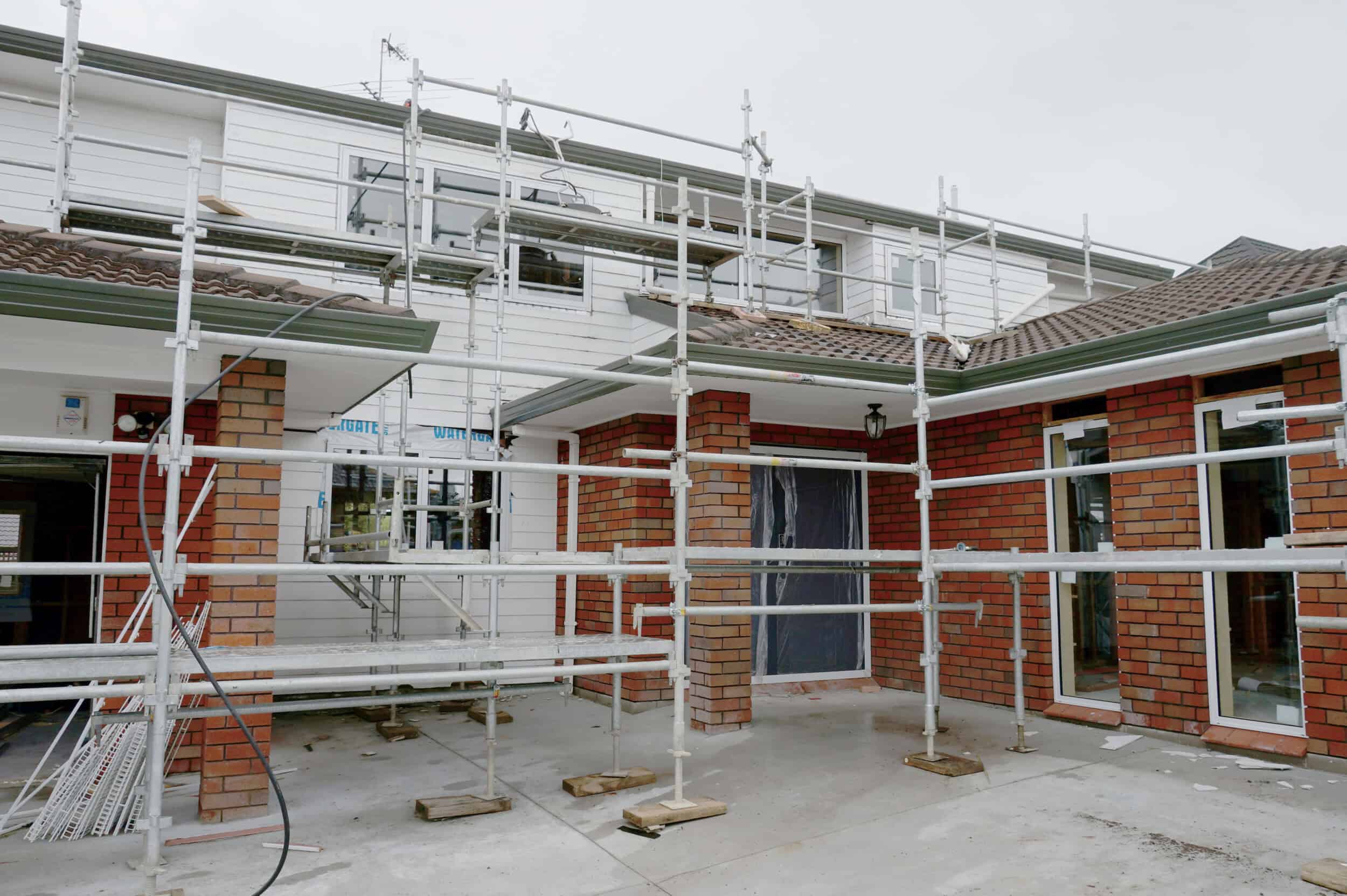
Second Storey Extension Cost NZ 2026: From $150,000
Last updated:
Quick answer: A second storey extension in Auckland costs from $150,000 for a modest addition, with most family-scale projects landing between $250,000 and $400,000 and larger or higher-spec builds running past $550,000. Per-square-metre rates run $4,500–$8,000 in 2026, which is roughly 50% more than the equivalent ground-floor extension because of structural reinforcement, scaffolding, and weatherproofing.
You’ve stared at the section, paced the boundary, and realised there’s no room to push out. The neighbour’s fence is right there. The driveway eats the rest. So the question becomes whether to go up — and what that actually costs.
This guide is the version of that conversation we have with Auckland homeowners every week. Real 2026 figures, real consent rules, real disruption maths. Not the glossy stuff. The numbers that decide whether a second storey is the right move or whether you should be thinking about a single-level extension instead.
What Does a Second Storey Extension Actually Cost in Auckland in 2026?
Free cost calculator
How much will your house extension cost?
Get an instant Auckland price range for your project — no details required to see it.
Auckland second storey extensions in 2026 sit in a wide band. A small master suite addition starts around $150,000. Most family-scale jobs, meaning two or three bedrooms, a bathroom and maybe a small lounge, land between $250,000 and $400,000. Larger or higher-spec builds push past $550,000, and a premium architectural second storey on a sloping site in Remuera or Herne Bay can clear $700,000 once consent fees, design, and ground works are in.
Per square metre, the working range for 2026 is $4,500 to $8,000/m². The lower end covers a straightforward bedroom-and-bathroom addition over a flat villa or 1970s home with sound foundations. The higher end covers second storeys with full kitchens, complex roof tie-ins, premium cladding to match a character home, or sites that need serious structural work.
💡 Quick tip: A useful rule of thumb across the industry, and one built into our house extension cost calculator, is that a second storey runs around 50% more per square metre than the same area built at ground level. The premium covers structural reinforcement, full scaffold, weatherproofing, and the extra labour of working at height.
2026 Second Storey Extension Cost by Size and Tier (Auckland)
| Size of Addition | Standard ($4,500/m²) | Mid-Range ($6,000/m²) | High-End ($8,000/m²) |
|---|---|---|---|
| 30 m² (master suite) | $135,000 | $180,000 | $240,000 |
| 50 m² (two bedrooms + bathroom) | $225,000 | $300,000 | $400,000 |
| 80 m² (full upper floor) | $360,000 | $480,000 | $640,000 |
| Add: design + consent | $13,000–$25,000 | $18,000–$33,000 | $25,000–$45,000 |
Figures are 2026 Auckland market rates for the build only, before design fees, consents, ground works, and site-specific costs. All figures inclusive of GST. Source: Superior Renovations 1,000+ project dataset, plus 2026 cross-checks against published Auckland builder benchmarks.
So why the range from $4,500 to $8,000? It comes down to four things: the existing structure, the spec of the build, the site, and how much of the upper floor is wet area (kitchen and bathrooms are roughly twice the cost per m² of a bedroom).
“The single biggest mistake we see is homeowners falling in love with a second storey design before anyone’s checked whether the existing house can actually carry it. We start every second-storey project with a structural assessment before we draw a single line, because the foundations and framing dictate what is even possible. It saves clients from spending $15,000 on plans that have to be reworked.”
— Dorothy Li, Design Manager, Superior Renovations
Why Building Up Costs 40–60% More Per Square Metre Than Building Out
This is the part most cost guides skip past. Building up is more expensive than building out, even for the same floor area. Here’s where the extra money goes.
Structural Reinforcement
Older Auckland homes, from villas and bungalows to post-war timber-framed houses and even 1970s brick-and-tiles in the south and west, were not designed to carry a full second floor. Foundations often need underpinning. Floor joists may need to be doubled or replaced. Internal walls may need to be reframed to load-bearing spec. Steel beams or LVL portal frames go in where the existing structure won’t take the new load path.
Budget $25,000–$70,000 for structural reinforcement on a typical Auckland project. A villa with original piles and timber bearers will usually need more than a 1990s home built to higher engineered standards. The structural engineer’s report tells you which camp you’re in before the contract is signed.
Full Scaffold and Weatherproofing
To put a second storey on, the existing roof comes off. To stop the house from being soaked through six months of Auckland weather, the whole structure needs a full perimeter scaffold and a shrink-wrapped temporary roof. This isn’t optional — it’s how the build stays watertight and the framing dries to the right moisture content before the new structure goes on.
A full scaffold-and-shrink-wrap setup for a typical job runs $15,000–$28,000. Bigger or more complex sites with safety overhang requirements over neighbouring properties push higher.
Working at Height
Every trade, from framers and roofers to electricians, plumbers and plasterers, works slower when they’re three metres in the air. Material handling needs cranes or mechanical lifts on most jobs. Site safety requirements under WorkSafe NZ rules add to programme hours. Add roughly 10–15% labour premium across the build for working at height.
Disruption and Temporary Accommodation
Here’s the cost almost nobody quotes for properly. Most second storey builds need the household out for the disruptive phase — roof off, framing in, weather-tight stage complete. That’s typically 8–14 weeks of the 30–40 week programme.
Budget $400–$800 per week for temporary accommodation, depending on the suburb, the size of the place and the season. Across 10 to 14 weeks that is roughly $4,000–$11,200. Renting a whole comparable family home costs considerably more than that, so the number moves a long way depending on whether you need a like-for-like house or somewhere short-term that simply works for a few months. Some families stay through the build to save the rent, which is workable if you have a separate downstairs bathroom and kitchen, but it is a hard couple of months. Price both options before you commit. Living in your house during a renovation sets out what staying put actually involves.
💡 Quick tip: If you can phase the build so the upstairs is weather-tight and roofed before the new bathroom and kitchen go in, you can sometimes stay in the home through 60–70% of the programme. We sequence this on site whenever the structure allows it.
What Moves the Number Up or Down on Your Job
The cost ranges above are the market band. Your specific number sits inside that band based on a handful of decisions and site realities. These are the levers that actually move the budget.
The Existing House — Age, Construction, and Condition
A 1990s timber-framed home with intact bearers and original consent records is the cheapest base to build on. A 1920s villa with rotten subfloor framing, original piles, and a council file full of unconsented modifications is the most expensive. Most Auckland inner-suburb houses sit between those two points.
For character villas and bungalows in Mt Eden, Grey Lynn, Ponsonby, and Epsom, expect to add 10–25% to the base build figure for matched-detail work — replica weatherboards, matching window joinery, profile tiles to blend the existing roof to the new. Auckland Council’s heritage overlay rules require this matching in scheduled areas, and the quality of the match is what protects the value of the home.
Site Conditions and Ground Works
Sloping sections in Titirangi, Waitakere foothills, Mt Eden’s volcanic flank, and the cliff suburbs (Herne Bay, St Heliers, Mission Bay) often need pile reinforcement before any upper floor goes on. A geotechnical report, generally $2,500–$5,500 from a registered engineering geologist, is the first step.
If the report flags soft soils, slope instability, or volcanic basalt at depth, foundation reinforcement can add $15,000–$75,000. Auckland’s geology varies street by street, so this isn’t predictable from postcode alone — you need the soil test before you know.
Spec and Finish Choices
Standard double-glazed aluminium joinery, mid-range carpet and tile, painted plasterboard ceilings, and stock-profile interior doors sit at the lower end of the range. Custom timber joinery, premium engineered stone in upstairs ensuites, hardwood flooring, specialist glazing for views, and integrated joinery push the per-m² rate to the top of the band.
For a second storey, glazing decisions are bigger than people expect. North-facing window walls to capture Hauraki Gulf or Waitakere views typically cost $15,000–$45,000 more than equivalent standard windows, but they’re often the reason the project exists.
Whether You Add Wet Areas Upstairs
Bedrooms cost the least per m² to build. Bathrooms and kitchens cost the most. Adding an ensuite upstairs adds $25,000–$45,000 to the budget on top of the per-m² build rate. A second full kitchen upstairs (for multi-generational living or future granny flat conversion) is $45,000–$75,000 for a mid-range fitout.
Matching the Existing Roof and Cladding
The cladding choice doesn’t just affect the bill — it affects what the finished house looks like from the kerb. Matching the existing weatherboard profile or roof tile colour is a non-negotiable on character homes and a smart choice on most others, because mismatched cladding is the single biggest visual giveaway that a house has been added to.
Suppliers we work with regularly for cladding match work include James Hardie for Linea weatherboard, and Mitre 10 (mitre10.co.nz) and Bunnings (bunnings.co.nz) for stock profiles. For windows and joinery to match heritage character homes, custom timber fabricators are usually required — not stock aluminium suites.
Three Worked Second Storey Cost Models, From 30m² to 80m²
A band is hard to plan against. The three models below break the cost down line by line for the three scopes that bracket the typical Auckland range: a compact master suite, a two-bedroom addition on a difficult site, and a full upper floor at high-end spec. They are worked examples built from our 2026 rates for those scopes, not quotes for a specific address, and the point of them is the shape of the breakdown rather than the totals.
Model One: Character Villa, 30m² Master Suite Over the Existing Lounge
- The brief: a 1910s villa on a 600m² section with no room to extend sideways. Master bedroom, walk-in wardrobe and ensuite upstairs, reached by a new internal staircase, with the original villa front rooms left intact downstairs. This is the most common character-home version of the job.
- Construction challenges: Original timber piles need underpinning. Existing ceiling joists at 100×50 timber sit well below modern load spec, so a full new floor structure goes in. Replica weatherboards to match the original profile, custom timber sash windows to match the period.
- Cost breakdown:
- Build (30m² mid-range): $185,000
- Structural reinforcement: $32,000
- Scaffold + weatherproofing: $18,000
- Ensuite fitout: $28,000
- Heritage detail matching: $22,000
- Design + consent fees: $19,000
- Total: $304,000
- Programme: about 32 weeks from contract to handover, with roughly 11 weeks of that as the disruptive phase the household needs to be out for. At $400–$800 a week that is $4,400–$8,800 of accommodation on top of the build.
Model Two: 60m² Two-Bedroom Addition on a Steep Western Section
- The brief: a 1970s timber-framed house on a steep west-facing section in the Waitakere foothills. Two teenagers needing their own rooms plus a study, and a section that drops sharply behind the house, so a ground-floor extension is not available. On this kind of site the consent complexity and structural design are handled in partnership with Sonder Architecture.
- Construction challenges: The geotechnical report flagged clay soils and required new piles to bedrock. The existing roof was an asphalt shingle — replaced rather than matched. North-facing window wall designed to capture the Manukau Harbour view.
- Cost breakdown:
- Build (60m² mid-range): $360,000
- Structural reinforcement + new piles: $58,000
- Geotechnical report + ground works: $22,000
- Scaffold + weatherproofing: $24,000
- Upstairs bathroom: $36,000
- North-facing glazing upgrade: $28,000
- Design + consent fees: $34,000
- Total: $562,000
- Programme: about 38 weeks, with the household typically able to stay in the home for the first 18 or so, then out for roughly 14 weeks during the disruptive phase.
Model Three: 80m² Full Upper Floor at High-End Spec
- The brief: a 1990s single-storey home in an eastern-suburbs harbour-view position, taking a full upper floor: three bedrooms, master suite with ensuite, second bathroom and a small lounge. High-end specification throughout.
- Construction challenges: The existing house had good foundations but the roof structure needed full removal. Custom cedar cladding to match a contemporary redesign of the ground floor. Triple-glazed window suites for thermal performance and acoustic management on a busy ridge road.
- Cost breakdown:
- Build (80m² high-end): $620,000
- Structural reinforcement: $38,000
- Scaffold + weatherproofing: $26,000
- Master ensuite + second bathroom: $74,000
- Cedar cladding upgrade: $35,000
- Triple-glazed joinery: $42,000
- Design + consent fees: $42,000
- Total: $877,000
- Programme: 44 weeks. Family relocated for 18 weeks during the build.
The pattern across all three: structural and scaffold costs barely shift with size, so smaller second storeys carry a higher per-m² rate. Bigger jobs spread the fixed costs across more floor area.
“Most clients underestimate the disruption window on a second storey. On a steep-site job with a fourteen-week disruptive phase, a family moving out at $400 to $800 a week is adding somewhere between $5,600 and $11,200 to the project on top of the build cost. We put that number in front of people upfront now, because it is the line item that catches them off guard mid-project.”
— Cici Zuo, Head of Sales (NZ Dip. Interior Design), Superior Renovations
Partial Second Storey, Full Upper Floor, or Modular? The Three Shapes This Job Takes
Most people picture a second storey as a whole new floor across the whole house. That is the most expensive version of it, and often not the one the site actually wants.
A Partial Second Storey Over Part of the Footprint
A partial upper floor sits over only a section of the existing house, usually the part with the strongest load path underneath, and it is the cheapest route to the extra bedroom and ensuite most families are actually after. A 25m² to 35m² partial addition over an existing lounge or garage sits near the $150,000 entry point, where a full upper floor across the same house starts at roughly three times that.
The catch is the roofline. A partial storey creates a junction between the old roof and the new one, and that junction is where the design either works or reads as an afterthought from the kerb. It is also the detail most likely to leak if it is done cheaply, because you are flashing a new wall into an existing roof plane. Expect your designer to spend real time on it, and treat a quote that glosses over that junction as a warning sign rather than a saving.
A Full Upper Floor Across the Existing Footprint
Going the full width costs more in total but not proportionally. The scaffold, the temporary roof, the crane hire and the consent work cost much the same whether you are adding 30m² or 80m², which is why the per-square-metre rate falls as the floor area rises. A homeowner planning 40m² quite often finds that 60m² comes in cheaper per square metre than they expected.
The structural test is different, though. A full upper floor loads every external wall and usually several internal ones, so the underpinning and reinforcement scope is wider than on a partial addition sitting over one strong bay.
Modular and Prefabricated Second Storeys
Prefabricated upper floors, built off site in panels or modules and craned into place, come up in roughly every second enquiry. They can work. The honest answer is that the saving on a retrofit is smaller than most people expect.
Prefabrication saves on-site labour and shortens the weather-exposed window, which is genuinely valuable on a job where the roof comes off. What it does not avoid is any of the expensive parts of this particular build. You still strip the existing roof, still need the full perimeter scaffold and temporary weatherproofing, still underpin the foundations if the existing structure cannot carry the load, and still go through the same building consent. You also add crane access as a hard constraint, and on the narrow inner-Auckland sites where second storeys are most in demand, crane access is precisely what is missing.
Where prefabrication does pay off is a straightforward rectangular footprint with clear street access and a sound existing structure. On a villa with a complex roof and a driveway you can barely fit a car down, a conventional build is usually both cheaper and lower risk.
A Cross-Lease Title Can Stop All Three
Before any of the above, check your title. A large share of Auckland homes are cross-lease, and adding an upper floor changes the building footprint drawn on the flats plan, which generally means you need your neighbours to agree and the title updated before you can build at all. It is the most common reason a second storey stalls after the design has already been paid for. Renovating on a cross-lease title in Auckland covers what is involved and how long it takes.
Auckland Council Consents — What’s Actually Required and What It Costs
A second storey extension always requires building consent under the Building Act 2004. There’s no consent exemption pathway that applies — not Schedule 1 minor works, not the Building and Construction (Small Stand-alone Dwellings) Amendment Act 2025 70m² exemption (that’s for detached secondary dwellings, not additions to existing homes).
The question isn’t whether you need consent — you do. The question is whether you also need resource consent, and that depends on the Auckland Unitary Plan zoning of your section.
Building Consent vs Resource Consent
Building consent covers the structural, weathertightness, fire, and Building Code compliance of what you’re building. Auckland Council’s processing fee for a typical residential second-storey building consent runs $3,500–$8,500 in 2026, and processing takes 4–8 weeks once a complete application is lodged.
Resource consent is triggered when the planned build doesn’t fit within the permitted activity rules of your zone. For most Auckland second storeys, the rules that get tested are:
- Height-to-boundary controls — your new upper floor can’t shade or dominate neighbouring properties beyond the angles set in the AUP for your zone. In Single House Zone, recession planes are tighter. In Mixed Housing Suburban and Mixed Housing Urban, there’s more permitted bulk. In the Terrace Housing and Apartment Buildings Zone, more again.
- Maximum building height — typically 8m for Single House Zone, 9m for Mixed Housing Suburban, 11m for Mixed Housing Urban.
- Site coverage — already at the limit on a tight inner-Auckland section, even building up can trigger this if the upper floor extends beyond the existing footprint.
- Heritage overlays — if your home is in a scheduled character area (parts of Mt Eden, Ponsonby, Grey Lynn, Devonport, Parnell), resource consent for design and visual effects is almost always required.
Resource consent costs run $8,000–$25,000 on top of building consent fees, and adds 3–6 months to the programme. The number isn’t the killer — the time delay is.
The H1 Insulation Requirement Most Homeowners Don’t Know About
Under the updated NZ Building Code H1 insulation requirements , any new construction, second storey additions included, must meet minimum insulation values for ceilings, walls, floors, and windows. For Auckland’s climate zone, that’s R-6.6 ceilings, R-2.0 walls, R-2.5 floors, and double-glazing with insulating frames as the practical minimum.
Meeting the current targets rather than the ones that applied when most Auckland houses were built adds roughly $8,000–$18,000 to a second storey. The exact R-values that apply are the ones current on the day your consent is lodged, so confirm them with your designer rather than working off an older figure. Our guide to insulating an Auckland home covers what those numbers mean in practice. It also means existing single-skin walls on the ground floor often need upgrading to bring the connecting fabric up to code — which is sometimes optional, sometimes mandated by council depending on scope. Worth confirming early.
Important note: Engaging a Licensed Building Practitioner (LBP) is mandatory for restricted building work, which includes the structural work involved in any second storey. The LBP must be named on the consent application. Our project managers and contracted builders all hold current LBP certification.
The Consent Timeline in Practice
From the day you sign a design contract to the day the first hammer hits framing, expect 14–22 weeks on a straightforward second storey, longer if resource consent is needed. The breakdown:
- Concept design + structural assessment: 3–5 weeks
- Developed design + engineering: 4–6 weeks
- Building consent application + processing: 4–8 weeks
- Resource consent (if required): add 12–24 weeks
- Pre-construction coordination: 2 weeks
We handle the whole consent process in-house for our clients, working with Sonder Architecture on the design and structural side where consent complexity warrants it. That partnership means one quote, one timeline, one point of contact through the design-to-build process.
Does a Second Storey Extension Actually Pay Off in Auckland?
The short answer: usually yes, but with caveats. The longer answer needs to look at three different value calculations.
Direct Property Value Lift
Nobody can promise you a valuation outcome, and any builder who quotes you a guaranteed percentage return is guessing. What we can say from the projects we deliver is the general shape of it: in the inner Auckland suburbs where family-sized homes are in short supply, a well-built second storey tends to recover a large share of its cost at resale, and in suburbs further out it recovers less. The variables that decide it are suburb demand, how well the addition reads from the street, and whether the finished house presents as one coherent home rather than an obvious bolt-on.
The honest version: treat a second storey as buying floor area and years of living, not as an investment with a projected return. If the resale number genuinely decides the project, get a registered valuer to give you a pre-build and post-build appraisal for your specific address and suburb. That is the only figure worth planning against, and it costs a fraction of the build.
The Move-vs-Improve Comparison
This is where the maths often tips firmly in favour of going up. Selling and buying up a notch in the Auckland market in 2026 carries:
- Real estate agent commission: 2.5–4% of sale price ($35,000–$70,000 on a $1.5M home)
- Legal, marketing, and staging: $8,000–$15,000
- Buying costs on the new property: legal, due diligence, inspection ($5,000–$10,000)
- The price gap between your existing home and the better-sized one you actually want: typically $400,000–$800,000 in inner suburbs
- Moving costs, time off work, stress, and disruption
Total transaction cost of moving up: $450,000–$900,000 before you’ve improved your living situation. Against a $300,000–$500,000 second storey extension that keeps you in the suburb you like, the suburb your kids go to school in, on the section you’ve already paid for. The maths usually favours building.
Lifestyle Value (The Reason Most People Actually Build)
The bedroom your teenager isn’t sharing anymore. The master suite separated from the rest of the house. The Hauraki Gulf view from the new lounge that didn’t exist before. The garden you didn’t have to give up. These aren’t on the valuation spreadsheet, but they’re why most second storey projects happen.
How to Keep Costs Down Without Compromising the Build
Big projects don’t have to mean blown budgets. These are the levers that actually work — and the ones that don’t.
- Get the contract right before anything starts. A second storey clears the $30,000 written-contract threshold many times over, and what belongs in a renovation contract in NZ is worth reading before you sign one.
- Keep the footprint simple. A rectangular upper floor sitting cleanly over the load-bearing walls of the ground floor is the cheapest build. Cantilevers, jogs, dormers, and complex roof shapes add cost fast.
- Lock the design before construction starts. Mid-build design changes are the single biggest source of variation cost. The discipline that costs nothing, and saves the most money, is finalising every spec, fixture and finish before the building consent is lodged.
- Match the existing house where you can. Custom-profile cladding, made-to-measure joinery, and one-off roof tiles cost real money. Standard profiles that align visually with what’s there cost less and look just as good.
- Build a 15–20% contingency into the budget. Not because the builder will overrun, since a fixed-price contract protects you from that, but because owner-driven variations and homeowner-supplied items always cost more than the original brief assumed.
- Get the structural and geotechnical reports done before the design is finalised. Discovering the foundations need work after the consent is lodged is the most expensive way to find that out.
- Avoid moving plumbing and electrical risers. Stacking the new upstairs bathroom above the existing downstairs bathroom or kitchen saves $8,000–$15,000 in plumbing reroute work.
What doesn’t save money: cheaping out on glazing or insulation. The H1 Code requirements set the floor on these. Buying a marginally cheaper aluminium joinery suite saves $2,000–$5,000 up front and costs you in heat loss, condensation, and resale every year you live there.
When a Second Storey Isn’t the Right Answer
Sometimes the honest advice is don’t build up. The cases where another path is better:
- The section actually does have room to extend sideways. A ground-floor extension on the same floor area is typically 30–40% cheaper and 30% faster. If lateral space exists, that’s the easier path.
- The existing structure is too compromised to carry the load. Some 1920s villas with severely degraded subfloor framing need full lift-and-relevel work just to be safe to add to. At that point, the maths sometimes favours a knockdown-and-rebuild rather than an extension.
- You’re more than 18 months from selling. Construction value depreciates fastest in the first 18 months while the build is being absorbed into the area’s comparable sales. Selling within that window often returns less than the project cost.
- The site triggers full resource consent under heritage rules. If you’re in a Schedule 14.1 heritage area and the design effects are significant, the consent path can take 12–18 months and consent costs alone can hit $40,000+. Worth knowing before you fall in love with the upstairs plan.
If a ground-floor extension is still on the table, what a house extension costs per square metre in Auckland prices the alternative properly. We will tell you any of these things at the first consultation if they apply. The free in-home feasibility chat exists exactly so the maths gets checked before a design contract gets signed.
Second Storey vs Single-Storey (Ground-Floor) Extension — How to Choose
The up-or-out decision usually comes down to your section, not your preference. A single storey extension that pushes out at ground level is the cheaper and faster option where the land allows it: no roof removal, no full scaffold, no working-at-height premium, and rarely any household displacement. A ground floor extension of the same floor area typically lands 30-40% below the second-storey figure, which is why we always check for lateral room first. The catch is that building out eats section, sunlight and outdoor living space, and on Auckland’s tighter inner-suburb sites there is often simply nowhere left to go but up. A second storey keeps the footprint and the garden, captures views and light on the new upper floor, and adds the most bedrooms per dollar on a small section. A middle path some homeowners miss is an over-garage extension – adding a room or two above an existing attached garage, which already has foundations and walls doing some of the structural work. If you are genuinely undecided between adding to the house and starting over, our guide on whether to renovate or rebuild works through the numbers, and the way our Auckland extensions team scopes a build is the same whether you end up going up or out.
💡 Quick tip: before you commit to going up, get a surveyor or your designer to confirm your recession planes and site coverage under the Unitary Plan. A ground-floor extension that stays inside site coverage limits can be a permitted activity, while the same floor area added upstairs sometimes trips a height-to-boundary rule and pulls you into resource consent.
The Superior Renovations Approach to Second Storey Extensions
We’ve completed 1,000+ Auckland renovation projects out of our Wairau Valley showroom at 16B Link Drive. Our Design-to-Build Action Plan process handles second storey jobs from the first structural assessment through to the Code Compliance Certificate. For design and structural consent complexity, we work with Sonder Architecture as our cross-brand partner — same group, same accountability, one quote.
Every project comes with a fixed-price contract, a dedicated project manager, a 147-point QA process, and a 12-month maintenance and workmanship warranty on top of the standard trade warranties. We hold $5M public liability insurance and $1M professional indemnity. The team’s averaging 4.7 stars across 190+ Google reviews.
If finance is part of the picture, we partner with Q Mastercard for an 18-month interest-free payment option on renovation work — same terms as we offer on bathroom and kitchen renovations. Details on our finance options page.
The starting point for any second storey conversation is a free in-home consultation. We look at the existing structure, talk through what’s possible against the Auckland Unitary Plan rules for your zone, and give you an honest read on whether a second storey is the right move for your home.
➡ Book your free in-home consultation with Superior Renovations
➡ Use our house extension cost calculator for a quick ballpark
➡ Request a free feasibility report for your project
How much does it cost to add a second storey to a house in Auckland in 2026?
In 2026, second storey extensions in Auckland start from around $150,000 for a modest 30m² master suite addition. Most family-scale projects (50–60m², two or three bedrooms plus a bathroom) cost between $250,000 and $400,000. Larger or higher-spec builds push past $550,000, and a premium architectural second storey on a sloping site can clear $700,000 once consent fees, design and ground works are counted. Per-m² rates sit at $4,500–$8,000 depending on spec, condition of the existing structure, site, and how much wet area is involved. These figures are inclusive of GST and based on our 1,000+ Auckland project dataset cross-checked against current Auckland builder benchmarks.
Why does a second storey extension cost more per m² than a ground-floor extension?
The premium is roughly 40–60% per m² and covers four things competitors often skip: structural reinforcement of the existing house to carry the new load ($25,000–$70,000), full perimeter scaffold and shrink-wrap weatherproofing ($15,000–$28,000), the labour premium for working at height (10–15% across all trades), and the cost of temporary accommodation during the disruptive phase ($4,000–$11,200 at $400–$800 a week for 10 to 14 weeks). The same floor area built at ground level avoids all four of those.
Do I need building consent and resource consent for a second storey extension in Auckland?
Building consent is always required under the Building Act 2004, and there is no exemption pathway for second storeys. Auckland Council building consent fees run $3,500–$8,500 in 2026 with 4–8 week processing. Resource consent is needed when your build doesn't fit your zone's permitted activity rules — most commonly when height-to-boundary recession planes, maximum building height, or heritage overlay rules are triggered. Resource consent adds $8,000–$25,000 and 3–6 months. We assess both at the free consultation and handle the full process in-house.
How long does it take to build a second storey extension in Auckland?
Total programme from contract signing to handover runs 30–44 weeks. The breakdown: 7–11 weeks for design and structural engineering, 4–8 weeks for building consent processing (longer with resource consent), 2 weeks pre-construction, and 18–25 weeks for the build itself. Most jobs require the household out for 8–14 weeks during the disruptive phase when the roof is off and the new structure is being installed. Smaller and simpler projects sit at the lower end; sloped sites with structural reinforcement at the upper end.
How much will I need to budget for temporary accommodation during a second storey build?
Most second storey builds need the household out for 8–14 weeks while the roof is off and the new structure is going up. Budget $400–$800 per week for temporary accommodation, depending on suburb, property size and season, which is about $4,000–$11,200 across a 10 to 14 week disruptive phase. Renting a whole comparable family home instead costs considerably more. If your home has a separate downstairs bathroom and kitchen, you can sometimes stay through more of the build — we sequence the programme that way wherever the structure allows it.
What does the Auckland Unitary Plan say about adding a second storey?
The Auckland Unitary Plan controls maximum building height, recession planes (height-to-boundary angles), and site coverage by zone. In Single House Zone, maximum height is typically 8m with tighter recession planes. Mixed Housing Suburban allows 9m, Mixed Housing Urban 11m, and Terrace Housing and Apartment Buildings Zone more again. Heritage overlay areas (parts of Mt Eden, Ponsonby, Grey Lynn, Devonport, Parnell) trigger additional design and visual effects rules. Whether your second storey is a permitted activity or needs resource consent depends entirely on your zone and overlay — we check this against the Auckland Council planning maps for every project at the consultation stage.
Does adding a second storey actually add value to my Auckland home?
In most Auckland inner suburbs, second storey extensions add $4,500–$8,000 per m² to property value, broadly in line with construction cost per m². A 50m² second storey costing $300,000 typically lifts property value by $280,000–$400,000 in suburbs like Mt Eden, Grey Lynn, Epsom, and Remuera. That's close to a break-even on a pure resale calculation, with the lifestyle benefit and avoided cost of moving on top. Selling up and buying a bigger home in the same suburb usually carries $450,000–$900,000 in transaction and price-gap costs — which is why building up often wins the maths.
Does my existing house need structural reinforcement to take a second storey?
Almost always yes, to some degree. Older Auckland homes, from villas and bungalows to post-war timber framing and 1970s brick-and-tile, were not designed to carry a full second floor. Foundations may need underpinning, floor joists may need doubling, and internal walls often need reframing to load-bearing spec. Budget $25,000–$70,000 for structural reinforcement on a typical project. The structural engineer's assessment, done before any design work, tells us exactly what's required on your specific house.
Do I need to comply with the new H1 insulation requirements for a second storey extension?
Yes. The NZ Building Code clause H1 energy efficiency requirements apply to any new construction, second storey additions included, and the R-value targets that bind your job are the ones current on the day the consent is lodged. For Auckland's climate zone, that means minimum R-6.6 ceilings, R-2.0 walls, R-2.5 floors, and double-glazed window suites with insulating frames as the practical minimum. Meeting H1 adds $8,000–$18,000 to a second storey build compared to pre-2023 standards but delivers significant heating cost savings and improved comfort year-round.
Can I live in my house during a second storey extension build?
Partly. The pre-construction stages (design, consent, demolition prep) don't require you to leave. Once the roof comes off and structural work begins, most households need to be out for 8–14 weeks for safety and weather protection. If your home has a separate downstairs bathroom, kitchen, and bedroom that aren't directly affected, we can sometimes sequence the build to let you stay through 60–70% of the programme. Your project manager will plan this with you before construction starts so the temporary accommodation budget is clear.
Should I use an architect for my second storey extension?
For straightforward second storeys with no resource consent complexity, our in-house design team handles the design and consent process end-to-end. For complex sites, meaning heritage overlays, significant resource consent applications, sloping sections with geotechnical challenges or distinctive architectural intent, we partner with Sonder Architecture, our group cross-brand architectural practice. That gives you one quote, one timeline, and one point of contact across design and build rather than the two-contract handoff that creates most renovation friction.
What's included in a fixed-price second storey extension quote from Superior Renovations?
A complete fixed-price quote covers structural design and engineering, Auckland Council consent applications and fees, demolition, scaffold and weatherproofing, structural reinforcement, new framing, roofing, cladding, insulation to H1 spec, plasterboard, internal joinery, electrical and plumbing, painting, flooring, and all trade coordination. It also covers the 147-point QA process and the 12-month maintenance and workmanship warranty. Excludes only homeowner-supplied items, post-contract design changes (handled as priced variations), and any latent conditions discovered after demolition. The full scope of works is documented before contract signing — no surprise invoices.
Who handles restricted building work and consent-related work on my renovation?
Restricted building work – the structural and weathertightness work that by law must be carried out or supervised by a Licensed Building Practitioner – is handled in line with those requirements, and we engage the appropriately licensed trades for their part of the work. Our in-house LBP (LBP #BP156911) provides oversight on consent-related renovations, workmanship and compliance. We'll confirm the exact consent and building requirements for your project with you and Auckland Council before work begins.
Further Resources for your second storey extension
- Featured projects and Client stories to see specifications on some of the projects.
- Real client stories from Auckland
- Use our House Extension Cost Calculator for a quick ballpark figure
- Read our Ultimate Guide to Planning a House Extension for the wider context
- Browse our full House Extensions Auckland service page
Need more information?
Take advantage of our FREE Complete Home Renovation Guide (48 pages), whether you’re already renovating or in the process of deciding to renovate, it’s not an easy process, this guide which includes a free 100+ point check list – will help you avoid costly mistakes.
Download Free Renovation Guide (PDF)
Have you been putting off getting renovations done?
We have partnered with Q Mastercard ® to provide you an 18 Month Interest-Free Payment Option, you can enjoy your new home now and stress less.
Learn More about Interest-Free Payment Options*
*Lending criteria, fees, terms and conditions apply. Mastercard is a registered trademark and the circles design is a trademark of Mastercard International Incorporated.
Still have questions unanswered?
Book a no-obligation consultation with the team at Superior Renovations,
we’d love to meet you to discuss your renovation ideas!


