


Living in Your House During a Renovation: Stay or Move Out?
Last updated:
Quick answer: You can usually keep living in your house during a renovation for a single-room job like a bathroom or kitchen, but a full-home renovation, any structural work, or disturbing a pre-2000 home’s materials is a strong reason to move out. The right call comes down to the scope, your family, and how the job is staged.
Every Auckland homeowner planning a renovation hits the same question early on: do we stay, or do we move out? It sounds like a logistics detail. It is actually one of the bigger decisions you will make, because it changes your budget, your timeline, and how much of the disruption lands on your family.
There is no single right answer. A three-week bathroom refresh in a Glendowie townhouse is a very different thing from taking a full Mt Eden villa back to the framing. What follows is how we help clients think it through, room by room, with the real trade-offs, the safety flags that actually matter, and what moving out costs when it is the sensible choice.
Can You Live in Your House During a Renovation? It Depends on the Job
The honest answer is that it depends almost entirely on scope. The bigger the footprint of the work, the harder it is to carry on normal life around it. A useful way to think about it: how many of the rooms you actually use every day are out of action at once, and for how long.
Single-room renovations are usually liveable. If you are redoing one bathroom and the house has a second one, most people stay. Same with a kitchen if you can set up a temporary bench, a microwave and the fridge in another room for a few weeks. The work is loud and dusty during the day, but it is contained.
Full-home renovations usually are not. Once multiple rooms are open at the same time, the power and water are getting switched off and on, and there is demolition happening across the house, staying becomes impractical and often unsafe. Most families move out for the heavy phase.
How Long Your Home Is a Building Site, by Project Type
Timing matters as much as scope. A job you could tolerate for three weeks becomes miserable at three months. These are our typical on-site durations for Auckland projects, measured from the day demolition starts (consent processing, if needed, sits on top of these).
Typical time your home is an active building site
Auckland projects, measured from the start of demolition (2026)
Bathroom renovation
Kitchen renovation
Full-home renovation
Source: Superior Renovations FAQ. Ranges, not fixed durations; complex kitchens run 6-12 weeks and structural work adds time.
Quick tip: Ask your renovation company for the demolition-to-handover schedule before you decide whether to stay. The number that matters is not the total project length; it is how many weeks the specific rooms you rely on will be unusable.
If you want to sanity-check what your scope is likely to cost before you plan around it, our renovation cost calculators give a per-project starting point, and our guide to renovation cost per square metre in Auckland puts the whole-home numbers in context.
When Staying Put During a Renovation Makes Sense
Plenty of Auckland renovations are perfectly liveable if the scope is contained and the job is well run. Staying saves you the cost of moving out and keeps you close enough to make quick decisions when something on site needs a call.
The Jobs You Can Usually Live Through
A single bathroom renovation is the classic stay-in job, especially in a home with a second toilet or ensuite. Browse our completed bathroom designs while you plan the scope. You lose one bathroom for three to four weeks and work around it. A kitchen renovation is doable too, as long as you accept a few weeks of microwave meals and a makeshift bench somewhere else in the house. If you’re weighing up the layout first, our kitchen design ideas gallery is a good place to start. Cosmetic work, one-room updates, and re-flooring a couple of rooms are all usually fine to live through.
“The clients who cope best with staying are the ones who plan the temporary setup before demolition, not during it. Move the kettle, the toaster and the fridge into the lounge, agree which door the trades use, and it stops feeling like the whole house has been taken over.”
— Dorothy Li, Design Manager, Superior Renovations
Keep One Bathroom and One Cooking Zone Working
The single biggest factor in whether staying is bearable is whether you keep a working bathroom and somewhere to make food. If your home has only one bathroom and you are renovating it, staying gets hard fast. A single-bathroom villa in Grey Lynn mid-reno is not somewhere you want to be for a month.
“With a one-bathroom home, we talk about it upfront. Sometimes the answer is a temporary shower set up in the laundry; sometimes it is a fortnight at a family member’s place for the worst of it. Better to plan that than discover on day three that nobody can shower” Cici Zuo, Head of Sales, Superior Renovations
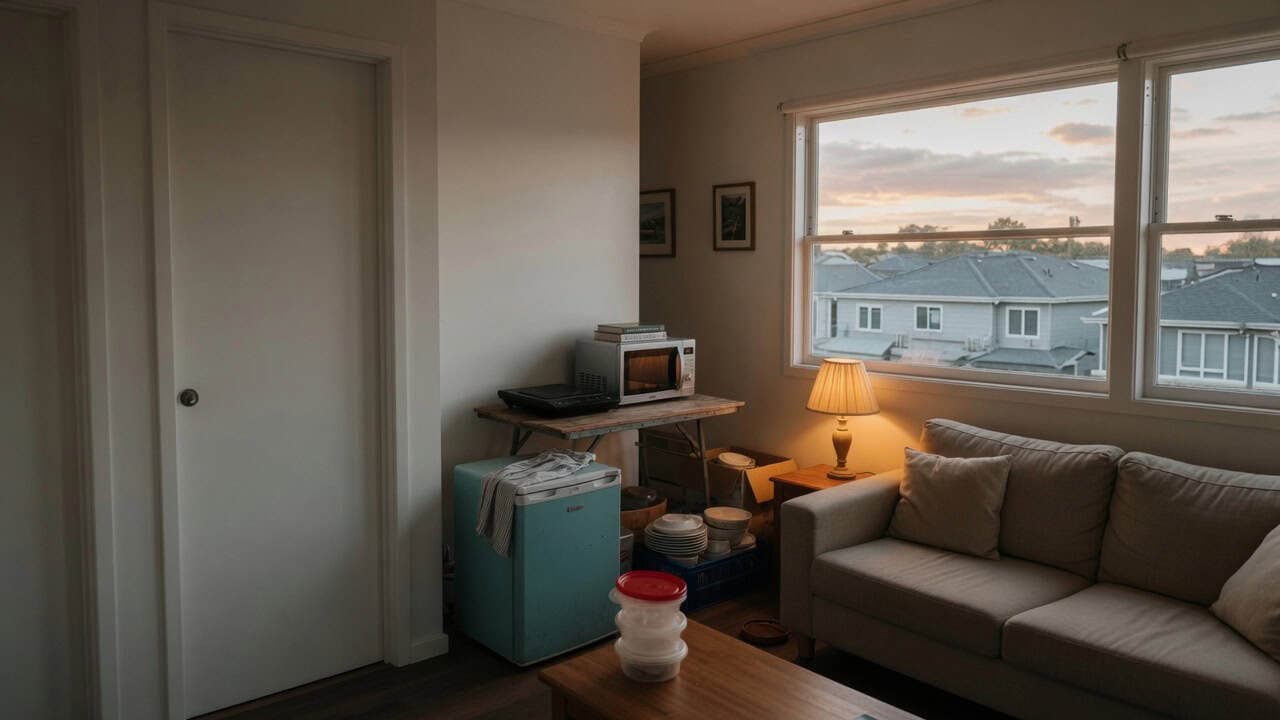
Temporary kitchen set up in a lounge while living in the house during a renovation
Dust, Noise and the Rhythm of a Live Site
Even a contained job is dusty and loud. Sealing off the work zone with plastic sheeting, running the trades through one entrance, and keeping a daily clean-up habit make an enormous difference. This is where a properly run project earns its keep. The way we handle a bathroom renovation from demolition to the final seal, or run a kitchen renovation while the rest of the house keeps working, is built around keeping disruption inside the room being renovated.
Quick tip: If you are staying, ask for dust barriers and a daily tidy to be written into the plan, not left to chance. Tape a sheet of plastic over the doorway of the work zone and keep interior doors shut. Small habits keep the rest of the house liveable.
When You Should Move Out Instead
Some jobs are not worth living through, and a few you genuinely should not. If any of the following apply, moving out for at least the heavy phase is usually the right call.
Full-Home and Structural Renovations
Once the work spans the whole house, or the walls themselves are moving, staying stops making sense. A full home renovation means intermittent power and water, exposed framing, and demolition dust through shared spaces, which is why how our Auckland team runs a full-home renovation while you’re still living there starts with an honest conversation about when to move out. Structural work has the same problem: an open-plan conversion that removes a load-bearing wall involves temporary propping, beam installation and a council pre-line inspection, none of which pairs well with normal home life around it.
Project Spotlight – When our Clients moved out
Our clients had to move out during our their full home renovation in West Harbour as it involved structural changes, and the entire home was being renovated at the same time. It would not have been comfortable for this family of 7 to stay in the home for the duration. hence moving out was the best option. For example we could have renovated while they lived in the house as they had 4 bathrooms, which could have easily been renovated one after the other.
However, this would have prolonged their renovation which they did not want. They wanted it to be all done within a few months so we proposed that they moved out which would enable us to renovate all the bathrooms at the same time, the structural change done without any interruptions to the work during the day and disruption to our client’s family.
See all project details + Before and After pictures here – Full home renovation in West Harbour, West Auckland.
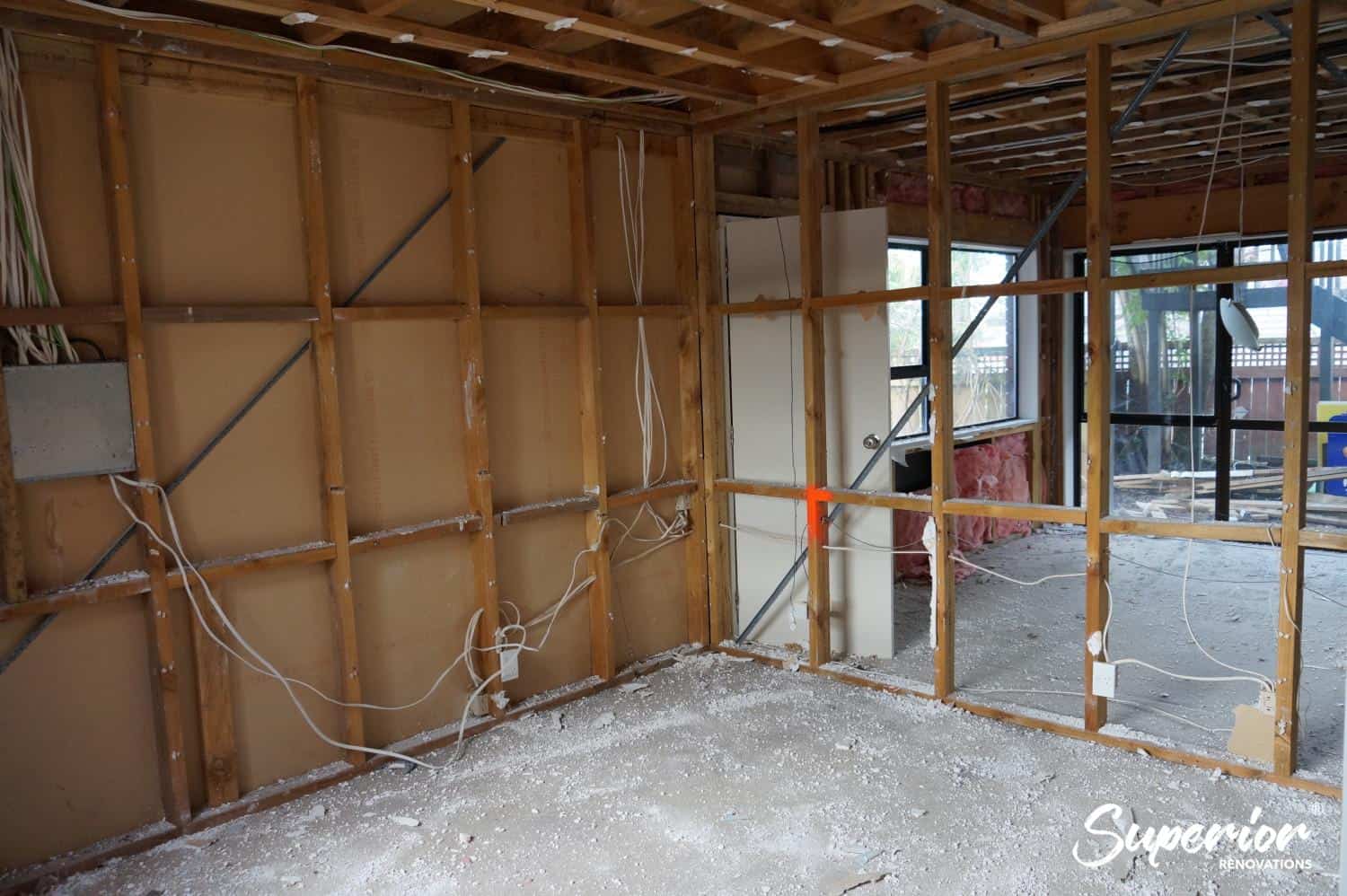
This home in West Harbour shows the entire downstairs area of the home being re-insulated and rewired during their full home renovation.
Pre-2000 Homes and Asbestos
This is the safety flag that matters most, and it is common in Auckland’s older housing stock. According to WorkSafe New Zealand, any home built or renovated before 1 January 2000 may contain asbestos materials, and there is a high risk of releasing fibres during repair or renovation work. Asbestos is not dangerous while it is in good condition and left alone; the risk comes when it is disturbed by demolition, sanding or cutting.

If your home is from the villa, bungalow, or mid-century eras, or was previously renovated before 2000, WorkSafe’s guidance is clear: commission an asbestos survey from an accredited surveyor before refurbishment or demolition work begins, and use a licensed removalist for any removal. During that work, being out of the house is the safe choice, particularly for children.
Important note: Never disturb or remove material you think might be asbestos yourself. If you are unsure, treat it as asbestos until an accredited surveyor confirms otherwise. This is a health issue, not a cost-saving opportunity.
Young Families, Health Needs and Pets
Scope is not the only thing that decides this. A household with a newborn, someone with a respiratory condition, or an elderly parent living in has far less tolerance for dust, noise and disruption than a couple who can shrug off a few rough weeks. Pets add another layer, since open doors and strangers on site are a real escape risk. When the people in the house cannot easily wait out the disruption, moving out is often the kinder and safer option even for a job you could technically live through.
What It Costs to Move Out During an Auckland Renovation
Moving out is not free, and it is the cost most people forget to budget for. Build it into your figures early so it does not blow the project budget from the side.
Temporary Accommodation
The big one is where you sleep. In our experience, Auckland homeowners who move out during a major renovation should budget roughly $400 to $800 per week for temporary accommodation, depending on the suburb, the size of the place, and the season. A short-term rental over summer in a central suburb sits at the upper end; a longer lease further out, or staying with family, brings it down or removes it entirely.
Multiply that weekly figure by the heavy phase of your project, not the whole timeline. For a full-home renovation you often only need to be out for the rough stage when services are off and demolition is happening, then you may be able to return for the fit-out weeks.
Storage, Pets and the Small Stuff
Beyond rent, factor in a storage unit if the temporary place is smaller, boarding or extra care for pets, and the time cost of two moves. None of these are large on their own, but together they can add a few thousand dollars to a project. It is far better to see them coming than to meet them halfway through. A free feasibility report is a good way to get the full scope priced up front, so the accommodation weeks are in your budget from the start rather than a surprise partway through.
Quick tip: Ask for a phased schedule that lets you move back in as soon as the home is safe and functional, even if finishing touches are still underway. Every week you can be back home is a week of accommodation cost saved.
How We Keep a Lived-In Renovation Running Smoothly
Whether you stay or move out, the thing that makes the difference between a tolerable renovation and a stressful one is how tightly the job is run. A renovation that drags, goes quiet, or has trades turning up in the wrong order is the one that wears families down.
We separated project management from sales back in 2019 for exactly this reason. On every project, one project manager owns your job from start to finish. They build the trade sequence and hold it as the work moves, book the trades and order materials so things arrive when the site is ready rather than a month early or a fortnight late, and handle the day-to-day communication between you, the council and the designers. You are not chasing updates or wondering who to ring. That single point of accountability is the difference between a renovation you can live around and one you cannot, and it is worth reading how our dedicated project management department keeps a renovation on schedule.
“A well-sequenced job is what makes staying possible. If the trades come in the right order and the site is cleaned down each day, a family can carry on around a single-room reno. When a schedule falls apart, that is when people wish they had moved out. ” Dorothy Li, Design Manager, Superior Renovations
Deciding whether to stay or go is one of the first things we work through with you at the planning stage, alongside scope, budget and timeline, so there are no surprises once demolition starts.
Book your free in-home consultation with Superior Renovations
Estimate your project with our renovation cost calculators
Request a free feasibility report for your project
Living in Your House During a Renovation: Frequently Asked Questions
Can you live in your house during a renovation?
Yes, for many single-room jobs. A bathroom renovation (3 to 4 weeks) or a kitchen renovation (5 to 6 weeks) is usually liveable if you have a second bathroom or can set up a temporary cooking zone. Full-home renovations, structural work, or disturbing a pre-2000 home's materials are strong reasons to move out for at least the heavy phase.
Should I move out during a full house renovation?
Usually yes, at least for the rough stage. A full home renovation in Auckland typically runs 12 to 16 weeks, or three to six months for larger scopes, with power and water switching off and on and demolition across multiple rooms. Most families move out for the heavy phase and often move back for the fit-out weeks once the home is safe and functional again.
How much does it cost to move out during a renovation in Auckland?
Budget roughly $400 to $800 per week for temporary accommodation, depending on suburb, property size and season. Add storage if the temporary place is smaller, pet boarding, and the time cost of two moves. Multiply the weekly figure by the heavy phase of your project, not the whole timeline, since you can often move back before the finishing touches are done.
Is it safe to live in a house being renovated?
For contained, single-room work with good dust control, usually yes. It is not safe during demolition of a pre-2000 home that may contain asbestos, during structural work, or where power and water are frequently off. WorkSafe New Zealand advises an asbestos survey by an accredited surveyor before refurbishment or demolition of any home built or renovated before 1 January 2000.
How do I keep dust down if I stay during a renovation?
Seal the work zone with plastic sheeting over doorways, keep interior doors shut, run the trades through one entrance, and have a daily clean-up written into the plan. Ask your renovation company to include dust barriers and daily tidying rather than leaving it to chance. Good containment keeps the rest of the house liveable even while one room is a building site.
Can I stay in my home during a bathroom renovation?
Usually yes, especially if the home has a second bathroom or toilet. A bathroom renovation typically takes 3 to 4 weeks from the start of demolition, so you lose that one bathroom and work around it. If it is your only bathroom, plan ahead: a temporary shower in the laundry or a short stay elsewhere for the worst of it is far better than being caught out.
How long will I be without a kitchen during a renovation?
A kitchen renovation in Auckland usually takes 5 to 6 weeks from demolition, and complex projects can run 6 to 12 weeks. Most people stay and set up a temporary kitchen with a microwave, kettle and the fridge in another room. Plan the temporary setup before demolition begins so you are not scrambling once the old kitchen is gone.
Do I need to move out for structural renovations?
Usually yes. Structural work such as removing a load-bearing wall for open-plan living involves temporary propping, beam installation and a council pre-line inspection, and it disrupts shared living spaces. It is difficult and often unsafe to carry on normal home life around active structural work, so moving out for that phase is generally the sensible choice.
Does my old Auckland home have asbestos?
It might. WorkSafe New Zealand states that any home built or renovated before 1 January 2000 may contain asbestos materials, which is common in Auckland's villa, bungalow and mid-century stock. Asbestos is safe while undisturbed and in good condition, but renovation work can release fibres. Commission an asbestos survey from an accredited surveyor before demolition, and use a licensed removalist for any removal.
Can I move back in before the renovation is completely finished?
Often yes. Ask for a phased schedule that lets you return once the home is safe and functional, even if finishing touches such as painting, trims or landscaping are still underway. Every week you can be back home during a full renovation is a week of accommodation cost saved, so it is worth planning the move-back date deliberately with your project manager.
Further Resources for your home renovation
- Featured projects and Client stories to see specifications on some of the projects.
- Real client stories from Auckland
Need more information?
Take advantage of our FREE Complete Home Renovation Guide (48 pages), whether you’re already renovating or in the process of deciding to renovate, it’s not an easy process, this guide which includes a free 100+ point check list – will help you avoid costly mistakes.
Download Free Renovation Guide (PDF)

Have you been putting off getting renovations done?
We have partnered with Q Mastercard ® to provide you an 18 Month Interest-Free Payment Option, you can enjoy your new home now and stress less.
Learn More about Interest-Free Payment Options*
*Lending criteria, fees, terms and conditions apply. Mastercard is a registered trademark and the circles design is a trademark of Mastercard International Incorporated.
Still have questions unanswered?
Book a no-obligation consultation with the team at Superior Renovations, we’d love to meet you to discuss your renovation ideas!


