
Author: Alison Yu

Luxury Bathroom Design Redvale 30 - Superior Renovations
Bathroom Renovation

Bathroom Heaters NZ: Our Take After 1000+ Renovations

If you’re starting the day in a cold, damp bathroom in Takapuna or scrubbing mould off fresh tiles in Mt Eden, the problem isn’t your cleaning routine — it’s the lack of adequate heating. Auckland winters push humidity to 70–80% and temperatures below 10°C regularly. Without a decent heater, bathrooms turn into mould factories fast. This is our take on the options that actually hold up in our conditions — wall-mounted ceramics, 3-in-1 ceiling units, towel rails, and underfloor systems — based on what we install on real renovation jobs and what we’ve watched fail in homes we come back to renovate years later.

Why Bother with a Bathroom Heater in Auckland’s Winters?

Because damp, cold bathrooms cause real problems. Black mould on fresh tiles after a $26,000–$35,000 renovation is not a hypothetical — we see it regularly in Auckland homes that get the heating wrong. A decent heater warms the space quickly, reduces moisture in the air, and makes getting out of the shower something other than an ordeal. For coastal properties in Mission Bay or Henderson, pairing heating with good ventilation matters more than most homeowners expect — the salt air adds another layer of dampness that ventilation alone won’t fix. Modern efficient models can cut energy use by up to 20% compared to older units, which adds up when heating is running daily through winter.

What’s the Best Type of Bathroom Heater for Auckland Homes?

It depends on your bathroom. For small ensuites in Ponsonby apartments, wall-mounted units like the Goldair Ceramic WiFi (2000W, app-controlled, IPX4-rated) do the job well — space-efficient and smart-controlled, around $300–$700 installed. Bigger family bathrooms in Albany usually call for 3-in-1 ceiling units: Manrose or IXL Tastic combine heat, light, and extraction in one unit, around $400–$1,050 installed, and handle moisture properly. Towel rails like the Mizu Soothe keep towels dry year-round at low running costs — roughly $12.50 per month — which suits North Shore homes where damp towels are a constant. Fan heaters are cheap ($50–$100) and need no installation, but they’re noisy and not the answer for daily winter use. Underfloor heating from Heatwell delivers even, silent warmth at $1,500–$4,000 — the right call for a premium Remuera renovation where the floor experience is part of the brief.

How Do You Pick One That Saves on Bills and Avoids Install Headaches?

Look for timers, thermostats, and ceramic elements — using a timer to halve daily runtime can drop your monthly cost from $25 to $12.50 at 35c/kWh. Size it correctly: 500–1000W for compact spaces, more for larger rooms. Hardwired units need a licensed sparkie — budget $150–$600 for installation — and the work must comply with NZ Building Code requirements. Portable fan heaters are DIY-fine, but keep them at least 1.8m from water. If you’re already having electrical work done as part of a renovation, bundle the heater installation. It’s the most cost-effective time to do it. Clean filters annually; Auckland’s air quality means dust builds up faster than you’d expect.

Want to talk through what would work for your bathroom specifically? Get in touch with Superior Renovations for a free consultation — no obligation, just a straight conversation about your setup.

Choosing the Best Bathroom Heaters for Your NZ Renovation

A bathroom heater isn’t really a product decision. It’s a renovation decision. After delivering over 1,000 Auckland full bathroom renovations across suburbs from Pukekohe to Albany, we’ve seen what gets specified, what gets replaced inside five years, and what quietly becomes a callback problem. The product you choose matters far less than how it fits the bathroom you’re putting it in — the ceiling depth, the extraction routing, the wattage matched to room volume, and the timing within the build programme. This guide is our take on bathroom heating from inside the renovation, not from a product catalogue. Whether you’re fitting out a compact ensuite or a full master bathroom, the same principle applies: the right heater is the one the room can actually accommodate.


If you’re looking for specific cost estimates, try our Renovation Cost Calculator Tools


Why a Bathroom Heater Matters for New Zealand Homes

Auckland winters are mild by South Island standards. That doesn’t mean bathroom heating is optional. Temperatures regularly drop below 10°C, and humidity sits at 70–80% through the colder months. Without proper heating, a bathroom becomes a mould problem — and in a freshly renovated bathroom, that means damage to tiles, grout, vanities, and paintwork that costs real money to fix. The right heater prevents that, keeps the space comfortable through winter, and protects the investment you’ve already made.

“On every bathroom brief we work through, heating gets discussed alongside ventilation, lighting, and ceiling depth — not after them. Treat it as one of four decisions that happen together, and you avoid the rework we see when it’s added late in the programme.”
— Cici Zou, Certified Designer (NZ Dip. Interior Design), Superior Renovations

The Real Problem: Damp, Cold Bathrooms

Auckland’s combination of coastal air and winter humidity makes bathrooms particularly susceptible to moisture issues. Auckland Council is direct on this: keeping your home warm and dry is critical for health and comfort, not just appearance. Mould in a bathroom isn’t only an eyesore — it affects air quality and can aggravate respiratory conditions, particularly for children and older family members who are more sensitive to temperature and air quality shifts.

What a bathroom heater actually solves:

  • Reduces humidity and prevents mould on tiles and grout.
  • Makes the bathroom genuinely usable during cold winter mornings.
  • Protects fixtures, finishes, and cabinetry from moisture damage over time.
  • Reduces energy costs when the right model is chosen and used properly.

Why Auckland Specifically

Suburbs like Henderson, Redvale, and Titirangi sit cooler and damper than central Auckland. Coastal areas add salt air on top of the humidity load. The result is a bathroom environment that will wear down a renovation faster than most homeowners expect, unless heating and ventilation are both properly addressed. A heater isn’t a luxury item in these conditions. It’s maintenance for the renovation you’ve already paid for.

Tip for Auckland Homeowners: Specify IPX4-rated heaters as a minimum. Moisture resistance matters more in our climate than it does in drier parts of the country.


Health and Comfort

The Energy Efficiency and Conservation Authority (EECA) notes that cold, damp environments worsen asthma and allergy symptoms — both common in Auckland households. Consistent bathroom warmth reduces that risk. For families with young children or elderly members, it’s not a nice-to-have.

Key health benefits:

Benefit Impact
Mould Prevention Reduces humidity, preventing mould growth on tiles and grout.
Improved Air Quality Reduces damp-related allergens, benefiting respiratory health.
Comfort Makes the bathroom functional and bearable through winter.

Tip: A bathroom heater on a timer — warming the space before you get in, not after — costs less to run and works better than one you switch on when you’re already cold.


Protecting Your Renovation Investment

Auckland bathroom renovations typically run $26,000–$35,000 for a mid-range job, and $40,000–$60,000 for a full overhaul with custom joinery and premium finishes. Custom vanities, quality tile work, and painted cabinetry are all susceptible to moisture damage. Without proper heating, that investment starts degrading from the first winter. The right heater holds a stable temperature and humidity range — which is what keeps expensive finishes looking the way they did when the job was finished.

Energy Efficiency

EECA notes that energy-efficient heating can meaningfully reduce a household’s carbon footprint. Modern ceramic and infrared bathroom heaters warm up faster and use less power to maintain temperature than older radiant bar heaters. For a room you use 20–30 minutes a day, that efficiency gap adds up quickly over a winter.

Energy-Saving Tip: Thermostats and timers are the two features that make the biggest difference to running costs. For the small bathrooms common in Auckland homes — 8–10m² — they’re worth specifying from the start.


Choosing the Right Heater for Your Renovation

How a heater integrates with your bathroom design matters as much as its performance. Wall-mounted units from Goldair are slim and space-efficient — good for compact ensuites where every wall has a purpose. Ceiling-mounted options from Weiss sit flush with the ceiling and disappear into the design. Underfloor heating is invisible entirely. Each one suits a specific kind of bathroom — not every kind.

Goldair Ceramic WiFi wall-mounted bathroom heater in modern NZ bathroom

https://goldair.co.nz/products/ceramic-wifi-bathroom-heater

Regulatory Considerations in Auckland

Some heating installations need a building consent — particularly anything involving structural changes or significant electrical work. Underfloor heating that affects flooring buildup or plumbing routing may need consent, with council fees typically $500–$2,000. NZ Building Code Clause E2 governs internal moisture and is the relevant national standard, with Auckland Council the consenting authority for local projects. Checking before you start is faster and cheaper than remedying a non-compliant installation after the fact.

Compliance Tip: Confirm with Auckland Council whether your chosen heater requires a building consent before installation starts — particularly for hardwired units that involve structural changes like cutting into ceiling cavities or framing.


Why It Matters for Your Renovation

Choosing a bathroom heater isn’t complicated. But it does require matching the right solution to your specific bathroom, your Auckland suburb, and how you actually use the space day to day. Get it right and the heater becomes invisible — the room is warm, dry, and comfortable. Get it wrong and you’re managing mould, running costs, or a unit that doesn’t heat the space properly. The sections below give you what you need to make the right call.

Types of Bathroom Heaters for New Zealand Homes

There are five main types of bathroom heater available in NZ, each suited to different bathroom sizes, layouts, and renovation goals. Auckland’s climate — coastal, humid, variable — adds specific requirements around moisture resistance and ventilation that should inform the choice. Here’s a plain-language breakdown.

Finding the Right Fit

The most common mistake Auckland homeowners make with bathroom heaters is choosing on price or aesthetics alone, without accounting for room size, moisture load, or how the unit will actually be used. A small wall-mounted heater is fine for a compact ensuite. It’s inadequate for a 12m² family bathroom. A 3-in-1 ceiling unit handles heat, light, and extraction in one installation but needs ceiling depth and ducting that have to be planned for. Match this right at the start and you save money and frustration later.

Tip: Match the heater type to the actual size and conditions of your bathroom before comparing models or prices. The wrong type, installed perfectly, still won’t do the job.


Wall-Mounted Heaters

Wall-mounted heaters are the most popular choice for compact Auckland bathrooms — particularly the ensuites in Ponsonby and Mt Eden where ceiling cavity depth is limited and design matters. They warm up fast, sit flush against the wall, and the better models (like the Goldair Ceramic WiFi Bathroom Heater) are app-controlled. That means the bathroom is warm before you get in, not while you’re standing on cold tiles.

What we install most often: for the older Mt Eden and Grey Lynn villas where ceiling cavity depth rules out a 3-in-1 unit, the wall-mounted ceramic is the heater that turns up in our build specs most consistently. The ceramic element warms up faster than the old radiant bar units, the IPX4 rating holds up in coastal conditions, and a programmable timer takes the cold-floor-cold-room problem off the morning routine. For ensuites under 8m², it’s hard to argue against.

Key features:

  • Fast heat-up using ceramic or infrared elements.
  • IPX4 moisture resistance as standard on quality models.
  • Slim profiles that work with most bathroom designs.

Pros and cons:

Pros Cons
Space-efficient for small bathrooms Won’t heat larger spaces evenly
Relatively straightforward to install Visible unit — a consideration for minimalist designs
Cost-effective starting point (from $150) Limited reach in open-plan or irregular layouts

Tip for Auckland Homeowners: A wall-mounted heater with a programmable timer is the single most cost-effective heating choice for smaller bathrooms (8–10m²) — common in Auckland apartments and older villas.

Goldair ceramic bathroom heater wall-mounted in Auckland renovation

https://goldair.co.nz/products/ceramic-wifi-bathroom-heater


Important Safety Recall: Serene S2069 Wall-Mounted Bathroom Heater

The Serene S2069 wall-mounted bathroom heater has been recalled due to non-compliance with New Zealand safety standards, as announced by WorkSafe. The approval for this model has been withdrawn for units imported, purchased, or installed after June 2018 — making it illegal to sell in NZ. A fire incident linked to this heater was investigated by authorities.

Key Details:

  • Model: Serene S2069, a wall-mounted fan heater with a step-down thermostat.
  • Issue: Non-compliant with NZ safety standards, with at least one fire incident reported.
  • Action: WorkSafe considers ongoing risk low. If you notice unusual smells or noises from this unit, stop using it immediately and have it inspected by a licensed electrician.
  • Consumer Rights: Under the Consumer Guarantees Act, you may contact the supplier for a refund, repair, or replacement.

Why it matters: Auckland’s humidity makes bathroom heater safety more critical than in drier climates. If you have a Serene S2069, don’t wait — get it checked.

Full details on this recall: https://www.worksafe.govt.nz/about-us/news-and-media/further-action-on-serene-bathroom-heaters/


Ceiling-Mounted Heaters

Ceiling-mounted heaters suit larger Auckland bathrooms or rooms with higher ceilings — heritage homes in Remuera and Epsom being good examples. Units from Weiss often combine heating, lighting, and ventilation in one ceiling installation, which distributes heat evenly and keeps walls clear. For open-plan bathrooms, or any layout where even heat distribution matters, ceiling-mounted is usually the better call over wall-mounted.

What we’ve watched fail: on the bathrooms we come back to renovate again — sometimes 10 or 15 years after the original work — the most common heating-related issue we see isn’t the unit failing. It’s a 3-in-1 ceiling unit fitted without enough ducting depth, where extraction underperforms and steam drifts into the ceiling cavity instead of out through the soffit. The result is the same in every case: black staining on the ceiling around the unit, sometimes structural damage in the framing above. The fix isn’t a better heater. It’s the ducting being run properly the first time.

Key features:

  • Infrared panels or heat lamps for fast, even warmth.
  • No wall or floor space used.
  • Multi-function models available with exhaust fans for humidity control.

Pros and cons:

Pros Cons
Integrates cleanly into modern bathroom designs Higher installation cost ($300–$600)
Works well in larger bathrooms Requires professional installation
Keeps walls and floors uncluttered Filter access requires a ladder

Design Tip: A ceiling-mounted unit with integrated LED lighting handles two renovation line items at once — heating and lighting — which simplifies the design and can reduce overall cost.

IXL Tastic Luminate ceiling-mounted bathroom heater for Auckland family bathroom

https://www.bunnings.co.nz/ixl-white-tastic-luminate-heat-module-bathroom-ceiling-heater_p0829692


Fan Heaters

Fan heaters are portable and cheap — the right call for renters or anyone who needs a quick, no-commitment heating solution. Available at Mitre 10 from around $50, they need no installation and warm a small space quickly. The trade-off is noise and energy consumption — they’re not efficient for daily use over a whole Auckland winter.

Key features:

  • Fast heat via forced air.
  • No installation — plug straight in.
  • Low purchase cost.

Pros and cons:

Pros Cons
No installation cost or process Higher ongoing energy consumption
Good for temporary or occasional use Audible operation — up to 50dB in a small space
Cheapest upfront option Not suited to large bathrooms

Budget Tip: A fan heater does the job in a pinch. For daily Auckland winter use it’s worth pairing with a dehumidifier — otherwise you’re heating a damp room rather than drying it out.


Towel Rail Heaters

Heated towel rails solve two problems at once — keeping towels dry and providing ambient warmth — which makes them a practical choice for Auckland’s humid winters. Quality electric and hydronic options are available through Reece and Elite Bathroomware. They’re particularly useful in coastal suburbs like Takapuna and Mission Bay where musty towels are a regular frustration. Running costs are low — around $12.50 per month for a typical electric rail — and quality models in chrome, matte black, or brushed finishes add a polish to the renovation that purely functional heaters don’t.

What our Design Studio is being asked for: through 2025 and into 2026, brushed gold and matte black towel rails to coordinate with tapware have moved from “occasional request” to “standard inclusion” on most bathroom design briefs we work through. Five years ago, the towel rail was an afterthought. Now it’s a hardware finish decision that gets specified alongside tapware and mirror lights, not separately.

Key features:

  • Low-energy heating for ambient warmth and towel drying.
  • Electric or hydronic options (hydronic only viable if the home has central heating).
  • Available in chrome, matte black, brushed stainless, brushed gold finishes.

Pros and cons:

Pros Cons
Adds a quality finish to the bathroom Limited heating capacity for larger spaces
Keeps towels dry and warm Higher upfront cost ($200–$800)
Low running costs Needs dedicated wall space

Style Tip: Matte black towel rails suit the trend toward dark, matte fixtures in modern Auckland bathrooms — and they’re practical enough to justify the cost without needing a separate argument.
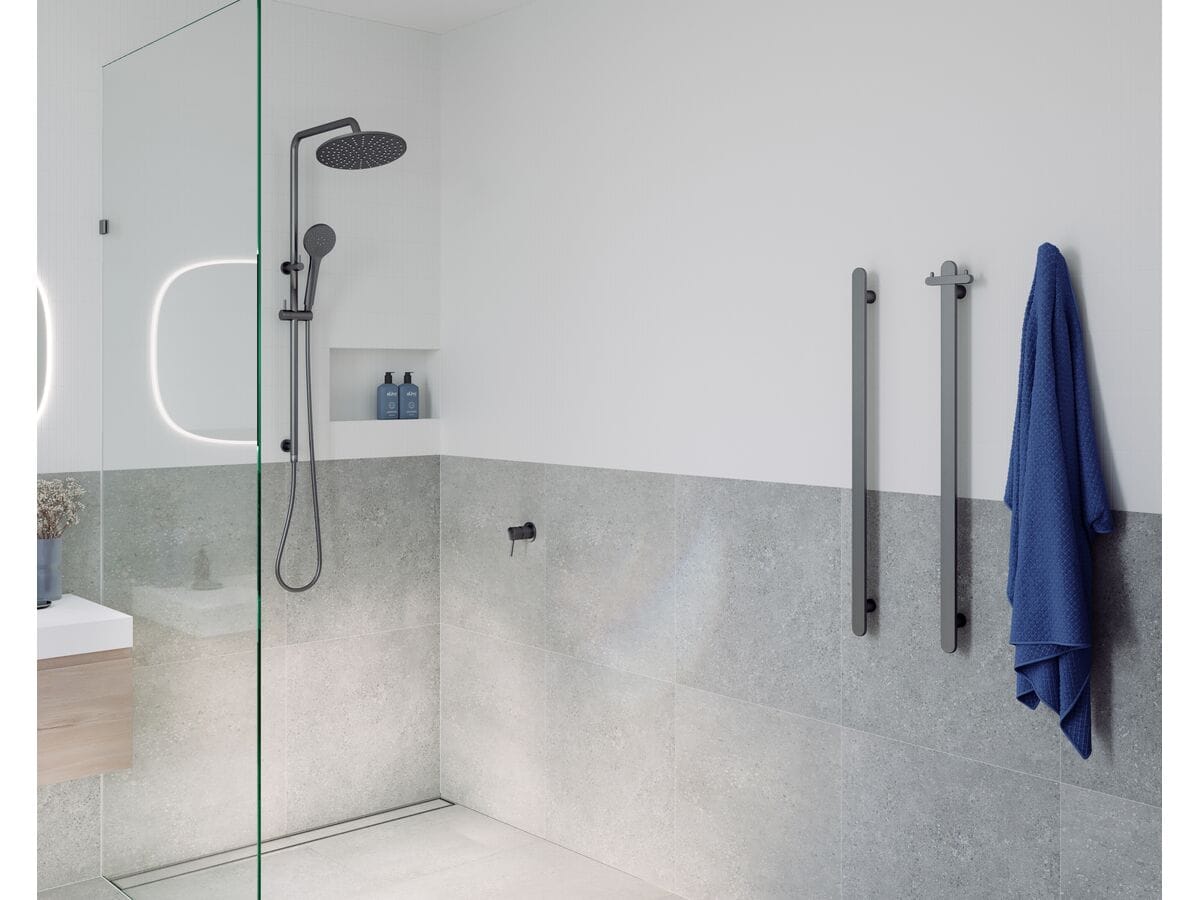
Mizu Soothe vertical heated towel rail brushed gunmetal Auckland bathroom

https://www.reece.co.nz/product/tapware-accessories-c2402/bathroom-accessories-c1910/heated-towel-rails-c2118/mizu-soothe-vertical-heated-towel-rail-triple-2007892


Underfloor Heating

Underfloor heating is the premium option — silent, invisible, and genuinely comfortable underfoot on a cold Auckland morning. Installed beneath tiles, vinyl, or machined timber, it delivers even radiant heat across the entire floor. The cost is real: $1,500–$3,000 for the system plus $500–$1,500 for installation. It also has to be planned in during the renovation, not retrofitted afterwards. That said, for a bathroom in Albany or a premium North Shore property where the finish has to be right, it’s hard to argue against.

What we’re being asked for more often: five years ago, underfloor heating was a luxury request that came up on maybe one in ten bathroom briefs. Through 2025 and 2026, it’s now in the brief on roughly a third of premium bathroom jobs we work through, particularly on master bathrooms over 10m² and on builds in Remuera, Epsom, and the North Shore where the floor experience is part of the daily-use specification.

Key features:

  • Even radiant heat across the entire floor surface.
  • Programmable thermostats for efficient daily use.
  • Completely invisible — no visual impact on the design.

Pros and cons:

Pros Cons
The most comfortable heating option available High installation cost ($1,500–$4,000 total)
Even heat distribution — no cold spots Must be planned during renovation, not added after
Efficient for long-term daily use with programmable control Slower to heat up than radiant or fan options

Luxury Tip: Pair underfloor heating with anti-slip tiles. A combination that suits families on Auckland’s North Shore particularly well, where cold, wet tile floors are a year-round consideration.
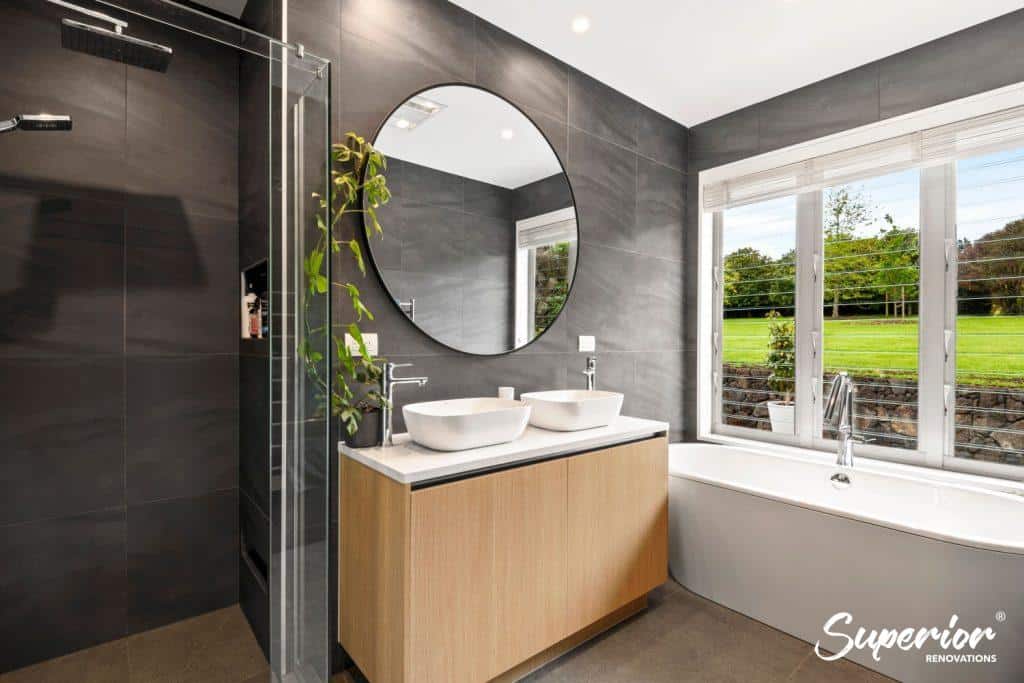
Luxury bathroom design with underfloor heating in Redvale Auckland renovation

Luxury Bathroom Design – Redvale

3-in-1 Bathroom Heaters for New Zealand Bathrooms

For most Auckland bathrooms — particularly the compact 5–10m² ensuites in Parnell apartments or older Mt Eden homes — a 3-in-1 ceiling unit is the most practical single decision a homeowner can make. Heat, ventilation, and lighting in one installation. One hole in the ceiling, one set of switches, one unit to maintain. Here’s how they work, which models are worth specifying in NZ, and how to choose between them.

“The mistake we see most often isn’t choosing the wrong heater — it’s adding heating to the design after the layout is locked. By that point, the cleanest ceiling spot is already over the vanity or off-centre from the shower, and you end up retrofitting instead of integrating.”
— Dorothy Li, Design Manager, Superior Renovations

Why 3-in-1 Makes Sense for Auckland

Auckland’s humidity is the key reason 3-in-1 units make sense here. According to Auckland Council, proper ventilation combined with heating is the most effective approach to preventing mould — and a 3-in-1 unit handles both in the same installation. Infrared or halogen heating for fast warmth, an exhaust fan to pull moisture out, and LED lighting for illumination. For small to medium bathrooms, it does three jobs from one footprint.

Key benefits:

  • Space-efficient: One ceiling unit replaces three separate installations.
  • Moisture control: The exhaust fan pulls steam out before it settles on surfaces.
  • Lower overall cost: One installation rather than three separate ones.
  • Clean aesthetic: Modern low-profile fascias sit flush with the ceiling.

Design Tip: A low-profile fascia like the Manrose Designer Series sits flush against the ceiling — a cleaner result than a unit that protrudes visibly into the room.
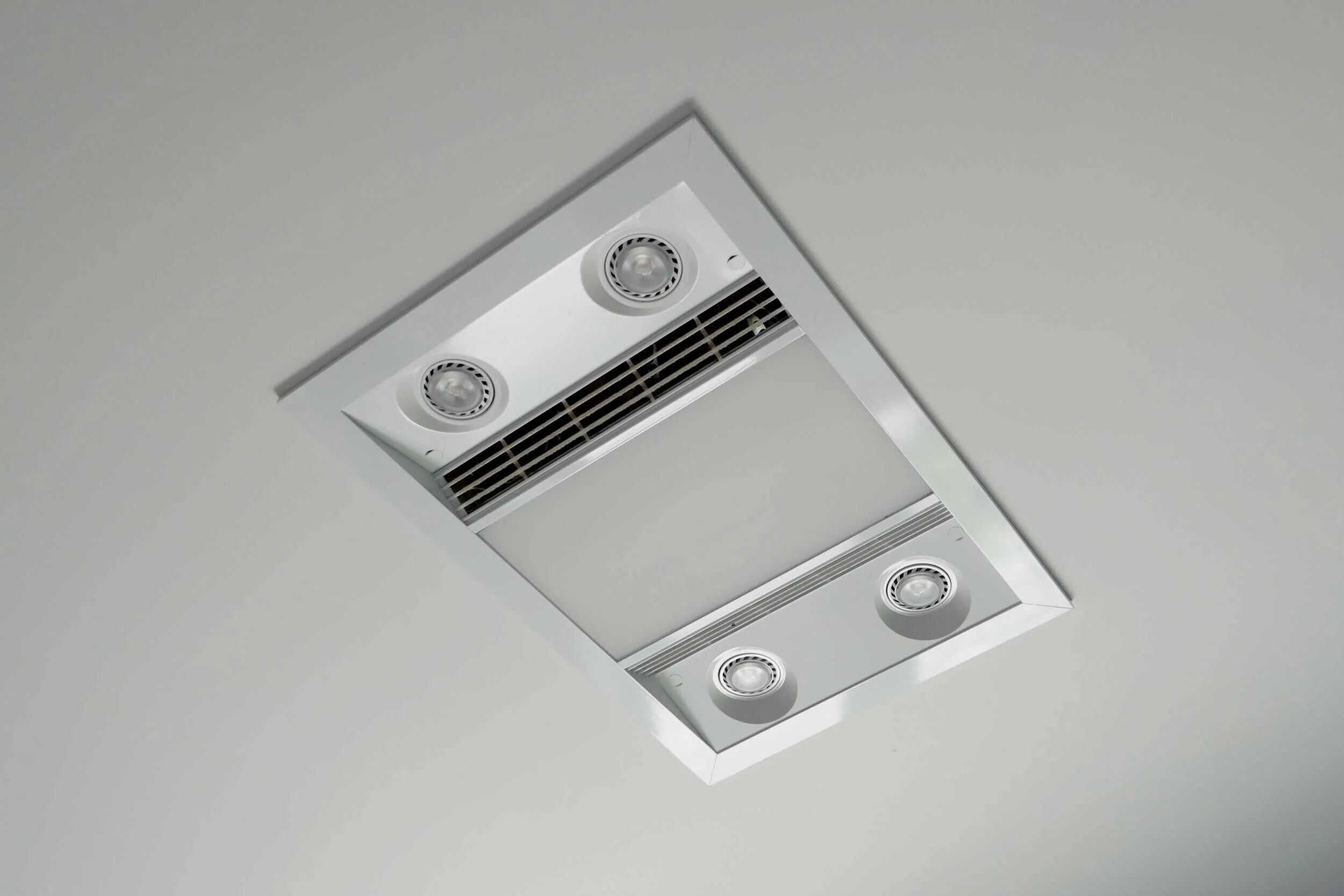
Luxury bathroom with 3-in-1 ceiling heater in Redvale NZ

Luxury Bathroom Design – Redvale

Top 3-in-1 Bathroom Heaters in NZ

Manrose 3-in-1 Heat Fan Light

The Manrose 3-in-1 is a reliable, practical choice for small to medium Auckland bathrooms. Available at Bunnings, this ceiling-mounted unit combines a 1000W halogen heater, 69 l/s exhaust fan, and 10W LED light. It suits bathrooms of 6–10m² in suburbs like Henderson, Glen Innes, or Takapuna — the extraction rate is strong enough for Auckland’s humidity, and the compact design fits ceiling cavities in older homes where depth is limited.

Key features:

  • 1000W halogen heater for quick warmth.
  • 69 l/s (248 m³/hr) extraction — meets Healthy Homes standards.
  • 10W LED lighting.
  • Independent 3-way wall switch for heat, fan, and light control.

Why it works in NZ: The extraction rate handles Auckland’s bathroom humidity properly, the triple thermal protection is a genuine safety feature, and the unit warranty gives reasonable coverage. It’s not the flashest unit on the market — but it does what it says, and that’s why we keep specifying it.

Price range: $200–$300

Tip: Position above the shower rather than the centre of the room — that’s where the steam actually originates, and extraction is far more effective there.

Manrose 3-in-1 heat fan light bathroom ceiling unit NZ

https://www.bunnings.co.nz/manrose-white-heat-fan-light_p0115725

IXL Tastic Luminate Dual 3-in-1 Bathroom Heater

The IXL Tastic Luminate Dual is the step up for larger or more upmarket Auckland bathrooms. Available through Plumbing Plus, this unit runs two 800W infrared lamps, a 480 m³/hr exhaust fan, and a 25W dimmable LED light with warm and cool colour settings. For bathrooms of 10–12m² in Epsom or Remuera, the extraction rate and heating capacity are a better match than the Manrose.

Key features:

  • 2 x 800W infrared lamps with auto cut-off timer.
  • 480 m³/hr airflow — strong extraction for larger spaces.
  • 25W dimmable LED (warm and cool settings).
  • Manufacturer warranty with a modern design profile.

Why it works in NZ: The infrared lamps heat the space almost instantly — good for Auckland’s chilly winter mornings when you don’t have time to wait around. The dimmable LED adds practical value beyond just heating. For a renovation where the finish needs to reflect the budget, this unit holds up.

Price range: $350–$500

Luxury Tip: Dimmable warm-white lighting changes the feel of a bathroom significantly. Paired with matte tiles, the IXL Luminate creates a finish that reads more like a hotel than a standard home bathroom.

IXL Tastic Luminate Dual 3-in-1 bathroom heater for Auckland renovation

https://www.bunnings.co.nz/ixl-white-tastic-luminate-essential-dual-3-in-1-bathroom-heater-exhaust-fan-and-light_p0829693

Weiss 3-in-1 Bathroom Heater

The Weiss 3-in-1 is a NZ-engineered option built for the conditions here. Available at Weiss, it combines 2400W infrared heating, 106 l/s (380 m³/hr) extraction, and integrated LED lighting — suitable for medium to large bathrooms (8–12m²) in Albany or across the North Shore. The quiet operation (under 40dB) makes a genuine difference in a small, tiled space where sound bounces.

Key features:

  • 2400W infrared lamps for fast, powerful heating.
  • 106 l/s extraction — solid humidity control for Auckland conditions.
  • Under 40dB operation — quieter than most comparable units.
  • Integrated LED lighting.

Why it works in NZ: NZ-specific design means it’s built with our humidity levels and building standards in mind. The quiet operation and high extraction rate suit Auckland bathrooms that need serious moisture management without the noise.

Price range: $300–$450

Design Tip: Central ceiling placement gives the best heat and light distribution for open-plan or square bathroom layouts. Don’t position it against a wall if you can avoid it.

3-in-1 Heater Comparison

Model Heat Output Extraction Rate Price Range Best For
Manrose 3-in-1 1000W 69 l/s (248 m³/hr) $200–$300 Small to medium bathrooms
IXL Tastic Luminate 2 x 800W 133 l/s (480 m³/hr) $350–$500 Larger or premium bathrooms
Weiss 3-in-1 2400W 106 l/s (380 m³/hr) $300–$450 Medium to large bathrooms

Installation Considerations

3-in-1 units always need professional installation. The electrical connection and the ducting are both regulated work in NZ — not something to DIY. Auckland installation costs run $200–$600 depending on ceiling access and how much ducting is required (typically 3–6m of 150mm duct). A licensed electrician must sign off on compliance with NZ Building Code Clause E2, and most manufacturers (including Manrose) require a certificate of electrical safety for warranty to remain valid.

Installation Tip: Allow at least 250mm of ceiling depth for units like the Manrose 3-in-1 — this is the minimum for ducting and shouldn’t be assumed. On older villas in Mt Eden and Grey Lynn, that depth often isn’t there. Confirm with your electrician before ordering the unit.


Running Costs

3-in-1 units with LED lighting and timers are the most cost-effective way to heat a bathroom daily. A 1000W heater running 2 hours a day at 35c/kWh costs roughly $25 a month. Cut that to 1 hour with a timer and you’re at $12.50 — saving $150 over a winter. Pairing with ceiling insulation, as EECA recommends, improves that further by retaining heat once the room is warm.

Energy-Saving Tip: Run the exhaust fan during and for 10–15 minutes after showering. Running it constantly costs money and dries the air too aggressively. The heater should be on a 15–20 minute timer, not running indefinitely.

Which 3-in-1 to Choose

For small bathrooms, the Manrose is the practical and cost-effective call. For larger spaces or premium renovations where the finish needs to reflect the budget, the IXL Tastic Luminate or Weiss 3-in-1 are the better fits. The key is matching extraction rate and heat output to your actual bathroom size — the table above makes that straightforward.

Which Heater Type Suits Your Auckland Bathroom?

Small ensuite: wall-mounted, or a budget fan heater if you’re managing tight upfront costs. Medium family bathroom: 3-in-1 ceiling unit. Premium renovation in a larger space: underfloor heating, often paired with a towel rail for ambient warmth. Towel rails work well alongside any of the above. The decision should come from bathroom size first, then design, then budget — in that order.

Key Features to Look for in a Bathroom Heater

Once you’ve settled on the type of heater, these are the features that separate the ones worth buying from the ones that cause frustration. In Auckland’s conditions specifically, some of these matter more than they would in a drier climate.

Getting the Balance Right

The most common mistake is optimising for one feature — usually price or wattage — without considering the full picture. A powerful heater without a thermostat runs longer than it needs to. A quiet heater that’s too small for the room never quite gets there. The features below work together. A good heater needs most of them, not just one or two.


Size and Heating Capacity

A heater sized incorrectly for the room is always a problem — either it doesn’t warm the space or it wastes energy doing so. Auckland bathroom sizes typically run 5m² (small ensuite) to 15m² (master bathroom). Heating capacity is measured in watts, with most bathroom heaters sitting between 500W and 2400W.

How to choose:

  • Small bathrooms (5–8m²): 500–1000W. The Goldair Ceramic WiFi Heater sits in this range and is well-matched.
  • Medium bathrooms (8–12m²): 1000–1800W. Ceiling-mounted models from Weiss work well here.
  • Large bathrooms (12–15m²): 1800–2400W or underfloor heating for consistent coverage.

Capacity guide:

Bathroom Size Recommended Wattage Example Heater Type
5–8m² 500–1000W Wall-mounted or fan heater
8–12m² 1000–1800W Ceiling-mounted or towel rail
12–15m² 1800–2400W Underfloor or high-capacity ceiling unit

Sizing Tip: Measure your bathroom before buying. Add 10% to the wattage for Auckland’s humidity. A damp room takes more energy to heat than a dry one.

Energy Efficiency

With NZ electricity averaging 30–35c/kWh, running costs add up quickly if the heater isn’t well-specified. EECA notes that choosing efficient appliances makes a meaningful dent in household energy consumption. The features that make the biggest difference:

  • Thermostats: Prevent overheating and maintain temperature without continuous running.
  • Timers: Heat the bathroom when you need it, not continuously through the night.
  • Eco modes: Reduce power during periods when full output isn’t required.
Heater Type Typical Energy Use Best For
Wall-Mounted (Ceramic) 0.5–1.5 kWh Small to medium bathrooms
Ceiling-Mounted 1–2 kWh Medium to large bathrooms
Underfloor Heating 0.1–0.3 kWh/m² Large or premium bathrooms

Energy-Saving Tip: Insulation upgrades retain heat once the bathroom is warm — meaning the heater runs for less time to maintain temperature.


Noise Levels

Noise matters more than people expect in a small, tiled bathroom. Fan heaters run at 40–50dB — audible and sometimes disruptive. Wall-mounted ceramic heaters and underfloor systems operate below 30dB. In a bathroom designed around a calm, functional experience — which most good Auckland renovations are — the quieter the heater, the better.

Heater Type Noise Level (dB) Best For
Fan Heater 40–50 dB Quick heat; noise not a priority
Wall-Mounted (Ceramic) 0–30 dB Quiet, small bathrooms
Underfloor Heating 0 dB Completely silent operation

Quiet Tip: For North Shore bathrooms where the renovation budget reflects a premium finish, silent operation from underfloor heating or an infrared wall-mounted unit is worth specifying from the start.


Installation Complexity

Installation complexity affects both renovation cost and timeline. Portable fan heaters need nothing — plug them in. Wall-mounted and ceiling-mounted heaters need a licensed electrician. Underfloor heating has to be planned as part of the renovation itself, particularly for the concrete slab construction common in newer Auckland suburbs like Hobsonville and Flat Bush.

Heater Type Installation Type Estimated Time
Fan Heater Plug-and-play 0 hours
Wall-Mounted Licensed electrician required 2–4 hours
Underfloor Heating Structural integration during renovation 1–2 days

Installation Tip: Hardwired heaters need a licensed electrician. Not optional, and not worth cutting corners on. NZ Building Code compliance is the minimum requirement, and the penalty for non-compliance is a rework that costs more than doing it right the first time.


Safety Features

In a high-moisture environment, safety specifications aren’t marketing — they matter. Look for IPX4 or higher water resistance ratings, overheat protection that shuts the unit down automatically, and tip-over switches on any portable units. Products at Mitre 10 generally carry these features on quality models.

Essential safety features:

  • IPX4 rating: Minimum standard for any heater in a bathroom environment.
  • Overheat protection: Automatic shut-off if the unit runs above safe temperature.
  • Child locks: Worth specifying for family bathrooms.

Safety Tip: Wall-mounted heaters must be installed at least 1.8m above floor level under NZ electrical standards. This isn’t a guideline — it’s a requirement.


Making the Right Call

For Auckland homeowners, energy-efficient models with solid safety specifications deliver the best long-term value. A heater that’s cheap to buy but expensive to run, or one that fails early due to inadequate moisture resistance, costs more over the life of the renovation than buying right at the start.

Skim Tip: Correct wattage for the room size, IPX4 minimum safety rating, and a timer or thermostat — those three features cover most of what you need for an Auckland bathroom.


Top 5 Bathroom Heaters for New Zealand Bathrooms

With the type and key features covered, here’s where those principles translate into specific products. These five heaters represent the best available options in NZ across different bathroom sizes, budgets, and renovation briefs — all suited to Auckland’s climate, and all units we’ve either specified directly or seen perform well on jobs we’ve delivered.

Choosing the Right Product

The right heater for your bathroom should match the space, the design, and how you’ll actually use it day to day. A $1,500 underfloor system in a 6m² ensuite is overkill. A $50 fan heater as the primary heat source in a family bathroom through winter is inadequate. These five products cover the realistic range of Auckland renovation scenarios — from compact apartment ensuites to full master bathroom builds.

Tip: Match the product to your bathroom size and renovation brief first. Price is a secondary consideration once you’ve established what the space actually requires.


Product 1: Wall-Mounted — Goldair Ceramic WiFi Bathroom Heater

The Goldair Ceramic WiFi is the standout wall-mounted option for compact Auckland bathrooms. Available at Goldair, this heater suits ensuites and small bathrooms (5–8m²) in suburbs like Ponsonby or Grey Lynn well. The WiFi controls let you schedule it via an app — meaning the bathroom is warm before you get in, not while you’re standing on cold tiles.

Key features:

  • 2000W ceramic heating — fast and efficient.
  • IPX4 moisture resistance for humid environments.
  • WiFi connectivity with programmable timer.
  • Slim wall profile.

Why it works in NZ: The ceramic element is efficient for the size of room it suits, and the smart controls make it genuinely practical for daily use. The IPX4 rating holds up in coastal suburbs like Takapuna where moisture resistance is more than a spec sheet footnote.

Price range: $150–$200

User Tip: Set the timer to run 15 minutes before your morning shower. You’ll use less energy and get a genuinely warm bathroom rather than one that’s just starting to heat up when you walk in.

Goldair Ceramic WiFi bathroom heater installed in Auckland ensuite

https://goldair.co.nz/products/ceramic-wifi-bathroom-heater


Product 2: Ceiling-Mounted — Manrose 3-in-1 Heat Fan Light

The Manrose 3-in-1 is a well-proven choice for medium Auckland bathrooms (6–10m²) that need heat, extraction, and light sorted in one installation. Available at Bunnings, it suits the full range from heritage Remuera homes to modern CBD apartments — anywhere that ceiling space is the natural place for all three functions to live.

Key features:

  • 1000W halogen heater for fast warmth.
  • 69 l/s (248 m³/hr) exhaust fan — strong enough for Auckland humidity.
  • 10W LED lighting.
  • Quiet operation, triple thermal protection, unit warranty included.

Why it works in NZ: The combination of extraction rate and heating output suits Auckland’s conditions directly. The low-profile fascia sits flush with the ceiling — a cleaner result than units that visibly protrude. It’s not the most powerful unit on the market, but for the bathroom sizes it’s designed for, it delivers consistently. We specify it often on family bathroom briefs.

Price range: $200–$300

Design Tip: Position above the shower rather than the centre of the ceiling — extraction is significantly more effective when it’s directly above the steam source.
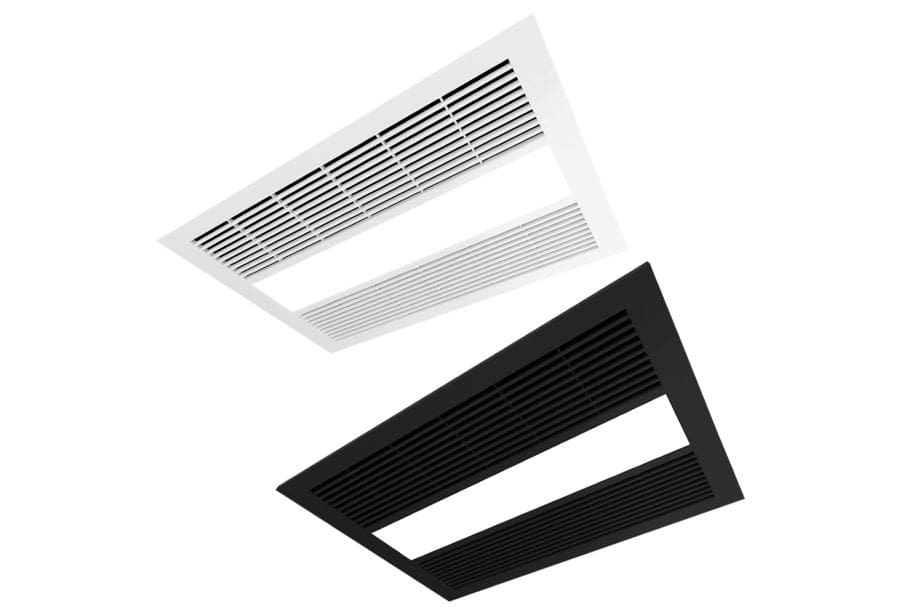
Manrose Milan 3-in-1 heat fan light bathroom ceiling unit

https://www.plumbingplus.co.nz/manrose-designer-milan-heat-fan-light


Product 3: Fan Heater — Goldair 2000W Fan Heater from Mitre 10

The Goldair 2000W Fan Heater is the practical, no-commitment option for Auckland homeowners who need heating without installation. Available at Mitre 10 for $50–$100, it suits renters and tight renovation budgets in suburbs like Henderson, Glenfield, or Manurewa. It heats fast — but it’s not efficient for sustained daily use and will make itself heard in a small tiled space.

Key features:

  • 2000W forced-air heating — fast warmth.
  • Portable — no installation required.
  • Tip-over protection and overheat shut-off.
  • Adjustable thermostat.

Why it works in NZ: For temporary or supplemental heating, this does the job without commitment. It’s not the right primary heater for an Auckland winter — but as a stopgap while a renovation is underway, or as a backup unit, it’s genuinely useful.

Price range: $50–$100

Budget Tip: Pair with a dehumidifier if this is your main heating option. A fan heater moves warm air around — it doesn’t actually extract moisture, so Auckland’s humidity will still accumulate without something to deal with it.

Goldair Platinum 2000W portable bathroom fan heater from Mitre 10 NZ

https://www.mitre10.co.nz/shop/goldair-platinum-bathroom-heater-2000-watt-white/p/415432


Product 4: Towel Rail — Mizu Soothe Vertical Heated Towel Rail

The Mizu Soothe Vertical solves a specific Auckland problem: damp towels. In coastal suburbs like Mission Bay and Devonport, where ambient humidity stays high through winter, towels that don’t dry properly between uses become genuinely unpleasant within a few days. Available at Reece, this low-energy electric rail keeps towels dry year-round while adding ambient warmth — and it looks the part in a quality renovation.

Key features:

  • Low energy draw — modest wattage per rail (varies by configuration).
  • Available in polished stainless, brushed stainless, matte black, or brushed gold.
  • IPX4 moisture resistance.
  • Concealed wiring for a clean wall finish.

Why it works in NZ: The 304-grade stainless steel construction holds up in coastal conditions — a detail that matters in Auckland suburbs where cheaper finishes show salt damage within a few years. Low running cost and multiple finish options make it a practical and design-conscious choice.

Price range: $300–$700

Style Tip: Match the rail finish to your tapware. Matte black against matte tapware, brushed gold against brass fixtures — consistency in hardware finish is one of the details that makes a renovated Auckland bathroom look intentional rather than assembled.
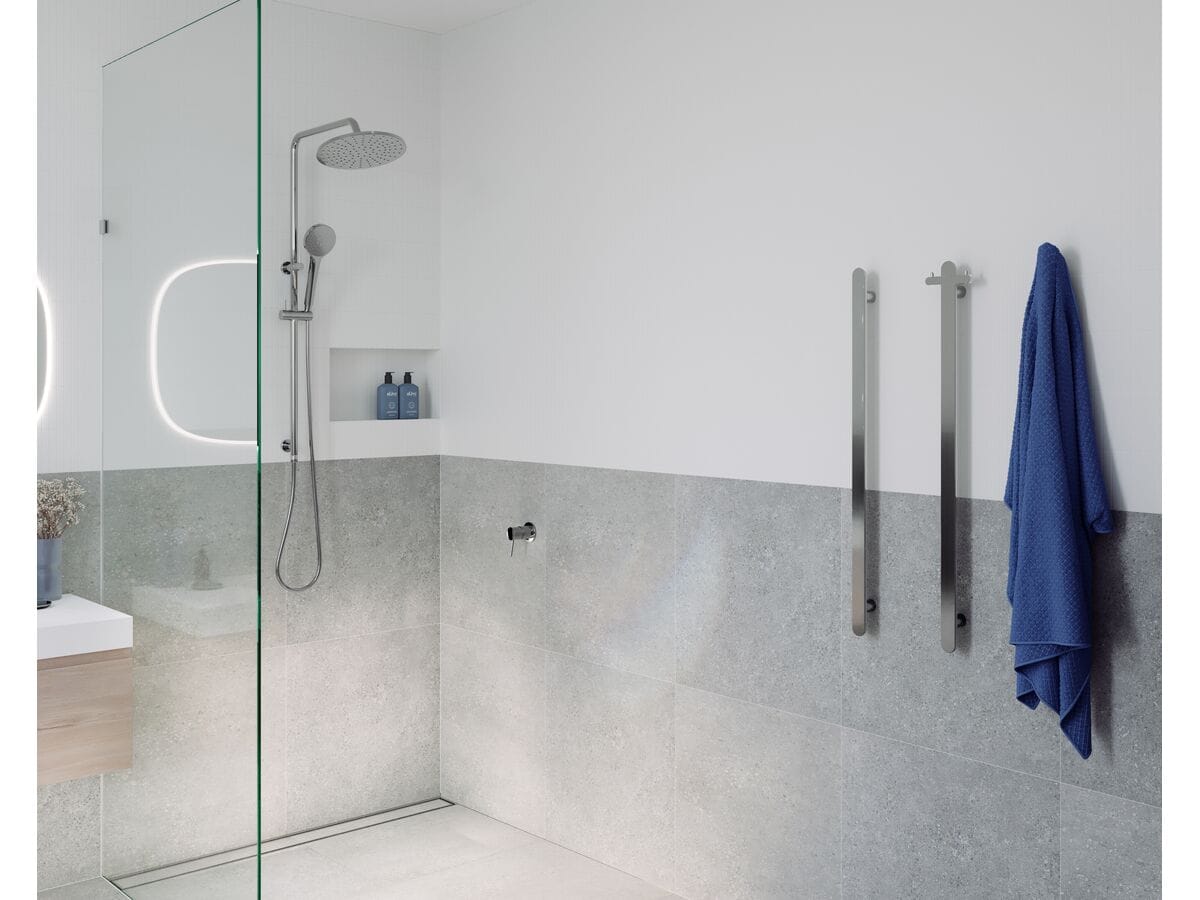
Mizu Soothe vertical heated towel rail chrome finish Auckland bathroom

https://www.reece.co.nz/product/mizu-soothe-vertical-heated-towel-rail-triple-2002797


Product 5: Underfloor Heating — Heatwell Underfloor Heating System

Heatwell’s electric underfloor heating system is the right call for premium Auckland renovations where the brief is comfort without compromise. Suited to larger bathrooms in suburbs like Albany or Epsom, it delivers consistent radiant heat across the entire floor — under tiles, vinyl, or machined timber — with silent operation and a programmable thermostat for efficient daily use.

Key features:

  • Even radiant heat — no cold spots anywhere on the floor.
  • Programmable thermostat for precise control.
  • Completely silent — 0dB operation.
  • Compatible with tiles, vinyl, and machined wooden floors.

Why it works in NZ: Heatwell has decades of NZ installation experience, which matters for a product that has to perform through Auckland’s humid coastal winters. Radiant floor heat reduces the dampness that accumulates in cold bathrooms — particularly useful in the Auckland climate where the combination of moisture and cold is the core problem.

Price range: $1,500–$3,000 (system) plus $500–$1,500 (installation)

Luxury Tip: Install underfloor heating during the tile-laying phase of your renovation — that’s the only practical window. Retrofitting it afterwards means lifting finished floors. If it’s in the brief, it needs to be in the programme from the start.

Heatwell underfloor heating system installation Auckland bathroom renovation

https://www.heatwell.co.nz/


Top 5 Comparison

Heater Type Price Range Best For Energy Efficiency
Goldair Ceramic WiFi Wall-Mounted $150–$200 Small bathrooms High (ceramic element)
Manrose 3-in-1 Ceiling-Mounted $200–$300 Small to medium bathrooms Moderate
Goldair Fan Heater Fan Heater $50–$100 Budget or temporary use Low
Mizu Soothe Vertical Towel Rail $300–$700 Style-conscious renovations High (low wattage)
Heatwell Underfloor Underfloor $1,500–$3,000 Premium renovations High (programmable)

Match the product to your bathroom size and renovation brief, and the right choice becomes fairly straightforward. For compact spaces on a sensible budget, the Goldair Ceramic WiFi. For most family bathroom renovations, the Manrose 3-in-1. For a premium brief with a serious floor experience, Heatwell.

Tip: Buy for your bathroom’s actual requirements, not the most impressive specification. The right heater for the space will outperform an over-specified one in a room it’s not suited for.

Installation Tips and Costs for Bathroom Heaters in New Zealand

Choosing the right heater is half the job. The other half is getting it installed properly — correctly sized, code-compliant, and done at the right point in the renovation. Here’s what you need to know about DIY vs. professional installation, typical costs in Auckland, and how to keep running costs down once it’s in.

Planning the Installation

The most common installation mistake Auckland homeowners make is treating the heater as an afterthought — something to sort once the tiles are down and the vanity is in. For underfloor heating, that’s already too late. For ceiling-mounted 3-in-1 units, ducting routes need to be confirmed before linings go up. For wall-mounted heaters, the electrical circuit needs to be part of the rough-in, not a retrofit. Get this into the renovation programme early and you save money and avoid rework. Get it wrong and the cleanest fix is often more invasive than the original install would have been.

Tip: Confirm your heater selection and installation requirements before the renovation starts — not after. For anything hardwired, that conversation needs to happen at the rough-in stage.


DIY vs. Professional Installation

The type of heater determines whether DIY is an option — and in most cases it isn’t. Fan heaters are the exception: plug them in and they work. Everything else needs a licensed electrician in NZ.

DIY Installation

Suitable for plug-and-play units like fan heaters from Mitre 10. No electrical work, no permits, no installer needed. The trade-off is that you’re limited to portable units, which have real limitations for daily winter use in an Auckland bathroom.

Pros and cons of DIY:

Pros Cons
No professional fees Limited to portable heaters only
Done in under an hour Not an option for any hardwired unit
Right for temporary or rental situations Safety risks if misused or placed incorrectly

DIY Tip: Keep fan heaters on a stable, dry surface at least 1.8m from any water source. This isn’t a preference — it’s the NZ electrical safety standard.

Professional Installation

Required for wall-mounted, ceiling-mounted, towel rail, and underfloor systems. These all involve hardwiring or structural integration and must comply with NZ Building Code Clause E2. The electrician needs to be licensed and registered with the Electrical Workers Registration Board (EWRB).

Pros and cons of professional installation:

Pros Cons
Code-compliant and signed off correctly Higher upfront cost
Safe, reliable, and warranty-valid Needs to be scheduled — lead times vary
Done once, done properly Adds to renovation timeline if not planned early

Compliance Tip: Use an EWRB-registered electrician. Non-compliant electrical work in NZ can result in fines up to $7,500 — and the rework costs more than hiring correctly the first time.

Installation Costs in New Zealand

Auckland labour rates sit higher than most other NZ regions — a reality of the local market that applies to electrical work as much as anything else. Here’s a realistic breakdown of total costs (unit plus installation) based on current market conditions.

Cost breakdown by heater type:

Heater Type Unit Cost Installation Cost Total Cost
Fan Heater $50–$100 $0 (DIY) $50–$100
Wall-Mounted Heater $150–$300 $150–$400 $300–$700
Ceiling-Mounted Heater $200–$450 $200–$600 $400–$1,050
Heated Towel Rail $250–$600 $150–$400 $400–$1,000
Underfloor Heating $1,000–$2,500 $500–$1,500 $1,500–$4,000

Underfloor heating sits at the top end of the cost range, which is where the 18-month interest-free Q Mastercard finance option tends to come into play for clients who want premium heating in the brief but are managing cashflow against the rest of the renovation. It’s not the right tool for every job — but for a $40,000–$60,000 bathroom overhaul where underfloor is in the spec, it can be the difference between specifying it in and cutting it out.

Cost-Saving Tip: Bundle heater installation with other electrical work during your renovation. A sparkie already on-site costs less per hour than a separate call-out. Check whether your chosen installation needs a building consent — structural work can add $500–$2,000 to the overall cost.


Keeping Running Costs Down

At 30–35c/kWh, a poorly managed bathroom heater is an expensive appliance. EECA estimates efficient heating choices can reduce household energy consumption by up to 20%. In a bathroom, the gains come from using the heater only when needed — which requires the right controls, not willpower.

Practical energy efficiency tips:

  • Use timers and thermostats: Programme units like the Goldair Ceramic WiFi Heater to run 15 minutes before your shower and switch off automatically — not manually.
  • Insulate the bathroom: Wall and ceiling insulation retain heat. A well-insulated bathroom holds temperature longer after the heater turns off — meaning the heater runs less.
  • Use extraction properly: Run the exhaust fan during and for 10–15 minutes after showering. Not continuously — that just removes warm air and makes the heater work harder.
  • Right-size the heater: A 2400W heater in a 6m² bathroom is wasteful. Match wattage to room size — the table above makes this straightforward.
  • Clean regularly: Filters on ceiling-mounted units accumulate dust in Auckland’s air. A blocked filter reduces efficiency and shortens the unit’s life.

Energy-Saving Example: A 1000W wall-mounted heater running 2 hours daily at 35c/kWh costs roughly $25 per month. A programmable timer cutting that to 1 hour saves $150 over a winter — more than the timer costs to install.


If you’re looking for specific cost estimates, try our Renovation Cost Calculator Tools


Permits and Compliance in Auckland

Certain installations require Auckland Council consent — particularly anything involving electrical changes to the structure or affecting other building elements. Auckland Council notes that installations affecting electrical systems or structural elements may need building consent, with fees typically $500–$2,000. Non-compliance creates liability and can complicate future property sales.

Compliance Tip: Before your electrician orders or installs a unit like a Weiss ceiling-mounted heater, confirm whether a consent is required for your specific installation. That conversation is free. The rework if you get it wrong is not.

Getting the Installation Right

For Auckland homeowners, professional installation for any hardwired heater is the only sensible path. The cost is real but it’s a small fraction of what a non-compliant or poorly executed installation can cost to remediate — and it’s the only way to ensure the unit performs as specified and the warranty remains valid.

Tip: Professional installation for hardwired heaters, timers for energy control, bundled with other electrical work where possible. That combination delivers the best cost and performance outcome for an Auckland bathroom renovation.


Getting Your Auckland Bathroom Warm and Keeping It That Way

Choosing the right bathroom heater is one of the decisions in a bathroom renovation that’s easy to underestimate and hard to fix afterwards. A quality heater matched to the bathroom’s size and Auckland’s specific conditions — humidity, coastal air, cold winter mornings — protects the renovation, keeps the space functional, and makes daily use genuinely comfortable. Whether that’s the Goldair Ceramic WiFi for a compact ensuite or a Heatwell underfloor system for a premium build, the right choice starts with understanding what the room actually needs. If you want guidance on what suits your specific project, that’s the conversation we have with every client through our Design Studio — and on the bathrooms we’ve delivered, getting heating right in the design brief has saved more callbacks than any other single decision.

Book your free in-home consultation with Superior Renovations
Use our Bathroom Renovation Cost Calculator
Request a free feasibility report for your project


Why do I need a bathroom heater in my Auckland home?

Auckland's winter humidity sits at 70–80% and temperatures regularly drop below 10°C. Without proper heating, bathrooms accumulate mould, damage fixtures, and become unpleasant to use — even in a freshly renovated space. A good heater prevents all three. For coastal suburbs like Mission Bay, Takapuna, or Devonport, the combination of salt air and humidity makes adequate heating more important than in drier parts of the country.

What type of bathroom heater is best for a small ensuite?

Wall-mounted heaters like the Goldair Ceramic WiFi Heater suit small ensuites (5–8m²) well — compact, efficient, and app-controllable. Portable fan heaters from Mitre 10 work for temporary or budget situations, but aren't the right daily solution for an Auckland winter. For ensuites with limited ceiling cavity depth, common in older Mt Eden and Grey Lynn villas, wall-mounted is typically the most practical option.

Are bathroom heaters energy-efficient?

Modern heaters with ceramic elements, thermostats, and timers can reduce running costs by up to 20% compared to older models, according to EECA. The timer is the feature that makes the biggest practical difference. A 1000W heater on a 1-hour timer costs around $12.50 per month at 35c/kWh — half what the same unit costs running for 2 hours daily without controls.

Do I need a professional to install a bathroom heater?

Any hardwired heater — wall-mounted, ceiling-mounted, towel rails, or underfloor systems — requires a licensed EWRB-registered electrician in NZ. Portable fan heaters are the only DIY option. Non-compliant electrical work can result in fines up to $7,500 and will void product warranties, so professional installation isn't optional for anything beyond a plug-in unit.

How much does it cost to install a bathroom heater in Auckland?

Total costs range from $50–$100 for a DIY fan heater through to $1,500–$4,000 for underfloor heating including installation. Wall-mounted units sit at $300–$700 total, ceiling-mounted 3-in-1 units at $400–$1,050, and heated towel rails at $400–$1,000. Building consent can add $500–$2,000 for more complex installations. Bundling with other electrical work during the renovation reduces labour cost.

What safety features should I look for?

IPX4 water resistance rating as a minimum for any bathroom heater. Overheat protection and tip-over switches on portable units. Child locks for family bathrooms. Hardwired wall-mounted units must be installed at least 1.8m above floor level under NZ electrical standards — this isn't a guideline, it's a requirement. Always check for NZ safety compliance markings before purchase.

How long do bathroom heaters last in Auckland's humid climate?

Quality wall-mounted and ceiling-mounted units typically last 8–12 years in Auckland conditions, with the heating element being the most common failure point. Underfloor heating systems can last 20+ years if installed correctly. Coastal suburbs accelerate corrosion on lower-quality units — 304-grade stainless steel and IPX4-rated components are worth specifying from the start. Annual filter cleaning on ceiling-mounted units extends their life significantly.

Do I need building consent for a bathroom heater in Auckland?

For most plug-in fan heaters and basic wall-mounted units, no consent is required. Installations involving structural changes — cutting into ceiling cavities, modifying framing, or affecting plumbing routing — may need building consent under NZ Building Code Clause E2. Consent fees typically run $500–$2,000. Underfloor heating that affects flooring buildup or hot water systems is the most likely to require consent. Check with Auckland Council before installation starts.

Is underfloor heating worth it in an Auckland bathroom?

For master bathrooms over 10m² in premium renovations, underfloor heating typically earns its cost — silent operation, even heat, and a genuinely comfortable floor experience. For ensuites under 8m² or budget renovations, a quality wall-mounted ceramic unit delivers more practical value per dollar. Underfloor has to be planned during the renovation, not retrofitted, so the decision needs to happen before tile-laying starts.

What size bathroom heater do I need for a family bathroom?

For a typical Auckland family bathroom of 8–12m², 1000–1800W is the right wattage range. A 3-in-1 ceiling unit like the Manrose 1000W or IXL Tastic Luminate Dual (2 x 800W) suits this size well — combining heat, light, and extraction in one installation. Add 10% to recommended wattage for humid Auckland conditions. Undersized heaters run constantly without warming the room properly; oversized units waste energy.


Further Resources for your bathroom renovation

  1. Featured projects and Client stories to see specifications on some of the projects.
  2. Real client stories from Auckland homeowners.
  3. Browse our Bathroom Design Gallery for layout and finish ideas.

Need more information?

Take advantage of our FREE Complete Home Renovation Guide (48 pages), whether you’re already renovating or in the process of deciding to renovate, it’s not an easy process, this guide which includes a free 100+ point check list – will help you avoid costly mistakes.

Download Free Renovation Guide (PDF)


finance - Superior Renovations

Have you been putting off getting renovations done?

We have partnered with Q Mastercard ® to provide you an 18 Month Interest-Free Payment Option, you can enjoy your new home now and stress less.

Learn More about Interest-Free Payment Options*

*Lending criteria, fees, terms and conditions apply. Mastercard is a registered trademark and the circles design is a trademark of Mastercard International Incorporated.


Still have questions unanswered?

Book a no-obligation consultation with the team at Superior Renovations,
we’d love to meet you to discuss your renovation ideas!
    Services

    Home RenovationKitchen RenovationBathroom RenovationOutdoor RenovationHouse ExtensionCommercialDesign ServicesOther

    By submitting this form, you agree to receive communications from us via email or text regarding our services, you can unsubscribe at any time.

    This site is protected by reCAPTCHA and the Google

    Privacy Policy and Terms of Service apply.

    IMG 0743 - Superior Renovations
    House Renovation

    Fence Ideas NZ: Best Fencing Options for Auckland Homes

    If you’re thinking about a new fence in Auckland — whether that’s managing the wind in Titirangi, getting proper privacy in Mt Roskill, or framing views from Mission Bay — the material choice matters more than most people realise. Our climate is hard on fences: salt air, humid summers, UV, and the occasional battering from westerly fronts. This guide covers the main options honestly — timber, aluminium, composite, glass, steel, vinyl, concrete, stone, wire, and green walls — with real cost ranges and what actually holds up in our conditions.

    What’s the Top Fence Material for Auckland’s Conditions?

    Aluminium is the standout for coastal properties. It doesn’t rust, needs minimal maintenance, and handles the salt air in places like Takapuna or Mission Bay without deteriorating the way timber or steel can. Go slatted or louvred if you want airflow on windy days. Timber is still the right call for heritage villas in Remuera or Ponsonby — paling or picket at $100–$400 per metre — but it needs regular staining to handle UV and rain. Composite is gaining ground fast for Grey Lynn renovations: it looks like timber, resists humidity, and runs about $200–$450 per metre. For rural sections in Dairy Flat or Warkworth, chain link or net wire at $40–$150 does the job without fuss or wasted budget.

    How Do You Pick a Fence That Suits Privacy, Security, and NZ Rules?

    Start with what the fence actually needs to do. Full privacy in a busy urban street? Solid composite or concrete panels block sightlines and absorb noise — relevant for Onehunga properties near the motorway. Views and pool safety? Frameless glass suits beachfront homes in St Heliers, but budget $300–$600 per metre and be across the pool fencing regulations, which are stricter than standard fence rules. Security priority? Steel tubular or wrought iron gives that solid edge for Parnell properties. Most fences under 2.5m don’t need consent — check Building.govt.nz and confirm with Auckland Council, particularly in heritage zones where extra rules apply. Green walls with climbing vines are worth considering for eco-minded Mt Eden gardens: living privacy that cools the property in summer, but they need consistent watering and pruning to stay effective.

    Which Budget-Friendly Options Hold Up in Auckland Conditions?

    Vinyl pickets ($100–$300) or treated pine are the practical choice for family homes in Howick — easy to clean and durable through wet winters. Stone or schist walls deliver a premium result for Remuera properties ($400–$800 per metre), but the installation is complex and the cost reflects it. Worth getting multiple quotes from suppliers like Bunnings or Mitre 10 before committing. For coastal and urban sites, powder-coated aluminium usually wins the ten-year cost comparison when you factor in how little maintenance it needs.

    Thinking about sorting the boundary properly? Get in touch with Superior Renovations for a free conversation about what would work for your property.

    Finding the Right Fence for Your Auckland Home

    A fence does more than mark a boundary. For Auckland homeowners, it manages privacy in tightly packed suburbs, deals with coastal salt and wind, complements the architecture, and — if chosen well — holds its value over time. The options span a wide range: timber, glass, aluminium, composite, steel, concrete, stone, wire, green walls. Each has a place. Each has trade-offs. This guide works through the main fence ideas NZ homeowners are considering in 2025, with honest cost ranges, practical pros and cons, and enough Auckland-specific context to make the decision straightforward. Whether you’re working on a front fence in Titirangi or a pool boundary in Mission Bay, the right choice starts with understanding what each material actually delivers.

    Auckland’s conditions matter for every material decision here. Humid summers, coastal salt air, UV intensity, and westerly winds all affect how a fence performs. We’ve drawn on insights from our designer Dorothy Li and local regulations at Building.govt.nz, and referenced products from Bunnings, Mitre 10, and PlaceMakers. The goal is a straightforward guide to fence design NZ that helps you make an informed call without wading through marketing copy.


    If you’re looking for specific cost estimates, try our Renovation Cost Calculator Tools


    Timber Fencing: What Auckland Homeowners Need to Know

    Timber is still the most common fencing material across Auckland — and for good reason. It suits the character of older homes, it’s flexible in terms of style and finish, and for the right property it’s hard to beat on aesthetics. Whether you’re in Ponsonby or Papakura, timber can work. But it’s not a low-effort choice, and in Auckland’s conditions specifically, the maintenance commitment is real.

    The appeal of timber is straightforward. It brings warmth and a natural look that complements Auckland’s gardens — from coastal Mission Bay properties to Henderson backyards. Dorothy Li puts it plainly: “A timber fence can be stained or painted in virtually any colour, making it a versatile choice that integrates your home with its surroundings.” It’s also genuinely DIY-friendly for homeowners who want to be hands-on.

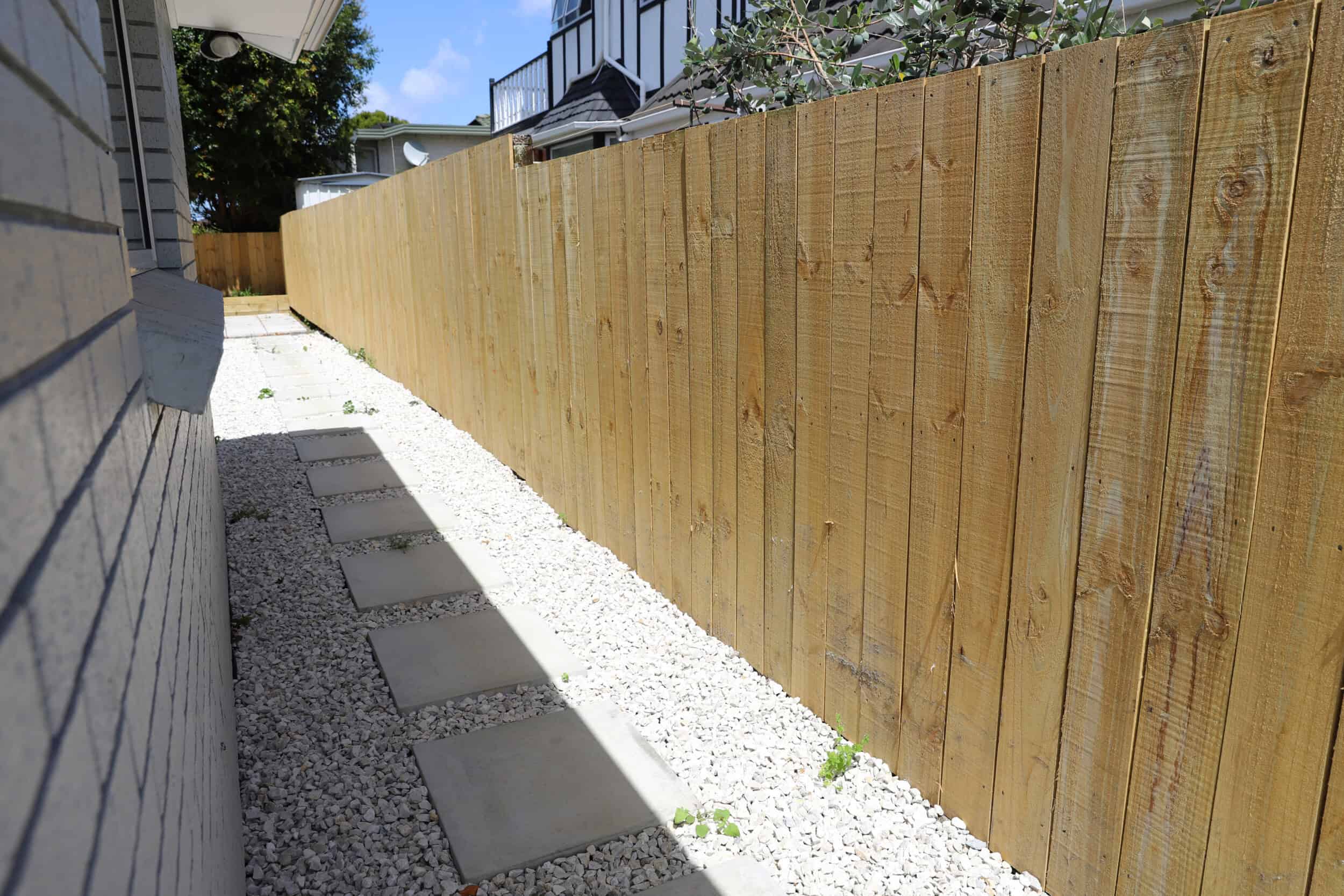
    IMG 0730 - Superior Renovations

    Timber Fencing by Superior Renovations

    Pros of Timber Fencing

    • Aesthetic flexibility: Can be stained, painted, or left natural to match any home style — from modern villas to classic bungalows.
    • Privacy: Tall paling fences from suppliers like PlaceMakers block sightlines effectively, well-suited to Auckland’s tightly packed suburbs.
    • Affordability: At $100–$300 per lineal metre depending on wood type, timber is cheaper upfront than most alternatives.
    • Sustainability options: Reclaimed wood from suppliers like Woodmart suits eco-conscious homeowners and gives a genuinely distinctive result.

    Cons of Timber Fencing

    • Ongoing maintenance: As Dorothy Li notes, timber needs painting, staining, or sealing every few years to hold up against Auckland’s humid, coastal climate.
    • Weather sensitivity: Untreated or neglected timber warps, rots, and attracts pests — particularly through Auckland’s wet winters.
    • Long-term cost: Treated pine or hardwood lasts well when maintained. Without it, replacement costs add up.

    Cost Breakdown

    Timber fencing costs vary by material and style. Here’s a realistic guide for Auckland:

    Fence Type Cost per Lineal Metre Supplier
    Treated Pine Paling $100–$200 Bunnings
    Hardwood Paling $200–$400 Mitre 10
    Reclaimed Wood $150–$350 Woodmart
    Picket Fence $120–$250 PlaceMakers


    Timber Fence Styles for Auckland

    Auckland’s mix of architectural styles calls for different approaches. Common timber options that work well here:

    • Paling fences: Treated pine or hardwood — the practical choice for privacy. Bunnings carries affordable options across most grades.
    • Picket fences: Front yard classic for Remuera or Epsom — adds character without closing off the street frontage. Available at PlaceMakers.
    • Trellis-topped fences: Privacy with an open, airy feel — suits Mt Eden gardens well. Mitre 10 has a solid range.
    • Board and batten: Alternating paling widths give a rustic result. Available through Trade Tested.

    On consents: Under New Zealand’s Building Code, fences under 2.5 metres typically don’t need a building consent — Building.govt.nz covers the detail. Always confirm with Auckland Council for your specific site, particularly in heritage zones where additional rules apply.

    Timber is a genuinely good fencing choice for Auckland when you go in with clear expectations. The aesthetics and flexibility are hard to beat. The maintenance is real and non-negotiable if you want it to last. Weigh those factors honestly for your property and lifestyle, and timber will either be an obvious fit or an obvious pass.

    Composite Fencing: Low Maintenance, Modern Looks

    Composite fencing — wood fibres and recycled plastic combined — has gained real traction in Auckland over the last few years. It suits the renovation direction a lot of Grey Lynn and Parnell properties are taking: clean, modern, and not asking for much attention. For homeowners who want something that looks like timber but performs like a hard material, composite is worth serious consideration.

    The practical case for composite is strong in Auckland’s climate. Dorothy Li on the material: “It’s designed to withstand harsh weather while requiring minimal upkeep.” Unlike timber, composite doesn’t need regular staining. It resists moisture, UV, and the salt air that degrades other materials in coastal suburbs. The eco credentials — made with recycled content — appeal to homeowners who want that to factor into the decision.

    Pros of Composite Fencing

    • Low maintenance: No painting or sealing required. A wash with soapy water keeps it in good shape.
    • Durable in Auckland conditions: Resists moisture, UV, and pests — all relevant for our climate.
    • Sustainable: Recycled materials content aligns with eco-conscious renovation goals.
    • Modern finish: Clean profiles and contemporary colour options suit newer Auckland homes and renovations in suburbs like Grey Lynn and Newmarket.

    Cons of Composite Fencing

    • Higher upfront cost: $200–$450 per lineal metre, depending on design and supplier — noticeably more than timber or vinyl.
    • Limited colour and style range: Pre-set options rather than the full flexibility of painted timber. May not suit heritage homes in Devonport.
    • Installation complexity: Sloped sections — common across Auckland — benefit from professional installation, which adds to overall cost.

    Cost Breakdown

    Composite fencing costs reflect its durability. Realistic Auckland pricing:

    Fence Type Cost per Lineal Metre
    Standard Composite Panel $200–$350
    Textured Composite $250–$400
    Premium Composite with Aluminium Frame $300–$450


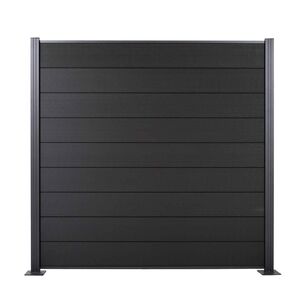
    300Wx300H null 1 - Superior Renovations

    https://www.placemakers.co.nz/online/outdoor-landscaping/fencing-netting-non-timber/fence-panels/powdercoated-steel-fence-panels/composite-fence-panel-kit-1800-x-1875mm-black/p/4511603

    Composite Fence Styles for Auckland

    Common composite options that suit Auckland’s range of properties:

    • Solid panels: Full privacy for densely packed areas like Mt Roskill.
    • Slatted designs: A modern, open feel for front yards in St Heliers.
    • Wood-grain finish: The aesthetic of timber without the upkeep — natural fit for eco-minded Titirangi properties.
    • Coloured panels: Charcoal, sandstone, and similar tones that suit minimalist design directions in Newmarket.

    On consents: Composite fences under 2.5 metres generally don’t need building consent under NZ’s Building Code — Building.govt.nz. Confirm with Auckland Council for coastal or heritage zone specifics.

    For Auckland homeowners who want the look of timber without committing to its maintenance cycle, composite is often the answer. The upfront cost is higher than timber — but the ten-year running cost is lower. If that trade-off works for your budget, it’s worth pricing properly before ruling it out.

    Aluminium Fencing: Rust-Proof, Low Maintenance, Built for Coastal Auckland

    Aluminium’s key advantage for Auckland is simple: it doesn’t rust. In coastal suburbs like Takapuna, Devonport, or Mission Bay where salt air is a constant, that single characteristic makes aluminium significantly more practical than steel, and less demanding than timber. Its contemporary look suits the direction most modern Auckland renovations are heading — clean lines, powder-coated finishes, and minimal ongoing work.

    Dorothy Li on aluminium: “It’s a fantastic option for homeowners wanting a sleek, long-lasting fence that doesn’t sacrifice style.” Whether you’re enclosing a pool in Ellerslie or defining a boundary in New Lynn, aluminium holds up without much input from you after installation.

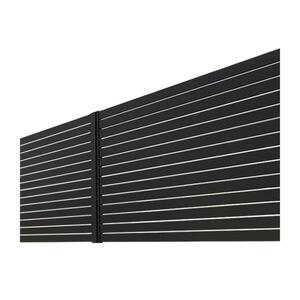
    300Wx300H null 2 - Superior Renovations

    https://www.placemakers.co.nz/online/outdoor-landscaping/fencing-netting-non-timber/fencing-accessories/aluminium-fencing/valla-series-slat-fence-pack-12m-x-65mm-grey/p/2250943


    Pros of Aluminium Fencing

    • Doesn’t rust: The defining advantage for coastal Auckland sites. Mission Bay, Devonport, Takapuna — aluminium handles salt air without deteriorating.
    • Low maintenance: A hose-down is all it needs. No painting, no sealing.
    • Manageable weight: Easier to install on Auckland’s sloped sections than steel or concrete, while still handling strong winds.
    • Finish options: Powder-coated in a range of colours from Bunnings — straightforward to match your home’s palette.

    Cons of Aluminium Fencing

    • Privacy limitations: Dorothy Li’s observation is accurate — aluminium’s typical open designs don’t provide full privacy. Slatted or louvred options help but cost more.
    • Price: $150–$400 per lineal metre puts it above basic timber, though well below glass or wrought iron.
    • Not suited to heritage properties: The contemporary aesthetic doesn’t read naturally against older homes in Ponsonby or Remuera where timber or wrought iron fits better.

    Cost Breakdown

    Aluminium pricing in Auckland by design and finish:

    Fence Type Cost per Lineal Metre Supplier
    Standard Aluminium Slats $150–$250 Mitre 10
    Powder-Coated Aluminium $200–$350 Bunnings
    Louvred Aluminium Panels $250–$400 Building Easy


    Aluminium Fence Styles for Auckland

    • Slatted fences: Pool areas or front boundaries in St Heliers — balance of openness and partial privacy.
    • Vertical bar fences: Minimalist and clean for modern Grey Lynn homes.
    • Louvred panels: Adjustable slats for both privacy and airflow — well-suited to windy Titirangi sites.
    • Decorative toppers: Add visual interest to a standard design for front yards in Mt Eden.

    On consents: Aluminium fences under 2.5 metres don’t typically require building consent — Building.govt.nz. Pool fencing is a different matter — strict safety requirements apply, so always confirm with Auckland Council before installation.

    For coastal or urban Auckland properties where low maintenance and corrosion resistance are priorities, aluminium is a strong contender. It’s not the cheapest option and it won’t suit every architectural style. But for the right site, it’s one of the most practical materials available in our market.

    Steel Fencing: Strength and Security for Auckland Properties

    Steel is the choice when security is the primary brief. It’s heavier, more robust, and more expensive than aluminium — but for properties in Waitakere’s rugged terrain or urban Mt Wellington where the fence needs to mean business, steel delivers. Modern powder-coated steel has moved well beyond industrial aesthetics and suits contemporary Auckland homes convincingly.

    Dorothy Li on steel: “It’s one of the toughest materials you can choose, offering security without compromising on style.” The range of finishes available — particularly powder-coated panels in darker tones — has made steel a more common choice for residential Auckland properties than it was a decade ago.

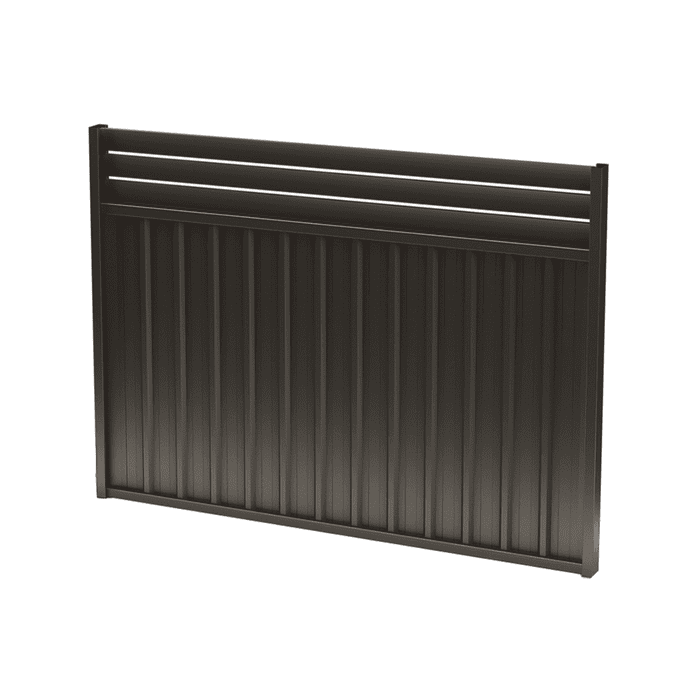
    SECTOR PANEL Fencing Borderline 1.5m 0.3m Slats Ebony panels - Superior Renovations

    https://www.bunnings.co.nz/sector-panel-fencing-1-5-0-3m-ebony-borderline-panel_p0421817


    Pros of Steel Fencing

    • Genuine strength: Handles impacts and Auckland’s coastal wind and rain load better than lighter materials.
    • Security: The right call for properties in Penrose or commercial-adjacent zones that need a solid barrier.
    • Low maintenance when powder-coated: Rust-resistant finish, just an occasional clean.
    • Contemporary aesthetic: Available finishes suit modern homes in Albany or Botany Downs well.

    Cons of Steel Fencing

    • Cost: $200–$500 per lineal metre — higher than timber or vinyl.
    • Weight: More complex to install, particularly on Auckland’s sloped sections.
    • Privacy: Tubular or slatted designs are open by nature. Adding infills for privacy increases cost.

    Cost Breakdown

    Steel fencing costs in Auckland by type:

    Fence Type Cost per Lineal Metre Supplier
    Tubular Steel Fence $200–$350 Bunnings
    Powder-Coated Steel Panels $250–$450 Mitre 10
    Custom Steel with Infills $300–$500 PlaceMakers

    Steel Fence Styles for Auckland

    • Tubular steel: Pool fencing or front boundaries in Takapuna — security with maintained visibility.
    • Slatted steel panels: Modern and clean for urban Newmarket properties.
    • Powder-coated designs: Bold colour options for contemporary Henderson homes.
    • Decorative steel: Custom patterns for standout Remuera frontages.

    On consents: Fences under 2.5 metres generally don’t need consent — Building.govt.nz. Pool fencing has stricter requirements — always check with Auckland Council before proceeding.

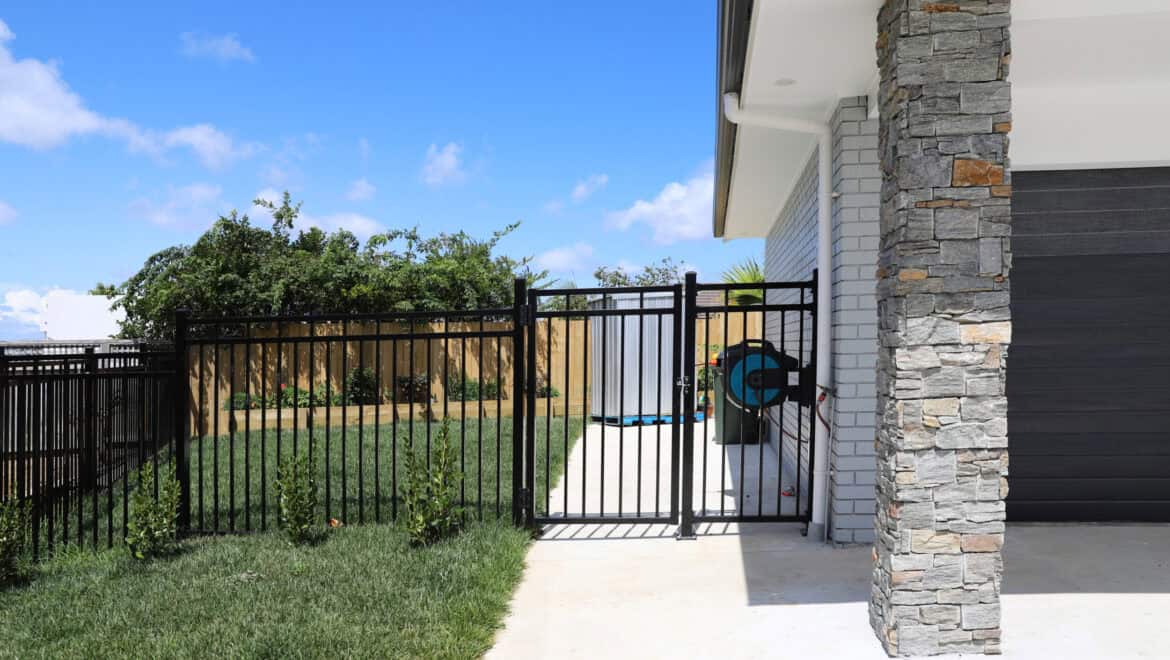
    cat steel - Superior Renovations

    https://www.placemakers.co.nz/online/projects/landscaping/fencing/metal-fencing

    Steel earns its place when security is genuinely the priority. It’s heavier and more expensive than aluminium, and it won’t suit every home’s style. But for properties that need a fence with genuine presence, it’s the right call.

    Vinyl Fencing: Budget-Friendly and Easy to Live With

    Vinyl doesn’t get much attention in design conversations, but for the right Auckland property it makes real sense. Family homes in Howick or Papakura that need a clean, durable fence without a significant maintenance commitment — vinyl is a practical answer. It’s made from PVC, which handles Auckland’s humidity and salt air without rotting or rusting, and it costs less to own over ten years than timber despite similar upfront pricing.

    Dorothy Li’s take on vinyl is accurate: “It’s designed to look great and last long with minimal effort.” The limitation is customisation — vinyl comes in pre-set colours, mostly white and neutral tones, and doesn’t suit heritage aesthetics or bold design directions. But for what it does, it does it reliably.

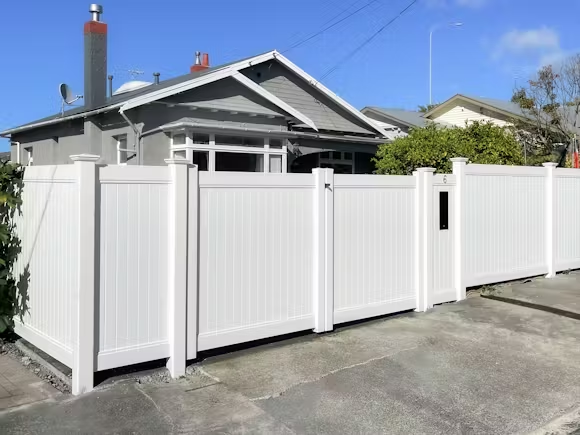
    979414 pvc privacy fence panel kit 1.8m x 2.4m 2c - Superior Renovations

    https://www.tradetested.co.nz/p/gardening/fencing/privacy-fence-system/pvc-privacy-fence-panel-kit-1-8m-x-2-4m

    Pros of Vinyl Fencing

    • Low maintenance: No staining or painting — just a wash. That’s the whole maintenance regime.
    • Durable in Auckland conditions: Resists rot, pests, and UV fade through wet winters and sunny summers.
    • Affordable: $100–$300 per lineal metre — cheaper than aluminium or composite at equivalent quality levels.
    • Style range: Picket, privacy panels, ranch-style — enough variety to suit most family home situations.

    Cons of Vinyl Fencing

    • Colour and style limitations: Pre-set options, mostly whites and neutrals. Doesn’t suit Remuera heritage homes or bold contemporary design directions.
    • Impact vulnerability: Vinyl can crack under heavy impact — a consideration for windy Titirangi sections where debris is a real factor.
    • Environmental footprint: PVC is less sustainable than composite or reclaimed timber — worth considering if that’s a priority for your build.

    Cost Breakdown

    Vinyl fencing is cost-effective for Auckland homeowners. Typical pricing:

    Fence Type Cost per Lineal Metre
    Vinyl Picket Fence $100–$200
    Vinyl Privacy Panels $150–$250
    Textured Vinyl Panels $200–$300

    Vinyl Fence Styles for Auckland

    • Picket fences: Front yards in Epsom or Papakura — adds character without closing off the view.
    • Privacy panels: Full coverage for secluded Mt Roskill backyards.
    • Ranch-style: Low, open design for larger Albany sections.
    • Textured panels: Wood-grain look for modern Newmarket properties that want the aesthetic without the upkeep.

    On consents: Vinyl fences under 2.5 metres don’t typically require consent — Building.govt.nz. Pool fencing has different requirements — confirm with Auckland Council.

    961890 pvc picket fence panel kit 1.2m x 2.4m 1c - Superior Renovations

    https://www.tradetested.co.nz/p/gardening/fencing/picket-fence-system/pvc-picket-fence-panel-kit-1-2m-x-2-4m


    Vinyl won’t win a design competition, but it’s a dependable, low-cost option for Auckland family homes that need a functional fence without the maintenance overhead. If your priorities are budget and practicality, it deserves a proper look.

    Glass Fencing: Views, Pool Compliance, and Contemporary Aesthetics

    Glass fencing has a specific and well-defined role: preserving views while maintaining a safety boundary. For coastal properties in Mission Bay or modern homes in Wynyard Quarter with established outlooks, it’s the only material that genuinely delivers on both. It’s also the standard choice for pool fencing where maintaining sightlines across the yard matters. But it comes at a price — in both upfront cost and cleaning commitment.

    Dorothy Li from Superior Renovations on glass: “It’s ideal for showcasing your property’s views while maintaining safety and security.” For Herne Bay properties or beachfront sections anywhere on Auckland’s coast, that’s a genuine and practical benefit that other materials can’t replicate.

    Mitre10 1500x1500 - Superior Renovations

    https://www.mitre10.co.nz/shop/guardian-balustrade-face-fixed-glass-panel-h-1280mm-w-1500mm-d-12mm/p/326333

    Pros of Glass Fencing

    • Unobstructed views: The only material that gives you a proper view of Auckland’s coastal vistas or established garden from behind the boundary.
    • Pool safety compliance: Toughened glass meets NZ’s strict pool fencing standards — a practical choice for family homes in St Heliers.
    • Low maintenance: A wipe with glass cleaner keeps it clear — quick and simple.
    • Contemporary look: Transparent and minimal — suits modern Auckland architecture cleanly.

    Cons of Glass Fencing

    • Cost: $300–$600 per lineal metre depending on thickness and framing — one of the pricier options on this list.
    • Cleaning frequency: Glass shows fingerprints, water spots, and salt residue — in Auckland’s coastal climate that means regular attention.
    • No privacy: Transparent by design. Frosted options provide partial privacy but cost more and change the aesthetic significantly.

    Cost Breakdown

    Glass fencing is a premium investment. Auckland pricing by style:

    Fence Type Cost per Lineal Metre
    Frameless Glass Panels $400–$600
    Semi-Framed Glass $350–$500
    Frosted Glass Panels $450–$600

    Glass Fence Styles for Auckland

    • Frameless glass: The cleanest, highest-end result for pool areas or balconies in Devonport.
    • Semi-framed glass: Aluminium or steel frames add stability — relevant for exposed Titirangi sites where wind loads are real.
    • Frosted glass: Partial privacy without losing the light — suits urban Newmarket properties.
    • Tinted glass: Contemporary edge for coastal Milford properties.

    On consents: Pool fencing almost always requires consent and must meet NZ’s safety standards — this is not optional. Most other glass fences under 2.5 metres don’t require consent, but confirm with Auckland Council — Building.govt.nz has the detail.

    Glass fencing is the right choice for a specific brief: maintain the view, comply with pool safety, create a contemporary boundary. Outside of that brief, the cost and cleaning commitment are hard to justify. Know what you need the fence to do, and glass either fits that clearly or it doesn’t.

    Wrought Iron Fencing: Character, Security, and Long-Term Durability

    Wrought iron has been the go-to material for heritage Auckland suburbs like Remuera and Devonport for generations — and for good reason. The intricate designs suit Victorian and Edwardian architecture in a way no modern material replicates convincingly. It’s also genuinely strong. But it comes with a maintenance obligation: without proper treatment, Auckland’s humidity will find the iron and rust will follow.

    Dorothy Li on wrought iron: “It adds a sense of grandeur while providing excellent security.” For front boundaries in Ponsonby or garden enclosures in Epsom where the architectural character of the fence needs to match the property, wrought iron delivers in a way aluminium or composite simply doesn’t.

    IMG 0743 - Superior Renovations

    Pros of Wrought Iron Fencing

    • Durability: With proper treatment, wrought iron withstands Auckland’s coastal winds and rain for decades.
    • Security: The height and density of a well-specified wrought iron fence is a genuine deterrent — relevant for Parnell properties.
    • Customisable design: Ornate scrollwork or clean vertical bars — the range of styles is broad.
    • Suits heritage properties: Complements older Auckland homes and adds genuine character to Mt Eden frontages.

    Cons of Wrought Iron Fencing

    • Cost: $300–$600 per lineal metre — at the premium end of the market.
    • Rust risk without maintenance: Auckland’s humidity is the enemy of untreated or powder-coat-failed iron. Regular inspection and repainting is non-negotiable.
    • Limited privacy: Open designs by nature. Adding infills increases cost and changes the look.

    Cost Breakdown

    Wrought iron fencing costs in Auckland:

    Fence Type Cost per Lineal Metre
    Standard Wrought Iron Bars $300–$450
    Ornate Wrought Iron $400–$600
    Powder-Coated Wrought Iron $350–$500

    Wrought Iron Fence Styles for Auckland

    • Ornate designs: Heritage homes in Remuera or Devonport — this is where wrought iron earns its reputation.
    • Vertical bars: Clean and minimal for Newmarket properties where security matters but so does modern aesthetics.
    • Powder-coated panels: Rust-resistant and available in multiple colours — the practical approach for coastal Takapuna properties.
    • Custom gates: Matching gate and fence combination for a cohesive Herne Bay frontage.

    On consents: Fences under 2.5 metres typically don’t require consent — Building.govt.nz. Heritage and coastal zones may have additional rules — confirm with Auckland Council.

    Wrought iron is the right material for a specific kind of Auckland property — one where the architecture demands it and the budget supports it. For everything else, aluminium delivers much of the visual result without the maintenance obligation or price.

    Concrete Fencing: Maximum Privacy and Noise Control

    Concrete does one thing better than any other fencing material: blocks everything. Sound, sightlines, wind. For Auckland homes near busy roads — Onehunga near the motorway corridor, Mt Albert on a main arterial — concrete is the serious answer to noise and privacy. It’s also essentially indestructible and asks very little from you once it’s up.

    Dorothy Li’s description is direct: “It’s a fantastic option for those who want a fence that’s virtually indestructible and blocks out noise.” The trade-off is cost, installation complexity, and an aesthetic that can feel heavy if the design isn’t handled well. Textured and painted options have addressed that significantly in recent years.

    Pros of Concrete Fencing

    • Durability: Handles Auckland’s coastal winds, UV, and rain without cracking or fading over time.
    • Privacy and noise reduction: Unmatched among fencing materials — the right call for Newmarket or Onehunga properties facing traffic noise.
    • Minimal maintenance: No paint, no sealant — an occasional wash is all it needs.
    • Finish options: Textured, painted, or patterned finishes from PlaceMakers can soften the aesthetic considerably.

    Cons of Concrete Fencing

    • Cost: $250–$500 per lineal metre — a significant investment.
    • Installation complexity: Heavy material, requires solid foundations and professional installation — particularly relevant on Auckland’s sloped sections.
    • Aesthetic limitations: Can read as industrial. Doesn’t suit the character of heritage Remuera or Devonport properties.

    Cost Breakdown

    Concrete fencing costs in Auckland by type:

    Fence Type Cost per Lineal Metre
    Precast Concrete Panels $250–$400
    Textured Concrete $300–$450
    Custom-Patterned Concrete $350–$500

    Concrete Fence Styles for Auckland

    • Precast panels: Fast to install and effective for full privacy in urban Mt Roskill.
    • Textured panels: Stone or brick-effect finishes for modern Botany Downs properties that want the privacy without the industrial look.
    • Painted concrete: Colour adds warmth to Henderson frontages.
    • Patterned concrete: Decorative detail for upscale St Heliers properties.

    On consents: Concrete fences under 2.5 metres generally don’t need consent, but their weight may require engineering assessment for stability — particularly on sloped or unstable ground common across Auckland — Building.govt.nz. Confirm with Auckland Council before proceeding.

    Concrete is the high-performance privacy option. It’s not for every property or every street frontage — but for the brief it suits, nothing else comes close.

    Stone Wall Fencing: Permanence, Natural Beauty, and Premium Value

    Stone walls occupy the premium end of the fencing market — and they look it. For upscale Herne Bay properties or rural Dairy Flat sections where permanence and natural character are the brief, a properly built stone wall adds something that no manufactured material can replicate. It also adds to the property’s value in a way most other fencing materials don’t.

    Dorothy Li on stone: “They add a natural, timeless charm that enhances any property’s value.” That’s accurate — but the cost and installation complexity are equally real. This is not a DIY project, and the price reflects skilled masonry work.

    Pros of Stone Wall Fencing

    • Durability: Stone handles Auckland’s coastal exposure — salty air, heavy rain — without deteriorating. Properly built stone walls last generations.
    • Privacy and security: Solid, tall, and essentially immovable — excellent for Parnell or Remuera properties where seclusion and security are both priorities.
    • No maintenance: Once built, stone needs nothing — no paint, no sealant, no annual inspection regime.
    • Natural material: Local volcanic stone or schist reads authentically in Auckland’s landscape in a way that manufactured materials don’t.

    Cons of Stone Wall Fencing

    • Cost: $400–$800 per lineal metre — the most expensive fencing option in this guide by a significant margin.
    • Installation complexity: Requires skilled masons and solid foundations. Auckland’s sloped and variable soils add to that complexity.
    • Fixed and permanent: Once it’s built, changing it is a demolition project. Make sure you’re confident in the design before committing.

    Cost Breakdown

    Stone wall fencing costs in Auckland:

    Fence Type Cost per Lineal Metre
    Volcanic Stone Wall $400–$600
    Schist Stone Wall $500–$700
    Custom Stacked Stone $600–$800

    Stone Wall Styles for Auckland

    • Volcanic stone: Locally sourced and genuinely Auckland — natural fit for coastal Mission Bay properties.
    • Schist stone: Cleaner and more modern-reading — suits upscale Epsom homes.
    • Dry-stacked stone: Rustic, mortar-free construction for rural Albany sections.
    • Polished stone panels: Contemporary finish for Newmarket urban properties.

    On consents: Stone walls under 2.5 metres generally don’t require consent, but engineering assessment for structural stability may be needed — particularly on sloped or unstable sites — Building.govt.nz. Confirm with Auckland Council for boundary and heritage zone specifics.

    Stone walls are expensive and the right brief for them is specific: premium properties where permanence, natural material, and long-term value addition are the priorities. Outside of that brief, the cost is hard to justify against other options.

    Net and Wire Fencing: Practical and Affordable for Rural Auckland

    Net and wire fencing doesn’t try to do anything it can’t. It marks a boundary, keeps animals in or out, and does both cheaply and reliably. For rural and semi-rural Auckland properties — Pukekohe, Warkworth, Clevedon — it’s the standard solution for a reason. Don’t use it for privacy in a suburban street. Do use it when the brief is practical containment over large areas.

    Dorothy Li’s description of net and wire is straightforward: “It’s a reliable, low-cost option for those needing a functional fence without the frills.” That’s exactly what it is — and in rural Auckland, that’s often exactly what’s needed.

    - Superior Renovations

    https://www.bunnings.co.nz/peak-1500mm-x-1200mm-black-steel-fence-panel-for-no-dig-mesh-fencing_p0443770


    Pros of Net and Wire Fencing

    • Cost: $50–$150 per lineal metre — the affordable end of the fencing market.
    • Easy installation: Lightweight and flexible — manageable on uneven Waitakere terrain and suitable for DIY.
    • Open sightlines: Doesn’t block views — relevant for rural Dairy Flat sections where the outlook is part of the value.
    • Versatile: Livestock, garden, temporary boundary — Bunnings carries a broad range for different applications.

    Cons of Net and Wire Fencing

    • No privacy: Zero seclusion. Not appropriate for urban Mt Roskill or any densely populated suburb.
    • Basic look: Utilitarian by design — not suitable for upscale Remuera or Herne Bay properties.
    • Rust risk without galvanising: Auckland’s humidity is hard on ungalvanised wire. Specify galvanised for longevity.

    Cost Breakdown

    Net and wire fencing cost range in Auckland:

    Fence Type Cost per Lineal Metre
    Standard Wire Netting $50–$100
    Galvanised Wire Mesh $80–$120
    Heavy-Duty Stock Fencing $100–$150

    Net and Wire Styles for Auckland

    • Wire netting: Garden enclosures and small livestock in Papakura.
    • Galvanised mesh: Rust-resistant — the right specification for Piha coastal properties.
    • Stock fencing: Heavy-duty for larger animals on Clevedon rural sections.
    • Post and wire: Minimal boundary marker for large Albany sections.

    On consents: Net and wire fences under 2.5 metres don’t typically need consent — Building.govt.nz. Confirm with Auckland Council for rural or coastal zone specifics.

    Net and wire is an honest, functional material for the brief it suits. That brief is rural or semi-rural Auckland. Elsewhere, look elsewhere.

    Chain Link Fencing: The Budget-First Option

    Chain link is the cheapest fencing option available in Auckland, and it makes no apology for that. It’s practical for large sections in Manurewa or temporary fencing during renovations in Mt Roskill. It won’t add aesthetic value to a property and it provides no privacy — but it does mark a boundary cheaply, reliably, and with minimal installation effort.

    Dorothy Li puts it plainly: “It’s a low-cost, durable option that gets the job done without fuss.” That’s the whole case for chain link. Nothing more, nothing less.

    39c81e52 f399 4325 83cf efd4de484c76 - Superior Renovations

    https://www.bunnings.co.nz/summit-steel-wire-0-9-x-10m-chainlink-netting_p0167970

    Pros of Chain Link Fencing

    • Lowest cost: $40–$120 per lineal metre — the cheapest fencing option in this guide.
    • Durable in Auckland conditions: Galvanised or vinyl-coated chain link handles humidity and coastal air without rusting prematurely.
    • Easy installation: DIY-manageable on flat or sloped sections in Henderson.
    • Low maintenance: Galvanised chain link from Bunnings needs almost nothing from you once it’s up.

    Cons of Chain Link Fencing

    • No privacy: Zero — unsuitable for any urban property where that matters.
    • Industrial appearance: Won’t suit Remuera or Devonport, or any property where the fence needs to contribute to kerb appeal.
    • Security limitations: Easier to climb or cut than solid alternatives — not the right choice for high-security applications.

    Cost Breakdown

    Chain link fencing — the most affordable option in Auckland:

    Fence Type Cost per Lineal Metre
    Standard Chain Link $40–$80
    Galvanised Chain Link $60–$100
    Vinyl-Coated Chain Link $80–$120

    Chain Link Styles for Auckland

    • Standard chain link: Temporary or boundary fencing in Papakura.
    • Galvanised chain link: Coastal Piha or Milford — rust-resistant and sensibly specified.
    • Vinyl-coated chain link: Adds colour and a bit more durability for Mt Wellington backyards.
    • Chain link with slats: Partial privacy for suburban Albany properties.

    On consents: Chain link fences under 2.5 metres don’t typically need consent — Building.govt.nz. Pool fencing and heritage zones have different requirements — confirm with Auckland Council.

    Chain link is the right material for a specific brief: lowest possible cost, large sections, functional boundary only. Outside of that brief, the other options in this guide deliver meaningfully better results for the investment.

    Green Wall Fencing: Living Privacy for Eco-Conscious Auckland Properties

    Green walls bring something none of the other materials on this list can: a boundary that’s alive. For eco-conscious properties in Titirangi or urban gardens in Grey Lynn where the design brief includes sustainability and natural character, a well-specified green wall delivers on privacy, aesthetics, and environmental value simultaneously. The trade-off is maintenance — plants need consistent attention, particularly through Auckland’s dry summers.

    Dorothy Li’s take is genuine: “It’s a fantastic way to blend sustainability with aesthetics, creating a fence that’s alive and evolving.” For Mt Eden gardens where the outdoor space is a considered part of the property’s character, that describes exactly what a green wall achieves.

    Pros of Green Wall Fencing

    • Environmental value: Improves air quality, reduces noise, and creates habitat in urban areas like Ponsonby.
    • Privacy and aesthetics: Dense foliage provides genuine seclusion and looks distinctive — no manufactured material replicates it.
    • Natural temperature regulation: Plants reduce heat load in summer — practical for Henderson properties facing full western sun.
    • Design flexibility: Vertical gardens to trellis-supported vines — components available at Bunnings to suit different approaches and budgets.

    Cons of Green Wall Fencing

    • Maintenance commitment: Dorothy Li is direct about this — regular watering, pruning, and care are non-negotiable. Auckland’s dry summers test the most established green walls.
    • Cost: $300–$700 per lineal metre including irrigation infrastructure — not a cheap option.
    • Installation complexity: Professional setup is recommended, particularly for automated systems on upscale Remuera properties.

    Cost Breakdown

    Green wall fencing costs in Auckland by approach:

    Fence Type Cost per Lineal Metre
    Basic Trellis with Vines $300–$450
    Vertical Garden Panels $400–$600
    Automated Green Wall with Irrigation $500–$700

    Green Wall Styles for Auckland

    • Trellis with climbing vines: Accessible entry point for suburban Papakura gardens — jasmine and similar species establish quickly.
    • Vertical garden panels: Pre-planted modules for immediate visual impact in modern Newmarket homes.
    • Hedge-style green walls: Dense griselinia for coastal St Heliers properties where salt tolerance matters.
    • Automated green walls: With irrigation for reduced manual maintenance — appropriate for upscale Remuera properties where the investment is justified.

    On consents: Green walls under 2.5 metres generally don’t need consent, though structural supports may require engineering assessment — Building.govt.nz. Confirm with Auckland Council for urban and coastal zone specifics.

    Green walls suit a specific homeowner: one who is genuinely committed to the maintenance, values natural materials and environmental contribution, and has a brief that rewards something distinctive over something conventional. Get those conditions right and a green wall delivers a result nothing else on this list can match.

    Comparing All Fence Options for Auckland Homes

    With twelve fencing materials covered, here’s the full comparison in one place. Use this to narrow your shortlist — then go back to the relevant section for the detail on any material that looks like the right fit for your property.

    The right fence depends on your specific brief. Budget, privacy requirement, maintenance commitment, location, and architectural character all influence the decision. This table gives you the overview; the sections above give you what you need to make the final call.

    Fence Type Cost (NZD) Pros Cons Best For
    Timber $100–$400/m Versatile, affordable, natural Requires regular maintenance Heritage and suburban homes (e.g., Remuera)
    Composite $200–$450/m Low maintenance, durable, eco-friendly Higher upfront cost, limited colours Modern homes and renovations (e.g., Grey Lynn)
    Aluminium $150–$400/m Rust-resistant, low maintenance Limited privacy, not suited to heritage styles Coastal and pool areas (e.g., Takapuna)
    Steel $200–$500/m Strong, secure, modern Heavy to install, limited privacy Security-focused urban properties (e.g., Penrose)
    Vinyl $100–$300/m Affordable, low maintenance Limited colours, can crack under impact Family homes on a practical budget (e.g., Howick)
    Glass $300–$600/m Preserves views, pool-compliant, modern Expensive, needs regular cleaning Pool areas and coastal view properties (e.g., Mission Bay)
    Wrought Iron $300–$600/m Durable, secure, heritage character Expensive, rust risk without maintenance Heritage and premium properties (e.g., Parnell)
    Concrete $250–$500/m Maximum privacy, noise reduction, very durable Expensive, heavy, can feel industrial Busy urban streets and noise-sensitive sites (e.g., Onehunga)
    Stone Wall $400–$800/m Exceptional durability, natural beauty, adds value Highest cost, complex installation Premium and rural properties (e.g., Dairy Flat)
    Net and Wire $50–$150/m Very affordable, easy to install No privacy, basic appearance Rural and farm properties
    Chain Link $40–$120/m Cheapest option, durable No privacy, industrial look Temporary boundaries and rural sections (e.g., Waimauku)
    Green Wall $300–$700/m Sustainable, distinctive, provides privacy High maintenance, complex setup Eco-conscious and design-focused properties (e.g., Mt Eden)


    Most fences under 2.5 metres don’t require building consent — Building.govt.nz covers the technical requirements. Pool fencing and heritage zones are the main exceptions — always confirm with Auckland Council before starting work.

    Making the Final Call on Your Fence

    Twelve materials, a wide range of costs, and a set of trade-offs that are genuinely different for each one. The right answer for your property comes down to a clear-eyed look at what the fence actually needs to do: privacy, security, views, boundary definition, noise control, or some combination of those. Auckland’s coastal climate, your suburb’s character, and your maintenance appetite all narrow the field from there.

    Use the comparison table to shortlist, then look at the detail. Check Building.govt.nz and confirm your specific requirements with Auckland Council — particularly for pool fencing and heritage zones where the rules are stricter. Source quotes from Bunnings, Mitre 10, Trade Tested, or PlaceMakers depending on the material. The right fence, properly installed, will add to your property’s value and function for years without demanding much in return.

    What's the most affordable fence for Auckland homes?

    Chain link and net and wire are the cheapest options, starting at $40–$120 per lineal metre. Both are well-suited to rural or temporary boundary applications in areas like Waimauku — Bunnings carries a solid range. For urban properties where appearance matters, the next step up is vinyl or treated pine at $100–$200.

    Which fence is best for privacy in urban Auckland?

    Concrete, stone walls, and solid composite panels all provide strong privacy. Concrete is the best performer on noise reduction — precast panels from PlaceMakers work well for busy sites like Onehunga, at $250–$500 per metre.

    What's the most durable fence for Auckland's coastal climate?

    Aluminium is the standout for coastal properties — it doesn't rust and handles salt air without deteriorating. Glass is also strong in this regard. Both are well-suited to Mission Bay, Takapuna, and similar coastal suburbs. Find aluminium at Mitre 10 in the $150–$400 per metre range.

    Do I need a building consent for my fence in Auckland?

    Most fences under 2.5 metres don't require consent — Building.govt.nz has the full technical requirements. Pool fencing is the main exception: it must meet NZ safety standards and often requires consent. Heritage zones can also have specific rules. Confirm with Auckland Council before starting any work.

    Which fence is best for eco-conscious Auckland homeowners?

    Green walls and composite fencing are the strongest options here. Green walls use living plants for genuine environmental benefit, but require ongoing maintenance and cost $300–$700 per metre. Composite uses recycled materials and is low-maintenance — a more practical choice for most eco-conscious homeowners.

    What's the most stylish fence for modern Auckland homes?

    Glass and powder-coated aluminium both deliver a clean, contemporary result. Glass suits view properties and pool areas at $300–$600 per metre — Mitre 10 carries a range of options. Aluminium slatted or louvred panels suit most modern Auckland builds at a lower price point.


    Need more information?

    Take advantage of our FREE Complete Home Renovation Guide (48 pages), whether you’re already renovating or in the process of deciding to renovate, it’s not an easy process — this guide, which includes a free 100+ point checklist, will help you avoid costly mistakes.

    • Download Free Renovation Guide (PDF)
    • Or try our free House Extension Cost Calculator 

      finance - Superior Renovations

      Have you been putting off getting renovations done?

      We have partnered with Q Mastercard ® to provide you an 18 Month Interest-Free Payment Option, you can enjoy your new home now and stress less.

      Learn More about Interest-Free Payment Options*

      *Lending criteria, fees, terms and conditions apply. Mastercard is a registered trademark and the circles design is a trademark of Mastercard International Incorporated.


      Still have questions unanswered?

      Book a no-obligation consultation with the team at Superior Renovations,
      we’d love to meet you to discuss your renovation ideas!
        Services

        Home RenovationKitchen RenovationBathroom RenovationOutdoor RenovationHouse ExtensionCommercialDesign ServicesOther

        By submitting this form, you agree to receive communications from us via email or text regarding our services, you can unsubscribe at any time.

        This site is protected by reCAPTCHA and the Google

        Privacy Policy and Terms of Service apply.

      kwila decking in back yard
      House Renovation

      Guide to Kwila Decking in Auckland: Tips, Suppliers & Maintenance

      If you’re an Auckland homeowner considering a kwila deck — whether that’s a spot for summer barbies in Botany Downs or somewhere to sit and watch the bush in Titirangi — this guide covers everything that goes into the decision. Kwila (also known as Merbau) is one of the most popular decking timbers in Auckland for good reason: it’s a dense tropical hardwood that handles our humidity, coastal salt air, and UV without much fuss. Rich reddish-brown tones, a 15–25+ year lifespan with proper care, and a density that takes high-traffic use in its stride. This guide draws on Superior Renovations’ decade-plus of outdoor renovation work across the city — covering costs, materials, maintenance, alternatives, and what to watch out for. Auckland’s conditions are specific: intense UV, salty air in coastal suburbs, and clay soils that complicate substructures. The advice below is tailored accordingly.

      Last updated: May 2026

      Why’s kwila such a good choice for Auckland backyards?

      It suits our conditions well. Kwila is naturally oily and dense — it shrugs off moisture, insects, and decay in exposed spots like Takapuna and Devonport where the salt spray is real. The Janka hardness rating means it won’t dent under heavy furniture, and FSC-certified options mean you’re not compromising on environmental credentials. Compared to pine, the long-term maintenance burden is lower — we’ve seen Herne Bay decks going strong past 15 years with regular oiling. The main downsides: initial tannin bleeding (a reddish runoff that washes out over time) and a higher upfront cost. Pre-coating the boards before installation deals with most of the tannin issue in our wet climate.

      How much will a kwila deck set you back in NZ right now?

      For materials alone, budget $90–$120 per m² for quality 140x19mm boards — pricier than treated pine but cheaper than most composite options. Fully installed (substructure, fixings, and labour all included) usually lands between $200–$350 per m². A typical 20m² deck comes in somewhere between $3,800 and $7,500 all up. Add $500–$2,000 if Auckland Council Building Consent is needed — which under Schedule 1 of the Building Act 2004 applies to any deck where a person could fall more than 1.5 metres, even if the deck collapsed. (The “25m²” figure that gets repeated online doesn’t apply to decks specifically — it’s a separate Schedule 1 threshold for other structures.) Clay soils in areas like Remuera can push site prep costs higher. And always spec stainless steel fixings for coastal sites — that’s not somewhere to cut corners. PlaceMakers and South Pacific Timber both carry FSC-certified kwila in the $90–$110 range.

      What’s the best way to maintain kwila so it lasts in our weather?

      Keep it simple and stay consistent. Clean every six months with something like Wet & Forget — particularly important in shady spots like Titirangi where mildew gets a hold quickly. Oil every 12–18 months using Resene Kwila Stain or Dryden OilStain. New decks need a tannin wash-down every couple of weeks for the first few months. Allow good airflow — 450mm clearance underneath as a minimum — and you’re looking at 25 years without drama. Skip the maintenance and you’ll see cracking and fading sooner than you’d like. Whether you want to keep that warm reddish colour or let it silver naturally, both are valid — just decide early so you’re using the right products from the start.

      Thinking about a kwila deck for your place? Get in touch with Superior Renovations for a free consultation — happy to talk through your options without the sales pitch.


      If you’re looking for specific cost estimates, try our Renovation Cost Calculator Tools


      How Much Does Kwila Decking Cost in Auckland?

      Kwila is a premium hardwood and the price reflects that — but “premium” doesn’t mean overpriced once you factor in 20 years of ownership. This section breaks down materials, installation, and the hidden costs that catch people out, so you can put together a realistic budget before talking to suppliers or contractors. Across more than 1,000 Auckland renovation projects, outdoor work is one of the categories where shortcuts in spec show up fastest — the climate punishes anything done on the cheap.


      kwila decking auckland 1 - Superior Renovations

      Understanding kwila decking costs: supply and installation

      The cost of a kwila deck isn’t just the timber. There’s installation labour, site preparation, substructure, fixings, and ongoing maintenance to account for. Auckland’s conditions add a few specifics — clay soils, coastal exposure, and UV load all influence what a good job actually requires.

      Materials alone typically run $90–$120 per square metre for kwila decking in New Zealand. Combined with installation labour and substructure, the fully installed cost sits in the $200–$350 per m² range, depending on site complexity and design. Here’s what drives those numbers. (For a broader view across all decking materials and project sizes, our Auckland deck cost guide has the wider context.)

      Material costs for kwila decking

      Kwila board prices vary depending on grade, size, and whether the timber is FSC-certified. Standard sizes in Auckland are typically 140x19mm or 90x19mm. Here’s a snapshot of what the main suppliers were charging as of May 2026:

      Supplier Product Size Price (per m², incl. GST)
      South Pacific Timber Kwila Decking 140x19mm ~$89
      PlaceMakers Kwila Griptread Decking FSC 150x25mm (140x19mm finished) ~$90–$100
      BBS Timbers Kwila Hardwood Decking 140x19mm ~$90–$110

      FSC certification matters — it confirms sustainable sourcing and is worth asking about at any supplier. It can affect price slightly, but it’s the responsible choice for timber that comes from managed forests.


      kwila decking auckland 4 - Superior Renovations

      kwila deck

      Prices shift with demand and availability. Big-box retailers like Bunnings and Mitre 10 are convenient and often competitive on price. Specialist suppliers like JSC Timber tend to offer better grade selection and more specific advice. Auckland’s proximity to port means freight costs are lower than in more remote parts of the country, which helps.

      Installation costs in Auckland

      This is where costs start to climb. Professional installation labour for kwila in Auckland typically runs $110–$230 per m², depending on site complexity — combined with materials, that puts the fully installed cost in the $200–$350 per m² range we mentioned earlier. The labour range reflects several variables:

      • Site preparation: Uneven ground, old deck removal, or drainage work in suburbs like Remuera or Ponsonby adds $20–$50 per m² on top of the basic install.
      • Design complexity: A single-level deck in Flat Bush costs less to build than a multi-level deck with integrated seating in Herne Bay. The more complex the design, the higher the labour cost. (If you want help working through complexity vs. budget, our Design Studio in Wairau Valley exists for exactly that.)
      • Access: Auckland’s hilly suburbs — Mt Eden, Titirangi, parts of the North Shore — can make getting materials in and working on-site genuinely difficult. That time shows up in the quote.
      • Fixings and pre-coating: Stainless steel screws (T316 grade for coastal sites) and pre-coating boards before installation add $10–$20 per m², but both are worth it. PlaceMakers recommends 10g 65mm T316 stainless fixings — budget around $0.50–$1 each.

      Get at least three quotes from Auckland-based contractors. Local knowledge — Auckland clay soils, coastal exposure requirements — makes a real difference to how the job gets specified and priced.

      Close-up of kwila Griptread decking boards showing grain and texture

      Image source: PlaceMakers Hardwood Decking

      Additional costs to factor in

      A few things that don’t always show up in the initial quote:

      • Staining or oiling: Plan for around $20 per m² for materials to protect the timber and maintain colour. More on this in the maintenance section.
      • Substructure: The joists, bearers, and posts — usually treated pine — add $30–$50 per m² depending on deck size and height above ground.
      • Council consent: Under Schedule 1 of the Building Act 2004, Auckland Council Building Consent is required for any deck where a person could fall more than 1.5 metres — even if the deck collapsed. Below that fall height, the deck is generally exempt (but still needs to comply with the Building Code). Consent costs typically run $500–$2,000 and processing takes time. Superior Renovations handles all consent paperwork in-house on the projects we deliver — one less coordination headache for the homeowner.
      • Maintenance kit: A decent brush, deck cleaner, and oil applicator will cost $50–$100 upfront but will pay for itself quickly.


      outdoor pergola auckland 23 - Superior RenovationsOutdoor Pergolas Auckland

      How Auckland’s environment affects costs

      Auckland’s humidity and coastal exposure aren’t just talking points — they have a direct bearing on how a kwila deck should be built. Kwila handles moisture and decay well naturally, but the installation still needs to be done right for it to deliver on that promise. Adequate under-deck ventilation (minimum 450mm clearance, as PlaceMakers recommends) prevents moisture from sitting beneath the boards — something that matters especially in suburbs like Takapuna or Devonport where the air is salty and damp. Getting this right might mean spending a bit more on substructure or site prep, but it’s money well spent.

      In coastal Auckland suburbs, pre-coating kwila boards on all four sides before installation is standard practice — it significantly reduces moisture damage risk and saves on repair costs down the track.

      Is kwila worth the price?

      Pine is cheaper upfront and composite decking is lower maintenance, but kwila sits in a practical middle ground — a well-maintained kwila deck realistically lasts 15–25 years in Auckland conditions, and its visual quality is hard to replicate with synthetic alternatives. Compared to composite (which can run $300–$400 per m² installed), kwila often represents better value for homeowners who don’t mind doing a bit of maintenance every year or two. In suburbs like Parnell or Titirangi, a good kwila deck also adds genuine kerb appeal that shows up in a valuation.

      How to keep costs down without cutting corners

      • Get multiple quotes: Prices between suppliers like Lumberbank, Bunnings, and Mitre 10 vary more than you’d expect. Shop around before committing.
      • DIY what makes sense: Site prep and staining are manageable for handy homeowners. Structural work is not — leave that to licensed tradespeople to stay compliant with Auckland building code.
      • Invest in sealant upfront: A quality product like Dryden OilStain at the start reduces how often you’ll need to redo the job. Available at Mitre 10 and suited to NZ conditions.
      • Keep the design simple where you can: A single-level deck costs meaningfully less than one with multiple tiers or complex integrated features.
      • Spread the cost if cashflow is tight: Superior Renovations offers 18-month interest-free finance via Q Mastercard on renovation projects — worth knowing if you want the deck this summer but don’t want to drain the renovation kitty.
      Outdoor kwila deck with timber furniture overlooking coastal Auckland view

      Image source: BBS Timbers kwila range

      Kwila decking at $200–$350 per m² installed is a meaningful spend. But when you factor in its 15–25+ year lifespan, its low maintenance relative to pine, and the visual return it delivers, the numbers hold up for most Auckland homeowners who are planning to stay in their property and use the outdoor space properly.

      Pros and Cons of Kwila Decking: Is It the Right Choice for Your Auckland Home?

      Kwila has a strong reputation in the Auckland market — well-earned, for the most part. But it’s not the right answer for everyone. Here’s an honest look at what you’re getting and what you’re signing up for, so you can decide with clear expectations.

      Why Auckland homeowners choose kwila


      1. It handles Auckland’s conditions well

      Kwila’s high oil content gives it natural resistance to moisture, insects, and decay — the three things that shorten a deck’s life in Auckland’s climate. Whether you’re in Takapuna copping salt spray off the harbour or in Mt Eden dealing with heavy winter rain, kwila is built for it. According to PlaceMakers, those natural oils are what make kwila a reliable performer in NZ’s variable weather.

      For maximum durability, ensure your deck has proper ventilation — at least 450mm clearance underneath — to prevent moisture from sitting in the substructure. This is especially relevant in Auckland’s clay-heavy soils.


      2. The aesthetic is hard to argue with

      Kwila’s warm reddish-brown tones — shifting toward golden hues as the timber ages — add character that composite alternatives rarely replicate convincingly. It works on modern builds in Grey Lynn and on classic bungalows in Henderson. Left untreated, it weathers to a clean silver-grey patina — a look that suits beachside properties in places like Devonport or Waiheke without requiring any maintenance effort to maintain the colour.


      3. Less maintenance than pine

      This is a relative claim, but it’s a meaningful one. A clean and an oil every 12–18 months is the maintenance commitment for kwila. Pine needs attention every six to twelve months to stay in reasonable shape. Products like Dryden OilStain or Resene Kwila Timber Stain from Mitre 10 are straightforward to apply and widely available.

      Apply a quality decking oil to all four sides of the boards before installation — not just the top face. It adds a step to the build, but significantly reduces moisture ingress from below.


      4. FSC-certified options are available

      Kwila’s sustainability record has historically been patchy — some supply chains have raised legitimate concerns about logging practices in the source regions. FSC-certified kwila from suppliers like South Pacific Timber addresses that directly. If environmental provenance matters to you, ask for the certification and verify it — don’t just take the supplier’s word for it.


      5. Built for heavy use

      Kwila’s Janka hardness rating of around 1,800 lbf means it takes heavy furniture, foot traffic, and the general wear of family life without denting or marking easily. For a deck that’s going to be used hard — regular entertaining in Botany Downs, kids in Albany — it’s a more practical choice than softer timbers.


      The downsides worth knowing about


      1. Tannin bleeding

      Kwila bleeds tannins — a reddish-brown sap that runs off the timber after rain and can stain concrete, pavers, or a neighbour’s fence. In a tight Remuera backyard, this is worth planning for. The bleeding is most pronounced in the first few months and settles down, but if you’re not across it beforehand it can be an unpleasant surprise.

      Hose down the deck regularly after installation — every couple of weeks for the first three to six months. Lay down drop cloths during the build to protect surrounding surfaces. Pre-coating boards before installation also reduces the bleed significantly.


      2. Higher upfront cost than pine

      At $90–$120 per m² for materials and $200–$350 per m² installed, kwila is a step up from pine ($50–$80 per m² materials) but generally cheaper than composite ($300–$400 per m²). For a budget-conscious homeowner in Manurewa who needs a functional deck rather than a premium one, pine is worth considering. For anyone planning to stay in the property and use the space properly, kwila usually wins the ten-year cost comparison.

      A smaller, well-built kwila deck often outperforms a larger pine deck over time — both in appearance and in what it costs to maintain. Consider scaling down the design before switching materials.


      3. It still needs maintenance

      Low maintenance is not no maintenance. Without annual oiling, kwila will fade toward a silver-grey patina — fine if that’s what you want, but it can also dry out and crack in Auckland’s UV-heavy summers if left completely unprotected. Set a reminder and stick to it. The job takes an afternoon, not a weekend.

      Set a calendar reminder for cleaning and oiling annually. It’s a fraction of the time pine requires, but it still needs to happen.


      4. Sourcing ethics vary

      Not all kwila on the NZ market is FSC-certified. Without certification, you can’t verify the logging practices behind the timber — a real concern given kwila’s source regions. Always ask for documentation. If a supplier can’t produce it, that’s your answer.


      5. It’s not a DIY-friendly install

      Kwila’s density makes it harder to work with than pine. It needs proper fixings, correct board spacing (4–6mm), and experienced hands to avoid splitting or cupping — both of which are more common in Auckland’s humid climate if installation isn’t done well. Get a contractor with hardwood decking experience, not just general carpentry.

      Ask any contractor you’re considering for photos or references from past kwila projects specifically. General carpentry experience doesn’t automatically translate to hardwood decking.


      Pros and cons at a glance

      Advantages Disadvantages
      Handles Auckland’s weather conditions well Initial tannin bleeding can stain surrounding surfaces
      Rich reddish-brown aesthetic that ages well Higher upfront cost than pine
      Lower maintenance than softwoods Still needs oiling annually to hold colour
      FSC-certified options available Sourcing ethics vary without certification
      High density suits heavy use Needs experienced installers to avoid cupping or splitting

      Is kwila right for your Auckland home?

      If you’re after durability, a good-looking result, and you’re prepared to do a bit of maintenance every year or two, kwila is a strong choice. It suits coastal suburbs like Devonport where its weather resistance earns its keep, and high-traffic family homes in Howick where its hardness pays off. If you need the cheapest possible option, or want something genuinely maintenance-free, the alternatives section below is worth reading first.

      Finished kwila deck installed on an Auckland home showing the warm reddish-brown tones

      Making kwila work for your property

      • Verify FSC certification: Ask for it in writing from suppliers like South Pacific Timber. Don’t take it on trust.
      • Plan for tannin management from day one: Protect surrounding surfaces during installation, wash regularly in the first few months, and pre-coat before installation.
      • Use experienced installers: Hardwood decking is a different discipline. Ask for references from similar kwila projects in Auckland.
      • Decide on your finish preference early: Whether you’re maintaining the reddish colour with regular oiling or letting it silver naturally, the products you use from the start affect how it ages.
      • Spec the right fixings: T316 stainless steel as a minimum — non-negotiable for anything within a couple of kilometres of the coast, as PlaceMakers will tell you.

      Kwila is a genuinely good decking timber for Auckland — well-suited to the climate, good looking, and durable when properly installed. The main things that shorten its life are poor installation and neglected maintenance, neither of which is hard to avoid with the right preparation.

      Alternatives to Kwila Decking for Your Auckland Home

      Kwila isn’t the only answer. Depending on your budget, maintenance appetite, and what the deck needs to do, one of the alternatives below might be a better fit. Here’s an honest comparison.

      Why it’s worth considering alternatives

      Kwila is a strong all-rounder, but there are situations where it’s not the obvious choice. Pine is substantially cheaper upfront. Composite is genuinely low-maintenance. Vitex offers a lighter aesthetic at a similar durability level. Bamboo suits the eco-conscious end of the market. Your choice comes down to budget, how you’ll use the deck, and how much maintenance you’re realistically going to do.

      1. Treated pine decking

      Treated pine is the most common decking material in New Zealand for a reason: it’s significantly cheaper than kwila at $50–$80 per m² for materials and $150–$250 per m² installed. Available at Bunnings and Mitre 10, H3.2-treated pine is pressure-treated to handle the outdoor conditions Auckland throws at it.

      Pros:

      • Lower cost: Makes a big deck in Papakura viable on a tighter budget.
      • Easy to work with: Lighter and softer than kwila, which reduces installation time and labour cost.
      • Paintable and stainable: Can be finished to mimic the look of harder timbers if that’s what you’re after.

      Cons:

      • Shorter life: Realistically 10–15 years against kwila’s 15–25+.
      • More maintenance: Needs staining or sealing every six to twelve months in Auckland’s conditions, or it deteriorates quickly.
      • Softer timber: Dents and marks more easily under heavy use — not ideal for high-traffic family decks.

      Specify H3.2 treatment for any outdoor use. Ensure adequate ventilation under the deck — pine is more susceptible to moisture damage than kwila, and Auckland’s clay soils don’t help.

      2. Composite decking

      Composite — wood fibre and recycled plastic blended together — is gaining ground in Auckland for one reason: it barely needs maintaining. Brands like Trex and Millboard, available through JSC Timber, cost $100–$200 per m² for materials and $300–$400 per m² installed.

      Pros:

      • Very low maintenance: No oiling, no staining. A hose-down periodically is about it — suits busy Aucklanders in Parnell who want the deck, not the upkeep.
      • Weather resistant: Handles fading, rot, and moisture well — useful in coastal spots like Devonport.
      • Eco-friendly options: Often made from recycled content, which matters to a growing number of buyers.

      Cons:

      • Higher upfront cost: More expensive than kwila installed, which strains budgets for larger decks.
      • It doesn’t look like timber: Getting closer, but still not there. Some Kiwi homeowners find the aesthetic unconvincing.
      • Gets hot: Darker composite boards in Auckland’s summer sun get genuinely uncomfortable underfoot — worth checking before you commit to a colour.

      If you’re near water or have a pool deck, choose a composite with a textured surface for grip. Smooth composites get slippery wet.

      Ekodeck composite decking in Backbeach Leatherwood finish as a kwila alternative

      Image source: Bunnings Ekodeck Designer Series

      3. Vitex decking

      Vitex is a tropical hardwood that doesn’t get as much attention as kwila, but it should. From suppliers like South Pacific Timber, vitex costs $80–$100 per m² for materials and $180–$300 per m² installed — a slightly softer price point with comparable durability.

      Pros:

      • Similar durability to kwila: Handles Auckland’s moisture and salt air well.
      • Lighter aesthetic: The golden-brown tones suit coastal properties in Mission Bay or Waiake where kwila’s deeper red can feel heavy.
      • Sustainability credentials: Often FSC-certified.

      Cons:

      • Also bleeds tannins: Same precautions apply as kwila — plan for it from the start.
      • Harder to source: Fewer Auckland suppliers carry it, which limits your options and can affect price.
      • Still needs oiling: Maintenance requirements are broadly similar to kwila.

      A clear oil rather than a tinted stain lets vitex’s natural grain work for you without pushing it toward a colour it doesn’t naturally have.

      Vitex timber decking installed in a coastal Auckland setting with golden-brown finish

      Image source: South Pacific Timber vitex decking

      4. Bamboo decking

      Bamboo decking is getting more traction in NZ as a sustainable alternative. Available at Bunnings, bamboo costs $90–$150 per m² for materials and $200–$350 per m² installed.

      Pros:

      • Renewable resource: A genuinely sustainable option for eco-conscious builds in suburbs like Grey Lynn.
      • Distinctive look: Doesn’t try to look like timber and is better for it — suits modern, minimal aesthetics.
      • Good durability when properly treated: High-density, thermally treated bamboo resists moisture and pests reasonably well.

      Cons:

      • Quality varies significantly: Lower-grade bamboo can warp or crack in Auckland’s humidity. You get what you pay for here more than most materials.
      • Needs regular sealing: More maintenance than composite, less than pine.
      • Can be pricier than pine or kwila: Depending on product and brand, bamboo at the quality end sits alongside kwila on price.

      Specify high-density, thermally treated bamboo for Auckland conditions. Ask for certification details on quality — this market has a wider range than most.

      How the options compare

      Material Cost (Materials, per m²) Cost (Installed, per m²) Durability Maintenance Aesthetic Best For
      Kwila $90–$120 $200–$350 15–25+ years Low (oil every 12–18 months) Rich reddish-brown Coastal homes, high-traffic decks
      Treated Pine $50–$80 $150–$250 10–15 years High (stain every 6–12 months) Light, customisable Budget-conscious homeowners
      Composite $100–$200 $300–$400 20–30 years Very low (cleaning only) Modern, uniform Low-maintenance priority
      Vitex $80–$100 $180–$300 15–20 years Low (oil every 12–18 months) Golden-brown Coastal, aesthetic-focused homes
      Bamboo $90–$150 $200–$350 10–20 years Moderate (seal every 12 months) Modern, distinctive Eco-conscious homeowners

      Which material suits your situation?

      Kwila holds up well against all of these alternatives for most Auckland situations. But here’s the short version on when to consider something else:

      • Budget is the primary constraint: Treated pine in Manurewa — just be across the higher maintenance commitment.
      • Maintenance-free is non-negotiable: Composite in Parnell — pay more upfront, get years of no-fuss use.
      • You want a lighter coastal look: Vitex in Mission Bay — similar durability to kwila with a different aesthetic character.
      • Sustainability is the deciding factor: High-quality bamboo in Grey Lynn — just specify carefully and don’t buy cheap.

      Practical tips for choosing

      • Work out the ten-year cost, not just the install cost: Kwila and vitex often win on that number even when pine looks cheaper upfront.
      • Prioritise moisture and UV resistance for coastal sites: Kwila, vitex, and composite are the safe options for Devonport or Takapuna.
      • Check FSC or equivalent certification for any timber: This applies to kwila, vitex, and bamboo equally.
      • See samples in person: Visit suppliers like Lumberbank or BBS Timbers and look at the materials in natural light before deciding.
      • Talk to an Auckland contractor before finalising the material: They’ll have a view on what performs well in your specific suburb and soil type.

      Kwila is a strong default for most Auckland homeowners who want durability, aesthetics, and a maintenance commitment they can realistically stick to. But the alternatives are worth understanding properly before you commit. (For a broader look at how decking fits into the bigger outdoor picture, our outdoor renovations and landscaping cost guide covers pergolas, paving, and the wider yard.)

      How Long Does Kwila Decking Last? Life Expectancy for Auckland Homes

      The headline number is 15–25+ years. That’s the realistic lifespan of a well-installed, properly maintained kwila deck in Auckland’s conditions. But that range covers a lot of ground, and the difference between 15 years and 25+ years comes down to a few factors that are worth understanding before you start.

      What determines how long your kwila deck lasts?

      Kwila’s natural oil content and density give it a head start over softwoods. PlaceMakers cite those properties as the reason it performs reliably in NZ’s variable coastal weather — particularly in suburbs like Devonport and Takapuna. But the timber alone doesn’t determine lifespan. Here’s what does:

      • Timber grade: FSC-certified, high-grade kwila from suppliers like South Pacific Timber is denser and more consistent than lower-grade stock. Knots and imperfections are where moisture gets in and problems start.
      • Installation quality: Board spacing of 4–6mm, stainless steel fixings, and adequate substructure ventilation are the three things that most separate a 25-year deck from a 12-year deck. Poor installation in Auckland’s humidity accelerates every weakness in the timber.
      • Maintenance routine: Cleaning and oiling every 12–18 months protects against UV and moisture damage. Neglect it and you’ll see cracking and fading — sometimes within a few seasons in high-UV areas like Parnell.
      • Coastal exposure: Mission Bay, Waiake, St Heliers — salt air accelerates corrosion in fixings and puts more pressure on the timber’s surface. Proper material specification matters more in these spots.
      • Usage: A high-traffic entertainment deck in Howick lives a harder life than a quiet sitting area in Titirangi. That’s not a reason to avoid kwila — it’s built for it — but it’s worth being honest about.

      What Auckland’s climate does to kwila

      Auckland’s combination of rain, UV, and salt air is demanding — but kwila was designed for tropical conditions, so it’s not out of its depth. Three things to watch for specifically:

      • Moisture: Auckland rain and humidity cause untreated kwila to absorb water and swell. Pre-coating all four sides of each board before installation, as PlaceMakers recommend, is the most effective preventive step.
      • UV exposure: The Kiwi sun is harsh. Without regular oiling, kwila fades toward silver-grey — which some homeowners actively want, but the UV still degrades the surface over time even if the colour change suits you.
      • Salt air: The real risk here is to your fixings, not the timber. Standard steel screws corrode and fail long before the kwila does. T316 stainless steel, available at Mitre 10, is the specification for anything near the coast.

      For coastal suburbs, 450mm minimum clearance under the deck for ventilation is non-negotiable — particularly on Auckland’s clay-heavy soils where drainage is slower.

      How to get the most out of your kwila deck

      • Hire installers who know hardwood: Auckland contractors with kwila experience will spec and install it correctly. Ask specifically for examples of past hardwood decking projects — see our case studies for the kind of work we do.
      • Pre-coat before installation: Resene Kwila Timber Stain from Bunnings applied to all four sides before the boards go down is one of the highest-value steps in the whole process.
      • Clean every six months, oil every 12–18: The maintenance regime isn’t complicated — it just needs to happen consistently.
      • Spec T316 stainless fixings: As PlaceMakers recommend — not just for coastal areas, for any Auckland build.
      • Manage tannins in year one: Regular wash-downs in the first few months protect both the deck’s surface and anything around it.

      Set a calendar reminder for annual maintenance. A few hours once a year is a fraction of the cost of repair or replacement.

      How kwila compares on lifespan

      Material Life Expectancy Key Factors for Longevity
      Kwila 15–25+ years Regular oiling, quality installation, FSC-certified timber
      Treated Pine 10–15 years Frequent staining, H3.2 treatment, good ventilation
      Composite 20–30 years Minimal maintenance, UV-resistant brands, proper installation
      Vitex 15–20 years Similar to kwila — oiling, quality fixings, ventilation
      Bamboo 10–20 years High-density treatment, regular sealing, quality sourcing

      Kwila sits in a strong position on the lifespan table — better than pine and bamboo, comparable to vitex, and while composite edges it out, composite costs more upfront and lacks kwila’s natural character. For most Auckland homeowners, that’s the right trade-off.

      What to watch for

      These are the signs your kwila deck needs attention:

      • Colour fading to grey: Time to reapply oil if you want to maintain the reddish tone.
      • Small cracks or splits: The timber is drying out. Sand lightly and oil promptly before they worsen.
      • Loose boards or fixings: Auckland’s humidity cycles cause movement. Check annually and retighten what needs it.
      • Mould or mildew patches: Common in shady spots like Titirangi. Clean with a deck cleaner before it gets established.

      Inspect your deck twice a year — after winter and after summer. Catching issues early is significantly cheaper than fixing them once they’ve progressed.

      A kwila deck is a 15–25+ year investment for Auckland homeowners who install it properly and maintain it consistently. The timber itself is up to the challenge — Auckland’s conditions are demanding but well within what kwila was designed to handle.

      Shadow Deck kwila decking profile shown installed and finished

      Image source: PlaceMakers Hardwood Decking

      Maintaining Your Kwila Deck: A Practical Guide for Auckland Homeowners

      Kwila is low-maintenance compared to pine. It is not no-maintenance. Auckland’s humidity, UV intensity, and coastal salt air will work on an untreated deck regardless of the timber species — the question is whether you stay on top of it or respond to the damage after it’s done. Staying on top of it is cheaper and less work. Here’s how.

      Why maintenance matters

      Kwila’s natural oils give it inherent resistance, but those oils deplete over time — faster in high-UV areas like Parnell, faster again in coastal suburbs where salt air adds to the load. Regular maintenance replenishes that protection and catches small issues — a loose fixing, a patch of mildew — before they become expensive ones. According to PlaceMakers, a consistent routine extends kwila’s useful life significantly. It also keeps the deck looking the way it should.

      Set calendar reminders for biannual cleaning and annual oiling. It won’t take more than an afternoon — and it can be the difference between a 15-year deck and a 25-year one.

      The three core maintenance tasks


      1. Cleaning

      Clean every six months — spring and autumn. In shady Auckland suburbs like Titirangi, mildew establishes quickly and is harder to shift once it’s embedded in the grain. A mild deck cleaner like Wet & Forget and a stiff brush handles most situations. For coastal properties, the post-winter clean is particularly important — salt buildup combined with moisture creates the conditions for surface deterioration that’s easy to prevent and annoying to remediate.

      Clean every six months, especially after Auckland’s wet winters. Focus on shaded areas first — that’s where mildew gets established.


      2. Managing tannin leaching

      Kwila bleeds tannins — a reddish-brown sap that runs off in rain and stains concrete and pavers. In the first three to six months after installation, this is the main thing to stay on top of.

      • Regular wash-downs: Hose or low-pressure wash every two to three weeks in the early months to flush tannins before they set on surrounding surfaces.
      • Protect nearby surfaces at installation: Drop cloths during the build catch runoff before it stains. Particularly relevant in tight Auckland backyards like Ponsonby or Grey Lynn where pavers are close to the deck edge.
      • Pre-coat before installation: Applying sealant or oil to all four sides of each board, as South Pacific Timber recommend, significantly reduces tannin bleed from the outset.

      If tannin stains reach nearby pavers or concrete, diluted oxalic acid cleaner from Bunnings removes them without damaging the deck surface.


      3. Oiling or staining

      Oil or stain every 12–18 months to protect against UV and moisture. Without it, the deck will fade toward silver-grey — which is a legitimate aesthetic choice, but the UV still degrades unprotected timber even if the patina suits you. For homeowners who want to maintain the reddish colour, a quality decking oil is the straightforward answer.

      • Product selection: Dryden OilStain and Resene Kwila Timber Stain from Mitre 10 are both well-suited to NZ conditions. Both penetrate the timber and provide UV protection rather than sitting on the surface where they can peel.
      • Application process:
        1. Clean the deck thoroughly and allow it to dry completely.
        2. Lightly sand with 120–180 grit sandpaper if the surface is rough or the previous coat is weathered.
        3. Apply oil or stain with a brush or cloth, working with the grain for even coverage.
        4. Allow 24–48 hours drying time. Check Auckland’s forecast — applying before rain is a wasted job.
      • Frequency: Every 12 months in high-UV or coastal areas like Mission Bay. Every 18 months in more sheltered locations is generally sufficient.

      Apply in early morning or late afternoon — Auckland’s midday sun dries the oil unevenly and can leave lap marks.


      Maintenance schedule for Auckland conditions

      Task Frequency Best Time Notes
      Initial Tannin Wash-Down Every 2–3 weeks for first 3–6 months After installation Hose or low-pressure wash; protect nearby surfaces.
      General Cleaning Every 6 months Spring and autumn Mild deck cleaner; focus on shaded areas for mould prevention.
      Oiling or Staining Every 12–18 months Spring or early summer UV-resistant products; apply in cooler part of the day.
      Inspection Every 6 months After winter and after summer Check fixings, cracks, mildew — especially in coastal suburbs.

      After Auckland’s wet winters, check under pergolas and in any shaded sections of the deck first — that’s where mildew gets established without much warning. (If you’re adding a pergola over your deck, factor the shading impact into your maintenance plan.)


      What you’ll need

      Available at Bunnings or Mitre 10:

      • Deck cleaner: Wet & Forget or similar mild biodegradable cleaner for general maintenance.
      • Decking oil or stain: Resene Kwila Timber Stain or Dryden OilStain for UV and moisture protection.
      • Oxalic acid cleaner: For tannin stains on surrounding surfaces.
      • Tools: Stiff-bristled brush, low-pressure hose or washer, sandpaper (120–180 grit), brush or cloth applicator.
      • Protective gear: Gloves and drop cloths.

      Mistakes worth avoiding

      • Not pre-coating before installation: Leaving the undersides and ends of boards unsealed invites moisture ingress from below — one of the more avoidable causes of premature deck failure in Auckland’s climate.
      • Using cheap oils or stains: They don’t penetrate properly and won’t hold up to Auckland’s UV. Pay for a quality product — you’re applying it to an expensive deck.
      • Ignoring tannin management in year one: Tannin stains on concrete or light-coloured pavers in tight Auckland backyards are difficult to fully remove once they set.
      • High-pressure washing: Damages kwila’s surface grain and drives moisture into the boards. Low pressure or a good stiff brush is all you need.
      • Skipping inspections: A loose screw caught early is a ten-second fix. Found after a winter of movement, it can mean board replacement.

      Auckland-specific considerations

      • Coastal suburbs: T316 stainless fixings as standard — Devonport, Takapuna, St Heliers. PlaceMakers recommend these for all coastal installations.
      • High-UV areas: In Parnell or Botany Downs, oil every 12 months rather than 18 — the sun exposure warrants it.
      • Clay soils: 450mm under-deck clearance for ventilation in areas like Remuera. Clay drains slowly and moisture sits longer than it does on sandy soils.
      • Shaded areas: In leafy suburbs like Titirangi, check for mildew at every six-month clean. It establishes fast where the deck doesn’t dry out properly between rains.

      Maintain it consistently and your kwila deck will look good and perform well for 20+ years. The maintenance burden is modest — a few hours twice a year and an oiling session annually. For a deck that adds value to your property and gets genuine use, that’s a reasonable trade.


      kwila decking auckland 2 - Superior Renovations

      kwila deck


      Painting or Staining Your Kwila Deck

      How you finish a kwila deck shapes how it looks and how much work it takes to maintain over its life. Three options: stain to preserve the natural colour, paint for a completely different look, or leave it to weather naturally. Each is a legitimate choice — they just come with different commitments.

      Staining vs. painting: what’s actually different?

      Staining works with the timber — it penetrates the grain, enhances kwila’s natural tones, and protects from within. Painting sits on top of the grain and covers it completely. Both shield the deck from Auckland’s UV and moisture, but they suit different priorities. Most Auckland homeowners with kwila choose to stain. It’s less work to maintain and better suited to a timber this visually distinctive.

      Staining kwila decking

      Staining is the default for kwila in Auckland because it shows off what the timber already does well. Oil-based products like Resene Kwila Timber Stain or Dryden OilStain penetrate the boards and protect from within — they don’t peel or bubble the way a surface coating can in Auckland’s humidity. According to PlaceMakers, these are the products to reach for in NZ’s variable weather.

      Pros:

      • Enhances the natural character: Maintains kwila’s warm tones, or deepens them — either way it works with the grain rather than hiding it.
      • Protects against UV and moisture: Critical for coastal suburbs like Mission Bay and anywhere facing north.
      • Straightforward to reapply: Light sand, clean, new coat every 12–18 months. It’s an afternoon, not a project.
      • Range of tones available: Clear through to deep brown — enough flexibility without moving away from the timber’s natural character.

      Cons:

      • Needs reapplication every 12–18 months: More often in high-UV spots like Botany Downs facing full north sun.
      • Limited colour range: If you want something that doesn’t look like timber, stain won’t get you there.
      • Tannins can affect the finish: Pre-treat the deck properly before staining to get an even result.

      Choose a stain with UV protection built in — Resene Kwila Timber Stain from Mitre 10 is formulated for Auckland’s sun intensity.


      Painting kwila decking

      Paint gives you an opaque finish — bold colour options, the grain disappears. It’s less common for kwila because covering that natural character feels like a waste to most homeowners. That said, it works for specific aesthetics — a dark charcoal deck in Ponsonby, a clean white against a coastal-style home in Herne Bay.

      Pros:

      • Wider colour range: If the design brief calls for something that doesn’t read as “timber deck,” paint gets you there.
      • Solid weather barrier: Thicker coverage provides good protection against moisture in coastal spots like Takapuna.
      • Useful for older decks: Covers knots, minor surface damage, or weathering that stain would highlight rather than hide.

      Cons:

      • Hides the grain: For many homeowners, that’s the main reason they chose kwila in the first place.
      • Higher maintenance burden: Paint can chip and peel in Auckland’s humidity — plan for touch-ups every two to three years.
      • More prep work: Thorough sanding and priming before application adds time and cost.

      If you’re painting, use a high-quality exterior paint with UV and mildew resistance — Dulux Weathershield from Bunnings is a solid choice for Auckland’s conditions.


      Letting kwila weather naturally

      Left untreated, kwila weathers to a silver-grey patina. It’s a genuine aesthetic, not a failure mode — popular in coastal Auckland suburbs like Waiheke where the weathered look suits the environment. The trade-off: without protective oils, the timber surface degrades faster under UV, and the patina can be uneven in shaded areas.

      Pros:

      • No colour maintenance: You’re not committed to oiling schedules to maintain a particular look.
      • Suits coastal settings: The silver-grey patina reads naturally in beachside suburbs like Devonport or Mission Bay.

      Cons:

      • UV still degrades unprotected timber: Even if the colour change suits you, untreated kwila dries out and is more susceptible to cracking in Auckland’s summer sun.
      • Patina can be patchy: In shaded areas like leafy Titirangi sections, weathering is uneven — some boards silver faster than others.

      If natural weathering is the goal, apply a clear sealant initially to protect against moisture while the patina develops. It slows the process slightly but protects the structure underneath.


      How to apply stain or paint: step by step

      1. Clean the deck: Remove dirt, mould, and any old coatings with a mild cleaner like Wet & Forget from Bunnings. Scrub with a stiff brush and rinse well.
      2. Sand the surface: 120–180 grit to smooth rough areas or remove weathered coating. Essential for paint adhesion; still worthwhile for staining.
      3. Prime (painting only): Apply a hardwood-compatible primer if painting, as PlaceMakers recommend. Skip this for staining.
      4. Apply stain or paint: Work with the grain using a brush, roller, or cloth. One to two coats, with 24–48 hours between them.
      5. Protect the surrounds: Drop cloths on pavers, pots, and adjacent surfaces — particularly in tight Auckland yards where there’s not much margin.
      6. Check the forecast: Don’t apply before rain and avoid Auckland’s midday heat — both cause uneven drying.

      Early morning or late afternoon is the right window for staining in Auckland. Midday sun drives oil out of the grain before it can penetrate properly.


      Products worth using in Auckland’s climate

      Product Type Best For Price (Approx.)
      Resene Kwila Timber Stain Oil-Based Stain Maintaining kwila’s natural colour; UV protection $50–$80 per 4L
      Dryden OilStain Oil-Based Stain Deep penetration; good for coastal conditions $60–$90 per 4L
      Dulux Weathershield Exterior Paint Bold colour; strong weather protection $70–$100 per 4L
      Wattyl Deck & Timber Clear Clear Sealant Natural weathering with moisture protection $50–$70 per 4L

      Test any stain or paint on a spare board first — kwila’s grain and natural oils affect how colour takes. What looks right in the tin isn’t always what ends up on the deck.


      Auckland-specific finishing considerations

      • Coastal suburbs: High UV and salt — choose stains or paints with both UV and mildew resistance. Takapuna and Mission Bay need products that can handle both.
      • North-facing decks in Parnell or Botany Downs: Darker stains absorb more UV and may need reapplication every 12 months rather than 18.
      • Shaded Titirangi sections: Clean thoroughly before staining — mildew in the grain prevents even penetration.
      • Pre-wash for tannins: Particularly important before staining — tannin residue on the surface causes uneven finish and colour variation.

      Detail of a finished and oiled kwila deck showing the rich reddish-brown colour

      What it costs to stain or paint

      Materials run $10–$20 per m². Professional application adds $30–$50 per m² — worth it for large or complex decks where even coverage matters. DIY is straightforward for most homeowners on a standard rectangular deck:

      • Materials: Stain or paint ($50–$100 for 4L covering approximately 20–40 m²), sandpaper ($10–$20), brushes or rollers ($10–$30).
      • Professional application: $500–$1,500 for a 20–30 m² deck in Auckland, depending on prep requirements.
      • Frequency: Staining every 12–18 months; painting every two to three years given Auckland’s humidity.

      For a large or complex deck in Herne Bay or similar, professional application is worth the cost — particularly for painting, where prep quality determines how long the finish holds.


      Getting the finish right

      • Surface prep is everything: A clean, lightly sanded surface separates a finish that lasts from one that lifts within a season.
      • Use quality products: Resene and Dulux are the right brands for Auckland’s conditions. Cheaper alternatives underperform in UV and humidity.
      • Manage tannins first: Wash down the deck in the first few months before applying any finish — tannin residue disrupts stain penetration.
      • Match the finish to the house: A dark charcoal deck suits some properties; a natural oiled kwila suits others. Look at the whole picture before committing.

      Staining suits most Auckland kwila decks — it’s the lowest-maintenance path that still protects the investment. If you want a bold colour, painting is viable with higher upkeep expectations. And if you genuinely want the weathered look, a clear sealant in year one gives the patina somewhere to go without leaving the timber unprotected.

      Best Brands and Suppliers for Kwila Decking in Auckland

      Kwila quality varies between suppliers — grade, sourcing, and the advice you get alongside the timber all make a difference to how your deck performs. Here’s an honest rundown of the main options in Auckland, what they’re good for, and what to ask before you buy.

      Why it matters where you buy from

      The timber grade, FSC certification status, and the supplier’s familiarity with Auckland’s coastal conditions all affect your deck’s long-term performance. A reputable supplier will tell you which product to use for your specific site — coastal vs. inland, high UV vs. sheltered — and will stock the accessories (correct fixings, suitable oils) alongside the boards. As PlaceMakers note, that local knowledge matters for a 15–25+ year result.

      Always ask for FSC certification documentation when purchasing kwila — sustainable sourcing matters, and a supplier who can’t produce the paperwork is telling you something.


      Auckland’s main kwila suppliers


      1. PlaceMakers

      Overview: One of NZ’s largest building supply chains with multiple Auckland locations including Mt Wellington and Albany. Often stocks FSC-certified kwila and carries a full range of accessories including fixings and stains.

      Why them: Wide availability, solid Auckland-specific advice through their Hardwood Decking Guide, and the infrastructure to supply large projects consistently.

      Price range: $90–$120 per m² for kwila materials.

      Best for: Homeowners in Howick or Remuera who want a reliable, well-supported supplier with multiple locations.

      Contact: placemakers.co.nz or visit a local store for a quote.

      Ask specifically about T316 stainless fixings — they’ll have them, and they’re the right specification for any Auckland coastal installation.


      2. Mitre 10

      Overview: Good coverage across Auckland with stores at Wairau Park, Henderson, and elsewhere. Stocks kwila alongside the maintenance products you’ll need — including Resene Kwila Timber Stain.

      Why them: Competitive pricing, regular specials, and knowledgeable staff on maintenance questions including tannin management.

      Price range: $85–$115 per m² for kwila; stains typically $50–$80 per 4L.

      Best for: Budget-conscious homeowners in Papakura or Manurewa, and DIYers who want to source materials and maintenance products in one place.

      Contact: mitre10.co.nz or local store.

      Check for spring specials on kwila — timing a purchase around deck-building season can save a meaningful amount on materials.


      3. Bunnings

      Overview: Stores in Botany Downs and Westgate, with Auckland-wide delivery. Carries kwila alongside related products including Dryden OilStain and oxalic acid cleaners.

      Why them: Affordable end of the market, and genuinely useful as a one-stop shop for timber, fixings, tools, and maintenance products.

      Price range: $80–$110 per m² for kwila; accessories from $10–$100.

      Best for: DIY builds in Flat Bush or Albany where cost and convenience are the priorities.

      Contact: bunnings.co.nz or local store.

      Use their online stock checker before driving in — kwila availability at specific Auckland stores can vary.


      4. South Pacific Timber

      Overview: Auckland-based specialist timber supplier with a focus on sustainable sourcing. FSC-certified kwila is a core part of their offering — see their Kwila Decking page for details.

      Why them: If environmental provenance is important to you, this is the place to start. The certification is real and the quality reflects a supplier who takes the material seriously.

      Price range: $95–$125 per m² for FSC-certified kwila.

      Best for: Eco-conscious homeowners in Grey Lynn or Waiheke for whom sustainable sourcing is part of the brief.

      Contact: southpacifictimber.co.nz or their Penrose yard.

      Request a sample before committing to a volume order — it’s worth seeing the grade in person.


      5. BBS Timbers

      Overview: Auckland-based hardwood specialist with a strong track record in decking. Their Kwila Decking page gives a clear sense of the grade options available.

      Why them: Genuine expertise in hardwood — they understand how kwila behaves in Auckland’s coastal conditions and can advise on specification accordingly.

      Price range: $90–$120 per m².

      Best for: Homeowners in St Heliers or Mission Bay who need coastal-specific advice alongside the timber.

      Contact: bbstimbers.co.nz or their Mt Roskill yard.

      Ask them directly about stainless steel fixing specifications for your suburb — they’ll give you a straight answer.


      6. JSC Timber

      Overview: Auckland-based with a broad timber and composite range. Their Decking page includes installation guidance suited to Auckland conditions.

      Why them: Good selection and the ability to custom mill — useful if your design calls for non-standard board sizes.

      Price range: $90–$115 per m².

      Best for: Homeowners in Parnell or Herne Bay with specific design requirements or non-standard sizing.

      Contact: jsc.co.nz or their East Tamaki yard.

      Ask about custom milling options if your design has unusual dimensions — it’s a capability most suppliers don’t offer.


      Supplier comparison

      Supplier Price (per m²) FSC-Certified Option Key Strengths Best For
      PlaceMakers $90–$120 Yes Wide availability, solid advice Reliable supply for larger projects
      Mitre 10 $85–$115 Sometimes Competitive pricing, DIY supplies Budget-conscious buyers
      Bunnings $80–$110 Sometimes Affordable, convenient one-stop DIY builds
      South Pacific Timber $95–$125 Yes Sustainable, high-grade kwila Eco-conscious homeowners
      BBS Timbers $90–$120 Yes Hardwood expertise, coastal focus Coastal site specifications
      JSC Timber $90–$115 Yes Broad range, custom milling Non-standard design requirements

      What to check before buying

      • Timber grade: Ask for Select or Standard Grade as a minimum. Fewer knots, more consistent density, better long-term performance.
      • FSC certification: Get it in writing. South Pacific Timber, BBS Timbers, and JSC Timber are reliable here.
      • Fixings availability: Confirm they stock T316 stainless steel fixings or can point you to a source. Not all suppliers carry them as standard.
      • Delivery to your site: Confirm lead times and delivery costs, especially for Waiheke or North Shore properties where logistics add cost.
      • Reputation: Ask your contractor who they’ve worked with and trust. Their experience with a supplier’s grade consistency is worth hearing.

      Budget considerations

      Materials will run $80–$125 per m². Installation labour adds $100–$225 per m² depending on site and design complexity — putting the fully installed cost in the $200–$350 per m² range we’ve been using throughout. A few practical notes:

      • Compare quotes from at least two suppliers before committing. Prices for the same grade can vary more than you’d expect.
      • Budget for accessories separately: T316 stainless fixings ($20–$50 per box), quality oil ($50–$90 per 4L), and deck cleaner ($10–$30).
      • Order 5–10% more than your calculated area to account for cuts, waste, and any defects in the boards.
      • Spring and early summer are the busiest period for Auckland deck builds — order early to avoid supply delays.

      Auckland has a good range of kwila suppliers across different price points and specialisations. For budget and convenience, Bunnings or Mitre 10. For sustainability, South Pacific Timber. For hardwood expertise and coastal specification, BBS Timbers or JSC Timber. For the broadest coverage and established track record, PlaceMakers. Any of these, specified correctly and installed well, will give you a deck that performs for 15–25+ years.

      Your Kwila Decking Project: Final Advice for Auckland Homeowners

      Kwila is a well-suited decking material for Auckland. It handles the conditions — coastal salt, high UV, humid winters — and it looks genuinely good doing it. With proper installation and consistent maintenance, 20+ years is a realistic expectation. Here’s the summary of what matters most.

      Key things to get right

      • Lifespan and durability: Kwila’s 15–25+ year lifespan is achievable — but only with correct installation and consistent maintenance. FSC-certified timber from suppliers like South Pacific Timber gives you the best starting point on material quality.
      • Maintenance is not optional: Clean every six months, oil every 12–18 months, inspect twice a year. It’s not onerous, but it needs to happen.
      • Staining vs. painting vs. natural weathering: Staining is the default — low maintenance, suits the material well, protects effectively. Painting is an option for specific aesthetics but carries a higher upkeep commitment. Natural weathering is legitimate if you like the patina and apply a clear sealant initially to protect the structure. Resene Kwila Timber Stain from Mitre 10 is the product most Auckland homeowners land on for ongoing colour maintenance.
      • Supplier matters: Source from someone who stocks FSC-certified timber and can advise on Auckland-specific requirements. Bunnings ($80–$110 per m²), PlaceMakers ($90–$120 per m²), and BBS Timbers are all solid options at different price points.
      • Spec for your site: T316 stainless fixings for anything coastal. Minimum 450mm under-deck ventilation on Auckland’s clay soils. Pre-coat boards on all four sides before installation. These are the steps that separate a deck that lasts from one that needs remediation in year eight.
      • Think about what sits over and around the deck: A kwila deck often works best as part of a wider outdoor scheme. If you’re planning a pergola, louvre roof, or covered outdoor room over the top, factor those decisions in early — substructure and finish choices flow from them.

      Budget summary for a 20m² deck

      Item Cost Range Notes
      Kwila Decking Materials $1,600–$2,500 $80–$125 per m² from suppliers like Bunnings or South Pacific Timber.
      Installation $2,000–$4,500 $100–$225 per m², depending on design and site complexity.
      Fixings and Accessories $200–$500 T316 stainless steel screws, oils, cleaners.
      Maintenance (Annual) $200–$400 Cleaning and oiling — $10–$20 per m² for materials.
      Total (Initial Build) $3,800–$7,500 20m² deck, excluding council consent if required.

      Build in a 5–10% contingency for site surprises — clay soils in suburbs like Remuera or Howick sometimes require more substructure work than the initial quote anticipates.

      Final tips for Auckland homeowners

      • Plan for the climate from day one: UV-resistant stains, proper ventilation, marine-grade fixings for coastal sites. These aren’t extras — they’re the difference between a deck that holds up and one that doesn’t.
      • Buy quality timber: PlaceMakers and JSC Timber both carry grade options worth asking about. Don’t just buy on price.
      • Set up a maintenance schedule and stick to it: Calendar reminders, spring and autumn. The cumulative cost of maintenance is a fraction of replacing a deck prematurely.
      • Deal with tannins in year one: Wash down every few weeks in the first three to six months. It’s the easiest time to manage it and the hardest time to neglect.
      • Use people who know the material: Experienced hardwood installers, suppliers familiar with Auckland’s building requirements. That expertise shows up in how the deck performs ten years later.

      Check Mitre 10 and Bunnings in spring — that’s when the best deals on kwila decking and maintenance products tend to appear.

      Getting started

      A well-built kwila deck is one of the better outdoor improvements you can make to an Auckland property. The material suits the climate, holds its value, and — used properly — delivers decades of genuine enjoyment from the outdoor space. Whether you stain to maintain the colour, let it silver naturally, or opt for a bold painted finish, the call is yours. What matters most is getting the foundations right — good timber, proper installation, the right maintenance routine. If you’d rather have someone handle the whole thing end-to-end — design, consents, build — talk to the Superior Renovations team about a free in-home consultation. We handle the consent paperwork, manage the trades, and back the work with our standard guarantee.

      Why Choose Kwila for My Auckland Deck?

      Kwila's natural oil content and density make it well-suited to Auckland's coastal conditions — moisture, salt air, and UV. A well-installed deck lasts 15–25+ years, handles high traffic without denting, and looks genuinely good doing it. FSC-certified options from suppliers like South Pacific Timber address sustainability concerns. Ask for the certification documentation when you buy.

      How Much Does a Kwila Deck Cost in Auckland?

      For a 20m² deck, budget $3,800–$7,500 including: Materials ($1,600–$2,500 at $80–$125 per m²), installation ($2,000–$4,500 at $100–$225 per m²), accessories including T316 fixings and oils ($200–$500), and annual maintenance ($200–$400). Council Building Consent adds $500–$2,000 where the deck triggers Schedule 1 of the Building Act (any deck from which a person could fall more than 1.5 metres, even if it collapsed). Build in a 5–10% contingency for site-specific surprises, particularly in clay-heavy suburbs like Remuera. Compare quotes from at least two suppliers before committing.

      How Often Should I Maintain My Kwila Deck?

      Clean every six months — spring and autumn. Oil or stain every 12–18 months using products like Resene Kwila Timber Stain from Mitre 10. In the first three to six months after installation, wash down every two to three weeks to manage tannin leaching. Set calendar reminders — the maintenance burden is low but it needs to be consistent.

      Should I Stain, Paint, or Let My Kwila Deck Weather Naturally?

      Staining is the most practical choice for most Auckland homeowners — it protects the timber, maintains the natural colour, and requires reapplication every 12–18 months. Painting offers more colour options but peels more readily in Auckland's humidity and needs attention every two to three years. Natural weathering produces a silver-grey patina — suitable for coastal properties in Waiheke or Devonport, but apply a clear sealant initially to protect against UV degradation. Test any stain on a spare board first — kwila takes colour differently than pine.

      How Do I Manage Tannin Leaching on My Kwila Deck?

      Hose down the deck every two to three weeks for the first three to six months. Pre-coat all four sides of boards before installation — this significantly reduces bleed from the outset. Use drop cloths during the build to protect pavers and concrete in tight Auckland backyards. If staining reaches concrete, diluted oxalic acid cleaner from Bunnings removes it without damaging surrounding surfaces.

      What Auckland-Specific Challenges Should I Consider?

      Salt air in coastal suburbs (Takapuna, Devonport, St Heliers) — specify T316 stainless fixings, no exceptions. High UV in north-facing sites (Parnell, Botany Downs) — oil annually rather than every 18 months. Mildew in shaded leafy suburbs (Titirangi) — clean every six months and don't let it establish. Clay soils (Remuera, Howick) — minimum 450mm under-deck clearance for ventilation, and budget for substructure work if needed.

      Where Can I Buy Quality Kwila Decking in Auckland?

      Main options: Bunnings ($80–$110 per m²) for affordable DIY supply. PlaceMakers ($90–$120 per m²) for reliable grade and Auckland coverage. South Pacific Timber ($95–$125 per m²) for FSC-certified sustainable kwila. BBS Timbers ($90–$120 per m²) for hardwood expertise and coastal specification advice. Mitre 10 ($85–$115 per m²) for competitive pricing and DIY maintenance supplies. Visit in person and ask for grade samples before ordering volume.

      Do I Need Auckland Council Consent for My Deck?

      Under Schedule 1 of the Building Act 2004, a deck is exempt from Building Consent only if it's not possible to fall more than 1.5 metres from it, even if the deck collapsed. Any deck above that fall-height threshold needs consent from Auckland Council. (The '25m²' figure that often gets repeated online doesn't apply to decks specifically — it's a separate Schedule 1 threshold for other structures.) Consent costs typically run $500–$2,000 and processing takes time. Superior Renovations handles all consent paperwork in-house on our projects — factor consent costs and timing into your project plan rather than treating it as an afterthought.


      Need more information?

      Take advantage of our FREE Complete Home Renovation Guide (48 pages), whether you’re already renovating or in the process of deciding to renovate, it’s not an easy process — this guide, which includes a free 100+ point checklist, will help you avoid costly mistakes.


      finance - Superior Renovations

      Have you been putting off getting renovations done?

      We have partnered with Q Mastercard ® to provide you an 18 Month Interest-Free Payment Option, you can enjoy your new home now and stress less.

      Learn More about Interest-Free Payment Options*

      *Lending criteria, fees, terms and conditions apply. Mastercard is a registered trademark and the circles design is a trademark of Mastercard International Incorporated.


      Still have questions unanswered?

      Book a no-obligation consultation with the team at Superior Renovations,
      we’d love to meet you to discuss your renovation ideas!

        Services

        Home RenovationKitchen RenovationBathroom RenovationOutdoor RenovationHouse ExtensionCommercialDesign ServicesOther

        By submitting this form, you agree to receive communications from us via email or text regarding our services, you can unsubscribe at any time.

        This site is protected by reCAPTCHA and the Google

        Privacy Policy and Terms of Service apply.

        gareth hubbard Z fl2kybrm0 unsplash - Superior Renovations
        Kitchen Renovation

        Make A Small Kitchen Look Larger Using Design, Layout & Colour

        Make Your Small Kitchen Look Bigger with Design: Colour, Storage and Paint Finishes

        Small Kitchens, or any smaller spaces are often underestimated. Most homeowners are unaware of the many design aspects they can incorporate to make the most out of their small kitchen.

        By making the right colour and storage choice, you can easily make your small kitchen seem larger. Throughout this blog we will be covering all aspects from small kitchen design options, colour schemes, current colour trends to what we recommend and types of paint finishes.

        Throughout the blog if you have any questions regarding your small kitchen design or your small kitchen renovations, feel free to request a consultation with our team here.

        8 Ways to Enhance your Small Kitchen Design with Colour

        Colour is an important aspect of a small kitchen design process. When done right, colour can make your small kitchen feel and look significantly larger. Below we have highlighted different ways you can use colour in your small kitchen design to give them a big effect.

        1. Try Coloured Ceilings

        Colour ceilings, kitchen design, kitchen ideas

        Photo Credit: Tile Depot

        The use of bond colours in your small kitchen and your small kitchen design process can be overwhelming. However, if your small kitchen has high ceilings this is a best opportunity to add a bit of colour. Try incorporating colour on the ceilings of your small kitchen and above your cabinets. This is a great way to draw the eye and attention upwards giving your small kitchen a bigger illusion. Not only this but this technique will allow your small kitchen to have a pop of colour without making it look claustrophobic.

        2. Match your Walls and Cabinets

        Another way to enhance the space of your small kitchen is matching your walls and cabinets. Matching your cabinet and small kitchen wall may be intimidating at first but it is a very efficient to make small kitchen look and feel larger. How? When you visually blend multiple surfaces with the same colour, this will remove visual focal points, so your eye is not drawn to any specific areas in your small kitchen.

        3. Bold Splashback

        Small Kitchen Design, Small Kitchen Splashback

        Since you are working with limited smaller space and isolated wall surface on your small kitchen, it may be difficult to add a pop of colour. Adding a bold colour, such as navy or matte black tones to your small kitchen design can make it look choppy. However, do not worry, you can still incorporate different accents within your small kitchen with splashback. Splashback is a perfect place to add any texture or bold colour within your small kitchen.

        Here are a few design ideas you can incorporate to maximise your splashback for your small kitchen, during your design process.

        4. Ceiling Height Splashback

        Small Kitchen Splashback

        Photo Credit: Tile Depot NZ

        Traditionally splashback often end at the height of cabinetries or below the range-hood. However, taking the splashback higher all the way to the ceiling will give a classic and fresh look to your small kitchen. This type of design allows all aspects of your small kitchen to unite and adds a sense of space.

        5. Square Tiles

        Small Kitchen Splashback

        Photo Credit: Tile Depot NZ

        When you think small square tiles, most homeowners think bathrooms and laundries. They are often not used in small kitchens and are usually not considered during the design process. However, the use of square tiles on your small kitchen splashback is a perfect way to add colour and character. If you want a bold splashback but feel the geometric tiles are too overwhelming, we encourage you to give square tiles a try.

        6. 3D Effect Splashback

        Small Kitchen Splashback

        Photo Credit: Tile Depot NZ

        Using 3D effect tiles on your small kitchen splashback is a smart way create movement and texture when you are working with limited space. Paired with good lighting fixtures, 3D effect splashback will give your small kitchen the extra wow factor and contemporary feel.

        These are just a few small kitchen splashback ideas, if you want to read more or want more inspiration have a look at our recent blog. We interviewed the girls at Tile Depot, where they discuss more about splashback for your small kitchen and bathroom too!

        Read more…

        Q and A with Tile Depot on Choosing the Right Type of Tiles for your Kitchen

        How Much Do Kitchen Splashback Cost in NZ?

        7. Incorporate Wood Accents

        Small Kitchen Design

        Another way to enhance your small kitchen design is to mix up the use of colours and wood accents. Stained wood cabinets and wooden flooring works well with small kitchens. Wood accents give a pop of colour without overwhelming the space of your small kitchen. However, make sure the wood tone you are using contrasts with your overall tone of your small kitchen. Try considering the underlying tones of your wood choice. For example, cherry and walnut wood tones work well with blues, whereas oak, maple, and pine work well with green tones.

        Sometimes, incorporating real wood in your small kitchen design can get very expensive. To solve this problem, our designers recommend the use of high-quality MDF wood that give the same wood accents at a budget-friendly cost.

        What is MDF?

        Below we will quickly cover what MDF is and the pros of using it in your small kitchen.

        MDF stands for “Medium-Density Fibreboard” and is often referred as engineered wood. MDF is becoming more and more popular with kitchen manufacturers and cabinet makers. This is because, it comes with multiple positive aspects. These aspects are and not limited to:

        • No warping or cracking
        • Smooth finish
        • Easy to customise to your design needs
        • Cost effective
        • High water resistance
        Screen Shot 2021 08 26 at 2.35.48 PM - Superior Renovations

        MDF Cabinets, Kitchen Renovation, Blockhouse Bay

        Read more…

        What are the differences between MDF vs Solid Wood

        Blockhouse Bay Full Kitchen Renovation using MDF cabinets

        8. Don’t be Afraid to go All White

        White on white kitchen designs are the most common type of design, especially with small kitchens. Basic white cabinets can make your kitchen feel more open and airier, which is very beneficial. If you are considering using white cabinets and/or white tones, we recommend using high-gloss lacquer finish products. High-gloss lacquer finishes will reflect light and blur the lines of your cabinets and will take away any appearances of overwhelming solid chunks.

        If white on white seems to be boring, you can switch out a white wall for a pale grey wall, contrasting subtle contrast.

        Example of a All-White Kitchens..

        Have a look at a full white kitchen renovations done for our clients at Half Moon Bay here.

        3 Quick Tips to Transform your Small Kitchen with Colour and Storage

        Whether it is extra counter space for cooking, or extra floorspace for company, everyone loves to have a little more extra space in their kitchen. However, for small kitchen owners this may just be a dream. Don’t be discouraged, small kitchens have a charm of its own and with a few changes here and there it can make a significant difference to your small kitchen. With the right choices in colour and smart storage solutions, these little tweaks to your small kitchen design can be life changing.

        In this section we will be covering 3 easy tips you can incorporate to spice up and make the most out of your small kitchen.

        1. Make Space with the Use of Pale Tones

        Small Kitchen Design

        The choice of paint colour of your small kitchen can either make or break your small kitchen design. Especially when you are working with limited space, the right colour choice can create illusion of a larger space. To enhance the benefits of colour during your small kitchen design process, we recommend going with pale tones. Pale tones within your small kitchen will make the room feel light and airy. We recommend moving away from darker colours, as it may make your small kitchen feel and look claustrophobic. A great example of a pale tone colour is Pukaki ES2 from Dulux, shown on the image below.

        Kitchen Design , Kitchen Colour

        The choice of pale tones may seem boring, however these soft neutral shades in colour are timeless and will give your small kitchen a luxurious and spacious feel. There is a reason these tones are most popular during the small kitchen design process.

        Some neutral tones we recommend are Grey Lynn 131, Lytelton 130, Lyttelton Double E12, Mt Hikurangi E10, Pukaki ES2 and Ohai C209. These colours are from the Dulux Most Loved Interior Colour ranges.

        2. Get Smart with Storage

        Smart storage designs go hand in hand with a good colour choice. These two aspects should be taken into consideration during your small kitchen design process. This will ensure you are making the most of the space you are working with and will make your small kitchen look more spacious. Since small kitchens already have such limited space, you want to try keep everyday clutter tucked away behind cupboard doors. Cabinet storage is your best friend with your small kitchen design. Even though open shelving may be convenient, we recommend moving away from these types of small kitchen storages. There are many space-saving solutions for tidy cupboards, such as easy-to-grab organisers or drawer dividers.

        Here are some quick storage ideas you can incorporate to get the most out of your small kitchen space.

        • Utilise Utensil Trays.
        • Try Vertical Storage: if you have high ceiling try using little ‘chandeliers’ you can hang your pots and pans.
        • Label your pantry sections.
        • Install better cabinets that fit your everyday life style: have a look at ‘ready to assemble’ cabinet storage options.

        These are just a few of many storage ideas that will help keep your small kitchen organised. Read more about smart storage solutions here.

        The storage option we usually recommend to our clients regarding their small kitchen design are:

        • DTC Soft Close Draws
        • Magic Corner Shelves
        • Pull out Storage Baskets
        Pull out drawers

        Custom built pantry with pull out drawers in a Kitchen renovation in Papatoetoe, Auckland

        Read more about the Papatoetoe Kitchen Renovation here.

        IMG 0834 - Superior Renovations

        Pull Out Rubbish Bin (and storage) Kitchen Renovation, in Massey, Auckland

        Read more about the Massey Kitchen Renovation here.

        DSC05555 1000 - Superior Renovations

        Magic Corner Storage, Kitchen Renovation in Hillsborough, Auckland

        Read more about Hillsborough Kitchen Renovation here.

        3. Incorporate Texture to your Small Kitchen Design

        Small kitchen design

        If you want to get decorative with your small kitchen, you can also add texture and pops of colour. Texture and pops of colour can be added through tile splash backs and through kitchenware. Bright kitchenware and hints of wooden accents can create new focal points. These focal points will ultimately draw focus away from the size of your small kitchen. Little details like this are a good and clever distraction technique, making your small kitchen feel bigger. You can also incorporate potted plants to add breathing life, without making your small kitchen feel too cluttered.

        Colour Scheme Recommendations for your Small Kitchen

        White, cream, and neutral tones are incredibly popular. However, if you are wanted to dip your toes into different colour palettes other than neutrals, we have some recommendations.

        Frosted Steel

        grey kitchen, grey small kitchen design

        Photo Credit: Tile Depot NZ

        Consider grey tones for a timeless and sophisticated look for your small kitchen. Grey tones can be used as a backdrop with kitchens with brighter accents in accessories, such as kettle, toaster, and hand towels.

        Caramel Latte

        small kitchen ideas, small kitchen design

        A creamy light brown colour palette will add a touch of warm to your small kitchen. Consider using these tones during your small kitchen design process to create a cosy and inviting environment.

        Deep Fossil

        Try incorporating a darker grey to add a more dramatic effect to your small kitchen design. Dark grey tones are a modern, striking, and stylish way to hide any imperfections your small kitchen may have. Try pair it with a lighter grey tone, like frosted steel for a two-tone look.

        Lemon Pie

        Small kitchen design, yellow small kitchen, yellow kitchen

        Photo Credit: Tile Depot NZ

        If greys and whites are too dull, brighten up your home with a bright citrus yellow. Try pair it with darker colours to create a pop, or pair it with white accents for a fresh summer appeal.

        Current Small Kitchen Design Trends

        If you are having trouble finding the perfect colour, or you can’t decide on a shade for your small kitchen design, that’s okay! We have listed current small kitchen design trends loved by interior designers and other clients. Have a look and see if any current colour trends, as well as rising trends interest or fit your ideal small kitchen design.

        Note: There are many magazines and online kitchen galleries that have a variety of different small kitchen designs. We recommend doing more research and finding a small kitchen design or small kitchen colour scheme you like and go from there. Have a look at our case studies of past client renovations for more inspiration here.

        white kitchen design, small kitchen ideas

        Photo Credit: Tile Depot NZ

        • White, ivory, yellow, red, green, blue, and grey are all very trendy and popular small kitchen paint colours, for both walls and accents.


        • Calming colours, such as white or ivory. Light and airy colour palettes will instantly brighten up your small kitchen. The use of a neutral colour is a good base canvas to add in pops of colour here and there.

        green tile, green kitchen, small kitchen ideas, small kitchen design

        Photo Credit: Tile Depot NZ

        • Playful colour palettes are also very in demand, especially yellow tones. Using bright paint colours give an energized effect and is very eye-catching. If you are wanting more of a spring/summer vibe in your small kitchen you can incorporate pops of bright colour on the walls as a splashback or inside of cabinets.

        Small Kitchen Design

        • Red is a very popular colour used in small kitchen design. As red is a very bold colour it may be risky to incorporate it in small kitchens if your main goal is to give the illusion of a larger space. Bold colours like red can significantly overpower the room and make it feel dark and heavy. However, reds with a hint of pink, or a cherry red are a classic favourite to clients and designers. If you are wanting to incorporate red tones in your small kitchen, we recommend incorporating hints of it, as a splashback or as an accent through kitchenware.

        blue kitchen, small kitchen ideas, small kitchen design

        Photo Credit: Tile Depot NZ

        • Crips Blues paired with white can create a beachy vibe and compliments wood accents. Navy blues are becoming more popular with kitchen cabinets or islands. Since small kitchens usually do not come with an island, you can incorporate navy tones on your small kitchen cabinets. Since it is a very striking colour if overdone, especially in a small kitchen can give the kitchen a squished feeling. Blue colour tones pair well with white walls and stainless-steel appliances.

        Read more…

        Have a look at the blue splashback done for our clients at Papatoetoe here.

        grey kitchen, small kitchen ideas, small kitchen design

        Photo Credit: Tile Depot NZ

        • Grey is the new white. Grey can work wonders in a kitchen, especially small kitchens. This colour palette can offer a soft, soothing effect and pairs nicely with navy cabinets. You can also complement it with brighter shades such as, pumpkin orange, lemon yellow and cherry red.

        Types of Paint Finishes for your Small Kitchen Design

        Like there is a lot of different paint colour options, there are many different types of paint finishes. In this section we have highlighted the different paint finishes you will most commonly see.

        Note: some paint finishes will not be suitable for kitchen surfaces and walls. Make sure you talk to professionals or consult with your renovation company to make sure chosen paint finish is suitable for the kitchen environment.

        What is ‘Paint Finish’

        Paints for interior walls come in different types of finishes and sheens. We refer ‘finishes’ and ‘sheens’ to the level of shininess and/or glossiness that is visible after a coat of paint is dry. Paint finishes are usually categorises into a five-level classification in order to indicate the level of shininess.

        The level of the finish are identified by the amount of light the coat reflects. Shiner and paints with a high-gloss finish usually have a high levels of resin and binders. Whereas paint finishes that are more flatter and sheen have a higher level of pigments. If you choose to go with glossier paints for your small kitchen, we recommend painting two or even three costs of paint to get maximum coverage.

        We will highlight the five classifications and to give you an idea of which type of paint you would like to incorporate during your small kitchen design.

        small kitchen ideas, green kitchen

        Photo Credit: Tile Depot NZ

        Flat & Matte Paint Finish

        A flat or matte paint has a smooth, subtle, velvet like finish that hide any imperfections that may occur. However, flat finishes diffuse light and tend hold on to access dirt being harder to maintain than other finishes. We recommend these types of finishes for areas such as the ceilings or walls in low-used rooms. This type of finish may not be the best options for your small kitchen, but could definitely be an option for the kitchen ceiling if you are after a luxurious velvet finish.

        Don’t be afraid to consult with your designers during your small kitchen design process. Alternatively you can request a free consultation with one of the designers at Superior Renovations here.

        Eggshell Paint Finish

        Eggshell paint finishes is what you would think when hearing the name. This type of finish is more textured compared to flat finishes and have more of a scrubbable and rustic look. Eggshell finishes are most suited for ceilings and walls in environments that receive low to moderate wear. Very similar to the flat paint finish, the eggshell finish could be a good option for your small kitchen ceiling giving it a rustic look.

        Satin Paint Finish

        Satin finish is often interchangeably used with eggshell finishes. This type of finish is more sheen than eggshell finishes and is one of the most versatile paint finishes. Satin finish paints provide a soft, silky and a little glowy texture perfect for more active rooms. The simple but luxury finish is multi-purpose and can be used for all walls around the house. This includes kitchen and bathrooms!

        Semi-Gloss Paint Finish

        Semi-gloss typically has anymore from 40-70% gloss. This type of finish reflects a lot of light and gives just the right amount of lovely gleam and glow. Semi-gloss paint finishes are the most commonly seen finish in kitchens and bathrooms. The sheen look that is easy to clean and durable to high-traffic and/more high-use areas, such as hallways. In small kitchens semi-gloss finishes are a popular choice often used for a colourful/creative backsplash.

        High-Gloss Paint Finish

        High-gloss paint finishes are very shiny. Majority of homeowners find this type of finish to be overwhelming for usage around residential homes. High-gloss paint finishes are likely to be used in industrial spaces where there will be frequent washing/heavy washing.

        Best Paint Finish for your Small Kitchen

        So, now you are aware of the variety of paint finishes available, and all the information can be very overwhelming. We have narrowed down the options with the best type of finishes that will be ideal for your small kitchen and the kitchen environment, recommended by us!

        • Mix and Match with Satin paint finish and Semi-Gloss paint finish:

        A common paint scheme used by small kitchen designers are incorporating both satin and semi-gloss paints. Satin paint finishes on walls, with semi-gloss paint finishes on any cabinet and additional wood accents are very popular.

        • Backsplash:

        Backsplash are a good decorative aspect you can use in your small kitchen and small kitchen design. We recommend using semi-gloss or high-gloss paint finishes for your backsplash design. This is because they are durable to any scrubbing and cleaning that will occur.

        • Be smart with Flat or Matte Paints:

        The use of flat or matte paints in high-impact areas, such as your small kitchen are difficult to clean. In most cases the best way to clean a coat of flat or matte paint finish is too repaint it which can be a hassle. Therefore, if you love the look of flat paint and want to incorporate it in your small kitchen, we recommend using scrubbable flat or matte paint.

        Colour may seem like a small element when designing your small kitchen. However, with the right colour schemes and kitchen designs are incorporated it can have significant benefits. There are so many colour, design options and paint finishes to choose from for your small kitchen. This blog has covered the current trends and our recommendations, however, these are not the limits! Are a lot more designs and colour you can incorporate to your small kitchen design. Feel free to reach out to our designers by booking a free consultation.

        What are the kitchen colour for 2021?

        Neutral tones are always a favourite with our clients. However, recently we have seen a lot of clients go for grey tones and matte blacks.

        Are white kitchens out of style?

        No! All white kitchens will never go out of style. If you want to add a bit of colour, try incorporate colourful appliances, such as toasters, kettles and pots.

        Who can I talk to about my kitchen design?

        Our designers are always open to go through kitchen ideas and designs. Feel free to book a free consultation at https://superiorrenovations.co.nz/book-a-consultation/


        Further Resources for your house renovation

        1. Featured projects and Client stories to see specifications on some of the projects.
        2. Real client stories from Auckland


        finance - Superior Renovations

        Have you been putting off getting renovations done?

        We have partnered with Q Mastercard ® to provide you an 18 Month Interest-Free Payment Option, you can enjoy your new home now and stress less.

        Learn More about Interest-Free Payment Options*

        *Lending criteria, fees, terms and conditions apply. Mastercard is a registered trademark and the circles design is a trademark of Mastercard International Incorporated.


        Still have questions unanswered?

        Book a no-obligation consultation with the team at Superior Renovations,
        we’d love to meet you to discuss your renovation ideas!

          Services

          Home RenovationKitchen RenovationBathroom RenovationOutdoor RenovationHouse ExtensionCommercialDesign ServicesOther

          By submitting this form, you agree to receive communications from us via email or text regarding our services, you can unsubscribe at any time.

          This site is protected by reCAPTCHA and the Google

          Privacy Policy and Terms of Service apply.


          Master Bathroom Small Bathroom
          Bathroom Renovation

          How To Make The Most Out Of Your Small Bathroom with Design

          Small bathrooms are often a determining factor that decides whether you purchase a house or apartment. Renovating a small bathroom can sometimes seem pointless as you might not be staying there for too long or you might just not have any ideas. But even so, there are plenty of tips to design your small bathroom to give an illusion of space.

          There are many different bathroom designs that would best suit your and your family’s taste. Our small bathroom design tips have been curated based on advice from our in-house designers as well as the trend we have seen with Auckland home owners.

          In this article about small bathroom renovations:

          • 17 Tips to Design your small bathroom design
          • Dos and Don’ts of Tilling Your small bathroom design
          • Design mistakes to avoid for a small bathroom design
          • 10 Small Powder Room Design Ideas

          How to make the most out of your Small Bathroom Design

          Found the perfect place? Is the bathroom too small for your liking?

          No matter where you live, bathrooms are always lacking in square footage. You want a home that you love in every room including the bathroom. Just because the bathroom is small. It just means it gives you a little side project to redecorate and design a bathroom to your liking.

          But there’s no reason why having a small bathroom should stop you from creating a space that you love and enjoy spending time in. All it takes to improve your small bathroom is the right type of storage space. Some carefully placed decorations and a bit of optimism and effort to make it happen. Down below are 17 tips that we think will help you design your small bathroom and ways you can make it feel more open and spacious.

          Need ideas? Check out our Kitchen Design Gallery or dive into our Bathroom Design Gallery for inspiration!


          17 Tips To Designing and Renovating your Small Bathroom

          1. Don’t Block the Sunlight

          Natural light is best proven to style your small bathroom to make it feel open and spacious. Dark bathroom can dampens your mood and doesn’t look as nice compared to natural sunlight and having a dark bathroom won’t help make your bathroom feel open and spacious.

          The combination of white wall and an abundance of natural light can make a space look a lot bigger. I your bathroom has a window, consider blinds, and get rid of your curtains. Especially if you have a mirror in the bathroom. The natural light will reflect and provide your bathroom with a sense of peace and makes it feel more open and spacious.

          Dark accent bathroom

          Natural light from windows with blinds in Redvale

          See the full bathroom renovation in Redvale.

          2. Keep it Simple

          Using larger tiles also helps make your small bathroom look more bigger. Especially with a simple design as well as using subway tiles and hardware. Keeping your bathroom simple also implies sticking with one or two colors as having too many colors won’t make your bathroom look more spacious. Here is an example of one of our renovated bathrooms keeping it simple with sticking with one or two colors.

          Simple colour design

          Simple colors used in bathroom renovation

          Simple colour tiles

          Simple bathroom tiles in Greenlane

          See full bathroom renovation at Joanne and Steve’s in Greenlane.

          3. Use Dark Accents

          A style success that works well with designing a bathroom to make it look more spacious is using black and white with metallic hardware. When designing your bathroom, it’s good to keep dark accents in mind as they can help provide a pop of contrast in a white bathroom.

          Use of dark accents in small bathroom

          Dark accents used in bathroom renovation in Redvale

          Design tip: This vanity set was custom built to fit within this small bathroom design which utilizes the space well and provides more storage space.

          4. Try Something Different

          If you’re going for a more modern style in your bathroom, you should try mixing it up with traditional elements which can help create a rich and colourful bathroom. If you’re styling a bathroom based on a budget, invest on wallpaper as they are a great way to play with pattern or add a fun little flair without having to spend a ton of money and can fit within your budget. Just because the bathroom is small, don’t limit yourself to how much you can really do with the style.

          If you’re feeling bold, go ahead and arrange a gallery wall on your bathroom walls.

          Spanish style tiles

          Spanish style mosaic tiles and brass gold sink

          Mosaic bathroom tiles

          Mosaic tiles in Hillsborough

          Read more…

          Rustic style renovation in Stanmore Bay

          Full home renovation in Hillsborough

          5. Opt for a Monochromatic Palette.

          Finding the perfect colour for your small bathroom may be the hardest part of designing your bathroom. It can often feel overwhelming and to help minimise your stress by picking just one colour, switch to choosing a monochromatic palette instead. That way you have different shades of colour which would also work well with bathroom sinks, tiles, shower, etc.

          6. Swap your Shower Curtain for a Glass Door

          Ever notice how lucite and acrylic furniture tends to disappear and make the space look much bigger? Glass shower doors have the same effect. To make the most out of your space in your small bathroom, considering swapping out your shower curtain for glass doors as this will help make your bathroom feel bigger.

          Glass shower door

          Glass Shower Door in West Harbour

          Read more

          Glass shower door in a project in Westmere

          Bathroom Renovation in Greenhithe

          Black and White Bathroom Renovation in Rosedale, Albany

          7. Even if there’s room for two, consider a single sink to increase counter space.

          Although having two sinks are nice, realistically how often do you really use two sinks? Even if there is enough space for two sinks, consider only getting one as you’ll be able to have more counter space allowing you more storage space for your skincare/beauty products. Most people use counter space more than the sink when getting ready, therefore eliminating the need for two sinks. To make your small bathroom feel larger, consider only purchasing one sink. Storage space is important!

          Single sink, more counter space

          Single sink in contemporary design in Titirangi

          See full contemporary bathroom renovation in Titirangi

          8. Hang a medicine cabinet above the toilet.

          Most medicine cabinets are always hung above the sink with a mirror at the front which eliminates you the chance of having a big, beautiful mirror above the sink which can also help reflect natural light and make your small bathroom feel bigger. To solve this problem, you should hang your medicine cabinet above the toilet as it keeps it out of your way and provides you with another option for storage space.

          9. Use open shelving to store towels or other pretty essentials.

          Using open storage is a perfect way to make your bathroom look bigger and more open. In a small bathroom there is plenty of space on the wall for open shelves compared to having cabinets which can make the space feel compact and small. They also give you an option to redecorate where you put your bathroom essentials whenever you feel like it.

          10. Take your shower tile all the way to the ceiling.

          Experts agree that you should always take you shower tile all the way to the ceiling as it adds a feeling of height and draws your attention away from how close the walls are. Doing this will also help make your small bathroom feel more modern and make the shower space look larger. If you’re designing your small bathroom on a budget, consider purchasing white subway tiles as they’re an affordable and classic option for this look.

          Bathroom tiles to the ceiling

          Tiling to the ceiling in vintage bathroom renovation

          Modern Vintage Bathroom Renovation in Greenhithe

          11. Decorative Waste Baskets

          Whilst creating an illusion to making your bathroom look bigger, there is only so much decorating you can do to keep up that illusion. One of the things you can decorate however you want is waste baskets. Waste baskets are nice and small and doesn’t take up space which is perfect for your small bathroom as every bathroom needs a waste basket.

          There are several different ways to use a decorative waste basket in your bathroom. First, you can choose a beautiful leather waste basket which is an incredibly elegant option. Leather is very beautiful and quite versatile in terms of looks. Leather is mainly known to be a traditional brown or black colour. But those aren’t the only colours that can help decorate your bathroom. Colours like white, grey, pink, etc are also good in terms of boosting your design quality and there many other options for decorative waste baskets.

          Another popular option that people have in their bathrooms for waste baskets is stainless steel waste baskets. Chrome is a great example of a stainless-steel waste basket as they are extremely versatile in bathroom design, due to their durability, reliability, and affordability. The shine of these metallic finishes is very attractive and can often serve as a small focal point of a smaller bathroom design.

          12. Decorative Towel Hooks

          Another decorating option for you when designing your small bathroom is towel hooks. Although they are some of the smallest bathroom accessories, that doesn’t mean you can’t find the most decorative towel hooks. For a bathroom that is mainly white, finding black towel hooks would give the bathroom more contrast and make it pop due to the dark accents. There are different styles that towel hooks come in like chrome, stainless-steel, matte black or white and many more. Each of these different designs will offer a unique yet traditional element to your small bathroom design.

          Bathroom hooks have more than one purpose and there are many ways you can use them for. Since you are designing your bathroom, don’t limit yourself to different decorative ideas. Here are just a few examples on the different ways you can use bathrooms hooks. You can use bathroom hooks to hang shelves, mesh bags for storage, loofahs, and shower scrubs, hanging baskets, etc. Bathroom hooks are incredibly versatile and are worth using when decorating a small bathroom area so let your creativity shine through here!

          13. Wall Mounted Bathroom Sinks

          Wall mounted bathroom sinks are crucial to have when designing your small bathroom as you’d want to have as much storage space as you can and having a wall mounted bathroom sink opens up space underneath the sink for you to store bathroom essentials. Not only does having a wall mounted sink opens more space, but it also helps make your bathroom feel bigger which is what we want. There are plenty of various shapes and designs that can add a great level of sense to your small bathroom design.

          Floating Vanity Sink

          Wall mounted sink in Papatoetoe bathroom renovation

          14. Bathroom Vanity Accessory Sets

          There’s only so much creativity input that you can put into designing your small bathroom. But what all bathroom needs are vanity accessory sets which includes soap dishes, soap dispensers, toothbrush holders and other similar small accessories. Purchasing a bathroom vanity accessory set with increase the cohesiveness of your vanity area and is another thing you can decorate to your liking.

          When purchasing bathroom vanity accessory sets, it’s important to find colours that best match your bathroom theme. It would be good to pick dark colours for your bathroom vanity accessory set if the theme of your bathroom is bright, as it will bring a bit of contrast and bring some colour to the room. Some common materials and finishes include ceramic, solid brass, chrome, brushed nickel, gold, and many more.

          15. Magnifying Mirrors

          You can never have too many mirrors, right? Magnifying mirrors are another small bathroom decoration that you can either put away or keep it on the counter. The mirror is perfect for the ladies when getting ready and applying their makeup. Since magnifying mirrors don’t take much space even if they were mounted on the wall. This is the preferred installation method for small bathrooms. To decorate the magnifying mirror some more, consider purchasing ones that have LED lighting which is useful for shaving, makeup, and similar things you may need it for.

          Not only are the extremely useful, but they also come with a series of elegant design features that make a great addition of décor to your small bathroom. Main colours they come in are chrome, matte black, matte white. This is a great feature to consider as they’re highly likely to match well with your other bathroom accessories. This will create the perfect bathroom vanity area for yourself or a guest and receive compliments for your bathroom design. This magnifying mirror will be an additional with a wall mirror for better comfort as no bathroom is complete without a wall mirror.

          16. Wall Décor

          Wall décor is one of the best ways to decorate your small bathroom as there is limited space. Keeping your wall space empty eliminates potential storage space. Which limits you to how much decorating you can do for your bathroom. One of the most common wall décors in a small bathroom is wall art as they come in many different forms. Therefore, providing you with plenty of options to choose from. It’s important to choose a wall art that goes with the theme of your bathroom design to create a cohesive and comfortable space.

          Featured tile wall

          Featured tile wall in Westmere

          Read more…

          Green textured tiles used as an Accent wall for a Westmere bathroom renovation

          18 Top trends in Bathroom Tile Design for 2021 in Auckland

          17. Ceiling Décor

          Nowadays plants and succulents are very popular in households. They give people more creativity when it comes to decorating their house and provides a touch of colour. So why stop there? Add some hanging plants that thrive in humidity from the steam in the shower. It provides a touch of colour and gives you more decorating opportunities. Some plants that thrive well are aloe vera and ferns which is the perfect ceiling décor that you could have in your bathroom as finishing touches.

          Another ceiling décor is lighting as that is another creativity opportunity for you to find the perfect lights for your bathroom that goes with your design. LED lights are most known to be used for bathrooms, but they might not suit your bathroom design. Ceiling décor is usually the last thought, but they are the most useful and most needed. Take your time and explore your options and pick what works best for your bathroom theme or style.

          Dos and Don’ts of Tiling a Small Bathroom Design

          When designing your small bathroom, there are many of tiles to choose from and different ways you can install them into your small bathroom. But there are many mistakes that are often made. These tips will help make your small bathroom look more attractive and spacious.

          Due to the abundance of design and colors in the market nowadays. Choosing the perfect tiles for you can help make your small bathroom look bigger. Picking correct tile for your small bathroom takes planning and deliberations. This may be the biggest task you’d need to do before you can decorate your bathroom and requires a huge amount of patience. Before you invest into any materials, consider the following guidelines to help avoid an expensive mistake or something you’ll regret.

          Do Carefully Measure the Space

          Before you start making any major changes in your small bathroom, it’s best to measure the space beforehand and write it down which would help you find the right tiles you need, etc. Especially with smaller bathrooms, you’d want to make sure that the numbers are right to make the most out of the space. When calculating the amount of tile needed for floors or walls, you need to multiply the lengths of the area you are covering by the width to find the square footage. Double check your numbers before ordering and always purchase more than you need in case it’s not enough.

          Don’t Scrimp When Buying Tiles

          Why should you buy extra tiles? It’s always good to purchase more than you need as you never know when you might run out of material, and it can be frustrating as you’d have to pause the task to purchase some more and if you’re after custom tiles then it could take the supplier a few weeks to get more before you can finish your tiling. Ordering extra tiles are always useful as you might’ve miscalculated, or some tiles broke and cutting them up to fit into spaces. There are many reasons as to why you should always have extra tiles for future purposes. Check to see if your retailers offer refunds or exchanges on unopened boxes of tiles.

          Read more…

          Emerging tile treads (2021) by tile depot (common mistakes to avoid)

          Do Think Small-Scale

          If large tiles aren’t your style, there are many small-scale tiles that are the perfect fit for you that can make your small bathroom feel bigger. Using mosaic tiles are a great way to visually expand your small bathroom as they come with a variety of colors and style. Consider using glass mosaics tiles as they help deepen the illusion of having a bigger bathroom with more reflected light.

          Don’t Underestimate Large Tiles

          You may think large tiles won’t look good in a small bathroom due to the lack of square footage. You should think about using large tiles when designing your small bathroom. Because it can actually make your bathroom look bigger. Since our brain associates big tiles with a larger space, it gives off an illusion that a room is bigger than it is. If you’re considering large tiles treatment to your floors, consider continuing them up the wall to the height of a chair rail.

          Use of large tiles

          Large 600 by 600 tiles used on the floors

          More examples…

          Ellerslie bathroom renovation with large 600 by 600 tiles used on the floors

          Papatoetoe bathroom renovation with large 600 by 600 tiles used on the floors

          Greenlane bathroom renovation with large 600 by 600 tiles used on the floors

          Do Keep It Simple

          Select a variety of soft-hued colors that are a few shades lighter or darker than each other when selecting tiles as this will keep the bathroom simple compared to having different colors and patterns as that will overwhelm the space and make it seem cramped which is not what we want. Keep it simple, consider smaller-scale design.

          Don’t Skip the Preparation

          This is an extremely important step that you shouldn’t skip when tiling a small bathroom. Before you start, ensure that the surface you’re working on is clean, smooth, and solid, otherwise it will cause tiles to crack of loosen and allows moisture to get behind tiles from uneven walls which can cause them to loosen and fall off. Which would be disappointing to see after completing this labor-intensive project. Also remember to remove any wallpaper from walls and sand the surface before applying tiles to prevent those things from happening.

          Do Set Tiles in a Diagonal Pattern

          Another way you can make your small bathroom be perceived as bigger is by tiling your tiles in a diagonal pattern which gives off an illusion that your bathroom is bigger than it actually is. Although doing diagonal tile patterns require more planning, precise measuring, and cutting and may seem easier to not diagonal patterns, this is something to think about as it would make your small bathroom feel larger.

          Key tip before starting – Use a graph paper to lay out a scaled diagram of your floor.

          Don’t Use Shiny Tiles for small floor tiles

          When thinking about tiles for your bathroom, don’t consider glossy tiles or polished stone as they can be a hazard for you. Although they may look nice and luxurious in your bathroom, you will more likely injure yourself more in your bathroom than anywhere else in your house. Once those tiles get wet, they become slippery and when rushing in the morning you can forget that they get slippery. But if you are 100% sold on glossy tiles, there are tiles that have a low slip resistance which can help minimize risk of falls/injuries. Be sure to check with your retailer before purchasing.

          7 Design mistakes to avoid in Renovating a Small Bathroom

          Small bathrooms aren’t always ideal but we just have to make do. But that doesn’t mean you can’t improve it the second you get in there. Our bathrooms are supposed to be a relaxing space to end our days.

          Thinking of designing your small bathroom to your style and standard? Don’t let your lack of square footage discourage your creativity side. Design and organization experts explained the mistakes people make in their small bathroom design that aren’t doing any favors to make your small bathroom look more open and spacious.

          Down below are 7 mistakes you should avoid when designing your small bathroom.

          1. Thinking Everything Needs to Be White

          Nowadays a lot of people are going for a more modern design for their bathroom regardless of the size which entails having white sinks. White counters. White bathtubs, and white walls. Although using white isn’t a bad thing but using dark colours and bold patterns in a small space can make a huge impact in a small room and bring colour into it. Don’t be afraid to use colours!

          Although you have limited space, don’t hold your creativity back!

          Small Bathroom Renovation

          Use of colour on the floor and bathroom vanity

          Mosaic style design

          Spanish Style mosaic tiles in Stanmore Bay

          Read more…

          Mary Stuart’s Spanish style bathroom renovation

          Modern Bathroom Renovation in Albany

          Sarah’s Dark Accent Bathroom in Redvale

          2. Keeping Everything Out in the Open

          Storage is one of the most crucial things that you need in your small bathroom. Clutter has always been the enemy of small spaces. Without the proper storage space, you will end up having a cramped-up area eliminating your goal of making you small bathroom look bigger. This would be a good idea to purchase bathroom vanity accessories set that go with your colour theme as you can put your toothbrush, soap, toothpaste, etc. Minimizing the items on your bathroom counter, stick to 3 things which most of them include what you need in a bathroom vanity accessory set. Add a decorative item like a plant or succulent.

          Often, we forgot to utilize our storage space under our sink as we tend to put our bathroom stuff on the sink counter. Have them on shelves that we have scatter around the bathroom. To avoid making this mistake, invest more into looking at storage spaces to hide your bathroom essentials to make the room look more organized and less cluttered. Remember to use the space under your sink.

          3. Focusing on Décor Without a Purpose

          Designing a small bathroom can be overwhelming as there’s only so much decorating you can do, and you can either have a bathroom that is overflowing with decorations or have a bathroom that barely has any decorations. Even if you don’t want to over decorate your bathroom with flowers, wall art or succulents you can purchase an open storage shelf and place functional items like towels. Gathering inspiration from Pinterest on how to decorate your small bathroom is also extremely helpful.

          4. Limiting Yourself to Bathroom Specific Items

          If other houses in your room have wall art, or flowers, consider purchasing some to put in your bathroom. Another design mistake to avoid is limiting yourself to ONLY bathroom decorations and let’s be honest here. Bathroom decorations aren’t always the best. Using decorations in the bathroom that you can find anywhere else in the house makes it feel homier.

          Based on previous small bathroom designs. The best non bathroom decoration you could put in your bathroom are plants that thrive well with the humidity of the bathroom. Hanging plants are a most popular one.

          5. Not Thinking Beyond the Vanity

          Counter space is not the only storage space available! Skincare products, makeup tend to fill up counter space which creates more clutter and makes your small bathroom feel more cramped that it is. Although it’s easy to put most products near the vanity/counter because it’s easier for you to reach, they aren’t the most helpful. Consider getting a medicine cabinet with storage space or install some floating shelves to utilize that wall space.

          6.Going Small Because the Room is Small

          Go big or go home! Just because you have a small bathroom doesn’t mean you can’t purchase big items for your bathroom. In fact, only purchasing small items can make your small bathroom feel crowded and create clutter which is not what we want. Purchasing medium/big decorations can make a huge difference in a small space.

          7. Letting the Room Flatter You

          A key point to always remember is that you’re designing the bathroom towards your needs and your standards. Bathrooms are always a space that’s about taking a moment for yourself and self-care no matter the size. It’s a place where we go every night to relax.

          Key tips – create good lighting using natural light. A dim bedroom may be nice, but a dim bathroom is not. A brighter space can brighten up your mood more so than a dark space.

          10 Small Powder Room Design Ideas

          Powder rooms only contain the essentials like a toilet, sink and a mirror. It’s mainly used for guests when they stay over or when you host get togethers. It’s a place where you and your guests can get ready. Touch up on their makeup or for people to recharge themselves. Powder rooms are a lot easier and cheaper to design as it’s a small space and won’t suffer from steam or humidity. Which opens a range of options when thinking about designing it. To gather inspiration for your powder room design, here are 10 small powder room ideas.

          1. Eclectic

          There are many ways you can decorate your powder room with the eclectic theme. Eclectic powder rooms mainly consist of vintage decorations. This would be a perfect chance for you to transform a period dresser into a washbasin. If you are very interested in vintage items, and vintage theme rooms, then this is the perfect design for you.

          2. Metallic

          Metallic finishes on your powder room gives it the perfect touch to bring the whole room together. These finishes are currently trendy, and these touches can be applied to any rooms in your house. Using gold, copper, and bronze with polished nickel and chrome metal will give the room warm. But for a more luxurious upscale look, use marble and dark wood accents to compliment your metallic powder room.

          Use of metallic finishes

          Example of metallic finishes | (Photo credit: Tile Depot)

          3. Minimal

          If you’re after a simpler design, then this minimal powder room idea is perfect for you. This design only requires a single colour to tie walls, fixtures and finishing touches together. Using a darker wall colour will create a dramatic and intimate atmosphere and a metal washbasin creates focus. When creating a minimal design, always opt for a light-colours floor as it bounces light around and will help keep the room from feeling small.

          4. Oriental

          After a more eastern décor? This oriental theme powder room design is the right fit for you. Create a custom vanity with a mosaic design and combine it with a patterned tile accent wall. Using a dark red wall colour will create a rich backdrop that invokes oriental designs and will help highlight the accent wall. Include an eastern-influenced vanity mirror and decorative lightning to complete the look.

          Still stuck on ideas for your oriental design power room? Check out Pinterest for more ideas and inspiration.

          Read accent wall

          Red accent wall |(Photo credit: Tile Depot)

          5. Rustic

          Rustic powder room design has finishing touches that include wood and. You can create a more modern design to this rustic powder room look by using a natural wood vanity and a black metal mirror. To avoid a heavy cabin like feel to your powder room. Opt for lighter wood finishes, and white tiles to bring the room together.

          6. Colourful

          Be creative and have fun designing your powder room by making it colourful! Use bold colour wallpaper to create a theme and choose different colours for bath accessories that complement the wallpaper well to create a fun, simple, and colourful room. Go bold and have a different colour washbasin instead of sticking with the usual white colour ones. Contrast the room with simple white fixtures and finishes to keep it from overwhelming the room.

          Use of adding colour

          Example of adding colour to bathroom |(Photo credit: Tile Depot)

          7. Playful

          Create a playful powder room by using fun wallpaper with different patterns and colour that provides the room with a more playful feel. Using an interesting wallpaper will add colour and interest as well as character to your powder room without overwhelming it and making it look busy and cramped.

          Use of playful wallpaper

          Playful wallpaper in bathroom | (Photo credit: Tile Depot)

          8. Mid-Century Modern

          Sick of the modern powder room design? With the mid-century modern design twist, you are sure to spruce up your powder room with this theme. Add a pop of colour to your walls, even your floors. Add in a nice rug to give it some colour. Make it interesting and include fun details like retro wallpaper, mid-century artwork and include some vintage vibes.

          9. Organic

          Love natural light? Love plants? This organic design is perfect for your powder room. Using light colour wood with earth-tone finishes and textures would make the room lighter. Include plants and river stone pebbles to tie the room together and make it more organic.

          10. Urban

          Make your powder room have characteristics of a city you love by using colours like black and white. Use dark walls and furnishings to visually expand the room. Also consider using large scale tiles to create a graphic pattern. To finish it off, use white in contrast to draw attention the key features in your powder room.

          As you can see, there are many different creative ways to design your small bathroom and 17 design tips to design your small bathroom to make it more open and create the illusion of space. We have also included 7 mistakes that you should avoid when designing your small bathroom to help you avoid cluttering up the small space. If you’re on a budget and decided to DIY your own tiles in your small bathroom, we have also given a few dos and don’ts when it comes to tilling your small bathroom. Not only do we have tips for small bathrooms, but we also have 10 small powder room ideas to help make it more look more appealing and towards your liking.

          With our helpful tips, you’ll be sure to design a beautiful bathroom and make your small bathroom look more open and spacious as the lack of square footage shouldn’t discourage you from designing a small bathroom towards your liking.

          Read more

          Kitchen Makeover Auckland
          Kitchen Renovation

          Kitchen Makeover in Auckland: What’s your style?

          Want to renovate a kitchen in your apartment, villa, condo or any other style of house?

          You have landed on the right page. At Superior Renovations, we are your go-to kitchen makeover Auckland specialists. With us, you can transform your dreams to reality and get the kitchen from your dreams.

          You might think as though you have few options when it comes to your kitchen makeover in Auckland. However this is far from the truth. A kitchen makeover is a possibility if your kitchen is in the hands of a skilled team . We can transform it into something more functional in terms of convenience and give it a real makeover with the help of our expert designers. – even with a limited budget or building restrictions.

          Need ideas? Check out our Kitchen Design Gallery or dive into our Bathroom Design Gallery for inspiration!


          Kitchen Makeover Auckland

          Kitchen Makeover Auckland: Taking Care Of All Styles, Needs And Expectations

          We can all agree that kitchens are the undisputed heart of the home. They are the place where everyone gathers, mingles and lingers during parties – and where the magic of cooking happens. They are an essential part of a home. If your kitchen lacks the space or functionalities that you expect, you should definitely consider a kitchen renovation.

          Our kitchen makeover specialists can give your kitchen a new life whether you like a modern or a more traditional kitchen design.

          Speaking of, our services include but are not limited to:

          Modern Kitchen Makeovers:

          Modern kitchen makeovers are all about sleek finishes, contemporary design and comfort! The monochromatic palette, streamlined furnishings and well-thought-out storage design that come with modern kitchen makeovers create the illusion of spaciousness. That is why the fuss-free modern kitchen aesthetic is perfect for a smaller space where every inch counts. By incorporating efficient design details and layouts, you can achieve a fantastic kitchen makeover. You will find that a lot of north shore residents opt for modern kitchen makeovers as these sleek designs complement the bay and sea areas.

          Read: How to create a modern kitchen in Auckland

          Here are some of the elements of a modern kitchen:

          • The colour of your kitchen has a significant impact on your mood and makes a strong impression on people visiting your house. Usually, modern kitchens showcase monochrome hues such as white and black. However, sometimes bright colours are also added for a wow effect.
          • Storage system. Modern kitchens are all about organization and comfort. You might be wondering: “What does my kitchen makeover need in terms of storage?” A kitchen is made up of a lot of different elements that should be readily available when you need them. Hence, your kitchen makeover in North Shore or any other Auckland suburb needs to include an efficient storage system. Not only does it makes the kitchen look better, but it also adds comfort and efficiency. So you don’t need to look for utensils when you need them. Marie Kondo would be proud!

          Traditional kitchen makeovers

          Traditional kitchen makeovers are all about sophistication and class. They are famous for traditional architectural elements that originated from the Old World countries like England and France. Elegant lines, craftsmanship and expensive materials are important. Here are some of the most common elements of traditional kitchen makeovers in North Shore (again a high demand in the shore!) area:

          • Hands down, furniture-style cabinets are the most prominent feature when it comes to traditional kitchen makeovers. They may have mitered door panels, glass inserts and carved trims and decorative embellishments. It’s also essential that the modern kitchen appliances such as refrigerators and dishwashers can be covered with cabinet doors.
          • Stone or quartz countertops. Usually, traditional kitchens showcase natural stone or quartz countertops. Other popular materials are marble and granite. Traditional countertops also feature prominent edging of the stone. The most popular styles are bevel and bullnose edging that adds a distinct look to the traditional kitchen.

          See project specifications for Traditional kitchen renovated by us

          traditional classic kitchen for a historic home in Epsom

          Rustic Traditional Kitchen for Mary Stuart’s home in Stanmore Bay

          Classic Kitchen renovation for a bungalow in Greenhithe

          Kitchen Makeover Auckland

          Contemporary kitchen makeovers

          “Can my kitchen makeover include contemporary elements?” Absolutely! If you’re thinking of giving your existing kitchen a new, modern look, a contemporary style might be right up your alley! The beauty of a contemporary kitchen makeover is defined by sleek design, geometric lines and innovative appliances. Here are some of the elements that define a contemporary-style kitchen:

          • Cutting-edge appliances. Nothing speaks of a contemporary style than new technology. People all over North Shore have been looking for better appliance performance, lighter materials, durability and advanced features when it comes to contemporary kitchen makeovers. Built-in coffee machines, integrated house systems and high-functioning electronics are among one of the most frequently requested additions to the remodelled kitchen.
          • A mix of materials. Contemporary design is known for pushing boundaries. One of the most prominent tell signs of a contemporary kitchen makeover is the use of layered materials. Feel free to mix and match different shapes, textures and various types of wood to achieve a sleek, contemporary look.

          Contemporary Kitchens renovated by us

          Luxury Urban kitchen renovation in Parnell

          Entertainer’s dream kitchen renovation in Massy

          Cottage kitchen renovations

          “I’d like my kitchen makeover to include a cottage-style kitchen design” No problem! Ah, cottage life. Cosy, happy and relaxing, a cottage-style kitchen is a pure heart of the house. A cottage kitchen makeover is all about going back to simpler times and evoking a sense of care-free living. Here are some of our favourite elements of a cottage kitchen makeover:

          • Open shelving. A cottage-style kitchen usually takes its inspiration from farm-houses and barn-style life. Installed in place of traditional cabinets, open shelves recall the day when a kitchen was more practical than decorative. It also all about practicality: the openness of open shelves help to create an illusion of a larger space.
          • Farm-house sinks. Also called apron-front sinks, these sinks made a huge come-back in a recent couple of years. They create a sense of country-living and are unfussy enough to work with more modern-style cottage kitchen makeovers.

          Read: Cottage kitchen makeover done in Mangere Bridge

          Kitchen Makeover Auckland

          Rustic kitchen renovations

          Rather than going for a clean, sleek look, rustic kitchen renovations turn to simplicity and warmth of the old colonial design. Rustic, Old World-style kitchens are also designed with functionality in mind to accommodate the busiest area of the house. Some of the elements of the rustic kitchen include:

          • Hardwood floors: Made out of expensive natural wood, hardwood flooring lends for an earthy, countryside living feeling. Solid hardwood suits the rustic kitchen best, especially if it’s unpolished and shows off the wood grain.
          • Decorative stone. Elements of rock also work great in the rustic kitchen. Whether it is placed in the fireplace hearth or covers an entire wall, it’s a fantastic feature to achieve the rustic look.

          See: Rustic Style kitchen renovation in Stanmore Bay

          A Kitchen Makeover That Looks Fantastic – In Line With Your Budget And Time

          At Superior Renovations, we have all the experience and expertise to ensure that your kitchen makeover looks fantastic. We will deliver a great design that is in line with your time and budget. Most importantly, we will make the difference you need and add maximum value to your home.

          How to choose the right tapware for your kitchen – Q & A with Kitchen Hub

          From layout to materials, concept and overall scope of work, we will show that your kitchen makeover Auckland looks fantastic – and gives you the functionality, versatility and efficiency that you deserve.

          Kitchen Makeover Auckland

          You can either have a look at some of our previous kitchen renovations in Auckland – or get in touch with us to show you what we can do for your kitchen.

          In the end, it is safe to say that a kitchen remodel in Auckland can give you the greatest return on investment in terms of its resale value – not to mention the functionality and comfort that you will receive as a homeowner.

          Kitchen Makeover Auckland If you are interested in the latter, all you need is to follow this link and submit your details, or call us directly on the phone.

          Already have all your own trades and you’re comfortable managing them for your kitchen renovation?

          Although we don’t recommend if you haven’t renovated a kitchen before and/or you don’t have trades people you can trust, most renovations if not all comes with it’s own surprises because not all homes are the same – this is where experience/project management plays an important role in minimises risks to maintain costs/delays giving you higher certainty of outcome/quality backed by associated guarantees and warranties.

          However, if you do intend to manage the kitchen renovation yourself, it does work out more cost effective to contact a kitchen cabinetry manufacturer directly to get the kitchen cabinets designed, manufactured and installed – leaving you to manage the other trades such as flooring, demolition, painting, plastering, splashback/tiling, electrician, plumber, and sometimes a carpenter/builder.

          Try Little Giant Interiors cost calculator below to see what you can expect to pay for cabinetry.

          Need more information?

          Take advantage of our FREE Complete Home Renovation Guide (48 pages), whether you’re already renovating or in the process of deciding to renovate, it’s not an easy process, this guide which includes a free 100+ point check list – will help you avoid costly mistakes.

          Download Free Renovation Guide (PDF)


          finance - Superior Renovations

          Have you been putting off getting renovations done?

          We have partnered with Q Mastercard ® to provide you an 18 Month Interest-Free Payment Option, you can enjoy your new home now and stress less.

          Learn More about Interest-Free Payment Options*

          *Lending criteria, fees, terms and conditions apply. Mastercard is a registered trademark and the circles design is a trademark of Mastercard International Incorporated.


          Still have questions unanswered?

          Book a no-obligation consultation with the team at Superior Renovations,
          we’d love to meet you to discuss your renovation ideas!
            Services

            Home RenovationKitchen RenovationBathroom RenovationOutdoor RenovationHouse ExtensionCommercialDesign ServicesOther

            By submitting this form, you agree to receive communications from us via email or text regarding our services, you can unsubscribe at any time.

            This site is protected by reCAPTCHA and the Google

            Privacy Policy and Terms of Service apply.

            pantry
            Kitchen Renovation

            Stellar Ways To Organize Your Kitchen Cabinets, Drawers, & Pantry

            Doing More With What You Have

            Kitchens are sort of the heart of a property. Even when a kitchen is just some bare-bones solution filling out one wall of a break room in an office building, that area of the premises will almost always have people in it. Especially for homes, kitchen management, design, and organization are key.

            To make your home’s kitchen “heart-healthy”, you’ll want to remodel it at intervals, refurbish it when the time is right, and assure everything is as organized as possible. Breakfast, lunch, brunch, dinner, midnight snacks—multiple occasions develop where individuals might have to make a meal or prepare an appetizer.

            If your kitchen isn’t well-organized, you’re going to end up making a big mess every time you go to fix something up. But with organization, it’s not difficult to put things away, and you may just find you’ve got a heightened ability to prepare food. If you can find what you want when you want it, you don’t get frustrated pulling things out and putting them away.

            With those things in mind, this writing will concern a few best practices pertaining to kitchen organization, storage, and overall management. These concepts are all symbiotic one to another. In a phrase, organize properly, and the rest will follow. So take stock of the information here—there may be some tips you hadn’t ever thought of before.

            DSC06720 1 - Superior Renovations

            Utensil Trays And Their Organization

            This option is pretty straightforward, but it’s often incorrectly used. Most people are familiar with common utensil trays. But most people don’t use them correctly. For one thing, you have to designate clear spaces for unique utensils. You’ll want a fork area, a butterknife area, a cutting knife area, and a spoon area. Additionally, you’ll want a “special utensil” area.

            Corn cob stickers, apple peelers, small spatulas, egg beaters, and whatever else fits the uncommon bill should have an area designated just for the purpose. Also, the deeper the drawers, the better. Now, you may not have a choice here, but consider stacking your silverware tray.

            You can obtain a velvet-lined box for your best silverware, and usually, these boxes are about two and a half inches thick. You might put that in the bottom of the drawer, and put your traditional utensil tray atop the box. This will help you most effectively maximize drawer storage. If you can use multiple drawers that make sense as well, but for smaller kitchens, you might not have this option.

            All these things being said, beyond having the utensil tray, you need to discipline those in your household to properly use those trays. It’s really easy to pull the items from the dishwasher and throw them in the drawer. That’s going to create a conglomeration of chaos unnecessarily.

            DSC06665 - Superior Renovations

            DSC07328 - Superior Renovations

            DSC07326 - Superior Renovations

            Vertical Storage: A Chandelier Of Pots And Pans

            Now vertical storage is wise not just for pots and pans, though these items of food preparation tend to benefit most from the practice. Essentially, vertical storage is to home storage as skyscrapers are to real estate. Builders realized in the twentieth century that building up rather than out allowed them to get more storage in a smaller space.

            Well, in your kitchen, storing vertically against the walls rather than horizontally along the plane of a countertop may just free up some space—especially if you’ve got high ceilings. Pots and pans have these little “chandeliers” which can be used to store them. Essentially it’s a circular conglomeration of hooks that are “anchored” in the ceiling.

            You hang pots and pans on the hook. Now you can put this circular conglomeration of storage solutions in the middle of the kitchen, or you can relegate it to an empty corner where there are no other vertical options. There may very well be other alternatives for storage of this kind as well, depending on your kitchen. Nothing’s wrong with being creative here.

            Kitchen Pans Hanging

            Compartmentalizing The Pantry, Labeling sections

            Many kitchens either include a small room to be used as a pantry, like a little closet, or they’ve got a floor-to-ceiling cupboard for the purpose. If your kitchen doesn’t have such an option, you can install it; but more on that in a minute. When you do have a pantry, you want to keep yourself from just throwing things in there willy-nilly.

            First, determine what you want to store in your pantry. Then, segment the available space for storage. You might use baskets on shelves that can be pulled out, then pushed back in. For example, if you’ve got Tupperware, you might store all that in a wicker basket on the bottom drawer. Put a label on it so you don’t get confused if that ends up being an issue.

            If you’ve got appliances, separate them and store them in designated areas. Dry goods, canned goods, utensils, appliances, receptacles, spices, treats, plastic bags, plastic wrap. All this can be compartmentalized in a tiny space with exceptionally organized harmony. Doing so merely requires intentionality and follow-through.

            Here’s the big thing to be sure you do: avoid making anything in such spaces difficult to access. You want it to be easy to store things away, and just as easy to retrieve things when the time is right. If you stack things too tightly, you’ll make an unnecessary chore out of the retrieval process.

            DSC06660 - Superior Renovations DSC06663 - Superior Renovations

            Installing New Or Better Cabinets That Fit Your Space

            New cabinets provide quite a lot of space, and there are quality affordable kitchen cabinets out there that can be fitted to your exact specifications. Have you heard of RTA options? Ready To Assemble cabinets work like this: you enter necessary dimensions online, then the cabinets are shipped to your home and you assemble them on-site.

            You can also install non-RTA options if that’s more amenable to you. Additionally, it’s possible to buy used or to have cabinets built-to-order, but these options are different polarities of the same problem. With used cabinets, structural stability wanes, and the cost of their installation collaterally is high, as you may soon have to replace them.

            Conversely, made-to-order options can be much more expensive than those available via RTA or elsewhere; so though you get something that works well, you pay way more than you have to. A balanced alternative is, say, white shaker cabinets from a well-known provider, or RTA options that can fit into a specific area.

            Even small kitchens generally have some segment of space which can be augmented positively with cabinetry options. Look at the space you’ve got, and consider whether replacing existing cabinets, installing new ones, or some hybrid between these alternatives best matches what you’ve got to work with.

            Downsizing: What Food Preparation Items Do You Never Use?

            A very wise way to upgrade your kitchen is to find where you’ve got things you don’t need, and get rid of them. Oftentimes some appliances end up just taking up space in a kitchen. Have a garage sale, donate these items, or throw them out. Sometimes there are even broken appliances just collecting dust in a corner. Why keep them; for posterity?

            The truth is, life is so hectic, such items tend to be put aside and forgotten. If you’re not going to use them decoratively, cannibalize them, or put them to their intended purpose, find a way to get rid of such unnecessary space-monopolizing devices.

            A great way to do this is to keep tabs on the sort of meals you prepare for over a month. Do you use that blender…ever? How about the waffle iron? Is that toaster just a delayed rust machine? Do you have boxed appliances from your wedding you never opened? Most couples tend to have something like that lying around; get rid of it and reclaim the space.

            Adding A Repurposed Wardrobe As A Mobile Pantry

            A wardrobe is made to store clothes, but you can put some shelves in there and make a pantry out of it. If you’ve got a wardrobe in the house you’re not using, you might move it to the kitchen corner where a pantry would go. Some kitchens don’t have pantries and desperately need them.

            Beyond a wardrobe, there are pantry storage options available at varying furniture stores and home betterment facilities such as Menards or Home Depot. If you need more space and don’t have a pantry, find a way of making one. Cabinets can be stacked on one another, wardrobes can be repurposed, and specific furniture options are out there.

            Renovation Massey West Auckland 19 - Superior Renovations

            Kitchen and House Renovation

            Getting The Most Use Out Of Your Kitchen

            Regardless of the size of your kitchen, you can probably get more storage out of it through the implementation of these strategic options. Repurpose a wardrobe or add a pantry another way, downsize where appropriate, install some new cabinets, compartmentalize pantries or other storage areas, utilize vertical storage, and get your utensils squared away.

            When you implement tips like this, even a small kitchen can see storage space expand notably. Provided you’re creative, you’ll likely find a way to use the space available with the greatest efficiency

            Featured Projects

            Urban Luxury Kitchen renovation in Parnell

            This townhouse was centrally located in Parnell but the kitchen was tiny and lacked counter space. We completely changed the layout of this kitchen by first moving it from the left side of the area to the right. We then added cabinets in the dining area as an extended storage space. This cabinet featured shelves with internal lights which could be opened when required. To see Before and After pictures and project specifications …. see more

            DSC07336-1024x682, Kitchen Renovation, Bathroom Renovation, House Renovation Auckland DSC07355-1000, Kitchen Renovation, Bathroom Renovation, House Renovation Auckland DSC07351-1024x682, Kitchen Renovation, Bathroom Renovation, House Renovation Auckland
            DSC07314-1024x682, Kitchen Renovation, Bathroom Renovation, House Renovation Auckland DSC07326-1000, Kitchen Renovation, Bathroom Renovation, House Renovation Auckland

            Entertainer’s Dream Kitchen and Bar

            Guru and Neeta from Massey had a closed off kitchen which did not let them enjoy an open plan living. They wanted to renovate to introduce a feel of luxury but also make it an open space which could double as an entertaining space. We opened up the space for them and also extended the kitchen counter towards the lounge to act like a bar. The black and white …. see more

            DSC07212-2, Kitchen Renovation, Bathroom Renovation, House Renovation Auckland DSC07208, Kitchen Renovation, Bathroom Renovation, House Renovation Auckland DSC07218, Kitchen Renovation, Bathroom Renovation, House Renovation Auckland
            DSC07252, Kitchen Renovation, Bathroom Renovation, House Renovation Auckland DSC07276, Kitchen Renovation, Bathroom Renovation, House Renovation Auckland DSC07214, Kitchen Renovation, Bathroom Renovation, House Renovation Auckland

            Kitchen, Lounge and Dining room renovation in Massey


            Cottage Style Kitchen in Mangere Bridge

            This was a special kitchen as it was about incorporating natural elements into the kitchen to reflect our client’s country surroundings. The kitchen was dated and was transformed into a chic country style kitchen complete with treated real wood as bench-tops, butler’s sink, floating shelves and cabinets that were wrapped in Dezignatek Thermoform with a ‘Ronda’ pattern to give them cabinets a vintage look …. see more

            Ambury-2, Kitchen Renovation, Bathroom Renovation, House Renovation Auckland Ambury-Rd, Kitchen Renovation, Bathroom Renovation, House Renovation Auckland Ambury-5, Kitchen Renovation, Bathroom Renovation, House Renovation Auckland

            Full kitchen renovation in Mangere Bridge, Auckland


            Further Resources

            1. Featured projects and Client stories to see specifications on some of the projects.
            2. Real client stories from Auckland

            Need ideas? Check out our Kitchen Design Gallery or dive into our Bathroom Design Gallery for inspiration!


            finance - Superior Renovations

            Have you been putting off getting renovations done?

            We have partnered with Q Mastercard ® to provide you an 18 Month Interest-Free Payment Option, you can enjoy your new home now and stress less.

            Learn More about Interest-Free Payment Options*

            *Lending criteria, fees, terms and conditions apply. Mastercard is a registered trademark and the circles design is a trademark of Mastercard International Incorporated.


            Still have questions unanswered?

            Book a no-obligation consultation with the team at Superior Renovations,
            we’d love to meet you to discuss your renovation ideas!

              Services

              Home RenovationKitchen RenovationBathroom RenovationOutdoor RenovationHouse ExtensionCommercialDesign ServicesOther

              By submitting this form, you agree to receive communications from us via email or text regarding our services, you can unsubscribe at any time.

              This site is protected by reCAPTCHA and the Google

              Privacy Policy and Terms of Service apply.

              mdf vs solid wood
              Kitchen Renovation

              MDF vs Solid Wood: Why MDF is So Popular For Kitchen Cabinets

              Solid wood is clearly the winner here, right? This is what most people think when it comes to choosing between MDF and Solid Wood

              The perception is that wood is seen as this strong and sturdy material while MDF Board is often viewed as a weak and cheap alternative. We’re going to dive deep into the pros and cons particularly for kitchen renovations, and we’ll also share our take on it. Despite popular belief, wood is not always the superior choice; in some situations MDF Board might be the better material.

              While buying kitchen cabinets (or any cabinet for that matter) or renovating the kitchen, homeowners often find it perplexing to choose between MDF vs Wood – but we’re here to break it down.

              mdf vs wood - Superior Renovations

              Photo credit: https://builders-surplus.com/

              MDF vs Solid Wood

              In simple terms, solid wood is essentially the natural lumber while the MDF is categorized as “engineered wood”. Engineered wood is a mixture of redwood, fibers, veneers, resin, and adhesives.

              It’s common in older homes that solid wood is primarily used for the construction of cabinets while MDF is used for specific components such as the door center panels. But there is a good reason why the newer homes, and kitchen manufacturers nowadays are choosing MDF now for cabinetry. Let’s break down on why solid woods is an option.

              MDF Kitchen Cabinets

              MDF Kitchen Cabinets

              solid wood cabinets - Superior Renovations

              Solid Wood Kitchen Cabinets

              Read more…

              Kitchen renovation in Stanmore Bay using MDF cabinets

              Kitchen renovation in Mangere Bridge using MDF boards that were wrapped and distressed

              Why renovators choose solid wood for Kitchen Cabinets

              There are many reasons why solid wood is chosen as the primary choice for kitchen cabinets. Here are some of the reasons.

              Pros of Solid Wood

              1. Strength and Durability

              Solid wood is strong and sturdy, that’s why most clients lean towards choosing this when it comes to renovating. It will last a very long time without any issues however keeping in mind that there are many different types of solid wood (some a lot stronger such as Oak)

              1. Aesthetics

              The look and feel of solid wood definitely stands out, the appeal of solid wood is the colors/textures and patterns it comes in. It also comes in many different variations that will give your kitchen an unique look.

              1. Customization

              There is ample options for customising wood, there is endless choice of shapes, patterns, and colors you can choose from, and it is custom made to your liking.

              1. Value

              If you’re a homeowner looking for better pricing for your property, consider adding elements of solid wood to improve the perceived value.

              Solid wood kitchen cabinets 1 - Superior Renovations Solid wood kitchen cabinets 4 e1598749782333 - Superior Renovations
              Solid wood kitchen cabinets 3 - Superior Renovations Solid wood kitchen cabinets 2 - Superior Renovations

              Photo credit to: jessebridgewater

              Cons of Solid Wood

              Despite having all these advantages over MDF, solid wood is not always the best option, In order words, MDF is often the better choice than solid wood. Here are a few things about solid wood that make it a bad choice.

              1. Moisture Damage

              Most solid woods are prone to water and moisture damage, especially in an unfinished state and it is not waterproof, also some high-quality wood and endue moisture for longer. To protect the wood, a waterproof finishing usually has to be applied.

              1. Warping and Cracking

              Solid wood will expand and contract with the change in temperature and humidity (particularly with New Zealand’s ever changing climate) which makes them a poor choice for cabinet door panels. Most solid woods are highly prone to warping and cracking in hostile temperature. The cracks remain visible even if the cabinets are painted. With time, wood makers have developed crafting methods and technologies that minimize warping and cracking.

              1. Bug Infestation

              Unless you look after it very well, solid woods are highly prone to bug infestation and pest attack. On the other hand, it requires regular maintenance and the right finishing to keep the wood well protected.

              Why renovators choose MDF for kitchen cabinets

              MDF is short for Medium-Density Fiberboard and it is a type of engineered wood, consisting of thin panels constructed from wood fiber, wax, and resin.

              kitchen ideas by superior renovations 89 - Superior Renovations Superior Renovations Kitchen 99 - Superior Renovations

              For our kitchen renovations, It is definitely the most popular (by far) alternative to solid wood with its own share of pros and cons (also more cost effective). It is normally considered a better option to plywood for being denser, stronger and more durable. For these reasons, it has almost as many applications as solid wood.

              Many of our clients initially tend to look down on MDF Wood with the perception that it is a “cheaper looking” option to solid wood but as we mentioned in the beginning both solid wood and MDF Wood have their advantages and disadvantages.

              Before we talk about the pros and cons of MDF Wood, just so you understand, there are varying types of this engineered wood. MDF boards can also vary in terms of size, density glue type, and moisture content. As a thumb rule, thicker and denser MDF boards tend to be costlier.

              MDF Cabinet Doors Pros and Cons

              For those renovating their kitchen, looking for a cheaper alternative to solid wood (once they know the price difference in material) always comes up, but without compromising on sturdiness and resistance, It always leads them to MDF as a compelling option. Let’s take a look at the benefits of choosing MDF over other types of engineered woods.

              kitchen ideas by superior renovations 70 - Superior Renovations kitchen ideas by superior renovations 71 - Superior Renovations
              DSC07369 - Superior Renovations DSC05464 1000 - Superior Renovations

              MDF Cabinet Doors: Pros

              1. Warping and Cracking

              MDF, like wood, expands and contracts when there are fluctuations in temperature and humidity. But unlike Wood, MDF does not warp. This is because the board, thanks to its structure, moves as a unit. Even with extreme changes in humidity and temperature, you do not have to worry about any damage to the cabinet doors.

              1. Smooth Finish

              MDF doesn’t have any noticeable grains that are usually found in solid woods, or small imperfections. As a result, they have a smoother finish after the paint is applied.

              1. Easy to Customize

              There are shaker-style cabinet doors, flat paneled doors, inset doors, raised doors and many more. The ease of customization of MDF boards is to thank for this variety. Because of its structure, MDF Board can be cut and drilled in many different ways without any damage. Available in larger sizes than solid wood. If you have a project that demands a large piece of wood with no joints, MDF is the recommended choice.

              1. High Water Resistance

              When it comes to water resistance, MDF outperforms wood. In fact, some MDF boards are specifically crafted for bath cabinets and they are made water-resistant.

              1. Cost-effective Alternative

              The obvious clear winner is MDF is a lot more cost effective and worthwhile (value for money) and with proper maintenance, MDF boards can last as long as some of the solid woods.

              Read more…

              Kitchen renovation in Massey using MDF cabinets

              Kitchen renovation in West Harbour using MDF cabinets

              MDF Cabinet Doors: Cons

              Despite all the pros, MDF cabinet doors aren’t perfect for certain situations. From being susceptible to water to scratches to heat, so MDF cabinets does require extra care – here are some of the cons to pay attention to.

              1. MDF cabinet doors aren’t ideal for high temperatures
              2. MDF Board does not do very well when exposed to extreme heat as the core materials can get damaged. This is why MDF Board is not a good material for outdoor furniture where it is exposed to the sun continually.
              3. Compared to wood or plywood, MDF is considered less strong but not by much – but it is still a consideration. For example, Once the MDF get scratches, it’s usually difficult to repair it.
              4. Since MDF consists of fine particles, it may not be great for holding screws in some circumstances.
              5. If not sealed properly, MDF can fall prey to water absorption – so the manufacturing process of the MDF (or the brand of it) is important.

              Surprising Design Solutions

              It’s clear that MDF is the more cost-effective & durable option, there are some surprising and inspiring projects out there in recent years that feature the use of MDF due to it’s flexibility in design, color, and feel. If you want to get creative with your kitchen renovation (as opposed to the wood look), MDF will give you the opportunity to play with all kinds of colors. MDF can even take veneers like leather and vinyl, if you’re looking to play around with texture.

              Medium-density fiberboard (MDF) is a favorite with Superior Renovations clients because it gives them solutions for big design details rather then choosing what looks standard – this gives them endless possibilities/options to play with.

              What is MDF Board commonly used for?

              For most of our renovations, you’ll commonly find MDF being used for kitchen cabinets. Most kitchen cabinets comprise of both solid wood and MDF elements. MDF Board is usually found on the doors and interior panelling for the following reasons:

              • Easier to paint
              • Easier to clean
              • Does not warp
              • Water-resistant

              But it is not just the kitchen where you’ll find MDF being used, but we also use it in bathrooms and laundry spaces due to the resistance to moisture/humidity.

              Another consideration when you’re deciding materials particularly with MDF is when it is compared to plywood. This is not necessarily a comparison you would do for kitchen cabinets, but in other construction instances choosing a plywood vs MDF may be a choice you need to consider to bring down costs.

              Another area where MDF was used in a renovation is used shelving, whether it’s for a bookshelf, kitchen shelving, lounge tv unit, or open wall shelving – it’s popular choice because of the change of colors/styles you can choose. But be careful if you’re using it to place heavy objects as it will sag so normally it is reinforced with solid wood if that is the case.

              DSC06461 - Superior Renovations Superior Renovations Kitchen 995 - Superior Renovations
              Superior Renovations Kitchen 994 - Superior Renovations Superior Renovations Kitchen 993 - Superior Renovations
              Superior Renovations Kitchen 992 - Superior Renovations Superior Renovations Kitchen 991 - Superior Renovations

              Examples of kitchen renovations by Superior Renvations with MDF Cabinets

              Read more…

              Kitchen renovation in Hillsborough using Black MDF cabinets

              Kitchen renovation in Ellerslie using White MDF cabinets


              Our Verdict
              :
              Is MDF good for kitchen cabinets?

              Our opinion is MDF performs better than solid wood in many areas as mentioned above – although the are benefits to choosing solid wood, the advantages of MDF outweigh it … The main concern surrounding solid wood for cabinets, doors and panelling is it requires consistent care and maintenance.

              But when it comes to cabinet doors, we highly recommend MDF, It provides far more benefits than solid wood. If you are in the process of giving your kitchen an upgrade, consider choosing cabinets with MDF doors.

              Choosing MDF for your cabinets means they are going to be sturdy and durable – it also makes it a lot easier for you to make decisions during the design process because of the larger range of options. MDF (especially doors and shelves) offer smoother finisher and tougher resistance to humid temperatures which we think is particularly important for Auckland homes.

              If you have any questions or would like to know more about our kitchens, check out our case studies page or feel free to reach out to us, we’ll be happy to help.


              Kitchen Renovation Projects by Superior Renovations

              1. Cottage Style Kitchen Renovation using MDF boards

              This was a special kitchen as it was about incorporating natural elements into the kitchen to reflect our client’s country surroundings. The kitchen was dated and was transformed into a chic country style kitchen complete with treated real wood as bench-tops, butler’s sink, floating shelves and MDF cabinets that were wrapped in Dezignatek Thermoform with a ‘Ronda’ pattern to give them cabinets a vintage look. See Full Case Study Here.

              house interior design kitchens in auckland house interior design kitchens in auckland house interior design kitchens in auckland

              Full kitchen renovation in Mangere Bridge, Auckland


              2. Entertainer’s dream Kitchen and Lounge Renovation

              Guru and Neeta from Massey had a closed off kitchen which did not let them enjoy an open plan living. They wanted to renovate to introduce a feel of luxury but also make it an open space which could double as an entertaining space. We used MDF boards to make black cabinets with a matte finish to give it a luxury feel See Full Case Study Here

              DSC07212 2 - Superior Renovations DSC07208 - Superior Renovations DSC07218 - Superior Renovations
              DSC07252 - Superior Renovations DSC07276 - Superior Renovations DSC07214 - Superior Renovations

              Kitchen, Lounge and Dining room renovation in Massey


              3. Spanish Style Kitchen and Bathroom Renovation

              Mary Stuart’s renovation was especially enjoyable for us as it meant giving the kitchen a rustic look. Rustic kitchens usually incorporate real wood to make cabinets. However, using real wood would have exponentially increased costs and maintenance. So we decided to use MDF Melteca cabinets and gave them a look of Timber See Full Kitchen Case Study Here.

              house renovation ideas interior kitchens Auckland projects house renovation ideas interior kitchens Auckland projects house renovation ideas interior kitchens Auckland projects
              DSC06398 - Superior Renovations DSC06404 - Superior Renovations DSC06405 - Superior Renovations
              DSC06415 - Superior Renovations DSC06432 - Superior Renovations DSC06468 - Superior Renovations

              Bathroom, Kitchen and Laundry renovation in Stanmore Bay

              Already have all your own trades and you’re comfortable managing them for your kitchen renovation?

              Although we don’t recommend if you haven’t renovated a kitchen before and/or you don’t have trades people you can trust, most renovations if not all comes with it’s own surprises because not all homes are the same – this is where experience/project management plays an important role in minimises risks to maintain costs/delays giving you higher certainty of outcome/quality backed by associated guarantees and warranties.

              However, if you do intend to manage the kitchen renovation yourself, it does work out more cost effective to contact a kitchen cabinetry manufacturer directly to get the kitchen cabinets designed, manufactured and installed – leaving you to manage the other trades such as flooring, demolition, painting, plastering, splashback/tiling, electrician, plumber, and sometimes a carpenter/builder.

              Try Little Giant Interiors cost calculator below to see what you can expect to pay for cabinetry.


              Further Resources

              1. Ideas for Bathroom renovations in our bathroom renovation gallery of bathrooms we have renovated in Auckland
              2. Ideas for Kitchen renovations in our kitchen renovation gallery for kitchens we have renovated in Auckland
              3. Featured projects and Client stories to see specifications on some of the projects.
              4. Real client stories from Auckland

              Is MDF good for kitchen cabinets?

              When it comes to cabinet doors, we highly recommend MDF, It provides far more benefits than solid wood. If you are in the process of giving your kitchen an upgrade, consider choosing cabinets with MDF doors. Choosing MDF for your cabinets means they are going to be sturdy and durable – it also makes it a lot easier for you to make decisions during the design process because of the larger range of options. MDF (especially doors and shelves) offer smoother finisher and tougher resistance to humid temperatures which we think is particularly important for Auckland homes.

              What is MDF Board commonly used for?

              For most of our renovations, you’ll commonly find MDF being used for kitchen cabinets. Most kitchen cabinets comprise of both solid wood and MDF elements.

              Why renovators choose MDF for kitchen cabinets

              For our kitchen renovations, It is definitely the most popular (by far) alternative to solid wood with its own share of pros and cons (also more cost effective). It is normally considered a better option to plywood for being denser, stronger and more durable. For these reasons, it has almost as many applications as solid wood.


              finance - Superior Renovations

              Have you been putting off getting renovations done?

              We have partnered with Q Mastercard ® to provide you an 18 Month Interest-Free Payment Option, you can enjoy your new home now and stress less.

              Learn More about Interest-Free Payment Options*

              *Lending criteria, fees, terms and conditions apply. Mastercard is a registered trademark and the circles design is a trademark of Mastercard International Incorporated.


              Still have questions unanswered?

              Book a no-obligation consultation with the team at Superior Renovations,
              we’d love to meet you to discuss your renovation ideas!
                Services

                Home RenovationKitchen RenovationBathroom RenovationOutdoor RenovationHouse ExtensionCommercialDesign ServicesOther

                By submitting this form, you agree to receive communications from us via email or text regarding our services, you can unsubscribe at any time.

                This site is protected by reCAPTCHA and the Google

                Privacy Policy and Terms of Service apply.

                renovated bathroom
                Bathroom Renovation

                Expert Tips For a Modern Renovated Bathrooms

                Here are our 5 must-know bathroom remodelling ideas and tips.

                A beautifully renovated bathroom can not only be a reflection of your personal style; it can also boost the value of your Auckland home. In fact, a bathroom overhaul can give you

                the highest return of any home improvement! Here are our top 5 expert tips for a modern, luxurious renovated bathroom:

                1. Know how much it costs

                The first step is to determine how much money you’re willing to spend. Knowing your budget will help make better decisions on the scale of your remodelling project, the materials you’re going to use and what details you can splurge on. As you plan your budget, it’s always a good idea to allocate a little extra cash for any unexpected costs that might add up later. Your initial budget planning will go a long way as you move towards a better, renovated bathroom.


                2. Plan your bathroom layout

                The next step is to finalize your new bathroom layout. To start, we usually recommend thinking about who is going to be using the space and what functionality and features that person might want to have. Adding an extra sink might be a popular choice for many Aucklanders, especially if your renovated bathroom is going to be used by more than one person. Aside from aesthetics and decor, it’s also a good idea to plan for functional storage and use your bathroom space wisely. Do not hesitate to speak to your contractors if you need any layout ideas and planning. Our experienced interior designers can help you come up with beautiful renderings of your renovated bathroom while keeping functionality and comfort in mind!

                3. Add a few high-end materials

                Here’s a little designer secret: adding a few high-end finishing touches might take your bathroom from great to luxurious! Look for wall coverings, countertops and sink fixtures that are on the higher end of the spectrum. Because bathrooms are usually smaller spaces, you’ll be surprised to discover that this extra step is actually within your budget.

                4. Convert your tub into a shower

                If you don’t take baths, having a bathtub might be the waste of your precious space. Converting an old tub into a modern, spa-like shower might be very cost effective because you won’t need to reroute your plumbing. While it makes for better use of space, it can also drive the value of your home when it’s time to sell.

                Get an automated fan

                Installing a quality fan is definitely worth every penny. From ensuring an optimum air quality to sucking all the moisture, having a fan is crucial to your bathroom remodel. Those Aucklanders who have younger kids or simply do not want to turn the fan time and time again, consider installing a fan that comes with a motion sensor. You could also get a remote controlled timer so that you could turn on your fan anytime and anywhere.

                Whether you’re planning on putting your house up for sale in a few years or living in your home for many years to come, a bathroom renovation is a sure-fire way to add comfort and style to your everyday. It’s also a great way to add value to your house if you decide to sell later on.


                finance - Superior Renovations

                Have you been putting off getting renovations done?

                We have partnered with Q Mastercard ® to provide you an 18 Month Interest-Free Payment Option, you can enjoy your new home now and stress less.

                Learn More about Interest-Free Payment Options*

                *Lending criteria, fees, terms and conditions apply. Mastercard is a registered trademark and the circles design is a trademark of Mastercard International Incorporated.


                Still have questions unanswered?

                Book a no-obligation consultation with the team at Superior Renovations,
                we’d love to meet you to discuss your renovation ideas!
                  Services

                  Home RenovationKitchen RenovationBathroom RenovationOutdoor RenovationHouse ExtensionCommercialDesign ServicesOther

                  By submitting this form, you agree to receive communications from us via email or text regarding our services, you can unsubscribe at any time.

                  This site is protected by reCAPTCHA and the Google

                  Privacy Policy and Terms of Service apply.

                  ​From the very first consultation, our experience with this team has been nothing short of stellar.

                  ​Working with Eunice, our sales consultant, set a high bar for the rest of the project.
                  Eunice is truly exceptional at what she does. When we first began our kitchen project, we went through several versions of our floor plan, and she was with us every step of the way—from the initial planning stages right through to the final concept. Her patience and dedication during the design process were remarkable.
                  Throughout the project, Eunice provided:
                  * **Invaluable Suggestions:** She has a keen eye for both aesthetics and functionality, pointing out details we never would have considered on our own.
                  * **Seamless Adjustments:** No matter how many tweaks we requested, she handled every change with professionalism and a "can-do" attitude.
                  * **Expert Guidance:** She transformed our vague ideas into a cohesive, stunning reality.

                  ​Once the planning was complete, Neil, our project manager, took the reins and truly blew us away. Neil is a consummate professional who balances technical expertise with fantastic communication.
                  ​ He kept us informed at every stage, ensuring we knew exactly what to expect and when.
                  Whenever a minor pivot was needed, Neil handled it with grace and efficiency, keeping the timeline on track.
                  His standards for the renovation work were incredibly high, ensuring the final result was polished and beautiful.

                  ​The transition from Eunice’s initial planning to Neil’s execution was flawless. If you are looking for a team that combines design expertise with top-tier project management, look no further. We are absolutely thrilled with our new kitchen and new flooring !
                  Superior Renovations has just finished a complete remodel of my bathroom. I can see, why the company has such a high reputation. At every stage, from sales, design, project management, and execution, the company excelled at every point. I am just so happy with the work that they have done and they have exceeded my expectations at every point.
                  Used Superior for a kitchen and bathroom renovation last year. They did an excellent job updating both rooms, communication was excellent ongoing tjrough the project, they coordinated all the tradies, synchronized so there was little downtime, and it all worked exactly as planned and on budget. Was really glad we chose Superior Renovations and plan to use again for our entrance way at some stage.
                  As I said to my work colleagues ‘I have just had the most pleasant experience’. When they realised it was with renovations at home they were shocked - ‘unheard of’ I was told.
                  Everything went to plan - timing, project management, costs, etc, etc. Neil communicated with me daily and made my whole bathroom renovation a pleasure.
                  The best decision I made was choosing Superior Renovations.
                  Thank you Kevin for our initial connection and for passing me on to Neil to manage the whole process.
                  We just finished a bathroom renovation and couldn’t be happier with the results. The craftsmanship is top-notch, and the attention to detail in the tiling and finishing is impressive. The team was professional, kept the workspace clean, and delivered exactly what we envisioned. Highly recommend them for anyone looking for a high-quality transformation.
                  Superior did an excellent job of renovating our ensuite. Project manager Jacob was easy to work with and communications were good.
                  This is our second review for Superior Renovations. They have done two projects earlier this year and we were so impressed by the work they have finished. After discussing and very careful consideration, we decided to go with more projects with them. So far, they have now completed stage 1 renovation of our house. We still amazed for their knowledge and services; they really listen to us and discuss anything with us if they feel/think could be better…
                  From the first day we work with them, we have no issue with them at all, from communication, discussing, designing to the teams working on the site.
                  Especially we are highly recommended to those who are considering doing the house renovation, please contact them and you will know why we are so pleased to have them to do our house renovation.
                  We are thanking Cici, Neil and the teams so much….
                  We are looking forward to seeing what the outcome will be.

                  David and Emily
                  We recently had our bathroom renovated by Superior Renovations and couldn’t be happier with the experience. Dorothy and Neil were an absolute pleasure to work with. They guided us through every step of the process, making what can be a stressful experience feel smooth and straightforward.
                  The quoting process was transparent and detailed, with no hidden fees or surprises. Neil was incredibly responsive and always available whenever we had questions or requests, which gave us real peace of mind throughout the project. We really love the end result and enjoy our new bathroom!
                  We’ll definitely be returning to the Superior Reno team for our next project. Highly recommended!
                  Our bathroom reno has just been completed & I am so happy. The whole process was easy & hassle free. Alison designed our bathroom & was very patient with our changes/then changes back again. Jacob our project manager was a delight to deal with. He always kept us informed of the scheduling & any other information we may have needed. All the tradies worked hard & the job was completed & signed off within 3 weeks. That's demo, full tiling, installation of new everything & delivery & pick up of the skip down a very tricky driveway. We absolutely love the new bathroom & would recommend Superior Renovations everyday. Future jobs I will definitely be contacting them again. Thank so much for your excellent work
                  Having explored our reno options, it was an easy decision to select Superior Renovations for our work. As first timers at anything like this we had to trust the system with grand old 100year old bungalow. We were so pleased to have Cici, Sonny and Kai working with us the whole way through. Be shout out to all the team, builders, plumbers, electricians, tilers and painters. A superb job delivered on budget and ahead of time. The communication from Cici and Sonny was first class. Would highly recommend working with Superior Renovations in fact, we already have more worked booked in. Thanks Superior you made Millie and Monty's parents very happy. 🐾
                  I am very happy with the recent renovation for my new kitchen.
                  The team worked really hard to get it done within the time frame.
                  The manager, Jacob, was very helpful and communicated well and always sorts out any issue immediately.
                  Thank you Irene
                  We couldn’t be happier with our new pergola! From start to finish, the team was professional, punctual, and easy to work with. They took the time to listen to what we wanted and offered great suggestions to make the design even better. The quality of the materials and workmanship is outstanding — everything feels solid, well-built, and beautifully finished. Kudos to Sinan Sun as she has been an amazing contact with the company.
                  We are very pleased with our bathroom reno by Superior Renovations! Jacob, Cici and the team always kept us up to date, were always friendly to deal with and finished ahead of schedule. Most importantly we are very happy with the quality of the work.
                  We have been working with Superior Renovations as a supplier now for over three years. In that time we have found the team to be very professional and well organised. Which is a welcome relief in this industry! Just recently we have become their sole supplier for portaloos, which recognises the collaboration we have forged over these three years.

                  In particular, Leanne and Elaine set a very high standard of communication and flexibility. This is of vital importance when scheduling deliveries and pickups with us, however, they understand not everything can be done at once and are willing to work with us for the best (supplier/contractor/client) outcome.

                  I would imagine this ethos would flow directly through to all their contracted renovation work. A pleasure to work with!
                  A very reliable supplier – we’ve been working with them for three years now, and they have never let us down. Well done to the team.
                  We have been working with these guys for the past 4 years and find them an awesome company to work with, very efficient and organised. I highly recommend!
                  Finding someone reliable for renovations has always been the most stressful thing for us. In the past, we had several painful renovation experiences—money was spent but the problems were never truly solved, and things often ended up worse than before. We really didn’t know where to find a trustworthy renovation company.

                  For more than ten years, our wish had been to renovate our bathroom, laundry, and toilet, so that we could finally enjoy a comfortable and functional living environment. Just when we were about to give up, we came across Superior Renovations online. We quickly made an appointment with Cici, who designed and provided us with a quote.

                  Throughout the whole process, I was deeply impressed by the professionalism of Superior Renovations. What stood out most was that they always delivered on their promises—everything agreed upon was completed on time. This built a relationship of trust and reliability. Up until completion, I was completely satisfied with their dedication and the quality of their workmanship.

                  During the renovation, we encountered some of the challenges that often come with older houses, but Cici and her team helped us resolve the discomforts we had been living with for years. We are truly grateful to the construction team.

                  Some say renovations are easy if you just have money, but I believe the most important thing is finding a trustworthy team that keeps their word, values quality, and cares about the customer’s experience.

                  Because of this renovation experience, we can now confidently plan our next project—the kitchen—and Superior Renovations will definitely be our first choice. We strongly recommend them.

                  Finally, I want to thank Cici and the team for helping us fulfill our dream.

                  Mark & Kate
                  Sinan is a very good consultant. She helps a lot during renovation. Very satisfied with their job.
                  It was great to have Alison's recommendations and input on how & what would look best for our kitchen and bathroom reno. Jacob, our project manager, has been a star too; ensuring that the project was delivered as planned, AND giving us great ideas & suggestions along the way.

                  We will definitely be calling on you guys again for our next home reno. Thanks team!
                  Very impressed with Superior Renovations.Building our pergola with blinds for a fair price .First thank you Sinan for quoting the job and your flexabilty and knowledge..Secondly the job was done well within the time frame, thanks to Jeff for supervising the job ( eventhough he wasn't too well) and keeping us up to date throughout the process. Payment was fair and easy as well .
                  Thoroughly recommend Superior Renovations for your reno job 👍
                  Very efficient team of workers and high quality finish.
                  Very happy with our renovated bathroom.
                  We will use this company again.
                  We’re very happy with the renovation work done by the team. It’s rare for renovation projects to finish on time, but they committed to completing ours before the Easter holiday—and they delivered! Our project manager, Jacob, worked incredibly hard (even physically! 😄) to make it happen.

                  I admit I might not have been the easiest client—I was particular about details like colours, tile placement, and exactly where the hand basin bowl should sit on the bench. But they listened, took it all on board, and got it done. Thank you, Jacob!
                  I’ll definitely bring you another challenge in the future. 😉
                  Thanks Superior Renovations for doing our house, it definitely looks a lot better now! Special thanks goes to Alison and Jacob for their excellent effort and good manners in handling the construction process, it wasn't easy but with them around it definitely became easier to handle. Cheers🥂
                  Absolutely thrilled with the outcome of our renovation of two bathrooms and kitchen in a double level home. Kevin and his entire team were an absolute pleasure to work with from the get-go. Every minor detail was attended to, and all our requests were accommodated. Cyrus deserves a special mention as under his watchful eye and expertise, nothing could go wrong.
                  I have recently finished a renovation in our 1930’s bungalow, updating the original (and I do mean original) kitchen and bathroom. Plus creating a new laundry and removing three fireplaces which created two new spaces including an office. From the initial appointment with Alison who came over and then provided drawings and a quotation, to the work with Frank, our project manager and the team, this has been a wonderful renovation experience. I would have described myself as a nervous-renovator prior to doing this, as I had never done a renovation before, but Frank, Alison, Sunny and all the team have worked so tirelessly and generously to create spaces that we love. Superior’s care in managing the project has meant that we have come away with much more than we originally sought to achieve and without the stress I hear others lament about when they renovate. I would recommend Frank, Alison, Sunny and the team at Superior Renovations wholeheartedly.