


Open Plan Kitchen NZ: Design, Consent & Cost Guide
Last updated:
Open Plan Kitchen Ideas, Costs & Consent: The Auckland Guide
Free cost calculator
How much will your kitchen renovation cost?
Get an instant Auckland price range for your project — no details required to see it.
Quick answer: An open plan kitchen joins the kitchen, dining and living into one space. Opening up a closed Auckland kitchen usually means removing a wall, and if it’s load-bearing that triggers a building consent, an engineer’s design and LBP-supervised work, which is where most of the cost and timeline sits.
The most requested kitchen change we get in Auckland isn’t a fancy benchtop or a smart tap. It’s “can we get rid of this wall?” People want the light in, the cook back in the room, and the boxed-off kitchen gone.
Fair enough. But here’s the part most open plan kitchen articles skip entirely: whether that wall comes out cleanly or turns into a structural job with an engineer, a consent and a steel beam. That single question decides your cost, your timeline, and whether the project even gets off the ground. So this guide leans into it harder than a lifestyle piece would, alongside the design side, the open-versus-closed comparison, and what it all costs in 2026. It’s put together with our in-house kitchen designers, Cici Zuo and Dorothy Li, working from our Design Studio at 16B Link Drive, Wairau Valley.

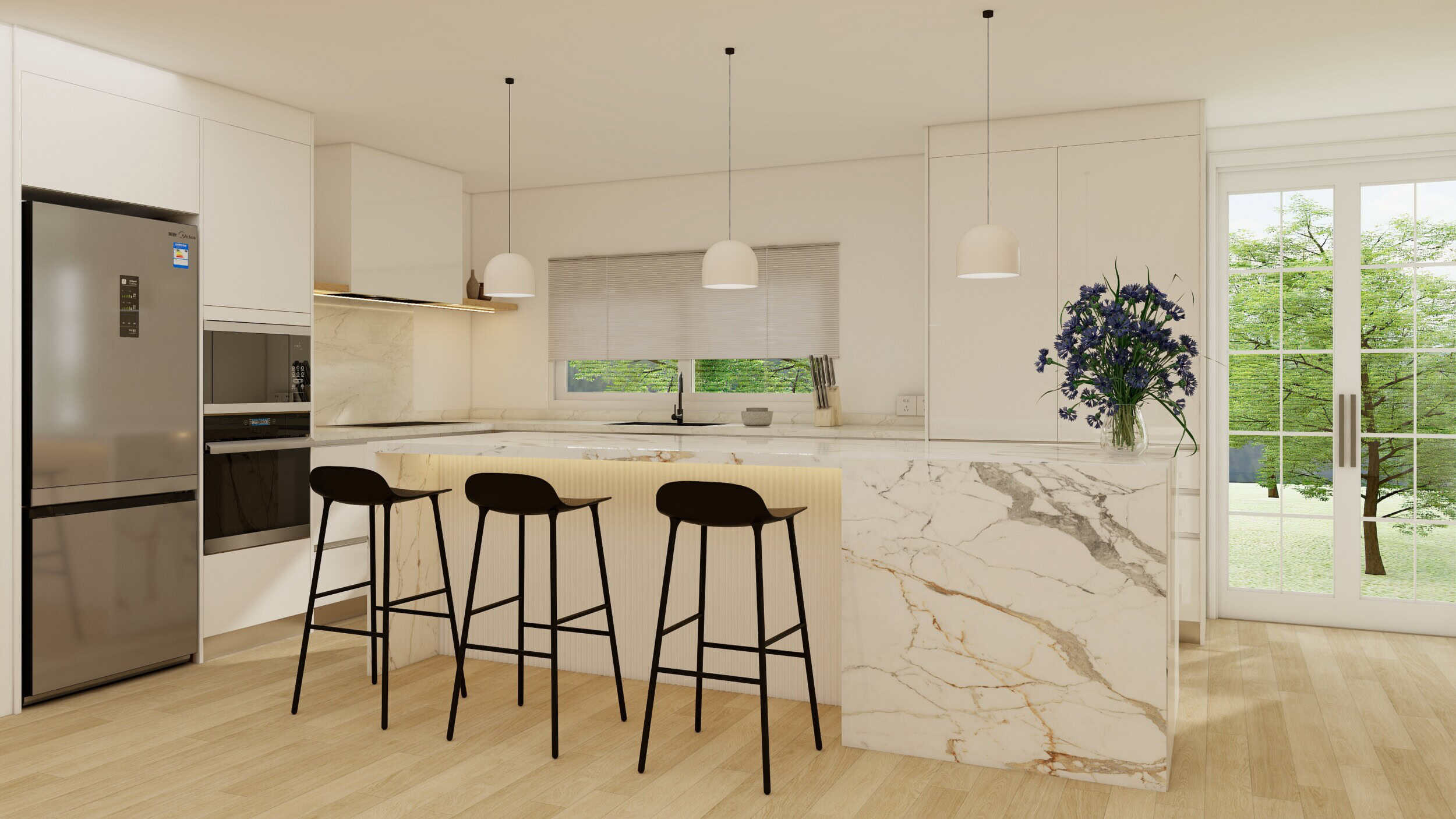
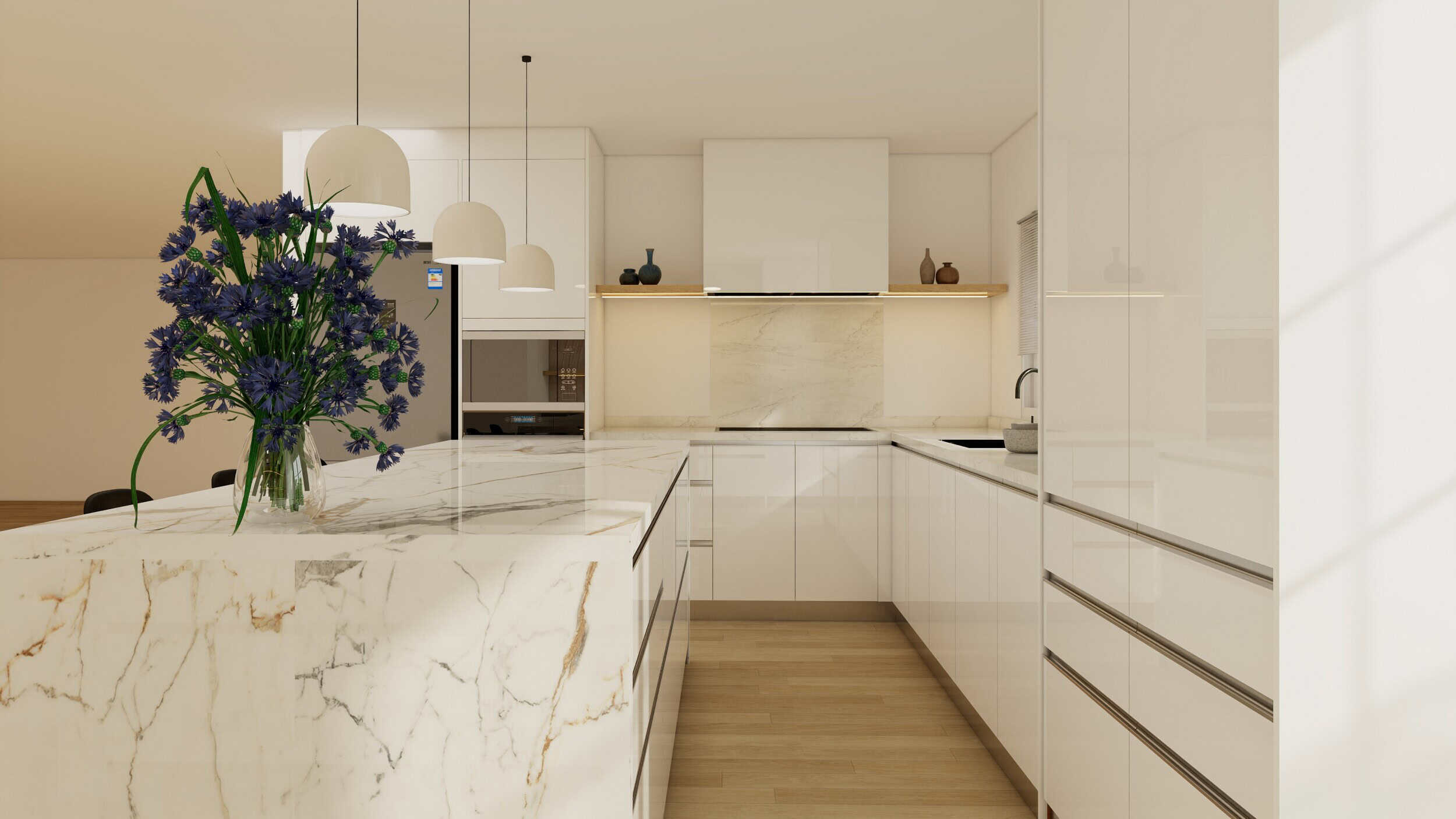
Design render by Sachi Amarasekara – Open Kitchen
What is an Open Plan Kitchen?
An open plan kitchen combines the kitchen, dining and lounge into one connected space, with no full-height walls dividing the cooking zone from the rest of the room. It’s the layout most new Auckland builds use by default, and the one most renovation clients ask us to create out of an older, closed-off kitchen.
The appeal is simple. Knock out the wall and a dim back-of-house kitchen borrows light and space from the rooms around it. A villa kitchen in Grey Lynn that felt like a corridor becomes part of the living area. A 1970s brick-and-tile in Manurewa with a separate dining room suddenly reads as one generous space. And because it’s what buyers now expect, the layout tends to support resale value rather than work against it.
Why the Island Does So Much Heavy Lifting
Open up a kitchen and you create a problem at the same time: where does the storage and bench that used to live on the missing wall now go? The answer is almost always an island.
An island claws back the counter and cabinetry you lose when the wall comes out, and it does it in the middle of the room where it’s most reachable. It can carry a sink or a cooktop, double as a breakfast bar, and act as the natural gathering point when people drift into the kitchen. The one rule our designers hold firm on: leave enough clearance around all sides so the island doesn’t choke the traffic between the stove, sink and fridge.
💡 Quick tip: Keep at least 1000–1100mm of walkway around a single-cook island, and 1200mm if two people cook at once. Tight clearances are the most common regret we hear after the fact. For the full set of numbers, see our kitchen planning measurements guide.
“When a wall comes out, people fixate on the open space and forget where the storage went. The island has to earn its keep, so I design it to carry the drawers and the prep zone the old wall used to hold, not just look good in the middle of the room.”
— Dorothy Li, Design Manager, Superior Renovations
How to Convert a Closed Kitchen into an Open Plan One
This is where open plan kitchen projects are won or lost. When someone asks us to open up their kitchen, the very first thing we work out is whether the change is cosmetic or structural, because the two are worlds apart on cost, consent and timeline.
- Kitchen is already open plan: No structural work. It’s a cabinetry-and-finishes renovation, same as any other kitchen.
- Kitchen is currently closed off: A wall has to go, which is where engineering, consent and trade coordination come in.
If a wall is coming out, we ask for the whole-house floor plan first. That tells us which of two very different walls we’re dealing with.
Partial Walls (Non-Load-Bearing)
A partial wall carries no structural load. It’s there as a divider, or to frame a doorway. These come out fairly cleanly: the builders remove the wall, then make good the GIB, plaster and paint where it met the floor, ceiling and adjoining walls.
Because it carries no structural load, a non-load-bearing wall can usually come out without a building consent — it isn’t altering the primary structure that triggers Restricted Building Work. The exception worth knowing: consent is still needed if removing it affects fire separation or weathertightness, which can happen in some attached or multi-level homes.
Structural Walls (Load-Bearing)
A load-bearing wall carries weight from the structure above, the roof, a second storey, or both. You can’t just take it out. The load has to be picked up by a beam, typically steel or engineered timber, sized by an engineer for the span and the weight above it.
Removing a load-bearing wall is Restricted Building Work under the Building Act 2004. Before anyone swings a hammer, the job needs a structural engineer’s design, a building consent from Auckland Council, and Licensed Building Practitioner supervision. Building Performance (MBIE) is clear that any work altering a home’s primary structure is restricted building work that must be carried out or supervised by a Licensed Building Practitioner. And Auckland Council lists removing a load-bearing wall between a kitchen and dining room as exactly the kind of structural alteration that needs a building consent.
Here’s the quick check we run to tell whether a wall is load-bearing:
- Check the whole-house floor plan.
- Look for extra support, doubled studs, posts or a thickened section.
- See whether the wall runs through more than one level.
- Check the joists and beams in the subfloor and roof space, and which way they run.
None of this is guesswork you should be doing yourself, especially in an older home with no original plans, where the framing is anyone’s guess until the GIB comes off. We talk through trial GIB removal and inspections with clients before committing to a structural approach.
Important note: If your home has no floor plan on record, budget time and a small cost for investigation before the design is locked. What’s behind the lining changes the engineering, and it’s better found in week one than mid-build.
Who Carries the Consent Risk
This is the real difference between hiring a cabinetmaker and hiring a full renovation company to open up your kitchen. We run the consent process for you: our LBP designer produces the consent drawings, we lodge the building consent with Auckland Council, the engineer’s producer statement goes in, and the Records of Work are filed at sign-off. A cabinetmaker isn’t taking on any of that structural or compliance risk, and they’re not meant to. That’s the work behind a clean open plan conversion, and it’s why a closed-to-open job sits in a different bracket to a like-for-like kitchen swap. You can see how we handle the whole sequence on our design-and-build kitchen renovation service.
“The honest version most people don’t hear: removing a load-bearing wall isn’t the expensive bit, the beam and the engineering are manageable. It’s the consent and the coordination that catch people out when they try to project-manage it themselves. That’s the part we take off your plate.”
— Cici Zuo, Head of Sales (NZ Dip. Interior Design), Superior Renovations
What Does It Cost to Open Up a Kitchen in Auckland?
The cabinetry and finishes of an open plan kitchen sit in the same bands as any kitchen renovation. In Auckland in 2026, a mid-range kitchen renovation runs $26,000–$35,000, a full mid-range build with custom cabinetry and stone tops typically $30,000–$50,000, and luxury or custom kitchens with islands and premium materials $90,000–$138,000+. Auckland labour sits around $120–$150 per hour, which is why prices here run 10–20% above the national average. These are the bands we quote across Auckland — our Auckland kitchen renovation cost guide breaks them down tier by tier.
The line that varies most is the wall. As a rough Auckland guide for 2026:
| Wall type | What’s involved | Typical added cost |
|---|---|---|
| Non-load-bearing (partial) | Remove wall, make good GIB, plaster and paint. Usually no consent. | $2,000–$6,000 |
| Load-bearing (structural) | Engineer’s design, steel or engineered timber beam, building consent, LBP-supervised install. | $8,000–$25,000 |
The load-bearing range is wide on purpose. It swings on the span of the opening, the weight sitting above it, and whether you’re under a single storey or a two-storey home, which needs a bigger beam and more temporary propping during the build. To see where your overall project lands, run the numbers through our kitchen renovation cost calculator.
💡 Quick tip: On timeline, a like-for-like kitchen runs 5–6 weeks, but an open-plan conversion with structural work typically pushes to 6–12 weeks, and if consent is needed, add 4–8 weeks of Auckland Council processing before the build even starts. Factor that into your move-out or living-around-it plan.
Before and After: A Blockhouse Bay Wall Removal
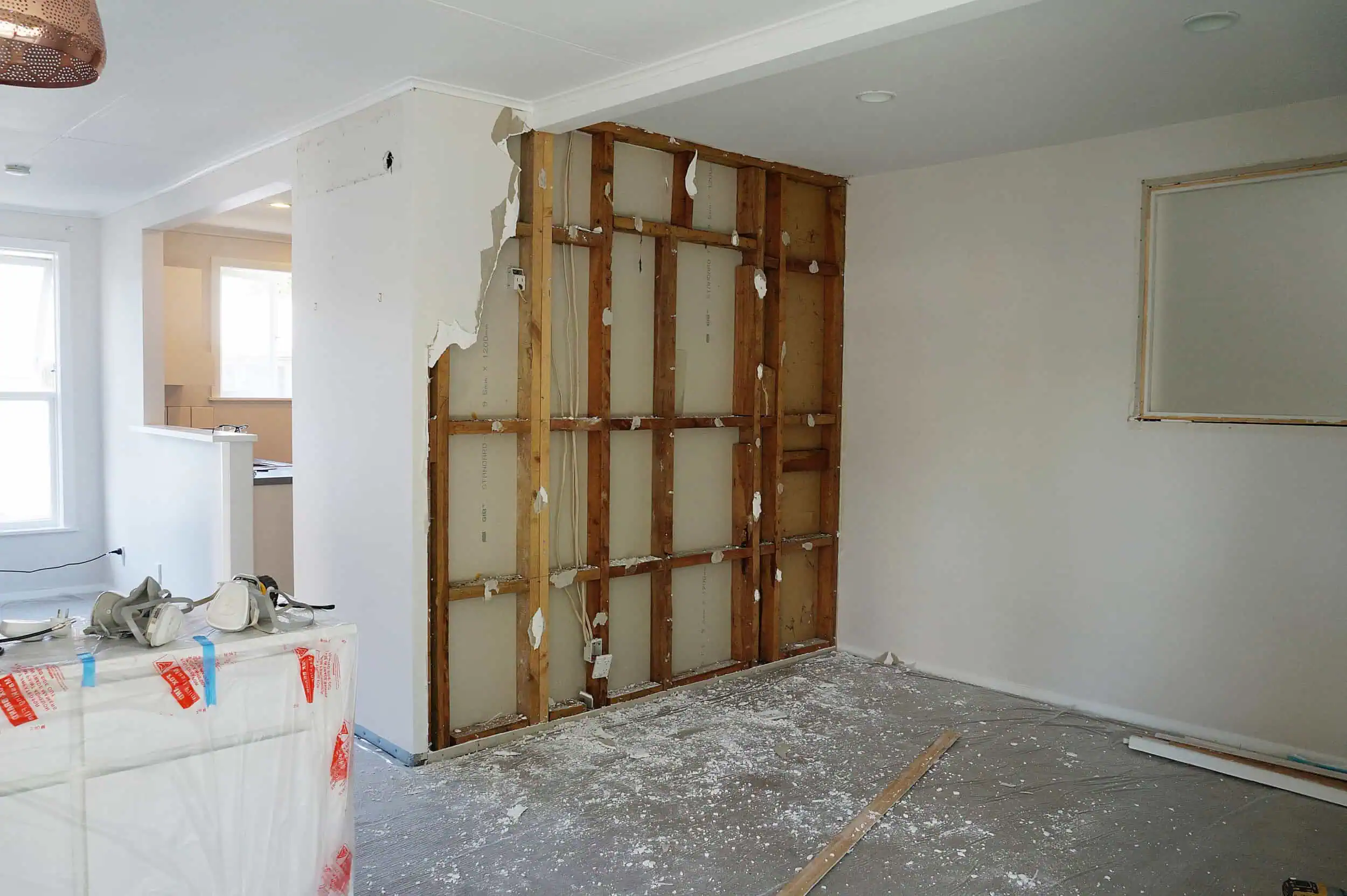
One simple move, removing a wall, can completely change a kitchen. A good example is a full kitchen transformation we did in Blockhouse Bay, West Auckland.
Before
After
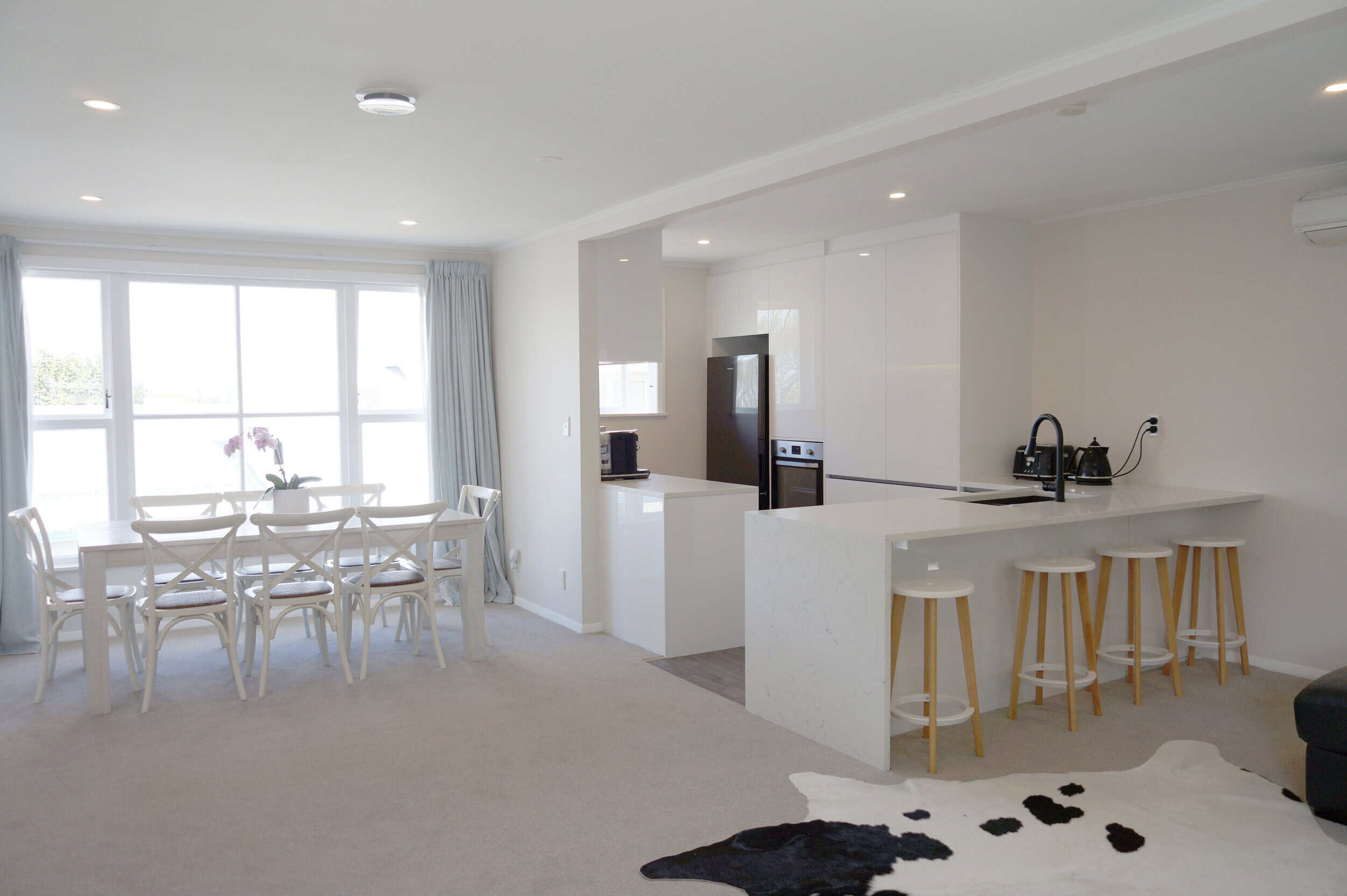
Before the work, the kitchen was congested, dim and short on storage. The core of the renovation was breaking the two partial walls dividing the kitchen from the living space, and removing the counter that had acted as a divider, which freed up room for a proper island. Opening it up changed how the whole space felt. Read the full Blockhouse Bay kitchen project.
Open Plan vs Closed Plan Kitchen: How They Compare
Design render by Sachi Amarasekara – Open Kitchen
Design render by Sachi Amarasekara – Open Kitchen
Not every Auckland home suits an open plan kitchen, and not every homeowner wants one. A closed plan kitchen is shut off from the rest of the house by a wall or a doorway or two. It’s the traditional layout, most common in older properties, though plenty of newer homes still use it.
Closed plan suits people who want cooking mess and clean-up out of sight, who like privacy while they cook, or who cook daily and elaborately and want a focused, contained space. It’s also the cheaper renovation, because it skips the structural work that opening up a kitchen demands.
| Factor | Open plan | Closed plan |
|---|---|---|
| Light & sense of space | More natural light, feels larger | Can feel darker and smaller |
| Family & entertaining | Cook stays connected to the room | Isolated from the action |
| Storage | Less wall, fewer cabinets | More cabinetry and pantry wall |
| Noise & cooking smells | Travel through the home | Contained |
| Resale appeal | What most buyers now expect | Less in demand, suits some buyers |
| Renovation cost | Higher (wall removal) | Lower (no structural work) |
If you’re leaning closed plan but want it lighter, our designers suggest glass-panelled doors to keep light moving between rooms, two-toned cabinetry so the space doesn’t read flat, and a banquette in a corner for a breakfast nook. You don’t have to knock out a wall to make a closed kitchen feel good. For ideas on making a compact closed kitchen work harder, our small kitchen design ideas are worth a read.
“Closed plan gets written off too quickly. For a busy family that cooks every night and hates a kitchen on permanent display, it’s the better call, and it costs less to renovate. The trick is light: glass doors and a lighter palette stop it feeling boxed in.”
— Eunice Qin, Designer, Superior Renovations
The Verdict: Which Layout Do Our Designers Recommend?
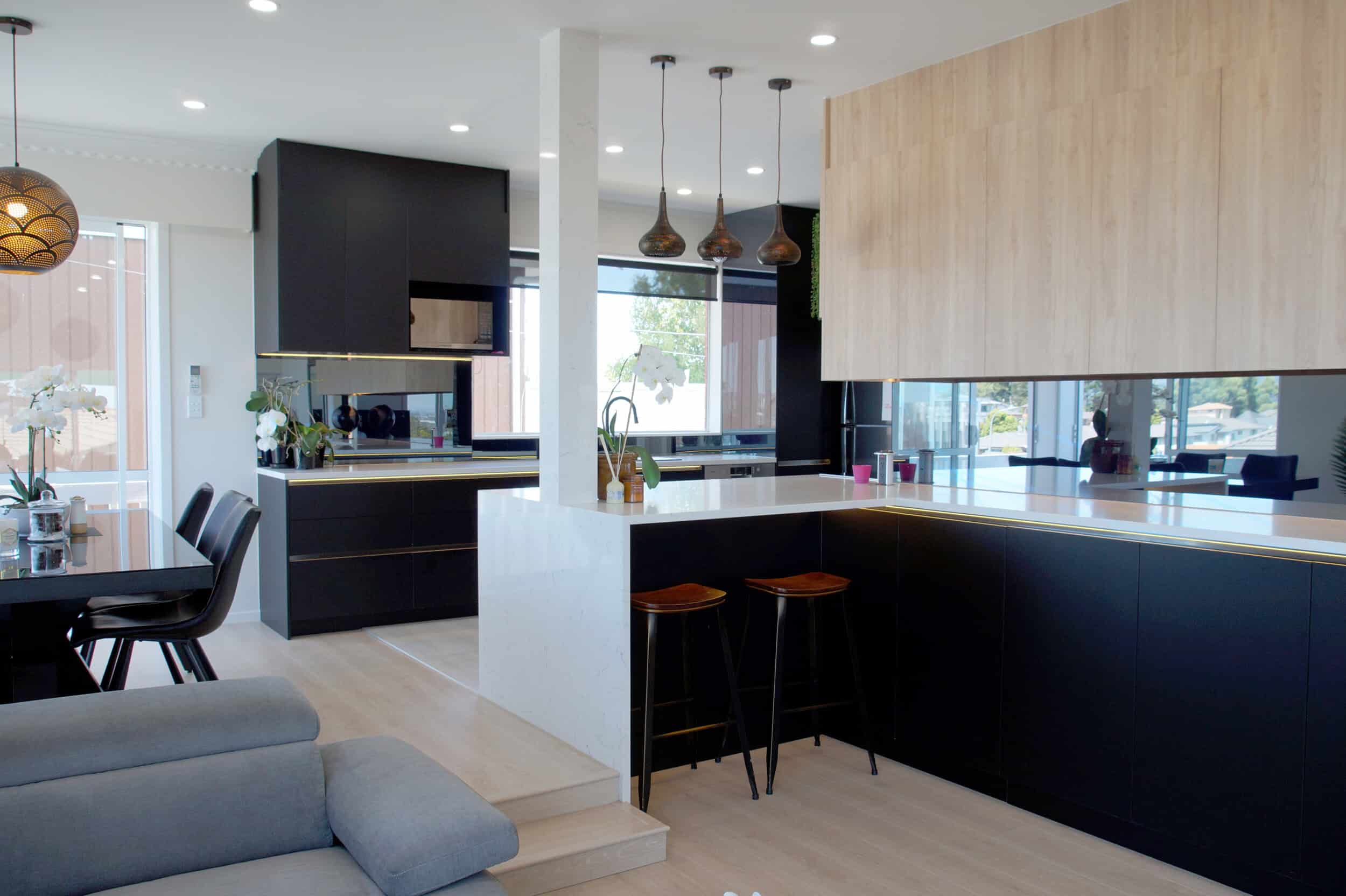
There’s no universally right answer, and this guide isn’t built to make the choice for you. But for most Auckland homeowners renovating today, the open plan kitchen is what they’re after, and for good reason: light, space, connection, and the layout buyers expect. For a feel of how these layouts turn out, our kitchen design ideas gallery shows finished Auckland kitchens.
We asked Cici and Dorothy which they’d choose for themselves.
Cici: “Open plan, for me. I cook a lot and I want to be talking to family while I do it. When I design my own space I think about the future, friends over, kids around, conversations flowing. A big island in an open room does all of that.”
Dorothy: “Open plan, from a design point of view. It gives you far more to work with, the finishes carry through from the living area, and you get that one big connected space that feels like the heart of the home.”
If you’re weighing it up for your own home, the fastest way to get clarity is to have a designer look at your actual floor plan and walls. Our team does that in a free in-home consultation, and we’ll tell you straight whether your wall is load-bearing before you fall in love with a layout you can’t easily afford. You can also browse our in-house Design Studio to see how the design-to-build process works.
➡ Book your free in-home consultation with Superior Renovations
➡ Estimate your kitchen renovation cost
➡ Request a free feasibility report for your project
Is an open plan kitchen worth it in NZ?
For most Auckland homeowners renovating today, yes. An open plan kitchen brings in natural light, makes a small home feel larger, keeps the cook connected to family and guests, and supports resale value because it's what buyers expect in a modern home. The trade-offs are less storage wall, more visible mess, and the cost of removing a wall, especially if it's load-bearing. It's worth it when you value light and connection and your home suits the change. A closed plan kitchen can be the smarter call if you cook elaborately, want privacy, or are on a tighter budget.
Do I need building consent to open up my kitchen in Auckland?
It depends on the wall. Removing a non-load-bearing (partial) wall usually doesn't need consent, though consent is still required if the removal affects fire separation or weathertightness. Removing a load-bearing wall always needs a building consent from Auckland Council, a structural engineer's design, and Licensed Building Practitioner supervision, because it's Restricted Building Work under the Building Act 2004. At Superior Renovations we manage the engineer, the consent application and the LBP sign-off as part of the project, so you don't lodge anything yourself.
How much does it cost to remove a wall for an open plan kitchen?
As a rough 2026 Auckland guide, removing a non-load-bearing wall and making good (plaster and paint) typically adds $2,000 to $6,000 to a kitchen renovation. Removing a load-bearing wall, including the structural engineer, a steel or engineered timber beam, the building consent, and LBP-supervised installation, typically adds $8,000 to $25,000 depending on the span, the load carried above, and whether the home is single or double storey. This is on top of the cabinetry, benchtop, appliance and finishing cost of the kitchen itself.
How much does an open plan kitchen renovation cost in Auckland?
In Auckland in 2026, a mid-range kitchen renovation runs $26,000 to $35,000. A full mid-range build with custom cabinetry and stone benchtops typically runs $30,000 to $50,000, and luxury or custom kitchens with islands and premium materials range from $90,000 to $138,000 and up. An open plan conversion adds the cost of removing the wall on top of these figures. Auckland labour sits around $120 to $150 per hour, which is why local pricing runs 10 to 20% above the national average.
Open plan vs closed plan kitchen, which is better?
Neither is universally better; it depends on your lifestyle. Open plan wins on natural light, sense of space, family connection and resale value, and gives more freedom for islands and seating, but offers less storage wall, less privacy, and costs more because it usually involves removing a wall. Closed plan wins on privacy, cabinetry and storage, contained noise and cooking smells, and a lower renovation cost, but can feel darker and more isolated. Open plan suits entertainers and connected families; closed plan suits keen cooks who want a private space or are renovating on a budget.
How long does an open plan kitchen conversion take in Auckland?
A like-for-like kitchen renovation takes about 5 to 6 weeks from the start of demolition. An open plan conversion with structural changes typically runs 6 to 12 weeks, because the beam, propping and engineer-supervised work add stages. If the job needs Auckland Council consent, for example removing a load-bearing wall, add 4 to 8 weeks of consent processing before the build can start. Splashbacks also need separate manufacturing lead time and are installed as a later visit.
Do you need an extractor fan in an open plan kitchen?
Yes, we strongly recommend one. With no walls to contain them, cooking smells and steam travel straight into your living and dining areas and linger. A good rangehood or ventilation system, ducted externally where possible rather than recirculating, makes a real difference to how the whole space feels and smells. It's a small line item that clients are always glad they didn't skip.
Can I put an island in a closed or small kitchen?
Sometimes, but not always. An island needs clear walkways on all sides, at least 1000 to 1100mm for a single cook, so a narrow closed kitchen usually can't take one without feeling cramped. In a larger closed kitchen it can work well. If the room is too tight, a peninsula attached to one run of cabinetry often gives you the bench and storage benefits of an island without the clearance problem. Our designers can tell you quickly from your floor plan.
How do I know if my kitchen wall is load-bearing?
The reliable signs are: the wall runs through more than one level, it sits at right angles to the floor or ceiling joists, or it has extra support like doubled studs or a thickened section. Walls running parallel to the joists are more often non-load-bearing, but this isn't a safe DIY call, especially in older Auckland homes with no original plans. The only certain way is an assessment by a builder or engineer, sometimes after a small section of GIB is removed to see the framing. We check this for clients before any design is locked in.
Further Resources for your kitchen renovation
- Featured projects and Client stories to see specifications on some of the projects.
- Real client stories from Auckland
Need more information?
Take advantage of our FREE Complete Home Renovation Guide (48 pages), whether you’re already renovating or in the process of deciding to renovate, it’s not an easy process, this guide which includes a free 100+ point check list – will help you avoid costly mistakes.
Download Free Renovation Guide (PDF)

Have you been putting off getting renovations done?
We have partnered with Q Mastercard ® to provide you an 18 Month Interest-Free Payment Option, you can enjoy your new home now and stress less.
Learn More about Interest-Free Payment Options*
*Lending criteria, fees, terms and conditions apply. Mastercard is a registered trademark and the circles design is a trademark of Mastercard International Incorporated.
Still have questions unanswered?
Book a no-obligation consultation with the team at Superior Renovations, we’d love to meet you to discuss your renovation ideas!