

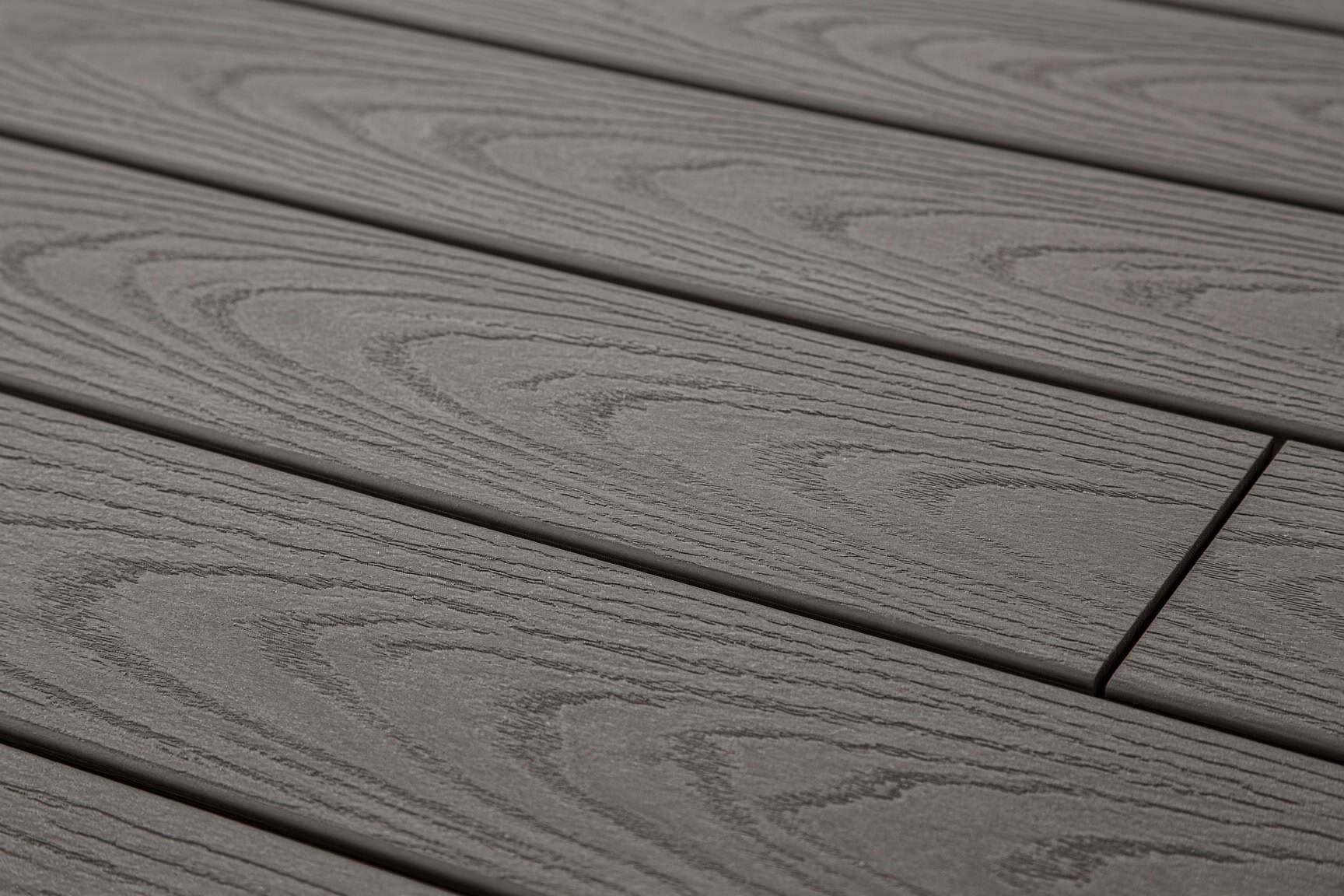
Composite Decking NZ: Is It Worth It, and What the Warranty Doesn’t Cover
Quick answer: Composite decking in NZ suits you if you want a deck you wash instead of oil, but it sits on a timber frame its warranty doesn’t cover, needs closer joists, and BRANZ rates it in the same 15-year durability tier as timber.
Most composite decking advice in New Zealand comes from the people selling the boards. That’s not a criticism, it’s just where the search results come from. Type composite decking NZ into Google and you get product pages, a price list and a colour chart. What you don’t get is the part that decides whether the deck still looks good in fifteen years: the frame underneath, the gap between the boards and the ground, and the conditions written into the warranty.
Free cost calculator
How much will your renovation cost?
Get an instant Auckland price range for your project — no details required to see it.
So we went to the technical documents instead: two BRANZ Appraisals for composite boards sold here, an installation guide from a composite brand, a manufacturer’s FAQ, a full limited warranty, the Building Code’s durability clause and the Schedule 1 exemption that covers most backyard decks. This guide sets out what they actually say, in plain English, with the Auckland situations where each one bites.
If you are still weighing up timber, our kwila decking guide covers the hardwood side in detail. This one is about composite only.
What Composite Decking Actually Is (and Why There Are Two Kinds)
BRANZ describes composite decking as boards manufactured from recycled plastic (HDPE) and waste timber fibre, heated, pressurised and extruded into a decking shape, according to its slatted decking guidance. The same page notes it comes prefinished, so there’s no painting, staining or oiling, and that boards generally come in lengths of 4.8 to 5.4 metres.
That definition covers most of what you’ll see in an Auckland timber yard. It doesn’t cover everything, and the differences matter more than the brochure lets on.
Wood-plastic composite: the original
The classic board is a solid wood-plastic composite, or WPC. Biform, based in Onehunga, sells one: its BRANZ Appraisal describes it as an extrusion of recycled polyethylene, wood fibre and an anti-fungal additive. ModWood, made in Melbourne, describes its board as ground wood waste and recycled plastic milk bottles.
Because the wood fibre runs right to the surface, these boards behave a little like timber. ModWood’s own FAQ is refreshingly candid about it. The boards fade noticeably in the first couple of months, they can show scuffs and scratches when new, and the product “is not designed to live in moisture”, which over time causes swelling. On the plus side, a scratch on the brushed face can be wire-brushed out and weathers back in.
Capped composite: a plastic shell over the core
Capped boards wrap the composite core in a harder polymer layer. The cap is there to hold colour and resist staining. Outdure’s installation guide spells out what happens where the cap isn’t: an area without the protection of the capped layer can swell if it absorbs too much water, which is why cut ends and low-to-the-ground installs get special treatment in its instructions.
Mineral-based boards: a third category
Some newer boards drop the wood fibre altogether. Deckorators Voyage, which holds BRANZ Appraisal 1257, is described as a mineral-based composite of co-extruded inorganic fillers. Its appraisal notes something the WPC boards can’t claim: the boards themselves have no minimum clearance from the ground or a membrane, though the framing underneath still does.
💡 Quick tip: Ask any supplier one question before you look at colours: is this board capped, uncapped or mineral-based? The answer changes the clearance, the cleaning and how forgiving the board is of a wet site.
What composite is good at
None of this makes composite a bad product. BRANZ lists real advantages on its slatted decking page: UV, insect, mildew and moisture resistance, no rotting, splintering or warping, and no coatings to keep up. ModWood points out that its boards won’t splinter, which matters on a deck where small kids run around barefoot. For a family in Albany or Flat Bush who never wants to oil a deck again, that’s the whole argument, and it’s a good one.
The catch is that the board is only half the deck.
The Part Your Composite Decking Warranty Doesn’t Cover: the Frame
Here’s the thing most composite decking pages in NZ leave out. A composite deck is a composite surface sitting on a timber deck. The bearers, joists, piles and fixings underneath are almost always treated pine, built the same way they’d be built under kwila.
The appraisals say so in writing
Both BRANZ Appraisals we read put it plainly. The Biform appraisal says the decking “is designed to be laid over conventional timber deck framing consisting of bearers and joists”, and that the framing must be built to NZS 3604 or a specific engineering design, with timber treated as required by Building Code Acceptable Solution B2/AS1. The Deckorators appraisal uses almost identical wording.
The manufacturers are just as clear about where their responsibility ends. Outdure’s installation guide for timber sub-frames states that it “is not responsible for the timber sub-frame in any capacity”, and that the frame is the installer’s sole responsibility. Trex’s limited warranty excludes any condition caused by “movement, distortion, collapse or settling of the ground or the supporting structure”.
So the 25-year or 50-year figure on the box is a promise about the boards. It says nothing about the frame they’re screwed to. If the joists twist, the piles settle or a stringer rots where it meets the house, the board warranty doesn’t respond.
What the Building Code expects of each part
The Building Code’s durability clause, B2.3.1 in Schedule 1 of the Building Regulations 1992, sets three tiers. Elements that provide structural stability, or are difficult to access or replace, need to last the life of the building, being not less than 50 years. Elements that are moderately difficult to access or replace need 15 years. Easy-to-replace elements need five.
BRANZ applies that to decks in its deck design guidance: structural elements generally need at least 50-year durability, while stairs, stair handrails and decking need at least 15 years. All structural fixings must last as long as the elements they hold together, which in BRANZ’s worked example means stainless steel.
Read those two together and the priorities flip. The boards everyone argues about sit in the 15-year tier. The frame nobody sees sits in the 50-year tier. If you have a fixed budget, spend it on the frame and the fixings first.
💡 Quick tip: When you compare deck quotes, look past the board brand. Check the framing timber treatment, the joist size and spacing, the pile spec and the fixing grade. Two quotes for the same board can describe two very different decks.
Re-boarding an old deck with composite
A common Auckland request goes like this. The kwila on a 1990s deck in Howick has gone grey and splintery, the frame looks fine, so can we just screw composite boards on top of the old joists?
Sound familiar? It can work. But the joist spacing has to suit the new board (more on that below), the frame has to have plenty of life left, and you’re now putting a long-warranty surface on a frame of unknown age. We’d rather open up a few boards and look before anyone quotes a re-board. On our Cockle Bay deck and ensuite project, the kwila deck was fully rebuilt and extended, run alongside the interior work as one job.
Joist Spacing and Ground Clearance: Where Composite Decks Cost More
This is the section that explains why a composite deck often costs more to build than the board price suggests. Composite boards generally need joists closer together than thick hardwood, and the gap underneath is a warranty condition, not a nice-to-have.
Joist centres, product by product
BRANZ’s slatted decking page says composite joist spacing comes from the manufacturer’s instructions and is generally between 400 and 450mm. The documents we read line up with that.
| Decking | Maximum joist centres | Clearance underneath | Source |
|---|---|---|---|
| Biform FORM 130 and Forest Board (WPC) | 400mm | 300mm over unpaved ground, 50mm over a membrane | BRANZ Appraisal 680 (2025) |
| Biform FORM 140 (WPC) | 450mm | 300mm over unpaved ground, 50mm over a membrane | BRANZ Appraisal 680 (2025) |
| Deckorators Voyage (mineral-based) | 400mm residential, 300mm if laid diagonally | No minimum for the boards; framing clearances still apply | BRANZ Appraisal 1257 (2023) |
| Outdure on a timber frame (capped) | 400mm, boards spanning at least three joists | At least 100mm of continuous free airspace; uncapped boards 400mm | Outdure installation guide |
| 32mm kwila (for comparison) | Up to 600mm | Per NZS 3604 framing rules | BRANZ deck design worked example |
The comparison row needs one honest caveat. BRANZ’s worked example allows 32mm kwila on joists up to 600mm, but notes that a cantilevered balustrade on the same deck pulls joists back to 400mm centres. Thinner hardwood boards also need closer joists. Still, the direction is clear: going from 600mm to 400mm centres means roughly half as many joists again across the same deck, plus the extra fixings, hangers and labour that come with them.
Why low decks are the awkward ones
Plenty of Auckland homes want a deck that steps straight out of the lounge at floor level onto a flat lawn. Think of a 1960s weatherboard in Glendowie or a newer home in Hobsonville with a ranch slider almost at ground height. That’s exactly where composite gets tricky.
Biform’s appraisal requires 300mm of clearance over unpaved ground. Outdure’s guide includes a table of acceptable deck heights: for capped boards on a timber frame, a deck under 100mm high (measured from the top of the board to the ground) is marked outside warranty, and uncapped boards need 400mm. It also recommends ventilation grates for decks less than 400mm off the ground, warns that prolonged moisture promotes mould growth, and asks for a 1 to 2 degree fall on the frame so water doesn’t sit.
ModWood says the same thing in a different way. Lack of ventilation will cause its product to swell and fail over time, and boxing in the deck must be avoided. That rules out the tidy look a lot of people want, where the deck edge is closed in with a fascia board or a garden bed right up against it.
Important note: If your deck has to sit very close to the ground, ask the supplier for the clearance figure in writing for that exact board, and check it against the framing clearance as well. A board that’s fine at 50mm over a membrane may still need 300mm over soil.
Gaps, movement and the house wall
Composite moves with temperature more than people expect. BRANZ’s slatted decking page asks for a 12mm minimum gap between the cladding and the decking for drainage and maintenance, and 5mm gaps between boards and at butt joints unless the manufacturer says otherwise. Outdure’s guide prints a full table of end gaps by installation temperature and board length, and calls the 12mm gap to the house a New Zealand requirement.
Biform’s appraisal asks installers to lay the boards out on site first so they reach the same temperature before cutting. Get this wrong and you see it in summer: boards butting tight together, or gaps opening at the ends in winter.
Is Composite Decking Worth It in NZ? Durability, Heat and the Fine Print
Whether composite is worth the money comes down to what you think you’re paying for. If it’s freedom from oiling, yes. If it’s a deck that outlasts timber by decades, the documents are more cautious than the marketing.
The durability number BRANZ actually gives
Both appraisals rate the boards against Building Code clause B2.3.1(b), the 15-year tier. Biform’s says its decking “can be expected to have a serviceable life in excess of 15 years, comparable to timber decking”. Deckorators’ appraisal uses the same words. Both also expect minor colour loss during the first few months and further fading over time.
That’s not a knock on composite. It means an independent assessor sees it in the same durability class as a good timber deck, while the manufacturer’s warranty runs much longer. Treat the long warranty as a product promise with conditions, not as a Building Code rating.
What a long composite warranty really pays for
We read Trex’s 2023 limited warranty for decking, fascia and cladding in full. It’s issued by Trex Company in the United States, so ask your New Zealand supplier for the local version before relying on it. But the structure is typical of long board warranties, and the details are worth knowing:
- Residential terms run 25, 35 or 50 years depending on the product range, and much shorter for commercial use.
- Claims from year 11 onwards are pro-rated. On the 25-year product, a claim in year 14 is covered at 60 per cent; on the 50-year product, a claim in year 25 is covered at 50 per cent.
- It replaces or refunds the boards only. The warranty says it does not cover the cost of removing defective product or installing replacements, including labour and freight.
- Improper installation voids cover, and the warranty names “improper gapping” specifically. Painting or coating the boards voids it too.
- It transfers once, to a buyer of the property, within five years of the original purchase.
Put plainly, if a board fails in year 18, you might get a share of the board cost back and still pay a builder to lift and relay the deck. That’s not unusual for a long product warranty, but it’s worth weighing against the sticker difference.
Heat underfoot, and the glass next to it
Dark composite boards get hot. ModWood says its boards have a similar surface temperature to timber of similar colour and finish, but that its darker colours “can get quite hot under foot, especially when new”, and that smooth faces run hotter than brushed ones. On a north-facing deck in Remuera in February, choose a lighter colour or plan shade.
There’s a less obvious one for anyone upgrading windows at the same time. Outdure’s guide warns that reflected sunlight from Low-E glass can cause unusual heat build-up that may make composite boards melt, sag, warp or discolour. If your renovation includes new Low-E double glazing and the sliders face straight onto the new deck, raise it with the supplier before you pick a board. Our guide to retrofitting double glazing in Auckland homes covers the glazing side.
Slip, salt and cleaning
Biform’s appraisal records an R11 slip rating on both faces when tested to the oil-wet ramp method, and explains how that relates to the slip resistance figure in Acceptable Solution D1/AS1 for wet access routes. Ask for the equivalent test result on any board you’re considering for steps or a pool surround.
ModWood describes its board as unaffected by salt air, which suits Takapuna, St Heliers or a Waiheke bach. The fixings are the weak link on the coast, so the stainless steel point from BRANZ matters more there, not less. For cleaning, ModWood says not to use a high-pressure cleaner, and both appraisals recommend cleaning at least once a year with a soft brush and warm water, because mould can grow on damp leaf litter left on any deck, composite included.
💡 Quick tip: Keep the board invoice, the installation guide version and photos of the frame before the boards go down. A warranty claim years later starts with proof the deck was built to the manufacturer’s instructions.
Composite Decking Prices in Auckland, and Where the Money Goes
Our live renovation FAQ sets out what a 10 to 15 square metre deck typically costs installed in Auckland. A premium composite installation with integrated lighting and framing starts from around $20,000 to $35,000, against $15,000 to $25,000 for kwila or hardwood and $8,000 to $12,000 for a basic pine deck. The same FAQ puts composite at typically 30 to 60 per cent more to install than kwila.
Installed cost of a 10 to 15m² deck in Auckland, by material
Bar length shows the top of each published range. Superior Renovations figures, October 2026.
Basic pine deck
Kwila or hardwood deck
Premium composite with integrated lighting and framing
Source: Superior Renovations FAQ — How much does a deck cost in Auckland? Ranges, not averages. Large, multi-level or consented decks cost more.
Why the gap is wider than the board price
Board price is only part of it. Going by the documents above, a composite deck can also carry closer joist centres, more blocking and bracing (Outdure notes its concealed clips don’t brace the frame, so joist hangers and a diagonal bracing strip are needed), stainless fixings, ventilation details on low decks and a picture-frame edge on longer runs. Most of the extra cost is in the frame and the labour, not the boards.
Where the money comes back is maintenance. The FAQ notes the lifetime cost of composite is often comparable to or lower than kwila once you count the oiling, staining and eventual replacement you avoid. Our full guide to what a deck costs to build in Auckland breaks down height, access, balustrades and consent.
When composite makes sense and when it doesn’t
Composite usually earns its premium when:
- You want no oiling or staining, ever, and you’re happy to sweep and wash it.
- The deck can sit well clear of the ground with open sides for airflow.
- You’ll stay long enough for the saved maintenance to add up.
- Splinter-free boards matter, around kids or a pool.
Timber is often the better call when:
- The deck has to sit almost flush with the ground and can’t be ventilated.
- You want the look of real timber on a character villa in Ponsonby or Grey Lynn.
- The budget is fixed and would otherwise come out of the frame.
- The deck faces big Low-E glass and you can’t confirm the board is suitable.
Consent, Barriers and Putting a Roof Over a Composite Deck
The material doesn’t change the consent rules. What changes is the evidence a council wants to see when consent is needed.
When a deck needs building consent
Under clause 24 of Schedule 1 of the Building Act 2004, building work on a deck is exempt from building consent where “it is not possible to fall more than 1.5 metres even if it collapses”. Exempt or not, the deck still has to meet the Building Code, and Auckland Unitary Plan rules on site coverage and yards can still apply. Your council or a Licensed Building Practitioner can confirm where your design sits.
When a deck does need consent, the board choice becomes part of the paperwork. BRANZ’s slatted decking guidance takes composite joist spacing from the manufacturer’s instructions, and many products hold independent appraisals like the two above. Each BRANZ Appraisal states which Building Code clauses the product meets, provided it’s installed exactly as the appraisal says. Biform’s also notes that any Restricted Building Work must be done or supervised by an LBP with the right licence class.
Barriers above one metre
Building Code clause F4.3.1 requires a barrier where people could fall one metre or more. That applies whatever the deck is made of and whether or not it needed consent. The balustrade is its own design job, separate from the decking boards.
Adding a roof later
A lot of deck projects turn into covered outdoor rooms within a year or two. If that’s on the cards, plan the frame for it now and pick the right board face. ModWood recommends its brushed face for decks under roof or full shade, because it hides scuffs better and shows less colour change. The moment a solid roof goes on, the consent question for the roof changes too, which our louvre roof guide explains.
Pricing the cover at the same time as the deck often saves a second set of footings. Our pergola cost calculator gives an Auckland price range in a couple of minutes.
Seven questions to ask before you sign
- Is the board capped, uncapped or mineral-based, and does it hold a current BRANZ Appraisal or CodeMark certificate?
- What joist centres does the board need, and are they shown on the quote?
- What clearance does the board need over soil, and does my deck height achieve it?
- What treatment level and size is the framing, and what grade are the fixings?
- How will the deck be ventilated if it’s close to the ground?
- Can I see the New Zealand warranty document, including what happens after year 10?
- Who is responsible for the frame if the boards are fine but the deck moves?
That last one is the question we’d ask first. When one team designs the frame, orders the boards and builds both, there’s no gap between the board warranty and the builder’s workmanship. That’s how our team builds the frame under a composite deck as carefully as the boards on top, across Auckland from the North Shore to Howick.
The Short Version
Composite decking is a good surface. It’s not a different kind of deck. It still stands on treated timber, it still needs air underneath it, and its long warranty pays for boards, not labour or frames. Get the frame, the joist centres and the clearance right and you’ll likely have the low-maintenance deck you were sold. Skip them and the best board on the market won’t save it.
If you’d like a second opinion on a composite quote, or want a deck and cover designed and priced as one job, Superior Renovations can help from our showroom at 16B Link Drive, Wairau Valley.
➡ Book your free in-home consultation with Superior Renovations
➡ Price a pergola or covered outdoor room to go with your deck
➡ Request a free feasibility report for your project
Is composite decking worth it in NZ?
It is worth it if you want a deck you never oil or stain and you can build it well clear of the ground with good airflow underneath. Our Auckland FAQ puts composite at typically 30 to 60 per cent more to install than kwila, with lifetime cost often comparable once maintenance is counted. BRANZ appraisals rate composite boards for a serviceable life in excess of 15 years, comparable to timber decking, so the main gain is lower upkeep rather than a much longer life.
How much does composite decking cost in Auckland?
According to the Superior Renovations FAQ, a premium composite deck of 10 to 15 square metres with integrated lighting and framing starts from around $20,000 to $35,000 installed. A kwila or hardwood deck of the same size typically costs $15,000 to $25,000, and a basic pine deck $8,000 to $12,000. Large, multi-level or consented decks cost more, and closer joist spacing for composite adds framing cost.
What are the downsides of composite decking?
The main downsides are cost, heat and sensitivity to poor installation. Dark boards can get hot underfoot, uncapped boards fade in the first months and can swell if they stay wet, and most boards need closer joists and good ventilation. Long warranties are usually pro-rated, cover the boards rather than labour, and can be voided by incorrect gapping. The timber frame underneath is not covered by the board warranty at all.
Does composite decking need a timber frame underneath?
Usually, yes. The BRANZ Appraisals for Biform and Deckorators boards both describe laying the decking over conventional timber framing of bearers and joists, built to NZS 3604 or a specific engineering design, with timber treated as required by Acceptable Solution B2/AS1. Some systems can go on proprietary aluminium or steel framing instead, but those frames are separate products with their own requirements.
What joist spacing does composite decking need?
BRANZ says composite joist spacing comes from the manufacturer's instructions and is generally 400 to 450mm. Biform's appraisal sets 400mm for FORM 130 and Forest Board and 450mm for FORM 140. Deckorators Voyage needs 400mm, or 300mm laid diagonally, and Outdure's guide specifies 400mm centres. BRANZ's worked example allows 32mm kwila on joists up to 600mm, so composite usually needs more joists.
How close to the ground can a composite deck be?
It depends on the board. Biform's BRANZ Appraisal requires 300mm clearance over unpaved ground and 50mm over a waterproof membrane. Outdure's guide marks capped boards on a timber frame as outside warranty below 100mm deck height, and asks for 400mm for uncapped boards. Deckorators Voyage boards have no minimum clearance of their own, but the framing beneath still does. Check the figure in writing for your exact board.
Do I need building consent for a composite deck in Auckland?
Not usually for a low deck. Schedule 1 clause 24 of the Building Act 2004 exempts building work on a deck from which it is not possible to fall more than 1.5 metres even if it collapses. The deck must still meet the Building Code, and Unitary Plan rules can still apply. Auckland Council or a Licensed Building Practitioner can confirm whether your design needs consent.
How long does composite decking last in NZ?
BRANZ appraisals for two composite boards sold in New Zealand say they can be expected to have a serviceable life in excess of 15 years, comparable to timber decking, which matches the 15-year Building Code tier for decking. Manufacturer warranties often run 25 to 50 years for residential use, but they are conditional on correct installation and are usually pro-rated in later years.
Does composite decking get hot in the sun?
Darker boards can. ModWood says its boards have a similar surface temperature to timber of a similar colour, but its darker colours can get quite hot underfoot, especially when new, and smooth faces run hotter than brushed ones. Outdure also warns that sunlight reflected from Low-E glass can overheat composite boards, so check board suitability if new double glazing faces the deck.
Is composite decking slippery when wet?
It varies by product, so ask for the test result. Biform's BRANZ Appraisal records an R11 slip rating on both faces under the oil-wet ramp test, and explains how that relates to the slip resistance level in Acceptable Solution D1/AS1 for wet access routes. ModWood notes that its brushed face gives a better non-slip feel around pools than the smooth face.
Can I put composite boards on my old deck frame?
Sometimes, but only if the existing joists are at the spacing the new board needs, the frame is sound with plenty of life left, and the deck has the required clearance and ventilation. Many older decks have joists too far apart for composite. Lifting a few boards to inspect the frame before quoting is the sensible first step, because the board warranty will not cover the old frame.
Further Resources for your deck and outdoor renovation
- Featured projects and Client stories to see specifications on some of the projects.
- Real client stories from Auckland
Need more information?
Take advantage of our FREE Complete Home Renovation Guide (48 pages), whether you’re already renovating or in the process of deciding to renovate, it’s not an easy process, this guide which includes a free 100+ point check list – will help you avoid costly mistakes.
Download Free Renovation Guide (PDF)

Have you been putting off getting renovations done?
We have partnered with Q Mastercard ® to provide you an 18 Month Interest-Free Payment Option, you can enjoy your new home now and stress less.
Learn More about Interest-Free Payment Options*
*Lending criteria, fees, terms and conditions apply. Mastercard is a registered trademark and the circles design is a trademark of Mastercard International Incorporated.
Still have questions unanswered?
Book a no-obligation consultation with the team at Superior Renovations, we’d love to meet you to discuss your renovation ideas!
References
- BRANZ — Slatted decking
- BRANZ — Designing a deck
- BRANZ Appraisal No. 680 (2025) — Biform Solid Composite Decking
- BRANZ Appraisal No. 1257 (2023) — Deckorators Voyage Decking
- Building Regulations 1992, Schedule 1 (Building Code) — clauses B2 Durability and F4 Safety from falling
- Building Act 2004, Schedule 1 — clause 24, Decks, platforms, bridges, boardwalks
- Outdure — Installation guide: composite decking installed on a timber sub-frame (PDF)
- ModWood NZ — Composite decking frequently asked questions
- Trex — Decking, fascia and cladding limited warranty, 2023 (PDF)


