
House Renovation

outdoor renovation auckland - Superior Renovations
House Renovation

Outdoor Renovations NZ: Auckland Costs & Consent Guide

Outdoor Renovations NZ: Costs, Consent and Planning for Auckland Homes

Quick answer: Most outdoor renovations in Auckland fall between $15,000 for a modest deck or landscaping refresh and $80,000+ for a full outdoor living build with deck, pergola, kitchen and planting. Low decks (under 1.5m fall height) and fences under 2.5m usually don’t need building consent — but the work still has to meet the Building Code.

You’ve finished the inside. New kitchen, sorted bathrooms, the lot. Then you open the back door and there it is — a tired patch of lawn, a deck that’s seen better summers, a fence leaning into the neighbour’s hydrangeas. The inside of the house has moved on and the outside hasn’t caught up.

That gap is where most of our outdoor work starts. We’ve spent more than a decade renovating Auckland homes from our design studio and showroom at 16B Link Drive, Wairau Valley, and the outdoor renovation is almost always the part people underestimate — on cost, on consent, and on how much it changes the way they actually live in the house. Get it right and a 22m² deck off the living room does more for day-to-day life than another bedroom ever would.

This is the pillar guide. It covers what outdoor renovations cost in Auckland, what trips the consent line, the order things should happen in, and where each part of the job — decks, pergolas, fences, driveways, outdoor kitchens — fits. Where a topic has its own detailed guide, we point you to it rather than repeating it here. If you’d rather skip straight to talking it through, our outdoor renovations and landscaping team works across Auckland.

Outdoor renovation in Greenlane Auckland with a deck extending the living space


Why Outdoor Renovations Earn Their Keep in Auckland

Auckland’s climate does something most of the country can’t claim: it lets you use the outdoors for a decent chunk of the year. Warm, humid summers from December through February, mild and wet winters. Done properly, an outdoor renovation turns a few square metres of dead section into living space you’ll use eight or nine months a year — at a fraction of what enclosed floor area costs to build.

The Indoor-Outdoor Flow Auckland Buyers Expect

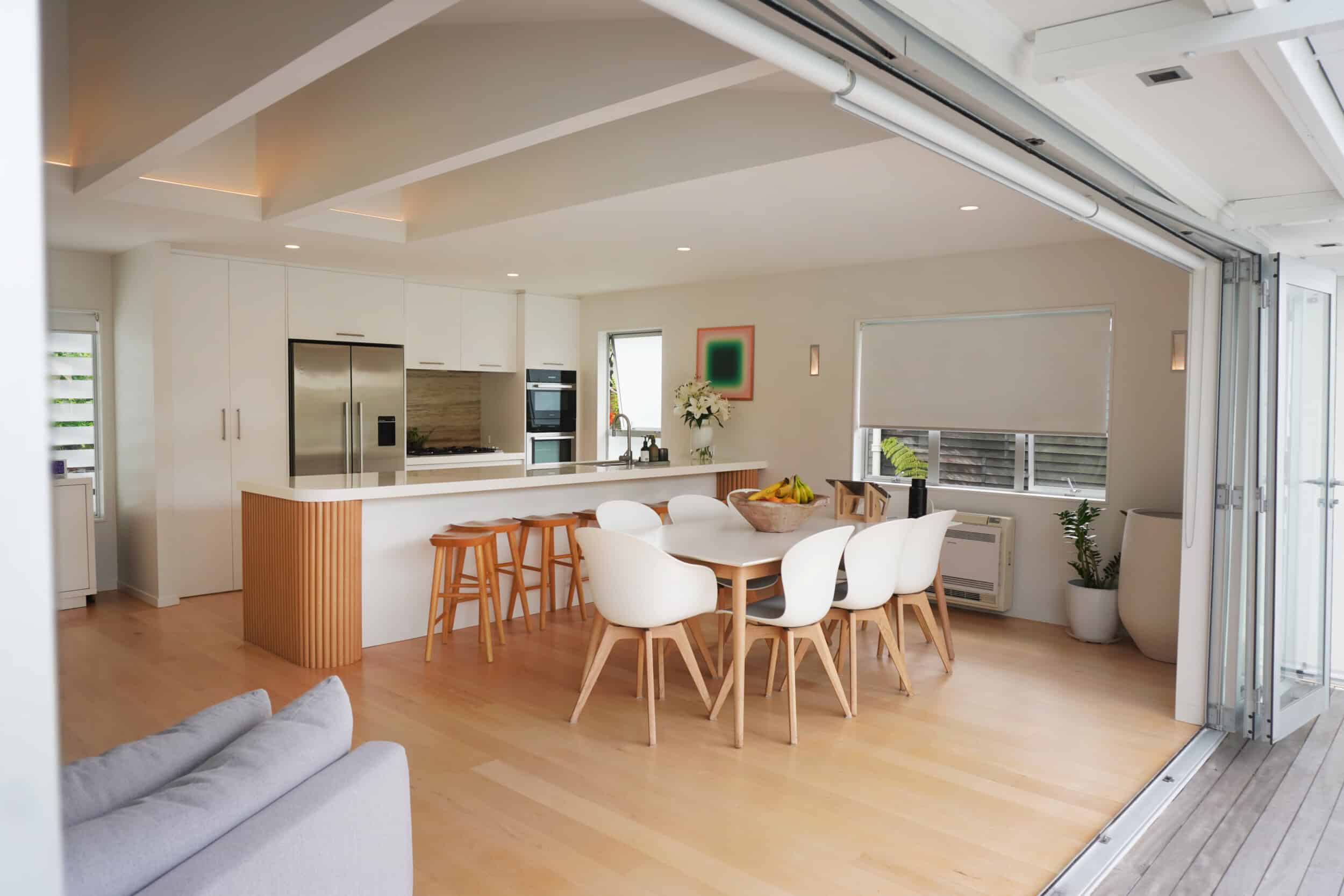
Ask any agent in Remuera or Herne Bay what sells a renovated home and “flow” comes up fast. A living room that opens onto a deck at the same level, with a sightline straight through to a planted garden, reads as bigger and lighter than the floor plan says it is. We did exactly this on a full home renovation in Greenlane — a deck leading straight off the interior living space — and the room felt like it had doubled without a single wall moving.

It’s not just resale. It’s Tuesday-night dinner outside in February. It’s the kids on the lawn while you cook. The renovation pays you back in use long before it pays back at sale.

💡 Quick tip: If indoor-outdoor flow is the goal, sort the threshold before anything else. A deck that sits 100mm below the interior floor, with a flush or low-profile door track, is the difference between a space that flows and one that just sits next to the house.

Extending Living Space Without Extending the House

A single-storey house extension in Auckland runs roughly $2,000–$5,500 per m² once you’re adding enclosed, consented floor area. A deck and pergola covering the same footprint is a fraction of that, because you’re not building walls, insulation, or a weathertight roof to Building Code H1 standards. For a lot of families, the smarter move is outdoor living space first — then revisit the extension later if you still need it.

That said, outdoor work and structural work often belong in the same project. If you’re already thinking about a house extension in Auckland, folding the outdoor living design into that plan from the start saves you paying twice for site setup, scaffolding and council fees.


Do You Need Consent? The Rules That Actually Catch People

This is where most outdoor projects go sideways, so we’ll be specific. The big distinction is between a building consent (is the structure safe and Code-compliant?) and a resource consent (does it comply with the Auckland Unitary Plan — height, boundaries, coverage?). A job can need one, both, or neither.

Decks, Fences and Pergolas — the Building Consent Lines

Under Schedule 1 of the Building Act 2004, a fair amount of outdoor work is exempt from building consent. The current thresholds, per MBIE’s Building Performance guidance:

  • Decks: exempt where it’s not possible to fall more than 1.5 metres from the surface. On a flat Glendowie site that’s easy. On a sloping Titirangi section, the worst-case fall height can quietly push you over the line — measure carefully.
  • Fences: exempt under 2.5 metres high. Pool fences are never exempt — they always need consent.
  • Pergolas: an unroofed pergola is exempt at any size. Add a solid roof and you’ve changed the game — that can tip it into consent territory.

A barrier is still required under the Building Code wherever there’s a potential fall of a metre or more, consent or not. And exempt doesn’t mean unregulated — every exempt job still has to meet the Building Code, which is exactly why getting a deck framed and fixed properly matters even when no inspector is coming.

Important note: A fence can be exempt from building consent under 2.5m yet still need a resource consent above 2.0m under the Auckland Unitary Plan, and boundary fences engage the Fencing Act 1978 (your neighbour and cost-sharing). Two different rule sets, one fence.

When Resource Consent Comes Into It

Resource consent is about your section’s planning rules, not the structure’s safety. Height in relation to boundary, site coverage, impervious-surface limits (think large driveways and paving), and yard setbacks can all trigger it. A big new concrete driveway, for instance, can push a site over its impervious-surface limit and require sign-off you didn’t see coming. Auckland Council’s building and resource consents pages are the place to check your specific zone.

We handle consents in-house, so on our projects this gets sorted before anything’s built. If you’d rather understand the framework yourself first, our group architecture firm Sonder has a plain-English breakdown of what you can build without consent in NZ.

💡 Quick tip: Before you fall in love with a 2.4m lapped-and-capped fence for privacy, check your front yard rules. Auckland front-boundary fences often face tighter height limits than side or rear — and “I didn’t know” isn’t a defence the council accepts.

What Outdoor Renovations Cost in Auckland

Costs swing hard depending on materials, site access and how much earthworks the section needs. A flat lawn in Flat Bush is a different job from a steep, retaining-wall-dependent slope in Titirangi. As a working range, a modest outdoor refresh starts around $15,000, a proper deck-and-pergola outdoor room lands in the $30,000–$50,000 band, and a full outdoor living build with kitchen, planting and lighting runs $80,000 and up. All figures NZD and, as a rule in our quotes, GST-inclusive.

Element Typical Auckland Cost Notes
Pine deck $200–$400 / m² Budget option; needs regular maintenance
Kwila (hardwood) deck $500–$800 / m² Durable, premium look; needs oiling
Composite deck $300–$700 / m² Low maintenance, no oiling
Louvred / covered pergola $3,000–$6,000 / m² Adjustable shade; powder-coated aluminium
Timber paling fence (1.8m) $75–$120 / m Classic, cost-effective
Concrete driveway $75–$150 / m² Durable; watch impervious-surface limits
Full outdoor living build $80,000+ Deck, pergola, kitchen, planting, lighting

Those per-m² figures come from our own completed Auckland projects across more than a decade on the tools. The single biggest cost variable people miss is the ground itself — retaining, drainage and access on a sloping section can add more than the visible structure. Worth modelling before you commit.

For a pergola specifically, you can get a quick ballpark with our pergola cost calculator before you talk to anyone.

Where the Money Actually Goes

On a typical outdoor renovation, the spend splits roughly between site prep and structure. Earthworks, drainage and retaining come first and they’re rarely glamorous. Then the build — deck, pergola, paving. Then the finishing layer most people care about: planting, lighting, the outdoor kitchen. Skimp on the first and the last never lasts.

“People come to us with a Pinterest board full of planting and lighting, and we end up spending the first conversation on drainage. It’s not the fun part, but on an Auckland clay section it’s the part that decides whether your deck is still flat in five years.”
— Dorothy Li, Design Manager, Superior Renovations

Decks, Pergolas and the Outdoor Structures

This is the heart of most outdoor renovations. Here’s how the main structures stack up — kept short, because each of these has its own detailed guide.

Decks: Pick the Timber for the Site

Pine is the budget default — cheap, workable, but it wants regular maintenance or it greys and splits. Kwila is the premium hardwood: rich reddish-brown, dense, long-lasting, and worth the upkeep of annual oiling. Composite sits in between on cost and asks almost nothing of you afterwards. We built a Kwila deck off the master suite on a deck and bathroom renovation in Cockle Bay that’s aged beautifully precisely because the owners committed to oiling it.

If you’ve settled on Kwila, our guide to Kwila decking covers staining, oiling and what to expect as it weathers. For budgeting, our breakdown of the cost of building a deck in Auckland sets out per-m² ranges by material.

Pine timber deck built on the second level off the master bedroom in Cockle Bay Auckland

Pergolas: Shelter That Earns Its Spot Year-Round

A pergola is what turns a deck from a fair-weather platform into a space you’ll use in light rain and harsh sun alike. Louvred aluminium ones are the current favourite because the blades adjust — open for sun, closed for a southerly. On one project we deliberately roofed a pergola in glass rather than slats, because the brief was to enjoy the weather in all its moods, not just hide from it.

Material, span and roofing choice drive the cost more than footprint does. Our custom pergola guide for NZ homes walks through styles, materials and roofing options in detail.

Custom pergola extending outdoor living space in an Auckland renovation

Fences and Privacy

Timber paling is the affordable classic. Aluminium and Colorbond steel give you a sleeker, low-maintenance line — we used aluminium fencing to edge a clifftop section in Mellons Bay, keeping the view while making it safe. Glass balustrades are the move when the view is the whole point and you don’t want to block it. For ideas across budgets, see our fence ideas for NZ homes.

💡 Quick tip: Match the fence to the job, not the catalogue. Glass for views, aluminium for low-maintenance boundaries, timber for warmth and budget. Mixing two materials across one section usually looks more expensive than it costs.

Driveways, Outdoor Kitchens and the Finishing Layer

Once the deck and structures are in, the finishing elements decide how the space actually feels to live in.

Driveways and Paving

Concrete is the Auckland workhorse — durable, low-fuss, handles the family SUV without complaint at roughly $75–$150 per m². Pavers cost more but let you match the home’s character. The catch we flagged earlier: a large new hard surface can push your section over its impervious-surface limit and trigger a resource consent, so factor drainage and permeability in early. We laid a substantial concrete driveway as part of an extensive West Harbour renovation, and the stormwater design was sorted before the first pour.

Outdoor Kitchens

An outdoor kitchen is the difference between cooking inside and carrying plates out, versus actually living out there. A basic setup — grill, bench, sink — sits around $5,000–$10,000. A full build with high-end appliances, storage and a pizza oven can pass $20,000. On a Redvale project we zoned the outdoor area into three: cooking, dining and lounging, with lawn as the backdrop. That zoning is what made a large space feel considered rather than empty.

If your outdoor kitchen ties into the main kitchen renovation, our design studio team can plan both as one project so the materials and sightlines carry through.

Lawns, Planting and Lighting

Lawn options run from seed (cheapest, slowest to establish) through ready lawn or sod (instant, dearer) to artificial turf (no mowing, high upfront cost — handy for busy family sections). Native planting earns its place in Auckland because it copes with our wind and rain: flax, cabbage trees, native grasses. Then lighting — the layer that decides whether the space exists after dark. Path lights for safety, accent lights on a specimen tree, LEDs on a timer. Layered, low-voltage outdoor lighting is the cheapest element with the biggest payback on how often you actually use the space.

“The mistake I see most is treating planting and lighting as an afterthought once the budget’s tight. Get them into the design from day one. A $2,000 lighting layer changes how a family uses a deck more than another five square metres of timber ever would.”
— Eunice Qin, Designer, Superior Renovations

Outdoor renovation and landscaping in Epsom Auckland with custom-built benches for entertaining


The Right Order to Tackle an Outdoor Renovation

Sequence matters more outdoors than people expect, because half the work hides underground. Get it out of order and you’re lifting a new deck to fix drainage you should have done first.

Design and Consent First

Start with how you want to use the space — entertaining, kids, a quiet corner — then design to that, not to a product you saw online. This is also when consent gets checked, before anyone orders timber. On our projects the design and consent work happens together, which is the whole point of a design-to-build process: you’re not handing a builder a plan that can’t actually be consented.

Groundwork, Then Structure, Then Finish

Earthworks, drainage and any retaining come first. Then the structural build — deck framing, pergola posts, paving base. Then the finishing layer of planting, lighting and the outdoor kitchen fit-out. Each stage depends on the one before it being right, which is why a managed sequence beats hiring trades piecemeal and hoping they coordinate. If you’re rolling outdoor work into a larger project, we manage the whole design-and-build outdoor renovation end to end.

💡 Quick tip: Run services — power for lighting, water for the kitchen, gas for the grill — before the deck goes down, not after. Chasing a power cable under a finished Kwila deck is a job nobody enjoys or wants to pay for twice.

Bringing It Together

The best outdoor renovations aren’t a deck, a fence and some plants bought separately. They’re one space, designed as a whole, that makes the house live larger than its floor plan. Sort the consent, respect the sequence, spend where it lasts.

If you’re weighing up where to start, the cheapest hour you’ll spend is the planning one. That’s what a consultation is for.

Book your free in-home consultation with Superior Renovations
Get a quick estimate with our pergola cost calculator
Request a free feasibility report for your project


Do I need building consent for a deck in NZ?

Not if it's not possible to fall more than 1.5 metres from the deck surface — that work is exempt under Schedule 1 of the Building Act 2004. On a flat Auckland section this is straightforward; on a sloping site the worst-case fall height can push you over the line, so measure carefully. A safety barrier is still required wherever there's a potential fall of a metre or more, and the deck must still meet the Building Code even when no consent is needed.

How much does an outdoor renovation cost in Auckland?

A modest refresh starts around $15,000. A deck-and-pergola outdoor room typically lands between $30,000 and $50,000. A full outdoor living build with deck, pergola, outdoor kitchen, planting and lighting runs $80,000 and up. The biggest cost variable is the ground — earthworks, drainage and retaining on a sloping section can add more than the visible structure. Figures are NZD and GST-inclusive in our quotes.

How high can a fence be without consent in NZ?

A fence up to 2.5 metres high is exempt from building consent under Schedule 1. But a resource consent may still be needed above 2.0 metres under the Auckland Unitary Plan, and boundary fences engage the Fencing Act 1978 for cost-sharing with your neighbour. Pool fences are never exempt — they always require consent. Front-boundary fences often face tighter height limits than side or rear fences.

What's the most affordable decking material in NZ?

Pine is the cheapest decking timber, at roughly $200 to $400 per square metre installed in Auckland. It's workable and readily available, but it needs regular staining or oiling to stop it greying and splitting. Macrocarpa is another budget-friendly NZ-grown option. If you'd rather avoid maintenance, composite decking costs more upfront ($300 to $700 per m²) but asks almost nothing of you afterwards.

Do pergolas need building consent in New Zealand?

An unroofed pergola is exempt from building consent at any size under Schedule 1 of the Building Act. Once you add a solid roof, it can tip into consent territory because it changes how the structure performs. Louvred pergolas with adjustable aluminium blades generally stay on the exempt side. As with all exempt work, it still has to meet the Building Code, and a roofed structure may also raise resource-consent questions around height and boundaries.

How long does an outdoor renovation take in Auckland?

A standalone deck might take one to two weeks. A full outdoor living build — design, consent if needed, earthworks, structure and finishing — typically runs 6 to 12 weeks of on-site work, with design and any consent adding lead time before that. Weather is a genuine factor in Auckland: wet winters can stall groundwork and concrete pours, which is why many homeowners plan outdoor builds for spring and early summer.

What's the difference between building consent and resource consent for outdoor work?

Building consent is about whether the structure is safe and meets the Building Code. Resource consent is about whether the work complies with the Auckland Unitary Plan — height in relation to boundary, site coverage, impervious-surface limits and yard setbacks. An outdoor project can need one, both or neither. A low deck might need neither; a large concrete driveway might need resource consent for stormwater even though it needs no building consent.

Can a new driveway require resource consent?

It can. A large area of new concrete or paving adds impervious surface, and if your section exceeds its impervious-surface limit under the Auckland Unitary Plan, you may need resource consent — even though a driveway needs no building consent. This catches people out. Permeable paving and proper stormwater design can keep you under the limit, so it's worth checking your zone's coverage rules before committing to a large hard surface.

Which outdoor renovation adds the most value to an Auckland home?

Indoor-outdoor flow consistently does the most work — a deck at the same level as the interior living space, opening through to a planted garden, makes a home feel larger and lighter to buyers. It's also the element owners use most day to day. Outdoor kitchens and quality lighting add appeal, but the deck-and-flow connection between inside and out is the foundation everything else builds on.

Should I do outdoor renovations at the same time as interior work?

Often yes. If you're already renovating or extending, folding the outdoor design into the same project shares site setup, scaffolding and council fees, and keeps materials and sightlines consistent inside and out. It also means one team manages the sequence rather than you coordinating separate trades. The main reason to split them is budget staging — and even then, designing both together up front prevents expensive rework later.


Further Resources for your outdoor renovation

  1. Featured projects and Client stories to see specifications on some of the projects.
  2. Real client stories from Auckland

Need more information?

Take advantage of our FREE Complete Home Renovation Guide (48 pages), whether you’re already renovating or in the process of deciding to renovate, it’s not an easy process, this guide which includes a free 100+ point check list – will help you avoid costly mistakes.

Download Free Renovation Guide (PDF)


finance - Superior Renovations

Have you been putting off getting renovations done?

We have partnered with Q Mastercard ® to provide you an 18 Month Interest-Free Payment Option, you can enjoy your new home now and stress less.

Learn More about Interest-Free Payment Options*

*Lending criteria, fees, terms and conditions apply. Mastercard is a registered trademark and the circles design is a trademark of Mastercard International Incorporated.


Still have questions unanswered?

Book a no-obligation consultation with the team at Superior Renovations, we’d love to meet you to discuss your renovation ideas!

    Services

    Home RenovationKitchen RenovationBathroom RenovationOutdoor RenovationHouse ExtensionCommercialDesign ServicesOther

    By submitting this form, you agree to receive communications from us via email or text regarding our services, you can unsubscribe at any time.

    This site is protected by reCAPTCHA and the Google

    Privacy Policy and Terms of Service apply.


    References

    1. MBIE Building Performance — Technical requirements for exempt building work (Schedule 1)
    2. Building Act 2004 — Schedule 1: Building work for which building consent not required
    3. Auckland Council — Building and resource consents

    Apr 29 2026 10 39 06 PM - Superior Renovations
    House Renovation

    12 Pet-Friendly Renovation Ideas for Auckland Dog Owners

    12 Pet-Friendly Renovation Ideas Auckland Dog Owners Are Actually Adding to Their Homes

    Quick answer: The best pet-friendly renovation ideas for Auckland homes blend practicality with design — think mudrooms with paw-wash stations, dog-proof flooring, built-in feeding nooks, and indoor-outdoor flow that survives a wet North Shore winter. Most ideas can be added to a kitchen, bathroom, or full-home reno without blowing the budget.

    It’s a Sunday in June. Sideways rain on the Shore. Your labrador has just sprinted three muddy laps across the engineered oak you spent serious money on, and now she’s eyeing the white sofa.

    If you’ve ever had this Sunday, this list is for you. According to the Companion Animals NZ 2024 Pet Data Report, around 31% of New Zealand households live with a dog — roughly 830,000 dogs nationally. In the 2020 edition of the same survey, 78% of dog owners said they consider their dog a member of the family. Auckland is a slightly different story: the 2024 report found Aucklanders are less likely to own a pet than other regions in NZ — but the ones who do are spending serious money to design their homes around them.

    We’ve worked on more than 1,000 Auckland renovation projects over the past decade. The number of clients asking for “somewhere to wash the dog” or “a spot for the food bowls that doesn’t look like a kennel” has gone up every year. So we’ve pulled together the 12 ideas Auckland dog owners are actually requesting — most of them small, a few of them ambitious, all of them designed to survive a wet winter and a muddy retriever.


    1. The Drop Zone — A Proper Mudroom for Auckland’s Wet Half of the Year

    Central Auckland averages around 1,190mm of rain a year, according to NIWA, and a good chunk of that lands over the cooler months. If your back door opens straight into the kitchen — which is the case for plenty of older bungalows in Mt Eden and Titirangi — you’ve got a problem six months out of twelve.

    A mudroom (or boot room) is the single highest-impact pet-friendly addition for Auckland homes. Even a small one — 2.5m by 1.5m carved out of an existing laundry or back porch — gives you somewhere to towel off the dog before she hits the carpet. Standard inclusions: a bench with hooks above, a low cubby for boots and wet leads, a tile or vinyl floor with a fall toward a drain, and a dedicated towel hook at dog-shoulder height.

    💡 Quick tip: If your laundry currently runs off the kitchen, you can usually convert it into a combined laundry-mudroom without moving plumbing. That’s the cheapest path to a functional drop zone — typically $5,000–$15,000 in joinery and finishes as part of a wider reno.

    Mudroom drop zone in an Auckland home renovation


    2. The Built-In Dog Washing Station

    This is the upgrade clients ask about more than any other pet-related feature. A raised tiled tub or shower set into the laundry, mudroom, or external utility area — built at a height that doesn’t wreck your back when you’re washing a 30kg golden retriever.

    Three real-world setups we see most often in Auckland:

    • Laundry tub upgrade. Swap your existing laundry tub for a deep utility sink with a pull-down hose tap. Cheap, fast, and works for small to medium dogs. Around $1,500–$2,500 if you’re already opening up the laundry.
    • Tiled wet-area shower. A small fully-tiled enclosure with a handheld shower, set into the mudroom or laundry. Works for any size dog. Typically $3,500–$6,500 as part of a bathroom or laundry reno, depending on tile and tapware.
    • Outdoor wash bay. A tiled or fibreglass-lined corner of the deck or carport with a tap, drain, and a roof. Great for sandy paws after a Bethells or Piha trip. Cost depends entirely on whether you’ve got drainage close by.

    “The first thing I tell clients designing a dog wash station is to forget what looks good on Pinterest and think about height. Most online inspiration has the tub far too low. If you’re washing a labrador, you want the tub deck around 600–700mm off the floor — high enough that you’re not hunched over, low enough that the dog can step up with a bit of help.”
    — Cici Zou, Designer (NZ Dip. Interior Design, Certified Designer), Superior Renovations

    Built-in dog washing station in an Auckland laundry renovation

    For tile selection, a non-slip porcelain works best — easier to clean than natural stone and won’t stain from muddy water. The Tile Depot has a good range of slip-rated porcelain in earthy tones that hide grime well between washes.


    3. Dog-Proof Flooring That Doesn’t Look Like Dog-Proof Flooring

    Flooring is where dog owners get the most regret in renovations. Solid timber and engineered timber both scratch under claws. Laminate is slippery and miserable for older dogs with hip problems. Polished concrete looks great but feels cold in winter for a sleeping dog.

    What actually works in Auckland homes with dogs:

    • Porcelain tile. Bombproof. Easy to clean. Pair with underfloor heating for the dog’s sake (and yours). Best for kitchens, bathrooms, mudrooms, and high-traffic entry zones.
    • Luxury vinyl plank (LVP). Looks like timber, feels warmer than tile, fully waterproof, and shrugs off claws. Good for living areas, hallways, and indoor-outdoor zones.
    • Engineered timber with a tough oil finish. If you must have a real timber look, choose engineered with a hardwax oil finish — it scratches, but small scratches blend in and you can spot-repair without sanding the whole floor.

    Avoid: solid timber in main traffic zones, laminate anywhere, and any timber product with a high-gloss polyurethane finish (claws turn it cloudy fast).

    Dog-proof porcelain tile flooring in an Auckland kitchen renovation

    “The flooring decision is the one I see clients regret most when they don’t get advice early. Engineered oak looks beautiful in the showroom, but a year in with two big dogs and you’re staring at a hundred small scratches you can’t unsee. We usually push for porcelain or LVP through the wet zones and high-traffic paths — and reserve the timber for bedrooms or formal lounges where the dog isn’t sprinting through every five minutes.”
    — Alison Yu, Designer, Superior Renovations


    4. The Hidden Feeding Nook

    Every dog owner has the same kitchen problem: the food bowls live in the way. They get kicked. Water sloshes onto the floor. The bowls don’t match the cabinetry, so you’ve now got a colourful plastic accent against your $4,000 splashback.

    The fix is a built-in feeding nook integrated into the lower cabinetry — usually under the kitchen island or at the end of a run. Two stainless bowls drop into a recessed timber or stone tray, level with the floor, that pulls out for cleaning. The whole thing disappears when not in use.

    If you’re doing a kitchen renovation in Auckland anyway, adding a built-in feeding station is around $1,500–$3,500 in extra joinery — small money relative to the average Auckland kitchen renovation, which sits between $26,000 and $35,000 for a mid-range job.

    💡 Quick tip: Build a deep pull-out drawer beside the feeding nook for the food bag, scoop, and treats. Same finish as the kitchen cabinetry, no plastic bins on display.

    Hidden built-in dog feeding nook in an Auckland kitchen renovation


    5. Indoor-Outdoor Flow That Actually Works for Dogs

    Indoor-outdoor flow is the single most-requested feature in Auckland renovations. Stacker doors. Bifolds. A deck that runs flush with the lounge floor. It’s beautiful — and for dog owners, it’s also a real-world challenge.

    The flow only works if the dog can get out without you having to open the door fifteen times a day. Three things to design in:

    • A flush threshold between the indoor floor and the deck — no step, no lip. Older dogs struggle with steps. Younger dogs hurdle them and slip.
    • A discreet pet door built into a side panel of the bifold, or into a separate utility door, so the dog can let herself out without a wide-open house in the middle of winter.
    • A secure deck transition — meaning a fenced or screened deck so the dog can’t bolt off the side onto the neighbour’s property.

    One of our clients in Glendowie added a 4.5m bifold opening to their lounge with a flush travertine threshold and a small pet door integrated into the side hopper. Three years later, the dog still uses the pet door more than the family uses the bifold.


    6. A Pet Door That Doesn’t Wreck the Joinery

    Standard pet doors look exactly like what they are: a square plastic flap cut into a door. Fine for a rental. Wrong for a $200,000 reno.

    Better options:

    • Microchip-activated pet doors set into a wall panel or low joinery cabinet — the door reads your dog’s chip and opens only for her. Stops the neighbour’s cat strolling in.
    • Glass-mounted pet doors integrated into a side pane of a bifold or sliding door, with the same frame finish so they read as part of the joinery.
    • Wall-mounted units through an exterior wall, framed and lined to match the surrounding cabinetry — invisible from the inside.

    Expect $500–$1,500 for a quality pet door installed, depending on whether it’s going through a door, a wall, or glass. Microchip units sit at the upper end of that range.


    7. The Built-In Dog Bed Nook

    The wicker basket from Bunnings has its place. That place is not in the middle of a freshly designed open-plan living area.

    A built-in dog bed nook tucks the bed into the design — usually under the stairs, into the base of a kitchen island, or as part of a mudroom bench. It gives the dog a defined territory, keeps the floor clear, and looks intentional rather than cluttered.

    Design rules we use:

    • The opening should be at least twice the dog’s standing height and twice the dog’s length
    • The bed surface needs to be removable for washing — usually a built-in cushion in a washable cover
    • If it’s under stairs, line the inside with a soft acoustic panel — dogs prefer the muffled feel
    • Place it where the dog can still see what’s going on. Dogs hate being banished out of the action

    “The under-stairs nook is one of those design moves that solves three problems at once. Dead space becomes useful. The dog gets a den. And the rest of the lounge stays uncluttered. We’ve designed half a dozen of these in the last year alone — it’s almost the default for clients with mid-sized dogs and a staircase.”
    — Eunice Qin, Designer, Superior Renovations


    8. Smart Fencing That Suits Auckland Sections

    Auckland fencing rules trip a lot of people up, and it pays to separate two different consents. Under Auckland Council’s Policy on Dogs, your section needs to be enclosed enough to keep the dog contained. On fence height, you can build up to 2.5m without a building consent under Schedule 1 of the Building Act 2004, per Building Performance (MBIE) — though the Auckland Unitary Plan can still require a resource consent for boundary fences over 2m, so check your zone before you build. Coastal sections in suburbs like Devonport, St Heliers, and Mission Bay also have to deal with salt corrosion, which rules out cheap galvanised options.

    What we recommend for dog-owning households as part of a full home reno or landscape package:

    • Vertical timber fencing with a tight gap (less than 50mm) at the base — keeps small dogs in and gives the section a clean, modern look
    • A solid-bottom rail with cap — stops dogs digging out, especially terriers and beagles
    • Self-closing gates on every access point with secure latches at adult-arm height
    • A “dog run” zone if you’ve got the space — a fenced 4m × 8m section with hardwearing turf or pea gravel where the dog can be left safely while you finish hanging the washing

    Fencing budgets vary wildly with section size and material, but expect roughly $200–$400 per linear metre for quality timber fencing installed.


    9. A Storage Cupboard for All the Dog Stuff

    Dogs come with gear. Leads, harnesses, raincoats (yes, really, in Auckland), brushes, towels, treats, the half-empty bag of kibble, the spare tennis ball collection, the muzzle you use only at the vet. It all has to live somewhere.

    A dedicated dog cupboard — built into the mudroom, laundry, or hallway joinery — solves the chaos. Standard layout we recommend:

    • Hooks at standing height for leads and harnesses
    • A pull-out drawer for treats and small accessories
    • A vertical cubby for the food bag — sized to fit a 15kg sack standing up
    • A low shelf for boots or paw-wipe towels
    • Optional: a hidden charging point for any electronic collars or trackers

    💡 Quick tip: If you’re using Laminex melamine for the dog cupboard interior, choose a darker wood-effect finish like Coastal Oak or Burnt Strand — they hide muddy paw prints and dog-hair shadow far better than white melamine.


    10. A Garden Zone the Dog Won’t Destroy

    If you’re doing landscaping as part of your reno, design the garden with the dog in mind from day one. Retrofitting a dog-friendly garden after the fact almost always means digging up something you just paid to plant.

    Key moves:

    • Hardwearing turf — a perennial ryegrass blend handles dog traffic better than fine fescue. Some Auckland landscape suppliers stock specific “kid and pet” turf mixes designed for high wear.
    • Defined paths the dog can patrol — pavers, decking, or pea gravel routed along the fence line. Dogs naturally pace boundaries; if you don’t give them a path, they’ll make one through your hydrangeas.
    • Raised garden beds for any plants you actually care about — keeps them out of digging range
    • A shaded zone — Auckland summers can be long and hot, so a pergola, a tree, or a covered deck corner gives the dog somewhere to lie down without baking
    • Avoid toxic plants — lilies, sago palm, oleander, foxgloves, daffodil and tulip bulbs, hydrangeas, and rhubarb leaves are all common in Auckland gardens and are all poisonous to dogs, along with avocado. The Bunnings NZ guide to poisonous plants for pets is a good NZ-specific starting point — check before planting.

    For more on outdoor renovation options, our landscaping and outdoor renovations service page covers the options in more detail.


    11. A Bathroom Layout That Doubles as an Older-Dog Wash Zone

    This is one of those features that makes a lot of sense once your dog hits ten years old and stops loving the cold outdoor wash. A walk-in shower with no hob — fully waterproofed and tiled to the floor — works as both a luxury master bathroom feature and a senior-dog wash bay.

    The trick is to design it as a real bathroom first, with the dog use as a secondary benefit:

    • Linear drain across the shower entry — handles dog-coat water without clogging
    • Handheld shower head on a long hose — the same one you’d choose for cleaning the shower itself
    • A small fold-down seat or built-in bench — useful for shaving legs, also useful for sitting an older dog while you wash her
    • Slip-rated tile — not just for the dog. Falls are the most common injury for older New Zealanders, and ACC reports nearly a quarter of over-65s make a fall-related claim each year — with bathrooms among the higher-risk rooms in the house.

    For tapware that handles both daily use and dog-washing, brands like Reece stock heavy-duty handheld units in finishes that match a designer bathroom. A renovation that gets you both — a beautiful master bathroom and a workable older-dog wash zone — sits in the typical Auckland bathroom renovation range of $26,000–$35,000 for mid-range work.


    12. The Dog Watch Zone

    This is the one nobody asks for and everybody loves once it’s installed. A built-in window seat — sized for a dog, not a human — positioned where the dog can watch the street, the driveway, or the back garden.

    It’s a 600–800mm wide cushioned bench, set into a low-sill window in the lounge, hallway, or master bedroom. It gives the dog a designated lookout post (which most dogs already have — usually the back of the couch). It costs nothing to add as part of joinery in a wider reno, maybe $800–$2,500 depending on the cushion specification.

    In our experience, the behavioural payoff is real. Give a dog a defined watch zone and a lot of them settle — less pacing, less restlessness, less barking at every passing courier van. The aesthetic benefit is that it looks intentional rather than improvised.

    “Half the joy of designing for clients with dogs is small moves like the watch zone. It costs barely anything in a wider reno but it changes how the family lives — the dog has her spot, the lounge stays tidy, and there’s an actual design element where there used to be a wonky cushion on a windowsill.”
    — Eunice Qin, Designer, Superior Renovations

    Built-in dog watch zone window seat in an Auckland lounge renovation


    How These Ideas Stack Into a Real Auckland Renovation

    You don’t need to do all twelve. Most of our clients pick three or four — usually the mudroom, the dog washing station, the right flooring, and the feeding nook — and weave them into a renovation they were doing anyway.

    If you’re doing a complete home makeover, designing the pet-friendly elements in from the start is far cheaper than retrofitting later. Auckland full-home renos typically run $80,000–$160,000 for mid-range work, with per-m² rates between $2,000 and $4,500 depending on scope. Pet-friendly add-ons inside that scope rarely add more than 1–3% to the total cost — small numbers for features you’ll use every single day.

    If you’re not sure where to start, the Superior Renovations Design Studio at 16B Link Drive in Wairau Valley has working examples of mudroom layouts, joinery finishes, and bathroom configurations you can walk through before you commit to anything on paper.

    Book your free in-home consultation with Superior Renovations
    Use our renovation cost calculators to get an early budget indication
    Request a free feasibility report for your project


    How much does a pet-friendly renovation add to the cost of a normal Auckland renovation?

    Most pet-friendly features add between 1% and 3% to a typical Auckland renovation. A built-in feeding nook adds around $1,500–$3,500. A laundry-based dog wash station runs $1,500–$2,500. A full mudroom build sits between $5,000 and $15,000 depending on size. Compared to a mid-range Auckland kitchen renovation at $26,000–$35,000 or a full home reno at $80,000–$160,000, pet features are a small line item.

    What is the best flooring for a home with dogs in Auckland?

    Porcelain tile and luxury vinyl plank (LVP) are the two best options. Both are fully waterproof, scratch-resistant, and easy to clean. Tile pairs well with underfloor heating in bathrooms and mudrooms. LVP is warmer underfoot for living areas. Avoid solid timber and laminate — solid timber scratches easily, and laminate is slippery and miserable for older dogs with hip problems. Engineered timber with a hardwax oil finish is a workable middle option if you must have timber.

    Do I need consent to add a mudroom or dog washing station in Auckland?

    Most internal joinery work like a mudroom or feeding nook does not need building consent. A dog washing station that involves new plumbing or a new sanitary fixture usually does — under the Building Act 2004, work that creates new plumbing or drainage connections generally needs building consent. Talk to a Licensed Building Practitioner (LBP) before starting, and check building.govt.nz for the consent decision tree.

    Can I put a dog door in a glass bifold without ruining it?

    Yes. Glass-mounted pet doors are designed to fit into a single pane of a bifold or sliding door system, framed in matching joinery so they read as part of the design. Microchip-activated units are the discreet upgrade — the door reads your dog's chip and opens only for her, which stops other animals strolling in. Expect $500–$1,500 for a quality unit installed.

    What flooring should I avoid if I have a dog?

    Avoid solid timber in main traffic zones, laminate anywhere in the house, and any timber product with a high-gloss polyurethane finish. Solid timber scratches under claws. Laminate is slippery and bad for older dogs' joints. High-gloss polyurethane shows every scratch and turns cloudy fast under regular dog traffic. Choose porcelain tile, luxury vinyl plank, or engineered timber with a tough oil finish instead.

    How big does a mudroom need to be for it to be useful?

    A mudroom can work in as little as 2.5m × 1.5m if it's well designed. The minimum useful inclusions are a bench (with hooks above), a low cubby for boots and wet leads, a tile or vinyl floor, and ideally a drain. If you're tight on space, converting an existing laundry into a combined laundry-mudroom is the cheapest path — typically $5,000–$15,000 in joinery and finishes as part of a wider reno.

    Are pet-friendly renovations a good investment for resale value in Auckland?

    Pet-friendly features that read as luxury upgrades — like a walk-in tiled shower, a designer mudroom, or a hidden feeding nook in custom joinery — generally hold or add value because they appeal to buyers who happen to own pets. Features that read only as pet-specific (like a dedicated dog room or a permanent ramp on the deck) can be neutral or slightly negative for non-pet-owning buyers. Design dual-use features wherever possible.

    What are Auckland Council's rules for keeping a dog at home?

    Under the Auckland Council Dog Management Bylaw 2019, you can keep up to two dogs over three months old on an urban residential property without a licence. Keeping more than two requires a licence from the council, regardless of who owns the dogs, and your neighbours are consulted. Your section also needs to be enclosed enough to contain the dogs. On fence height, you can build up to 2.5m without a building consent under the Building Act 2004, though a resource consent may apply to boundary fences over 2m under the Auckland Unitary Plan. The Fencing Act 1978 is separate again — it only covers how neighbours share boundary-fence costs, not consent.

    Should I renovate the bathroom or the laundry as the dog washing zone?

    Both work, and the choice depends on your floor plan and your dog. The laundry is the most popular option because it's already plumbed, usually has a tiled or vinyl floor, and lives near the back door. A walk-in master bathroom shower with a linear drain works well for older or larger dogs that need more space and a non-slip surface. If you're doing a full home renovation, design the laundry as the everyday wash zone and the bathroom as a backup for older-dog use.

    What plants are toxic to dogs in Auckland gardens?

    Common Auckland garden plants that are toxic to dogs include lilies (especially Asiatic and tiger lilies), sago palm and other cycads, oleander, foxgloves, daffodil and tulip bulbs, and hydrangeas. Avocado leaves and stones are also toxic. The Bunnings NZ poisonous-plants-for-pets guide and the SPCA both list common offenders. If you're landscaping as part of a renovation, talk to your landscape designer about a dog-safe planting plan from the start — much easier than digging plants up after a poisoning scare.

    Do dog-friendly renovations work in Auckland villas and bungalows?

    Yes — older homes are often the easiest to retrofit. Auckland villas and bungalows in suburbs like Mt Eden, Grey Lynn, and Ponsonby usually have a back-of-house laundry or porch that converts well into a mudroom or dog wash zone. The main constraint is the existing flooring — many character homes have original timber that's already scratched, so most owners are happy to upgrade to porcelain tile or LVP through the wet zones. Keep the timber where it makes character sense, and protect it with rugs in high-dog-traffic areas.


    Further Resources for your home renovation

    1. Featured projects and Client stories to see specifications on some of the projects.
    2. Real client stories from Auckland

    Need more information?

    Take advantage of our FREE Complete Home Renovation Guide (48 pages), whether you’re already renovating or in the process of deciding to renovate, it’s not an easy process, this guide which includes a free 100+ point check list – will help you avoid costly mistakes.

    Download Free Renovation Guide (PDF)


    finance - Superior Renovations

    Have you been putting off getting renovations done?

    We have partnered with Q Mastercard ® to provide you an 18 Month Interest-Free Payment Option, you can enjoy your new home now and stress less.

    Learn More about Interest-Free Payment Options*

    *Lending criteria, fees, terms and conditions apply. Mastercard is a registered trademark and the circles design is a trademark of Mastercard International Incorporated.


    Still have questions unanswered?

    Book a no-obligation consultation with the team at Superior Renovations,
    we’d love to meet you to discuss your renovation ideas!

      Services

      Home RenovationKitchen RenovationBathroom RenovationOutdoor RenovationHouse ExtensionCommercialDesign ServicesOther

      By submitting this form, you agree to receive communications from us via email or text regarding our services, you can unsubscribe at any time.

      This site is protected by reCAPTCHA and the Google

      Privacy Policy and Terms of Service apply.


      References

      1. Companion Animals New Zealand — 2024 NZ Pet Data Report
      2. Companion Animals New Zealand — 2020 Pet Data Report
      3. NIWA — Auckland rainfall (Central Auckland annual average)
      4. Building Performance (MBIE) — Fences and hoardings: building work that doesn’t need a consent
      5. Auckland Council — Dog Management Bylaw 2019
      6. ACC — Safety at home (falls statistics)
      7. Bunnings New Zealand — Most poisonous plants for pets
      drainage
      House Renovation

      How to Future-Proof an Older Auckland Home Against Weather

      Weatherproofing Your Auckland Home: Renovation Upgrades for NZ’s New Weather Reality

      Quick answer: Most Auckland homes — especially those built before the 1990s — have gutters, drainage systems, and building envelopes designed for normal NZ rainfall, not the extreme weather events the city has experienced since 2023. Weatherproofing these gaps during your renovation is the most cost-effective protection you can give your home long-term.

      27 January 2023. For a lot of Aucklanders, that date is now fixed in memory. In a matter of hours, central Auckland’s Albert Park alone took 280mm of rain in under 24 hours — what NIWA described as at least a 1-in-200-year event and the wettest day on record at multiple Auckland sites. Then, barely a fortnight later, Cyclone Gabrielle swept through. By the time both events were done, the Insurance Council of New Zealand had logged more than 118,000 insurance claims worth around $3.8 billion in insured losses, and the Treasury put the total cost to the economy as high as $14.5 billion. For the Auckland Anniversary floods alone, around 48,000 claims were lodged. Fifteen people lost their lives across the two events.

      Most of that damage wasn’t inevitable.

      What we’ve heard repeatedly from clients who came to us in the aftermath — and from those who called to ask “what should we be doing?” before the next one — is that a lot of Auckland homes simply weren’t equipped for that scale of rainfall. Not because they were badly built, necessarily, but because they were built for a different era. Pre-1990s homes across Henderson, Grey Lynn, Papakura, and West Auckland were designed using rainfall standards that assumed far less intense, less frequent downpours than Auckland now sees. The reality since 2023 is that the city has been getting theoretical once-in-a-lifetime events closer to back-to-back.

      The clients asking us about weatherproofing aren’t panicking. They’re thinking ahead. And that’s exactly the right instinct. This guide covers the practical changes Auckland homeowners should make — or consider — when renovating. Gutter sizing and downpipe placement. Internal gutters. Foundation and perimeter drainage. Sealing eaves and gaps. Double glazing and heat pumps. Outdoor structures in wind-exposed areas. Some of these are simple. Others require more planning and budget. All of them make a measurable difference to how your home performs when the weather turns.

      Sound familiar? You’ve been meaning to do something about the gutters that overflow every winter, or the damp corner near the front door, or the way the single-glazed windows run with condensation every time it rains. This is where all of it comes together.

      Weatherproofing an Auckland home during a full renovation


      Your Gutters and Downpipes Are Probably Undersized for Modern Auckland Weather

      Most Auckland homeowners don’t think about their gutters until they’re watching water cascade down the side of the house in a heavy downpour. By that point, the damage is already in progress — water pooling at the foundation, seeping into subfloor spaces, eroding the soil against the perimeter walls.

      The core problem: gutter and downpipe systems on most older Auckland homes were sized using 10-year rainfall intensity figures. New Zealand Building Code clause E1 (Surface Water) governs roof drainage, and its Acceptable Solution, E1/AS1, uses those figures. But according to the NZ Metal Roofing Manufacturers, that approach leaves a real gap. Rainfall measured over a one-minute period can be as much as 4.4 times more intense than the same rainfall averaged over 10 minutes — and roofs can flood in under a minute. The Building Code requires buildings to have no more than a 2% probability of flooding, which demands 50-year recurrence-interval rainfall data — yet the E1/AS1 charts use 10-year data. That discrepancy alone accounts for roughly a further 34% variation in how much rain a “compliant” gutter system is actually sized to handle.

      If your home was built before the 2000s, there’s a real possibility your spouting system wasn’t designed for what Auckland now regularly delivers.

      Too Few Downpipes in the Wrong Locations

      One of the most common things we find during full home renovations is inadequate downpipe coverage. A typical 1970s brick-and-tile in Manurewa or Papakura might have one downpipe serving a long roof run — functional for a light shower, completely overwhelmed in heavy rain. The fix is often more straightforward than people expect.

      Additional downpipes, positioned to break up long roof runs and placed at the lowest points where water accumulates, can dramatically improve how your spouting system performs. The NZ Metal Roofing Manufacturers’ Code of Practice recommends a minimum 1:200 fall (5mm per metre) for gutters — meaning gutters should slope gently toward the downpipe so water flows rather than pools. Many older homes have inadequate fall, or gutters that have settled flat over time. Standing water in a gutter leads to overflow, premature rusting, and leaking at the joints.

      When you’re replacing guttering as part of a renovation — or even if it’s a standalone job — a licensed roofer can assess the fall and downpipe positions at the same time as they’re cleaning or replacing the system. It costs very little extra to add a downpipe while the scaffold is up.

      Gutter Guards — Worth It, But Choose Carefully

      Gutter guards and hedgehog-style filters (sometimes called gutter whiskers) are worth considering for any home near mature trees. They reduce blockage frequency by stopping leaves and debris from entering the gutter. But there’s a catch. If silt builds up around the filter insert, it can actually impair water flow — making overflow more likely, not less. Regular inspection is still required even with a guard in place, particularly after storms.

      The best-performing option for high-debris environments is a solid-top guard with a drip edge that allows leaves to blow off while water passes through. For homes near pohutukawa or pines — which drop needles as well as leaves — this matters more than it does for clear sections. Get advice from a licensed roofer before committing to a product. The right choice varies by roof pitch, nearby tree species, and gutter profile.

      💡 Quick tip: If your gutters overflow in heavy rain, the most likely causes are a blockage, inadequate fall toward the downpipe, or too few downpipes — not that the gutters themselves are too small. Have a roofer assess before replacing everything. A diagnosis first saves money.

      Internal Gutters — An Older Home’s Hidden Vulnerability

      This one surprises a lot of Auckland homeowners. Many homes from the 1980s and early 1990s were built with internal gutters — drainage channels set within the roof structure, rather than hanging off the eaves. They look tidy from the street and were popular with the architects of the era. They are also, to use the industry’s own language, a known problem.

      A survey of designers by the NZ Metal Roofing Manufacturers found 58% had experienced problems with flooding internal gutters. Internal gutters designed to the E1/AS1 Acceptable Solution fail for the same reason external gutters do — they’re sized to 10-year rainfall data, not 50-year. When an internal gutter overflows, the water doesn’t cascade off the eaves. It goes inside the building — into the ceiling cavity, down the wall frames, and onto your floor.

      Converting internal gutters to an external system used to cost $40,000 or more. NZ-manufactured systems have brought that cost down significantly, but it’s still a project requiring a Licensed Building Practitioner (LBP) and, for any structural modification, a building consent from Auckland Council. If your home has internal gutters and you’re planning a renovation, now is the time to have them assessed. The cost of fixing a failed internal gutter after water damage has occurred is always higher than the cost of converting it beforehand.

      “When we’re working on a full home reno and the roof drainage hasn’t been touched in 30 years, I always flag it. Not because gutters are anyone’s idea of an exciting renovation — they’re not — but because we’ve seen what happens when they’re ignored. Water finds a way in, and once it does, you’re spending a lot more than you would have on a gutter upgrade.”
      — Dorothy Li, Design Manager, Superior Renovations

      Roof drainage and gutter assessment during an Auckland home renovation


      What High Winds Do to Tile Roofs — and How to Check Yours Before the Next Cyclone

      Auckland doesn’t get the sustained winds Wellington is famous for, but the gusts that came with Cyclone Gabrielle — well over 100 km/h at exposed sites — were enough to lift, shift, and dislodge concrete and terracotta tiles across hundreds of properties. A heavy concrete tile does a great job of keeping water out when it’s sitting flat and correctly mortared. When it shifts, it creates a direct opening into your roof cavity.

      If your home has a tile roof and you can’t remember the last time someone went up there to look at it properly, this section is worth reading carefully.

      Ridge and Hip Mortar — The Most Exposed Point on Your Roof

      The pointed mortar along the ridge (the peak of the roof) and the hips (the diagonal edges where two roof planes meet) takes the most exposure of any part of the roof. UV, thermal cycling, and the small movements a house makes over time cause it to crack and crumble over the years. Once the pointing is compromised, wind can get under the ridge capping and lift entire sections in a storm.

      If your home is more than 15 years old and you can’t remember the last time the ridge and hip pointing was inspected, assume it needs attention. Caught early, re-pointing ridges and hips is a relatively affordable job — a tiler can often work through a standard single-level home in a day. Left for another five years, you’re looking at tiles off the roof in the next significant wind event, and the repair becomes a much larger conversation.

      Valleys and Flashings — Where Water Gets In During Sustained Rain

      Water follows the path of least resistance. On a tile roof, the most vulnerable points are always the valleys (where two roof planes meet and channel water to the eaves) and the flashings (metal strips at chimneys, skylights, parapets, and wall junctions). These are the points most likely to fail under sustained heavy rainfall or during high winds — and they’re often invisible from the ground until water appears on the ceiling below.

      During any roof inspection — and ideally before committing to a renovation budget — ask a licensed roofer to check that valley trays are clear of debris and not corroded, that flashings are sealed and not lifting at their edges, that ridge and hip capping is firmly mortared with no visible gaps, and that no individual tiles are cracked, shifted, or sitting proud of the surrounding surface.

      In our experience, a professional roof inspection in Auckland typically costs $200–$500. For context, a single failed valley tray that allows water ingress over an Auckland winter can cause ceiling, insulation, framing, and GIB board damage that easily runs $5,000–$15,000 to repair properly. The inspection is cheap insurance.

      💡 Quick tip: Do your roof inspection before your renovation starts — not after. Problems found early can often be incorporated into the build, saving on mobilisation costs. A roofer visiting for an inspection costs far less than a roofer returning for a separate visit later.

      Metal Roofs and Wind Uplift

      If your home has a Colorsteel or other metal roof — common on newer Hobsonville, Flat Bush, and Millwater builds, and on renovated homes where tile has been replaced — wind uplift at the fixings is the main thing to check. Sheet metal roofing held by screws into purlins can be lifted if the screws are through-fastened into degraded timber, or if the screw pattern doesn’t meet current wind loading requirements for your site.

      Coastal properties in West Harbour, Muriwai, and around the North Shore require particular attention here, as salt exposure degrades metal fixings faster than inland sites. If you’re in a coastal location and the roof was installed more than 10 years ago, a fixings check by a licensed roofer is worth adding to your renovation preparation list.

      “The 2023 floods and cyclone were a real wake-up call for a lot of Auckland clients. The homes that had the most damage weren’t necessarily old or poorly built — they were homes where the small maintenance jobs had been put off year after year. A cracked valley tray, a lifting flashing, a few shifted tiles. None of those things are dramatic on a dry Tuesday. In a cyclone, they’re catastrophic.”
      — Eunice Qin, Designer, Superior Renovations

      Tile roof inspection before an Auckland renovation


      Water at the Foundation — the Drainage Problem Most Auckland Homeowners Don’t See Coming

      Here’s something that doesn’t get enough attention: Auckland’s soils are predominantly clay-based. Clay holds water. When a major downpour lands, clay-heavy ground around a house can become fully saturated within hours — and saturated clay pushes water sideways. Straight against your foundations.

      Homes built before 1980 in Auckland — particularly those on uneven contoured sites across the isthmus, South Auckland, and West Auckland — were often built without subsoil drainage at all. It simply wasn’t standard practice. Groundwater that would be intercepted and redirected on a modern build just sits against the foundation, seeps through concrete block or stone, and slowly makes its way into subfloor spaces and lower rooms.

      We had a client in Henderson with consistent flooding in their ground floor garage every winter — water seeping through the concrete block wall after heavy rain. The existing drainage system was original to the house. Thirty years old. We installed a perimeter subsoil drain around the garage, added a waterproofing membrane to the exterior wall, and the problem was gone. Straightforward in execution. Worth doing much, much earlier.

      French Drains and Perimeter Drainage — What They Actually Do

      A French drain — also called a subsoil drain or perimeter drain — is a trench dug around your home’s foundation, filled with gravel and a perforated pipe wrapped in geotextile fabric. Water from saturated soil flows into the pipe before it can reach the foundation, and gravity carries it to a discharge point — typically the street stormwater drain or an approved outfall.

      Nobody puts subsoil drainage on Instagram. It’s invisible once installed. But for Auckland homes on clay-heavy sites — which includes most of Grey Lynn, Epsom, Mt Eden, Remuera, and large portions of West Auckland — a perimeter drain is one of the highest-value things you can add during a renovation. It’s most cost-effective when installed during works that already involve excavation, since trenching is the main cost driver. In our experience, adding it to a landscaping scope or a house extension project costs far less than doing it as a standalone job later.

      Auckland’s clay soils also mean that any site with ground sloping toward the house — common on older hillside sections in Titirangi, Hillsborough, and the western isthmus — is at higher risk of water running toward the foundation after heavy rain. If this describes your site, a drainage assessment before your renovation starts is time well spent.

      Grading the Ground Away from the House

      This is basic and consistently overlooked. The ground immediately around your home should slope away from the foundation at a minimum 1:20 fall — 50mm of drop for every metre out from the building — for at least 1.5 metres. On many older Auckland sections, gardens have been built up against the house over decades, concrete paths have settled flat, and soil has accumulated at the base of the wall. Water now pools at the foundation rather than running away from it.

      When you’re landscaping during a renovation, correcting the ground grade costs very little. When a building has been sitting in a wet zone for years, you’re looking at foundation repairs, framing replacement, and sometimes re-piling. The comparison isn’t subtle.

      Subfloor Moisture and Ground Moisture Barriers

      Many older Auckland homes — the timber-framed villas and bungalows in Grey Lynn, Ponsonby, and Kingsland, and plenty of 1950s and 1960s homes further south — sit on piles with an open or semi-enclosed subfloor. If there’s no ground moisture barrier (a polythene sheet on the subfloor ground), rising damp is a persistent and often invisible problem.

      Under the Healthy Homes Standards — which Tenancy Services administers — rental properties with enclosed subfloor spaces must have a ground moisture barrier, but owner-occupiers in the same situation get no such mandate. A 0.25mm polythene sheet across the subfloor area dramatically reduces moisture rising from the soil into the floor structure. Combined with adequate subfloor ventilation, this addresses most damp subfloor problems. It’s not glamorous work, but it costs a fraction of replacing rotted floor framing later.

      💡 Quick tip: A musty smell at floor level in a timber-framed Auckland home, or mould on skirting boards and lower walls in winter, almost always points to groundwater or rising damp — not a ventilation issue. A subfloor inspection is the first step, and it usually costs nothing to check.


      Eaves, Cladding, and Gaps — Where Wind-Driven Rain Gets Into Your Home

      During the 2023 Auckland floods, a significant portion of the interior damage to homes wasn’t from rising water. It was from wind-driven rain forcing its way through the building envelope — around windows, through gaps in weatherboards, via deteriorated eaves soffits, and through cladding flashings that hadn’t been touched since the house was built.

      Old NZ homes were not built airtight. Pre-war villas and bungalows used single-skin construction with limited air sealing. Homes from the 1980s and early 1990s frequently have rubber window seals that have hardened and cracked with age. When you add winds driving rain horizontally against a wall, water finds every gap — and in older homes, there are more gaps than most owners realise.

      Eaves and Soffits — the Part Nobody Looks At

      The soffit boards (the horizontal boards under the eaves overhang) are a key line of defence against horizontal rain. On many older Auckland homes, these boards have gaps at the wall junction, open joints between boards, or unsealed penetrations where plumbing or cables pass through. During a sustained wind-rain event, these gaps allow water to enter the wall cavity from above — where it’s hardest to detect and hardest to repair.

      Check your soffits from both inside and outside. Look for daylight showing through at wall junctions. Look for water staining on ceiling boards near the eaves. Any gap should be sealed with a flexible, paintable sealant. If the soffit boards themselves are deteriorated — soft, delaminating, or heavily stained — replace them. James Hardie fibre-cement soffit lining is a low-maintenance, dimensionally stable option that handles NZ weather far better than the compressed sheet products common in 1970s and 1980s homes.

      Window and Door Seals — First to Degrade, Last to Be Replaced

      Rubber window seals have a finite lifespan. Most aluminium joinery from the 1990s and early 2000s has original seals that are now 20–30 years old. That rubber has hardened, cracked, and often shrunk away from the frame. In horizontal rain, a compromised window seal lets in far more water than most homeowners realise — often into the wall cavity in places that aren’t obvious until there’s visible damage inside.

      During a renovation, replacing window seals is a low-cost job with outsized value. Ask your builder to check the condition of all seals and flashings around windows and doors at the assessment stage. If any window is being touched during the renovation — because a new internal lining is going in, or new cladding is being installed around it — replace the seal and re-flash it at the same time. Mobilisation cost for a second visit to do it later is always higher than doing it while the builder is already there.

      Cladding Flashings and the Leaky Building Era

      Where cladding meets windows, doors, ground level, decks, and any penetration (pipes, cables, vents), a flashing is required to shed water away from the building. Old or poorly detailed flashings — particularly on homes built during the leaky building era (mid-1990s to mid-2000s) — are among the most common causes of ongoing water ingress in Auckland.

      If your home is from this period and hasn’t had a weathertightness assessment, doing so before or during your renovation is worth the investment. A LIM report from Auckland Council will flag any weathertightness history on record, and a licensed building inspector can identify problem areas before they become structural failures. If recladding is on your radar, our guide to what a recladding project involves covers the process and what to expect.

      💡 Quick tip: If you notice paint bubbling, soft GIB board near a window frame, or a damp smell adjacent to an exterior wall — don’t paint over it. Get a moisture reading taken first. These are signs of water in the wall cavity, and covering them delays the diagnosis while the damage continues.

      Cladding and weathertightness work on an Auckland leaky-era home


      Double Glazing and Heat Pumps — Staying Dry, Warm, and Cool Through Auckland’s Variable Weather

      Most people think of double glazing as a comfort upgrade. It is. But it’s also a weatherproofing decision — and that distinction changes how you think about the priority and timing.

      Single-glazed windows are cold. Cold glass surfaces attract moisture from warm interior air, which condenses on the pane and runs down into the timber sill below. Over years, that condensation causes timber rot, promotes mould growth on adjacent walls, and creates a cycle of damp that’s genuinely hard to break without addressing the root cause. According to BRANZ’s Level guidance, windows can account for up to 40% of a home’s heat loss in a house built to little more than the minimum Building Code. That heat loss is also moisture vulnerability — because a home that can’t hold warmth has larger temperature swings, and larger temperature swings create more condensation.

      When you upgrade to double glazing, the inner pane stays closer to room temperature. Condensation reduces substantially. Mould risk drops. And the home holds temperature far better, which matters specifically for Auckland — where weather can shift from a humid 26°C afternoon to a wet 10°C evening between lunch and dinner.

      What Double Glazing Costs and What to Expect

      Full window replacement to double glazing — new thermally broken frames and insulated glass units — is a significant investment, typically around $35,000 for an average 100m² Auckland home, scaling with window count, size, and complexity. Use our double glazing cost calculator to get an indicative figure for your specific home before you start gathering quotes, and our explainer on what double glazing costs and the R-values involved for the detail behind the numbers.

      Retrofit double glazing — replacing the glass only within existing aluminium frames — is a more cost-effective entry point for older homes where the joinery itself is in good condition, generally around $18,000–$28,000 for a 100m² home. Low-E glass with an argon-filled cavity outperforms standard clear glass, and EECA notes that a well-insulated home can save up to $340 a year on power bills. Glazing isn’t the whole insulation story, but warmer glass paired with insulated ceilings and floors is what produces those savings — and over the life of the windows, the reduced moisture damage is often worth as much as the energy saving.

      If you’re renovating a kitchen or bathroom, ask whether any adjacent windows should be addressed at the same time. Getting glazing work done while builders are already on site removes one mobilisation cost and simplifies the sequencing.

      Pairing Double Glazing with a Heat Pump

      A heat pump and double glazing work together. On their own, each delivers real improvement. Together, they change how a home actually feels — and how it performs through a full Auckland winter.

      A heat pump in the main living area maintains consistent temperature, which reduces the humidity swings that drive condensation and mould. Combined with double glazing that retains warmth in winter and blocks solar heat gain in summer, you end up with a home that stays genuinely comfortable year-round — not just comfortable when the weather cooperates.

      EECA’s Warmer Kiwi Homes programme offers eligible homeowners up to 90% off the cost of a heat pump installation, with the grant capped at $3,450 including GST. The heating grant is targeted at those most in need — to qualify you must own and live in a pre-2008 home and either hold a Community Services Card or SuperGold Combo Card, or live in one of the highest-need areas. Eligible homeowners typically pay $400–$700 out of pocket once the grant is applied. Check your eligibility at eeca.govt.nz before budgeting for this part of your renovation.

      Important note: From 9 January 2026, EECA’s Warmer Kiwi Homes programme no longer accepts new applications for wood or pellet burner grants (existing quotes had to be processed by 27 February 2026). Heat pumps are now the primary funded heating option under the scheme. If you were planning on a wood burner as part of your renovation heating strategy, check the EECA website for current grant status.

      “On a lot of the kitchen renovations I work on, the windows haven’t been touched in 20 or 30 years. Single glazing, degraded rubber seals, timber sills that are soft from years of condensation. We do the kitchen properly, but the window is still losing heat and creating damp. Addressing the glazing at the same time as the renovation just makes sense — you’re already in the walls, the builder’s already there.”
      — Alison Yu, Designer, Superior Renovations

      💡 Quick tip: When pairing a heat pump with a double glazing upgrade, size the heat pump for the room after the glazing is installed — a well-insulated room needs a smaller unit, which runs more efficiently and costs less over time. A heat pump sized for a draughty single-glazed room will be oversized and inefficient once the glazing is in.

      Double glazing and heat pump upgrade in an Auckland renovation


      Outdoor Structures, Flood-Proof Entries, and Getting Stormwater Away from Your Home

      The outdoor environment around your home is the first place water encounters your property. What happens to rainfall when it hits your paths, your driveway, your lawn, and the areas around your doorways directly determines whether your interior stays dry. And if you have a pergola, deck, or carport — what happens to those structures when high winds arrive matters too.

      Diverting Water Away from Entrances and Doorways

      In the 2023 Auckland floods, a significant number of homes had water entering through front doors and covered entryways. Not because the doors weren’t watertight, but because surface water accumulated on paths, decks, and driveways and had nowhere to go except under the threshold. The solution is twofold: slope and a drainage channel.

      Any hardscaped surface adjacent to a door should slope away from the threshold, with a channel drain (slot drain) installed at the entry if the slope can’t be improved enough to divert water clear of the doorway. Slot drains are straightforward to install during landscaping works and highly effective at intercepting surface runoff before it reaches a door. For steeply sloping driveways, a full-width channel drain at the base — directing water to the street stormwater system — is often the right call.

      Permeable paving is worth considering if you’re resurfacing a driveway or path as part of your renovation. Rather than sending all runoff to the street drain at once, permeable paving allows water to soak through the surface into a prepared subbase — reducing the peak volume of surface runoff during heavy rainfall. On a heavily paved section, this can make a meaningful difference to how quickly your site drains after a downpour.

      Pergola and Outdoor Structure Strength in High-Wind Exposed Locations

      If you’re planning a pergola or deck as part of your renovation, Cyclone Gabrielle made one thing very clear: structural adequacy in high-wind conditions is not optional, and it’s not something to sort out after the structure is built.

      Under Schedule 1 of the Building Act 2004, an unroofed pergola is consent-exempt regardless of its size — there’s no area limit, provided it stays unroofed (add a solid or louvred roof and it’s no longer a pergola for that exemption, which changes the consent picture). But consent-exempt does not mean engineering-free — the NZ Building Code still requires any structure to be fit for purpose, and that requirement applies whether or not consent was needed. For pergolas in wind-exposed locations — coastal properties in West Harbour, Muriwai, Takapuna, Hobsonville Point, or elevated sections anywhere in Auckland — discuss wind loading requirements with your builder or a structural engineer before settling on a design.

      A poorly anchored freestanding pergola in a cyclone doesn’t just get damaged. It becomes a hazard to adjacent property and people. This is not a hypothetical. The 2023 events produced footage of outdoor structures across Auckland doing exactly that.

      For attached pergolas and covered outdoor areas, the connection to the house structure is the most critical point. An attached pergola that pulls away from the wall under wind uplift — because the fixings weren’t adequate — damages both the pergola and the cladding behind it. Make sure your builder specifies fixings appropriate for your site’s wind zone. Most of Auckland is classified as a medium wind zone, but exposed coastal and elevated sites may require engineering to a higher wind classification. Our landscaping and outdoor renovations page has more on what’s involved.

      Landscaping for Stormwater Management

      Smart landscaping isn’t just about how your section looks. During heavy rain, it determines how much water accumulates around your home versus how much flows away. Deep-rooted plants, swales (shallow grassed channels that direct surface runoff), rain gardens, and retention areas can all reduce the volume and speed of stormwater running toward your house during a storm.

      For sections where Auckland Council’s stormwater system is the downstream discharge point, check that you’re not directing water in ways that overload your connection point. Auckland Council has guidance on reducing flooding risks on your property, including permeable paving, shaping paved areas to drain away from the house, and keeping overland flow paths clear.

      💡 Quick tip: For any freestanding pergola on an exposed site, ask your builder for the specific post anchor and footing specification before you sign off on the design. The footing depth, anchor type, and bracket specification vary with wind zone — and getting it right upfront costs nothing extra compared to retrofitting a compliant anchor system after the structure is built.

      Storm-ready outdoor structure and landscaping on an Auckland section


      Putting It All Together — What to Prioritise When Renovating

      The homes that came through the 2023 Auckland floods and Cyclone Gabrielle in the best condition weren’t necessarily the newest. They were the ones where someone had thought carefully about water — where it comes from, where it goes, and what happens when more of it arrives than the original design anticipated.

      That’s what weatherproofing really is. Not a single product or a single trade. It’s a series of considered decisions made at the right point in a renovation project. And the right point is always earlier than most homeowners expect.

      If you’re planning a full home renovation in Auckland, these are the conversations to have at the design stage — with your renovation company and, where structural drainage or subsoil works are involved, your engineer. The work is almost always cheaper when it’s planned in from the start than when it’s retrofitted later as a separate project.

      If you’re only doing a kitchen or bathroom this year, it’s still worth asking: are there any of these issues that could be cost-effectively addressed while the trades are already on site? The answer is usually yes.

      Book your free in-home consultation with Superior Renovations
      Learn more about full home renovation services in Auckland
      Request a free feasibility report for your renovation project


      What are the most important weatherproofing upgrades for an older Auckland home?

      For most pre-1990s Auckland homes, the priority upgrades are: (1) assessing and resizing gutter and downpipe systems for 50-year rainfall events rather than the 10-year standard used in older construction; (2) installing perimeter subsoil drainage if none exists, particularly on clay-heavy sites; (3) checking and repointing ridge and hip mortar on tile roofs; (4) sealing eaves gaps and replacing degraded window seals; and (5) upgrading to double glazing to reduce condensation and moisture risk. These often cost far less when done during a broader renovation than as standalone projects.

      How do I know if my gutters and downpipes are undersized?

      The most obvious sign is water overflowing from the gutters during heavy rain — but overflowing can also be caused by blockages or insufficient fall, not just undersizing. Have a licensed roofer assess gutter fall, downpipe positions, and the number of downpipes serving each roof section. The NZ Metal Roofing Manufacturers recommend sizing roof drainage to 50-year rainfall recurrence data — the older E1/AS1 Acceptable Solution used 10-year figures, which can leave systems undersized for today's Auckland weather events.

      What are internal gutters and why are they a problem in NZ homes?

      Internal gutters are drainage channels built within the roof structure — set inside the building envelope rather than hanging off the eaves. They were common in NZ homes built in the 1980s and early 1990s. The problem is that they're sized to older, less conservative rainfall standards and, when they overflow, water goes into the ceiling and walls rather than off the eaves. A survey by the NZ Metal Roofing Manufacturers found 58% of designers had experienced flooding internal gutters. Conversion to an external system is the recommended fix — previously $40,000-plus, but now more affordable with NZ-manufactured conversion systems.

      Do I need building consent for weatherproofing work in Auckland?

      It depends on the scope. Maintenance work — replacing gutter systems, repointing ridge mortar, installing ground moisture barriers — is generally consent-exempt under Schedule 1 of the Building Act 2004. But any structural modification, including converting internal gutters where roof structure is altered, installing major drainage that connects to public stormwater, or foundation waterproofing that involves excavation below the building, may require consent from Auckland Council. Work must be done by a Licensed Building Practitioner (LBP) where LBP work is involved. When in doubt, check with Auckland Council's building consent team or your renovation company.

      How much does it cost to add a French drain or perimeter drain in Auckland?

      The cost of a French drain or perimeter subsoil drain in Auckland varies significantly based on the length of the perimeter, site access, soil conditions, and the discharge point available. A simple perimeter drain on one side of a house might start from $2,000–$5,000 installed. A full perimeter drain around a larger home with difficult access or significant excavation depth can cost considerably more. The most cost-effective time to install one is during a renovation that already involves landscaping or excavation works — where the trenching equipment is already on site.

      How do double glazing and heat pumps help with weatherproofing?

      Double glazing reduces condensation by keeping the inner pane close to room temperature — warm indoor air no longer contacts a cold glass surface, so moisture doesn't condense and run into window sills and frames. This directly reduces timber rot and mould risk. A heat pump maintains consistent interior temperature, which further reduces the humidity swings that drive condensation. Together, they create a home that stays drier internally, which complements the external weatherproofing done on gutters, drainage, and sealing. BRANZ's Level guidance notes windows can account for up to 40% of heat loss in homes built to little more than the minimum Building Code.

      What should I check on a tile roof before Auckland's winter?

      Before winter, a licensed roofer should check: ridge and hip mortar for cracking or missing sections; valley trays for debris blockage and corrosion; flashings around chimneys, skylights, and wall junctions for lifting or failing seals; individual tiles for cracking, shifting, or loose positioning; and gutters for adequate fall and blockage. In our experience a professional roof inspection in Auckland typically costs $200–$500. Finding and fixing a failed valley tray or loose ridge cap before winter costs far less than repairing the ceiling and wall damage caused by water ingress during a storm.

      How can I prevent water entering through my front door or garage in heavy rain?

      The most effective approaches are: (1) ensuring the hardscaped surface in front of the door slopes away from the threshold; (2) installing a slot drain or channel drain at the door entry to intercept surface runoff before it reaches the threshold; (3) checking that the door seal is in good condition and replacing it if degraded; and (4) for driveways that slope toward a garage, installing a full-width channel drain at the base of the driveway to redirect water to the stormwater system before it reaches the garage door. These are relatively affordable fixes during a landscaping or renovation project.

      What is the Warmer Kiwi Homes grant and how does it apply to weatherproofing?

      The Warmer Kiwi Homes programme, administered by EECA, offers eligible homeowners grants of 50–90% off ceiling and underfloor insulation, and up to 90% off an approved heat pump (capped at $3,450 including GST). Eligible homeowners typically pay $400–$700 out of pocket for a heat pump after the grant. To qualify for the heating grant you must own and live in a pre-2008 home and either hold a Community Services Card or SuperGold Combo Card, or live in one of the highest-need areas. The grant does not cover double glazing, but several banks offer green home loans for glazing and insulation upgrades. Check eligibility at eeca.govt.nz.

      Are pergolas and outdoor structures safe in high-wind conditions?

      A properly designed and anchored pergola — built to the NZ Building Code requirements for the site's wind zone — is designed to be safe. Under Schedule 1 of the Building Act 2004, an unroofed pergola is consent-exempt regardless of size, but consent-exempt does not mean engineering-free: the structure must still be fit for purpose under the Building Code, including for wind loading. Problems arise where post anchors and footings aren't specified for the site's exposure. Auckland is generally a medium wind zone, but coastal and elevated sites may require engineering to a higher wind classification. Always ask your builder for the footing and anchor specification before the structure is built.

      How do I protect my Auckland home's foundation from water damage?

      The key steps are: (1) ensure the ground around the house slopes away from the foundation at a minimum 1:20 fall for at least 1.5 metres; (2) install perimeter subsoil drainage (a French drain) if none exists, particularly on clay-heavy sites common across Auckland; (3) apply a waterproofing membrane to exterior foundation walls where ground level is close to or above internal floor level; and (4) install a ground moisture barrier (polythene sheeting) in enclosed subfloor spaces to prevent rising damp. These are best addressed during a renovation when excavation or landscaping works are already underway.


      Further Resources for your home weatherproofing and renovation

      1. Featured projects and client stories to see specifications on some of our renovation projects
      2. Real client stories from Auckland homeowners who’ve been through full home renovations
      3. Use our double glazing cost calculator to estimate glazing upgrade costs for your home
      4. Visit EECA’s Warmer Kiwi Homes page to check eligibility for insulation and heat pump grants
      5. Auckland Council guidance on reducing flooding risks on your property

      Need more information?

      Take advantage of our FREE Complete Home Renovation Guide (48 pages), whether you’re already renovating or in the process of deciding to renovate, it’s not an easy process, this guide which includes a free 100+ point check list – will help you avoid costly mistakes.

      Download Free Renovation Guide (PDF)


      finance - Superior Renovations

      Have you been putting off getting renovations done?

      We have partnered with Q Mastercard ® to provide you an 18 Month Interest-Free Payment Option, you can enjoy your new home now and stress less.

      Learn More about Interest-Free Payment Options*

      *Lending criteria, fees, terms and conditions apply. Mastercard is a registered trademark and the circles design is a trademark of Mastercard International Incorporated.


      Still have questions unanswered?

      Book a no-obligation consultation with the team at Superior Renovations,
      we’d love to meet you to discuss your renovation ideas!

        Services

        Home RenovationKitchen RenovationBathroom RenovationOutdoor RenovationHouse ExtensionCommercialDesign ServicesOther

        By submitting this form, you agree to receive communications from us via email or text regarding our services, you can unsubscribe at any time.

        This site is protected by reCAPTCHA and the Google

        Privacy Policy and Terms of Service apply.


        References

        1. NIWA — Auckland suffers wettest month in history (27 Jan 2023 rainfall, 1-in-200-year event)
        2. Insurance Council of New Zealand — North Island Weather Events: The Insurance Industry Response (Feb 2025)
        3. NZ Metal Roofing Manufacturers — Roof Drainage (Code of Practice, technical)
        4. BRANZ Level — Glazing systems and units (heat loss through windows)
        5. EECA — Warmer Kiwi Homes programme (insulation and heating grants)
        6. Tenancy Services — Healthy Homes moisture ingress and drainage standard
        7. Building Performance (MBIE) — Schedule 1 exemption 6: Pergolas
        8. Auckland Council — Reduce flooding risks on your property
        DSC03694 - Superior Renovations
        House Renovation

        House Extension Cost NZ – Auckland Prices Per m² (2026)

        House Extension Cost in NZ: What Auckland Homeowners Actually Pay

        Quick answer: A single-storey house extension in Auckland costs between $2,000 and $5,500 per square metre — so a typical 50m² ground-floor addition runs $100,000 to $275,000 depending on materials, site conditions, and whether you’re adding wet areas like kitchens or bathrooms.

        Auckland’s property market doesn’t leave much room for half-measures. If you’re in a three-bedroom bungalow in Grey Lynn that’s bursting at the seams, or a 1970s brick-and-tile in Mt Roskill where the kids are sharing rooms, the question isn’t whether you need more space — it’s whether extending makes more sense than moving.

        Try the free house extension cost calculator

        For most Auckland homeowners, it does. A ground-floor extension starts from around $80,000, while a second-storey addition begins at roughly $150,000, according to our own project data at Superior Renovations. Those figures shift depending on what you’re building, where you’re building it, and what the ground looks like when your builder starts digging. (For a full overview of what we do and how the process works, see how our Auckland house extensions service works.)

        This guide breaks down exactly where the money goes. We’ll cover per-square-metre rates, the five biggest cost drivers, how extending compares financially to buying a bigger home in Auckland, and the specific choices that separate a $2,000/m² extension from a $5,500/m² one. Every figure is grounded in Auckland pricing and NZ regulatory requirements — not generic internet estimates.

        We’ve been doing this since 2017 from our showroom at 16B Link Drive, Wairau Valley. We work with Sonder Architecture on the design and consent side, and our design team — led by Design Manager Dorothy Li — handles the interior vision for every extension project. The numbers you’ll read here come from the projects we’ve actually built.

        House extension project in Auckland by Superior Renovations showing open-plan living area


        What Does a House Extension Cost Per Square Metre in Auckland?

        The per-m² rate is where every extension budget starts. But the range is wide — and the reasons for that range matter more than the numbers themselves.

        For a standard single-storey extension in Auckland, expect $2,000 to $5,500 per square metre. A basic bedroom or living area addition without plumbing sits at the lower end ($2,000–$3,500/m²). Add a kitchen or bathroom and you’ll push into the $3,500–$5,000/m² range because of pipework, waterproofing, and higher-specification fixtures. Go up instead of out — a second-storey addition — and you’re looking at $4,500 to $6,000+ per m² once structural reinforcement is factored in.

        💡 Quick tip: Our house extension cost calculator gives you a personalised estimate in under 60 seconds. It’s free, and results go straight to your inbox.

        Per-m² Costs by Extension Type

        Extension Type Cost Per m² (NZD) What’s Included
        Basic ground-floor (bedroom/living) $2,000–$3,500 Standard framing, weatherboard, insulation, GIB, basic electrical
        Mid-range ground-floor (kitchen/bathroom) $3,500–$5,000 Plumbing, waterproofing, mid-range fixtures, cabinetry, tiling
        Second-storey addition $4,500–$6,000+ Structural engineering, steel beams, reinforced foundations, scaffolding
        Deck/carport enclosure $1,500–$2,500 Existing foundations reused, walls and roof added, basic fitout

        Why Smaller Extensions Often Cost More Per Square Metre

        Here’s the bit that catches people off guard. A 30m² extension often costs more per square metre than a 60m² one. The reason is fixed costs. Auckland Council consent fees, architect drawings, structural engineering, and site establishment — none of those scale down just because your extension is smaller. Those overheads get spread across fewer square metres, pushing the per-m² rate up.

        We had a client in Epsom who added a 25m² bedroom. The build itself was straightforward, but consent fees, engineering, and professional fees still totalled around $18,000. Spread across 25m², that’s $720/m² before a single nail gets driven. On a 60m² extension, the same fixed costs work out to roughly $300/m².

        “The biggest misconception with extensions is that halving the size halves the cost. It doesn’t. The consent, engineering, and design work is almost the same whether you’re adding 20m² or 50m² — so if you’re already going through the process, make sure the extra space is genuinely worth the investment.”
        — Dorothy Li, Design Manager, Superior Renovations


        Five Cost Drivers That Shape Your Auckland Extension Budget

        The per-m² range is wide because no two Auckland sections are the same, no two homes are the same age, and no two homeowners want the same thing. These five factors explain where your project falls within that $2,000–$5,500 spread.

        1. Site Conditions and Foundations

        This is the one that blindsides people. Site preparation and foundation work can add $10,000 to $75,000 to your extension budget, depending on what’s under the ground and how steep your section is.

        A flat section in Flat Bush or Papakura might need basic concrete slab foundations at around $200/m². But a sloped site in Titirangi or the volcanic clay of Mt Eden? That could require piling at $1,000/m² or more, plus retaining walls that run $5,000–$25,000 depending on height and length.

        We’ve seen it plenty of times — a client in Remuera budgets $150,000 for a 40m² extension, then the geotechnical report comes back showing reactive clay that needs deep-driven piles. Suddenly $20,000 of that budget goes into the ground before framing even starts.

        💡 Quick tip: Get a geotechnical report ($1,000–$2,000) before you commit to any design. It’s the cheapest insurance against a $30,000 surprise mid-build. Your architect needs it anyway for consent drawings.

        2. Materials and Finish Level

        The gap between budget and premium materials is substantial. Weatherboard cladding runs around $150/m²; cedar can hit $300/m² or more. Standard double-glazing sits at $400–$600/m², while thermally broken aluminium joinery pushes past $800/m². Inside, vinyl plank flooring at $50/m² looks remarkably close to engineered timber at $150/m² — but the cost difference on a 40m² extension is $4,000.

        Quality insulation isn’t the place to cut. According to EECA, a well-insulated home saves around $340 a year off the power bill. In Auckland’s damp winters, proper insulation and double-glazing aren’t luxury items — they’re baseline, and the energy-efficiency requirements under clause H1 of the NZ Building Code set the minimum thermal performance any new building work has to meet.

        3. Council Consents and Compliance

        Almost all house extensions require a building consent from Auckland Council. Fees typically run $3,000–$8,000 for a residential extension, with resource consent adding another $5,000–$15,000 if you’re pushing height-to-boundary rules or building in a heritage overlay zone like Parnell or Devonport.

        The consent process itself takes 4–8 weeks for processing, and inspections during construction add $500–$1,500. What most homeowners underestimate is the time cost — consent delays can stall your project by months, and every month of delay is money spent on temporary accommodation or living through a half-finished build.

        Our partners at Sonder Architecture prepare consent-ready drawings that meet Auckland Council requirements from the start, which cuts the risk of rejection and resubmission. For more detail on what requires consent and what doesn’t, read our building consent guide for Auckland renovations.

        💡 Quick tip: Check your property’s zoning under Auckland’s Unitary Plan before sketching anything. Some zones have recession plane and height-to-boundary rules that can kill a second-storey design before it starts.

        4. Professional Fees: Architect and Structural Engineer

        Architect fees for a straightforward extension typically run $5,000–$15,000, depending on scope and complexity. Structural engineering — required for any second-storey addition or project involving load-bearing changes — adds another $1,000–$5,000.

        That might feel like a lot upfront. But we’ve watched poor design decisions cost homeowners far more during construction — a load-bearing wall that wasn’t identified, a roofline that doesn’t integrate with the existing structure, or a layout that creates dead space nobody uses. Good design is the difference between an extension that adds $200,000 in value and one that adds $80,000.

        5. Labour: The 40–50% Factor

        Labour accounts for 40–50% of total extension costs in Auckland. A typical project requires carpenters, electricians, plumbers, GIB fixers, painters, and sometimes specialist trades like tilers or waterproofing applicators. Trade rates in Auckland currently run $90–$120/hour depending on the trade, and a 50m² extension might need 800–1,200 trade hours.

        The real cost of labour isn’t just the hourly rate — it’s coordination. When trades aren’t sequenced properly, your electrician shows up before the framing is ready, and you’re paying for idle time. At Superior Renovations, we project-manage all trades in-house, which keeps the schedule tight and avoids the kind of delays that quietly inflate budgets by $5,000–$10,000.


        Extend or Move? How the Numbers Stack Up in Auckland

        This is the question that stops most Auckland homeowners in their tracks. You love your neighbourhood. The kids are settled in school. The commute works. But the house is too small. So: do you extend, or do you sell up and buy bigger?

        In most Auckland scenarios, extending costs significantly less than buying a larger home in the same area. And the gap isn’t close.

        The Real Cost of Moving Up in Auckland

        Auckland’s median sale price sat at $1,020,000 in April 2026, according to REINZ — and it varies enormously by suburb, which matters once you start comparing a do-up to a bigger buy (we break the suburb numbers down in our guide to the most expensive suburbs in Auckland). If you’re in a $1 million three-bedroom home in Sandringham and want a four-bedroom place in the same suburb, you’re probably looking at $1.3–$1.5 million for the purchase — plus transaction costs that add up fast.

        Moving Cost Item Estimated Range (NZD)
        Real estate agent commission (2.5–4% + GST) $30,000–$50,000
        Legal fees and conveyancing (both transactions) $3,000–$6,000
        Building report + LIM report (purchase) $800–$2,000
        Moving costs $1,500–$5,000
        Total transaction costs (selling + buying) $35,000–$63,000

        So you’re spending $35,000–$63,000 just to make the switch — before the price difference between your current home and the bigger one. That’s money you could put directly into an extension that adds the same square metres, custom-designed to exactly what your family needs.

        And buyers routinely underestimate the spend on a “bigger” home, because a new purchase rarely has everything the way you want it. In our experience most families pour another $20,000–$50,000 into making a new house feel like theirs.

        When Extending Wins (and When It Doesn’t)

        Extending makes clear financial sense when you love your location and your home’s bones are solid. A $150,000–$250,000 extension on a well-built villa in Ponsonby or Mt Eden adds living space in a suburb where the same square metres via purchase would cost $500,000+ more.

        Where extending gets harder to justify: if the existing house has major structural issues (rotten framing, failed cladding, non-compliant electrical), or if you’re already at the suburb’s price ceiling. Spending $300,000 on an extension in a suburb where the median is $900,000 risks overcapitalising. In those cases, a full-home renovation that reworks your existing layout — rather than adding to it — might deliver better value.

        “The first thing I ask any extension client is: what’s your home currently worth, and what are comparable four- or five-bedroom homes selling for in your street? If the gap is $300,000 or more, extending almost always makes financial sense. If it’s under $100,000, we need to think carefully about scope.”
        — Alison Yu, Designer, Superior Renovations

        💡 Quick tip: Before committing to either option, request a free feasibility report from Superior Renovations. We’ll assess your home’s extension potential and give you realistic numbers specific to your property.


        Where the Money Goes: The Most Expensive Parts of an Extension

        Not every dollar in your extension budget is created equal. Some line items are fixed regardless of project size, and others can swing by tens of thousands depending on a single design decision. Here’s where the biggest costs hide — and where you have the most control.

        Structural Work and Foundations: The Big One

        Foundations and structural reinforcement are the single most expensive component of most Auckland extensions, accounting for 20–40% of total cost. For a second-storey addition, the existing structure needs to carry the weight of an entire new floor — which usually means steel beams, reinforced concrete, and sometimes underpinning the existing foundations. (We go deeper on the trade-offs in our guide to the cost of adding a second-storey extension.)

        One of our projects in Titirangi — a 60m² second-storey extension on a sloped site — required $55,000 in foundation upgrades alone. The volcanic clay soil needed deep-driven piles, and the slope meant retaining walls on two sides. Working with Sonder Architecture, we optimised the design to minimise piling runs, which saved around $12,000 — but it was still the single biggest line item on the project.

        Ground-floor extensions on flat sections are dramatically cheaper. If you’re on a level site in Hobsonville or Flat Bush, a standard concrete slab foundation might only add $200/m² to the build cost. That’s a $30,000+ difference compared to a complex hillside site.

        Wet Areas: Kitchens and Bathrooms

        Adding a kitchen or bathroom to your extension pushes the per-m² cost significantly higher than a dry room like a bedroom or living area. A bathroom within an extension typically adds $25,000–$45,000 to the total cost, covering plumbing rough-in, waterproofing (a PS3 producer statement is standard practice for the waterproofing), tiling, fixtures, and ventilation.

        A kitchen addition hits the budget just as hard — cabinetry, plumbing, electrical for appliances, rangehood ducting, and benchtops can add $28,000–$50,000 depending on specification level.

        💡 Quick tip: If you’re adding a bathroom to your extension, keep it as close to existing plumbing as possible. Every metre of new pipework adds cost — and running waste lines under a concrete slab is significantly more expensive than connecting to nearby existing drains.

        The Full Budget Breakdown

        Cost Component Typical Range (NZD) % of Total Budget
        Foundations and structural work $10,000–$75,000 20–40%
        Materials and cladding $30,000–$100,000 25–35%
        Labour (all trades) $40,000–$120,000 40–50%
        Council consents and inspections $3,000–$23,000 5–12%
        Architect and engineering fees $6,000–$20,000 5–10%
        Electrical and plumbing (if wet areas included) $8,000–$35,000 5–15%

        Note: Labour percentages overlap with other categories as trade costs are embedded across all line items. Percentages show relative weight, not additive totals.


        How to Maximise Value and Keep Your Extension Budget on Track

        An extension isn’t just about adding square metres — it’s about adding the right square metres. The difference between an extension that adds $200,000 in value and one that barely recovers its cost comes down to a handful of decisions made before construction starts.

        What Actually Adds Value in Auckland’s Market

        A well-planned extension can lift a home’s value well above what it cost to build — but not every addition pulls its weight. In Auckland, the features that consistently deliver the strongest return are extra bedrooms (turning a three-bed into a four-bed is a real buyer magnet), second bathrooms, and open-plan kitchen-living spaces with indoor-outdoor flow.

        We worked on a project in Ellerslie — a 40m² extension that added a second bedroom and ensuite bathroom for $140,000. The home’s estimated value increased by roughly $200,000. The owners stayed in the suburb they loved, the kids didn’t change schools, and they ended up with a home that exactly matched what their family needed. That’s the outcome you’re aiming for.

        Energy-efficient features pull their weight at resale too. Warm, dry, low-running-cost homes are exactly what Auckland buyers look for now — good insulation, double-glazing and efficient heating read as signals the home’s been looked after, not just savings on the power bill.

        Avoiding Overcapitalisation: The 20% Rule

        Here’s where homeowners need to be honest with themselves. A rule of thumb most Auckland valuers and agents will give you: keep your extension spend under roughly 20% of the home’s current value if resale matters to you.

        For a $1 million home, that means capping your extension spend at around $200,000. Go over that in a suburb like Māngere or Ōtara — where the price ceiling might be $1.1 million regardless of what you build — and you’re unlikely to recover the full cost when you sell.

        In premium suburbs like Remuera, Herne Bay, or Epsom, the ceiling is much higher, so a $250,000–$300,000 extension on a $1.5 million home still has room to add value. Know your suburb’s ceiling before you design your extension — a free estimate from homes.co.nz is a quick way to gauge where your property sits.

        Seven Ways to Cut Costs Without Cutting Corners

        Every dollar saved on construction is a dollar that goes straight into your return on investment. These are the strategies that actually work — not the wishful-thinking tips you see on generic renovation blogs.

        1. Enclose existing outdoor space. Converting a deck or carport into a living area can cost as little as $1,500–$2,500/m² because the foundations are already there. One of our Henderson clients enclosed a 25m² patio for $50,000 — roughly half the cost of building the same space from scratch.

        2. Simplify the roofline. Every hip, valley, or change in roof direction adds framing time, flashings, and material. A simple gable or skillion roof can save $5,000–$15,000 compared to a complex roofline on the same footprint.

        3. Build out, not up. Ground-floor extensions are typically 30–50% cheaper than second-storey additions because they skip the structural reinforcement. If your section allows it, going out is almost always the better budget move.

        4. Choose materials strategically. Weatherboard at $150/m² instead of cedar at $300/m². Vinyl plank at $50/m² instead of engineered timber at $150/m². On a 40m² extension, those choices save $10,000+ without a visible quality drop.

        5. Lock in a fixed-price contract. At Superior Renovations, we offer fixed-price contracts so you know the final number before work starts. Charge-up contracts can blow out by 15–20% — that’s $30,000–$40,000 on a $200,000 project.

        6. Time your build for the shoulder season. Autumn and early winter are quieter periods for Auckland builders. You may get better availability and avoid the summer rush that stretches timelines and inflates subcontractor rates.

        7. Use prefab where it makes sense. Prefabricated wall panels and roof trusses can shave 10–20% off construction time and reduce material waste. Not suitable for every project, but worth discussing with your builder for simpler extensions.

        “The clients who get the best value from their extensions are the ones who invest time in the design phase — not the ones who spend the most money. A smart 40m² layout that connects well to the existing house will outperform a clumsy 60m² addition every time, both for liveability and for resale.”
        — Cici Zou, Designer (NZ Dip. Interior Design, Certified Designer), Superior Renovations


        Planning Your Auckland House Extension: The Process From Start to Finish

        Knowing the costs is one thing. Knowing the process is what separates a smooth project from a stressful one. Here’s what the timeline actually looks like for a typical Auckland house extension.

        Phase 1: Feasibility and Design (4–8 Weeks)

        Every extension project at Superior Renovations starts with a free in-home consultation. We assess the existing structure, check the section for consent constraints, and discuss what you’re trying to achieve. From there, Sonder Architecture develops concept drawings that balance your wish list against your budget and the site. Our in-house design studio then works on the interior layout, material selection, and finish specifications.

        This phase is where the most important decisions get made. The layout, the connection between old and new, the roof form, the window placement — these all get locked in during design. Changing your mind during construction is expensive. Changing it during design is free.

        Phase 2: Consent (4–8 Weeks)

        Once drawings are finalised, they’re submitted to Auckland Council for building consent. Processing times vary, but 4–8 weeks is typical for a standard residential extension. If resource consent is also required (boundary infringements, site coverage exceedances, heritage overlays), add another 4–12 weeks.

        💡 Quick tip: Don’t wait for consent to order long-lead items. Custom joinery, imported tiles, and specific appliances can take 6–12 weeks to arrive in NZ. Ordering early keeps your build timeline tight once consent is granted.

        Phase 3: Construction (8–20 Weeks)

        Build time depends on complexity. A straightforward 30–40m² ground-floor extension typically takes 8–12 weeks of construction. A second-storey addition with structural work can run 16–20 weeks. In our experience across Auckland extensions, a realistic total project timeline — from first consultation to Code Compliance Certificate — is 6–12 months once you account for design, consent, and build.

        During construction, your project manager at Superior Renovations coordinates all trades, manages inspections, and keeps you updated with weekly progress reports. We use fixed-price contracts, so your quoted figure is the figure you pay — no surprises at the end.

        Phase 4: Handover and Code Compliance

        Once construction is complete, Auckland Council inspects the work and issues a Code Compliance Certificate (CCC). This document confirms your extension meets the NZ Building Code — it’s essential for insurance, sale, and peace of mind. We don’t consider a project finished until the CCC is in your hands.


        Ready to Extend? Your Next Steps

        A house extension is one of the biggest financial decisions you’ll make as an Auckland homeowner. The right project — the right size, the right location on your section, the right design — adds space your family uses every day and value that shows up when you sell. The wrong one burns budget on square metres that don’t earn their keep.

        That’s why we start every project with a feasibility assessment. No obligation, no pressure. Just an honest conversation about what’s possible on your property, what it’ll cost, and whether it makes sense for your situation.

        Book your free in-home consultation with Superior Renovations
        Try the free house extension cost calculator
        Request a free feasibility report for your project


        How much does a house extension cost in NZ?

        A single-storey house extension in Auckland costs $2,000–$5,500 per square metre. A 50m² ground-floor addition typically runs $100,000–$275,000, while a second-storey addition starts from around $150,000. The final cost depends on materials, site conditions, consent requirements, and whether wet areas like kitchens or bathrooms are included.

        How much does it cost to extend a house per square metre in Auckland?

        Basic ground-floor extensions (bedrooms, living areas) cost $2,000–$3,500/m². Mid-range extensions with kitchens or bathrooms run $3,500–$5,000/m². Second-storey additions cost $4,500–$6,000+ per m² due to structural reinforcement. Enclosing an existing deck or carport is the cheapest option at $1,500–$2,500/m².

        Do I need building consent for a house extension in Auckland?

        Yes. Almost all house extensions require a building consent from Auckland Council, including ground-floor extensions, second-storey additions, garage conversions, and new sleepouts. Consent fees typically run $3,000–$8,000 for residential extensions, and processing takes 4–8 weeks. Resource consent may also be required if you're pushing boundary setback or height rules.

        Is it cheaper to extend my house or buy a bigger home in Auckland?

        Extending is usually cheaper. A 50m² extension costs $100,000–$275,000, while buying a bigger home in the same suburb means paying $300,000–$500,000 more plus $35,000–$63,000 in transaction costs (agent fees, legal fees, reports, moving). You also avoid disrupting your family, changing schools, and leaving a neighbourhood you love.

        What is the most expensive part of a house extension?

        Foundations and structural work are typically the most expensive component, accounting for 20–40% of the total budget. Second-storey additions require steel beams and reinforced foundations, which can add $20,000–$50,000. Sloped sites in suburbs like Titirangi or Remuera often need piling and retaining walls that cost $10,000–$75,000.

        How long does a house extension take to build in Auckland?

        A standard 30–40m² ground-floor extension takes 8–12 weeks of construction time. Second-storey additions run 16–20 weeks. Add 4–8 weeks for consent processing and 4–8 weeks for design, and the total project timeline from first consultation to Code Compliance Certificate is typically 6–12 months.

        Do house extensions add value to your home?

        Yes — a well-designed extension can add strong value to an Auckland home. Extra bedrooms, second bathrooms, and open-plan living areas deliver the best returns. To protect your return, a common rule of thumb among Auckland valuers and agents is to keep extension costs under roughly 20% of your home's current market value to avoid overcapitalising.

        What is the cheapest way to extend a house in NZ?

        The most cost-effective approach is enclosing an existing deck or carport ($1,500–$2,500/m²), since foundations are already in place. Other budget strategies include building out instead of up, simplifying the roofline, using weatherboard instead of cedar, choosing vinyl plank flooring over timber, and locking in a fixed-price contract to avoid budget blowouts.

        Can I live in my house during an extension?

        In most cases, yes — especially for ground-floor extensions that are built alongside the existing house. Your builder will stage the work to minimise disruption. Second-storey additions may require temporary relocation during structural work when the existing roof is removed. Superior Renovations discusses this during the feasibility assessment so you can plan ahead.

        How much does a second-storey extension cost in Auckland?

        Second-storey additions in Auckland cost $4,500–$6,000+ per square metre — roughly 40–60% more than a ground-floor extension. The extra cost covers structural engineering, steel beams, foundation reinforcement, scaffolding, and temporary roof removal. A typical second-storey addition starts from around $150,000.

        What should I look for when choosing an extension builder in Auckland?

        Look for a Licensed Building Practitioner (LBP) with a track record of completed extensions in Auckland. Ask for a fixed-price contract rather than charge-up, check their Google reviews, confirm they hold current insurance, and ask to see completed projects. Superior Renovations offers fixed-price contracts and has 170+ Google reviews from Auckland homeowners.


        Further Resources for your house extension

        1. Featured projects and Client stories to see specifications on some of the projects.
        2. Real client stories from Auckland

        Need more information?

        Take advantage of our FREE Complete Home Renovation Guide (48 pages), whether you’re already renovating or in the process of deciding to renovate, it’s not an easy process, this guide which includes a free 100+ point check list – will help you avoid costly mistakes.

        Download Free Renovation Guide (PDF)


        finance - Superior Renovations


        Have you been putting off getting renovations done?

        We have partnered with Q Mastercard ® to provide you an 18 Month Interest-Free Payment Option, you can enjoy your new home now and stress less.

        Learn More about Interest-Free Payment Options*

        *Lending criteria, fees, terms and conditions apply. Mastercard is a registered trademark and the circles design is a trademark of Mastercard International Incorporated.


        Still have questions unanswered?

        Book a no-obligation consultation with the team at Superior Renovations,
        we’d love to meet you to discuss your renovation ideas!

          Services

          Home RenovationKitchen RenovationBathroom RenovationOutdoor RenovationHouse ExtensionCommercialDesign ServicesOther

          By submitting this form, you agree to receive communications from us via email or text regarding our services, you can unsubscribe at any time.

          This site is protected by reCAPTCHA and the Google

          Privacy Policy and Terms of Service apply.


          References

          1. EECA — Insulate your home (energy efficiency and heating-cost savings)
          2. Building Performance (MBIE) — H1 Energy Efficiency, NZ Building Code
          3. Auckland Council — Building consents and Code Compliance Certificates
          4. REINZ — Residential property statistics (Auckland median sale price)
          5. homes.co.nz — Free property value estimates

          v

          Living room/ Lounge
          House Renovation

          Smart Home Integration Auckland: What to Plan During Your Reno

          Smart Home Integration Auckland: What to Plan Before the Walls Close Up

          Quick answer: The best time to integrate smart home technology into an Auckland home is during a renovation — before walls are closed and cables can be run cleanly. Smart lighting, climate control, security, motorised blinds, and EV charging can all be built in from as little as $1,500 for a single-room start, up to $15,000–$30,000 for a whole-home, multi-system setup.

          There’s a moment in every renovation where the walls are open, the ceiling is stripped back, and every tradie on site can see exactly where the wires run. It lasts about a week. After that, the GIB goes on and the opportunity to future-proof your home without ripping it apart again is gone.

          That’s the window. Most Auckland homeowners miss it — not because they don’t want smart tech, but because nobody raised it early enough in the planning process.

          We’ve been doing this long enough to know that smart home integration is almost always an afterthought. A client in Remuera called us six months after their kitchen renovation was complete, wanting to add automated lighting and a security camera system. The kitchen looked great. Getting the wiring in cost nearly double what it would have during the original job.

          This guide is for homeowners who are renovating — or thinking about it — and want to know what’s actually worth planning ahead for. Not a wishlist of gadgets. A practical breakdown of what each system involves, what you need to run it properly, how much to budget, and what to ask your renovation company before work begins.

          We’re not selling you a smart home. We’re telling you what we’ve learned from building them.


          Why a Renovation Is the Right Time to Think About Smart Home Technology

          The Infrastructure Problem Nobody Talks About

          Smart home technology gets marketed like it’s plug-and-play. Sometimes it is. Smart bulbs, a video doorbell, a connected heat pump controller — you can add these to almost any home without touching a wall.

          But the good stuff requires infrastructure. Conduit runs. Dedicated circuits. Data cabling. Flush-mounted keypads. A properly sized switchboard. If you want smart technology that’s actually integrated into your home — not just a collection of apps on your phone — the bones need to be right. And those bones are cheapest to get right when the walls are already open.

          Think about what a renovation typically exposes: the ceiling cavity, the wall framing, the subfloor. An electrician working alongside your renovation team can run Cat6 data cable, low-voltage speaker wire, or conduit for motorised blinds in hours. The same job in a completed, lined home takes days and leaves a trail of patched GIB and repainted walls.

          💡 Quick tip: Ask your renovation company to co-ordinate a smart home electrician during the rough-in phase — before GIB goes on. One conversation at the right moment saves thousands later.

          What Auckland Homes Actually Need

          Auckland housing stock creates its own challenges. The older villas in Grey Lynn and Mt Eden weren’t wired for a 10-circuit smart lighting system — they were built when two power points in the kitchen felt modern. Many have been partially rewired over the decades, leaving a mix of old and new cabling that doesn’t sit well with smart home controllers.

          If your home was built before 1990, there’s a reasonable chance a switchboard upgrade is part of the smart home conversation before anything else. An undersized switchboard — still common in 1970s brick-and-tiles across Henderson and Manurewa — can’t safely handle the additional load from EV charging, climate systems, and smart appliances running simultaneously. An upgrade runs approximately $2,000–$5,000 in Auckland depending on scope. Not glamorous, but it’s the foundation everything else sits on.

          For homes built after 2000, the infrastructure is usually better. But even newer builds in subdivisions like Hobsonville and Millwater often weren’t spec’d for whole-home automation — they were built to a budget, with standard switches and a basic switchboard. The wiring is modern, but the capacity for smart systems often needs a top-up.

          Starting Small Is a Legitimate Strategy

          You don’t have to do it all at once. This is important to say because the smart home industry has a habit of making everything sound like an all-or-nothing commitment.

          It isn’t. PDL Wiser — one of the most widely used smart home systems in NZ and a product we work with regularly — is explicitly designed to scale. You can start with smart lighting in the kitchen during your renovation, and expand to climate control, blinds automation, and security monitoring over the following years. The Zigbee 3.0 and Bluetooth Low Energy protocol means devices talk to each other without requiring complex professional reprogramming each time you add something.

          The key is making sure the conduit, cabling pathways, and switchboard capacity are sorted during the renovation. That’s the upfront cost. Everything else can come later, when your budget allows.

          “The clients who get the most out of smart home technology are the ones who thought about it at the design stage — not the ones who decided they wanted it after the GIB was on. Even if the budget isn’t there right now, running the conduit costs almost nothing during a reno. It costs a lot when the walls are done.”
          — Eunice Qin, Designer, Superior Renovations

          The question isn’t whether smart home tech is worth it. For most Auckland homeowners renovating a family home they plan to stay in, it is — both for daily comfort and for resale value. The question is which systems matter most for how you actually live, and when to spec them in.

          The sections below break down each major category. Read the ones relevant to your renovation — kitchen, bathroom, living areas, outdoor spaces — and use them as a checklist before your build starts.


          Smart Lighting and Electrical — The Highest-ROI Upgrade in Any Renovation

          Why Lighting Is Always the Starting Point

          Ask any smart home installer in Auckland where most clients start. Lighting. Every time. And there’s a good reason for it — smart lighting is immediately visible, immediately useful, and delivers a noticeably better result than standard switching without requiring you to change how you live.

          The difference between a standard kitchen renovation and one with properly specified smart lighting isn’t subtle. Walk in at 6am to make coffee — the lights come up at 30% warmth automatically. Shift to meal prep — full task lighting over the bench at 5000K. Dinner party — the lights drop, the atmosphere changes, all from a single tap or a voice command to Google Home or Amazon Alexa. That’s not a gimmick. That’s a kitchen you actually want to be in.

          PDL Wiser — The NZ Smart Lighting System Worth Knowing About

          We partner with PDL by Schneider Electric for smart home electrical because their Wiser system was developed specifically for the NZ market, has been in local homes for over two decades, and integrates directly with their award-winning Iconic switch range. That last point matters more than it sounds.


          pdl - Superior Renovations


          PDL Wiser’s Iconic switches look like standard switches. Clean. Minimal. They don’t scream “smart home” or date the way some systems from a decade ago do. During a kitchen or bathroom renovation, they can be specified in the same way any other switch would be — your designer selects the finish that suits the aesthetic, and the smart functionality sits behind it quietly.

          The system runs on Zigbee 3.0 — a reliable mesh protocol that doesn’t depend on a single Wi-Fi router for coverage. For larger Auckland homes or multi-storey renovations, this makes a real difference in reliability.

          💡 Quick tip: PDL Wiser’s Iconic connected dimmers and switches are compatible with existing PDL wiring — if you’re renovating and your home already has PDL standard switches elsewhere, the upgrade path is straightforward. No need to touch wiring that doesn’t need changing.

          What Smart Lighting Actually Costs in an Auckland Renovation

          Budget ranges vary significantly depending on how many circuits you’re automating and what level of control you want. Here’s a practical breakdown for Auckland conditions, based on what we see across our own projects.

          Scope What’s Included Approximate Cost (NZD incl. GST)
          Single room (e.g. kitchen) Smart dimmer switches, connected LED downlights, Wiser Hub, app control $1,500–$3,500
          Main living areas (3–4 rooms) Smart switches/dimmers throughout, scenes, voice control integration $4,000–$9,000
          Whole home (3–4 bedroom) Full Wiser system, all rooms, outdoor lighting, motion sensors, automation scenes $8,000–$18,000
          Switchboard upgrade (if required) Pre-1990s homes, older fuse boxes, additional circuit capacity $2,000–$5,000

          These are real-world figures for Auckland in 2026, not best-case scenarios. Labour rates for licensed electricians sit at $90–$120 per hour — consistent with the broader Auckland trade market. If you’re mid-renovation and an electrician is already on site, you’ll save significantly on labour by adding smart lighting to the scope at that point rather than returning later.

          Important note: Any new wiring, dedicated circuits, or switchboard work is “prescribed electrical work” under the Electricity (Safety) Regulations 2010. It must be carried out by a registered electrician and comply with AS/NZS 3000 (the Wiring Rules), with a Certificate of Compliance issued once the work is finished. Plug-in smart devices you set up yourself don’t count — but anything behind the wall does.

          Pull Points and Power Points — The Overlooked Detail

          While the conversation is usually about switches and dimmers, it pays to think about power point placement too. Benchtop power points in kitchens — the retractable kind that sit flush when not in use — have become one of the most requested features in Auckland kitchen renovations over the past few years. They’re practical, they look clean, and they’re significantly cheaper to install during a renovation than after.

          The same logic applies to USB-C charging points in bedrooms, outdoor weatherproof power points for entertaining areas, and dedicated circuits for home office equipment. Think about where you actually use power in your home, and plan those positions before the GIB goes on. An electrician making changes after lining is completed typically charges for each patch and repaint — costs that add up fast.


          Smart Climate Control — Heating, Cooling and Ventilation for Auckland’s Climate

          Auckland’s Climate Makes This Category Non-Negotiable

          Auckland doesn’t get cold the way Christchurch or Queenstown does. It gets damp. The winters here are mild enough that people underestimate how much moisture does to an older, under-insulated home. Mould in bathrooms, condensation on windows, musty carpet in poorly ventilated bedrooms — these aren’t aesthetic problems. They’re health problems, and they’re common across Auckland’s older housing stock in suburbs like Glen Eden, Avondale, and Otahuhu where ventilation was never designed into the build.

          Smart climate control — done properly — addresses all of this. It’s not just heat pumps on a timer. It’s an integrated approach to temperature, humidity, and air quality that you set once and largely forget.

          Smart Heat Pump Control

          Most modern heat pumps from Mitsubishi Electric, Panasonic, and Daikin — all widely available and well-serviced in New Zealand — have smart control capability built in or available as an add-on. A smart controller lets you set schedules, monitor energy use, and operate the unit remotely from your phone.

          The practical benefit for Auckland homeowners isn’t turning the heat pump on from the couch. It’s setting it to warm the house to 19°C before you get out of bed on a July morning, then dropping back to 17°C while nobody’s home. Over a year, that kind of scheduling reduces energy consumption meaningfully. According to EECA’s Gen Less programme, the average New Zealand heat pump puts out around three times more heat than the power it draws, and runs at roughly a quarter of the cost of plug-in electric (bar and column) heaters — a real saving across Auckland’s long, damp heating season.

          PDL Wiser’s IR Converter integrates directly with most heat pump brands, allowing control through the Wiser app without needing a separate system. For renovations where a new heat pump is being installed anyway, specifying a compatible unit from the start costs nothing extra.

          Ventilation and Humidity — The Problem Most Systems Ignore

          Heat is only part of the equation. Auckland homes — particularly those built before the updated H1 insulation requirements under the NZ Building Code — suffer from inadequate ventilation. When you renovate a bathroom, a kitchen, or seal up windows for double glazing, you often change the airflow patterns in a home without accounting for it.

          Smart ventilation systems — including humidity-triggered bathroom extraction fans and heat recovery ventilators (HRV systems) — address this without the homeowner needing to manage it manually. Under the Healthy Homes ventilation standard, an extractor fan vented to the outside is required in the kitchen and bathroom of every rental property — but that’s a Tenancy Services rule for rentals, not a blanket requirement for owner-occupied homes. For your own home, the difference between a basic extract fan and a humidity-triggered smart fan is around $200–$400 per unit. Given that mould remediation in a wet Auckland bathroom starts at around $1,500, it’s rarely a hard case to make.

          Luxury Bathroom Design Redvale 30 - Superior Renovations

          Luxury Bathroom Design – Redvale

          Underfloor Heating — Worth It in Bathrooms and Kitchens

          Electric underfloor heating has become a standard inclusion in mid-range and above bathroom renovations in Auckland. It costs $800–$2,500 to install during a tiled bathroom renovation (the heating element goes in before the tiles, which is the only sensible time to do it). Running costs on a smart timer — set to warm the floor for 45 minutes before the alarm goes off — are minimal. Most systems draw around 150W per square metre.

          Smart thermostats for underfloor systems allow scheduling and remote control, meaning you’re not heating an empty bathroom on days you’re working from home or away. The key is specifying the thermostat at the time of renovation so the wiring is run correctly — retrofitting after tiling involves taking tiles up. Not a fun day for anyone.

          💡 Quick tip: If you’re tiling a bathroom floor during your renovation, always run the conduit for underfloor heating — even if you’re not installing it now. The conduit costs less than $50 and means you can add the heating element years later without lifting a single tile.

          Climate Control Budget Guide

          System Approximate Cost (NZD incl. GST) Best Time to Install
          Smart heat pump controller (add-on to existing) $200–$600 Anytime
          Bathroom underfloor heating (incl. smart thermostat) $800–$2,500 During tiling — not after
          HRV / ventilation system (whole home) $3,000–$6,000 During renovation (ceiling access)
          Smart humidity-triggered bathroom fans (per unit) $350–$700 During bathroom renovation
          Wiser Temperature/Humidity Sensor (per room) $150–$250 Anytime (wireless device)

          “A bathroom renovation is one of the best opportunities to sort humidity properly. Most Auckland bathrooms we work on are extracting moisture too slowly, or not at all. Pairing a good extraction system with a humidity sensor means you’re not relying on people remembering to run the fan — it just happens. That’s what keeps mould out long-term.”
          — Cici Zou, NZ Dip. Interior Design, Certified Designer, Superior Renovations


          Smart Security, Motorised Blinds and Home Automation — The Layer Most People Overlook

          Smart Security — What’s Actually Useful

          Home security has an image problem. The marketing makes it sound like you need a control room and a monthly monitoring contract. Most Auckland homeowners don’t. What they actually want is reasonably simple: know who’s at the door without getting up, see what’s happening at the property when you’re away, and get an alert if something’s wrong.

          A basic smart security setup during a renovation costs a fraction of a monitored alarm system and delivers most of the practical benefit. The PDL Wiser security range — which we spec for clients regularly — includes indoor and outdoor IP cameras, door and window sensors, and motion detectors that all feed back to the same Wiser app. No separate subscription. No extra hub.

          The cameras deliver HD recording with motion tracking and alert on any detected movement. For Auckland homeowners who travel regularly or have a rental property on the same section, remote access to live camera feeds from a phone is the single feature they use most. A client in Glendowie with two properties on a combined site told us it changed how comfortable they felt leaving both places empty over summer.

          What the Renovation Window Enables for Security

          Retrofit security cameras are fine. But wired cameras — run during a renovation — are more reliable, don’t have battery management issues, and can be hidden more cleanly in eaves and ceiling spaces. The difference in appearance between a cleanly surface-mounted camera and one on a visible cable run down an external wall is significant, particularly on heritage-character homes in suburbs like Remuera or Parnell.

          During a renovation, an electrician can run low-voltage cabling for cameras, door sensors, and intercom systems inside the wall cavity — invisible when the job’s done. The same goes for a smart doorbell with intercom capability: wired during the reno, it’s flush, clean, and powered without needing a battery change every few months.

          💡 Quick tip: When planning camera positions, think about coverage angles before walls close. An electrician can stub out cable at any point — ceiling, soffit, exterior wall cavity — for almost nothing during rough-in. Deciding where cameras go after the fact is a visible, expensive problem.

          Motorised Blinds — More Useful Than They Sound

          Motorised blinds were a luxury product five years ago. The price has come down considerably. For Auckland west-facing living rooms — particularly the villas and bungalows in Grey Lynn, Westmere and Pt Chevalier that bake in afternoon sun — motorised blinds on a light sensor or schedule are genuinely practical. They close automatically when the sun hits the west-facing window at 2pm, keep the room cooler, reduce UV on furniture, and can integrate with your heat pump schedule to improve efficiency.

          PDL Wiser’s Micro Module Blind Controller transforms any standard double push-button switch into a connected blind controller — no specialist blind system required. For homes where new blinds are being specified during a renovation anyway, adding motorisation is a relatively small incremental cost.

          Budget: Motorised blind per window (mid-range system, installed) typically runs $400–$900 per blind depending on size and fabric. For a renovation where blinds are being replaced throughout, the motorisation premium per blind is often $150–$250 on top of the standard blind cost.

          Multi-Room Audio

          Pre-wiring for ceiling speakers during a renovation is one of the lowest-cost, highest-impact infrastructure decisions you can make. Speaker cable in a wall cavity costs almost nothing. Installing ceiling speakers after lining involves cutting holes, patching, and painting — trade time that adds up.

          Sonos is the system most commonly specified in New Zealand renovations and is widely available here. The Sonos Amp connects to in-ceiling speakers and integrates with the broader smart home ecosystem, including voice control via Amazon Alexa and Google Home. A typical living area and kitchen zone — covering open-plan spaces common in Auckland renovation briefs — runs $1,500–$3,000 for a mid-range Sonos setup including installed ceiling speakers.

          IMG 0900 - Superior Renovations

          Superior Renovations

          Smart Locks and Access Control

          Smart locks — keypad or phone-based entry — have become a standard request for Auckland renovations involving front door replacements or new external doors in house extensions. The appeal is practical: no more hiding a spare key under a pot plant. Guests, cleaners, or tradespeople can be given a time-limited code. Access logs mean you know who came and went, and when.

          Most smart locks in New Zealand — including Schlage and Yale models available from Mitre 10 and specialist suppliers — are retrofit-friendly. But if you’re installing a new front door as part of a renovation, specifying the lock prep and correct door bore at that stage avoids adapter issues later.


          EV Charging, Network Infrastructure and Future-Proofing Your Auckland Home

          EV Charging — The Upgrade With a Clear Payback Timeline

          By early 2026, New Zealand’s plug-in electric vehicle fleet — battery EVs and plug-in hybrids combined — had passed 100,000, according to Ministry of Transport and NZTA fleet data. In Auckland — where commuting distances, off-peak electricity rates, and the relative density of home garages make home charging the primary option — EV ownership has grown steadily. If you’re renovating and have a garage or carport, not thinking about EV charging infrastructure is a decision you’re likely to reverse in five years at higher cost.

          A Level 2 home wallbox charger — the kind that can fully charge most EV batteries overnight — requires a dedicated 32-amp circuit and appropriate switchboard capacity. Installing that circuit during a renovation, when an electrician is already on site, typically costs $800–$1,800 depending on the run distance from your switchboard to the garage. Installing it later — after a wall is lined, a concrete path is poured, and trades need to be re-mobilised — can cost $2,500–$4,500 for the same outcome.

          At current NZ electricity rates, EV owners on off-peak overnight charging plans typically pay somewhere around $0.12–$0.17 per kWh. A full charge on a typical family EV costs roughly $8–$15. Compare that to $90–$110 to fill a mid-size petrol SUV. The infrastructure investment pays back quickly for most Auckland households.

          💡 Quick tip: Even if you don’t own an EV now, ask your electrician to stub out a 32-amp circuit to the garage during the renovation. Capping it off costs almost nothing and the circuit is there when you need it. Future buyers will notice it on a property inspection — it’s increasingly on the checklist.

          Network Infrastructure — Wired Is Still Better

          Wi-Fi has improved enormously. Mesh systems from vendors like TP-Link and Eero — both available in NZ — handle large homes much better than the single router of a decade ago.

          But for smart home reliability, nothing beats a wired Cat6 Ethernet backbone. Wired access points don’t have interference issues, don’t compete with the microwave or the neighbours’ routers, and deliver consistent speeds regardless of how many devices are connected. For Auckland homes where remote work has become permanent and smart home devices are multiplying — cameras, speakers, thermostats, connected appliances — a wired backbone is the difference between a system that works reliably and one that doesn’t.

          Running Cat6 cable during a renovation costs around $80–$150 per point for material and labour when done alongside other electrical work. Running it later involves cutting into lined walls. The maths is straightforward.

          The key positions to wire: main router location (near the modem/ONT), living areas, home office, master bedroom, and any outdoor entertainment area. A six-point Cat6 installation during a renovation typically runs $800–$1,500 all in — easily the best value infrastructure investment in a home renovation.

          Planning for Future Technology

          Nobody can predict exactly what home technology looks like in 2030. But some trends are clear enough to plan for now.

          Solar panels and home battery storage — already mainstream in New Zealand with products like Tesla Powerwall and Enphase — are increasingly being integrated into smart home systems. If solar is on your radar, the switchboard and metering setup during a renovation should be selected with solar in mind. Retrofitting the right inverter connections and export metering later is possible, but it’s easier and cheaper to leave the pathway clear from the start.

          Home EV chargers with bidirectional capability — charging the car from the grid at night, sending power back to the home during peak demand — are available on newer EV models in 2026. This “Vehicle to Home” (V2H) technology requires specific charger and switchboard setup. Pre-wiring for it during a renovation positions your home for that upgrade without requiring a future electrician to work around completed finishes.

          “We encourage every client doing a kitchen or full home renovation to think about where their garage is and what they’re going to want to park in it in five years. The conversation about EV charging infrastructure takes about five minutes. Not having it is a conversation that takes longer — usually after they’ve already moved back in.”
          — Dorothy Li, Design Manager, Superior Renovations

          The Complete Infrastructure Checklist for a Smart-Ready Renovation

          Item Why It Matters Approximate Cost During Reno
          Switchboard upgrade (if pre-1990s) Foundation for all smart systems and EV charging $2,000–$5,000
          Cat6 cabling (6 points) Reliable backbone for Wi-Fi access points and smart devices $800–$1,500
          EV charging circuit to garage Dedicated 32A circuit for home wallbox charger $800–$1,800
          Speaker cable pre-wire (living/kitchen) Enables clean in-ceiling audio without visible cable runs $200–$500
          Security camera cable stubs Hidden wired camera runs, no surface cable $150–$400 per point
          Underfloor heating conduit (bathrooms) Enables heating element addition without tile removal $30–$80 per bathroom
          Solar-ready switchboard/metering setup Pathway clear for future solar without rework $300–$800 (marginal cost)

          The total for a complete infrastructure package — covering most of the items above — sits in the $5,000–$10,000 range when completed alongside a renovation. Doing the same work in a completed home often runs $15,000–$20,000 for equivalent scope. The arithmetic is clear.

          If you’re planning a home renovation in Auckland, talk to our team about incorporating smart home infrastructure into the design brief from the start. It costs almost nothing to plan well. It costs significantly more to fix later.

          Book your free in-home consultation with Superior Renovations
          Explore our home renovation services in Auckland
          Request a free feasibility report for your project


          When is the best time to add smart home technology to my Auckland home?

          During a renovation — before walls are lined and ceilings are closed. Running cabling, conduit, and circuits at this stage costs a fraction of what the same work costs in a completed home. Even if you're not ready to install smart devices immediately, stubbing out cable positions and running conduit during a renovation is cheap and preserves every future option.

          How much does a smart home system cost in New Zealand?

          A single-room smart lighting setup starts from around $1,500–$3,500 installed. A whole-home system covering lighting, climate, security, and motorised blinds in a three or four-bedroom Auckland home typically runs $15,000–$30,000. The cost depends heavily on scope and whether the home is being renovated (where infrastructure costs are lower) or retrofitted after completion.

          Do I need a building consent to install smart home technology in Auckland?

          Not usually — and electrical work is separate from building consent. The smart devices themselves don't need consent. But new wiring, dedicated circuits, EV charging circuits, and switchboard upgrades are prescribed electrical work that must be done by a registered electrician and certified with a Certificate of Compliance under the Electricity (Safety) Regulations 2010. That certification is issued by the electrician, not lodged with Auckland Council. Building consent only applies if your wider renovation involves structural or other consentable work. See building.govt.nz and worksafe.govt.nz for guidance.

          What is PDL Wiser and is it available in New Zealand?

          PDL Wiser is a smart home automation system developed by PDL by Schneider Electric, specifically for the New Zealand and Pacific market. It uses Zigbee 3.0 and Bluetooth Low Energy, integrates with Amazon Alexa and Google Home, and is compatible with PDL's award-winning Iconic switch range — which looks like a standard switch. It's scalable, starting with a single room and expanding over time. Available throughout NZ including Auckland.

          Can smart home technology be added to an older Auckland villa or bungalow?

          Yes, though older homes (pre-1990s) often need a switchboard upgrade first — typically $2,000–$5,000 — to safely handle the additional load. PDL Wiser's Iconic Bluetooth switches require no special wiring and can be added to existing wiring systems, making them well-suited to heritage character homes in suburbs like Grey Lynn, Mt Eden, and Remuera where rewiring every circuit isn't practical.

          How much does EV charger installation cost in Auckland?

          Installing a Level 2 home wallbox charger during a renovation — when an electrician is already on site — typically costs $800–$1,800 including a dedicated 32-amp circuit. Doing the same work after a renovation is complete often runs $2,500–$4,500. The wallbox charger itself (not including installation) costs $600–$2,500 depending on the model and charging speed. Installation is prescribed electrical work and must be done by a registered electrician.

          Does smart home technology increase property value in Auckland?

          There's no hard NZ dataset putting a dollar figure on it, and we won't pretend otherwise. What we see on the ground in Auckland is that smart-ready features — particularly EV charging infrastructure, smart security, and energy management — increasingly get noted by buyers and agents as genuine positives. Pre-wired, infrastructure-ready homes appeal to buyers who want the lifestyle without the retrofit cost and disruption. At the higher-value end of the market, it's shifting from novelty to expectation.

          What smart home systems can I control with my phone?

          Most modern NZ smart home systems — including PDL Wiser — are fully app-controlled. The Wiser by SE app lets you control lighting, climate, blinds, and security from anywhere with an internet connection. Compatibility with Amazon Alexa and Google Home enables voice control. For Apple users, some systems support Apple HomeKit, though compatibility varies — check with your installer before specifying.

          Do I need a smart home hub?

          For basic Bluetooth-only devices, no hub is required. For a whole-home system using Zigbee 3.0 — which provides longer range, better reliability, and true automation capability — a hub is required. The PDL Wiser Hub connects all devices and enables remote access via the app. It's a one-time cost, typically $150–$300, and sits in a cupboard or utility space.

          Can I add smart home features to my renovation without changing everything at once?

          Yes. This is one of the most practical aspects of modern NZ smart home systems. PDL Wiser is explicitly designed to be scalable — you can start with smart lighting in the kitchen or living room and add climate control, blinds, and security over subsequent years. The key is running the necessary cabling and conduit during the renovation so expansion is clean and cable-free later.

          What should I ask my renovation company about smart home integration?

          Ask: Will a registered electrician be on site during rough-in? Can we run Cat6 cabling, speaker cable, and conduit stubs alongside the existing electrical scope? Is the switchboard adequate for additional smart home load? Can we add an EV charging circuit to the garage? Will smart switch positions be co-ordinated with the design layout? Asking these questions at the design stage adds minimal cost. Asking after the GIB goes on adds significant cost.


          Further Resources for your home renovation

          1. Featured projects and Client stories to see specifications on some of the projects.
          2. Real client stories from Auckland homeowners

          Need more information?

          Take advantage of our FREE Complete Home Renovation Guide (48 pages), whether you’re already renovating or in the process of deciding to renovate, it’s not an easy process, this guide which includes a free 100+ point check list – will help you avoid costly mistakes.

          Download Free Renovation Guide (PDF)


          finance - Superior Renovations

          Have you been putting off getting renovations done?

          We have partnered with Q Mastercard ® to provide you an 18 Month Interest-Free Payment Option, you can enjoy your new home now and stress less.

          Learn More about Interest-Free Payment Options*

          *Lending criteria, fees, terms and conditions apply. Mastercard is a registered trademark and the circles design is a trademark of Mastercard International Incorporated.


          Still have questions unanswered?

          Book a no-obligation consultation with the team at Superior Renovations,
          we’d love to meet you to discuss your renovation ideas!

            Services

            Home RenovationKitchen RenovationBathroom RenovationOutdoor RenovationHouse ExtensionCommercialDesign ServicesOther

            By submitting this form, you agree to receive communications from us via email or text regarding our services, you can unsubscribe at any time.

            This site is protected by reCAPTCHA and the Google

            Privacy Policy and Terms of Service apply.


            References

            1. EECA / Gen Less — Choose an efficient heat pump for your home
            2. NZ Transport Agency Waka Kotahi — Electric vehicles (Ministry of Transport fleet data)
            3. Tenancy Services — Healthy Homes ventilation standard
            4. WorkSafe NZ — Electrical certification (Certificate of Compliance)
            5. Building Performance (MBIE) — Projects and consents
            laundry renovation auckland
            House Renovation

            How Much Does a Laundry Renovation Cost in NZ? (2026 Auckland Guide)

            How Much Does a Laundry Renovation Cost in NZ? (2026 Auckland Guide)

            Quick answer: A laundry renovation in Auckland costs between $5,000 and $40,000+ depending on scope — a cosmetic refresh starts from $5,000–$10,000, a mid-range upgrade runs $10,000–$20,000, and a full laundry renovation typically lands between $20,000 and $40,000.

            The laundry. It’s probably the most-used room in your house and the one that gets the least love when renovation budgets are being divvied up. You put it off. You tell yourself it’s fine. And then one day you realise you’ve been wrangling clothes around a cracked tub, slamming a swollen cabinet door, and stacking detergent on the floor for the last five years.

            Sound familiar? You’re not alone. We renovate laundries alongside bathrooms and kitchens all the time at Superior Renovations — and once homeowners finally sort theirs out, they genuinely can’t believe they waited so long.

            The most common question we get is: “How much does a laundry renovation actually cost in Auckland?” And the honest answer is: it depends. But that’s not helpful on its own, so this guide breaks it down properly — by tier, by trade, by finish level, and by the specific factors that push a laundry reno up or down in price.

            Whether you’re in a 1960s bungalow in Hillsborough with a cramped laundry nook tucked off the kitchen, or a newer North Shore home with a dedicated laundry room that just needs a proper fit-out, we’ll give you real figures based on what we’re actually quoting and delivering in Auckland right now.

            We’ll cover the three main cost tiers, what drives the price at each level, the individual trade and material costs you need to budget for, how to get the most out of a tight laundry budget, and the design moves our team is doing for Auckland homeowners in 2026. By the end, you’ll know exactly what your laundry renovation should cost — and what questions to ask before you commit.

            Let’s get into it.

            DSC06389 - Superior Renovations

            renovations auckland 19 - Superior Renovations

            Superior Renovations


            Laundry Renovation Cost Tiers in Auckland: Budget, Mid-Range, and Full Renovation

            Before we get into the line items, it helps to know which tier you’re working with. Not every laundry needs a full gut-and-redo. Some need a smart cosmetic refresh. Others are genuinely past saving and need everything stripped out. Here’s how the three main tiers shake out for Auckland in 2026.

            Tier 1 — Budget Refresh: $5,000–$10,000

            A budget refresh covers the cosmetic and functional basics without touching plumbing positions or structure. Think: a new pre-fabricated laundry tub and cabinet, fresh paint, vinyl plank flooring, open shelving, new tapware, and maybe a tiled splashback. At this level, you’re working with what you’ve got — same layout, same plumbing locations, same appliance positions.

            This tier suits homeowners who have a functional laundry that just looks tired. It’s also popular for rental investment properties where the goal is durability and presentation rather than premium finish. A client in Papakura recently refreshed their laundry in a three-bedroom rental for around $7,500 — new flatpack cabinetry, a replacement trough, vinyl flooring, and a coat of paint. Sorted in four days, no consent required.

            💡 Quick tip: Keeping your existing plumbing in the same position is the single biggest cost saver in any laundry renovation. Moving a waste outlet or supply lines adds $800–$2,500 to your plumber’s bill — sometimes more in older homes.

            Tier 2 — Mid-Range Upgrade: $10,000–$20,000

            This is where most Auckland homeowners land when they want a proper renovation — not just a tidy-up, but a genuinely functional and good-looking laundry. A mid-range laundry renovation at $10,000–$20,000 typically includes custom or semi-custom cabinetry, a quality built-in sink, new tapware, tiled floor, tiled splashback, upgraded lighting, and a fresh coat of paint.

            At this tier you can usually include one minor plumbing change — such as shifting the trough position by 600mm — without blowing the budget. The cabinetry steps up from flatpack to moisture-resistant melamine or polyurethane doors with soft-close hardware, which makes a significant difference to the feel and longevity of the space. Products like Melteca / Laminex moisture-resistant board are a good call in the humid Auckland environment — they resist swelling and warping far better than standard particle board.

            luxury bathroom designs 26 - Superior Renovations

            Laundry Design and Renovation


            luxury bathroom designs 27 - Superior Renovations

            Laundry Design and Renovation


            luxury bathroom designs 28 - Superior Renovations

            Laundry Design and Renovation

            Tier 3 — Full Laundry Renovation: $20,000–$40,000+

            A full laundry renovation involves a complete strip-out and rebuild — everything from the floor up. At this level, the scope typically includes: full custom cabinetry, premium tapware and sink, full floor-to-ceiling tiling, reconfigured plumbing layout, upgraded electrical (additional GPOs, exhaust fan, new lighting circuit), and potentially structural changes such as widening a doorway or repositioning the hot water cylinder.

            Full laundry renovations in Auckland regularly run $20,000–$40,000 when custom joinery, quality tile work, and multiple trade disciplines are involved. At the higher end — where premium materials, heated floors, and bespoke storage systems come in — costs can push beyond $40,000, particularly for combined laundry and mudroom spaces.

            A client in Remuera recently combined their laundry renovation with an adjacent bathroom project, bringing in a heated tile floor, full custom cabinetry to ceiling height, a built-in ironing station, and a stacked washer-dryer configuration that freed up the room for bench and storage space. That project came in at $34,000 for the laundry scope alone — not cheap, but it genuinely transformed a dark, cramped space into one of the most functional rooms in the house.

            “The laundry is one of those rooms where the design brief is almost entirely functional — but that doesn’t mean it has to be boring. When we design a laundry properly, we’re thinking about workflow: where the dirty clothes come in, where they’re sorted, where they wash and dry, where they’re folded and put away. Get that workflow right and the room almost designs itself. Then we add the finishes that make it look as good as it works.”
            — Cici Zou, Designer (NZ Dip. Interior Design, Certified Designer), Superior Renovations

            Summary Cost Table — Auckland Laundry Renovation 2026

            Tier Cost Range (Auckland) Typical Scope
            Budget Refresh $5,000–$10,000 Flatpack cabinetry, new tub, vinyl floor, paint, no plumbing moves
            Mid-Range Upgrade $10,000–$20,000 Semi-custom cabinetry, tiled floor and splashback, quality tapware, minor plumbing changes
            Full Renovation $20,000–$40,000+ Full strip-out, custom joinery, full tiling, plumbing reconfiguration, electrical upgrades
            New Laundry Room Addition $30,000–$80,000+ Adding a new laundry room where none exists — includes building consent, structural work, plumbing, full fit-out

            These figures reflect 2026 Auckland pricing and include design, supply, all trades, and project management. Labour in Auckland runs at $90–$150 per hour depending on the trade — plumbers and electricians sit at the higher end, painters and tilers towards the lower. Costs have risen approximately 5–8% since 2024 following material and labour inflation across the construction sector, consistent with data from Stats NZ.

            Now we know the tiers. In the next section, we’ll break down exactly what you’re paying for — trade by trade, material by material — so you can understand where your laundry renovation budget actually goes.


            What Actually Drives the Cost of a Laundry Renovation in Auckland

            The question we get asked a lot is: “Why does a laundry cost so much when it’s such a small room?” Fair point. But here’s the thing about small rooms — they’re often deceptively complex. A 4m² laundry might involve a plumber, an electrician, a tiler, a cabinetmaker, and a painter, all needing to be sequenced correctly. Each trade has a call-out cost, and there’s less area over which to amortise that. The result: small rooms can have surprisingly high per-m² costs.

            Here’s what eats your laundry renovation budget.

            Cabinetry and Joinery: $2,000–$15,000+

            Cabinetry is typically the single largest cost driver in a laundry renovation, accounting for 30–50% of the total budget in mid-range and full renovations. The spectrum runs from flatpack melamine units at $2,000–$4,000 installed, through semi-custom moisture-resistant cabinetry at $5,000–$9,000, right up to fully custom floor-to-ceiling joinery at $10,000–$15,000+.

            The material choice matters enormously in a laundry. Standard melamine particle board can swell and degrade in the damp conditions typical of an Auckland laundry — particularly in older homes with limited ventilation. Moisture-resistant board (like Laminex’s moisture-resistant range) or polyurethane-faced doors are a much better investment. Yes, they cost more upfront — typically 35–55% more than standard melamine — but they’ll outlast the alternative by a decade or more.

            DSC06580 - Superior RenovationsDSC06585 - Superior Renovations

            💡 Quick tip: Stacking your washer and dryer is one of the most effective ways to free up laundry floor space — and it allows for a full-height cabinetry run alongside, dramatically increasing storage capacity. Ask your designer about custom cabinetry that frames the stack on all sides.

            Plumbing: $800–$4,000+

            Plumbing is where costs can surprise people. If you’re keeping all services in their existing positions, expect plumbing to come in at $800–$1,500 for a standard laundry renovation — covering disconnection and reconnection of supply and waste lines, new tapware, and a new laundry tub install.

            Move anything — even 300mm in any direction — and that figure climbs. Relocating a waste outlet can cost $1,500–$2,500 in Auckland depending on the pipe routing and floor construction. Hot water connections, new mixing valves, or upgrading to a thermostatic mixer add further. If your renovation coincides with a hot water cylinder replacement or an upgrade to a heat pump hot water system — which EECA recommends for energy efficiency — budget for that separately.

            Plumbers in Auckland charge $120–$150 per hour. Always confirm your plumber is a licensed drainlayer and registered plumber under the Plumbers, Gasfitters and Drainlayers Act — any plumbing work must be carried out by a registered tradesperson.

            Electrical: $500–$2,500

            Basic electrical work for a laundry renovation — adding a GPO, installing a new exhaust fan, or upgrading to LED lighting — typically costs $500–$1,200. More extensive electrical work, such as adding a dedicated circuit for a dryer or installing heated floor elements, can push costs to $1,500–$2,500. All electrical work in New Zealand must be carried out by a registered electrician and signed off with an Electrical Certificate of Compliance per the requirements of Building Performance / MBIE.

            One often-overlooked upgrade: a quality exhaust fan. Auckland’s humidity is real, and a laundry without adequate ventilation will develop mould on cabinetry and walls faster than almost any other room in the house. A good inline fan with an external vent costs $300–$600 to supply and install — and it’ll protect your cabinetry investment for years. Products from PDL by Schneider Electric include ventilation control solutions compatible with smart home systems if that’s your direction.

            Tiling: $1,500–$6,000+

            Tiles are the right call for laundry floors and splashbacks — they’re water-resistant, durable, and easy to clean. Expect to pay $60–$150 per m² for floor tiles supplied and installed, with wall tiles running $80–$200 per m² depending on tile size, format, and complexity of the installation. Rectified large-format tiles cost more to lay than standard 300×300 — the cutting and levelling demands more time. Feature tiles for splashbacks from suppliers like The Tile Depot can lift a laundry from purely functional to genuinely beautiful — and a small laundry means a small splash area, so you can afford to go bold without blowing the budget.

            Benchtops: $600–$3,500

            Laundry benchtops don’t need to be expensive to be practical. Laminate benchtops start from $600–$1,200 installed and are perfectly fine for a budget-to-mid-range laundry. Stone or engineered stone benchtops cost $1,500–$3,500+ and make sense in a high-end laundry or where the room connects to a kitchen and visual consistency matters. The most practical laundry benchtop decision is height — 900mm bench height rather than the standard 870mm makes a significant ergonomic difference for sorting and folding.

            Painting and Finishing: $500–$1,500

            Labour is $60–$90 per hour for painting trades in Auckland. A small laundry takes 1–2 days to prep and paint properly — including ceiling, walls, and any gib stopping around new fittings. Use a washable, mould-resistant paint finish: semi-gloss or satin rather than flat, and a product with a mould-resistant formula. Standard undercoat plus two topcoats is the right spec for a high-use, humid room.

            With all the cost drivers mapped out, the next natural question is: what can you do to bring a laundry renovation in under budget without cutting corners? Let’s look at that — along with the smartest design choices for small laundry spaces in Auckland.


            Smart Design Choices That Get More From Your Laundry Renovation Budget

            The laundry is almost always the smallest dedicated wet room in the house. In many Auckland homes — particularly the bungalows and weatherboard houses in Grey Lynn, Sandringham, and Mt Albert — the laundry is a literal nook: a 1.5m × 2m space wedged between the bathroom and the back door. Designing it well is partly about aesthetics and partly pure problem-solving. Here’s how our design team approaches it.

            Floor-to-Ceiling Storage Beats Width Every Time

            The most impactful design move in a small laundry is going vertical. Floor-to-ceiling cabinetry on a single wall — with the tub integrated at counter height, the washer and dryer stacked below or beside, and upper cabinets reaching to the ceiling — can pack an extraordinary amount of storage into a 2.5m run. It’s the same principle our kitchen designers use: treat every centimetre of height as usable space. Upper cabinets that stop at 2100mm waste 400–600mm of storage height in a standard 2.4m ceiling room.

            Going vertical also creates a cleaner visual effect. When everything is contained to one wall, the room feels larger and more purposeful — not like a cupboard that happened to get a tub dropped in it.

            “In a small laundry, your worst enemy is visual clutter — open shelving piled with detergent bottles, cleaning products stacked everywhere. That’s what makes a laundry feel cramped and chaotic. When we design storage, we close everything off behind doors. The space immediately feels twice the size. Then we add one or two open shelves for the daily-use items, and everything has a place.”
            — Alison Yu, Designer, Superior Renovations

            The Plumbing Rule: Don’t Move What You Don’t Have To

            We touched on this in the cost section, but it bears repeating from a design perspective. The single most effective way to control laundry renovation costs is to design around existing plumbing positions. Before you fall in love with a layout that puts the tub on a different wall or moves the washing machine to the other side of the room, ask us to check the plumbing rough-in first. Often, a 90° rotation of the layout achieves a similar functional outcome without a single pipe being moved.

            That said — sometimes the existing plumbing position is genuinely working against you. A trough in the wrong position that forces an awkward workflow, or a waste outlet that sits in the middle of where you want your cabinetry run, is worth moving. Just price it properly before you commit.

            Stacking Machines Is Almost Always the Right Call

            In a standard New Zealand laundry of 4–6m², stacking the washer and dryer is nearly always the most space-efficient configuration. A side-by-side arrangement takes up 1,200mm of floor width. Stacked, the same two machines occupy 600mm — freeing up 600mm for a full-height storage cabinet, a benchtop extension, or simply better circulation space.

            💡 Quick tip: When stacking machines, get a purpose-built stacking kit from your appliance manufacturer — not a generic bracket. And raise the whole stack on a custom plinth cabinet to bring the dryer door to a comfortable height and create a drawer underneath for laundry supplies. Your back will thank you.

            Lighting: The Most Underestimated Laundry Upgrade

            Laundries are frequently lit by a single ceiling oyster fitting with a warm-tone bulb — which gives the room the ambience of a broom closet. Switching to recessed downlights with a cool white (4000K) or daylight (5000K) colour temperature makes a significant functional difference — you can actually see stains when sorting laundry, read care labels properly, and the room feels larger and more intentional. A decent lighting upgrade costs $400–$800 installed and is money very well spent.

            Integrating the Laundry with Bathroom Renovations

            If your bathroom is adjacent to your laundry — which is extremely common in Auckland homes — renovating both at the same time almost always reduces the total cost versus doing them separately. Plumbing is already disrupted, trades are already mobilised, and the project management overhead is shared. We regularly deliver combined bathroom-and-laundry renovations at Superior Renovations, and clients consistently report that the combined cost is materially lower than two sequential projects would have been.

            For design continuity between the two spaces, our design studio can develop a cohesive material palette — using the same tile family in both rooms, complementary cabinetry finishes, and consistent tapware — so the spaces feel intentional rather than mismatched. Our sister brand Little Giant Interiors also offers detailed interior design services and a laundry cabinetry cost calculator if you’re focused primarily on joinery and fit-out.


            Does a Laundry Renovation Need a Building Consent in Auckland?

            This is the question that catches homeowners off guard — particularly when they’re hoping to move fast. The short answer: most standard laundry renovations don’t need consent. But there are specific situations where they do, and getting this wrong can cause real headaches down the track — especially when it comes time to sell.

            When You Don’t Need Consent

            A straightforward laundry renovation that replaces like for like — same tub position, same appliance positions, no structural changes — is typically exempt from building consent under Schedule 1 of the Building Act 2004. This includes replacing cabinetry, benchtops, flooring, tiling, painting, new tapware, a new trough and cabinet, and standard electrical replacements (swapping fittings, adding a GPO to an existing circuit). According to Building Performance / MBIE, exempt building work can be carried out by licensed tradespeople without a consent, provided it doesn’t affect the primary structure or essential services in a material way.

            When You Do Need Consent

            Consent is required if your laundry renovation involves any of the following:

            Moving plumbing waste or supply lines to a new location. Removing or modifying walls — including load-bearing walls or GIB-lined internal walls with insulation or services. Adding a new laundry room where none currently exists, including garage conversions or additions. Structural modifications to accommodate the new layout. Any drainage work that connects to the public sewer. Auckland Council consent fees for residential plumbing and drainage work start from approximately $1,500–$3,000 depending on scope, and processing currently takes 4–6 weeks. Factor this into your project timeline if consent is needed.

            Important note: Auckland Council requires all plumbing work — even exempt work — to be carried out by a registered plumber. Always ask your tradesperson for their licence number and request a producer statement or certificate of compliance on completion of any plumbing or electrical work. This documentation protects you at sale time.

            Adding a New Laundry Room — What It Costs and What’s Involved

            Some older Auckland homes — particularly character bungalows in areas like Ponsonby, Grey Lynn, and Herne Bay — have no dedicated laundry room at all. The washing machine is in the kitchen, the garage, or crammed into a cupboard. Adding a proper laundry room in these homes typically costs $30,000–$80,000+, depending on where it’s located and how much plumbing and structural work is required.

            The options range from converting an existing large bathroom or bedroom, to an addition off the back of the house, to incorporating a laundry as part of a larger full-home renovation. If the laundry addition involves breaking through exterior walls or extending the footprint, you’ll need to involve an architect or designer for the consent drawings. Our sister company Sonder Architecture handles exactly this kind of residential design work and can manage the consent process end-to-end.

            Do You Need an LBP for Laundry Renovation Work?

            Yes — for certain categories. Any Restricted Building Work (RBW) carried out as part of a laundry renovation — including structural changes to walls or adding new drainage — must be done by or supervised by a Licensed Building Practitioner (LBP). Standard laundry fit-out work (cabinetry, tiling, painting, flooring) doesn’t require an LBP, but the structural and drainage elements do. At Superior Renovations, all work is managed by an LBP-qualified project manager and coordinated with the relevant registered tradespeople — so homeowners don’t have to navigate this themselves.

            With the consent question sorted, let’s look at the specific products and finishes our team is choosing for Auckland laundry renovations in 2026 — and what’s actually worth spending money on.


            Products, Finishes, and Trends in Auckland Laundry Renovations for 2026

            The laundry has had something of a design moment over the past few years. What was once the most utilitarian room in the house is increasingly being treated as a proper space — with considered tile choices, premium tapware, and cabinetry that wouldn’t look out of place in a kitchen. Here’s what we’re seeing and doing for Auckland clients in 2026.

            Cabinetry Finishes: Matte and Texture Are Leading

            The dominant cabinetry direction for laundry rooms in 2026 is matte finishes — particularly in warm whites, soft greys, and deep forest greens. High-gloss doors have largely given way to textured polyurethane and matte laminates, which are more fingerprint-resistant and easier to maintain in a working room. Handle-free push-to-open systems give a clean, contemporary look, while brushed brass and matte black handles are popular for those who want a bit of character. The Laminex range has a wide selection of matte and textured finishes that work well in laundry environments.

            laundry renovation

            Tapware and Sinks: Quality Over Caution

            The laundry tub is a workhorse. It needs to handle soaking, hand-washing, rinsing, and the occasional muddy boot. A quality built-in undermount or inset sink — ceramic or solid composite — with a proper mixer tap is one of the better investments in a laundry renovation. Expect to pay $400–$1,200 for a quality sink from suppliers like Reece, and $300–$800 for a wall-mounted or deck-mounted mixer tap. The pull-out spray mixer is a practical favourite for laundry use — the extended reach is genuinely useful for filling buckets and rinsing large items.

            Tiles: Go Bolder Than You Think

            Because laundries are small, you don’t need a lot of tile to make a big impact. This is the room to use that feature tile you loved but thought was too expensive or too bold for a larger space. Patterned floor tiles, textured wall tiles, or a coloured grout on a simple white subway tile can transform a utilitarian room into something genuinely special. The Tile Depot stocks an excellent range of feature tiles at accessible price points — and in a 4m² laundry, a full floor tile supply might cost $300–$600, which makes even premium tiles affordable.

            💡 Quick tip: If you’re tiling both the laundry floor and a bathroom floor, use the same tile family across both to create a cohesive look. Ordering tiles for both rooms together often means you hit better price brackets and avoid batch colour variation.

            Heated Floors: Worth It in a Laundry?

            Electric underfloor heating in a laundry is a modest upgrade — typically $600–$1,200 for the element plus thermostat, with installation adding $400–$600. In a room where you’re often barefoot, it’s one of those upgrades that’s hard to take back once you have it. It also helps manage humidity in the room by gently warming the floor, reducing condensation on tile surfaces. Not essential, but genuinely enjoyable.

            Mudroom Integration: The Trend Worth Watching

            In Auckland families with kids, a laundry that connects to a mudroom or back-entry area is increasingly the aspiration. A combined laundry-mudroom with bench seating, built-in hooks, dedicated shoe storage, and direct access to the backyard or garage is one of the highest-use, highest-value room configurations in a family home. It keeps muddy boots, wet gear, and school bags out of the main living areas. For a combined laundry-mudroom renovation, expect to budget $25,000–$50,000+ depending on size and finish level.

            For a full home renovation that incorporates a new laundry design alongside kitchen and bathroom work, our full home renovation service covers all of this under one project manager. Or if you want to start smaller, our free feasibility report will give you a clear scope and indicative budget before you commit to anything.


            How to Get the Best Outcome From Your Auckland Laundry Renovation

            We’ve done enough laundry renovations — in St Heliers, in Titirangi, in Albany, in Glendowie, and everywhere in between — to know what separates a renovation that runs smoothly and lands on budget from one that becomes a stressful, expensive ordeal. Here’s what actually matters.

            Get a Fixed-Price Quote — Not a Day-Rate Estimate

            The most important piece of advice we can give you about laundry renovation costs is this: never commit to a project without a fixed-price quote that spells out exactly what’s included. Day-rate or estimate-based contracts are fine for small repair jobs, but for a laundry renovation involving multiple trades, a fixed price with a clear scope of works protects both you and the contractor. If something unexpected comes up — which does happen, particularly in older homes where pipework conditions can only be confirmed once walls are opened — a good renovation company will issue a formal variation with pricing for your approval before proceeding.

            At Superior Renovations, every project runs on a fixed-price contract. You know the number before we start. Full stop.

            Plan the Design Before You Get Quotes

            Getting quotes without a design brief is like asking a builder to price a house before they have drawings. The number you get will be vague, the scope will be ambiguous, and comparing quotes from different contractors becomes almost impossible. Spend time upfront on the design — even if it’s just a sketch of the layout and a mood board of finishes — before approaching contractors for pricing. Better yet, use our design packages to get a full set of drawings and material specifications before any building work begins.

            A clear design brief also makes it easier to get accurate quotes from tradspeople and avoid scope creep during the build — which is consistently one of the biggest causes of budget blowouts in small renovation projects.

            Budget for Contingency — Especially in Older Homes

            In Auckland’s housing stock — much of which dates from the 1950s to the 1980s — laundry spaces often hide older plumbing, inadequate waterproofing, and occasionally asbestos-containing materials in floor tiles or wall linings. A 10–15% contingency on any laundry renovation budget is a sensible buffer, rising to 15–20% for homes built before 1980. This isn’t money you expect to spend — it’s money you don’t get caught out without if something unexpected turns up.

            If asbestos is a concern — particularly in vinyl floor tiles or textured paint in pre-1980 homes — WorkSafe NZ guidelines require licensed removal for Class A and B asbestos materials. Your renovation company should assess this during the pre-build inspection.

            Consider Finance Options for Larger Projects

            If your laundry is being renovated alongside a bathroom or as part of a full home renovation, the combined budget can feel significant. Our finance partner Loan Market can help structure renovation finance alongside your existing mortgage, and we offer interest-free payment options through Q Mastercard for eligible projects. See our finance options page for details. Renovation finance is often more cost-effective than people expect — particularly when the renovation adds measurable value to the property.

            Use Our Cost Estimation Tools to Plan Your Budget

            Not ready to commit to a consultation yet? Use our renovation cost calculator tools to get a ballpark figure for your scope. Our bathroom renovation cost calculator is also useful if you’re combining laundry and bathroom work in one project. These tools won’t replace a proper quote, but they’ll give you a defensible starting number to work with.

            “Auckland homeowners are much more informed than they were five years ago — they come to us with ideas, mood boards, and a clear sense of what they want. The projects that go most smoothly are always the ones where the homeowner has done their thinking before we get there. They know their non-negotiables, they’ve thought about the layout, and they’re realistic about budget. That combination makes the design conversation so much more productive.”
            — Dorothy Li, Design Manager, Superior Renovations

            A well-planned laundry renovation — even a modest one — will make a noticeable difference to your daily life. It’s one of those projects where the return on the investment isn’t just financial. It’s the ten minutes every day you’re not wrestling with a broken cabinet door or stepping around a poorly positioned tub. That adds up. And when you eventually do sell, a clean, functional laundry is one of those details that buyers notice — and that distinguishes an immaculately presented home from a merely tidy one.

            Ready to get your laundry sorted? Here’s where to start.

            Book your free in-home consultation with Superior Renovations
            Use our renovation cost calculator tools to estimate your project budget
            Request a free feasibility report for your laundry or bathroom renovation


            How much does a laundry renovation cost in Auckland in 2026?

            In Auckland in 2026, a laundry renovation costs between $5,000 and $40,000+ depending on scope. A budget refresh (flatpack cabinetry, new tub, vinyl floor, paint) runs $5,000–$10,000. A mid-range renovation with semi-custom cabinetry, tiles, and quality tapware lands $10,000–$20,000. A full strip-out and rebuild with custom joinery, full tiling, plumbing reconfiguration, and electrical upgrades typically costs $20,000–$40,000. Adding a new laundry room where none exists starts from $30,000–$80,000+.

            How much does laundry cabinetry cost in NZ?

            Laundry cabinetry in NZ ranges from $2,000–$4,000 for installed flatpack melamine units, $5,000–$9,000 for semi-custom moisture-resistant cabinetry with soft-close hardware, and $10,000–$15,000+ for fully custom floor-to-ceiling joinery. Material upgrades from standard melamine to moisture-resistant board or polyurethane typically add 35–55% to the cabinetry cost — but are strongly recommended for Auckland's humid environment.

            Do I need a building consent for a laundry renovation in Auckland?

            Most standard laundry renovations — replacing cabinetry, tub, tapware, flooring, and tiling in existing positions — do not require building consent under Schedule 1 of the Building Act 2004. Consent is required if you are moving plumbing to a new location, removing or modifying walls, adding a new laundry room, or connecting new drainage to the public sewer. All plumbing work must be carried out by a registered plumber regardless of whether consent is required.

            How long does a laundry renovation take?

            A standard laundry renovation takes 1–2 weeks from demolition to completion, assuming design is finalised and materials are ordered in advance. A more complex renovation involving custom cabinetry (which has a manufacturing lead time of 4–6 weeks), plumbing reconfiguration, and full tiling may take 3–4 weeks on site. If building consent is required — for example, for plumbing relocation or structural changes — add 4–6 weeks for Auckland Council processing before work begins.

            Is it worth renovating a laundry in Auckland?

            Yes — a well-renovated laundry adds real value to an Auckland home, both functionally and at resale. Buyers notice functional, clean laundry spaces, and a poorly presented laundry can reduce perceived property value. Functionally, a properly designed laundry with adequate storage, good workflow, and quality fixtures makes a noticeable difference to daily life. Combined laundry-bathroom renovations typically offer strong value by sharing trade mobilisation costs.

            Can I renovate a laundry without moving plumbing?

            Yes — keeping plumbing in its existing position is one of the most effective ways to control laundry renovation costs. A full cosmetic and cabinetry renovation that works around existing plumbing positions is entirely achievable at the $5,000–$15,000 level. Moving waste outlets, supply lines, or hot water connections adds $1,500–$4,000+ to plumbing costs depending on the extent of relocation and the floor/wall construction of the home.

            What is the cheapest way to renovate a laundry in NZ?

            The most cost-effective laundry renovation approach is: keep plumbing in its existing position; use quality flatpack or semi-custom cabinetry rather than fully custom joinery; choose vinyl plank flooring over tiles; use a pre-fabricated laundry tub and cabinet combo; paint rather than tile the walls (except for a small tiled splashback); and combine the laundry renovation with a bathroom renovation to share trade call-out and project management costs. Budget $5,000–$10,000 for this approach in Auckland.

            How much does plumbing cost for a laundry renovation in Auckland?

            Standard plumbing for a laundry renovation in Auckland — reconnecting supply and waste lines in existing positions, installing new tapware and tub — costs $800–$1,500. Relocating plumbing to a new position adds $1,500–$2,500+ depending on the complexity of the pipe routing. Auckland plumbers charge $120–$150 per hour. All plumbing must be carried out by a registered plumber and signed off with a Certificate of Compliance.

            Should I renovate my laundry and bathroom at the same time?

            Yes — if your laundry and bathroom are adjacent (which is very common in Auckland homes), renovating both simultaneously almost always reduces the total combined cost. Plumbing is already disrupted, trades are already mobilised, project management overhead is shared, and you can achieve material consistency across both spaces. Homeowners who do both simultaneously typically save 10–20% compared to two sequential renovation projects.

            What size is a standard laundry room in NZ?

            A standard New Zealand laundry room is typically 4–6m² for a dedicated room, or as small as 1.5m × 2m for a laundry nook. Auckland homes — particularly pre-1980 bungalows — often have compact laundry spaces integrated into a bathroom or utility area. Good design can make even a 3m² laundry highly functional through vertical storage, stacked appliances, and careful layout planning.

            Does a laundry renovation add value to an Auckland home?

            A functional, well-presented laundry adds value both in daily liveability and at resale. While laundry renovations don't have a formal ROI study in the NZ market, real estate agents consistently note that buyers notice functional wet rooms. Combined bathroom and laundry renovations in Auckland are one of the most common pre-sale renovation strategies because they address practical buyer concerns without requiring the larger budgets associated with kitchen renovations.

            Can Superior Renovations do laundry and bathroom renovations together?

            Yes — we regularly deliver combined laundry and bathroom renovations across Auckland. We manage all trades under a single fixed-price contract with one project manager responsible for the entire project. This includes design through our in-house design team, supply of all materials, and coordination of all trades including plumbers, electricians, tilers, cabinetmakers, and painters. Visit our showroom at 16B Link Drive, Wairau Valley, or book a free in-home consultation at superiorrenovations.co.nz.


            Further Resources for your laundry and bathroom renovation

            1. Featured projects and Client stories to see specifications on some of the projects.
            2. Real client stories from Auckland homeowners who have renovated with us

            Need more information?

            Take advantage of our FREE Complete Home Renovation Guide (48 pages), whether you’re already renovating or in the process of deciding to renovate, it’s not an easy process, this guide which includes a free 100+ point check list – will help you avoid costly mistakes.

            Download Free Renovation Guide (PDF)


            finance - Superior Renovations

            Have you been putting off getting renovations done?

            We have partnered with Q Mastercard ® to provide you an 18 Month Interest-Free Payment Option, you can enjoy your new home now and stress less.

            Learn More about Interest-Free Payment Options*

            *Lending criteria, fees, terms and conditions apply. Mastercard is a registered trademark and the circles design is a trademark of Mastercard International Incorporated.


            Still have questions unanswered?

            Book a no-obligation consultation with the team at Superior Renovations,
            we’d love to meet you to discuss your renovation ideas!

              Services

              Home RenovationKitchen RenovationBathroom RenovationOutdoor RenovationHouse ExtensionCommercialDesign ServicesOther

              By submitting this form, you agree to receive communications from us via email or text regarding our services, you can unsubscribe at any time.

              This site is protected by reCAPTCHA and the Google

              Privacy Policy and Terms of Service apply.

              full house renovation auckland 17 - Superior Renovations
              House Renovation

              Open Plan Living Renovation Auckland: Wall Removal Guide

              Open Plan Living Renovations Auckland: How to Remove Walls the Right Way

              Quick answer: Removing walls for open-plan living in Auckland requires a structural engineer assessment, building consent from Auckland Council for any load-bearing wall, and a budget ranging from $15,000 for a simple non-structural removal up to $80,000+ when structural beams, consent, trades rerouting, and full finishing are included.

              There’s a moment every Auckland homeowner knows. You’re standing in that cramped lounge, separated from the kitchen by a wall that serves absolutely no social purpose, watching your family exist in three separate boxes instead of one connected home. The fix feels obvious: knock it down. But how you go about that — the engineering, the consent, the hidden costs inside the wall, the design decisions that follow — determines whether your open-plan renovation becomes the best thing you ever did to your home, or a budget blowout that haunts you for years.

              We’ve completed open-plan renovations across Auckland — from 1910s villas in Grey Lynn where every wall is structural, to 1970s brick-and-tile homes in Pakuranga where the walls look load-bearing but aren’t, to newer plasterboard homes in Albany where the conversion is genuinely simple. The one thing that’s consistent? The homeowners who come to us with a clear understanding of the process — consent, engineering, hidden services, design integration — always end up with better outcomes and fewer surprises.

              This guide covers the whole picture. We’re talking about how to identify what kind of wall you’re dealing with, what building consent actually involves (and how long it takes), the real costs broken down line by line, what’s lurking inside Auckland’s older walls that will absolutely affect your budget, and how to design the open space once the wall is gone so it actually feels like a home — not just a big empty room. We’ll also cover the specifics for Auckland’s most common housing types, because removing a wall in a 1920s bungalow in Mt Eden is a very different project from doing the same in a 1990s townhouse in Newmarket.

              WeChat Image 20211220101341 - Superior Renovations

              oppo_0

              full house renovation auckland 39 - Superior Renovations

              Full House Renovation – Epsom Auckland


              Load-Bearing vs Non-Load-Bearing Walls: What Auckland Homeowners Need to Know First

              Before anyone picks up a hammer, the single most important question is the one that determines everything else about your project: is that wall doing structural work, or is it just dividing space?

              This distinction drives your consent requirements, your engineering costs, your project timeline, and your budget. Get it wrong — either by assuming a wall isn’t structural when it is, or by hiring a builder who doesn’t check — and you’re looking at either a dangerous structure or an illegal renovation that will cause serious problems when you try to sell.

              How to Identify a Load-Bearing Wall (Before You Call Anyone)

              There are a few useful rules of thumb that help Auckland homeowners identify potentially load-bearing walls before bringing in a professional. None of these are definitive — only a structural engineer or experienced Licensed Building Practitioner (LBP) can confirm — but they’re a good starting point for understanding what you might be dealing with.

              Walls running perpendicular to floor joists are very commonly load-bearing. If you can access the ceiling space or the subfloor space (most older Auckland homes with pile foundations give you this access), look at which direction the joists run. A wall running across them — at 90 degrees — is almost certainly carrying load. A wall running parallel to the joists may well be non-structural.

              Central walls in single-storey homes are prime candidates. In many 1950s, 1960s, and 1970s Auckland homes, there’s a central spine wall running the length of the house. This wall typically carries the ridge beam load from the roof. It’s very often the wall homeowners most want to remove to create open-plan flow — and it’s very often structural.

              Any wall on the ground floor of a two-storey home should be treated as load-bearing until proven otherwise. The upper level sits on something, and in most New Zealand construction, that something is an interior wall on the level below.

              Older homes in Auckland’s character suburbs — Mt Eden, Grey Lynn, Ponsonby, Herne Bay, Remuera — present their own complexity. Villas and bungalows from the 1900s–1940s were built at a time when almost every wall had some structural function. The framing, the bracing, and the load paths in these homes don’t always behave like modern construction. What looks like a simple partition wall in a villa can be integral to the bracing system. This is why we always insist on a CPEng (Chartered Professional Engineer) assessment for any wall removal in a pre-war Auckland home.

              The Role of the Structural Engineer — And Why You Can’t Skip This Step

              A Chartered Professional Engineer (CPEng) assessment is the non-negotiable first step in any load-bearing wall removal project in Auckland. This isn’t bureaucratic box-ticking — it’s the document that tells your builder exactly what beam size and type is required, where the load transfer points need to be, and whether any foundation reinforcement is needed before work can begin.

              The engineer’s report and drawings also form a critical part of your building consent application to Auckland Council. Without them, your consent application will stall.

              Structural engineering fees for a residential wall removal in Auckland typically run between $1,500 and $4,000 depending on the complexity of the assessment and the number of drawings required. For older heritage homes where bracing and load paths are more complex, expect the higher end of that range.

              “The structural engineering phase isn’t just about finding out whether your wall is load-bearing — it’s about understanding the whole load path through your home. In older Auckland villas and bungalows, loads travel through the building in ways that aren’t always obvious. You might remove one wall and inadvertently affect a bracing system three metres away. The engineer’s job is to see the whole picture before a single stud gets cut.”
              — Dorothy Li, Design Manager, Superior Renovations

              Partition Walls: The Good News

              Not every wall removal is a major engineering exercise. Non-structural partition walls — typically lighter framing at around 90mm thickness, running parallel to floor joists — can often be removed without a structural engineer or building consent, depending on what’s inside them and the scope of the finishing work required.

              That said, “no structural engineer required” does not mean “no professional required.” Even a simple partition wall removal involves trades: an electrician to safely reroute any wiring inside the wall (this is licensed work in New Zealand under the Electrical Workers Registration Board), and potentially a plasterer, painter, and floor finisher to make the result look seamless.

              💡 Quick tip: Before assuming a wall is non-structural, check Auckland Council’s online GIS mapping or your LIM report for the original house plans — many Auckland homes have these on file and they can tell you a great deal about which walls were designed to carry load.

              The most important thing to understand is that from the outside, a load-bearing wall and a partition wall can look identical. The differences are structural, not cosmetic. This is why we strongly advise Auckland homeowners never to start removing any wall without professional assessment, even if a neighbour or a YouTube video suggests it looks straightforward.

              In the next section, we’ll walk through exactly what building consent involves for open-plan renovations in Auckland — including realistic timelines, what documents are required, and the costs you should budget for.


              Building Consent for Open-Plan Renovations: What Auckland Council Actually Requires

              Building consent is one of those topics that Auckland homeowners either obsess over or try to avoid thinking about entirely. Neither extreme serves you well. The reality is that consent for a well-planned open-plan renovation is a manageable process — but it takes time, it has real costs, and skipping it creates problems that will follow your property for years.

              When Does Wall Removal Require Building Consent in Auckland?

              Under the Building Act 2004, any structural change to your home — including the removal of a load-bearing wall, the installation of a structural beam, or alterations to bracing systems — requires building consent from Auckland Council. This is not optional, and it’s not something you can sort out after the fact without significant pain.

              Non-structural partition wall removal may fall under Schedule 1 of the Building Act as exempt building work, but only if it doesn’t affect the building’s structural integrity, fire safety, weathertightness, or means of escape. If any of those conditions are in play — and in older Auckland homes they often are — consent is required regardless of whether the wall is structural.

              Work that triggers consent includes structural changes like removing or altering load-bearing walls, significant plumbing or drainage alterations, alterations affecting fire safety or means of escape, and work affecting weathertightness.

              The Auckland Council Consent Process — Step by Step

              Here’s how the process actually works for a standard open-plan wall removal project in Auckland:

              Step 1 — Structural engineer assessment and drawings. Your engineer assesses the wall, calculates the required beam size and foundation requirements, and produces the engineering drawings and producer statement (PS1) that form the basis of your consent application.

              Step 2 — Architectural drawings. Depending on the complexity of your project, you’ll need architectural drawings showing the existing layout and proposed changes. For a straightforward wall removal, this may be something a draftsperson can handle. For more complex layouts, a qualified architect or Sonder Architecture (our architectural partners) will produce full consent-ready drawings.

              Step 3 — Consent application lodgement. Your builder or project manager lodges the application with Auckland Council, including all engineering and architectural documents, a producer statement from the engineer (PS1), and the relevant fee payment.

              Step 4 — Processing. Auckland Council typically takes 4 to 8 weeks to process consent applications. Note this is processing time after lodgement — a complete, well-prepared application moves faster than one that triggers Requests for Information (RFIs) from the council’s building control officers.

              Step 5 — Inspections during construction. Your builder is required to book inspections at key stages — typically a pre-line inspection (before wall linings are reinstated, so the council officer can see the framing and beam installation) and a final inspection on completion.

              Step 6 — Code Compliance Certificate (CCC). Once all inspections are passed, you apply for your CCC. This is the document that officially closes out your building consent and confirms the work was completed in accordance with the approved plans. Without a CCC, your renovation is not legally complete and will create complications when you sell or refinance the property.

              Important note: Unconsented structural work is one of the most common issues discovered during property sales in Auckland. If you proceed without consent and the work is later discovered, you may be required to obtain a Certificate of Acceptance (which is harder and more expensive to get than the original consent) or even reinstate the original structure. It’s not worth the risk.

              How Much Does Building Consent Cost for a Wall Removal in Auckland?

              Auckland Council’s building consent fees are cost-recovery based — you pay for the processing time, inspections, and administration at specified hourly rates, plus national levies (MBIE and BRANZ levies, calculated per $1,000 of declared project value). This means your final consent cost isn’t known precisely until processing is complete, but you can budget a reasonable estimate.

              Cost Component Typical Auckland Range Notes
              Structural engineering report + drawings $1,500–$4,000 Higher for heritage homes
              Architectural drawings (if required) $1,500–$3,500 Draftsperson vs. architect
              Auckland Council consent fee (deposit) $2,000–$5,000 Varies by project value and complexity
              Inspections (pre-line + final) $500–$1,500 Charged at council hourly rate
              MBIE + BRANZ levies $100–$500 Per $1,000 of project value
              Total consent-related costs $5,500–$14,500 Budget at the upper end for heritage homes

              These figures are for the consent process itself — they don’t include the actual construction work. We’ll break down the full project costs in the next section.

              78e7 S1964996 hires.75994 Massey20Avenue2020Greenlane2019 56798 ec59aa6c ff74 400d ba21 cdc9e32b722b - Superior RenovationsDSC06512 - Superior Renovations

              For a full breakdown of what building consent involves for Auckland home renovations, see our detailed building consent guide for Auckland renovations. In the next section, we’ll cover the full construction cost breakdown — and the hidden costs inside Auckland’s walls that most guides conveniently leave out.


              The Real Cost of an Open-Plan Renovation in Auckland: Full Breakdown Including Hidden Costs

              Here’s the thing about open-plan renovation costs: most guides give you the headline number without explaining what’s actually driving it. “Wall removal costs $5,000–$15,000” — sure, but that’s just the demolition and beam. By the time you’ve sorted out what’s inside the wall, patched the floor, fixed the ceiling, dealt with the electrical rerouting, and finished the space, you’re looking at a very different number.

              We’re going to give you the full picture, broken down into every cost component — because that’s the only way to budget properly.

              Cost Component 1: Demolition and Beam Installation

              The actual physical removal of the wall and installation of the structural beam is typically the smallest line item in your total project cost. For a load-bearing wall in a single-storey Auckland home, demolition and beam installation (including all labour) runs approximately $8,000–$18,000 depending on:

              • The span of the opening (a 3-metre beam costs less than a 6-metre beam)
              • The beam material — LVL (Laminated Veneer Lumber) is standard for residential projects; steel is more expensive but may be required for larger spans
              • Whether foundation reinforcement (a new concrete pad or pile) is required at the beam support points
              • The complexity of the ceiling framing above the opening

              Cost Component 2: What’s Inside the Wall — The Budget Wildcard

              This is the section other guides skip. The biggest variable in any Auckland wall removal project is what’s living inside the wall you’re removing. And in Auckland’s diverse housing stock — spanning everything from 1910s villas to 1980s weatherboard to 1990s brick veneer — what’s inside can vary dramatically.

              Electrical wiring. Almost every internal wall in an older Auckland home has electrical wiring running through it — power circuits, lighting circuits, sometimes data cabling. All of this needs to be safely rerouted by a Registered Electrical Inspector (REI) or licensed electrician. Budget $1,500–$4,000 for electrical rerouting on a standard wall removal, more if you’re also wanting to upgrade your lighting design in the new open space.

              Plumbing pipes. In some layouts — particularly where kitchens back onto dining areas — the wall you want to remove might contain waste pipes, supply lines, or even a wet vent stack. Rerouting plumbing is complex, expensive, and may require a separate plumbing consent. Budget $2,000–$6,000 if plumbing rerouting is involved.

              Ducting and ventilation. In homes with ducted heating, HVAC, or rangehood ventilation routed through walls, these services need to be accommodated in the new design. An HVAC technician may need to reconfigure the ducting layout. Budget $1,000–$3,000.

              Asbestos. This is a serious consideration for any Auckland home built or renovated before 1990. Asbestos was used in a wide range of building materials up until the late 1980s — not just in the visible cladding, but in textured wall linings (sometimes called “Gib Asbestos”), floor adhesives, ceiling tiles, and pipe insulation. Before demolishing any wall in a pre-1990 home, an asbestos assessment by a licensed assessor is legally required. If asbestos is found, certified removal must happen before construction continues. Budget $800–$3,000 for assessment and removal depending on extent.

              💡 Quick tip: If your home was built between 1940 and 1990, always budget for an asbestos assessment before any wall removal work begins. In our experience renovating Auckland homes, pre-1980s properties have a surprisingly high incidence of asbestos-containing materials in wall linings — and discovering it mid-demolition without a removal plan causes serious delays.

              Cost Component 3: Finishing — The Biggest Surprise for Most Homeowners

              Removing the wall is just the beginning. The finishing work that follows a wall removal often costs more than the demolition itself, and it’s the finishing that determines whether your open-plan renovation looks professional or patched together.

              Flooring continuity. When you remove a wall, you’re left with a section of subfloor or floor covering that needs to match the surrounding area. For tile and polished concrete, this is manageable. For timber — the most common flooring in Auckland’s character homes — matching existing boards is genuinely difficult. Reclaimed timber from a demolition yard might match reasonably well; new timber almost certainly won’t. Budget $2,000–$8,000 for flooring continuation, potentially more for premium timber in a large open area.

              Ceiling patching and finishing. The wall sat between a ceiling above — and now that the wall is gone, there’s a void in the ceiling plasterboard where the top plate was. This needs to be carefully patched, stopped, and painted so it’s invisible. Depending on ceiling texture (smooth paint versus textured plasterboard, or the ornate pressed tin ceilings of older villas), this can be straightforward or a skilled trade job. Budget $800–$2,500.

              Replastering and painting. The adjacent walls where your removed wall connected will need replastering at the junction points, and the entire space typically benefits from a repaint to ensure colour consistency. Budget $1,500–$4,000 depending on area.

              Total Cost Ranges: Auckland Open-Plan Renovation

              Project Type Total Indicative Cost (Auckland) What’s Included
              Simple non-structural partition removal $8,000–$15,000 Demo, electrical rerouting, basic finishing
              Load-bearing wall, single storey, simple beam $25,000–$45,000 Engineering, consent, beam, trades, finishing
              Load-bearing wall + kitchen open-plan integration $45,000–$80,000 Above plus new kitchen layout, flooring, full repaint
              Heritage home (pre-1940 villa or bungalow) $50,000–$100,000+ Complex bracing, heritage finishing, asbestos, character restoration

              These figures align with real NZ project data. For your full home renovation in Auckland, wall removal as part of a larger scope typically delivers better value than a standalone wall-only project, as trades are already mobilised on site.

              “The clients who come to us with the most realistic budgets are the ones who’ve already thought about the finishing — the floor, the ceiling, the paint. It’s very easy to get excited about the demolition and forget that making the new space look seamless costs real money. We always talk through the full scope from day one so there are no shocks at the other end.”
              — Eunice Qin, Designer, Superior Renovations

              Use our home renovation services page or request a free feasibility report to get a realistic picture of your specific project before committing to any scope.


              Auckland’s Housing Stock: How Your Home’s Era Affects Your Open-Plan Renovation

              Auckland is a city of wildly diverse housing stock, and the era your home was built in has a direct impact on how complex — and how expensive — your open-plan renovation will be. The structural logic of a 1920s villa is completely different from a 1970s brick-and-tile bungalow, which is different again from a 2000s weatherboard. Understanding where your home sits on this spectrum is essential planning intelligence.

              Pre-1940 Villas and Bungalows (Grey Lynn, Ponsonby, Herne Bay, Parnell, Mt Eden)

              Pre-war Auckland homes are structurally unique — and that uniqueness makes wall removal more complex than in any other era. These homes were built with timber framing that doesn’t always follow the load-path logic of modern construction. Walls that appear to be simple partitions often turn out to be critical bracing elements. The relationship between the wall framing, the roof structure, and the floor framing in a 100-year-old home requires a structural engineer with specific experience in heritage residential buildings.

              There’s also the character question. In villas and bungalows, the ornate details — cornices, ceiling roses, picture rails, skirting profiles — are part of what makes these homes special. Removing a wall and leaving a butchered cornice or a mismatched ceiling profile is a renovation own goal. Budget for a skilled plasterer who can replicate heritage profiles, and for timber workers who understand period joinery.

              The upside? When you get it right, an open-plan villa or bungalow is genuinely spectacular — the high ceilings, timber floors, and character detailing shine in a connected space in a way they simply can’t in chopped-up separate rooms.

              1940s–1960s State and Suburban Homes (Henderson, Avondale, Mangere, Mt Roskill, Hillsborough)

              Post-war Auckland housing is typically robust timber framing with steel-corrugated or tile roofing — honest, straightforward construction that generally presents fewer surprises than the heritage stock. Many of these homes have a clear central load-bearing wall running the length of the home, with lighter partition walls dividing individual rooms.

              The good news is that this era of home often delivers the most dramatic open-plan transformations. The lounge-dining-kitchen layout in a 1950s or 1960s Auckland home is almost always three separate rooms, and combining them into one connected space changes the feel of the home dramatically.

              The specific watch-out for this era: asbestos. As mentioned above, 1940s–1960s homes in Auckland have a high probability of asbestos-containing materials in wall linings. Budget for the assessment and factor in removal costs.

              1970s–1990s Brick-and-Tile and Weatherboard (Pakuranga, Howick, Botany, Manurewa, Papakura)

              This era of home presents interesting structural dynamics. Many 1970s–1990s Auckland homes were built with timber frame construction and plasterboard linings, but with bracing concentrated in specific locations rather than distributed through all walls. Removing what appears to be a non-structural wall can sometimes affect the overall bracing scheme — which is why engineer assessment is still valuable even if the wall itself isn’t carrying direct load.

              The materials inside walls from this era vary considerably. Some have older-style wiring (including aluminium wiring in some 1970s homes) that may need upgrading during rerouting. This is actually an opportunity — renovations that open up walls give access to electrical infrastructure that’s otherwise inaccessible, and upgrading the wiring while trades are already on site is smart.

              Post-2000 Homes (Albany, Hobsonville, Flat Bush, Silverdale)

              Newer Auckland homes, particularly in the master-planned suburbs of the North Shore and South Auckland, are often built with lightweight timber frame or light steel frame construction. Structural wall removal in post-2000 homes is typically the most straightforward category — modern engineering documentation means the building’s structural system is well-understood, and the materials inside walls are generally standard.

              💡 Quick tip: If you’re buying an Auckland home with open-plan renovation ambitions, check the era of construction before you commit. A 1920s villa in Ponsonby is a more complex and expensive open-plan project than a 1985 weatherboard in Glenfield — but it’s also likely to produce a more spectacular result if you budget correctly.

              DSC07538 resize - Superior RenovationsDSC07267 - Superior Renovations

              Our Auckland home renovation team has experience across all of these housing types. For projects involving significant structural work or heritage considerations, we work alongside Sonder Architecture to ensure the engineering and consent process is handled correctly from day one.


              Designing Your Open-Plan Space: How to Make It Feel Like a Home, Not a Warehouse

              Here’s a truth that surprises many homeowners: removing walls is the easy part. The harder design challenge is what you do with the open space once the walls are gone. An open-plan renovation that isn’t thoughtfully designed can feel cold, cavernous, and acoustically unpleasant — the exact opposite of the warm, connected home you were imagining.

              This is the section that most wall-removal guides skip entirely. We’re not going to do that.

              Zoning Without Walls: How to Define Different Areas in an Open Space

              The best open-plan renovations create distinct zones — living, dining, kitchen — without reinstating the walls that were just removed. This is achieved through a combination of design elements that signal spatial changes without physically dividing the space.

              Flooring transitions. Different floor materials or colours in different zones create a clear visual hierarchy. Kitchen in large-format tile, dining in timber, living area in a contrasting timber or carpet — each material signals a different function. Even a change in tile grout direction can subtly shift the spatial character of an area.

              Ceiling definition. Bulkheads, dropped ceiling sections, and pendant lighting placement can define zones without walls. A cluster of pendants above the dining table signals “this is the dining zone” far more effectively than a physical boundary.

              Furniture placement as spatial architecture. A kitchen island is one of the most powerful zoning tools available — it creates a psychological boundary between kitchen and living without blocking sightlines or light. A well-placed sofa with its back to the kitchen achieves something similar in the living zone.

              Rug layering. Simple, effective, and often underestimated. A large rug under the dining table and another under the sofa arrangement create distinct “rooms” within the open space without a single physical division.

              The Acoustics Problem — And How to Solve It

              Open-plan living has one well-documented downside: sound travels. The cooking noise, the TV, a phone conversation in the kitchen — in a closed-floor-plan home, walls absorb and contain these sounds. Remove the walls, and every sound in every zone is shared with every other zone.

              In Auckland, where many open-plan renovations combine kitchen, dining, and living in a single connected space, this matters. The good news is that acoustic design tools are available that don’t compromise the open feel:

              Soft furnishings — upholstered sofas, rugs, curtains, cushions — absorb sound rather than reflecting it. Hard surfaces (tile, polished concrete, plaster walls) reflect sound and create echo. A well-furnished open-plan space with appropriate soft furnishings sounds dramatically better than the same space furnished entirely in hard materials.

              For rangehood noise (a common complaint in open-plan kitchen-living areas), invest in a ducted rangehood with a remote motor mounted in the ceiling cavity or outside the living zone. A powerful but quiet rangehood is one of the smartest investments in an open-plan kitchen renovation.

              Light Design in Open-Plan Spaces

              One of the primary reasons homeowners want open-plan living is for better light. But an open-plan space with a single central light source — or worse, no natural light source in the centre — can actually feel dimmer than the separate rooms it replaced.

              Layered lighting design is essential in open-plan spaces. This means:

              • Task lighting at bench level in the kitchen (under-cabinet LEDs)
              • Ambient lighting from recessed ceiling fixtures or track lighting throughout the space
              • Feature lighting above the dining table (pendants) and in the living zone (floor lamps, table lamps)
              • Natural light strategies: skylights, enlarged windows, or bifold doors that draw light deep into the combined space

              Our design team at Superior Renovations includes specialists in spatial design and lighting layout, and for clients wanting significant interior design input, we work with Little Giant Interiors who bring exceptional expertise in furniture, material, and spatial design to open-plan renovation projects.

              “An open-plan space should tell a coherent design story from one end to the other. That means your kitchen cabinetry palette, your dining furniture, and your living zone all need to speak the same language — even if they’re not identical. The biggest mistake I see in open-plan renovations is clients treating each zone as a separate room in terms of materials and colour, then wondering why the space feels disjointed despite the walls being gone.”
              — Dorothy Li, Design Manager, Superior Renovations

              Cooking Smells and Ventilation: The Practical Reality

              Nobody puts this in a design guide, but everyone thinks about it once they’re living in an open-plan home: cooking smells travel. Searing a steak or making a fish curry in an open-plan kitchen means the entire living space smells like dinner — and not always in a good way.

              A high-quality ducted rangehood is non-negotiable in an open-plan kitchen-living design. Recirculating rangehoods (which filter air and return it to the room) are not adequate for open-plan spaces. You need ducted extraction that takes cooking vapours out of the building entirely. If your existing kitchen position doesn’t accommodate direct-to-outside ducting, factor in the ductwork rerouting cost as part of your renovation scope.

              441 WH26396 Rodney District - Superior Renovations

              renovations auckland 24 - Superior Renovations

              Superior Renovations

              💡 Quick tip: Visit our kitchen design gallery and case studies to see how we’ve designed open-plan spaces for Auckland homeowners across different housing types — and get a feel for what’s possible at different budget levels.


              How Superior Renovations Manages an Open-Plan Wall Removal Project End to End

              One of the most common frustrations we hear from Auckland homeowners who’ve attempted to manage wall removal projects themselves — or with a builder-only arrangement — is the coordination complexity. A wall removal project involves a structural engineer, an architect or draftsperson, Auckland Council, a Licensed Building Practitioner, an electrician, a plumber, a plasterer, a painter, and potentially a flooring specialist. Coordinating all of these disciplines, in the right sequence, with the right documentation, is a project management exercise in itself.

              This is precisely why a full-service renovation approach delivers better outcomes for projects of this nature. At Superior Renovations, we manage every element of your open-plan renovation from initial feasibility through to Code Compliance Certificate — one fixed price, one point of contact, no coordination headaches.

              Our Process for Open-Plan Renovation Projects

              Stage 1 — Consultation and Feasibility. We visit your home, assess the walls you want to remove, review the existing structure, and give you an honest assessment of what’s involved before any money is spent. Request a free feasibility report to start this process.

              Stage 2 — Design. Our design team works with you to define the open-plan layout, the kitchen configuration (if relevant), the zoning strategy, flooring, ceiling design, and lighting plan. For projects involving architectural changes, we engage Sonder Architecture at this stage.

              Stage 3 — Engineering and Consent. We coordinate the structural engineering assessment and drawings, prepare the consent application package, and lodge with Auckland Council. We manage all Requests for Information and keep you updated on processing progress.

              Stage 4 — Construction. Our LBP-qualified builders carry out the wall removal and beam installation in accordance with the consented drawings. All trades — electrical, plumbing, plastering, painting, flooring — are coordinated through our project management system so there are no gaps or delays between disciplines.

              Stage 5 — Inspections and CCC. We book all required council inspections and manage the Code Compliance Certificate application on your behalf.

              Timing: How Long Does an Open-Plan Renovation Take in Auckland?

              Phase Typical Duration Notes
              Design and feasibility 2–4 weeks Faster for simple projects
              Engineering and drawings 2–4 weeks Heritage homes may take longer
              Auckland Council consent processing 4–8 weeks Well-prepared applications process faster
              Construction (wall removal through finishing) 3–8 weeks Varies by scope and what’s found inside walls
              Inspections and CCC 1–3 weeks After all construction complete
              Total project timeline 3–6 months From first consultation to CCC

              The most significant variable is consent processing. A well-prepared, complete consent application with all engineering documentation in order will process faster than one that generates RFIs from Auckland Council’s building control team. This is another reason professional project management pays dividends — experienced teams know exactly what Auckland Council needs to see and submit it correctly the first time.

              💡 Quick tip: If you’re planning an open-plan renovation with a specific completion date in mind — before a family event, before Christmas, or before your kids start at a new school — work backwards from that date and add at least three months for the consent process alone. The worst outcome is starting construction without consent in place because the timeline felt too long. That path leads to far bigger problems.

              Finance Options for Your Open-Plan Renovation

              Open-plan renovations typically sit in the $25,000–$80,000 range for most Auckland homes — a meaningful spend that many homeowners choose to finance rather than fund entirely from savings. Superior Renovations offers access to an 18-month interest-free payment option through Q Mastercard, and we work with Loan Market to help clients explore renovation finance options. See our finance options page for details.

              Book your free in-home consultation with Superior Renovations
              Explore our full home renovation Auckland services
              Request a free feasibility report for your project


              Do I need building consent to remove a wall in Auckland?

              Yes — if the wall is load-bearing or affects your home's structural integrity, bracing system, fire safety, or weathertightness, you need building consent from Auckland Council before any work begins. Non-structural partition walls may qualify as exempt building work under Schedule 1 of the Building Act 2004, but even then, you should get professional advice before assuming consent isn't required. All load-bearing wall removals require consent, a structural engineer's report, and licensed tradesperson involvement.

              How much does it cost to remove a load-bearing wall in Auckland?

              In Auckland, removing a load-bearing wall and replacing it with a structural beam typically costs $25,000–$45,000 for a straightforward single-storey project, including engineering fees, building consent, beam and installation, trades rerouting, and finishing. Projects that also incorporate kitchen or living area renovation, or involve heritage homes with complex bracing, can run $50,000–$100,000+. The consent process alone (engineering plus council fees) typically adds $5,500–$14,500 to any structural wall removal project.

              How long does an open-plan renovation take in Auckland?

              From first consultation to a Code Compliance Certificate, most open-plan renovations in Auckland take 3–6 months. The largest time variable is Auckland Council consent processing, which typically takes 4–8 weeks after a complete application is lodged. Construction itself (wall removal through all finishing trades) usually takes 3–8 weeks depending on scope. Well-prepared consent applications with all engineering documentation in order move faster through the council process.

              How do I know if my wall is load-bearing?

              The most reliable way is to engage a Chartered Professional Engineer (CPEng) or experienced Licensed Building Practitioner to assess your home. Some useful indicators: walls running perpendicular to floor joists are commonly load-bearing; central spine walls in single-storey Auckland homes often carry roof load; any internal wall on the ground floor of a two-storey home should be treated as load-bearing until assessed otherwise. Pre-war Auckland villas and bungalows require special care as their structural systems don't always follow modern construction logic.

              What's inside Auckland walls that affects renovation costs?

              Several things can be inside a wall that significantly affect your renovation budget: electrical wiring (needs rerouting by a licensed electrician, $1,500–$4,000); plumbing pipes ($2,000–$6,000 to reroute); HVAC ducting ($1,000–$3,000); and asbestos-containing materials in pre-1990 homes ($800–$3,000 for assessment and removal). These hidden services are often the biggest cost variable in any Auckland wall removal project — and the reason why a detailed scope review before committing to a fixed budget is essential.

              Can I remove a wall in my Auckland heritage villa or bungalow?

              Yes, but heritage homes from the pre-1940 era require specialist structural assessment. The load paths in older villas and bungalows don't always follow modern construction logic — walls that appear to be partitions can be integral to the bracing system. You'll also need to budget for heritage-quality finishing: matching cornices, ceiling profiles, and timber joinery that respect the home's character. When done right, open-plan renovations in Auckland heritage homes are spectacular — but they require more budget and more care than modern home projects.

              Do I need a structural engineer for every wall removal?

              A Chartered Professional Engineer (CPEng) assessment is required for any load-bearing wall removal in Auckland — it's not optional. The engineer's report and drawings are required for your building consent application. For non-structural partition walls, a structural engineer may not be required, but an experienced Licensed Building Practitioner should still assess the wall before demolition begins to confirm it's truly non-structural and to identify any services inside that need rerouting.

              What makes a good open-plan renovation design in Auckland?

              The best open-plan renovations define distinct zones — kitchen, dining, living — using design tools rather than walls: flooring transitions, pendant lighting placement, kitchen islands, furniture arrangement, and rug layering. They also address acoustics (soft furnishings to absorb sound, ducted rangehood for cooking noise), lighting design (layered task, ambient, and feature lighting), and material consistency across the connected space. Our design team at Superior Renovations addresses all of these elements as part of the renovation brief.

              Is a building consent required if I only want a partial wall removal?

              It depends on what the wall is doing structurally. Removing part of a load-bearing wall — even a single section — still requires building consent and engineering assessment, because any change to a structural element affects the load path through the building. Removing part of a non-structural partition may be exempt, but you need professional confirmation before starting. There's no safe DIY shortcut for partial wall removal in load-bearing situations.

              How do I deal with cooking smells in an open-plan kitchen?

              Install a ducted rangehood — not a recirculating filter unit — that takes cooking vapours out of the building entirely. For open-plan spaces where the kitchen is central to the living area, a remote motor rangehood (with the motor mounted in the ceiling cavity or outside the living zone) delivers powerful extraction with minimal noise inside the home. This is a non-negotiable element of any open-plan kitchen design for Auckland homes.

              What is a Code Compliance Certificate and do I need one for a wall removal?

              A Code Compliance Certificate (CCC) is the formal document from Auckland Council confirming that consented building work has been completed in accordance with the approved plans and the New Zealand Building Code. You absolutely need one for any consented wall removal. Without a CCC, your renovation is not legally complete and will create complications when you sell or refinance your property. At Superior Renovations, we manage the CCC application on your behalf as part of our end-to-end project management.


              Further Resources for your open-plan renovation

              1. Featured projects and Client stories to see specifications on some of our open-plan and full home renovation projects.
              2. Real client stories from Auckland homeowners who’ve renovated with us
              3. Our full building consent guide for Auckland renovations — everything you need to know before lodging
              4. The ultimate guide to renovating villas and bungalows in NZ — essential reading if your home is pre-1940

              Need more information?

              Take advantage of our FREE Complete Home Renovation Guide (48 pages), whether you’re already renovating or in the process of deciding to renovate, it’s not an easy process, this guide which includes a free 100+ point check list – will help you avoid costly mistakes.

              Download Free Renovation Guide (PDF)


              finance - Superior Renovations

              Have you been putting off getting renovations done?

              We have partnered with Q Mastercard ® to provide you an 18 Month Interest-Free Payment Option, you can enjoy your new home now and stress less.

              Learn More about Interest-Free Payment Options*

              *Lending criteria, fees, terms and conditions apply. Mastercard is a registered trademark and the circles design is a trademark of Mastercard International Incorporated.


              Still have questions unanswered?

              Book a no-obligation consultation with the team at Superior Renovations,
              we’d love to meet you to discuss your renovation ideas!

                Services

                Home RenovationKitchen RenovationBathroom RenovationOutdoor RenovationHouse ExtensionCommercialDesign ServicesOther

                By submitting this form, you agree to receive communications from us via email or text regarding our services, you can unsubscribe at any time.

                This site is protected by reCAPTCHA and the Google

                Privacy Policy and Terms of Service apply.

                IMG 0769 1200x800 1 - Superior Renovations
                House Renovation

                Is $50,000 Enough for a House Extension in NZ? | Superior Renovations

                Is $50,000 Enough for a House Extension in New Zealand? (Honest 2025/2026 Auckland Guide)

                Quick answer: Yes — but only for specific project types, on the right site, with a tight scope. A $50,000 extension budget in Auckland in 2025 can realistically cover a small bedroom addition (15–18m²) on a flat section, or an enclosed deck or carport conversion up to about 25m². It is not enough for a kitchen extension, a bathroom addition, a second-storey build, or anything on a sloped Auckland section without a top-up.

                Read on for the full picture — every cost, every hidden trap, and exactly how to make your extension budget go as far as possible in New Zealand.

                DSC03358 - Superior Renovations

                Here’s the thing about $50,000 as an extension budget: it makes a lot of Auckland homeowners either very hopeful or very stressed — sometimes both in the same afternoon. You’ve been staring at your West Auckland brick-and-tile or your Grey Lynn villa thinking, “There must be a way to squeeze another room out of this place without selling a kidney.” And honestly? There might be. But the answer depends enormously on what you’re trying to build, where your house sits, and whether you’ve accounted for the costs that nobody puts on the glossy brochures.

                This series is the guide we wish every Auckland homeowner had before they started. We’ve broken it into five focused sections — each around 1,000 words — covering exactly what $50k buys you in today’s market, the hidden costs that blow budgets, Auckland Council’s consent process, smart strategies to stretch your dollars, and how to choose the right team so your investment doesn’t become a horror story.

                We’ve designed every section to give skimmers a clear takeaway and give deep-divers the full picture. Whether you spend five minutes or fifty on this guide, you’ll leave knowing more than you did — and more than most of what you’ll find on ArchiPro.


                Section 1: What Does a $50,000 Extension Budget Actually Get You in New Zealand?

                The honest answer to “Is $50,000 enough for a house extension in NZ?” is: it depends — but here’s what the numbers actually say.


                IMG 0769 1200x800 1 - Superior Renovations

                Let’s cut straight to it: $50,000 is a tight but workable extension budget in Auckland in 2025 — provided your scope is small and your site is cooperative. It’s not enough for the extension most people imagine when they type “$50k extension NZ” into Google. But in the right circumstances, it is genuinely enough to add a usable, consented, value-adding space to your home.

                Here’s what the industry data actually shows.

                The Real Cost Per Square Metre for Extensions in New Zealand

                According to New Zealand Certified Builders (NZCB) and Superior Renovations’ own project data, a standard single-storey extension in Auckland currently costs between $2,000 and $5,500 per square metre — and that’s for the build alone, before consents and professional fees. The most basic end of that range ($2,000–$2,500/m²) applies to no-frills rooms: no plumbing, flat section, standard weatherboard cladding, minimal electrical. Complex builds, sloped sections, premium finishes, or any wet room pushes that number higher — sometimes significantly.

                Here’s a practical breakdown of what different extension types cost, and how a $50,000 extension budget NZ stacks up:

                Extension Type Typical Size Cost Range (Build Only) $50k Covers It?
                Small bedroom addition (no wet room) 15–18m² $30,000–$55,000 ✅ Possible on a flat site with tight scope
                Enclosed deck or carport conversion 20–25m² $25,000–$60,000 ✅ Best value scenario for $50k
                Home office or studio addition 12–20m² $28,000–$55,000 ✅ Achievable with standard finishes
                Bedroom + ensuite addition 20–30m² $80,000–$150,000+ ❌ Plumbing makes this 2–3× over budget
                Open-plan kitchen/dining extension 30–50m² $100,000–$250,000+ ❌ Not a realistic $50k project
                Second-storey addition 50m²+ $200,000–$450,000+ ❌ Different category entirely

                💡 Quick tip for skimmers: The most achievable $50,000 extension in NZ is an enclosed existing deck or carport conversion. You leverage structure that’s already there — and that changes everything cost-wise.

                Important note on the figures above: Our FAQ page shows that a typical ground floor extension starts from $80,000. The lower end of the table ($25,000–$55,000) reflects the absolute minimum scope only — enclosing existing covered structure, no wet room, flat site, standard finishes. These figures are not representative of a full new-build extension. If you are starting from scratch on a bare section, $80,000 is a more realistic starting point.

                What a $50k Extension Budget Actually Looks Like in Real Life

                Let’s talk about three real-world scenarios that actually work at or near the $50k mark in Auckland.

                Scenario 1 — The Henderson Patio Conversion: One of our clients enclosed a 25m² covered outdoor patio in Henderson, turning it into a multi-use living room with proper insulation, weatherboard cladding, double-glazed windows and joinery, and a new exterior door. Total cost: around $50,000 — including consents. The existing roof and concrete slab were the key — no new foundations, no new roofline. This is the sweet spot for an extension budget NZ at the $50k level.

                Scenario 2 — The Mt Roskill Bedroom: A young family needed a fourth bedroom and had a flat section with room to expand. A simple 16m² bedroom-only addition — weatherboard cladding, standard GIB lining, basic carpet and a single window — came in just under $50,000. No wet room, no complex electrical, no plumbing. Flat ground, straightforward access. Everything aligned to make the budget work.

                Scenario 3 — The Prefab Studio: A Remuera homeowner needed a home office and ordered a prefabricated studio module. Installed and consented, the 15m² space cost around $48,000 — and because the build happened off-site, the on-site timeline was dramatically shorter. Prefab is worth investigating for $50k extension budget NZ scenarios where speed and cost predictability matter.

                What a $50k Extension Budget Doesn’t Cover (Be Honest With Yourself)

                The $50k ceiling means you can’t add plumbing, you can’t tackle a sloped section without a top-up, and you probably can’t do anything more complex than a single, simple room. The moment you add a wet room, a kitchen bench, or a complex structural connection to an existing multi-level home, you’re in a different financial territory.

                That’s not us trying to upsell you. That’s just Auckland construction costs in 2025. Labour alone accounts for 40–50% of any build — at $50–$100 per hour for skilled trades in Auckland, a complex eight-week project can burn through $50k in labour before you’ve touched materials.

                “The happiest clients we have are the ones who come in with clear priorities. ‘I need a bedroom. Nothing fancy. Just a proper, consented bedroom that my teenager can sleep in.’ That’s a project we can build a great outcome around at $50k. The ones who struggle are those who start with $50k but expect $150k worth of scope.”
                — Dorothy Li, Designer, Superior Renovations

                Why Auckland’s Property Market Makes Even a Small Extension Worth It

                Here’s the good news. Even a modest extension — a single bedroom addition — can add 10–20% to your Auckland home’s value, according to property data from homes.co.nz and industry insights from NZCB. With Auckland’s median house price estimated at $949,000–$1.1M depending on the data source and period (REINZ, January 2025; homes.co.nz), that’s a potential value bump of $95,000–$220,000 from a well-executed bedroom addition. A $50k investment with a $95k+ return is a genuinely compelling case.

                And when you consider that buying up to a larger home means real estate agent commissions (typically 3–4%), legal fees, moving costs, and the disruption of leaving a neighbourhood you love — staying put and extending often wins on pure economics. Consumer NZ notes that moving costs including legal fees and inspections alone can exceed $20,000. That’s nearly half your extension budget, gone just to move house.

                Have you already run the numbers on your specific project? Our free House Extension Cost Calculator is built specifically for Auckland homes and gives you a realistic ballpark in under a minute.


                Section 2: The Hidden Costs of a House Extension in NZ That Will Blow Your Extension Budget

                The biggest reason extension budgets in NZ blow out isn’t the build — it’s what nobody told you was coming before the build even started.

                Bathroom design by our designer dorothy


                Every year, Auckland homeowners come to us mid-panic. They got a quote that seemed reasonable, said yes, and then watched the costs climb as one unexpected line item after another appeared. The structure wasn’t what they expected. The council wanted more information. The electrical switchboard needed upgrading. The section wasn’t as flat as it looked on Google Maps.

                None of these things are anyone’s fault. But they are predictable — and preventable — if you plan for them upfront.

                This section is about making sure your $50,000 extension budget NZ is a real number, not an optimistic one.

                Hidden Cost #1: Site and Foundation Conditions

                Auckland’s terrain is famously “characterful.” Sloped sections in suburbs like Titirangi, Remuera, Epsom, or anywhere on the North Shore with clay soil can add anywhere from $10,000 to $75,000 to your build cost — purely in foundation work, earthworks, and retaining structures. This cost doesn’t appear in a simple per-metre estimate. It only shows up when an engineer actually looks at your site.

                Before you get attached to any design or budget, spend $2,000–$4,000 on a geotechnical report. It tells you exactly what’s beneath your section. If the news is good, you’ve confirmed your budget is solid. If the news is bad, you’ve saved yourself from a $30,000 surprise mid-build.

                💡 Quick tip: Clay soil is extremely common in Auckland’s older inner suburbs. If your home was built before 1980 on a sloped section, assume you’ll need geotechnical advice before finalising your extension budget.

                Hidden Cost #2: Professional and Consent Fees

                This is the most consistently underestimated cost in any extension budget NZ conversation. Here’s what professional and consent fees realistically look like for a small-to-medium residential extension in Auckland:

                Fee Category Typical Range (Auckland) Notes
                Architectural drawings $5,000–$15,000 Required for consent application
                Structural engineering sign-off $2,000–$5,000 All structural work requires this
                Building consent fees (Auckland Council) $2,000–$10,000 Varies by project value; includes MBIE levy of $1.75 per $1,000. Resource consent, if also required, adds a further $5,000–$15,000+
                Resource consent (if required) $5,000–$15,000+ Adds 3–6 months to timeline; not always needed
                Geotechnical report $2,000–$4,000 Recommended on any non-flat or older section
                Code of Compliance Certificate (CCC) fees Included in consent fees Applied for at completion
                Total professional + consent fees $13,000–$40,000+ Must be inside your total budget, not in addition to it

                Read that last row carefully. On a $50,000 project, professional and consent fees can easily consume 25–40% of your entire budget. This is not optional spending — it’s the legal, safety-critical framework your extension sits within. If you’re building to Auckland Council’s standards (and you must), these fees are non-negotiable.

                The good news? Auckland Council confirms that development contributions are not charged on house extensions — only on new standalone dwellings. That’s one significant fee off the list.

                Hidden Cost #3: Connecting to Existing Services

                Every new room needs power. It might need data cabling, heating, and ventilation. And the way that connects back to your existing home’s systems isn’t always straightforward — especially in Auckland’s older housing stock where switchboards are often undersized for modern loads.

                For a basic dry room extension (bedroom or office), electrical connection costs typically run $3,000–$8,000. That’s before any HVAC — and in Auckland winters, you’ll want proper heating. Heat pump installation from suppliers like those available through Harvey Norman (one of our supplier partners) typically adds $2,000–$4,000 for a standard wall unit, including installation. See our full supplier partners list for the brands we work with.

                Hidden Cost #4: Insulation — An Investment You’ll Never Regret

                New Zealand’s building code requires minimum insulation standards in all new building work — and frankly, the minimums aren’t that impressive. If you’re building a new room, build it properly. The Energy Efficiency and Conservation Authority (EECA) estimates that quality insulation — costing $40–$160/m² — saves Auckland homeowners up to $600 per year in heating costs. On a 20m² room, good insulation costs $800–$3,200. That’s paid back in two to five years in energy savings — and the room is infinitely more liveable.

                For ceiling insulation, aim for R3.2 or higher. For walls, R2.2 minimum. For new builds in Auckland’s variable climate, these aren’t luxury specs — they’re just sensible. Our suppliers at Mitre 10 and Bunnings stock a solid range; your builder can advise on the right product for your specific build method.

                Hidden Cost #5: The “While We’re At It” Trap

                This is human nature, and it derails more extension budgets than any structural surprise. Once the walls are open and the trades are on site, it becomes deeply tempting to say: “Can we just move this doorway while they’re here?” or “While we’re at it, let’s upgrade the flooring in the adjacent room.”

                Every one of those decisions is a contract variation — and variations cost money. At Superior Renovations, all variations are costed and presented to you in writing before any work starts. You’re never surprised by an invoice. But we still encourage every client to make a “nice to have” list before the project starts — so those ideas don’t creep in as assumptions during the build.

                “I call it the compound effect of good ideas. Every single ‘while we’re at it’ costs money — not because builders are charging for nothing, but because changes mid-build require re-planning, re-ordering, and re-doing. The best extension projects are the ones where the scope is locked in tight before a single board is cut.”
                — Cici Zou, NZ Dip. Interior Design, Certified Designer, Superior Renovations

                Hidden Cost #6: The 15–20% Contingency — Non-Negotiable

                On a $50,000 project, you should have $7,500–$10,000 sitting in a contingency reserve before work begins. Not as a wish, not as “we’ll see” — as a genuine, ringfenced fund. Rotting timber behind cladding. A water pipe in an unexpected location. A rainy week that delays concrete pours. These things happen in almost every Auckland extension project, and the homeowners who handle them calmly are the ones who planned for them.

                Practically speaking: if your build budget is $50,000, your actual cash position needs to be $57,500–$60,000 before you sign anything. If it’s not, scale the scope down until you have that buffer.

                The Total “Real Cost” of a $50,000 Extension Budget in NZ

                Budget Component Amount
                Construction (build cost) $30,000–$40,000
                Professional fees (architect, engineer) $7,000–$15,000
                Building consent (Auckland Council) $4,000–$10,000
                Electrical / services connection $3,000–$6,000
                Insulation (proper spec) $1,000–$3,000
                Contingency (15–20%) $7,500–$10,000
                Total cash position needed $52,500–$84,000

                See the issue? If your only available cash is $50,000, the all-in costs of a “small” extension may already push you over. This doesn’t mean you can’t do it — it means you need to know these numbers going in, not after you’ve signed a build contract.

                Our free feasibility report service is designed specifically for this moment — before you commit to anything. We’ll assess your property, your goals, and your realistic budget, and give you a straight picture of what’s achievable.


                Section 3: Auckland Council Consent for House Extensions — The Complete Process for Homeowners on a Budget

                Almost every house extension in Auckland requires building consent — and skipping it has serious financial and legal consequences that will follow your home forever.


                west harbour auckland renovation 13 - Superior Renovations

                Superior Renovations


                Here’s something that shocks a lot of Auckland homeowners who are managing an extension budget NZ of $50,000: the consent process isn’t just a box-ticking exercise. It’s a legal requirement under the Building Act 2004, and it protects your investment, your family’s safety, and your home’s resale value. Getting it right — or having the right team handle it — is one of the most important things you can do for your project.
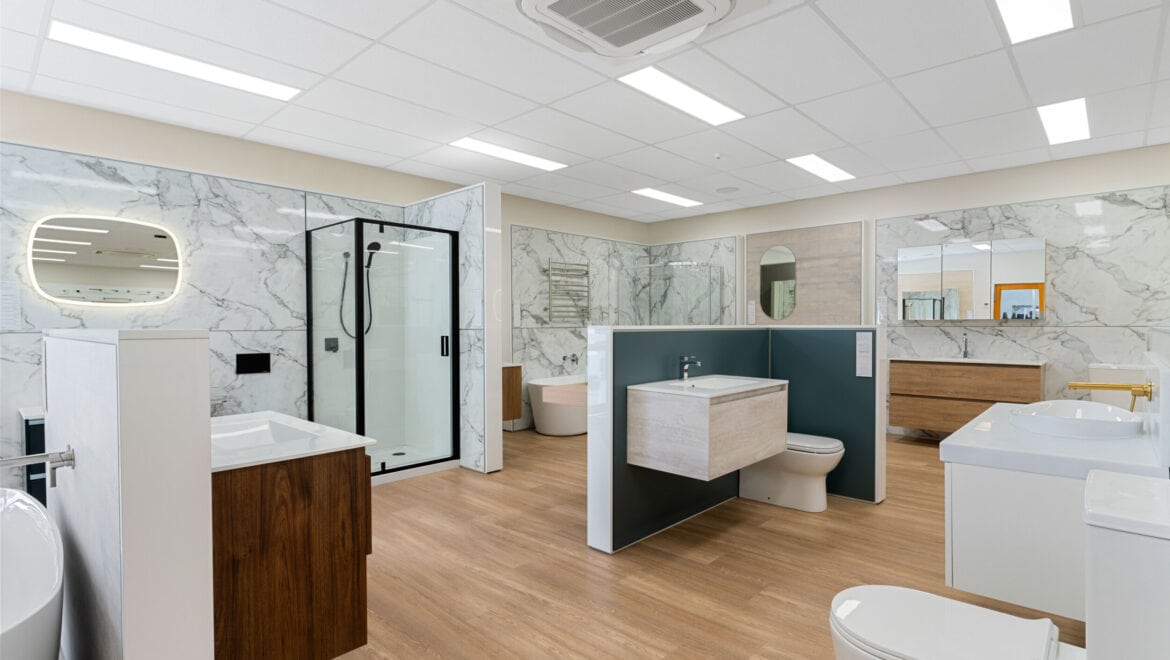
                Do You Actually Need Building Consent for Your Extension?

                Almost certainly yes. Auckland Council confirms that all new building work requires consent unless it’s specifically exempt under Schedule 1 of the Building Act 2004. Schedule 1 exemptions cover minor structures like small sheds, basic garden walls, and certain decks — not habitable rooms. If you’re adding a room to your house, you need consent. Full stop.

                You may also need resource consent if your planned extension pushes against the Auckland Unitary Plan’s zoning rules — specifically around height-to-boundary ratios, site coverage maximums, or impervious surface limits. This is more common than people realise, particularly in older inner-city suburbs with tighter sections.

                💡 Quick tip: Use Auckland Council’s online “Do I need a consent?” tool before calling anyone. It takes five minutes and can save you weeks of going down the wrong track.

                The Building Consent Process: Step by Step

                Understanding the consent process helps you plan your timeline — and your extension budget NZ — realistically. Here’s how it works in Auckland:
                1. Pre-application check: Confirm your zoning and check for heritage overlays (common in Ponsonby, Grey Lynn, Herne Bay). Our architectural partner Sonder Architects carries out feasibility studies at this stage for Superior Renovations projects.
                2. Design development: Architect prepares concept plans and detailed working drawings to building code standards.
                3. Engineering sign-off: Structural engineer reviews and stamps the structural design.
                4. Consent application preparation: Full documentation package assembled for Auckland Council submission.
                5. Lodgement: Application submitted via Auckland Council’s online portal (recommended for faster processing) or in person.
                6. Processing: Auckland Council has 20 working days to approve or decline — but can issue an RFI (Request for Further Information) which pauses the clock until the information is provided.
                7. Consent granted: Fees paid, consent formally issued. Work must commence within 12 months.
                8. Construction: Build phase begins, with mandatory inspections at key stages (foundations, pre-slab, framing, pre-line, final inspection).
                9. Code of Compliance Certificate (CCC): Applied for upon completion. Auckland Council has 20 working days to issue once satisfied all work meets the building code.

                How Long Does Building Consent Actually Take in Auckland?

                Realistically, allow 2–4 months for building consent under normal conditions. If resource consent is also required, add another 3–6 months on top of that. This is not your build time — this is the approval process that has to happen before a single spade goes in the ground.

                If your application isn’t watertight — incomplete documents, unclear plans, missing engineer’s statements — Auckland Council will issue RFIs that stop the clock and delay your project further. Working with experienced professionals who understand Auckland’s consent requirements from the start is the most effective way to keep this timeline moving.

                Auckland’s Zoning Rules and What They Mean for Your Extension

                Auckland’s Unitary Plan determines what you can build, and it varies suburb to suburb. The key rules that affect most residential extensions are:

                • Site coverage: Maximum percentage of your section that can be built on (typically 35–50% depending on zone)
                • Height-to-boundary: Rules about how close to and how tall you can build near property boundaries
                • Setbacks: Minimum distances from boundaries (typically 1–2m)
                • Impervious surface limits: Total hard surface allowed on site — affects stormwater management

                If your extension pushes any of these limits, resource consent is required — which adds cost and time but isn’t always a dealbreaker. A skilled architect can often redesign around constraints while preserving the core purpose of the project.

                What Happens If You Build Without Consent? (Don’t.)

                Unpermitted work in Auckland follows your home like a bad credit rating. It can void your home insurance, prevent mortgage lenders from financing against the property, and must be declared in any sale and purchase agreement. Retrospective (“as-built”) consent is possible in some cases, but it’s expensive, not guaranteed, and sometimes requires partial demolition of non-compliant work. The cost of fixing it after the fact almost always exceeds the cost of getting it right from the start.

                “The consent process is where a lot of people working to a tight budget try to cut corners. But consent isn’t optional — it’s the document that makes your extension a legal, insured, sellable part of your home. I always frame it this way: consent fees are not an extra cost on top of your extension. They’re the cost of making sure your extension actually counts.”
                — Eunice Qin, Designer, Superior Renovations

                Want to understand exactly how Superior Renovations manages the consent process for your project? Our House Extensions Auckland page details the full five-stage client process from initial enquiry to CCC. We also offer a free feasibility report that includes a preliminary assessment of consent requirements for your specific property.
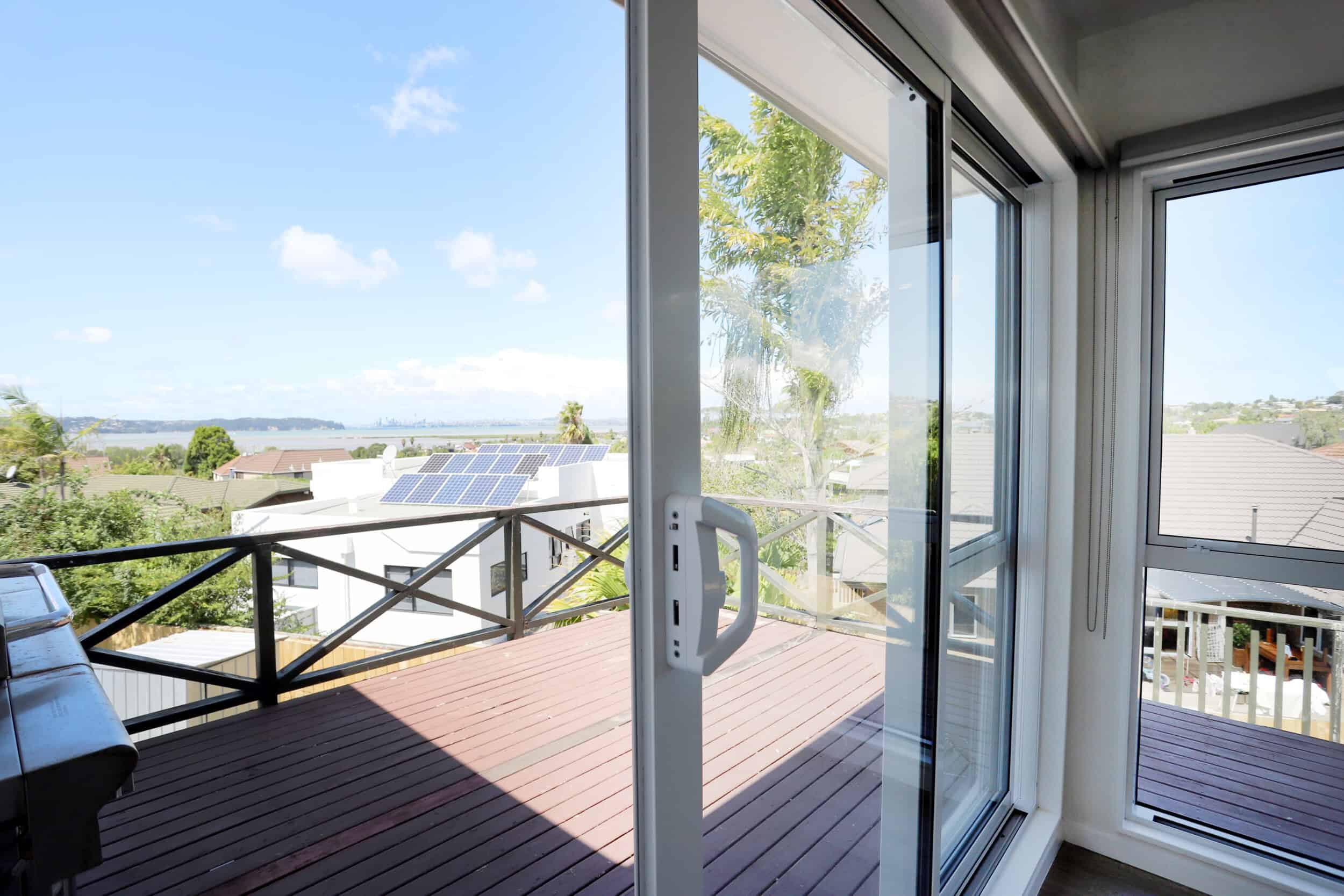

                Section 4: 8 Smart Ways to Stretch Your Extension Budget in NZ Further Than You Think

                A $50,000 extension budget NZ can go a lot further with the right decisions — not by cutting corners, but by being genuinely strategic about where every dollar lands.


                kitchens north shore

                This section is where the practical wins live. We’ve watched hundreds of Auckland homeowners navigate tight extension budgets over the years, and the ones who finished smiling weren’t the ones with the most money — they were the ones who made the smartest decisions early in the process. Here are the eight that make the biggest difference.

                1. Work With Existing Structure Wherever Possible

                This is the single biggest cost-saving lever available on a tight extension budget NZ. Enclosing an existing covered deck, converting a double carport, or transforming a basement or garage into habitable space means the foundations, roofline, and framing are already there. You’re paying for walls, insulation, windows, joinery, and finishing — not the bones of a whole new structure.

                Our 2025 Auckland extension cost guide documents a Henderson example where a covered 25m² patio was converted into a fully consented living room for around $50,000 — because the existing structure made the project dramatically more affordable. Without that existing roof and slab, the same space would have cost $90,000–$120,000.

                2. Keep the Shape Simple

                Architects talk about “complexity” — and in construction, complexity translates directly to cost. A rectangular footprint is cheaper than an L-shape. A flat or skillion roof is cheaper than a gabled roof that needs to match your existing home’s pitch precisely. Fewer corners, fewer junctions, fewer structural complications.

                Ask your architect or designer to show you a “value-engineered” option alongside the premium design. Sometimes a modest change — a flat roof instead of a hip, a rectangular room instead of an irregular one — saves $8,000–$20,000 with almost no impact on how the finished space feels or functions.

                3. Take Plumbing Off the Table (For Now)

                Wet rooms are the single biggest cost multiplier in any extension. A single mid-range bathroom addition adds $30,000–$50,000 above the base build cost. If you’re working to a $50,000 extension budget NZ, removing plumbing from your scope entirely is the most powerful cost reduction available to you.

                That doesn’t mean you can never have the bathroom — it means you build the extension now without it, but design it so adding a bathroom in a future stage is straightforward. A little forethought about where pipes could run, and where a wet area could logically sit, costs almost nothing at design stage and avoids major rework later.

                4. Choose Materials That Look Premium but Aren’t

                Cladding and interior surfaces are where a lot of extension budgets quietly inflate. Standard weatherboard from our supplier partners at Mitre 10 performs beautifully in Auckland’s climate and is significantly cheaper than cedar or brick. For interior surfaces, the Laminex range — one of our trusted supplier partners — delivers a genuinely premium look at a fraction of solid timber or stone pricing. Our designers use Laminex regularly to create spaces that feel custom and high-end without the associated cost.

                SR partners 2024 inverted - Superior Renovations

                5. Investigate Prefab or Modular Options

                Prefabricated and modular extensions are having a genuine moment in New Zealand. With construction happening off-site in controlled conditions, labour costs reduce, on-site time shortens, and build quality is often more consistent. For a straightforward bedroom or home office addition on a flat section, prefab can realistically save $10,000–$15,000 versus traditional construction — potentially putting a 20m² room within reach of a $50,000 extension budget NZ.

                Prefab isn’t right for every situation. Complex sites, heritage homes, and intricate integrations with existing structure often still need traditional methods. But for a simple addition on a compliant section, it’s worth getting a prefab quote alongside your traditional options.

                6. Stage Your Build — Don’t Do Everything at Once

                One of the smartest moves available to homeowners with a tight extension budget NZ: do the structural work and shell now, and fit out the interior progressively over 12–18 months as budget allows. This means the consented structure is complete and weathertight, the room is there — but the finishing choices (flooring, joinery, lighting, feature wall) happen over time without the pressure of a build deadline.

                A caveat: staging works best when it’s planned from the start, not improvised mid-build. Your builder and designer need to know that the plan is a staged delivery — so the shell is built to accommodate the future fit-out without costly rework.

                7. Use a Fixed-Price Contract to Protect Every Dollar

                A fixed-price contract isn’t just a nice-to-have when you’re managing a tight budget — it’s essential. Without one, cost overruns have nowhere to go except your pocket. At Superior Renovations, all projects operate on fixed-price contracts, with any variations formally costed and presented for written approval before work proceeds. You know what you’re paying before the first foundation is poured.

                Not every builder offers fixed pricing — some operate on cost-plus or time-and-materials, which shifts all cost risk to you. Ask explicitly before signing anything. Our Our Promise page explains exactly how we protect your budget through every stage of the project.

                8. Access Interest-Free Finance to Top Up a Tight Budget
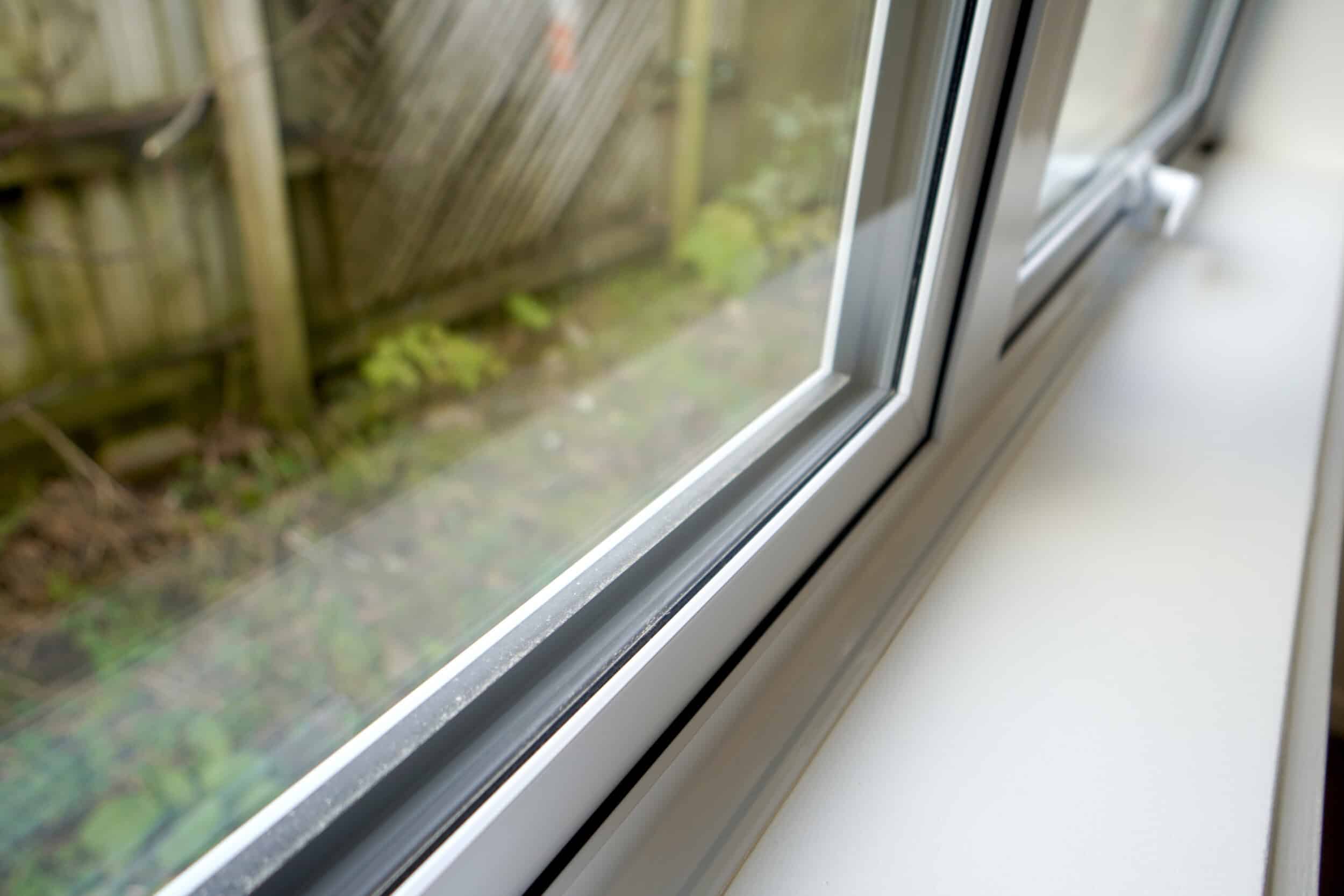
                If your scope genuinely needs $65,000–$70,000 but you have $50,000 in cash, finance can bridge that gap without derailing the project. Superior Renovations has partnered with Q Mastercard to offer an 18-month interest-free option, and works with Loan Market for longer-term renovation lending at competitive rates.

                DSC02902 - Superior Renovations

                The principle: only finance what you can comfortably service, and only use it to close a real gap — not to inflate scope beyond what you actually need. Extensions that add genuine functionality and a bedroom add real value to an Auckland home. That value should justify the finance cost several times over.


                Section 5: How to Choose the Right Builder for Your Auckland Extension — And Protect Your Budget from Start to Finish

                The single most important budget decision you’ll make for your extension in NZ isn’t a material choice or a design decision — it’s which company you hand the project to.

                A lot of content about extension budgets NZ stops at “here’s what things cost.” This section is about the more uncomfortable truth: who you choose to build your extension has more impact on whether you finish on budget, on time, and with a result you actually love than any other single decision. Wrong choice here and all the budget planning in the world doesn’t save you.

                Auckland has seen its share of extension horror stories. Builders who disappeared mid-project. Work that failed council inspections. Costs that tripled between quote and invoice. These are real, and they happen to real homeowners every year. Here’s how to make sure you’re not one of them.

                What “Licensed” Actually Means in New Zealand

                New Zealand law requires that any “restricted building work” — structural elements, weathertightness, foundations, fire safety systems — be carried out or directly supervised by a Licensed Building Practitioner (LBP). This is mandatory under the Building Act 2004, not optional.

                You can verify any builder’s LBP licence status through the Ministry of Business, Innovation and Employment (MBIE) building performance website. It takes two minutes. Do it for every builder you seriously consider — and if they’re evasive about LBP status, that’s a hard no.

                The New Zealand Certified Builders (NZCB) association is also a useful resource for finding vetted, qualified builders in your area — members are required to hold current LBP licences and meet ongoing professional development standards.

                Full-Service vs. Owner-Managed: The Real Cost Comparison

                There’s a persistent belief that managing your own extension project saves money. Sometimes it does — on paper. In practice, the hidden costs of owner-managed projects are significant:

                Factor Full-Service Company Owner-Managed
                Consent management Handled by company Your time and responsibility
                Trade coordination Single project manager You chase each trade separately
                Budget control Fixed-price contract (if offered) Cost-plus risk falls on you
                Timeline control PM ensures trades arrive on schedule Trade no-shows common; delays costly
                Quality assurance 147-point QA process (Superior Renovations) You assess everything yourself
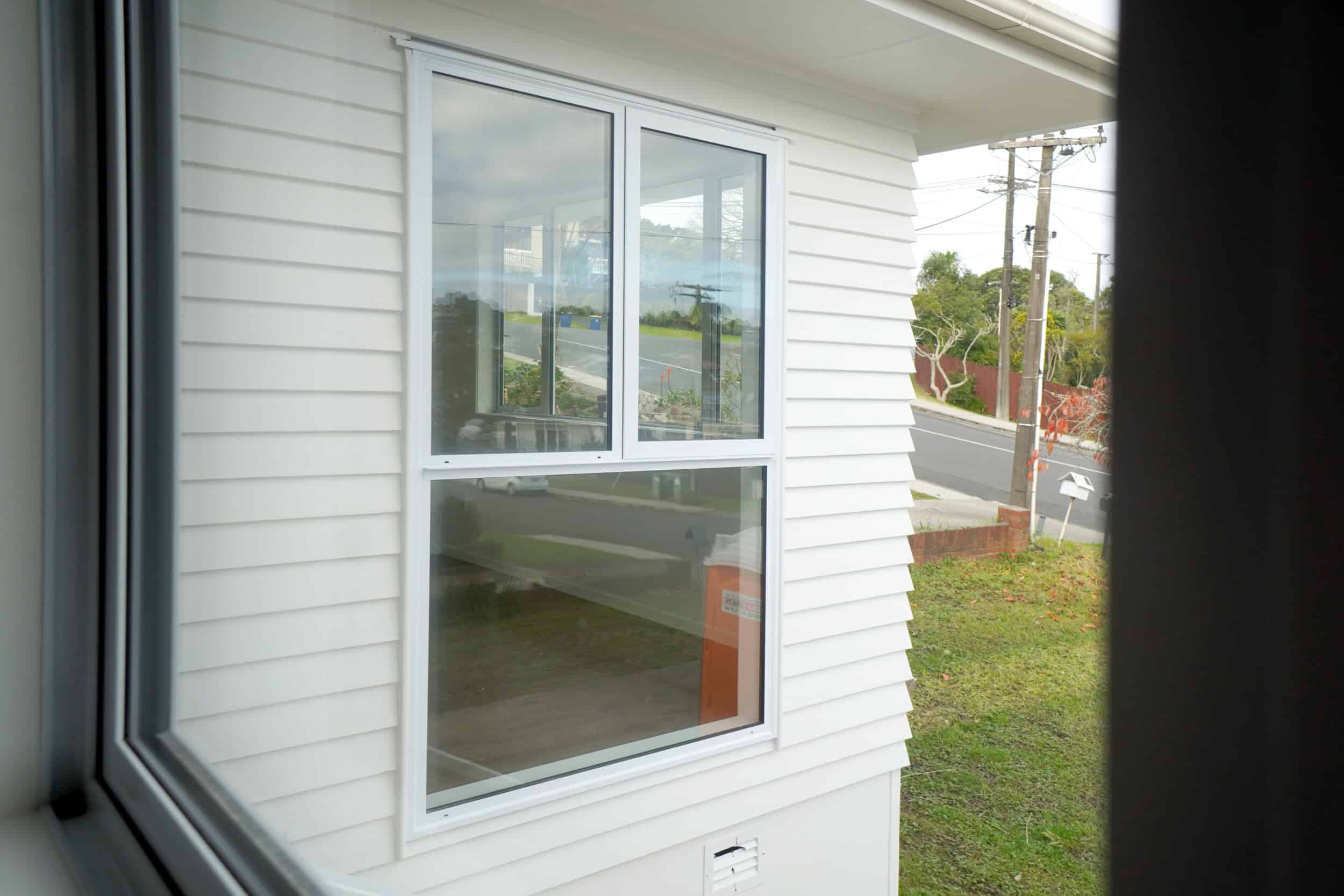
                Design expertise In-house designers + 3D renders You source separately

                On a $50,000 extension budget NZ where every dollar and every week matters, the full-service model often costs less in total — because delays, mistakes, and re-work in owner-managed projects frequently exceed any savings on management fees.

                The Questions You Must Ask Every Builder

                Before signing anything with any builder — no matter how good their Google reviews look — ask these questions and write down the answers:

                • Are you a Licensed Building Practitioner? What is your licence number? (Then verify it at building.govt.nz)
                • Do you carry full contractor all-risk insurance and public liability insurance? Can I see the certificates?
                • Do you offer fixed-price contracts? How are variations handled?
                • Can you provide three to five references from extension projects specifically — not renovations, extensions?
                • Who will be my single point of contact throughout the project?
                • Have you worked on similar projects in my suburb or area?
                • What does your consent process look like — who manages it?
                • What is your realistic timeline from signing to Code of Compliance Certificate?

                Red Flags That Should End the Conversation

                Walk away from any builder who: won’t confirm their LBP status, can’t provide insurance certificates, requests more than 10–15% upfront, has no verifiable reviews or references, dismisses consent as something to “sort out later,” or quotes dramatically lower than every other builder you’ve spoken to. In New Zealand construction, a suspiciously low quote is not a bargain — it’s a warning.

                What Superior Renovations Brings to Your Extension Project

                We know this is our blog, so let’s keep this specific rather than self-congratulatory. Here’s what our full-service model actually delivers for extension clients:

                • In-house design team: Dorothy Li, Alison Yu, Cici Zou (NZ Dip. Interior Design), and Eunice Qin are certified designers who create full 3D renders before anything gets built. You know exactly what your space will look like.
                • Architectural partnership: We work with Sonder Architects as our preferred partner for consent-related projects — they know Auckland Council’s requirements deeply and keep consent timelines moving.
                • 147-point quality assurance process: Three-stage sign-off (Team Member, Team Leader, Project Manager) before handover. Not just a checklist — an actual structured process.
                • Fixed-price contracts: No surprise invoices. Any variation is costed and approved in writing before work begins.
                • Auckland-wide coverage: We work across all Auckland suburbs — from Remuera and Ponsonby to Henderson, Manukau, Albany, and everywhere in between.


                initial consultation - Superior Renovations

                Read our client stories on our client stories page, or check what Auckland homeowners say about their experience on our reviews page. The proof, as they say, is in the projects.

                For a deeper dive into how the extension process actually unfolds — from first consultation to CCC — our guide to house extension costs in NZ for 2025 covers every stage in detail.


                So — Is $50,000 Enough for a House Extension in NZ? Here’s the Final Answer

                Yes. With conditions.

                A $50,000 extension budget NZ can absolutely deliver a real, consented, value-adding space — if you’re building a dry room (no plumbing), on a flat section, with a tight and disciplined scope, and you’ve accounted for the full picture of costs from day one.

                Here’s the summary you can rely on:

                Scenario Realistic on $50k?
                Enclosed existing deck / carport (20–25m²) ✅ Yes — best case for this budget
                Small bedroom addition (15–18m², no wet room, flat section) ✅ Yes — with tight scope and standard materials
                Home office or sunroom addition (12–20m²) ✅ Yes — prefab option makes this very achievable
                Bedroom + ensuite (20–30m²) ⚠️ No — plumbing alone blows the budget
                Any extension on sloped Auckland section ⚠️ Unlikely — foundation costs may double the build price
                Kitchen / open-plan extension (30m²+) ❌ No — not a realistic $50k project in Auckland

                The homeowners who get the best outcomes from a $50,000 extension budget NZ are the ones who are honest about this from the start — with themselves, and with their builder. They know what they’re getting. They plan for the hidden costs. They build in contingency. They choose a team with fixed-price contracts and a track record they can verify.

                If you’re not sure where your project sits, the most valuable thing you can do right now is have a no-obligation conversation with a team that will give you a straight answer.

                Book your free in-home consultation with Superior Renovations
                Try our free house extension cost calculator for Auckland
                Request a free feasibility report for your extension project

                Have you been through an extension project at a similar budget? We’d love to hear what worked — drop a comment below. And if this guide answered a question you’ve been wrestling with, share it with someone else who’s standing in front of their house doing the same maths.


                Is $50,000 enough for a house extension in New Zealand?

                Yes — for specific project types. A $50,000 extension budget NZ is enough for a small bedroom addition (15–18m²) on a flat section with no wet rooms, or an enclosed existing deck or carport conversion up to about 25m². It is not enough for extensions involving plumbing, sloped sections, or any build over approximately 20–25m² with standard finishes. Professional fees and building consent costs must be included within the $50k total — not added on top. Total cash position needed (including contingency) is typically $57,500–$60,000 for a genuinely $50k build.

                What can $50,000 buy for a house extension in Auckland?

                At $50,000, the most realistic options in Auckland are: enclosing an existing covered deck or carport (20–25m²), a simple bedroom addition (15–18m²) with standard finishes on a flat section, or a prefabricated home office or studio module (12–20m²). These scenarios work because they either leverage existing structure (reducing foundation and framing costs) or keep the build scope very tight. Anything requiring new plumbing, second-storey structural work, or complex foundations requires a larger budget.

                What is the cost per square metre for a house extension in NZ in 2025?

                A standard single-storey extension in Auckland costs $2,000–$5,500 per m² in 2025, according to New Zealand Certified Builders (NZCB) industry data and Superior Renovations' project history. Basic dry rooms (no plumbing, standard cladding, flat site) sit at $2,000–$2,500/m². Extensions involving wet rooms, premium finishes, or complex foundations push toward $3,500–$5,500/m² or beyond. These figures are for construction only — professional fees and consent costs are separate line items.

                What hidden costs should I budget for in an extension in NZ?

                The main hidden costs in an extension budget NZ are: Site and foundation conditions: $0–$75,000+ on sloped or clay-soil Auckland sections Architectural drawings: $5,000–$15,000 Building consent fees (Auckland Council): $2,000–$10,000 (resource consent, if also required, adds a further $5,000–$15,000+) Structural engineering sign-off: $2,000–$5,000 Electrical and services connections: $3,000–$8,000+ Proper insulation: $1,000–$3,200 (EECA recommends R3.2 ceiling, R2.2 walls minimum) Contingency reserve (15–20%): $7,500–$10,000 on a $50k project — non-negotiable Total cash position needed including all costs: typically $52,500–$84,000 for a project with a $50,000 construction budget.

                Do I need building consent for a house extension in Auckland?

                How long does building consent take for a house extension in Auckland?

                Allow 2–4 months for building consent under normal conditions in Auckland. Auckland Council has 20 working days to process, but Requests for Information (RFIs) pause the clock and are common on incomplete applications. If resource consent is also required, add a further 3–6 months. This is approval time only — construction cannot begin until consent is formally granted and fees are paid.

                Does Auckland Council charge development contributions for house extensions?

                No. Auckland Council confirms that development contributions are not charged for house extensions — only for new standalone dwellings. This is one significant fee category that does not apply when extending an existing home.

                What is the cheapest way to extend a house in NZ?

                The cheapest approach to a house extension in NZ is to leverage existing structure. In order of cost-effectiveness: Enclose an existing covered deck, carport, or garage (foundations and roofline already in place) Use a prefabricated or modular addition for a bedroom or studio (off-site build reduces labour costs by $10,000–$15,000) Keep the footprint rectangular and the roof flat or skillion — fewer corners and junctions = lower build cost Exclude plumbing entirely — a dry room costs roughly half what a wet room costs per m² Choose standard weatherboard cladding and Laminex-range interior finishes over premium materials

                What return on investment can I expect from a $50,000 house extension in Auckland?

                Adding a bedroom in Auckland typically increases property value by 10–20%, according to property data from homes.co.nz and NZCB industry insights. With Auckland's median house price estimated at $949,000–$1.1M depending on the data source and period (REINZ, January 2025; homes.co.nz), a well-executed single bedroom addition could add $95,000–$220,000 in value — a strong return on a $50,000 build investment. Return varies by suburb, execution quality, and market conditions at time of sale. Consumer NZ also notes that moving costs (legal fees, inspections) can exceed $20,000 — making extending often more cost-effective than upsizing.

                Should I use a full-service renovation company or manage my extension myself in NZ?

                For a tight $50,000 extension budget NZ, a full-service company with a fixed-price contract is often more cost-effective than owner-managing, because delays and cost overruns in self-managed projects frequently exceed savings on management fees. Look for: a Licensed Building Practitioner (LBP) on the job, fixed-price contracts with a formal variation approval process, a single project manager point of contact, and verifiable references from extension projects specifically in Auckland. Check any builder's LBP licence at building.govt.nz.

                How much contingency should I allow on a $50,000 extension in NZ?

                Allow 15–20% contingency on any extension budget NZ — that's $7,500–$10,000 ringfenced before work starts on a $50k project. This covers unforeseen site conditions (rotting timber, unexpected pipe locations, weather delays), scope clarifications, and minor variations. If this contingency isn't in your available cash before signing a contract, scale the scope down until it is. Do not start a build without it.

                Can I add a bathroom to a $50,000 house extension in NZ?

                No — not within a $50,000 total budget in Auckland. A mid-range bathroom or ensuite addition costs $30,000–$50,000 on top of the base build cost due to waterproofing, drainage, plumbing fixtures, ventilation, and additional consent conditions. If a bathroom is your goal, plan for a minimum total budget of $80,000–$130,000 for a bedroom-plus-ensuite addition, or consider staging the project — building the dry shell now and adding the wet room as a second stage when budget allows.


                Further Resources for your house renovation

                1. Featured projects and Client stories to see specifications on some of the projects.
                2. Real client stories from Auckland

                Need more information?

                Take advantage of our FREE Complete Home Renovation Guide (48 pages), whether you’re already renovating or in the process of deciding to renovate, it’s not an easy process, this guide which includes a free 100+ point check list – will help you avoid costly mistakes.

                Download Free Renovation Guide (PDF)


                finance - Superior Renovations

                Have you been putting off getting renovations done?

                We have partnered with Q Mastercard ® to provide you an 18 Month Interest-Free Payment Option, you can enjoy your new home now and stress less.

                Learn More about Interest-Free Payment Options*

                *Lending criteria, fees, terms and conditions apply. Mastercard is a registered trademark and the circles design is a trademark of Mastercard International Incorporated.


                Still have questions unanswered?

                Book a no-obligation consultation with the team at Superior Renovations,
                we’d love to meet you to discuss your renovation ideas!

                  Services

                  Home RenovationKitchen RenovationBathroom RenovationOutdoor RenovationHouse ExtensionCommercialDesign ServicesOther

                  By submitting this form, you agree to receive communications from us via email or text regarding our services, you can unsubscribe at any time.

                  This site is protected by reCAPTCHA and the Google

                  Privacy Policy and Terms of Service apply.

                  Entrance After - Superior Renovations
                  House Renovation

                  What Is the Most Expensive Part of a Renovation? | NZ 2026 Guide

                  What Is the Most Expensive Part of a Renovation? A Complete Auckland & NZ Cost Guide (2026)


                  modern kitchen design

                  Picture this: you’ve finally decided to do something about that kitchen. The cupboards are held together with optimism and a couple of old hinges. The bench wipes clean, technically, but it hasn’t looked clean since 2009. You hop online, get a rough number in your head — let’s say $25,000 — and book a consultation feeling pretty sorted.

                  Then the quote arrives. And suddenly $25,000 seems like a very charming opening bid.

                  You’re not alone. Every year, thousands of Auckland homeowners face the same reckoning — the gap between what they imagined a renovation would cost and what it actually costs once all the trades, materials, consents, and inevitable surprises are factored in. It’s not because renovators are overcharging. It’s because renovations are genuinely, legitimately complex projects. And understanding where the money goes is the first step to spending it well.

                  This series is for anyone planning a home renovation in Auckland or wider New Zealand in 2026 — whether you’re tackling a single bathroom, a full kitchen overhaul, or starting to seriously think about a whole-home transformation. We’ve drawn on first-hand project experience, real Auckland cost data, NZ authority sources, and honest input from our design team to give you the clearest, most useful guide to renovation costs available in this market right now.

                  Quick answer: The most expensive parts of a home renovation in NZ are typically the kitchen (cabinetry, benchtops, appliances), the bathroom (multi-trade complexity, waterproofing, fixtures), labour (40–50% of most budgets), and structural or consent-related work — especially in older Auckland homes where hidden conditions frequently add cost. A 15–20% contingency is strongly recommended for all Auckland renovation projects.

                  Here’s the breakdown of what we cover in this five-part series:

                  Use the links above to jump to the section most relevant to your project right now — or read the whole thing over a coffee. Either way, you’ll finish knowing exactly where your renovation money goes, and how to make the most of every dollar.


                  1: Why the Kitchen Is Usually the Most Expensive Room to Renovate in Auckland

                  Kitchen renovation and Kitchen design in westmere

                  Ask any experienced renovation company in Auckland what the single most expensive room to renovate is, and the answer is almost always the same: the kitchen. And yet, clients are consistently surprised when the quotes arrive. It’s not because the numbers are inflated — it’s because kitchens involve more decisions, more trades, more materials, and more potential surprises than virtually any other room in the house.

                  There’s a reason we often say that a kitchen renovation is really ten renovations happening in the same 12 square metres at the same time. Once you understand why kitchens are expensive, you can make much smarter decisions about where to invest and where to pull back.

                  What Does a Kitchen Renovation Cost in Auckland in 2026?

                  Let’s start with the real numbers — drawn from our completed projects across Auckland and aligned with current market rates as of 2026. Auckland consistently runs 10–20% higher than the national average, driven by higher labour demand, higher hourly rates ($120–$150/hour for most trades), and greater compliance costs through Auckland Council.

                  Renovation Level Auckland Cost Range (incl. GST) Typical Scope
                  Budget Refresh $15,000 – $25,000 Pre-made cabinets, laminate benchtops, basic appliances, no layout changes
                  Mid-Range Renovation $30,000 – $50,000 Custom cabinetry, engineered stone benchtops, mid-range appliances, minor layout tweaks for 10–12m² kitchen
                  Premium / Luxury $90,000 – $138,000+ Custom joinery, natural stone, scullery/butler’s pantry, premium European appliances, full layout redesign

                  Source: Kitchen Renovation Cost NZ 2026 — Superior Renovations. Per m² estimate: $2,500–$4,000 depending on scope. Always include a 10–15% contingency for surprises.

                  For context: a small, smart kitchen in Greenlane with neutral tones and clever storage came in at $22,000 for us recently. A modern, open-plan renovation in Avondale with premium stone benchtops and integrated appliances hit $95,000. The range is real — and it’s driven by the choices below.

                  The Five Biggest Cost Drivers in Any Kitchen Renovation

                  1. Cabinetry — Often 30–40% of Your Total Budget

                  This is, more consistently than anything else, the biggest single line item in a kitchen renovation. Custom cabinetry for a typical Auckland kitchen (10–12m²) runs $10,000–$20,000+. Why? Because it’s built specifically to your space, your configuration, and your finish specification — every panel, every hinge, every soft-close drawer. Pre-made flat-pack options can trim this to $3,000–$7,000, but they require compromises in fit and finish that tend to show over time.

                  Our partners at Little Giant Interiors specialise in precision kitchen cabinetry that genuinely bridges the gap between custom quality and mid-range pricing — worth a look if you’re weighing that decision.

                  kitchen design in henderson


                  💡 Skimmer’s Tip: Cabinetry is where you get what you pay for. Pre-made saves money upfront but often costs more in replacements or frustration within 5–7 years. If you’re planning to stay in the home long-term, lean toward custom.

                  2. Benchtops — The Statement Piece That Eats Budget Fast

                  Stone benchtops are having a significant moment in Auckland right now — and for excellent reasons. Engineered stone from suppliers like our partner Caesarstone NZ runs $500–$1,200 per linear metre installed. Natural stone (granite, marble) can reach $1,500/m² and beyond. Laminates from Laminex NZ — which have improved dramatically in quality and realism — sit at $200–$500/m² and offer surprising value at the mid-range.


                  Kitchen renovation auckland


                  3. Appliances — Where Budgets Stretch Fastest

                  Appliances can swing from $2,000 for a basic functional set to $30,000+ if you’re eyeing top-tier European brands. Our partner Harvey Normans – is the place to go if quality appliances matter to you. For energy-conscious Aucklanders, choosing ENERGY STAR–rated appliances also makes long-term financial sense as power costs continue to climb.


                  4. Layout Changes — The Hidden Cost Multiplier

                  Keeping your existing plumbing and electrical layout is the single most effective way to control kitchen renovation costs. The moment you start relocating the sink, moving a gas point, or shifting electrical circuits, you trigger a cascade: licensed plumber fees, registered electrician charges, potential building consent requirements through Auckland Council, and additional builder hours to make good the walls and floors behind everything. In Auckland’s stock of older villas and bungalows — think Grey Lynn, Mt Eden, Ponsonby — this cascade can add $2,000–$10,000 to a project’s cost.

                  According to MBIE’s Building Performance guidance, moving plumbing fixtures requires a building consent. It’s not bureaucracy for its own sake — it’s a compliance requirement that exists to protect you. But it does cost money and time, so plan accordingly.

                  5. Flooring, Splashbacks & Lighting — The “Finishing” Costs That Aren’t Small

                  People reliably budget for cabinets, benchtops, and appliances — and then look slightly pale when flooring ($50–$180/m²), splashbacks ($200–$1,500+), and lighting ($500–$3,000+) appear on the invoice. These aren’t optional extras — they’re part of what makes a kitchen feel finished and function well. Our partner Lighting Plus offers an excellent range of architectural kitchen lighting, from under-cabinet strips to statement pendants, that can transform how a kitchen feels without blowing the entire budget.

                  kitchens north shore

                  Why Kitchens Deliver the Strongest Renovation ROI in Auckland

                  Here’s the important counterweight to all of those costs: kitchens consistently deliver the best return on investment of any renovation project in the Auckland property market. Real estate professionals consistently cite kitchens as one of the top two value-adding renovations (alongside bathrooms), with a well-executed mid-range job capable of returning 60–80% of its cost in added property value — and in some inner-city suburbs, considerably more. A $40,000 kitchen renovation that adds $55,000 to your home’s value isn’t a cost — it’s a strategy.

                  “The kitchen is where people initially hold back — and then regret it. I always say: if you’re going to live in this home for the next five to ten years, this is the one room where investing in quality materials pays you back every single day — in enjoyment, in function, and in resale value. I’ve seen thoughtful mid-range kitchen investments add $40,000–$80,000 to a home’s value in the right Auckland suburb. The math is almost always better than people expect.”

                  — Dorothy Li, Interior Designer, Superior Renovations

                  Want to see what different kitchen budgets actually produce? Browse our Kitchen Design Gallery or use our free Kitchen Renovation Cost Calculator to model your specific project. For a deeper dive into all kitchen cost variables, our Kitchen Renovation Cost NZ 2026 Guide covers everything.


                  2: The Hidden Reason Bathroom Renovations Cost More Than They Look

                  renovation west auckland

                  Superior Renovations


                  “It’s just a small room, though.” If there’s one phrase that reliably precedes a budget shock, it’s that one. The bathroom might be the smallest room in your Auckland home — typically 5–12m² — but it’s almost certainly the most complex renovation you’ll ever undertake. More trades, more materials per square metre, more compliance requirements, and more potential for hidden conditions than any other room in the house.

                  As our Information Pack puts it plainly: “Did you know renovating a bathroom is the most complex renovation of them all? It may sound like a small project considering the space involved, but the reason it’s the most complex is because it involves the most people to get it done.”

                  That’s not hyperbole. It’s logistics.

                  What Does a Bathroom Renovation Cost in Auckland in 2026?

                  Bathroom renovation costs in Auckland have risen approximately 5–8% from 2025 levels, driven by material inflation and continued tradie demand. The national mid-range sits at $18,000–$26,000 — but Auckland’s premium is real and consistent across the board.

                  Renovation Level Auckland Cost (incl. GST) Typical Scope
                  Budget / Cosmetic Refresh $9,000 – $16,000 Paint, new fittings, minor tiling — no structural changes or full waterproofing
                  Mid-Range Full Renovation $26,000 – $35,000 Full tile replacement, new fixtures, waterproofing, lighting, project management
                  Luxury / Wet Room $45,000+ Wet room format, high-end brands, underfloor heating, custom joinery, premium finishes

                  Source: Bathroom Renovation Cost NZ 2026 Guide — Superior Renovations. Full overhauls in Auckland can reach $40,000–$60,000. Moody Parnell finishes at the premium end; Henderson Valley matte-black contemporary under $30,000 at the smart mid-range.

                  Why Does a Tiny Room Cost So Much? Let’s Count the Trades.

                  A standard full bathroom renovation in Auckland involves coordinating — in the right sequence, in a tight space, on a strict timeline — the following trades: demolition crew, waterproofing specialist, tiler, grouter, plumber, registered electrician, builder, plasterer, painter, and installer. That’s ten separate skill sets. Now imagine fitting them all into 6m² without any one of them causing a day’s delay for the next. That’s the coordination challenge that drives bathroom renovation costs, and it’s why project management isn’t just a convenience — it’s a necessity.

                  Consumer NZ’s renovation guide notes that even something as seemingly simple as replacing a hand basin and vanity could involve “a plumber, builder, plasterer, painter, tiler, electrician, and floor layer.” For a full bathroom renovation, double that complexity and you’re getting close to reality.

                  The Cost Items That Catch Auckland Homeowners Off Guard

                  Waterproofing — Non-Negotiable, Legally Required, and Not Cheap

                  Waterproofing is mandatory under the New Zealand Building Code for all wet areas. It must be completed by a licensed professional. According to MBIE Building Performance, even replacing or making a new tiled shower area requires a building consent. Skip waterproofing or cut corners, and you risk water damage that can cost tens of thousands to remediate — damage that may not be covered by insurance if it results from non-compliant work.

                  Budget $1,500–$3,500 for proper waterproofing. Never treat it as optional. Never let a renovator talk you out of it to reduce their quote.

                  💡 Skimmer’s Tip: If a bathroom renovation quote seems suspiciously cheap, the first thing to check is whether proper waterproofing is included. It often isn’t in low-ball quotes. Ask explicitly.

                  Tiling — Where Budget and Beauty Collide Most Dramatically

                  Tiling in a bathroom renovation typically costs $4,000–$9,000, depending on tile size, pattern complexity, and installer skill. Large-format tiles — a dominant 2026 trend in Auckland bathrooms — look stunning but are labour-intensive, requiring precise preparation and experienced hands. Our partners at Tile Depot and Tile Space offer ranges that cover everything from budget-smart ceramic to premium large-format porcelain — the ability to modulate your tile spend is real, and a good designer will help you identify where the visual impact comes from versus where you can save.


                  Bathroom Renovator West Auckland

                  Fixtures, Vanity & Tapware — Where Small Decisions Hit Hard

                  The fixture choices stack up quickly: floating vanity ($1,000–$6,000), freestanding bath ($2,500–$10,000+), frameless glass shower screen ($1,200–$3,500), toilet ($500–$3,500), heated towel rail ($400–$1,500). Our partners at Reece New Zealand carry an exceptional premium range of bathroom fixtures and tapware — their Auckland showrooms are genuinely worth visiting before you finalise your fixture specification, because seeing and touching the products makes a real difference to the decisions you make. For quality at competitive prices, our partner Mico Plumbing is our preferred go-to for plumbing fixtures across a range of budgets.

                  Bathroom Renovator West Auckland

                  bathroom renovation north shore

                  The Old Auckland Home Problem — What Lives Inside Your Walls

                  Auckland has a wealth of beautiful character homes — the timber-framed villas of Ponsonby, the bungalows of Mt Eden, the interwar homes of Epsom. Renovating them is rewarding. It can also be humbling. Pre-1990 homes in particular are known to contain asbestos (in floor vinyl, wall texture, ceiling tiles, and sometimes roof cladding), outdated plumbing that needs upgrading before new fixtures can be installed, and electrical wiring that isn’t up to current code. Opening a bathroom in a 1965 Remuera bungalow has surprised us more times than we can count — and every surprise adds to the cost.

                  The Consumer NZ renovation guide advises thorough pre-renovation assessment precisely for this reason. Budget a 15–20% contingency for any bathroom renovation in a pre-1980 Auckland home. It’s not pessimism — it’s the single most reliable form of renovation budget protection available to you.

                  “Clients often arrive with a beautiful bathroom photo and a number they’ve found online. My job isn’t to crush their vision — it’s to help them understand what that vision actually requires, and where the smart trade-offs are. A bathroom renovation in Auckland at $15,000 is absolutely achievable. But it means making targeted, deliberate choices: keep the layout, choose quality mid-range tiles, and prioritise the fixtures you touch every single day. The rest is details — beautiful details, but details.”

                  — Alison Yu, Interior Designer, Superior Renovations

                  Does Renovating a Bathroom Add Value in Auckland?

                  Consistently and reliably — yes. Bathrooms and kitchens are the two rooms property buyers examine most closely, and a dated bathroom can hold back an otherwise good home. A thoughtful mid-range bathroom renovation adds meaningful resale appeal, particularly when it improves usability through features like a double vanity, a larger shower, or better storage. As one NZ industry source notes, mid-range bathroom renovations can significantly boost resale appeal in our market.

                  For more inspiration, explore our Bathroom Design Gallery. And if budget is a real constraint, our honest guide on renovating a bathroom for $10,000 in NZ walks through what’s genuinely achievable at that price point. We also have an extensive guide on small bathroom renovation layouts, costs and designs for those working with compact spaces.


                  3: Labour Costs in NZ Renovations — The Budget Line Everyone Underestimates

                  bathroom renovation north shore

                  Here’s something that surprises almost every first-time renovator: the most expensive single category in most renovation budgets isn’t the kitchen cabinets, the stone benchtop, or even the bathroom tiles. It’s the people. The plumbers, electricians, tilers, builders, waterproofers, painters, plasterers, and project managers who make the whole thing actually happen — legally, safely, and to a standard that will last.

                  In Auckland in 2026, labour typically accounts for 40–50% of most residential renovation budgets. For bathroom renovations specifically — where more specialist trades work in less space — that proportion can push 50–60%. Understanding why helps you budget more accurately, get better quotes, and appreciate what “value” actually means in a renovation context.

                  What Do Tradespeople Actually Charge in Auckland in 2026?

                  Trade Typical Auckland Rate (2026) Key Notes
                  Licensed Plumber $100 – $140/hour Legally required for all plumbing work under the Plumbers, Gasfitters and Drainlayers Act
                  Registered Electrician $100 – $130/hour All electrical work must be completed by a registered electrician — non-negotiable in NZ
                  Tiler $60 – $120/hour Experience-dependent; complex patterns and large-format tiles at the higher end
                  Builder / Carpenter $80 – $120/hour LBP required for Restricted Building Work (structural/weathertightness)
                  Painter / Plasterer $60 – $90/hour Premium finishes at the higher end
                  Waterproofing Specialist $70 – $100/hour + materials Must be licensed; often minimum call-out charges apply
                  Project Manager Included in renovation company fee or 10–15% of project cost Coordinates sequencing, quality, communication — not optional for complex renovations

                  These are real Auckland rates in 2026 — not estimates. They reflect the current labour market, where skilled tradespeople remain in strong demand following the post-COVID construction boom. Industry data confirms that labour costs make up 40–50% of total renovation budgets, with urban areas consistently at the higher end.

                  Why These Aren’t Optional Costs — The Legal Reality

                  In New Zealand, plumbing, electrical, and gasfitting work must legally be carried out by licensed or registered professionals. This isn’t red tape — it’s protection for you, your family, and anyone who buys your home later. The MBIE Building Performance guidelines are clear on this: using an unlicensed operator for restricted building work means your consent is invalid, your insurance may be void, and you’ll face serious complications if you try to sell. Consumer NZ advises always verifying licences through public registers (lbp.govt.nz for builders, pgdb.co.nz for plumbers). It’s a two-minute check that matters.

                  And beyond legality — licensed tradespeople bring warranties, accountability, and faster execution. They’ve done this before, specifically and repeatedly. That experience is genuinely worth paying for.

                  The Coordination Problem: Why Labour Costs Are Higher Than the Hours Suggest

                  Labour costs in renovations aren’t purely about hourly rates. They’re also about the cost of getting all those trades in the right place, in the right order, at the right time. A bathroom renovation can involve 10 different trades. A kitchen renovation, 6–8. A full home renovation, 20 or more. Get the sequencing wrong — tilers can’t start until waterproofing is done, painters can’t finish until plumbers are done, cabinetry can’t go in until the floor is right — and one delayed trade cascades into a week of downtime for everyone else.

                  This is precisely why Consumer NZ notes that managing trades yourself “can still be a huge time commitment” and that the lack of control over subcontractors when there’s no main contractor means “they can’t guarantee subbies will turn up when required.” The coordination overhead is real — and it’s a large part of what you’re paying for when you engage a renovation company with a dedicated project manager.

                  “Labour is the last place you want to be cutting corners, and honestly, it’s often the first place people look when a quote comes in higher than expected. I’ve seen homeowners save $3,000 by hiring an uncertified tiler, then spend $8,000 fixing waterproofing failure eight months later. The trades we use are vetted, licensed where required, and they know how to work as a coordinated team within a tight space and schedule. That coordination is where the real value comes from — not just in quality, but in time.”

                  — Cici Zou, Designer & Project Coordinator, Superior Renovations

                  Renovation Company vs. Managing Trades Yourself: An Honest Comparison

                  Factor Renovation Company (Fixed Price) DIY Trade Management
                  Budget certainty ✅ Fixed quote before work starts ❌ Highly variable — charge-up risk
                  Trade coordination ✅ Project manager handles all sequencing ❌ Your time, your stress, your risk
                  Compliance assurance ✅ LBPs, licensed plumbers/electricians managed ⚠️ Your responsibility to verify
                  Material pricing ✅ Trade relationships = better prices ❌ Retail prices
                  Time commitment from you ✅ Minimal — single point of contact ❌ Effectively a part-time job
                  Post-completion support ✅ Guarantees, warranties, ongoing PM access ❌ You’re on your own with each trade

                  💡 Skimmer’s Tip: Always insist on a fixed-price contract rather than a charge-up (hourly) arrangement. Fixed prices protect you from budget blowouts. Every Superior Renovations project starts with a detailed fixed proposal — no surprises, no “we’ll figure it out as we go.”

                  Learn more about how Superior Renovations’ project management approach works at our Auckland house renovation page, or see how previous clients experienced the process in our video testimonials.


                  4: Structural Work & Building Consents — What’s Hiding Inside Auckland’s Walls

                  DSC062692 - Superior Renovations

                  You’ve budgeted for materials. You’ve factored in labour. You’ve added a contingency. And then, somewhere mid-project, someone says the sentence no renovator wants to hear: “We’re going to need a building consent for that.”

                  Or worse: “There’s asbestos behind the wall.”

                  Structural work and building consents are among the most misunderstood — and most consistently underbudgeted — aspects of home renovation in Auckland. They can add thousands to a project, or tens of thousands. Understanding when they apply and what they cost is genuinely important for anyone planning a renovation in this market.

                  When Does a Renovation Require a Building Consent in Auckland?

                  Not all renovation work requires a building consent. But more of it does than most homeowners realise — particularly in Auckland, where Auckland Council compliance requirements are among the more stringent in the country.

                  According to MBIE’s Building Performance guidance, you generally need a building consent if your renovation involves:

                  • Structural building work — including additions, alterations, some demolition, and re-piling
                  • Adding new plumbing fixtures (toilet, basin, shower, sink) — not just replacing like-for-like
                  • Replacing or creating a new tiled shower area
                  • Removing or altering load-bearing walls
                  • Electrical consumer board changes or major electrical alterations
                  • External wall insulation installation
                  • Changes to the external footprint of the building

                  You can check whether your specific project needs consent using Auckland Council’s building and renovation consents guidance, or the MBIE’s own tool at canibuildit.govt.nz. For Kitchen and bathroom-specific consent requirements, Auckland Council has dedicated guidance at their building and renovation projects page.

                  Important to know: if you carry out building work that requires consent without getting one, you may be fined up to $200,000 — and a further $10,000 for every day the work continues. Beyond the legal risk, unconsented work makes insurance complicated and creates serious issues when you try to sell. Don’t risk it.

                  For a good summary of the 2025 reforms that eased some consent requirements (including granny flat exemptions up to 70m²), read our blog on eased building consents in NZ 2025.

                  How Much Do Building Consents Actually Cost in Auckland?

                  Cost Category Estimated Auckland Cost (2026)
                  Building consent application deposit (lodging) $2,000 – $4,000
                  Processing & inspection fees (Auckland Council) $150 – $250 per hour
                  Total consent budget for a standard residential renovation $5,000 – $12,000
                  Engineering / architectural drawings (if required) $2,500 – $8,000+
                  Kitchen or bathroom consent specifically $2,500 – $6,500

                  Note that Auckland Council’s processing times and fees are set independently, and MBIE guidelines note councils have up to 20 working days to process applications — though poor or incomplete applications extend this timeline. A well-prepared, complete application submitted through an experienced renovation company moves significantly faster than one put together piecemeal.

                  Structural Work — Where Renovation Budgets Can Really Stretch

                  Structural changes are where renovation budgets face their biggest tests. Opening a wall, adding a structural beam, reconfiguring a floor plan — these are not cosmetic tasks. In an older Auckland character home, what starts as a “quick structural fix” can rapidly become a $15,000–$40,000 engineering exercise, particularly if the structure reveals unexpected conditions once opened.

                  The specific risks for Auckland homeowners include:

                  • Load-bearing wall removal requires a structural engineer’s assessment ($1,500–$4,000), consent drawings, the physical structural work, and Council sign-off. Doing this without the right people is legally a Restricted Building Work matter — requiring a Licensed Building Practitioner (LBP).
                  • Asbestos is present in a significant proportion of Auckland homes built before 1990 — in floor vinyl, ceiling tiles, wall texture (Gibraltar board), and some roof products. Professional testing costs relatively little ($200–$500 per sample); professional removal costs $1,500–$10,000+ depending on extent and location.
                  • Subfloor and framing rot is endemic in Auckland’s timber-framed housing stock, particularly in character homes that have experienced moisture issues over decades. Uncovering this mid-renovation adds builder hours, materials, and sometimes further structural assessment.
                  • Outdated electrical switchboards — pre-1980 homes often have consumer boards that need upgrading to handle modern loads, particularly when adding heat pumps, underfloor heating, or high-draw kitchen appliances. Budget $1,000–$2,500 for a switchboard upgrade if your home is pre-1980.

                  “Structural surprises in older Auckland homes are a ‘when,’ not an ‘if.’ I always tell clients before we start: plan to find something unexpected, and budget for it. The clients who go into their renovation with a realistic contingency feel in control when we hit a surprise — because we handle it quickly and move on. The clients who’ve budgeted every last dollar with no buffer are the ones who feel the stress most acutely. The contingency isn’t pessimism. It’s the single most valuable line item in your renovation budget.”

                  — Eunice Qin, Design Consultant, Superior Renovations

                  Insulation — A Renovation-Adjacent Cost Worth Knowing About

                  New Zealand has increasingly strong insulation standards for residential properties, particularly for rentals. Many Auckland homeowners who are already doing a significant renovation choose to upgrade insulation at the same time — it’s cost-effective to do while walls are open, and EECA (Energy Efficiency and Conservation Authority) notes that good insulation reduces heating costs significantly over a home’s life. Our comprehensive guide to insulating your home in NZ covers costs, rules, and eco-friendly options in detail. Visit eeca.govt.nz for information on current energy efficiency guidance and potential government support.

                  💡 Skimmer’s Tip: If your project involves any structural changes, consent work, or pre-1980 homes, get a pre-renovation assessment before you commit to a final budget. Superior Renovations offers a free feasibility report that identifies these issues and costs before you’re contractually committed — saving the unpleasant mid-project surprise.


                  5: Where to Save and Where to Splurge — A Real Auckland Homeowner’s Guide

                  Luxury Bathroom Design Redvale 8 - Superior Renovations

                  Luxury Bathroom Design – Redvale

                  Luxury Bathroom Design Redvale 14 - Superior Renovations

                  Luxury Bathroom Design – Redvale

                  By now you have a clear picture of where renovation money goes. But knowing the cost drivers doesn’t automatically tell you how to make the best decisions with a finite budget. That’s what this section is for.

                  The goal here isn’t to cut every corner you can find — it’s to spend strategically. Putting money into the things that last, perform well over time, add genuine resale value, and improve your daily experience. And saving intelligently on the things that don’t need to cost what you might assume they do.

                  The Golden Rule of Renovation Budgeting in Auckland

                  Don’t overcapitalise. This is the most consistent piece of advice from experienced renovation professionals and real estate agents alike: don’t spend significantly more on renovations than the resulting improvement in property value justifies for your specific home in your specific suburb.

                  A useful rule of thumb: keep your total renovation investment for any single project within 10–15% of your home’s current market value. Spend $100,000 renovating a kitchen in a $600,000 home and the maths rarely works in your favour. Spend $45,000 on the same kitchen in a $1.4M Herne Bay home? A very different conversation. As our guide to Auckland renovation ideas that add value explains, the suburb and the home’s current standing in that market matter enormously to ROI calculations.

                  Where to Splurge: The Investments Worth Making

                  1. Waterproofing — Every Single Time, Without Exception

                  We’ve said it twice already in this series, and here it is a third time because it matters that much: never cut costs on waterproofing. Water ingress is the most destructive long-term threat to an Auckland home, and the damage is almost always invisible until it’s very expensive. Proper waterproofing in a bathroom costs $1,500–$3,500 and protects a $25,000+ renovation investment for decades. Inadequate waterproofing can fail in months and cost far more to remediate than you saved. MBIE’s Building Code requires it for a reason. Honour that requirement fully, not minimally.

                  2. Benchtop Quality in the Kitchen

                  Your kitchen benchtop takes more daily punishment than almost anything else in your home — heat, weight, water, cutting, spills. This is not the place to save $200/m² and regret it within two years. Stone products from Caesarstone NZ are built to last decades and look genuinely better with age in the right environment. If stone isn’t in budget, premium laminates from Laminex NZ have improved so substantially that the quality gap between stone and a well-chosen Laminex finish is far smaller than it used to be — at significantly lower cost.

                  DSC04729 - Superior Renovations

                  3. The Fixtures You Interact With Every Day

                  The taps, the shower mixer, the toilet flush, the drawer handles — these are the things you touch every single day of your life in the renovated space. Quality here pays dividends in pleasure, reliability, and durability. Tapware from our partners Reece NZ and Mico Plumbing is designed for NZ conditions — water pressure, water chemistry, and the humidity patterns Auckland’s climate creates. Cheaper imported tapware may save money on day one and cost far more in replacement and repair by year three.

                  4. Professional Project Management

                  Coordinating 8–10 trades yourself in a tight Auckland renovation timeline is, by most accounts, a recipe for stress, unexpected costs, and a timeline that slips well beyond what you planned. The cost of professional project management — built into a renovation company’s fixed price — is one of the most reliably worthwhile investments you can make. It pays for itself in time, in avoided mistakes, and in the certainty of a fixed budget. Read our client testimonials to see how Auckland homeowners consistently describe the value of having one clear point of contact throughout their renovation.

                  Where to Save: Smart Decisions That Don’t Compromise Quality

                  1. Keep the Existing Layout

                  This is the most powerful single budget decision available to any Auckland homeowner planning a kitchen or bathroom renovation. Moving your kitchen sink to the other side of the bench — visually appealing on Instagram, ruinously expensive in practice. Moving a toilet 500mm to improve flow — easily $2,000–$5,000 in plumbing work alone. Every time you move a plumbing point or electrical circuit, you’re paying licensed professionals for time, potentially triggering a consent requirement, and opening up walls that will then need to be made good. Unless you have a compelling functional reason to move something, don’t. A good designer can make any existing layout feel significantly better without moving a single pipe.

                  2. Mid-Range Appliances Over High-End (for Most Kitchens)

                  Unless you are a serious home cook who will genuinely use every capability of a premium induction hob or steam oven — and there are people who will — the performance gap between a $15,000 Miele range and a quality $3,500 mid-range equivalent is not $11,500 worth of daily difference. Our partners at Harvey Norman Commercial Division offer an excellent range of mid-tier appliances that deliver solid performance, look premium, and don’t consume your entire appliance budget on a single item.

                  DSC02968 - Superior Renovations

                  3. Strategic Tile Selection — Spend on Focal Points, Save on Secondaries

                  Tiles don’t all need to be the same price. In a bathroom, the feature wall behind the bath or the shower floor is where the eye goes — invest here. The walls on the secondary sides of the space? This is where a quality mid-range tile from Tile Depot or Tile Space does the same visual job at a meaningfully lower cost. A skilled designer will tell you exactly where the tile spend matters and where it doesn’t.

                  4. Respraying Cabinets Instead of Replacing (When Structurally Sound)

                  If your existing kitchen cabinets are structurally solid — just dated in colour or finish — a professional cabinet respray with quality paint from our partner Dulux NZ can transform a kitchen for $500–$2,000, rather than $10,000+ for full replacement. Same potential applies to bathroom vanities in some cases. An experienced designer will give you an honest assessment of which cabinets are worth painting and which genuinely need replacing. Don’t assume replacement is the only option.

                  DSC04725 - Superior Renovations5. Smart Renovation Financing

                  Sometimes the smartest renovation decision is financial rather than material. Many Auckland homeowners are now accessing their home equity through renovation financing to fund projects without depleting savings or artificially constraining scope. Our partner Loan Market specialises in helping homeowners find the most cost-effective financing structure for renovation projects. Explore our Finance Options page for interest-free and low-rate options available through Superior Renovations.

                  The Renovation Decision Framework — Is It Worth It?

                  Decision Point Verdict Why
                  Stone benchtop vs. premium laminate ⚖️ Both are valid — budget decides Stone lasts longer, looks more premium; Laminex saves $500–$1,000/m²
                  Premium tiles on all surfaces 💰 Save — tile strategically Invest in feature/focal areas; save on secondary surfaces
                  Moving plumbing layout 💰 Save — keep the layout if possible $2,000–$10,000 in avoidable cost for minimal visual impact
                  Professional project management ✅ Splurge — always worth it Saves time, stress, mistakes, and often money through better coordination
                  High-end vs. mid-range appliances 💰 Save on most items Performance gap rarely justifies 4x price difference for typical household
                  Waterproofing quality ✅ Never, ever cut corners Failure costs 5–10x the savings, may void insurance
                  Custom vs. pre-made cabinetry ⚖️ Depends on longevity plan Custom for long-term homes; pre-made saves $5,000–$10,000+ for shorter horizons
                  Cabinet replacement vs. respray 💰 Respray if structurally sound $500–$2,000 vs. $10,000+ — huge saving, similar visual result

                  💡 Skimmer’s Tip: Use Superior Renovations’ free Renovation Cost Estimate Tools to model different scenarios before committing. And for a complete understanding of what you can achieve at your specific budget, our free Feasibility Report gives you a realistic picture before you’re committed to anything.


                  6: Three Renovation Scenarios — How the Most Expensive Part Changes Depending on Scope

                  Everything above breaks down the expensive parts of a renovation room by room and cost by cost. That’s useful when you’re planning. But there’s a bigger point that most renovation guides miss entirely: the most expensive part of your renovation shifts dramatically depending on how deep you’re going.

                  A cosmetic refresh, a mid-range kitchen-and-bathroom renovation, and a full structural strip-out are three completely different animals. The cost profile across them has almost nothing in common. Here’s what we mean.

                  Cosmetic Refresh ($30,000–$55,000): Flooring Leads

                  Picture a 120m² three-bedroom in Hillsborough. 1990s build, original carpet, dated paint, tired fittings. The bones are fine — the owners just want to modernise the look. No walls come down. No plumbing moves. No consent required.

                  In a cosmetic refresh, flooring is almost always the single biggest line item — roughly 25–30% of the total spend. That surprises people who assumed it’d be the kitchen. But when you’re not ripping out cabinetry or moving plumbing, the kitchen facelift is relatively contained (new doors, handles, maybe a fresh benchtop: $5,000–$10,000). Flooring, on the other hand, touches every room.

                  Even mid-range options add up fast across 120m². Hybrid vinyl plank — popular in Auckland right now for its waterproof properties and ease of installation — runs $45–$75/m² installed. Carpet in bedrooms adds $35–$60/m² laid. By the time you’ve covered the whole house, you’re looking at $8,000–$15,000 without choosing anything exotic.

                  Item Approx. Cost % of Total
                  Flooring (carpet + vinyl/laminate) $8,000–$15,000 25–30%
                  Interior painting (full house) $7,000–$12,000 20–25%
                  Kitchen facelift (doors, handles, benchtop) $5,000–$10,000 15–20%
                  Bathroom refresh (vanity, tapware, paint) $3,000–$6,000 8–12%
                  Light fixtures + electrical fittings $2,000–$4,000 5–8%
                  Labour (painters, flooring installer) $5,000–$10,000 15–20%
                  Total $30,000–$55,000 100%

                  💡 Quick tip: If budget is tight on a cosmetic refresh, keep existing flooring in rooms where it’s still serviceable and focus new flooring on high-traffic areas — living room, hallway, kitchen. It halves the flooring bill without compromising the overall feel.

                  Mid-Range Renovation ($100,000–$160,000): The Kitchen Takes Over

                  Same house. But now the owners want a new kitchen, a new bathroom, open-plan living (which means removing a wall between the kitchen and lounge), new flooring throughout, a full repaint, and updated electrics. This is the renovation type we see most often at Superior Renovations — the sweet spot where the home gets a genuine transformation without a full structural strip-out.

                  In this scenario, the kitchen consistently accounts for 25–30% of total spend — making it the single most expensive component by a clear margin. A mid-range Auckland kitchen with custom MDF cabinetry, engineered stone benchtops, and decent appliances lands between $28,000 and $45,000. The bathroom is second at $25,000–$35,000. Together, the wet areas eat roughly half the entire budget.

                  Item Approx. Cost % of Total
                  Full kitchen renovation (mid-range) $28,000–$45,000 25–30%
                  Full bathroom renovation $25,000–$35,000 18–25%
                  Wall removal + structural beam $5,000–$12,000 5–8%
                  Flooring (full house) $10,000–$18,000 10–12%
                  Interior painting + electrical upgrades + consent fees $18,000–$34,000 17–22%
                  Project management + contingency $10,000–$18,000 10–12%
                  Total $100,000–$160,000 100%

                  Why does the kitchen beat the bathroom on cost? Both rooms involve plumbing, electrical, and specialist trades. But kitchens are larger (typically 10–18m² vs. 4–8m² for a bathroom), involve more cabinetry, more benchtop surface area, and more appliances. A kitchen has a rangehood, an oven, a cooktop, a dishwasher, sometimes a fridge plumbed for water — each with its own supply line and installation. A bathroom has a shower, a toilet, and a vanity. The sheer number of components is what pushes the kitchen to the top of the cost sheet in almost every mid-range project we quote.

                  💡 Quick tip: If you’re doing both a kitchen and a bathroom, running them concurrently with a project manager coordinating trades is far more efficient than doing them one after the other. It avoids paying for trade mobilisation twice and compresses the overall timeline. It’s one of the main reasons we work on a fixed-price contract — everything is scoped, scheduled, and managed as a single project.

                  Full Structural Overhaul ($250,000–$400,000+): The Invisible Work Dominates

                  Now the big one. A 1970s brick-and-tile in Glenfield that hasn’t been touched in 40 years. The owners want everything: strip it back to framing, replace all the GIB, upgrade insulation to current NZ Building Code H1 requirements, rewire the entire house, replumb it, install double glazing, build a new kitchen and two new bathrooms, and reconfigure the layout to create open-plan living.

                  This is a full home renovation in the truest sense. And the cost breakdown is dramatically different from the first two scenarios.

                  The combined cost of rewiring ($10,000–$18,000), replumbing ($8,000–$15,000), new GIB lining ($15,000–$25,000), insulation ($8,000–$15,000), double glazing ($20,000–$35,000), and structural modifications ($15,000–$30,000) totals $76,000–$138,000. That’s 30–35% of the entire budget — spent on things you’ll never see once the house is finished.

                  The kitchen and two bathrooms are still big numbers — $85,000–$125,000 combined. But they’re no longer the dominant cost. The infrastructure is.

                  Item Approx. Cost % of Total
                  Demolition + waste removal $8,000–$15,000 3–4%
                  Full rewiring $10,000–$18,000 4–5%
                  Full replumbing $8,000–$15,000 3–4%
                  New GIB lining (all walls + ceilings) $15,000–$25,000 5–7%
                  Insulation upgrade (walls + ceiling) $8,000–$15,000 3–4%
                  Double glazing (full house replacement) $20,000–$35,000 7–9%
                  Structural modifications (walls, beams, framing) $15,000–$30,000 5–8%
                  Kitchen renovation (mid-to-high spec) $35,000–$55,000 10–14%
                  Two bathroom renovations $50,000–$70,000 15–18%
                  Flooring + painting (interior + exterior) $24,000–$40,000 8–10%
                  Consents, architect, structural engineer $15,000–$25,000 5–7%
                  Project management + contingency (15–20%) $30,000–$55,000 10–14%
                  Total $250,000–$400,000+ 100%

                  This is the scenario where Auckland’s regulatory environment also starts to bite. A renovation of this scale requires building consent from Auckland Council, a Licensed Building Practitioner (LBP) for all restricted building work, structural engineering sign-off, and typically an architect if you’re reconfiguring the floor plan. Our partners at Sonder Architecture handle the consent and architectural design side of projects like these — and it’s not uncommon for professional fees alone to reach $15,000–$25,000.

                  One of our recent projects in Henderson — a 1972 brick-and-tile, full interior strip-out — had 14 different trades on site across 16 weeks. The labour component of that project was north of $140,000. The homeowner said afterwards: “I didn’t expect the trades to cost more than the materials.” That’s the reality of structural renovation. The work itself is the most expensive part.

                  “With a cosmetic reno, you’re shopping — picking finishes and fittings that suit your taste and your wallet. With a structural reno, you’re problem-solving — responding to what the house needs. The budget for shopping is flexible. The budget for problem-solving is dictated by the building. That’s the fundamental difference, and it’s why the most expensive part changes completely depending on what level you’re working at.”

                  — Cici Zou, Designer (NZ Dip. Interior Design, Certified Designer), Superior Renovations

                  💡 Quick tip: If you’re considering a full strip-out renovation, get a free feasibility report done first. It identifies what’s behind your walls before you commit to a budget — and it’s the single best way to avoid the “we opened it up and found…” surprise that adds $20,000 to a job.

                  The Pattern: Three Renovations, Three Different Answers

                  Scenario Total Budget Most Expensive Part % of Budget
                  Cosmetic refresh $30,000–$55,000 Flooring 25–30%
                  Mid-range reno (kitchen + bathroom) $100,000–$160,000 Kitchen 25–30%
                  Full structural overhaul $250,000–$400,000+ Invisible infrastructure (wiring, plumbing, GIB, insulation, glazing) 30–35%

                  As renovation scope increases, the most expensive part shifts from what you can see to what you can’t. That’s worth sitting with for a moment — because it changes how you should think about budgeting. If you’re planning a cosmetic refresh, your budget decisions are about finishes. If you’re planning a mid-range renovation, your biggest call is the kitchen specification. And if you’re planning a full structural renovation, the cost is mostly determined by the condition of what’s behind your walls — something you won’t know until you open them up.

                  Which is exactly why we recommend a 15–20% contingency on structural projects, and 25% if you’re working with a character home. Villas in Grey Lynn, bungalows in Mt Eden, leaky-era homes in Albany — they all have a habit of revealing surprises once the GIB comes off.


                  Conclusion: The Most Expensive Part of a Renovation Is the One You Didn’t Plan For

                  So — what is the most expensive part of a renovation?

                  The honest, complete answer is that it depends on what you’re doing, where you live, and what you find when the walls come open. But if we’re talking about the consistent, reliable budget-drivers for Auckland homeowners in 2026, the list looks like this:

                  • The kitchen — particularly custom cabinetry, quality benchtops, layout changes, and appliances
                  • The bathroom — driven by multi-trade complexity, mandatory waterproofing, fixtures, and tiling
                  • Labour — 40–50% of almost every renovation budget, legally non-negotiable for licensed trades
                  • Structural and consent work — often the largest single surprise, especially in pre-1980 Auckland character homes
                  • Hidden conditions — asbestos, rot, old wiring, subfloor issues — the unavoidable unknown in older homes

                  The encouraging truth is that every one of these costs is manageable with the right planning, the right partner, and a realistic contingency. The Auckland homeowners who come through their renovations feeling genuinely in control — and genuinely happy with the result — are, almost without exception, the ones who went in with clear eyes, engaged a trusted renovation company, fixed their price before work started, and built a realistic buffer for the unexpected.

                  At Superior Renovations, we’ve been navigating these costs across Auckland for years. We know where the surprises live, how to plan around them, and how to deliver a renovation that genuinely meets the brief — without the stress, the budget blowouts, or the coordination chaos that characterises so many Kiwi renovation stories.

                  Ready to find out what your renovation actually looks like — and what it actually costs? Book a free consultation with our team, or start with our free Feasibility Report. You can also reach us on 0800 199 888.

                  Have questions about your specific situation? Drop them in the comments below — we genuinely read them and love helping Auckland homeowners figure this stuff out before they’re committed to a path.


                  Frequently Asked Questions: Renovation Costs in Auckland & New Zealand (2026)

                  What is the most expensive part of a home renovation in NZ?

                  The most expensive parts of a home renovation in New Zealand are typically the kitchen and bathroom, due to the number of specialist trades required (plumbers, electricians, tilers, waterproofers), the cost of cabinetry and fixtures, and — in Auckland — significantly higher-than-average labour rates. Labour alone accounts for 40–50% of most renovation budgets. Structural work and building consent costs are also major contributors, especially in Auckland's older character homes.

                  Why is bathroom renovation so expensive in Auckland?

                  Bathroom renovations are expensive because they involve the highest density of specialist trades in the smallest space — typically 10 different trades in a single project. Waterproofing (legally required under the NZ Building Code), tiling, licensed plumbing, and registered electrical work are all mandatory, not optional. Labour alone is 40–60% of the total cost. Auckland's higher hourly rates ($90–$140/hour for most trades) add a further premium over national averages.

                  Why is kitchen renovation so expensive?

                  Kitchen renovations are expensive because they combine high-cost components — custom cabinetry ($10,000–$20,000+), stone benchtops ($500–$1,200/m²), appliances ($2,000–$30,000+), and finishing elements — with licensed trade labour. Layout changes trigger further costs through plumbing and electrical work, and potentially building consents. In Auckland, labour runs $120–$150/hour and makes up 40–50% of the budget.

                  How much does a kitchen renovation cost in Auckland in 2026?

                  A mid-range kitchen renovation in Auckland costs approximately $30,000–$50,000 in 2026. Budget refreshes start at $15,000–$25,000. Premium or luxury renovations reach $90,000–$138,000+. Auckland runs 10–20% higher than the national average due to demand, labour costs, and compliance requirements. Always include a 10–15% contingency.

                  How much does a bathroom renovation cost in Auckland in 2026?

                  A mid-range full bathroom renovation in Auckland costs approximately $26,000–$35,000 in 2026, up 5–8% from 2025 due to material and labour inflation. Budget cosmetic refreshes start at $9,000–$16,000. Luxury wet room renovations start from $45,000. The national mid-range is $18,000–$26,000.

                  When do I need a building consent for a renovation in Auckland?

                  You need a building consent in Auckland for structural alterations, adding new plumbing fixtures, creating or replacing a tiled shower area, removing load-bearing walls, major electrical alterations, or changing your home's external footprint. Like-for-like replacements generally don't require consent.

                  What are the hidden costs of renovation in Auckland?

                  Common hidden renovation costs in Auckland include: asbestos removal in pre-1990 homes ($1,500–$10,000+), subfloor and framing rot repairs, electrical switchboard upgrades ($1,000–$2,500), building consent fees ($5,000–$12,000), structural engineering reports ($1,500–$4,000), and post-consent inspection fees. Budget a 15–20% contingency for all Auckland renovations, rising to 25% for character homes built before 1980.

                  What percentage of a renovation budget goes to labour in NZ?

                  Labour typically accounts for 40–50% of a standard renovation budget in NZ, and up to 60% for bathrooms specifically. Auckland trades charge $90–$150/hour depending on the trade. Licensed plumbers and electricians are legally required for plumbing and electrical work — these are non-negotiable costs under NZ law.

                  How can I reduce renovation costs in Auckland without compromising quality?

                  The most effective strategies: keep your existing plumbing layout (saves $2,000–$10,000), bundle multiple rooms into one project (shared trade mobilisation), choose mid-range appliances, use quality laminates where premium stone isn't necessary, consider cabinet respraying over replacement, and engage a renovation company with established supplier relationships for trade pricing on materials. Never cut costs on waterproofing, licensed trades, or structural compliance.

                  Does a kitchen or bathroom renovation add value in Auckland?

                  Yes — consistently. Kitchens and bathrooms are the two rooms Auckland property buyers examine most closely. A well-executed mid-range kitchen renovation can add $40,000–$80,000 to property value in the right suburb. Keep total renovation spend within 10–15% of your home's current market value to avoid overcapitalising.

                  How long does a kitchen or bathroom renovation take in Auckland?

                  A standard bathroom renovation takes 3–4 weeks with professional project management (no structural changes or consents required). A kitchen renovation typically takes 4–6 weeks. Full home renovations can run 3–6+ months. Consent-dependent work adds 4–8+ weeks to any timeline. Delays from hidden conditions (asbestos, old plumbing) should be expected in pre-1980 homes.

                  What renovation finance options are available in NZ?

                  Auckland homeowners can access renovation finance through mortgage top-ups, home equity loans, and specialist renovation lending. Superior Renovations works with Loan Market to offer interest-free and low-rate options. Explore at superiorrenovations.co.nz/finance-options/.

                  This guide is written by the design and project management team at Superior Renovations — Auckland’s specialist residential renovation company. With hundreds of completed projects across Auckland, from Remuera to West Harbour and Grey Lynn to Albany, every cost figure and recommendation in this series reflects genuine, first-hand project experience.


                  Further Resources for your house renovation

                  1. Featured projects and Client stories to see specifications on some of the projects.
                  2. Real client stories from Auckland

                  Need more information?

                  Take advantage of our FREE Complete Home Renovation Guide (48 pages), whether you’re already renovating or in the process of deciding to renovate, it’s not an easy process, this guide which includes a free 100+ point check list – will help you avoid costly mistakes.

                  Download Free Renovation Guide (PDF)


                  finance - Superior Renovations

                  Have you been putting off getting renovations done?

                  We have partnered with Q Mastercard ® to provide you an 18 Month Interest-Free Payment Option, you can enjoy your new home now and stress less.

                  Learn More about Interest-Free Payment Options*

                  *Lending criteria, fees, terms and conditions apply. Mastercard is a registered trademark and the circles design is a trademark of Mastercard International Incorporated.


                  Still have questions unanswered?

                  Book a no-obligation consultation with the team at Superior Renovations,
                  we’d love to meet you to discuss your renovation ideas!

                    Services

                    Home RenovationKitchen RenovationBathroom RenovationOutdoor RenovationHouse ExtensionCommercialDesign ServicesOther

                    By submitting this form, you agree to receive communications from us via email or text regarding our services, you can unsubscribe at any time.

                    This site is protected by reCAPTCHA and the Google

                    Privacy Policy and Terms of Service apply.

                    DSC06516 - Superior Renovations
                    House Renovation

                    16个紧凑型厨房设计理念(新西兰)| 小厨房装修指南 — Superior Renovations

                    没有人愿意在烹饪时体验幽闭恐惧的感觉。对于空间紧凑的小户型公寓和住宅来说,厨房的局促感是个真实的问题——但只要空间得到有效利用,它很容易解决。

                    规划是紧凑型厨房设计的关键。人工和项目管理等基础成本不会因为厨房小而减少——安装工、电工、水管工、瓦工、油漆工一个都不能少——但材料成本会更低:橱柜更少、瓷砖更少。省下来的预算,正好可以投入到创新的收纳方案上。

                    比如:打造融入生活空间的隐藏式储物柜,把电器收进去而不让空间显得局促;或者定制通顶橱柜,把不常用的电器放在最上层,再配一把兼具装饰功能的梯子。Kitchen Things(我们的首选家电供应商)有大量专为小户型设计的顶级品牌电器——可以拆分收进橱柜,不占用任何台面空间。

                    以下是 16 个针对新西兰紧凑型厨房的设计理念,全部来自我们在奥克兰完成的真实项目经验。


                    扫描二维码,在小红书上找到我们

                    Superior Renovations 小红书二维码

                    体验家居改造的艺术,选择 Superior Renovations!我们是奥克兰首屈一指的浴室、厨房及全屋装修专家。从概念设计到完工,我们的团队确保每个细节都完美无缺。扫描二维码,在小红书上关注我们,获取最新项目、装修技巧和灵感。

                    扫描二维码,通过微信联系我们

                    Superior Renovations 微信二维码

                    想开始您的装修之旅吗?通过微信与 Superior Renovations 联系,享受便捷、个性化的中文服务。立即扫描,提问、获取专家建议,踏出家居改造的第一步!


                    厨房装修费用计算器

                    想知道翻新自己的厨房大概要多少钱?使用我们免费的厨房装修费用计算器——输入您的具体需求,估算结果几秒内发送到邮箱。


                    1. 玩转你的色彩

                    有些颜色容易让空间显得狭小,有些则擅长营造空间放大的错觉。我们建议客户以中性色作为厨房的主色调——例如 Dulux 的 Mason Bay Quarter 或 Epsom 系列——让空间最大程度地舒展开。

                    用中性色或深浅不一的白色,并不意味着厨房一定沉闷无聊:选择一块有色彩或有质感的防溅板来吸引视线、制造趣味;橱柜颜色可以适当加深以形成对比;再用彩色的把手和水龙头点缀色彩感。

                    2. 灯光照明很重要

                    自然采光是厨房里最好的照明。可以通过大型垂直窗户营造高度感,或增加天窗抬升视觉上的天花板高度(顺便为更多橱柜创造空间),最大限度地引入自然光。如果这些都做不到,仍有很多办法把照明融入厨房设计:

                    • 贴近天花板的照明设备:考虑吸顶灯或贴近天花板的灯具,避免低垂的吊灯——它们会让小厨房显得笨重。省下墙面照明的位置,墙面就能用来装置物架。
                    • 嵌入式照明:在不牺牲任何空间的前提下照亮厨房的特定区域,是小厨房的理想选择。
                    • 吊线灯:由金属线或链条悬挂的单体灯具——枝形吊灯的轻量版,占用空间小。可以成组使用也可以只用一盏,既营造氛围又增添个性。
                    • 橱柜下方的 LED 灯带:在橱柜和把手下方安装 LED 灯带,省空间又提氛围——大多数灯带可调光,氛围感再加一层。
                    • 筒灯(埋入式照明):奥克兰多数房子都有筒灯——样式丰富、极度省空间。
                    橱柜下方 LED 灯带 — 奥克兰小厨房设计

                    橱柜下方的 LED 灯带

                    吊线灯 — 奥克兰 Epsom 厨房翻新

                    吊线灯

                    吊线灯 — 奥克兰 Epsom 厨房翻新

                    吊线灯

                    厨房照明设计 — Massey 厨房翻新 厨房照明设计 — Parnell 厨房翻新 厨房照明设计 — 奥克兰厨房翻新

                    以上是可以应用到您厨房设计中的照明实例。

                    3. 明智地选择你的电器

                    为厨房挑电器本来就不容易——空间小,就更难。好在厨房翻新中最实用的思路之一,就是选用更智能的新产品:专为狭小空间设计的电器,无论厨房多小,都灵活、多变、高效。博世(Bosch)和 Kitchen Things 都有专为小厨房设计的产品线——比如可以拆卸收进抽屉的电器,而不是常年占据台面的大家伙。

                    一个例子:用可以收进抽屉的手持式搅拌机或研磨机,替代笨重的台式搅拌机。还可以考虑多功能电器——一台机器搞定搅拌、研磨、打蛋等多项任务,台面立刻清爽。

                    4. 成为一名置物架大师

                    翻新或设计紧凑型厨房,核心是规划合适的空间方案。很多室内设计师都认同:最好的厨房设计离不开恰当的收纳——这正是置物架的价值所在。

                    壁挂置物架

                    壁挂置物架是为厨房增加储物空间最物美价廉的方式——放香料、杯子、茶叶和咖啡壶都很合适,同时为厨房设计增添个人色彩。翻新厨房时,可以让悬浮置物架与其他橱柜搭配使用;它们同样适合加在用餐区。再配上彩色的杯盘和厨房配件,收纳和装饰一举两得。

                    壁挂置物架 — Mangere Bridge 厨房改造

                    位于 Mangere Bridge 的全厨房改造——壁挂置物架不仅是厨房的视觉焦点,还增加了存储空间

                    抽屉和厨房储物架

                    抽屉内的分层架让收纳更轻松——可以在抽屉里加架子存放餐具。另一个趋势是在储物柜内加装可拉出的储物架,让橱柜整洁不凌乱。这种收纳形式也可以延伸到厨房之外的其他生活区域。

                    5. 厨房收纳

                    收纳对任何厨房都重要,对紧凑型厨房则是生死攸关。最有效的扩容方式:在基础橱柜上方加装壁挂橱柜,直接把储物潜力翻倍。

                    Papatoetoe 厨房收纳方案 — Superior Renovations 小厨房收纳设计 — Superior Renovations Papatoetoe 厨房拉出式收纳 — Superior Renovations
                    Papatoetoe 厨房抽屉收纳 — Superior Renovations Papatoetoe 厨房储物设计 — Superior Renovations 厨房储物解决方案 — Superior Renovations

                    以上是我们为奥克兰客户打造的收纳方案。

                    紧凑型厨房收纳最大化的 5 种方法

                    • 通顶开放式搁板:既实用,又能为厨房营造更开放的感觉。
                    • 魔术角(Magic Corner):转角柜深处的空间常年被浪费——魔术角的拉出式手推车抽屉能把这块”死角”彻底盘活。我们常用 Blum 的产品,他们在紧凑型厨房收纳方案上非常创新。
                    • 岛台兼作收纳:对多数人来说,储物空间永远不嫌多。早餐岛台可以定制储物柜和抽屉,把台面下方全部变成收纳。
                    • 柜内收纳架:如上文所述,柜内收纳架让抽屉井井有条;食品柜抽屉(pantry drawers)也正在成为节省空间的流行方式。
                    • 墙面挂钩:锅碗瓢盆和厨房器皿挂上墙,橱柜空间立刻释放。风格建议:选色彩鲜艳、有活力的器皿,挂出来也好看。

                    6. 兼具储物和用餐功能的厨房岛台

                    无论厨房大小,岛台都已是厨房设计的重要组成——它既是备餐台面,又能兼作用餐区和收纳空间,一物三用。

                    Blockhouse Bay 厨房岛台 — Superior Renovations

                    位于 Blockhouse Bay 的厨房改造——这个岛台提供了大量的储物柜以及台面空间

                    展厅样板:岛台收纳最大化的案例

                    应客户日益增长的需求,我们在奥克兰开设了家装展厅,完整展示我们装修的厨房和浴室品质。下图是展厅中由我们设计并施工的现代厨房——岛台两侧都有存储空间。

                    Superior Renovations 奥克兰展厅样板厨房岛台

                    我们的家装展厅位于奥克兰 Wairau Valley。乍看之下,这个岛台是一个无缝的整体,似乎没有任何橱柜或抽屉。实际上:朝向走廊的一侧有 2 个双层储藏柜和 1 个单层储藏柜;面向厨房的一侧有 2 个拉出式调味品柜和 2 个双抽屉,其中还藏着一个隐藏抽屉——正是这个隐藏式设计成就了无缝的外观。

                    相关阅读:哪种布局更适合你的厨房?

                    很多人以为紧凑型厨房装不下岛台——并非如此。紧凑型厨房常处于开放式生活空间中:一面墙容纳台面、灶台和洗碗机,中间加一个小早餐吧,就能把厨房和客厅自然”分开”。您甚至可以取消独立用餐区,让早餐吧同时充当餐桌和备餐台面。

                    Greenlane 厨房岛台用餐区 — Superior Renovations

                    位于 Greenlane 的厨房改造——岛台作为用餐区,配有水槽和操作台面,另一侧是橱柜形式的存储空间

                    如果您的紧凑型厨房是封闭式的,考虑拆除厨房与客厅之间的墙——变成开放式后的宽敞感会让您惊讶。

                    更多收纳方案灵感,请查看以下项目:

                    7. 隐藏式厨房

                    近几年逐渐流行的一个概念:隐藏式厨房——由柜门和抽屉分隔的紧凑型厨房空间,需要时可以瞬间”隐身”。有了这样的设计,您可以轻松藏起厨房的杂乱,几秒钟内把”带厨房的客厅”变回一个完整的客厅。

                    8. 紧凑型厨房的布局

                    改造紧凑型厨房的方法很多,但动工前必须先想清楚布局——布局直接决定厨房用起来顺不顺手、舒不舒服。无论是从零开始还是改造现有空间,都要思考您实际怎么使用厨房、最常做哪些事——不要停留在”早餐和晚餐”的层面,要更具体。

                    如果您偏爱 L 形厨房,但它让空间显得拥挤,那就把橱柜集中在一侧,转而增加一个小岛台——既补回橱柜空间,又能兼作用餐区。封闭式厨房则考虑拆除与生活空间之间的墙:开放式厨房通常让空间显得更大,也让整个生活区更有整体感。

                    9. 使用更大的瓷砖铺设厨房地板

                    与直觉相反,更大的瓷砖反而让空间显得更大。如果厨房地面打算铺瓷砖,考虑 900×600 或 600×600 的规格——灌浆线更少,视觉”断裂”更少,地面自然显得开阔。想深入了解大尺寸瓷砖如何制造空间错觉,请阅读我们与 Tile Depot 的问答文章

                    10. 用抽屉取代厨房橱柜

                    普通柜门式橱柜的储物效率其实不高——塞在最里面的东西很难拿到。改用拉出式抽屉,所有内容物一目了然,收纳效率立刻提升。

                    相关阅读:奥克兰经典、传统、当代、现代、田园和工业风厨房的设计指南

                    11. 关注橱柜的纹理,并合理运用镜子

                    紧凑型厨房选材的原则:不让材料把空间”压小”。闪亮、光滑的表面会反射光线,让厨房显得更大。多数紧凑型厨房走简约现代风效果最好;如果那不是您想要的,至少记住别让材料过于花哨和灰暗——它们会让厨房显得更小。

                    喜欢现代和当代风格的话,可以用玻璃做防溅板,制造空间错觉;走经典路线则可以在墙上加一面镜子——比如配白色画框的大平面镜。五金选择上:现代/当代风格选隐藏式把手;传统、乡村、古典或田园风格选小巧的亚光旋钮,而不是笨重的把手。

                    12. 厨房小推车和高餐桌

                    紧凑型厨房最缺的就是台面。两个有创意的补救办法:一是厨房小推车——备餐和储物的移动台面,不用时推走或折叠收纳;二是高餐桌——站立时可以直接当备餐台用,再配几把高脚凳,空间设计感也上来了。

                    13. 把墙饰和背景墙作为设计元素

                    紧凑型厨房的橱柜线条流畅,没有太多位置摆装饰品——但您可以用一面背景墙为厨房注入个性。避免在墙上挂画或摆饰(容易让小厨房显得封闭),改用鲜艳的瓷砖或与厨房其他部分形成对比的涂料来吸引视线;有纹理的瓷砖还能为厨房增加一个额外的维度。

                    14. 将大自然带进你的紧凑型厨房

                    自然元素能为厨房增添急需的温暖。大厨房可以自由混搭木材和石材,但紧凑型厨房如果堆太多木质元素,容易显得封闭。更聪明的做法:在橱柜角落摆绿植,或让爬藤类植物从柜顶垂落。

                    真想要木质感的话,在背景墙上用木纹瓷砖——有木头的纹理和外观,却容易清洁。墙面使用木纹砖时,请选浅色而非深色。

                    相关阅读:顶级厨房设计趋势与注意事项

                    15. 让厨房橱柜与墙壁颜色协调统一

                    橱柜颜色与墙面相匹配,能营造出轻快、宽敞的厨房。为了让中性厨房不显单调,可以加一面彩色背景墙,再用对比鲜明的灯具和橱柜把手提亮。

                    16. 安装大水槽

                    紧凑型厨房里装一个大水槽非常实用——尤其在没有洗碗机的情况下。大水槽不仅洗碗方便,做饭时还能把未洗的碗”藏”进去,台面始终保持清爽。


                    小空间的特色厨房装修案例

                    位于 Parnell 的豪华都市风厨房装修

                    这栋联排别墅位于 Parnell 的中心位置,但厨房很小、台面空间不足。我们彻底改变了布局——把厨房从左侧区域移到右侧,并在用餐区增加了橱柜作为扩展存储。这组柜子配有带内部灯光的搁架,需要时可以打开展示。查看改造前后图片和项目细节

                    Parnell 小厨房翻新 — Superior Renovations Parnell 厨房储物设计 — Superior Renovations Parnell 厨房布局改造 — Superior Renovations
                    Parnell 厨房细节 — Superior Renovations Parnell 都市风厨房 — Superior Renovations

                    位于 Greenlane 的紧凑型厨房

                    Joanna 和 Steve 想让他们的老房子更现代化。原来的厨房是封闭式的——我们拆除了一面墙,把它变成开放式生活空间。空间有限,所以我们打造了一个早餐吧台:增加储物、扩充台面、兼作早餐吧,一举三得。了解更多

                    Greenlane 紧凑型厨房早餐吧 — Superior Renovations Greenlane 开放式小厨房 — Superior Renovations
                    Greenlane 厨房翻新 — Superior Renovations Greenlane 厨房改造细节 — Superior Renovations

                    更多家居设计资源

                    1. 了解更好的厨房收纳方案,请查看上文列出的四个项目详情(Bucklands Beach、Avondale、Papatoetoe、Hillsborough)
                    2. 在我们的奥克兰厨房装修图库中获取设计灵感
                    3. 特色项目与客户案例——查看真实项目的规格
                    4. 来自奥克兰客户的真实评价
                    5. 想了解翻新费用?阅读厨房翻新费用完整指南,或直接使用厨房装修费用计算器

                    常见问题

                    我需要自己找厨房设计师吗?

                    不需要。作为一家提供从设计到装修全方位服务的公司,我们配有内部厨房设计师——帮您选择合适的装修材料、提供创意设计、打造更具功能性的空间,并制作 3D 设计图和效果图,让您在动工前就能直观看到未来的厨房。

                    我需要自己找水管工或电工吗?

                    不需要。我们不只是橱柜制造商——从设计、拆除旧厨房,到定制橱柜和台面并安装,我们提供全部装修工种:油漆工、电工、水管工、木工等。我们还会带您到供应商展厅以批发价挑选电器、地板和灯具。整个装修过程由项目经理统筹进度和交付,并作为您的唯一联系人。

                    厨房装修需要多少钱?

                    在奥克兰,通过装修公司完成一次标准整体厨房翻新的平均费用为 19,000 至 29,000 纽币,含设计、拆除、定制橱柜与台面、安装、水电和项目管理,不含电器。我们提供固定报价,具体金额取决于您选择的材料和厨房尺寸。您可以使用我们免费的厨房装修费用计算器获取个性化估算。

                    小厨房可以安装岛台吗?

                    可以。紧凑型厨房常处于开放式生活空间中——在厨房和客厅之间加一个小早餐吧台,既能自然分隔空间,又能同时充当用餐区、备餐台面和储物空间。岛台可以定制储物柜和抽屉,进一步扩充收纳。

                    小厨房应该用大瓷砖还是小瓷砖?

                    用大瓷砖。900×600 或 600×600 规格的瓷砖灌浆线更少、视觉断裂更少,反而会让小空间显得更大——这与多数人的直觉相反。

                    什么颜色能让小厨房显得更大?

                    以中性色和浅色调为主色——浅色和光滑闪亮的表面会反射光线,营造空间放大的错觉。再用有色彩或质感的防溅板、对比色橱柜和彩色五金件来避免单调。


                    还有问题没解决?预约 Superior Renovations 团队的免费咨询


                      This site is protected by reCAPTCHA and the Google

                      Privacy Policy and Terms of Service apply.

                      由 Superior Renovations 撰写

                      Superior Renovations 迅速成为奥克兰最受推荐的装修公司之一,这归功于我们友好的态度、透明的定价和公开的工作方式。当您的奥克兰房屋需要装修改造服务时,Superior Renovations 是您可以信赖的团队——高质量的工艺、高效的进度和具有成本效益的解决方案。

                      或致电我们:0800 199 888


                      18个月免息分期付款 — Superior Renovations

                      一直在推迟您的装修计划吗?

                      我们与 Q Mastercard® 合作,为您提供 18 个月免息分期付款方案——现在就享受您的新家,减少资金压力。

                      了解更多:免息分期付款方案*

                      *Lending criteria, fees, terms and conditions apply. Mastercard is a registered trademark and the circles design is a trademark of Mastercard International Incorporated.

                      In early June, I hired Superior Renovation company to thoroughly renovate our two bathrooms. The project has now been completed and we are very satisfied. Thank you sincerely, and we highly recommend it.
                      Despite some delays, Eunice, Neil and the team at Little Giants have done a really good job on out kitchen renovation. Great finishing and very responsive to fixing up any little thing we weren't happy with.

                      Good work team!
                      ​From the very first consultation, our experience with this team has been nothing short of stellar.

                      ​Working with Eunice, our sales consultant, set a high bar for the rest of the project.
                      Eunice is truly exceptional at what she does. When we first began our kitchen project, we went through several versions of our floor plan, and she was with us every step of the way—from the initial planning stages right through to the final concept. Her patience and dedication during the design process were remarkable.
                      Throughout the project, Eunice provided:
                      * **Invaluable Suggestions:** She has a keen eye for both aesthetics and functionality, pointing out details we never would have considered on our own.
                      * **Seamless Adjustments:** No matter how many tweaks we requested, she handled every change with professionalism and a "can-do" attitude.
                      * **Expert Guidance:** She transformed our vague ideas into a cohesive, stunning reality.

                      ​Once the planning was complete, Neil, our project manager, took the reins and truly blew us away. Neil is a consummate professional who balances technical expertise with fantastic communication.
                      ​ He kept us informed at every stage, ensuring we knew exactly what to expect and when.
                      Whenever a minor pivot was needed, Neil handled it with grace and efficiency, keeping the timeline on track.
                      His standards for the renovation work were incredibly high, ensuring the final result was polished and beautiful.

                      ​The transition from Eunice’s initial planning to Neil’s execution was flawless. If you are looking for a team that combines design expertise with top-tier project management, look no further. We are absolutely thrilled with our new kitchen and new flooring !
                      Superior Renovations has just finished a complete remodel of my bathroom. I can see, why the company has such a high reputation. At every stage, from sales, design, project management, and execution, the company excelled at every point. I am just so happy with the work that they have done and they have exceeded my expectations at every point.
                      Used Superior for a kitchen and bathroom renovation last year. They did an excellent job updating both rooms, communication was excellent ongoing tjrough the project, they coordinated all the tradies, synchronized so there was little downtime, and it all worked exactly as planned and on budget. Was really glad we chose Superior Renovations and plan to use again for our entrance way at some stage.
                      As I said to my work colleagues ‘I have just had the most pleasant experience’. When they realised it was with renovations at home they were shocked - ‘unheard of’ I was told.
                      Everything went to plan - timing, project management, costs, etc, etc. Neil communicated with me daily and made my whole bathroom renovation a pleasure.
                      The best decision I made was choosing Superior Renovations.
                      Thank you Kevin for our initial connection and for passing me on to Neil to manage the whole process.
                      We just finished a bathroom renovation and couldn’t be happier with the results. The craftsmanship is top-notch, and the attention to detail in the tiling and finishing is impressive. The team was professional, kept the workspace clean, and delivered exactly what we envisioned. Highly recommend them for anyone looking for a high-quality transformation.
                      Superior did an excellent job of renovating our ensuite. Project manager Jacob was easy to work with and communications were good.
                      This is our second review for Superior Renovations. They have done two projects earlier this year and we were so impressed by the work they have finished. After discussing and very careful consideration, we decided to go with more projects with them. So far, they have now completed stage 1 renovation of our house. We still amazed for their knowledge and services; they really listen to us and discuss anything with us if they feel/think could be better…
                      From the first day we work with them, we have no issue with them at all, from communication, discussing, designing to the teams working on the site.
                      Especially we are highly recommended to those who are considering doing the house renovation, please contact them and you will know why we are so pleased to have them to do our house renovation.
                      We are thanking Cici, Neil and the teams so much….
                      We are looking forward to seeing what the outcome will be.

                      David and Emily
                      We recently had our bathroom renovated by Superior Renovations and couldn’t be happier with the experience. Dorothy and Neil were an absolute pleasure to work with. They guided us through every step of the process, making what can be a stressful experience feel smooth and straightforward.
                      The quoting process was transparent and detailed, with no hidden fees or surprises. Neil was incredibly responsive and always available whenever we had questions or requests, which gave us real peace of mind throughout the project. We really love the end result and enjoy our new bathroom!
                      We’ll definitely be returning to the Superior Reno team for our next project. Highly recommended!
                      Our bathroom reno has just been completed & I am so happy. The whole process was easy & hassle free. Alison designed our bathroom & was very patient with our changes/then changes back again. Jacob our project manager was a delight to deal with. He always kept us informed of the scheduling & any other information we may have needed. All the tradies worked hard & the job was completed & signed off within 3 weeks. That's demo, full tiling, installation of new everything & delivery & pick up of the skip down a very tricky driveway. We absolutely love the new bathroom & would recommend Superior Renovations everyday. Future jobs I will definitely be contacting them again. Thank so much for your excellent work
                      Having explored our reno options, it was an easy decision to select Superior Renovations for our work. As first timers at anything like this we had to trust the system with grand old 100year old bungalow. We were so pleased to have Cici, Sonny and Kai working with us the whole way through. Be shout out to all the team, builders, plumbers, electricians, tilers and painters. A superb job delivered on budget and ahead of time. The communication from Cici and Sonny was first class. Would highly recommend working with Superior Renovations in fact, we already have more worked booked in. Thanks Superior you made Millie and Monty's parents very happy. 🐾
                      I am very happy with the recent renovation for my new kitchen.
                      The team worked really hard to get it done within the time frame.
                      The manager, Jacob, was very helpful and communicated well and always sorts out any issue immediately.
                      Thank you Irene
                      We couldn’t be happier with our new pergola! From start to finish, the team was professional, punctual, and easy to work with. They took the time to listen to what we wanted and offered great suggestions to make the design even better. The quality of the materials and workmanship is outstanding — everything feels solid, well-built, and beautifully finished. Kudos to Sinan Sun as she has been an amazing contact with the company.
                      We are very pleased with our bathroom reno by Superior Renovations! Jacob, Cici and the team always kept us up to date, were always friendly to deal with and finished ahead of schedule. Most importantly we are very happy with the quality of the work.
                      We have been working with Superior Renovations as a supplier now for over three years. In that time we have found the team to be very professional and well organised. Which is a welcome relief in this industry! Just recently we have become their sole supplier for portaloos, which recognises the collaboration we have forged over these three years.

                      In particular, Leanne and Elaine set a very high standard of communication and flexibility. This is of vital importance when scheduling deliveries and pickups with us, however, they understand not everything can be done at once and are willing to work with us for the best (supplier/contractor/client) outcome.

                      I would imagine this ethos would flow directly through to all their contracted renovation work. A pleasure to work with!
                      A very reliable supplier – we’ve been working with them for three years now, and they have never let us down. Well done to the team.
                      We have been working with these guys for the past 4 years and find them an awesome company to work with, very efficient and organised. I highly recommend!
                      Finding someone reliable for renovations has always been the most stressful thing for us. In the past, we had several painful renovation experiences—money was spent but the problems were never truly solved, and things often ended up worse than before. We really didn’t know where to find a trustworthy renovation company.

                      For more than ten years, our wish had been to renovate our bathroom, laundry, and toilet, so that we could finally enjoy a comfortable and functional living environment. Just when we were about to give up, we came across Superior Renovations online. We quickly made an appointment with Cici, who designed and provided us with a quote.

                      Throughout the whole process, I was deeply impressed by the professionalism of Superior Renovations. What stood out most was that they always delivered on their promises—everything agreed upon was completed on time. This built a relationship of trust and reliability. Up until completion, I was completely satisfied with their dedication and the quality of their workmanship.

                      During the renovation, we encountered some of the challenges that often come with older houses, but Cici and her team helped us resolve the discomforts we had been living with for years. We are truly grateful to the construction team.

                      Some say renovations are easy if you just have money, but I believe the most important thing is finding a trustworthy team that keeps their word, values quality, and cares about the customer’s experience.

                      Because of this renovation experience, we can now confidently plan our next project—the kitchen—and Superior Renovations will definitely be our first choice. We strongly recommend them.

                      Finally, I want to thank Cici and the team for helping us fulfill our dream.

                      Mark & Kate
                      Sinan is a very good consultant. She helps a lot during renovation. Very satisfied with their job.
                      It was great to have Alison's recommendations and input on how & what would look best for our kitchen and bathroom reno. Jacob, our project manager, has been a star too; ensuring that the project was delivered as planned, AND giving us great ideas & suggestions along the way.

                      We will definitely be calling on you guys again for our next home reno. Thanks team!
                      Very impressed with Superior Renovations.Building our pergola with blinds for a fair price .First thank you Sinan for quoting the job and your flexabilty and knowledge..Secondly the job was done well within the time frame, thanks to Jeff for supervising the job ( eventhough he wasn't too well) and keeping us up to date throughout the process. Payment was fair and easy as well .
                      Thoroughly recommend Superior Renovations for your reno job 👍
                      Very efficient team of workers and high quality finish.
                      Very happy with our renovated bathroom.
                      We will use this company again.
                      We’re very happy with the renovation work done by the team. It’s rare for renovation projects to finish on time, but they committed to completing ours before the Easter holiday—and they delivered! Our project manager, Jacob, worked incredibly hard (even physically! 😄) to make it happen.

                      I admit I might not have been the easiest client—I was particular about details like colours, tile placement, and exactly where the hand basin bowl should sit on the bench. But they listened, took it all on board, and got it done. Thank you, Jacob!
                      I’ll definitely bring you another challenge in the future. 😉
                      Thanks Superior Renovations for doing our house, it definitely looks a lot better now! Special thanks goes to Alison and Jacob for their excellent effort and good manners in handling the construction process, it wasn't easy but with them around it definitely became easier to handle. Cheers🥂