
Author: Jacob Sun

Exterior painting after 1000 - Superior Renovations
House Renovation

How Much Does It Cost to Paint a House in NZ? Auckland Guide 2026

The cost to paint a house in NZ runs from $5,000 to $30,000 depending on whether you’re tackling interior, exterior, roof, or all three. For a standard 150m² three-bedroom Auckland home in 2026, expect $7,000–$15,000 for the exterior, $5,000–$12,000 for the interior, and $2,000–$7,000 for the roof. A full repaint of an average home (interior plus exterior) typically lands between $15,000 and $30,000.

Where you sit in that range comes down to home size, number of storeys, surface condition, cladding type, paint quality, scaffolding requirements, and Auckland’s marine climate. A coastal weatherboard in Mission Bay needs marine-grade product. A Mt Eden villa with twenty years of layered paint needs proper sanding before a single drop of new paint goes on. Skip the prep and you’re repainting in three years instead of ten. If your cladding is failing rather than just tired, recladding rather than repainting is the longer-term fix worth costing alongside a paint job.

This guide breaks down what an Auckland house paint job actually costs in 2026, what drives the price, and where homeowners go wrong on budgets. Painting often forms part of a larger kitchen, bathroom, or full-house renovation — that’s where Superior Renovations comes in. For standalone painting work where painting is the only job, we point homeowners to our sister brand Superior Painters, who handle it as a dedicated service across Auckland.

How Much Does It Cost to Paint a House in New Zealand?

Painting a house in NZ costs between $5,000 and $30,000 in 2026, with the final figure shaped by what you’re painting (interior, exterior, roof, or all three), home size, surface condition, and paint quality. Across more than 1,000 Auckland renovations we’ve delivered, painting consistently shows up in the budget — sometimes as the headline scope, more often as one component of a bigger project. The guide below covers what you’ll actually pay, broken out by job type, and where the budget tends to leak.

Cost to Paint a House Exterior in Auckland

Exterior painting in NZ ranges from $6,000 to $20,000. For a 150m² single-storey three-bedroom Auckland home, expect $7,000–$15,500, with most jobs settling between $9,000 and $13,500. The number moves on five factors: home size, surface condition, cladding type, access, and paint specification.

What changes the exterior price

  • House size and storeys. A compact single-storey bungalow runs around $9,000. A two-storey home with similar footprint can hit $20,000 once scaffolding ($2,000–$5,000) is in. Rough working figure: $60–$90 per m² of wall area for a quality job before extras.
  • Surface condition. Peeling paint, mould on weatherboards, rotten fascias, or lifted nail heads each add prep time. A home that’s been left ten-plus years between coats typically needs $1,000–$3,000 of prep before the first coat goes on.
  • Cladding type. Weatherboards are the cheapest surface to paint. Plaster and stucco absorb more product and need sealing, adding 10–20%. Brick costs more again because of the texture.
  • Paint quality. A 10L can of premium exterior product like Dulux Weathershield or Resene Sonyx runs $200–$500. Budget product is half the price and lasts a third as long under Auckland UV.
  • Access. Steep sites in Remuera, Titirangi, or hillside Hibiscus Coast jobs often need additional scaffolding or edge protection. Costs sit at the upper end of the scaffold range.
  • Labour. Auckland painters charge $40–$60 per hour. A typical exterior runs 3–7 working days with two painters on site.

Auckland home exterior entrance before repaint

Auckland home exterior entrance after repaint

Dorothy Li, one of our senior designers, says paint selection is what separates a job that lasts ten years from one that fails at three: “Choosing the right exterior paint in Auckland is like choosing a raincoat. It has to handle salt, UV, and rain — sometimes all in one afternoon. Going budget on product is what costs you the second repaint.”

Typical breakdown — 150m² single-storey exterior

Component Range (NZD)
Labour (3–5 days, 2 painters) $3,000–$6,000
Paint (45L, premium product) $1,500–$2,500
Prep (clean, sand, minor repairs) $1,000–$3,000
Scaffolding (where needed) $1,500–$4,000
Total $7,000–$15,500

Get three written quotes minimum. If one comes in 30% below the others, look at what’s missing — usually it’s prep, the number of coats, or the paint product specification. A quote that doesn’t name the product line should be treated as incomplete.

Spray versus brush — and what it costs

Painters use both. Spraying is faster on long flat runs of weatherboard and saves 15–20% on labour for that part of the job. Brushing is mandatory for window frames, eaves, sills, and detailed trim. A typical Auckland exterior quote should include both. If your home has long uninterrupted weatherboard sections, ask whether the painter uses an airless sprayer — it makes a noticeable difference on bigger jobs.

Auckland exterior corner before painting

Auckland exterior corner after repaint

Climate, cladding, and what they cost

Auckland’s marine climate is harder on exterior paint than most NZ cities. Homes within roughly a kilometre of the coast — Mission Bay, St Heliers, Devonport, Takapuna, Milford, Hibiscus Coast — should be specced with a marine-grade product like Resene X-200. Inland suburbs can run standard premium product.

Older homes in the character belt (Mt Eden, Grey Lynn, Ponsonby, Herne Bay, Freemans Bay) usually need extra sanding before recoat because of layered paint that’s lost adhesion in patches. A good primer like Dulux Prepcoat is not optional. Alison Yu, our colour consultant, has seen Devonport jobs that skipped primer to save $400 peel inside three years and need a full redo at $9,000.

DIY versus a professional painter

A weatherboard single-storey is technically a DIY job for a competent person. Realistic costs for materials alone — paint, primer, brushes, rollers, drop cloths, ladder hire — sit at $2,000–$4,000, with a time commitment of 5–10 days. Where DIY tends to fall over: roof access, anything two-storey, lead paint on pre-1980 homes, and proper prep on surfaces that have been neglected.

Painters certified through Master Painters New Zealand follow product specifications and warranty conditions. The premium over DIY usually pays back through how long the job lasts and avoiding a costly redo. Superior Painters handles painting-only jobs through Superior Construction Group’s trade network.

Practical budgeting

  • Demand line-item quotes. Labour, paint product (named brand and line), prep, and access should be itemised separately. Single-figure quotes hide variations.
  • Book for the dry season. January through March is Auckland’s most reliable exterior paint window. Good crews fill their summer diaries by spring.
  • Test for lead if your home pre-dates 1980. Lead-safe removal adds $1,000–$2,000 but is required for safe handling. WorkSafe NZ’s lead paint guidance has the detail.
  • Pick durable colours. Darker shades absorb more UV and fade faster in Auckland’s sun. Mid-tones and lighter shades hold their look longer. Resene’s Whites & Neutrals range is a safe starting point.
Resene whites and neutrals fandeck

Resene Whites & Neutrals range — a safe starting point for exterior selection.

How Much Does It Cost to Paint a House Interior in NZ?

Interior painting in NZ costs $5,000–$15,000 for a standard three-bedroom home, with most Auckland jobs settling between $7,000 and $12,000 in 2026. The figure depends on room count, wall and ceiling condition, paint specification, and whether trims, doors, and skirting boards are in scope.

What changes the interior price

  • Size and scope. A single bedroom (around 12m²) runs $800–$2,000. A full three-bedroom home with hallways, ceilings, and trims included can reach $15,000. A working figure: $50–$80 per m² of wall area.
  • Wall condition. Cracks, water damage, wallpaper to strip, or plaster that needs skimming — each adds $500–$2,000 per room in prep. Older homes in Herne Bay, Mt Eden, and the character belt usually need more attention here.
  • Paint product. A 10L can of Dulux Wash&Wear or Resene Zylone Sheen runs $150–$400. Low-VOC options for homes with kids or pets sit at the upper end.
  • Ceilings and trims. Painting ceilings adds 20–30% on top of wall costs ($500–$1,500 per room). Skirting, architraves, doors, and door frames add another $1,000–$3,000 across a typical home.
  • Feature walls and special finishes. Bold accent colours, textured finishes, or limewash-style products add $200–$500 per wall.
  • Labour. $40–$60 per hour. A three-bedroom interior typically takes 5–10 working days.

Cici Zou, one of our interior designers, points to the difference paint product makes in a working family home: “In Auckland kitchens and bathrooms the paint copes with steam, grease splatter, and constant cleaning. Going washable in those rooms isn’t an upgrade — it’s what stops the walls looking tired in two years.”

Typical breakdown — 150m² three-bedroom interior

Area Range (NZD)
Bedroom (12–15m²) $800–$2,000
Living room (20–30m²) $1,500–$3,500
Kitchen (10–15m²) $1,000–$2,500
Ceilings (per room) $500–$1,500
Trims and doors (whole house) $1,000–$3,000
Full three-bedroom (150m²) $7,000–$12,000

If budget is tight, prioritise high-traffic rooms first — living, kitchen, and the entrance hallway. These three carry most of the visual weight of a home and the impact-per-dollar is significantly higher than redoing bedrooms.

Auckland interior before painting

Auckland interior after painting

Picking the right paint for an Auckland interior

Auckland’s indoor humidity is higher than most NZ regions, which matters for paint selection. For kitchens and bathrooms, a washable low-sheen product like Dulux Wash&Wear Kitchen & Bathroom resists mould and stains. For living spaces, a low-VOC paint like Resene Zylone Sheen VOC Free keeps off-gassing minimal — worth the extra $40–$60 per can if you have small children, asthma in the household, or pets.

Auckland interior painted living space

West Harbour Auckland renovation interior

West Harbour renovation by Superior Renovations.

DIY versus professional for interior

Interior DIY is more accessible than exterior. Materials for a single room run $300–$600, and a careful homeowner can produce a decent finish on flat walls. Where it tends to break down: ceilings (rolling overhead for hours is brutal), cutting in along trims, high stairwells, and intricate Victorian cornice work in character homes. If you’re attempting DIY, prioritise the rooms with the easiest geometry and leave detailed work to a professional.

Hidden costs to plan for

  • Wall and plaster repairs: $200–$1,000 per room. Older Freemans Bay and Mt Albert homes often need more here.
  • Furniture moving and protection: $200–$500 if the painter handles it. Free if you do it yourself.
  • Specialty paints (eco, anti-mould, kitchen/bathroom-rated): 10–20% premium on standard product. Usually worth it in Auckland’s climate.
  • Floor protection: included in most professional quotes; check it’s specified.

Keeping interior costs down

  • Schedule in the off-season. Winter (June–August) is quieter for Auckland painters and discounts of 5–10% are sometimes available.
  • Do your own prep. Clear rooms, remove wall hangings, sand minor patches yourself.
  • Choose neutrals that won’t date. Resene’s Whites & Neutrals range, Dulux Natural White and similar timeless options make touch-ups easier and resale neutral.
  • Get three quotes and check them against each other. Consumer NZ’s guide to getting quotes covers the questions to ask.

Key Factors Influencing House Painting Costs in NZ

House painting in NZ ranges from $5,000 to $30,000 across interior, exterior, and roof. What pushes one job to $8,000 and another to $28,000 comes down to seven main factors: home size and number of storeys, surface condition, paint quality, labour and prep time, cladding type, location and access, and any specialty extras.

Single-storey versus two-storey

A single-storey Auckland home runs $6,000–$15,000 for either interior or exterior. A two-storey home stretches from $12,000 to $30,000. The gap is largely scaffolding ($2,000–$5,000), additional labour for height work, and higher ceilings on the interior side.

Home Type Exterior (NZD) Interior (NZD)
Single-storey (150m²) $7,000–$15,500 $5,000–$12,000
Two-storey (250m²) $12,000–$25,000 $10,000–$20,000

If you’re in a two-storey home, ask whether ladders can replace scaffolding for smaller areas. It’s not always safe or compliant, but where it works it can take $1,000–$2,000 off the bill.

Two-storey Auckland renovation by Superior Renovations

Scaffolding costs in Auckland

Scaffolding runs $1,500–$5,000 in Auckland depending on home size, height, and complexity. A narrow townhouse in Freemans Bay needs minimal setup. A sprawling Remuera two-storey can take a full perimeter rig. Weekly rental sits around $1,000–$2,500 — plan the painting schedule to minimise the rental window. If exterior painting and roof painting are happening in the same project, combine them while scaffolding is up. The combined scaffold cost on a paired job is barely different to scaffolding for one of them alone.

Cladding type and its impact

  • Weatherboards: $50–$70 per m². Easiest and cheapest to paint. Less primer, less product.
  • Brick or concrete block: $60–$90 per m². Specialty primers like Dulux AcraTex add to product cost.
  • Plaster or stucco: $70–$100 per m². Needs sealing, absorbs more product, and often needs multiple coats. Common on 1990s–early 2000s monolithic-clad homes — also the category most affected by weathertightness issues.

Roof painting — easy to forget, expensive to ignore

Roof painting in Auckland costs $2,000–$7,000 for a standard 150m² home. Material (Colorsteel versus tile versus concrete), pitch, and condition determine the figure. Rusty or moss-covered roofs need cleaning, rust treatment, and priming — adding $500–$2,000 in prep. We cover this in detail in the next section.

Auckland window frames before repaint

Repairs before paint

Repair work runs $500–$5,000 depending on what the home has hidden. Common Auckland issues:

  • Mould and mildew: common in coastal and shaded southern-facing walls. Treatment $500–$1,500.
  • Rotten weatherboards or fascias: $1,000–$3,000 to replace and prime ready for paint.
  • Cracks and plaster damage: $200–$1,000 per room for interior. Older Mt Albert and Freemans Bay homes carry more of this.

Inspect your home before getting quotes. A thorough walk-around prevents the “we found rot, here’s a $4,000 variation” conversation halfway through the job. Building Performance NZ’s home maintenance guidance is a starting point.

Paint suppliers — quality versus price

The two dominant brands across Auckland renovations are Dulux and Resene. Premium product from either runs 10–20% more than budget alternatives but typically lasts 5–10 years longer.

Roof Painting Costs and Extras That Lift Your Auckland Home

Roof painting in Auckland costs $2,000–$7,000 for a standard 150m² home in 2026. The roof takes more weather punishment than any other surface — UV, salt spray, heavy rain, lichen, moss — so a quality recoat protects against rust, leaks, and premature replacement. A painted roof can extend life by 10–15 years and is one of the highest visible-impact updates ahead of a sale.

What changes the roof price

  • Roof size. 100m² roof: $2,000–$4,000. 200m² roof: $5,000–$7,000.
  • Roof material. Colorsteel is easiest to paint. Concrete and clay tile need specialty primers and absorb more product, adding $500–$1,500.
  • Condition. Rust, moss, and lichen need cleaning and treatment before paint. Coastal homes in St Heliers or Devonport often need rust treatment specifically. Adds $500–$2,000.
  • Pitch and access. Steep roofs or two-storey homes need scaffolding, harnesses, or roof anchors. Adds $1,000–$3,000.
  • Paint product. Specialty roof paints like Resene Hi-Glo or Dulux Roofguard run $100–$300 per 10L can and last 10–15 years.
  • Labour. 2–5 working days at $40–$60 per hour.

Auckland roof painting

Dorothy Li frames it bluntly: “A roof is the hat of your home. In Auckland, where rain and sun hit hard, a quality roof paint saves you tens of thousands in eventual roof replacement. It’s one of the highest-leverage maintenance jobs you can do.”

Typical breakdown — 150m² roof

Component Range (NZD)
Labour (2–5 days, 2 painters) $1,500–$3,000
Paint (20–30L, premium roof product) $500–$1,500
Prep (clean, rust treatment, primer) $500–$2,000
Scaffolding / safety gear $500–$2,000
Total $2,500–$7,500

Extras worth budgeting

Feature walls. A single accent wall in a bold colour or textured finish costs $200–$500. One feature wall in a high-traffic room creates more impact-per-dollar than redoing four neutral rooms. Consider deeper tones from Resene’s The Range Fashion Colours or a soft metallic for a modern look.

Eco-friendly paint. Low- or zero-VOC products like Resene Zylone Sheen VOC Free add 10–20% to material cost. Kevin Yang, our project manager, recommends them as default for any home with small children, asthma, or pets — and increasingly for landlords meeting Healthy Homes occupant-comfort expectations.

Specialty finishes. Textured, matte, satin, or metallic finishes add $300–$700 per room depending on the technique.

DIY versus pro for roof painting

Roof DIY is one of the riskier paint jobs you can attempt. Steep pitch, height, weather windows, and the need for proper rust treatment make it a job most homeowners shouldn’t take on. DIY material cost is $500–$1,500, but the labour saving comes with genuine fall risk and a higher chance of premature paint failure. A professional roof painter brings safety gear, the right product spec, and warranty on the work.

Auckland-specific considerations

Homes near the Hauraki Gulf — Takapuna, Devonport, Mission Bay, St Heliers — face salt corrosion that eats into older steel and Colorsteel roofs. A rust-inhibitive primer is mandatory in these areas. Older tiled roofs in Mt Eden, Epsom, and the heritage belt frequently need moss treatment and biocide before paint goes on. Schedule for summer (January–March) for the most reliable drying conditions. Combine roof and exterior painting in one project to share scaffolding costs.

How to Estimate Your Total House Painting Costs

To estimate your total house painting cost in Auckland, multiply your home’s wall surface area by $40–$80 per m² (labour and paint combined), add $500–$5,000 for prep and repairs, $1,500–$5,000 for scaffolding if you’re two-storey, and $2,000–$7,000 if the roof is in scope. For a 150m² single-storey home, total project cost typically lands between $7,000 and $25,000 depending on what’s included.

Five-step DIY cost calculator

  1. Measure surface area. Exterior walls (m²) + interior wall area (room floor area × 2.5 for wall height) + roof if applicable.
  2. Estimate paint cost. Surface area × $10–$20 per m² for premium product.
  3. Add labour. Surface area × $30–$50 per m².
  4. Add prep and repairs. $500–$5,000 depending on home condition.
  5. Add extras. Scaffolding ($1,500–$5,000), feature walls ($200–$500 each), roof painting ($2,000–$7,000), specialty paint (10–20% premium).

Worked example: 150m² single-storey home in Mt Eden, exterior plus full interior repaint:

  • Total surface area: 300m²
  • Paint: 300 × $15 = $4,500
  • Labour: 300 × $40 = $12,000
  • Prep and minor repairs: $2,000
  • Subtotal: ~$18,500 before scaffolding or roof.

Auckland renovation interior by Superior Renovations

Auckland renovation completed by Superior Renovations

Auckland-specific budgeting notes

Coastal homes in Takapuna, Devonport, Mission Bay, and Hibiscus Coast need marine-grade product, adding 5–10% to material costs. Older villas in Freemans Bay, Ponsonby, and Grey Lynn may need extra prep for heritage features (cornices, fretwork) and lead paint testing on anything pre-1980. Always get a site visit — Alison Yu’s view on this: “Auckland homes hide things. You don’t know what’s behind the weatherboard until someone walks the perimeter properly. Quoting off photos misses problems that cost money later.”

How painting fits inside a renovation

If painting is part of a broader project — say a kitchen renovation, bathroom refresh, or full house renovation — the painting cost is usually absorbed into the overall renovation quote rather than priced as a standalone job. Across the 1,000+ renovations Superior Renovations has completed in Auckland, painting is one of the consistent line items, alongside cabinetry, plumbing, electrical, and flooring. In a full-scope renovation, the painter is sequenced with the trade flow and pricing reflects bundled work.

For standalone painting (just a repaint with no other works), we recommend our sister brand Superior Painters, who deliver painting as their primary service through Superior Construction Group’s trade network.

Keeping costs in check

  • Get three written quotes minimum and compare line items, not totals.
  • Phase the project — exterior one year, interior the next — if cashflow is the constraint.
  • Choose timeless neutral tones to avoid recolour work in five years.
  • Time it for summer (exterior) or winter (interior off-peak discount).
  • Bundle painting with adjacent renovation work where it makes sense — one project mobilisation cost beats two separate ones.

Painting Your Auckland Home in 2026

Painting is one of the highest-impact, lowest-disruption ways to refresh a home — whether that’s the full exterior of a Mt Eden bungalow, an interior refresh in St Heliers, or the roof on a coastal Devonport property. The cost ranges in this guide ($7,000–$15,000 exterior, $5,000–$12,000 interior, $2,000–$7,000 roof) cover what most Auckland homeowners pay in 2026, with the upper end driven by home size, condition, access, and paint specification.

If painting is a standalone job for you, Superior Painters is the right call — they specialise in residential and commercial painting across Auckland. If painting forms part of a kitchen renovation, bathroom renovation, or full home renovation, that’s where Superior Renovations comes in. We integrate painting into our design-to-build process, manage trades through one point of contact, and our Wairau Valley Design Studio handles colour and finish selection alongside the rest of the design.

Renovations of any scale qualify for our 18-month interest-free finance through Q Mastercard, which spreads the cost without interest charges. For a no-obligation in-home consultation, book here.

How much does it cost to paint a house in NZ in 2026?

For a standard 150m² three-bedroom Auckland home in 2026, expect $7,000–$15,000 for exterior painting, $5,000–$12,000 for interior, and $2,000–$7,000 for the roof. A full interior plus exterior repaint typically lands between $15,000 and $30,000 depending on home size, surface condition, scaffolding needs, and paint specification.

How much does it cost to paint the exterior of a house in NZ?

Exterior painting in NZ costs $6,000–$20,000, with most Auckland three-bedroom homes settling between $9,000 and $13,500. Cladding type matters — weatherboards are cheapest, plaster and brick cost 10–30% more. Use weather-resistant products like Dulux Weathershield or Resene Sonyx for Auckland's UV and rainfall.

How much does it cost to paint the interior of a house in NZ?

Interior painting costs $5,000–$15,000 for a 150m² home, with Auckland three-bedroom houses commonly $7,000–$12,000. Cost depends on room count, wall condition, ceilings, trims, and paint product. Washable products like Resene Zylone Sheen or Dulux Wash&Wear are recommended for kitchens and bathrooms.

Is it cheaper to paint your house yourself?

DIY can save $2,000–$5,000 in labour but requires 5–10 days plus skill and equipment (cost $500–$2,000 in materials). For exterior, two-storey homes, and roofs, professionals are safer and the finish lasts longer. See Master Painters NZ for certified painters.

How can I reduce house painting costs in Auckland?

Get three written quotes and compare line items. Schedule for off-peak (winter discount for interior; book early for summer exterior). Do your own prep — clear rooms, remove hangings, sand minor patches. Choose durable premium paint that lasts 10+ years instead of repainting every five.

Does Auckland's climate affect painting costs?

Yes. Auckland's marine climate means coastal homes within 1km of the sea need marine-grade products like Resene X-200, adding 5–10% to material cost. UV is also harder on darker colours, which fade faster. Summer (January–March) is the most reliable exterior paint window.

How much does it cost to paint a roof in NZ?

Roof painting in Auckland costs $2,000–$7,000 for a standard 150m² home. Material (Colorsteel, concrete tile, clay tile), condition (rust, moss, lichen), and access affect the price. Specialty products like Resene Hi-Glo or Dulux Roofguard last 10–15 years on a properly prepped roof.


Need more information?

Take advantage of our FREE Complete Home Renovation Guide (48 pages), whether you’re already renovating or in the process of deciding to renovate, it’s not an easy process. This guide includes a 100+ point checklist to help you avoid costly mistakes.


finance - Superior Renovations

Have you been putting off getting renovations done?

We have partnered with Q Mastercard ® to provide you an 18 Month Interest-Free Payment Option, you can enjoy your new home now and stress less.

Learn More about Interest-Free Payment Options*

*Lending criteria, fees, terms and conditions apply. Mastercard is a registered trademark and the circles design is a trademark of Mastercard International Incorporated.


Still have questions unanswered?

Book a no-obligation consultation with the team at Superior Renovations,
we’d love to meet you to discuss your renovation ideas!

    Services

    Home RenovationKitchen RenovationBathroom RenovationOutdoor RenovationHouse ExtensionCommercialDesign ServicesOther

    By submitting this form, you agree to receive communications from us via email or text regarding our services, you can unsubscribe at any time.

    This site is protected by reCAPTCHA and the Google

    Privacy Policy and Terms of Service apply.

    house insulation for wall
    House Renovation

    Insulating Your Home During an Auckland Renovation (2026)

    Insulating Your Home During an Auckland Renovation: The 2026 Guide

    Quick answer: The cheapest time to insulate a house in Auckland is while the walls and ceilings are already open during a renovation. You skip the demolition cost twice, ceiling and underfloor insulation runs roughly $35–$60 per square metre installed, and eligible homeowners can get 50–90% off through EECA’s Warmer Kiwi Homes programme.

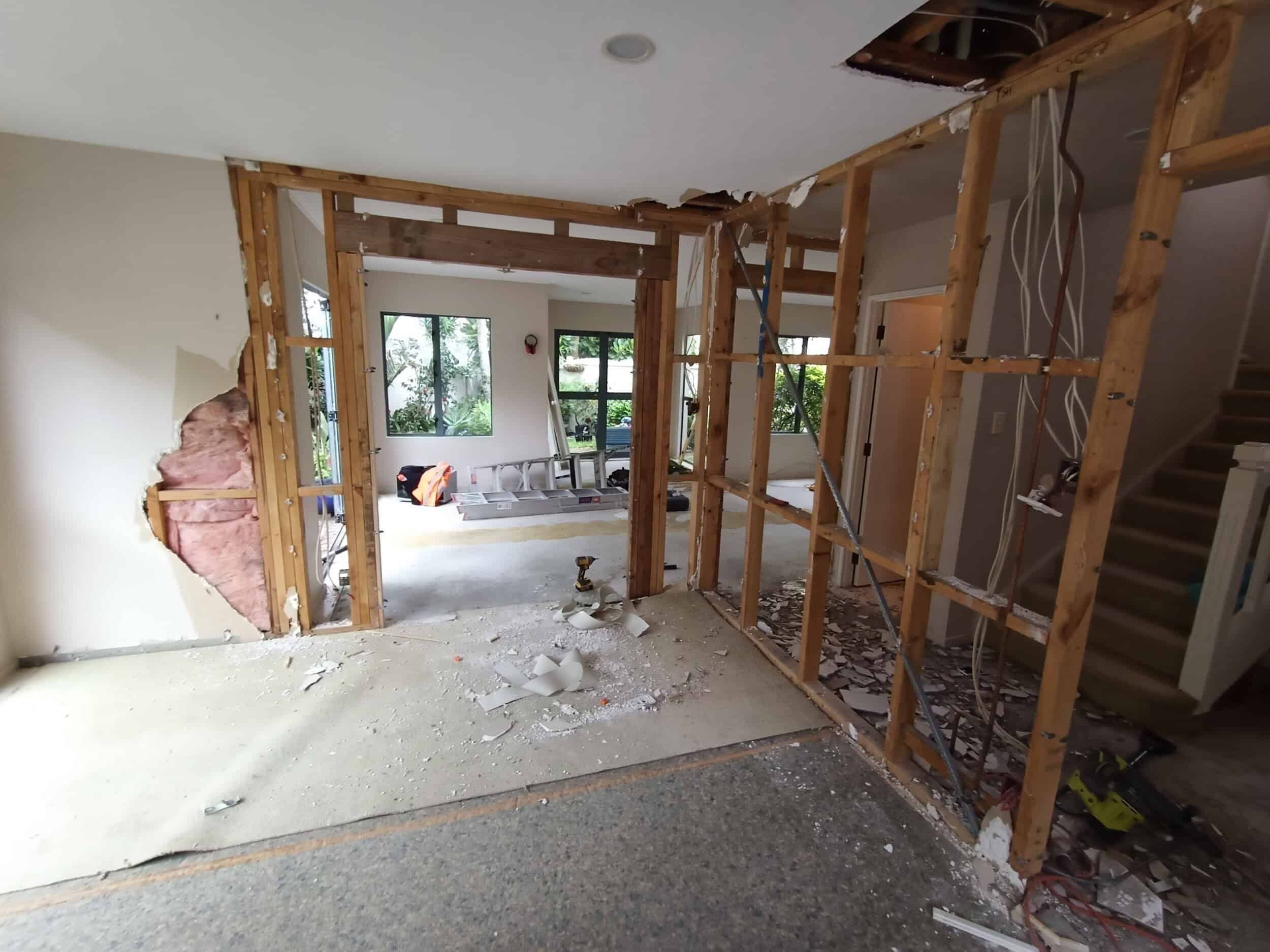
    Here’s the thing most Auckland homeowners only work out halfway through a reno: the walls are open right now, and they’ll never be this open again without paying to tear them apart a second time.

    We’ve pulled the gib off enough Grey Lynn villas and Henderson brick-and-tiles to know how this goes. Someone’s redoing a kitchen or a bathroom, the linings come off, and there it is — bare framing, no insulation, daylight through the weatherboard gaps. That exposed cavity is the single biggest cost lever in the whole insulation question, and it’s open for maybe three weeks before it’s sealed up for the next thirty years. So before you sign off on closing those walls back up, it’s worth knowing exactly what insulating during a renovation costs, what the council actually requires, and which of the 2026 subsidy changes apply to your place.


    Why a Renovation Is the Cheapest Time to Insulate

    Retrofitting insulation into a closed-up wall is a real job. To get insulation into a sealed cavity, someone has to pull off the cladding from outside or the gib from inside, fit the insulation, then patch, stop, and repaint. The insulation itself is cheap — it’s the opening-up and closing-back-down that costs the money.

    Now picture the same job during a renovation. The linings are already off for the new wiring and plumbing. The cavity’s already exposed. Fitting insulation at that point is a couple of hours of a builder’s time and the cost of the material. You’re not paying for demolition, because the demolition already happened for the reno. Sound familiar? It should — it’s the same logic as doing your wiring and plumbing while the walls are open.

    Where the Savings Actually Land

    The numbers split into two very different worlds. A standalone wall-insulation retrofit on an Auckland home runs from around $5,000 once you account for stripping and reinstating linings. Fold that same work into a renovation where the walls are already open, and the marginal cost drops to the material plus a small labour allowance — often a few hundred dollars per room rather than thousands.

    Ceilings and underfloors are a different story because you don’t usually need to demolish anything to reach them. But even there, a renovation helps: the tradies are already on site, the scaffolding’s up, and bundling the work into one project quote almost always beats calling an insulation crew out as a one-off.

    “When we strip the linings off an old villa, I always tell the owner to look at the empty cavity and picture writing a cheque to open it back up in five years. Nobody wants to do that twice. If the wall’s open, you insulate it — full stop.”
    — Dorothy Li, Design Manager, Superior Renovations

    💡 Quick tip: If your renovation only touches one or two rooms, ask your builder whether it’s worth opening the adjoining wall cavities too while the crew’s already on site. The marginal cost is small and you may never get a cheaper shot at it.

    This is exactly the kind of decision that’s easier to get right when the whole job is scoped from the start. If you’re weighing up a larger project, it pays to plan your whole-home renovation properly from the start so insulation, wiring, and waterproofing all get sorted in one coordinated sweep rather than bolted on later.


    Ceiling, Underfloor and Walls: What to Do and What It Costs

    Auckland’s older housing stock leaks heat in a fairly predictable order. Most heat escapes through the ceiling, which is why that’s almost always the first place we insulate — it’s the easiest to reach and gives the biggest comfort gain per dollar. Walls and floors follow.

    Ceiling Insulation

    For most Auckland homes, ceiling insulation is the priority and the bargain. Expect to pay around $35–$60 per square metre installed for ceiling insulation, with R3.6 the practical minimum and R6.0 the better play in 2026. On a typical three-bedroom roof that’s a manageable spend, and it’s the upgrade you’ll feel first — the house holds its warmth overnight instead of bleeding it into the roof space by morning.

    If you’re already in the roof for downlights, recessed speakers, or a bathroom extractor during your reno, that’s the moment to top up or replace tired old batts. A 1970s ceiling with thin, compacted insulation isn’t doing much.

    Underfloor Insulation

    Plenty of Auckland’s character homes — the villas and bungalows in Mt Eden, Ponsonby, and Grey Lynn — sit on piles over a ventilated subfloor with bare timber floors and nothing underneath. Underfloor insulation stops that icy-floor feeling and is straightforward to retrofit because the crawl space is usually accessible without any demolition. If clearance to the ground is tight, a polythene ground moisture barrier is worth adding at the same time to keep the subfloor dry.

    Wall Insulation

    Walls are where the renovation timing really matters. Pre-2000s Auckland homes frequently have no wall insulation at all, and getting it in means opening the wall — which is exactly what a renovation or a reclad already does for you. If you’re recladding a leaky-era plaster home or a tired weatherboard exterior, the framing is fully exposed from outside, and that’s the cleanest, cheapest wall-insulation opportunity you’ll ever get. We cover the full scope of that work on our house recladding service page, because reclad-plus-insulation is one of the highest-value combinations in the whole renovation game.

    💡 Quick tip: Always sort any roof or pipe leaks before insulation goes in. Wet insulation loses most of its R-value and turns into a mould problem — fix the water first, insulate second.

    “The villas we work on in Grey Lynn and Ponsonby were built before insulation was even a concept — single-skin walls, raw floors, nothing in the ceiling. They breathe beautifully and they leak heat constantly. A reno is the one chance to fix that without wrecking the character.”
    — Eunice Qin, Designer, Superior Renovations


    The 2026 Warmer Kiwi Homes Changes Most Homeowners Haven’t Heard About

    This is where the generic insulation guides are out of date, because EECA changed the rules for 2026 and the changes are genuinely worth money to a lot of Auckland homeowners.

    Warmer Kiwi Homes pays 50–90% of the cost of ceiling and underfloor insulation for eligible homes, and the discount comes off your installer’s quote up front — you don’t pay full price and wait for a rebate later. According to EECA, the average insulation retrofit costs about $4,300, and with an 80–90% grant most households end up paying somewhere between $280 and $800.

    What Changed for 2026

    Two things, and both matter. First, EECA widened the eligible zones — insulation grants now reach middle-income areas, not just the highest-need ones, with funding confirmed through 30 June 2027. A pile of Auckland homes that didn’t qualify a couple of years ago do now, so it’s worth re-checking even if you’ve been knocked back before. The core rule still holds: the home has to be owner-occupied and built before 2008.

    Second, the heating side tightened. From 9 January 2026, Warmer Kiwi Homes stopped accepting new applications for wood and pellet burner grants — the only funded heating option now is a high-wall heat pump. If you were banking on a subsidised wood burner as part of a warm-home upgrade, that window has closed.

    Insulation cost (Auckland) Standalone During a renovation
    Ceiling (R3.6–R6.0) ~$35–$60/m² ~$35–$60/m² (crew already on site)
    Underfloor Accessible crawl space — moderate Bundled into project quote
    Walls (retrofit) From ~$5,000 (open + reinstate linings) Material + small labour (walls already open)
    With Warmer Kiwi Homes grant ~$280–$800 out of pocket (if eligible) Grant applies to ceiling + underfloor

    Important note: Warmer Kiwi Homes grants cover ceiling and underfloor insulation, not wall insulation. Wall insulation during a reno or reclad is a private cost — but it’s also the cheapest it’ll ever be while the cavity’s open.

    If your renovation budget is the thing holding you back, there’s a finance angle worth knowing too. We’ve written separately about the ANZ reno loan and Good Energy Home Loan options, the latter of which is specifically set up for energy upgrades like insulation, double glazing, and heat pumps at a lower rate than a standard top-up.


    Consent and the H1 Building Code: What the Council Actually Requires

    Two separate questions get tangled together here, so let’s keep them apart.

    Do You Need Consent to Insulate?

    Adding insulation to an existing ceiling or underfloor is straightforward maintenance work and doesn’t require a building consent on its own. You can top up the ceiling batts in your Epsom bungalow this weekend and the council doesn’t need to hear about it. Wall insulation is different only because reaching the cavity usually involves work — recladding, or removing and reinstating linings — that may itself trigger consent. It’s the structural or cladding work that needs consent, not the insulation sitting inside it.

    When H1 Gets Triggered

    This is the part people miss. When your renovation involves consented building work — a reclad, an extension, new external walls — the upgraded H1 energy-efficiency clause of the NZ Building Code applies, and that sets minimum insulation standards you have to meet. You can’t reclad a house in 2026 and put the old single-skin wall back uninsulated; the new build-up has to comply. For the official detail, Building Performance (MBIE) publishes the current H1 requirements, and Auckland Council handles the consent itself.

    The upshot is simple. If you’re doing the kind of renovation that needs consent anyway, insulation isn’t really optional — it’s baked into compliance. And since it’s now required, you may as well do it properly: go above the minimum while the wall’s open, because the difference between meeting the code and exceeding it is a few dollars of material when you’re already there. For anything involving new external walls, our Auckland house extensions team handles the H1 build-up and consent as part of the job.

    💡 Quick tip: Superior Renovations handles all consent applications and council communication in-house, so the H1 compliance side of your insulation is documented and signed off as part of the build — not left as a loose end for you to chase.


    Choosing Insulation That Suits Auckland’s Climate

    Auckland isn’t Central Otago. Our problem isn’t deep frost — it’s mild, damp, humid winters where moisture is the enemy as much as cold. That points toward materials that handle moisture without trapping it: polyester batts made from recycled bottles, or natural wool, both of which suit Auckland’s humidity better than the bare minimum option.

    Polyester is non-itchy, holds its R-value well, and is an easy choice for ceilings and underfloors. Wool does the same job and adds genuine soundproofing, which matters if you’re near a main road in Parnell or under a flight path out west in Henderson. Fibreglass batts still do the job and cost less, so they remain a sensible pick for a tighter budget — the key with any of them is a snug fit with no gaps, because a crushed or gappy install loses a chunk of its rated performance.

    If you want to compare the energy-efficiency upgrades worth bundling into a reno, double glazing is the obvious companion to insulation. You can ballpark that side of the spend with our double glazing cost calculator before you commit to a scope.

    For the deeper material specs and independent performance data, BRANZ is the NZ authority on how different insulation products actually perform in our conditions. And if you’re renovating a character home specifically, we’ve gone deep on keeping the warmth in without losing the soul of the place in our guide to Auckland villa renovation ideas.


    The Bottom Line for Auckland Homeowners

    If you’re renovating an older Auckland home, the insulation decision is mostly a timing decision. The walls and ceilings are open exactly once during your project, and that’s the cheapest they’ll ever be to insulate. Get the ceiling sorted first, check whether you qualify for a Warmer Kiwi Homes grant now that the zones have widened, and if you’re recladding or extending, treat wall insulation as part of the build rather than a job for later.

    We’ve done this on more than a thousand Auckland projects, and the homeowners who fold insulation into the reno never regret it. The ones who close the walls up and deal with the cold later always wish they’d done it the first time. You can talk it through with our team at the Wairau Valley showroom (16B Link Drive), or start with the links below.

    Book your free in-home consultation with Superior Renovations
    Estimate your double glazing and energy upgrade costs
    Request a free feasibility report for your project


    How much does it cost to insulate a house during a renovation in Auckland?

    Ceiling and underfloor insulation runs roughly $35–$60 per square metre installed. The big saving is on walls: a standalone wall retrofit starts from around $5,000 because the linings have to be opened and reinstated, but during a renovation the walls are already open, so the marginal cost drops to the material plus a small labour allowance. Eligible homeowners can also get 50–90% off ceiling and underfloor insulation through EECA's Warmer Kiwi Homes programme.

    Do I need a building consent to insulate my home?

    No. Adding insulation to an existing ceiling or underfloor is maintenance work and does not require a building consent on its own. Wall insulation is different only because reaching the cavity usually involves recladding or removing linings, and it's that structural or cladding work that may need consent — not the insulation itself. Superior Renovations handles all consent applications with Auckland Council in-house.

    What R-value insulation do I need in Auckland?

    For Auckland ceilings, R3.6 is the practical minimum and R6.0 is the better choice in 2026 for real comfort and lower power bills. Underfloor insulation is typically lower-rated. If your renovation involves consented work like a reclad or extension, the upgraded H1 clause of the NZ Building Code sets the minimum standards you must meet, and your renovation company should build to those automatically.

    Am I eligible for the Warmer Kiwi Homes insulation grant in 2026?

    You may qualify if you own and live in the home and it was built before 2008. For 2026, EECA widened the eligible zones so insulation grants now reach middle-income areas, not just the highest-need ones, with funding confirmed through 30 June 2027. The grant covers 50–90% of ceiling and underfloor insulation and is taken off your installer's quote up front. It's worth re-checking your eligibility even if you were declined in previous years.

    Why is a renovation the best time to insulate?

    Because the walls and ceilings are already open. The insulation material itself is cheap — the real cost of a standalone wall retrofit is opening up the cladding or linings and reinstating them afterwards. During a renovation that demolition has already happened for the wiring, plumbing, or reclad, so you only pay for the material and a little extra labour. It's the same logic as doing your rewiring while the walls are open.

    What's the best type of insulation for an Auckland home?

    Auckland's climate is mild but damp and humid, so materials that handle moisture without trapping it work best — polyester batts (often made from recycled bottles) and natural wool are both strong choices. Wool adds soundproofing, which helps near main roads or flight paths. Fibreglass still performs well and costs less. With any material, a snug, gap-free install is what protects the rated R-value.

    Should I insulate my walls when recladding my house?

    Yes — recladding is the single best wall-insulation opportunity you'll ever get, because the framing is fully exposed from outside. You're already paying to open the wall, so adding insulation costs only the material and a small labour allowance. The upgraded H1 Building Code also requires the new wall build-up to be insulated to current standards when you reclad, so it's both the cheapest and the compliant option.

    Does insulation really lower my power bill?

    Yes. According to EECA, a well-insulated home can save up to $340 a year off your power bill, and the comfort gain is immediate — the house holds its warmth overnight instead of losing it through the roof. Ceiling insulation gives the biggest gain per dollar, which is why it's almost always the first thing to do.

    Can I insulate just one room during a partial renovation?

    You can, but it's worth asking your builder whether to open the adjoining wall cavities while the crew is already on site. If you're only renovating a kitchen or one bathroom, the rest of the house stays sealed up — and you may not get another affordable chance at those walls for decades. The marginal cost of doing more while everything's open is usually small.


    Further Resources for your house renovation

    1. Featured projects and Client stories to see specifications on some of the projects.
    2. Real client stories from Auckland

    Need more information?

    Take advantage of our FREE Complete Home Renovation Guide (48 pages), whether you’re already renovating or in the process of deciding to renovate, it’s not an easy process, this guide which includes a free 100+ point check list – will help you avoid costly mistakes.

    Download Free Renovation Guide (PDF)


    finance - Superior Renovations

    Have you been putting off getting renovations done?

    We have partnered with Q Mastercard ® to provide you an 18 Month Interest-Free Payment Option, you can enjoy your new home now and stress less.

    Learn More about Interest-Free Payment Options*

    *Lending criteria, fees, terms and conditions apply. Mastercard is a registered trademark and the circles design is a trademark of Mastercard International Incorporated.


    Still have questions unanswered?

    Book a no-obligation consultation with the team at Superior Renovations, we’d love to meet you to discuss your renovation ideas!
      Services

      Home RenovationKitchen RenovationBathroom RenovationOutdoor RenovationHouse ExtensionCommercialDesign ServicesOther

      By submitting this form, you agree to receive communications from us via email or text regarding our services, you can unsubscribe at any time.

      This site is protected by reCAPTCHA and the Google

      Privacy Policy and Terms of Service apply.

      DSC03468 - Superior Renovations
      Kitchen Renovation

      New Kitchen Remodel Cost in NZ: Basic, Mid-Range & Luxury (2023)

      Hey Aucklanders, if you’re eyeing up a kitchen remodel in your Grey Lynn villa or a busy family spot in Papatoetoe and wondering what it’ll actually cost in late 2025, you’re looking at $18,000–$120,000+ overall in NZ, with most folks landing $22,000–$45,000 for a solid upgrade that adds real value and flow. Auckland prices sit higher thanks to labour and materials, but sticking to smart choices—like keeping the layout or mid-range finishes—keeps it realistic without skimping on that Kiwi entertaining vibe.

      What’s a Ballpark for Basic, Mid-Range, or Luxury Kitchen Remodels in Auckland?

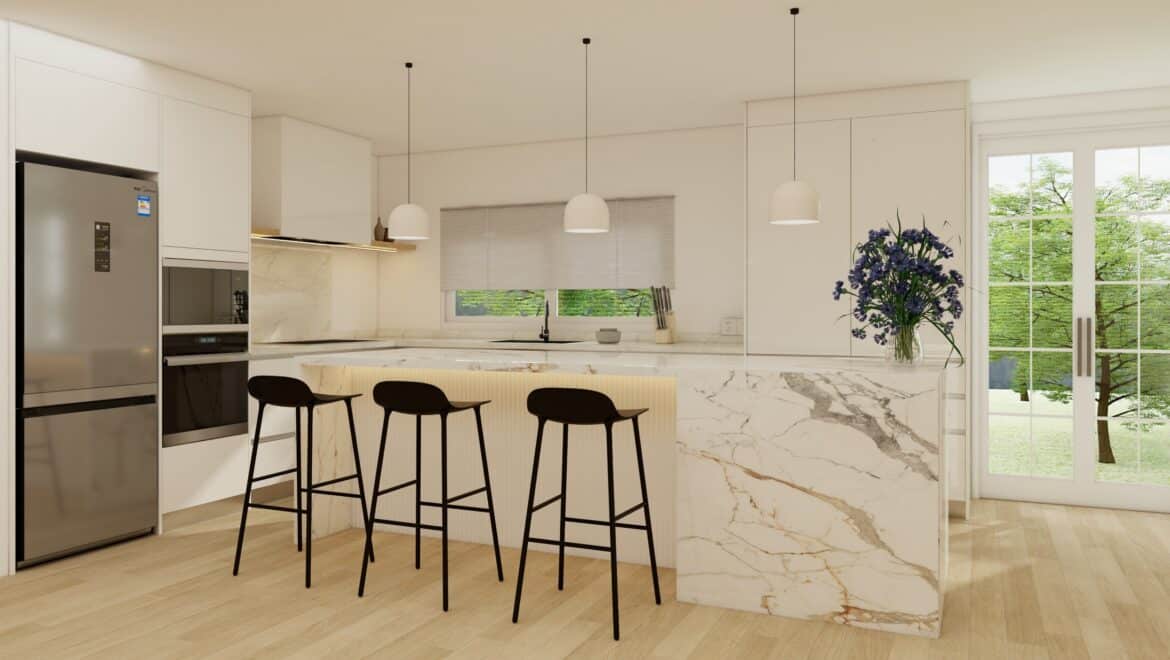
      Basic refreshes (same layout, refacing cabinets, laminate counters) run $16,000–$29,000—great for quick flips in spots like Papatoetoe or Bucklands Beach, using MDF Melteca cabinets and basic appliances. Mid-range is the sweet spot at $32,000–$45,000, adding islands ($4k–$6k extra), custom storage like magic corners, engineered stone benches ($520–$1,200/m²), and brands like SMEG or Bosch—think layout tweaks in West Harbour or Massey for better flow. Luxury? $50,000–$170,000+, with full custom (natural granite/marble $4k–$15k), butler’s pantries, smart lighting, and porcelain splashbacks from Tile Depot—spot-on for upscale Parnell or Remuera pads.

      What Knocks the Price Up (or Keeps It Down) for Your Kiwi Kitchen?

      Loads, mate—keeping the existing layout saves thousands on plumbing/electrical shifts, while changing it for an island or open-plan bumps costs heaps. Materials make a big diff: Budget laminate tops ($150/m²) vs. premium stone; MDF cabinets for easy clean vs. timber veneers like Melteca Oak. Appliances swing $2k–$30k (go energy-star for bill cuts), and extras like Blum soft-close hinges or LED under-cabinet lights add functionality without breaking the bank. Auckland’s pricier than regional spots, plus permits and trades (4–7 weeks timeline). Dorothy Li, our designer, reckons investing in durable storage pays off long-term, like pull-outs in Hillsborough projects.

      How Do You Get Bang for Buck and Decent ROI Without Regrets?

      Prioritise what your whānau needs—durable counters for daily chaos, smart storage to ditch clutter, and timeless neutrals that boost resale in our hot market (often 50–80% ROI). Reuse working appliances, shop mid-range like Bestwood veneers or Neptune hybrid flooring, and bundle for deals. We’ve seen transformations in Standmore Bay with warm oak finishes or Parnell with remote LEDs—feels brand new without overcapitalizing.

      Most people in Auckland want to renovate their kitchen because their old kitchen does not suit their family’s lifestyle. Some kitchens are too old and shabby while others are just not functional. New Kitchen cost in NZ can range from $18,000 to $120,000 depending on many factors.

      However, not everyone has a $100,000 budget to renovate a new kitchen. Most people want a simple upgrade and are only willing to spend between $18,000 to $30,000 for a new kitchen.

      For the purpose of this article, we will explore kitchen cost options if you are renovating with a renovation company in Auckland and not DIY kitchens. When renovating with a renovation company your quotes will most include the cost for all fixtures, renovation materials, project management, council permits if any, all trades like plumbers, electricians, tilers, builders, installers, carpenters etc and project management. This section of our article will explore how to renovate a new kitchen on a budget. This is possible if the kitchen renovation is planned well and if your kitchen designer has a good knowledge of the renovation materials available today.


      If you’re looking for “specific” cost estimates, try our Renovation Cost Calculator Tools

      Need ideas? Check out our Kitchen Design Gallery or dive into our Bathroom Design Gallery for inspiration!


      Table of Content

      1. How much does it cost to renovate a basic kitchen in Auckland? ⇓

      – Layout for basic kitchens
      – Cabinets and storage for basic kitchens
      – Countertop for basic kitchens
      – Appliances for basic kitchens
      – Flooring for basic kitchens
      – Lighting for basic Kitchens

      2. How much does it cost to renovate a Mid-range kitchen in Auckland? ⇓

      – Kitchen layout for mid-range kitchens
      – Cabinets and storage for mid-range kitchens
      – 6 Ways to maximise storage for mid-range kitchens
      – Countertop for mid-range kitchens
      – Appliances for mid-range kitchens
      – Flooring for mid-range kitchens
      – Lighting for mid-range kitchens
      – SMART kitchens

      3. How much does it cost to renovate a luxury designer kitchen in Auckland? ⇓

      – Hiring a kitchen designer for your kitchen design
      – Custom cabinets and materials for cabinet fronts
      – Joinery for your cabinets
      – Butler’s pantry or walk in Pantry
      – Natural stone Countertops
      – Luxury designer splashbacks
      – Feature walls for open plan kitchen
      – Designer appliances to suit your kitchen design
      – Luxury natural stone tiles and kitchen flooring
      – Planning the lighting of your kitchen
      – Electric work and SMART kitchens


      Cost comparison for New Kitchen remodelling in New Zealand


      Basic Level

      Mid-range Level

      Luxury Level

      $16,560 –$28,990

      $32,000

      $45,000

      Up to

      $173,880

      Same Layout-

      • Refacing cabinets
      • Refinish paints, stain etc.

      Kitchen Storage-

      • Pull out bins, spick racks, condimental drawers.
      • Cabinet handles included.

      Basic Materials-

      • Stone Engineered marble/granite/wood or Laminate countertops.
      • Laminated/ Linoleum & Luxury vinyl kitchen flooring.
      • Ceramic tiles option for flooring
      • White tile Splashback
      • Using MDF Meleta materials for cabinets & Bestwood

      Electric Work-

      • Installing LED light bulbs.
      • Upgrading essential appliances
      Choice to change layout-

      • Install a kitchen Island- waterfall or an overhang countertop.
      • High-quality MDF Melteca cabinet doors with painting included.

      Customise your kitchen storage –

      • Better quality built-in bins, spice rack, magic corners
      • existing pantry with pull out drawers.
      • Installing Hefelle hinges & Blumotion (Soft Close) on your cabinets
      • Designer handles for cabinets optional

      Mid-range materials-

      • High-quality Stone Engineered countertops.
      • Tiled or Neptune stone-based flooring.
      • Designer tiled, glass, mosaic Splashback.
      • Making your appliances, dishwasher, fridge, invisible by adding your cabinet material on top.

      Smart Kitchen/lights features-

      • LED lights under cabinets, invisible ports.
      • Energy-star rated appliances.
      • Designer kitchen pendent lights.
      Hiring a Kitchen Designer-

      • Customize your kitchen layout.
      • Plumbing
      • Advice on materials – Mix different textures, materials, and finishes
      • Spacing/Storage planning
      • appliances

      Customise your kitchen storage-

      • A Butler’s kitchen
      • Walk in Pantry.

      Designer materials- Flooring, cabinets, countertops, splashbacks

      • Granite, Marble and Concrete countertop .
      • Tribeca collection from Tile depot for splashbacks
      • Stone based composite polymer, porcelain tiles – include the tile depot range of Urban cement collection and natural stone tiles
      • Natural wood, Porcelain tiles on MDF (neolith), Lacquer on MDF, Timber Veneer, MDF Vs Plywood Vs Particle board for your carcass for cabinets

      Custom build Cabinetry-

      • TIP-ON- open and closing cabinet doors when you press.
      • Soft close cabinets and drawers, pull out systems ,blum Legra box.
      • pull out pantry drawer system
      • details on cabinets
      • Designer handles
      • Joinery
      • Hinges

      Smart Kitchen/Light features-

      • Style options for kitchen appliances
      • Task, Ambient lighting and Accent lighting
      • Invisible appliance with cabinet door covering on top.
      • Sensor lights in pantry or cabinets
      • Voice or remote controller for lights
      • Luxury crystal chandler as a pendent light

      Already have all your own trades and you’re comfortable managing them for your kitchen renovation?

      Although we don’t recommend if you haven’t renovated a kitchen before and/or you don’t have trades people you can trust, most renovations if not all comes with it’s own surprises because not all homes are the same – this is where experience/project management plays an important role in minimises risks to maintain costs/delays giving you higher certainty of outcome/quality backed by associated guarantees and warranties.

      However, if you do intend to manage the kitchen renovation yourself, it does work out more cost effective to contact a kitchen cabinetry manufacturer directly to get the kitchen cabinets designed, manufactured and installed – leaving you to manage the other trades such as flooring, demolition, painting, plastering, splashback/tiling, electrician, plumber, and sometimes a carpenter/builder.

      Try Little Giant Interiors cost calculator below to see what you can expect to pay for cabinetry.

      Find out more about-

      how much it costs averagely to renovate a kitchen in NZ (2021).


      How much does a New Kitchen remodel cost in NZ? – Basic Kitchen

      Firstly, you might want to think about the kitchen layout. For instance, how big do you want your kitchen to be? Are you going to keep your kitchen layout the same, or are you going to make some changes? What style do you want your kitchen to be? Do you want modern, traditional, or contemporary features? These are some good questions to ask yourself before you contact a renovation company.


      1. Kitchen Layout for a New Kitchen remodel on a budget

      Most of the time a change in layout is not possible in a basic kitchen renovation. Changing the layout or moving your island, sink or plumbing will increase the cost of your kitchen renovation especially if you are on a budget.

      Before Basic Kitchen

      Before Basic Kitchen in Papatoetoe


      After basic kitchen

      After Basic makeover in Papatoetoe

      Check out this basic kitchen’s case study: Papatoetoe


      If you are more likely to stay with your original kitchen layout, then in that case your cost will decrease, so you might want to consider staying with your existing layout of your kitchen. It is however possible to create a budget friendly kitchen if you choose your renovation materials carefully. We will now discuss the different elements of your new kitchen when on a budget.


      2. Cabinetry and Storage for basic kitchen remodel

      The biggest expense in a new kitchen is cabinets. Do some research and get an idea of the kind of look you want for your kitchen cabinets. If you have an overly large kitchen then you might want to think about just changing its doors or changing cabinets that are damaged. This is where we use your standard cabinets and we remove old paint, stain, sanding and repairing the same boxes, and re-apply paint to the same wood of choice.


      Building entirely new cabinets is also possible but you will have to use mid-range materials like MDF. Melteca and Goodwood are two of the most popular MDF brands in Auckland. MDF in simple terms is manufactured wood from a factory. It is easier to clean than natural wood and has a better finish compared to acrylic. Melteca and Goodwood carry a budget friendly range for their products which come in various textures and designs.


      Cabinets in Epsom

      Waterproof Plywood boards

      melteca cabinets in stanmore bay

      Mary Stuart’s Melteca Oak wood finish in Standmore Bay


      See Case Studies:

      Historic Melteca finish in Epsom

      Melteca Oak Wood Finish look in Standmore Bay


      Storage is the second most important aspect of a well planned kitchen. Most kitchens in Auckland feature an open plan setting which means that they must have good storage, so the kitchen does not look cluttered.


      To create an uncluttered look, think about installing a cutlery drawer, spice racks, pull out bins, magic corners etc. We recommend allocating a substantial part of your budget on your cabinets and storage because you want them to last a long time.


      3.What kind of countertop is right for my basic kitchen?

      Countertops are another important feature for your kitchen. It is vital to choose a countertop that will be resistant to water, is durable and hard-wearing. There are many options available for budget friendly kitchens and our recommendations are as follows:


      • Laminate countertopsLaminated Countertops is a material that has a lot of different colours and styles. This material is long lasting, stain resistance and has natural heat. Laminate countertops remains one of the top materials in New Zealand when renovating a kitchen. So, why is it one of the top materials? Laminate is a great material for people who wish to renovate their kitchen on a budget as it is $150 per square meter. Laminate does however have its drawbacks as it can be easily stained.
      • Stone EngineeredEngineered Stone is the most popular and common countertop used in Auckland for new kitchens. So what is a stone engineered countertop? A stone engineered countertop simply means that the stone is manufactured in a factory instead of natural stone. The benefits of stone engineered stone is that through technology, manufacturers can manipulate the stone for added benefits like higher durability, better designs and is cost effective. Stone engineered countertops are often made of 90 percent Quartz. This material is a great option for first kitchen renovators as Quarts is affordable and available with a range of variety of textures in New Zealand. Stone engineered is not just durable but comes with 10 years of warranty and is scratch resistant.


      Standard Stone Engineered Countertop in Rosedale

      Stone Engineered Countertop in Papatoetoe


      Houzz states that stone engineered countertops can range between $520 to $1200 per square meter.

      Read: Different Kitchen styles and elements that make each style (Traditional kitchens, classic kitchens, contemporary kitchens, cottage style and modern kitchens)


      4. What appliances can I get for a basic kitchen?

      The first step is to see what appliances you want to upgrade. This can be from stovetop to dishwasher. Here is a tip! However, if your budget does not include high maintenance appliances then do not worry. We have got your back and just think about the existing appliances are working and the other appliances that need more attention. This could help you save a huge amount, and you can use that with other upgrades in your kitchen remodeling.


      Appliances are another major factor when thinking about kitchen renovation as they are needed for cooking, baking, warming up, and refrigeration. To stay within your budget, only buy appliances that your really need. If some of your appliances are working well then there is no need to buy new ones.


      When picking appliances, see what models have great reviews and only buy good-quality appliances that will last a long time. Having good quality appliances will also increase your house valuation if you do plan to sell your home in the future.


      5. Flooring

      Choosing the right type of kitchen flooring is important as kitchens are usually a high traffic area and are prone to food and water spillage. You might want to think about the texture of the material you choose as a good kitchen flooring should be easy to clean, hard-wearing, and water-resistant, (hard for water to get through). There are four great options for a basic new kitchen in NZ:


      • Linoleum FloorsLinoleum flooring is a natural eco-friendly material. It does however need regular maintenance and might not be suitable for families with young children. For instance, Linoleum flooring is likely to get damage because of the moisture in the water and, will wear off with time. Linoleum can also make a home look dated so it might not be a great option for everyone.
      • Luxury VinylAs technology has developed, the properties of vinyl have also improved. Luxury Vinyl is a type of vinyl that is more durable than regular vinyl. There are also a lot more options available in terms of textures and designs. It is a budget friendly option for kitchens as it is quite inexpensive compared but need more maintenance compared to tiles.
      • Laminate FloorsLaminate flooring is more durable and water resistant compared to Linoleum and vinyl flooring. The Flooring is a laminated wood face floor that looks and feels like wooden floors. Laminate flooring comes in various textures and designs which means that it looks great in open plan kitchens due to their aesthetic element. They can be made to look and feel like wood which is great for people who want a wooden floor look. Laminated floors are a cheaper alternative compared to wood floors. They are also easier to maintain compared to wooden floors as they can be made to be 100% waterproof.
      • Ceramic and Porcelain TilesCeramic and porcelain tiles are also a good cost effective tiles for basic kitchens. They are easy to clean, are durable and water resistant. You will also have a great variety of textures to choose from which means that you will be a able to create a beautiful kitchen for the fraction of the cost. They can however be cold on your feet in winter and can cause foot fatigue if stood on for too long. To combat this you can put soft rugs which are warmer and more comfortable for your feet.


      Kitchen Renovation in Bucklands Beach: Cost of Tile flooring included

      Tiled Flooring kitchen Renovation in Bucklands Beach


      6. Lighting

      Natural lighting is important for a kitchen to showcase its beauty as well as for cooking, preparing, cleaning, and hosting parties. Upgrading your current light fixtures with new ones will not cost you a lot.

      You can also completely do away with wall lights and opt for LED lights on the ceiling. You can install energy saving LED lights which will also help you keep your energy bill low. To add to the aesthetics of your kitchen, you can also use pendent lighting above the island if you have one.

      Back to the Top


      How much does a new kitchen remodel cost in NZ – Mid Range Kitchens

      As discussed above a basic new kitchen would cost between $16,560 to $28,990. A mid-range kitchen renovation cost in NZ costs between 32,000 to $45,000. In a mid-range kitchen, you have more flexibility and options in terms of change in layout and materials.

      A mid-range kitchen would include a change in layout, custom-made cabinetry, stone engineered countertops/marble countertops, kitchen appliances, tiled flooring etc. This new kitchen makeover guideline shows an estimate to renovate for a mid-range level kitchen.

      If you are looking for glamorous, budget-friendly, small, and large kitchen renovation cost, do check out the link below as it shows a range of cost for different renovations.


      1. How much does it cost to change the layout for a mid-range level kitchen in NZ?

      Changing the layout of your kitchen means that you might want to change the plumbing as well as electric wiring in the kitchen. Changing the layout of the kitchen adds up to your overall kitchen renovation cost. If you wish to keep the kitchen layout the same, then it will cost you somewhere around $29,000. However, you want to add an island or change your current layout then you expect to pay more than $32,000. For instance, if your existing layout is not functional then you might want to consider changing your stove, sink or cabinetry around.

      The most popular layouts that are possible for a mid-range kitchen are as follows:

      • Galley kitchen
      • U shaped kitchen
      • L-shaped kitchen
      • Island Kitchen
      • Peninsular kitchen
      • Two island kitchens

      For more layout ideas and tips, check if you need more help.


      Before Kitchen renovation in West Harbour in NZ

      Before Kitchen layout in West Harbour

      Kitchen renovation cost in West harbour, Auckland

      After Kitchen layout renovation


      2. Cabinets, Doors, and handles

      When renovating a mid-range new kitchen remodel cost in NZ , you will have a lot more choice in materials, textures and designs for your cabinets and door handles.

      The material that you would be using at this level would be MDF Melteca. MDF Melteca is surface that most kitchen remodels use in New Zealand. Melteca has various ranges of materials and it is highly popular in NZ as it is affordable, easy to clean and highly durable.

      You could choose a more premium range of MDF for your cabinets. We work with Melteca and Goodwood brands to custom built all cabinets. You can use Melteca’s high gloss premium range for your mid-range kitchen.

      You can also customise your MDF cabinets by wrapping it with Dezignatek Thermoform with any pattern you like to create a traditional, vintage, classic or modern look. For example the cabinets below were wrapped with a Rhonda pattern to give them a vintage look.

      • The front of the drawers and cabinets were wrapped in Dezignatek Thermoform with a ‘Ronda’ pattern to give the cabinets a vintage look.

      kitchen cabinets in Mangere bridge

      Check out ourcountry cottage style kitchenrenovation in NZ

      If your budget allows then you can also custom-build cabinets made of real wood but they are often very hard to maintain and hence MDF remains a popular choice for kitchen cabinets.


      3. Door handles and Blumotion

      Our mid-range kitchens often feature soft close cabinets and hinges from Blum and Hafelle. Soft close cabinets are drawers from BLUM allow your cabinets to close softly and without any effort even if they are slammed shut. This feature is great for homes with young children or when you have a busy day in the kitchen.

      Hinges from Hefelle and Blum will also last you longer as they are very durable due to their superior technology and will not rust.

      If you are going for a modern or contemporary look then you can also opt for a no-handle set up with LED lights above them. This will give you a seamless and uncluttered look especially if you have a small open plan kitchen.

      If you want a cottage style or traditional style kitchen then you can also install brass handles to give it a more vintage feel. To give it a cleaner and more classic look you can also install matte knobs against white cabinets for contrast.

      For more :

      types of kitchen styles like traditional, modern, cottage, contemporary, industrial and classic


      4. Storage for a kitchen makeover NZ

      When taking about cabinetry, we talked about the way your cabinet looks and how it feels but now let us talk about the storage inside your kitchen. Having good kitchen storage is an important feature of a functional kitchen.

      Kitchen storage can be useful to store dry foods, small appliances, cutlery, pots, pans, plates etc. Most homeowners like to store their things in places like in the panty, drawers, shelves, or their kitchen island. Check out this link for more comprehensive ways to organise your cabinets


      6 ways to maximise storage for your mid-range kitchen

      1.Magic corners
      magic corners can be created for cabinets that are in the corner of your kitchen. They allow you to reach the corner space inside your cabinets which are often hard to reach. Most of our clients prefer using magic corners from BLUM.

      2.Cutlery drawers and spice racks
      due to our busy lifestyles, it is important that our kitchen is always well organised. You can get custom built drawers with compartments for your cutlery and spice racks. Also remember to put your cutlery drawer next to your crockery drawer and as a top drawer. Also ensure that your spice rack is next to the stove, so it is easy to access them when you are cooking.

      3.Custom build condiment drawer
      You can also make a custom built condiment drawer which pulls out. For example, if you see the condiments drawer below, it does not have any cabinet planks on either side which makes it easy to view your condiments when cooking. This saves time and energy when looking for what you have in your shelves.


      Kitchen Renovation cost for storage in cabinets in NZ

      Spice Rack storage in Hillsborough

      Kitchen Renovation Cost for Magic corners in Hillsborough

      Magic Corners storage in Hillsborough

      4.Pantry with pull out drawers

      it might not be possible to make a walk in pantry for a mid-range kitchen but that does not mean that you cannot have a well organised pantry. This a great feature for homeowners who seek extra storage for their dry foods, carbs, sauces etc. The pull out drawers is located inside the pantry and this feature is very useful when customising your drawers as it helps you to be organised and it helps you find what you are looking easily.

      Kitchen Renovation cost for built in drawers in Papatoetoe

      Kitchen Renovation cost for Pull out drawers in Papatoetoe

      Kitchen renovation cost for custom-built pantry with pull out drawers in Papatoetoe

      To see more on custom built-

      See case study onkitchen renovation in Papatoetoe


      5.Pull out bins

      Pull out rubbish and recycling bins cab be installed within a cabinet which makes your space more hygienic as there are no extra bins on the floor. It also helps the area look uncluttered and cumbersome. Remember to install your pull out bins near your sink area because, it will be easier for you to throw extra waste or recycle their empty products.


      6.Island which doubles as storage

      Another option for a mid-range kitchen is to add a kitchen island. A kitchen island can be incorporated within layouts like U-shape, L-shape or even a galley, depending, on the space you have left for family entertainment or preparing food. An island can also be used in multiple ways in your kitchen, for instance, you can have extra storage underneath your island with drawers, you can have a stovetop or even a sink in the middle of your island. Another way to customise your kitchen island is to have a waterfall edge for your countertop or have your exposed countertop hanging off the edge, so that can leave space for your bar chairs. In fact, to renovate a kitchen island is going to cost you between $4,000 to $6,000.

      kitchen renovation storage ideas for mid range


      5.Kitchen Countertops

      In New Zealand, renovation companies recommend homeowners to invest in Engineered stone countertop as they are affordable, durable, resistant to water, anti-bacterial and hard-wearing.

      For a mid-range kitchen, you will be able to afford a stone engineered countertop of a more superior quality and design.

      Luxury Engineered stone countertops are made from crushed marble and granite as it is a popular choice. You can choose a countertop with either sparkles ingrained within it or with ingrained designs or an overhang island for a luxurious look. You also choose to have a thicker countertop with waterfall edges for a contemporary look. If you have a thicker countertop then it will cost, you more than if you choose a less thick countertop.


      Stone engineered countertop cost in NZ

      Mary Stuart’s countertop in NZ

      Stonebased enginnered countertop in Bucklands beach

      Lynette and henry’s countertop remodel in Bucklands beach

      Stone Engineered countertops options for kitchen renovation in NZ


      If your budget allows then you can choose a natural granite countertop which is more expensive than engineered stone. You can also install a real timber countertop, but this will have to be treated before installation. We would not recommend this countertop for people who have busy lives as a timber countertop needs to be maintained regularly.

      Insert cottage kitchen photos

      Splashbacks

      Splashbacks are important as they catch any splatters made while cooking and also prevents from damaging the paint of your walls. Splashbacks are often installed above the stove top and sink area.

      Tiles, mosaic tiles and glass tiles are three great material options when choosing a backsplash for your kitchen. Ruth from Tile Depot recommends using the Tribecca collection of tiles for splashbacks as it instantly elevates the look of your kitchen. Tribecca tiles look like handmade tiles which look textured but are actually very easy to clean.

      Tribeca Splashback for a mid-range kitchen renovation in NZ

      Tribeca Splashback for a kitchen renovation in NZ

      Photo Credit: Tile Depo


      Cost for a Tribeca Splashbacks for a mid-range kitchen renovation in NZ


      6. Essential Kitchen appliances cost for a mid-range level kitchen renovation in NZ.

      When choosing your kitchen appliances, make sure your appliances are position in a way that is most convenient to you when preparing food or cleaning up. For instance, install your dishwasher next to your sink so your cleaning process will be easy. Another example is having your fridge between your stove and sink as you will be able to grab things much faster. Positioning your oven underneath your stove or place it at a closer distance to your cooktop. This is because when cooking or cleaning, the oven bar can come in your way and it will make it harder for you to move around, cleaning can also be a challenge if the oven is above or below eye level. Instead place your oven at eye-level to make cleaning easier and it can also be convenient when taking things in and out of the oven.

      Choose your appliances well and check their energy star rating before making the purchase. Choose energy star rated products because it helps reduce your energy bill, they have a longer lifespan and come with an extended warranty. Unlike in a basic kitchen renovation, you will be able to change all your appliances to new ones.

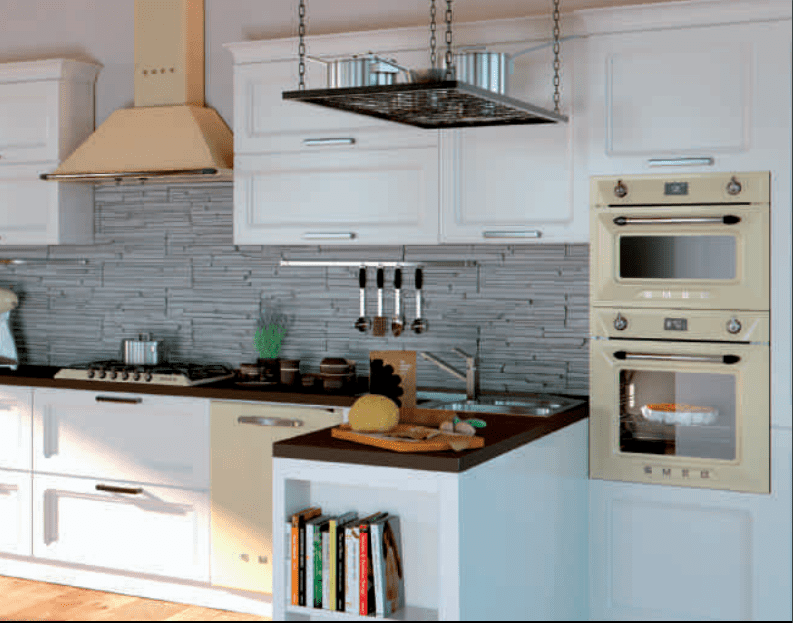
      Our mid-range kitchen renovation clients often use SMEG, Samsung, and Bosch for their appliances as this fit in easily with their budget. A freestanding mid-range oven from SMEG will cost you between $25000 – $4,000 if you are buying through a renovation company. This free standing oven often has a gas top, a warmer and single oven.


      New kitchen remodel cost nz for mid-range kitchens

        SMEG dishwasher used in a West harbour for a Mid-range kitchen renovation
      • Bosch is another great brand for stovetops, ovens dishwashers, waste disposal, and rangehoods. Bosch is a more cost effective brand compared to SMEG and is very durable. You can expect to spend around $414 for microwaves, $1150 for modern ovens, and $1500 stain steel fridges.
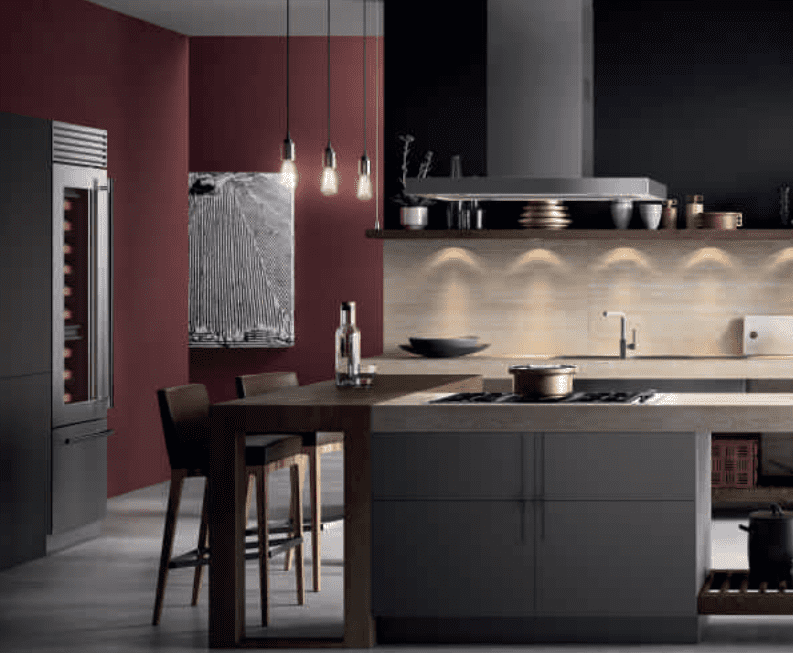
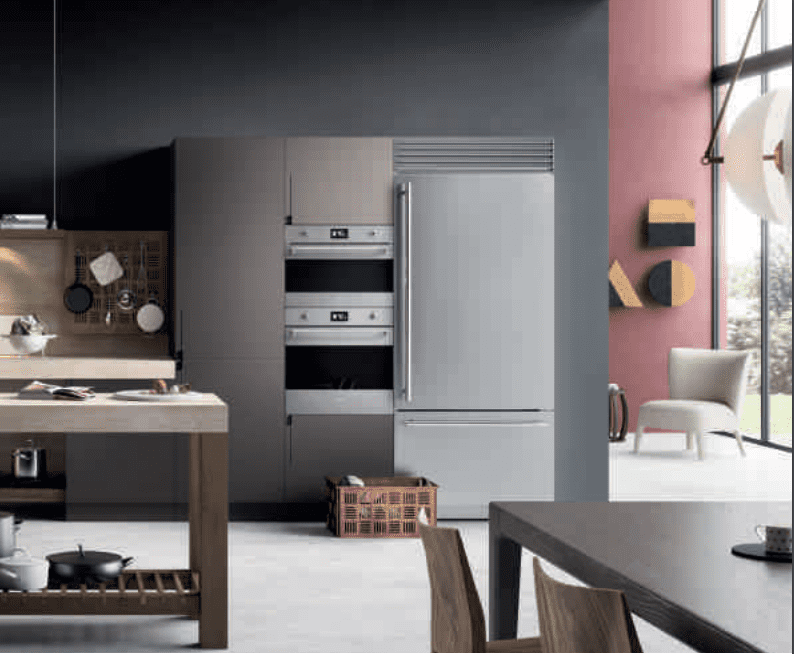
      • SMEG has an extensive range when it comes to price and makes appliances for mid to high range kitchen renovations. SMEG appliances are more suited for people who want a designer element in their kitchen. They come in various designs and styles to suit most tastes.


      If you want a seamless and clean look then you can hide your appliances by building cabinet doors on top of them. This can be done by building cabinet doors on top of the appliances. However, only certain brands and appliances will be compatible enough to build cabinet doors on. We will not recommend you build hideaway ovens and microwaves as they can be a health and safety hazard.


      7. Kitchen Flooring

      Your kitchen should ideally be staining free, waterproof, and easy to clean, comfortable and, most importantly, hard-wearing. You will have a lot more options to choose from for a mid range kitchen as compared to basic kitchens.

      • Tilesare often a popular choice for Kitchen flooring as they are easy to maintain and durable. Ceramic and Porcelain tiles remain popular for kitchen floors as they are versatile and come in various designs and textures.
      • Porcelain tiles are better recommended for kitchens as they are more durable and harder to damage. They are more expensive than ceramic tiles, but you will get a lot more design options for porcelain tiles. Porcelain can be made to mimic stone and wood which can elevate your kitchen design.

      Tiles can however be cold in winter or hard on your feet when you are cooking for long periods of time. To combat this, you can either install underfloor heating or put some soft rugs on your kitchen.

      • Luxury Laminate Flooring is also another option for kitchen flooring. They are warmer than tiles but are not water resistant which could be an issue with maintenance. If you are installing laminate flooring, then make sure that you wipe away any water spills immediately.
      • Hybrid Neptunehas a new range of kitchen flooring called the stone polymer composite. This hybrid flooring is great for mid-range kitchens as it has all the best properties of stone and laminate. The stone used in Limestone and the Neptune SPC is water resistant, warm, soft on the feet, and muffles the sound of your footstep.


      kitchen flooring in nz

      Hybrid Neptune Rustic Oak flooring(Tile Depot, 2021)

      Neptune flooring at a mid-range level in NZ

      Hybrid Neptune kitchen flooring best features (Tile Depot, 2021)

      Tile Depo's Neptune Flooring at a mid-range level renovation in NZ

      Hybrid Neptune mountain flooring (Tile Depot, 2021)

      Neptune kitchen flooring NZ

      Hybrid Neptune Soho Smoke flooring (Tile Depot, 2021)

      Hybird Neptune Picture credit to Tile depot

      Ruth from Tile depot says that this is a much better alternative compared to tiles or laminate and does not require any underfloor heating. It is also very durable and comes in many finishes. It will also not get damages due to sun or extreme cold weather.


      8. Smart Kitchen features and Lighting

      Good lighting is necessary in a kitchen as it needs to be a bright space as most of the cooking and entertaining happens here. You can use recessed lighting on the ceilings as well as LED lights above splashback, underneath cabinets and door handles which can be dimmed or made brighter in accordance with the mood you want to create.

      You want lights that are low heat emission and longer lifespan. LED lights gives your new kitchen a nice medium tone of light. It is recommended that we should not get lights that are not so bright or dim, just in the middle as the lights have a large impact on us and our guest.

      You can also add sensor lighting and blue tooth lighting which can be switched on and off through the command of your voice. You can also change the colour of these lights with the help of your phone, remote or voice. You can also add pendent lighting above your islands or dining area to create further depth in your kitchen design.


      LED under cabinets in Massey


      LED Lighting under cabinets in Massey

      LED Remote control in a kitchen renovation in NZ


      Change lighting settings with a remote controller in Parnell

      You can also install USB ports on the wall so you can charge your phone while cooking. also install push down electric ports on your countertop which can be pushed down inside the countertop when you do not need them, and you can bring it up when plugging in any appliance.

      Smart Kitchen electric work in countertop in massey

      Guru and Netta’s modern style invisible plugs that hid away in the countertop

      Back to the Top


      How much does a New Kitchen remodel cost in NZ – Luxury kitchens

      The kitchen is a best way to give an overall impression for your guests especially in open planned kitchens. To renovate a brand-new luxury kitchen in New Zealand is between $50,000 and up to $173,880. A luxury kitchen has no limitation to cost, and we recommend you still spend your money wisely as you will be spending a lot for a custom-build kitchen.

      In a luxury kitchen you will be spending on a new kitchen layout, custom built kitchen storage, cabinets, high-quality countertops, marble flooring, designer flooring and brand-new appliance.

      The biggest difference in mid-range and luxury kitchens is that in luxury kitchens your budget allows you to incorporate high end and premium materials.

      Do check our table above to see what other things include in a high-end kitchen and, read our pervious article on how much does it cost to renovate a kitchen in NZ in 2021?


      1. Hiring a kitchen designer for your layout

      When you are building a high-end kitchen, you have the freedom to customise your kitchen from start to end. This is where you will hire a kitchen designer and they will advise you on what materials, colours and what your style will look like by creating 3D models and renderings.


      Kitchen design by Superior renovations Kitchen1 1 - Superior Renovations
      Kitchen design by Superior renovations Kitchen design1 - Superior Renovations

      Above are a few elevations of 3D rendered drawings that our designer Dorothy created for a client who needed a kitchen renovation.


      Kitchen design by Superior renovations Kitchen design by Superior renovations
      Kitchen design by Superior renovations Kitchen design by Superior renovations

      The kitchen above is an example of 3D renderings and designs that our designer Cici created for a client that needed a kitchen renovation in Parnell


      Layout is very important when it comes to interior designer because they need design accordingly to the plumbing points and electric wiring for cooktops. However, when renovating a luxury kitchen, you have the flexibility or changing your plumbing and rewiring to suit the layout you want.

      Storage and countertop benches are the most essential things when renovating a new kitchen.

      Check out some top 5 crucial tips that Dorothy (our in-house kitchen designer) has recommended:

      1. Plumbing and Electrical Ports If you are trying to keep your kitchen renovation cost at a lower end of your budget then do not move your wiring and plumbing as this will significantly increase costs. Keep your stove and sink in the same position that it is currently in.
      2. Advice on materials– A kitchen designer will also help you understand more about the renovation materials that you can incorporate in your kitchen design. They will help your combine different materials, textures and colours to create a beautiful kitchen. Due to their industry experience they will have knowledge about the innovation in materials and what is more suited for your family’s needs.
      3. Space planning and work triangle – When designing your kitchen layout from scratch, you might want to think about the foot space in your kitchen. Your kitchen designer will design your kitchen layout in accordance to the work triangle.

      Superior article about layouts: https://superiorrenovations.co.nz/kitchen-layout-planning-guide-to-achieving-a-good-kitchen-design/

      A work triangle measures how effectively your kitchen is planned. It makes sure that there is a clear pathway from your stove to the cleaning area and your refrigerator. This triangle should have no other foot traffic in its pathway. You want to be able to comfortably work in your kitchen.

      Weizter-The_work_triangle-Reference: https://weizter.co.za/magazine/the-work-triangle


      1. Appliances should be close by when moving around the kitchen like your sink should be opposite your stove or oven, microwave, or dishwasher.
      2. Storage planningYour kitchen design should include designated areas for storing all your cookware, spices, large appliances, and crockery. This will determine how you built your cabinets throughout your kitchen. For example, if you are storing your large appliance like a bread maker or a mixer in the left side of your kitchen then you have to make sure that the cabinet has the space and height to fit them. If you do not plan your designated storage areas then you might have a kitchen that can either not fit your appliances or have space that is wasted.
      3. Kitchen islands Luxury kitchens often feature kitchen islands in their kitchen designs. If you do not have space for a kitchen island, then you can explore the option of knocking some walls down to expand the space of your kitchen.

      kitchen islands are a great addition for your kitchen as they give you extra counter space for food preparation and are a great entertainment area. You can also add two islands if you have a large kitchen area. Just like mid-range kitchens you can add extra cabinets, put a stove top, and add bar stools.

      To hire a kitchen designer, you will be spending around $6,900 or between $138 to $276 per hour in New Zealand.

      Customised Cabinets, Cabinet features and Joinery


      2. Customised Cabinets, Cabinet features and Joinery

      Cabinets

      Luxury kitchen cabinet doors are made from high-end quality materials which start from $2,070 per linear foot. When you are planning to renovate a high-end kitchen renovation, then think about getting materials that will last longer and have design features.

      Depending on what type of style you want for your kitchen, you have the freedom to customise your cabinetry options to either modern, traditional, contemporary, classic, cottage style or industrial.

      • Natural wood like Timber is a great option for your cabinet doors and drawers. You will have to make sure that it is treated so that it is not easily damaged. They have a natural beauty that gives it a will make your kitchen timeless. Depending on the wood you choose, you will be able to incorporate various hues like oak, maple, pine etc.


      Pro tip: If you are using natural wood for your cabinets then make sure that they are treated and polished every 1-2 years to ensure longevity.


      • Porcelain tiles on MDF (neolith) can be installed on your MDF cabinet boards to create a feel of luxury on your cabinet and drawer doors. Neolith is one of our preferred suppliers for porcelain tiles as they have an extensive range in textures and colours. Attaching porcelain tiles on MDF boards allows us to create designer kitchens in various styles. For example, you can use porcelain tiles that look and feel of cement to create an industrial style kitchen. Cabinets with Porcelain tiles require very good quality joinery and hinges to support the heavy weight of the porcelain tiles. We will discuss more about joinery a bit later in the article.


      Pro tip: Cabinets with porcelain tiles attached on them will last you a long time. They will not be worn out easily and are great for families with kids. They can be heavy so you will have to choose your joinery and hinges carefully.


      • Lacquer on MDF

        has been a popular choice for luxury kitchen cabinets because of its extensive range in colours and styles. Lacquer cabinets have 2 coats of paint applied to your cabinets with a high gloss finish. They are an expensive choice because you need a specialised skill set to create these cabinets. While they are waterproof to an extent, they should be regularly maintained as prolonged contact with water can warp them. They are also prone to fading if they are in contact with direct sunlight too often. They might have to be repainted every 5-10 years depending on its wear and tear.


      Pro tip: If you have children in your household then we would recommend not using lacquered cabinets as they are prone to superficial scratches which will compound over time.


      • Timber Veneer

        is basically manufactured wooden veneers which are attached on your MDF carcass. We often work with Bestwood and Melteca for wooden veneers as our clients can choose from an extensive range in colours, textures, and patterns for their kitchen cabinets. Luxury timber veneers like the woodgrain range from Melteca are a great alternative compared to natural wood as they are made to be more durable and require less maintenance. They emulate wood in how they feel and look but can also be manipulated to the exact look that you require which is often hard with natural wood.


      • MDF Vs Plywood Vs Particle board for your carcass

      Plywood and MDF are a better choice compared to particle board for the carcass of your cabinets as they are more water resistant and are much sturdier. We recommend using Plywood for your carcass when creating cabinets under your cleaning or sink area. This is because plywood is more water resistant compared to MDF. You can however use MDF for the rest of the cabinets in your kitchen. MDF and plywood have similar qualities when it comes to aesthetics and durability.

      Details on your cabinets

      You can also add crown moulding on your cabinets if you are going for classic or traditional kitchen design. You can also adorn your panels with wainscoting if you want a classic or cottage style kitchen. We often wrap Dezignatek Thermoform on cabinets to create patterns and designs on kitchen and drawer drawers.

      For more traditional kitchen designs you can also create corbels and crown moulding on your cabinets to give a more furniture like look.

      itchen cabinets in Mangere bridge

      Country cottage style kitchen in Mangere Bridge, Auckland


      Kitchen cabinets in Epsom

      Modern Kitchen cabinetry renovation in NZ

      Joinery

      We use BLUM for all our joinery and hinges because they are one of the best in terms of quality and innovation. Blum also has hinges and joinery in darker and lighter shades so a seamless design can be achieved whether you have dark or lighter shade cabinets.

      Types of joinery we recommend:

      1. Soft close cabinets and drawers: Soft close cabinets are great as no matter how hard you bang your cabinet doors; they will close softly without any sound. This also prevents wear and tear to your cabinets, and this will prolong their lifespan.
      2. Tip on Blumotion: These drawers will open automatically when you press them. In order to close them you just have to push them hard, and they will close softly. No matter the style of kitchen your kitchen, this technology will improve the way you use your kitchen.
      3. Pull out systems: Pull out systems allow you to open your cabinet upwards as opposed to traditionally opening on the sides.
      4. BLUM Legrabox: This type of drawer system is designed so your runners are not visible and gives a sleek look to your drawers which works very well for contemporary, industrial, and modern kitchen designs.
      5. Pull out pantry drawer system: This custom built pantry system boasts a pantry with pull out drawers with clear sides so it is easy to organise your pantry and your pantry items are easily visible.


      Touch blumotion for kitchen cabinets joinery

      Photo credit to Blum (2021)

      Hinges that can support more weight:

      If your kitchen cabinets have porcelain tiles attached on their MDF board then your cabinet doors and drawers will be heavy. To support these heavy doors and drawers, you will have to make sure that the hinges can support them. BLUM makes hinges that can support up to 70kgs which is suitable for heavy cabinetry.

      As discussed above, planning your storage is important before even building your kitchen cabinets. This is because certain cabinets might need runners that can support more weight compared to others. For example, drawers and cabinets with heavy appliances and crockery will need runners that can support more weight compared to ones that will have your cutlery.


      3. What are my options to organise my kitchen storage?

      You can get your standard storage like magic corners, cutlery drawers and pull out condiment drawers. However, with a luxury kitchen you have the flexibility to change the layout of your kitchen in a way that you can create a butler’s pantry.

      • Butler’s pantry/ kitchen

      A butler’s pantry is especially good for homes that have an open plan kitchen and for people who love entertaining guests. The butler’s pantry usually is a small room that is connected to the kitchen where you can either prepare your food or make mess in private without making your main kitchen dirty. You can also store your big appliances and dry food or install a sink to wash your dishes at a later stage.

      Cici's butler's kitchen for storage

      • Walk in pantry or pull out drawer pantry

      If you do not have a very large kitchen then opt for a small walk in pantry instead. A walk in pantry is just another form of a walk in wardrobe. You can create a large cupboard with shelving where you can install a sensor light to easily view your dry food items. If this is not an option, then you can custom built a pantry with pull out drawers.


      4. Natural stone Countertops and Designer Splashbacks

      Countertops:

      1. Granite and Marble

      • Natural stones like marble or granite are two popular high-quality materials that designers recommend using on your countertop or kitchen island. Granite will cost you around $4000 to $7000. Marble on the other hand with cost rom $10,000 to $15,000 if you are using it for an island as well as all your countertops.
      • Natural stones are popular because they exude a natural beauty which surpass the beauty of any stone engineered countertops. They have natural patterns that are unique to each slab and hard to engineer.

      2. Concrete

      • Concrete is also an option for islands, but it is a lot harder to work with. As concrete countertops can be very heavy, they pose a set of technical challenges which means that they should be manufactured and installed by renovation companies that have experience working with concrete.
      • If you do want a concrete countertop for your island or countertops your countertops must be supported by steal beams as other materials will not be able to support the weight of concrete. Concrete is usually used in contemporary or industrial style kitchens.


      3. Mix different textures, materials, and finishes

      • Dorothy from our design department suggests using a combination of different stones, glass, and other materials with various textures and colours to create some depth in your kitchen design. You can also combine different finishes for different materials to give a truly luxurious feel.


      Splashbacks and Feature Walls

      Splashbacks are essential for your cooking and cleaning area. Our designers recommend our clients to not get textured splashbacks as they can be very hard to clean. The good news however is that there is an extensive range for easy to clean splashbacks to choose for a luxury kitchen.

      1. Use a single slab of tile or marble- Cici, our in house designer recommends using one single slab of marble as a splashback for a clean look. Using a custom cut one piece of tile also means that you will have no grout lines which means that clean up will be easy.

      Designer glam splashback for a kitchen renovation in NZ from tile depo

      Glam wall designer tiles at tile depo

      2. Tribeca collection from Tile depot- Ruth from Tile depot said that bright tiles or handmade looking tiles are very popular as splashbacks and feature walls. The 2021 Tribeca collection features premium tiles that look textured and handmade but are in fact manufactured in a way that they have a smooth surface which is easy to clean, making it a perfect choice for splashbacks.


      TIP: You can also opt at choosing a glass splashback or any other form of tiles. It is better to choose


      Feature walls

      Feature walls are great to add a different dimension and create more interest to your kitchen. There are several ways that you can create a feature wall in your kitchen. You can add a feature wall by painting a wall in a bold contrasting colour, adding tiles or a wall with plant creepers.

      If you are using tiles then you can install either woodgrain tiles, mosaics, or textured tiles on the wall to create more depth to your kitchen. If you do not want a whole wall of tiles then you can also create accents with mosaics like a horizontal strip of mosaics on a plain wall.


      Cube collection

      Tile Depo’s glam cube collection for a splashback wall


      5. Designer appliances to complement your designer kitchen

      As we talked above, getting energy star appliances are better for the environment, they will use less electricity, have a longer warranty and are more durable.

      When purchasing your appliances, think about the overall style of your kitchen and get appliances that complement your overall kitchen design. You can also opt for hiding your appliances inside your cabinetry which is done by attaching the material of your cabinet on the surface of your appliances. This is great if you are going for a clean and sleek look for your kitchen.

      For a modern and contemporary feel, opt for stainless steel rangehood with 6 or 8 gas hobs and stylish hood. You can also buy a smart steel fridge with double doors, a separate freezer, water dispenser and an ice maker. You can also either purchase a wine fridge or custom built a wine storage area.

      1. Style options for kitchen appliances

      SMEG and Bosch are two brands that are often used in designer kitchens because not only are they of superior quality, but you also have a lot of design options to choose from.

      2. Traditional kitchen appliance ideas

      If the overall design of your kitchen is traditional or cottage style, then try and purchase appliances that complement this style. Buy a large standalone gas cooktop with an oven and complement this with a matching hood. If you are going for a retro theme, then you can also use the retro appliances range designed by SMEG

      SMEG 50's Retro Style Kitchen appliances for a kitchen renovation in NZ SMEG's 1950's vintage look for kitchen renovation in NZ

      SMEG appliances for a 1950’s retro style kitchen.

      Smeg's Classica products for a new modern kitchen renovation in NZ Smeg's classica appliances for a new kitchen in nz

      SMEG’s Classica style kitchen for a modern kitchen renovation in nz


      6. Luxury Flooring options for designer kitchens in New Zealand

      You want a flooring that is soft on your feet, durable, low in maintenance, beautiful and does not echo when you walk on it. The two best type of flooring for your kitchen are tiles and Stone based composite polymer.

      • Stone based composite polymer is a new hybrid flooring option in New Zealand which is 100% waterproof which makes it a great option for kitchen floors. It is also softer and warmer on the feet as compared to porcelain tiles. They are also a great option for second floor kitchens as they do not echo as much as tiles. They are not as expensive as natural stone tiles and can also be used for mid-range kitchens as well as for designer kitchens.
      • Porcelain Tiles are more durable and waterproof than ceramic tiles but can feel cold in winter. If you are installing porcelain tiles in your kitchen then we do recommend clients to either install underfloor heating or put kitchen rugs during winter. The advantage of porcelain tiles is that they are easy to clean, are durable and have an extensive design range. We recommend using large format tiles 1200 by 900 or 600 by 900 for your kitchen floors for a more continuous and seamless design.

      Porcelain tiles can also be made to look like cement, wood or any other natural stone which makes them a versatile choice for most people.

      Urban Cerment kitchen flooring for a high-end kitchen renovation in NZ

      Tile depot range of Urban cement collection (2021)


      • Natural stone Tiles are one of the best and expensive options for kitchen flooring. Natural stone tiles have a natural beauty that really elevates a kitchen design. You can install the same tiles in your living and dining area if you have an open plan kitchen.

      Macchia Vecchia Floor tiles

      Macchia Vecchia Floor Tiles from Tile Depo


      7. What is the best lighting for my Luxury Kitchen?

      A brightly lit kitchen is a must as it is the centre of most of our activities in a home. We prepare our food, have our coffee, and often entertain guests/family in the area. Adding good lighting to your kitchen is not as simple as adding a few light bulbs on the walls or ceilings. Lighting goes beyond just having visibility in the kitchen. A well lit kitchen should make it easier for you to do your prep work with precision, it should be easy for you to stow and retrieve items in shelf and should make your kitchen look welcoming and spacious.

      Incorrect installation of lights can in fact make your affect the appearance of your kitchen negatively.


      Plan your kitchen lighting based on 3 distinct layers which serve a separate function.

      1. Lighting to carry out tasks

      • This is the general lighting which is needed to make your overall kitchen visible. This light should make cooking, cleaning, preparing food and navigating easy. One of the aims for this lighting is to make it easier to carry out your tasks.
      • So, think about the areas that you need to carry out these tasks. Install lights above your kitchen island to make preparation work easier. Install LED lights below your top cabinets so it illuminates your countertop, at the top end of your splashback and near the handles of all cabinets and drawers.
      • You should also add either LED ceiling lights or ceiling bulbs, so your entire kitchen is illuminated.


      Tips of installing your Task lights

      Tasks lights should be positioned directly above your sink, island, countertop, or other space where you carry out cooking tasks. Install the LED light strips under your upper cabinets and above the handles of your lower cabinets.

      2. Ambience lighting

      • This type of lighting creates a soft mood in your kitchen. This could either be lighting that can be made dimmer, or it could be in the form of pendant lighting on top of your kitchen island.
      • There are several design options available for pendant lighting so you will have plenty of options to choose from depending on the style of your kitchen. If your space allows then you can also install a chandelier. Recessed lighting can be installed on your ceiling or any opening like seen in vaulted ceilings.


      Tips on installing ambient lighting

      Ambient lighting should have a direct path to the floor of your kitchen. If you do not have an island, then install a chandelier directly above your floor or directly on top of your island. If you are installing recessed lights, then position them at half the distance of the distance of your floors and ceilings. Also avoid creating shadows on your countertops by installing the recessed lighting above the countertop and not at the edge of it. The same concept would apply to semi flushed and flushed lighting.


      1. Accent Lighting

      • This type of light usually highlights a design feature in your kitchen. This could either be a feature wall or architectural feature in your kitchen. This is great especially in open planned kitchens where your kitchen is visible for the living and dining area. You could also but accent lights in glass cabinets with fine China or crockery.

      If you have a vaulted ceiling or any other ceiling feature that you want to highting then you can install cove lighting which basically means that they light is built into your ceiling. You can also install soft low profile lighting inside your cabinets.

      Tips on installing Accent lighting

      Think art galleries when installing accent lights especially if you are trying to highlight a feature wall. You can also put lights inside your cabinets with the light installed above the crockery or decorative items in the glass cabinets.


      8. Electric work and SMART Kitchen features

      If you are renovating your entire kitchen then chances are that you will be rewiring your kitchen. This is especially true if you are changing the layout of your kitchen because then you will have to switch all the plug points around. You can also add smart features to your kitchen that will improve the way you use your kitchen.

      Ideas to incorporate SMART features in your kitchen design

      • SMART appliances like a refrigerator that dispense water of any temperature that you like
      • A hot water tap so you do not have to boil water every time you need boiling water while cooking.
      • SMART home systems can be integrated within the design so you can control the light or the dimness of lights with your phone.
      • SMART lighting controlled by Bluetooth where you can set a time that you come home and it will automatically switch the lights on for the time that you get home.
      • SMART fridge that has cameras inside the fridge which can be connected to your phone. This way you can check what items you have run out of and get them on the way from work.
      • Sensor ovens which can sense that the food or meat is cooked and it will automatically switch off or set off an alarm so you will never burn or overcook a meal.
      • Plug points with a USB port so you can charge your phone while cooking
      • Sensor lighting that will switch the lights on automatically when you enter the kitchen
      • Range hoods that will automatically switch on at a certain fan speed suited to the type of cooking that is taking place.

      Back to the Top

      To Summarise,

      The cost for a new kitchen remodel in NZ depends on what type of style you want your kitchen to be. Whether it is a vintage, cottage, classical, modern or a traditional kitchen style, also depends on the special kitchen features that you have upgraded from your previous kitchen like,

      • Better quality materials for countertops, cabinets, splashbacks
      • Energy star rated appliances.
      • Change in Layout- adding a kitchen island or walk in pantry.
      • Customise your kitchen cabinets doors and storage.
      • Designer faucet, kitchen lights, cabinet handles
      • Waterproof flooring
      • Plumbing and electric work.

      Frequently asked question

      On an average, how much will I spending to renovate my kitchen in New Zealand?

      To renovate a kitchen in New Zealand, you will be spending about $22,000 - $30,000 on an average. This includes, project management, permits, labour works, kitchen designers etc. To know more, click on the link below, https://superiorrenovations.co.nz/kitchen-renovation-cost-nz/

      How much does it cost for a kitchen renovation (mid-range) in NZ ?

      At a budget level, you will be expect to spend under 29,000 with not change in layout. In contrast, for a mid-range level you will be spending $32,000 to $45,000. This includes, adding a kitchen island, better quality materials, upgrade your appliances, customize your cabinets and etc.

      How long will it take to renovate a kitchen ?

      To renovate a full kitchen renovation, it can take up to 4-7 weeks (depending on permits delay). However, it may take a bit longer as it includes changing in layout, plumbing, electric work or even getting a consent from Auckland council. A tip to consider is to start early to get a permit and start the project earlier.

      Do I need to hire a kitchen designer ?

      No, our consent process includes in-house designers who will help up along with the process during your time with us like 3D rendering, colour choices, picking materials etc.

      What steps do I have to take before renovating my kitchen ?

      1. Set your budget 2. Book a consent with a Kitchen Designer 3. Establish you kitchen needs than personal desires 4. Pick a renovation company that fits your desires 5. Grant permits from Auckland Council 6. Set project goals 7. Note: Remodelling a kitchen will take 3 to 4-7 weeks . Go shopping for suppliers 9. reassess your budget with project management 10. Ask for warranties for your appliances, materials, and workmanship once your renovation is complete. 11. Cleaning service should include too


      If you’re looking for “specific” cost estimates, try our Renovation Cost Calculator Tools

      Need ideas? Check out our Kitchen Design Gallery or dive into our Bathroom Design Gallery for inspiration!


      Further Resources for your house renovation

      1. Featured projects and Client stories to see specifications on some of the projects.
      2. Real client stories from Auckland

      Need more information?

      Take advantage of our FREE Complete Home Renovation Guide (48 pages), whether you’re already renovating or in the process of deciding to renovate, it’s not an easy process, this guide which includes a free 100+ point check list – will help you avoid costly mistakes.

      Download Free Renovation Guide (PDF)


      finance - Superior Renovations

      Have you been putting off getting renovations done?

      We have partnered with Q Mastercard ® to provide you an 18 Month Interest-Free Payment Option, you can enjoy your new home now and stress less.

      Learn More about Interest-Free Payment Options*

      *Lending criteria, fees, terms and conditions apply. Mastercard is a registered trademark and the circles design is a trademark of Mastercard International Incorporated.


      Still have questions unanswered?

      Book a no-obligation consultation with the team at Superior Renovations,
      we’d love to meet you to discuss your renovation ideas!

        Services

        Home RenovationKitchen RenovationBathroom RenovationOutdoor RenovationHouse ExtensionCommercialDesign ServicesOther

        By submitting this form, you agree to receive communications from us via email or text regarding our services, you can unsubscribe at any time.

        This site is protected by reCAPTCHA and the Google

        Privacy Policy and Terms of Service apply.

        DSC06569 1000 - Superior Renovations
        House Renovation

        How Much Do Kitchen Splashbacks Cost In NZ?

        Are you looking for a new kitchen splashback in NZ? You could be looking to replace the old one. Or, are you considering a new splashback as part of a kitchen remodel?

        A kitchen splashback adds value and functionality to your home. Therefore, it is vital to know all the options you can choose. Besides, we spend a significant amount of time in the kitchen. Therefore, why not bring in the wow factor to your kitchen with a stylish splashback.

        The most important factor when choosing a kitchen splashback is the material. And, there are several options to choose. When choosing the material, you will have to consider the look and style you are targeting. More importantly, you will have to consider the cost.

        While considering cost, keep in mind that a kitchen splashback is a simple way to update the design of your kitchen.


        If you’re looking for “specific” cost estimates, try our Renovation Cost Calculator Tools


        Why Do You Need A Splashback?

        In the kitchen, there is a lot of heat, moisture, grease, and cooking residue, which lands on your walls and cabinetry. Gradually, all the heat, moisture, and dirt degrade your walls and cabinetry. That’s where splashbacks come in.

        Splashbacks are particularly crucial behind sinks and cooktops. Besides, they are a great way of adding style, colour, and overall life to the design of your kitchen.

        What Are Your Options For Kitchen Splashbacks?

        • Glass – modern and sleek
        • Mirrored glass – reflective, contemporary, and gives the illusion of more space
        • Acrylic – resembles glass and is budget-friendly
        • Tile – easy to clean and versatile
        • Stone – vintage and elegant
        • Stainless steel – durable and modern
        • Pressed metal – very modern and stylish

        The Cost Of A Glass Splashback

        Glass Splashback From $300 per square metre

        kitchen2 - Superior Renovations

        Glass kitchen splashbacks in New Zealand are very common.

        Remember, you want a splashback that will complement your kitchen’s colour scheme. Therefore, you should go for the back-painted glass kitchen splashbacks.

        Note that the paint is on the backside of the glass. The backside does not come in contact with water. So, you need not worry that the paint will come off. The exposed, unpainted glass surface is easy to clean. Additionally, this exposed surface does not have grooves or cracks that can trap grease.

        Furthermore, if the colour bores you at some point in the future, you can simply remove the glass and apply new paint or replace the splashback with a new one.

        The prices of these splashbacks vary depending on the type of glass treatment. For ordinary glass, the prices range from $300 per square metre. The cost of low iron glass starts from $400 per square metre.

        When it comes to glass splashbacks, the best option is toughened glass. Why? Toughened glass is easy to clean and affords you a wide range of colour and print options.

        More importantly, toughened glass is functional in the kitchen. For starters, it can withstand the heat in the kitchen. Plus, in the rare event it breaks, it crumbles into small granular pieces – not large and sharp shards, as is the case with ordinary glass.

        Who Can Install Glass Kitchen Splashbacks?

        Glass splashback installation is quite involving and requires the help of a professional.

        Installers with glazing experience or professionals with a trade work license in splashback installation do Glass kitchen splashbacks in Auckland.

        So, before you even consider a quote from an installer, check their licensing status with the local licensing authority.

        After all, licensing is one way of making sure an installer has the necessary training, qualifications, and experience to handle your splashback project.

        The Cost Of Mirrored Glass Splashbacks

        Mirrored Glass From $450 per square metre


        Renovation Massey West Auckland 25 - Superior Renovations

        Kitchen and House Renovation

        Mirrored glass splashbacks are fast claiming their place in New Zealand kitchens. Their reflective nature adds more light to the kitchen. The reflectiveness also makes your kitchen appear to have more space.

        The difference between a regular mirror and a mirrored glass is colour. Ordinary mirrors, like the ones in your bathroom, are clear. But, mirrored glass splashbacks have a smoky tint – which can either be slivery or bronze-like. The smoky hue of these splashbacks is very appealing in the kitchen.

        Like toughened glass, mirrored glass is a safety glass. You can safely install it behind your cooktops without risking cracking or breaking.

        The Cost Of Acrylic Splashbacks

        Acrylic Splashbacks From $430 per square metre

        DSC06551 1000 - Superior Renovations

        Acrylic resembles glass. However, acrylic splashbacks are a cheaper alternative and are easy to install.

        However, unlike glass options, you cannot install acrylic splashbacks behind or near hot areas such as cooktops. If you have to install them behind cooktops, you should use protective measures such as a stainless-steel plate behind your cooktops or toughened glass.

        While installing protective plates behind your cooktops, you should adhere to Australian safety guidelines. The plate should be the same width as your cooktop. Also, it should be at least 20 centimetres above the burners.

        The Cost Of Tile Splashbacks

        Tile Spashbacks From $27 per square metre

        Ambury 2 - Superior Renovations

        Traditionally, tile is the most common material in kitchen splashbacks. Tiles are relatively cheap and versatile. All thanks to a wide range of colours, materials, styles, and patterns, tile splashbacks are slowly regaining their place in the modern kitchen.

        However, the price of tile splashbacks varies significantly due to the wide range of tile options.

        The Cost Of Stainless-Steel Splashbacks

        Stainless Steel Splashbacks From $270 per square metre

        contemporary kitchen - Superior Renovations

        Stainless-steel adds the much contemporary industrial style to your kitchen. Stainless steel is durable and hygienic (easy to clean), which explains why it is the most common choice in commercial kitchens.

        Stainless-steel splashbacks are an excellent option for DIYers as they are easy to install. Stainless-steel sheets are readily available at your local hardware store. These sheets are easy to cut to size, and you will not need specialized equipment to stick them to the wall of your kitchen.

        Aside from durability, stainless steel is an excellent option as it is entirely safe for use behind cooktops.

        Furthermore, you can use stainless-steel splashbacks behind your cooktops then use another material such as acrylic in the remaining splashback areas.


        Types Of Tiles You Should Avoid In Kitchen Splashbacks

        As mentioned above, there is a wide range of tile materials and styles to choose from. But, not all are convenient for use in kitchen splashbacks. You want a tiled splashback that is easy to clean. So, avoid slate and other textured materials. Also, avoid matte tile surface.

        What Are The Installation Costs Of Kitchen Splashbacks?

        The installation cost of kitchen splashbacks ranges between $300 and $1,300. The installation cost depends on the type of splashback, the size, and whether or not you hire a professional splashback installer.

        While DIY kitchen splashback installation is a cheap option, you should make sure you have the necessary skill to install the type of tile you choose. Tile and stone splashbacks, for instance, can be challenging to install. On the other hand, stainless-steel splashbacks require little skill.

        kitchen renovation

        Custom Kitchen Design and Build for a New Build in Greenhithe, Auckland


        6 Tips For Choosing The Right Kitchen Splashback

        So, how do you choose the right kitchen splashback:

        • Identify your budget

        Kitchen splashback costs are a significant concern. Factors that determine the final price include the material, size, and layout.

        When going through your options, you should keep your budget in mind. You do not want to make choices only to realize later you are way above your budget limit.

        • Consider your kitchen’s design

        What’s the style of your kitchen? Or, what design are you going for in your kitchen remodel?

        Style does not necessarily mean going for a kitchen splashback of the same colour as your walls or countertops. However, the splashback should match or complement the design of your kitchen.

        • Choose the right colour

        Colour is closely related to design and style. The colour of your kitchen splashback helps a lot with the look and feel of your kitchen.

        Going for a tone similar to your walls, cabinetry, and countertops provides a uniform look. However, you could go for contrast and make your splashback a decorative fixture.

        Generally, you have two choices – light colours such as sky blue and dark colours such as grey. Dark colours conceal dirt and food splatter. On the other hand, bright colours open up and brighten your kitchen.

        • The right material

        The material determines the look. Stone gives a rustic-look, stainless-steel provides the contemporary industrial look, mirrored-glass is sleek, and so on.

        Additionally, some materials are less durable, especially behind cooktops. Acrylic and ordinary glass, for instance, will not last long behind heating areas. Such materials require special treatment when placed behind cooktops, which translates to extra costs.

        • Ease-of-clean

        Some splashback materials are challenging to clean. You might even need specialized cleaning products.

        So, if you have a busy kitchen that sees a lot of food splatter and spills, consider easy to clean materials. For example, you could go for large-sized ceramic tiles with few grout lines.

        Glass, though stylish, is not easy to clean. Yes, it is easy to wipe. However, you will find it challenging to achieve that flawless clean without special cleaning products.

        Tiles, especially ceramic tiles, are easy to clean. However, over time, the grout lines will stain and give your splashback a dull look. Probably the most comfortable material to clean is stainless-steel.

        • Factor in the size of your kitchen

        As mentioned earlier, the size and layout of your kitchen determine the price of your new kitchen splashback. So, with a considerable budget and a small kitchen, you can go for extravagant choices such as glass.

        Besides, you can use a splashback to make your kitchen appear to have more space. To do that, go for reflective materials such as back-painted glass or mirrored glass.

        Mirrored glass, particularly, helps open up a small kitchen. Also, the mirror attribute adds more light.

        Mirrored glass is an excellent choice when you have a beautiful open home view to reflect.

        However, tiny spaces with little natural light undermine the advantages of reflective kitchen splashbacks.

        kitchen renovation

        Modern Kitchen Design and Build


        Kitchen Splashback Trends For 2020

        You want a kitchen splashback that is modern, stylish, and functional. To check all those boxes, consider the following kitchen splashback trends:

        • Glass

        Tile is a versatile kitchen splashback material. But glass is the latest more popular trend in the kitchen splashback market. With glass, you can pick any colour, and there are many options to complement your kitchen design. More importantly, you don’t have to deal with grout lines.

        • Bold and bright

        Lately, interior design is leaning towards popping colours. Neutral spaces are quite dull. So, consider using a splashback to add colour. Imagine the excellent contrast a fire-engine-red splashback would provide against an all-cream kitchen.

        • Clash of texture

        Mixed textures are a thing nowadays. Think a mirrored glass splashback thrown amid stone countertops and timber cabinetry.

        Forget matching textures. Go for smooth and rough, or natural and artificial.

        • Chrome

        Colour is more than just rainbow hues. Add distinct colours with polished chrome. The colour polished chrome provides a lovely contrast to neutral spaces. Furthermore, it solidifies the classic and luxurious kitchen styles.

        kitchen renovation

        New Kitchen Renovation in Hillcrest, Auckland


        Summary of Splashback Costs

        Type of Splashbacks Estimate costs
        Cost Of A Glass Splashback From $300 per square metre.
        Cost Of Mirrored Glass Splashbacks From $450 per square metre.
        Cost Of Acrylic Splashbacks From $430 per square metre.
        Cost Of Tile Splashbacks From $27 per square metre.
        Cost Of Stainless-Steel Splashbacks From $270 per square metre.
        The Installation Costs Of Kitchen Splashbacks The installation cost of kitchen splashbacks ranges between $300 and $1,300.

        Why Do You Need A Splashback?

        In the kitchen, there is a lot of heat, moisture, grease, and cooking residue, which lands on your walls and cabinetry. Gradually, all the heat, moisture, and dirt degrade your walls and cabinetry. That’s where splashbacks come in.

        What Are Your Options For Kitchen Splashbacks?

        Glass, Mirrored glass, Acrylic, Tile, Stone, Stainless steel, annd Pressed metal

        What Types Of Tiles Should I Avoid In Kitchen Splashbacks?

        There is a wide range of tile materials and styles to choose from. But, not all are convenient for use in kitchen splashbacks. You want a tiled splashback that is easy to clean. So, avoid slate and other textured materials. Also, avoid matte tile surface.

        What Are The Installation Costs Of Kitchen Splashbacks?

        The installation cost of kitchen splashbacks ranges between $300 and $1,300. The installation cost depends on the type of splashback, the size, and whether or not you hire a professional splashback installer.


        If you’re looking for “specific” cost estimates, try our Renovation Cost Calculator Tools


        Already have all your own trades and you’re comfortable managing them for your kitchen renovation?

        Although we don’t recommend if you haven’t renovated a kitchen before and/or you don’t have trades people you can trust, most renovations if not all comes with it’s own surprises because not all homes are the same – this is where experience/project management plays an important role in minimises risks to maintain costs/delays giving you higher certainty of outcome/quality backed by associated guarantees and warranties.

        However, if you do intend to manage the kitchen renovation yourself, it does work out more cost effective to contact a kitchen cabinetry manufacturer directly to get the kitchen cabinets designed, manufactured and installed – leaving you to manage the other trades such as flooring, demolition, painting, plastering, splashback/tiling, electrician, plumber, and sometimes a carpenter/builder.


        Try Little Giant Interiors cost calculator below to see what you can expect to pay for cabinetry.


        finance - Superior Renovations

        Have you been putting off getting renovations done?

        We have partnered with Q Mastercard ® to provide you an 18 Month Interest-Free Payment Option, you can enjoy your new home now and stress less.

        Learn More about Interest-Free Payment Options*

        *Lending criteria, fees, terms and conditions apply. Mastercard is a registered trademark and the circles design is a trademark of Mastercard International Incorporated.


        Still have questions unanswered?

        Book a no-obligation consultation with the team at Superior Renovations,
        we’d love to meet you to discuss your renovation ideas!

          Services

          Home RenovationKitchen RenovationBathroom RenovationOutdoor RenovationHouse ExtensionCommercialDesign ServicesOther

          By submitting this form, you agree to receive communications from us via email or text regarding our services, you can unsubscribe at any time.

          This site is protected by reCAPTCHA and the Google

          Privacy Policy and Terms of Service apply.


          home renovations auckland
          House Renovation

          4 Things To Keep In Mind When Planning Your House Renovations in Auckland

          How to plan a successful house renovation project (without going crazy)

          According to popular DIY TV channels and shows, it takes approximately 24 minutes to renovate a house. Now we all know that this is far from the case. The home renovation process is complex and requires precise planning and budgeting.

          However, we believe that your house renovation project shouldn’t be stressful or confusing. From adding a window to complete house makeovers, we have an experienced in


          Here are the 4 essential things to keep in mind for successful house renovations Auckland:

          1. Come up with a budget

          The first place to start when planning your renovation project is BUDGET! The amount of money you are comfortable spending will determine what you are able to do. Do you simply want a new coat of paint, or are you planning a full-blown remodel? It’s always a good idea to picture what you’d like to achieve and factor in the cost of materials and labour that will be required to complete the project. Here at Superior Renovations, we strive to deliver a bespoke renovation experience in line with your budget. Once we discuss your vision for your dream Auckland home, we will go to your site to take measurements and provide you with a free design-to-build consultation. You will receive detailed drawings

          of what your home will look like and a thorough cost breakdown to keep your budget on track. Making specific renovations plans and sticking to a budget is, without a doubt, the starting point to any successful build.

          2. Gather inspiration

          Now, the fun part! Once you know how much money you can allocate, it’s time to put together some ideas of how you want your final Auckland house to look like. To do that, spend some time pulling imagery that reflects your style. Luckily, there is a ton of inspiration on the Internet, and we love using Pinterest to organise them all into neat folders. If you’re planning to introduce any structural changes to your house, make sure to put together a list of all the architectural elements you want to see. Once you have the bigger picture, it will guide your choice of decor and other smaller items. It might even be worth thinking outsite the square and looking at upcoming trends – for example, solar panels is slowely getting introduced in some new builds – perhaps a growing demand for efficient homes.

          3. Prioritise

          At this point, it’s a good idea to get in touch with your renovation company to tell them your priorities.

          For many Aucklanders, the initial scope will most likely come in over budget, so it’s essential to focus on your key priorities first. These usually include spacing and lighting. This stage will often be a process of going back and forth, but it’s worth it to get it right. Setting priorities and knowing on what you can splurge and what you can save is one of the key elements to successful house renovations Auckland.

          4. Get started!

          Once you’re completely happy with your design renders, materials and costs, we can start your house renovations Auckland! You will be assigned your personal Project Manager who will be there every step of the way. You will also meet the key people who will be involved in renovating your home as we believe that having a personal connection with your builders results in a more satisfying experience. Once the project is done and all the council inspection is clear, we will hand you the keys to your brand new renovated home!


          Need more information?

          Take advantage of our FREE Complete Home Renovation Guide (48 pages), whether you’re already renovating or in the process of deciding to renovate, it’s not an easy process, this guide which includes a free 100+ point check list – will help you avoid costly mistakes.

          Download Free Renovation Guide (PDF)


          Still have questions unanswered? schedule a no-obligation consultation with the team at Superior Renovations

            Services

            Home RenovationKitchen RenovationBathroom RenovationOutdoor RenovationHouse ExtensionCommercialDesign ServicesOther

            By submitting this form, you agree to receive communications from us via email or text regarding our services, you can unsubscribe at any time.

            This site is protected by reCAPTCHA and the Google

            Privacy Policy and Terms of Service apply.


            WRITTEN BY SUPERIOR RENOVATIONS

            Superior Renovations is quickly becoming one of the most recommended Kitchen Renovation & Bathroom Renovation company in Auckland and it all comes down to our friendly approach, straightforward pricing, and transparency. When your Auckland home needs renovation/ remodeling services – Superior Renovation is the team you can count on for high-quality workmanship, efficient progress, and cost-effective solutions.

            Get started now by booking a free in-home consultation.

            Request Your In-home Consultation

            Or call us on 0800 199 888

            www.superiorrenovations.co.nz


            finance - Superior Renovations

            Have you been putting off getting renovations done?

            We have partnered with Q Mastercard ® to provide you an 18 Month Interest-Free Payment Option, you can enjoy your new home now and stress less.

            Learn More about Interest-Free Payment Options*

            *Lending criteria, fees, terms and conditions apply. Mastercard is a registered trademark and the circles design is a trademark of Mastercard International Incorporated.


            ​From the very first consultation, our experience with this team has been nothing short of stellar.

            ​Working with Eunice, our sales consultant, set a high bar for the rest of the project.
            Eunice is truly exceptional at what she does. When we first began our kitchen project, we went through several versions of our floor plan, and she was with us every step of the way—from the initial planning stages right through to the final concept. Her patience and dedication during the design process were remarkable.
            Throughout the project, Eunice provided:
            * **Invaluable Suggestions:** She has a keen eye for both aesthetics and functionality, pointing out details we never would have considered on our own.
            * **Seamless Adjustments:** No matter how many tweaks we requested, she handled every change with professionalism and a "can-do" attitude.
            * **Expert Guidance:** She transformed our vague ideas into a cohesive, stunning reality.

            ​Once the planning was complete, Neil, our project manager, took the reins and truly blew us away. Neil is a consummate professional who balances technical expertise with fantastic communication.
            ​ He kept us informed at every stage, ensuring we knew exactly what to expect and when.
            Whenever a minor pivot was needed, Neil handled it with grace and efficiency, keeping the timeline on track.
            His standards for the renovation work were incredibly high, ensuring the final result was polished and beautiful.

            ​The transition from Eunice’s initial planning to Neil’s execution was flawless. If you are looking for a team that combines design expertise with top-tier project management, look no further. We are absolutely thrilled with our new kitchen and new flooring !
            Superior Renovations has just finished a complete remodel of my bathroom. I can see, why the company has such a high reputation. At every stage, from sales, design, project management, and execution, the company excelled at every point. I am just so happy with the work that they have done and they have exceeded my expectations at every point.
            Used Superior for a kitchen and bathroom renovation last year. They did an excellent job updating both rooms, communication was excellent ongoing tjrough the project, they coordinated all the tradies, synchronized so there was little downtime, and it all worked exactly as planned and on budget. Was really glad we chose Superior Renovations and plan to use again for our entrance way at some stage.
            As I said to my work colleagues ‘I have just had the most pleasant experience’. When they realised it was with renovations at home they were shocked - ‘unheard of’ I was told.
            Everything went to plan - timing, project management, costs, etc, etc. Neil communicated with me daily and made my whole bathroom renovation a pleasure.
            The best decision I made was choosing Superior Renovations.
            Thank you Kevin for our initial connection and for passing me on to Neil to manage the whole process.
            We just finished a bathroom renovation and couldn’t be happier with the results. The craftsmanship is top-notch, and the attention to detail in the tiling and finishing is impressive. The team was professional, kept the workspace clean, and delivered exactly what we envisioned. Highly recommend them for anyone looking for a high-quality transformation.
            Superior did an excellent job of renovating our ensuite. Project manager Jacob was easy to work with and communications were good.
            This is our second review for Superior Renovations. They have done two projects earlier this year and we were so impressed by the work they have finished. After discussing and very careful consideration, we decided to go with more projects with them. So far, they have now completed stage 1 renovation of our house. We still amazed for their knowledge and services; they really listen to us and discuss anything with us if they feel/think could be better…
            From the first day we work with them, we have no issue with them at all, from communication, discussing, designing to the teams working on the site.
            Especially we are highly recommended to those who are considering doing the house renovation, please contact them and you will know why we are so pleased to have them to do our house renovation.
            We are thanking Cici, Neil and the teams so much….
            We are looking forward to seeing what the outcome will be.

            David and Emily
            We recently had our bathroom renovated by Superior Renovations and couldn’t be happier with the experience. Dorothy and Neil were an absolute pleasure to work with. They guided us through every step of the process, making what can be a stressful experience feel smooth and straightforward.
            The quoting process was transparent and detailed, with no hidden fees or surprises. Neil was incredibly responsive and always available whenever we had questions or requests, which gave us real peace of mind throughout the project. We really love the end result and enjoy our new bathroom!
            We’ll definitely be returning to the Superior Reno team for our next project. Highly recommended!
            Our bathroom reno has just been completed & I am so happy. The whole process was easy & hassle free. Alison designed our bathroom & was very patient with our changes/then changes back again. Jacob our project manager was a delight to deal with. He always kept us informed of the scheduling & any other information we may have needed. All the tradies worked hard & the job was completed & signed off within 3 weeks. That's demo, full tiling, installation of new everything & delivery & pick up of the skip down a very tricky driveway. We absolutely love the new bathroom & would recommend Superior Renovations everyday. Future jobs I will definitely be contacting them again. Thank so much for your excellent work
            Having explored our reno options, it was an easy decision to select Superior Renovations for our work. As first timers at anything like this we had to trust the system with grand old 100year old bungalow. We were so pleased to have Cici, Sonny and Kai working with us the whole way through. Be shout out to all the team, builders, plumbers, electricians, tilers and painters. A superb job delivered on budget and ahead of time. The communication from Cici and Sonny was first class. Would highly recommend working with Superior Renovations in fact, we already have more worked booked in. Thanks Superior you made Millie and Monty's parents very happy. 🐾
            I am very happy with the recent renovation for my new kitchen.
            The team worked really hard to get it done within the time frame.
            The manager, Jacob, was very helpful and communicated well and always sorts out any issue immediately.
            Thank you Irene
            We couldn’t be happier with our new pergola! From start to finish, the team was professional, punctual, and easy to work with. They took the time to listen to what we wanted and offered great suggestions to make the design even better. The quality of the materials and workmanship is outstanding — everything feels solid, well-built, and beautifully finished. Kudos to Sinan Sun as she has been an amazing contact with the company.
            We are very pleased with our bathroom reno by Superior Renovations! Jacob, Cici and the team always kept us up to date, were always friendly to deal with and finished ahead of schedule. Most importantly we are very happy with the quality of the work.
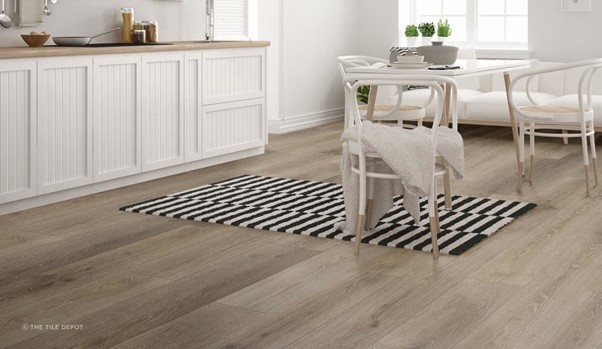
            We have been working with Superior Renovations as a supplier now for over three years. In that time we have found the team to be very professional and well organised. Which is a welcome relief in this industry! Just recently we have become their sole supplier for portaloos, which recognises the collaboration we have forged over these three years.

            In particular, Leanne and Elaine set a very high standard of communication and flexibility. This is of vital importance when scheduling deliveries and pickups with us, however, they understand not everything can be done at once and are willing to work with us for the best (supplier/contractor/client) outcome.

            I would imagine this ethos would flow directly through to all their contracted renovation work. A pleasure to work with!
            A very reliable supplier – we’ve been working with them for three years now, and they have never let us down. Well done to the team.
            We have been working with these guys for the past 4 years and find them an awesome company to work with, very efficient and organised. I highly recommend!
            Finding someone reliable for renovations has always been the most stressful thing for us. In the past, we had several painful renovation experiences—money was spent but the problems were never truly solved, and things often ended up worse than before. We really didn’t know where to find a trustworthy renovation company.

            For more than ten years, our wish had been to renovate our bathroom, laundry, and toilet, so that we could finally enjoy a comfortable and functional living environment. Just when we were about to give up, we came across Superior Renovations online. We quickly made an appointment with Cici, who designed and provided us with a quote.

            Throughout the whole process, I was deeply impressed by the professionalism of Superior Renovations. What stood out most was that they always delivered on their promises—everything agreed upon was completed on time. This built a relationship of trust and reliability. Up until completion, I was completely satisfied with their dedication and the quality of their workmanship.

            During the renovation, we encountered some of the challenges that often come with older houses, but Cici and her team helped us resolve the discomforts we had been living with for years. We are truly grateful to the construction team.

            Some say renovations are easy if you just have money, but I believe the most important thing is finding a trustworthy team that keeps their word, values quality, and cares about the customer’s experience.

            Because of this renovation experience, we can now confidently plan our next project—the kitchen—and Superior Renovations will definitely be our first choice. We strongly recommend them.

            Finally, I want to thank Cici and the team for helping us fulfill our dream.

            Mark & Kate
            Sinan is a very good consultant. She helps a lot during renovation. Very satisfied with their job.
            It was great to have Alison's recommendations and input on how & what would look best for our kitchen and bathroom reno. Jacob, our project manager, has been a star too; ensuring that the project was delivered as planned, AND giving us great ideas & suggestions along the way.

            We will definitely be calling on you guys again for our next home reno. Thanks team!
            Very impressed with Superior Renovations.Building our pergola with blinds for a fair price .First thank you Sinan for quoting the job and your flexabilty and knowledge..Secondly the job was done well within the time frame, thanks to Jeff for supervising the job ( eventhough he wasn't too well) and keeping us up to date throughout the process. Payment was fair and easy as well .
            Thoroughly recommend Superior Renovations for your reno job 👍
            Very efficient team of workers and high quality finish.
            Very happy with our renovated bathroom.
            We will use this company again.
            We’re very happy with the renovation work done by the team. It’s rare for renovation projects to finish on time, but they committed to completing ours before the Easter holiday—and they delivered! Our project manager, Jacob, worked incredibly hard (even physically! 😄) to make it happen.

            I admit I might not have been the easiest client—I was particular about details like colours, tile placement, and exactly where the hand basin bowl should sit on the bench. But they listened, took it all on board, and got it done. Thank you, Jacob!
            I’ll definitely bring you another challenge in the future. 😉
            Thanks Superior Renovations for doing our house, it definitely looks a lot better now! Special thanks goes to Alison and Jacob for their excellent effort and good manners in handling the construction process, it wasn't easy but with them around it definitely became easier to handle. Cheers🥂
            Absolutely thrilled with the outcome of our renovation of two bathrooms and kitchen in a double level home. Kevin and his entire team were an absolute pleasure to work with from the get-go. Every minor detail was attended to, and all our requests were accommodated. Cyrus deserves a special mention as under his watchful eye and expertise, nothing could go wrong.
            I have recently finished a renovation in our 1930’s bungalow, updating the original (and I do mean original) kitchen and bathroom. Plus creating a new laundry and removing three fireplaces which created two new spaces including an office. From the initial appointment with Alison who came over and then provided drawings and a quotation, to the work with Frank, our project manager and the team, this has been a wonderful renovation experience. I would have described myself as a nervous-renovator prior to doing this, as I had never done a renovation before, but Frank, Alison, Sunny and all the team have worked so tirelessly and generously to create spaces that we love. Superior’s care in managing the project has meant that we have come away with much more than we originally sought to achieve and without the stress I hear others lament about when they renovate. I would recommend Frank, Alison, Sunny and the team at Superior Renovations wholeheartedly.