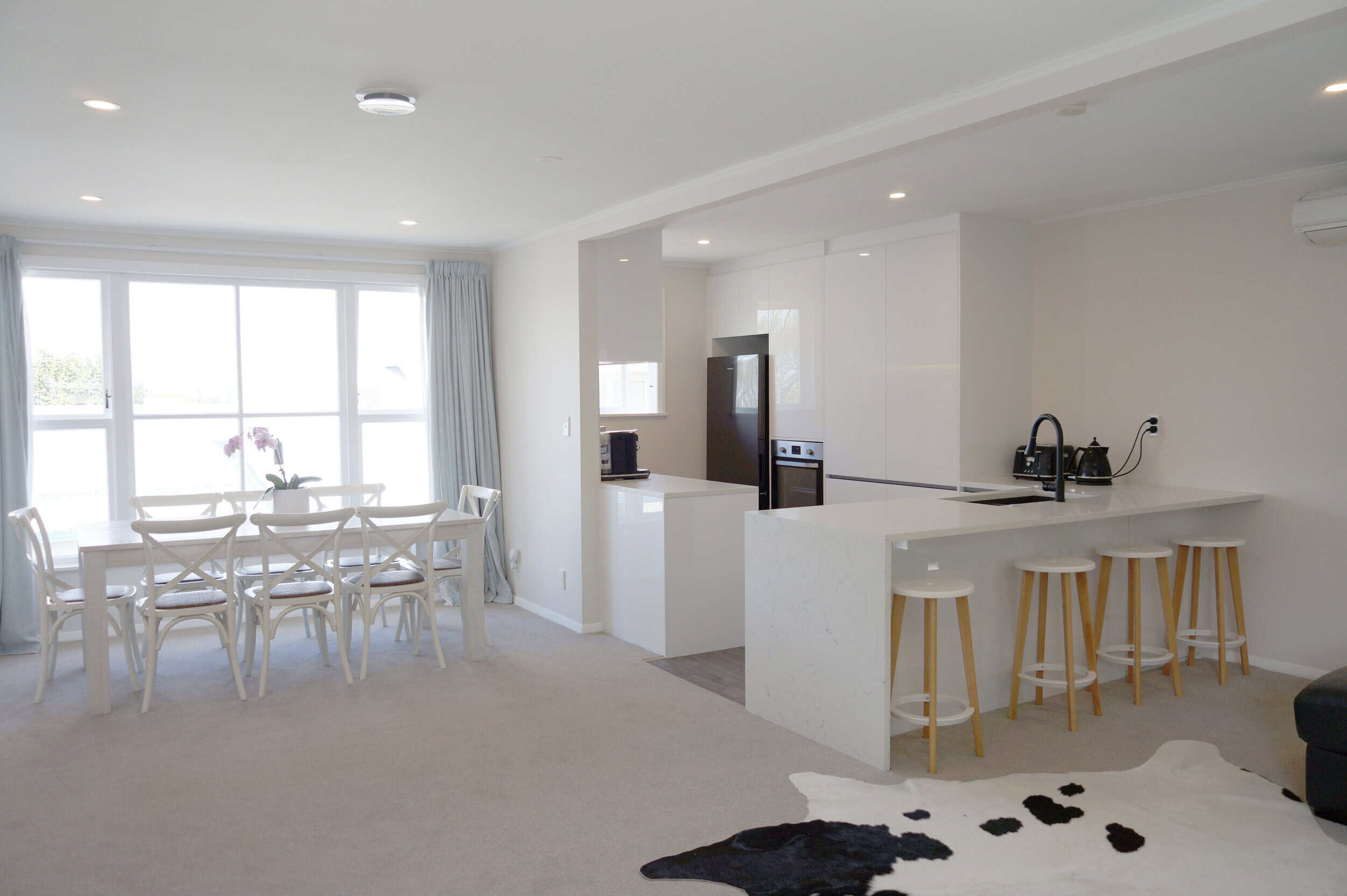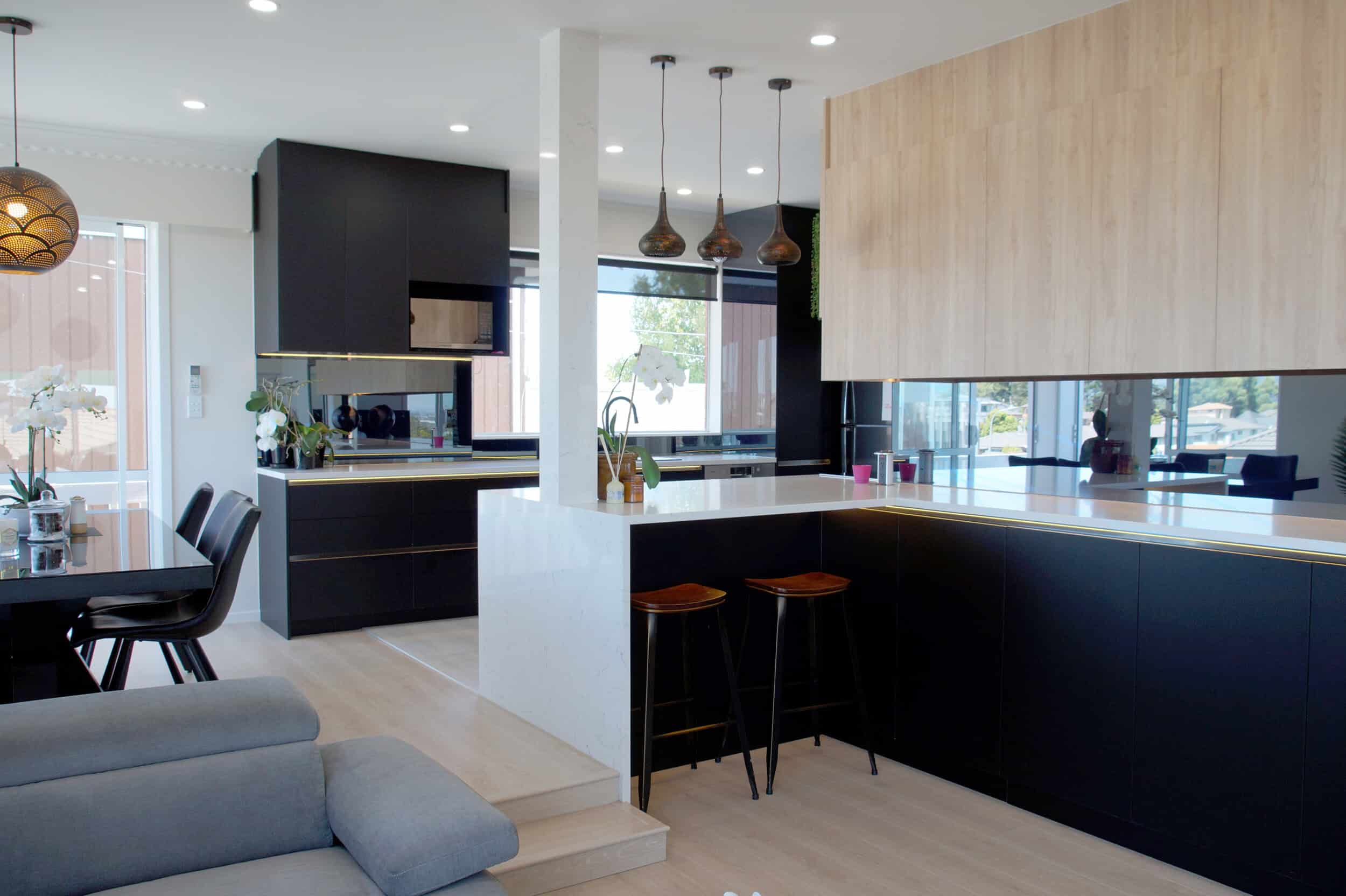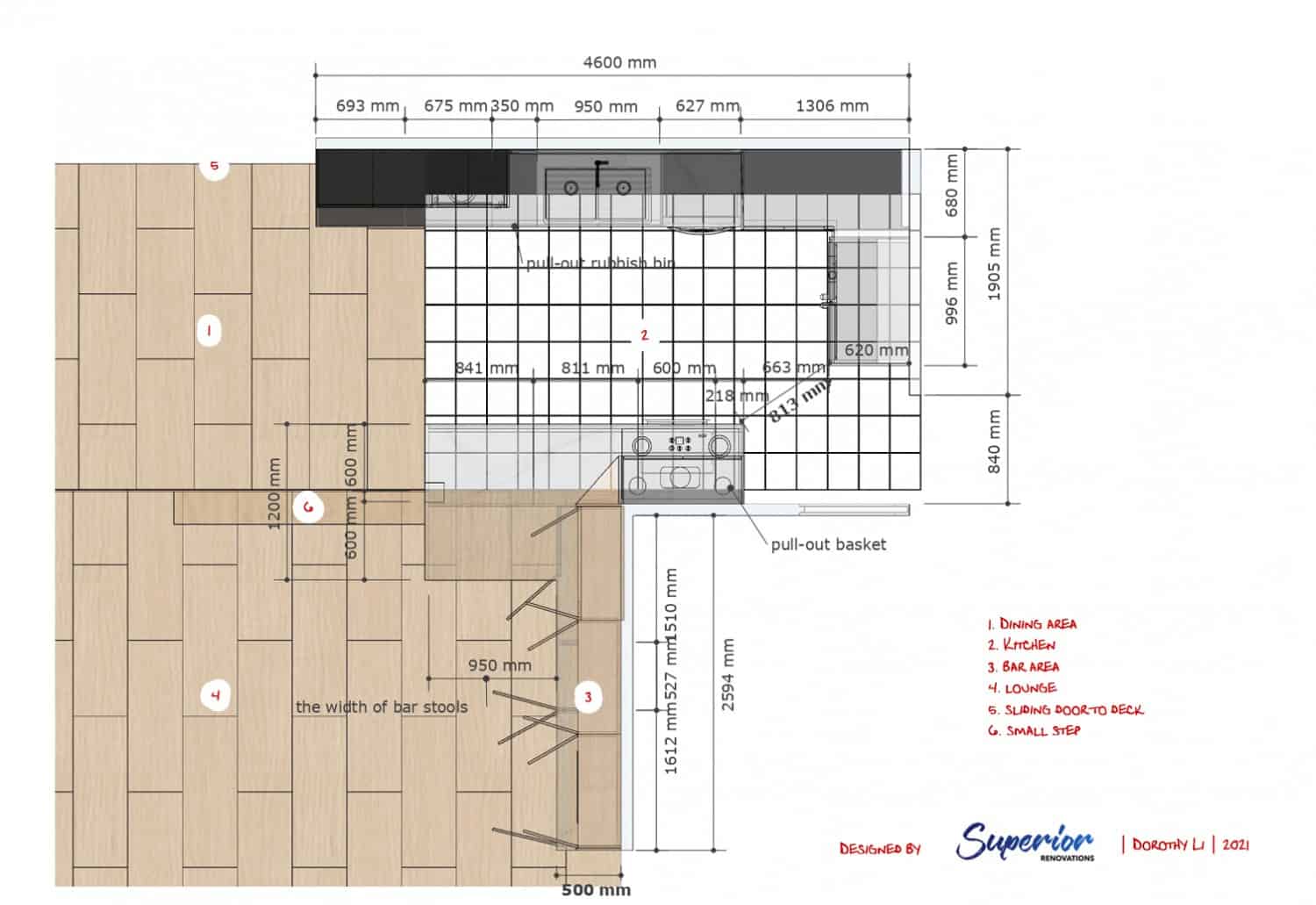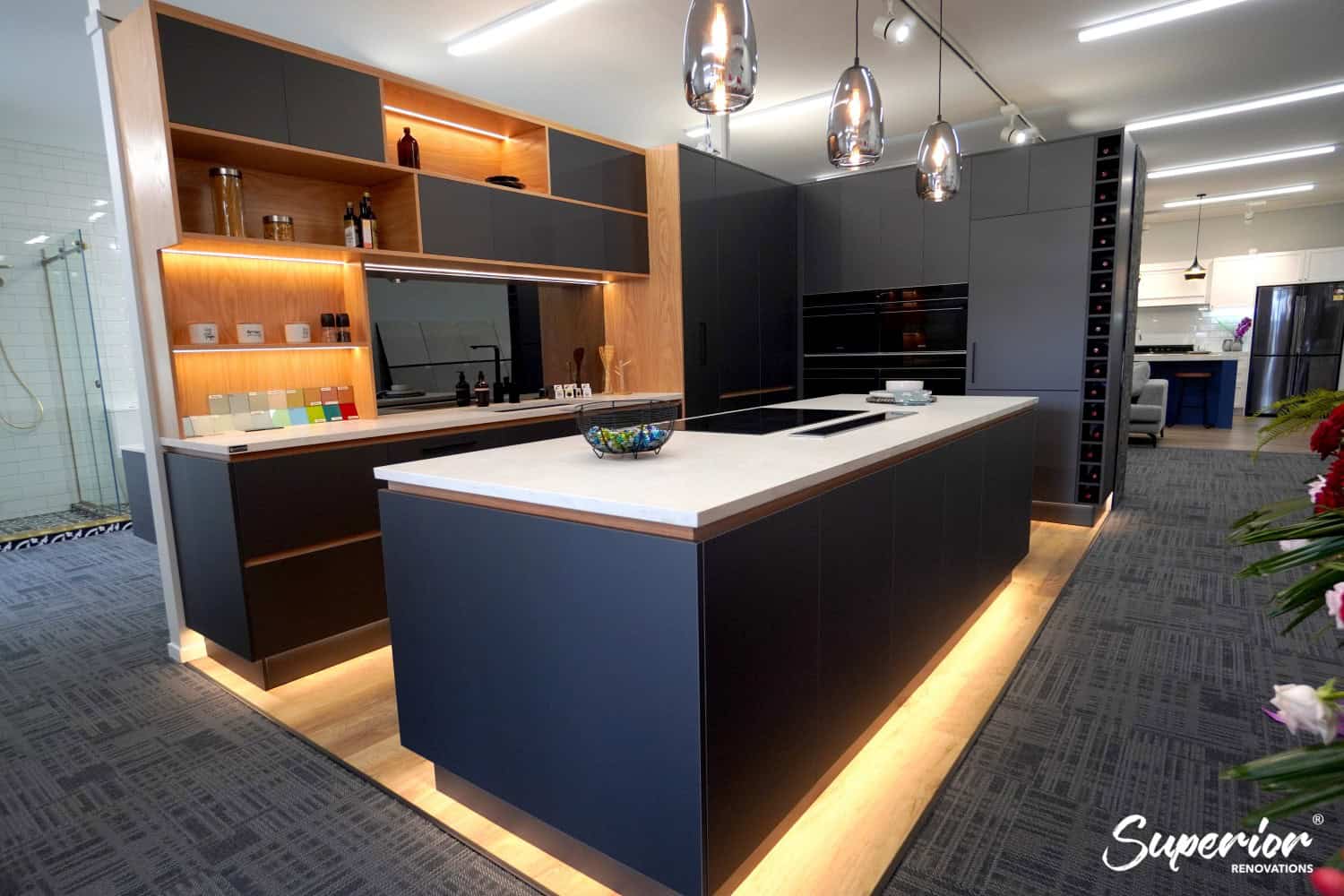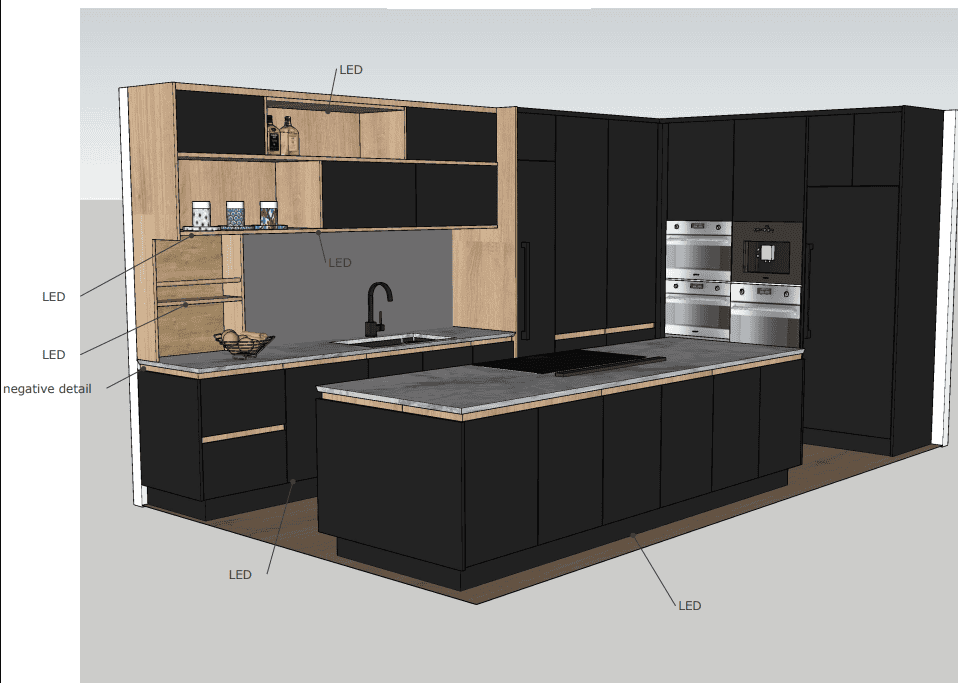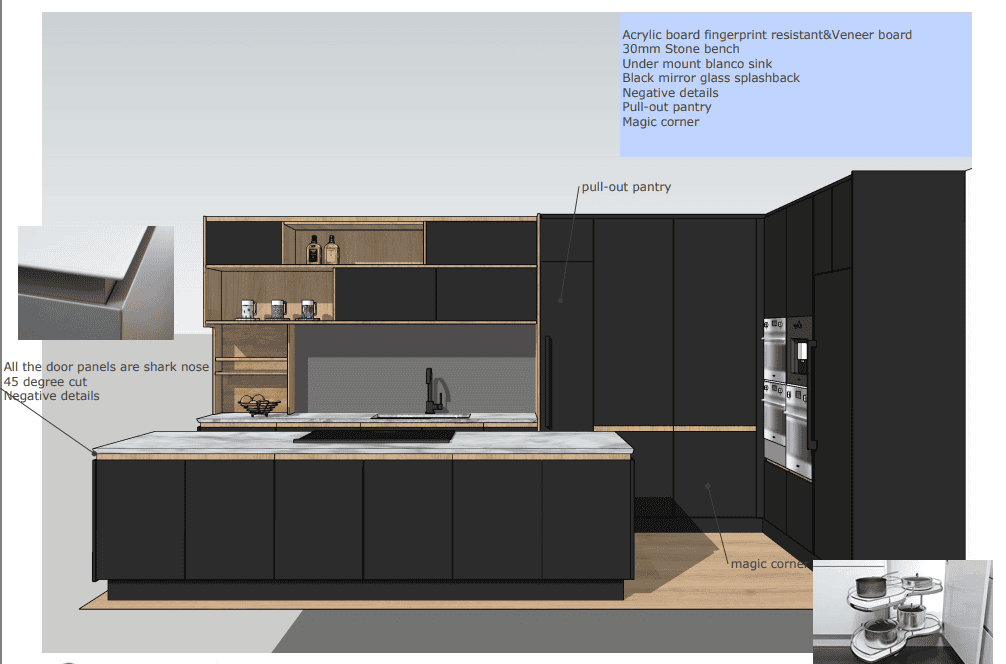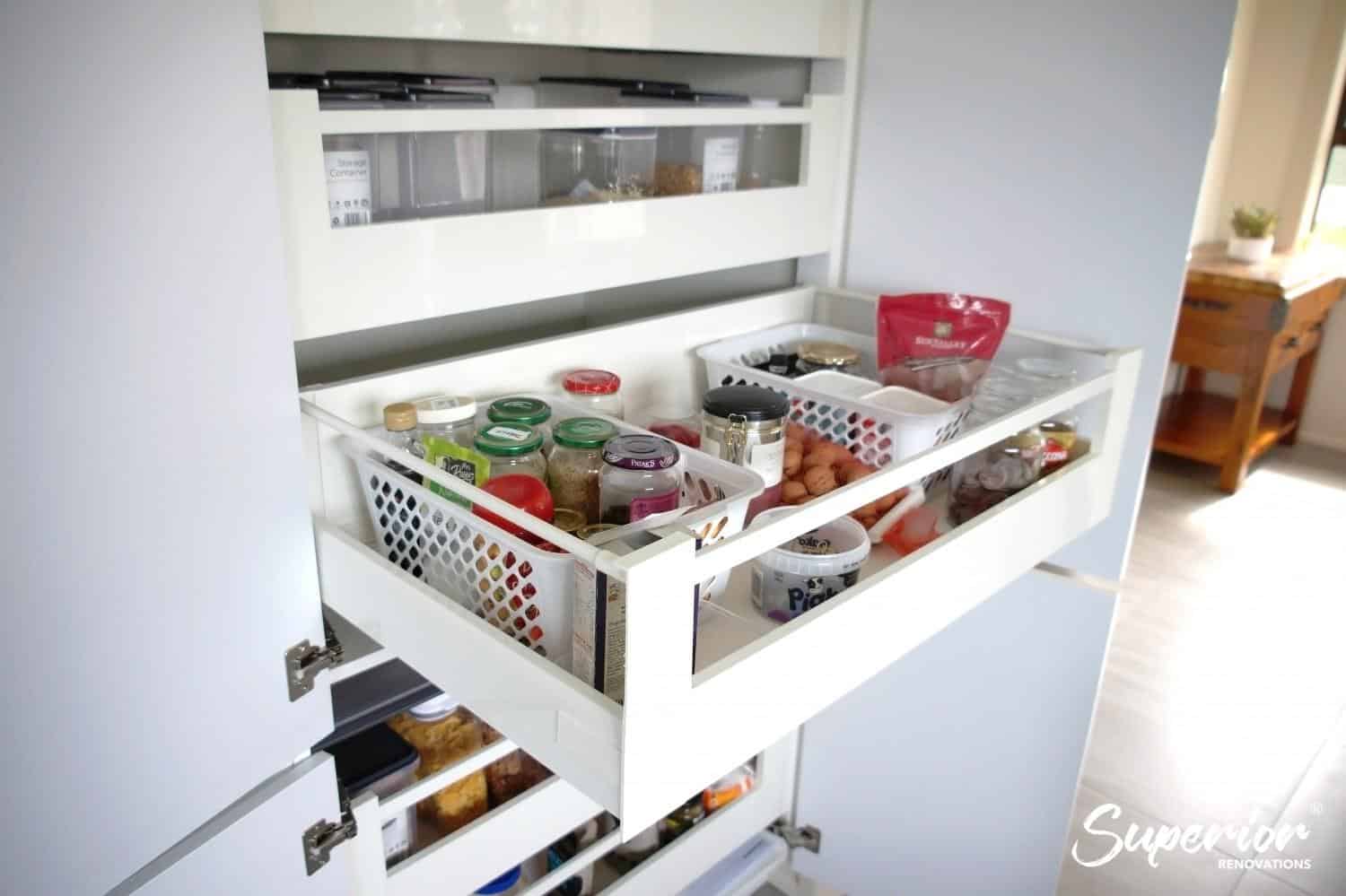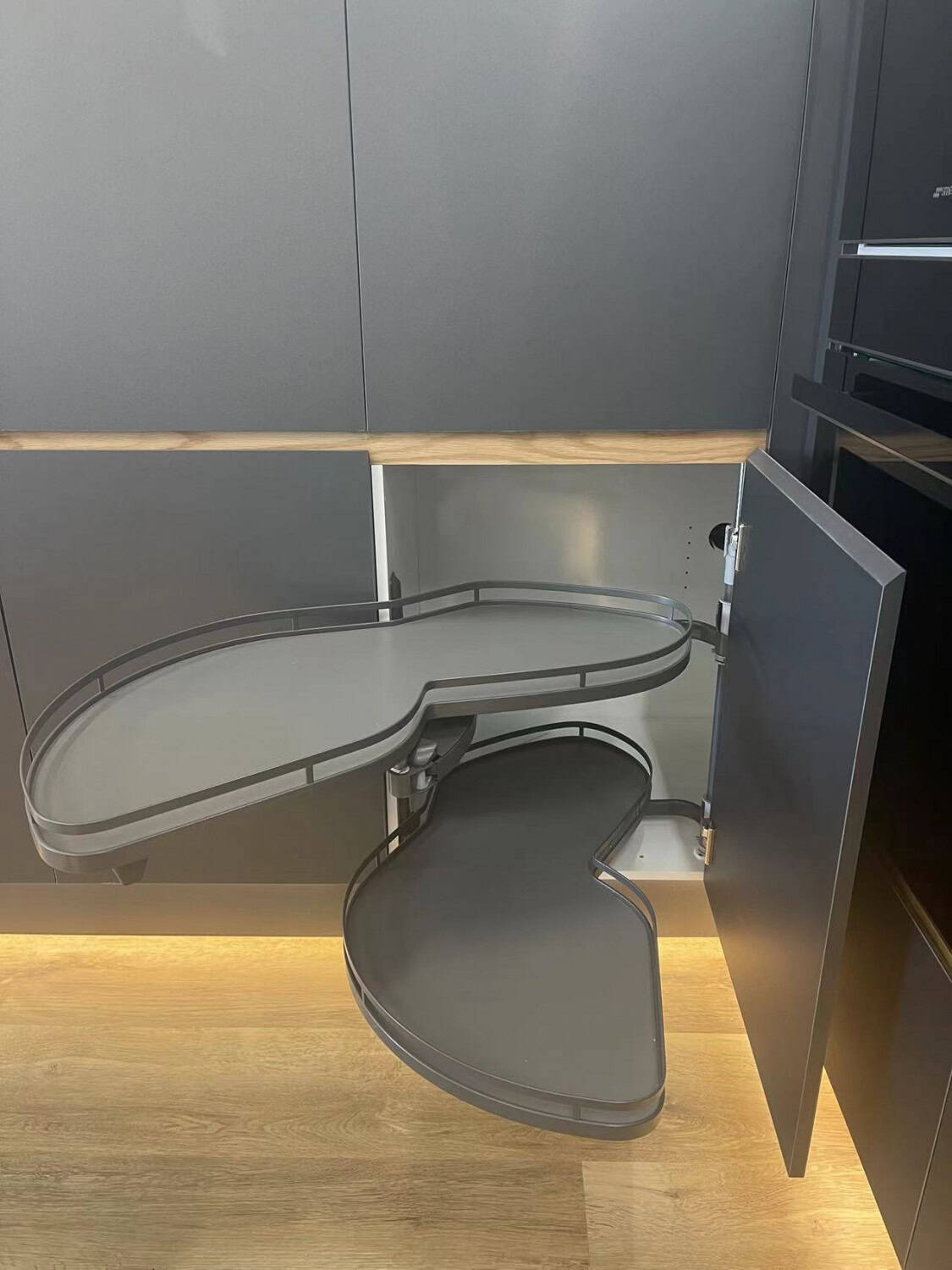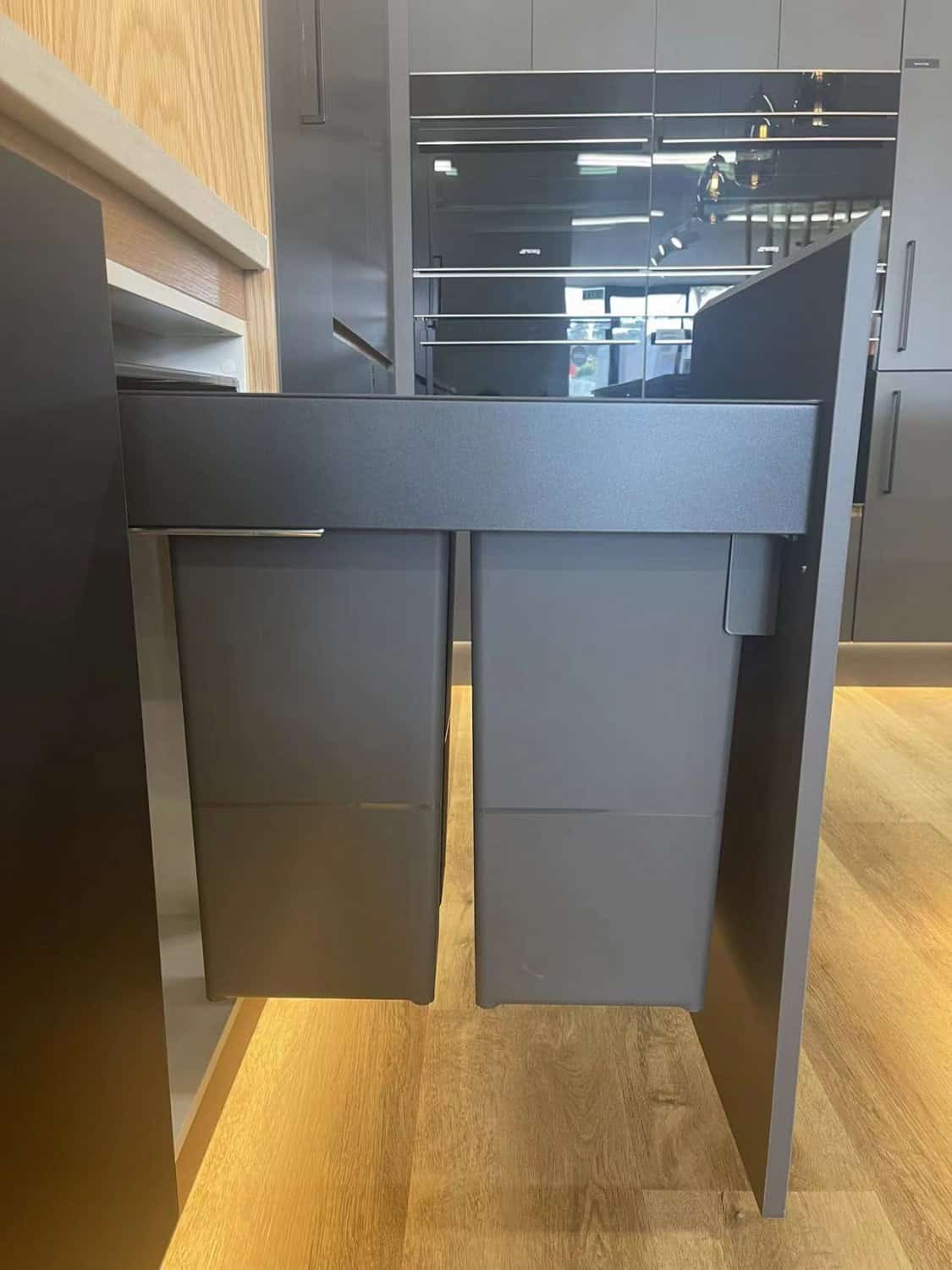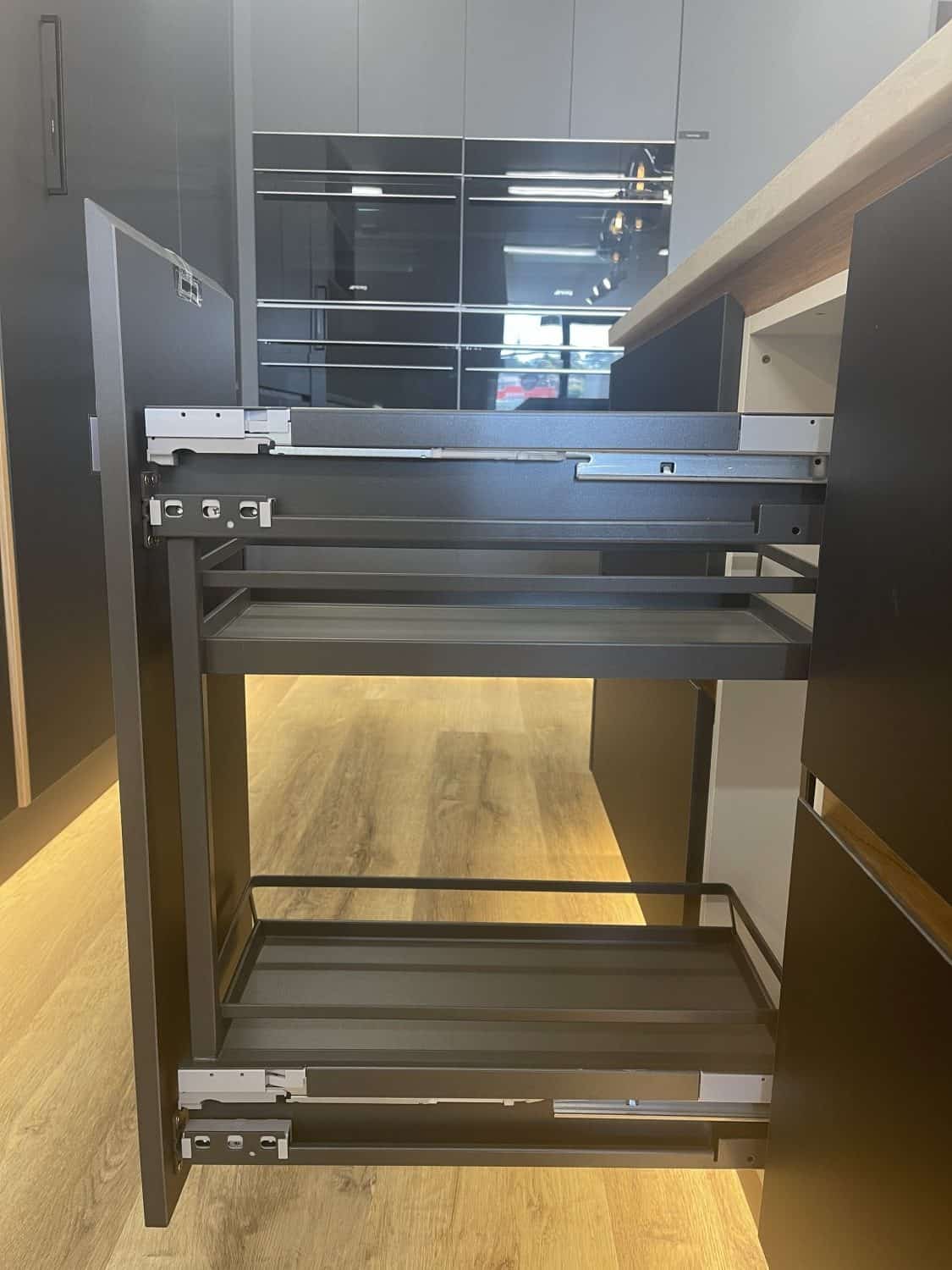


Kitchen Planning Measurements NZ | Auckland Designer Guide
Free cost calculator
How much will your kitchen renovation cost?
Get an instant Auckland price range for your project — no details required to see it.
Quick answer: Standard NZ kitchen planning measurements start with a 900mm benchtop height, 600mm benchtop depth, 1000–1200mm walkways, and AS/NZS 4386 compliant cabinetry. Get these right before cabinetry is ordered and the kitchen will work for the next 20 years — get them wrong and no amount of stone or tile will fix it.
Plan a kitchen reno well and you’ll forget the measurements exist. Plan it badly and you’ll be reminded every morning, the dishwasher door clipping the island, the bench just slightly too low for your back, two people trying to pass each other in front of the fridge. Standard kitchen planning measurements aren’t a constraint. They’re what stops the small mistakes that turn an expensive renovation into a daily frustration.
The trouble with most measurement guides online: they default to American inches, Australian sizing, or generic global standards that don’t quite line up with how kitchens are actually built in New Zealand. We’ve designed and built over 1,000 Auckland kitchens through our Wairau Valley Design Studio, and the dimensions below are what we use as the baseline — anchored to the AS/NZS 4386 cabinetry standard and MBIE Building Code guidance, then adjusted for the housing stock we work in.
NZ Kitchen Measurements at a Glance
Every figure our designers work to, in one table. Trade drawings in New Zealand are set out in millimetres, so that is the primary column. Centimetres are there because that is how most people search.
| Measurement | NZ standard (mm) | In cm | Notes |
|---|---|---|---|
| Benchtop height | 900mm | 90cm | Usable range 850–950mm depending on the cook. |
| Benchtop depth | 600mm | 60cm | 560–570mm carcass plus a 20–30mm front overhang. |
| Base cabinet widths | 300 / 450 / 600 / 900mm | 30 / 45 / 60 / 90cm | Modular widths. Fillers absorb the leftover run. |
| Toe kick (height x setback) | 150mm x 50mm | 15cm x 5cm | Keeps your toes clear when you stand at the bench. |
| Bench to underside of wall cabinets | 450–600mm | 45–60cm | Splashback height. Tighter looks better, taller fits appliances under. |
| Wall cabinet depth | 300–350mm | 30–35cm | Deeper than 350mm and you knock your head reaching the bench. |
| Walkway, single cook | 1000–1100mm | 100–110cm | Bench to wall, bench to island, or bench to bench. |
| Walkway, two cooks or a thoroughfare | 1200mm minimum | 120cm | The practical minimum in an open-plan Auckland home. |
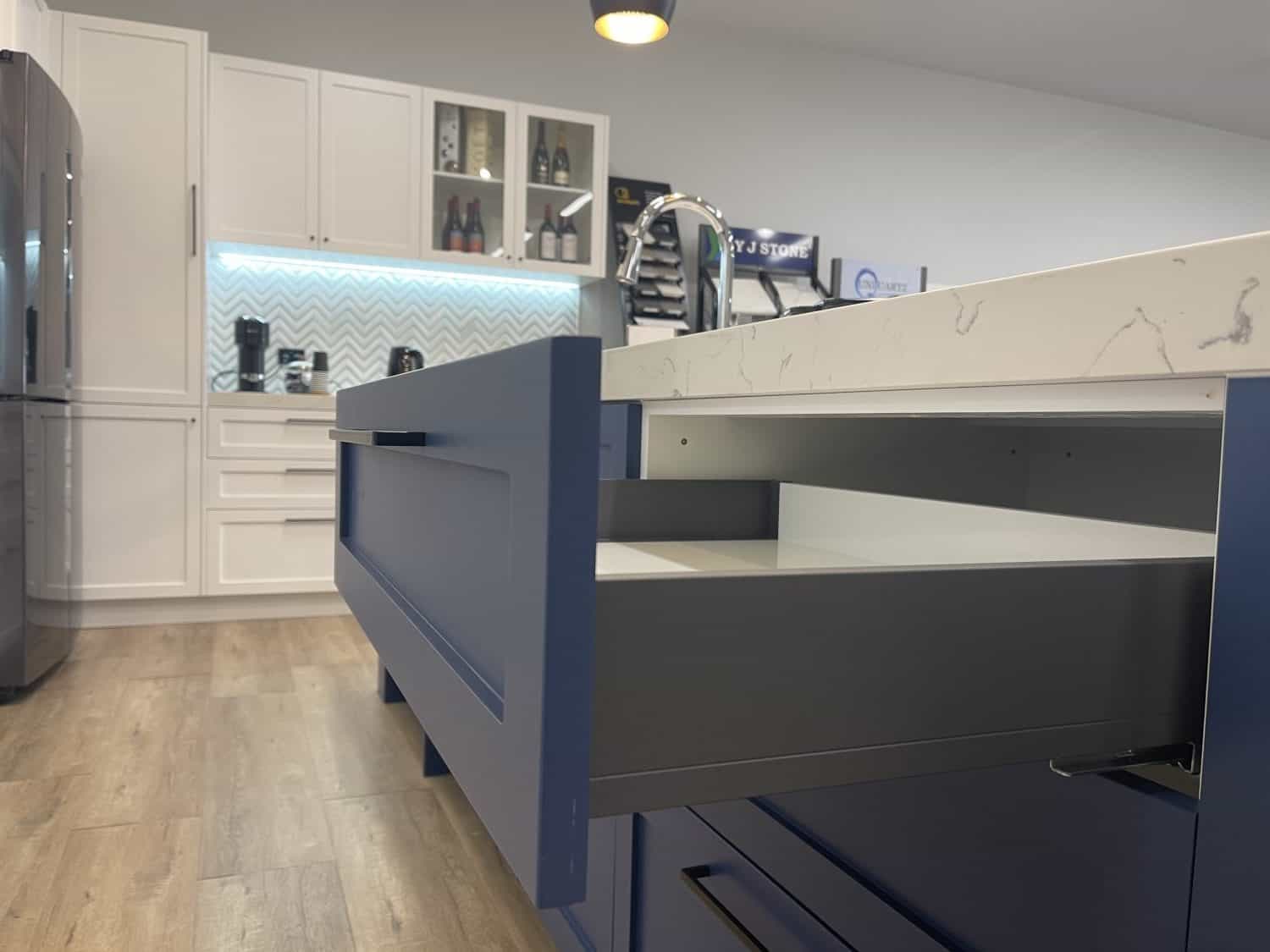
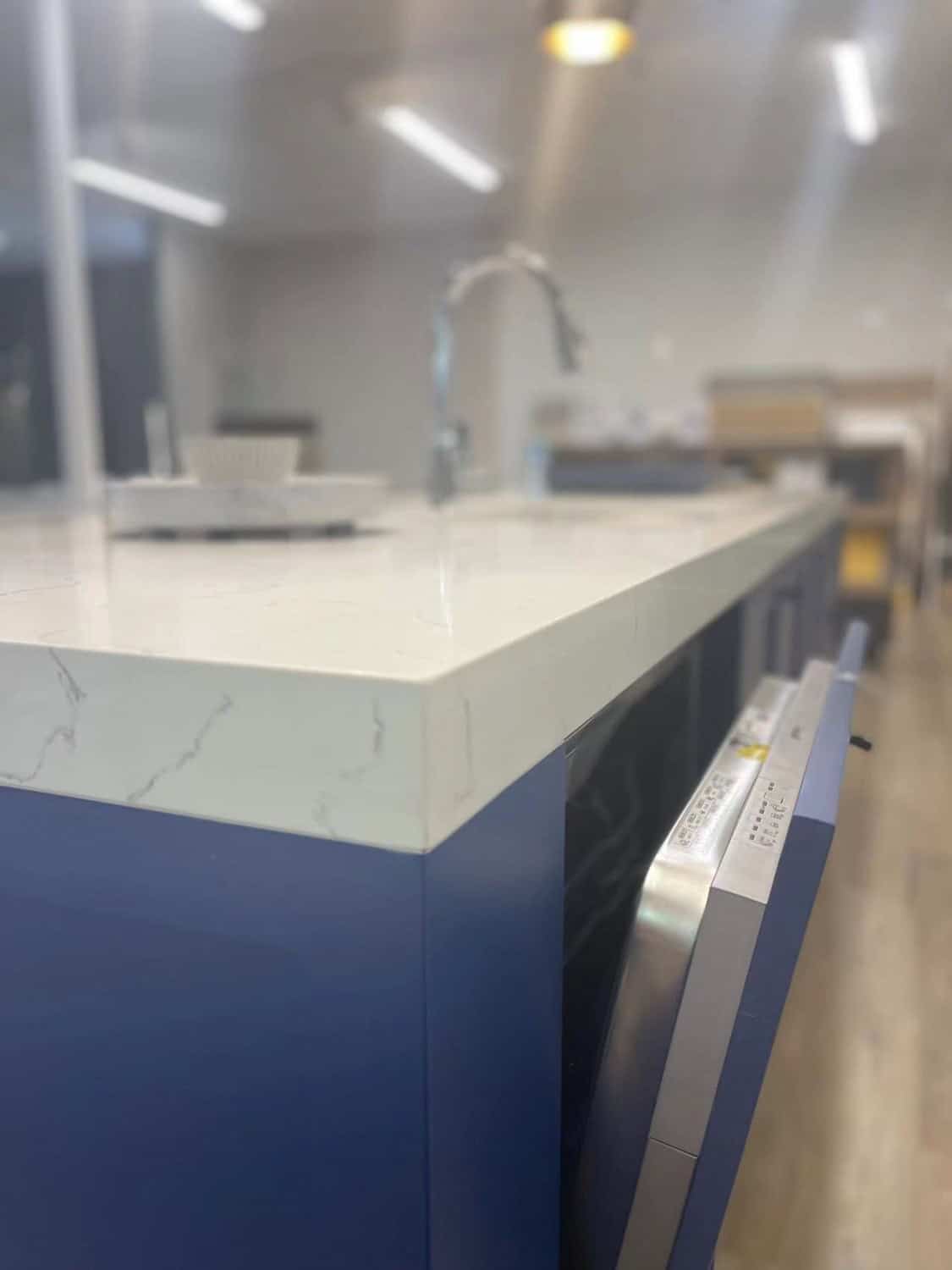
| Island, minimum working size | 600 x 1500mm | 60 x 150cm | 1800–3000mm long is more common in Auckland homes. |
| Island depth with seating | 900–1100mm | 90–110cm | Includes a 300–400mm overhang for knees. |
| Breakfast bar / seating overhang | 300–400mm | 30–40cm | Under 300mm and you cannot get your knees under. |
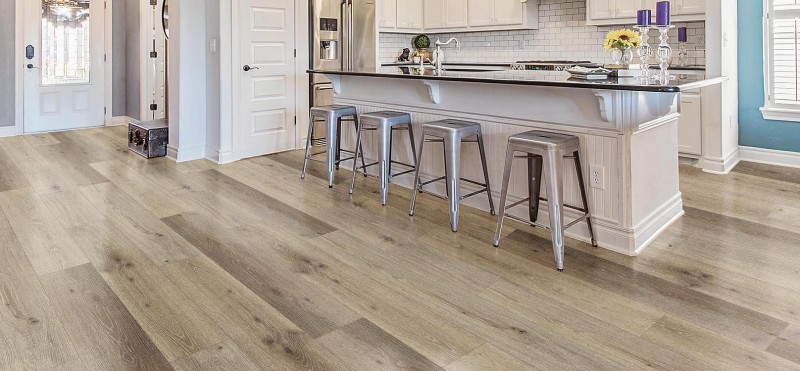
| Stool seat height for a 900mm bench | 600–650mm | 60–65cm | Buy the stools after the bench height is locked, not before. |
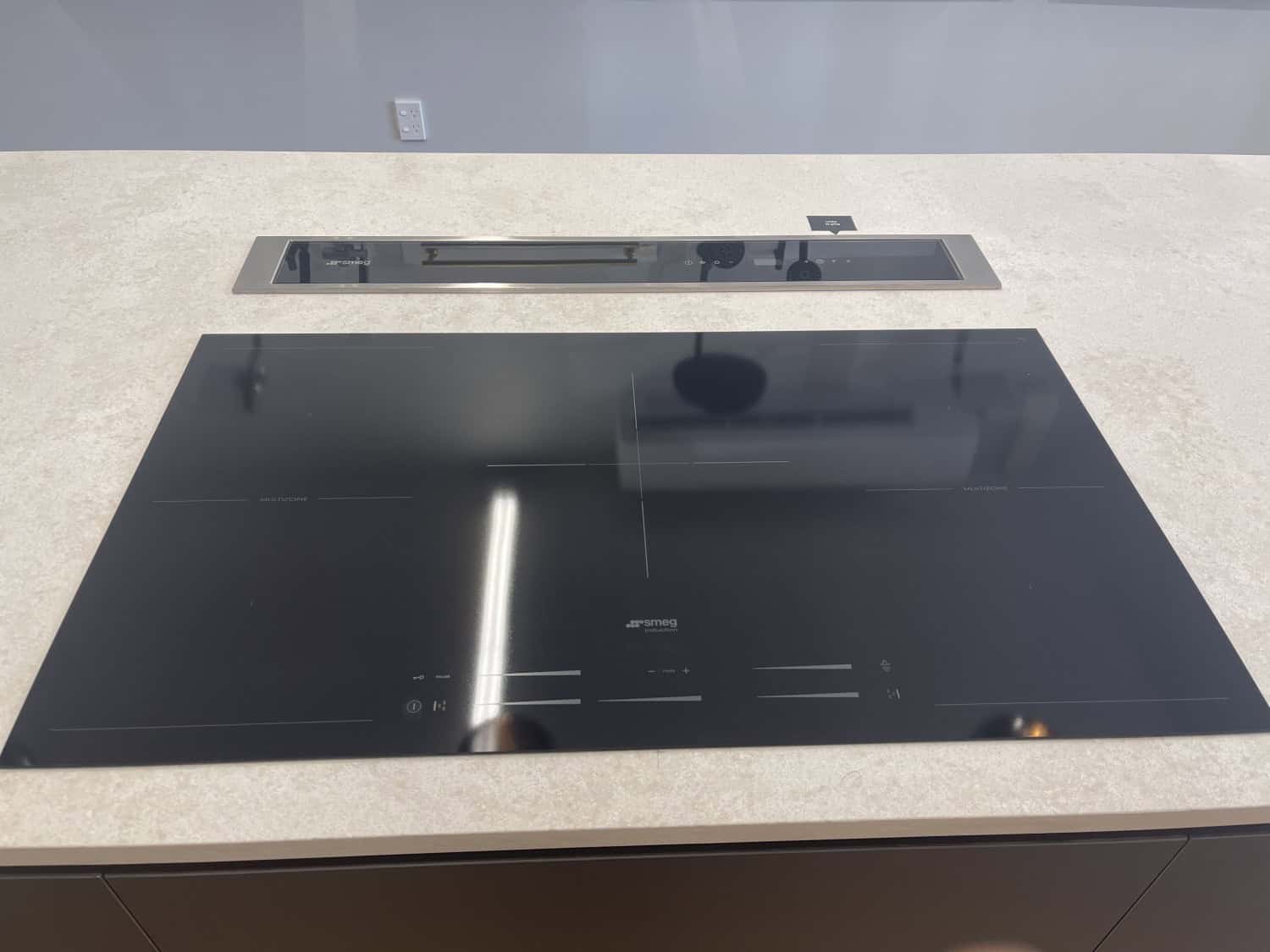
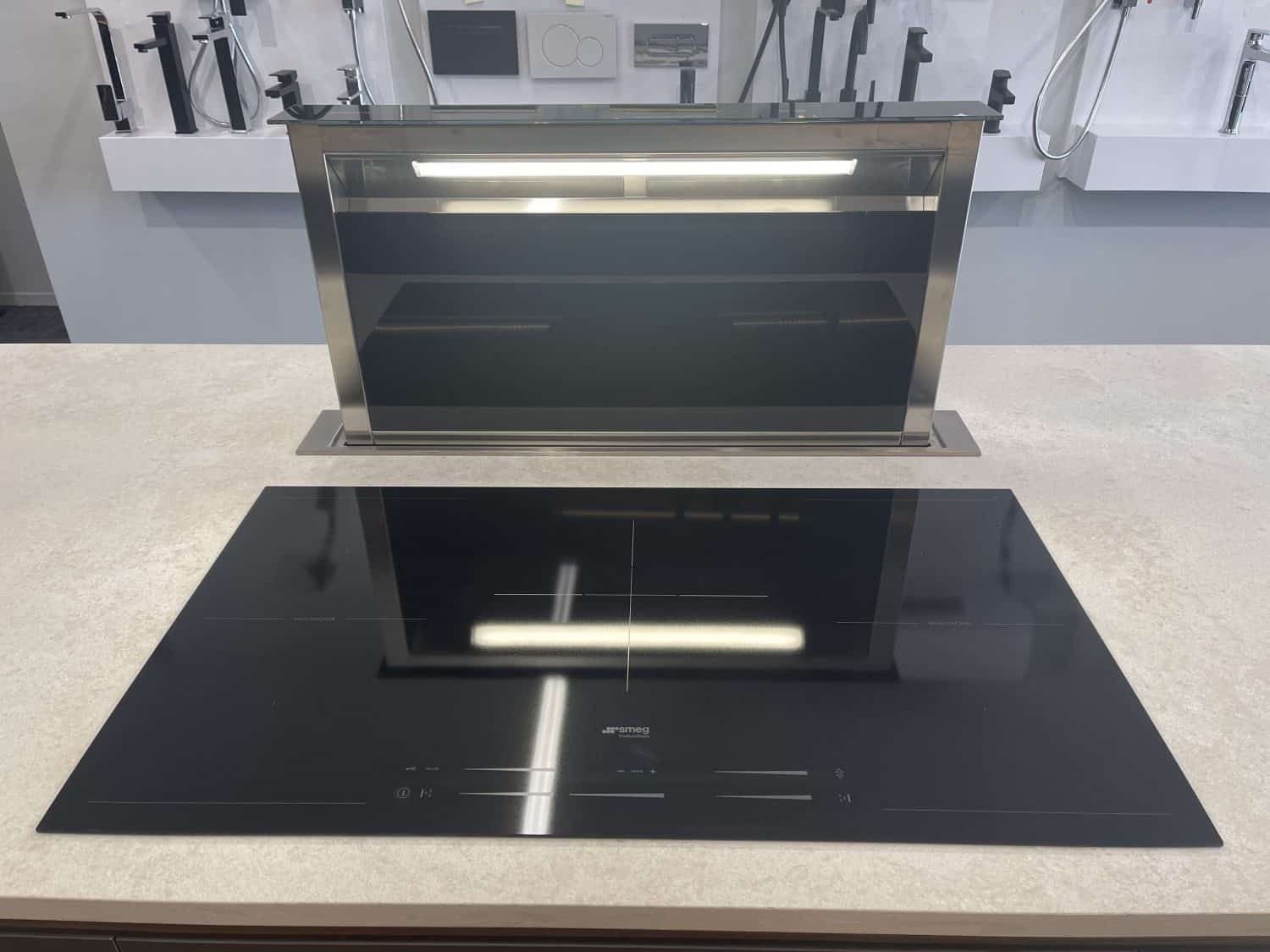
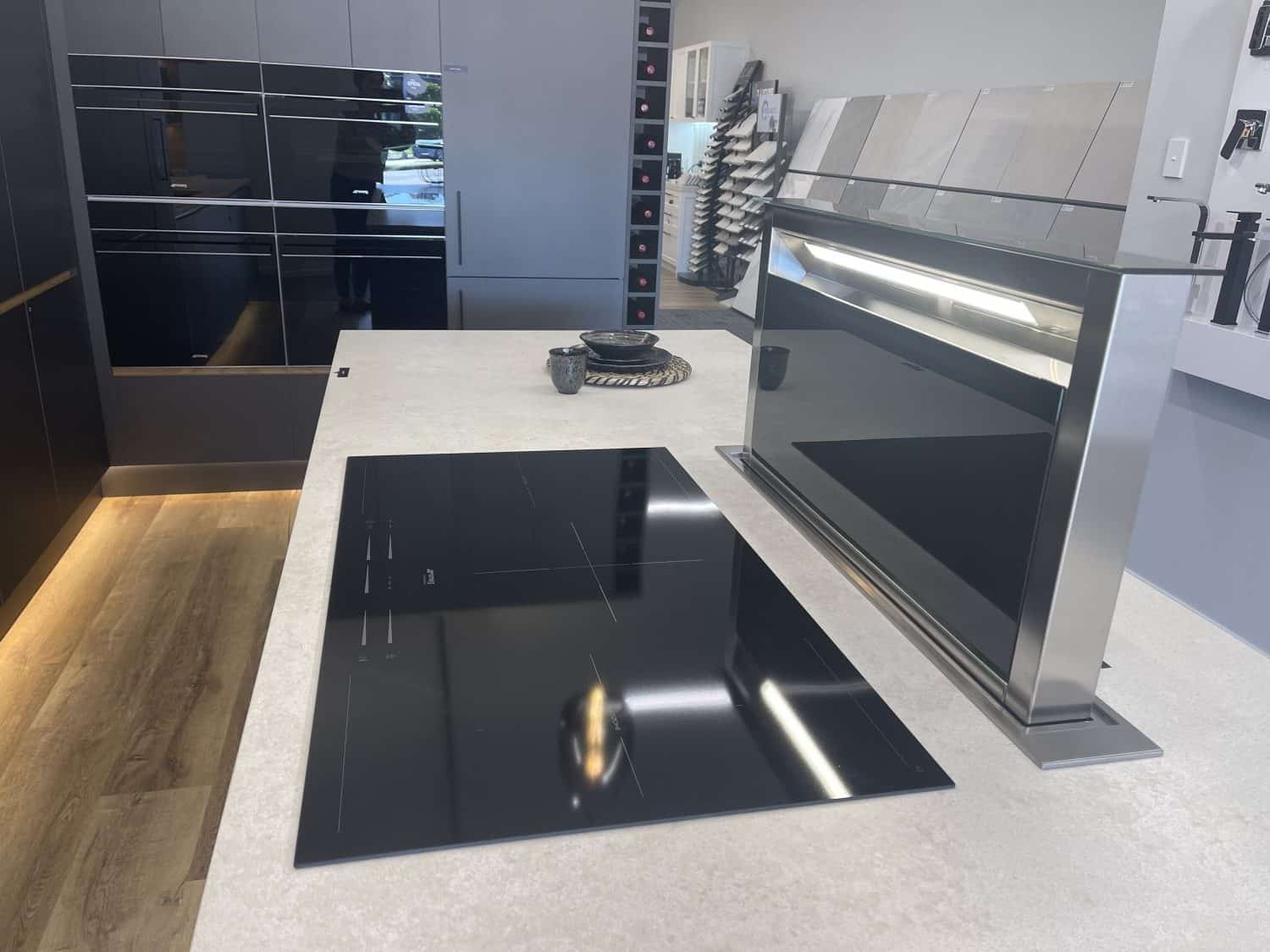
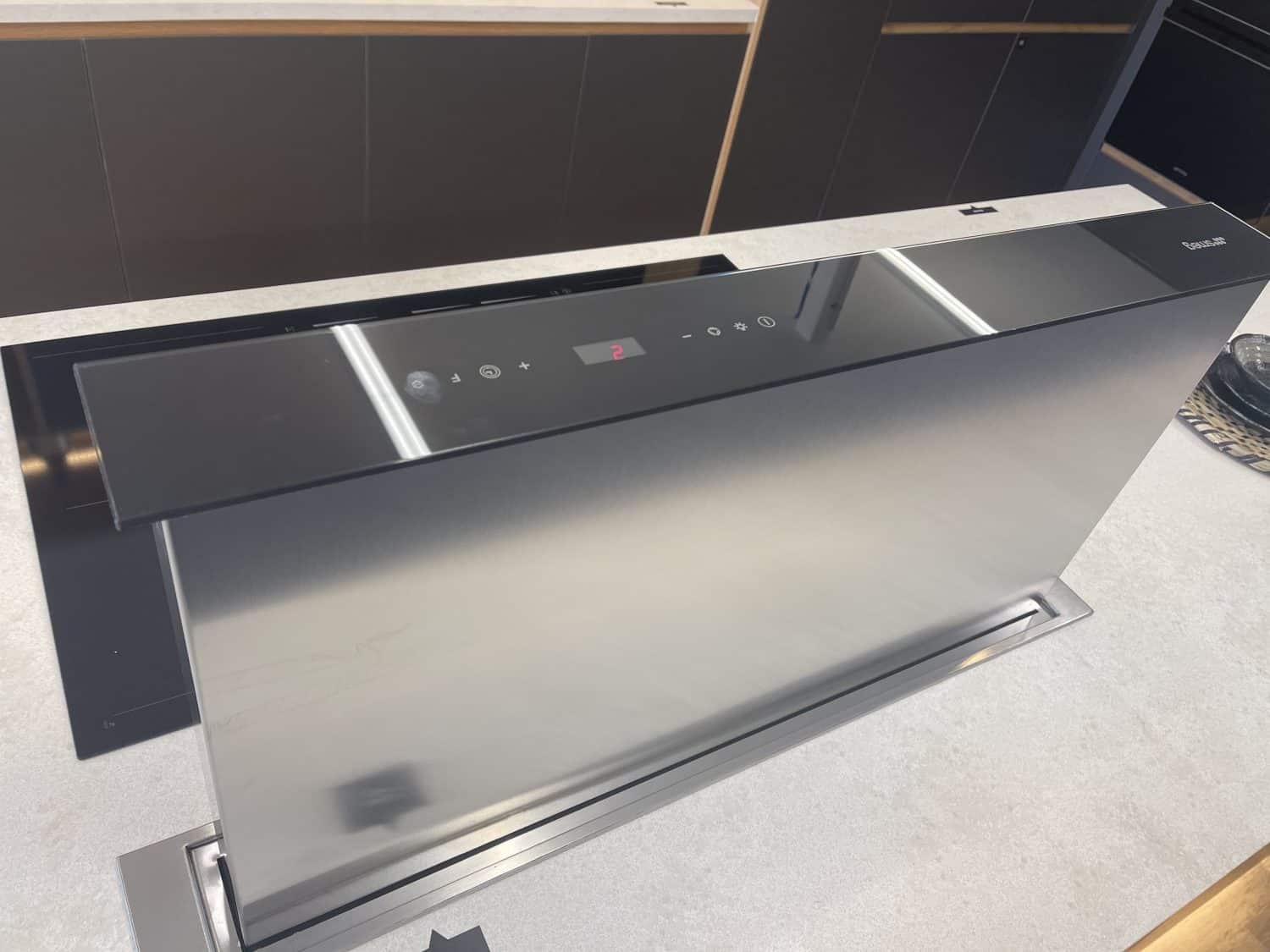
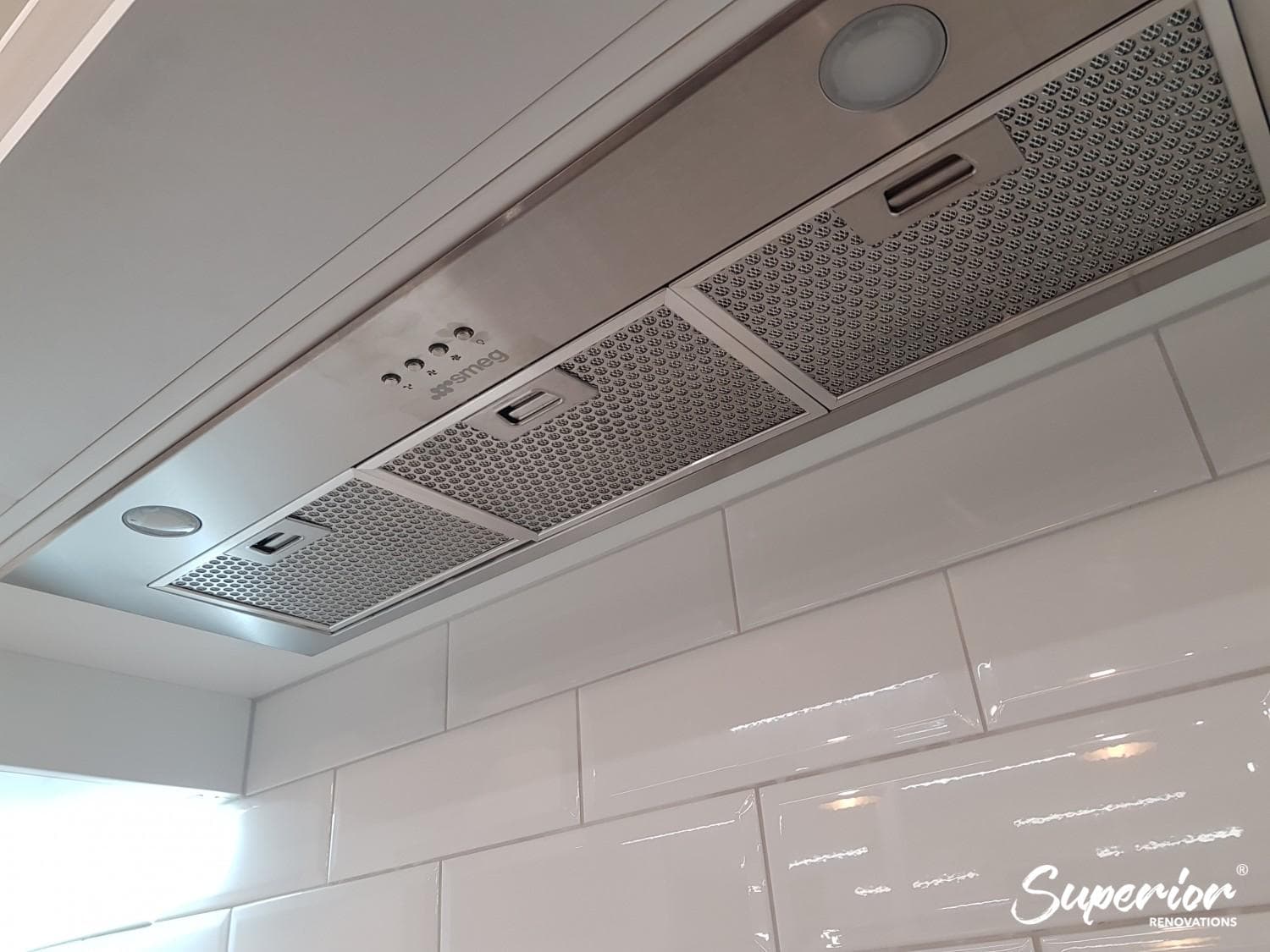
| Cooktop to rangehood, electric or induction | 600mm minimum | 60cm | Always confirm against the appliance manual. |
| Cooktop to rangehood, gas | 650–750mm | 65–75cm | Manufacturer specification governs. Some high-output burners need more. |
| Bench space beside a cooktop | 300mm minimum each side | 30cm | Somewhere to put a hot pan down. The most-skipped dimension. |
| Bench space beside the sink | 450mm one side minimum | 45cm | A drying zone. 600mm is better if the run allows it. |
| Pendant height above an island bench | 750–900mm | 75–90cm | Measured bench surface to the bottom of the shade. |
💡 Quick tip: Print this table and take it to the appliance showroom. Nearly every measurement argument on a kitchen job traces back to an appliance being chosen after the cabinetry was drawn instead of before.
The sections below cover why each of these numbers exists and when it is right to break one. If you want the price attached to the layout rather than just the dimensions, our kitchen renovation cost calculator gives an Auckland range, and kitchen renovation costs in Auckland breaks the figures down by tier.
Why Standard Kitchen Measurements Actually Matter
Standard measurements exist because they work for most people, most of the time. They’re built on ergonomic research, decades of cabinetry industry practice, and the dimensions of every common appliance you might want to install. The Australian/New Zealand cabinetry standard AS/NZS 4386 defines the construction and dimensional baseline most NZ kitchen manufacturers build to.
Standards do two jobs. They make sure your kitchen plays nicely with off-the-shelf appliances, a 600mm dishwasher slots into a 600mm cabinet without modification. And they make sure the kitchen is comfortable to use for the broadest range of body types and cooking habits.
Where standards stop being useful is the moment your kitchen is unusual — a 1920s Grey Lynn villa with a 2.4m wide room, a Hobsonville townhouse with an island that needs to anchor an open-plan space, or a homeowner who’s 1.9m tall and tired of leaning over a low bench. That’s when the standards become a starting point and a designer earns their fee.
💡 Quick tip: Before any cabinet is ordered, stand at your existing bench (or the bench at your friend’s place) and check how it feels for 10 minutes of food prep. If you’re bending or reaching, the standard isn’t your standard — flag it with your designer early.
Standard Benchtop Height and Depth in NZ Kitchens
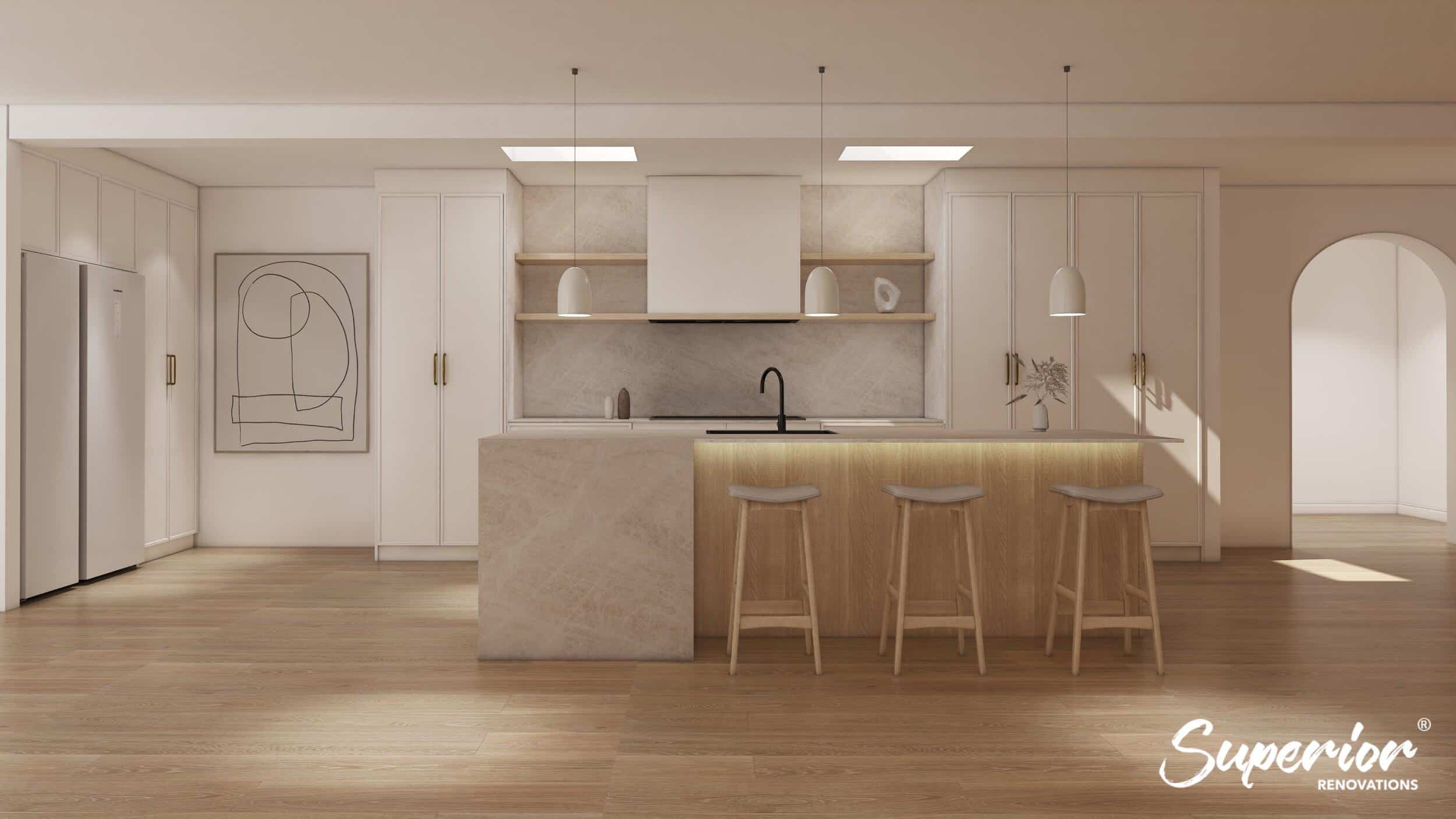
The NZ standard kitchen benchtop height is 900mm from the finished floor. Common range sits between 850mm and 950mm depending on the cook. Most Auckland kitchens default to 900mm because it lines up with off-the-shelf base cabinets, appliance heights, and the assumption of an average-height user.
Benchtop depth is typically 600mm front-to-back. That gives you a usable prep zone without the bench eating into the walkway behind you. Add a 20–30mm overhang on the front edge and the bench is comfortable to lean against without your toes hitting the cabinet.
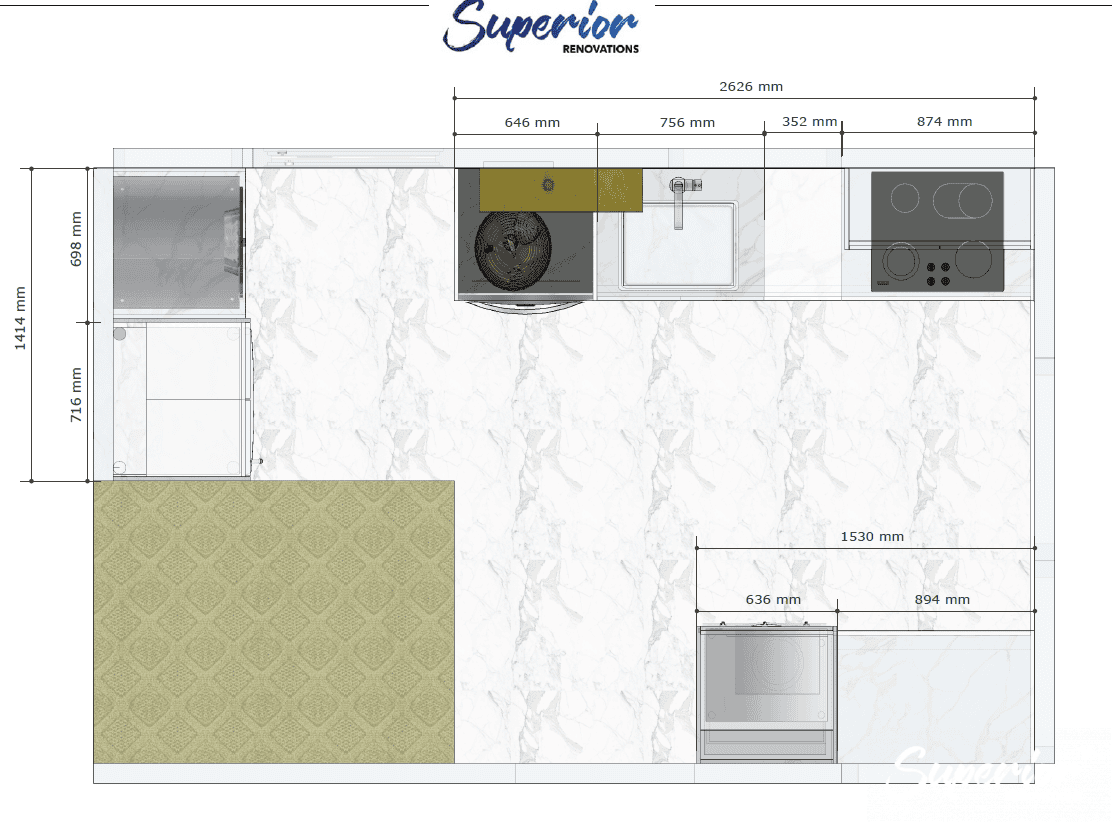
The 900mm benchtop height is the NZ default — but it isn’t right for every cook.
“The 900mm bench is the default, not the answer. We measure our clients during the design consult, taller cooks usually go to 920 or 950mm, and a couple of our clients with back issues have asked for 880mm because they prefer to brace their arms when chopping. The cost difference is nothing. The comfort difference is daily.”
— Alison Yu, Designer, Superior Renovations
When to deviate from 900mm
Two situations call for a non-standard bench height. The first is body type, if you or your partner is taller than 1.85m or shorter than 1.6m, the standard will feel wrong every time you use it. The second is task, a baking-heavy kitchen often benefits from a slightly lower zone (around 850mm) so kneading and rolling doesn’t strain shoulders, while a coffee or cocktail bench can sit higher to keep the work surface at hand height.
If you’re planning to age in place, BRANZ’s Universal Design guidance recommends a height-adjustable bench in the 620–900mm range — worth a conversation with your designer if accessibility is on the horizon.
💡 Quick tip: Bench height should be measured from the finished floor — not the subfloor. New flooring (tile, engineered timber, vinyl plank) all add 8–20mm of height, which is why villa renovations in Mt Eden and Ponsonby sometimes end up with a 920mm bench when the spec said 900mm. Get the flooring spec locked before cabinet manufacture.
Base Cabinet Dimensions and Modular Widths
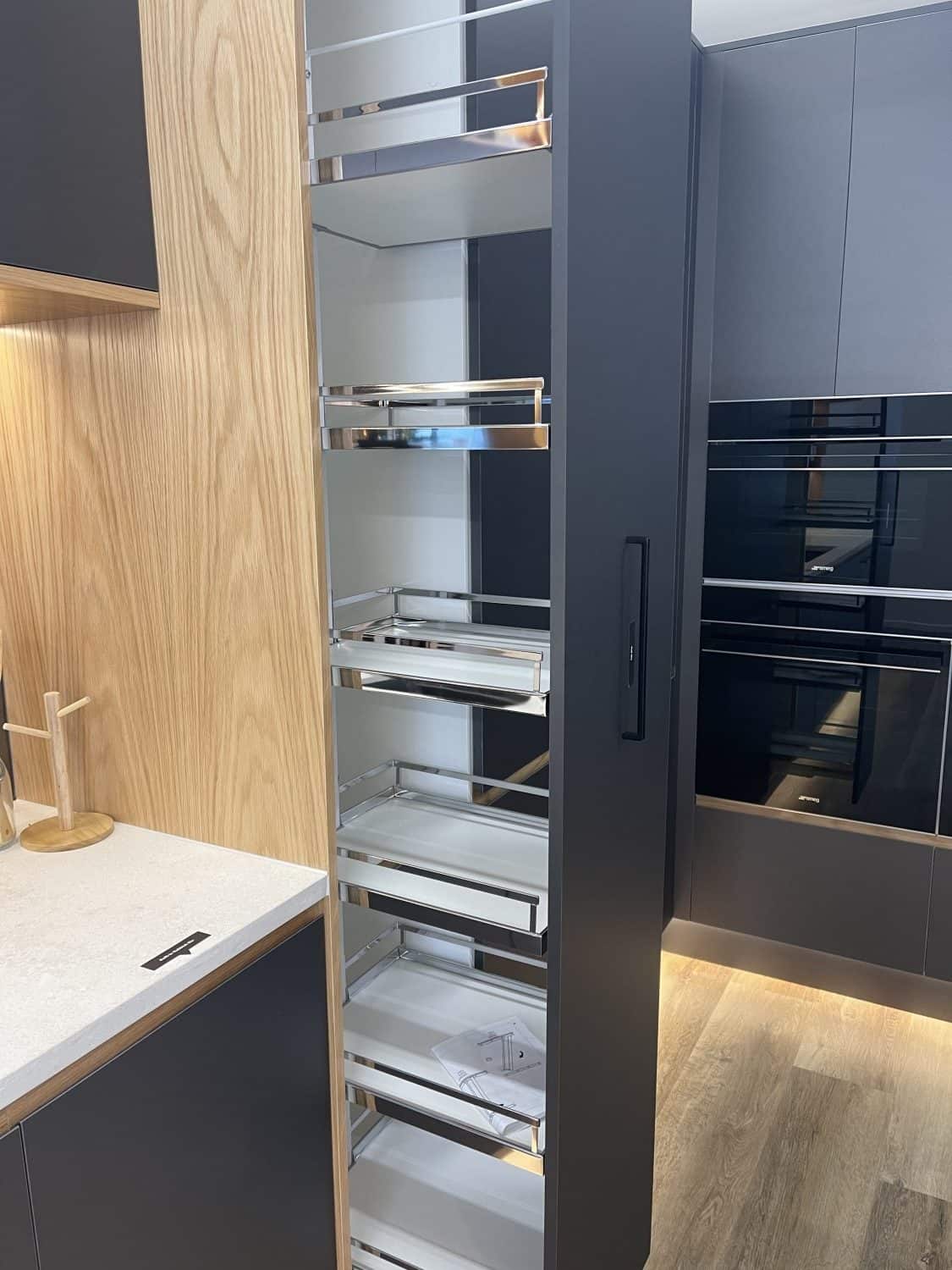
Base cabinets carry the weight of the kitchen — drawers, pots, the appliances that sit underneath, and the benchtop above. Their dimensions decide what fits where, and they’re built to a standardised module so the cabinetry industry can manufacture efficiently.
- Cabinet height (without bench): 870mm typical (with 100–150mm kickboard underneath)
- Cabinet depth: 560–570mm carcass plus the benchtop overhang gives the 600mm total
- Common cabinet widths (NZ modular): 300mm, 400mm, 450mm, 600mm, 800mm, 900mm, 1000mm, 1200mm
- Kickboard (toe-kick) height: 90–150mm — most NZ builders use 100mm
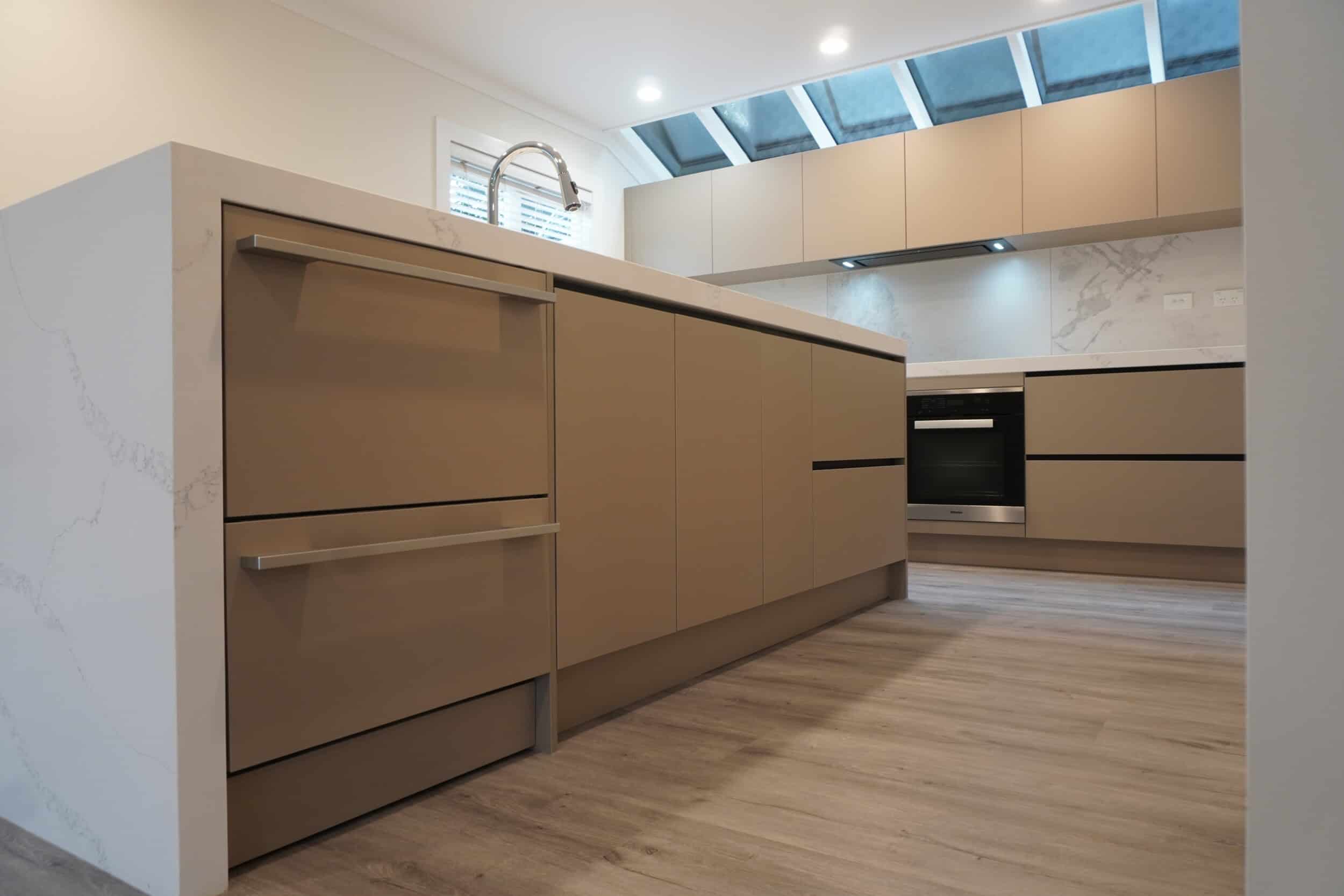
The 600mm module is doing the most work in your kitchen. It fits the standard dishwasher, the standard under-bench oven, most freestanding cookers, and the most common drawer bank size. When a designer is laying out your kitchen, the 600mm anchor points usually go in first, sink, dishwasher, cooker, and everything else stretches between them.
💡 Quick tip: NZ-made cabinetry typically allows for 18mm panel thickness on carcasses. If you’re ordering imported flat-pack, double-check — some import lines run at 16mm which can mess with how doors and drawers align against an NZ-spec benchtop edge.
Upper Cabinets, Wall Storage and Reach Limits
Upper cabinets do storage without taking floor space — useful in the smaller kitchens you’ll find in older Ponsonby villas, character bungalows in Mt Eden, and apartment kitchens across the city.
- Height from bench to underside of upper cabinet: 600mm is the working standard (per Bunnings NZ guidance and most NZ cabinetmakers)
- Upper cabinet depth: 300–350mm — deeper than that and you start ducking when using the bench
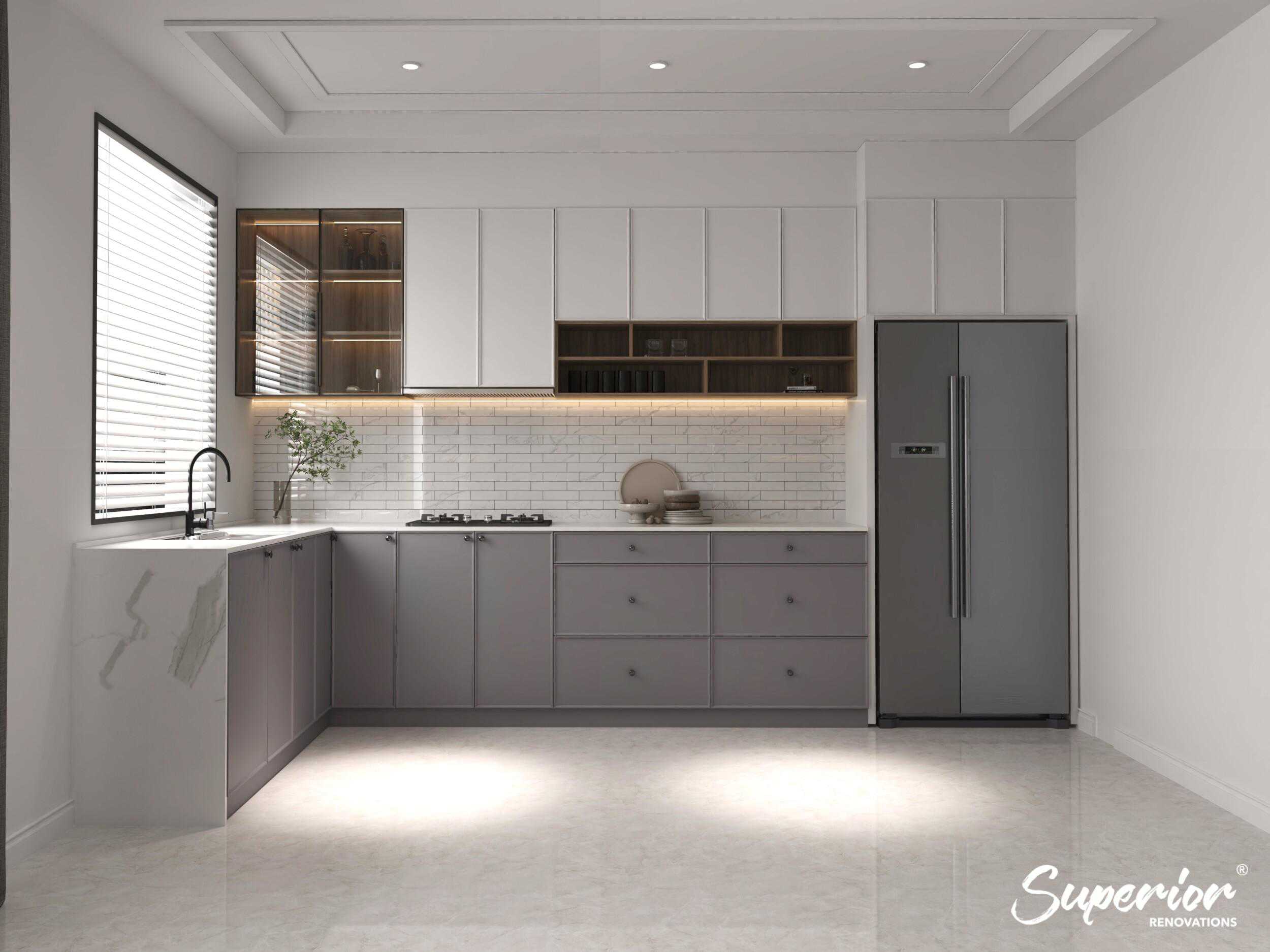
- Top of upper cabinets: typically 2100mm from floor for standard 720mm tall uppers, or run to the ceiling (2400mm+) for extra storage
The reach limit matters more than the storage volume. Anything above 2000mm needs a step ladder for most people — fine for the Christmas platters, useless for daily use. Plan the contents of each upper cabinet before you finalise the height; the top shelf is for things you touch twice a year, not your everyday glassware.
Walkway and Clearance Space — The NZ Standard
This is where most poorly-planned kitchens fall apart. The layout reads fine on a 2D plan. Then the appliances and the people go in, and suddenly the oven door blocks the fridge and you’re sidestepping every time someone wants the kettle.
- Single-cook walkway: 1000–1100mm minimum between bench and wall, bench and island, or bench and bench
- Two-cook / busy household walkway: 1200mm minimum — non-negotiable if you regularly cook with another person in the kitchen
- Accessible kitchen (MBIE G3/AS1): the NZ Building Code accessibility guidance requires a 1500mm manoeuvring space for wheelchair use
- Appliance door clearance: always check the open dimension, not just the closed cabinet width — a 600mm dishwasher needs 600mm of cabinet plus the door projection in front (around 530mm when open)
“In open-plan Auckland kitchens, and most of the ones we design now are open-plan, the walkway numbers matter even more than usual. The kitchen isn’t just a kitchen, it’s the corridor between the front door and the lounge. We plan around the traffic flow on a normal Sunday, not a deserted weekday. 1200mm is the minimum we’d set for a family kitchen.”
— Eunice Qin, Designer, Superior Renovations
💡 Quick tip: Stand in your existing kitchen and have someone open the dishwasher, the oven, and the fridge all at once. If anyone can’t get past, that’s the walkway problem your new design needs to solve. We’ve taken video on consults — it’s the single fastest way to spot a flow issue.
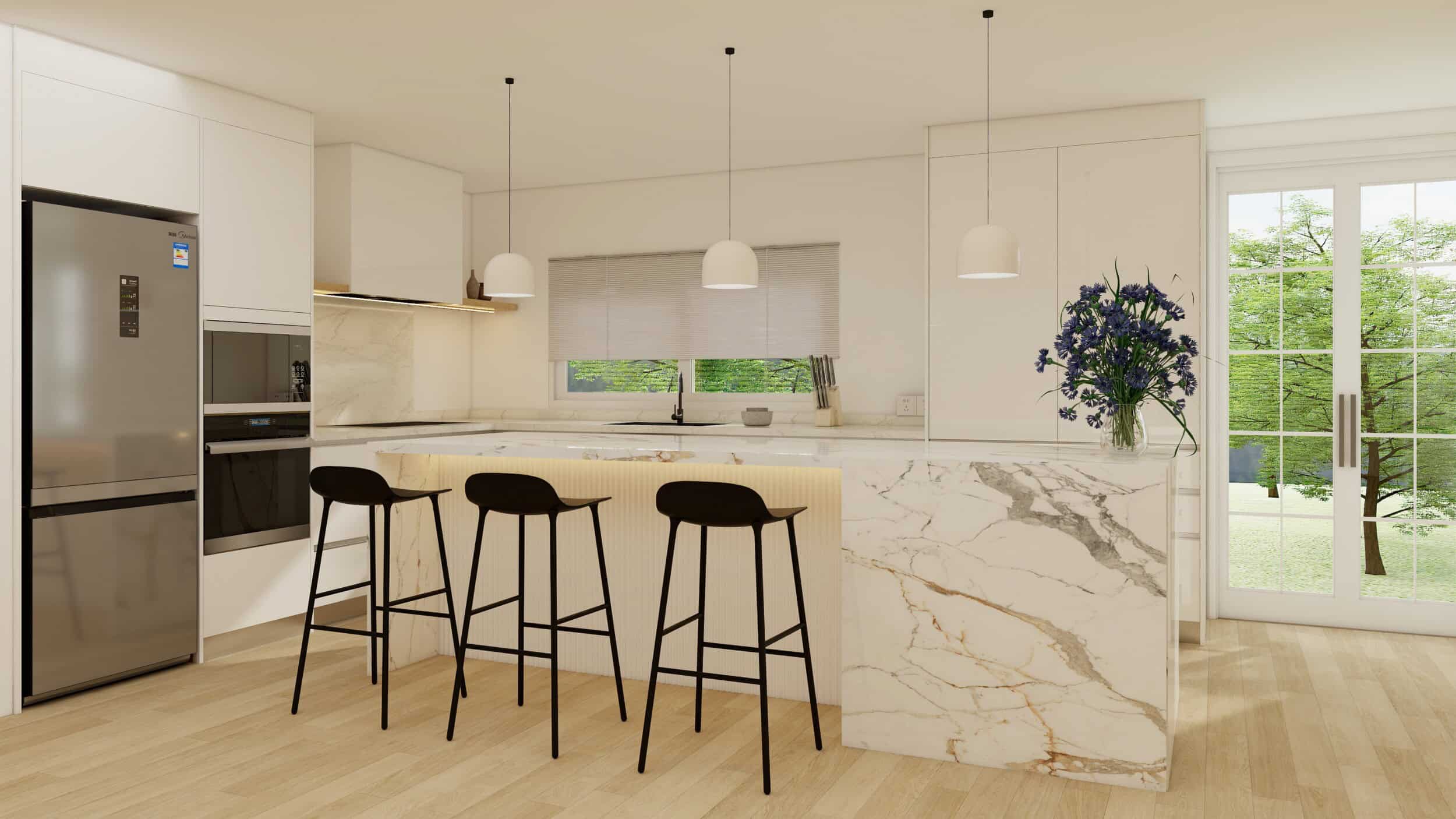
Kitchen Island Dimensions for Auckland Homes
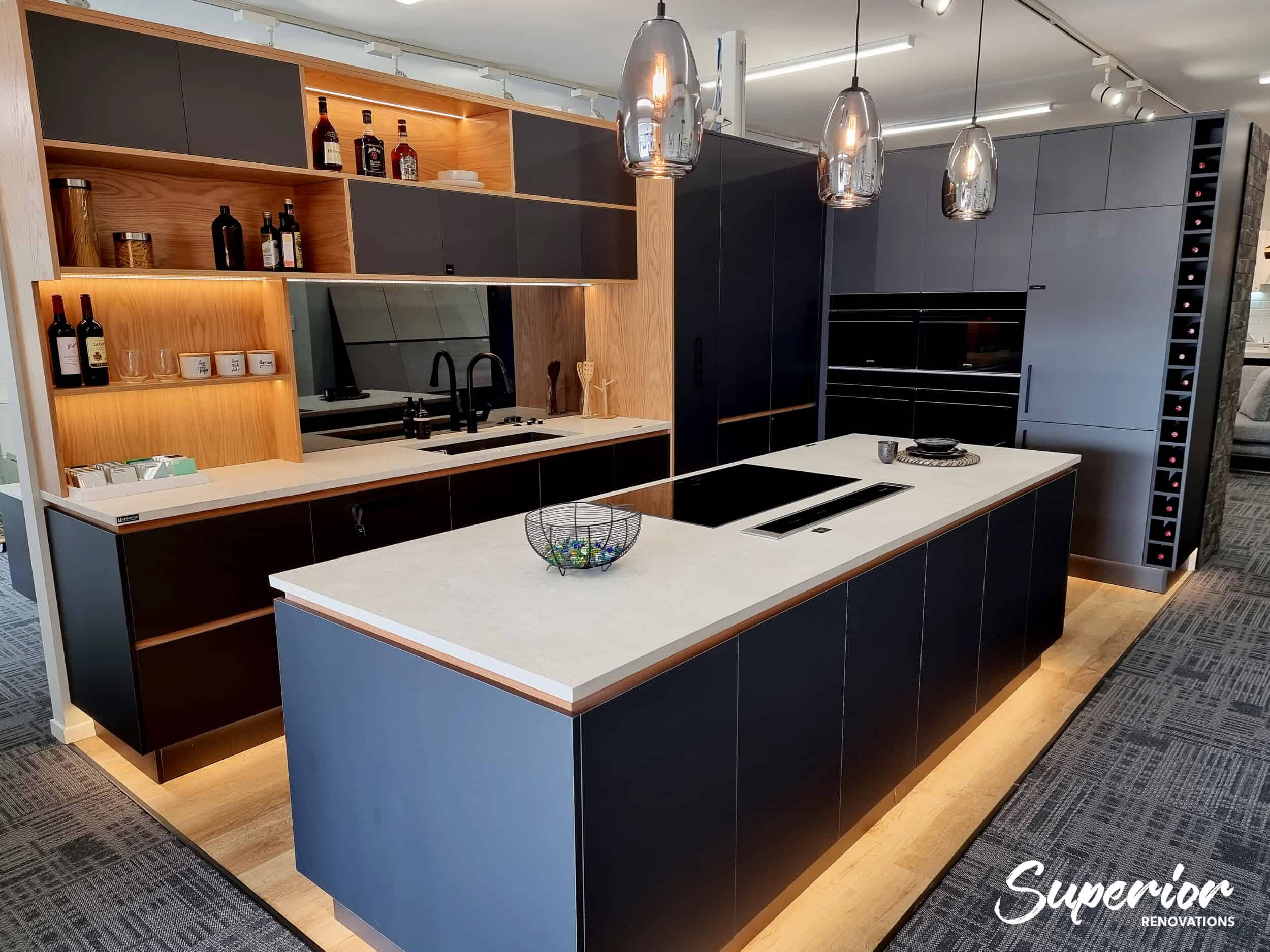
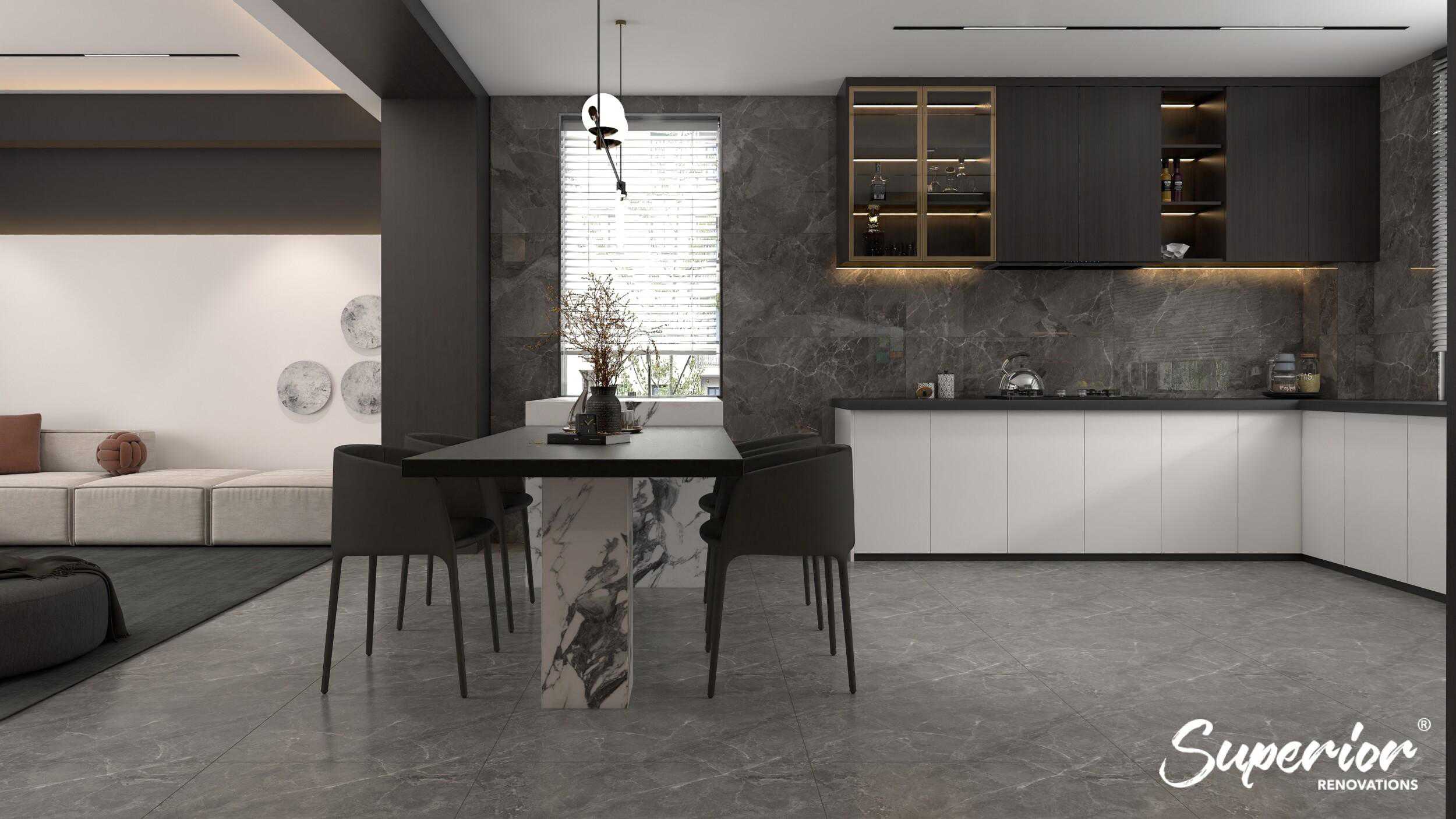
An island is the best feature in a modern kitchen, or the worst — the difference is almost entirely in the dimensions. Get them right and the island anchors the room. Get them wrong and it’s a 1.5m obstacle eating your floor space.
- Minimum island width: 600mm (the smallest a working island can be)
- Comfortable working island width: 900–1100mm
- Island length: 1800–3000mm depending on room size — anything under 1500mm starts to feel pointless
- Bench overhang for stool seating: 300–400mm from the cabinet face (per Houzz NZ’s kitchen island measurement guidance)
- Bar stool seat height for a 900mm bench: 600–650mm
- Bar stool seat height for a raised 1050–1100mm bench: 750–800mm
- Clearance around the island: 1000–1200mm on every side
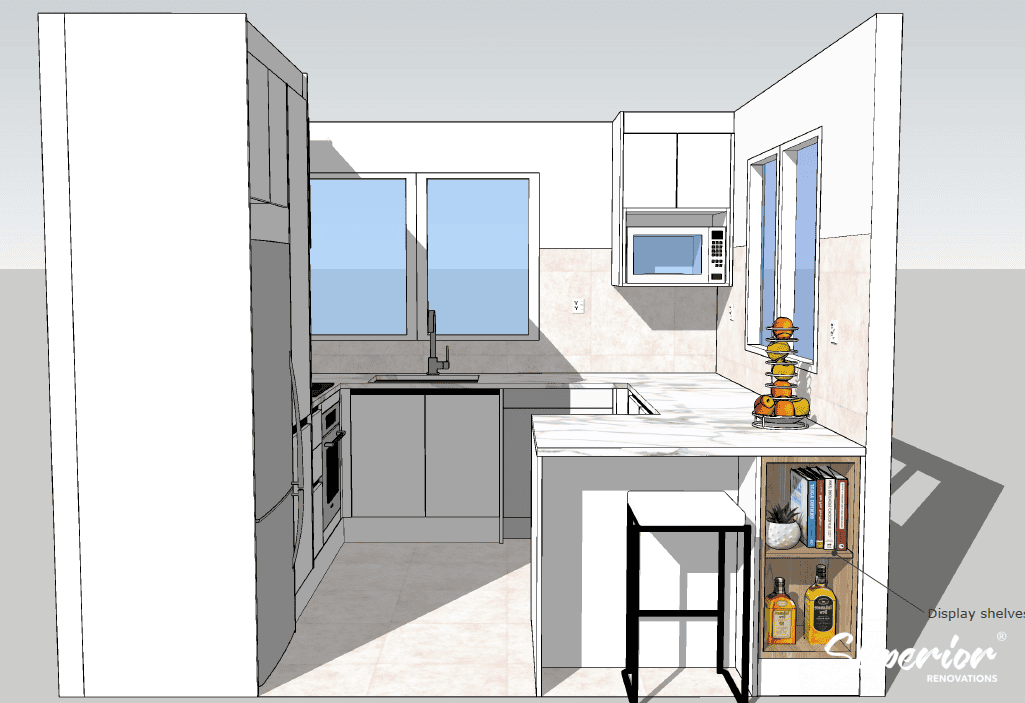
Island depth, overhang, and surrounding clearances all need to land together — and the room size dictates which one bends first.
How Auckland housing stock affects island sizing
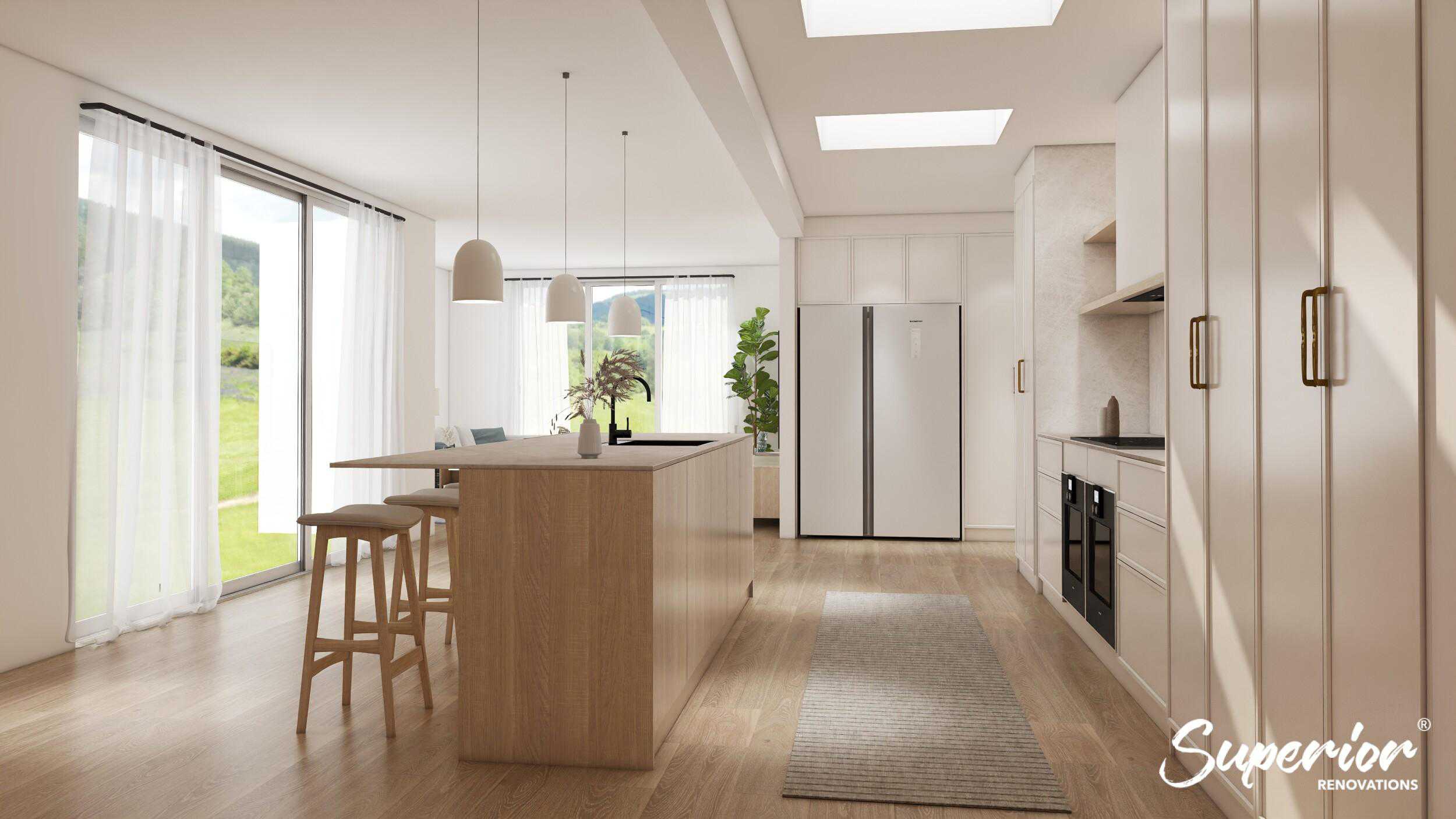
The “comfortable” island depends entirely on the room. We’ve worked on Grey Lynn villas with 3m wide kitchens where the right answer was no island at all, a peninsula instead, because the 1200mm clearance just wasn’t possible. We’ve also done Hobsonville townhouses with open-plan ground floors that easily took a 1100 × 2400mm island with seating along one side and a sink along the other. Same family, same budget — completely different island.
💡 Quick tip: If you want stools on the island, decide whether you want elbows up or down. A flat 900mm island works for breakfast bowls and laptops. A raised 1050–1100mm section works better for drinks, casual chat, and hiding the working bench from the lounge view. Pick before the cabinetry quote — adding a raised section after the fact gets ugly.
For inspiration on how these proportions play out in completed Auckland projects, browse our Kitchen Design Gallery.
Appliance Placement and Space Requirements
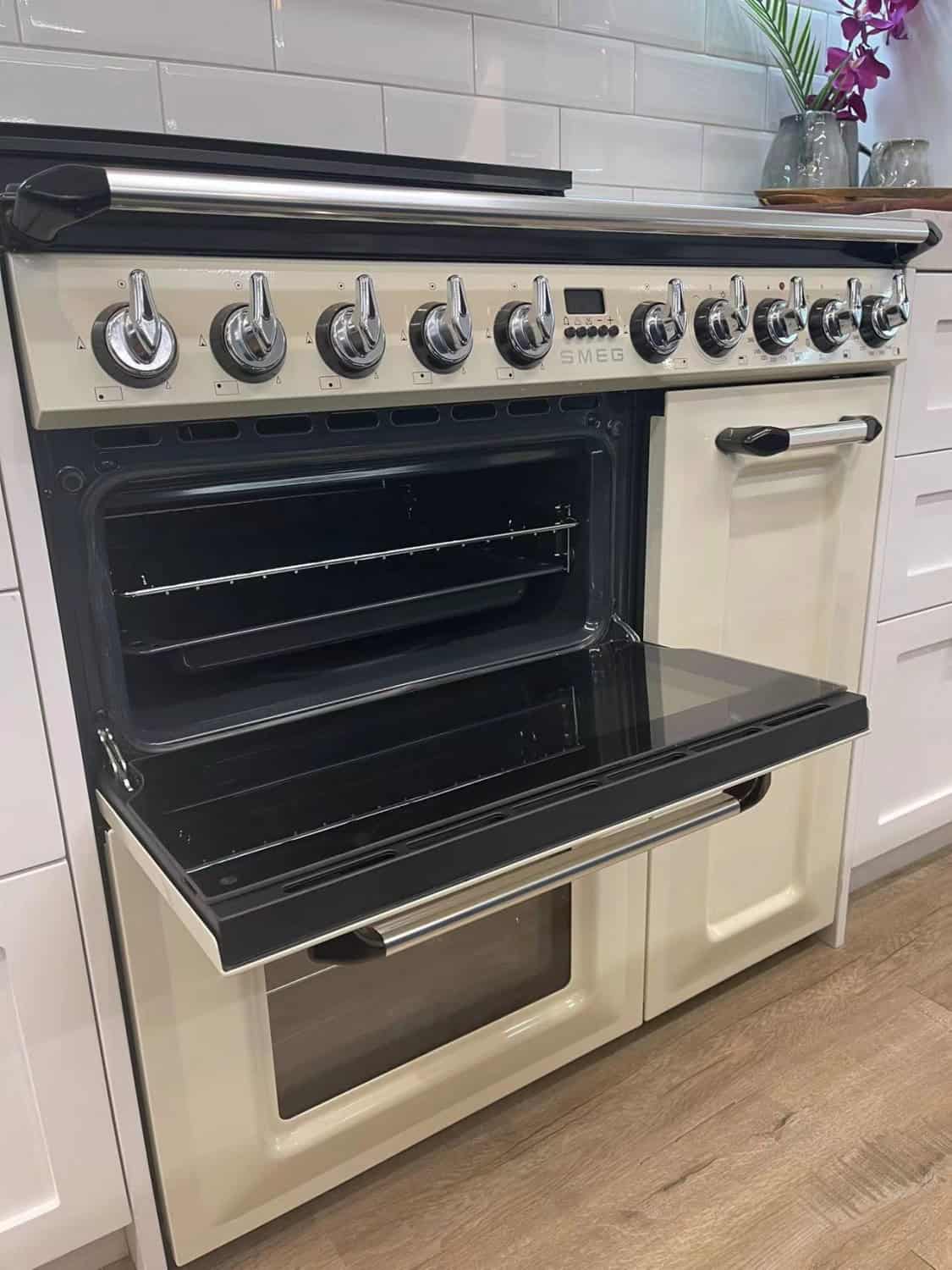
Every appliance has its own measurement rules. Get them wrong and you’ll either block the workflow, hit a ventilation problem, or, most painfully, find out at install that the brand-new range doesn’t quite fit the cabinet you’ve already paid for.
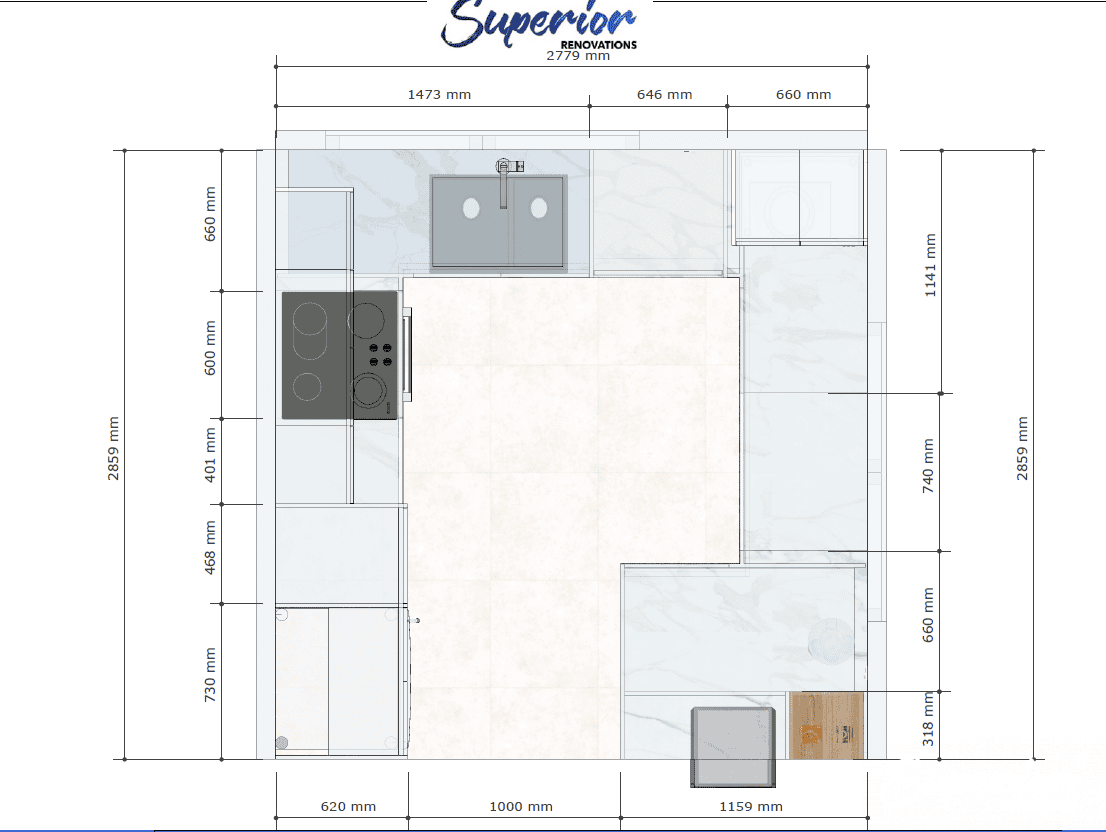
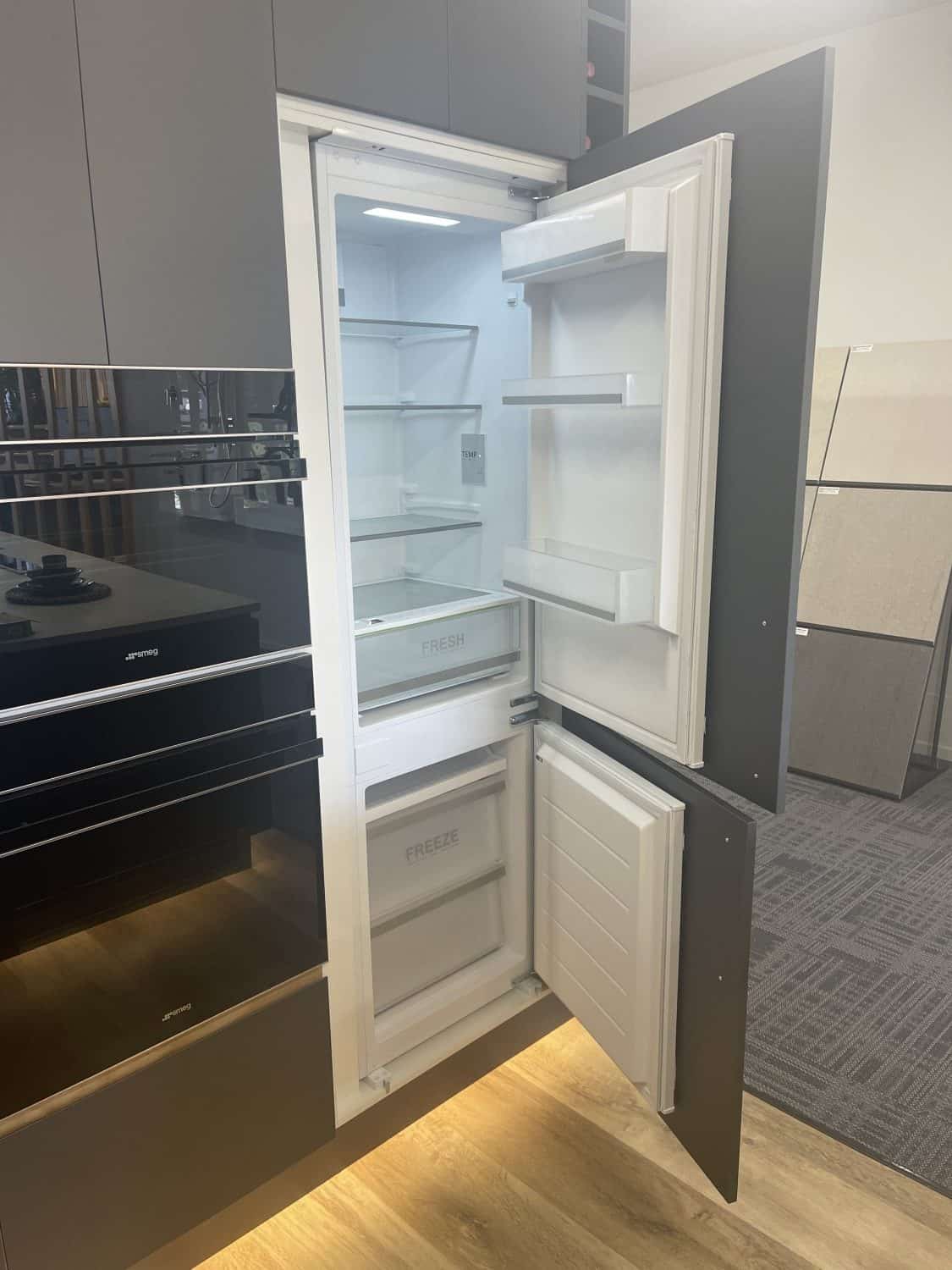
Appliance clearances stack on top of each other — the fridge door, the oven swing, the dishwasher drop-down all need their own space.
Fridge
- Standard freestanding fridge width: 600mm (slim), 700mm (mid), 800–900mm (French door / side-by-side)
- Cabinet alcove width: add 25–50mm to the fridge width for ventilation
- Clearance above the fridge: 50mm minimum for heat dissipation
- Door swing clearance in front: 900mm minimum to open and unload
Oven and cooktop
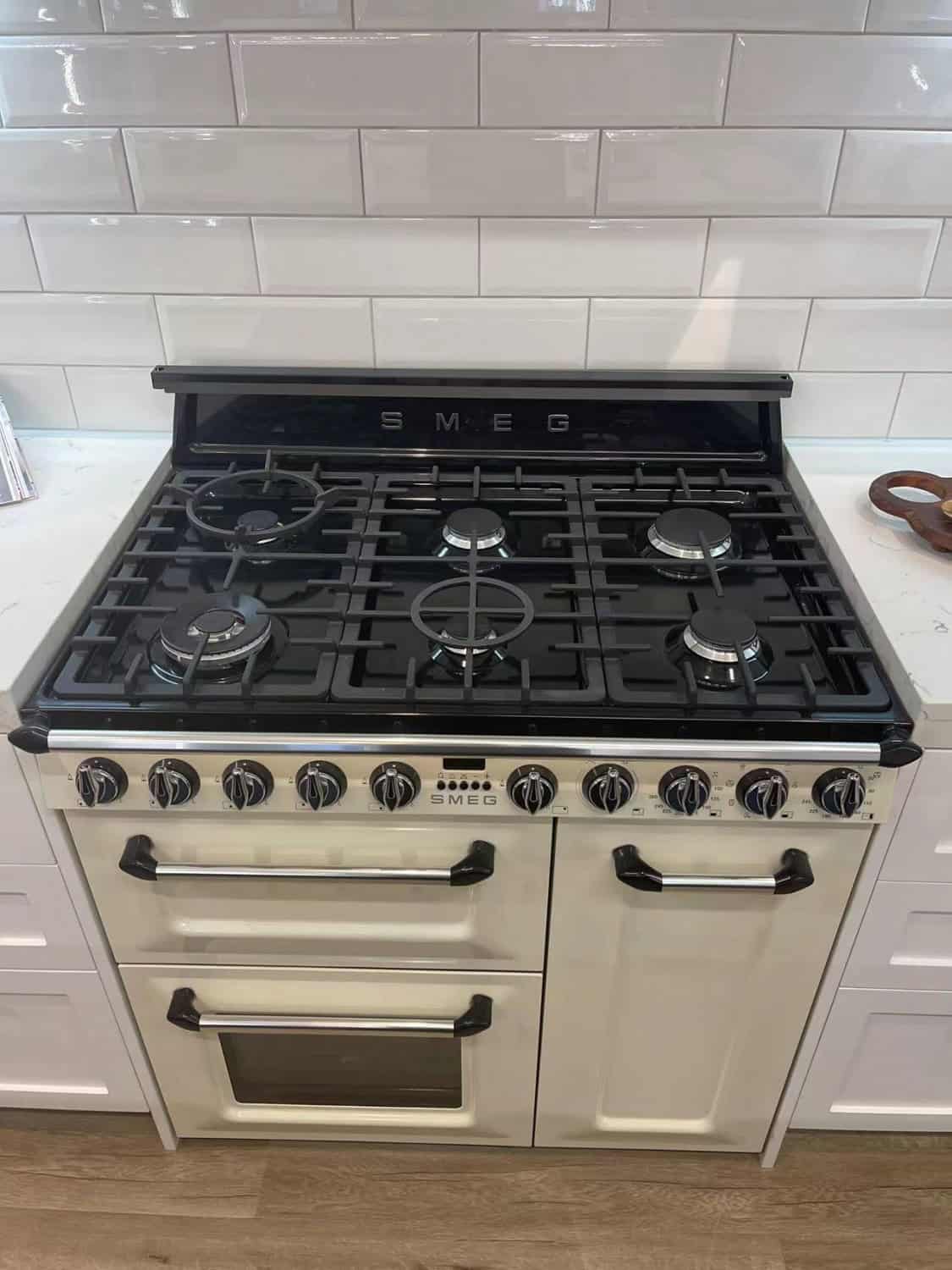
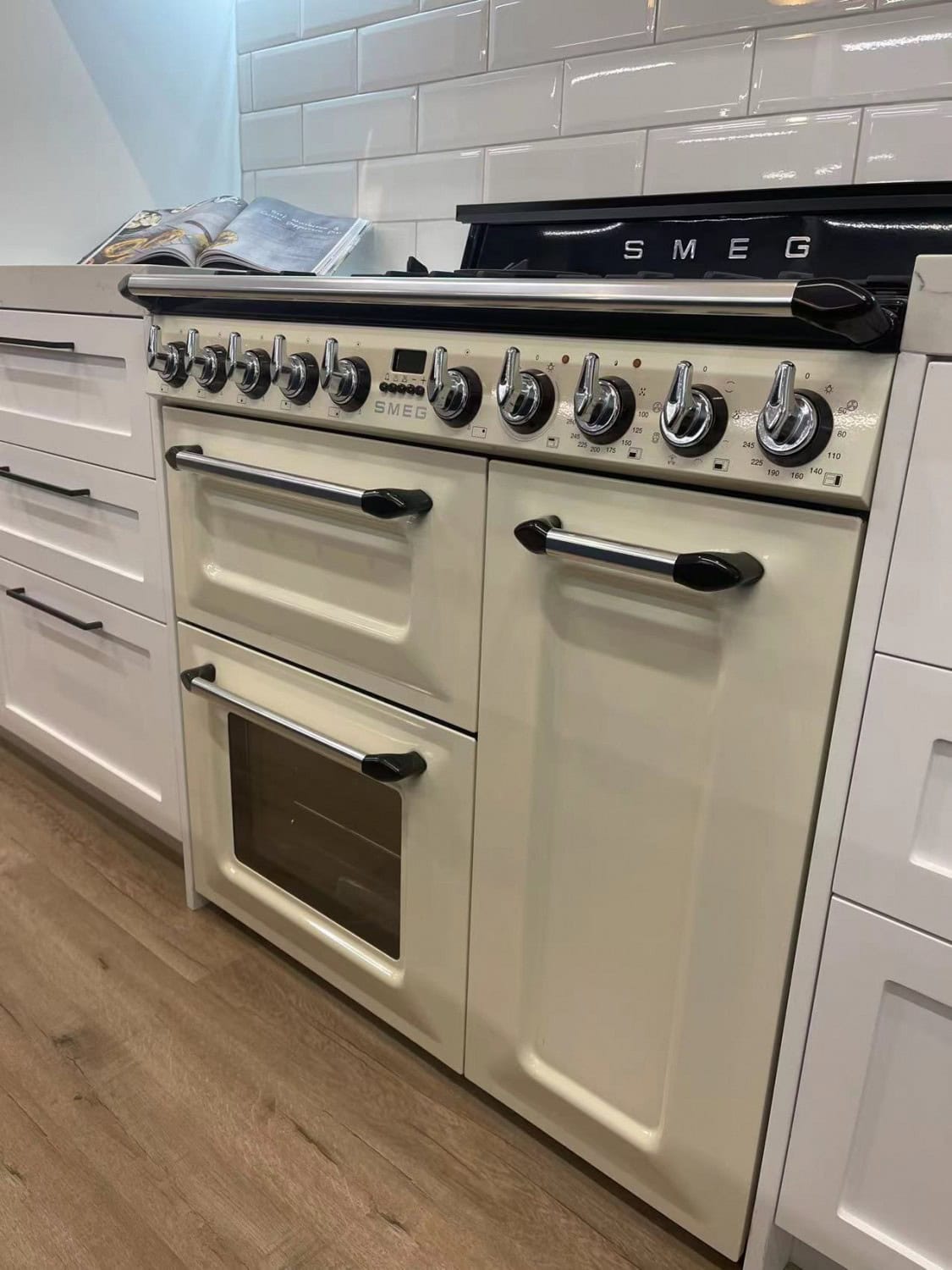
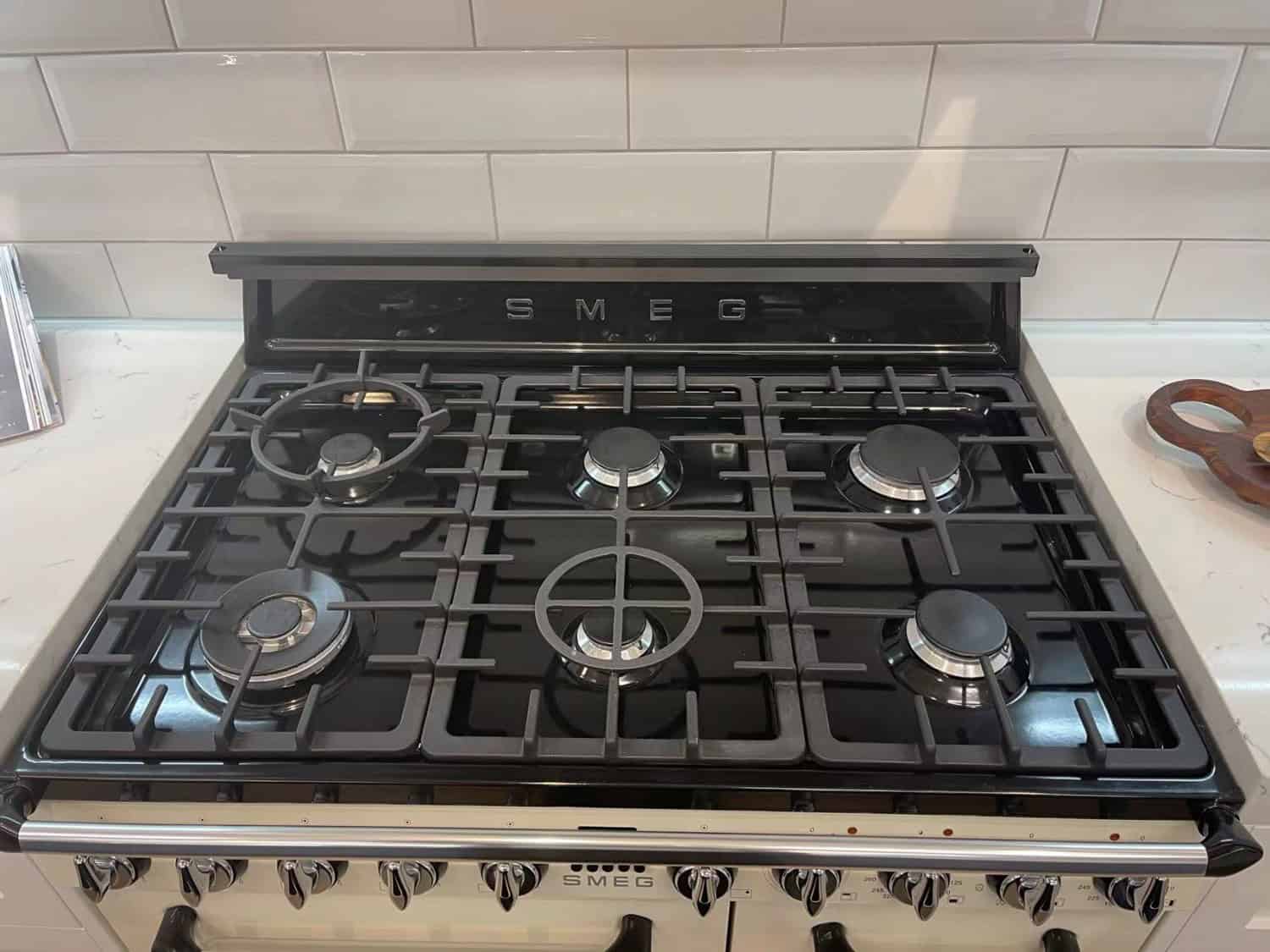
- Standard oven widths: 600mm (most common), 750mm, 900mm
- Bench either side of the cooktop: 300mm minimum, 450mm preferred — for landing hot pans and prep
- Cooktop to range hood clearance (electric / induction): 600mm minimum
- Cooktop to range hood clearance (gas): 650–750mm depending on the hood manufacturer’s spec
Dishwasher
- Standard dishwasher width: 600mm (most homes), 450mm (slim/apartment)
- Distance from sink: within 900mm — keeps the plumbing run sensible and stops dripping plates being walked across the room
- Door-down clearance in front: 530mm projection — needs walkway space accounted for
💡 Quick tip: Pick your appliances before the cabinet drawings are finalised, not after. Even within “600mm dishwasher” there’s variation — a Bosch and a Miele can differ by 5mm in height once installed, and that’s enough to leave a visible gap under the benchtop. Send actual model numbers to your designer.
Sink and Tapware Measurements
The sink area is the busiest square metre of the kitchen. Position and sizing decide whether the kitchen works for one person rinsing wine glasses or two people prepping dinner.
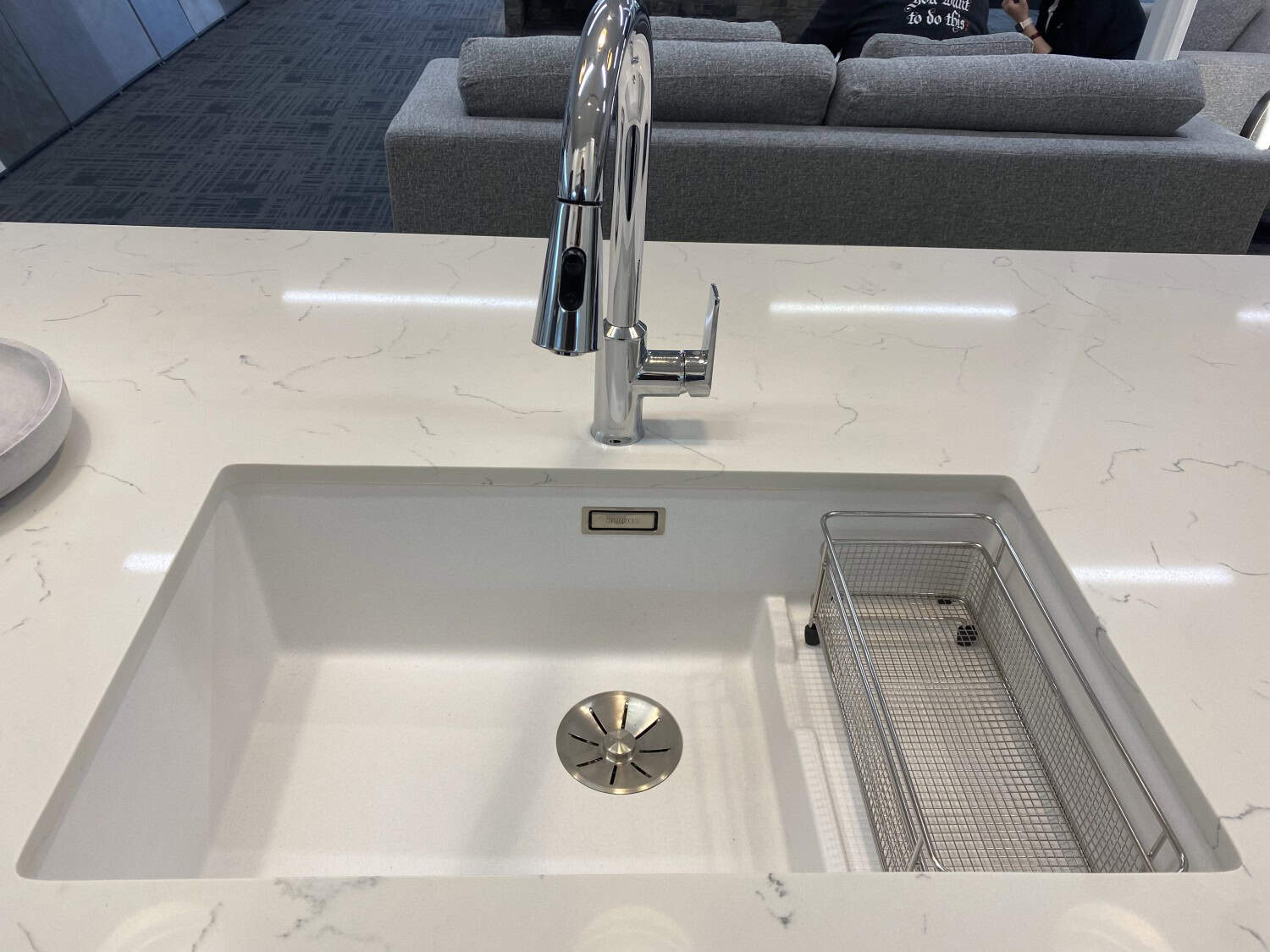
- Single bowl sink: 500–600mm wide × 400–500mm deep is the NZ standard
- Double bowl / 1.5 bowl sink: 800mm wide × 480mm deep is typical
- Sink depth (bowl): 180–220mm — deeper bowls handle pots without splashing
- Bench clearance on prep side: 600mm minimum, 900mm preferred
- Bench clearance on landing side: 450mm minimum
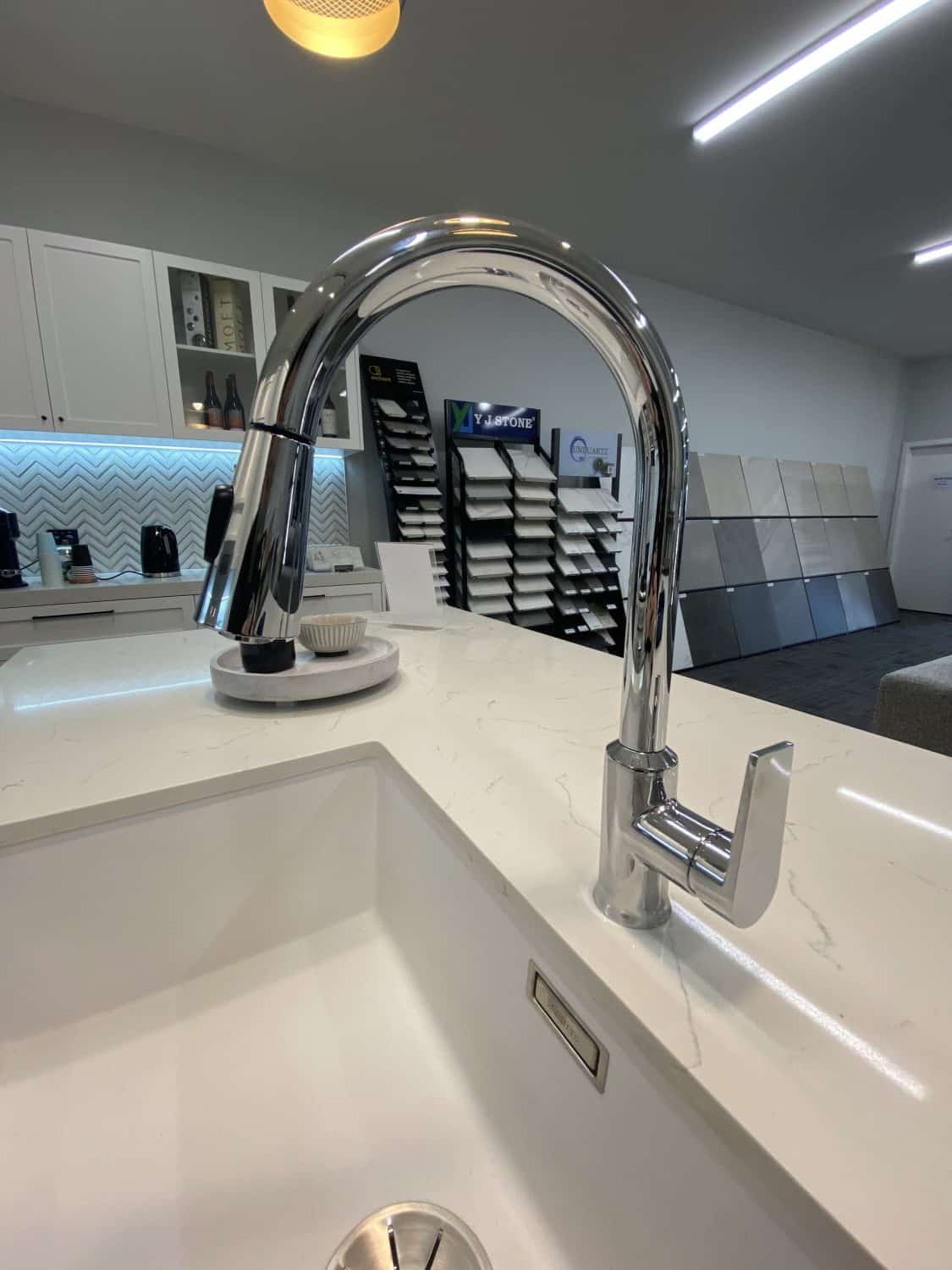
- Mixer tap spout height above the bench: 250–350mm depending on the tap and your sink depth — taller mixers suit pot filling, shorter ones look cleaner against a window
If your sink sits in front of a window, and a lot of Auckland kitchens do, especially in character homes facing the back garden, check the mixer doesn’t hit the window frame when the spout swivels. We’ve measured this on consults and found a few clients’ existing taps already bashing the architrave.

Lighting Heights — Pendants, Downlights, Under-Cabinet
Bad kitchen lighting is one of those things you don’t notice until you’re trying to chop something at 6pm in winter and squinting at the bench. Three lighting layers do the work in a properly designed kitchen — overhead general light, task light on the working surfaces, and feature pendants over the island or dining bench.
- Pendant lights over an island: 750–900mm above the bench surface — high enough not to block the view across the kitchen, low enough to cast usable light on the bench
- Recessed ceiling downlights: 800–1000mm apart, 600mm from any wall, positioned over the front of the bench (not behind it — otherwise you cast a shadow over your own hands while working)
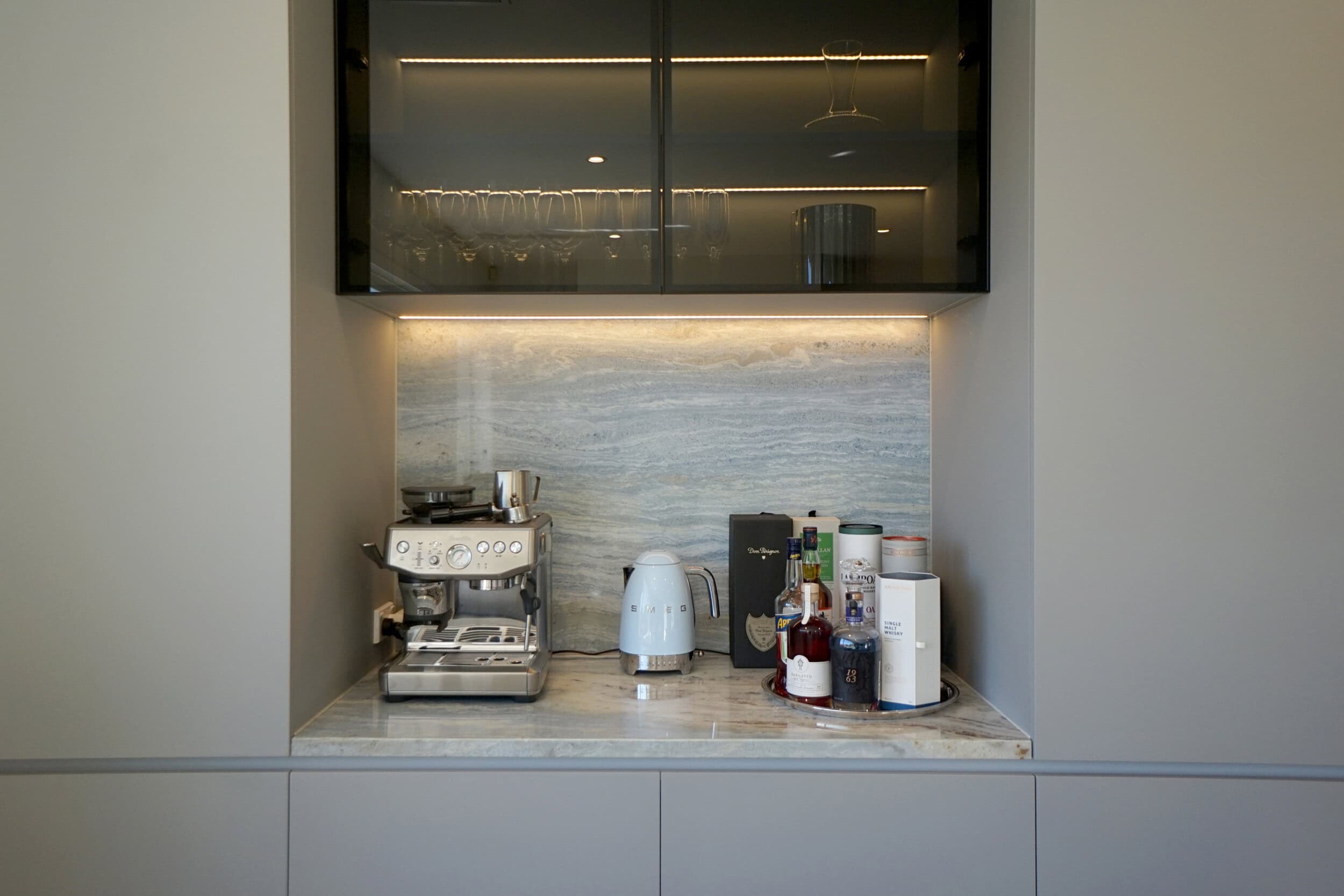
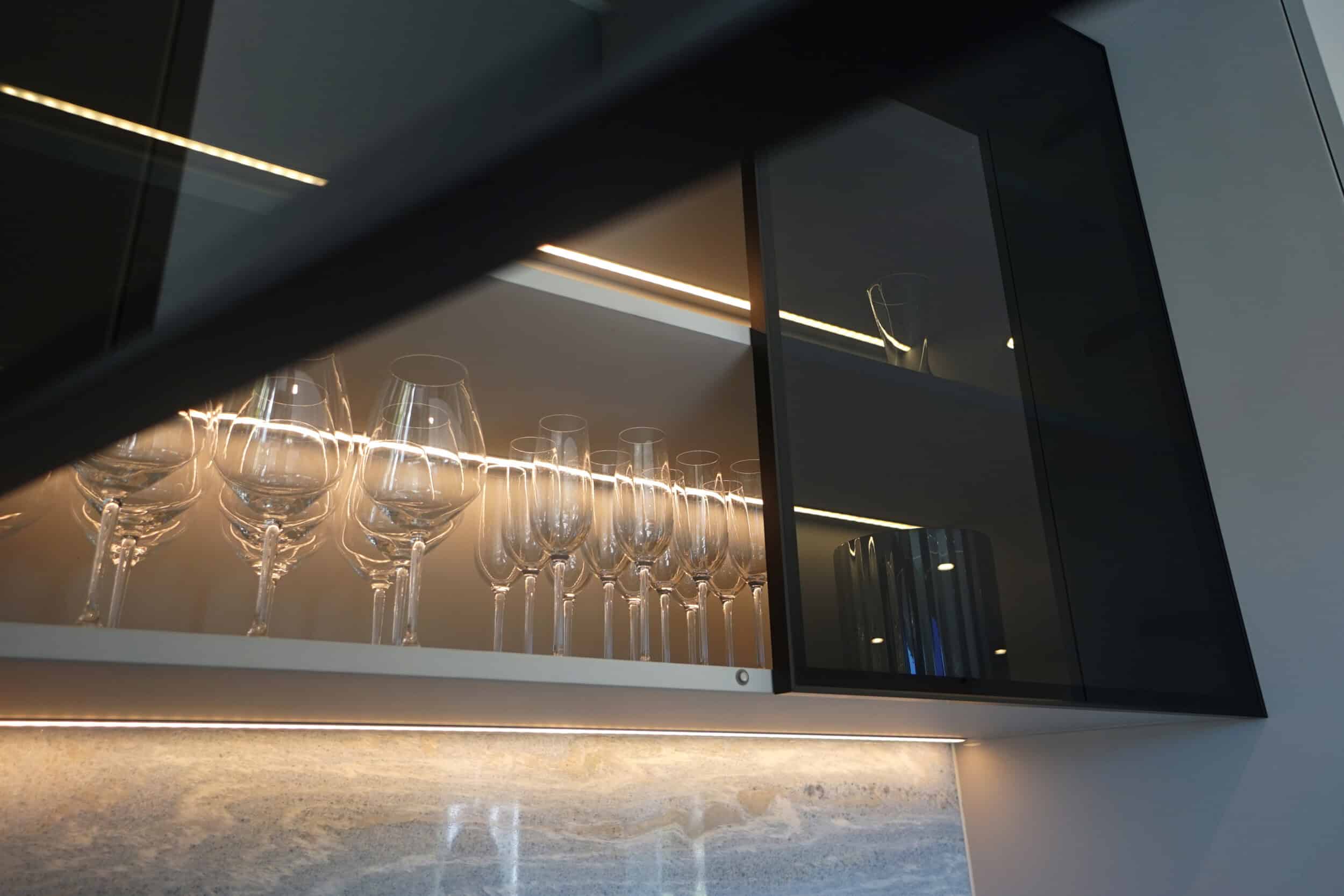
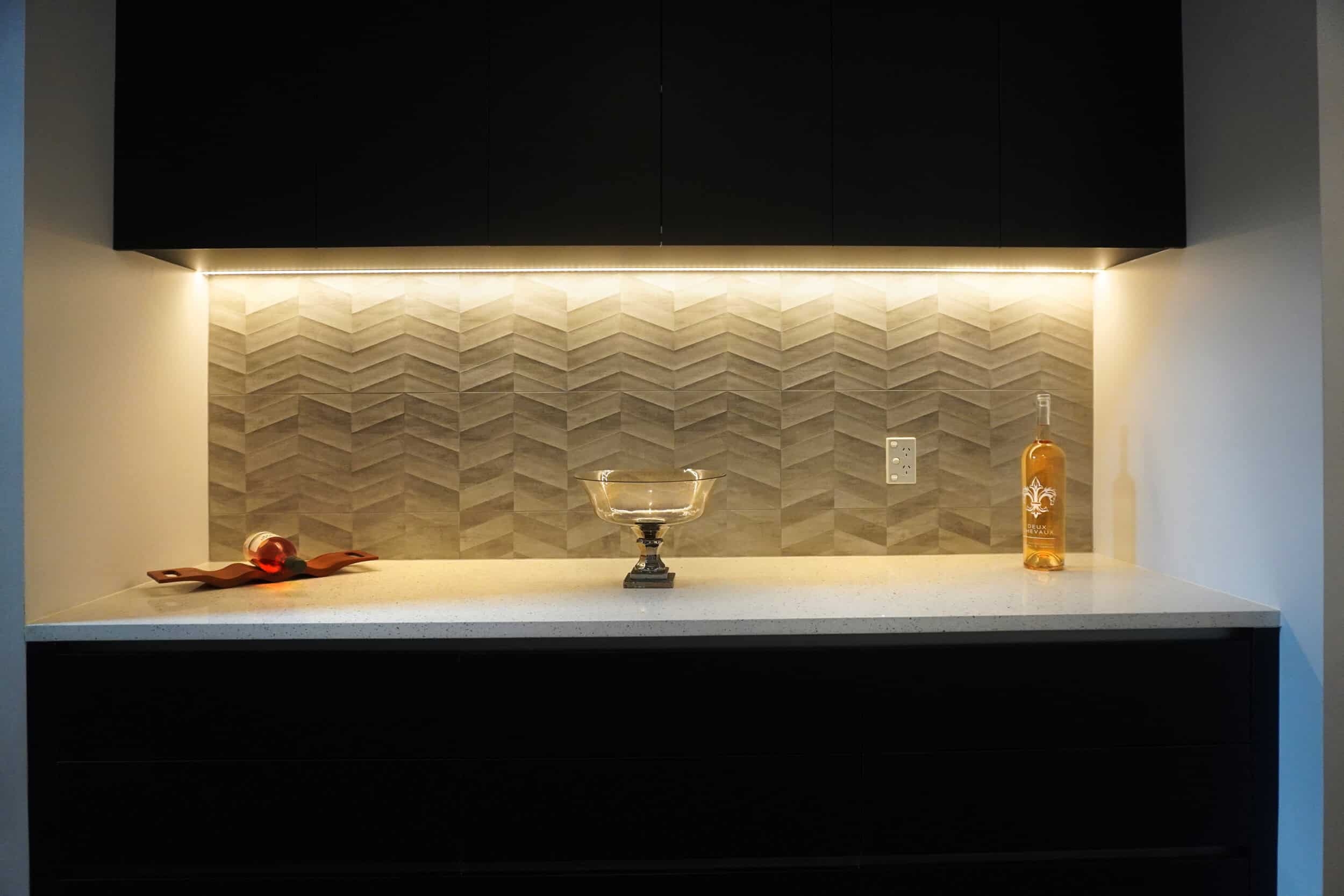
- Under-cabinet LED strip: mounted at the front edge of the underside of the upper cabinet, aimed across the bench
- Pendant cord length over a fixed dining bench: 700–800mm above the bench
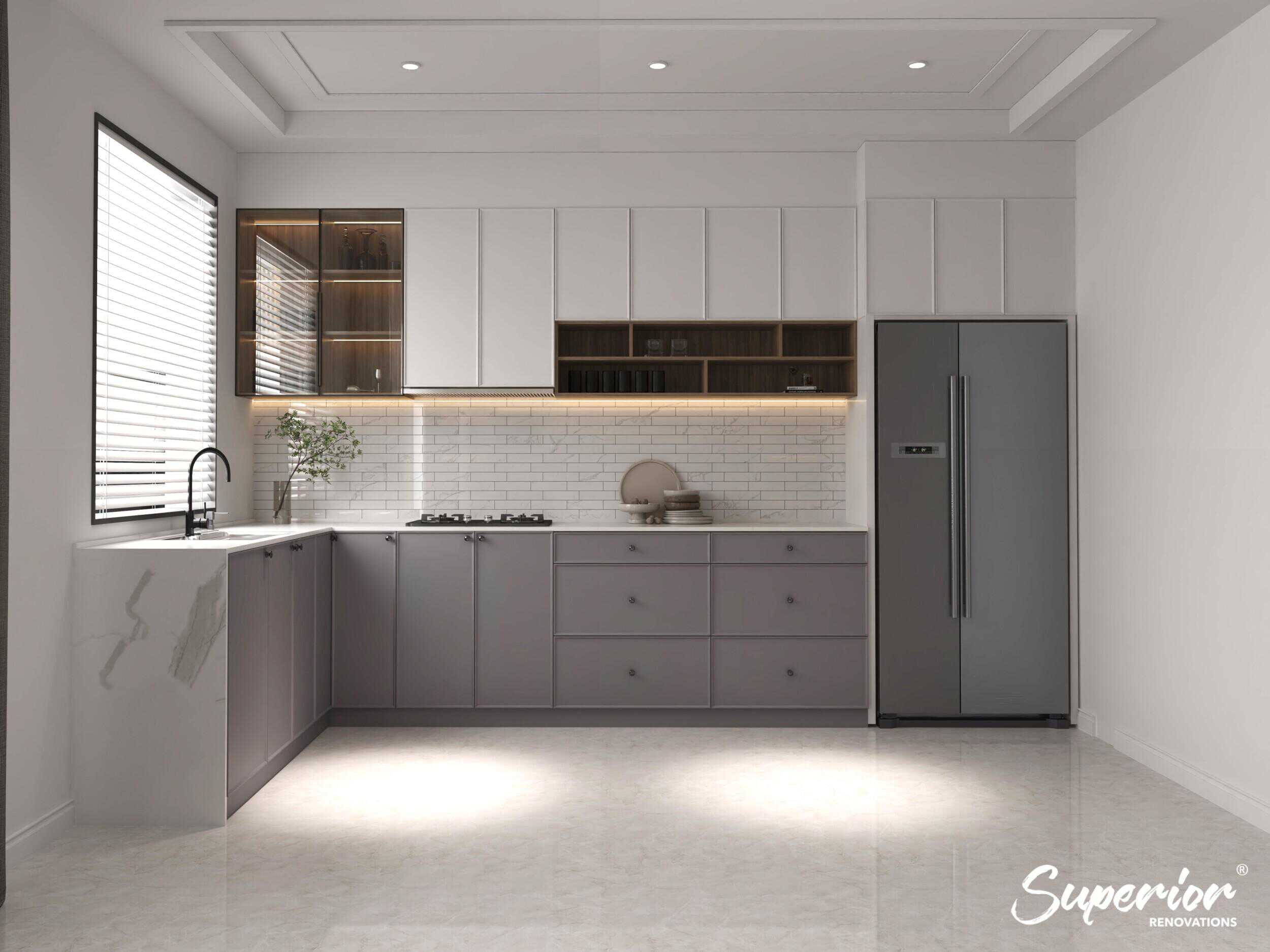
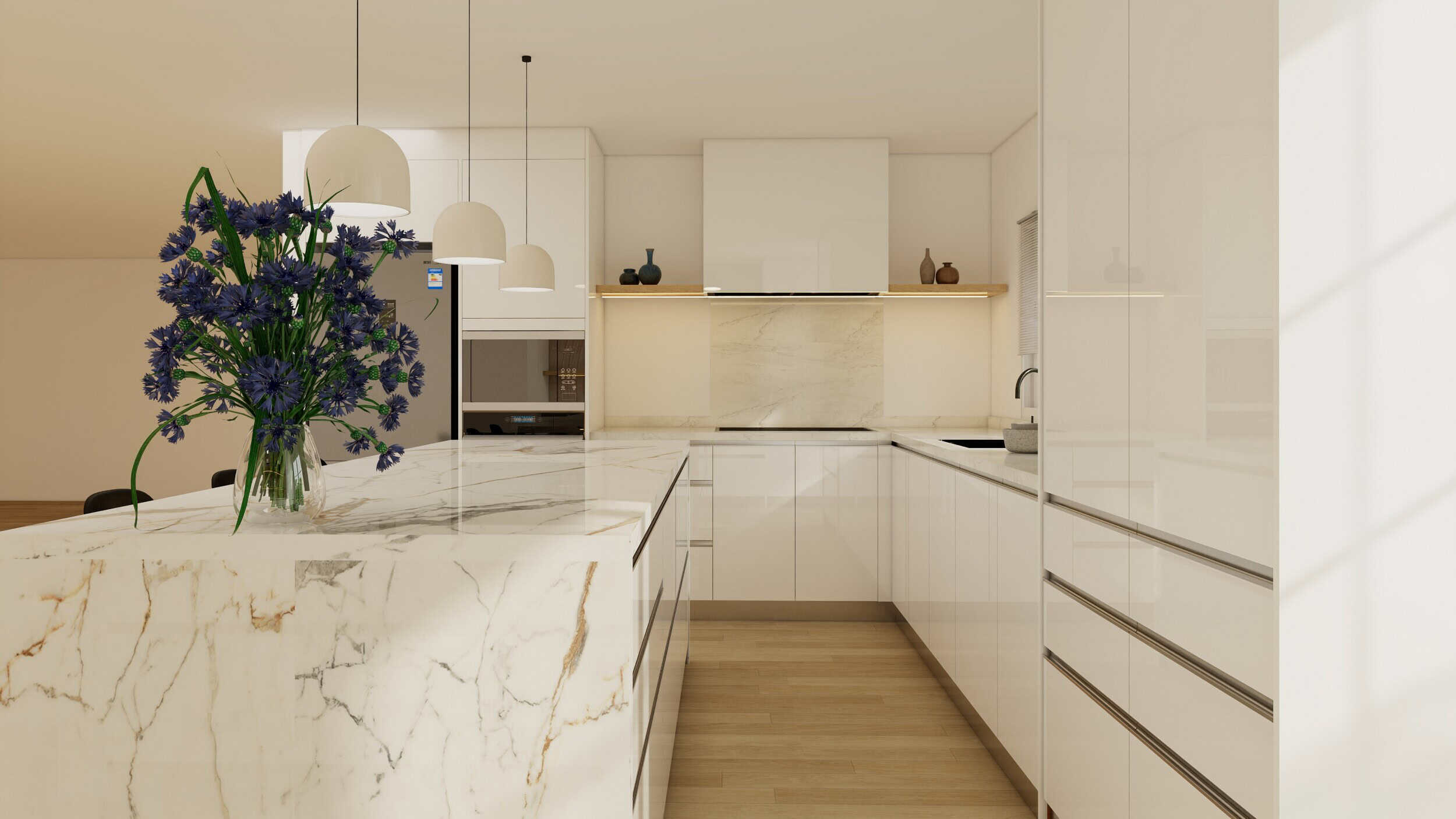
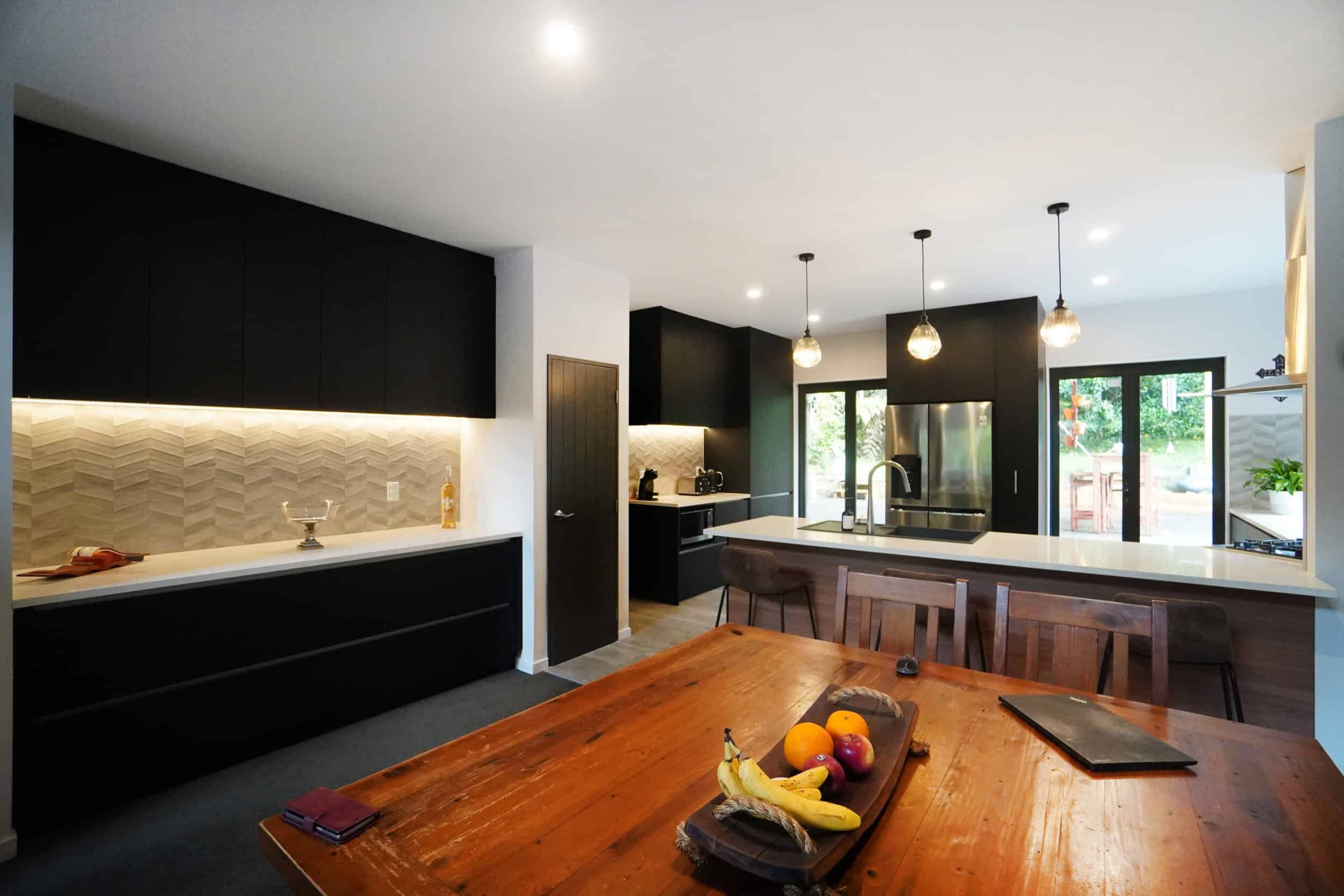
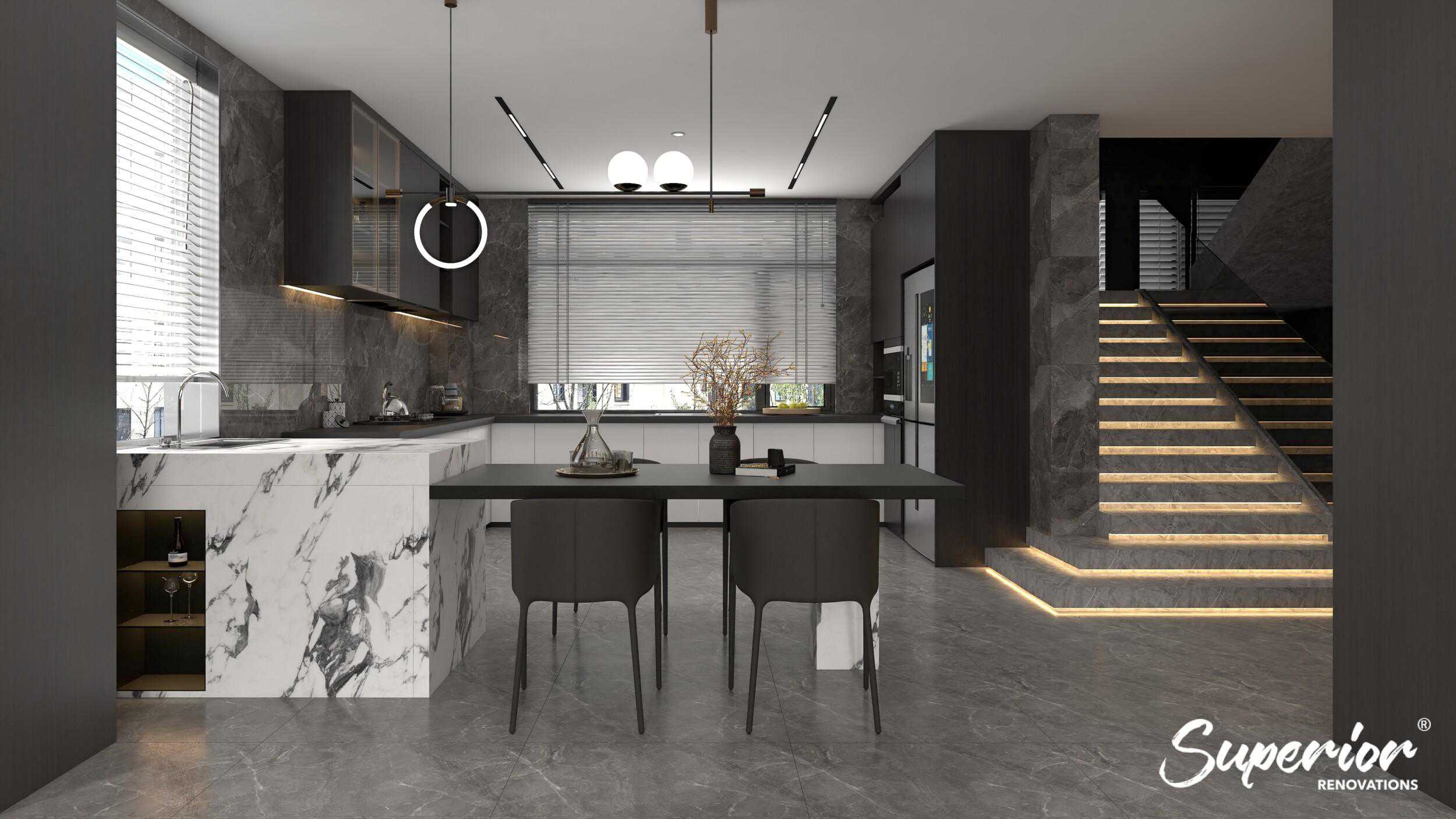
Layered lighting, recessed downlights for general light, under-cabinet LED for the bench, and pendant lights as features.
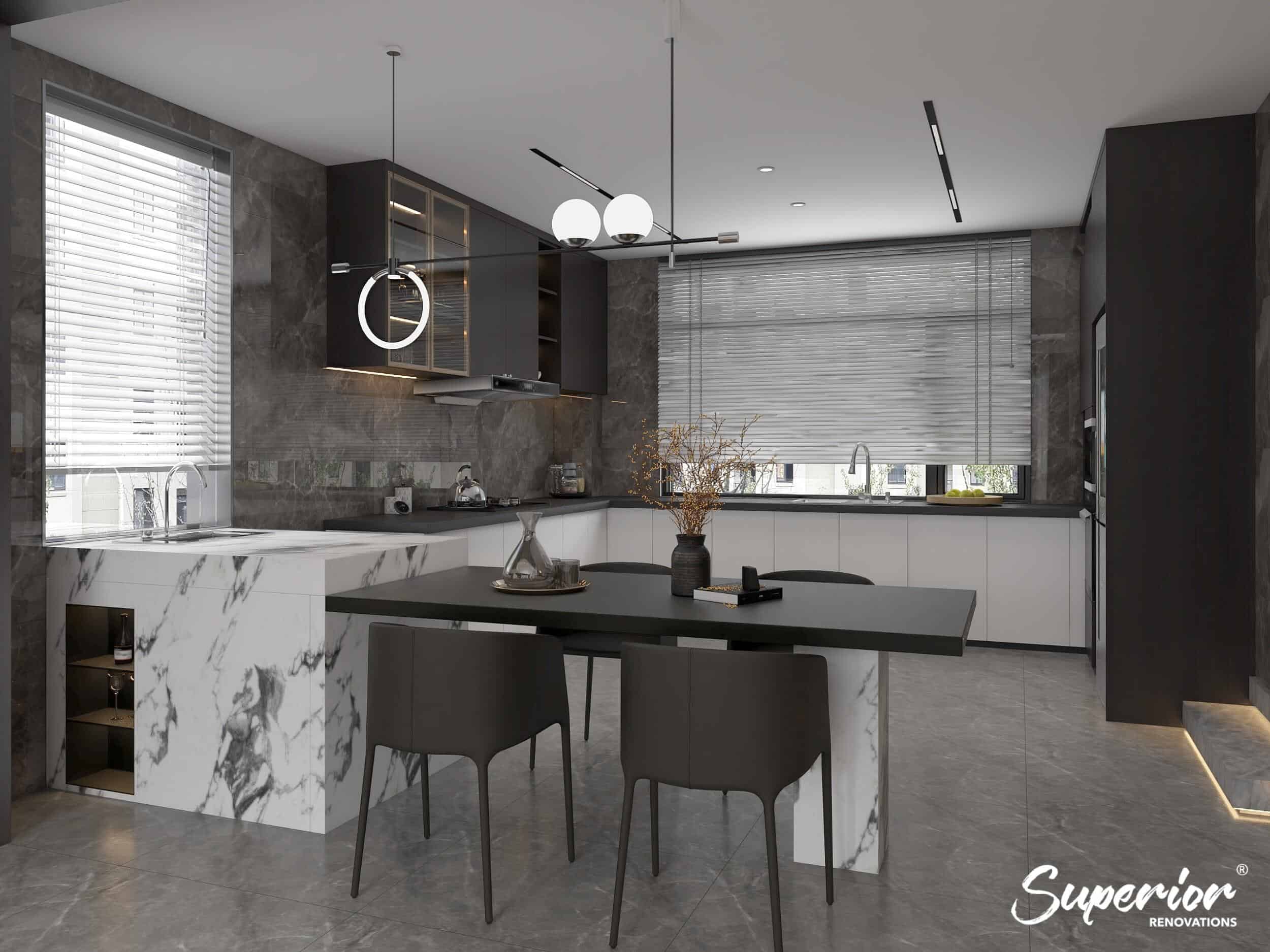
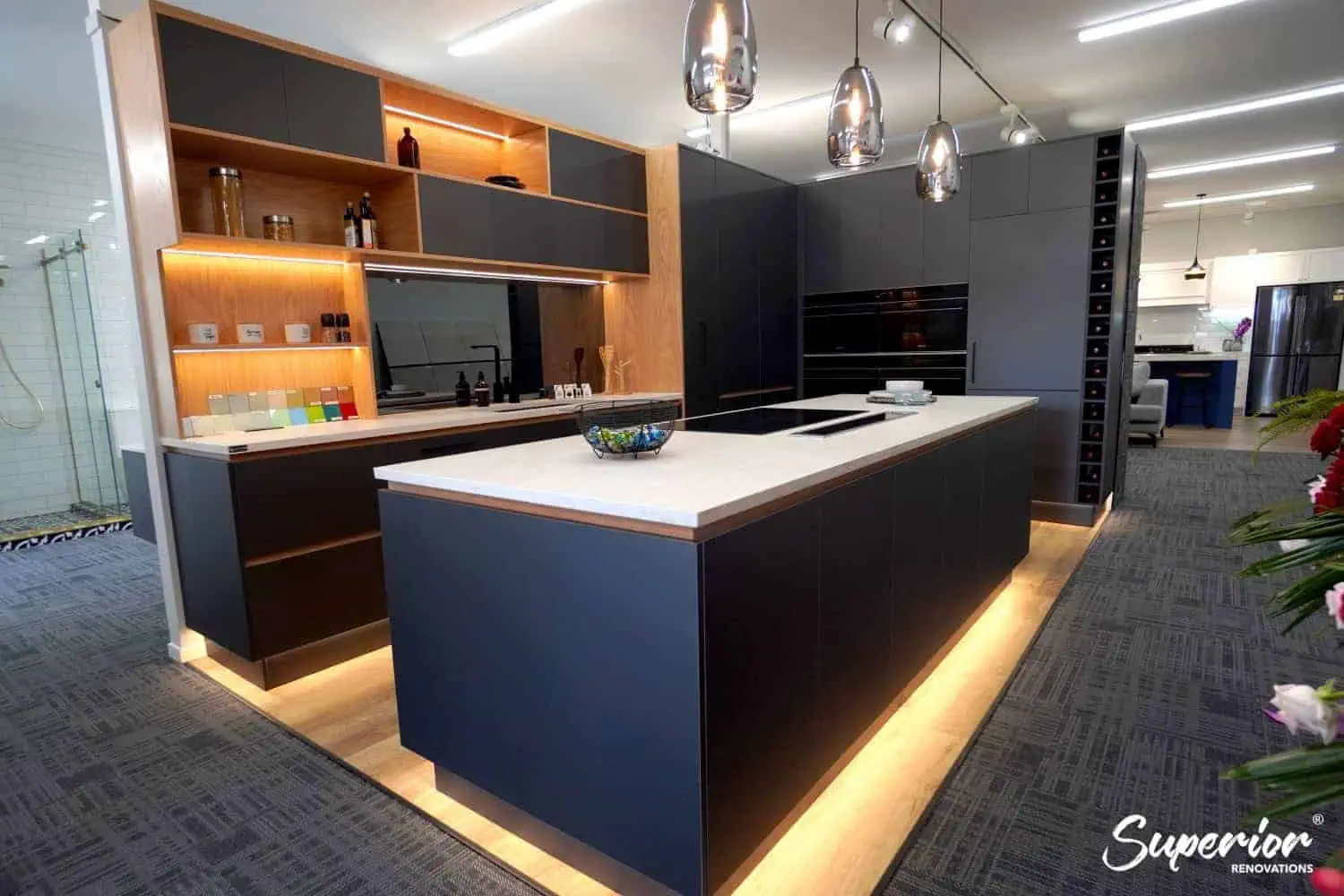
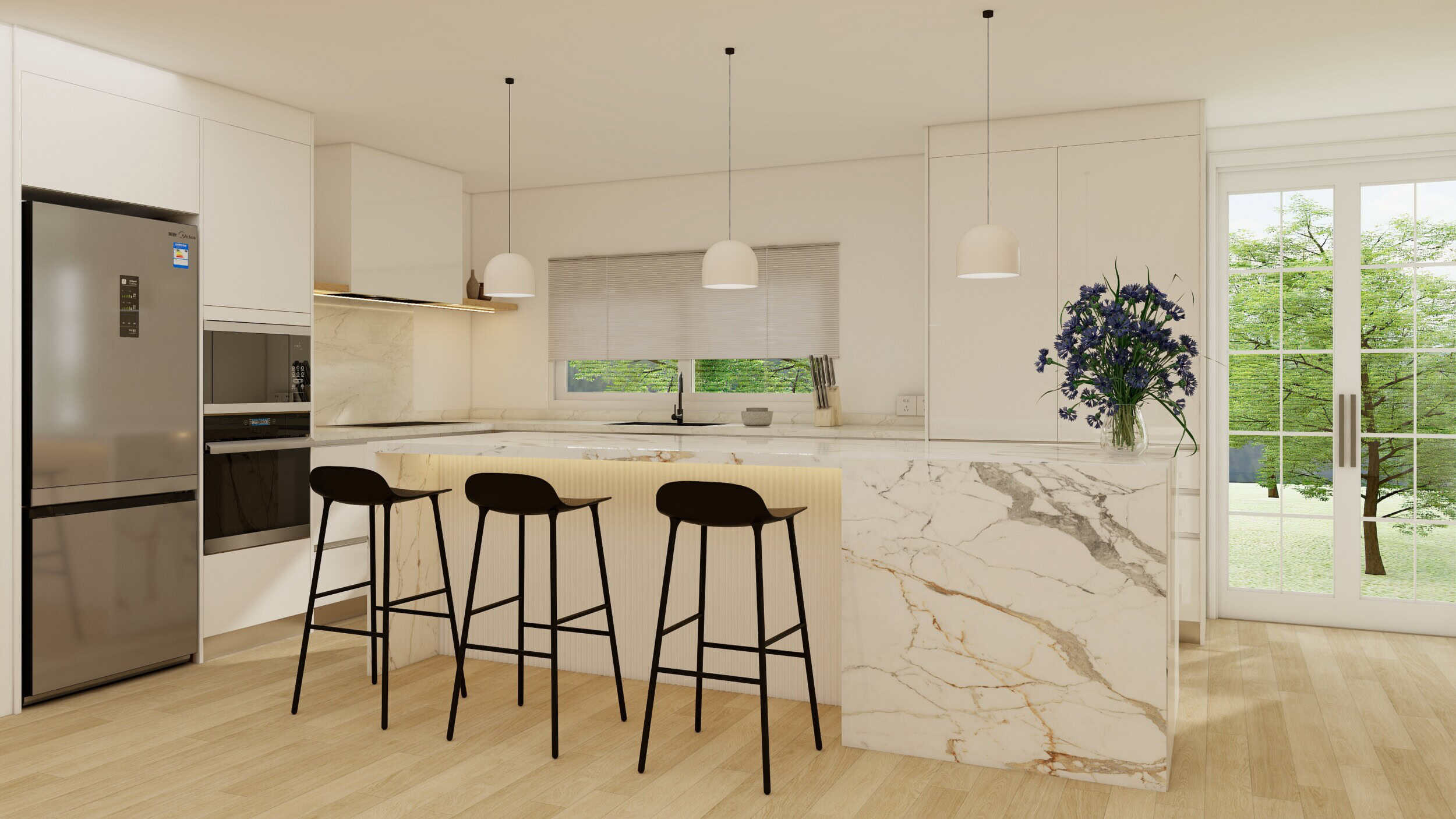
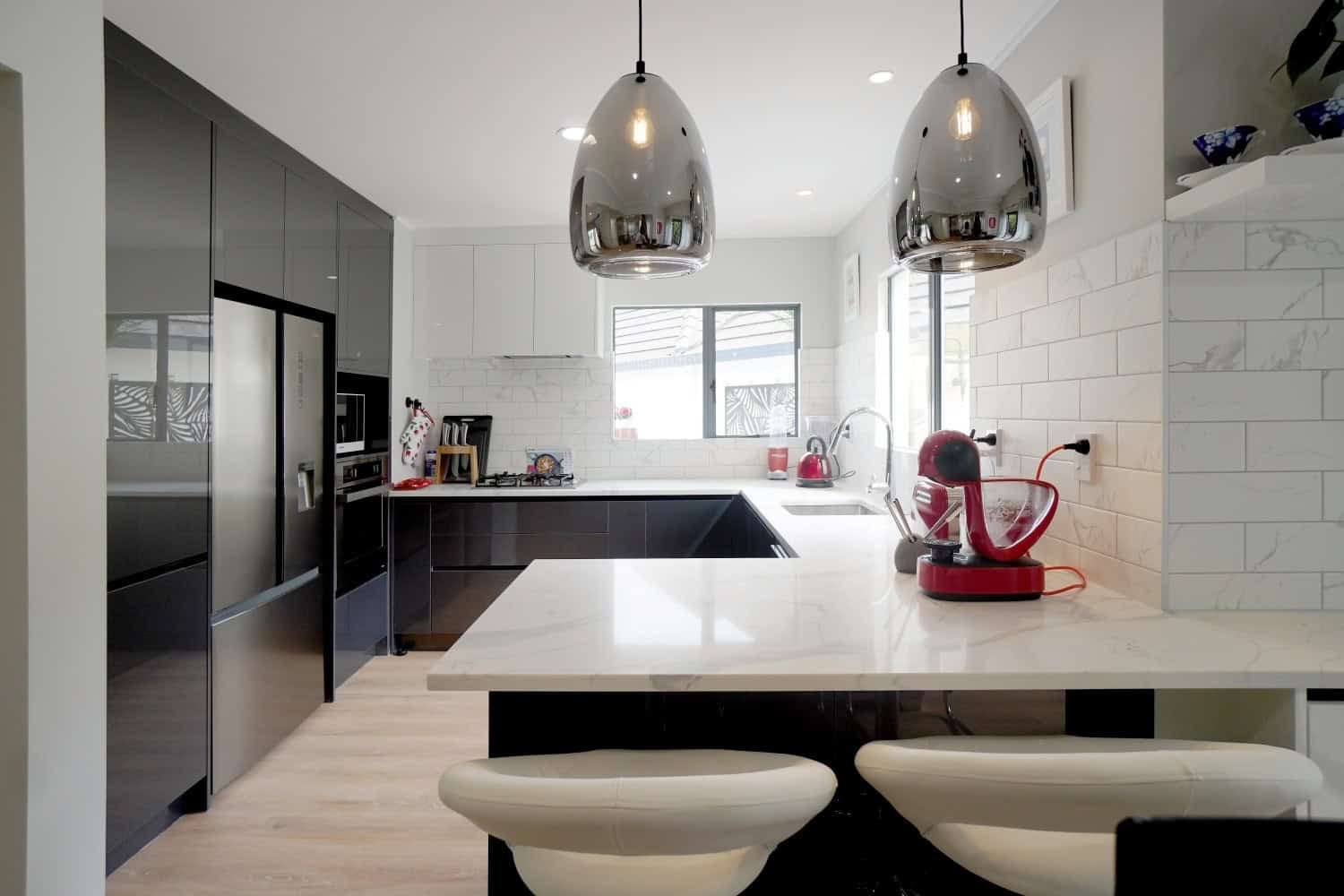
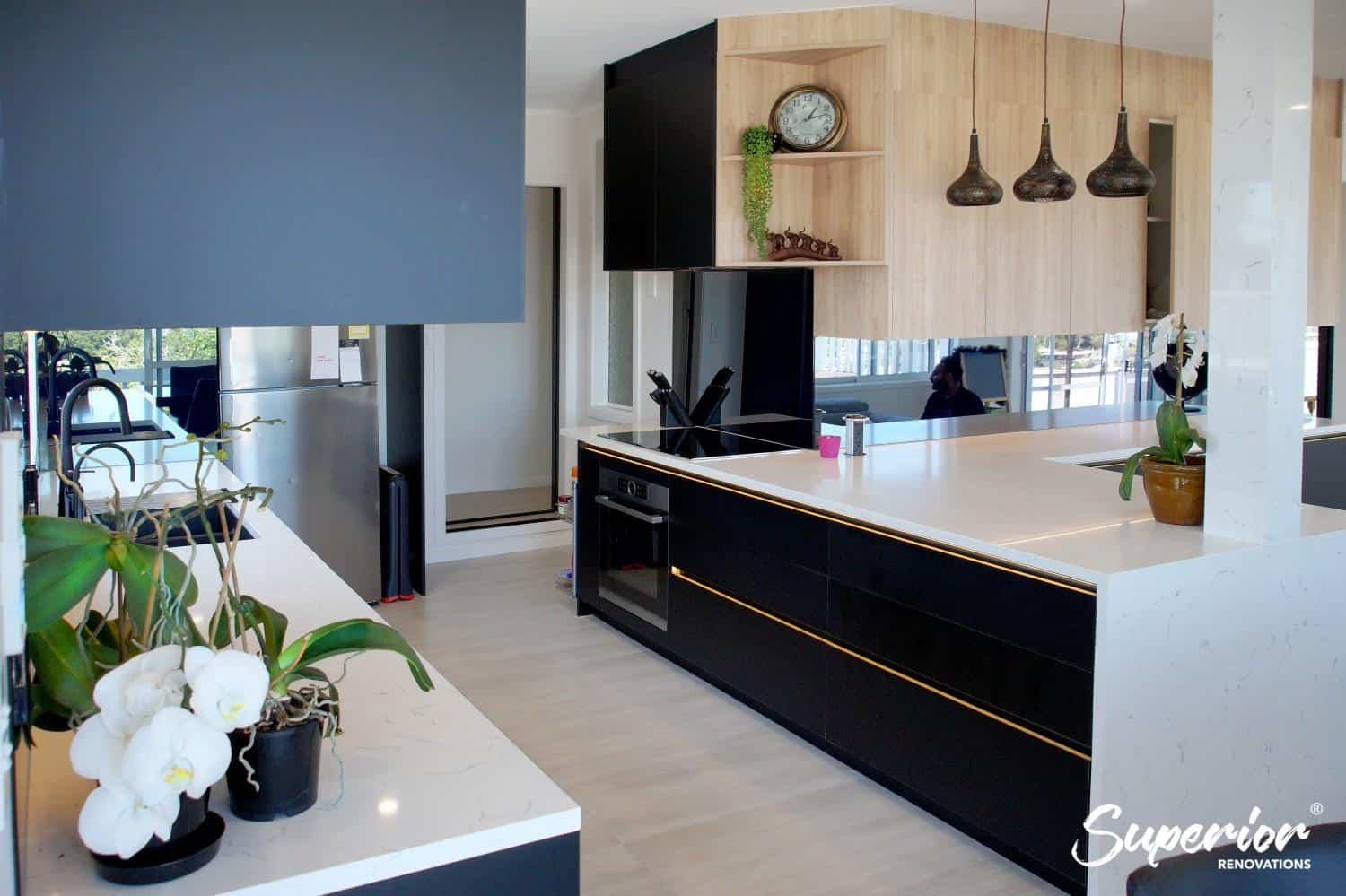
Pendant lights positioned low over the island — both functional task lighting and a design feature in their own right.
For more on getting kitchen lighting right, our previous guide on the importance of lighting in achieving a beautiful kitchen design goes deeper.
Splashback Heights and Wall Coverings
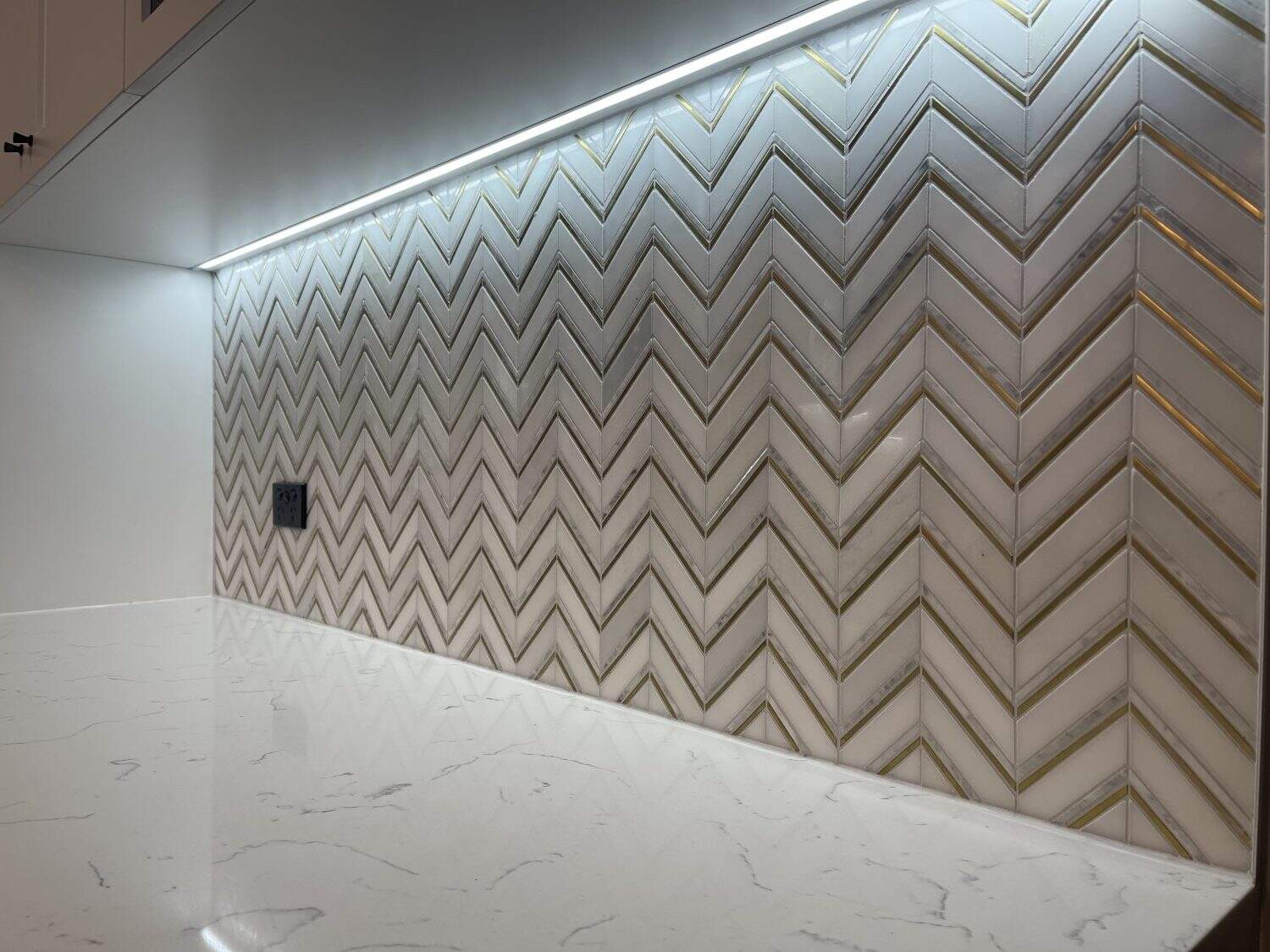
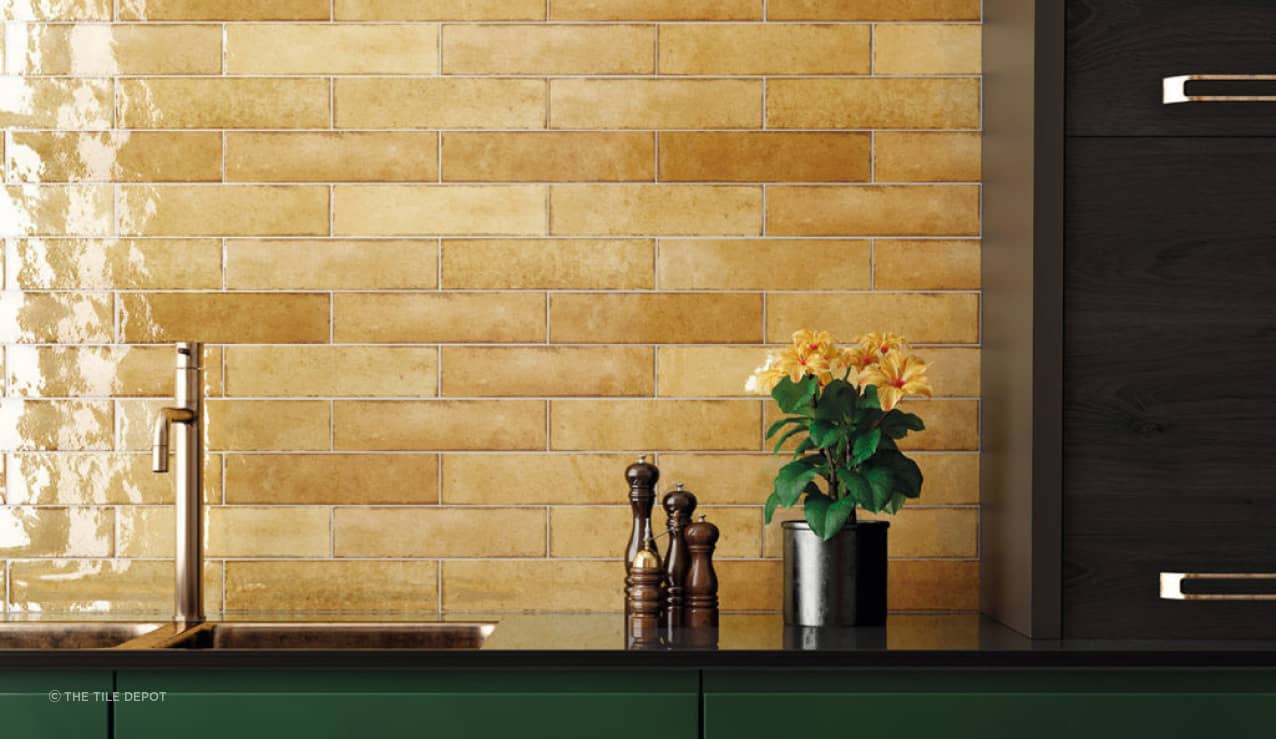
The splashback is the wall between the bench and the upper cabinets. Two jobs — protect the wall from water, steam, and oil, and add a finish that suits the rest of the kitchen.
- Standard splashback height: 600mm — matches the standard bench-to-upper-cabinet gap
- Behind the cooktop: the splashback should extend the full bench-to-rangehood height with no joins — usually 700–900mm depending on hood placement
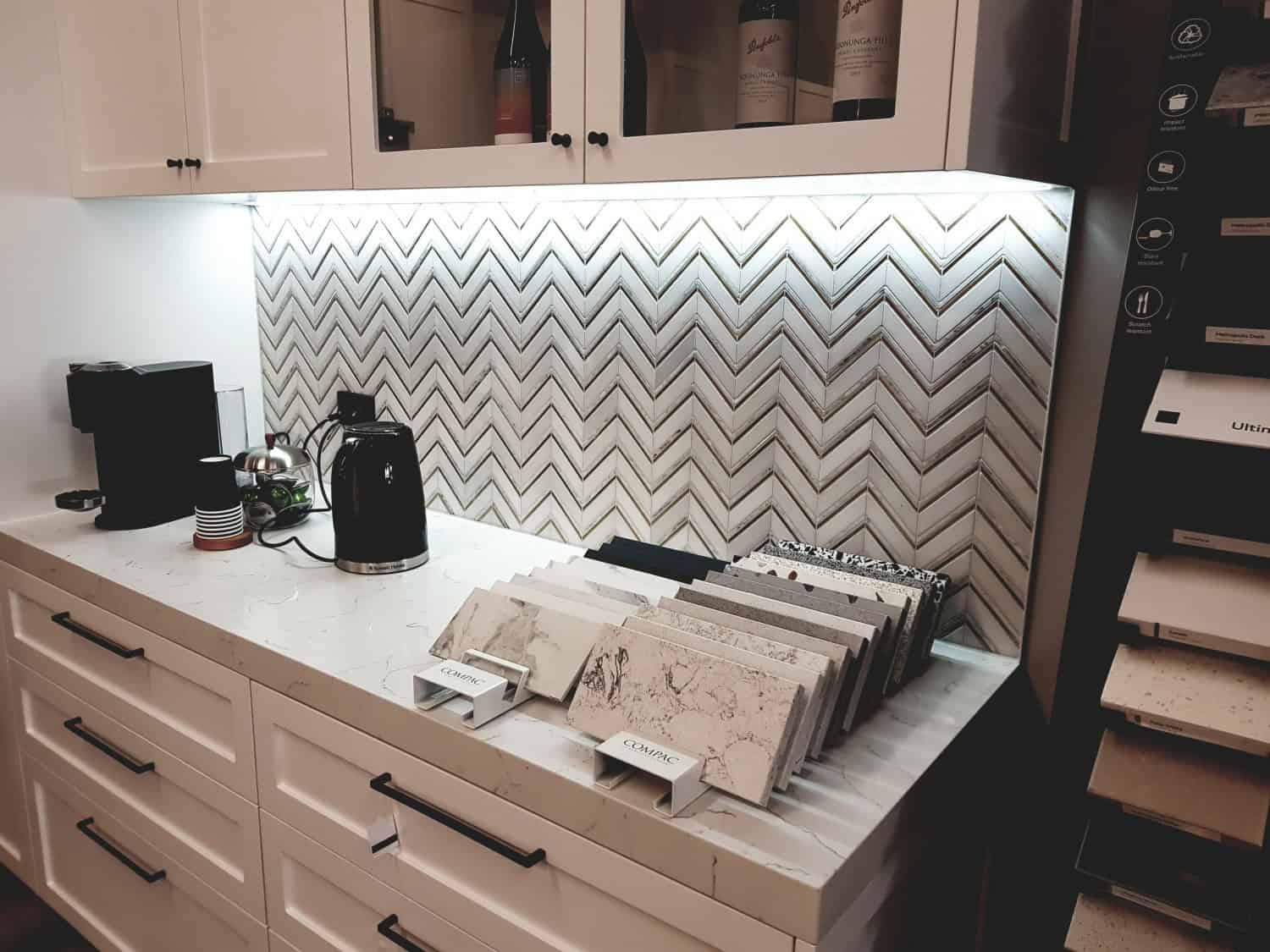
- Full-height splashbacks (bench to ceiling): increasingly common in Auckland renos, particularly with engineered stone or large-format tile — easier to clean, fewer grout lines, more contemporary
- Window-as-splashback: a feature in a lot of villa kitchens — the bench abuts the windowsill, no splashback, which works as long as the trim is waterproof-finished
Adjusting Standards for Auckland Housing Stock
The standards above are the starting point. Auckland’s housing mix means most kitchens need at least one adjustment off-standard, and the older the home, the bigger the gap between “what the textbook says” and “what fits”. Here’s what we see across the suburbs.
Pre-1940s villas (Grey Lynn, Ponsonby, Mt Eden, Herne Bay)
Original kitchens were often the smallest room in the house — sometimes 2.5 × 3m with a chimney intruding into one wall. Walkway standards still apply, but island ambitions usually need to give way to a peninsula. Ceiling heights are generous (often 3m+), which lets you run tall pantry cabinets up to 2700mm without the room feeling crammed.
Leaky-era plaster homes (mid-1990s to mid-2000s, widespread)
Standard sizing usually applies, but recladding work in adjacent walls can change the kitchen footprint mid-project. We’ve had situations where new framing post-reclad shifted the wall position by 40mm and forced a recut on the benchtop. Worth factoring in if you’re combining a kitchen reno with weathertightness work.
1970s–80s brick-and-tile (South and West Auckland, North Shore)
Generally a kind house for kitchen renos — generous floor footprints, square rooms, easy access for delivery and trades. Standard measurements apply cleanly. The constraint is usually ceiling height (2.4m) which limits how tall the uppers can run.
Hobsonville, Flat Bush, Millwater townhouses (post-2010)
Open-plan ground floors, often with an L-shape kitchen running into a dining-living combined space. Walkway and island standards matter even more here because the kitchen is a circulation space, not just a cooking room. Most of these homes were built with 900mm benches and modular cabinetry already in place — refresh kitchens (replacing doors, benchtop, splashback while keeping the carcasses) often make more financial sense than a full tear-out.
Apartments (CBD, Takapuna, Newmarket)
Galley kitchens with 800–900mm walkways are the norm, and body corporate rules often prevent moving plumbing or extraction. Compact appliances (450mm dishwashers, 600mm cooktops) get used heavily here. Pay particular attention to ventilation — many apartment kitchens vent through a shared duct that may need consent before any change.
What the NZ Building Code Actually Requires in a Kitchen
This trips up a lot of people planning a renovation, so it is worth being clear about which rules are rules and which are conventions.
The Building Code does not set your cabinet dimensions. It is performance-based. It requires that a dwelling has facilities for preparing food, that spaces are ventilated, that access routes work, and that plumbing, drainage and electrical work meet their own clauses. It does not tell you your benchtop has to be 900mm high or your island has to be 1500mm long.
Where the dimensions in this guide come from. The 900mm bench, the 600mm depth and the modular cabinet widths come from the cabinetry standard AS/NZS 4386, from appliance manufacturers’ installation specifications, and from what actually works in the houses we build in. They are the industry baseline rather than a legal minimum, which is exactly why a designer is allowed to move them for a taller cook or a narrow villa.
Where the Code does bite on a kitchen renovation. Extraction and ventilation, the electrical work behind a new appliance layout, any plumbing or drainage that moves, and any structural change if a wall is coming out to open the room up. Those are the parts that need the right licensed trade and, in some cases, a building consent. Restricted Building Work has to be carried out or supervised by a Licensed Building Practitioner.
Accessible and universal design. Where a kitchen needs to work for a wheelchair user or someone with limited reach, the planning numbers change: wider clear manoeuvring space, a lower or height-adjustable bench, and different reach limits to wall storage. MBIE and BRANZ both publish guidance on it, and the BRANZ Build universal design supplement on kitchens is the most practical starting point. Confirm the requirement for your specific project with Auckland Council or a Licensed Building Practitioner rather than working off a general figure.
Important note: Whether your kitchen renovation needs a building consent, and which parts of it count as Restricted Building Work, depends on your actual plans. That call belongs to Auckland Council or an LBP, not to a measurement guide.
How a Designer Catches Measurement Errors Before They Cost You
Two things make this easier for us than it is for a homeowner with a tape measure. The first is that we design before we price, so the dimensions are settled on a drawing rather than discovered on site. The second is that our cabinetry is made in our own Rosedale factory, which means a run that does not divide neatly into stock module widths gets a cabinet built to the gap instead of a filler panel covering it.
If you are at the stage of pricing rather than measuring, this is how we set out, build and install an Auckland kitchen from the drawing up. Worth reading alongside it: how long a kitchen renovation takes, and if the carcasses are sound, what replacing just the doors costs.
Standard measurements give you the language. Catching the errors specific to your house is where a designer earns their keep. We use a three-stage check on every kitchen renovation through the Design Studio — and most of the errors get caught well before any cabinetry is ordered.
- Site measure: we measure the existing room in person, not just from your drawings. Wall lines in older Auckland homes are rarely square, and a 20mm taper across a 3m run will show up in the finished cabinetry unless it’s planned around.
- 3D rendered walk-through: a 3D kitchen render lets you see the proportions before manufacture. Walking the camera around the rendered space catches sightline issues (the rangehood looming over the dining table, the pendant lights in the way of the window view) that 2D plans hide.
- Shop drawings sign-off: the final cabinetmaker drawings list every dimension to the millimetre, every appliance model number, every hinge type. This is the last stop before anything is cut.
“Measurements are the boring part of design, which is exactly why they’re where renovations go wrong. We’ve inherited kitchens where the previous designer signed off on drawings that listed a 600mm dishwasher cabinet next to a 650mm appliance. By the time it’s at install, you’re spending money to fix what should have been caught at drawings stage. The check is half an hour. The fix is thousands.”
— Dorothy Li, Design Manager, Superior Renovations
If you’d like a sense of what the design process looks like end-to-end, our Design Studio page walks through it, or check out our previous guide on top kitchen design ideas for a small kitchen renovation for layout examples that put these measurements to work.
The measurements above are the baseline most Auckland kitchens are built to, but they’re the start of the conversation — not the end. A 900mm bench is right for most people. A 1200mm walkway works for most households. Where the standards stop being useful is also where the design work properly begins.
➡ Book your free in-home consultation with Superior Renovations
➡ Use our kitchen renovation cost calculator
➡ Request a free feasibility report for your project
What is the standard kitchen bench height in NZ?
The NZ standard kitchen bench height is 900mm from the finished floor, with a common range of 850-950mm depending on the cook's height. The AS/NZS 4386 cabinetry standard is built around this 900mm baseline. Taller cooks (over 1.85m) often go to 920-950mm for back comfort, and homeowners planning for accessibility can spec a height-adjustable bench in the 620-900mm range per BRANZ Universal Design guidance.
How much walkway clearance do I need in an Auckland kitchen?
Single-cook kitchens need a minimum walkway clearance of 1000-1100mm between bench and wall, bench and island, or bench and bench. Two-cook or family kitchens need 1200mm minimum. Where a kitchen has to work for a wheelchair user, allow around 1500mm of clear manoeuvring space, and confirm the requirement for your project with Auckland Council or a Licensed Building Practitioner rather than a general figure. In open-plan Auckland homes where the kitchen is also a corridor, 1200mm is the practical minimum.
What is the standard benchtop depth in a NZ kitchen?
The standard NZ kitchen benchtop depth is 600mm front-to-back. This is made up of a 560-570mm cabinet carcass plus a 20-30mm overhang on the front edge. The 600mm depth comfortably fits a standard 600mm appliance like a dishwasher or under-bench oven while leaving a usable prep zone on top. Islands often run deeper at 900-1100mm to accommodate seating overhangs.
How big should a kitchen island be in a typical Auckland home?
A working kitchen island should be at least 600mm wide and 1500mm long, with 1800-3000mm length being more common in Auckland homes. For seating overhangs, plan 300-400mm of overhang from the cabinet face and 600-650mm seat height stools for a 900mm island. Allow 1000-1200mm of clearance on every side of the island for walkway flow.
What is the minimum distance between cooktop and range hood in NZ?
For electric and induction cooktops, the minimum cooktop-to-rangehood clearance is 600mm. For gas cooktops, the clearance increases to 650-750mm depending on the rangehood manufacturer's specifications. Always check the appliance manual, some high-output gas cooktops require larger clearances, and some sealed gas/induction hybrids have their own specific requirements.
How high should upper kitchen cabinets be installed above the bench?
The standard NZ height from benchtop to the underside of upper cabinets is 600mm. This gives enough clearance for benchtop appliances (kettles, mixers, coffee machines) while keeping the upper cabinet contents within reach. Upper cabinets typically run from 1500mm height up to 2100mm for standard 720mm tall units, or up to ceiling height (2400-2700mm) for full-height storage.
What kitchen cabinet widths are standard in New Zealand?
Common NZ kitchen cabinet widths follow a modular system: 300mm, 400mm, 450mm, 600mm, 800mm, 900mm, 1000mm and 1200mm. The 600mm module is the most common because it fits standard NZ appliances, dishwashers, single ovens, freestanding cookers. Most NZ-made cabinetry uses 18mm panel thickness on carcasses, which affects how doors and drawers align in the final installation.
What clearance does a fridge need in an Auckland kitchen?
A freestanding fridge needs 25-50mm of width clearance in its cabinet alcove for ventilation, 50mm minimum above for heat dissipation, and 900mm of clear floor space in front for the door to swing open and allow loading. French door and side-by-side fridges (800-900mm wide) need extra planning because the doors swing wider than standard hinged fridge doors.
What is the standard kitchen sink size in NZ?
NZ standard kitchen sink sizes are 500-600mm wide x 400-500mm deep for a single bowl, or 800mm wide x 480mm deep for a double or 1.5 bowl sink. Bowl depth is typically 180-220mm. Plan for 600mm minimum (900mm preferred) of bench clearance on the prep side of the sink, and 450mm minimum on the landing side. Mixer tap spouts typically project 250-350mm above the bench.
How high should pendant lights hang above a kitchen island?
Pendant lights above a kitchen island should hang 750-900mm above the bench surface. This gives enough room not to block sightlines across the kitchen, while casting useful task light onto the bench. For pendants over a fixed dining bench or raised breakfast bar, hang slightly higher at 700-800mm above the bench. The cord or rod can usually be shortened on site to fine-tune the final hang height.
Do I need to follow the AS/NZS 4386 standard for my kitchen?
AS/NZS 4386 is the Australian/New Zealand standard for domestic kitchen assemblies and is the baseline most NZ kitchen manufacturers build to. While it isn't a legally enforced building code requirement for a residential kitchen renovation, building to this standard means your kitchen will be compatible with off-the-shelf appliances, will use sensible ergonomic dimensions, and will be easier to repair or refresh in future. Any reputable NZ cabinetmaker will be building to this standard by default.
Can a designer change the standard measurements to suit my body type?
Yes — and they should. Standard NZ kitchen measurements are designed for average body types, but a good designer will measure you during the consult and adjust bench heights, cabinet positions, and reach distances to suit. Common adjustments include 920-950mm benches for taller cooks, 850-880mm zones for baking-heavy use, lower upper cabinets for shorter cooks, and full Universal Design specs for ageing-in-place planning. Adjustments are easy at design stage and expensive after manufacture.
Further Resources for Your Kitchen Renovation
- Featured projects and Client stories to see specifications on some of the projects.
- Real client stories from Auckland
Need more information?
Take advantage of our FREE Complete Home Renovation Guide (48 pages), whether you’re already renovating or in the process of deciding to renovate, it’s not an easy process, this guide which includes a free 100+ point check list – will help you avoid costly mistakes.
Download Free Renovation Guide (PDF)

Have you been putting off getting renovations done?
We have partnered with Q Mastercard ® to provide you an 18 Month Interest-Free Payment Option, you can enjoy your new home now and stress less.
Learn More about Interest-Free Payment Options*
*Lending criteria, fees, terms and conditions apply. Mastercard is a registered trademark and the circles design is a trademark of Mastercard International Incorporated.
Still have questions unanswered?
Book a no-obligation consultation with the team at Superior Renovations,
we’d love to meet you to discuss your renovation ideas!
References
- Standards New Zealand — AS/NZS 4386.1:1996 Domestic kitchen assemblies (Kitchen units)
- Building Performance (MBIE) — Building Code accessibility guidance: Kitchens
- BRANZ Build Magazine — Universal Design Supplement: Kitchens (Issue 168)
- Bunnings New Zealand — How to measure up for a new kitchen
- Houzz New Zealand — Key measurements for designing the perfect kitchen island