
Top 7 Renovation Ideas to Boost Auckland Home Value in 2025
If you’re planning a renovation in Auckland this year — whether to add value before a sale or simply make your Mt Eden villa or Takapuna home more livable — these seven ideas consistently deliver the strongest returns. Kitchen upgrades through to energy efficiency: all suited to Auckland’s climate, Kiwi lifestyle preferences, and the reality of not overcapitalising your Grey Lynn villa or your Henderson family home.
What’s the Smartest Way to Boost Your Auckland Home Value with a Reno This Year?
Focus on high-ROI areas — kitchens and outdoor decks in particular — that signal move-in ready to buyers. Dorothy Li from Superior Renovations is direct about it: a modern kitchen isn’t just a functional room, it’s what Auckland buyers in Remuera or Ponsonby will pay a premium for, often returning 80% of the renovation cost. Work with neutral Resene tones, moisture-resistant materials suited to Auckland’s damp winters, and eco-efficient products where possible — Warmer Kiwi Homes grants can offset some of those costs. From our completed projects: a $30,000 Mt Eden kitchen remodel added $40,000 in value; a $22,000 Devonport deck added $30,000. As a general rule, keep renovation spend within 5–10% of your property’s value.
Which Renovations Give the Best Bang for Buck in NZ’s Market?
Kitchens come first — open layouts with quartz benchtops and bi-fold doors for indoor-outdoor flow, at $25,000–$45,000 mid-range. Decks follow, using composite or Kwila timber ($15,000–$25,000) — perfect for the Auckland summer barbecue. Master ensuites ($25,000–$40,000) create a practical retreat that buyers in older Auckland homes particularly value. Family bathroom refreshes with frameless showers return 60–75% ROI ($15,000–$30,000). Basement conversions add floor space on tight sections ($30,000–$50,000), exterior refreshes improve kerb appeal ($10,000–$20,000), and energy upgrades like double-glazing reduce bills and attract eco-conscious buyers ($15,000–$30,000). All require checking Auckland Council consent requirements.
How Do You Pick Ideas That Suit Your Suburb and Avoid Overcapitalising?
Match the specification to the suburb — premium quartz and smart appliances make sense in Parnell; modest updates are the right call in Henderson. Check whether structural changes require consent (fees $500–$5,000), use local suppliers like Mitre 10 to keep materials costs in check, and build in a 10–20% contingency. Dorothy’s consistent advice: waterproofing is non-negotiable in Auckland’s humidity. Native flax or pohutukawa landscaping handles Auckland’s conditions well and reads as intentional rather than generic.
Ready to plan a renovation that actually pays off? Get in touch with Superior Renovations for a free consultation.
In a market as competitive as Auckland’s, the renovations that pay off aren’t necessarily the most expensive ones — they’re the ones that speak directly to what local buyers want. Functionality, indoor-outdoor connection, low maintenance, and sustainability are consistent priorities across suburbs from Remuera to Papatoetoe. This guide covers seven renovation types, each with realistic costs and ROI ranges backed by industry data from sources like Building Guide NZ, and each tailored to Auckland’s climate and buyer preferences.
Why Renovate Your Auckland Home?
Auckland buyers consistently look for homes that are ready to move into — not projects. A well-specified kitchen, a functional ensuite, or a properly insulated home can be the difference between a strong sale and a slow one. According to Builder Connect NZ, planned renovations can increase home value by 5–15%, with 60–80% of renovation costs typically recovered at resale. The right upgrade also changes how you live in the property now — not just what it’s worth when you sell.
“In Auckland, the right renovation doesn’t just transform your home—it transforms your sale price.”
Explore our home renovation ideas to find the right starting point for your project.
If you’re looking for specific cost estimates, try our Renovation Cost Calculator Tools
- Bathroom Renovation Cost Calculator
- Kitchen Renovation Cost Calculator
- Reroofing Cost Calculator
- Double Glazing Cost Calculator
- House Extension Cost Calculator
- Custom Kitchen Cabinetry Cost Calculator
- New Laundry Cost Calculator
- New Pergola Cost Calculator
Planning to sell your house?
Here are the renovation ideas most likely to improve your resale value.
A renovation can serve several goals at once — improving the way you live in your home now, rescuing a period property, or adding value before a sale. Since the costs involved are significant, knowing which upgrades return the most is worth understanding before you commit to anything.
Revamp Your Kitchen: The Renovation That Consistently Delivers in Auckland
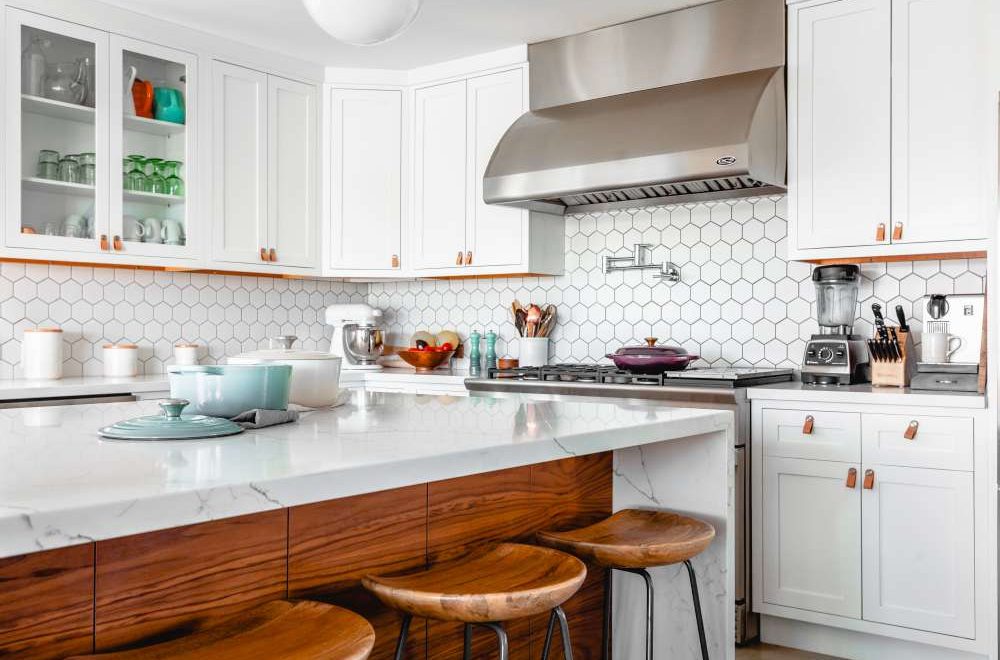
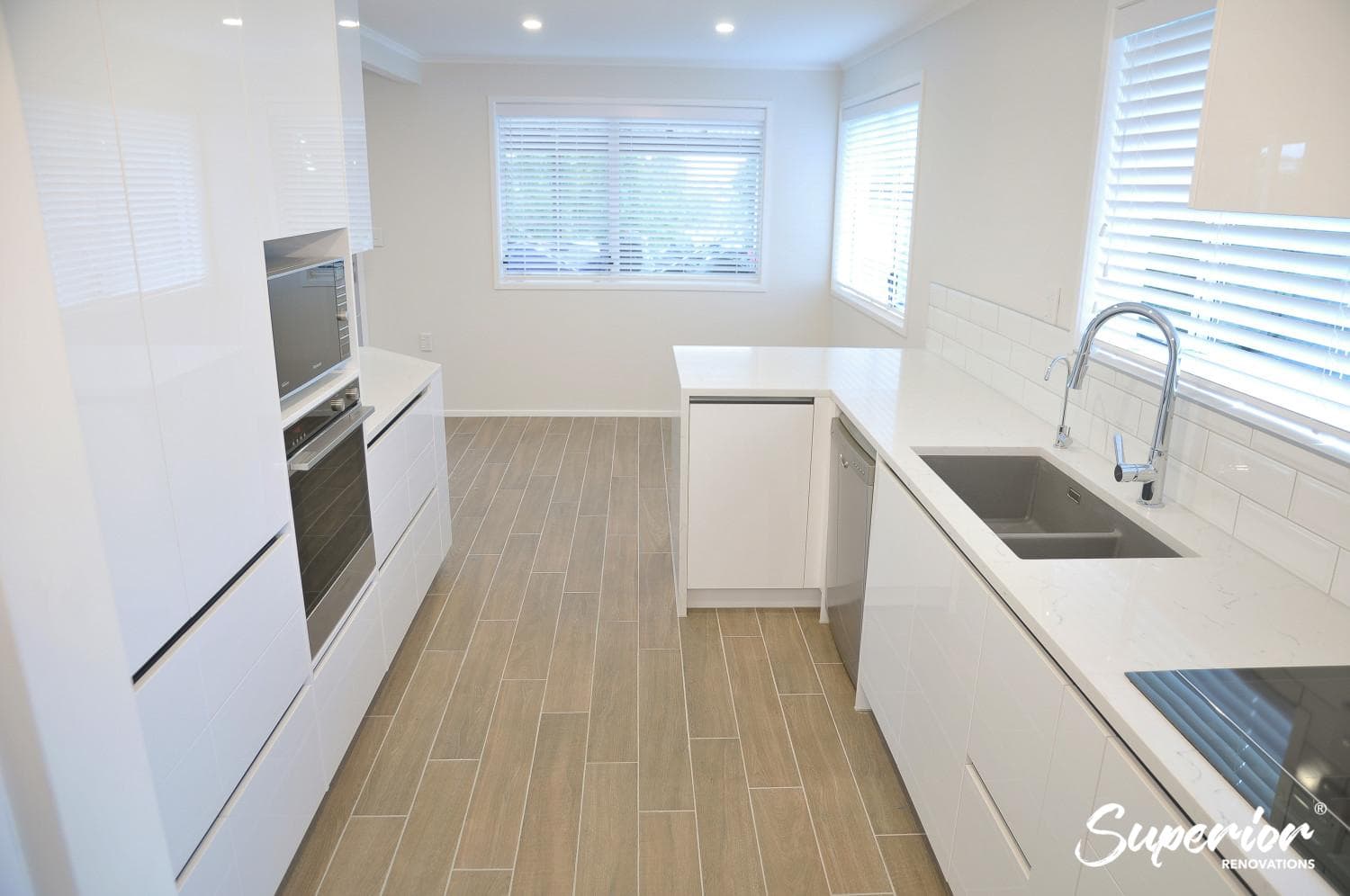
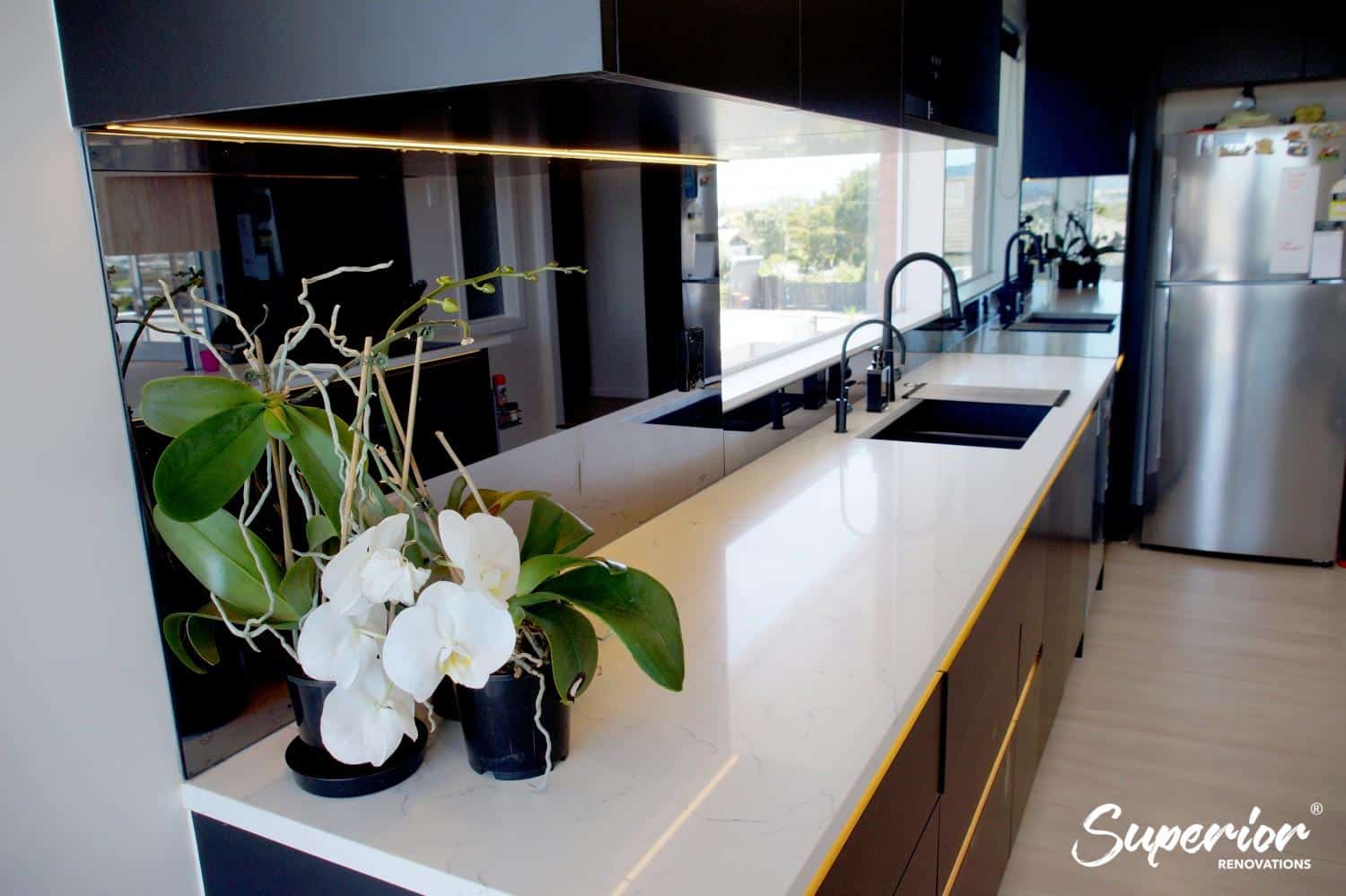
The kitchen is where Auckland homes are won or lost with buyers. A dated kitchen with tired cabinetry or outdated appliances is one of the most common reasons buyers either discount an offer or walk away — while a well-executed renovation signals a home that’s been taken care of and is ready to live in. A kitchen remodel consistently returns one of the highest ROIs of any renovation type, often recovering up to 80% of the cost at resale.
Why a Kitchen Remodel Adds the Most Value
A $25,000 kitchen renovation in Auckland can recover a meaningful portion of its cost at resale, and in high-demand suburbs like Grey Lynn or Mt Eden, the return is often higher. The driving factors aren’t just visual — functionality, energy efficiency, and layout all play a role in how buyers perceive the space. A kitchen that flows into an outdoor area, handles Auckland’s humidity well, and doesn’t require immediate updating is the kind of specification that closes sales.
“A modern kitchen isn’t just a room—it’s a lifestyle upgrade that buyers in Auckland are willing to pay a premium for.”
The principle holds from Ponsonby to Papakura. It’s about giving buyers a space they can actually use from day one, rather than one that goes straight to the reno wishlist. Open layouts, smart storage, and materials that hold up in a coastal climate are what make the difference.
Key Elements of a High-Value Kitchen Renovation
The upgrades that deliver the strongest ROI tend to focus on layout, durability, and broad appeal rather than personal preference. Here’s where to put the money:
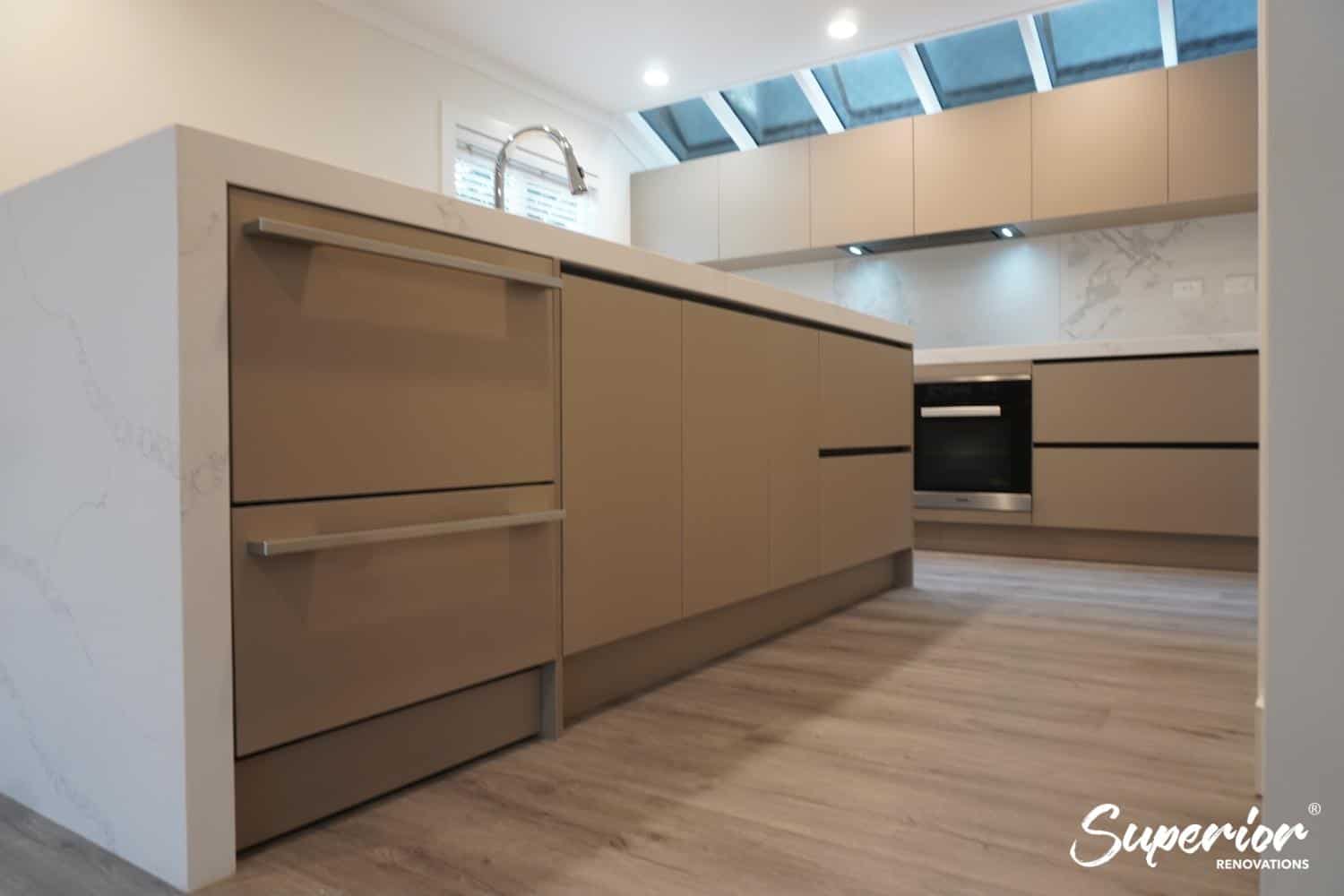
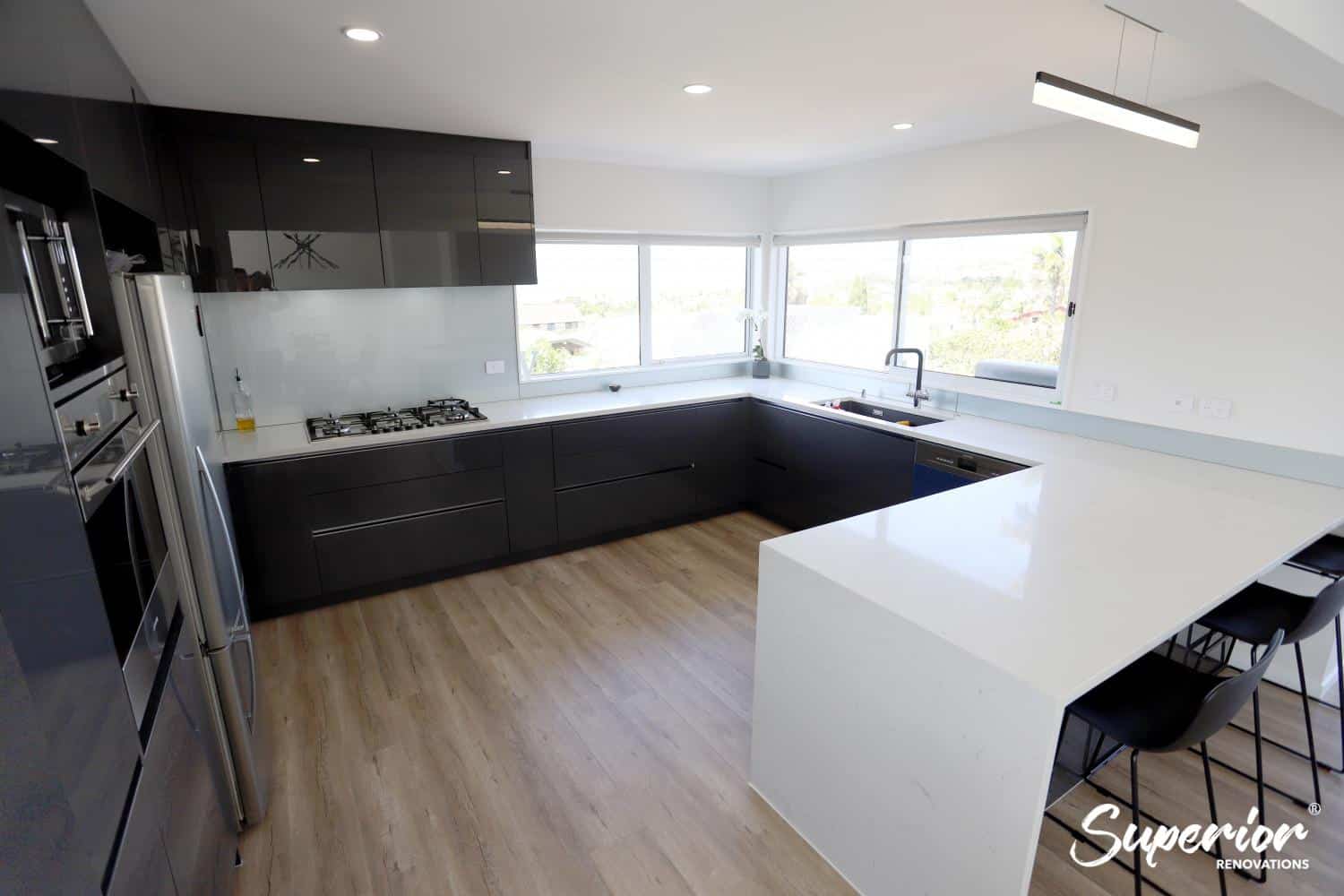
- Open-concept layout: Auckland buyers consistently prioritise kitchens that connect to dining and living areas. Opening up the floor plan makes a home feel larger and better suited to the way most Kiwi families actually live and entertain.
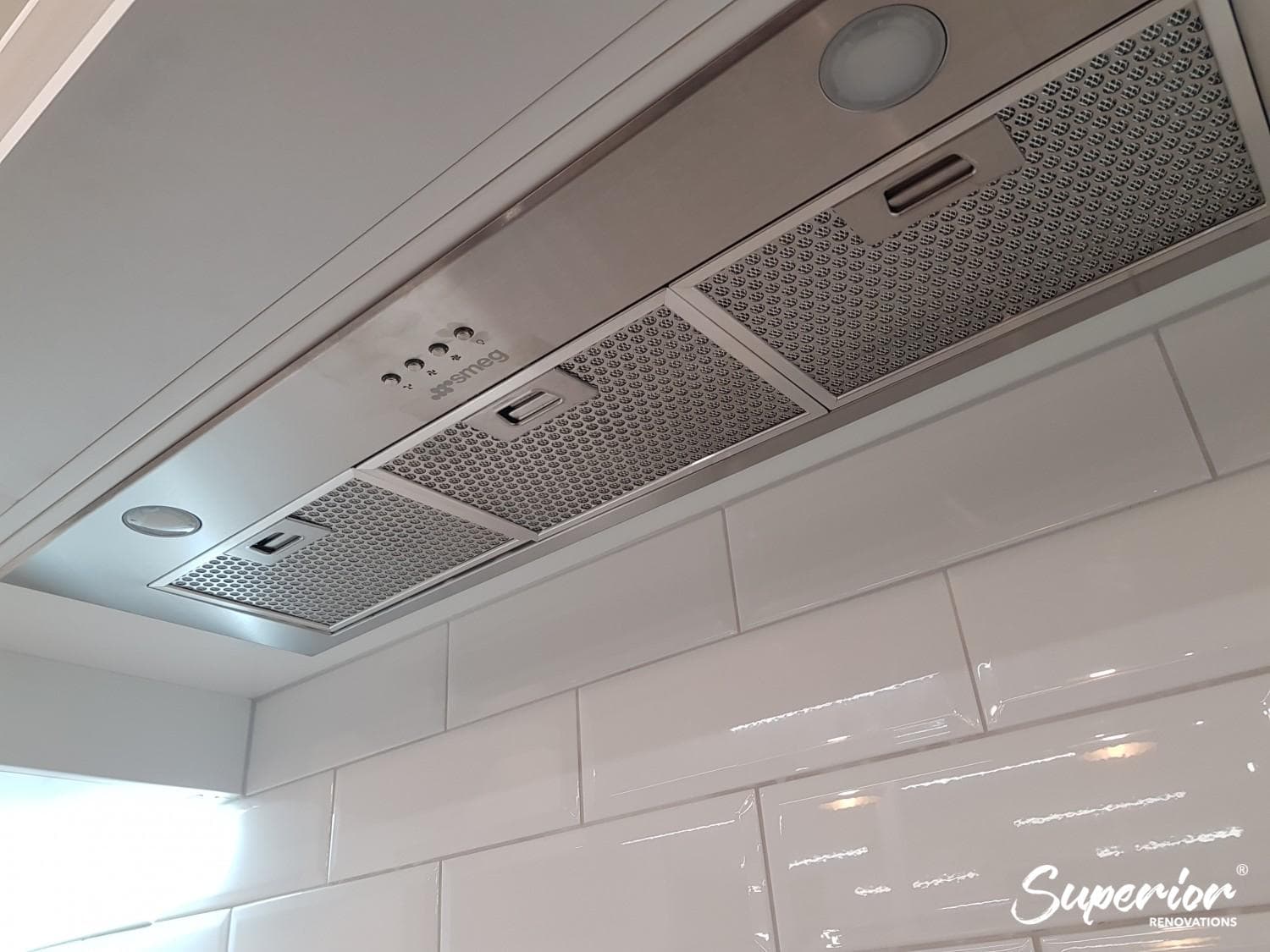
- Energy-efficient appliances: Induction cooktops and energy-rated fridges reduce running costs and tick the sustainability box for environmentally minded buyers. New Zealand’s Warmer Kiwi Homes programme makes some of these upgrades more accessible.
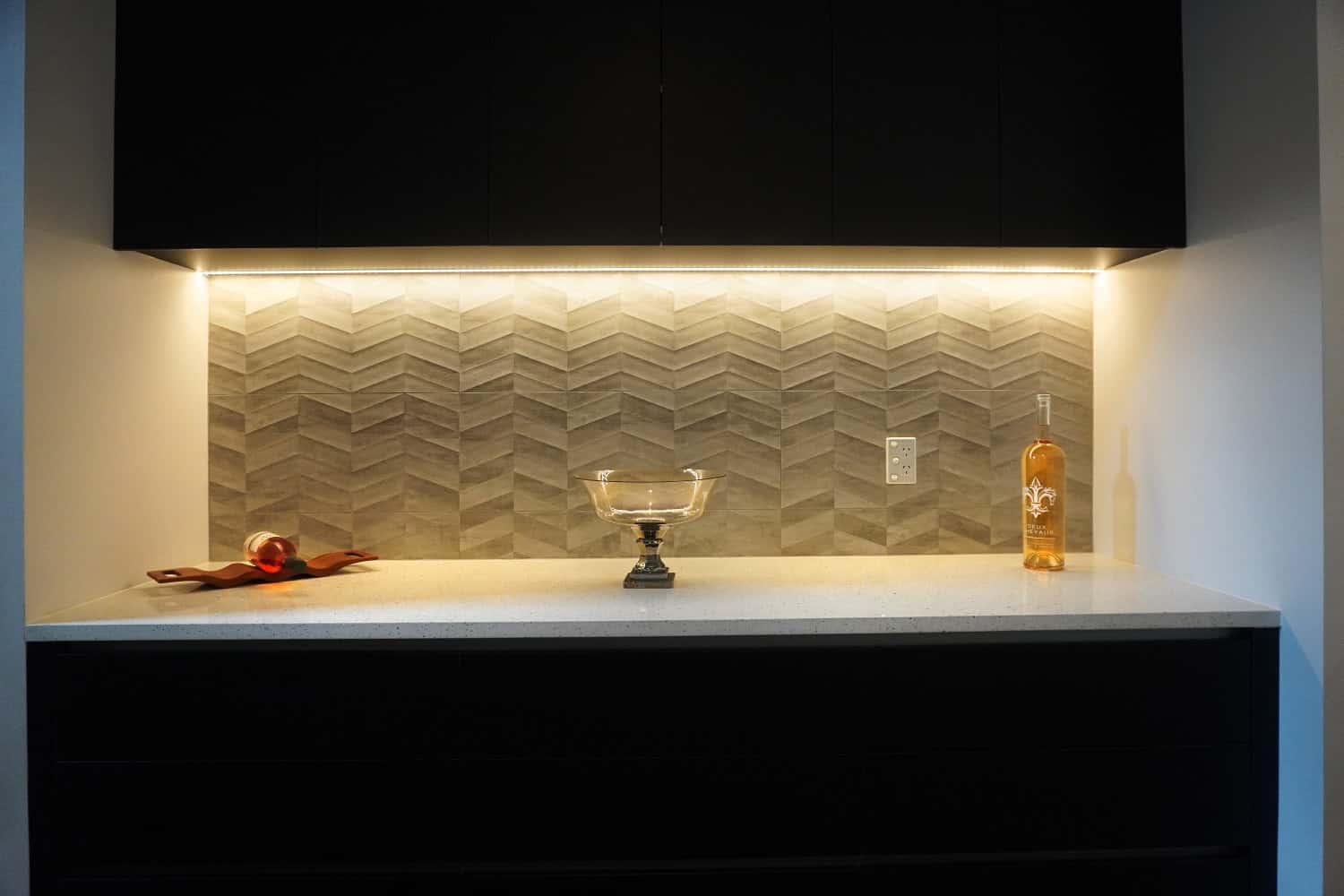
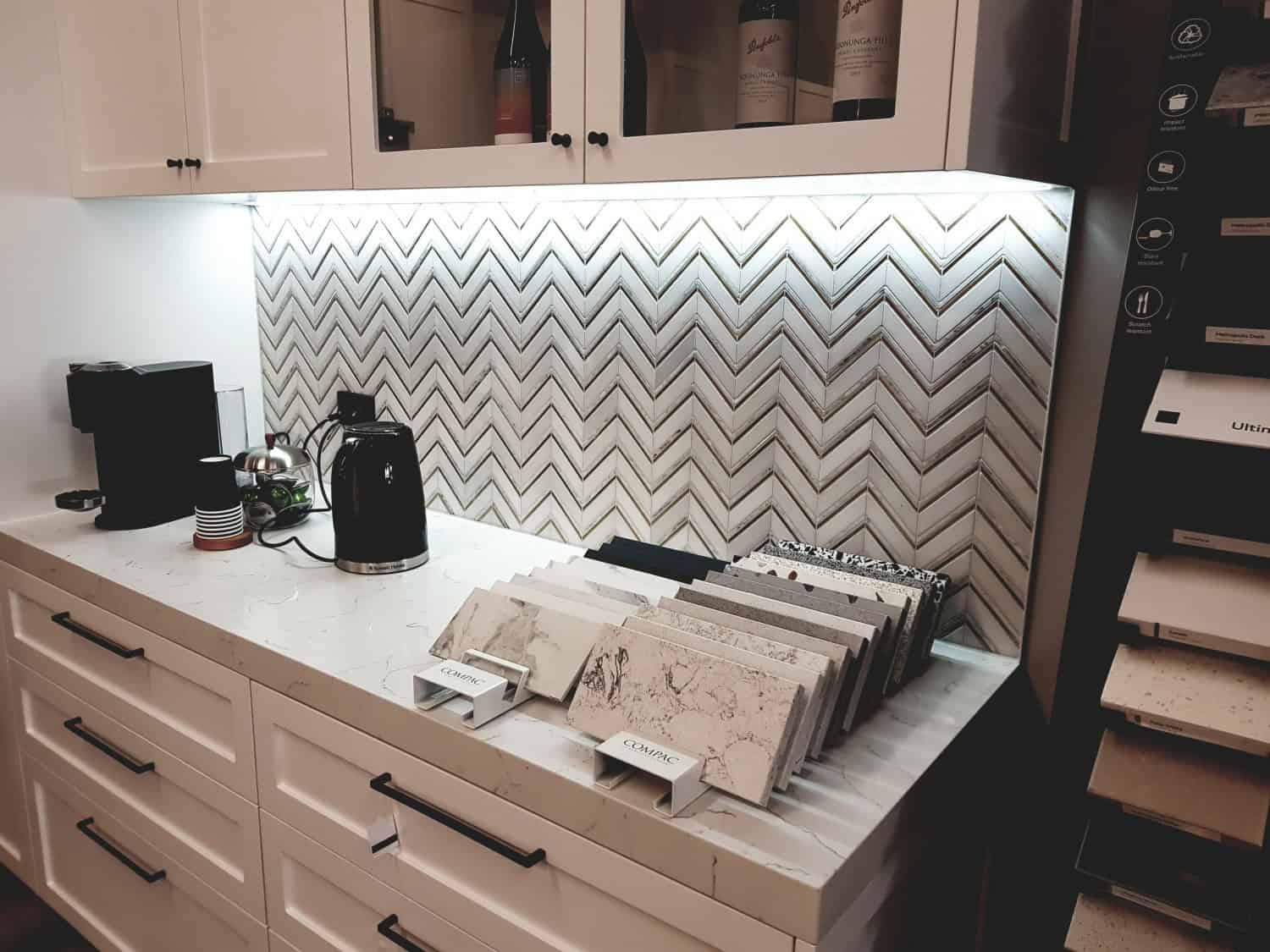
- Durable materials: Quartz benchtops and ceramic tile splashbacks handle Auckland’s humidity well and are easy to maintain — both practical selling points.
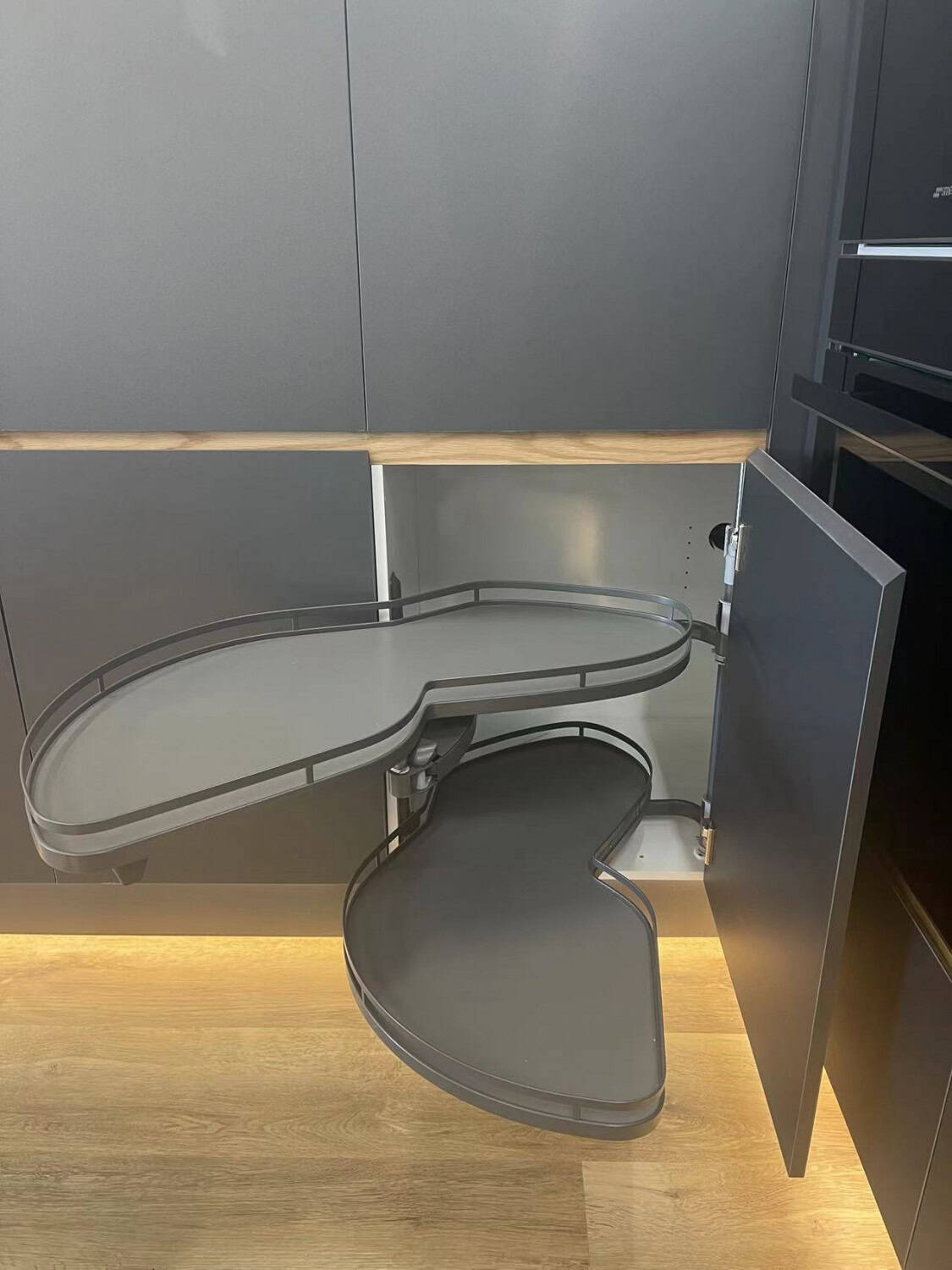
- Smart storage: Pull-out pantries, corner drawers, and built-in shelving maximise usable space, particularly relevant in smaller Auckland homes.
- Neutral aesthetics: Resene greys and warm whites hold broad appeal and date less quickly than trend-driven palettes. A statement benchtop or quality tapware adds interest without limiting buyer appeal.

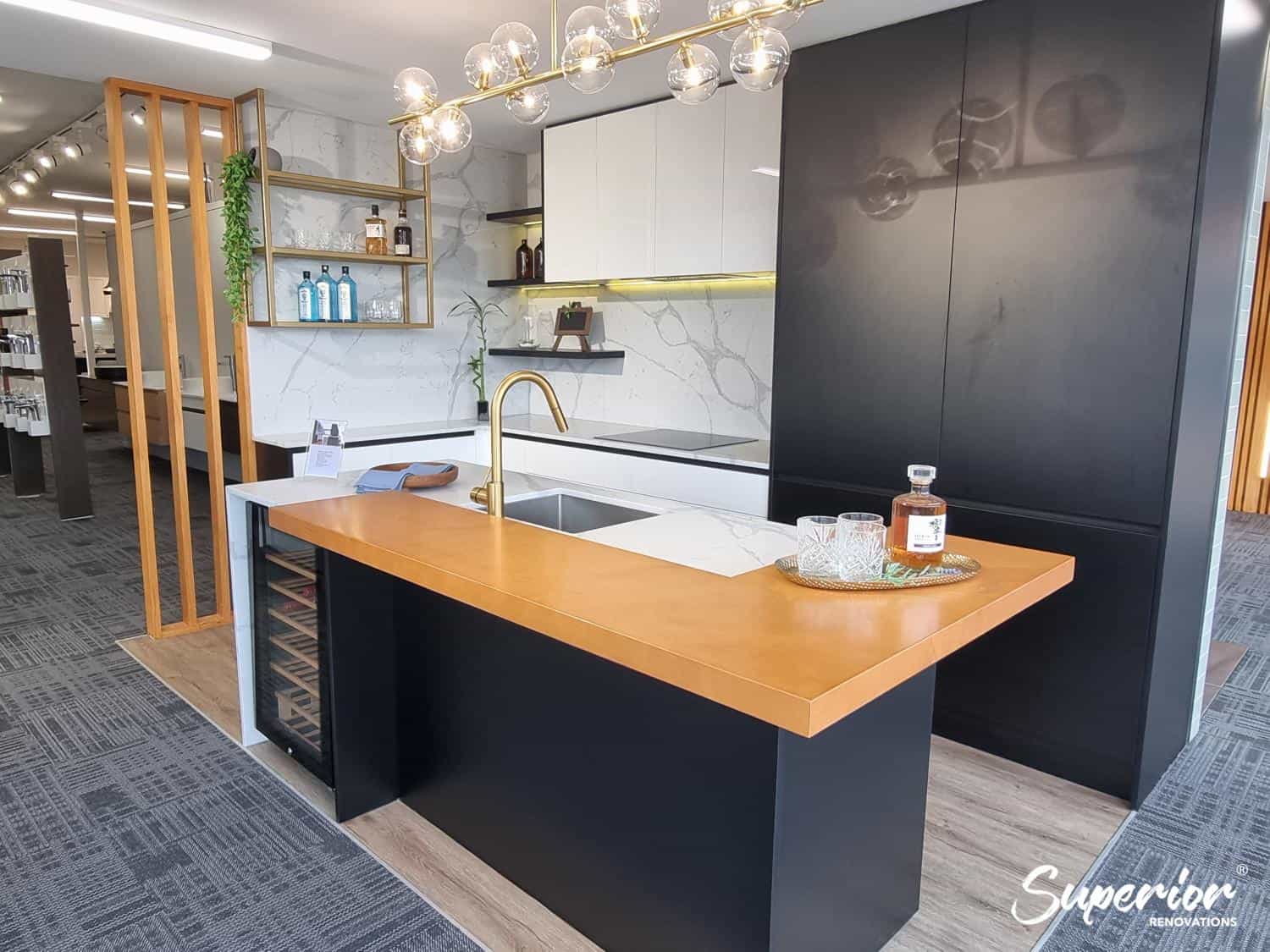
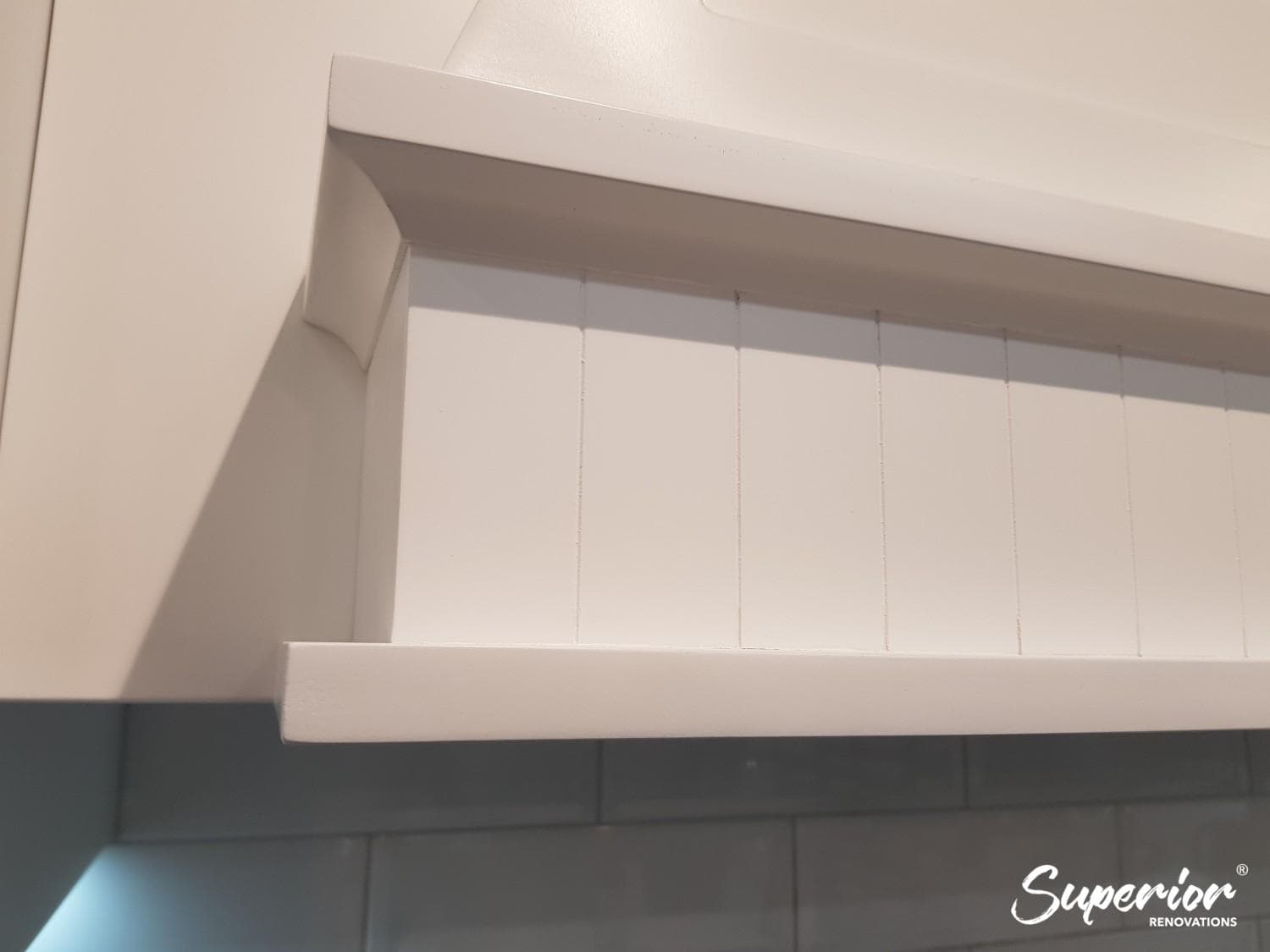
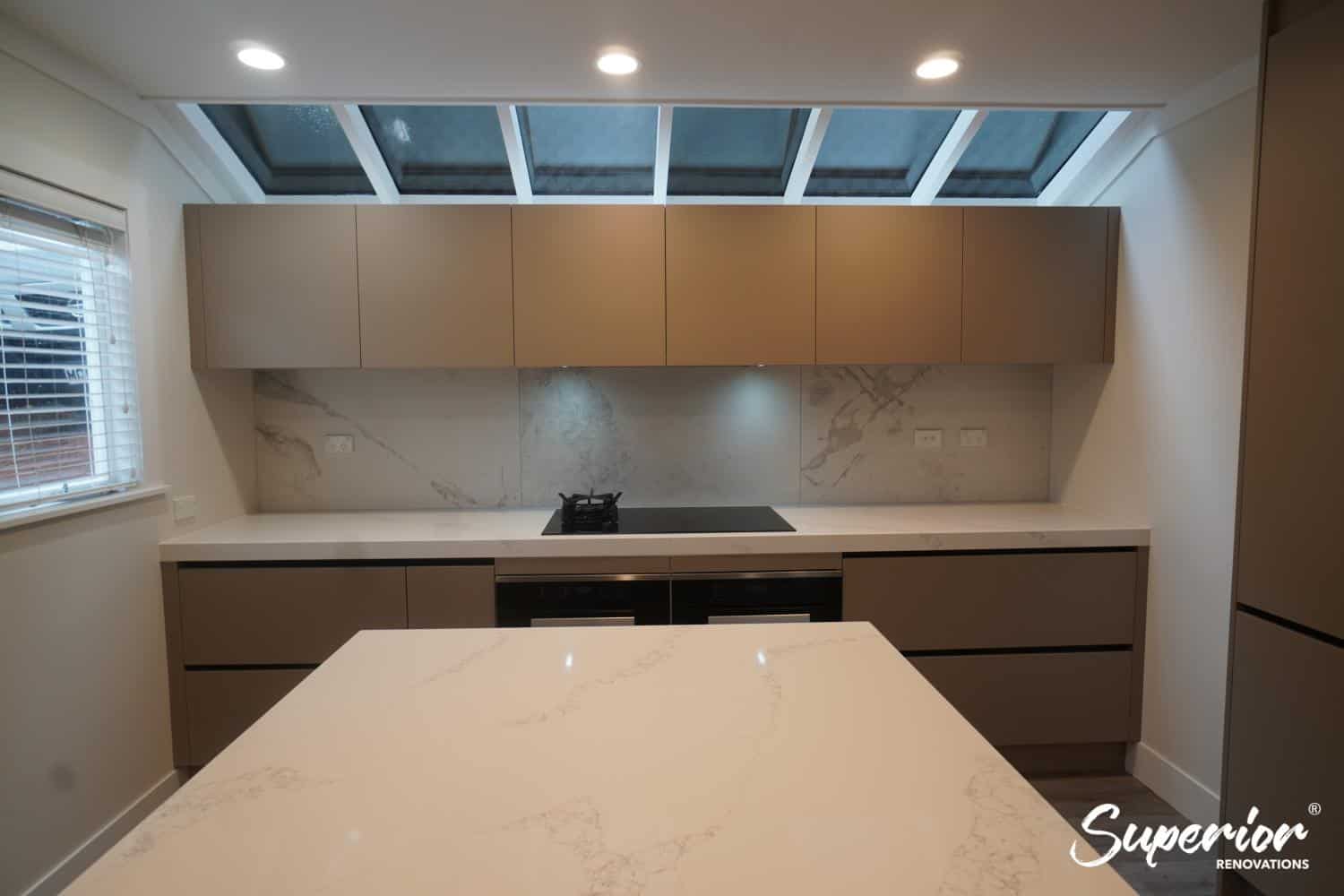
Designer Kitchen By Superior Renovations
Cost vs. Value: Understanding the ROI Formula
A straightforward way to calculate renovation ROI:
ROI = (Increase in Home Value – Renovation Cost) / Renovation Cost x 100
For example, a $25,000 kitchen remodel that increases your home’s value by $30,000:
($30,000 – $25,000) / $25,000 x 100 = 20%
In Auckland’s stronger suburbs like Grey Lynn or Mt Eden, the actual return is often considerably higher — 80% or more is achievable with the right specification. The key constraint is overcapitalising. For a $500,000 home, industry guidance suggests keeping kitchen spend to $25,000–$30,000, per Dominator. Spending significantly more than this risks pricing the home out of the local market.
| Renovation Type | Estimated Cost (NZD) | Potential ROI | Key Considerations |
|---|---|---|---|
| Basic Kitchen Upgrade | $15,000–$25,000 | 60–80% | New fittings, appliances, paint |
| Mid-Range Remodel | $25,000–$45,000 | 70–85% | Open-plan layout, quartz countertops |
| Luxury Renovation | $50,000+ | 50–70% | High-end materials, custom designs |
“Don’t overspend on luxury finishes unless your home’s value supports it — quality and functionality return more than premium materials in most Auckland suburbs.”
Planning Your Kitchen Renovation in Auckland
Getting the planning right upfront avoids the budget blowouts that derail most kitchen projects. Key steps:
- Set a realistic budget: Include materials, labour, permits, and a 10–20% contingency for unexpected costs — hidden plumbing issues are common in older Auckland villas. Our renovation costs guide covers budgeting in detail.
- Use licensed tradespeople: Auckland’s building codes are strict, particularly for plumbing and electrical work. Licensed trades ensure compliance, as set out by the New Zealand Government.
- Get council consents: Structural changes and major plumbing or electrical work require Auckland Council approval. Consent fees range from $500 to several thousand dollars depending on scope.
- Work with a designer: A designer maximises layout, flow, and energy efficiency, and can manage the consent process — useful if you haven’t been through it before.
- Source locally: Auckland suppliers like Mitre 10 and PlaceMakers reduce material costs and lead times.
Local Considerations for Auckland Kitchens
Auckland’s humid, coastal conditions mean moisture-resistant materials like ceramic tiles and stainless steel will outlast cheaper alternatives. Indoor-outdoor connection — bi-fold doors onto a deck or garden — is a consistent priority for Auckland buyers across most suburbs and price points. In Herne Bay and Remuera, the market supports mid-to-high-end specification. In Manukau or Henderson, the same spend won’t return the same value — moderate, well-executed upgrades perform better there.
“In Auckland, a kitchen that connects to the outdoors and handles humidity well is the specification that wins buyers.”
See how we’ve approached this across Auckland in our Kitchen Design Gallery.
Common Mistakes to Avoid
- Overcapitalising: A $50,000 kitchen in a $400,000 home won’t return its cost. Research local property values before setting your budget.
- Prioritising looks over function: A visually impressive kitchen with insufficient bench space or storage will frustrate buyers. Workflow and storage come first.
- Skipping permits: Unpermitted work creates problems at sale and can trigger fines. Check with Auckland Council before starting.
- Cheap materials: Low-quality fittings are visible and undermine buyer confidence. False economy in most cases.

Real-World Example: A Kitchen Transformation in Mt Eden
A dated 1980s Mt Eden kitchen — closed-off floor plan, worn cabinets — became a modern open-plan hub. Quartz benchtops, energy-efficient appliances, and bi-fold doors to the deck were the key changes. The $30,000 renovation added an estimated $40,000 in value. The kitchen went from being the property’s biggest liability to its strongest selling point.
“Our Mt Eden clients couldn’t believe how much their new kitchen transformed their home — it’s now the heart of every family gathering and a major selling point.”
Quality specification, Auckland-appropriate materials, and a layout that works for real life — those are the variables that drive kitchen ROI. Whether you’re selling soon or staying long-term, a kitchen done right is money well spent.
Deck Addition: Delivering on Auckland’s Outdoor Living Expectation
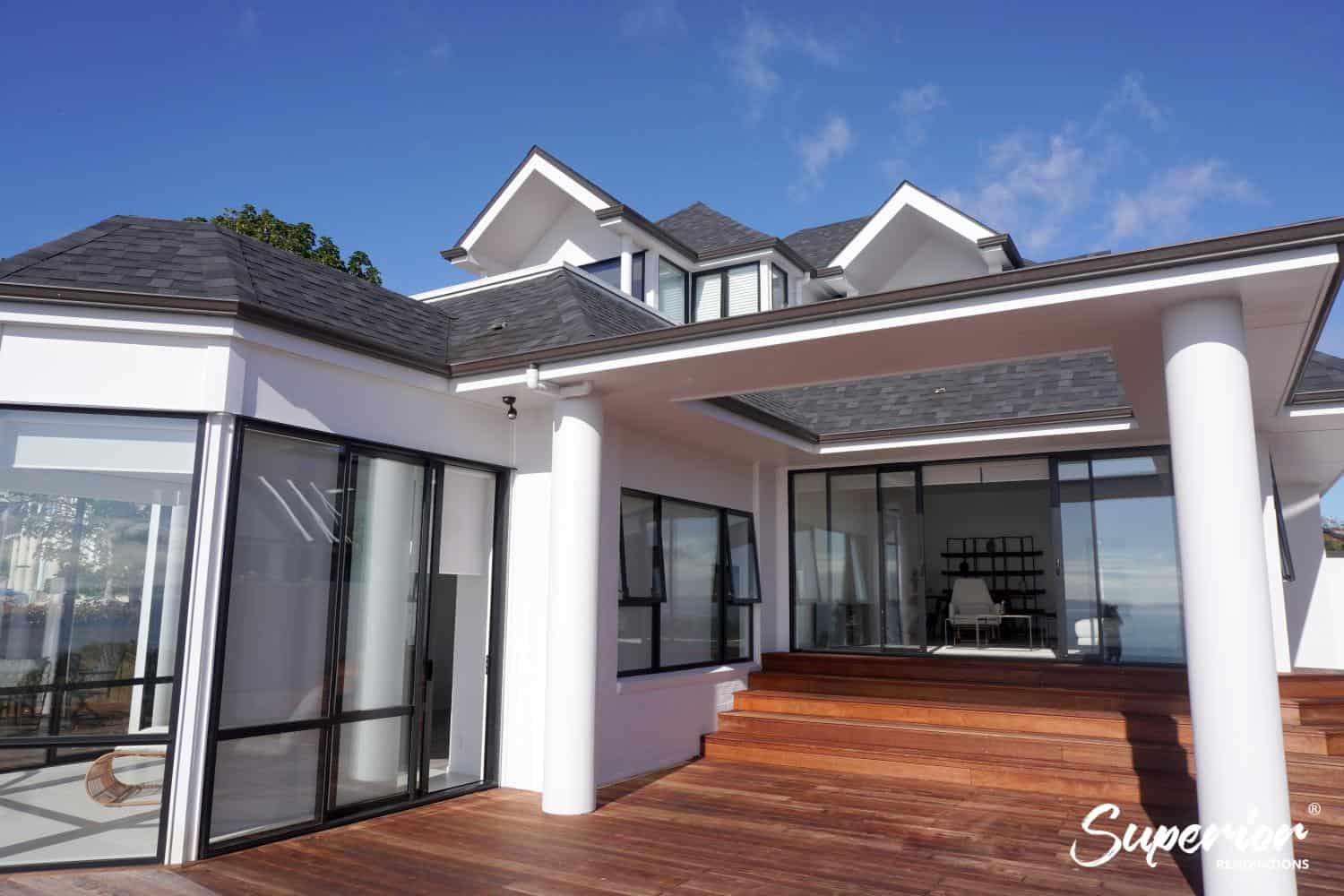
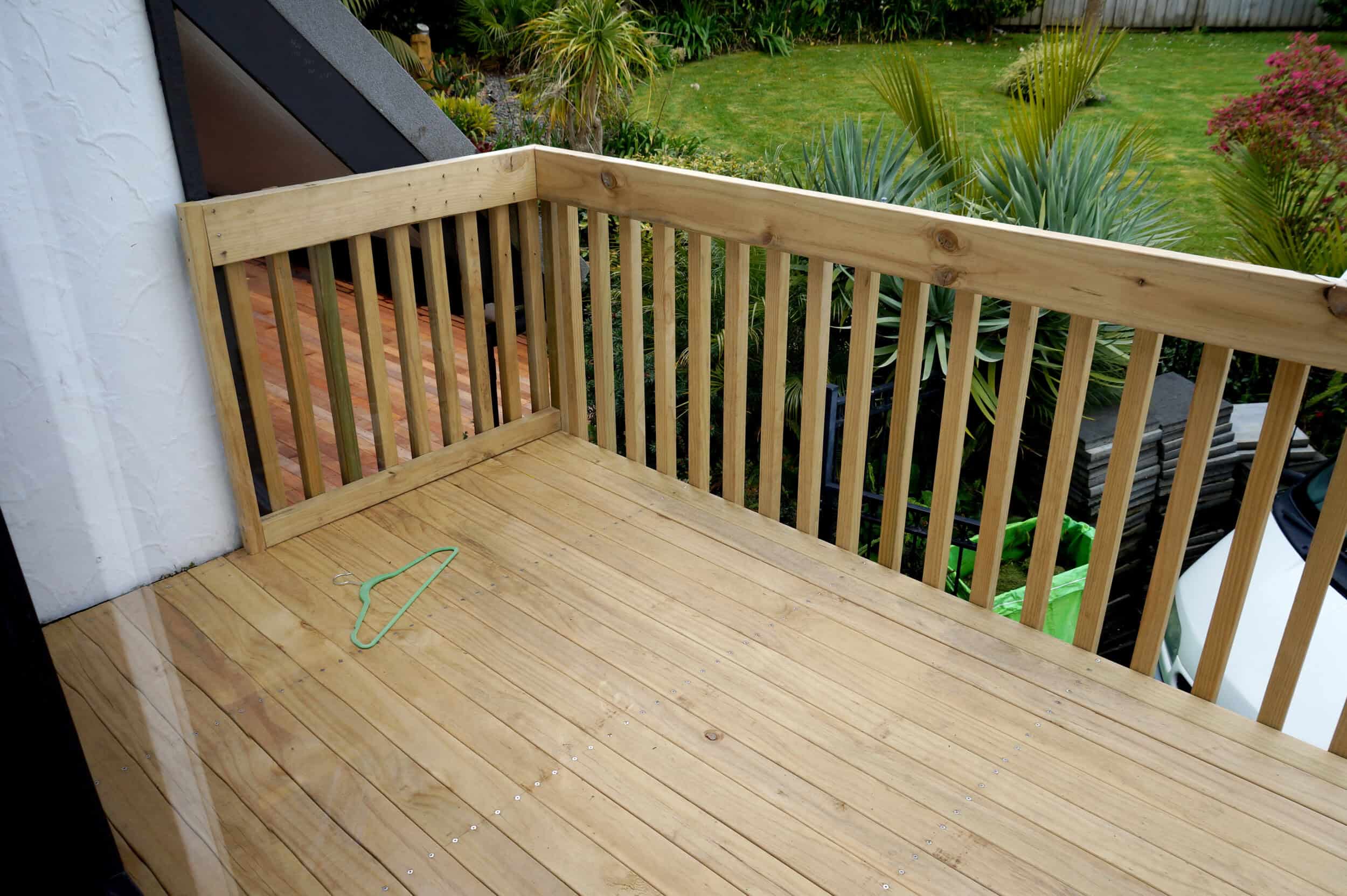
Auckland buyers have a clear expectation of outdoor living. A home with a well-designed deck that connects to the interior isn’t a bonus — it’s what buyers in Devonport, Parnell, and even more modest suburbs like Mangere have come to expect. A deck costing $15,000–$25,000 regularly adds $20,000 or more to a home’s value, making it one of the more cost-effective renovations available in the Auckland market.
Why a Deck Addition Boosts Home Value
The connection between indoor and outdoor living is deeply embedded in how Kiwis use their homes — summer barbecues, winter gatherings under a pergola, kids’ space that doesn’t live inside. A deck that delivers this well is not a cosmetic upgrade; it adds genuinely usable square metres to the property. Eco-conscious buyers respond to FSC-certified timber or composite decking, and the low-maintenance argument resonates with busy Auckland families.
“A deck isn’t just an outdoor space — it’s an extension of your home that Auckland buyers see as a lifestyle upgrade.”
Key Features of a High-Value Deck
- Indoor-outdoor connection: Bi-fold doors or large sliding windows from the kitchen or lounge are the feature Auckland buyers respond to most consistently.
- Durable materials: Kwila timber and composite decking both handle Auckland’s humidity and coastal salt air. Neither requires the intensive maintenance that cheaper timber does.
- Versatile design: Built-in seating, pergolas, or an outdoor kitchen area extend the deck’s usefulness across seasons — a strong selling point in Auckland’s variable weather.
- Lighting and heating: LED lighting and outdoor heaters make the deck usable year-round, not just on Auckland’s warmest days.
- Privacy and planting: Privacy screens and native plantings like flax or pohutukawa suit the Auckland aesthetic and create a sense of enclosure without blocking light.

Cost vs. Value: Calculating Deck ROI
ROI = (Increase in Home Value – Renovation Cost) / Renovation Cost x 100
A $20,000 deck that increases your home’s value by $25,000:
($25,000 – $20,000) / $20,000 x 100 = 25%
In Takapuna or Epsom, decks typically achieve ROIs of 65–80% when they genuinely improve outdoor living without requiring substantial structural work. Spending $30,000 on a deck for a $1.5M Remuera property makes financial sense. The same spend on a $600,000 Papatoetoe home probably doesn’t, per Building Guide NZ.
| Deck Type | Estimated Cost (NZD) | Potential ROI | Key Features |
|---|---|---|---|
| Basic Timber Deck | $10,000–$15,000 | 60–75% | Simple design, small footprint |
| Mid-Range Deck | $15,000–$25,000 | 65–80% | Composite materials, built-in seating |
| Premium Deck | $30,000+ | 50–70% | Outdoor kitchen, pergola, lighting |
“A well-designed deck doesn’t have to be expensive — match the scale and specification to what your property’s value can support.”
Planning Your Deck in Auckland
- Check council rules first: Auckland Council requires consent for decks over 1.5m high or those exceeding 20m². Consent costs range from $500–$2,000 depending on complexity. See Auckland Council’s building consents page.
- Use licensed builders: Structural work and code compliance require licensed professionals. This also matters to buyers — a permitted, professionally built deck is a selling point, not just a tick-box.
- Specify for Auckland’s climate: Materials need to handle moisture and UV. Timber requires sealing every 1–2 years — factor this into the maintenance picture buyers will consider.
- Work with the section: Small Auckland sections can still accommodate well-designed decks. Multi-level or corner configurations work well in suburbs like Mt Albert or Onehunga where garden space is limited.
- Consider a designer: A good designer ensures the deck complements the home’s architecture and sits naturally in the outdoor space — important for buyer perception.

Local Considerations for Auckland Decks
Coastal suburbs like Mission Bay and St Heliers demand materials that can handle salt air — composite or treated pine outperforms untreated timber here. Native plantings rather than generic garden centre purchases signal care and local knowledge to buyers. In Grey Lynn or Ponsonby where sections are compact, elevated or wraparound designs recover usable space without consuming the garden. Shade sails or retractable awnings extend the deck season — worth considering in Auckland’s changeable spring and autumn.
“In Auckland, a deck that handles the elements and connects seamlessly to the house is the brief that consistently wins buyers over.”
Common Mistakes to Avoid
- Overbuilding for the section: A large deck on a small section can consume the garden and leave buyers with less outdoor flexibility, not more.
- Underspecifying the timber: Unsealed or low-grade timber deteriorates quickly and registers as neglect to buyers. Spend correctly upfront.
- Skipping consents: An unpermitted deck creates problems at settlement. Always check requirements before starting.
- Poor connection to the house: A deck with no direct access from the main living areas misses the entire point. Connection is the value proposition.
Real-World Example: A Deck Transformation in Devonport
An underused Devonport backyard became a properly designed outdoor room: composite decking, built-in seating, LED lighting, and a pergola for shade. The connection to the living room was via bi-fold doors. The $22,000 project added an estimated $30,000 to the home’s value. The deck became the feature buyers remembered — and the one that closed the sale.
“Our Devonport clients now host every family event on their new deck — it’s become the heart of their home and a major selling point.”
Quality materials, genuine indoor-outdoor connection, and a design that works for the section — that’s the formula that makes decks one of Auckland’s most reliable renovation investments.
Building a Master Ensuite: A Practical Upgrade Auckland Buyers Pay For
In Auckland’s older housing stock — villas, bungalows, and the 1970s brick-and-tile houses spread across most suburbs — a master ensuite is often conspicuously absent. Adding one converts a standard bedroom into something buyers in Herne Bay, Epsom, and Henderson all recognise as genuinely valuable. A well-executed ensuite costing $20,000–$35,000 can increase a home’s value by $25,000–$50,000, making it one of the more reliable renovation investments for Auckland homeowners.
Why a Master Ensuite Adds Significant Value
Privacy and convenience are what buyers are purchasing. For older properties lacking a second bathroom, an ensuite removes a practical objection that would otherwise reduce buyer interest or depress offers. It also changes how the master bedroom functions — from a room with a shared bathroom arrangement to a genuinely self-contained retreat, which is what Auckland buyers across most price brackets now expect.
“A master ensuite turns your bedroom into a sanctuary, and in Auckland, that’s a feature buyers will pay top dollar for.”
Whether it’s a Grey Lynn villa or a St Heliers modern home, an ensuite done well adds the kind of sophistication that makes a property feel complete rather than almost-there.

Key Features of a High-Value Master Ensuite
- Space-efficient layout: Walk-in showers and wall-mounted vanities recover visual and physical space in compact rooms — particularly relevant in smaller Auckland properties, as noted by Hunter Furniture.
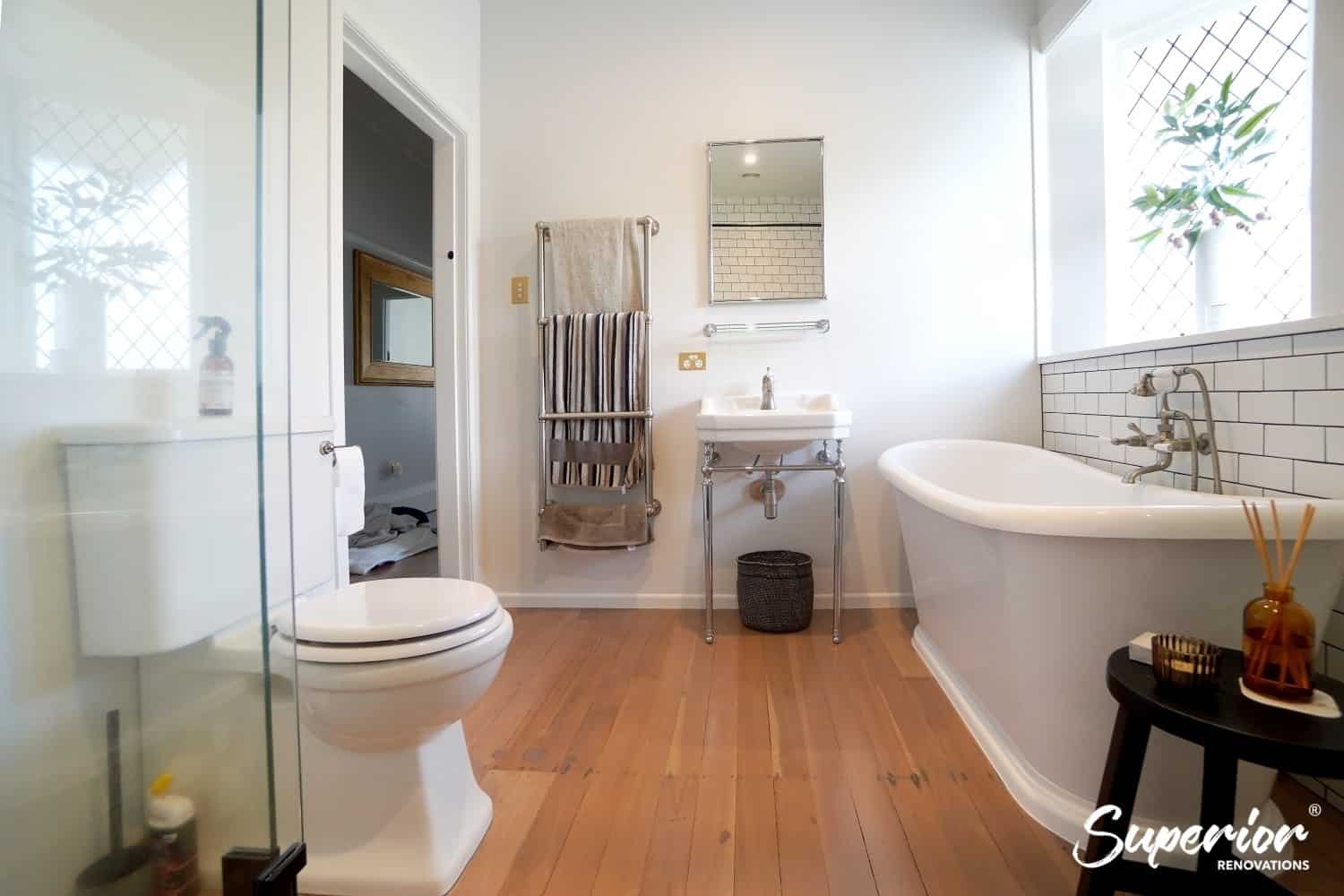
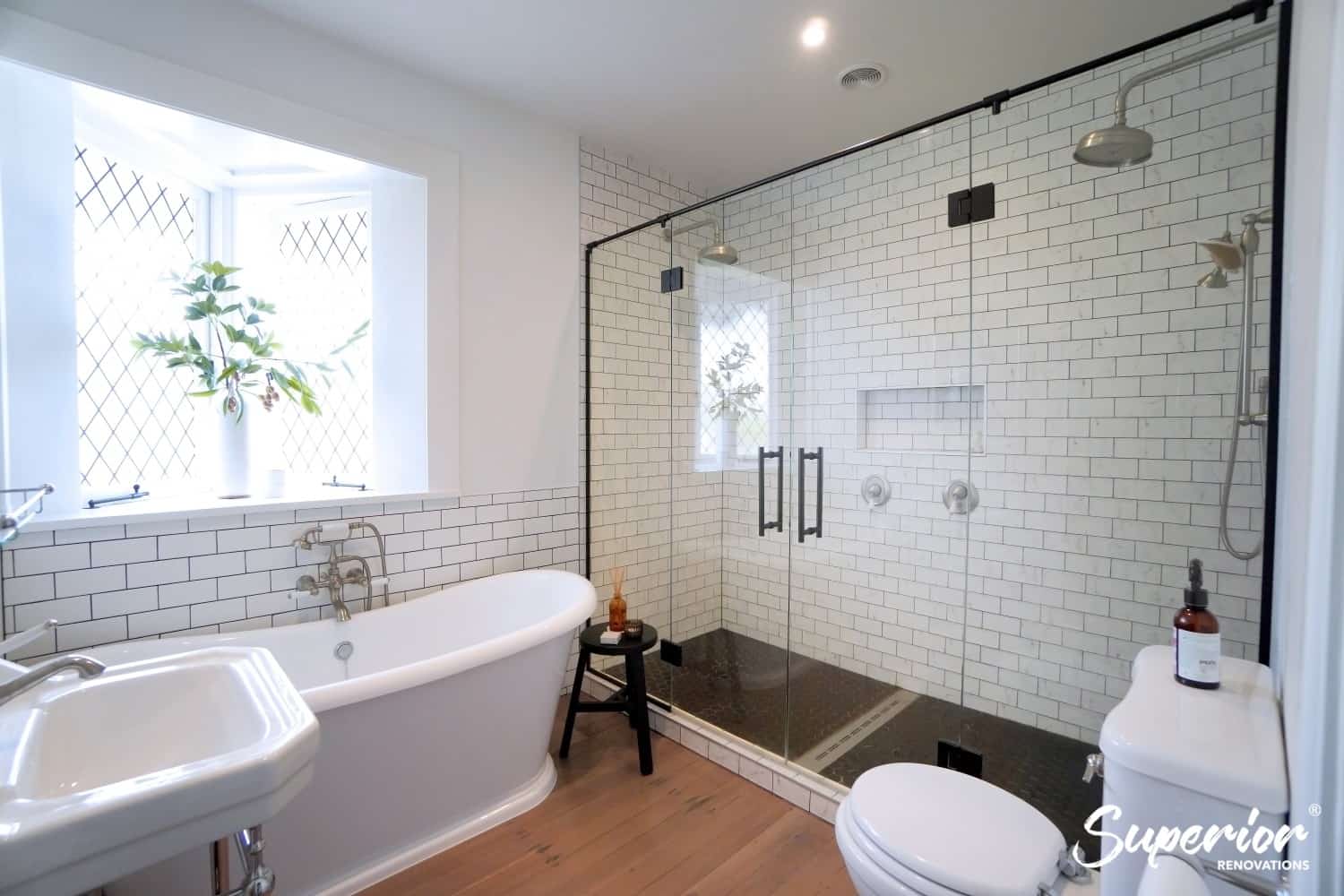
- Quality fixtures: Rainfall showerheads, frameless glass, and modern tapware deliver a premium feel that buyers register immediately — and that doesn’t require a luxury budget to achieve.
- Waterproofing and ventilation: Non-negotiable in Auckland’s humid climate. An extractor fan is a functional requirement, not an optional extra.
- Neutral finishes: Resene’s Alabaster or Sea Fog, textured tiles, and natural stone accents create a timeless result that holds its appeal across buyer demographics.
- Water-efficient fixtures: Water-saving showerheads and LED lighting reduce running costs and resonate with Auckland’s sustainability-conscious buyers.
Cost vs. Value: Calculating Ensuite ROI
ROI = (Increase in Home Value – Renovation Cost) / Renovation Cost x 100
A $25,000 ensuite that increases your home’s value by $35,000:
($35,000 – $25,000) / $25,000 x 100 = 40%
In Remuera or Mt Eden, ensuites achieve ROIs of 60–75% — particularly strong in homes that currently only have one bathroom. A $30,000 ensuite in a $1M home is a reasonable investment; the same spend in a $500,000 home carries more risk, per Building Guide NZ.
| Ensuite Type | Estimated Cost (NZD) | Potential ROI | Key Features |
|---|---|---|---|
| Compact Ensuite | $15,000–$25,000 | 60–70% | Walk-in shower, single vanity |
| Mid-Range Ensuite | $25,000–$40,000 | 65–75% | Double vanity, frameless glass |
| Luxury Ensuite | $40,000+ | 50–65% | Freestanding bath, custom tiles |
“The ensuite budget should be proportionate to the property’s value — a well-specified mid-range ensuite consistently outperforms a luxury one in all but the highest-value Auckland suburbs.”

Planning Your Master Ensuite in Auckland
- Assess what space is available: An existing wardrobe, a spare room corner, or a section of the master bedroom itself can all work. Older Auckland villas often need some layout reconfiguration, which requires council approval.
- Licensed tradespeople only: Plumbing and electrical work under the Building Code requires licensed trades, per the New Zealand Government.
- Secure council consent: Structural changes and new plumbing points require Auckland Council approval. Consent fees typically run $1,000–$3,000.
- Use a designer: Small ensuites are where design earns its fee — optimising layout in a compact space prevents the claustrophobic result that undermines the investment.
- Source locally: Auckland suppliers like Mitre 10 and Bunnings stock a solid range of tiles, fixtures, and vanities at reasonable prices.
Local Considerations for Auckland Ensuites
Waterproofing and ventilation are the two things that determine whether an ensuite performs well in Auckland’s humidity — not optional considerations. In Mission Bay or Takapuna, this is particularly important. Smaller homes in Onehunga or Mt Albert benefit from corner showers and sliding doors over hinged ones. Premium suburbs like Parnell or Herne Bay support more luxurious specification — quality tiles or a freestanding bath, if the property value justifies it. Water-efficient fixtures are increasingly a decision factor for Auckland buyers who are utility-conscious.
“In Auckland, an ensuite that’s functional, properly waterproofed, and built to last is what moves properties.”
See our bathroom renovation ideas for ensuite inspiration across Auckland property types.
Common Mistakes to Avoid
- Overcapitalising: A $50,000 ensuite in a $600,000 home won’t return its cost. Budget proportionately.
- Poor space planning: Too many features in a small room creates a claustrophobic result. Prioritise function and flow.
- Inadequate waterproofing: Auckland’s humidity turns this into a mould problem quickly. Quality membranes and ventilation are the baseline, not the upgrade.
- Trend-driven finishes: Statement colours and niche design directions can put off buyers. Neutral and timeless serves resale better.
Real-World Example: An Ensuite Transformation in Remuera
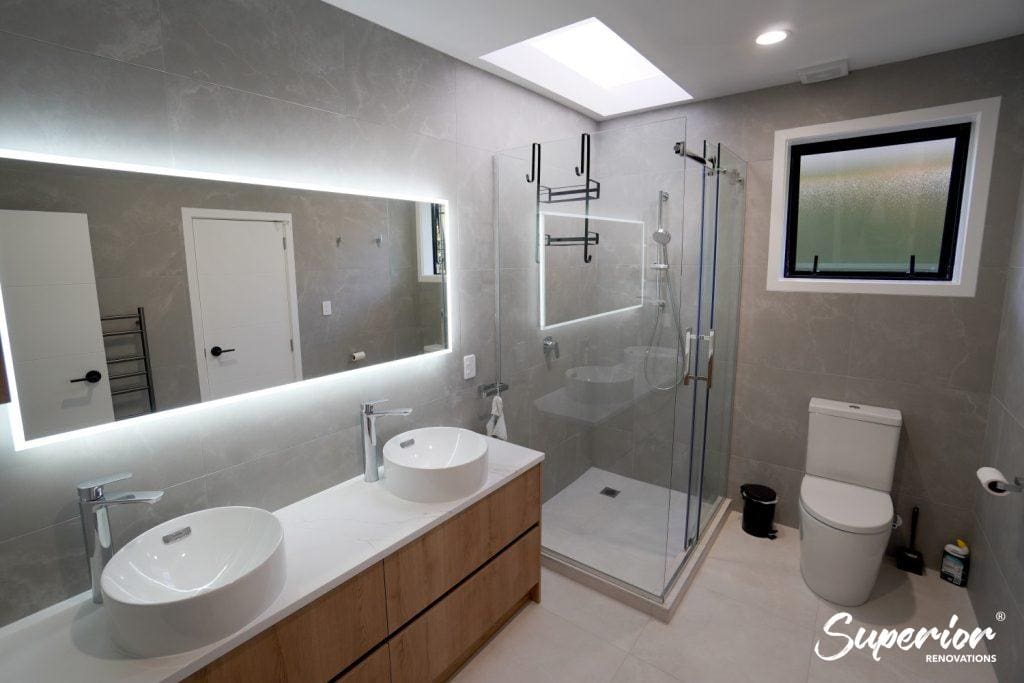
An underused wardrobe became a frameless glass shower, double vanity, and eco-friendly fixtures — neutral, sophisticated, and exactly the kind of feature Remuera buyers expect. The $28,000 project added an estimated $40,000 in value. The ensuite’s connection to the master bedroom was seamless, and it was consistently mentioned by agents as the property’s standout element.
“Our Remuera clients love their new ensuite — it’s their personal retreat and a feature that’s sure to impress future buyers.”
A master ensuite is one of those renovations that improves how you live in the property now and performs strongly when you’re ready to sell. Quality specification and proportionate spend are what make it work.
Bathroom Renovation: A Consistent Performer in Auckland’s Property Market
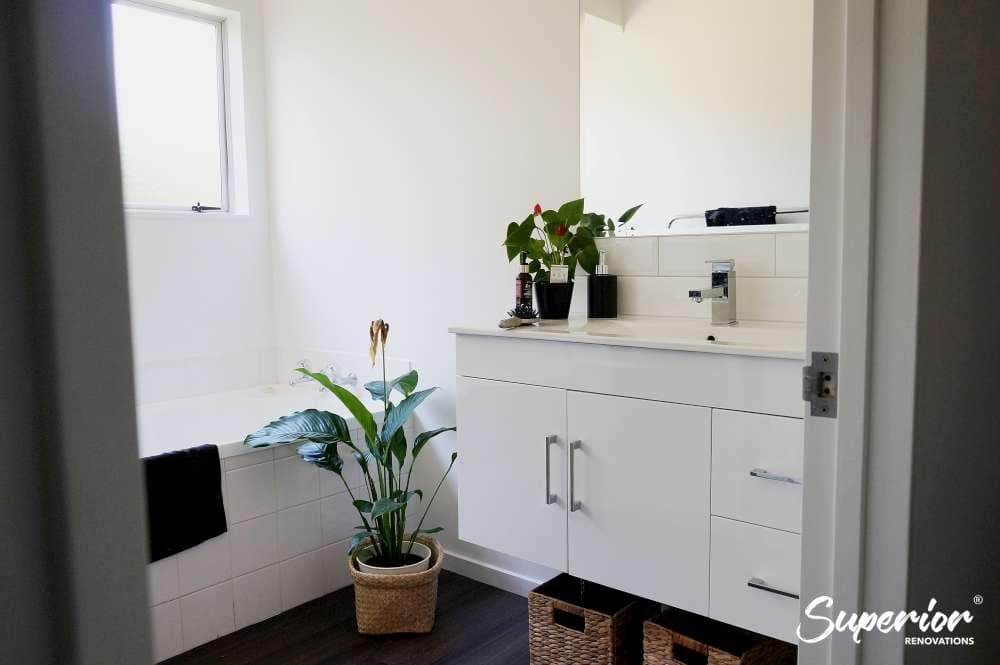
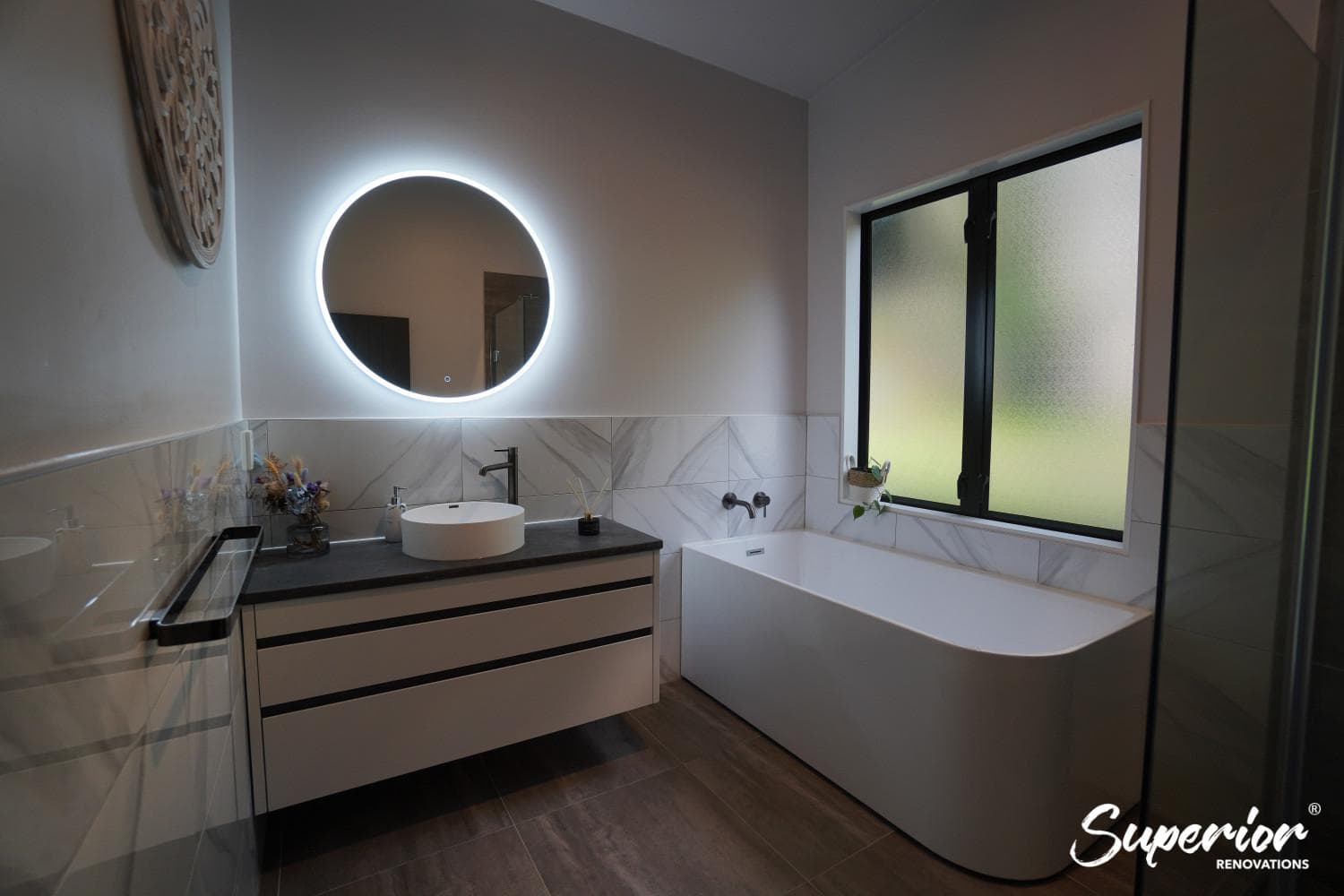
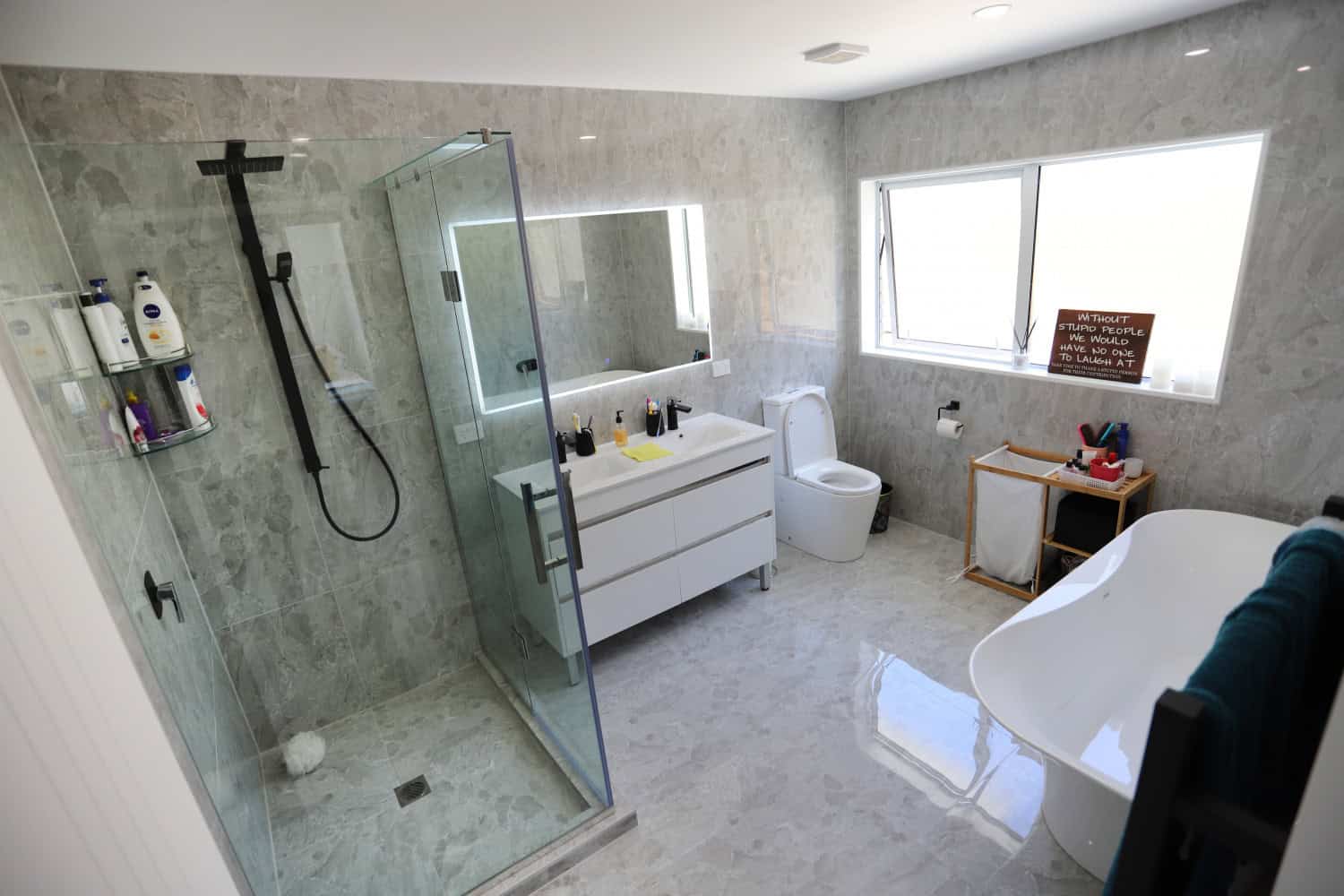
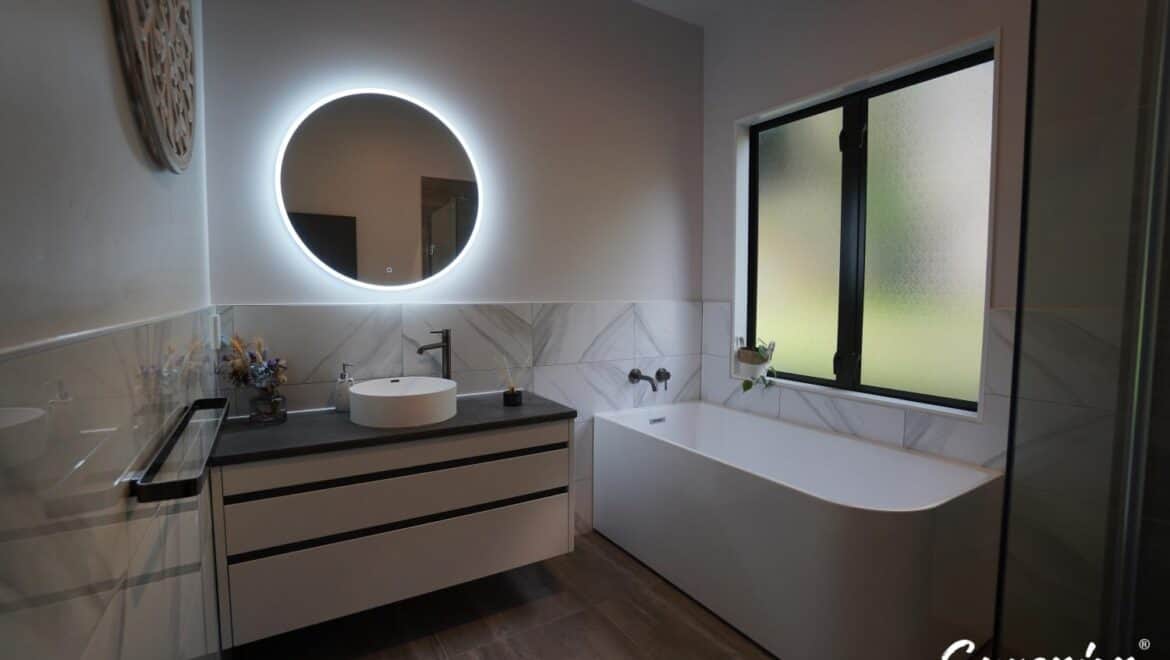
A dated bathroom does disproportionate damage to buyer perception. Cracked tiles, old tapware, and insufficient storage signal deferred maintenance rather than a single room in need of work. A well-executed bathroom renovation at $15,000–$30,000 typically adds $20,000–$40,000 to an Auckland home’s value, making it one of the more reliable mid-range renovation investments available.
Why a Bathroom Renovation Boosts Home Value
Buyers across Auckland’s price bands — Mt Eden, Takapuna, Manukau — are consistent on this point: they want bathrooms that don’t require immediate work. A refreshed bathroom communicates care and readiness in a way that photographs well and holds up on inspection. Dorothy Li from Superior Renovations notes that bathrooms are one of the primary selling points for Auckland homes when they get the balance of practicality and quality right.
“A modern bathroom isn’t just about aesthetics — it’s a functional space that Auckland buyers see as a non-negotiable for their next home.”
From Henderson to Remuera, the principle is the same — durability, good design, and a finish that doesn’t immediately look like it needs changing again.
Key Features of a High-Value Bathroom Renovation
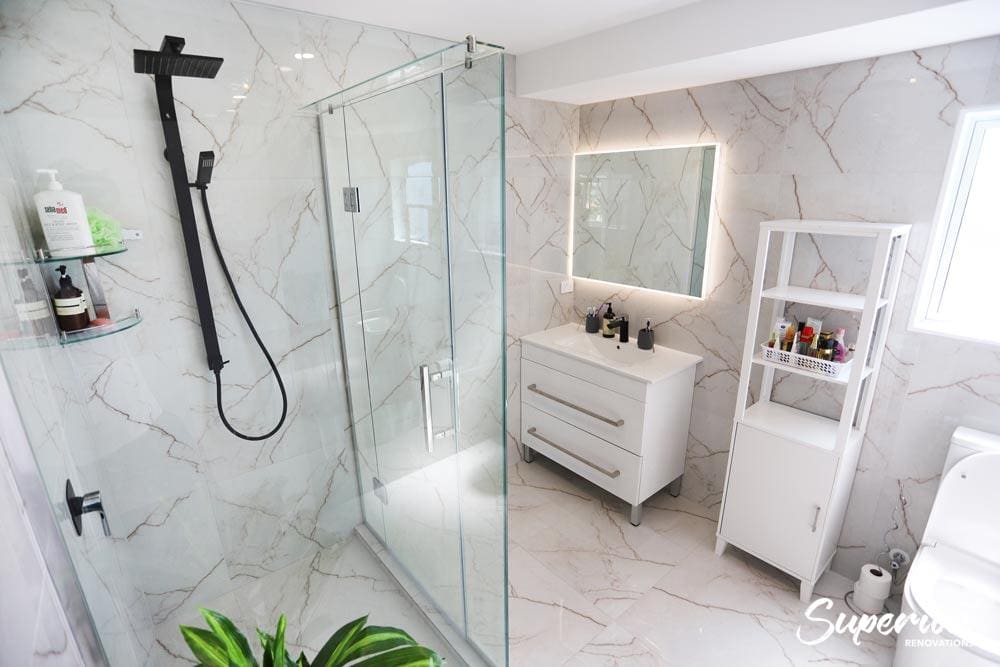
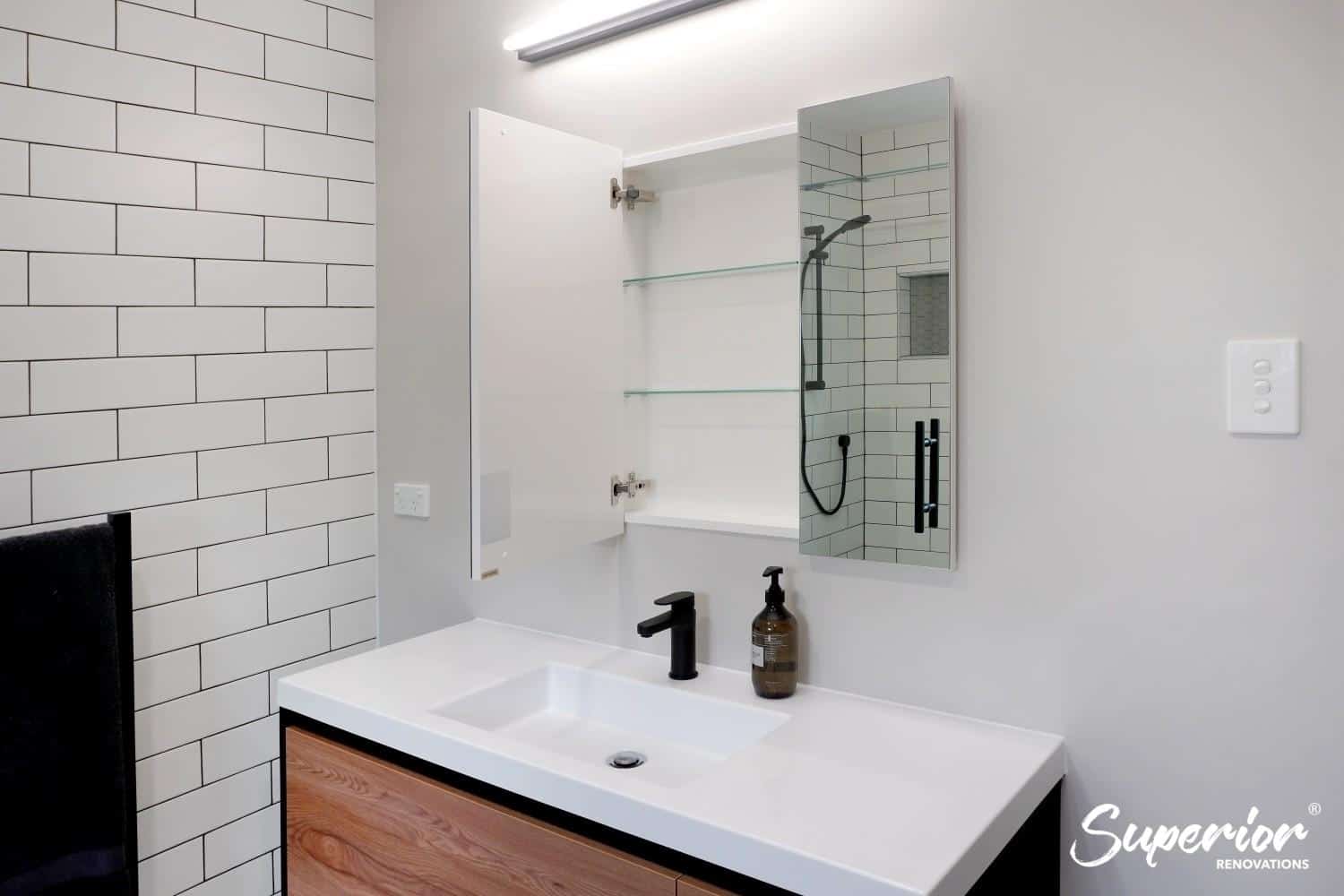
- Walk-in showers: Frameless glass is the dominant preference among Auckland buyers — accessible, visually open, and easy to maintain. Particularly valued in family homes and properties suited to aging-in-place buyers.
- Quality waterproofing: Auckland’s humidity requires serious waterproofing investment. High-quality membranes and sealants are the difference between a bathroom that performs and one that develops mould problems within a few years.
- Eco-friendly fixtures: Water-saving showerheads, dual-flush toilets, and LED lighting reduce running costs and register with Auckland’s increasingly sustainability-focused buyer pool.
- Timeless design: Resene’s Sea Fog or Black White, textured tiles, natural stone accents — finishes that won’t read as dated in five years.
- Smart storage: Built-in niches, floating vanities, mirrored cabinets — space is at a premium in many Auckland homes, and bathroom storage is consistently undervalued until it’s missing.

Cost vs. Value: Calculating Bathroom ROI
ROI = (Increase in Home Value – Renovation Cost) / Renovation Cost x 100
A $20,000 bathroom remodel that increases your home’s value by $28,000:
($28,000 – $20,000) / $20,000 x 100 = 40%
In Grey Lynn or Devonport, bathroom renovations achieve ROIs of 60–75% — particularly in homes with a single bathroom where the addition of a second facility is not practical. Keeping spend proportionate matters: $25,000 on a bathroom for an $800,000 home is sensible; the same spend on a $400,000 property requires more careful consideration, per Building Guide NZ.
| Bathroom Type | Estimated Cost (NZD) | Potential ROI | Key Features |
|---|---|---|---|
| Basic Refresh | $10,000–$15,000 | 55–70% | New fixtures, paint, basic tiles |
| Mid-Range Remodel | $15,000–$30,000 | 60–75% | Walk-in shower, floating vanity |
| Luxury Renovation | $35,000+ | 50–65% | Freestanding bath, premium tiles |
“Bathroom spend should be proportionate to the property value — the mid-range tier consistently delivers the strongest ROI for most Auckland homes.”
Planning Your Bathroom Renovation in Auckland
- Set a realistic budget: Materials, labour, permits, and a 10–15% contingency for plumbing surprises common in older Auckland homes. Our renovation costs guide covers this in detail.
- Licensed tradespeople: Plumbing, electrical, and waterproofing work must comply with the NZ Building Code, per the New Zealand Government.
- Council consent: Major plumbing or structural changes need Auckland Council approval. Consent fees typically run $1,000–$3,000.
- Work with a designer: Compact bathrooms need good layout decisions. A designer prevents the expensive mistake of committing to a configuration that doesn’t actually work.
- Source locally: Mitre 10 and PlaceMakers stock quality tiles, fixtures, and vanities at realistic Auckland prices.
Local Considerations for Auckland Bathrooms
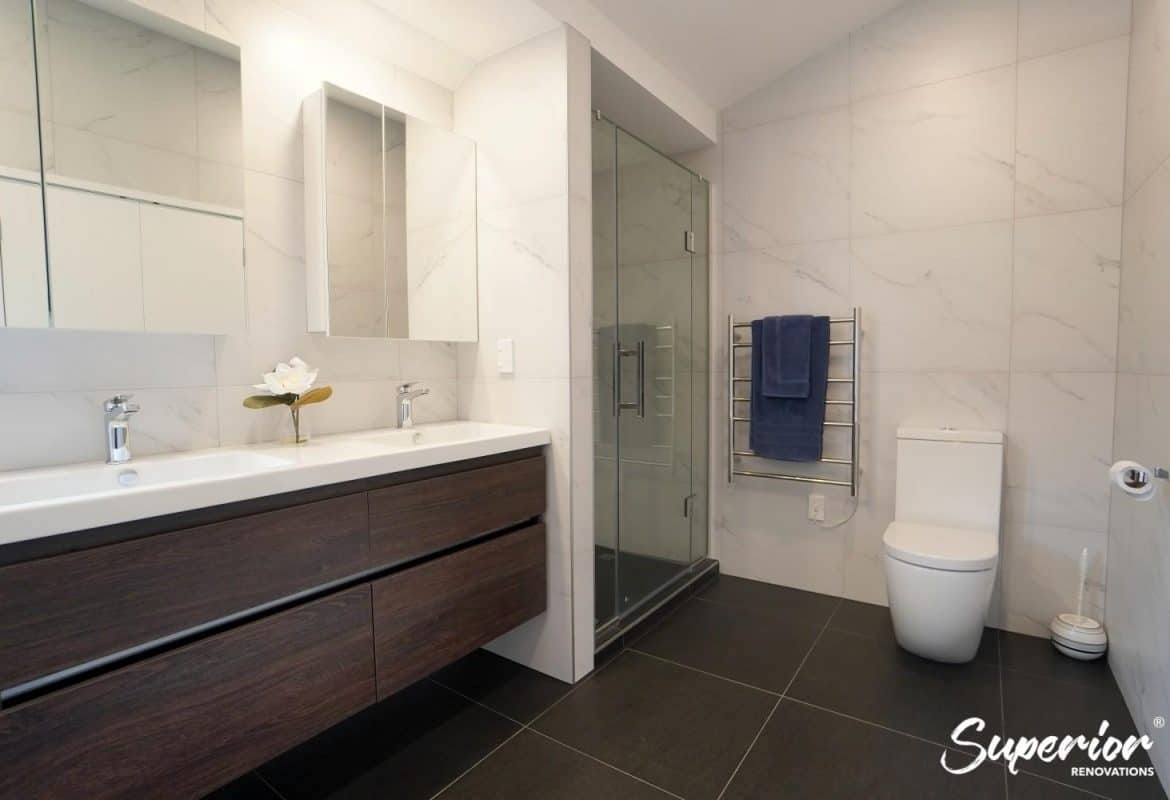
Waterproofing and ventilation are the two variables that determine whether a bathroom holds up in Auckland’s climate — not optional decisions. Mission Bay and St Heliers are the most demanding environments for this. Smaller homes in Mt Albert or Onehunga benefit most from wall-mounted vanities and corner showers that recover usable floor space. Parnell and Herne Bay support premium specification — quality tiles and statement vanities — if the property value can absorb it. Water-efficient fixtures are increasingly a positive signal for Auckland buyers who are thinking about running costs.
“In Auckland, a bathroom that’s durable, well-designed, and eco-friendly gets noticed by buyers — and by agents advising on what the property is worth.”
See our bathroom renovation ideas for design direction suited to Auckland homes.
Common Mistakes to Avoid
- Overcapitalising: A $40,000 bathroom in a $500,000 home is a budget problem, not a renovation strategy.
- Inadequate ventilation: Mould is expensive to remediate and immediately visible to buyers. A quality extractor fan is a basic requirement.
- Trend-driven design: Bold colour choices or niche styling limit buyer appeal. Neutral and timeless consistently outperforms.
- Unpermitted work: Fines and settlement delays. Check with Auckland Council before starting any significant plumbing or structural work.
Real-World Example: A Bathroom Transformation in Grey Lynn
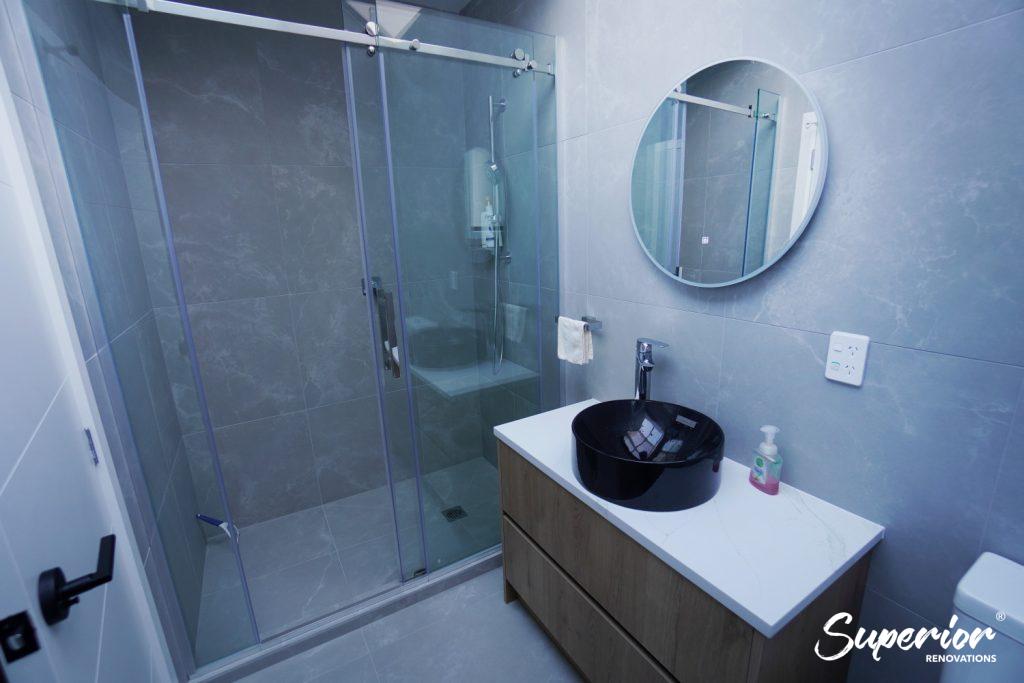
A cramped Grey Lynn villa bathroom — dated, poorly lit, and short on storage — became a neutral, functional space with a walk-in shower, floating vanity, and water-saving fixtures. Textured tiles added some warmth without narrowing buyer appeal. The $22,000 project added an estimated $32,000 in value. The open feel was the feature agents highlighted.
“Our Grey Lynn clients were happy with the result — it’s now the room that holds up during inspections rather than undermining them.”
A bathroom renovation done right — proper waterproofing, good layout decisions, durable materials — is one of the most reliable ways to add value and remove objections in an Auckland sale.
Upgrading Your Basement: Adding Floor Space Without Expanding the Footprint
In Auckland, where sections are often compact and extending outward isn’t always practical or permitted, a basement conversion offers a way to add genuinely usable floor space without touching the property’s footprint. A well-executed conversion at $30,000–$50,000 can increase a home’s value by $40,000–$70,000 — a strong return in suburbs like Ponsonby, Mt Eden, and Papatoetoe where additional living space is consistently in demand.
Why a Basement Upgrade Adds Significant Value
Most Auckland basements are used for storage or left entirely unfinished. Converting one into a functioning room — home office, guest suite, media room, or self-contained flat — changes the property’s floor plan without changing its building envelope. Buyers understand square metres. A property with a properly finished basement commands a different price than one without.
“A converted basement isn’t just extra space — it turns a storage liability into a liveable asset that buyers will pay for.”
From a home cinema in Devonport to a rental-ready flat in Henderson, the versatility of a converted basement appeals across Auckland’s diverse buyer pool — families needing space, investors seeking yield, and remote workers wanting a dedicated room away from the main living areas.
Key Features of a High-Value Basement Conversion
- Waterproofing and insulation: The two non-negotiables. Auckland’s humidity will find any gap in a basement membrane. Quality insulation makes the space comfortable year-round, not just in summer.
- Natural light: Egress windows or light wells are what prevent a converted basement from feeling like a converted basement. Dorothy Li at Superior Renovations consistently highlights this as the feature that makes or breaks buyer perception of these spaces.
- Versatile layout: A room that can be a bedroom, office, or media space without significant reconfiguration appeals to a wider range of buyers than one designed for a single use.
- Moisture-resistant flooring: Ceramic tiles or vinyl planks handle Auckland’s conditions and present well without requiring the maintenance that timber or carpet demand in a below-grade space.
- Separate access: Where the layout allows, a separate entrance creates the option for a self-contained flat — a significant addition in Auckland’s rental market.

Cost vs. Value: Calculating Basement ROI
ROI = (Increase in Home Value – Renovation Cost) / Renovation Cost x 100
A $40,000 basement conversion that increases your home’s value by $55,000:
($55,000 – $40,000) / $40,000 x 100 = 37.5%
In Herne Bay or Takapuna, basement conversions achieve ROIs of 50–70% — stronger in homes where additional living space is scarce. $50,000 in a $1.2M property is a proportionate investment; the same spend in a $600,000 home requires more careful assessment, per Building Guide NZ.
| Basement Type | Estimated Cost (NZD) | Potential ROI | Key Features |
|---|---|---|---|
| Basic Conversion | $20,000–$30,000 | 50–65% | Basic finishes, single room |
| Mid-Range Conversion | $30,000–$50,000 | 55–70% | Multiple rooms, egress windows |
| Self-Contained Flat | $60,000+ | 50–65% | Separate entrance, kitchenette |
“A basement conversion should add usable floor space without overcommitting — match the investment to the property value and what the market in your suburb supports.”
Planning Your Basement Conversion in Auckland
- Assess the space first: Dampness, low ceilings, and structural issues are common in Auckland’s older villa basements. A professional assessment before committing to a design is time and money well spent.
- Licensed tradespeople: Structural, plumbing, and electrical work must comply with the NZ Building Code, per the New Zealand Government.
- Council consent: Converting a basement to habitable space or adding a separate entrance requires Auckland Council approval. Consent fees typically run $1,500–$5,000.
- Designer input: Layout, light, and ventilation are the three variables that determine whether a basement conversion feels like a legitimate room or a storage area with paint on the walls.
- Local suppliers: Mitre 10 and Bunnings stock the insulation, flooring, and lighting materials these projects require at competitive Auckland prices.
Local Considerations for Auckland Basements
Moisture is the primary challenge — non-negotiable waterproofing, particularly in low-lying suburbs like Onehunga or coastal areas like Mission Bay. Natural light is the feature that separates a finished basement from a dark space buyers don’t know what to do with — egress windows or skylights are worth the investment. In Parnell or St Heliers, buyers expect finished quality — quality flooring and built-in storage support the premium price. For rental yield, a kitchenette and separate entrance changes what the property can offer to investors and multi-generational families — a growing need in Auckland’s market.
“In Auckland, a basement that’s dry, light, and genuinely liveable is one fewer objection at inspection and one more reason to make an offer.”
Common Mistakes to Avoid
- Overcapitalising: $70,000 in a $700,000 home requires a specific return calculation. Run the numbers before committing.
- Cutting waterproofing costs: Dampness in a basement is the problem that derails sales. Quality membranes upfront are significantly cheaper than remediating the alternative.
- Underinvesting in light: A dark basement deters buyers regardless of everything else. Egress windows are not optional.
- Skipping consents: Unpermitted habitable space creates settlement problems. Always check with Auckland Council.

Real-World Example: A Basement Conversion in Mt Eden
A damp, unused Mt Eden villa basement became a home office and guest suite — egress windows, robust waterproofing, and vinyl plank flooring created a bright, practical space that works for remote work and guests equally well. The $35,000 project added an estimated $50,000 to the home’s value. The flexibility of the space was what agents highlighted during the eventual sale.
“Our Mt Eden clients use the basement daily — it’s the room that makes the whole house work better, and it showed in the sale price.”
A basement conversion adds floor space, buyer appeal, and flexibility. Quality waterproofing, sufficient light, and a versatile layout are the decisions that determine whether the investment returns what it should.
Exterior Refresh: First Impressions That Hold Up to Scrutiny
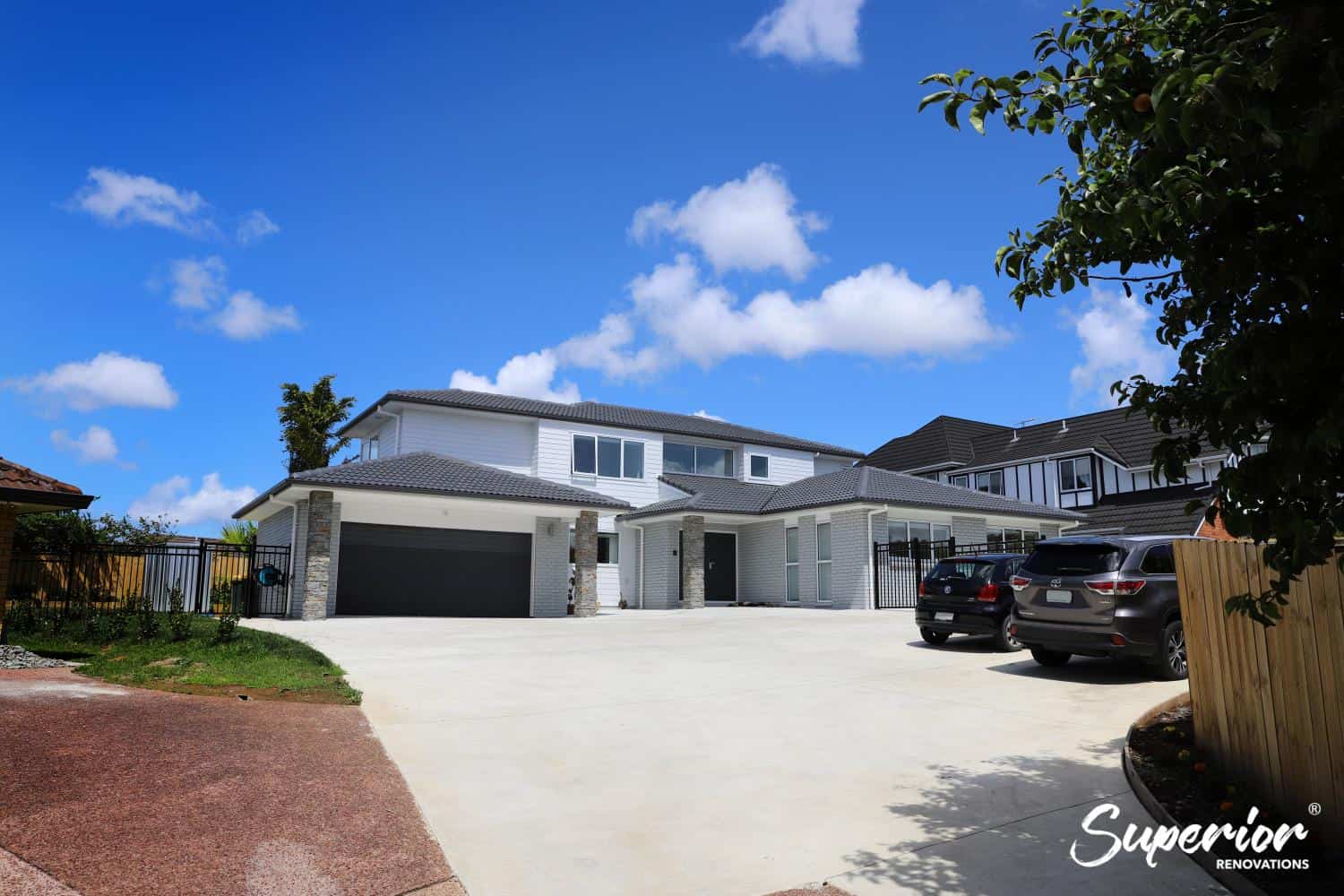
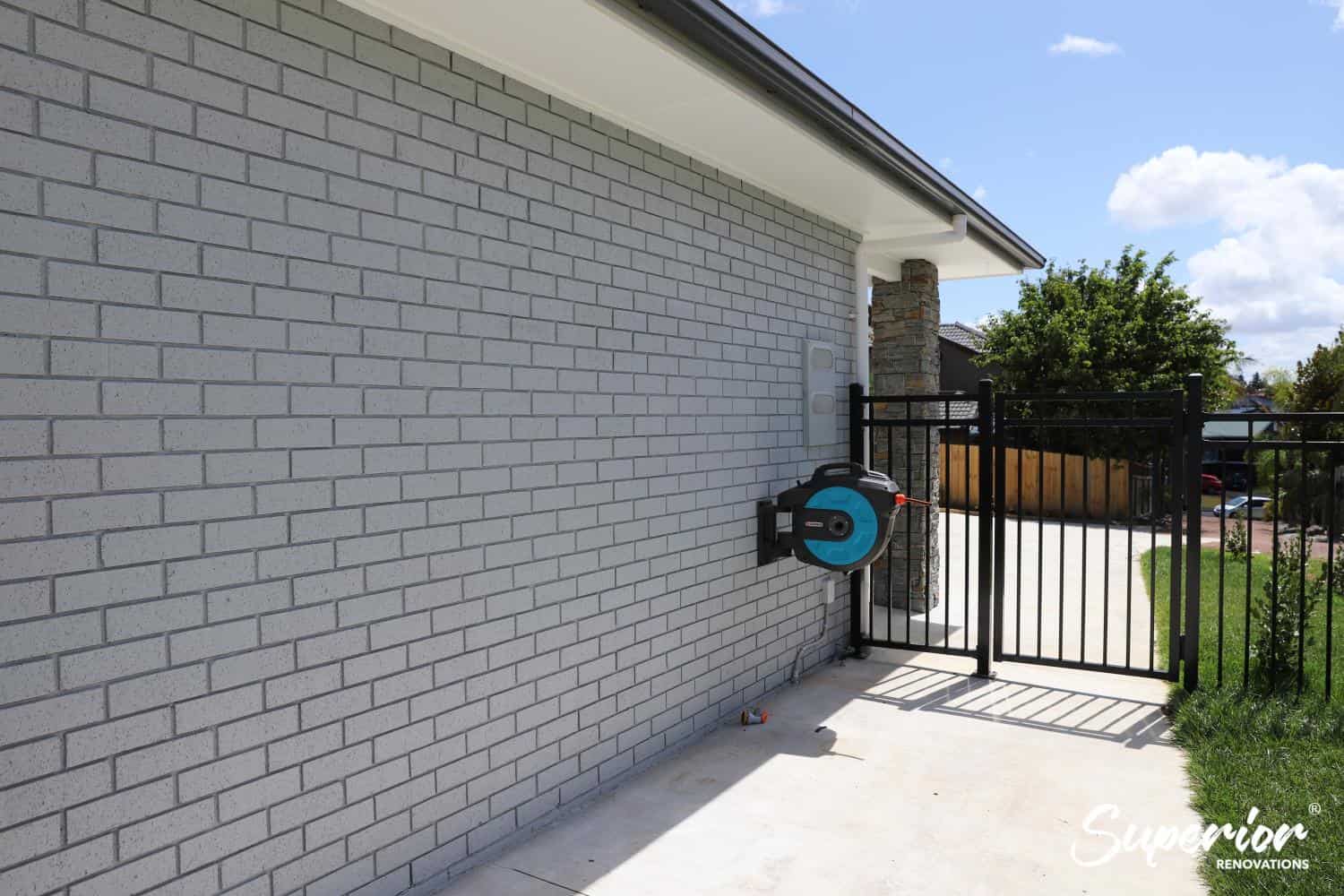
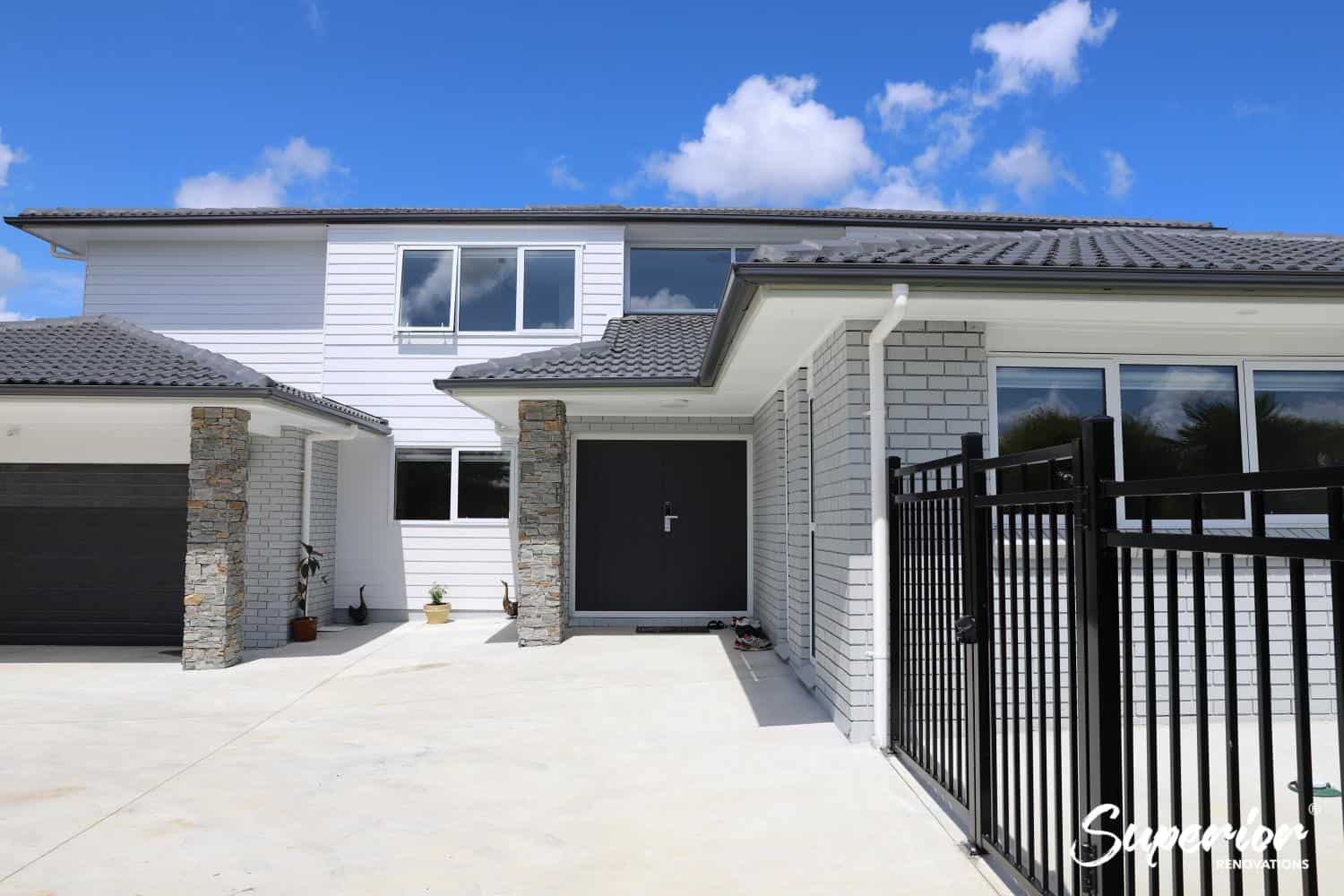
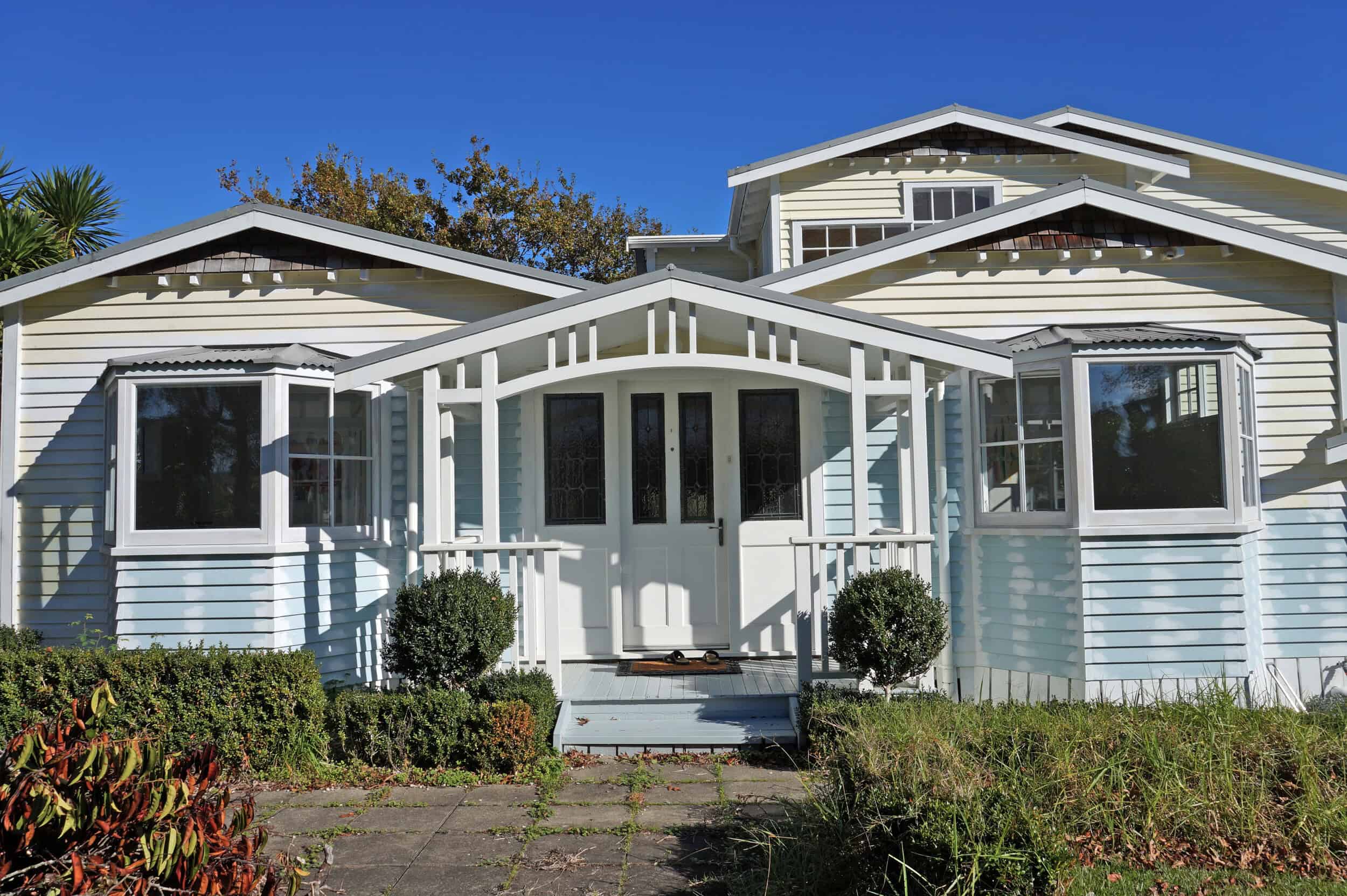
In Auckland’s property market, a buyer’s first impression of a property is formed before they step through the front door. Peeling paint, tired weatherboards, and an overgrown garden signal deferred maintenance — a story buyers then apply to everything else they see inside. An exterior refresh at $5,000–$25,000 is one of the most cost-effective ways to reposition a property’s perception, typically returning $10,000–$25,000 in added value, per Building Guide NZ.
Why an Exterior Refresh Boosts Home Value
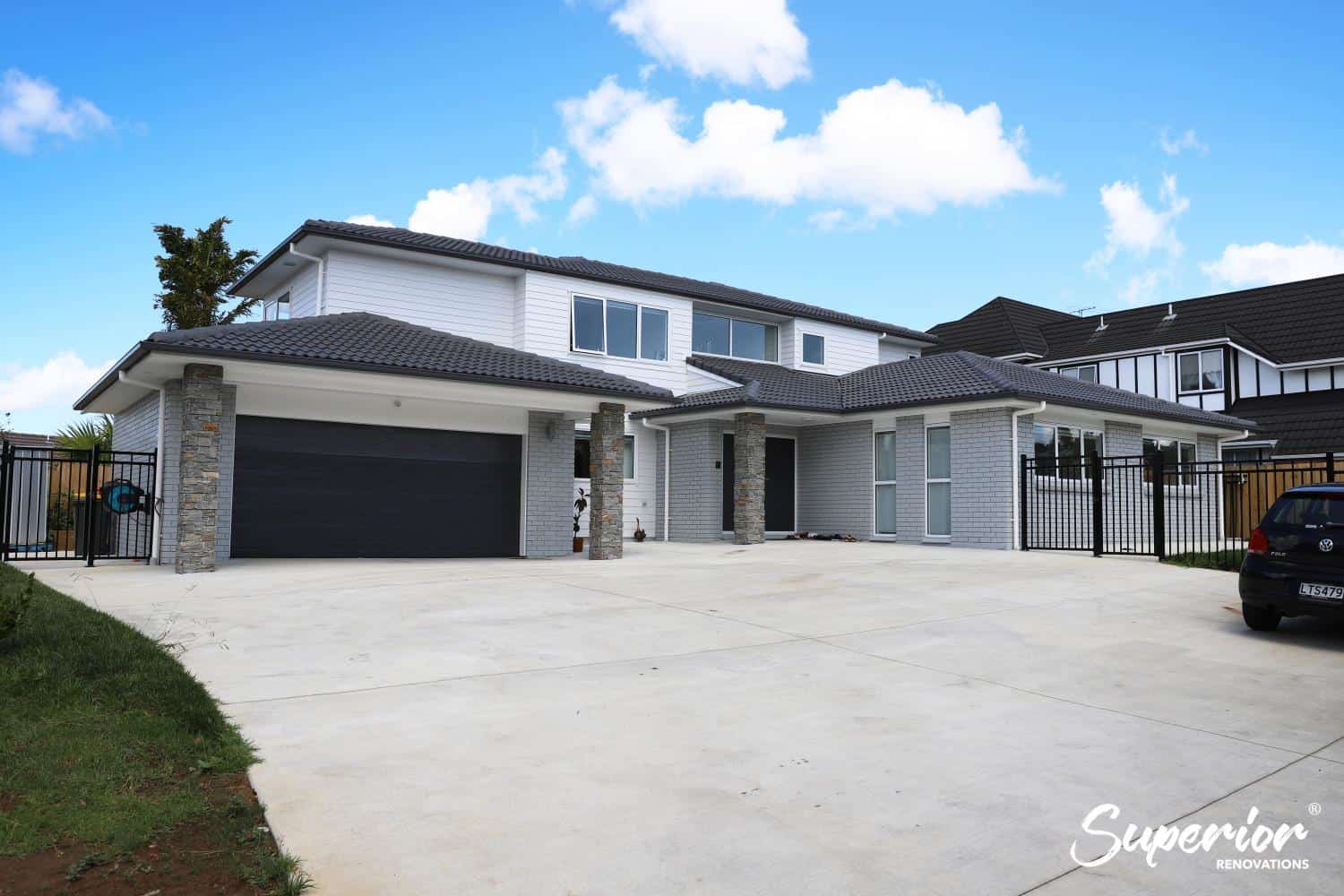
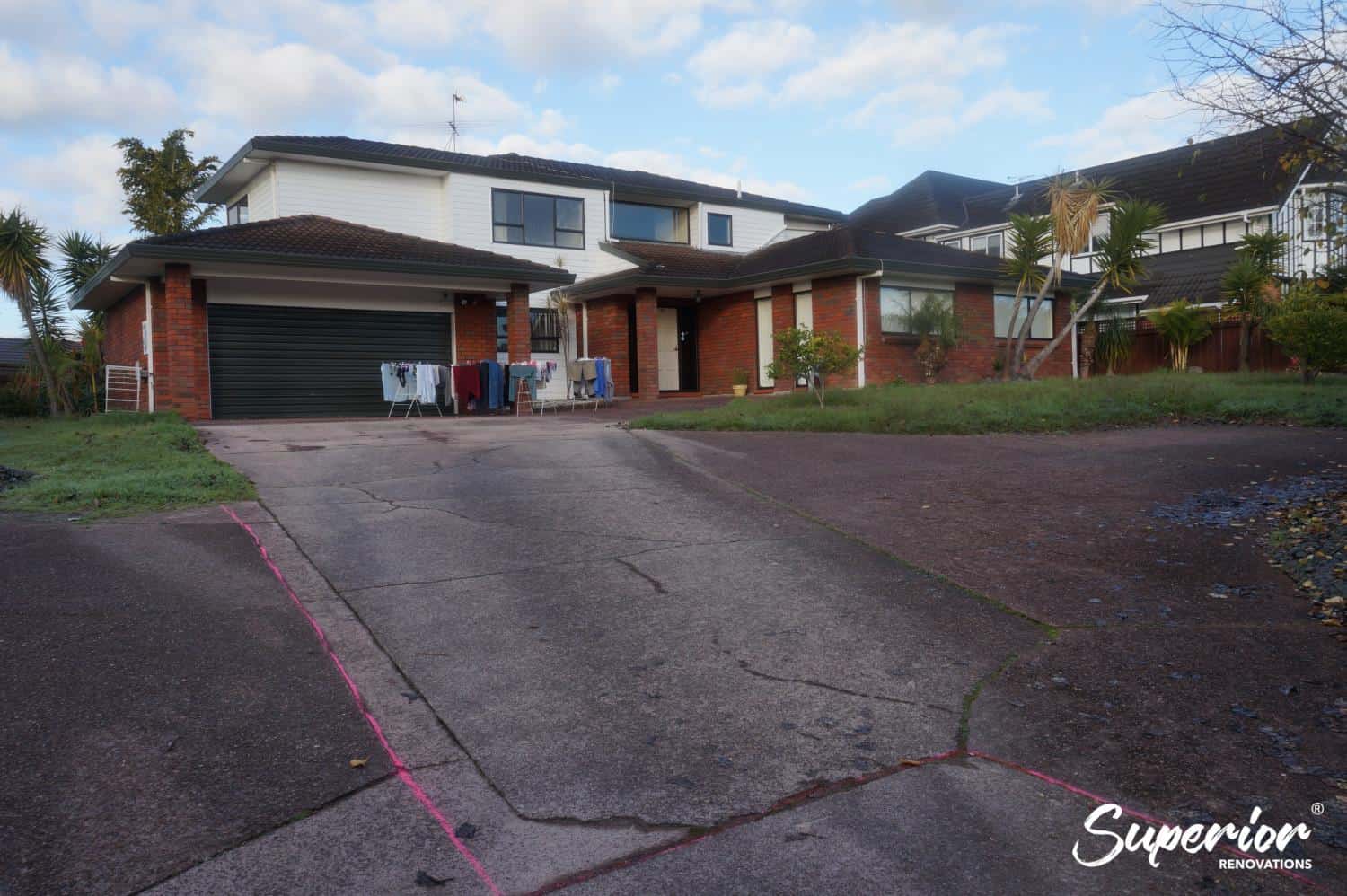
A polished exterior communicates care. It tells buyers the property has been looked after — and that presumption carries through to their assessment of everything else. Fresh paint or updated cladding can increase home value by 3–5%, per Superior Renovations data. A $15,000 exterior refresh can add $20,000–$30,000 to a home’s value in high-demand suburbs like Remuera or Takapuna.
“A well-presented exterior doesn’t just improve photographs — it changes how buyers feel about the property before they’ve seen a single room.”
Heritage villas in Ponsonby, brick-and-tile bungalows in Mt Albert, modern builds in Botany Downs — exterior refresh applies across all Auckland property types. The specification changes; the principle doesn’t.

Key Features of a High-Value Exterior Refresh
- Fresh exterior paint: Resene’s Lumbersider in neutral tones like Sea Fog is durable, widely appealing, and protects the underlying substrate from Auckland’s moisture.
- Updated cladding: Timber weatherboards for heritage suburbs like Herne Bay; modern panels for newer builds in Newmarket or Albany. Match the material to the home’s character and suburb.
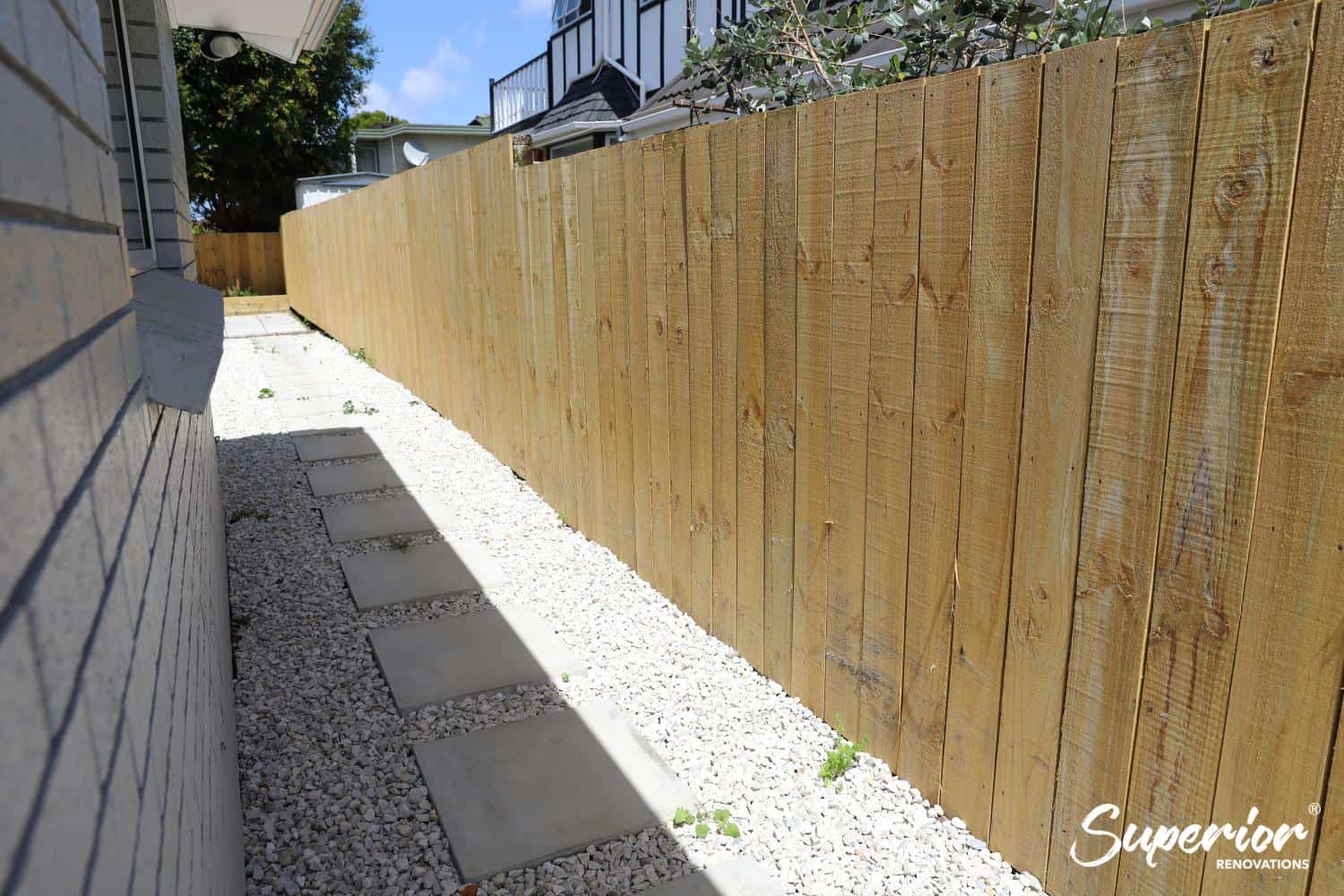
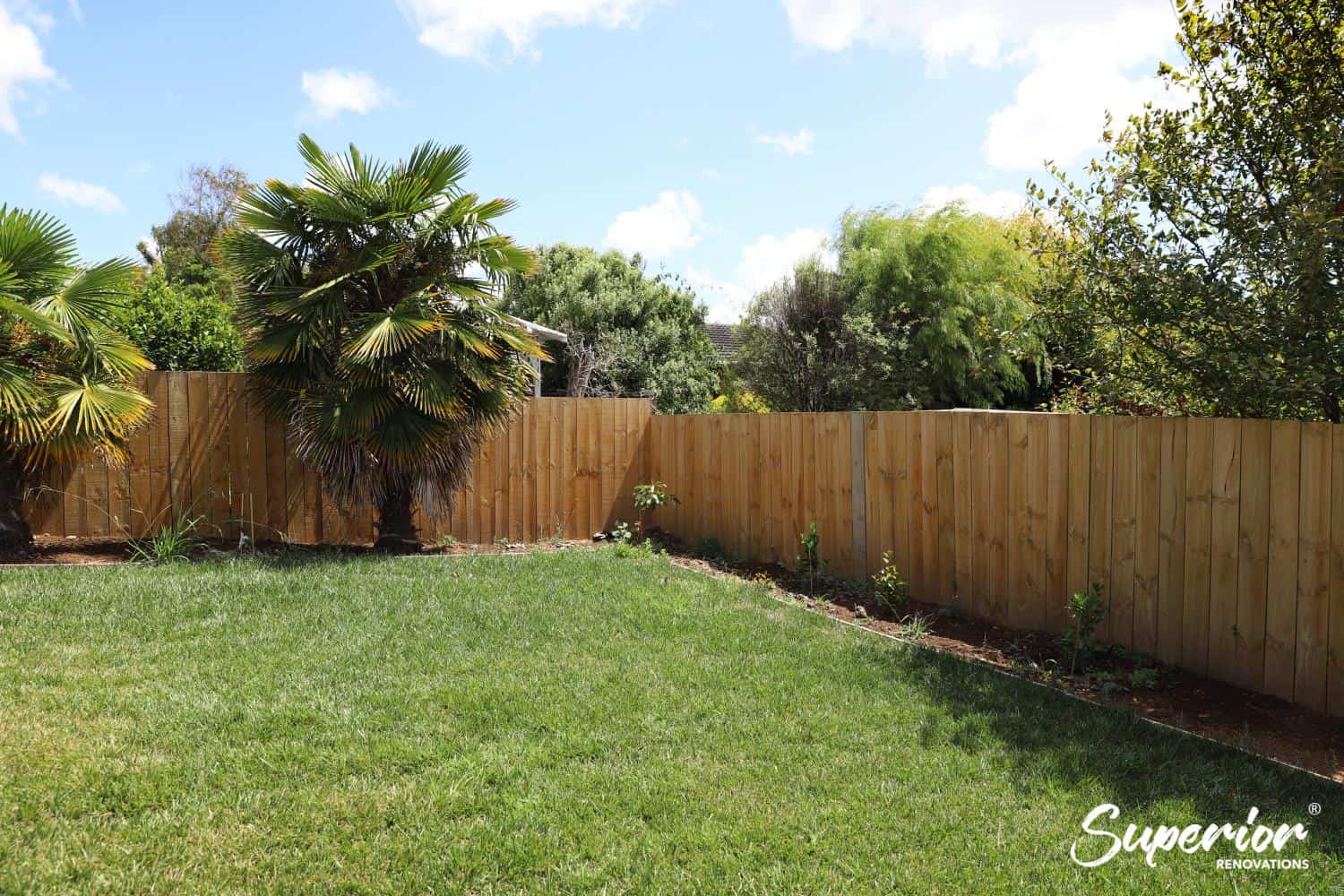
- Native landscaping: Flax, pohutukawa, and native ground cover paired with mulch — low maintenance, ecologically appropriate, and visually considered.
- Front door replacement: A well-specified steel or fibreglass door updates the entry immediately and can return up to 100% of its cost in buyer perception.
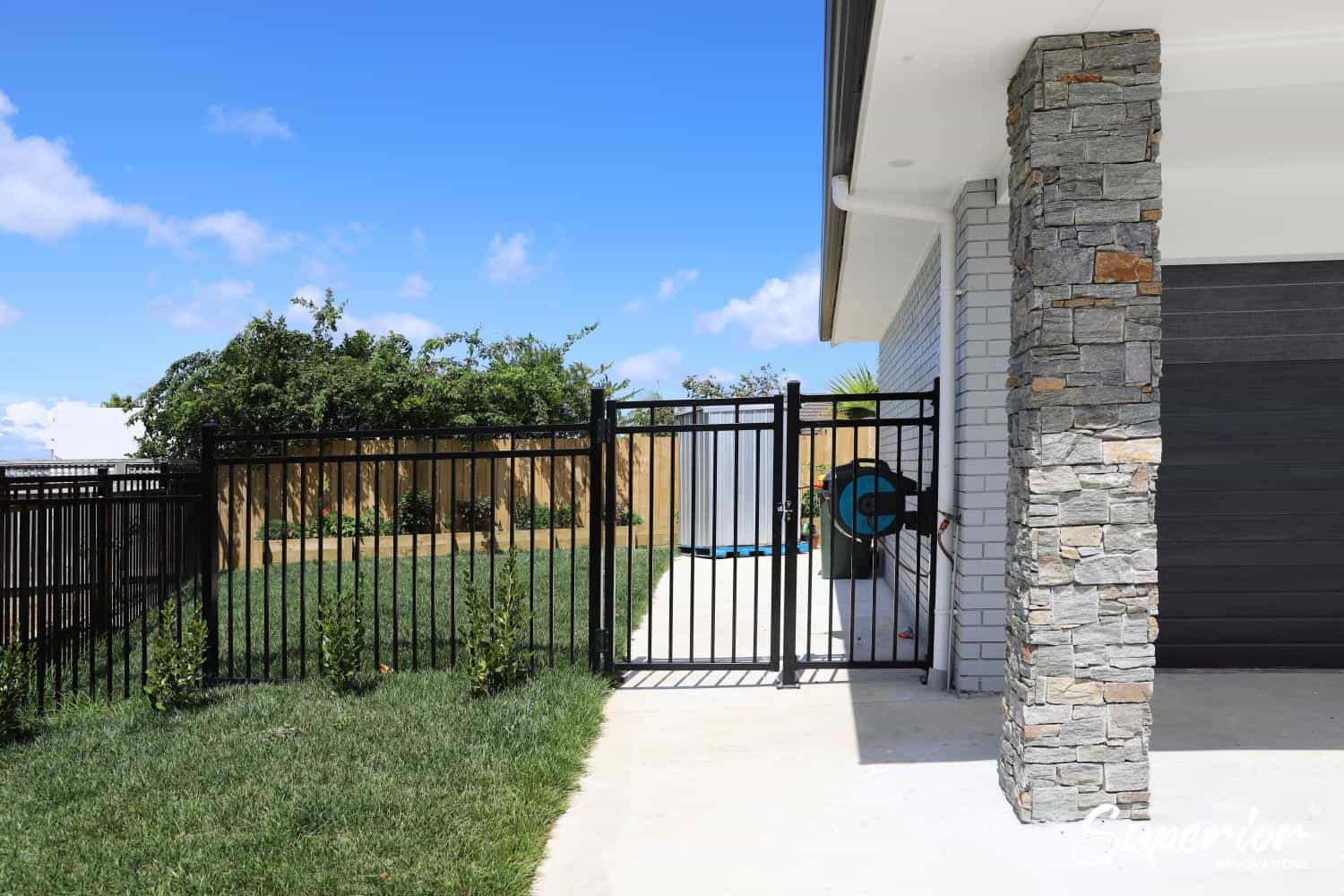
- Outdoor features: A pathway, small patio, or pergola adds usability and improves how the property photographs.
Cost vs. Value: Calculating Exterior ROI
ROI = (Increase in Home Value – Renovation Cost) / Renovation Cost x 100
A $15,000 exterior refresh that adds $22,500 to the property value:
($22,500 – $15,000) / $15,000 x 100 = 50%
In Parnell or Devonport, exterior upgrades achieve ROIs of 60–70% — particularly for heritage homes where presentation relative to other properties in the street makes a meaningful difference. $20,000 is appropriate for a $1M property; the same spend on a $600,000 home needs more careful consideration, per Renovation Works.
| Exterior Upgrade | Estimated Cost (NZD) | Potential ROI | Key Features |
|---|---|---|---|
| Basic Refresh | $5,000–$10,000 | 50–65% | Paint, basic landscaping |
| Mid-Range Upgrade | $10,000–$20,000 | 55–70% | Cladding, new door, pathways |
| Premium Upgrade | $25,000+ | 50–65% | Full recladding, extensive landscaping |
“Exterior spend should be proportionate to the property value — a well-executed mid-range refresh consistently outperforms expensive recladding in most Auckland suburbs.”
Planning Your Exterior Refresh in Auckland
- Budget honestly: Materials, labour, and a 10–15% contingency for damaged substrate or cladding — common in older Auckland homes. Our renovation costs guide covers this.
- Licensed professionals: Painting, cladding, and structural work must comply with the NZ Building Code, per the New Zealand Government.
- Council consent for major work: Recladding or fences over 2.5m require Auckland Council approval. Fees of $1,000–$3,000 are typical, per Auckland Council.
- Colour consultant: Worth using for heritage properties or where the colour choice has significant impact on street presence. Gets the right result first time.
- Local suppliers: Resene, Mitre 10, and Kings Plant Barn keep material costs in check and stock appropriate NZ products.

Local Considerations for Auckland Exteriors
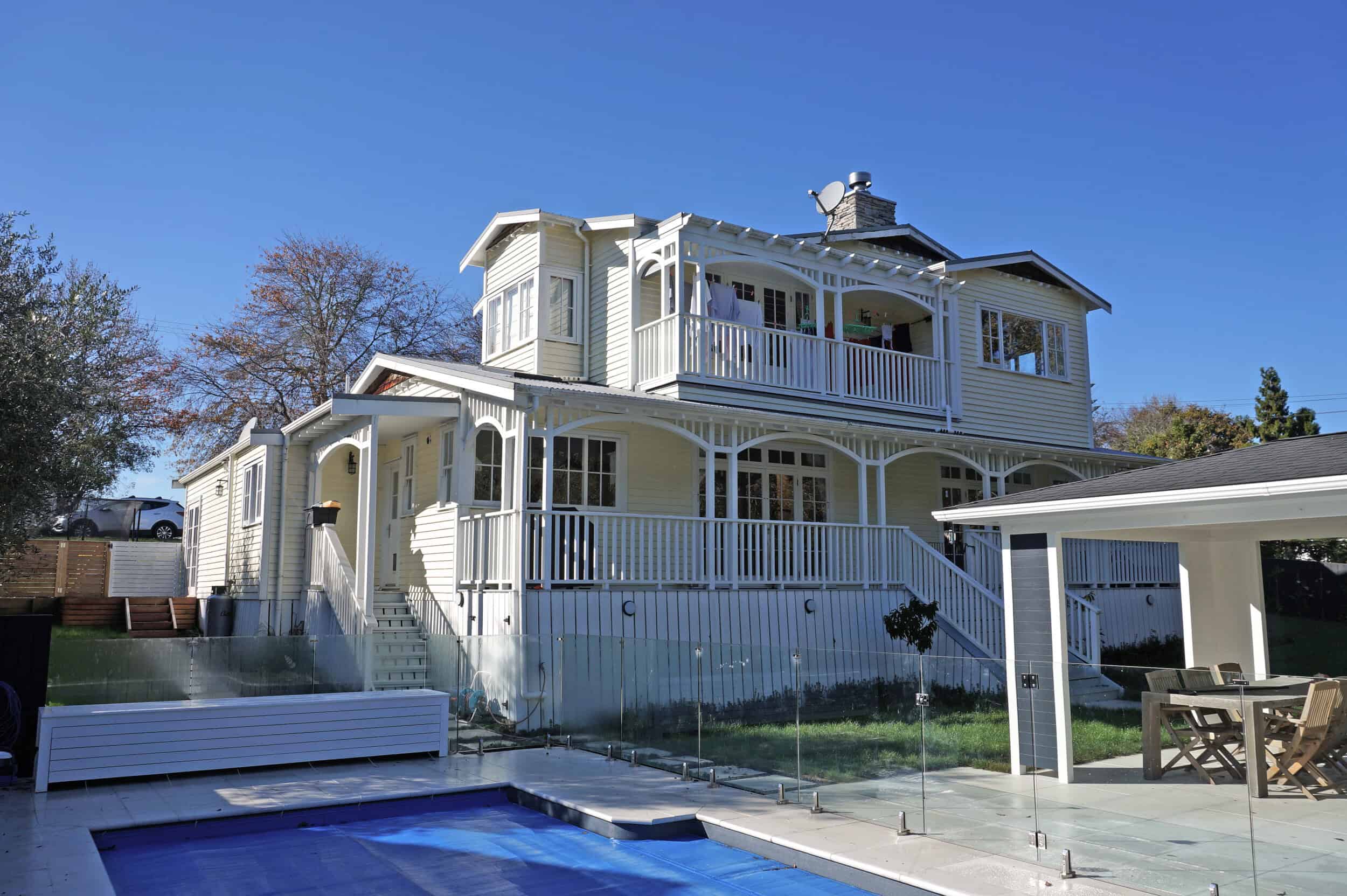
Auckland’s humidity and coastal salt air require weather-resistant paints and durable cladding that won’t fail within a few years of application. Mission Bay and St Heliers are the harshest environments; anything used here needs to be rated for coastal exposure. Heritage zones in Ponsonby and Freemans Bay have specific requirements — traditional colour palettes and timber weatherboards are expected, and council restrictions are real. Modern homes in Albany and Botany Downs can support bolder accent colours and contemporary cladding. Native landscaping is increasingly a marker of care for Auckland’s eco-conscious market rather than a nice-to-have.
“In Auckland, a well-presented exterior that suits the suburb’s character is worth more than one that simply looks expensive.”
Common Mistakes to Avoid
- Overcapitalising: $30,000 on a $500,000 property needs a clear return calculation. Don’t assume spending more automatically adds more value.
- Low-quality materials: Cheap paint and substandard cladding fail quickly in Auckland’s climate. The cost of redoing this is greater than doing it properly the first time.
- Heritage zone non-compliance: Unapproved changes in Grey Lynn or similar zones trigger fines. Check before starting anything.
- Neglecting the garden: A freshly painted house with an untidy garden still reads as unmaintained. Landscaping completes the picture.
Real-World Example: An Exterior Transformation in Remuera
A tired Remuera bungalow — peeling paint, basic garden — received Resene Alabaster exterior paint, new weatherboard cladding, and native flax with gravel pathways. The $18,000 project added an estimated $28,000 in value. The property’s street presence changed substantially, and the exterior became the feature that differentiated it from comparable properties listed nearby.
“Our Remuera clients were direct about it — the kerb appeal is what pulled people in to inspect. Everything else closed the deal.”
An exterior refresh changes what a property says about itself before anyone walks through the front door. For the cost involved, it’s one of the most straightforward ways to improve buyer perception and add genuine value in Auckland’s market.
Energy-Efficient Upgrades: Long-Term Value for Auckland Homes
Energy-efficient upgrades have moved from a nice-to-have to a genuine decision factor for Auckland buyers. Double-glazing, insulation, and solar panels reduce running costs and signal a forward-thinking property — relevant for families in Henderson, professionals in Newmarket, and investors assessing long-term holding costs. A $25,000 investment in energy efficiency can add $30,000–$40,000 to a home’s value, per Builder Connect NZ, with ROIs of 50–65% across Auckland’s suburbs. Warmer Kiwi Homes grants make some of these upgrades more accessible for eligible homeowners.
Why Energy-Efficient Upgrades Add Value
Buyers are doing the running-cost calculation now in a way they weren’t five years ago. A home with double-glazing, proper insulation, and LED lighting throughout presents differently in a listing and differently in an inspection. Energy-efficient windows can save 10–15% on heating and cooling bills, per Renovation Works — a real number that buyers factor into their assessment of affordability.
“An energy-efficient home costs less to run and signals a property that’s been maintained with long-term thinking — both matter to Auckland buyers.”
Retrofitting a Mt Eden villa or modernising a Manukau family home with efficiency upgrades aligns with Auckland’s sustainability direction and makes the property more competitive in a market where buyers have choices.
Key Upgrades Worth Prioritising
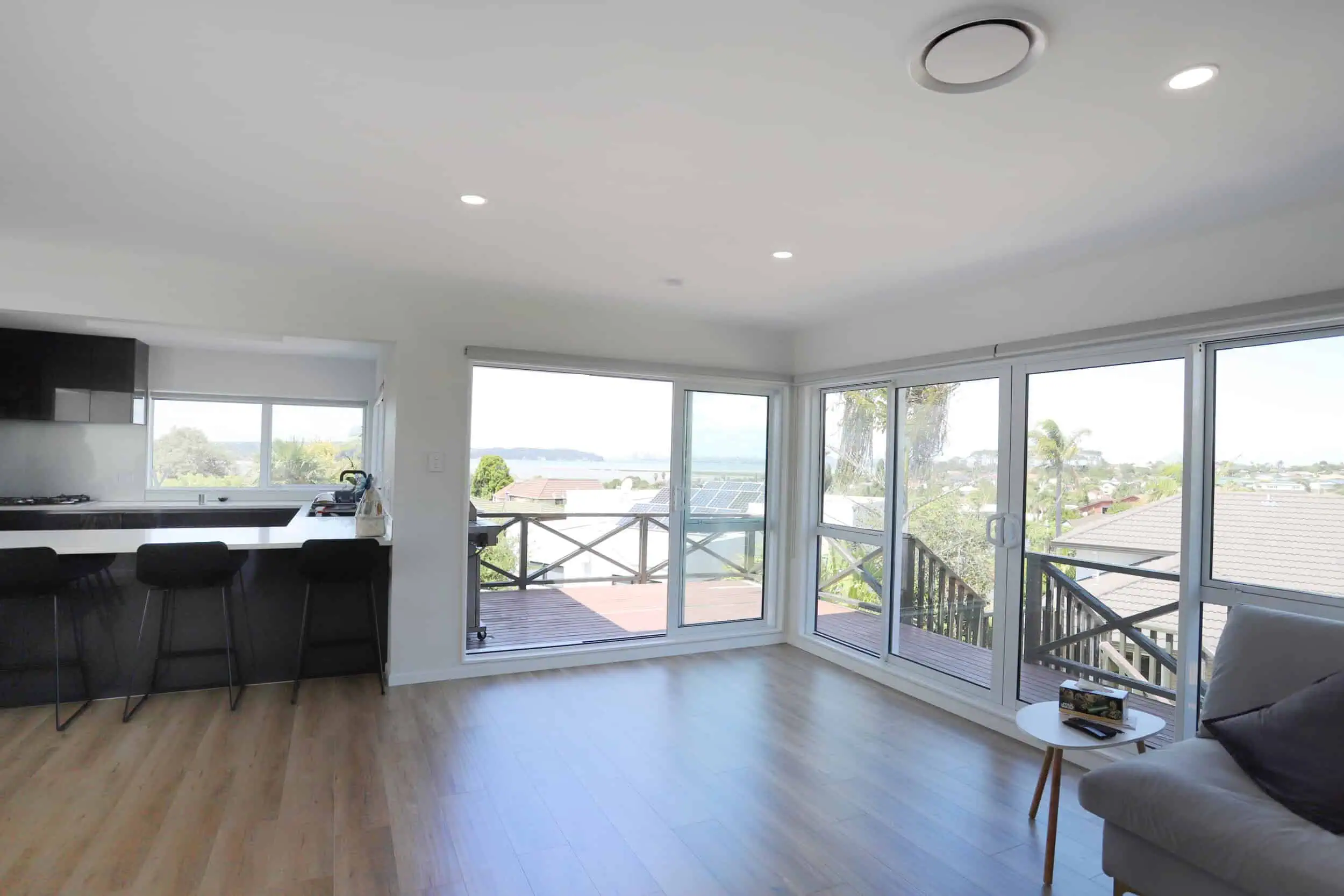
- Double-glazed windows: Reduce heat loss and noise — particularly valuable in coastal suburbs like Mission Bay. The energy saving is real and the comfort difference in an Auckland winter is significant.
- Insulation: Wall, roof, and floor insulation with eco-friendly materials (wool or recycled polyester) addresses Auckland’s humid winters directly. Warmer Kiwi Homes grants reduce the cost for eligible homeowners.
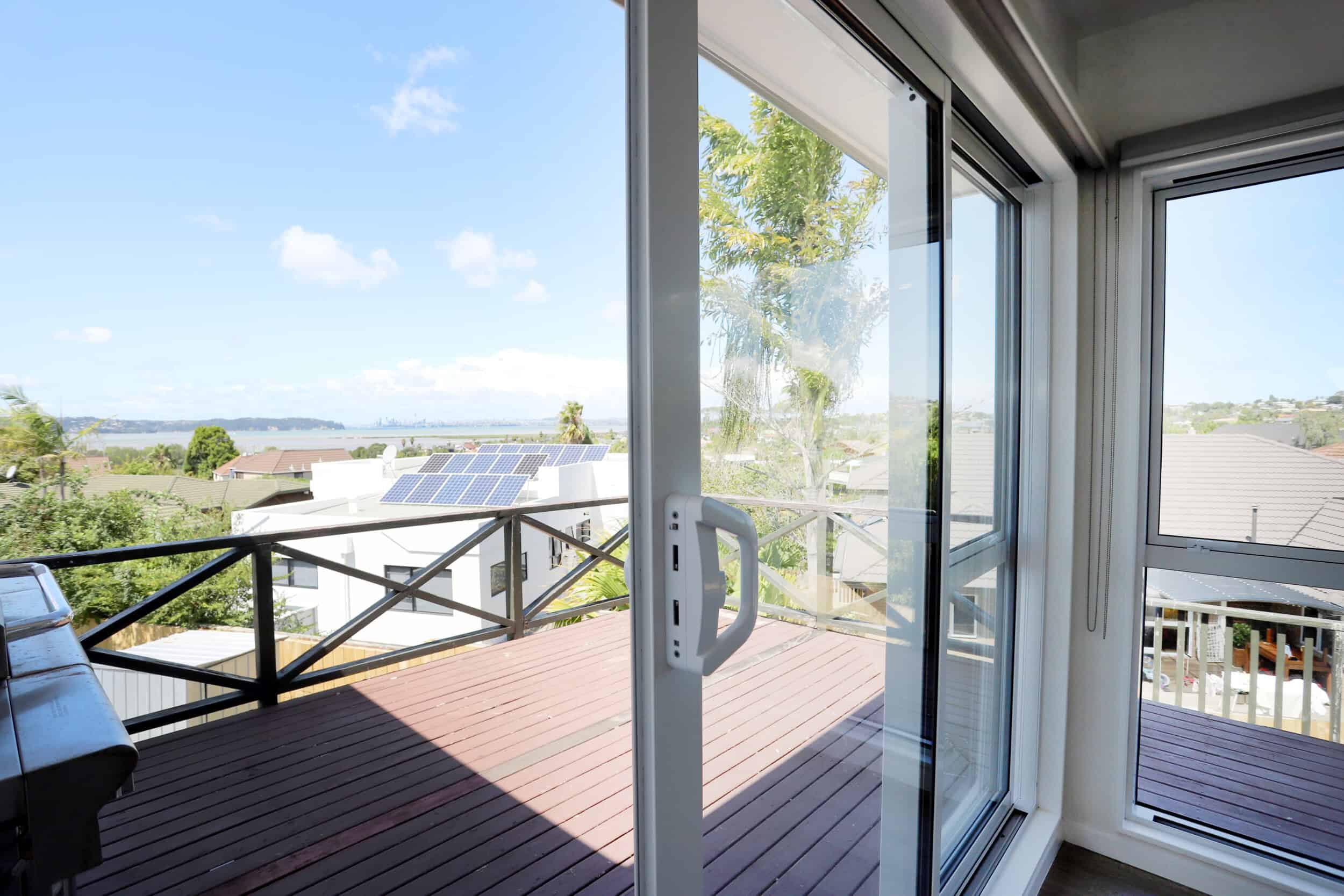
- Solar panels: Auckland gets enough sun to make solar worthwhile, particularly in Henderson and similar inland suburbs. Reduces electricity costs and appeals to buyers who are looking at long-term running costs, per Superior Renovations.
- Smart thermostats: Optimise heating and cooling costs while adding modern convenience — appeals to tech-oriented buyers.
- LED lighting throughout: Reduces power use and presents well in an open-plan Auckland home.
Cost vs. Value: Calculating Energy-Efficient ROI
ROI = (Increase in Home Value – Renovation Cost) / Renovation Cost x 100
A $25,000 upgrade (double-glazing and insulation) that adds $35,000 to the home’s value:
($35,000 – $25,000) / $25,000 x 100 = 40%
In eco-conscious suburbs like Ponsonby or Albany, ROIs of 50–65% are achievable. $30,000 in a $1.5M property is proportionate; in a $700,000 home it requires more careful consideration of which specific upgrades offer the most return.
| Upgrade Type | Estimated Cost (NZD) | Potential ROI | Key Features |
|---|---|---|---|
| Basic Upgrades | $5,000–$15,000 | 50–60% | LED lighting, smart thermostats |
| Mid-Range Upgrades | $15,000–$30,000 | 55–65% | Double-glazing, insulation |
| Premium Upgrades | $40,000+ | 50–60% | Solar panels, full retrofit |
“Energy-efficient investment should match the property value — start with double-glazing and insulation before committing to solar if the budget is limited.”
Planning Energy-Efficient Upgrades in Auckland
- Set a realistic budget: Include materials, labour, and a 10–15% contingency for wiring or insulation surprises common in older properties. Our renovation costs guide covers this.
- Licensed installers: Electrical and structural work must meet the NZ Building Code, per the New Zealand Government.
- Check available grants: Warmer Kiwi Homes subsidises insulation and heating upgrades for eligible homeowners — worth checking before committing to full-cost estimates.
- Energy consultant: A professional assessment of your home’s specific heat loss profile identifies which upgrades will deliver the most return in Auckland’s climate.
- Local suppliers: Eco Insulation and SolarCity are Auckland-based suppliers with relevant product knowledge for the region’s specific conditions.
Superior Renovations
Local Considerations for Auckland Energy Upgrades
Auckland’s humid winters and variable summers mean heat retention is a more pressing concern than cooling for most properties. Older villas in Freemans Bay and similar suburbs are among the draughtiest homes in the city — double-glazing and insulation deliver an immediate, perceptible comfort improvement as well as a measurable cost saving. Solar performs better in Henderson and similar inland locations than in consistently overcast coastal pockets. LED lighting in open-plan layouts is the most cost-effective entry point for energy efficiency on a limited budget. Listing energy savings prominently when selling is increasingly relevant to Auckland buyers thinking about long-term affordability.
“In Auckland, energy efficiency reduces running costs, improves comfort, and has become a genuine differentiator in a competitive market.”
Common Mistakes to Avoid
- Overcapitalising: $50,000 in energy upgrades in a $600,000 home requires a very specific return calculation. Start with the highest-impact upgrades first.
- DIY electrical or insulation work: Work that doesn’t meet Building Code requirements fails inspection and reduces the property’s appeal. Licensed professionals only.
- Missing available grants: Warmer Kiwi Homes subsidies exist specifically to reduce the cost barrier — check eligibility before pricing the project.
- Over-specifying smart technology: Specialised smart home systems may not appeal to all buyers. Stick to features with broad usability.

Superior Renovations
Real-World Example: An Energy Upgrade in Takapuna
A Takapuna home that was expensive to heat and cool received double-glazed windows, wool insulation, and a smart thermostat. The $28,000 project added $38,000 to the home’s value and immediately reduced the household’s energy bills. The upgrades were highlighted in the property’s listing and referenced by the agent as a point of difference from comparable Takapuna properties.
“Our Takapuna clients noticed the difference in their bills within the first quarter — and buyers noticed the difference in the listing.”
Energy-efficient upgrades are a practical, forward-looking investment for Auckland homes. The right combination of double-glazing, insulation, and efficient lighting reduces costs, improves comfort, and positions the property well in a market where buyers are increasingly running the numbers on what a home will cost to live in.
Summary: Top 7 Renovation Ideas for Auckland Homes
The seven renovation types covered in this guide — kitchen remodel, deck addition, master ensuite, bathroom renovation, basement upgrade, exterior refresh, and energy-efficient upgrades — cover the range of what works for Auckland’s property market in 2026. ROIs of 50–80% are achievable across all of them when specification is proportionate to property value and appropriate to the suburb. The table below summarises the key numbers and Auckland-specific variables.
| Renovation Type | Estimated Cost (NZD) | Potential ROI | Key Features | Auckland Considerations |
|---|---|---|---|---|
| Kitchen Remodel | $20,000–$50,000 | 70–80% | Open-plan layout, modern appliances, stone benchtops, smart storage | Neutral designs for broad appeal; durable materials for humid climate |
| Deck Addition | $10,000–$30,000 | 65–75% | Hardwood or composite decking, built-in seating, weatherproofing | Indoor-outdoor connection; consents required for decks over 1.5m |
| Master Ensuite | $15,000–$40,000 | 60–75% | Walk-in shower, double vanity, neutral tiles, ventilation | Waterproofing essential; premium finishes appropriate in higher-value suburbs |
| Bathroom Renovation | $10,000–$35,000 | 60–75% | Frameless shower, eco-friendly fixtures, smart storage, timeless design | Mould-resistant materials; space-saving layouts for smaller homes |
| Basement Upgrade | $20,000–$60,000 | 50–70% | Waterproofing, egress windows, versatile layout, durable flooring | Moisture control in coastal areas; separate access for rental potential |
| Exterior Refresh | $5,000–$25,000 | 50–70% | Fresh paint, modern cladding, native landscaping, new front door | Heritage-appropriate finishes in villa suburbs; coastal-grade materials |
| Energy-Efficient Upgrades | $5,000–$40,000 | 50–65% | Double-glazing, insulation, solar panels, LED lighting | Warmer Kiwi Homes grants available; solar strongest in inland suburbs |
For specific cost estimates, try our Renovation Cost Calculator Tools
- Bathroom Renovation Cost Calculator
- Kitchen Renovation Cost Calculator
- Reroofing Cost Calculator
- Double Glazing Cost Calculator
- House Extension Cost Calculator
- Custom Kitchen Cabinetry Cost Calculator
- New Laundry Cost Calculator
- New Pergola Cost Calculator
Planning Your Auckland Renovation
These seven renovation types cover the full range of what moves the needle in Auckland’s market — from the kitchen, which most buyers assess first, to energy efficiency, which buyers are increasingly factoring into their long-term cost calculations. The common thread across all of them: proportionate spend, quality materials suited to Auckland’s climate, and specification that holds broad appeal rather than personal taste. Plan carefully, use licensed tradespeople, and keep renovation cost within a range the suburb’s property values can support.
“The best renovations don’t just add value — they make your Auckland home a place you love and buyers can’t resist.”
Talk to Superior Renovations about where to start — we can advise on what’s realistic for your suburb, your home, and your budget, and manage the process from consent through to completion. Our renovation costs guide covers budgeting in detail, and local suppliers like Mitre 10 and Bunnings can help with materials once you know what you need.
Kitchen remodels typically offer the highest ROI, often 70–80%, as they're a focal point for buyers. Deck additions and bathroom renovations follow closely, with ROIs of 60–75%, per Renovation Works. Aim to spend 1–3% of your home's value on smaller projects (e.g., $20,000 for a $1M home) and up to 5–10% for major upgrades like kitchens or basements. Align your budget with local property values in suburbs like Parnell or Papatoetoe. Yes, major renovations like decks over 1.5m, ensuites, basements, or structural exterior changes require Auckland Council approval. Consent fees range from $500–$5,000, depending on the project. Visit Auckland Council for details. Timelines vary: a kitchen remodel or bathroom renovation takes 4–8 weeks, a deck or exterior refresh 2–4 weeks, and a basement conversion 8–12 weeks. Hire licensed professionals to ensure timely completion. Yes. Double-glazing and insulation reduce running costs and appeal to buyers who are thinking about long-term affordability. ROIs of 50–65% are achievable, and Warmer Kiwi Homes grants can reduce upfront costs for eligible homeowners, per EECA. DIY is risky for structural, plumbing, or electrical work — non-compliant work can trigger fines and reduce buyer confidence at inspection. Use licensed tradespeople for anything that requires Building Code compliance. Consider your property's value, what comparable properties in your suburb offer, and what buyers in that area prioritise. A consultation with Superior Renovations will give you specific, suburb-appropriate advice. Which renovation offers the best ROI for Auckland homes?
How much should I spend on renovations to avoid overcapitalizing?
Do I need council consents for these renovations?
How long do these renovations take?
Are energy-efficient upgrades worth it in Auckland?
Can I do these renovations myself to save money?
How do I choose the right renovation for my Auckland home?
Still have questions?
Book a no-obligation consultation with the team at Superior Renovations — we’d love to talk through your renovation ideas.
Or call us on 0800 199 888
Putting off that renovation?
We’ve partnered with Q Mastercard® to offer an 18-month interest-free payment option. Get the project moving now and spread the cost.
Learn more about Interest-Free Payment Options*
*Lending criteria, fees, terms and conditions apply. Mastercard is a registered trademark and the circles design is a trademark of Mastercard International Incorporated.